
Progesterone Market Size and Share
Market Overview
| Study Period | 2020 - 2031 |
|---|---|
| Market Size (2026) | USD 2.07 Billion |
| Market Size (2031) | USD 3.17 Billion |
| Growth Rate (2026 - 2031) | 8.90 % |
| Fastest Growing Market | Asia Pacific |
| Largest Market | North America |
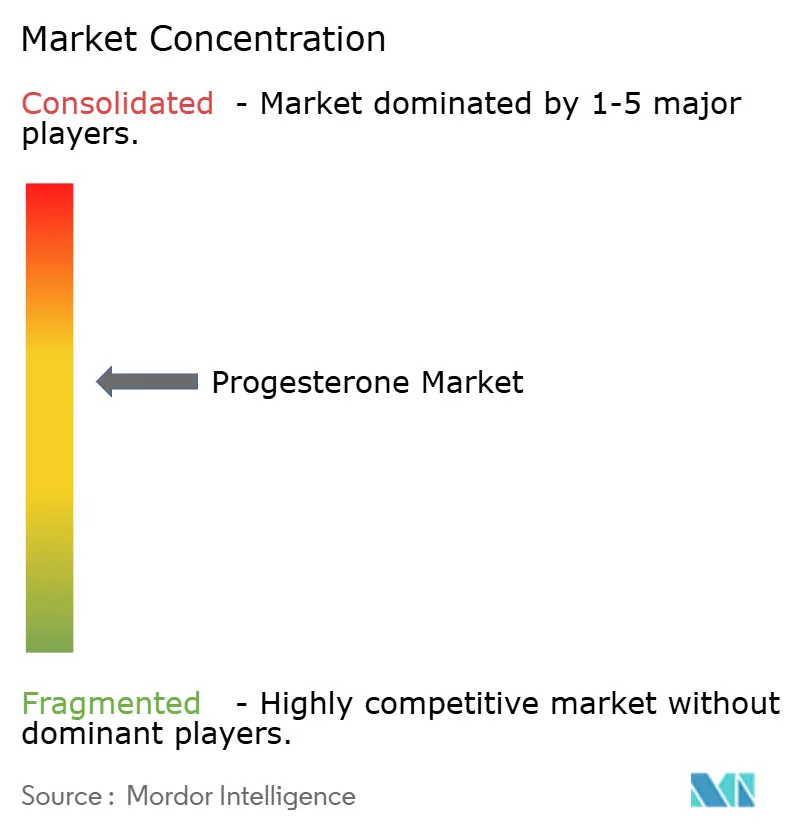
| Market Concentration | Medium |
Major Players *Disclaimer: Major Players sorted in no particular order Image © Mordor Intelligence. Reuse requires attribution under CC BY 4.0. | |
Progesterone Market Analysis by Mordor Intelligence
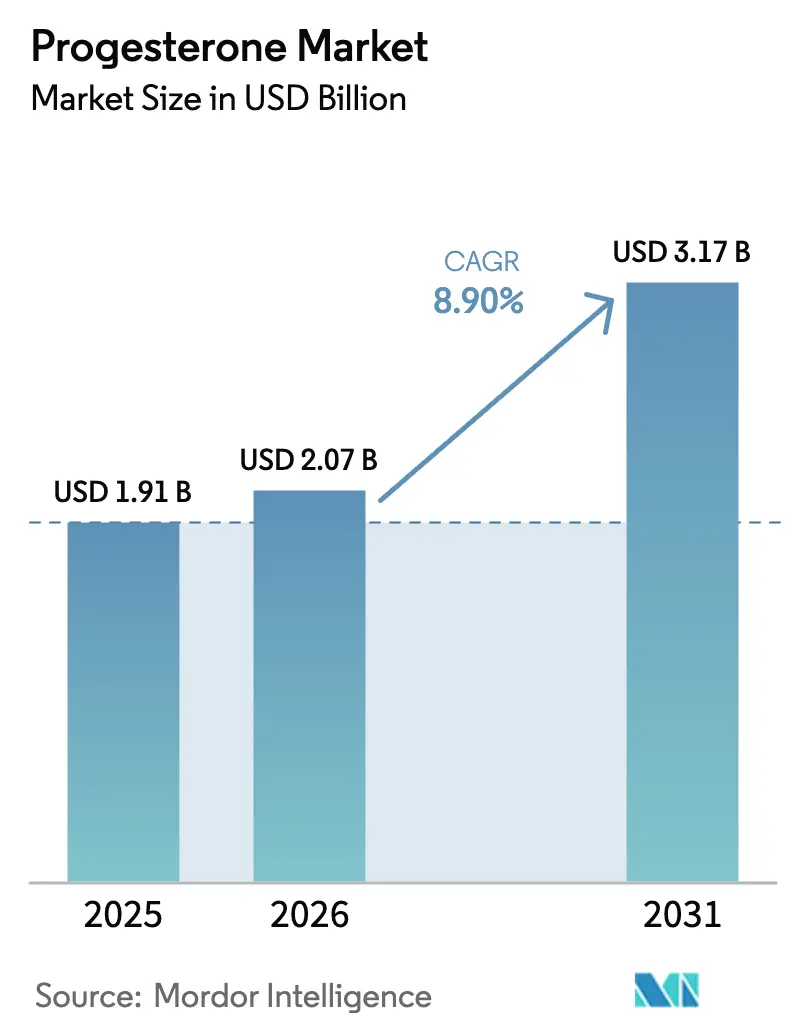
The Progesterone Market size is projected to expand from USD 1.91 billion in 2025 and USD 2.07 billion in 2026 to USD 3.17 billion by 2031, registering a CAGR of 8.90% between 2026 to 2031.
Growing IVF cycle volumes, wider adoption of menopause therapy, and evolving clinical preferences for bioidentical hormone formulations are the core demand catalysts. Manufacturers are investing in micronization and sustained-release technologies to enhance convenience, while insurers are increasingly reimbursing frozen-embryo transfer protocols that require luteal-phase support. Regulatory agencies on both sides of the Atlantic are tightening quality oversight of compounded hormones, which is steering prescribers toward FDA- and EMA-approved products. Competitive dynamics are equally shaped by vertically integrated Indian producers that leverage diosgenin feedstock advantages to undercut branded prices in price-sensitive regions. Delivery-platform innovation, especially subcutaneous autoinjectors and biodegradable implants, remains a white-space opportunity as stakeholders aim to reduce clinic visits and improve adherence in resource-constrained settings.
Key Report Takeaways
- By product type, synthetic progesterone led with 64.34% of progesterone market share in 2025, while natural formulations are projected to expand at a 10.45% CAGR to 2031.
- By mode of delivery, injectables commanded 47.65% share of the progesterone market size in 2025, and oral formulations are advancing at a 10.67% CAGR through 2031.
- By application, menopause accounted for a 34.78% share of the progesterone market size in 2025, whereas endometrial cancer protocols are projected to grow at an 11.55% CAGR through 2031.
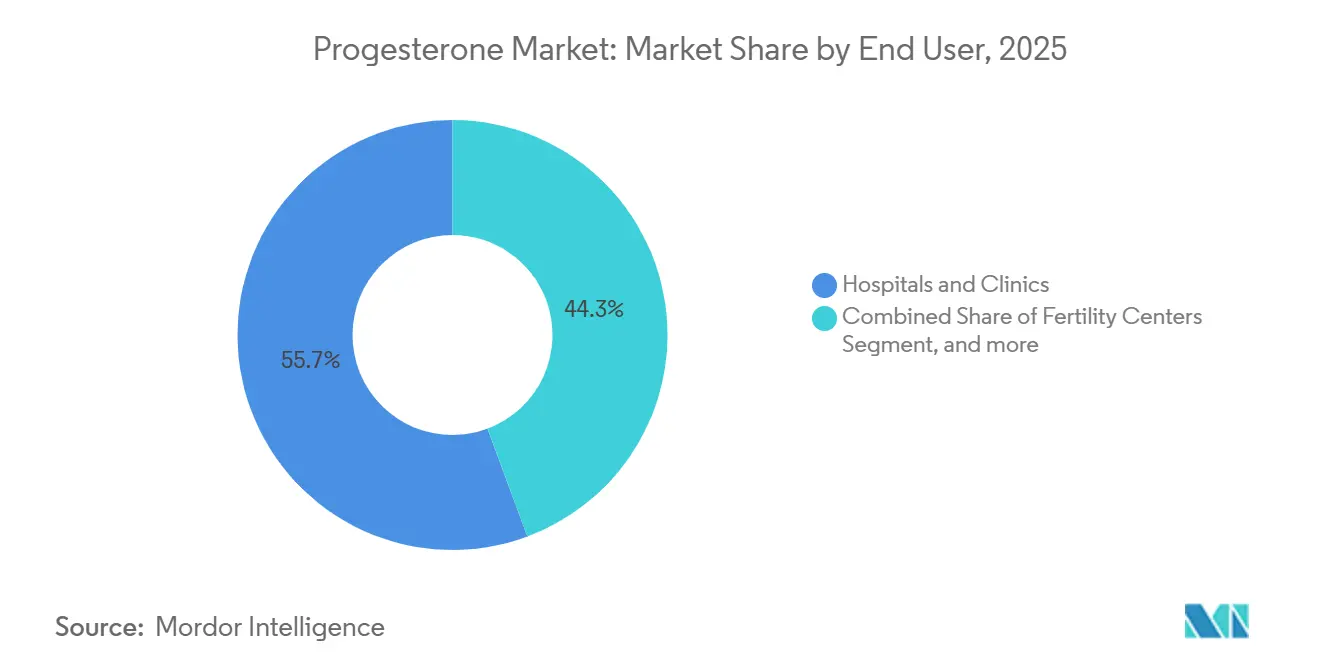
- By end user, hospitals and clinics held 55.67% of the progesterone market share in 2025, yet fertility centers are projected to rise at an 11.67% CAGR between 2026 and 2031.
- By distribution channel, prescription pathways captured 58.65% of 2025 value, but OTC products are expanding at an 11.43% CAGR through 2031.
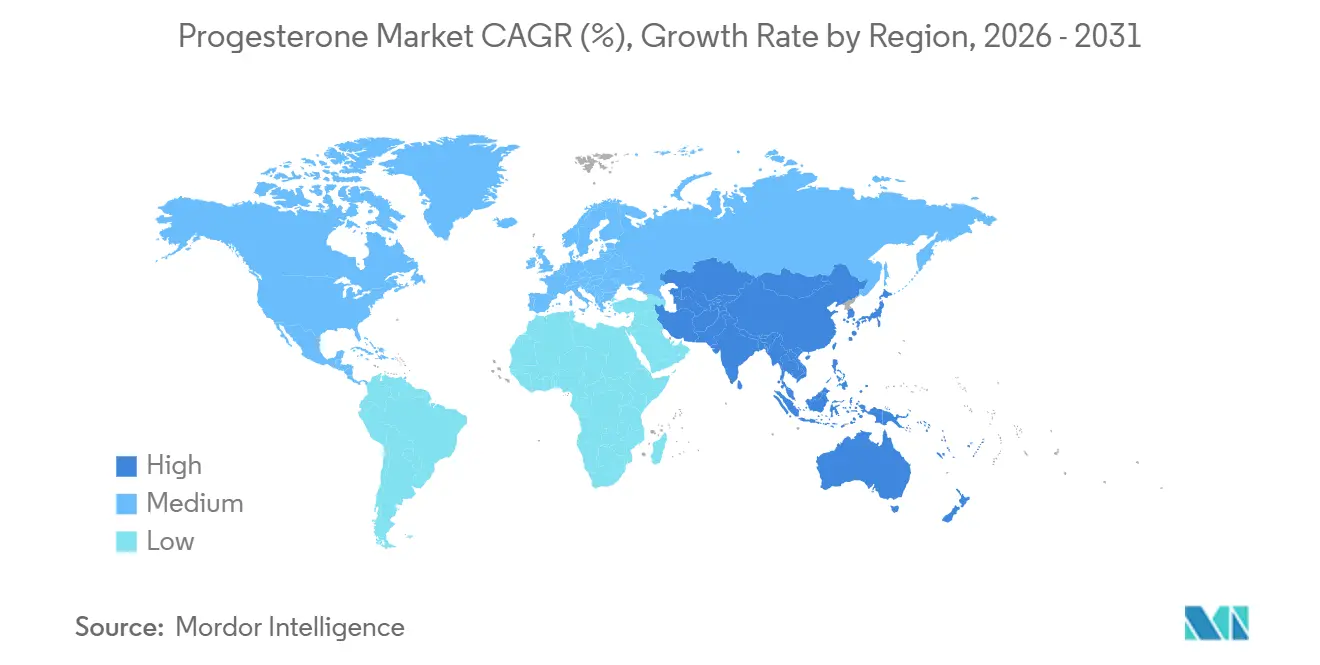
- By geography, North America contributed 40.34% of the revenue in 2025; the Asia-Pacific region is forecast to post the highest regional CAGR of 9.54% from 2026 to 2031.
Note: Market size and forecast figures in this report are generated using Mordor Intelligence’s proprietary estimation framework, updated with the latest available data and insights as of January 2026.
Global Progesterone Market Trends and Insights
Drivers Impact Analysis*
| Driver | (~) % Impact on CAGR Forecast | Geographic Relevance | Impact Timeline |
|---|---|---|---|
| Rising Prevalence of Hormone-Related Disorders | +1.8% | Global, with concentration in North America & Europe | Long term (≥ 4 years) |
| Growing IVF & Assisted Reproductive Technology Procedures | +2.3% | Global, APAC core with spill-over to MEA | Medium term (2-4 years) |
| Expanding Use of Progesterone in Menopause Hormone Therapy | +1.5% | North America & Europe, emerging in APAC | Long term (≥ 4 years) |
| Increasing Adoption of Micronized Progesterone in Neuroprotective Clinical Trials | +0.7% | North America & Europe | Long term (≥ 4 years) |
| Shift Toward Bio-Identical Plant-Derived Progesterone in Compounding Pharmacies | +1.2% | North America, selective European markets | Medium term (2-4 years) |
| Emerging Demand for Sustained-Release Progesterone Drug-Delivery Implants in Low-Income Settings | +0.9% | Sub-Saharan Africa, South Asia, Latin America | Long term (≥ 4 years) |
| Source: Mordor Intelligence | |||
Rising Prevalence of Hormone-Related Disorders
Polycystic ovary syndrome, endometriosis, and dysfunctional uterine bleeding affect roughly 10-15% of women of reproductive age, generating durable demand for progesterone therapy. Rising obesity and metabolic syndrome exacerbate these conditions, especially in urbanizing Asian economies. Medical guidelines advocate progesterone to oppose unopposed estrogen and prevent endometrial hyperplasia, delaying surgical escalation[1]. Strengthening diagnostic awareness, along with better access to gynecologic services in middle-income countries, is expanding the progesterone market. Pharmaceutical brands capitalize by positioning micronized formulations as first-line options with favorable safety profiles.
Growing IVF & Assisted Reproductive Technology Procedures
Luteal-phase progesterone supplementation is mandatory in frozen-embryo transfer protocols. The United States completed 435,426 ART cycles in 2022, a 33% jump over 2020. China already surpasses 1 million cycles annually, and fertility clinic chains are scaling rapidly across India and Southeast Asia. Subcutaneous and oral routes are gaining popularity because equivalence studies show no live-birth disadvantage compared to intramuscular injectables[2]. This patient-centric shift fuels double-digit demand for micronized and lipid-encapsulated oral capsules.
Expanding Use of Progesterone in Menopause Hormone Therapy
Reappraisal of Women’s Health Initiative data indicates benefits outweigh risks when therapy starts within 10 years of menopause. Clinical societies now recommend micronized progesterone over synthetic progestins for endometrial protection alongside estrogen[3]. Uptake is strong in North America and Western Europe, and guidelines in Australia and parts of Asia are aligning. Branded products, such as Prometrium, are experiencing higher prescription renewals as prescribers shift away from medroxyprogesterone acetate.
Increasing Adoption of Micronized Progesterone in Neuroprotective Trials
Progesterone’s GABA‐A modulation and anti-inflammatory effects prompt ongoing trials in traumatic brain injury and Alzheimer’s disease. National Institute on Aging-funded programs are studying allopregnanolone derivatives in Phase II cohorts. Although prior large-scale TBI studies fell short, subgroup signals are encouraging continued investment. Success would open non-gynecologic revenue streams for the progesterone market.
Restraints Impact Analysis*
| Restraint | (~) % Impact on CAGR Forecast | Geographic Relevance | Impact Timeline |
|---|---|---|---|
| Adverse Events & Safety Concerns With Long-Term Hormone Therapy | -1.4% | Global, particularly North America & Europe | Medium term (2-4 years) |
| Availability of Cost-Effective Generic Hydroxyprogesterone Alternatives | -0.8% | Emerging markets in APAC, Latin America, MEA | Short term (≤ 2 years) |
| Supply Chain Constraints in Plant Steroid Feedstock | -1.1% | Global, with acute impact in North America & Europe | Short term (≤ 2 years) |
| Regulatory Scrutiny on Compounded Hormone Therapy Quality Standards | -0.6% | North America, selective European markets | Medium term (2-4 years) |
| Source: Mordor Intelligence | |||
Adverse Events & Safety Concerns with Long-Term Hormone Therapy
Residual fears about breast cancer and thromboembolic risk persist despite data showing micronized progesterone’s favorable profile compared with synthetic progestins. EMA mandates cardiovascular warnings on labels, amplifying patient apprehension. This caution curbs penetration among high-risk cohorts, slowing prescription growth in developed markets.
Availability of Cost-Effective Generic Hydroxyprogesterone Alternatives
Indian manufacturers market hydroxyprogesterone caproate at discounts of up to 70% compared to micronized progesterone. Public hospitals in Africa, Southeast Asia, and Latin America often opt for the cheaper option despite emerging safety concerns. Until regulatory convergence tightens control, low-priced generics will temper the pricing power of premium brands.
*Our forecasts treat driver/restraint impacts as directional, not additive. The impact forecasts reflect baseline growth, mix effects, and variable interactions.
Segment Analysis
By Product Type: Natural Formulations Gain Share Amid Safety Reappraisals
Synthetic molecules still dominate revenue, yet natural formulations are growing faster as clinicians respond to safety and patient-preference signals. The segment’s 10.45% CAGR will lift natural products from a minority position toward parity by 2031. Many U.S. and EU prescribers now view micronized progesterone as the default choice for menopause therapy, and IVF protocols increasingly accept it for luteal support without efficacy compromise. Emerging economies remain price-sensitive; however, regulatory alignment and larger production runs are expected to narrow cost differentials, thereby fostering broader adoption. This evolution positions natural products to capture incremental progesterone market share in premium reimbursed indications, while synthetics retain footholds in cost-constrained public tenders.


By Mode of Delivery: Oral and Subcutaneous Routes Challenge Injectable Dominance
Injectables remain entrenched in IVF and oncology settings; however, patient discomfort and clinic-visit burden are prompting protocol revisions. Oral micronized capsules achieve comparable pregnancy rates and command double-digit growth in menopause and dysfunctional-bleeding indications. Subcutaneous autoinjectors have entered U.S. fertility programs, allowing self-administration and reducing nursing workload - vaginal inserts balance efficacy and lower systemic exposure but face adherence issues due to application inconvenience. Transdermal and implantable systems, which are still investigational, could further erode the injectable share within the progesterone market, particularly in low-resource settings that require autonomy from cold-chain logistics.
By Application: Endometrial Cancer Protocols Drive Fastest Growth
Menopause therapy supplies the largest revenue pool, yet fertility-sparing oncology uses are expanding quickest. Consensus guidelines now position high-dose progesterone as first-line treatment for early-stage, receptor-positive endometrial carcinoma in women desiring pregnancy. Supported by growing cancer screening in younger cohorts, this application underscores double-digit expansion. Dysfunctional uterine bleeding and hyperplasia management remain steady, benefiting from rising obesity-linked estrogen excess. Neuroprotection and psychiatric uses sit in the experimental pipeline; successful trials could diversify indications and lift the overall progesterone market size over the next decade.
By End User: Fertility Centers Outpace Hospitals in Adoption Velocity
Hospitals still prescribe the highest aggregate volume, yet specialized fertility centers are leading the growth. Rising ART cycles, especially frozen-embryo transfers, require consistent luteal support, fueling demand for subcutaneous and vaginal products optimized for outpatient use. Clinics invest in patient-experience enhancements, preferring formulations that minimize pain and monitoring. Ambulatory surgical centers manage a stable share, while retail pharmacies benefit from rising OTC cream sales. Research institutes contribute marginal volume but drive future indication expansion through trials.
By Distribution Channel: OTC Segment Expands as Consumers Seek Autonomy
Prescription channels stay dominant due to regulatory control over high-dose formulations, yet OTC progesterone creams and gels record the fastest CAGR at 11.43%. Consumer marketing emphasizes “natural” symptom relief, despite inconsistent serum levels achieved. FDA warning letters have not quelled demand, indicating strong patient desire for self-directed hormone management. Compounding pharmacies occupy a middle ground; stricter oversight raises costs but simultaneously legitimizes accredited operators. Net effect: distribution diversification increases complexity for manufacturers, necessitating multi-channel strategies to capture full progesterone market potential.
Geography Analysis
North America remains the revenue leader, with a 40.34% share, supported by insurance mandates for fertility treatments and mature demand for bioidentical hormones. The U.S. market benefits from high ART procedural volumes and relatively permissive state rules for compounded products, though FDA oversight of quality is tightening. Canada’s coverage varies provincially, yet private clinics absorb unmet demand. Mexico’s growing medical tourism sector and competitive pricing attract U.S. patients, thereby expanding regional volumes.
Europe contributes roughly 28-30% of sales. EMA centralizes regulatory approval, but reimbursement and pricing are national prerogatives. Germany’s reference-price system and France’s centralized tenders intensify generic competition, while NICE guidelines in the U.K. endorse micronized progesterone for menopause therapy. Eastern European countries experience faster percentage growth from a lower base as access to IVF broadens and middle-class incomes rise.
Asia-Pacific is the growth engine, advancing at a 9.54% CAGR. China’s one million-plus annual ART cycles and India’s expanding private fertility chains dominate volume. The Japanese and South Korean markets prioritize premium, branded drugs within rigorous regulatory frameworks. Southeast Asian nations are liberalizing ART regulations, and rising disposable income supports the expansion of clinics. Cost-competitive generics from Indian API clusters penetrate both domestic and export markets, widening access.
The Middle East and Africa hold smaller shares but show selected high-growth pockets. GCC governments, notably Saudi Arabia and the UAE, subsidize IVF, stimulating demand for high-quality branded products. Donor-funded family-planning initiatives in sub-Saharan Africa prioritize progesterone implants, presenting volume opportunities once sustained-release natural formulations clear regulatory hurdles. South America, led by Brazil and Argentina, is experiencing steady growth despite currency headwinds and import tariffs that favor local generic production.
Regulatory Landscape
Regulation in progesterone is shaped by tightening quality oversight of hormone products and by manufacturing and trade policy affecting APIs. In the United States, FDA labeling updates reinforce pharmacovigilance expectations and standardized product information for approved therapies, while USP-NF monographs set compendial quality requirements for progesterone (including assay ranges and storage requirements) that manufacturers and testing labs use for release and stability programs.
In April 2026, the United States implemented Section 232 tariffs targeting imports of patented pharmaceuticals and associated APIs, with exemptions for generic pharmaceuticals and their ingredients, which can shift relative economics between patented combinations and generic progesterone products depending on a company's supply footprint. Trade and lifecycle safety actions also influence sourcing and portfolio choices. In Europe, EMA post-authorization safety surveillance continues for hormone combinations that include estradiol and progesterone through PSUSA processes, adding ongoing compliance and label-management workstreams for marketers operating across multiple national authorizations.
Value Chain Analysis
The progesterone value chain starts with plant-derived steroid feedstocks (commonly diosgenin or phytosterols) that are converted into progesterone API through semi-synthetic processes concentrated in China and India, with smaller capacity bases in Europe and the United States. API then moves into formulation steps that depend on dosage form: micronization is a key enabling process for oral micronized progesterone, with particle-size control (often below ~20 micrometers) acting as a critical quality attribute, while sterile processing and specialized packaging become more prominent for injectables and vaginal inserts.
Downstream, products are distributed through hospital and clinic procurement, fertility centers, and retail and online pharmacy channels, with payers influencing utilization through coverage of ART protocols and menopausal therapy. Supply risk concentrates at two points: upstream dependence on geographically concentrated feedstock and API supply, and midstream manufacturing compliance for foreign sites. A July 2026 FDA proposal to ease registration for distributed manufacturers while tightening registration requirements for foreign API production sites underscores the role of regulatory readiness, auditing, and dual-sourcing strategies as differentiators for companies seeking reliable supply into the United States.
Competitive Landscape
Market concentration is moderate. Besins Healthcare, Ferring Pharmaceuticals, Pfizer, and Bayer anchor the branded segment, leveraging global distribution and clinical data portfolios. Besins dominates the natural micronized capsules market across Europe and Asia, while Ferring secures partnerships with specialized fertility centers that utilize vaginal inserts. Pfizer maintains a share in synthetic molecules for oncology. Indian companies—Cipla, Lupin, Sun Pharma, and Alkem—integrate diosgenin supply with API synthesis to deliver aggressive price points, eroding premium margins in emerging markets.
Pipeline innovation centers on sustained-release implants, autoinjector devices, and nanoparticle-enhanced oral forms. Partnerships between device specialists and hormone manufacturers aim to commercialize 6-month depots, particularly appealing for contraceptive programs in resource-limited regions. Regulatory compliance is a persistent battleground; quality lapses can rapidly remove competitors, as illustrated by FDA import alerts on substandard batches. Strategic differentiation increasingly hinges on supply-chain resilience, pharmacovigilance data, and clinician-education initiatives to reinforce the safety advantages of approved products over compounded alternatives.
Progesterone Industry Leaders
-
Cadila Pharmaceuticals
-
Alkem Labs
-
Cipla Limited
-
Lupin Limited
-
Glenmark Pharmaceuticals
- *Disclaimer: Major Players sorted in no particular order
Market Opportunities and Future Outlook
White-space opportunities center on supply reliability, approved alternatives to compounded hormones, and patient-friendly delivery formats that reduce clinic time in fertility care. In the United States, clearer benefit-risk communication around menopause hormone therapy following HHS/FDA actions in late 2025 has coincided with a measurable rise in progesterone-containing HRT use in women aged 45+, and market evidence in 2026 has included reports of intermittent shortages for some oral progesterone products. This combination creates commercial space for manufacturers that can add compliant capacity, secure API continuity, and maintain consistent finished-dose availability across Rx channels.
Portfolio and safety scrutiny are also reshaping where companies focus innovation and lifecycle management. In the EU, EMA suspended marketing authorizations for 17-hydroxyprogesterone caproate (17-OHPC) on 26 June 2024, pushing stakeholders to reassess reliance on specific progestogen classes and to emphasize products with stronger contemporary evidence bases. At the same time, increased pharmacovigilance attention on progestogens, including PRAC discussions in July 2026 around meningioma risk signals for certain agents, elevates demand for differentiated safety data, conservative labeling, and clinician-education programs, particularly for long-duration use in menopause and chronic gynecologic indications.
Recent Industry Developments
- July 2026: PRAC discussions around meningioma risk signals for certain progestogens raise requests for updated safety data and labeling across menopausal and fertility indications. The discussions signal intensified EU pharmacovigilance activity and potential implications for lifecycle management strategies.
- April 2026: Glenmark Pharmaceuticals received final US FDA approval for Progesterone Vaginal Inserts, 100 mg, as a generic determined to be bioequivalent and therapeutically equivalent to Endometrin. The approval expands competition in luteal support products used by fertility centers and strengthens Glenmark's position in specialized womens health generics. It also adds another FDA-approved option at a time when clinics and pharmacies emphasize consistent supply for protocol-driven use.
- June 2024: The European Medicines Agency suspended marketing authorizations for 17-hydroxyprogesterone caproate (17-OHPC) products in the EU due to lack of efficacy and concerns over potential risks. This decision redirected demand away from 17-OHPC in affected geographies and increased the need for alternative, evidence-supported progesterone or progestogen strategies. Manufacturers and providers operating in Europe had to adjust portfolios, treatment protocols, and supply planning accordingly.
Research Methodology Framework and Report Scope
Market Definition and Coverage
For this study, the market covers revenues generated from progesterone sold for human healthcare use, across natural and synthetic sources, and across commonly used dosage forms and care settings, in all major regions.
Scope exclusions: Veterinary use, early stage R&D-only molecules with no commercial sales, and non-therapeutic cosmetic uses are excluded wherever they appear in upstream data.
Segmentation Overview
- By Product Type
- Natural Progesterone
- Plant-Sterol-Derived
- Animal-Source-Derived
- Synthetic Progesterone
- Steroidal (17-?-Hydroxyprogesterone Caproate, etc.)
- Non-Steroidal (Norethindrone, etc.)
- Natural Progesterone
- By Mode Of Delivery
- Injectable
- Suspended Form
- Oral
- Other Modes Of Delivery
- By Application
- Menopause
- Dysfunctional Uterine Bleeding
- Endometrial Cancer
- Contraception
- Hyperplastic Precursor Lesions
- Other Applications
- By End User
- Hospitals & Clinics
- Fertility Centers
- Ambulatory Surgical Centers
- Retail & Online Pharmacies
- Research & Academic Institutes
- By Distribution Channel
- Prescription (Rx)
- Over-The-Counter (OTC)
- Compounding Pharmacies
- Geography
- North America
- United States
- Canada
- Mexico
- Europe
- Germany
- United Kingdom
- France
- Italy
- Spain
- Rest Of Europe
- Asia-Pacific
- China
- Japan
- India
- Australia
- South Korea
- Rest Of Asia-Pacific
- Middle East And Africa
- GCC
- South Africa
- Rest Of Middle East And Africa
- South America
- Brazil
- Argentina
- Rest Of South America
- North America
Data Sources, Market Sizing, and Validation
Desk Research
Desk work starts by grounding demand drivers and treatment adoption using public health and regulatory signals. We typically review sources such as the US FDA drug databases and labeling updates, the US CDC health statistics, WHO health indicators, and OECD health data for country comparability, then use peer-reviewed clinical literature to understand where progesterone is actually prescribed.
On the supply and trade side, we use import and export statistics from UN Comtrade and national customs portals where available, along with patent databases to track formulation and process activity that can shift manufacturing economics. We also review company filings, annual reports, investor decks, and reputable press releases to validate product mix changes, geographic focus, and capacity commentary. Paid subscriptions are used selectively for company financials and market intelligence and news and financials to standardize time series and reduce missing-disclosure issues. The sources listed here are illustrative only, and many additional public references are consulted for cross-checks and clarification.
Primary Interviews and Surveys
Primary inputs are used to pressure test the desk assumptions on price bands, mix shifts by mode of delivery, and practical utilization in hospitals, fertility centers, and retail channels. We also interview stakeholders across APAC, EMEA, and the Americas so regional reimbursement, prescribing habits, and supply constraints are represented before the final model is locked.
Distribution of primary research fieldwork respondents
| Company type | Respondent position | Region |
|---|---|---|
| Top tier: 37% | CXOs: 14% | APAC: 41% |
| Mid tier: 43% | Functional/Unit leaders: 26% | EMEA: 34% |
| Smaller Players: 20% | Managers: 60% | Americas: 25% |
Market-Sizing & Forecasting
Sizing is built using a top-down approach where population and care pathway signals are translated into a treated demand pool, then converted into value using route-specific consumption and pricing. To keep the model traceable, it leans on a small set of inputs such as women in key age cohorts, fertility procedure volumes, menopause-related therapy uptake, prescription versus compounding channel share, and the split between oral, injectable, and other delivery formats.
Once the demand pool is set, we apply average selling price logic with region-level currency timing and inflation adjustments, so ASP movement is not overstated when mix changes are the real driver. Totals are then checked with selective bottom-up approximations such as sampled volume by dosage form multiplied by typical price bands, plus distributor and channel checks to catch overcounting. Where country data is thin, gaps are handled using peer-market ratios tied to healthcare spend and diagnosis prevalence, then re-tested during interviews.
Forecasts are produced using scenario analysis supported by a light multivariate regression on the most stable drivers, including age cohort growth, fertility treatment expansion, and policy-led access changes, and then refined with expert views on near-term supply availability and pricing behavior.
Data Validation & Update Cycle
Validation is done in layers so outliers are not carried forward by accident. We compare outputs against independent signals such as trade flows, regulatory activity, and disclosed product revenue direction, and then investigate large variances at the country and route level before sign-off.
A second analyst review is used to re-check formulas, unit conversions, and key assumptions, followed by re-contact triggers when a mismatch persists or a major event shifts supply or pricing. Reports are refreshed annually, with interim updates when material changes occur in approvals, capacity, or demand conditions. Before delivery, a final pass is completed so the numbers reflect the latest available data and consistent currency timing.
Mordor Intelligence's Progesterone Market Size Compared With Other Published Estimates
Published progesterone market values often differ, and the difference is usually not a simple math error. It typically comes from timing, how prices are converted into USD, and whether adjacent hormone therapies or non-therapeutic uses get mixed into the same revenue pool.
A refresh-led view also affects the comparison because ASP bands can move within a year when delivery mix shifts toward injectables or when compounding share changes, which then alters the weighted average price used in value sizing. Using current currency conversion timing and re-validating route-level price and volume assumptions during each refresh cycle narrows the spread, which is a key reason the latest Mordor Intelligence estimate does not always align with older or less frequently updated publications.
Benchmark comparison
| Source | Market Size | Gaps in Research Methodology |
|---|---|---|
| Mordor Intelligence | USD 2.07 B (2026) | |
| Global Consultancy A | USD 1.15 B (2023) | Uses an earlier base year and a shorter historical window, which can understate the recent step-up from delivery mix changes and updated access levels. The figure also appears closer to an earlier snapshot that may not fully reflect newer country additions and currency timing consistency. |
| Industry Publisher B | USD 1.50 B (2024) | Uses a different base year and a longer forecast horizon, which can change how ASP progression is applied and how inflation is embedded. The scope presentation suggests broader inclusion choices and less visible route-wise validation, which can shift the weighted price and total value. |
Overall, the spread across sources is mainly explained by base year selection, how prices are normalized into USD, and how quickly assumptions get re-checked when mix and access change. By keeping the demand pool tied to clear care pathways and making pricing logic traceable at the route level, our sizing stays repeatable and easier to audit when new information arrives.
Key Questions Answered in the Report
What is the current value of the progesterone market?
The progesterone market size stands at USD 2.07 billion in 2026 and is forecast to reach USD 3.17 billion by 2031.
Which application is growing fastest for progesterone products?
Endometrial cancer protocols are the fastest-growing application, advancing at an 11.55% CAGR through 2031.
Why are natural formulations gaining preference over synthetic progesterone?
Clinical guidelines favor micronized, plant-derived progesterone due to a more favorable safety profile and patient perception of bioidentical hormones.
Which region will post the highest growth in progesterone demand?
Asia-Pacific is projected to record the strongest regional CAGR at 9.54% between 2026-2031.
How is the distribution landscape changing for progesterone products?
While prescriptions remain dominant, over-the-counter creams and gels are expanding at an 11.43% CAGR as consumers seek self-directed hormone options.