
ELISA Analyzer Market Size and Share
Market Overview
| Study Period | 2020 - 2031 |
|---|---|
| Market Size (2026) | USD 734.73 Million |
| Market Size (2031) | USD 888.52 Million |
| Growth Rate (2026 - 2031) | 3.87 % |
| Fastest Growing Market | Asia-Pacific |
| Largest Market | North America |
| Market Concentration | Medium |
Major Players *Disclaimer: Major Players sorted in no particular order Image © Mordor Intelligence. Reuse requires attribution under CC BY 4.0. | |
ELISA Analyzer Market Analysis by Mordor Intelligence
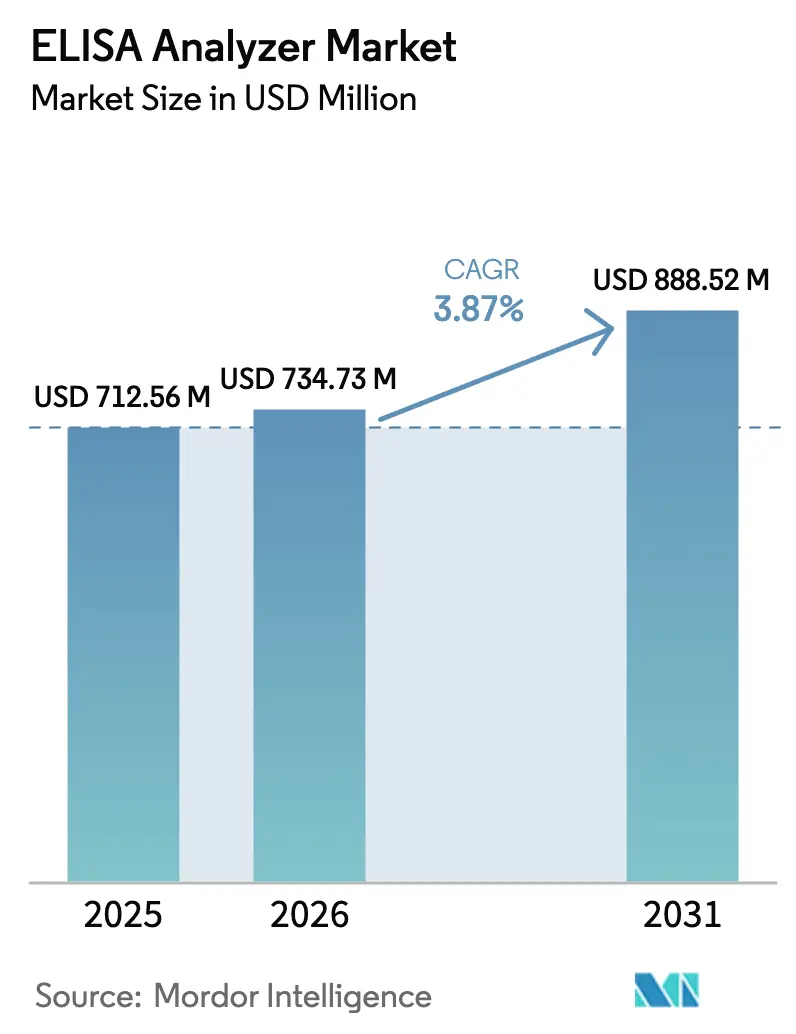
The ELISA Analyzer Market size is expected to increase from USD 712.56 million in 2025 to USD 734.73 million in 2026 and reach USD 888.52 million by 2031, growing at a CAGR of 3.87% over 2026-2031.
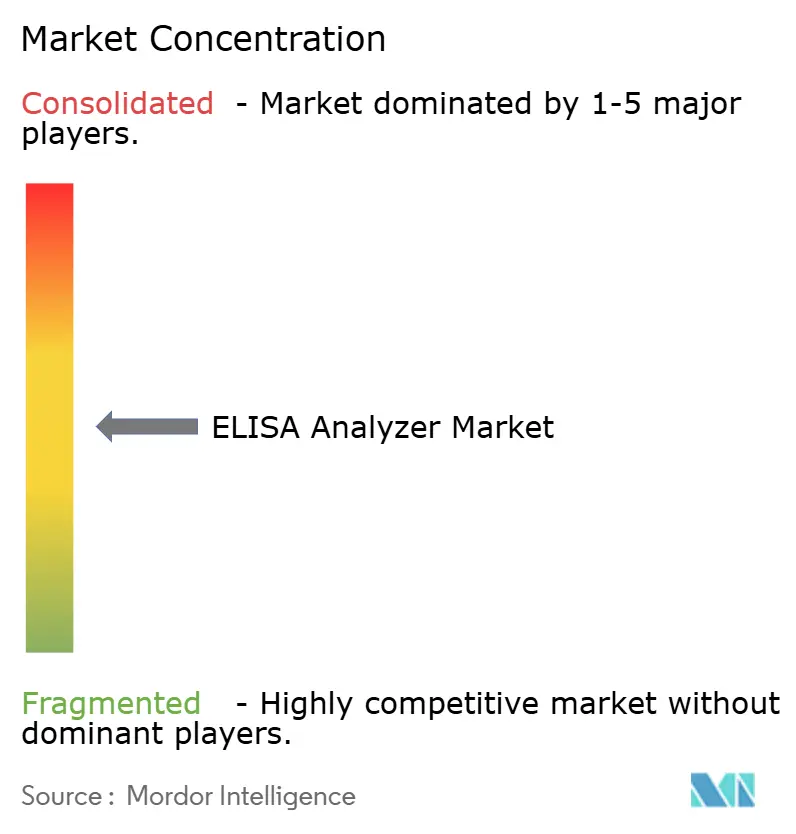
Installed bases in North America and Europe are maturing, yet Asia-Pacific laboratories, vaccine developers, and pharmaceutical quality-control facilities are driving fresh demand for automated, network-ready platforms. Bench-top systems still dominate high-complexity reference sites, but portable units are gaining momentum as decentralized testing models take root in rural health centers and investigator-site clinical trials. Chemiluminescence platforms continue to displace legacy colorimetric detection for applications that demand femtogram-level sensitivity, while AI-enabled firmware upgrades are beginning to shrink downtime, flag reagent-lot variability, and automate result interpretation. Competitive intensity remains moderate; the five largest suppliers capture roughly 55%-60% of revenue through vertically integrated reagent-instrument bundles that lock in multi-year service contracts. Price-sensitive markets, supply-chain re-shoring, and synchronized regulatory deadlines in the United States, Europe, and China are shaping the purchasing calendar for 2025-2026.
Key Report Takeaways
- By product type, bench-top analyzers held 42.63% of ELISA analyzer market share in 2025, while portable and handheld systems are forecast to expand at a 7.24% CAGR through 2031.
- By automation level, fully automated platforms captured 51.75% of the ELISA analyzer market size in 2025 and are projected to grow at 6.14% over 2026-2031.
- By detection technology, colorimetric instruments accounted for 44.12% of 2025 revenue, whereas chemiluminescence systems are advancing at a 7.23% CAGR through 2031.
- By application, clinical diagnostics led with 56.42% of 2025 revenue, and vaccine development is set to grow at a 7.92% CAGR between 2026-2031.
- By end user, hospitals and clinics generated 36.77% of 2025 revenue, while pharmaceutical and biotechnology companies are rising at a 5.35% CAGR to 2031.
- By geography, North America captured 34.23% of 2025 revenue, whereas Asia-Pacific is forecast to expand at a 6.31% CAGR through 2031.
Note: Market size and forecast figures in this report are generated using Mordor Intelligence’s proprietary estimation framework, updated with the latest available data and insights as of 2026.
Market Trends and Insights
Drivers Impact Analysis of ELISA Analyzer Market*
| Driver | (~) % Impact on CAGR Forecast | Geographic Relevance | Impact Timeline |
|---|---|---|---|
| Rising burden of chronic & infectious diseases driving high-throughput serology demand | 0.8% | Global, with acute pressure in APAC and Sub-Saharan Africa | Medium term (2-4 years) |
| Automation uptake improving lab productivity & turnaround time | 0.7% | North America & Europe core, spill-over to urban APAC hubs | Short term (≤ 2 years) |
| Regulatory push for traceability in diagnostic labs | 0.5% | North America (FDA LDT rule), Europe (IVDR), China (NMPA) | Short term (≤ 2 years) |
| Expansion of decentralized & point-of-care platforms in emerging markets | 0.6% | APAC (India, Indonesia, Philippines), MEA, South America | Medium term (2-4 years) |
| AI-driven analytics enabling predictive maintenance & result interpretation | 0.4% | North America, Western Europe, select APAC metros | Long term (≥ 4 years) |
| Geo-political trade shifts spurring local manufacturing & equipment refresh | 0.3% | China, India, Mexico, Eastern Europe | Medium term (2-4 years) |
| Source: Mordor Intelligence | |||
Rising Burden of Chronic & Infectious Diseases Driving High-Throughput Serology Demand
Cardiovascular and diabetes screening programs are pushing serology test volumes up 12%-15% per year in India and Indonesia, while the World Health Organization logged 249 million malaria cases in 2024.[1]World Health Organization, “World Malaria Report 2024,” WHO, who.int Vaccine-preventable disease surveillance now requires platforms that can process 200-400 samples in a standard shift, a throughput manual workflows cannot match. Aging Western populations need routine autoimmune and tumor-marker monitoring, compounding demand in wealthier regions. China’s National Health Commission has ordered every county hospital to establish clinical immunology departments by 2025, fueling chemiluminescence purchases that replace labor-intensive manual protocols.[2]National Health Commission of China, “14th Five-Year Plan for Healthcare Development,” NHC, nhc.gov.cn
Automation Uptake Improving Lab Productivity & Turnaround Time
A 2025 Journal of Clinical Microbiology study showed fully automated ELISA workstations cut technologist hands-on time six- to ten-fold versus semi-automated pipetting systems. Same-day reporting for therapeutic drug levels is now routine in North American hospitals where onboard washers and incubators compress total assay time from four hours to 90 minutes. Labor savings can exceed USD 100,000 per full-time equivalent, an attractive proposition where technologist salaries top USD 60,000. Automation also lowers operator-dependent variability, a cornerstone of ISO 15189:2022 accreditation.[3]International Organization for Standardization, “ISO 13485:2016 Medical Devices — Quality Management Systems,” ISO, iso.org
Regulatory Push for Traceability in Diagnostic Labs
The FDA’s May 2024 final rule ends enforcement discretion for laboratory-developed tests and mandates electronic audit trails for every calibration event. Europe’s In Vitro Diagnostic Regulation (IVDR) imposes similar obligations and took full effect in May 2025. China requires Class III devices to integrate with the National Health Information Platform, favoring cloud-connected analyzers. Together, these timelines are triggering a synchronized equipment refresh across the three largest markets.
Expansion of Decentralized & Point-of-Care Platforms in Emerging Markets
India’s Ayushman Bharat Digital Mission is equipping 10,000 primary health centers with Bluetooth-enabled portable devices. Indonesia procured 1,200 handheld immunoassay readers for its maternal health program in 2025. Portable analyzers are now common in vaccine clinical trials, eliminating cold-chain specimen transport and trimming logistics costs by up to 50%. The FDA cleared three portable ELISA platforms in 2025, confirming laboratory-grade performance in point-of-care settings.
Restraints Impact Analysis of ELISA Analyzer Market*
| Restraint | (~) % Impact on CAGR Forecast | Geographic Relevance | Impact Timeline |
|---|---|---|---|
| High capex & maintenance costs of fully automated systems | -0.4% | Global, acute in price-sensitive emerging markets | Short term (≤ 2 years) |
| Shortage of skilled personnel to validate complex immunoassays | -0.3% | North America, Europe, urban APAC | Medium term (2-4 years) |
| Competition from multiplex molecular platforms with faster turnaround time | -0.5% | North America, Western Europe | Short term (≤ 2 years) |
| Regulatory variability & lengthy approvals for software-driven upgrades | -0.2% | Global, particularly EU and China | Medium term (2-4 years) |
| Source: Mordor Intelligence | |||
High Capex & Maintenance Costs of Fully Automated Systems
Turnkey analyzers list for USD 150,000-350,000, well above annual equipment budgets for most public laboratories in Asia-Pacific and South America. Five-year operating leases exist, yet uptake remains under 15% because IFRS 16 forces lease liabilities onto balance sheets. Proprietary reagent lock-in can inflate per-test costs 20%-25%, a barrier for budget-constrained facilities.
Shortage of Skilled Personnel to Validate Complex Immunoassays
The American Society for Clinical Laboratory Science logged a 12% vacancy rate for medical laboratory scientists in 2025. ISO 15189 validation demands 20-40 hours of assay characterization, straining thin staffing rosters. Even after installation, many automated systems run under 50% capacity in their first year because technologists lack the certification hours required for full utilization.
*Our forecasts treat driver/restraint impacts as directional, not additive. The impact forecasts reflect baseline growth, mix effects, and variable interactions.
ELISA Analyzer Market Segment Analysis
By Product Type:
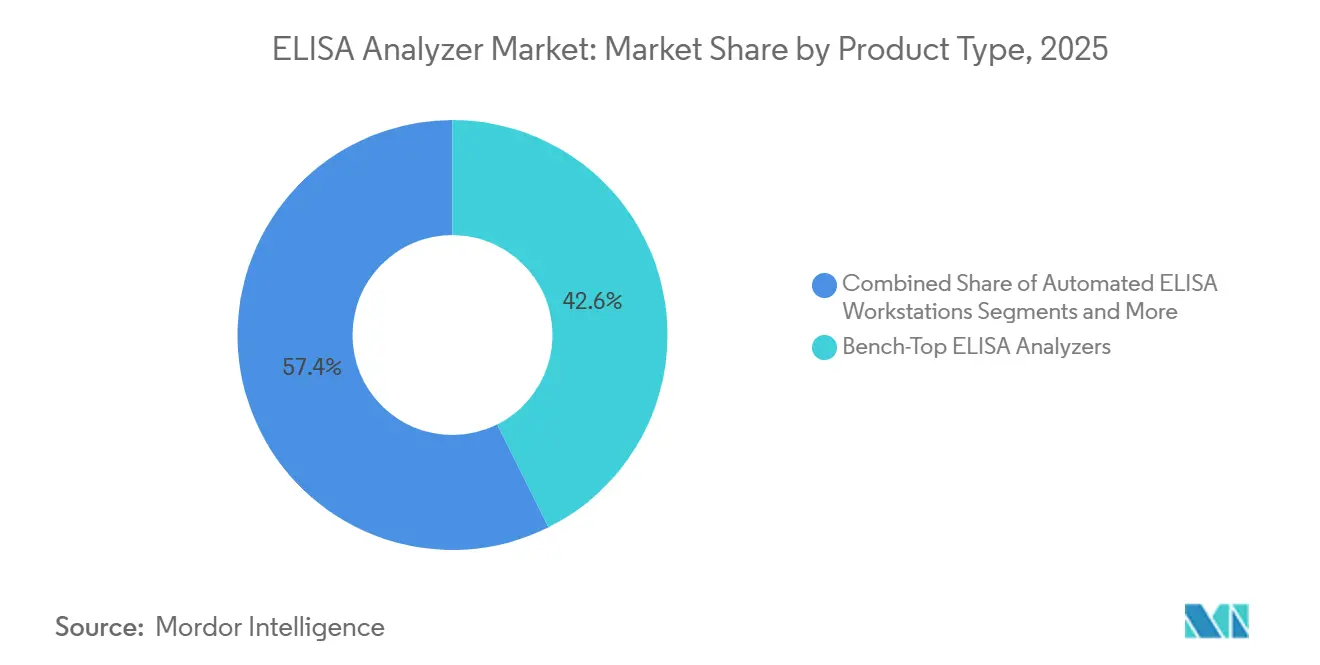
Portable Growth Outpaces Bench-Top DominanceBench-top analyzers contributed 42.63% to ELISA analyzer market share in 2025. Their integrated washers and incubators make them indispensable in reference centers processing 500-2,000 samples daily. Yet portable systems are registering a 7.24% CAGR, reflecting robust demand from India’s primary health clinics, Indonesian maternal-care sites, and sub-Saharan Africa’s malaria-monitoring outposts. Pharmaceutical sponsors now ship handheld units directly to investigator clinics, cutting per-trial logistics costs by up to 50% and accelerating sample-to-result workflows.
The ELISA analyzer market size for portable systems is poised to widen as FDA 510(k) clearances validate analytical parity with laboratory-based readers. Portable adoption also dovetails with supply-chain re-shoring; locally assembled battery-powered analyzers reach customers in under eight weeks, compared with the 20-week lead times typical for imported bench-top units. Bench-top platforms will retain primacy where high-throughput and ISO accreditation dictate closed workflows, but decentralized programs are structurally changing procurement hierarchies.



By Automation Level:
Fully Automated Platforms Anchor High-Volume SitesFully automated platforms accounted for 51.75% of ELISA analyzer market size in 2025 and are set to grow 6.14% through 2031. Their robotic sample handlers and barcode-driven tracking slash hands-on labor and make 200-400 samples per shift routine. Semi-automated systems still fit mid-tier hospitals that aim to improve throughput without the USD 150,000-300,000 capex of full automation. Manual readers are now confined to low-volume research labs.
Cost-benefit math drives uptake where technologist wages exceed USD 60,000, delivering payback in two-to-three years. Emerging-market buyers continue to view semi-automation as a stepping stone—vendors now offer modular add-ons that convert pipetting stations into fully robotic lines, protecting the original investment and smoothing upgrade paths.
By Detection Technology:
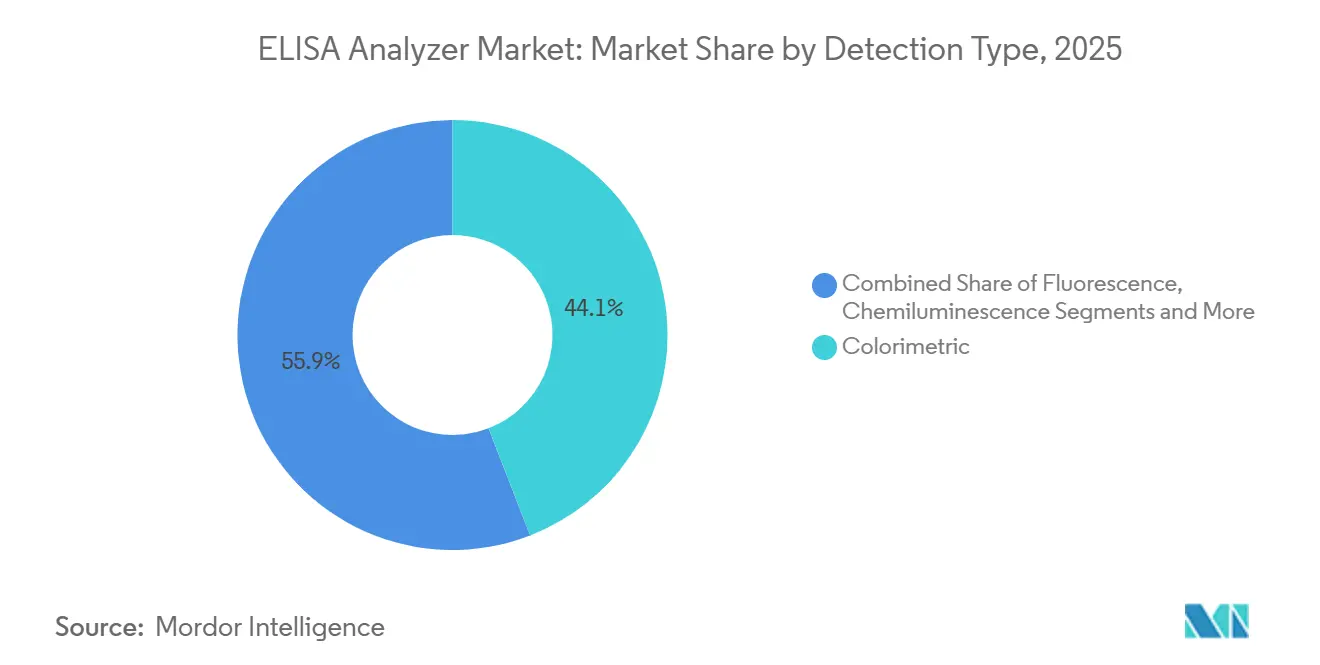
Chemiluminescence Extends Reach in Pharma LabsColorimetric detection held 44.12% of 2025 revenue because legacy assays and lower capital costs keep entry barriers low. Chemiluminescence is advancing 7.23% annually on the back of femtogram-level sensitivity demanded by therapeutic antibody quantification and mRNA vaccine analytics. Fluorescence occupies a niche in multiplex cytokine panels, while electrochemical detection is gaining modest traction in battery-powered field units.
ELISA analyzer market share for chemiluminescence is climbing in pharmaceutical quality-control suites, where a recent Clinical Chemistry study showed coefficients of variation below 5% across a 4-log range. The performance premium offsets higher instrument and reagent costs when precision directly influences regulatory submissions.
By Application:
Vaccine Development Becomes the Fastest-Growing Use-CaseClinical diagnostics generated 56.42% of 2025 revenue, a testament to ELISA’s four-decade entrenchment in hospital labs. Vaccine development, however, is accelerating at a 7.92% CAGR to 2031 as mRNA platforms require high-throughput immunogenicity endpoints. Drug discovery and monitoring represent 18% of the pie, while food-allergen testing benefits from January 2026 FSMA Section 204 traceability mandates.
ELISA analyzer market size for vaccine applications is expanding alongside CRO investments; the top 10 providers poured more than USD 400 million into automation in 2025. As global clinical-trial volume rises, labs touting 400-sample shifts gain competitive advantage.
By End User:
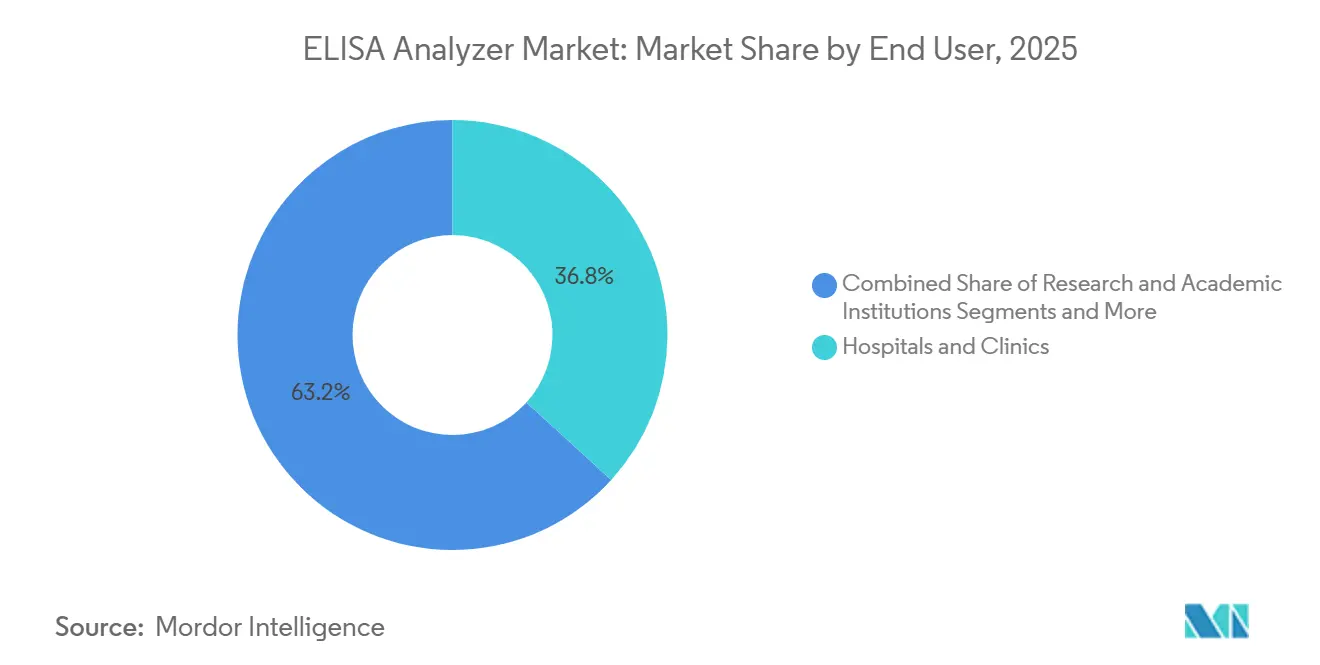
Pharma & Biotech Labs Narrow the Gap With HospitalsHospitals and clinics delivered 36.77% of 2025 revenue, relying on analyzers integrated with hospital information systems to release same-day therapeutic drug levels. Diagnostic lab networks follow close behind at roughly 28%. Pharmaceutical and biotechnology firms are rising at a 5.35% CAGR, fueled by bioanalytical demands from accelerated regulatory pathways.
ELISA analyzer market share trends reveal CROs as pivotal buyers; capacity utilization now ranks as a bid-evaluation metric when sponsors place multi-year assay contracts. Research institutions and the food sector round out demand, the latter leveraging ELISA’s quantitative accuracy for allergen compliance.
Geography Analysis
North America ELISA Analyzer Market
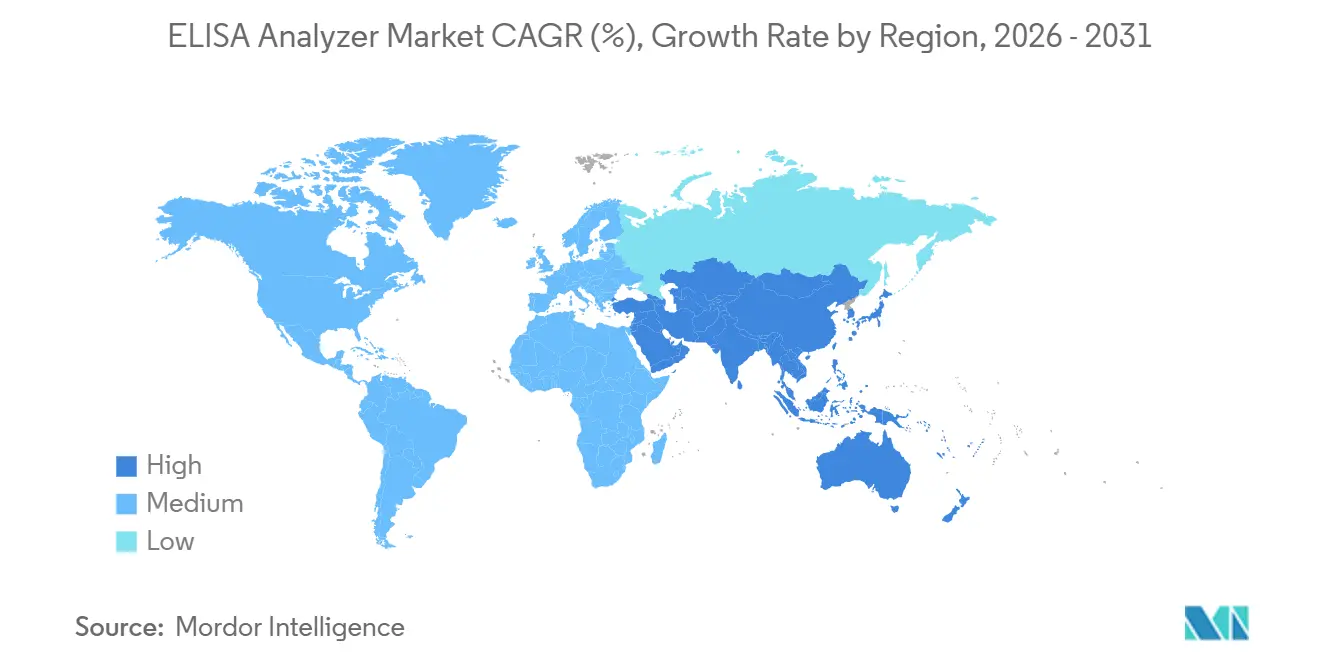
North America generated 34.23% of 2025 revenue, buoyed by FDA traceability mandates and per-capita health spending above USD 12,000. Canada and Mexico provide additional lift; the latter became a manufacturing hub once Chinese suppliers opened assembly facilities in Monterrey and Tijuana to dodge U.S. tariffs. Forecast growth hovers around 3.2%-3.5% through 2031, tempered by saturation but supported by cell-therapy monitoring and next-wave mRNA vaccine pipelines.
APAC ELISA Analyzer Market
Asia-Pacific is expanding 6.31% annually, led by China’s county-hospital modernization and India’s digital health mission. Domestic champions Mindray and Snibe control more than half of China’s market by pricing 30%-40% below Western incumbents. Japan and South Korea show slower growth near 3%, while Australia’s path-lab upgrades linked to ISO 15189 adoption lift regional demand.
EMEA and South America ELISA Analyzer Market
In Europe, Germany, France, and the United Kingdom dominate regional buying, with laboratories racing to replace non-compliant hardware ahead of IVDR enforcement. The Middle East & and Africa is anchored by Saudi Arabia’s SAR 12 billion laboratory-modernization plan. South America grows, although currency swings and import duties inflate capital costs by up to 35%.

Regulatory Landscape
ELISA analyzers are regulated as in vitro diagnostic (IVD) devices, and quality-system and traceability requirements increasingly show up in instrument specifications and upgrade cycles. In the United States, FDA oversight under 21 CFR Parts 800-899 runs alongside the Quality Management System Regulation (QMSR) transition, which aligns 21 CFR Part 820 with ISO 13485 and takes effect in 2026. That transition reinforces design controls, software validation, and expectations for electronic records on connected analyzers.
In Europe, Regulation (EU) 2017/746 (IVDR) has tightened conformity assessment and post-market obligations for IVDs, pushing manufacturers and laboratories toward documentation-ready workflows and audited calibration histories. A near-term compliance anchor is EUDAMED-related registration milestones by May 2026, plus the May 26, 2026 deadline linked to notified body certification requirements for higher-risk IVD classes. This raises demand for analyzers with stronger traceability features and validated middleware/LIS connectivity. In India, CDSCO and ICMR-CDSCO performance evaluation protocols are being strengthened, with additional emphasis on standardized evaluation and documentation for assay-analyzer combinations deployed in clinical settings.
Value Chain Analysis
The ELISA analyzer value chain begins with biological and chemical inputs, including antibodies, recombinant proteins, enzymes, substrates, and consumables such as microplates and tips. It also relies on electronics, optics, and precision motion components for automated platforms. Instrument OEMs and assay developers then translate these inputs into integrated systems, including microplate readers, washers, incubators, and fully automated workstations, and increasingly monetize through a razor-and-blade model where instrument placement drives recurring pull-through of proprietary kits, calibrators, controls, and service.
Midstream value is concentrated in assay menu development, software, and workflow integration, including middleware and Laboratory Information Systems (LIS) connectivity that support barcode tracking, audit trails, and standardized reporting aligned with laboratory accreditation. Downstream, demand is anchored by hospital laboratories, independent diagnostic networks, pharmaceutical and biotechnology quality-control and bioanalytical labs, CROs, and public health programs, with procurement commonly bundled into multi-year reagent and service agreements. Logistics, installation, validation, and preventive maintenance form a significant services layer, especially for fully automated systems where uptime, calibration discipline, and documentation readiness affect regulatory compliance and throughput economics.
Competitive Landscape
Thermo Fisher Scientific, Danaher, Bio-Rad, Abbott, and DiaSorin together hold large share of 2026 revenue, leveraging bundled reagent-instrument contracts that embed multi-year service obligations. Danaher’s 2024 Abcam acquisition exemplifies the vertical-integration playbook, marrying vast antibody catalogs with automation hardware. Chinese suppliers Mindray and Snibe win share in cost-sensitive regions but face cybersecurity and tariff headwinds in high-income markets.
White-space opportunities center on portable analyzers that deliver laboratory-grade quantitation at the point of care, displacing qualitative lateral-flow immunoassays. Automation specialists Hamilton Robotics and Tecan are promoting open-architecture liquid-handling lines that retrofit into existing readers, giving research labs reagent flexibility. Vendors race to embed AI-powered quality controls; early adopters report downtime cuts of roughly one-third and faster root-cause investigations when reagent lots drift out of tolerance.
ELISA Analyzer Industry Leaders
Thermo Fisher Scientific Inc.
Abbott Laboratories
Danaher Corp.
Bio-Rad Laboratories, Inc.
Revvity Inc.
- *Disclaimer: Major Players sorted in no particular order
ELISA Analyzer Market Companies Covered in this Report
- Abbott Laboratories
- Agilent Technologies
- Berthold Technologies GmbH
- Bio-Rad Laboratories
- Danaher
- DiaSorin
- Dynex Technologies
- EUROIMMUN AG
- Hamilton Robotics
- Mindray Bio-Medical Electronics Co., Ltd.
- Promega
- Revvity Inc.
- Sekisui Diagnostics
- Snibe Diagnostics
- STRATEC SE
- Tecan Group
- Thermo Fisher Scientific

Market Opportunities and Future Outlook
A major opportunity sits at the intersection of regulated traceability requirements and software-enabled workflow upgrades, where laboratories want analyzers that natively support audit trails, LIS integration, and validated software change control. The 2026 QMSR transition in the United States, aligning 21 CFR Part 820 with ISO 13485, and IVDR-driven documentation expectations in Europe create procurement triggers for network-ready platforms and service offerings that bundle validation, cybersecurity hardening, and lifecycle software support.
Another whitespace is in pharma-linked assay expansion, where instrument demand tends to follow companion diagnostics and precision-medicine partnerships that move assays from development into scalable, routine workflows. Danaher announced a diagnostic development and commercialization partnership with AstraZeneca in May 2025, and Thermo Fisher Scientific disclosed an R&D partnership with AstraZeneca BioVentureHub in October 2025, both reinforcing pipeline translational immunoassays that benefit automated ELISA and higher-sensitivity detection formats. In parallel, biomanufacturing capacity build-outs in the United States, discussed in May 2026 as part of a broader wave of large biomanufacturing investments, expand the installed base of QC and bioanalytical laboratories that rely on validated immunoassay workflows, supporting demand for automation, standardized reagents, and service contracts rather than one-off instrument purchases.
Recent Industry Developments in ELISA Analyzer Market
- July 2026: Leica Biosystems (Danaher) entered a definitive agreement to acquire StatLab Medical Products to expand its anatomic pathology diagnostic portfolio. The expansion of pathology instrumentation and diagnostics portfolio broadens bundled solutions for customers and strengthens cross-segment capabilities.
- June 2026: Cizzle Bio secured CLIA accreditation for its CIZ1B biomarker ELISA test at OmniHealth Diagnostics in Dallas. This marks the entry of a regulated ELISA based biomarker test into the US clinical market, enabling reimbursement pathways and regulatory credibility for early-detection assays.
- April 2026: Abcam (Danaher company) launched SimpleStep Ignite ELISA platform with 50x higher sensitivity and 35x wider dynamic range, with results in 55 minutes. This high-sensitivity ELISA platform expansion in automated systems supports faster turnaround and a more integrated workflow with chemiluminescent detection.


ELISA Analyzer Market Report Scope and Research Methodology
Market Definition and Coverage
For this report, the ELISA analyzer market covers instruments that automate or support ELISA test workflows in labs and similar testing settings. The value includes revenue from analyzer systems and related modules that directly enable ELISA sample processing and plate reading.
Scope exclusions: We exclude ELISA assay kits, general lab consumables, and service revenues that are not tied to analyzer hardware sales.
Segments Covered in This Report
- By Product Type
- Bench-Top ELISA Analyzers
- Portable / Handheld ELISA Analyzers
- Automated ELISA Workstations
- Microplate Readers
- By Automation Level
- Fully Automated Systems
- Semi-Automated Systems
- Manual Systems
- By Detection Technology
- Colorimetric
- Fluorescence
- Chemiluminescence
- Electrochemical
- By Application
- Clinical Diagnostics
- Vaccine Development
- Drug Discovery & Monitoring
- Food & Beverage Testing
- Environmental & Other Applications
- By End User
- Hospitals & Clinics
- Diagnostic Laboratories
- Research & Academic Institutions
- Pharmaceutical & Biotechnology Companies
- Food & Beverage Industry
- By Geography
- North America
- United States
- Canada
- Mexico
- Europe
- Germany
- France
- United Kingdom
- Italy
- Spain
- Rest of Europe
- Asia-Pacific
- China
- Japan
- India
- South Korea
- Australia
- Rest of Asia-Pacific
- Middle East & Africa
- GCC
- South Africa
- Rest of Middle East & Africa
- South America
- Brazil
- Argentina
- Rest of South America
- North America
Data Sources, Market Sizing, and Validation
Desk Research
Desk research was used to set the base structure of the market and to anchor assumptions that can be verified with public data. We reviewed official health and lab activity indicators and device oversight references, including FDA databases and related guidance, CDC publications, WHO statistics, and OECD health data, plus customs and trade releases where relevant.
To keep the model anchored in buyer economics, we also used company filings, annual reports, investor decks, audited financial statements, and credible press coverage on lab automation and diagnostic spending. Where needed, paid subscriptions were used for company financials and intelligence, patent databases, and shipment-level import and export checks to confirm direction and magnitude of trends. This list is illustrative only, and additional public sources were also used for data collection, validation, and clarification.
Primary Interviews and Surveys
Primary work focused on validating what the installed base looks like, how replacement cycles behave, and which end users are increasing throughput or shifting to higher automation levels. We spoke with a balanced mix of manufacturers, distributors, lab operators, and procurement and quality roles across major regions, and we used their feedback to correct where desk research assumptions did not match observed buying patterns.
Distribution of primary research fieldwork respondents
| Company type | Respondent position | Region |
|---|---|---|
| Top tier: 35% | CXOs: 13% | APAC: 43% |
| Mid tier: 48% | Functional/Unit leaders: 39% | EMEA: 37% |
| Smaller Players: 17% | Managers: 48% | Americas: 20% |
Market-Sizing & Forecasting
Sizing starts from a top-down build that reconstructs demand using lab testing volumes and capacity signals, followed by likely penetration of ELISA workflows by end user type and geography. Once the demand pool is mapped, the value is derived by applying typical price bands for manual, semi-automated, and fully automated systems, and then adjusting for replacement demand versus new placements.
To keep the totals realistic, we corroborate the outcome with selective bottom-up approximations, including sampled supplier revenues, distributor channel checks, and a volume times ASP cross-check for key product groups. The variables with the most influence were the installed base and average replacement cycle, utilization levels in high-throughput labs, shifts toward automation, regulatory and quality requirements that can delay or trigger upgrades, and public health and research funding signals that shape procurement.
Forecasting is run using scenario analysis with an exponential smoothing trend view. Short-term demand is dampened or lifted based on purchasing cycles and expected lab investment. When a bottom-up data point is missing for smaller countries or niche end users, we use proxy ratios tied to lab infrastructure indicators and then recheck those assumptions in follow-up expert calls.
Data Validation & Update Cycle
Validation is done through triangulation across multiple independent checks, including demand indicators, supplier-side signals, and regional splits that should align with known lab infrastructure patterns. If the model produces a sharp jump that cannot be explained by policy, funding, or replacement timing, we rework the assumption and trace the variance back to the variable that caused it.
A multi-step review is followed, where one analyst rebuilds key calculations and another reviews the logic behind the scope and conversions. When conflicting views appear during primary discussions, we re-contact respondents and prioritize the explanation that is consistent with observable signals. The reports are refreshed annually, with interim updates when major events materially shift pricing, procurement, or regulation, and a final pre-delivery pass is completed to reflect the latest data.
Mordor Intelligence's Elisa Analyzer Market Size Measured Against Other Published Estimates
Published market values for ELISA analyzers can vary because the product boundary is not always treated the same way, and because some studies mix instrument revenue with kits or broader immunoassay automation. Differences also show up when base years are not aligned, when currency conversion timing is inconsistent, or when a study relies on a single demand proxy without checking it against purchasing behavior.
By tracking replacement cycles, installed base signals, and region-level lab automation adoption, Mordor Intelligence keeps the estimate tied to analyzer hardware revenue and refreshes price bands as procurement feedback shifts across manual to automated systems.
Benchmark comparison
| Source | Market Size | Gaps in Research Methodology |
|---|---|---|
| Mordor Intelligence | USD 712.56 M (2025) | |
| Global Consultancy A | USD 680.10 M (2025) | Uses a narrower instrument-only definition that often excludes automated plate handling modules, and applies a single global ASP curve without adjusting for regional procurement mix. |
| Industry Association B | USD 0.79 B (2026) | Rolls up ELISA analyzers together with adjacent immunoassay automation line items, and anchors growth to research spending trends with limited validation of hospital and diagnostic lab replacement timing. |
The spread across the three values is mainly explained by what gets counted as analyzer revenue and how pricing and replacement are treated by year and region. Our approach stays repeatable because each major assumption can be traced to a demand driver, checked with interview feedback, and then revalidated when new public indicators or procurement signals change.


Key Questions Answered in the Report
How large is the ELISA analyzer market in 2026?
It stood at USD 734.73 million in 2026 and is projected to reach USD 888.52 million by 2031.
What CAGR is forecast for ELISA analyzers through 2031?
A CAGR of 3.87% is expected for the period 2026-2031.
Which product category is growing fastest?
Portable and handheld analyzers are expanding at a 7.24% CAGR as decentralized testing gains favor.
Why are chemiluminescence platforms gaining share?
Pharmaceutical and vaccine developers need femtogram-level sensitivity that chemiluminescence delivers, driving a 7.23% CAGR.
Which region shows the highest growth potential?
Asia-Pacific leads with a 6.31% CAGR, propelled by China’s and India’s laboratory-modernization programs.
Page last updated on:


 Your data is secure and never sold or shared.


