
Disposable Ostomy Bags Market Size and Share
Market Overview
| Study Period | 2020 - 2031 |
|---|---|
| Market Size (2026) | USD 2.83 Billion |
| Market Size (2031) | USD 3.76 Billion |
| Growth Rate (2026 - 2031) | 5.84 % |
| Fastest Growing Market | Asia-Pacific |
| Largest Market | North America |
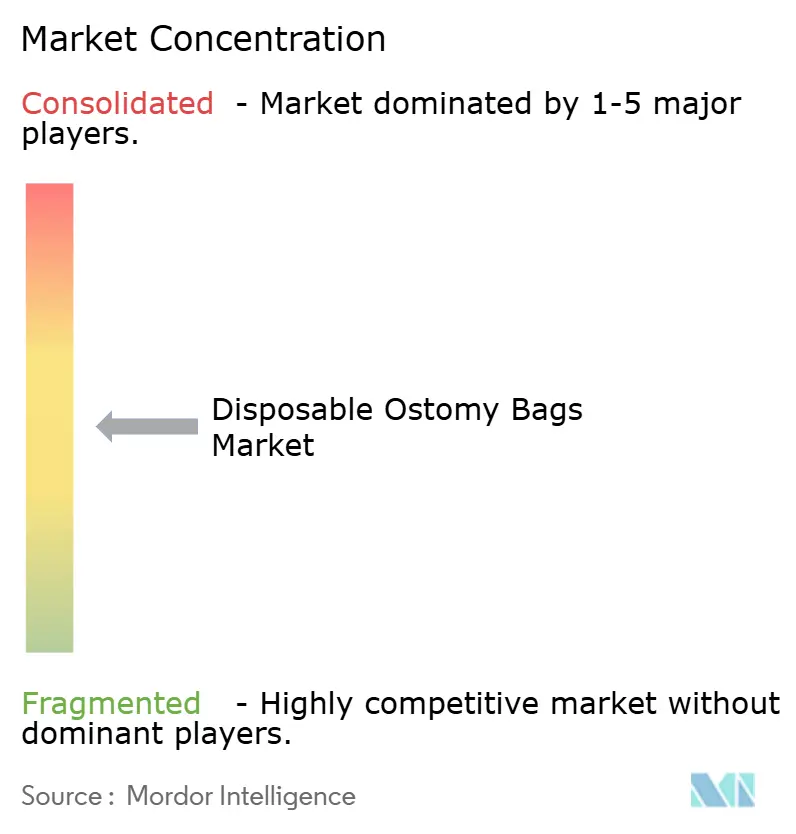
| Market Concentration | Medium |
Major Players *Disclaimer: Major Players sorted in no particular order Image © Mordor Intelligence. Reuse requires attribution under CC BY 4.0. | |
Disposable Ostomy Bags Market Analysis by Mordor Intelligence
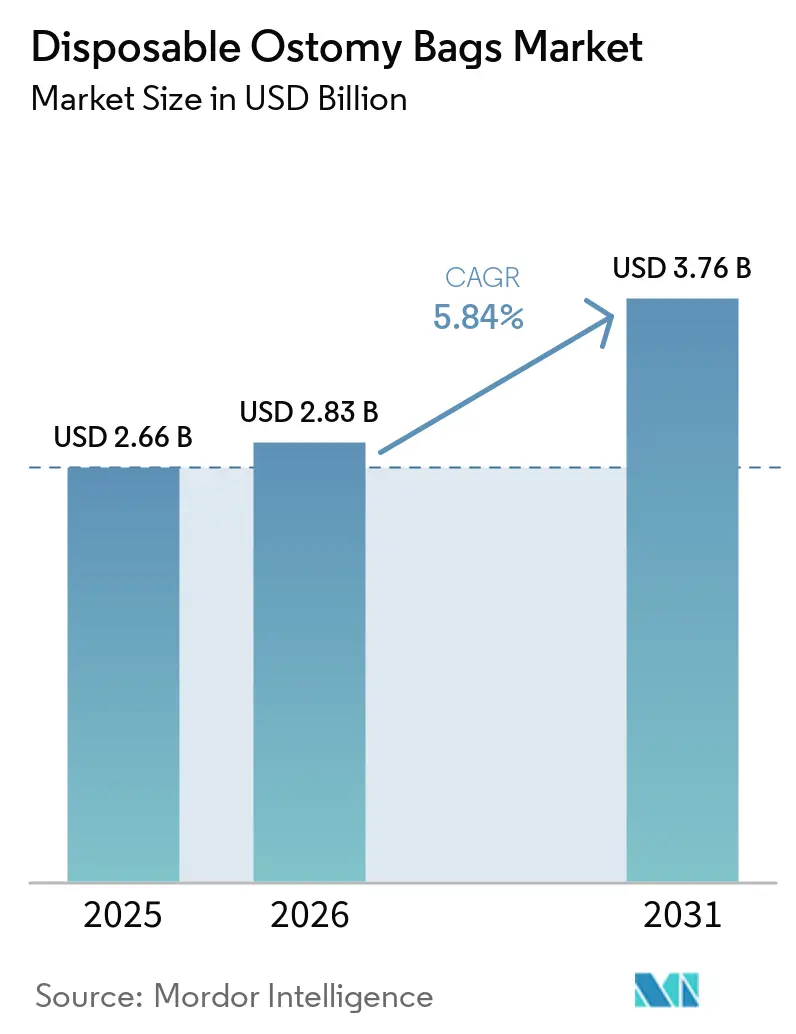
The Disposable Ostomy Bags Market size is expected to increase from USD 2.66 billion in 2025 to USD 2.83 billion in 2026 and reach USD 3.76 billion by 2031, growing at a CAGR of 5.84% over 2026-2031.
The disposable ostomy bags market is supported by a larger long-term patient base as cancer survival improves and digestive conditions become more prevalent. Care is also moving from hospitals to homes, which increases the need for products that patients can manage independently. Manufacturers are competing through barriers that protect the skin, improve fit, and reduce leakage. Digital leakage alerts and products that match different body shapes are creating room for product upgrades. The disposable ostomy bags market also faces pressure from product discomfort, pricing constraints, and material compliance requirements.
Key Report Takeaways
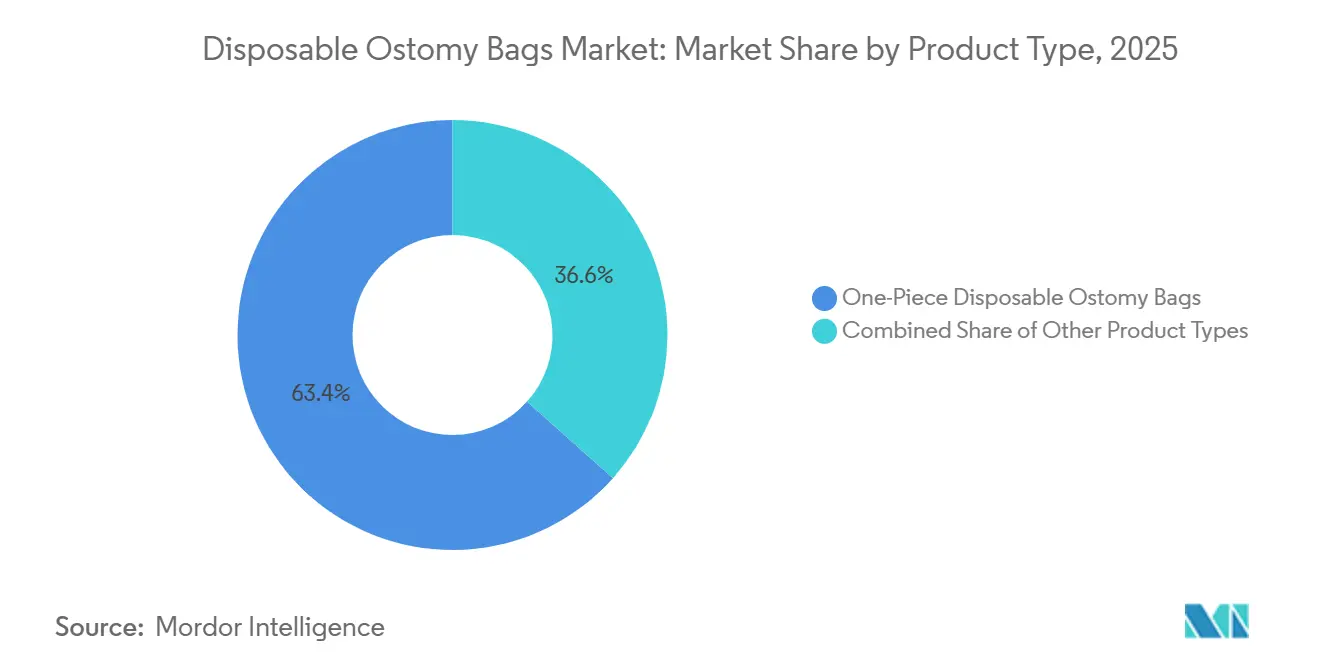
- By product type, one-piece systems held 63.4% revenue share in 2025, while two-piece systems are projected to expand at a 6.8% CAGR through 2031.
- By ostomy type, colostomy bags accounted for 52.8% of revenue in 2025, while urostomy bags recorded the highest projected CAGR at 7.2% through 2031.
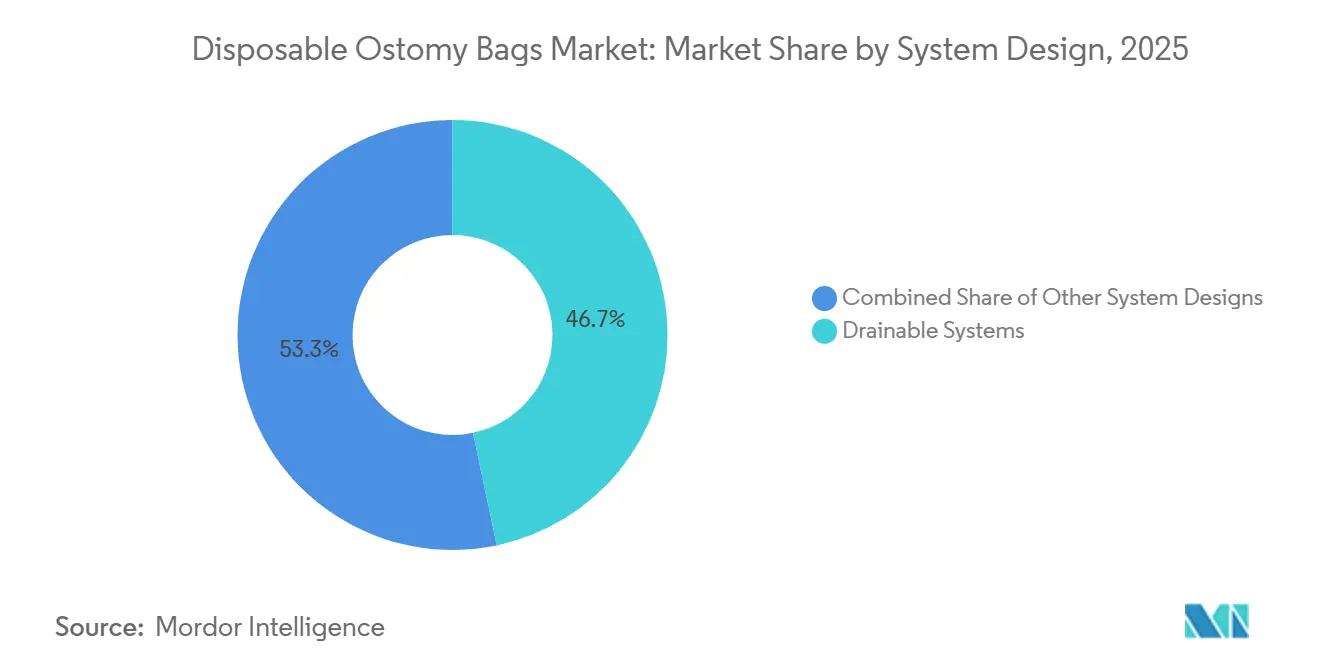
- By system design, drainable systems held 46.7% share in 2025, while convex systems are advancing at an 8.4% CAGR through 2031.
- By indication, colorectal cancer held 48.9% share in 2025, while inflammatory bowel disease is forecast to grow at a 7.8% CAGR through 2031.
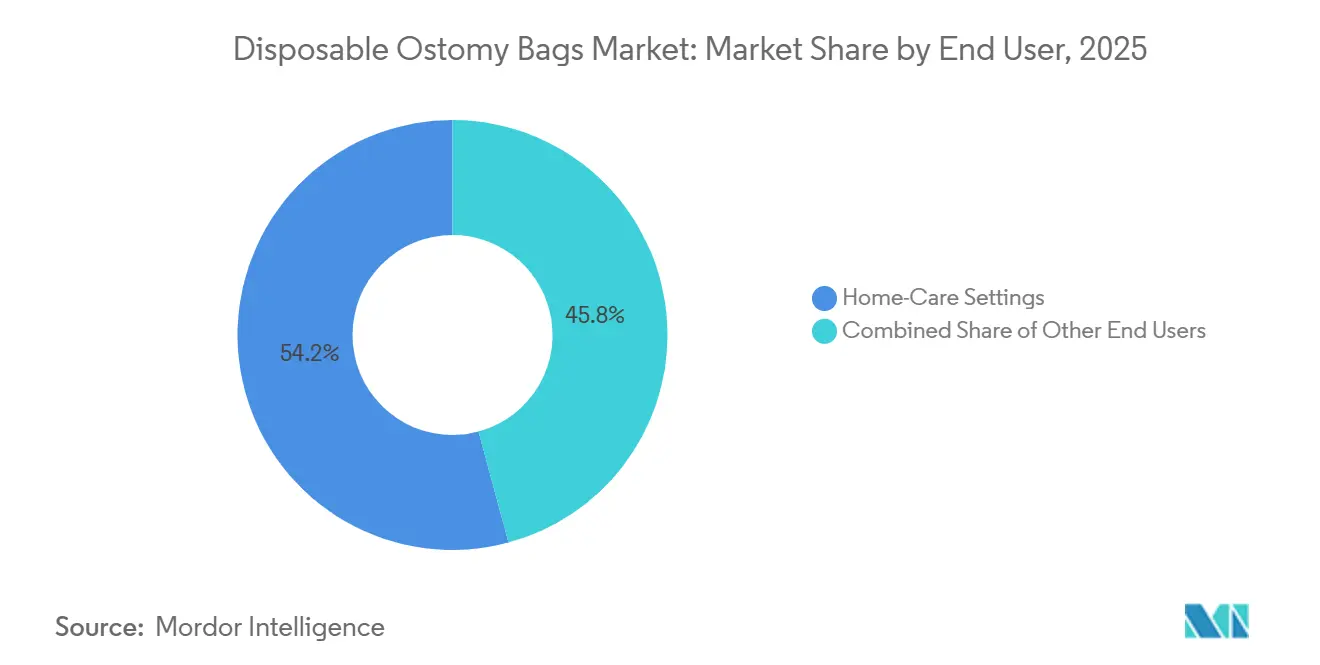
- By end user, home-care settings held 54.2% share in 2025 and recorded the highest projected CAGR at 8.7% through 2031.
Note: Market size and forecast figures in this report are generated using Mordor Intelligence’s proprietary estimation framework, updated with the latest available data and insights as of January 2026.
Global Disposable Ostomy Bags Market Trends and Insights
Drivers Impact Analysis*
| Driver | (~) % Impact on CAGR Forecast | Geographic Relevance | Impact Timeline |
|---|---|---|---|
| Rising Colorectal Cancer and Inflammatory Bowel Disease Burden | +1.6% | Global, concentrated in North America, Europe, and East Asia | Long term (≥ 4 years) |
| Expansion of Home-Based Ostomy Management | +1.3% | Global, strongest in North America and Western Europe | Medium term (2-4 years) |
| Increasing Demand for Skin-Friendly and Leak-Resistant Designs | +0.9% | Global, advanced markets first, with Asia-Pacific adoption accelerating | Medium term (2-4 years) |
| Aging Population and Higher Ostomy Procedure Volumes | +0.7% | North America, Europe, Japan, and South Korea | Long term (≥ 4 years) |
| Digital Leakage Detection and Anatomy-Customized Pouching Systems | +0.5% | North America and Western Europe, subject to regulatory clearance | Short term (≤ 2 years) |
| Improved Reimbursement Coverage and Access to Ostomy Care Supplies | +0.4% | North America primarily, with Asia-Pacific and the Middle East and Africa emerging | Medium term (2-4 years) |
| Source: Mordor Intelligence | |||
Rising Colorectal Cancer and Inflammatory Bowel Disease Burden
The disposable ostomy bags market expands as cancer and chronic intestinal conditions increase the number of patients who may need ostomy surgery. Colorectal cancer accounted for 9.9% of new cancer cases worldwide in GLOBOCAN 2024[1]International Agency for Research on Cancer, “Global Cancer Statistics 2024,” International Agency for Research on Cancer, ranking third for incidence and second for mortality. The World Health Organization projects nearly 35 million new cancer cases a year by 2050, 67% above the 2024 level. Better use of biologics, immunotherapy, and targeted treatments has extended survival for many colorectal cancer patients, increasing the importance of products used over long periods. Global inflammatory bowel disease prevalence reached 3.83 million cases in 2021 after rising 85.1% from 1990. China recorded 517,106 new colorectal cancer cases in 2022, and its expanding patient pool strengthens the need for ongoing self-management support
Expansion of Home-Based Ostomy Management
Home-based management is a durable source of recurring demand in the disposable ostomy bags market. An estimated 750,000 to 1 million people in the United States use ostomy products, and close to 100,000 new ostomy surgeries occur annually. Specialized home health providers showed lower emergency room use and hospitalization than pharmacy-based care in an ISPOR 2025 study[2]ISPOR, “Enhanced Outcomes and Reduced Healthcare Utilization with Specialized Home Healthcare Service Providers for Ostomy and Urological Patients: Comparative Research with Pharmacy-Based Care,” ISPOR 2025. This clinical and economic evidence supports payer decisions that direct patients toward supported home care. ConvaTec reported continued new patient starts through its Home Services Group in North America during 2025. A 2026 systematic review found that telehealth stoma care improved adjustment and self-efficacy, reinforcing the clinical systems that support patients outside hospitals
Increasing Demand for Skin-Friendly and Leak-Resistant Designs
Skin protection is an important product choice factor in the disposable ostomy bags market because complications can affect comfort, confidence, and product use. A 2025 study found peristomal skin complications in 85% of intestinal stoma patients, including 35% mild, 18% moderate, and 32% severe cases. The study also linked these complications with lower mental well-being and health-related quality of life. In a 12-week clinical study, Coloplast SenSura Mio Convex Soft recorded leakage outside the baseplate on 2.2% of baseplates, compared with 7% for flat systems. Hollister uses a ceramide-containing barrier in its CeraPlus portfolio to address skin protection needs. Complications can increase replacement needs in the near term, but they also encourage patients and clinicians to move toward products with stronger skin-care features.
Digital Leakage Detection and Anatomy-Customized Pouching Systems
Digital systems are creating a higher-value product category within the disposable ostomy bags market. Coloplast’s Heylo digital leakage notification system received FDA 510(k) clearance on October 2025, for ileostomy and colostomy patients aged 12 and older. The Class I system uses Bluetooth-connected sensors and a smartphone application to identify baseplate leakage before a soiling event. A United Kingdom study reported an incremental cost-effectiveness ratio of GBP 110 per quality-adjusted life year and 49.81 fewer leakage episodes per person over 3 years. A German randomized trial involving 139 participants found a 31% reduction in leakage outside the baseplate. Hollister also received a U.S. patent for a double-sided sensor device for ostomy leak detection in November 2025. A 2026 modeling study showed how convex barrier properties interact with different abdominal profiles, supporting more individualized product selection.
Restraints Impact Analysis*
| Restraint | (~) % Impact on CAGR Forecast | Geographic Relevance | Impact Timeline |
|---|---|---|---|
| Peristomal Skin Complications and Product-Related Discomfort | -0.5% | Global | Medium term (2-4 years) |
| High Cost of Premium Multi-Piece Systems and Accessories | -0.4% | Asia-Pacific, Middle East and Africa, and South America | Medium term (2-4 years) |
| Disposable Waste, PFAS Reformulation, and Sustainability Compliance | -0.3% | European Union primarily, with effects in North America and Asia-Pacific | Short term (≤ 2 years) |
| Social Stigma and Psychological Barriers | -0.2% | Emerging markets in Asia-Pacific, Middle East and Africa, and South America | Long term (≥ 4 years) |
| Source: Mordor Intelligence | |||
Peristomal Skin Complications and Product-Related Discomfort
Peristomal skin complications can raise replacement use but can also weaken confidence in ostomy appliances. Incidence estimates among patients with newly formed stomas ranged from 15.5% to 80%, while a 2025 Scientific Reports[3]Association of Chemotherapy and Stoma Features with Peristomal Skin Disorders, Scientific Reports study found complications in 59.7% of patients 1 month after surgery. Patients may not recognize early changes in the skin, which increases reliance on trained wound, ostomy, and continence nurses. The uneven availability of these specialists can limit appropriate product fitting across regions. Product manufacturers must also support clinical evidence requirements for skin barriers and accessory devices under the European Union Medical Device Regulation 2017/745. These factors can increase development effort and slow the introduction of differentiated products.
High Cost of Premium Multi-Piece Systems and Accessories
Higher-priced multi-piece systems can restrict access in price-sensitive parts of the disposable ostomy bags market. The original evidence indicates that long-term pouching, adhesive, and accessory spending represent most stoma-care expenditure for permanent colostomy patients. Two-piece convex systems cost more per appliance than one-piece closed-end options, limiting uptake where patients pay directly. This issue is most relevant in Latin America, Southeast Asia, and sub-Saharan Africa. The United Ostomy Associations of America stated in January 2026 that Medicare competitive bidding for ostomy supplies is scheduled to begin in 2028. Manufacturers may need product tiers that retain premium features while offering lower-cost options for tender-based channels.
*Our forecasts treat driver/restraint impacts as directional, not additive. The impact forecasts reflect baseline growth, mix effects, and variable interactions.
Segment Analysis
By Product Type: One-Piece Systems Lead, Two-Piece Gains Clinical Momentum
One-piece systems held 63.4% of the disposable ostomy bags market share in 2025. Their position reflects straightforward application, a lower profile, and easier daily management for home-care users. These features also suit many older patients and people who are learning self-care after surgery. One-piece products are supported by their lower cost in reimbursement-limited settings. This established base keeps the format central to the disposable ostomy bags market.
Two-piece systems are forecast to grow at a 6.8% CAGR through 2031. Their main benefit is that users can change the pouch without removing the baseplate. This can reduce repeated skin disturbance for patients managing peristomal skin problems. Coloplast[4]Coloplast A/S, “Announcement no. 05/2026: Interim Financial Report H1 2025/26,” GlobeNewswire continued to add accounts for its SenSura Mio two-piece offering in Europe and the United States through the first half of 2025/26. Telehealth consultations can also help clinicians review baseplate fit and recommend pouch-only changes, which favors modular systems.



By Ostomy Type: Colostomy’s Scale Holds Firm as Urostomy Accelerates
Colostomy bags accounted for 52.8% of revenue in the disposable ostomy bags market in 2025. Their scale follows the close relationship between colorectal cancer surgery and the creation of temporary or permanent colostomies. Colorectal cancer remains one of the most common cancers worldwide, with an estimated 2 million new cases annually. The disposable ostomy bags industry relies on recurring use because many patients require ongoing management after surgery. Colostomy products, therefore, remain the core volume category.
Urostomy bags have the highest projected growth rate at 7.2% through 2031. Rising bladder cancer surgery volumes increase the need for urinary diversion products. Urinary diversions also have a lower reversal rate than intestinal ostomies, which extends the period of product use. Ileostomy bags maintain demand from Crohn’s disease and ulcerative colitis procedures. Inflammatory bowel disease rates are rising in areas that previously had lower disease burdens, including Southeast Asia and Latin America. Younger bladder cancer patients in parts of Asia may also raise demand for products that support active lifestyles.
By System Design: Drainable Systems Anchor Volumes, Convex Designs Rewrite Clinical Expectations
Drainable systems held 46.7% of revenue in the disposable ostomy bags market in 2025. They are suitable for ileostomy and high-output colostomy patients who need to empty pouches often. Their established use makes them a key volume category for healthcare providers and home-care patients. Flat and closed-end systems still serve patients with formed and predictable output. However, the disposable ostomy bags market is moving toward designs that address individual stoma and body profiles.
Convex systems are expected to expand at an 8.4% CAGR through 2031. They are used for retracted, flush, or soft-peristomal-tissue stomas, where better contact can reduce leakage. The clinical results for SenSura Mio Convex Soft give nurses a documented reason to recommend convex products. The 2026 computer model of barrier convexity and abdominal profiles may support more specific product matching. This could further shift demand from standard flat systems toward anatomy-responsive designs.
By Indication: Colorectal Cancer Retains Scale, IBD Opens a Faster Growth Corridor
Colorectal cancer held 48.9% share of the disposable ostomy bags market size in 2025. The segment reflects the well-established need for ostomy creation in surgical cancer management. Some patients use an ostomy temporarily, while others require long-term support. The large global colorectal cancer burden maintains a consistent procedure base. This indicates the leading source of demand in the disposable ostomy bags market.
Inflammatory bowel disease is projected to grow at a 7.8% CAGR through 2031. The condition affects a growing group of patients who are often younger and focused on discretion, wear time, and mobility. Its prevalence growth is creating new patient pools in Asia, the Middle East, and Africa. Bladder cancer and urinary diversion products carry higher unit prices because of specialized care requirements. Diverticulitis, gastrointestinal trauma, and fistula management contribute steadier volumes with more standardized product requirements.
By End User: Home-Care Settings Drive Both Share and Speed
Home-care settings held 54.2% of the disposable ostomy bags market share in 2025. They are also forecast to grow at an 8.7% CAGR through 2031. This combination reflects patient preference, payer economics, and wider use of remote support. The disposable ostomy bags market benefits when patients can receive training and supplies at home. Evidence from ISPOR supports lower healthcare use under specialized home health support
Hospitals and specialty clinics remain important for early post-surgical treatment and nurse-led training. Their product choices can influence what patients continue to use after discharge. Ambulatory surgical centers are becoming more relevant as planned reversals and elective procedures move away from inpatient settings. Long-term care facilities need easy-to-apply one-piece systems for older patients who cannot manage products independently. Specialist ostomy clinics have lower direct purchasing volume but can strongly influence product selection through patient trials and training.
Geography Analysis
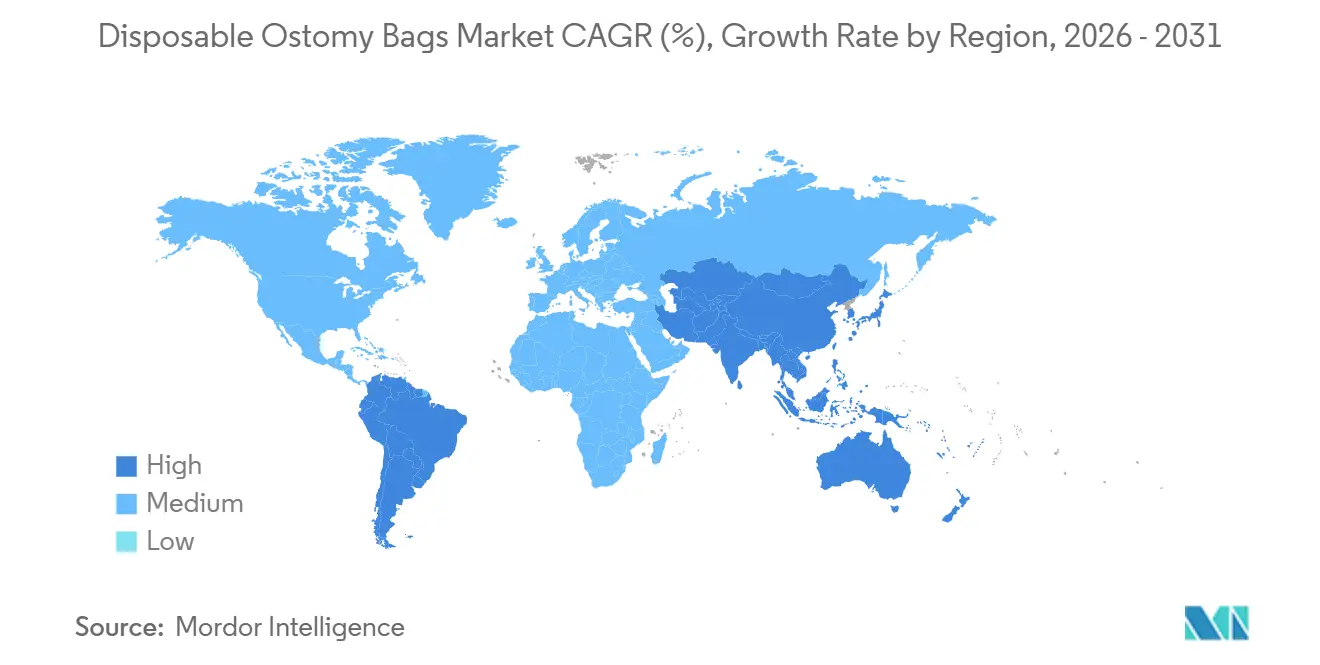
North America held 41.8% of revenue in the disposable ostomy bags market in 2025. The region has a large insured patient base, including an estimated 750,000 to 1 million people with permanent or temporary ostomies in the United States. Medicare Part B supports a stable reimbursement foundation for ostomy supplies. The United Ostomy Associations of America stated that supplies remain covered and that competitive bidding is scheduled for 2028. Premium convex and two-piece products have strong regional uptake.
Asia-Pacific is forecast to grow at a 7.5% CAGR through 2031, the fastest regional rate in the disposable ostomy bags market. China’s colorectal cancer burden, India’s hospital expansion, and Japan’s older population support regional demand. China has more than 1 million ostomy patients, with close to 100,000 new patients each year according to the source material. Japan combines an aging population with established reimbursement for stoma-care products, while South Korea, Australia, and New Zealand have well-developed branded product markets.
Europe has a substantial stoma population and established reimbursement structures, with Germany leading regional volumes. Coloplast reported double-digit growth in the United Kingdom during the first half of 2025/26, supported by SenSura Mio Convex. South America is led by Brazil as colorectal cancer treatment access improves. ConvaTec identified Latin America as a growth leader in its April 2026 trading update. The Middle East and Africa remain earlier-stage areas with rising awareness and more private hospital capacity.

Competitive Landscape
The disposable ostomy bags market is moderately concentrated, led by Coloplast A/S, ConvaTec Group plc, and Hollister Incorporated. Regional and specialist suppliers include Salts Healthcare, Welland Medical, ALCARE, Pelican Healthcare, Eakin Healthcare Group, and Zhejiang Longterm Medical Technology. These suppliers compete through regional health systems, formulary access, and product niches. Coloplast’s SenSura Mio platform offers flat, convex, and concave solutions across its ostomy range.
ConvaTec’s Esteem Body soft convex product supports its position in the disposable ostomy bags market. The company secured agreements with Captis and Vizient in November 2025, followed by Premier agreements in February 2026. These agreements strengthen its route to institutional customers in the United States. ConvaTec announced its Accelerate strategy in April 2026, with a target of 5% to 7% organic revenue growth and a mid-20% adjusted operating margin. Hollister’s CeraPlus portfolio places skin protection at the center of its competitive offer.
Sustainable materials and sensor systems are opening additional areas of competition in the disposable ostomy bags market. Manufacturers must meet increasingly demanding quality and regulatory expectations, including ISO 13485 certification and European Union Medical Device Regulation requirements. These requirements favor companies with clinical evidence, established quality systems, and regulatory resources. B. Braun reported 5.1% constant-currency sales growth to EUR 9.4 billion in 2025, while also reporting momentum in ostomy and continence care. Smaller suppliers can still compete through regional specialization.
Disposable Ostomy Bags Industry Leaders
Coloplast A/S
ConvaTec Group plc
Hollister Incorporated
B. Braun Melsungen AG
Smith & Nephew plc
- *Disclaimer: Major Players sorted in no particular order

Recent Industry Developments
- April 2026: ConvaTec announced its “Accelerate” strategy at a Capital Markets Day, targeting 5% to 7% organic revenue growth and a mid-20% adjusted operating margin by 2026-2027, underpinned by the company’s strongest innovation pipeline to date, including upcoming launches of ConvaFiber and ConvaVac across its chronic care categories.
- April 2026: Hollister Incorporated was awarded multiple group purchasing agreements with Premier, including the SURPASS, AscenDrive, and National Enterostomal Therapy agreements, effective April 1, 2026, covering its CeraPlus portfolio.
- February 2026: Coloplast completed the acquisition of all shares and voting rights of Uromedica, a commercial-stage medical technology company specializing in stress urinary incontinence treatment, for an undisclosed upfront cash payment plus contingent milestones.
- November 2025: ConvaTec secured its first U.S. Ostomy Group Purchasing Organization contract in more than 5 years with Captis and Vizient, and extended its Resource Group Ostomy GPO contract by 3 years.


Global Disposable Ostomy Bags Market Report Scope
As per the scope of the report, disposable ostomy bags are single-use ostomy management devices designed to collect bodily waste from a surgically created opening (stoma) in patients who have undergone ostomy procedures. These bags provide a hygienic, convenient, and reliable solution for waste management, helping improve patient comfort, mobility, and quality of life. Disposable ostomy bags are widely used for the management of colostomies, ileostomies, and urostomies in patients with colorectal cancer, inflammatory bowel disease, bladder cancer, and other conditions requiring fecal or urinary diversion.
The disposable ostomy bags market is segmented by product type into one-piece disposable ostomy bags and two-piece disposable ostomy bags; by ostomy type into colostomy bags, ileostomy bags, and urostomy bags; by system design into closed-end systems, drainable systems, flat systems, and convex systems; by indication into colorectal cancer, inflammatory bowel disease, bladder cancer & urinary diversion, and other indications; by end user into hospitals & specialty clinics, ambulatory surgical centers, home-care settings, long-term care facilities, and specialist ostomy clinics; and by geography into North America, Europe, Asia-Pacific, Middle East and Africa, and South America. The market report also covers the estimated market sizes and trends for 17 countries across major regions globally. For each segment, the market size and forecast are provided in terms of value (USD).
| One-Piece Disposable Ostomy Bags |
| Two-Piece Disposable Ostomy Bags |
| Colostomy Bags |
| Ileostomy Bags |
| Urostomy Bags |
| Closed-End Systems |
| Drainable Systems |
| Flat Systems |
| Convex Systems |
| Colorectal Cancer |
| Inflammatory Bowel Disease |
| Bladder Cancer & Urinary Diversion |
| Other Indications |
| Hospitals & Specialty Clinics |
| Ambulatory Surgical Centers |
| Home-Care Settings |
| Long-Term Care Facilities |
| Specialist Ostomy Clinics |
| North America | United States |
| Canada | |
| Mexico | |
| Europe | Germany |
| United Kingdom | |
| France | |
| Italy | |
| Spain | |
| Rest of Europe | |
| Asia-Pacific | China |
| Japan | |
| India | |
| South Korea | |
| Australia | |
| Rest of Asia-Pacific | |
| Middle East and Africa | GCC |
| South Africa | |
| Rest of Middle East and Africa | |
| South America | Brazil |
| Argentina | |
| Rest of South America |
| By Product Type | One-Piece Disposable Ostomy Bags | |
| Two-Piece Disposable Ostomy Bags | ||
| By Ostomy Type | Colostomy Bags | |
| Ileostomy Bags | ||
| Urostomy Bags | ||
| By System Design | Closed-End Systems | |
| Drainable Systems | ||
| Flat Systems | ||
| Convex Systems | ||
| By Indication | Colorectal Cancer | |
| Inflammatory Bowel Disease | ||
| Bladder Cancer & Urinary Diversion | ||
| Other Indications | ||
| By End User | Hospitals & Specialty Clinics | |
| Ambulatory Surgical Centers | ||
| Home-Care Settings | ||
| Long-Term Care Facilities | ||
| Specialist Ostomy Clinics | ||
| By Geography | North America | United States |
| Canada | ||
| Mexico | ||
| Europe | Germany | |
| United Kingdom | ||
| France | ||
| Italy | ||
| Spain | ||
| Rest of Europe | ||
| Asia-Pacific | China | |
| Japan | ||
| India | ||
| South Korea | ||
| Australia | ||
| Rest of Asia-Pacific | ||
| Middle East and Africa | GCC | |
| South Africa | ||
| Rest of Middle East and Africa | ||
| South America | Brazil | |
| Argentina | ||
| Rest of South America | ||


Key Questions Answered in the Report
What is driving demand for disposable ostomy bags?
Cancer prevalence, inflammatory bowel disease, longer survival, and the shift toward home-based care support recurring product use.
Which product type leads sales?
One-piece systems led with 63.4% share in 2025, supported by simple use and a lower profile.
Which product configuration is growing fastest?
Two-piece systems are forecast to grow at a 6.8% CAGR through 2031 because users can replace pouches without removing the baseplate.
Why are convex systems gaining use?
Convex systems are projected to grow at an 8.4% CAGR through 2031 because they can improve fit for difficult stoma profiles and reduce leakage.
Which end-user setting is most important?
Home-care settings held 54.2% share in 2025 and are expected to grow at an 8.7% CAGR through 2031.
Which region has the strongest growth outlook?
Asia-Pacific is forecast to grow at a 7.5% CAGR through 2031, supported by demand in China, India, and Japan.
Page last updated on:





