
Digital Therapeutics Device Market Size and Share
Market Overview
| Study Period | 2020 - 2031 |
|---|---|
| Market Size (2026) | USD 12.46 Billion |
| Market Size (2031) | USD 38.19 Billion |
| Growth Rate (2026 - 2031) | 25.14 % |
| Fastest Growing Market | Asia Pacific |
| Largest Market | North America |
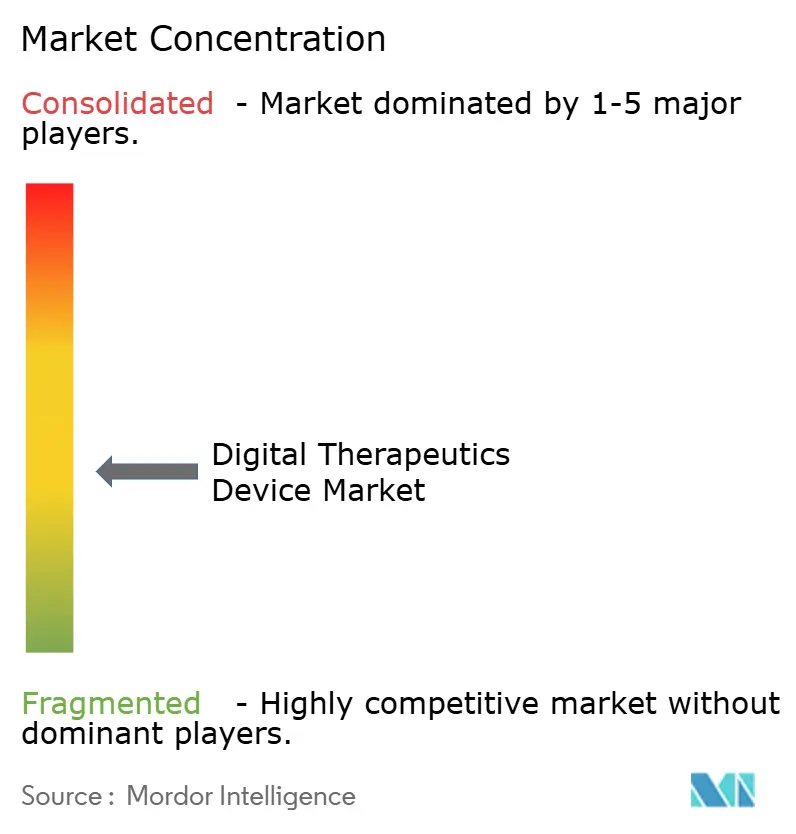
| Market Concentration | Medium |
Major Players *Disclaimer: Major Players sorted in no particular order Image © Mordor Intelligence. Reuse requires attribution under CC BY 4.0. | |
Digital Therapeutics Device Market Analysis by Mordor Intelligence
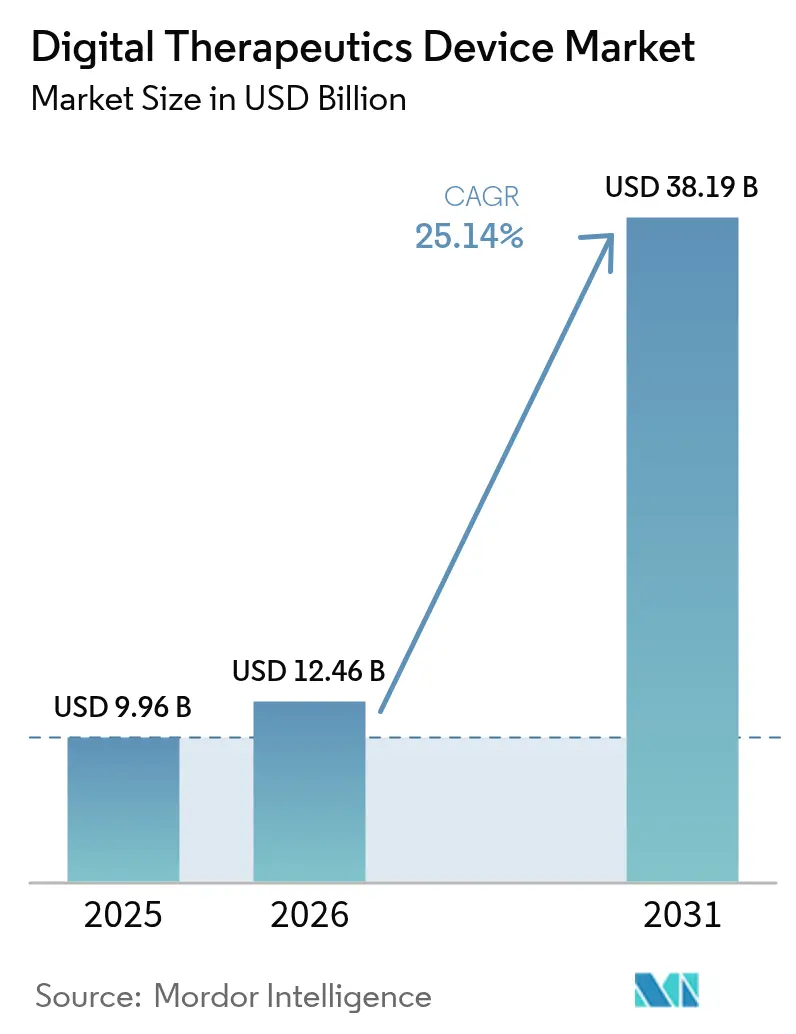
The Digital Therapeutics Device Market size is expected to grow from USD 9.96 billion in 2025 to USD 12.46 billion in 2026 and is forecast to reach USD 38.19 billion by 2031 at 25.14% CAGR over 2026-2031.
Expansion rests on software-based therapies that complement drugs, deliver measurable outcomes, and integrate smoothly with established clinical pathways. Regulatory harmonization—most notably the alignment between the United States Food and Drug Administration (FDA) and the Centers for Medicare and Medicaid Services (CMS)—adds commercial certainty, while Germany’s Digital Healthcare Act provides a blueprint for Europe. Artificial intelligence (AI) drives hyper-personalization, lifting patient engagement and clinical performance. At the same time, chronic-disease prevalence, maturing mobile infrastructure, and venture funding sustain demand, and payers are unlocking adoption by introducing reimbursement codes for mental-health digital therapies. Competitive intensity is steadily rising as large health-technology firms and pharmaceutical companies absorb niche developers, broadening therapeutic scope and bolstering distribution.
Key Report Takeaways
- By product type, software-only platforms led with a 70.68% share of the digital therapeutics devices market in 2025, whereas virtual reality and gaming solutions are expected to expand at a 27.92% CAGR through 2031.
- By therapeutic area, treatment applications accounted for 72.88% of the digital therapeutics devices market size in 2025, while preventive programs are projected to grow at a 27.11% CAGR to 2031.
- By modality, standalone prescription solutions captured 60.92% of the digital therapeutics devices market size in 2025; drug–digital combinations are expected to hold the fastest outlook at a 26.02% CAGR.
- By end user, direct-to-consumer channels accounted for 49.12% of revenue in 2025, but payers and insurers are poised for the quickest rise, at a 25.76% CAGR.
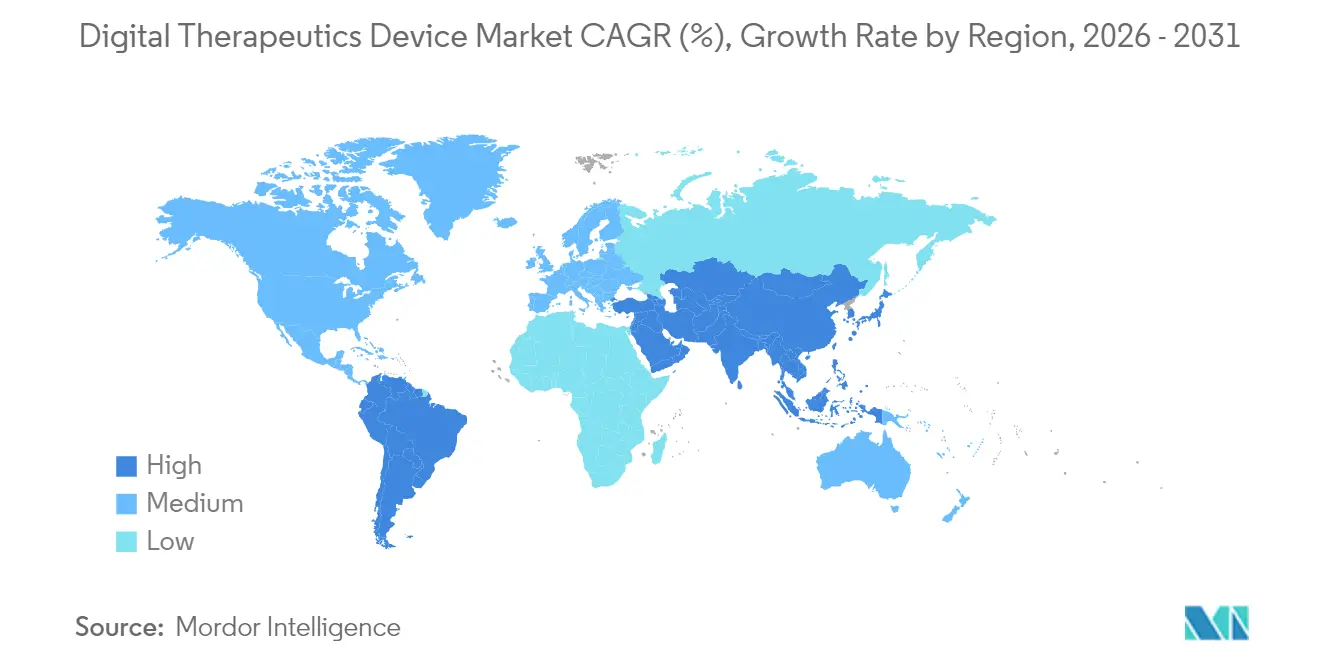
- By geography, North America commanded 46.31% revenue in 2025; Asia-Pacific is set to advance at 27.18% CAGR, making it the fastest-growing region.
Note: Market size and forecast figures in this report are generated using Mordor Intelligence’s proprietary estimation framework, updated with the latest available data and insights as of 2026.
Market Trends and Insights
Drivers Impact Analysis of Digital Therapeutics Device Market*
| Driver | (~) % Impact on CAGR Forecast | Geographic Relevance | Impact Timeline |
|---|---|---|---|
| Rising burden of chronic diseases | +6.2% | Global, concentrated in North America & Europe | Long term (≥ 4 years) |
| Rapid mobile & cloud technology maturation | +4.8% | Global, led by Asia-Pacific and North America | Medium term (2-4 years) |
| Government-backed preventive-care initiatives & VC funding | +3.9% | North America & EU, expanding to Asia-Pacific | Medium term (2-4 years) |
| Reimbursement expansion by payers | +5.1% | North America & Germany, spreading through the EU | Short term (≤ 2 years) |
| AI-driven hyper-personalization boosting engagement | +4.3% | Global, early uptake in developed markets | Medium term (2-4 years) |
| Corporate well-being budgets shifting to prescription DTx | +2.1% | North America & Western Europe | Short term (≤ 2 years) |
| Source: Mordor Intelligence | |||
Rising Burden of Chronic Diseases
Escalating rates of diabetes, asthma, chronic obstructive pulmonary disease, and cardiovascular disorders sustain continuous-care requirements that episodic clinical visits cannot satisfy. AI-driven digital twins helped 89% of users lower HbA1c below 7% within 12 months, underscoring clinical effectiveness in diabetes management.[1]Paramesh Shamanna, “One-Year Outcomes of a Digital Twin Intervention for Type 2 Diabetes: A Retrospective Real-World Study,” Scientific Reports, nature.com Chronic diseases absorb roughly 90% of developed-market spending, sharpening the argument for cost-saving, always-on digital therapies that curb emergency visits and hospitalizations. Respiratory-care applications with smart inhalers improve adherence and trim exacerbations, as documented in real-world studies.[2]Patrick F. Sach, “Artificial Intelligence in Respiratory Care,” Frontiers in Digital Health, frontiersin.org Demographic aging further heightens demand for intuitive self-management tools that operate across smartphones, wearables, and connected sensors.
Rapid Mobile & Cloud Technology Maturation
The arrival of 5G, edge computing, and advanced mobile chipsets lets therapeutic algorithms run locally, erasing latency and guarding privacy. Wearable AI built on soft microelectronics now processes data on-device, making continuous therapy unobtrusive and responsive. Mature cloud architectures synchronize information across gadgets and electronic health-record platforms via standard FHIR-based APIs, yielding a single longitudinal patient view that refines decision support. App-store validation programs dedicated to health applications create vetted distribution routes that reassure clinicians and reassure patients.
Reimbursement Expansion by Payers
Three CMS payment codes launched in January 2025 provide unified billing for digital mental-health treatments, setting a benchmark that private insurers typically follow. Germany’s Digital Healthcare Act produced 53 reimbursed applications covering 74 million lives, demonstrating the lift that national frameworks can deliver. Payers increasingly shift coverage from pharmacy to medical-benefit lines, adopt risk-sharing contracts, and demand real-world evidence that links digital usage to downstream savings, reinforcing the commercial argument for broad deployment.
AI-Driven Hyper-Personalization Boosting Engagement
Large language models now craft conversational guidance rivaling therapist empathy in controlled mental-health trials.[3]Sara Gerke, “Randomized Trial of a Generative AI Chatbot for Mental Health Treatment,” NEJM AI, ai.nejm.org Machine-learning systems employ just-in-time adaptive interventions, choosing optimal timing and channel to maximize adherence, with GPT-4 outperforming human experts in cardiac rehabilitation prompts. Multi-modal data—ranging from wearables to environmental sensors—feeds continuous learning loops, letting platforms adjust dosage, content, and cadence in real time. This personalization lifts retention, a critical metric for delivering durable clinical outcomes and sustaining revenue.
Restraints Impact Analysis of Digital Therapeutics Device Market*
| Restraint | (~) % Impact on CAGR Forecast | Geographic Relevance | Impact Timeline |
|---|---|---|---|
| Data-security concerns & clinician resistance | −3.2% | Global, particularly in regulated markets | Medium term (2-4 years) |
| High development & validation costs | −2.8% | Global, stronger effect in emerging markets | Long term (≥ 4 years) |
| Limited long-term clinical-outcome evidence | −2.1% | Global, shaping reimbursement decisions | Medium term (2-4 years) |
| Algorithmic bias triggering regulatory scrutiny | −1.4% | Developed markets with strict AI rules | Short term (≤ 2 years) |
| Source: Mordor Intelligence | |||
Data-Security Concerns & Clinician Resistance
Rising cyber-incidents erode trust among physicians and patients, especially when therapies require constant behavioral and physiologic monitoring. European regulators caution that perpetual data flows create heightened breach risk. Liability worries persist because algorithmic suggestions influence medical decisions without clear fault lines when outcomes falter. Privacy-preserving encryption offers a path forward but is costly and computationally heavy, slowing deployment.
High Development & Validation Costs
Digital therapeutics must satisfy both software-quality and medical-device rules. Randomized trials mirror pharmaceutical rigor and demand multi-year funding cycles that stretch the resources of smaller innovators. Europe’s Medical Device Regulation has raised compliance costs, forcing up to one-third of legacy products toward exit. Post-market surveillance needs constant updates as algorithms evolve, creating an expense profile unlike static hardware devices.
*Our forecasts treat driver/restraint impacts as directional, not additive. The impact forecasts reflect baseline growth, mix effects, and variable interactions.
Digital Therapeutics Device Market Segment Analysis
By Product Type:
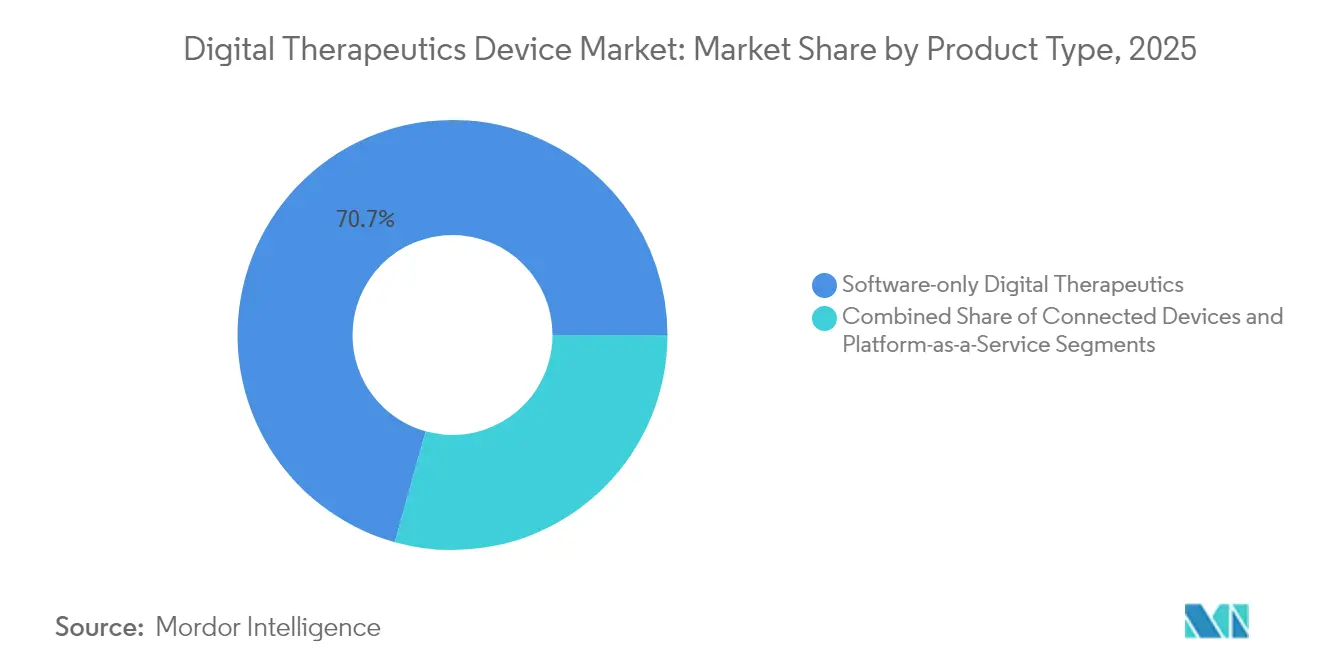
Software Predominance Catalyzes Ecosystem IntegrationSoftware-only solutions accounted for 70.68% of the digital therapeutics devices market revenue in 2025, reflecting the healthcare sector’s inclination toward low-overhead deployments that integrate seamlessly with existing clinical infrastructure. The segment’s lead also stems from rapid update cycles, enabling developers to push algorithm refinements without hardware recalls. Virtual-reality and gaming products hold the highest CAGR outlook at 27.92% to 2031, buoyed by immersive environments that elevate patient motivation and deliver exposure therapy with controlled stimuli. Connected peripherals—such as smart inhalers, glucose monitors, and VR headsets—anchor ecosystem convergence, as platform-as-a-service models provide unified data pipelines that simplify analytics. This progression suggests that sustained leadership will belong to vendors offering end-to-end frameworks, rather than individual point solutions.
The digital therapeutics devices market size for software platforms is projected to increase as electronic health record integration improves. At the same time, the hardware-linked segment commands a growing premium for conditions requiring biometric feedback. Interoperability, powered by open APIs, mitigates earlier fragmentation and encourages hospitals to consolidate multiple therapeutic lines on single dashboards, reducing vendor fatigue and improving clinician acceptance.



By Therapeutic Area:
Treatment Dominates, Prevention Gains TractionTreatment applications accounted for 72.88% of the digital therapeutics devices market share in 2025, thanks to established reimbursement routes and clear diagnostic triggers. Clinicians view treatment-oriented software as a direct substitute or adjunct for pharmaceuticals, expediting prescription within familiar workflows. Preventive solutions—ranging from diabetes risk programs to migraine prophylaxis—are advancing at a 27.11% CAGR, propelled by value-based care models that reward early intervention. FDA clearance of CT-132 marked the first preventive prescription digital therapeutic for episodic migraine, raising confidence among both payers and providers.
As health systems shift toward capitation and shared savings, preventive digital therapeutics become strategic levers for bending cost curves. Corporate wellness contracts further accelerate preventive care uptake, granting developers alternative revenue streams outside of insurer channels. The digital therapeutics devices market size for preventive programs is therefore poised to compound at a faster rate than the treatment segment beyond 2027, even though the absolute value remains smaller throughout the forecast horizon.
By Modality:
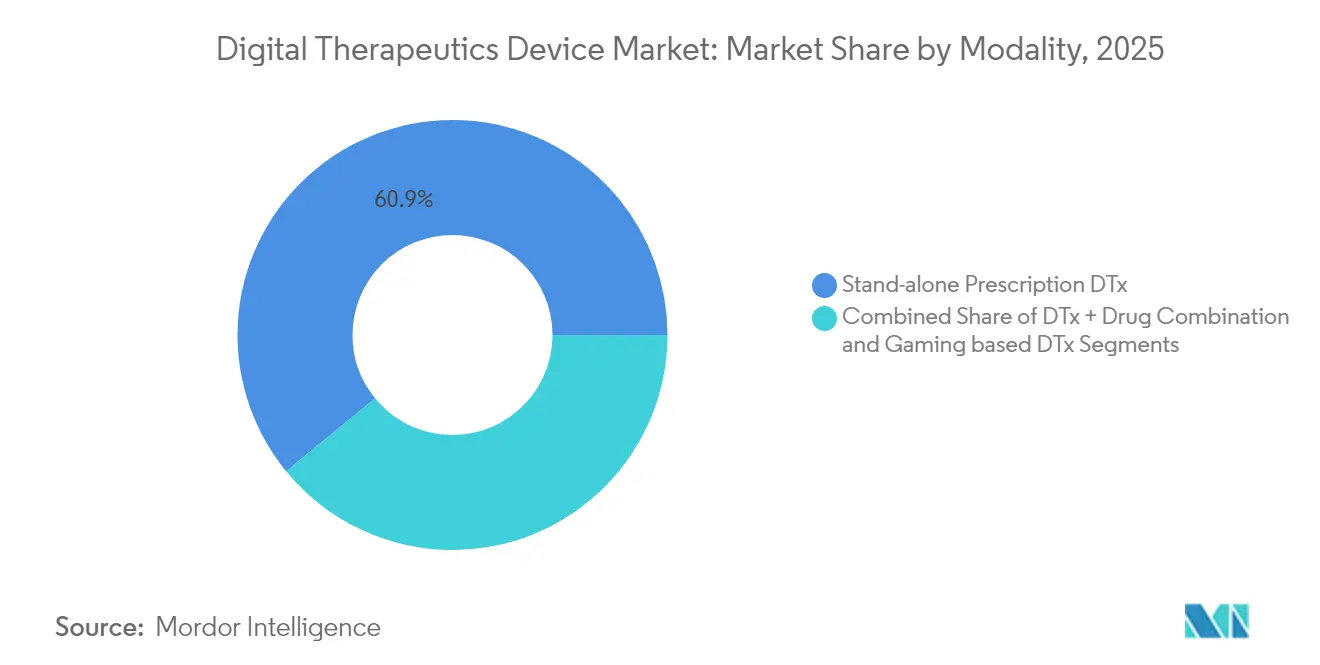
Combination Therapies Challenge Standalone SupremacyStandalone prescription software captured 60.92% of the revenue in 2025, favored for its simpler approval pathway and distinct intellectual property boundaries. Providers appreciate the clarity of prescribing a single digital product, logging usage, and measuring outcomes without coordinating pharmaceutical regimens. Yet combination drug-digital approaches are growing at 26.02% CAGR, aligned with the FDA’s Prescription Drug Use-Related Software (PDURS) guidance that clarifies submission expectations. Evidence shows digital add-ons can heighten drug effectiveness and permit dosage reduction, lowering side-effect profiles.
Virtual-reality modalities bolster engagement in pain and anxiety, while sensor-integrated wearables deliver closed-loop therapies that respond instantaneously to physiological triggers. Companies that can effectively integrate pharmacology, real-time data, and adaptive content are poised to displace pure-play software rivals. In turn, device makers are forging alliances with life-science firms to co-develop holistic care pathways, shifting market share toward integrated offerings.
By End User:
Consumer Purchases Lead, Payers AccelerateDirect-to-consumer channels accounted for 49.12% of revenue in 2025, primarily driven by app stores and subscription models that bypass clinical gatekeepers. Adoption benefits from immediate user feedback, facilitating iterative design improvements. Nevertheless, payers and insurers are the fastest-growing cohort, with a 25.76% CAGR, catalyzed by new CMS codes and German DiGA reimbursement, which validate the return on investment. As actuaries document reduced downstream costs, coverage expands from pilots to national formularies. Providers and hospital systems deepen uptake as integrations mature, and they value dashboards that synthesize device outputs into actionable clinical alerts.
Employers reallocate wellness budgets toward evidence-based digital therapeutics, forming direct-pay contracts that emphasize measurable outcomes. These multipronged distribution routes buffer developers from the volatility of any single channel and promote sustainable revenue diversification within the digital therapeutics devices market.
Geography Analysis
North America Digital Therapeutics Device Market
North America generated 46.31% of 2025 sales, with the U.S. leading the way, rooted in FDA clarity, CMS reimbursement, and an investment ecosystem willing to fund late-stage trials. The launch of three mental-health billing codes in 2025 vaulted digital interventions into mainstream benefit design, driving swift integration across health plans. Canada and Mexico contribute incremental growth as cross-border telehealth collaborations expand.
APAC Digital Therapeutics Device Market
The Asia-Pacific region is projected to be the fastest-growing territory, advancing at a 27.18% CAGR through 2031. Japan pioneered regulatory models that recognize software as a therapy, prompting domestic pharmaceutical companies to co-develop digital interventions for neurological disorders. China leverages the expansive adoption of mobile payments and urban telehealth portals to scale its chronic disease management programs. In contrast, India’s surge in smartphone adoption enables the delivery of low-cost behavioral health applications to remote populations. Australia and South Korea act as test beds for advanced VR and AI algorithms due to high broadband penetration.
Europe Digital Therapeutics Device Market
Europe shows measured but steady progress under the Medical Device Regulation, which harmonizes classification and post-market vigilance requirements. Germany’s DiGA pathway covers more than 74 million insured lives and provides a practical reimbursement precedent that other member states increasingly emulate. France, Italy, and Spain integrate national-health-service pilots, whereas the United Kingdom refines NICE appraisal processes for software therapies. Strict data-protection rules fuel innovation in privacy-preserving analytics, differentiating European vendors on security credentials.

Regulatory Landscape
Regulation for digital therapeutics devices is increasingly handled through medical-device software pathways. In the United States, the Food and Drug Administration (FDA) frames Software as a Medical Device (SaMD) and related guidance as key references for therapeutic claims, cybersecurity, and life cycle change management. In February 2026, the FDA updated its cybersecurity guidance for medical devices, reinforcing expectations for secure design and post-market risk management as therapies rely on continuous data flows across smartphones, wearables, and cloud services.
In Europe, the Medical Device Regulation (MDR 2017/745) continues to shape classification and conformity assessment for software that drives diagnostic or therapeutic decisions, including under Rule 11. The European Commission issued MDCG 2025-4 guidance on the safe availability of medical device software apps on online platforms, which underscores distributor and platform responsibilities alongside manufacturer obligations. This is particularly relevant for direct-to-consumer (D2C) and app-store distribution models.
Value Chain Analysis
The digital therapeutics value chain starts with clinical problem selection, behavioral-science design, and software engineering, then moves into clinical validation (often including pivotal trials for prescription-grade therapies), regulatory submissions via SaMD and other medical device pathways, and ongoing post-market surveillance and cybersecurity maintenance. Data inputs and enabling components include mobile operating systems, cloud infrastructure, and analytics or AI tooling, and for device-linked modalities, connected peripherals such as smart inhalers, continuous glucose monitors, and VR headsets. These elements are brought together through interoperable APIs, along with growing use of FHIR-based integration into electronic health records.
Commercialization then bifurcates into (i) prescribed and reimbursed deployment via providers, payers, and pharmacy or medical-benefit workflows and (ii) D2C subscriptions distributed through online platforms, with employer contracting as a parallel B2B route for preventive and chronic-care programs. Downstream adoption and reimbursement readiness are also influenced by policy and advocacy bodies; for example, the American Telemedicine Association (ATA) acquired the Digital Therapeutics Alliance (DTA) in April 2025. That acquisition helped align stakeholders around standards, evidence expectations, and payer engagement, affecting formulary placement, contracting, and scaled rollout.
Competitive Landscape
The competitive field is moderately fragmented: dozens of specialists pursue single-condition niches, yet consolidation is gathering pace. Large electronic-health-record vendors embed digital therapeutics modules, and pharmaceutical giants acquire platforms to extend therapy lifecycles. Three strategic archetypes predominate. First, pure-play developers such as Click Therapeutics focus on neurological and metabolic disorders, securing FDA de novo clearances and inking co-marketing deals with pharma. Second, health-tech platforms such as Teladoc bolt on therapeutics—illustrated by the USD 30 million UpLift acquisition that fortifies BetterHelp’s insurance-ready pipeline. Third, pharmaceutical incumbents weave digital companions into value-based contracts to defend share against generics.
Technology differentiation hinges on AI-driven personalization, robust real-world-evidence engines, and frictionless clinical-workflow integration. Hinge Health’s musculoskeletal focus produced 50% top-line growth and profitability by Q1 2025, underpinning a confident IPO filing that signals capital-market acceptance of the model. Omada Health’s Nasdaq debut further validates investor appetite for evidence-backed digital care. White-space opportunities persist in pediatrics, rare diseases, and multi-morbidity, where incumbent presence is limited and clinical unmet need is high.
Digital Therapeutics Device Industry Leaders
CANARY HEALTH
Livongo Health
Pear Therapeutics
Omada Health, Inc.
Koninklijke Philips N.V.
- *Disclaimer: Major Players sorted in no particular order
Digital Therapeutics Device Market Companies Covered in this Report
- 2Morrow Inc.
- Akili Interactive Labs
- Better Therapeutics
- Big Health
- Biofourmis
- Canary Health
- Click Therapeutics
- Cognoa
- DarioHealth
- Happify Health
- Kaia Health
- Koninklijke Philips
- Livongo (Teladoc Health)
- MindMaze
- Noom Inc.
- Omada Health
- Pear Therapeutics
- Propeller Health
- Sword Health
- Twine Health
- Virta Health
- WellDoc

Market Opportunities and Future Outlook
Opportunities concentrate where reimbursement and evidence requirements are becoming more explicit, making it easier to move from pilot deployments to scaled coverage. In the United States, the introduction of three CMS payment codes in January 2025 for digital mental-health treatments provides a standardized billing anchor for prescription-grade offerings and supports deeper integration into payer benefit design and provider workflows. In Europe, Germanys DiGA pathway remains a practical commercialization route for evidence-based software therapies, and the growing emphasis on measurable outcomes increases demand for platforms that can capture real-world evidence and report performance to payers.
White space continues to open in multi-modal therapeutic delivery that blends software with connected devices and immersive interfaces, aligning with the higher-growth profile for VR and gaming-based solutions. Consolidation and capability-building are also providing live market proof points: in July 2026, XRHealth announced the acquisition of Swing Therapeutics to integrate the FDA De Novo-authorized Stanza program into its extended reality chronic pain platform. The deal shows how vendors are assembling broader therapeutic portfolios and distribution footprints rather than competing as single-condition point solutions. At the same time, regulatory and clinical scrutiny around AI-enabled personalization and algorithm updates increases the value of life cycle management, including predetermined change planning, and security-by-design. That environment creates a stronger fit for vendors focused on compliance, evidence generation, and interoperability capabilities.
Recent Industry Developments in Digital Therapeutics Device Market
- June 2026: Canary Speech brought its Canary Ambient solution to the Zoom App Marketplace to deliver real-time vocal biomarker insights during telehealth visits. The integration places monitoring inside an established clinician workflow surface, which can support uptake without requiring a separate application environment.
- April 2025: Click Therapeutics secured FDA authorization for CT-132, positioned as the first preventive prescription digital therapeutic for episodic migraine in the United States. The clearance expands credibility for preventive offerings and strengthens payer discussions by anchoring prevention in a prescription-grade regulatory framework.
- May 2024: A Delaware bankruptcy court confirmed the Chapter 11 plan of liquidation for Pear Therapeutics, Inc. and its subsidiary following the sale of its assets. The exit of a high-profile prescription digital therapeutics pioneer reshaped competitive dynamics and increased buyer focus on well-capitalized developers and platform-led consolidation.


Digital Therapeutics Device Market Report Scope and Research Methodology
Market Definition and Coverage
This market covers revenues generated by evidence-based digital therapeutic solutions where the intervention is delivered through a regulated software program and, when required, a connected device that is integral to the therapy and its outcomes.
Scope exclusions: general wellness and fitness apps that do not have clinical outcome evidence and are not positioned as therapeutic interventions are excluded.
Segments Covered in This Report
- By Product Type
- Software-only Digital Therapeutics
- Connected Devices (smart inhalers, CGMs, VR headsets)
- Platform-as-a-Service / APIs
- By Therapeutic Area
- Preventive
- Pre-diabetes
- Obesity
- Smoking Cessation
- Others
- Treatment
- Diabetes
- Cardiovascular Diseases
- Neurological Disorders
- Respiratory Diseases
- Oncology Support
- Others
- Preventive
- By Modality
- Standalone Prescription DTx
- DTx + Drug Combination (e.g., inhaled therapies)
- Virtual-Reality / Gaming-based DTx
- By End User
- Patients (D2C)
- Providers / Hospitals
- Payers & Insurers
- Employers & Corporate Wellness Programs
- By Geography
- North America
- United States
- Canada
- Mexico
- Europe
- Germany
- United Kingdom
- France
- Italy
- Spain
- Rest of Europe
- Asia-Pacific
- China
- Japan
- India
- Australia
- South Korea
- Rest of Asia-Pacific
- Middle East and Africa
- GCC
- South Africa
- Rest of Middle East and Africa
- South America
- Brazil
- Argentina
- Rest of South America
- North America
Data Sources, Market Sizing, and Validation
Desk Research
Desk work starts with clarifying what is counted as a digital therapeutic device revenue stream, and then mapping that scope to signals that can be checked year by year. We refer to public sources such as the US FDA device and digital health communications, the US Centers for Medicare and Medicaid Services updates on coverage and reimbursement, and World Health Organization digital health guidance to keep definitions consistent.
To understand demand drivers and clinical adoption, we also scan sources such as the US CDC chronic disease prevalence statistics, peer-reviewed clinical journals for evidence and endpoints, and trade association publications that track digital health usage in care pathways. Company annual reports, investor presentations, and reputable press are used to cross-check commercialization timing and geographic expansion, and paid subscriptions for company financials and intelligence, news and financials, and patent databases help fill disclosure gaps. The specific desk sources listed here are illustrative, and many additional public sources were also reviewed for data collection, validation, and clarification.
Primary Interviews and Surveys
Primary work is used to validate what is actually monetized in this space, and to sanity check adoption, program duration, and pricing assumptions that are not fully visible in public sources. We typically speak with solution providers, device ecosystem participants, payer-side stakeholders, provider-side stakeholders, and domain experts across major therapy areas, followed by checks across APAC, EMEA, and the Americas so one region does not overly influence the final model.
Distribution of primary research fieldwork respondents
| Company type | Respondent position | Region |
|---|---|---|
| Top tier: 37% | CXOs: 12% | APAC: 42% |
| Mid tier: 49% | Functional/Unit leaders: 38% | EMEA: 33% |
| Smaller Players: 14% | Managers: 50% | Americas: 25% |
Market-Sizing & Forecasting
The core model is built using a top-down approach where the addressable treated pool and care-pathway adoption are reconstructed from epidemiology, diagnosis and treatment flows, and digital care readiness across regions, and the market value is then derived through an implied price and utilization logic. To keep the output grounded, totals are corroborated with selective bottom-up approximations, such as sampling subscription price ranges, checking disclosed active patient counts where available, and running channel checks on device attachment when hardware is integral to therapy delivery.
Inputs that commonly shape the model include chronic condition prevalence and diagnosis rates for key indications, the share of patients eligible for digital therapy under care guidance, reimbursement and formulary signals that affect paid adoption, typical program duration and renewal behavior, and the split between prescription and direct-to-consumer monetization. When public data is thin in smaller geographies, proxy adoption rates are applied from similar health system profiles and then re-tested with expert feedback before being kept. Forecasting relies on scenario analysis supported by expert views on regulatory clearance pace, payer coverage expansion, and provider workflow integration, since step-changes can occur after policy updates.
Data Validation & Update Cycle
Validation is carried out in steps so the final number is not driven by one assumption. We compare model outputs against independent signals such as therapy-area adoption updates, regulatory clearance momentum, and reimbursement pathway changes, and then large variances are flagged for review. When an outlier appears, the input series are rechecked and follow-up outreach is triggered to confirm whether the shift is real or timing-related.
Before sign-off, the model and key assumptions go through internal analyst review so units, arithmetic, and scope logic remain consistent across regions. Reports are refreshed annually, with interim updates when material events occur, such as meaningful policy shifts or major product launches that impact adoption. Right before delivery, a fresh pass is completed so clients receive the most current view based on the latest available information.
Mordor Intelligence's Digital Therapeutic Devices Market Size Versus Other Published Estimates
Published market numbers for digital therapeutic devices can vary widely, even when the topic labels look similar. The spread usually comes from differences in what is treated as a therapeutic intervention versus broader digital health tools, and from whether subscription revenues are counted alongside device-linked revenues.
By tracking reimbursement signals, clinical evidence thresholds, and device attachment requirements, Mordor Intelligence keeps the count aligned to therapeutic programs that are positioned as treatment and excludes wellness-style usage, which can shift the starting market value depending on the publisher.
Benchmark comparison
| Source | Market Size | Gaps in Research Methodology |
|---|---|---|
| Mordor Intelligence | USD 12.46 B (2026) | |
| Industry Research Group A | USD 4.86 B (2024) | Uses an earlier base year and a more device-led framing, and it is less explicit about separating regulated therapeutic interventions from broader digital health platforms, which can compress the counted revenue pool. |
| Global Publisher B | USD 0.90 B (2024) | Focuses on a narrower hardware-only device subset and values it like a conventional device category, which can omit subscription-led therapeutic revenue that contributes meaningfully in many indications. |
Looking across the three estimates, the main reason for the gap is whether subscription-driven therapeutic programs are counted alongside connected devices, and whether non-therapeutic digital health usage is filtered out. Our sizing steps are tied to observable healthcare signals and clear inclusion rules, which makes the 2026 value easier to reproduce and defend when assumptions are questioned.


Key Questions Answered in the Report
What is the current value of the digital therapeutics devices market?
The market is estimated at USD 12.46 billion in 2026 and is projected to reach USD 38.19 billion by 2031.
Which region is growing fastest for digital therapeutics?
Asia-Pacific leads with a forecast 27.18% CAGR, driven by smartphone penetration, supportive policy, and rising chronic-disease prevalence.
How are payers influencing adoption of digital therapeutics?
New CMS reimbursement codes and Germany’s DiGA framework provide standardized payment pathways, prompting broader insurer coverage and accelerating uptake.
Which product modality shows the highest growth?
Drug–digital combination therapies hold the quickest pace at 26.02% CAGR as integrated approaches prove superior to either modality alone.
What are the main barriers to digital therapeutics expansion?
Data-security concerns, clinician resistance, high validation costs, and limited long-term outcome evidence remain key hurdles slowing market advancement.
How does AI enhance digital therapeutics effectiveness?
AI enables real-time personalization, adaptive intervention timing, and conversational interfaces that improve patient engagement and clinical outcomes.
Page last updated on:


 Your data is secure and never sold or shared.


