
Depression Therapeutics Market Size and Share
Market Overview
| Study Period | 2020 - 2031 |
|---|---|
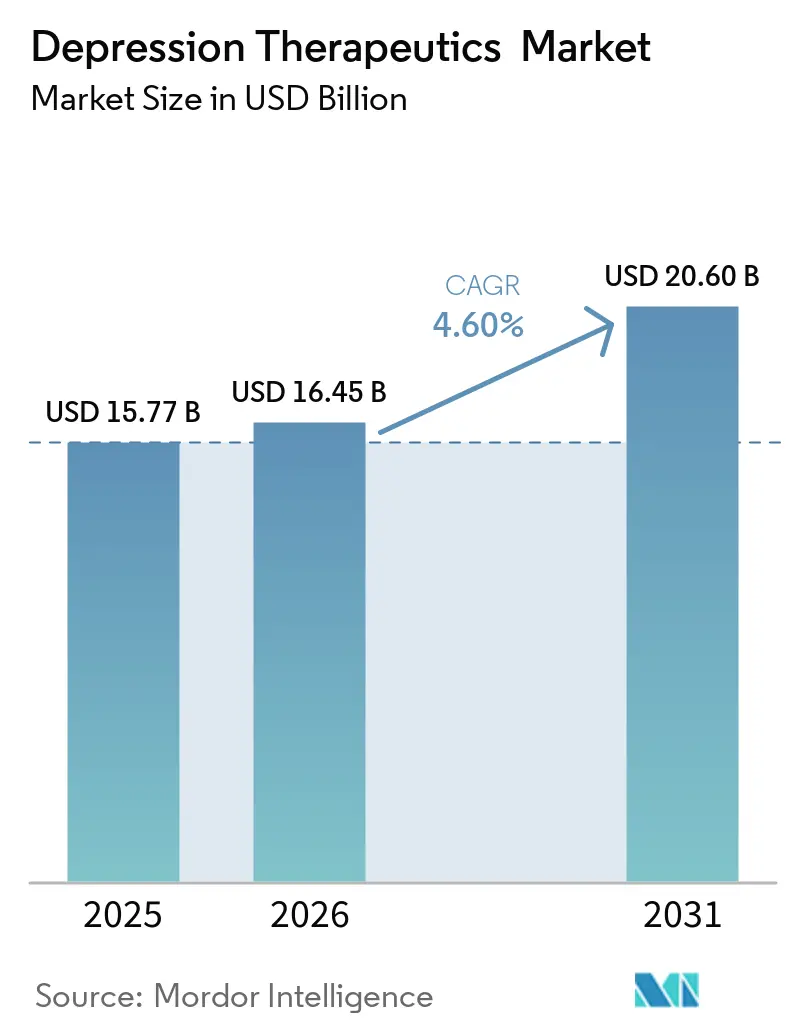
| Market Size (2026) | USD 16.45 Billion |
| Market Size (2031) | USD 20.60 Billion |
| Growth Rate (2026 - 2031) | 4.60 % |
| Fastest Growing Market | North America |
| Largest Market | Asia-Pacific |
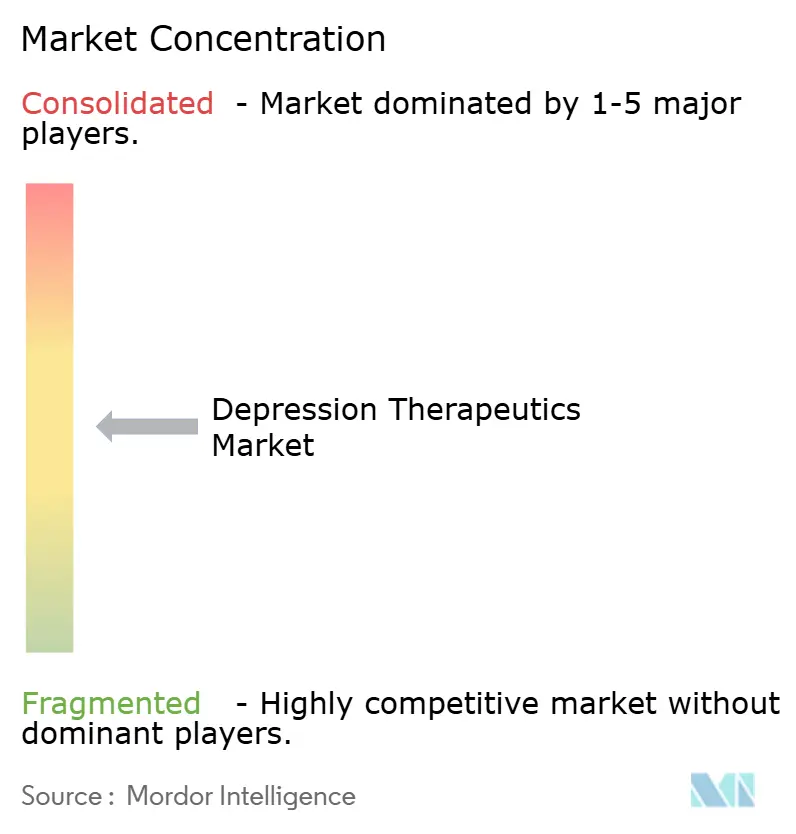
| Market Concentration | Medium |
Major Players *Disclaimer: Major Players sorted in no particular order Image © Mordor Intelligence. Reuse requires attribution under CC BY 4.0. | |
Depression Therapeutics Market Analysis by Mordor Intelligence
The Depression Therapeutics Market size is expected to increase from USD 15.77 billion in 2025 to USD 16.45 billion in 2026 and reach USD 20.60 billion by 2031, growing at a CAGR of 4.60% over 2026-2031.
The market is moving beyond a long period dominated by generic oral antidepressants toward a wider range of differentiated treatment options. Better detection of major depressive disorder, wider use of specialty mental health services, and new mechanisms of action support this change. Postpartum depression and treatment-resistant depression are bringing previously underserved patients into formal treatment pathways. Insurers and providers are also building coverage and care models for therapies that need specialist oversight. These changes create opportunities for companies that can combine clinical evidence, access support, and practical delivery models, while helping providers manage referral, monitoring, and follow-up requirements that differ materially from routine generic antidepressant prescribing, and companies that can show value to payers and reduce the burden on clinics will be better placed to support adoption across more care settings in diverse health systems worldwide, including community, hospital, and specialist treatment settings.
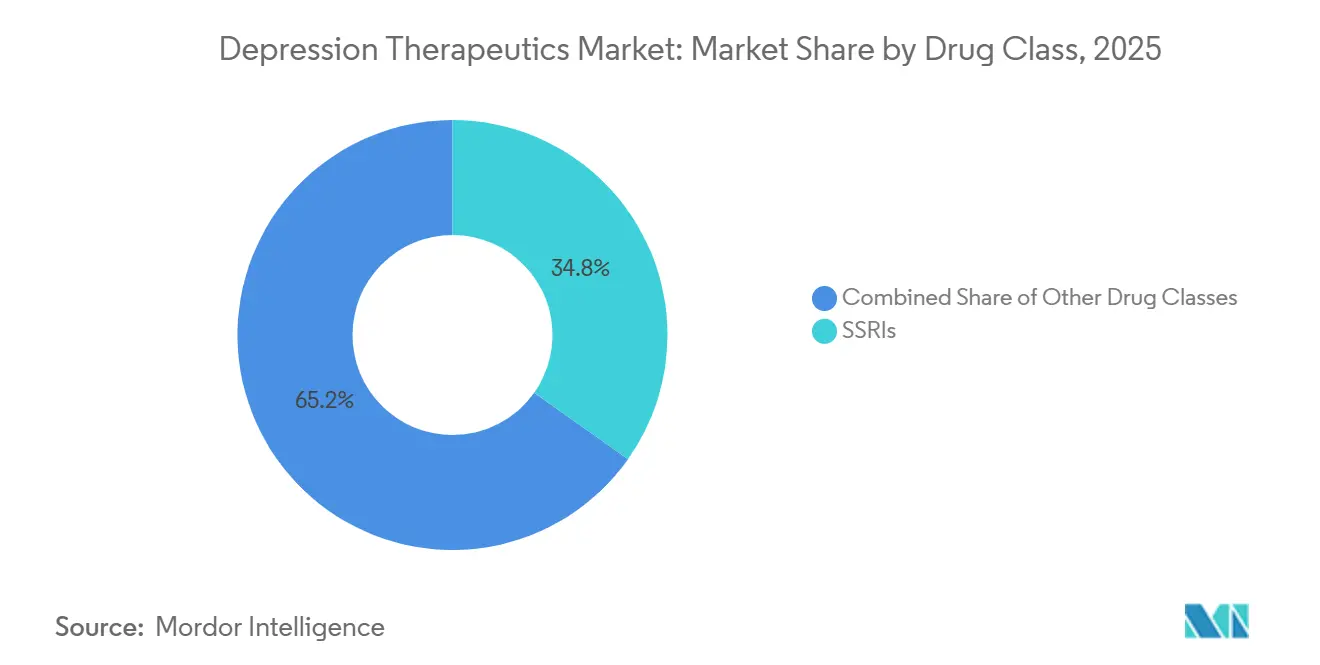
By drug class, SSRIs held 34.8% of Depression therapeutics market share in 2025, while NMDA and novel rapid-acting therapies are forecast to grow at a 12.8% CAGR through 2031.
By indication, major depressive disorder held 67.4% of the Depression therapeutics market size in 2025, while postpartum depression is forecast to expand at a 10.9% CAGR through 2031.
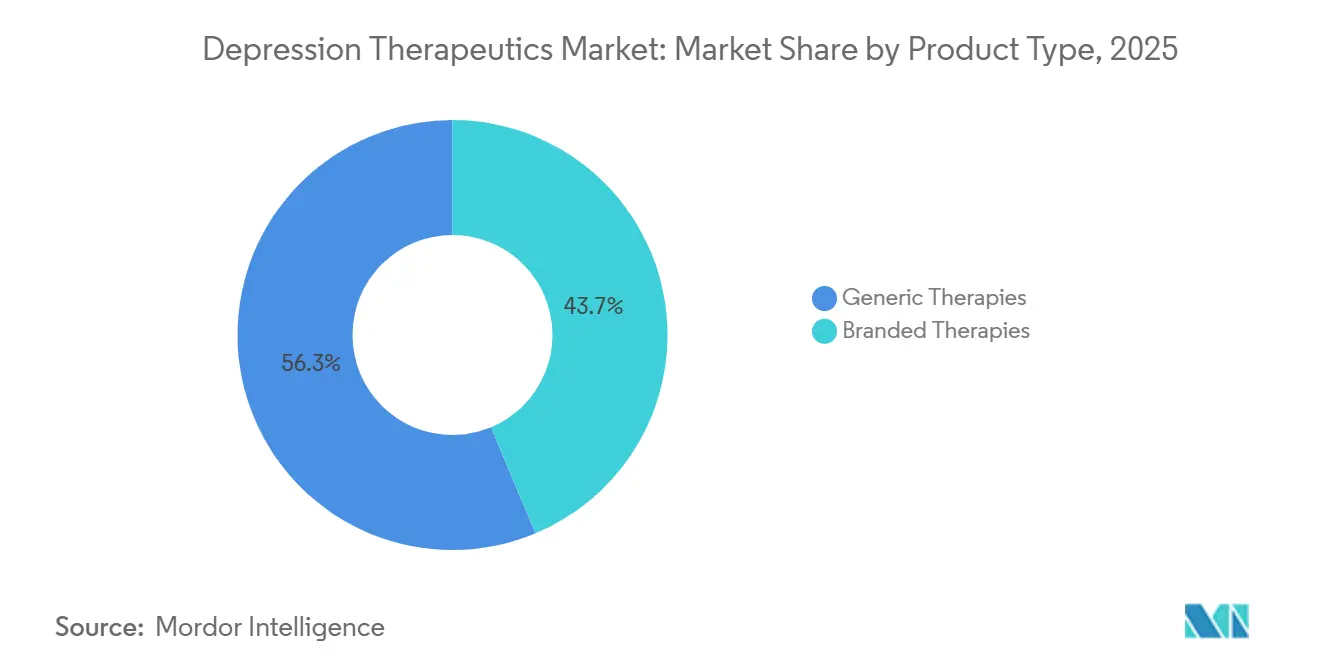
By product type, generic therapies held 56.3% of market value in 2025, while novel therapies are forecast to grow at a 13.4% CAGR through 2031.
By route of administration, oral delivery held 81.2% of the Depression therapeutics market in 2026, while intranasal delivery is forecast to grow at a 14.2% CAGR through 2031.
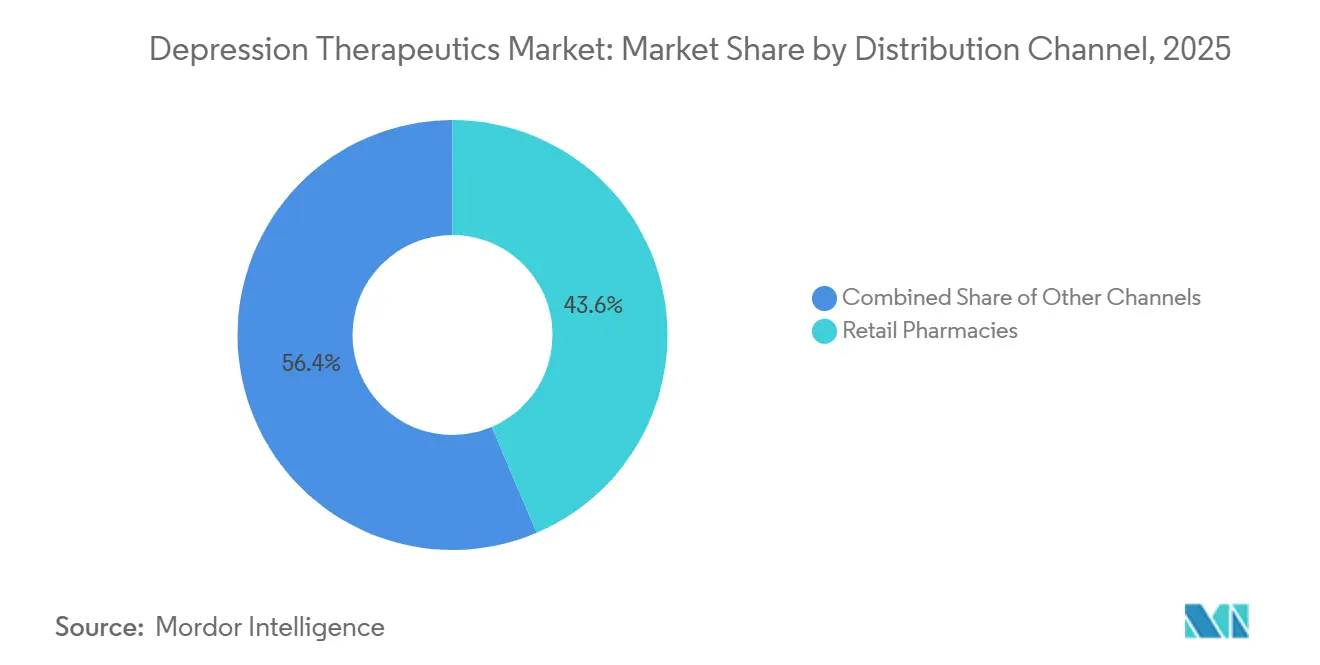
By distribution channel, retail pharmacies held 43.6% of the Depression therapeutics market in 2025, while specialty pharmacies are forecast to expand at a 9.8% CAGR through 2031.
By end user, primary care practices held 35.8% of market share in 2025, while specialty mental health clinics are forecast to grow at a 10.3% CAGR through 2031.
By geography, North America held 41.5% of the Depression therapeutics market in 2025, while Asia-Pacific is forecast to grow at an 8.7% CAGR through 2031.
Note: Market size and forecast figures in this report are generated using Mordor Intelligence’s proprietary estimation framework, updated with the latest available data and insights as of January 2026.
Global Depression Therapeutics Market Trends and Insights
Drivers Impact Analysis*
| Driver | (~) % Impact on CAGR Forecast | Geographic Relevance | Impact Timeline |
|---|---|---|---|
| Rising Diagnosis and Treatment Uptake for Major Depressive Disorder | +1.4% | Global | Medium term (2-4 years) |
| Expansion of Rapid-Acting and Novel-Mechanism Therapies | +1.2% | North America and Europe | Medium term (2-4 years) |
| Growing Screening and Treatment of Postpartum Depression | +0.5% | Global, with early gains in the United States, United Kingdom, and Europe | Short term (≤ 2 years) |
| Increasing Mental Health Awareness and Reduction in Treatment Stigma | +0.6% | Asia-Pacific, Middle East and Africa, and South America | Long term (≥ 4 years) |
| Clinic-Ready Delivery Models for Treatment-Resistant Depression | +0.4% | North America and Australia | Medium term (2-4 years) |
| Biomarker-Guided and Digital Adherence-Based Treatment Pathways | +0.3% | North America and Europe | Long term (≥ 4 years) |
| Source: Mordor Intelligence | |||
Rising Diagnosis and Treatment Uptake for Major Depressive Disorder
Major depressive disorder remains the main volume driver for the Depression therapeutics market, although better primary care detection now matters more than incidence alone. An estimated 21 million U.S. adults experienced at least 1 major depressive episode annually by early 2025, while nearly 1 in 3 received no treatment. This diagnosed but untreated group can expand use without requiring higher disease incidence, especially where primary care screening, referral systems, and follow-up are improving across routine care settings. Patients who fail several oral treatments also create demand for alternatives, since 86% of those trying a third oral antidepressant did not achieve remission. A 2025 systematic review[1]Depressive Disorders: Systematic Review of Approved Psychiatric Medications (2009 to April 2025) and Pipeline Phase 3 Medications,” BMC Psychiatry identified 18 compounds in global Phase 3 trials, with a wider range of mechanisms than earlier antidepressant development programs. European SSRI consumption rose by 3.7 to 14.4 defined daily doses per 1,000 inhabitants per day across 8 measured markets from 2013 to 2023, showing that access and lower stigma can increase treatment volume
Expansion of Rapid-Acting and Novel-Mechanism Therapies
Rapid-acting therapies are expanding the Depression therapeutics market because they address patients who have not responded to standard oral treatment. The FDA approved Spravato as the first and only monotherapy for adults with treatment-resistant depression in January 2025, based on evidence of symptom relief that could appear within 24 hours. Monotherapy removes the need to continue an oral antidepressant alongside esketamine, which may reduce a practical barrier for patients with prior treatment failures. Compass Pathways stated in April 2026 that the FDA granted rolling NDA review for COMP360 and awarded a Commissioner’s National Priority Voucher, with a planned NDA completion in Q4 2026. The company reported 2 positive Phase 3 trials involving more than 1,000 treatment-resistant depression patients and 26-week durability data. Breakthrough Therapy and REMS requirements also shape launch planning, define provider obligations, and help support premium positioning for approved novel agents.
Growing Screening and Treatment of Postpartum Depression
Postpartum depression is becoming a more visible part of the Depression therapeutics market as screening and treatment standards improve. Zuranolone received UK approval on August 27, 2025, European Commission approval on September 17, 2025, and Health Canada[2]Biogen Canada Inc., “Biogen Receives Health Canada Authorization for ZURZUVAE™ (zuranolone),” Biogen Canada authorization on December 9, 2025, becoming the first oral postpartum depression treatment in each of these markets. Japan approved manufacturing and sales of zuranolone in December 2025 for depression and depressive states, expanding the therapy’s reach beyond Western healthcare systems. A January 2026 clinical practice update positioned zuranolone as the principal oral option for severe postpartum depression after brexanolone left the market. A review of 2 studies covering 346 patients found that zuranolone improved Hamilton Depression Rating Scale scores at days 15 and 45, with response evident by day 3. Up to 20% of women with a recent pregnancy in Europe experience postpartum depression symptoms, and more systematic screening can make this patient group more reachable
Increasing Mental Health Awareness and Reduction in Treatment Stigma
Lower stigma supports demand in the Depression therapeutics market, particularly where many people have not previously sought care. The pattern reflects more willingness among younger people to seek pharmaceutical treatment rather than remain untreated. Forecasts for European antidepressant consumption in 2030 ranged from 0.1% to 80.9% above current levels, with higher-growth markets generally starting from lower treatment use. India’s Mental Healthcare Act and Australia’s National Mental Health Strategy are expanding community treatment and reimbursement pathways. These policy changes can establish new treatment relationships in markets that have less established prescribing patterns and limited historical use of specialty mental health services.
Restraints Impact Analysis*
| Restraint | (~) % Impact on CAGR Forecast | Geographic Relevance | Impact Timeline |
|---|---|---|---|
| Generic Substitution and Pricing Pressure in First-Line Antidepressants | -0.7% | Global | Medium term (2-4 years) |
| Safety Monitoring and Controlled-Administration Requirements | -0.5% | North America, Europe, and Australia | Medium term (2-4 years) |
| Fragmented Reimbursement for Digital and Interventional Therapies | -0.4% | Global, concentrated in North America and Europe | Long term (≥ 4 years) |
| Limited Predictive Biomarkers for Treatment Selection and Response | -0.3% | Global | Long term (≥ 4 years) |
| Source: Mordor Intelligence | |||
Generic Substitution and Pricing Pressure in First-Line Antidepressants
Generic substitution constrains revenue growth in the Depression therapeutics market because SSRIs and SNRIs remain the first treatment option for many patients. A 2024 Brookings analysis reported annual acquisition-cost deflation of 10% to 15% for generic oral solids. This creates pressure on manufacturers that continue to depend on off-patent products. France’s medicines agency reported 14 supply tensions or stock-outs for psychotropic medicines between January and mid-2025, including sertraline, quetiapine, and venlafaxine. The report linked shortages to the commoditization of production. In the United States, generic citalopram was available for USD 4 to USD 15 for a 30-day supply in 2026, leaving little room for branded first-line pricing. Companies with an older product mix must therefore balance high volumes against continued margin pressure.
Safety Monitoring and Controlled-Administration Requirements
Controlled administration limits the speed at which rapid-acting therapies can reach patients in the Depression therapeutics market. Esketamine requires certified sites and at least 2 hours of observation after dosing. Australia added ketamine to the Pharmaceutical Benefits Scheme in May 2025, although its use still requires medical supervision. Psilocybin-assisted therapies are also expected to use restricted delivery models if approved. These requirements add staff time, clinic capacity needs, and infrastructure costs for each patient, which makes expansion harder for providers without established behavioral health services. The burden is most manageable in well-resourced urban centers. It can limit adoption in lower-acuity settings even where clinical need is substantial.
*Our forecasts treat driver/restraint impacts as directional, not additive. The impact forecasts reflect baseline growth, mix effects, and variable interactions.
Segment Analysis
By Drug Class: SSRIs Anchor Volume While NMDA Agents Drive Premium Growth
SSRIs held 34.8% of the Depression therapeutics market in 2025, supported by first-line guidelines, broad formulary access, and low generic prices. Sertraline, escitalopram, and fluoxetine account for a substantial share of prescriptions. Their role gives the Depression therapeutics industry a high-volume base, although revenue per prescription remains low. SNRIs are the second-largest drug class by revenue, while atypical antidepressants and atypical antipsychotics serve patients who need alternatives or adjunct treatment.
NMDA and novel rapid-acting therapies are forecast to grow at a 12.8% CAGR through 2031, the highest rate within drug classes. Spravato’s 2025 monotherapy label and the COMP360 rolling NDA review show the move toward premium treatments for treatment-resistant depression. The 2025 review described late-stage programs across NMDA modulation, GABA-A modulation, orexin-2 antagonism, and Kv7 potassium channel opening. Tricyclics and MAOIs continue to decline because safety concerns and dietary restrictions limit use. REMS and Breakthrough Therapy frameworks set important commercialization milestones for new products.



By Indication: MDD’s Dominance Masks Postpartum Depression’s Accelerating Emergence
Major depressive disorder accounted for 67.4% of the Depression therapeutics market size in 2025. Its breadth and role as the main initial approval pathway make it the central revenue source. New drug classes commonly establish evidence in MDD before pursuing treatment-resistant, bipolar, or other labels. Bipolar depression is the third-largest revenue pool, while smaller indications include seasonal affective disorder, premenstrual dysphoric disorder, and depression linked to neurological conditions.
Postpartum depression is forecast to grow at a 10.9% CAGR through 2031, the fastest rate within indications. The rollout of zuranolone in the United States, United Kingdom, Europe, Canada, and Japan established a distinct oral treatment pathway. Clinical evidence from 346 patients showed improvement by day 3 and sustained benefit through day 45. The withdrawal of brexanolone narrowed oral treatment choices and directed attention toward zuranolone. Underdiagnosis remains common in Asia and South America, so screening updates could make the accessible population larger than current treated volumes indicate.
By Product Type: Generic Dominance Coexists With Novel Therapy’s Premium Trajectory
Generic therapies held 56.3% of market value in 2025, reflecting the broad use of off-patent SSRIs and SNRIs. Generic-first prescribing remains the usual approach for new-onset MDD in many countries. Branded therapies are the second-largest product group, led by differentiated formulations and medicines within exclusivity periods. Combination therapies, including bupropion and dextromethorphan in Auvelity, provide an oral approach that combines NMDA modulation with norepinephrine-dopamine reuptake.
Branded depression therapies are forecast to grow at the fastest rate through 2031, driven by the launch of innovative treatments with novel mechanisms of action and improved clinical outcomes. Market growth is further supported by increasing adoption of premium branded products, ongoing pipeline advancements, and regulatory approvals of differentiated therapies that address unmet needs in major depressive disorder (MDD) and treatment-resistant depression (TRD).
By Route of Administration: Oral Route’s Dominance Belies Intranasal’s Structural Momentum
Oral delivery held 81.2% of the Depression therapeutics market in 2026. SSRIs, SNRIs, and branded oral agents remain the foundation of treatment in every major geography. Injectable delivery serves a narrower patient group through IV ketamine clinics and hospital protocols. Transdermal options remain limited, while digital delivery is an emerging category whose commercial volume became more visible as U.S. billing support expanded in 2026.
Intranasal delivery is forecast to grow at a 14.2% CAGR through 2031, the fastest route of administration. Esketamine’s intranasal format has supported a network of REMS-certified clinics that future supervised therapies may use. More than 140,000 patients in 77 approved countries had received esketamine by January 2025. Post-marketing monitoring identified no new safety concerns in that population. More certified sites can make referral routes clearer for prescribers and patients.
By Distribution Channel: Specialty Pharmacies Gain Ground as Care Complexity Rises
Retail pharmacies held 43.6% of the Depression therapeutics market in 2025 and remain the leading outlet for SSRI and SNRI generics. Their role is tied to routine dispensing and high refill volumes for established oral agents. Hospital pharmacies serve inpatient psychiatry and patients in monitored programs. Online pharmacies are a growing access point for generic refills, particularly where telehealth prescribing has persisted.
Specialty pharmacies are forecast to expand at a 9.8% CAGR through 2031, the fastest distribution channel. Controlled novel medicines, patient-support requirements, and branded treatments are increasing their relevance. Esketamine’s certified-site restrictions and zuranolone’s Schedule IV status require coordinated dispensing and patient education. Specialty pharmacies are becoming a clinical-commercial interface rather than only a dispensing location. Companies that manage access services effectively can improve continuity for patients using novel therapies.
By End User: Primary Care Remains the Volume Anchor, Specialty Clinics Command Value Growth
Primary care practices held 35.8% of the Depression therapeutics market in 2025. They are the main prescribing gateway for patients with a first diagnosis of MDD, and generic SSRIs create a large lower-value prescription base. Hospitals manage acute admissions and people with high-acuity symptoms. Outpatient psychiatric practices treat patients who do not respond to first-line primary care treatment.
Specialty mental health clinics are forecast to grow at a 10.3% CAGR through 2031, the fastest end-user segment. Esketamine, TMS, IV ketamine, and digitally supported care require staff, infrastructure, and certification that are often unavailable in primary care. UTHealth Houston[3]UTHealth Houston, McGovern Medical School, “Advancing Care for Treatment-Resistant Depression: A Bold, Innovative TRD Program at UTHealth Houston,” UTHealth Houston expanded a program in January 2026 that combines TMS, esketamine, ECT, and deep brain stimulation. Sutter Health[4]Sutter Health, “Sutter Health First in Sacramento Region to Offer Breakthrough Accelerated TMS Therapy for Treatment-Resistant Depression,” Sutter Health introduced the SAINT accelerated TMS system in the Sacramento region for patients who had not responded to standard treatment. These clinics are becoming coordinated centers for complex depression care.
Geography Analysis
North America held 41.5% of the depression therapeutics market share in 2025. High treatment penetration, a large novel-drug pipeline, and faster reimbursement pathways for branded and interventional therapies support this position. The United States generates most regional revenue and has many specialty clinics offering esketamine, TMS, and digital therapeutic prescriptions. Canada approved zuranolone in December 2025, making it the first postpartum depression-specific oral therapy available in the country, while Mexico has limited specialist capacity and generic-first formulary restrictions.
Europe is the second-largest regional contributor to the Depression therapeutics market. Zuranolone received authorization in the European Union and the United Kingdom in 2025, creating the first oral postpartum depression treatment option in both settings. Antidepressant consumption is rising in most European markets, although 2030 growth expectations vary from 0.1% to 80.9%. Germany, France, and the United Kingdom are the largest revenue markets, while French prescription growth contributed to supply disruptions in 2025. Novel mechanisms can face longer access timelines than in the United States.
Asia-Pacific is forecast to grow at an 8.7% CAGR through 2031, the highest regional rate for the Depression therapeutics market. Improving infrastructure, a larger insured population, and public-health efforts underpin this pace. China has an estimated 54 million people with depression and is pursuing stronger mental health and digital health services for 2025 to 2027. Japan approved zuranolone in December 2025, while Australia added ketamine to the Pharmaceutical Benefits Scheme in May 2025 and has a supervised clinical context for psilocybin and MDMA. India’s urban-rural care gap and early-stage psychiatric infrastructure in the Middle East and Africa represent longer-term opportunities.
Competitive Landscape
The Depression therapeutics market combines concentration in branded novel therapies with fragmentation in generic medicines. Johnson & Johnson, Eli Lilly, and a smaller group of specialty pharmaceutical and biotechnology companies hold much of the branded and novel-mechanism revenue. Teva, Viatris, Sun Pharmaceutical, and regional manufacturers compete in generics, where price and dependable supply carry greater weight than clinical differentiation. Johnson & Johnson has an FDA-approved treatment-resistant depression monotherapy in Spravato and a late-stage orexin-2 antagonist, seltorexant, in Phase 3. Bristol-Myers Squibb acquired Intra-Cellular Therapies in early 2025 for USD 14.1 billion, bringing lumateperone into its portfolio and strengthening its position in differentiated depression care.
Compass Pathways and Cybin are advancing psychedelic programs that could reshape treatment-resistant depression care. Compass Pathways reported 26-week durability data across 2 positive Phase 3 COMP360 trials and plans to complete its NDA in Q4 2026. Axsome Therapeutics established Auvelity as the first oral NMDA-mechanism therapy approved for MDD and continues to build real-world evidence. Xenon Pharmaceuticals and Neurocrine Biosciences continue Phase 3 X-NOVA trials of azetukalner, with topline X-NOVA2 data expected in the first half of 2027. The 2025 randomized trial reported clinically meaningful and dose-responsive improvements in MDD, including an effect on anhedonia.
Precision prescribing remains an important area of unmet need. An imaging-based sertraline response model reported an R² of 0.31, an early signal that could support more targeted treatment assignment. Supervised product requirements favor organizations that can work with certified sites and specialty pharmacy partners. Generic manufacturers retain influence because they provide the low-cost treatment base used by many patients.
Depression Therapeutics Industry Leaders
Johnson & Johnson
Eli Lilly and Company
Teva Pharmaceutical Industries Ltd.
Viatris Inc.
Sanofi
- *Disclaimer: Major Players sorted in no particular order

Recent Industry Developments
- August 2026: Bluegrass Advanced Mental Health opened in Louisville, Kentucky, offering TMS, accelerated TMS, and Spravato (esketamine) for treatment-resistant depression and OCD patients, expanding specialty interventional psychiatry access in the US Mid-South.
- April 2026: Compass Pathways announced that the FDA granted its request for rolling NDA review and awarded COMP360 (synthetic psilocybin) the Commissioner’s National Priority Voucher for TRD, the first psychedelic compound to receive this designation, supporting a planned NDA completion in Q4 2026 and potential US launch in H1 2027.
- December 2025: Health Canada issued a Notice of Compliance for ZURZUVAE (zuranolone), the first and only PPD-specific oral treatment in Canada, approved based on the positive ROBIN and SKYLARK Phase 3 studies showing significant symptom improvement from day 3 and sustained through day 45.
- September 2025: The European Commission granted marketing authorization for ZURZUVAE (zuranolone) for PPD across the European Union, the first PPD-indicated oral treatment in Europe, based on the SKYLARK study demonstrating statistically significant HAMD-17 improvement versus placebo as early as day 3.


Global Depression Therapeutics Market Report Scope
| SSRIs |
| SNRIs |
| Atypical Antidepressants |
| Tricyclic & MAOI Antidepressants |
| Atypical Antipsychotics |
| NMDA & Novel Rapid-Acting Therapies |
| Other Depression Therapeutics |
| Major Depressive Disorder (MDD) |
| Postpartum Depression |
| Bipolar Depression |
| Other Depression Indications |
| Generic Therapies |
| Branded Therapies |
| Oral |
| Intranasal |
| Injectable (IV/IM/SC) |
| Transdermal & Other Routes |
| Digital Delivery |
| Retail Pharmacies |
| Hospital Pharmacies |
| Specialty Pharmacies |
| Online Pharmacies |
| Other Channels |
| Hospitals |
| Specialty Mental Health Clinics |
| Primary Care Practices |
| Outpatient Psychiatric Practices |
| Other End Users |
| North America | United States |
| Canada | |
| Mexico | |
| Europe | Germany |
| United Kingdom | |
| France | |
| Italy | |
| Spain | |
| Rest of Europe | |
| Asia-Pacific | China |
| Japan | |
| India | |
| South Korea | |
| Australia | |
| Rest of Asia-Pacific | |
| Middle East and africa | GCC |
| South Africa | |
| Rest of Middle East and Africa | |
| South America | Brazil |
| Argentina | |
| Rest of South America |
| By Drug Class | SSRIs | |
| SNRIs | ||
| Atypical Antidepressants | ||
| Tricyclic & MAOI Antidepressants | ||
| Atypical Antipsychotics | ||
| NMDA & Novel Rapid-Acting Therapies | ||
| Other Depression Therapeutics | ||
| By Indication | Major Depressive Disorder (MDD) | |
| Postpartum Depression | ||
| Bipolar Depression | ||
| Other Depression Indications | ||
| By Product Type | Generic Therapies | |
| Branded Therapies | ||
| By Route of Administration | Oral | |
| Intranasal | ||
| Injectable (IV/IM/SC) | ||
| Transdermal & Other Routes | ||
| Digital Delivery | ||
| By Distribution Channel | Retail Pharmacies | |
| Hospital Pharmacies | ||
| Specialty Pharmacies | ||
| Online Pharmacies | ||
| Other Channels | ||
| By End User | Hospitals | |
| Specialty Mental Health Clinics | ||
| Primary Care Practices | ||
| Outpatient Psychiatric Practices | ||
| Other End Users | ||
| By Geography | North America | United States |
| Canada | ||
| Mexico | ||
| Europe | Germany | |
| United Kingdom | ||
| France | ||
| Italy | ||
| Spain | ||
| Rest of Europe | ||
| Asia-Pacific | China | |
| Japan | ||
| India | ||
| South Korea | ||
| Australia | ||
| Rest of Asia-Pacific | ||
| Middle East and africa | GCC | |
| South Africa | ||
| Rest of Middle East and Africa | ||
| South America | Brazil | |
| Argentina | ||
| Rest of South America | ||


Key Questions Answered in the Report
What is the projected value of depression therapeutics by 2031?
The Depression therapeutics market is forecast to reach USD 20.6 billion by 2031, growing at a 4.6% CAGR from 2026.
Which drug class is growing fastest in depression treatment?
NMDA and novel rapid-acting therapies are projected to expand at a 12.8% CAGR through 2031.
Why is postpartum depression treatment expanding?
Zuranolone approvals in the United Kingdom, Europe, Canada, and Japan created new oral treatment pathways, while screening is improving.
Which route of administration has the strongest growth outlook?
Intranasal therapies are forecast to grow at a 14.2% CAGR through 2031, supported by esketamine and supervised care networks.
Which region is expected to expand the fastest?
Asia-Pacific is forecast to grow at an 8.7% CAGR through 2031 as access, insurance coverage, and public health investment improve.
What limits broader adoption of rapid-acting antidepressants?
Safety monitoring, certified-site requirements, specialist capacity, and uneven reimbursement can limit use beyond well-resourced care settings.
Page last updated on:





