
Countertop Oven Market Size and Share
Market Overview
| Study Period | 2020 - 2031 |
|---|---|
| Market Size (2026) | USD 9.98 Billion |
| Market Size (2031) | USD 12.93 Billion |
| Growth Rate (2026 - 2031) | 5.32 % |
| Fastest Growing Market | Asia-Pacific |
| Largest Market | Asia-Pacific |
| Market Concentration | Medium |
Major Players *Disclaimer: Major Players sorted in no particular order Image © Mordor Intelligence. Reuse requires attribution under CC BY 4.0. | |
Countertop Oven Market Analysis by Mordor Intelligence
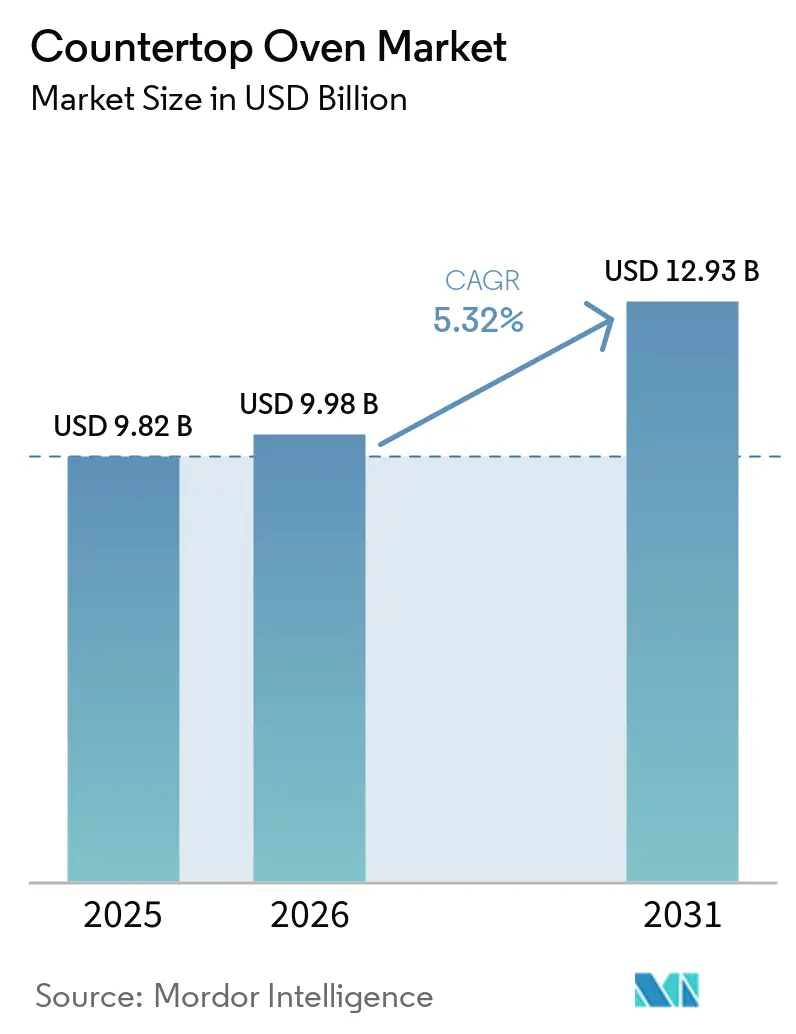
The countertop oven market size is projected to be USD 9.8 billion in 2025, USD 10 billion in 2026, and reach USD 12.9 billion by 2031, growing at a CAGR of 5.3% from 2026 to 2031. The move from 2025 to 2026 reflects a softer retail environment in some mature markets, but the broader countertop oven market remains durable, as compact cooking equipment remains relevant in smaller homes and apartments. Urban living continues to support the countertop oven market because households with limited kitchen space often prefer appliances that can combine baking, roasting, reheating, and air-frying in one unit, a pattern that aligns with global urban growth projections from the United Nations[1]. The countertop oven market is also benefiting from stronger consumer interest in premium features, connected controls, and energy efficiency, which is pushing manufacturers to compete on product capability rather than on price alone. Regulatory changes are making energy performance a more central buying factor, especially in North America and Europe, which is likely to support replacement demand and product refresh cycles over the forecast period[2]. Competition in the countertop oven market remains active as established appliance brands, premium specialists, and digital-first entrants all seek to expand demand through hybrid models, smart cooking features, and service-led revenue models.
Key Report Takeaways
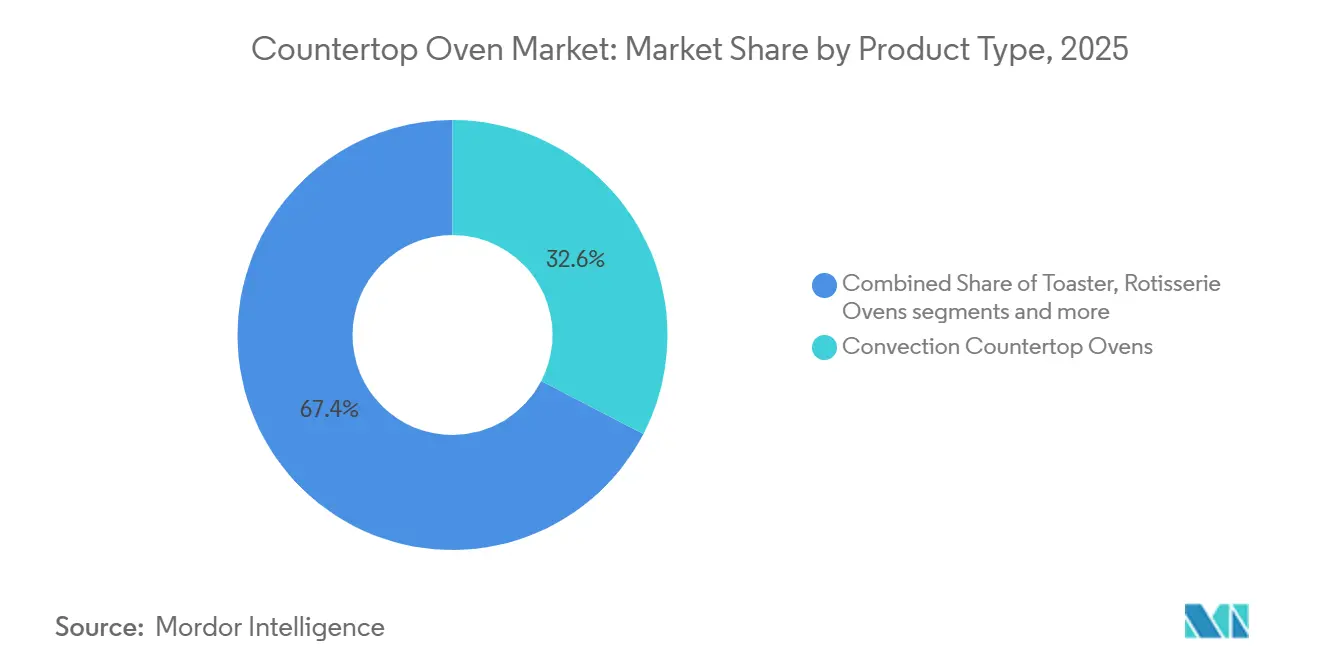
- By product type, convection countertop ovens led with 32.61% revenue share in 2025, while hybrid ovens are projected to expand at a 6.33% CAGR through 2031.
- By capacity, the 20-30 L segment accounted for 45.53% of the countertop oven market size in 2025, while the more than 50 L segment is advancing at a 5.75% CAGR through 2031.
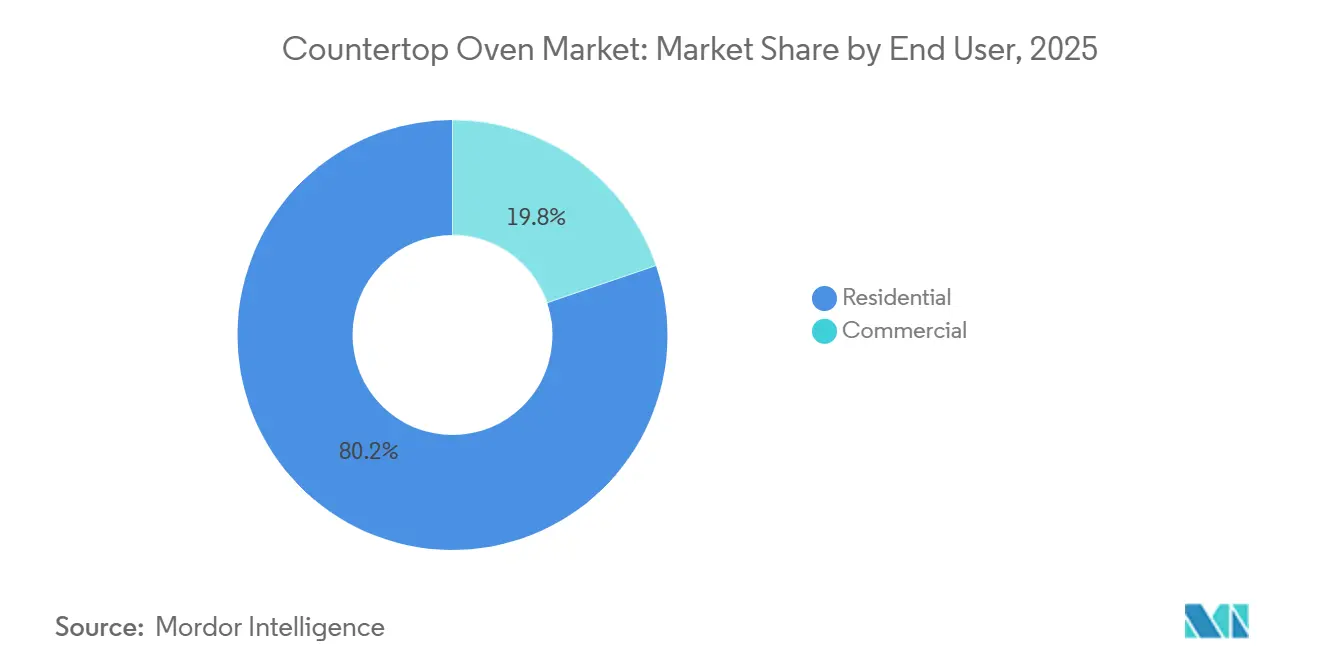
- By end-user, residential buyers held 80.24% of the countertop oven market share in 2025, while commercial users recorded the highest projected CAGR at 6.14% through 2031.
- By geography, Asia-Pacific accounted for 35.84% of global revenue in 2025 and is also the fastest-growing regional market for countertop ovens, with a 6.04% CAGR through 2031.
Note: Market size and forecast figures in this report are generated using Mordor Intelligence’s proprietary estimation framework, updated with the latest available data and insights as of January 2026.
Market Trends and Insights
Drivers Impact Analysis of Countertop Oven Market*
| Driver | (~) % Impact on CAGR Forecast | Geographic Relevance | Impact Timeline |
|---|---|---|---|
| Pay-as-you-cook subscription models | +0.3% | North America, Western Europe | Short term (≤ 2 years) |
| Premiumization of small-kitchen appliances | +0.7% | North America, Europe, Japan, Australia, South Korea | Medium term (2-4 years) |
| Surge in home baking & air-frying trends | +1.2% | Global | Short term (≤ 2 years) |
| Digital-first product launches by majors | +0.6% | North America, Europe, Asia-Pacific | Medium term (2-4 years) |
| Energy-efficient heating elements | +0.5% | Europe (EU), North America | Medium term (2-4 years) |
| Rising urbanization & shrinking kitchens | +0.9% | APAC core, spill-over to Middle East & Africa and South America | Long term (≥ 4 years) |
| Source: Mordor Intelligence | |||
Surge in Home Baking and Air-Frying Trends
Home baking and air-frying have moved beyond a temporary phase and now support steady purchase intent across the countertop oven market. Consumers who use these cooking modes often prefer appliances that can handle multiple meal formats in a single cavity, which increases the appeal of convection and hybrid products in the countertop oven market. This behavior also supports repeat demand, as many households start with a basic model and later upgrade to a larger or more feature-rich unit as use becomes more frequent. Social media content, recipe-led discovery, and product demonstrations are reinforcing this shift by demonstrating practical use cases in a simple, repeatable way. SharkNinja linked the launch of its Ninja CRISPi PRO to strong prior digital engagement, noting that the earlier model generated more than 715 million social media impressions, underscoring how content-led discovery can accelerate conversion in the countertop oven market. As this pattern continues, the countertop oven market is likely to benefit from demand driven not only by replacement cycles but also by lifestyle-driven adoption of everyday baking and air-frying.
Rising Urbanization and Shrinking Kitchens
Urban migration remains one of the most consistent structural supports for the countertop oven market because compact homes place a clear premium on multifunction appliances. The United Nations stated that the global urban population is set to exceed 5 billion by 2030, with Asia-Pacific and Africa contributing the largest increase, which supports long-term demand for space-efficient kitchen equipment[3]. In many newly urban households, a countertop oven is no longer a secondary appliance; it serves as the main oven because built-in space is limited or absent. That change matters for the countertop oven market because first-kitchen purchases are less discretionary than upgrade purchases, which gives the category a more stable demand base. It also supports hybrid and connected models, as buyers who can keep only one major cooking appliance on the counter usually prefer greater functionality. As urban density rises, the countertop oven market should continue to benefit from demand rooted in housing design and household setup rather than short-lived spending cycles.
Premiumization of Small-Kitchen Appliances
Premiumization is becoming more visible across the countertop oven market as consumers show a greater willingness to pay for better controls, stronger design, and additional cooking modes. In smaller kitchens, buyers tend to keep fewer appliances on the counter, which makes them more selective and often more open to paying for one model that can do several tasks well. This helps the countertop oven market because premium pricing and healthy volume can exist together when the product solves both space and performance needs. Digital retail also supports this trend because premium countertop ovens often gain visibility through ratings, product reviews, and demonstration content rather than only through in-store promotion. As a result, the countertop oven market is shifting toward feature credibility and user experience as key drivers of value growth.
Energy-Efficient Heating Elements
Energy-efficient heating systems are becoming increasingly important in the countertop oven market as households and commercial buyers alike pay closer attention to operating costs and compliance. The United States Department of Energy proposed new conservation standards in February 2024, with compliance for conventional electric ovens required from January 31, 2028, underscoring the importance of more efficient power and heating designs in future product development. In Europe, IEC 60350-1:2023/AMD1:2025 updated test methods and introduced low-power mode monitoring for household electric cooking appliances, raising the bar for performance measurement and certification. These changes favor manufacturers that already have the engineering depth to build efficient heating systems, reliable controls, and products that can pass more demanding test protocols. They also shift the countertop oven market away from viewing efficiency as a premium add-on and toward treating it as a basic product requirement. Over time, that should support replacement demand and encourage buyers to switch from legacy countertop ovens to more advanced models.
Restraints Impact Analysis of Countertop Oven Market*
| Restraint | (~) % Impact on CAGR Forecast | Geographic Relevance | Impact Timeline |
|---|---|---|---|
| Price sensitivity in emerging economies | -1.1% | South Asia, Sub-Saharan Africa, South America | Long term (≥ 4 years) |
| Substitution by multifunction microwaves | -0.8% | Global, predominantly Asia-Pacific and Europe | Medium term (2-4 years) |
| Counter space constraints in micro-apartments | -0.4% | Urban Asia-Pacific (Tokyo, Singapore, Seoul), Western Europe | Medium term (2-4 years) |
| Supply-chain volatility in key components | -0.7% | Global, particularly North America and Europe | Short term (≤ 2 years) |
| Source: Mordor Intelligence | |||
Substitution by Multifunction Microwaves
Substitution by combination microwaves remains a meaningful restraint for the countertop oven market, as many products now combine microwave, grill, and convection functions in a single appliance. The overlap is strongest in the entry and mid-tier price bands, where buyers are often focused on total utility per unit of counter space rather than on specialized cooking performance. This issue is more visible in Asia-Pacific and Europe because combination microwaves have a long installed base and strong brand recognition in those regions. The risk for the countertop oven market is rising further because some combination microwave models are now adding air-fry and steam functions, which narrows the practical gap with dedicated countertop ovens. Several companies active in the countertop oven market also sell strong combination microwave lines, which can split internal focus across product categories. Brands that can still defend their share are likely to be those that offer better baking precision, stronger high-heat cooking performance, or software-led cooking support that microwaves do not match.
Supply-Chain Volatility in Key Components
Supply-chain volatility remains a restraint for the countertop oven market because premium models now depend on electronic control boards, sensors, wireless modules, and display components alongside metal housings and heating systems. This wider component mix creates greater exposure to tariff changes, longer supplier qualification cycles, and shifts in electronics availability. The June 2025 United States tariff action on cooking stoves, ranges, and ovens adds direct pressure on manufacturers that depend heavily on imported, metal-intensive products, potentially tightening promotional flexibility and retailer margins in the countertop oven market. At the same time, supplier diversification is not simple because moving production requires both manufacturing capacity and a supporting ecosystem for components and testing. These issues are especially relevant for smart and hybrid ovens, which are the part of the countertop oven market most exposed to electronic content. Until more sourcing networks mature outside established manufacturing hubs, this constraint is likely to stay relevant for both pricing and lead times.
*Our forecasts treat driver/restraint impacts as directional, not additive. The impact forecasts reflect baseline growth, mix effects, and variable interactions.
Countertop Oven Market Segment Analysis
By Product Type:
Convection Dominance Gives Way to Hybrid InnovationConvection countertop ovens accounted for 32.61% of revenue in 2025, making them the largest product type in the countertop oven market. Their position reflects widespread consumer familiarity, a broad price range, and a strong fit for daily tasks such as baking, roasting, and reheating. That breadth matters because the countertop oven market still includes a large base of buyers who want versatile cooking without the learning curve or price premium of more advanced formats. Legacy appliance brands have also built long retail histories around convection models, which supports visibility, reviews, and shelf presence across both store and online channels. For that reason, convection products remain an anchor category even as buyers increasingly compare them with air fryers and other multifunction ovens.
Hybrid ovens are forecast to grow at a 6.33% CAGR through 2031, making them the fastest-growing product type in the countertop oven market. Their appeal lies in combining several cooking modes into a single appliance, which suits smaller kitchens and buyers who prefer a single product over multiple single-use devices. The countertop oven industry is therefore moving toward platforms that combine cooking performance with connected features, guided workflows, and proprietary software layers. GE Appliances strengthened that direction in March 2026, introducing its Smart Convection Wall Oven with Cooking Assistant, which added CookCam AI food recognition, voice-controlled settings, and precision cooking features. As the countertop oven market develops, hybrid models are likely to remain the main area where manufacturers try to widen margins and create clearer product differentiation.

By Capacity:
Mid-Size Leads Volume, Large Format Drives GrowthThe 20-30 L category accounted for 45.53% of the countertop oven market in 2025, making it the leading capacity band. This tier fits the cooking needs of 2-4-person households and works well in apartments where counter space is limited but daily meal preparation still requires full-function baking and roasting. Its broad appeal also stems from its balance between footprint and utility, which attracts entry buyers as well as more design-focused households. The 31-50 L segment serves larger families and regular group cooking occasions, which gives it a steady position even if it does not lead to growth. Together, these mid-sized ranges form the core of residential demand and should continue to support the countertop oven market's revenue base through 2031.
The more than 50 L segment is forecast to grow at a 5.75% CAGR through 2031, which places it above several other capacity bands in the countertop oven market. This growth is mainly driven by commercial demand from cloud kitchens, fast-casual formats, and hospitality operators seeking high output without the installation requirements of full commercial equipment. A smaller but relevant premium residential use case is also emerging where larger smart units are used in upscale apartments and serviced residences. Compliance is becoming more relevant in this part of the countertop oven market because hospitality buyers in Europe are paying closer attention to efficiency testing and product certification under updated IEC performance standards. The countertop oven industry will likely need stronger B2B channel focus if manufacturers want to fully capture the growth potential of larger-format units.
By End-User:
Residential Anchors Revenue as Commercial AcceleratesResidential buyers accounted for 80.24% of revenue in 2025, which kept households at the center of the countertop oven market. This base remains large because many purchases are either first-time kitchen setups in urbanizing markets or replacement purchases in mature countries, where consumers move from basic toaster ovens to multi-function models. The countertop oven market is also seeing stronger demand from households that want connected features, guided cooking programs, and cleaner product design without moving into large built-in appliances. SharkNinja’s October 2025 launch of the Ninja CRISPi PRO Countertop Glass Air Fryer at USD 279 showed how digital channels are shaping residential demand, especially after the earlier model recorded more than 715 million social media impressions. The residential side of the countertop oven market also remains open to bundled service models, which can extend customer value beyond a one-time appliance sale.
Commercial buyers have a smaller revenue base but are projected to grow at a 6.14% CAGR through 2031, making them the faster-moving end-user group in the countertop oven market. This shift is linked to cloud kitchens, ghost kitchens, fast-casual chains, and hotel food-service operations that need compact equipment with flexible deployment. Commercial purchasing behavior differs from household buying because procurement cycles are longer and product selection depends more on durability, service support, and compliance. That means the countertop oven market cannot rely on consumer retail strategies alone if suppliers want deeper commercial penetration. Manufacturers that invest in direct B2B sales, food-service distributors, and after-sales support are likely to be better placed as commercial demand grows. Over time, this should make the countertop oven market more balanced between household-led volume and business-led premium demand.
By Distribution Channel:
Retail Channels Anchor Sales While Project Demand BuildsB2C/Retail Channels accounted for 85.62% of revenue in 2025, making them the leading route to market for countertop ovens. This structure reflects the category’s strong household orientation, where most purchases are made through appliance stores, large-format retailers, e-commerce platforms, and brand-owned digital channels. The dominance of retail also aligns with the high residential share in the countertop oven market, as household buyers typically compare products on price, features, ratings, and convenience before purchase. Online discovery has become especially important because product videos, reviews, and recipe-led demonstrations help shorten the buying cycle for compact kitchen appliances. As a result, retail channels continue to provide the broadest reach, strongest visibility, and fastest conversion opportunities for brands operating in the countertop oven market.
B2B/Project is projected to expand at a 5.92% CAGR through 2031, showing that institutional and project-led demand is gaining ground within the countertop oven market. Growth in this channel is being supported by hospitality projects, food-service expansion, serviced apartments, and commercial kitchen setups that require compact, energy-efficient cooking appliances. Unlike retail, project demand depends more on specification-led procurement, installation suitability, service support, and product consistency across multiple units. This makes the channel strategically important for suppliers that want to increase their presence beyond household demand and build more stable contract-based sales. Over time, the countertop oven market is likely to see a clearer split where retail remains the volume engine, while B2B/Project becomes a more meaningful contributor to premium and commercial growth.
Geography Analysis
APAC, North America and Europe Countertop Oven Market
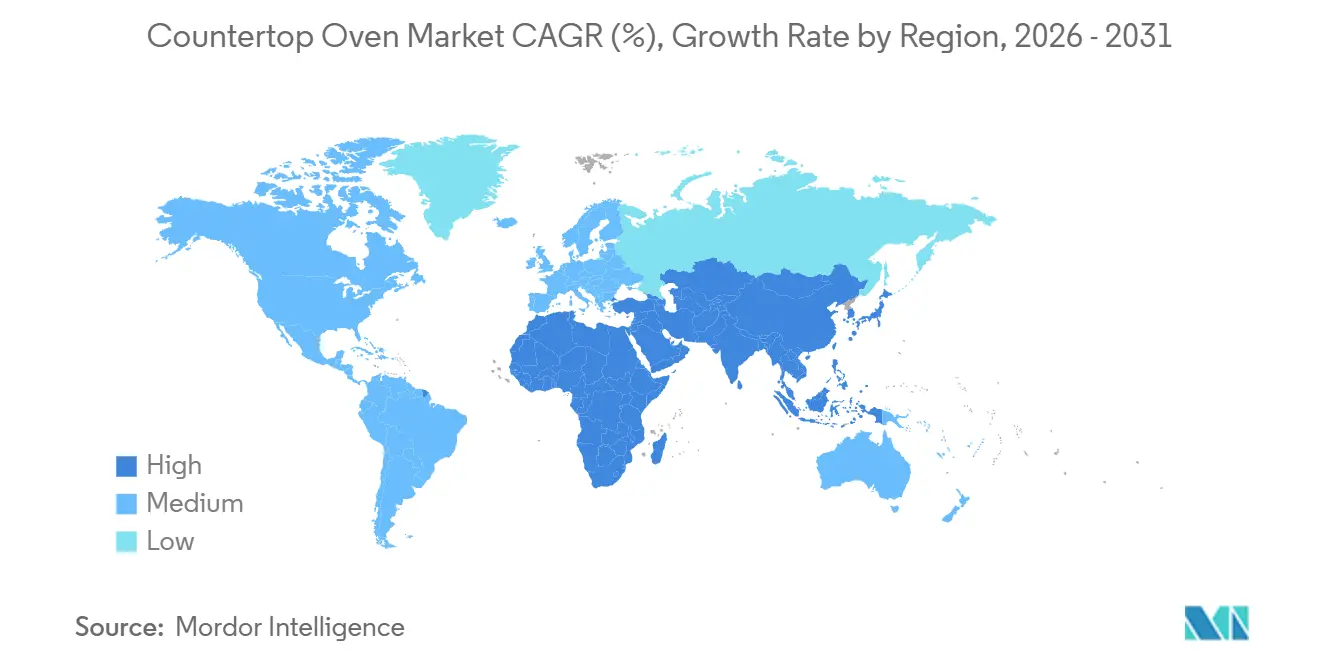
Asia-Pacific accounted for 35.84% of global revenue in 2025 and is projected to grow at a 6.04% CAGR through 2031, making it both the largest and the fastest-growing regional market for countertop ovens. The region benefits from first-purchase demand in India, stronger premium upgrades in China, and the continued spread of health-focused cooking habits across Southeast Asia. Rising urbanization is a major support here because compact living spaces make multifunction countertop cooking more practical, a pattern that fits broader United Nations urban population trends[4]. Japan and South Korea already have high household familiarity with compact cooking appliances, which keeps the countertop oven market focused on premium and connected formats rather than on basic ownership expansion. In Southeast Asia, service-led models are gaining attention, and LG Electronics launched LG Subscribe in Singapore in June 2025, showing that appliance access can increasingly be tied to recurring monthly plans rather than outright purchase. North America remains the second-largest regional market for countertop ovens and continues to benefit from a strong product pipeline from brands such as SharkNinja, GE Appliances, and Breville. The United States is especially important because upcoming efficiency rules are likely to spur replacement demand as older units approach the January 2028 compliance cutoff under DOE standards. This gives the countertop oven market a clearer policy-linked refresh cycle than many other small appliance categories. Europe is a mature but responsive regional market where premium design, energy performance, and standards compliance carry more weight in buying decisions. The April 2025 amendment to IEC 60350-1 is raising the importance of test-based performance evidence in European retail and B2B channels, which creates a higher entry bar for weaker suppliers. De'Longhi’s positive Q1 2026 performance also suggests that premium countertop cooking demand remains active in Europe despite a slower consumer backdrop.
MEA and South America Countertop Oven Market
South America is smaller in value, but it remains relevant to the countertop oven market because urban households in Brazil support the strongest regional demand base. Chile and Argentina also show consumer interest in small appliances, although economic volatility can interrupt replacement cycles and reduce premium uptake. In the Middle East and Africa, the UAE and Saudi Arabia support higher-value commercial demand linked to hotels, food service, and premium residential projects, while Nigeria and South Africa represent longer-term expansion space for the countertop oven market. Across much of Sub-Saharan Africa, demand is still limited by price sensitivity and uneven electricity infrastructure, which keeps simpler convection-led products more practical than fully connected premium models.
Competitive Landscape
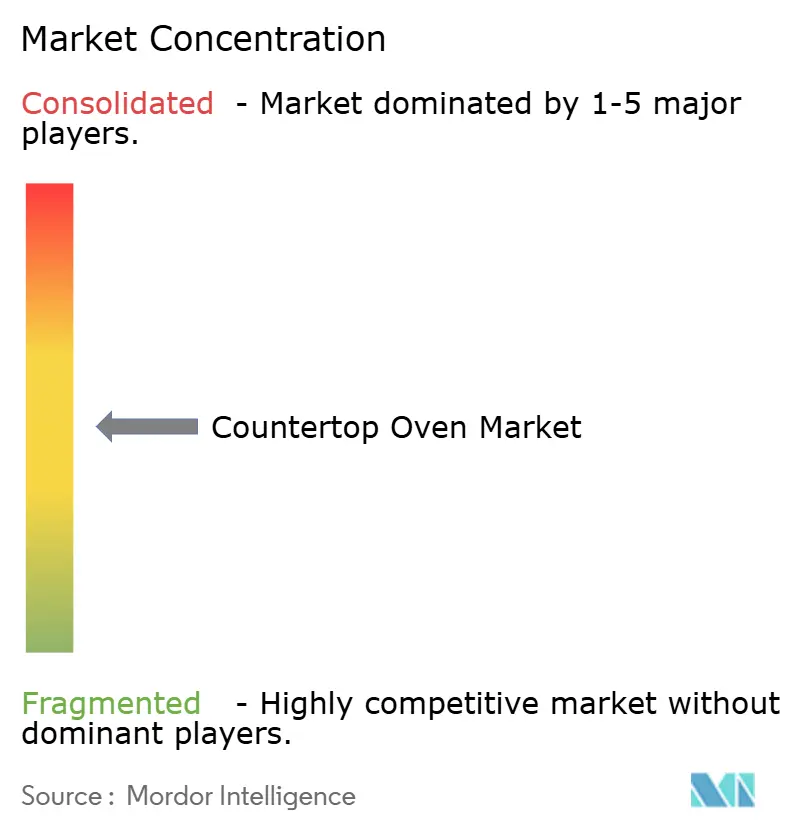
The countertop oven market shows moderate concentration and includes a mix of global appliance groups, premium specialists, mass-market brands, and digital-first challengers. This structure means competition is active but not shaped by a single dominant supplier or technology standard. The countertop oven market is currently defined by product capabilities, software integration, and channel strategy more than by unit volume alone. Midea strengthened its cooking appliance footprint in April 2025 by completing the acquisition of Teka Group, expanding its brand and distribution presence across more than 100 countries under the Teka, Küppersbusch, and Intra names. That move matters for the countertop oven market because it improves Midea’s ability to compete across both value and premium positioning in Europe and other export markets.
GE Appliances has also reinforced the technology direction of the countertop oven market through its March 2026 launch of the Smart Convection Wall Oven with Cooking Assistant, which introduced AI-supported food recognition and voice-controlled cooking functions. SharkNinja stayed aggressive in October 2025 with the Ninja CRISPi PRO Countertop Glass Air Fryer, using design, multi-functionality, and digital engagement to strengthen its consumer pull in the countertop oven market. De'Longhi’s Q1 2026 results add another signal that premium positioning continues to hold up in the countertop oven market when the feature set is credible, and the brand has strong household recognition. At the same time, subscription-led models are beginning to reshape how companies think about monetization because recurring service structures can extend revenue well beyond the initial hardware sale. This is still an early area, but it shows that the countertop oven market is testing models that look closer to connected consumer electronics than to traditional white goods.
The strongest open spaces appear in large-format commercial countertop units, software-led cooking personalization, and recurring revenue models tied to meal or service ecosystems. Established players are active, but several differentiated ideas still sit outside the core strategies of many large appliance groups, which gives room for focused challengers. Toshiba Corporation is not a distinct manufacturing force in this market because its countertop cooking line sits within Midea’s portfolio, so treating Toshiba and Midea as separate competitive centers would overstate independent rivalry. A more distinct competitor is COSORI, which offers a clearer direct-to-consumer profile within the countertop oven market through app-connected cooking and air-fryer-led positioning. Overall, the competitive setting remains broad enough that the countertop oven market still rewards distribution reach, feature quality, and brand trust in equal measure.
Countertop Oven Industry Leaders
-
Breville Group Ltd
-
Whirlpool Corporation (KitchenAid)
-
Panasonic Corporation
-
De’Longhi S.p.A.
-
Spectrum Brands – Black+Decker
- *Disclaimer: Major Players sorted in no particular order
Countertop Oven Market Companies Covered in this Report
- Breville Group Ltd.
- Whirlpool Corporation (KitchenAid)
- Panasonic Corporation
- De’Longhi S.p.A.
- Spectrum Brands Holdings (Black+Decker)
- Toshiba Corporation
- Sharp Corporation
- Samsung Electronics Co., Ltd.
- LG Electronics Inc.
- Cuisinart – Conair Corporation
- Hamilton Beach Brands Holding Co.
- BSH Home Appliances (Bosch-Siemens)
- Oster – Newell Brands
- GE Appliances (Haier)
- Midea Group
- Electrolux AB
- Smeg S.p.A.
- Ninja Kitchen (SharkNinja)
- June Life Inc.
- Tovala Inc.
Recent Industry Developments in Countertop Oven Market
- March 2026: GE Appliances (a Haier company) introduced the Smart Convection Wall Oven with Cooking Assistant™ at its LaFayette, Georgia facility, manufactured as part of a USD 180 million plant expansion within a broader USD 3 billion United States manufacturing investment plan for 2025-2029.
- October 2025: SharkNinja launched the Ninja CRISPi® PRO Countertop Glass Air Fryer at USD 279, offering 6-in-1 functionality (air fry, bake, roast, dehydrate, max crisp, re-crisp) in a non-toxic CleanCrisp™ glass vessel.
- April 2025: Midea Group completed the acquisition of Teka Group (excluding Teka Rus LLC), a German-founded multinational kitchen appliance brand present in 100+ countries and holding 34 design awards in two years.
- March 2025: SharkNinja launched the Ninja Artisan™ Outdoor Pizza Oven globally at USD 279.99, offering 5-in-1 countertop functionality (pizza, bake, broil, warm, proof) at temperatures up to 700°F via proprietary Complete Temperature Control™ Technology without an open flame.
Global Countertop Oven Market Report Scope
Segmentation Overview
| Convection Countertop Ovens |
| Toaster Ovens |
| Rotisserie Ovens |
| Air-Fryer Ovens |
| Hybrid Ovens |
| 20-30 L |
| 31- 50 L |
| More than 50 L |
| Residential |
| Commercial |
| North America | United States |
| Canada | |
| Mexico | |
| South America | Brazil |
| Peru | |
| Chile | |
| Argentina | |
| Rest of South America | |
| Europe | United Kingdom |
| Germany | |
| France | |
| Spain | |
| Italy | |
| Russia | |
| BENELUX | |
| NORDICS | |
| Rest of Europe | |
| Asia-Pacific | India |
| China | |
| Japan | |
| Australia | |
| South Korea | |
| Southeast Asia | |
| Rest of Asia-Pacific | |
| Middle East and Africa | United Arab Emirates |
| Saudi Arabia | |
| South Africa | |
| Nigeria | |
| Rest of Middle East and Africa |
| By Product Type | Convection Countertop Ovens | |
| Toaster Ovens | ||
| Rotisserie Ovens | ||
| Air-Fryer Ovens | ||
| Hybrid Ovens | ||
| By Capacity | 20-30 L | |
| 31- 50 L | ||
| More than 50 L | ||
| By End-User | Residential | |
| Commercial | ||
| By Geography | North America | United States |
| Canada | ||
| Mexico | ||
| South America | Brazil | |
| Peru | ||
| Chile | ||
| Argentina | ||
| Rest of South America | ||
| Europe | United Kingdom | |
| Germany | ||
| France | ||
| Spain | ||
| Italy | ||
| Russia | ||
| BENELUX | ||
| NORDICS | ||
| Rest of Europe | ||
| Asia-Pacific | India | |
| China | ||
| Japan | ||
| Australia | ||
| South Korea | ||
| Southeast Asia | ||
| Rest of Asia-Pacific | ||
| Middle East and Africa | United Arab Emirates | |
| Saudi Arabia | ||
| South Africa | ||
| Nigeria | ||
| Rest of Middle East and Africa | ||
Key Questions Answered in the Report
What is the 2031 value expected for countertop ovens?
The countertop oven market is projected to reach USD 12.93 billion by 2031, up from USD 9.98 billion in 2026, at a 5.32% CAGR over 2026-2031.
Which product type leads revenue in countertop ovens?
Convection countertop ovens led product revenue with a 32.61% share in 2025 because they cover everyday baking, roasting, and reheating needs across a wide price range.
Which product type is growing the fastest through 2031?
Hybrid ovens are forecast to grow at a 6.33% CAGR through 2031 as buyers increasingly prefer multi-function models that save space and add connected features.
Which capacity range is most widely used?
The 20-30 L segment held 45.53% of revenue in 2025, showing that mid-sized models remain the best fit for typical urban households.
Why is commercial demand rising faster than household demand?
Commercial demand is projected to grow at a 6.14% CAGR through 2031 because cloud kitchens, fast-casual operators, and hotels need compact but capable cooking equipment.
Which region offers the strongest growth outlook?
Asia-Pacific is the largest region with 35.84% share in 2025 and also the fastest-growing one at a 6.04% CAGR through 2031, supported by urbanization and rising first-purchase demand.