
Coronary Cutting Balloon Market Size and Share
Market Overview
| Study Period | 2020 - 2031 |
|---|---|
| Market Size (2026) | USD 344.12 Million |
| Market Size (2031) | USD 527.05 Million |
| Growth Rate (2026 - 2031) | 8.90 % |
| Fastest Growing Market | Asia-Pacific |
| Largest Market | North America |
| Market Concentration | Medium |
Major Players *Disclaimer: Major Players sorted in no particular order Image © Mordor Intelligence. Reuse requires attribution under CC BY 4.0. | |
Coronary Cutting Balloon Market Analysis by Mordor Intelligence
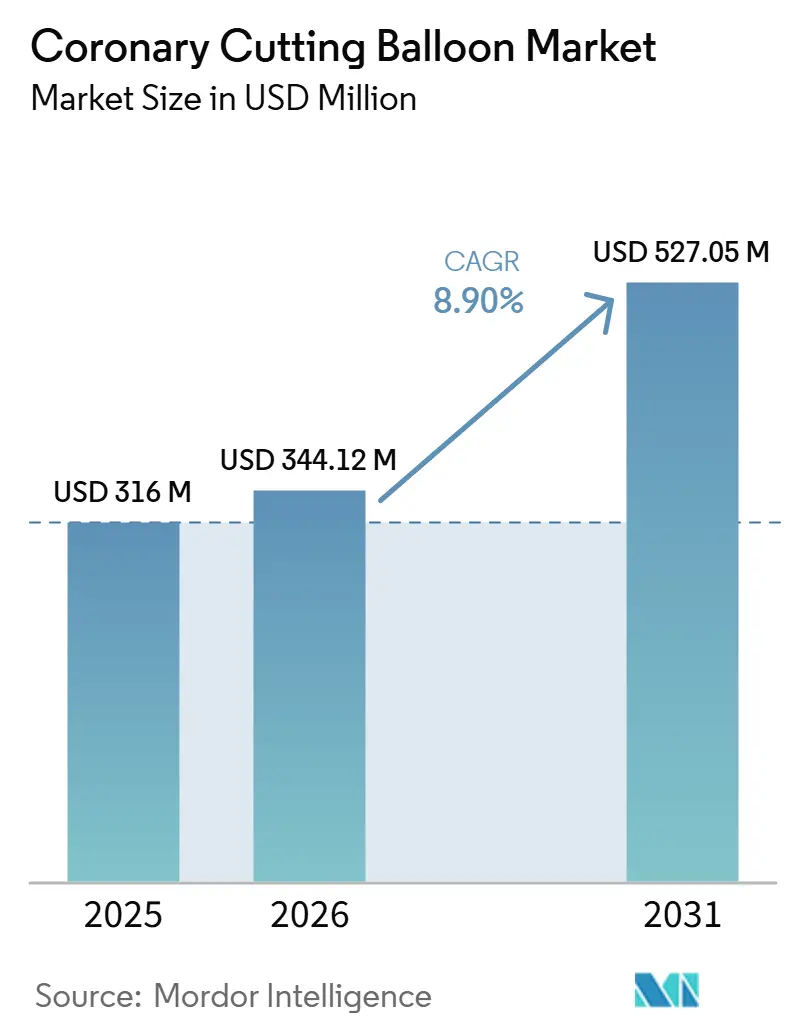
The Coronary Cutting Balloon Market size is projected to expand from USD 316 million in 2025 and USD 344.12 million in 2026 to USD 527.05 million by 2031, registering a CAGR of 8.90% between 2026 to 2031.
Growth in the coronary cutting balloon market is tied to the rising burden of calcified coronary artery disease, because moderate-to-severe calcification appears in 18% to 26% of planned PCI cases and is more common in older patients and patients with diabetes, chronic kidney disease, or dyslipidemia. The coronary cutting balloon market is also benefiting from a broader shift toward planned lesion preparation, since standard non-compliant balloons often do not create adequate expansion in difficult lesions, and operators are using more structured plaque-modification protocols. Wider use of IVUS and OCT is supporting the coronary cutting balloon market further, because imaging-guided PCI is helping physicians identify lesions that need controlled scoring before stent delivery and is improving confidence in precision device use. The coronary cutting balloon market is also gaining support from outpatient migration, as stronger ASC reimbursement and cost pressure in coronary care are increasing interest in efficient lesion preparation across hospital and ambulatory settings. At the same time, the coronary cutting balloon market faces tighter competition from adjacent calcium-management technologies and from price-optimized regional suppliers, so companies that improve imaging compatibility, indication breadth, and pricing discipline should remain better positioned through 2031.
Key Report Takeaways
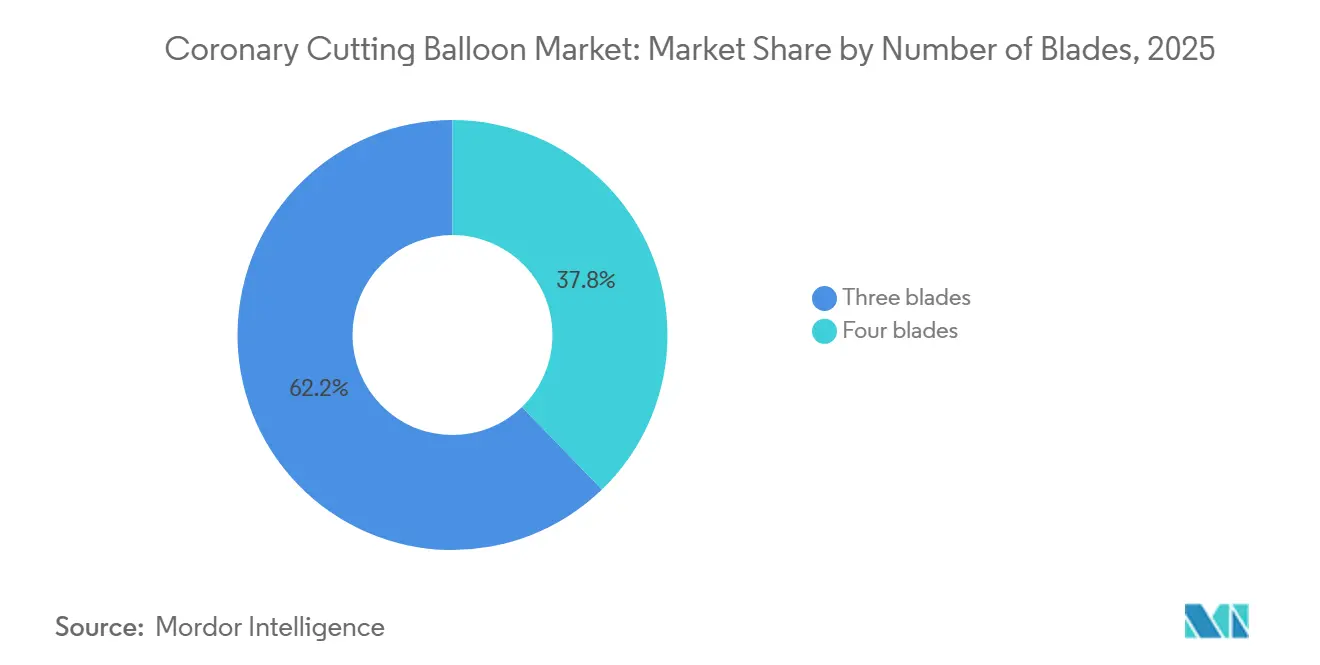
- By number of blades, three-blade devices held 62.2% revenue share in 2025, while four-blade devices are projected to record the fastest CAGR at 10.4% through 2031.
- By application, calcified lesion treatment accounted for 54.1% of revenue in 2025, while lesion preparation is expected to advance 11.2% CAGR through 2031.
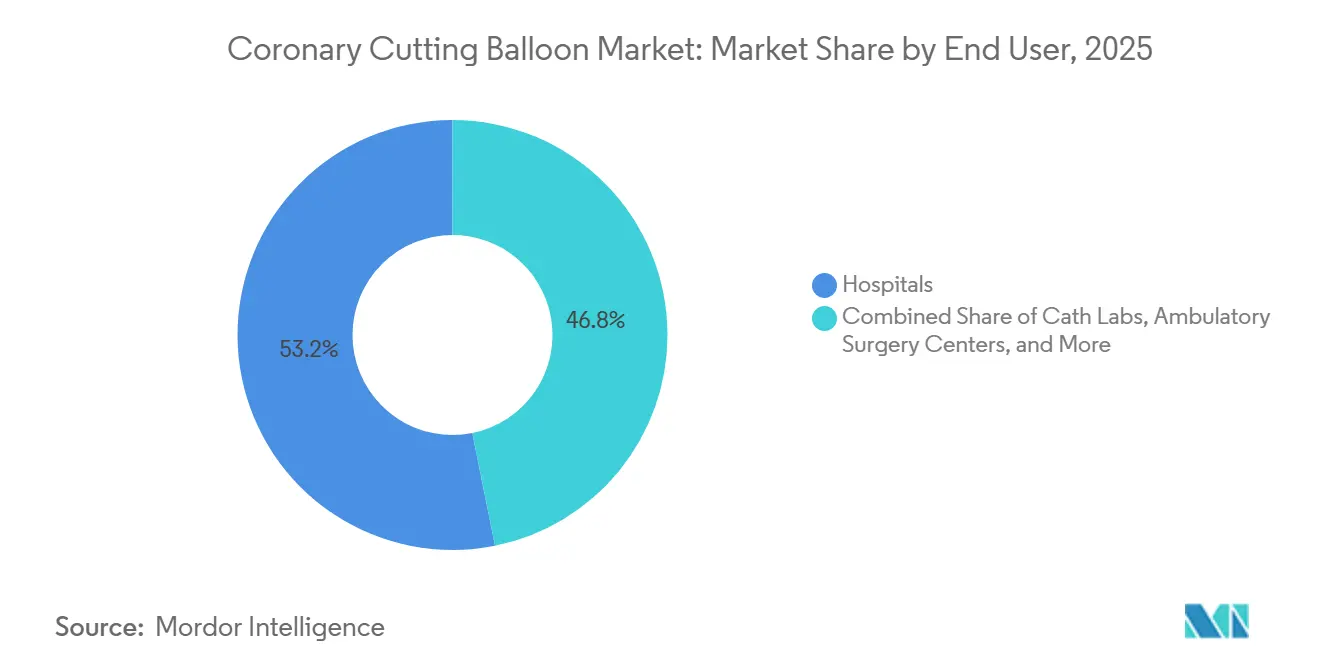
- By end use, hospitals captured 53.2% of revenue in 2025, while ambulatory surgery centers are projected to expand at a 10.2% CAGR through 2031.
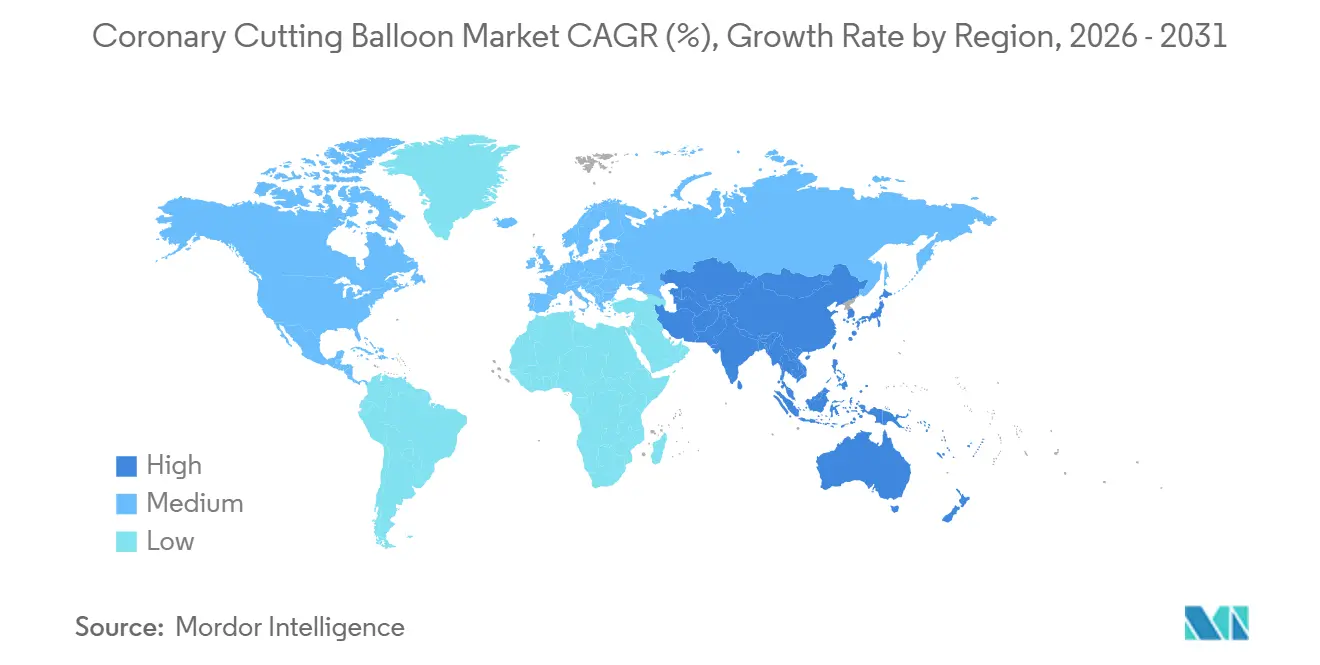
- By geography, North America held 38.2% share in 2025, while Asia-Pacific is forecast to grow at a 10.8% CAGR through 2031.
Note: Market size and forecast figures in this report are generated using Mordor Intelligence’s proprietary estimation framework, updated with the latest available data and insights as of January 2026.
Market Trends and Insights
Drivers Impact Analysis of Coronary Cutting Balloon Market*
| Driver | (~) % Impact on CAGR Forecast | Geographic Relevance | Impact Timeline |
|---|---|---|---|
| Rising Burden of Heavily Calcified Coronary Lesions | +2.5% | Global, highest in North America and East Asia | Long term (≥ 4 years) |
| Expanding Use in Complex PCI and Lesion Preparation | +2.1% | Global, concentrated in North America, Europe, and APAC high-volume centers | Medium term (2-4 years) |
| Higher Demand for Image-Guided Precision Devices | +1.8% | North America, Europe, Japan, South Korea | Medium term (2-4 years) |
| Shift Toward Minimally Invasive Coronary Interventions | +1.6% | North America, APAC core, spill-over to MEA | Medium term (2-4 years) |
| Local Manufacturing and Price-Optimized Products in Emerging Asia | +1.2% | APAC core, China and India, spill-over to MEA and South America | Short term (≤ 2 years) |
| Training-Driven Adoption in High-Volume Cath Labs | +0.9% | Global, early concentration in Germany, Japan, South Korea, and the United States | Short term (≤ 2 years) |
| Source: Mordor Intelligence | |||
Rising Burden of Heavily Calcified Coronary Lesions
Demand in the coronary cutting balloon market rests on a clear rise in coronary artery calcification across PCI populations. Moderate-to-severe calcification occurs in 18% to 26% of patients presenting for planned PCI, and the burden rises further in patients older than 70 and in those with diabetes, chronic kidney disease, or dyslipidemia. Heavily calcified lesions carried a 27.1% one-year MACE rate, versus 15% in less calcified cohorts, which keeps these lesions near the center of procedural risk planning in the coronary cutting balloon market. Standard non-compliant balloons often fail to create adequate dilation in this setting, so microblade scoring still fills a defined clinical need in complex lesion preparation. The 2024 SCAI expert consensus on calcified coronary lesion management further supported staged lesion-modification protocols, which help standardize use across high-volume centers and keep the coronary cutting balloon market tied closely to complex PCI workflows[1]. As the elderly and diabetic patient base expands, the coronary cutting balloon market should continue to benefit from a durable flow of complex coronary cases that need controlled plaque modification.
Expanding Use in Complex PCI and Lesion Preparation
The coronary cutting balloon market is no longer shaped only by rescue use, because operators are increasingly using these devices as a planned step in complex PCI protocols. The RODIN-CUT technique, described in 2025, presented a structured IVUS-guided sequential inflation method that showed dose-dependent plaque modification and more controlled lesion preparation in moderately calcified vessels. That approach matters for the coronary cutting balloon market because it links device use more closely to repeatable workflows rather than to one-off operator preference. The same shift is visible in combination therapy, where ROTA-CUT data showed mean stent expansion of 86.1% versus 78.6% with non-cutting balloons after atherectomy. This strengthens the role of the coronary cutting balloon market within multistep calcium-management strategies, especially in centers already comfortable with adjunctive technologies and imaging support. As more PCI teams adopt planned lesion preparation instead of late bailout use, the coronary cutting balloon market should see steadier procedural demand and higher device use per complex case
Higher Demand for Image-Guided Precision Devices
The coronary cutting balloon market is gaining support from the wider use of intravascular imaging in calcified lesion management. A 2026 multicenter registry showed that IVUS-guided PCI in moderate-to-severe calcified lesions delivered one-year outcomes comparable to non-calcified cohorts when imaging guidance was applied consistently. That finding supports the idea that procedural precision is becoming just as important as the base device choice in the coronary cutting balloon market. The CUPID trial was designed around IVUS-guided cutting balloon angioplasty before bioabsorbable polymer-coated everolimus-eluting stent implantation, which shows that formal evidence generation is moving toward imaging-linked use rather than simple balloon deployment alone. Devices with clear fluoroscopic visibility and stable positioning markers should benefit most because operators increasingly want accurate alignment during the scoring phase of vessel preparation in the coronary cutting balloon market. This co-adoption pattern is especially relevant in Japan, South Korea, Germany, and the United States, where installed IVUS and OCT capacity is already supporting more complex PCI protocols.
Shift Toward Minimally Invasive Coronary Interventions
The coronary cutting balloon market is also being supported by the migration of selected cardiovascular procedures into outpatient settings. This matters because ASC-based PCI often favors lower-risk elective cases with calcified lesions, which are the same cases where structured lesion preparation can improve stent delivery and predictability. CMS increased ASC payment rates by 2.9% in the CY 2025 final rule and estimated total ASC payments at USD 7.4 billion, which reduced a financial barrier to outpatient cardiac catheterization investment. A 2025 SCAI analysis found that ASC-based PCIs in socially vulnerable areas treated 15% more patients than hospital-based labs, showing that access expansion and cost efficiency are moving together in this care model. The coronary cutting balloon market benefits from this shift because outpatient operators are more likely to value devices that support predictable workflow and controlled plaque scoring without moving immediately to more capital-intensive alternatives. As outpatient case selection expands, the coronary cutting balloon market should keep gaining from care delivery models that reward procedural efficiency and lower total episode cost
Restraints Impact Analysis of Coronary Cutting Balloon Market*
| Restraint | (~) % Impact on CAGR Forecast | Geographic Relevance | Impact Timeline |
|---|---|---|---|
| Higher Device Cost Versus Conventional Balloon Platforms | -0.8% | Global, most acute in South Asia, South America, and MEA | Long term (≥ 4 years) |
| Competition From Drug-Coated Balloons and Atherectomy Systems | -0.6% | North America, Europe, Japan | Medium term (2-4 years) |
| Procedure Complexity and Operator Learning Curve | -0.4% | Emerging APAC, MEA, South America | Short term (≤ 2 years) |
| Reimbursement Variability Across Cost-Sensitive Markets | -0.4% | South America, MEA, South and Southeast Asia | Long term (≥ 4 years) |
| Source: Mordor Intelligence | |||
Higher Device Cost Versus Conventional Balloon Platforms
A core limit on the coronary cutting balloon market is the unit-price premium over standard non-compliant balloon platforms. That premium creates procurement friction in cost-sensitive health systems, especially where reimbursement packages do not isolate plaque-modification tools from the broader PCI payment bundle. In hospital outpatient settings, the incremental device cost can move directly into the performing facility margin, which raises substitution pressure when clinical guidance does not clearly require cutting balloon use. The issue is more visible across South Asia, Latin America, and parts of the Middle East and Africa, where formulary budgets remain tight, and public hospital purchasing is more price-driven. The coronary cutting balloon market also faces a wider relative premium when domestic suppliers in China and India reduce the price floor for basic PTCA balloons, because the gap against advanced scoring platforms becomes easier for buyers to see. Regulatory compliance costs in premium markets add another layer of price stickiness, which helps established brands hold premium positioning but slows broader expansion of the coronary cutting balloon market in value-sensitive channels.
Competition From Drug-Coated Balloons and Atherectomy Systems
The coronary cutting balloon market faces direct competition from drug-coated balloons and atherectomy systems that target overlapping coronary lesion settings. Drug-coated balloons are gaining procedural relevance in in-stent restenosis and de novo small-vessel disease, and a 2025 pooled analysis in BMC Medicine found that cutting balloon pre-dilatation improved outcomes by reducing residual stenosis and improving drug uptake. That relationship is helpful clinically, but it also means the coronary cutting balloon market can be treated as a complementary step rather than the final value-capture point in the procedure. Rotational atherectomy plus cutting balloon also showed stronger stent expansion than pure RA strategies, which reinforces the role of cutting balloons as adjuncts inside a broader device stack instead of as a standalone answer. Johnson & Johnson strengthened the adjacent IVL field through its 2024 acquisition of Shockwave Medical for USD 13.3 billion, bringing more scale and commercial weight into the calcium-management competition around the coronary cutting balloon market. As competing modalities gain stronger evidence and wider sales support, suppliers in the coronary cutting balloon market will need clear positioning on when scoring balloons deliver the best balance of precision, cost, and workflow simplicity
*Our forecasts treat driver/restraint impacts as directional, not additive. The impact forecasts reflect baseline growth, mix effects, and variable interactions.
Coronary Cutting Balloon Market Segment Analysis
By Number of Blades:
Four-Blade Devices Gain Ground in Larger Vessel InterventionsThree-blade devices held 62.2% of the coronary cutting balloon market share in 2025, supported by their fit across the 2.00 mm to 3.25 mm vessel range that covers much of routine coronary lesion treatment. This part of the coronary cutting balloon industry also benefits from a longer commercial track record, which supports physician familiarity and purchasing confidence in established catheterization programs. Boston Scientific’s WOLVERINE platform reflects this sizing logic, because its three-atherotome models serve the 2.00 mm to 3.25 mm range while four-atherotome models are positioned for 3.50 mm to 4.00 mm vessels. That product split shows how blade configuration in the coronary cutting balloon market is tied directly to vessel circumference and contact geometry rather than to a simple brand preference.
The coronary cutting balloon market size for four-blade devices is projected to expand at 10.4% CAGR through 2031, making it the fastest-growing blade configuration. Growth is linked to larger vessel interventions, especially in proximal and mid-left anterior descending artery procedures, where broader plaque contact can support more efficient calcium fracture. The CUPID trial also included four-blade cutting balloon angioplasty in its IVUS-guided arm, which adds formal clinical visibility to this platform within the coronary cutting balloon market. Over time, suppliers that show stronger OCT-measured fracture depth and better procedural control in large-caliber vessels should have a clearer differentiation story in the coronary cutting balloon market.
By Application:
Lesion Preparation Drives Growth While Calcified Lesion Treatment Anchors RevenueCalcified lesion treatment accounted for 54.1% of revenue in 2025. It remained the base application for the coronary cutting balloon market because these cases carry high urgency and established stent-delivery support needs. The coronary cutting balloon market size for lesion preparation is projected to grow at 11.2% CAGR through 2031, reflecting the wider use of planned plaque conditioning before stent implantation in complex elective PCI. This shift expands the role of the coronary cutting balloon industry beyond rescue dilation, because moderate calcification is increasingly being treated with a more deliberate preparation sequence. The NATURE trial added to that direction in 2025 by comparing cutting balloon versus standard balloon preparation before DCB therapy in de novo coronary lesions and by widening the evidence base around pre-dilatation strategy[2].
The coronary cutting balloon market also retains a stable role in in-stent restenosis, where scoring neointimal tissue can support better drug-coated balloon delivery and more controlled lumen gain. The 2025 pooled analysis linked cutting balloon pre-dilatation with lower residual stenosis and stronger drug uptake, which helps maintain relevance in restenosis treatment pathways. Other applications, such as ostial lesion management,t remain smaller. Still, the ORCAS IVUS-guided sequential inflation protocol published in 2025 is adding procedural documentation that can support broader adoption in specialized cases. Taken together, the application mix shows a coronary cutting balloon market that is still anchored by severe calcified lesions but is growing faster where operators are formalizing lesion preparation earlier in the PCI sequence
By End Use:
Ambulatory Surgery Centers Emerge as the Fastest-Growing Deployment ChannelHospitals retained 53.2% of revenue in 2025 and remained the core end-use base for the coronary cutting balloon market because they manage the most complex calcified lesion cases and offer full cath lab support. Hospital demand also stays strong because high-risk PCI still depends on broader infrastructure, including cardiac surgery backup, anesthesiology support, and advanced imaging access. Even so, the coronary cutting balloon market is seeing a clear delivery shift toward ambulatory settings, where selected coronary interventions are being managed at lower cost. Ambulatory surgery centers are projected to grow at 10.2% CAGR through 2031, which makes them the fastest-growing end-use channel.
A 2025 SCAI scientific session analysis estimated a 21% increase in ASC PCI volume over the next decade, which supports stronger procedural demand for predictable lesion-preparation tools in outpatient environments. A 2025 PMC study also reported that ASC-based coronary angiography and PCI can deliver a 58% cost reduction versus hospital outpatient department rates for common cath lab procedures, which helps explain the end-use shift in the coronary cutting balloon market. Catheterization laboratories remain an important middle channel, especially in Japan and South Korea, where outpatient cath lab networks operate with significant procedural autonomy and support regular imaging-guided complex PCI. As quality reporting programs continue to shape outpatient reimbursement, the coronary cutting balloon market should favor brands that combine clinical familiarity, predictable workflow, and a strong evidence package in the ASC setting.

Geography Analysis
North America and Europe Coronary Cutting Balloon Market
North America held 38.2% of the coronary cutting balloon market share in 2025, which made it the largest regional contributor. The United States drives most of that position through high PCI procedure intensity, broad commercial presence from leading manufacturers, and well-established outpatient reimbursement structures support for ASC reimbursement also strengthens the regional outlook, because outpatient coronary intervention investment remains more economically viable when payment rates move upward North America also remains important to the coronary cutting balloon market because it is a major source of clinical evidence generation and protocol standardization around calcified lesion treatment. Europe is a mature regional base for the coronary cutting balloon market, with Germany standing out because stronger IVUS adoption helps identify more lesions that need controlled plaque modification.
APAC Coronary Cutting Balloon Market
Asia-Pacific is the fastest-growing region in the coronary cutting balloon market, with a projected CAGR of 10.8% through 2031. China is the main growth engine, because the catheterization procedure volume reached 1.91 million in 2024 and is projected to exceed 3.6 million by 2030, creating the largest incremental device demand pool. India adds another growth layer through wider PCI access across private hospital networks, while Japan and South Korea support higher device use per procedure through mature OCT and IVUS-guided PCI protocols. Domestic suppliers such as Lepu Medical are also making the coronary cutting balloon market more price competitive in Asia-Pacific through localized offerings and broader tender participation[3].
South America, APAC and MEA Coronary Cutting Balloon Market
South America, the Middle East and Africa, and the rest of Asia-Pacific represent smaller shares today, but they still matter to the final expansion range of the coronary cutting balloon market. Brazil and Argentina anchor South American demand, while reimbursement inconsistency outside major urban centers continues to slow adoption of specialized lesion-preparation tools. In the Middle East, GCC investment in cardiac catheterization infrastructure is creating a better environment for internationally certified products with stronger clinical support. Across these developing regions, training programs and proctor-led cases remain critical, because operator familiarity still acts as a larger barrier than basic clinical rationale in the coronary cutting balloon market
Competitive Landscape
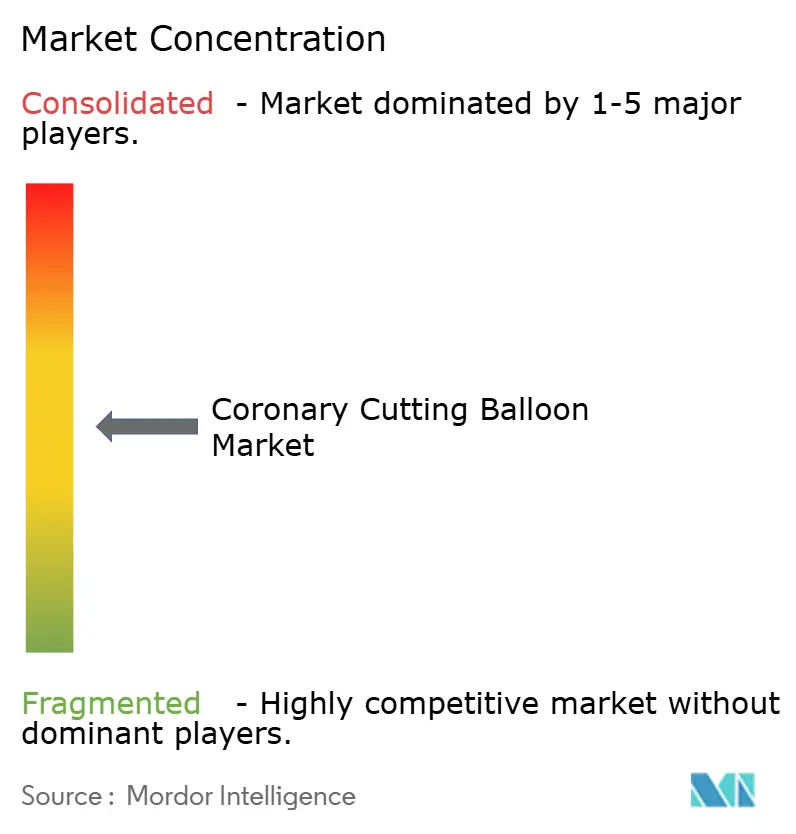
The coronary cutting balloon market is moderately concentrated, with Boston Scientific holding the strongest visible position in the United States because WOLVERINE remains the only FDA-approved coronary cutting balloon in that market. Outside the United States, the coronary cutting balloon market is more fragmented, with B. Braun, Medtronic, Terumo, Cook Medical, Lepu Medical, and MicroPort Scientific all shaping regional competition through different pricing and channel strategies. This structure means the coronary cutting balloon market is not controlled by a single global platform, even though one brand has a clear regulatory advantage in the United States. Regional competition is especially active in Asia, where price-sensitive tenders reward manufacturers that can combine acceptable clinical positioning with more local cost structures. That balance between regulatory strength, tender pricing, and procedural familiarity continues to define how companies compete across the coronary cutting balloon market.
Most strategy patterns in the coronary cutting balloon market cluster around imaging integration, combination use with DCB or DES therapy, and geographic expansion through local distribution networks. Lepu Medical advanced its international reach when it received MDR certification for its coronary balloon dilation catheter range in November 2024, which opened additional European access and signaled a stronger cross-border ambition. Johnson & Johnson strengthened the competing calcium-management field through its 2024 Shockwave Medical acquisition, which brought more scale to IVL and raised competitive pressure around the coronary cutting balloon market. Medtronic also expanded its adjacent coronary workflow offering in 2026 through the CathWorks acquisition, adding physiology-based diagnostic capability that can influence upstream treatment selection.
White-space opportunities in the coronary cutting balloon market remain visible in bifurcation lesion preparation and in sub-2.0 mm vessels, where current device profiles still limit reach in very small anatomy. The technology race is also shifting toward better blade materials, coatings, and procedural precision, because device-related tissue effects are receiving more attention in complex calcium management. A June 2025 histological study in JACC Cardiovascular Interventions found less medial damage with IVL than with conventional cutting balloons in highly calcified nodular lesions, which sharpens competitive quality discussions around the coronary cutting balloon market. As these comparisons become more visible, companies in the coronary cutting balloon market will need stronger evidence, better workflow integration, and clearer use-case positioning to defend adoption against adjacent platforms.
Coronary Cutting Balloon Industry Leaders
-
Boston Scientific
-
Abbott Laboratories
-
Medtronic plc
-
Terumo Corporation
-
BIOTRONIK SE and Co. KG
- *Disclaimer: Major Players sorted in no particular order
Coronary Cutting Balloon Market Companies Covered in this Report
- Abbott Laboratories
- Acrostak
- B. Braun
- BIOTRONIK SE and Co. KG
- Boston Scientific
- Cardionovum
- Cook Group
- Hexacath
- Johnson & Johnson
- Lepu Medical
- Medtronic
- Merit Medical Systems
- MicroPort
- Nipro
- Shunqi Medical
- SIS Medical
- Teleflex
- Terumo
Recent Industry Developments in Coronary Cutting Balloon Market
- April 2026: Medtronic completed the acquisition of CathWorks for USD 585 million, acquiring the AI-powered FFRangio System that provides physiological coronary assessment from standard angiograms without guide wires. The ALL-RISE randomized trial, presented at the 2026 American College of Cardiology conference, demonstrated FFRangio's non-inferiority to wire-based physiology in MACE at one year, strengthening Medtronic's digital diagnostic offering that sits upstream of cutting balloon procedure selection
- September 2025: Lepu Medical hosted a BRI partner country seminar at its Beijing headquarters, demonstrating Vesscide Cutting Balloon Dilatation Catheter and Vesscide IVL systems to delegates from multiple Belt and Road Initiative partner countries, reinforcing its emerging-market distribution strategy
- May 2025: Lepu Medical presented the Vesscide Cutting Balloon Dilatation Catheter at Angiopicture 2025 in Sochi, marking the company's first academic entry into the Russian-speaking cardiovascular market as part of its BRI-region commercial expansion strategy
Global Coronary Cutting Balloon Market Report Scope
As per the scope of the report, a coronary cutting balloon is a specialized angioplasty device that incorporates microsurgical blades (atherotomes) mounted longitudinally on the surface of a balloon catheter. When the balloon is inflated within a narrowed coronary artery, the blades create controlled micro-incisions in atherosclerotic plaque, enabling more precise lesion modification and vessel expansion compared to conventional angioplasty balloons. These devices are widely used in the treatment of complex coronary lesions, including calcified lesions, in-stent restenosis, and lesion preparation prior to stent implantation.
The coronary cutting balloon market is segmented by number of blades into three blades and four blades; by application into calcified lesion treatment, in-stent restenosis, lesion preparation, and other applications; by end use into hospitals, catheterization laboratories, ambulatory surgery centers, and other end users; and by geography into North America, Europe, Asia-Pacific, Middle East and Africa, and South America. The market report also covers the estimated market sizes and trends for 17 countries across major regions globally. For each segment, the market size and forecast are provided in terms of value (USD).
Segmentation Overview
| Three Blades |
| Four Blades |
| Calcified Lesion Treatment |
| In-Stent Restenosis |
| Lesion Preparation |
| Other Applications |
| Hospitals |
| Catheterization Laboratories |
| Ambulatory Surgery Centers |
| Other End Users |
| North America | United States |
| Canada | |
| Mexico | |
| Europe | Germany |
| United Kingdom | |
| France | |
| Italy | |
| Spain | |
| Rest of Europe | |
| Asia-Pacific | China |
| Japan | |
| India | |
| Australia | |
| South Korea | |
| Rest of Asia-Pacific | |
| Middle East and Africa | GCC |
| South Africa | |
| Rest of Middle East and Africa | |
| South America | Brazil |
| Argentina | |
| Rest of South America |
| By Number of Blades | Three Blades | |
| Four Blades | ||
| By Application | Calcified Lesion Treatment | |
| In-Stent Restenosis | ||
| Lesion Preparation | ||
| Other Applications | ||
| By End Use | Hospitals | |
| Catheterization Laboratories | ||
| Ambulatory Surgery Centers | ||
| Other End Users | ||
| By Geography | North America | United States |
| Canada | ||
| Mexico | ||
| Europe | Germany | |
| United Kingdom | ||
| France | ||
| Italy | ||
| Spain | ||
| Rest of Europe | ||
| Asia-Pacific | China | |
| Japan | ||
| India | ||
| Australia | ||
| South Korea | ||
| Rest of Asia-Pacific | ||
| Middle East and Africa | GCC | |
| South Africa | ||
| Rest of Middle East and Africa | ||
| South America | Brazil | |
| Argentina | ||
| Rest of South America | ||
Key Questions Answered in the Report
What is the 2031 value outlook for coronary cutting balloons?
The coronary cutting balloon market is projected to reach USD 527.1 million by 2031, rising from USD 344.1 million in 2026 at an 8.9% CAGR.
Which application contributes the most revenue in coronary cutting balloons?
Calcified lesion treatment led with 54.1% revenue share in 2025, because it remains the main use case in severe coronary stenosis management.
Which application is expanding the fastest through 2031?
Lesion preparation is the fastest-growing application, with an 11.2% CAGR through 2031 as PCI practice shifts toward planned plaque conditioning.
Which end-use setting is growing the fastest for these devices?
Ambulatory surgery centers are expanding the fastest, with a 10.2% CAGR through 2031, supported by outpatient migration and cost advantages.
Which region leads current demand and which region is growing the fastest?
North America held the largest share at 38.2% in 2025, while Asia-Pacific is forecast to grow the fastest at a 10.8% CAGR through 2031.
What is the main competitive challenge for device makers in this space?
The main challenge is pressure from adjacent technologies such as drug-coated balloons, atherectomy systems, and IVL, along with pricing pressure in cost-sensitive markets.