
Cognitive Test and Assessment Market Size and Share
Market Overview
| Study Period | 2021 - 2031 |
|---|---|
| Market Size (2026) | USD 8.35 Billion |
| Market Size (2031) | USD 13.41 Billion |
| Growth Rate (2026 - 2031) | 9.94 % |
| Fastest Growing Market | Asia-Pacific |
| Largest Market | North America |
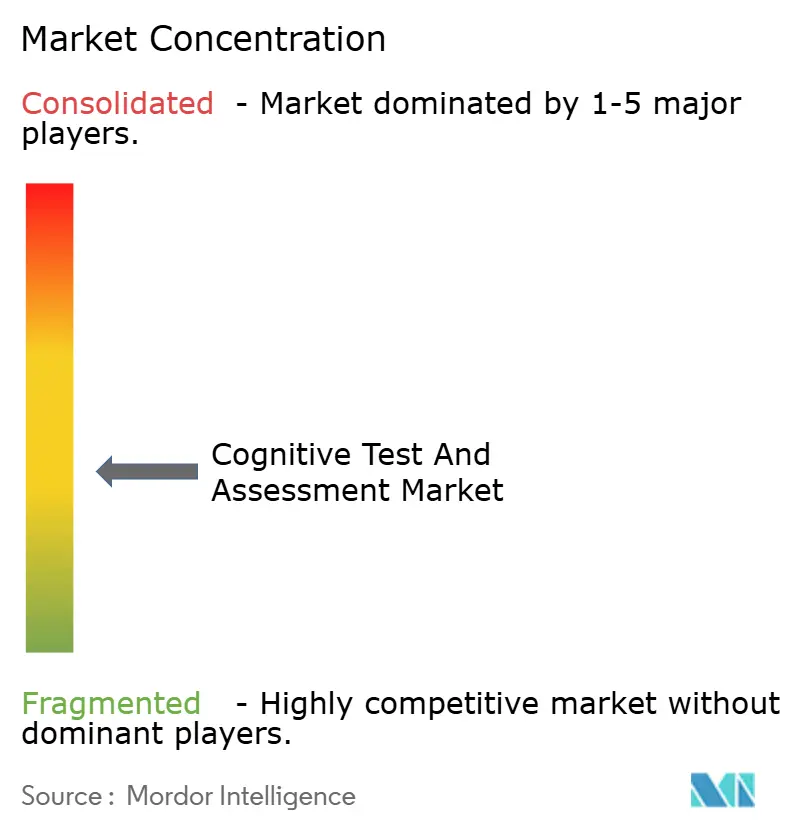
| Market Concentration | Medium |
Major Players *Disclaimer: Major Players sorted in no particular order Image © Mordor Intelligence. Reuse requires attribution under CC BY 4.0. | |
Cognitive Test and Assessment Market Analysis by Mordor Intelligence
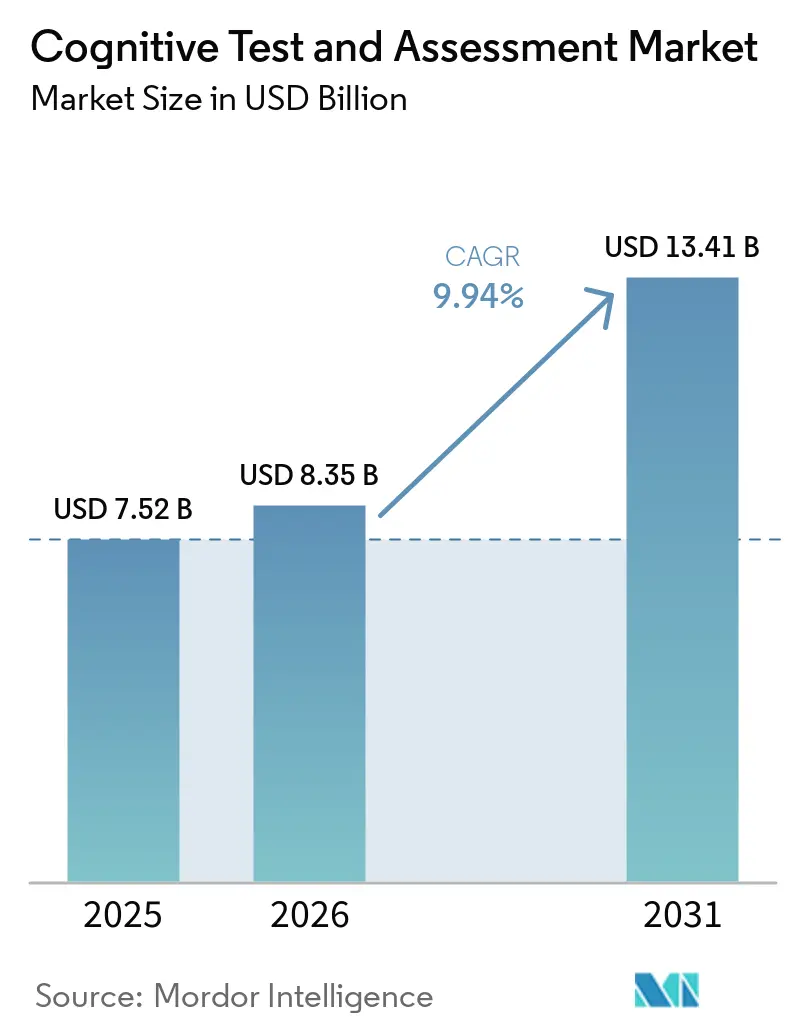
The global cognitive test and assessment market size stood at USD 8.35 billion in 2026, up from USD 7.52 billion in 2025, and is projected to reach USD 13.41 billion by 2031, with a 9.94% CAGR. The cognitive test and assessment are being supported by a large and expanding neurological care need, with 55 million people living with dementia globally and nearly 10 million new cases added each year, which keeps baseline demand for testing structurally intact[1]. The cognitive test and assessment market is also benefiting from the broader adoption of validated digital endpoints in drug development, as United States regulatory pathways for digital health technologies have become clearer for sponsors running central nervous system programs. Earlier diagnosis is widening the addressable patient pool, since the first FDA-cleared blood-based in vitro diagnostic aid for Alzheimer’s disease is moving more patients into formal assessment pathways at earlier stages of decline. Competitive conditions remain moderate, as the top 5 suppliers accounted for 46.3% of revenue in 2025, leaving meaningful room for specialists with validated digital tools and biomarker-linked offerings. The main near-term limits on the cognitive test and assessment market remain uneven reimbursement outside established care pathways and continued concern about demographic bias in AI-assisted tools, which slow broad deployment across diverse patient populations[2].
Key Report Takeaways
By delivery modality, Digital & Computer-Based Assessment held 48.5% of the market in 2025, while Remote/Online Assessment is forecast to expand at a 10.4% CAGR through 2031.
By end user, Healthcare Providers held 32.5% of the market in 2025, while Individual Consumers recorded the highest projected CAGR at 11.8% through 2031.
By application, Clinical Diagnosis & Monitoring accounted for 37.9% of the cognitive test and assessment market size in 2025, while Consumer Brain Health & Wellness is advancing at a 10.8% CAGR through 2031.
By assessment type, Neuropsychological Assessments led with a 26.3% share in 2025, while Attention & Executive Function Assessments are projected to expand at an 11.4% CAGR through 2031.
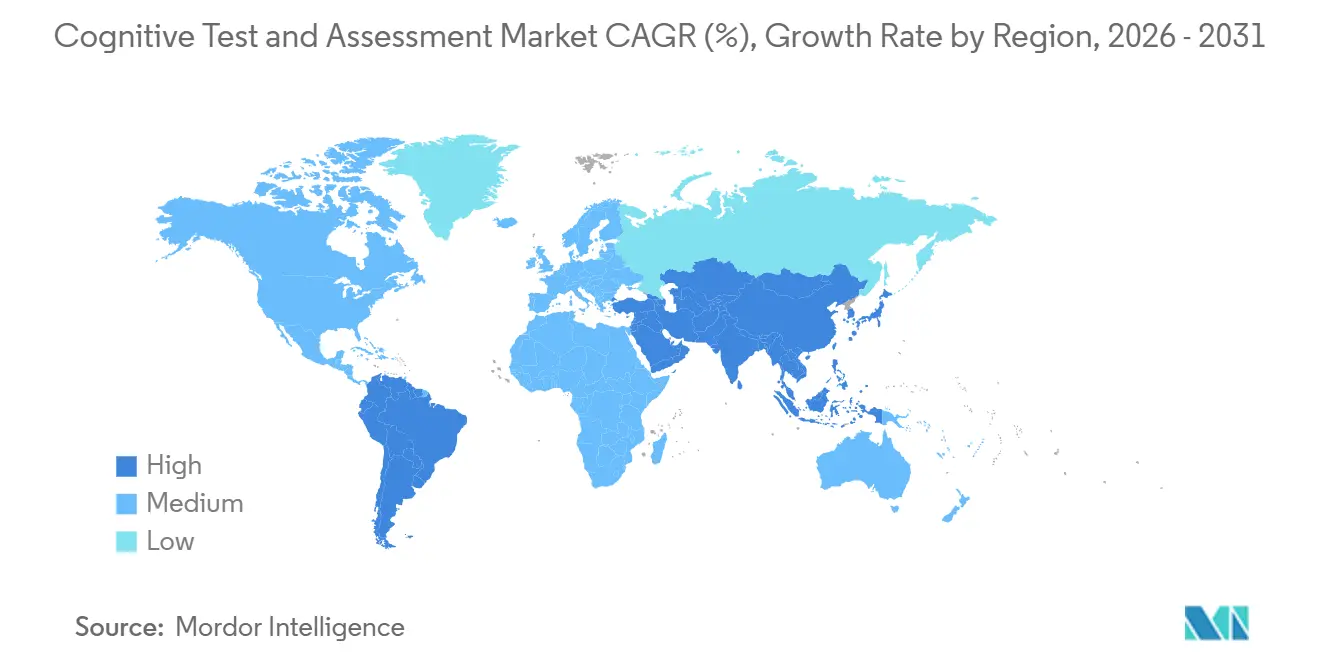
By geography, North America held 38.3% of the market in 2025, while Asia-Pacific is forecast to expand at an 11.9% CAGR through 2031.
Note: Market size and forecast figures in this report are generated using Mordor Intelligence’s proprietary estimation framework, updated with the latest available data and insights as of January 2026.
Global Cognitive Test and Assessment Market Trends and Insights
Drivers Impact Analysis*
| Driver | (~) % Impact on CAGR Forecast | Geographic Relevance | Impact Timeline |
|---|---|---|---|
| Rising Dementia and Neurodegenerative Disease Burden | +2.1% | Global, the highest intensity in Asia-Pacific and North America | Long term (≥ 4 years) |
| Growth Of Decentralized CNS Clinical Trials | +1.8% | North America and Europe, expanding to the Asia-Pacific | Medium term (2-4 years) |
| Telehealth And Mobile Cognitive Testing Adoption | +1.6% | North America, Nordics, and Asia-Pacific urban centers | Short term (≤ 2 years) |
| Employer And Education Use of Scalable Cognitive Benchmarking | +1.0% | North America, Europe, and the Asia-Pacific corporate hubs | Medium term (2-4 years) |
| Alzheimer’s Therapy Pathways Increase Repeat Staging Needs | +1.4% | North America and Europe, with Asia-Pacific following | Medium term (2-4 years) |
| Speech-Based Digital Biomarkers Enable Low-Burden Monitoring | +0.9% | North America, Europe, and Japan, with India emerging | Long term (≥ 4 years) |
| Source: Mordor Intelligence | |||
Rising Dementia and Neurodegenerative Disease Burden
The cognitive test and assessment market is benefiting from a large, still-rising disease burden. Global dementia prevalence already stands at 55 million people, and the annual incidence remains close to 10 million new cases, which sustains recurring testing demand across diagnosis, staging, and follow-up care. A 2025 peer-reviewed burden study also pointed to a much larger long-term patient base, with global dementia cases projected to reach 153 million by 2050 as populations age further[3]. This matters for the cognitive test and assessment market because each patient typically requires repeated evaluations at multiple treatment points rather than a single one-time test. Earlier biological confirmation is reinforcing that pattern, as the FDA clearance of Fujirebio’s Lumipulse blood test in May 2025 is bringing more patients into structured cognitive evaluation at earlier stages of disease progression.
Growth of Decentralized CNS Clinical Trials
The cognitive test and assessment market is also supported by a clear shift in central nervous system trials toward remote, digital-first study designs. Sponsors are increasingly using digital cognitive endpoints because they reduce site burden, improve recruitment flexibility, and generate higher-frequency data over long study periods[4]. Cogstate reported 133 active clinical trials in its portfolio as of December 31, 2025, which was a 34% year-on-year increase and a direct sign of growing sponsor demand for digital assessment infrastructure. The same disclosure showed 42 new trial starts in the first half of fiscal 2026, versus 25 in the prior comparable period, indicating broader adoption beyond a narrow group of legacy Alzheimer’s studies. Diversification into mood, sleep, and other neurological programs makes trial-related demand in the cognitive test and assessment market more durable by reducing dependence on any single therapeutic area or trial outcome.
Telehealth and Mobile Cognitive Testing Adoption
The cognitive test and assessment market is moving further toward remote delivery as providers and patients become more comfortable with digital care workflows. The strongest proof point in the supplied material comes from BrainCheck, which said more than 150 new practices joined its platform in 2025, taking its network to over 500 practices and 105,000 assessments for the year. That kind of network expansion shows that remote and mobile cognitive testing is becoming part of routine care operations rather than a temporary extension tool. It also changes access conditions in the cognitive test and assessment market, as validated screening can be administered across broader geographies without requiring a specialist visit for every initial interaction. In practical terms, that expands reach into rural areas, lowers scheduling friction, and supports earlier triage before patients move into formal neurology or geriatrics pathways.
Alzheimer's Therapy Pathways Increase Repeat Staging Needs
The cognitive test and assessment market is seeing stronger repeat-use demand because Alzheimer’s treatment pathways now require more structured monitoring over time. Once disease-modifying therapies are included in the care plan, providers need baseline staging, interval reviews, and repeated reassessment to guide treatment decisions and follow-up management. CMS continues to support cognitive assessment and care planning under established coverage pathways, reinforcing the role of formal evaluation within reimbursed episodes of care. This helps explain why Clinical Diagnosis & Monitoring remained the largest application area in 2025, as therapeutic monitoring obligations are now supporting assessment demand alongside first-time diagnosis. The result is a cognitive test and assessment market where testing frequency per patient is rising, even before factoring in future growth in the underlying patient population.
Restraints Impact Analysis*
| Restraint | (~) % Impact on CAGR Forecast | Geographic Relevance | Impact Timeline |
|---|---|---|---|
| Limited Reimbursement Beyond Established Care Pathways | -0.8% | Global, most acute in South America, the Middle East, Africa, and the Asia-Pacific, excluding Japan | Medium term (2-4 years) |
| Neurodata Privacy and Cybersecurity Exposure | -0.5% | North America, Europe under GDPR, and the Asia-Pacific markets with emerging data laws | Short term (≤ 2 years) to Medium term (2-4 years) |
| AI Bias And Weak Cross-Demographic Validation | -0.6% | Global, most consequential in multilingual and low-SDI populations | Long term (≥ 4 years) |
| Cross-Device and Language Equivalence Gaps | -0.4% | Asia-Pacific multilingual markets, the Middle East and Africa, and South America | Medium term (2-4 years) to Long term (≥ 4 years) |
| Source: Mordor Intelligence | |||
Limited Reimbursement Beyond Established Care Pathways
The cognitive test and assessment market still faces uneven reimbursement outside a limited number of established care settings. In the United States, CMS supports cognitive assessment and care planning through CPT code 99483. Still, that framework applies to a defined episode of care rather than the shorter, more frequent digital interactions many remote platforms depend on. That leaves many vendors balancing two distinct demand pools: one tied to reimbursement and another to self-pay, employer funding, or institutional budgets. The gap matters because adoption decisions in the cognitive test and assessment market often depend less on clinical value and more on whether a payer pathway already exists. It also makes international expansion harder, since reimbursement conditions vary widely across countries and often lag behind new digital assessment formats.
AI Bias and Weak Cross-Demographic Validation
The cognitive test and assessment market also faces a serious validation challenge as AI-assisted tools move toward broader clinical use. A 2025 study in the Journal of Medical Internet Research found measurable age-related bias in an autonomous cognitive examination. It stated that even after statistical adjustment, full demographic accessibility could not be guaranteed. A 2025 review in AI and Ethics further warned that multimodal AI systems for dementia screening can inherit bias from pre-trained models trained on uneven source datasets, thereby weakening real-world generalizability across underrepresented groups. For the cognitive test and assessment market, this creates both clinical and commercial risks, as health systems are less willing to deploy tools that may underperform across age, language, education, or ethnicity. It also raises the validation burden for vendors, since broader adoption now depends on stratified evidence across the exact populations those tools are expected to serve.
*Our forecasts treat driver/restraint impacts as directional, not additive. The impact forecasts reflect baseline growth, mix effects, and variable interactions.
Segment Analysis
By Delivery Modality: Digital Platforms Consolidate Clinical and Research Workflows
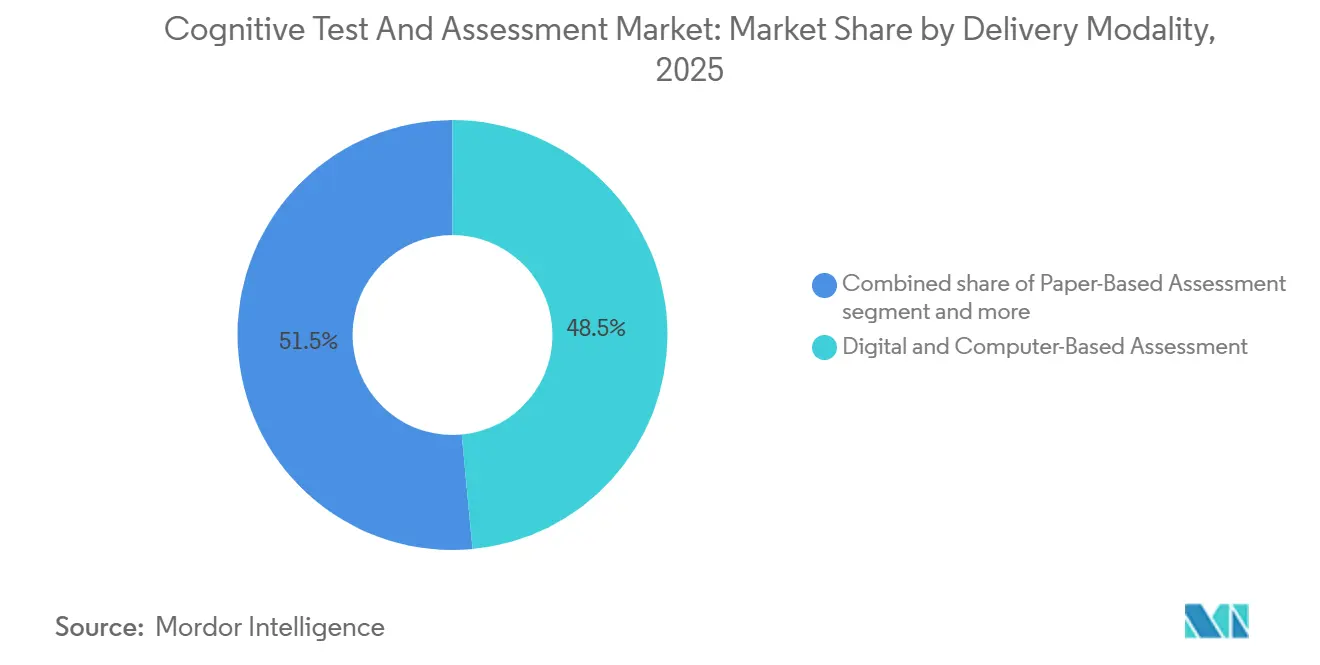
Digital & computer-based assessment held 48.5% of the cognitive test and assessment market share in 2025, making it the largest delivery modality during the period under review. That position reflects a longer transition in the cognitive test and assessment market from paper administration toward validated digital workflows across clinical care, research studies, and publisher-led testing platforms. Pearson’s launch of the all-digital D-KEFS Advanced in September 2025 showed how leading suppliers are no longer just digitizing paper forms, but are redesigning batteries for native tablet use and richer response capture. Digital testing supports faster scoring, more consistent administration, and better data capture, which is especially valuable in high-throughput care settings and multi-site trials. It also gives vendors in the cognitive test and assessment market more flexibility to link results with longitudinal records, remote workflows, and biomarker-led monitoring models.
Paper-based assessment still retains meaningful volume because many clinicians remain anchored to long-standing norms, familiar interpretive frameworks, and psychometric histories that were built around legacy instruments. In parts of the cognitive assessment industry, that installed base still slows migration because providers want confidence that digital formats preserve equivalence across age groups, languages, and device conditions. Remote/Online Assessment is the fastest-growing modality and is forecast to expand at a 10.4% CAGR through 2031, indicating that demand is moving beyond clinic-bound delivery models. Cambridge Cognition’s 2026 Oura-linked brain health study also illustrates where the cognitive test and assessment market is headed, with validated tasks increasingly paired with continuous sleep and physiological data inside connected digital ecosystems. As remote formats mature, the value proposition shifts from simple convenience to sustained longitudinal monitoring, which is a more defensible position for vendors than one-time screening alone.

By End User: Consumer Segment Disrupts the Traditional Clinical-First Model
Healthcare providers held 32.5% of the market in 2025, making them the largest end-user group in the cognitive test and assessment market. Hospitals, clinics, neurology practices, and rehabilitation settings remain central because formal diagnosis, treatment staging, and reimbursed cognitive care planning still occur mainly within provider-led channels. Academic and educational institutions continue to support a steady volume through standardized testing batteries. At the same time, research organizations remain an important customer base for validated tools used in central nervous system studies. Government and defense agencies also maintain demand for specialized readiness and performance tools in operational settings. Corporate buyers are becoming more relevant as well, especially where employers want scalable benchmarking for roles that depend on attention, adaptability, and information processing.
Individual consumers are the fastest-growing end-user group and are forecast to grow at a 11.8% CAGR through 2031, marking a meaningful shift in how the cognitive test and assessment market is accessed. The move is being supported by direct-to-consumer platforms, app-based delivery, and growing public interest in longitudinal brain health tracking rather than only symptom-driven evaluation. Cambridge Cognition’s partnership with Ivory in India is a strong example, since it targets both professional healthcare and consumer health channels and supports multiple Indian languages to broaden reach. The same company disclosure highlighted a major diagnostic gap among older adults in India, underscoring how consumer-led models in the cognitive test and assessment market can extend reach to underdiagnosed populations before a formal clinical visit. This does not replace the clinical channel, but it expands the funnel's front end and brings more people into monitoring earlier in the disease or wellness cycle.
By Application: Monitoring Mandates Anchor Clinical Demand While Wellness Channels Accelerate
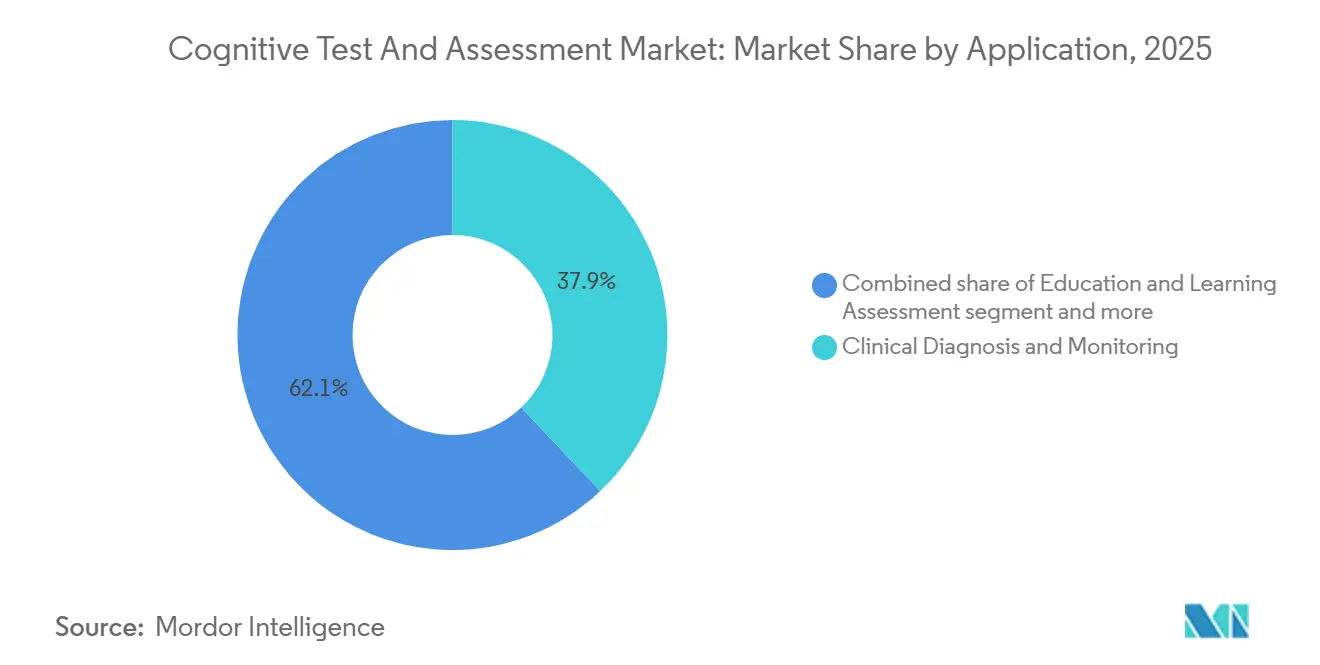
Clinical diagnosis & monitoring accounted for 37.9% of the cognitive test and assessment market in 2025, making it the largest application area. That leadership reflects the continued importance of neurological diagnosis, disease staging, therapeutic follow-up, Medicare-linked screening, and cognitive endpoints within formal care pathways. Linus Health’s May 2026 announcement that its Digital Assessment of Cognition met or exceeded CEOi benchmarks, with 90.7% sensitivity and 100% specificity for separating cognitively unimpaired and cognitively impaired individuals, shows how brief digital tools are improving their standing in clinical triage. Research and clinical trials also remain a stable application area because sponsors need repeatable, validated measures that can be deployed across sites and patient populations. Sports and performance management, along with education-related applications, continue to contribute steady demand where standardized assessment remains important for decision-making.
Consumer brain health & wellness is the fastest-growing application. It is forecast to grow at a 10.8% CAGR through 2031, indicating clear expansion of the cognitive test and assessment market beyond strictly diagnostic settings. Demand here is driven by adults who want a baseline before obvious symptoms appear and are willing to engage in ongoing tracking if the tools are credible and easy to use. That makes validated assessment more commercially durable than game-like training models, since users and providers both place greater value on clinically grounded measurement. The strongest products in this part of the cognitive test and assessment market are likely to be those that combine brief testing, longitudinal trend tracking, and integration with physiological or sleep-related data streams. Regulatory scrutiny also matters more here, because vendors with peer-reviewed validation and clearer health positioning are better placed to defend product claims as the category grows.
By Assessment Type: Attention Function Emerges as the New Productivity Battleground
Neuropsychological assessments led the market with a 26.3% share in 2025, reflecting their established role in dementia staging, research protocols, forensic evaluation, and specialist clinical workups. Their position remains important in the cognitive test and assessment market because they have deep validation histories and are still considered reference-grade tools across many professional settings. Intelligence, Memory & Cognitive Ability Tests also retain strong institutional demand through publishers and specialist vendors serving clinical, educational, and research use cases. Language, Behavioral & Emotional Assessments are gaining ground as developers and sponsors give more attention to behavioral and neuropsychiatric outcomes in study design. Cogstate’s January 2026 disclosure that mood, sleep, and other neurological condition contracts grew nearly 6-fold in the first half of fiscal 2026 illustrates how adjacent assessment categories are widening the commercial opportunity.
Attention & executive function assessments are the fastest-growing segment and are forecast to grow at a 11.4% CAGR through 2031, making them one of the most dynamic parts of the cognitive test and assessment market. Growth is being supported by demand from ADHD-related evaluation, workplace readiness benchmarking, and the use of executive decline as an early marker in neurodegenerative care pathways. Harver’s April 2026 launch of AI PREVAIL shows how cognitive testing is moving into employer decision-making frameworks tied to adaptability and the real-world use of AI tools. Peer-reviewed work is also expanding the technical base for this segment, with npj Digital Medicine highlighting multilingual, multimodal speech processing as a credible approach to lower-burden cognitive screening. That combination of clinical relevance and workplace utility gives this segment of the cognitive test and assessment market unusually broad demand drivers compared with more traditional testing categories.
Geography Analysis
North America held 38.3% of the cognitive test and assessment market share in 2025, which made it the largest regional market. The region benefits from mature clinical infrastructure, dense biopharma trial activity, broad familiarity with digital tools, and established Medicare support for cognitive assessment and care planning under CPT code 99483. The cognitive test and assessment market in North America is also being strengthened by U.S. regulatory clarity around digital health technologies in drug development, which helps vendors and sponsors adopt validated cognitive endpoints with less uncertainty. The FDA clearance of the first blood-based Alzheimer’s diagnostic aid in May 2025 is another structural tailwind, because earlier biological confirmation increases the number of patients entering longitudinal assessment pathways. Even with a lower regional growth rate than Asia-Pacific, the North American cognitive test and assessment market remains strategically important because many new product models still need U.S. validation, reimbursement logic, or sponsor traction before scaling elsewhere.
Asia-Pacific is the fastest-growing region and is forecast to expand at a 11.9% CAGR through 2031, positioning it at the center of future demand growth in the cognitive test and assessment market. Japan is a key example, with the National Center for Geriatrics and Gerontology launching the community J-MINT Brain Health Program trial across 19 municipalities beginning in April 2026, pointing to government-backed deployment of structured cognitive prevention activities at scale. India also represents a major growth opportunity, and Cambridge Cognition’s February 2026 partnership with Ivory shows how multilingual digital assessment can be positioned across both professional healthcare and consumer channels in a large underdiagnosed population. The Philippines adds another layer to the regional picture, as DOST-PCHRD funded the NEUROMAP PH project at PHP 60 million, or USD 1.0 million, to strengthen localized early detection and neuroimaging capability.
Europe is forecast to grow at a 6.0% CAGR through 2031, below the global average but supported by stable institutional demand and established clinical infrastructure. The UK government’s December 2025 contract for Pearson Education Limited to provide online educational psychology assessment software and 180 licenses confirms that public-sector procurement remains an active channel for the cognitive test and assessment market in Europe. Cambridge Cognition’s April 2026 result statement also showed recovery and expansion across clinical studies, academic research, professional healthcare, and consumer health and wellness, with 2026 expected revenue of USD 12.4 million (GBP 9.5 million), which indicates that specialist vendors are finding growth in underpenetrated segments. South America, the Middle East, and Africa remain smaller markets for cognitive assessment. Still, digital delivery gives both regions a practical route to scale where specialist infrastructure is less dense. In those markets, mobile and remote assessment models are likely to matter more than traditional, site-heavy formats because they reduce access barriers and better fit uneven provider distribution.
Competitive Landscape
The cognitive test and assessment market remains moderately fragmented rather than highly concentrated. The top 5 players held 46.3% of revenue in 2025, with Pearson at 18.4%, Cambridge Cognition at 8.5%, Cogstate at 7.8%, Signant Health at 6.7%, and CogniFit at 4.9%. That leaves a large long tail of more than 150 niche suppliers, including publisher-led assessment firms, specialist trial service providers, and digital health entrants focused on narrower use cases. This structure keeps competition active on pricing, workflow design, and validation depth, while still allowing specialists to defend smaller but credible positions. The cognitive test and assessment market, therefore, rewards breadth at the top and targeted clinical or technological differentiation further down the supplier base.
Pearson’s position is built on instrument depth, broad professional reach, and digital delivery infrastructure rather than on a single flagship test. Its July 2025 agreement with Adaptive Testing Technologies to bring CAT-MH and K-CAT tools to Q-global expanded the platform beyond traditional cognitive assessment into adjacent mental and behavioral screening use cases. Its September 2025 D-KEFS Advanced launch further showed that Pearson is still investing in digital-native redesign rather than relying only on legacy installed products. In the cognitive test and assessment market, that matters because vendors with platform breadth can cross-sell into more professional workflows and hold user attention longer than single-product rivals.
Cambridge Cognition and Cogstate represent two different but credible specialist models in the cognitive test and assessment market. Cambridge Cognition is pushing toward multimodal and consumer-adjacent use cases, as shown by its Oura-linked brain health study and its multilingual expansion through the Ivory partnership in India. It is also investing in speech biomarker capability, with AAIC 2025 materials showing cross-linguistic validation work across several European languages, which strengthens its position where passive or low-burden monitoring may matter more in the future. Cogstate, by contrast, remains closely tied to the pharmaceutical and clinical trial channel, with USD 104.9 million in contracted future revenue as of December 31, 2025, and a broader mix of mood, sleep, and neurological programs than in prior years. The competitive opening for smaller challengers remains real. Still, the most defensible positions in the cognitive test and assessment market now appear to be those that combine validation, workflow integration, and repeat-use relevance across multiple end markets.
Cognitive Test and Assessment Industry Leaders
-
Pearson PLC
-
Cambridge Cognition Ltd
-
Cogstate Ltd
-
Signant Health
-
CogniFit Inc
- *Disclaimer: Major Players sorted in no particular order
Recent Industry Developments
- May 2026: Linus Health announced that its Digital Assessment of Cognition (DAC) meets or surpasses CEOi benchmarks for clinical digital cognitive assessments, achieving 90.7% sensitivity and 100% specificity for distinguishing cognitively unimpaired individuals from those with cognitive impairment. This positions DAC as a primary-care-deployable triage tool in the emerging blood-biomarker confirmation workflow.
- April 2026: Harver launched AI PREVAIL, the first purpose-built AI aptitude and adaptability assessment module, developed by PhD-level I/O psychologists to measure employees’ and candidates’ ability to understand and leverage AI in real work contexts. The launch signals the entry of AI-readiness benchmarking as a distinct product category within the corporate cognitive assessment segment.
- April 2026: Cambridge Cognition reported full-year 2025 results showing revenue recovery and expansion across all 4 market segments, Clinical Studies, Academic Research, Professional Healthcare, and Consumer Health & Wellness, with 2026 expected revenue of GBP 9.5 million. The company entered the Professional Healthcare and Consumer Health & Wellness markets in 2025, with all agreements to date driven by inbound inquiries, indicating strong brand pull for CANTAB in new verticals.
- April 2026: Japan’s National Center for Geriatrics and Gerontology launched a cluster-randomized controlled trial testing the community J-MINT Brain Health Program across 19 municipalities beginning April 2026, with structured cognitive assessment as a core program component. This represents the largest government-sponsored deployment of cognitive assessment infrastructure in Japan to date.
Global Cognitive Test and Assessment Market Report Scope
| Paper-Based Assessment |
| Digital & Computer-Based Assessment |
| Remote/Online Assessment |
| Healthcare Providers (Hospitals, Clinics & Rehabilitation Centers) |
| Academic & Educational Institutions |
| Corporate Enterprises |
| Research Organizations |
| Government & Defense Agencies |
| Individual Consumers |
| Clinical Diagnosis & Monitoring |
| Education & Learning Assessment |
| Corporate & Workforce Assessment |
| Research & Clinical Trials |
| Sports & Performance Management |
| Consumer Brain Health & Wellness |
| Neuropsychological Assessments |
| Intelligence, Memory & Cognitive Ability Tests |
| Attention & Executive Function Assessments |
| Language, Behavioral & Emotional Assessments |
| Aptitude & Skills Assessments |
| Others |
| North America | United States |
| Canada | |
| Mexico | |
| South America | Brazil |
| Peru | |
| Chile | |
| Argentina | |
| Rest of South America | |
| Europe | United Kingdom |
| Germany | |
| France | |
| Spain | |
| Italy | |
| BENELUX (Belgium, Netherlands, and Luxembourg) | |
| NORDICS (Denmark, Finland, Iceland, Norway, and Sweden) | |
| Rest of Europe | |
| Asia-Pacific | India |
| China | |
| Japan | |
| Australia | |
| South Korea | |
| South East Asia (Singapore, Malaysia, Thailand, Indonesia, Vietnam, and Philippines) | |
| Rest of Asia-Pacific | |
| Middle East And Africa | United Arab Emirates |
| Saudi Arabia | |
| South Africa | |
| Nigeria | |
| Rest of Middle East And Africa |
| By Delivery Modality | Paper-Based Assessment | |
| Digital & Computer-Based Assessment | ||
| Remote/Online Assessment | ||
| By End User | Healthcare Providers (Hospitals, Clinics & Rehabilitation Centers) | |
| Academic & Educational Institutions | ||
| Corporate Enterprises | ||
| Research Organizations | ||
| Government & Defense Agencies | ||
| Individual Consumers | ||
| By Application | Clinical Diagnosis & Monitoring | |
| Education & Learning Assessment | ||
| Corporate & Workforce Assessment | ||
| Research & Clinical Trials | ||
| Sports & Performance Management | ||
| Consumer Brain Health & Wellness | ||
| By Assessment Type | Neuropsychological Assessments | |
| Intelligence, Memory & Cognitive Ability Tests | ||
| Attention & Executive Function Assessments | ||
| Language, Behavioral & Emotional Assessments | ||
| Aptitude & Skills Assessments | ||
| Others | ||
| By Geography | North America | United States |
| Canada | ||
| Mexico | ||
| South America | Brazil | |
| Peru | ||
| Chile | ||
| Argentina | ||
| Rest of South America | ||
| Europe | United Kingdom | |
| Germany | ||
| France | ||
| Spain | ||
| Italy | ||
| BENELUX (Belgium, Netherlands, and Luxembourg) | ||
| NORDICS (Denmark, Finland, Iceland, Norway, and Sweden) | ||
| Rest of Europe | ||
| Asia-Pacific | India | |
| China | ||
| Japan | ||
| Australia | ||
| South Korea | ||
| South East Asia (Singapore, Malaysia, Thailand, Indonesia, Vietnam, and Philippines) | ||
| Rest of Asia-Pacific | ||
| Middle East And Africa | United Arab Emirates | |
| Saudi Arabia | ||
| South Africa | ||
| Nigeria | ||
| Rest of Middle East And Africa | ||
Key Questions Answered in the Report
What is the 2026 value of the cognitive test and assessment market?
The cognitive test and assessment market is valued at USD 8.4 billion in 2026 and is forecast to reach USD 13.4 billion by 2031, with a 9.9% CAGR.
Which region leads revenue generation in cognitive assessment?
North America led in 2025 with 38.3% share, supported by mature reimbursement, strong biopharma trial activity, and established digital health infrastructure.
Which geography is growing the fastest through 2031?
Asia-Pacific is the fastest-growing region, with an expected 11.9% CAGR through 2031, supported by aging populations and government-backed brain health programs.
Which delivery model is growing fastest in cognitive testing?
Remote/online assessment is the fastest-growing delivery modality, with a projected 10.4% CAGR through 2031, as providers expand digital and mobile workflows.
What is driving repeat demand for cognitive assessments?
Repeat demand is rising because dementia care and Alzheimer’s therapy pathways require baseline staging, follow-up monitoring, and periodic reassessment over time.
How concentrated is the supplier base?
The supplier base is moderately fragmented. The top 5 players accounted for 46.3% of revenue in 2025, leaving a long tail of smaller niche and specialist vendors.