
Carcinoid Syndrome Diarrhea Treatment Market Size and Share
Market Overview
| Study Period | 2020 - 2031 |
|---|---|
| Market Size (2026) | USD 638.36 Million |
| Market Size (2031) | USD 851.66 Million |
| Growth Rate (2026 - 2031) | 5.94 % |
| Fastest Growing Market | Asia-Pacific |
| Largest Market | North America |
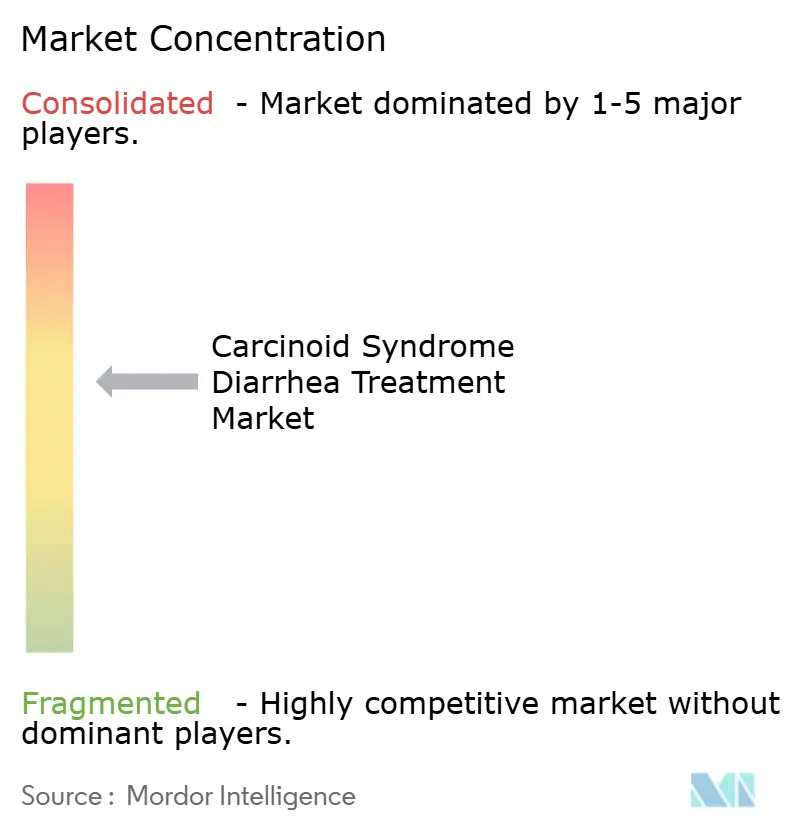
| Market Concentration | Medium |
Major Players *Disclaimer: Major Players sorted in no particular order Image © Mordor Intelligence. Reuse requires attribution under CC BY 4.0. | |
Carcinoid Syndrome Diarrhea Treatment Market Analysis by Mordor Intelligence
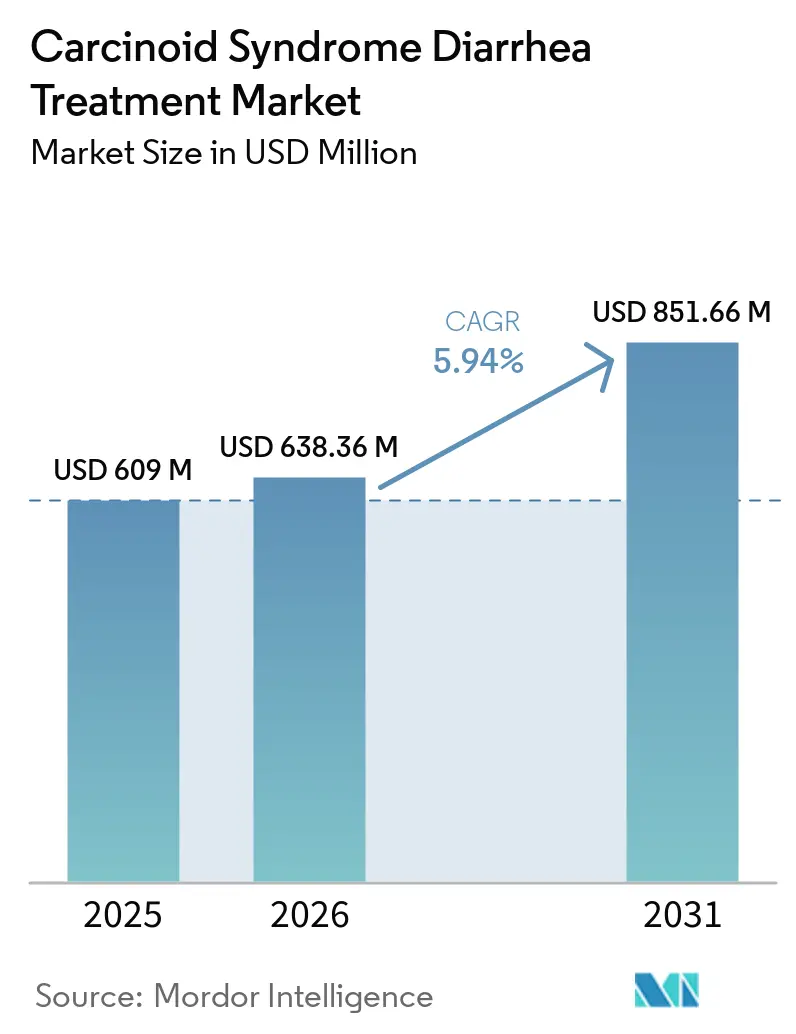
The Carcinoid Syndrome Diarrhea Treatment Market size is expected to increase from USD 609 million in 2025 to USD 638.36 million in 2026 and reach USD 851.66 million by 2031, growing at a CAGR of 5.94% over 2026-2031.
A larger diagnosed neuroendocrine tumor population is expanding the pool that needs long-term symptom management. Better survival also extends treatment duration for patients with functional tumors. Established somatostatin analog use provides a stable treatment base, while oral and home-based options may change how care is delivered. Generic competition is reducing pressure on treatment access in the United States, although it also changes the revenue profile of branded depot products. The carcinoid syndrome diarrhea treatment market has opportunities in refractory disease, specialist care networks, and settings that can safely support care outside hospitals.
Key Report Takeaways
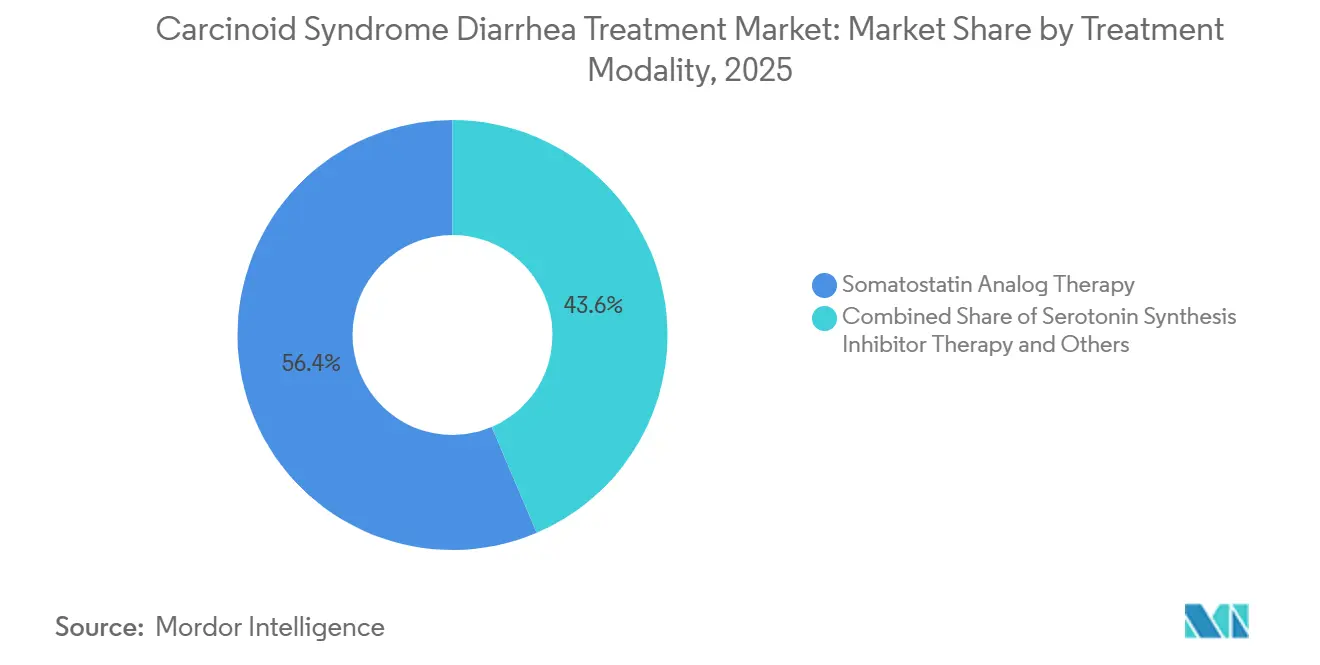
By treatment modality, somatostatin analog therapy held 56.4% of the carcinoid syndrome diarrhea treatment market share in 2025, while serotonin synthesis inhibitor therapy is projected to grow at an 11.8% CAGR through 2031.
By drug type, octreotide held 28.2% of the carcinoid syndrome diarrhea treatment market share in 2025, while telotristat ethyl is forecast to expand at a 12.2% CAGR through 2031.
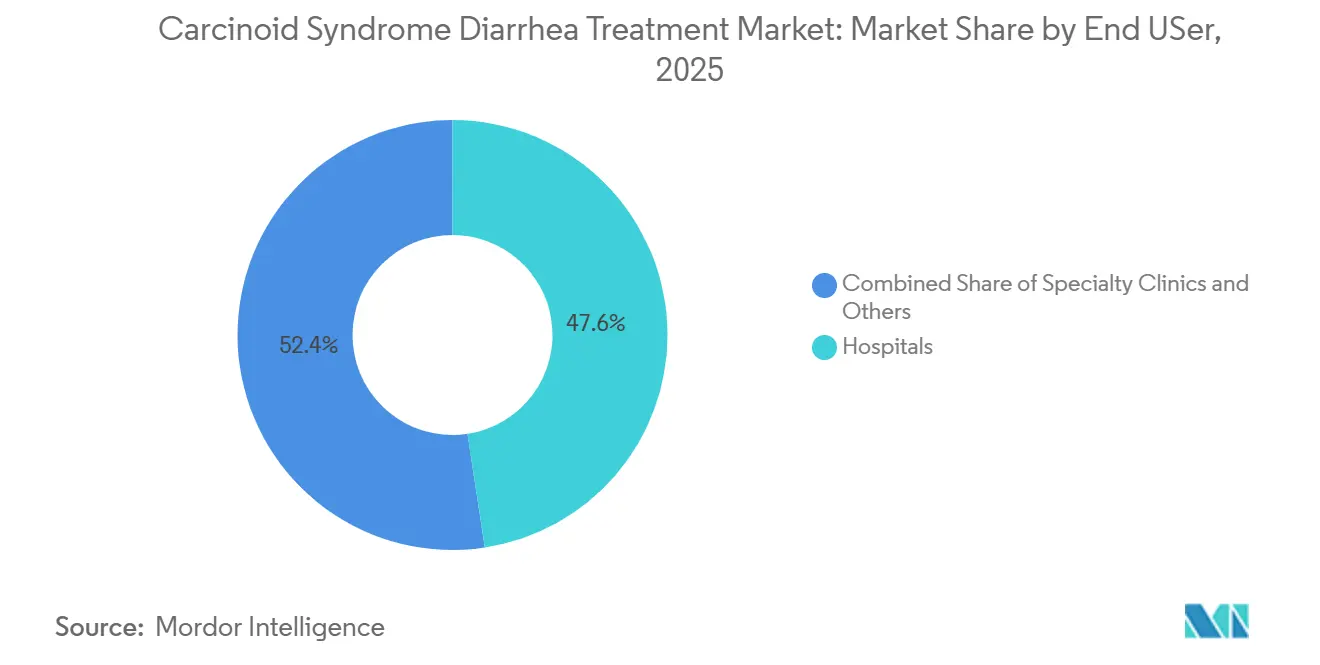
By end user, hospitals accounted for 47.6% of the carcinoid syndrome diarrhea treatment market share in 2025, while homecare is forecast to grow at an 8.4% CAGR through 2031.
By disease and treatment setting, SSA-controlled diarrhea held 41.3% of the carcinoid syndrome diarrhea treatment market share in 2025, while refractory diarrhea despite SSA therapy is forecast to grow at a 10.8% CAGR through 2031.
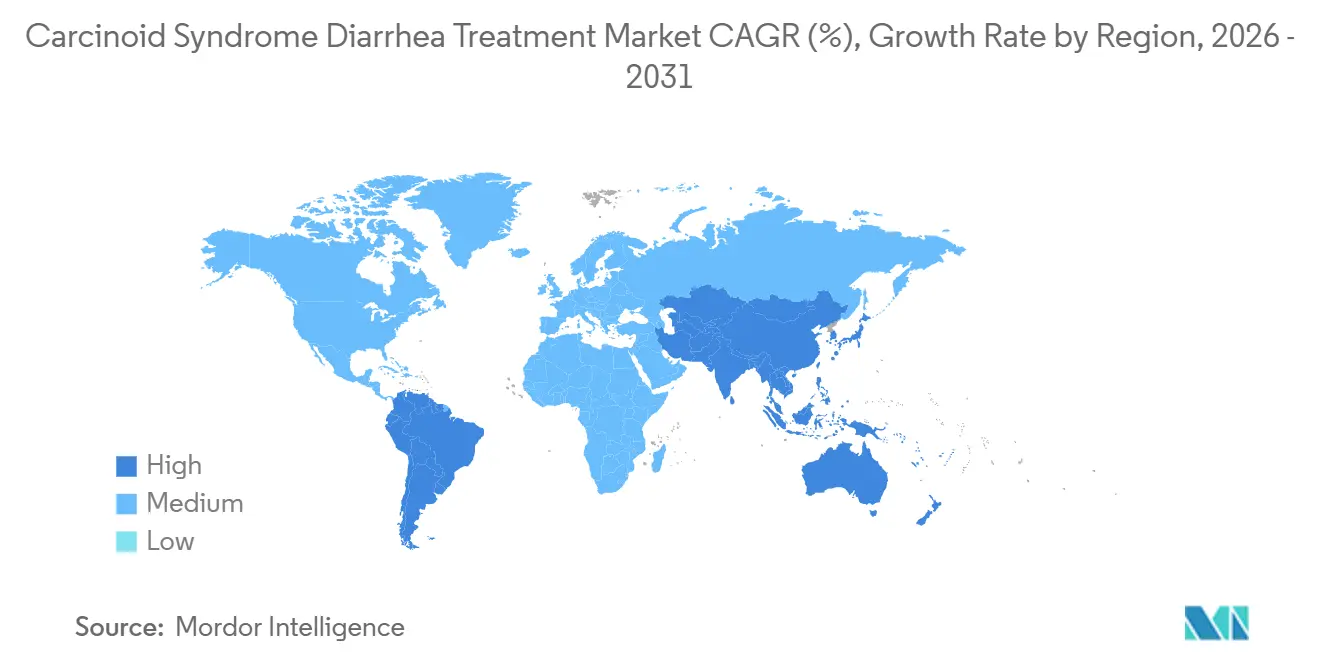
By geography, North America held 39.7% of the carcinoid syndrome diarrhea treatment market share in 2025, while Asia-Pacific is projected to grow at a 9.5% CAGR through 2031.
Note: Market size and forecast figures in this report are generated using Mordor Intelligence’s proprietary estimation framework, updated with the latest available data and insights as of January 2026.
Global Carcinoid Syndrome Diarrhea Treatment Market Trends and Insights
Drivers Impact Analysis*
| Driver | (~) % Impact on CAGR Forecast | Geographic Relevance | Impact Timeline |
|---|---|---|---|
| Rising Diagnosis and Prevalence of Neuroendocrine Tumors | +1.5% | Global | Long term (≥ 4 years) |
| Recurring Use of Long-Acting Somatostatin Analogs | +1.2% | North America and EU | Medium term (2-4 years) |
| Expansion of Treatment Options for Refractory Diarrhea | +1.0% | North America and EU | Medium term (2-4 years) |
| Increasing Use of Specialized NET Centers and Multidisciplinary Care | +0.7% | North America, EU, and APAC core | Long term (≥ 4 years) |
| Rising Demand for Patient-Friendly Oral and Home-Based Treatment | +0.8% | North America, EU, and APAC | Medium term (2-4 years) |
| Increasing Surveillance of Carcinoid Heart Disease and Serotonin Burden | +0.5% | North America and EU | Medium term (2-4 years) |
| Source: Mordor Intelligence | |||
Rising Diagnosis and Prevalence of Neuroendocrine Tumors
NET incidence is increasing through factors beyond improved screening alone. Grade 1 tumor prevalence in the United States increased from 0.00023% in 2001 to 0.02993% in 2021. Ontario recorded a 6.5-fold increase in GEP-NEN incidence from 2000 to 2023, and the increase was concentrated in nonmetastatic presentations. Five-year overall survival across NETs reached 77.4% in the SEER-22 cohort, lengthening the time during which patients may need symptom management. Localized disease incidence also increased from 2.1 to 4.3 per 100,000 between 2004 and 2021. These patterns create a larger future pool that may progress to metastatic disease and carcinoid syndrome, supporting the carcinoid syndrome diarrhea treatment market over a longer period.
Recurring Use of Long-Acting Somatostatin Analogs
Long-acting somatostatin analogs generate recurring revenue because treatment can continue for an indefinite period. The 2025 ASCO guideline[1]Eugene A. Woltering et al., “Symptom Management for Well-Differentiated Gastroenteropancreatic Neuroendocrine Tumors: ASCO Guideline,” Journal of Clinical Oncology places somatostatin analogs in first-line care for functional carcinoid syndrome. The guideline also supports shorter intervals from 28 to 21 days or doses of 40 mg to 60 mg when symptoms break through. This can raise treatment use beyond a standard labeled monthly schedule. Specialist NET centers and multidisciplinary care help formalize these treatment decisions, especially in established referral systems. The carcinoid syndrome diarrhea industry continues to rely on this recurring treatment pattern even as generic products change the economics of the category.
Expansion of Treatment Options for Refractory Diarrhea
Telotristat ethyl established an oral add-on option for patients whose diarrhea remains inadequately controlled by somatostatin analog therapy. A pooled analysis[2]Raj Srirajaskanthan et al., “PREF-NET: A Patient Preference and Experience Study of Lanreotide Autogel Administered in the Home Versus Hospital Setting,” Supportive Care in Cancer of randomized controlled trials published in 2026 reinforced the evidence for telotristat ethyl used with somatostatin analogs in carcinoid syndrome diarrhea. The 2025 ASCO guideline recommends telotristat ethyl for patients with inadequate symptom control on SSA therapy. The TELEACE chart review of 200 patients treated for at least 6 months reported a mean NET size reduction of 0.59 cm and improved progression-free survival outcomes. The treatment pathway may broaden when clinicians identify persistent diarrhea as serotonin breakthrough rather than a non-carcinoid cause. Monitoring carcinoid heart disease and serotonin burden can support more systematic identification of patients who need escalation, which supports the carcinoid syndrome diarrhea treatment market.
Rising Demand for Patient-Friendly Oral and Home-Based Treatment
Monthly depot injections control symptoms but can place a continuing burden on patients and care settings. In the UK PREF-NET study, 98.7% of 80 patients with GEP-NETs preferred home-based lanreotide autogel, and 79.5% reported a positive quality-of-life effect after switching. More than 60% of participants self-administered or received injections from a non-healthcare professional. An Australian preference study found oral administration was the preferred route among patients and clinicians, ahead of differences in progression-free survival. Crinetics began its Phase 3 CAREFNDR study of once-daily oral paltusotine in November 2025, testing an alternative to injection-based SSA delivery. If approved, this option could shift part of the carcinoid syndrome diarrhea treatment market from hospital administration toward homecare and outpatient pharmacy settings.
Restraints Impact Analysis*
| Restraint | (~) % Impact on CAGR Forecast | Geographic Relevance | Impact Timeline |
|---|---|---|---|
| High Cost of Long-Term and Radioligand Therapies | -1.5% | Global, pronounced in APAC, MEA, and South America | Long term (≥ 4 years) |
| Limited Access to NET Specialists, PRRT, and Nuclear-Medicine Infrastructure | -1.2% | APAC, MEA, and South America | Long term (≥ 4 years) |
| Diagnostic Delays and Heterogeneous Treatment Sequencing | -0.8% | Global | Medium term (2-4 years) |
| Differential Diagnosis of Persistent Diarrhea in SSA-Treated Patients | -0.6% | Global, pronounced in low-specialist settings | Short term (≤ 2 years) |
| Source: Mordor Intelligence | |||
High Cost of Long-Term and Radioligand Therapies
Long-term treatment costs can restrict use even when clinical value is well established. Branded long-acting SSA therapy costs more than USD 10,000 annually per U.S. patient, while a PRRT course with 177Lu-DOTATATE can exceed USD 120,000 in major markets. A 2025 cost-effectiveness analysis[3]Wenyi Zhu et al., “Cost-Effectiveness of [177Lu]Lu-DOTATATE for the Treatment of Newly Diagnosed Advanced Gastroenteropancreatic Neuroendocrine Tumors,” Journal of Nuclear Medicinecalculated an incremental cost-effectiveness ratio of USD 66,761 per quality-adjusted life year for first-line PRRT versus octreotide LAR. Generic SSA products may lower first-line medication costs in the United States, but they also reduce the pool of branded revenue available for innovation. Reimbursement variation and direct patient costs can limit uptake in middle-income countries. These pressures constrain the carcinoid syndrome diarrhea treatment market most sharply where insurance coverage and public reimbursement are less developed.
Limited Access to NET Specialists, PRRT, and Nuclear-Medicine Infrastructure
PRRT requires nuclear medicine facilities, radiopharmaceutical preparation, dosimetry capacity, and dedicated patient protocols. A 2025 Italian analysis found that 26.5% of hospitalizations for high-complexity radioligand therapy groups involved interregional patient mobility, compared with a national average of 10.2%. Academic NET centers have been associated with better survival in late-stage colonic NETs, but this concentration can leave patients outside major metropolitan areas with fewer options. Diagnostic delays of 3 to 5 years and inconsistent sequencing can postpone appropriate disease management. Persistent diarrhea may also be misattributed to pancreatic exocrine insufficiency, bile-acid malabsorption, or bacterial overgrowth rather than serotonin breakthrough. These practical limits can delay escalation to telotristat ethyl and reduce the treated population in the carcinoid syndrome diarrhea treatment market.
*Our forecasts treat driver/restraint impacts as directional, not additive. The impact forecasts reflect baseline growth, mix effects, and variable interactions.
Segment Analysis
By Treatment Modality: SSA Backbone Persists as Serotonin-Targeted Tier Accelerates
Somatostatin analog therapy accounted for 56.4% of the carcinoid syndrome diarrhea treatment market size by treatment modality in 2025. Its position reflects long clinical use, multiple guideline endorsements, and relevance across newly diagnosed and SSA-controlled disease. Long-acting octreotide LAR and lanreotide autogel support continuing treatment through regular administration. Dose escalation can extend use beyond the standard monthly schedule when symptoms recur. The products remain a practical backbone of the carcinoid syndrome diarrhea industry because they address hormone secretion and symptom control.
Serotonin synthesis inhibitor therapy is projected to expand at an 11.8% CAGR through 2031, making it the fastest-growing modality. This segment is supported by the recognition of refractory carcinoid syndrome diarrhea as a distinct clinical setting. Telotristat ethyl is used as an add-on treatment for patients who are not adequately controlled on SSA therapy. The ASCO guideline provides a clearer basis for its use in this setting. Supportive products such as loperamide, diphenoxylate, pancreatic enzymes, and bile-acid sequestrants remain important, particularly where SSA access is limited or patients have SSA-related pancreatic exocrine insufficiency. Advanced and interventional treatments, including PRRT, liver-directed therapy, and surgery, serve patients with more complex disease.



By Drug Type: Octreotide Maintains Leadership While Telotristat Ethyl Drives Growth
Octreotide held 28.2% of the carcinoid syndrome diarrhea treatment market share by drug type in 2025. It remains a widely prescribed first-line therapy because clinicians have extensive experience with its use. Its long-acting depot formulation supports symptom control and reduces hormone secretion. Guideline support and physician familiarity continue to underpin use across major healthcare systems. Teva launched[4]Teva Pharmaceuticals, “Teva Announces Launch of the First and Only Generic Version of Sandostatin LAR Depot,” Teva Pharmaceuticalsthe first U.S. generic octreotide acetate for injectable suspension in October 2024, and the product was indicated for severe diarrhea and flushing associated with metastatic carcinoid tumors.
Telotristat ethyl is forecast to grow at a 12.2% CAGR through 2031. Its mechanism targets peripheral serotonin production, which distinguishes it from SSA therapy. It is increasingly used alongside somatostatin analogs when diarrhea persists despite base treatment. Clinical evidence and guideline endorsement support its commercial outlook. The drug class structure of the carcinoid syndrome diarrhea industry therefore separates an established SSA base from a faster-growing serotonin-targeted option. Radiopharmaceuticals and supportive therapies complete the treatment set, but each has a different access profile and role in the care pathway.
By End User: Hospital Concentration Persists as Homecare Gains Clinical Validation
Hospitals accounted for 47.6% of the carcinoid syndrome diarrhea treatment market size by end user in 2025. They remain central to complex diagnosis, initial treatment, PRRT delivery, and advanced therapy planning. Multidisciplinary NET tumor boards were reported in 84.6% of surveyed centers across 11 countries in the CUTNETs network. These structures concentrate high-complexity clinical decisions in hospital settings. Specialty clinics and cancer institutions also manage patients receiving continuing SSA treatment.
Homecare is forecast to grow at an 8.4% CAGR through 2031. The preference for home lanreotide administration in PREF-NET provides clinical support for the shift. Deep subcutaneous autogel lanreotide already enables self-administration in several European countries. Payer systems in some countries encourage home delivery because it can reduce hospital resource use. Paltusotine could remove the injection requirement for SSA therapy if it is approved after the CAREFNDR trial. This may shift a meaningful share of the carcinoid syndrome diarrhea treatment market to homecare or an outpatient pharmacy model.
End User
| Hospitals | 47.60% |
| Combined Share of Specialty Clinics and Others | 52.40% |
| Source: Mordor Intelligence | |
By Disease: Refractory Diarrhea Drives Disproportionate Market Value
SSA-controlled diarrhea accounted for 41.3% of the carcinoid syndrome diarrhea treatment market share by disease setting in 2025. It is the largest setting because it contains patients who continue on recurring SSA treatment at standard doses. Newly diagnosed carcinoid syndrome provides the entry point for first-line SSA use. Advanced and metastatic disease increases demand for PRRT and liver-directed interventions. These settings form a broad treatment continuum rather than isolated patient groups.
Refractory diarrhea despite SSA therapy is projected to grow at a 10.8% CAGR through 2031. Combination treatment with SSA plus telotristat ethyl creates a higher value per patient than SSA-controlled disease. Persistent diarrhea can be attributed incorrectly to SSA-induced pancreatic exocrine insufficiency, bile-acid malabsorption, or small intestinal bacterial overgrowth. The 2025 ASCO guideline and the 2025 Chinese expert consensus both identify 24-hour urinary 5-HIAA as a tool for evaluating the mechanism of diarrhea. More consistent diagnostic assessment may identify patients who are suitable for escalation without relying on an increase in new NET cases.
Geography Analysis
North America held 39.7% of the carcinoid syndrome diarrhea treatment market share in 2025. The region benefits from dense U.S. referral networks, established telotristat ethyl reimbursement, and a regulatory setting that has supported orphan drug and breakthrough therapy programs. Teva’s October 2024 generic octreotide launch introduced pricing pressure in an SSA segment that had been brand-exclusive for a long period. Branded volumes retain some support from buy-and-bill practices, cold-chain requirements, and established prescribing patterns. Canada and Mexico add regional volume through SSA prescribing, while Canadian academic programs are extending PRRT access.
Europe is the second-largest regional contributor to the carcinoid syndrome diarrhea treatment market. Germany, the UK, France, Italy, and Spain form the core of SSA and PRRT activity. ENETS-certified centers and European guidelines support the structured sequencing of SSA therapy, telotristat ethyl, and PRRT. The 2026 GGNET Delphi consensus recommended structured PRRT selection and multidisciplinary tumor board review for SSTR-positive NETs. Italy’s 26.5% interregional mobility rate for radioligand therapy hospitalizations indicates the importance of additional nuclear medicine capacity. Argentina and Colombia have also formalized first-line SSA treatment in recent clinical guidance.
Asia-Pacific is forecast to grow at a 9.5% CAGR through 2031, the fastest regional rate in the carcinoid syndrome diarrhea treatment market. China published its first dedicated carcinoid syndrome diagnosis and treatment consensus in 2025, endorsing SSAs as first-line therapy and telotristat ethyl for SSA-refractory diarrhea. Japan’s universal health insurance system covers approved NET therapies as PRRT capacity expands. Australia added PRRT with 177Lu-DOTATATE to the Medicare Benefits Schedule from November 1, 2025. The change reduces patient costs and supports additional PRRT center development. India, South Korea, other APAC markets, the Middle East, and Africa remain early-stage contributors where awareness and infrastructure investment matter more than new therapy launches.

Competitive Landscape
The carcinoid syndrome diarrhea treatment market is moderately consolidated in its SSA tier. Ipsen’s lanreotide and Novartis’s octreotide products have long anchored first-line revenue through proprietary depot formulations and established clinical use. Teva’s October 2024 U.S. generic octreotide launch exposed the SSA segment to direct generic competition. The branded reference product had U.S. annual sales of USD 826 million as of July 2024. The change creates pricing pressure but may also improve access for cost-constrained patients.
Lexicon Pharmaceuticals holds exclusive global rights to telotristat ethyl, which is the only approved tryptophan hydroxylase inhibitor for carcinoid syndrome diarrhea in the supplied evidence. This position protects the refractory-diarrhea tier from direct near-term competition. The company licenses Xermelo while its own pipeline focus has moved toward cardiometabolic indications. TerSera Therapeutics in North America and Recordati in Europe use specialty channels for branded octreotide products. Their positioning focuses on settings where large multinational SSA suppliers concentrate more heavily on major academic centers. The carcinoid syndrome diarrhea treatment market thus combines large established suppliers with specialized participants that serve distinct distribution channels.
Crinetics is pursuing a delivery-based competitive approach through paltusotine, an oral SST2 agonist in the Phase 3 CAREFNDR trial. The company randomized the first patient in the 141-participant trial in November 2025. ITM’s Phase 3 COMPETE results, published in July 2026, reported median progression-free survival of 23.9 months for 177Lu-edotreotide and 14.1 months for everolimus among 309 Grade 1 or 2 GEP-NET patients. It would provide another PRRT option if it receives approval. The specialized manufacture of non-carrier-added lutetium-177 and radiolabeling capability create substantial entry barriers in radiopharmaceutical therapy.
Carcinoid Syndrome Diarrhea Treatment Industry Leaders
Pfizer Inc.
Teva Pharmaceutical Industries Ltd.
Sun Pharmaceutical Industries Ltd.
Bristol-Myers Squibb Company
Novartis AG
- *Disclaimer: Major Players sorted in no particular order

Recent Industry Developments
- July 2026: ITM Isotope Technologies Munich published Phase 3 COMPETE trial primary results in The Lancet, demonstrating 177Lu-edotreotide achieved a median PFS of 23.9 months versus 14.1 months for everolimus in 309 Grade 1/2 SSTR-positive GEP-NET patients, with Grade 3/4 adverse events occurring in 18% versus 40% of patients.
- June 2026: ITM presented single-timepoint dosimetry data from the COMPETE trial at the Society of Nuclear Medicine and Molecular Imaging Annual Meeting, reporting a simplified approach intended to reduce logistical barriers to 177Lu-edotreotide center adoption.
- May 2026: A pooled analysis of randomized controlled trial data on telotristat ethyl combined with somatostatin analogs for carcinoid syndrome diarrhea was published in Gastrointestinal Endoscopy after presentation at Digestive Disease Week.
- November 2025: Crinetics Pharmaceuticals randomized the first patient in the pivotal Phase 3 CAREFNDR trial of paltusotine 80 mg once daily in 141 adults with carcinoid syndrome.


Global Carcinoid Syndrome Diarrhea Treatment Market Report Scope
As per the scope of the report, carcinoid syndrome diarrhea (CSD) treatments comprise pharmacological and supportive therapeutic interventions used to manage chronic diarrhea and related symptoms associated with carcinoid syndrome, a condition primarily caused by serotonin-secreting neuroendocrine tumors (NETs). These treatments aim to reduce bowel movement frequency, improve symptom control, enhance quality of life, and address underlying tumor activity through targeted therapeutic approaches. Management strategies include somatostatin analogs, serotonin synthesis inhibitors, radioligand therapies, and supportive symptom management therapies, depending on disease severity, treatment response, and patient characteristics.
The carcinoid syndrome diarrhea treatment market is segmented by treatment modality into somatostatin analog therapy (SSA), serotonin synthesis inhibitor therapy, targeted & radioligand therapy, and supportive and symptom management therapy; by drug type into octreotide, lanreotide, pasireotide, telotristat ethyl, lutetium Lu 177 dotatate, and others; by end user into hospitals, specialty clinics, cancer institutions & treatment centers, and homecare settings; by disease into newly diagnosed carcinoid syndrome, SSA-controlled diarrhea, refractory diarrhea despite SSA therapy, and advanced & metastatic carcinoid syndrome; and by geography into North America, Europe, Asia-Pacific, Middle East and Africa, and South America. The market report also covers the estimated market sizes and trends for 17 countries across major regions globally. For each segment, the market size and forecast are provided in terms of value (USD).
| Somatostatin Analog Therapy (SSA) |
| Serotonin Synthesis Inhibitor Therapy |
| Targeted & Radioligand Therapy |
| Supportive and Symptom Management Therapy |
| Octreotide |
| Lanreotide |
| Pasireotide |
| Telotristat Ethyl |
| Lutetium Lu 177 Dotatate |
| Others |
| Hospitals |
| Specialty Clinics |
| Cancer Institutions & Treatment Centers |
| Homecare Settings |
| Newly Diagnosed Carcinoid Syndrome |
| SSA-Controlled Diarrhea |
| Refractory Diarrhea Despite SSA Therapy |
| Advanced & Metastatic Carcinoid Syndrome |
| North America | United States |
| Canada | |
| Mexico | |
| Europe | Germany |
| United Kingdom | |
| France | |
| Italy | |
| Spain | |
| Rest of Europe | |
| Asia-Pacific | China |
| Japan | |
| India | |
| South Korea | |
| Australia | |
| Rest of Asia-Pacific | |
| Middle East and Africa | GCC |
| South Africa | |
| Rest of Middle East and Africa | |
| South America | Brazil |
| Argentina | |
| Rest of South America |
| By Treatment Modality | Somatostatin Analog Therapy (SSA) | |
| Serotonin Synthesis Inhibitor Therapy | ||
| Targeted & Radioligand Therapy | ||
| Supportive and Symptom Management Therapy | ||
| By Drug Type | Octreotide | |
| Lanreotide | ||
| Pasireotide | ||
| Telotristat Ethyl | ||
| Lutetium Lu 177 Dotatate | ||
| Others | ||
| By End User | Hospitals | |
| Specialty Clinics | ||
| Cancer Institutions & Treatment Centers | ||
| Homecare Settings | ||
| By Disease | Newly Diagnosed Carcinoid Syndrome | |
| SSA-Controlled Diarrhea | ||
| Refractory Diarrhea Despite SSA Therapy | ||
| Advanced & Metastatic Carcinoid Syndrome | ||
| By Geography | North America | United States |
| Canada | ||
| Mexico | ||
| Europe | Germany | |
| United Kingdom | ||
| France | ||
| Italy | ||
| Spain | ||
| Rest of Europe | ||
| Asia-Pacific | China | |
| Japan | ||
| India | ||
| South Korea | ||
| Australia | ||
| Rest of Asia-Pacific | ||
| Middle East and Africa | GCC | |
| South Africa | ||
| Rest of Middle East and Africa | ||
| South America | Brazil | |
| Argentina | ||
| Rest of South America | ||


Key Questions Answered in the Report
What is the projected value of carcinoid syndrome diarrhea treatment in 2031?
The sector is forecast to reach USD 851.7 million by 2031, from USD 638.4 million in 2026, at a 5.9% CAGR.
Which treatment modality has the largest position?
Somatostatin analog therapy led treatment modalities with 56.4% share in 2025.
Which therapy is projected to grow fastest?
Serotonin synthesis inhibitor therapy is forecast to grow at a 12.2% CAGR through 2031, while serotonin synthesis inhibitor therapy is projected to grow at 11.8%.
Why is homecare growing in carcinoid syndrome treatment?
Homecare is projected to grow at an 8.4% CAGR, supported by patient preference for home lanreotide administration and potential oral treatment options.
Which region has the highest growth rate?
Asia-Pacific is forecast to grow at a 9.5% CAGR through 2031 as treatment guidance and PRRT infrastructure expand.
What limits wider access to PRRT and long-term treatment?
Cost, reimbursement gaps, shortages of specialist centers, and nuclear medicine infrastructure continue to restrict access.
Page last updated on:





