
Market Overview
| Study Period | 2020 - 2031 |
|---|---|
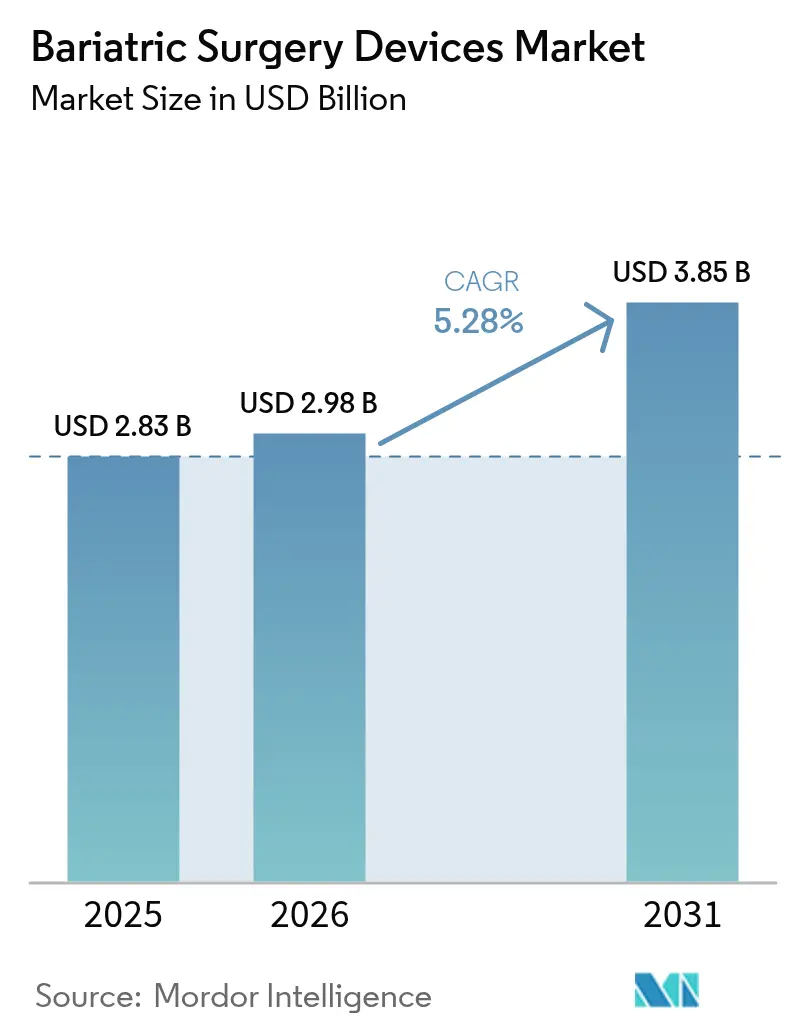
| Market Size (2026) | USD 2.98 Billion |
| Market Size (2031) | USD 3.85 Billion |
| Growth Rate (2026 - 2031) | 5.28 % |
| Fastest Growing Market | Asia-Pacific |
| Largest Market | North America |
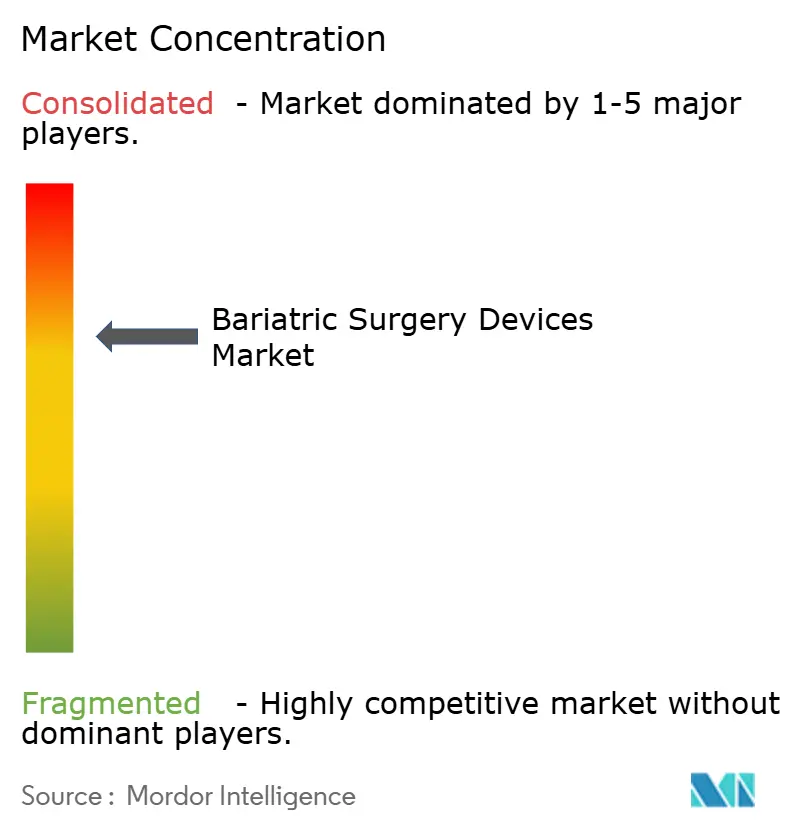
| Market Concentration | Medium |
Major Players *Disclaimer: Major Players sorted in no particular order Image © Mordor Intelligence. Reuse requires attribution under CC BY 4.0. | |
Bariatric Surgery Devices Market Analysis by Mordor Intelligence
The bariatric surgery devices market size is expected to grow from USD 2.83 billion in 2025 to USD 2.98 billion in 2026 and is forecast to reach USD 3.85 billion by 2031 at 5.28% CAGR over 2026-2031. Sustained growth unfolds as device-based solutions integrate with GLP-1 receptor agonists, giving providers flexible, hybrid regimens that improve long-term weight-management outcomes. Rapid advances in robotic stapling, magnetic compression systems and swallowable balloons are sharpening surgical precision, shortening recovery times and lowering complication rates, reinforcing the value proposition of the bariatric surgery devices market for both payers and patients. At the same time, the competitive field is adapting to evolving reimbursement criteria that increasingly reward total-cost-of-care savings, thereby accelerating technology adoption across hospitals and ambulatory surgical centers. North America retains leadership on procedure volumes, yet the Asia-Pacific demand curve steepens as obesity prevalence rises sharply among younger cohorts, underlining sizable future demand for specialized devices. Collectively, these factors create a resilient bariatric surgery devices market that is expected to track steady mid-single-digit expansion through 2030.
Key Report Takeaways
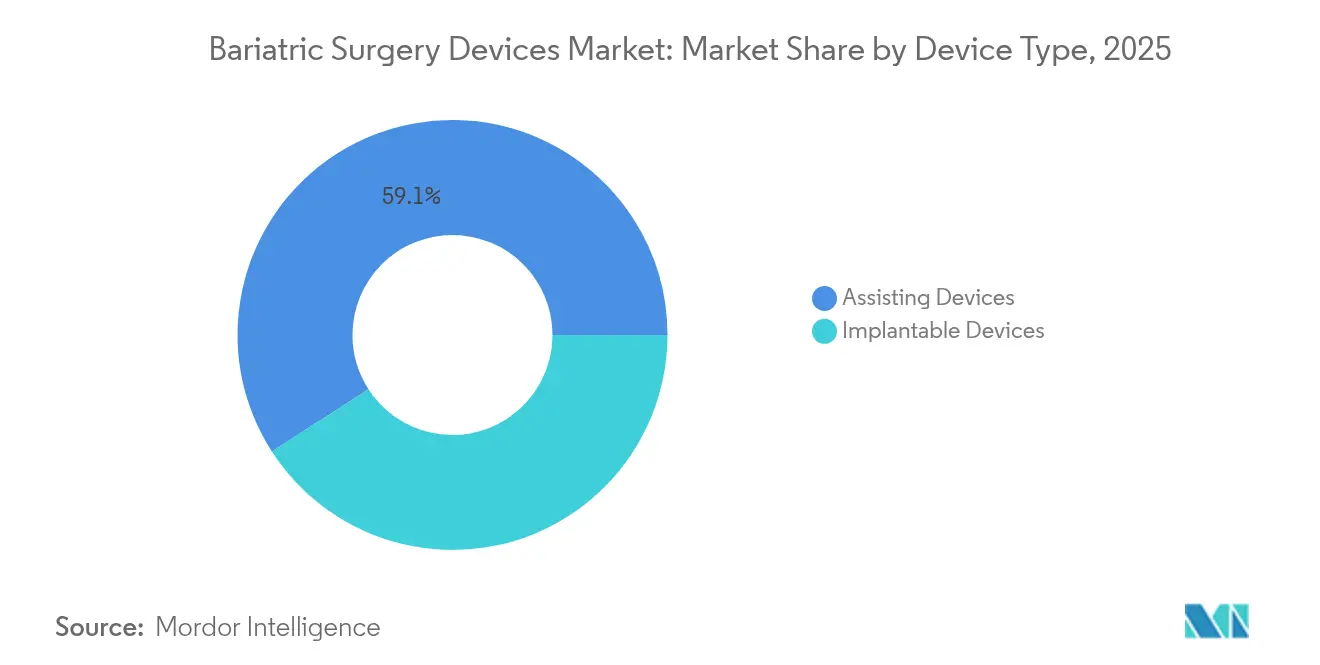
- Assisting devices led with a 59.12% revenue share of the bariatric surgery devices market in 2025, while the same segment is projected to expand at a 5.62% CAGR through 2031.
- Sleeve gastrectomy accounted for 42.93% of total procedures, whereas endoscopic sleeve gastroplasty is forecast to post the fastest 6.18% CAGR to 2031.
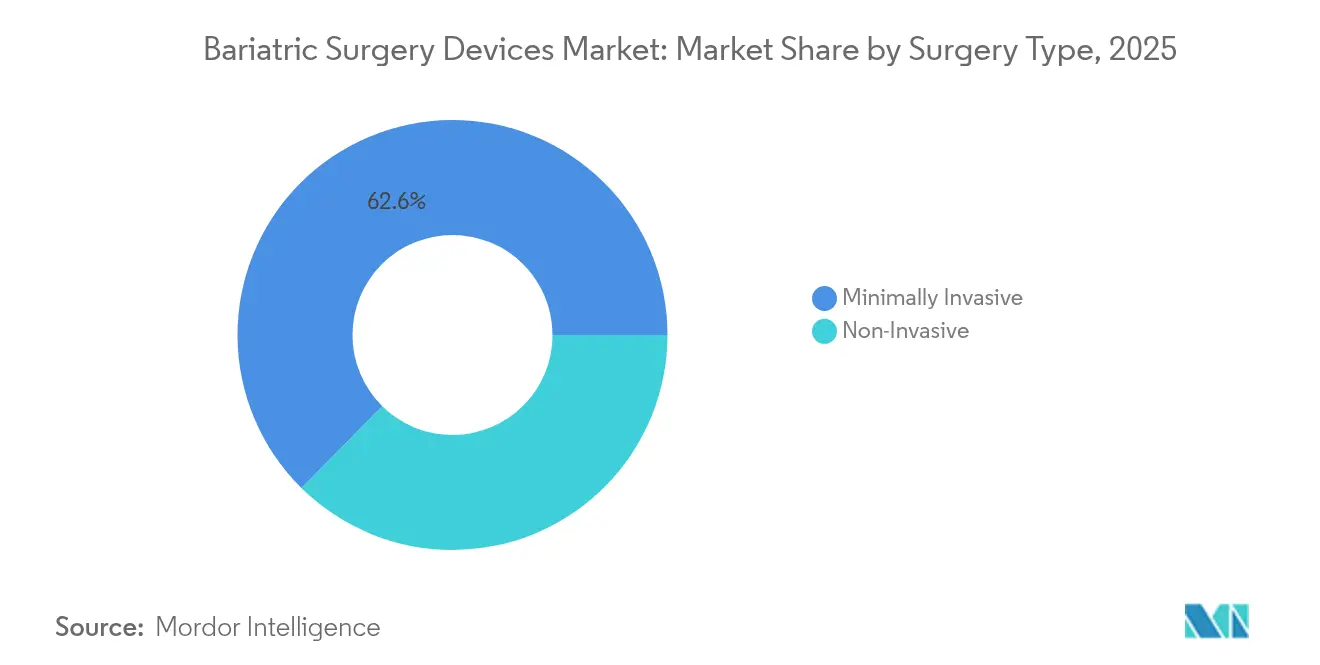
- Minimally invasive techniques captured 62.61% of the bariatric surgery devices market share in 2025; non-invasive approaches are poised to grow at a 6.85% CAGR over the same horizon.
- Hospitals represented 46.98% of all procedures, yet ambulatory surgical centers are set to register a 5.74% CAGR through 2031.
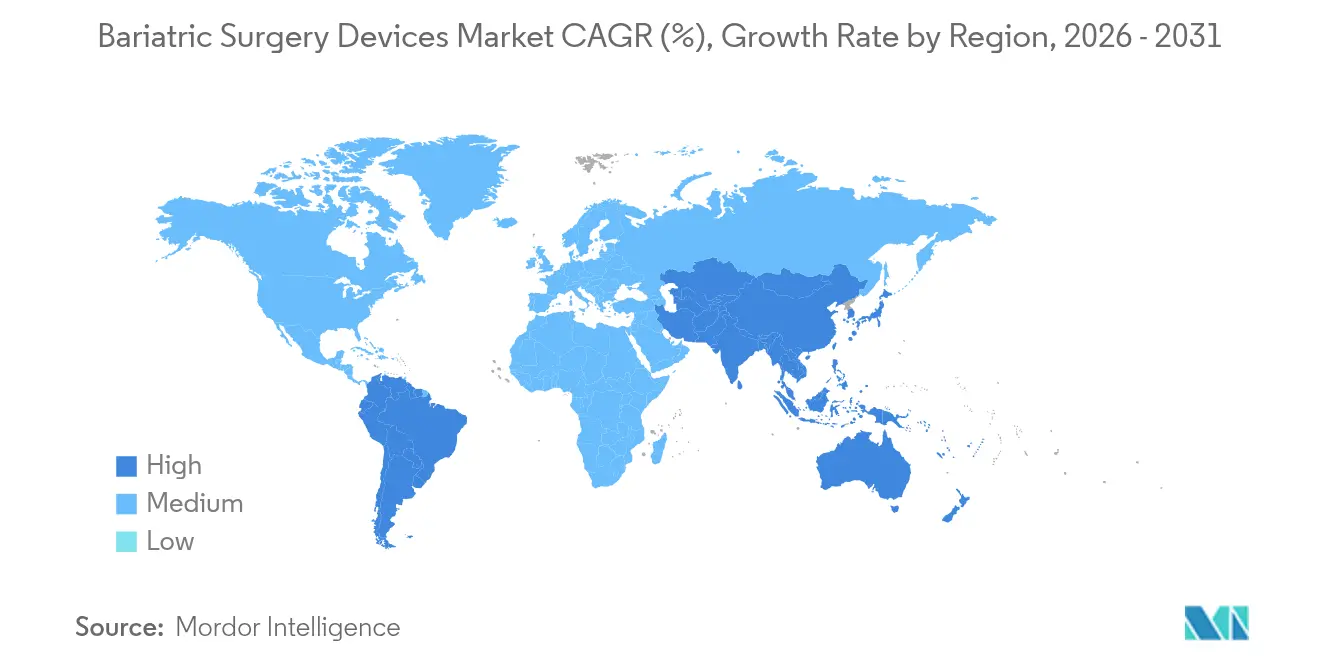
- North America held 41.72% of global revenue in 2025, while the Asia-Pacific region is projected to accelerate at a 6.78% CAGR to 2031.
Note: Market size and forecast figures in this report are generated using Mordor Intelligence’s proprietary estimation framework, updated with the latest available data and insights as of 2026.
Market Trends and Insights
Drivers Impact Analysis of Bariatric Surgery Devices Market*
| Driver | (~) % Impact on CAGR Forecast | Geographic Relevance | Impact Timeline |
|---|---|---|---|
| Rapid Rise in Morbid-Obesity Prevalence | +1.8% | Global, with early gains in North America, Asia-Pacific | Long term (≥ 4 years) |
| Expanding Insurance Coverage for Metabolic Surgery | +1.2% | North America & EU, spill-over to APAC | Medium term (2-4 years) |
| Minimally Invasive & Robotic Platforms Adoption | +1.1% | APAC core, spill-over to MEA | Medium term (2-4 years) |
| Surge in Sleeve-Gastrectomy Procedures | +0.9% | Global | Short term (≤ 2 years) |
| GLP-1 Drug Dropout Driving Surgical Conversions | +0.7% | North America & EU | Short term (≤ 2 years) |
| Magnet-Enabled Anastomosis & Smart Balloons Pipeline | +0.5% | Global | Long term (≥ 4 years) |
| Source: Mordor Intelligence | |||
Rapid Rise in Morbid-Obesity Prevalence
More than 900 million adults currently live with obesity, a cohort that continues to grow in every major region and directly enlarges the addressable pool for metabolic procedures. Demand is especially strong among patients with body-mass indices ≥ 50 kg/m², who often need more robust stapling and anastomosis solutions that command premium prices. Asia-Pacific countries are witnessing the steepest uptick in severe obesity, prompting health ministries to lower intervention thresholds to curtail downstream cardiovascular costs. Younger patients now represent a disproportionate share of surgical candidates, spurring suppliers to engineer devices with longer functional lifespans. Together, these demographic shifts reinforce the long-range expansion arc of the bariatric surgery devices market.
Expanding Insurance Coverage for Metabolic Surgery
Payer policy reforms are dismantling historical payment barriers. In 2026, Medicare will recognize obesity as a chronic disease that warrants comprehensive treatment, including surgery and anti-obesity medication. Major private insurers such as Blue Cross Blue Shield have already removed prior-authorization hurdles, cutting average approval time by fourteen days. Louisiana’s Senate Bill 106 brought an additional 1 million residents under mandatory commercial coverage in 2024, immediately boosting regional procedure volumes. Sustained reimbursement tailwinds are forecast to add 1.2 percentage points to the sector’s CAGR through 2030, cementing the bariatric surgery devices market as a cost-effective alternative to lifelong pharmacotherapy.
Minimally Invasive & Robotic Platforms Adoption
Robotic systems are performing roughly one-third of bariatric cases in high-income countries in 2022, up from 23% in 2021[1]ASMBS, “2022 Estimate of Bariatric Procedures Performed in the United States,” soard.org, driven by superior clinical outcomes and reduced complication rates. Newer platforms offer articulated stapling, advanced energy delivery, and intuitive console ergonomics that shorten learning curves for surgeons. Intuitive Surgical’s next-generation platform introduces force-sensing staplers, while Johnson & Johnson’s OTTAVA system[2]Johnson & Johnson, “OTTAVA Robotic System First Cases,” jnj.com completed its first Roux-en-Y gastric bypasses in 2025. Smaller footprints and modular instruments are helping ambulatory centers invest in robotic capabilities without costly OR redesigns, amplifying market penetration across settings.
GLP-1 Drug Dropout Driving Surgical Conversions
Real-world persistence studies show only 32.3% of patients remain on GLP-1 therapy[3]Journal of Managed Care & Specialty Pharmacy, “Real-World Persistence to GLP-1 Receptor Agonists,” jmcp.org after one year, with discontinuation rates exceeding 60% among non-diabetic users. As weight rebounds, many patients pivot toward durable surgical options, often entering the pathway pre-motivated and with payer approval already in place. Surgeons report a 17% increase in referrals tied directly to GLP-1 cessation, reinforcing surgery as a complementary—not competing—tool. This conversion pipeline is expected to lift case volumes by more than 30,000 procedures annually in North America alone, intensifying device utilization rates.
Restraints Impact Analysis of Bariatric Surgery Devices Market*
| Restraint | (~) % Impact on CAGR Forecast | Geographic Relevance | Impact Timeline |
|---|---|---|---|
| Growing Preference for Long-Acting GLP-1 Drugs | -0.9% | North America & EU | Medium term (2-4 years) |
| Limited Bariatric‐Trained Surgeons in Emerging Markets | -0.8% | APAC, MEA, Latin America | Long term (≥ 4 years) |
| High Device & Procedure Cost | -0.6% | Global | Medium term (2-4 years) |
| Stringent FDA Recalls on Staplers & Bands | -0.4% | North America, with regulatory spill-over globally | Short term (≤ 2 years) |
| Source: Mordor Intelligence | |||
Growing Preference for Long-Acting GLP-1 Drugs
Weekly and bi-weekly formulations of semaglutide and tirzepatide have achieved rapid uptake, leading to a 25.6% dip in U.S. bariatric volume during peaks in prescription growth. Nonetheless, longitudinal data suggest that combined surgical-pharmacologic regimens[4]Nursel Çalık Başaran, “Post metabolic bariatric surgery weight regain: the importance of GLP-1 levels,” International Journal of Obesity, nature.com boost excess-weight-loss rates and lower comorbidity relapse. Accordingly, market participants increasingly position devices as foundational interventions, with medication acting as adjunct therapy. This linkage tempers the headwind, moderating the negative CAGR impact to below one percentage point.
Limited Bariatric-Trained Surgeons in Emerging Markets
Asia-Pacific nations operate with fewer than one metabolic surgeon per 100,000 eligible patients, constraining procedure throughput despite surging demand. Funded fellowship programs and tele-mentoring networks are expanding the talent pool, yet skills gaps may persist into the next decade. Suppliers are mitigating the bottleneck through robot-assisted platforms that shorten learning curves and by partnering with medical colleges to embed bariatric modules in residency training.
*Our forecasts treat driver/restraint impacts as directional, not additive. The impact forecasts reflect baseline growth, mix effects, and variable interactions.
Bariatric Surgery Devices Market Segment Analysis
By Device Type:
Assisting Devices Drive Market InnovationAssisting devices retained a dominant 59.12% of the bariatric surgery devices market share in 2025, supported by staple-line reinforcement materials, powered staplers, and advanced energy systems. Product evolution centers on leak mitigation, with triple-row cartridge geometry and real-time impedance monitoring steadily reducing postoperative complication rates. Robotic stapling modules now integrate adaptive clamp force features that accommodate thicker gastric walls common in high-BMI patients, further boosting clinical confidence. Over the forecast horizon, assisting devices are projected to expand at a 5.62% CAGR, reflecting continuous incremental upgrades that encourage OR standardization and repeat purchases.
Implantable devices, though smaller in revenue terms, are adding high-value innovation layers such as magnet-enabled compression rings that create anastomoses without sutures or staples. Smart balloons capable of trans-oral placement are lowering thresholds for intervention among patients unwilling or unfit for surgery. This sub-segment’s emerging role has strategic value: it introduces new customer groups to device-based weight-loss therapies and builds a future pipeline for more invasive treatments, thereby expanding the total accessible pie of the bariatric surgery devices market.



By Procedure Type:
ESG Challenges Traditional DominanceSleeve gastrectomy held 42.93% of the bariatric surgery devices market size in 2025, anchored by clinical guidelines that endorse the sleeve for moderate-to-severe obesity. Manufacturers continue to refine curved tip staplers and pre-loaded buttress materials to shorten operative time by up to 18%. However, endoscopic sleeve gastroplasty (ESG) is closing the gap, posting a 6.18% CAGR on the strength of clinical evidence showing 13.6% total body-weight loss at 12 months with minimal adverse events. Hospitals increasingly position ESG as a day-case alternative that frees OR capacity for complex revisional work, indirectly stimulating sales of advanced suturing platforms and endoscopic accessories.
Cost-utility data place ESG at a five-year savings of USD 33,583 versus semaglutide, elevating its attractiveness for self-insured employers. Device makers are responding by bundling endoscopic suturing tools with AI-guided navigation to enhance stitch placement accuracy. Meanwhile, robotic-assisted Roux-en-Y remains relevant for super-obese patients and for those with severe reflux, sustaining demand for 30-mm reload staplers and single-site trocar kits. The procedural mosaic underscores the central thesis: a diversified technique portfolio enlarges the addressable field for the bariatric surgery devices market.
By Surgery Type:
Non-Invasive Procedures Lead GrowthMinimally invasive approaches, such as laparoscopy, maintained a commanding 62.61% share of the bariatric surgery devices market in 2025, owing to well-established ERAS protocols that enable discharge within 24 hours. Ports and trocars continue to see steady volume demand, supported by growth in single-incision techniques that reduce visible scarring. Yet the non-invasive category is accelerating fastest, at 6.85% CAGR, buoyed by ingestible balloons and incisionless magnetic compression devices that extend therapeutic reach to lower-BMI cohorts.
Clinical adoption benefits from same-day mobility and return-to-work within 72 hours, sharply contrasting with traditional two-week convalescence. Regulatory bodies in Europe now require only post-market surveillance rather than randomized trials for next-generation balloons, shortening time-to-market and encouraging pipeline depth. As a result, the bariatric surgery devices market size for non-invasive systems is forecast to climb from USD 438.1 million in 2026 to nearly USD 611 million by 2031, translating into meaningful upside for suppliers specialized in polymer-based implants.
By End-User:
ASCs Emerge as Growth LeadersHospital-based programs retained 46.98% of the bariatric surgery devices market size in 2025, supported by comprehensive critical-care capabilities for high-risk patients. Teaching facilities in particular favor full-service environments where fellows gain exposure to robotic and revisional techniques. Nonetheless, ambulatory surgical centers (ASCs) exhibit the highest 5.74% CAGR as insurers bundle payments that reward lower facility fees. Integration of rapid-infusion anesthetics and printed peri-operative education has pruned the average ASC length of stay to six hours, unlocking procedural capacity.
ASC operators increasingly negotiate direct-supply contracts with device firms, stipulating just-in-time delivery to cut inventory overhead. This shift encourages manufacturers to design compact, multi-energy consoles suitable for tighter footprints. As the ASC funnel broadens, single-use staplers and specimen-extraction pouches command stronger recurring demand, reinforcing the unit-growth story of the bariatric surgery devices market.
Geography Analysis
North America Bariatric Surgery Devices Market
North America generated 41.72% of 2025 global revenue, propelled by broad insurance coverage and well-established surgeon networks. Although GLP-1 uptake trimmed case numbers during 2024, procedure volumes rebounded after dropout-driven conversions, producing a steady 4.96% CAGR outlook to 2031. Canada mirrors U.S. dynamics, but provincial funding caps introduce periodic wait-list fluctuations that shape quarterly device shipments.
APAC Bariatric Surgery Devices Market
Asia-Pacific is the fastest riser with a predicted 6.78% CAGR through 2031, reflecting the region’s rapidly escalating obesity burden and expanding middle-class disposable income. China and India together accounted for more than 180,000 procedures in 2024, yet penetration remains below 2% of eligible candidates, revealing enormous untapped headroom. Medical-tourism hubs in Thailand and South Korea offer procedures at 30–50% lower cost than Western markets, but international patient flow is increasingly sensitive to accreditation status, pushing providers to adopt globally branded devices for trust assurance.
EMEA and South America Bariatric Surgery Devices Market
Europe sustains a moderate 5.29% expansion, underpinned by universal health systems that favor evidence-based device adoption. New medical-tourism safety standards released in 2025 compel overseas bariatric centers to document device traceability and surgeon credentials. South America and the Middle East & Africa together represent less than 10% of current revenue, yet advance at roughly 5.85% CAGR, energized by private-hospital investments and growing expatriate populations seeking quality care. Suppliers that align distribution with localized training initiatives stand to win incremental share as these nascent markets mature.

Regulatory Landscape
Regulation of bariatric surgery devices covers surgical staplers and energy systems, endoscopic suturing platforms for anatomy-altering weight-loss procedures, and implantable or temporary weight-management devices. In the United States, the FDA issued final guidance in March 2026 on premarket considerations for medical devices with indications associated with weight loss, consolidating expectations for non-clinical testing, clinical study design, and benefit-risk framing. These elements commonly shape submissions for balloons, stapling adjuncts, and endoscopic suturing systems.
Regulatory pathway clarity improved for endoscopic bariatric interventions in May 2026, when the FDA issued a final order classifying endoscopic suturing devices for altering gastric anatomy for weight loss as Class II devices with special controls (21 CFR 876.5983). This classification supports a 510(k)-based route for qualified devices. In Europe, market access remains governed by Regulation (EU) 2017/745 (MDR), with notified body conformity assessment required for higher-risk devices, and EMA involvement for specific combination products that include an ancillary medicinal substance. This framework raises post-market surveillance and traceability expectations for bariatric device suppliers operating across regions.
Value Chain Analysis
The bariatric surgery devices value chain starts with specialized raw materials (medical-grade polymers, surgical steel, and shape-memory alloys used in endoscopic and implantable components), followed by precision manufacturing for powered staplers, staple-line reinforcement, endoscopic suturing systems, energy consoles, and accessory instruments. Device OEMs depend on qualified component suppliers and contract manufacturers for subassemblies, sterility assurance, and packaging, then distribute finished goods through regional networks into hospitals and ambulatory surgical centers that increasingly manage supply through direct contracting and just-in-time replenishment.
Regulatory and trade considerations also influence throughput from manufacturing to clinical use. FDA final guidance in March 2026 on weight-loss device premarket submissions affects testing, documentation, and supplier qualification requirements across the chain. On the manufacturing footprint, large strategics have emphasized tariff-related documentation and cross-border logistics risk, and have taken mitigation steps such as Medtronic evaluating manufacturing options with notable operations in Mexico (February 2025), and Intuitive Surgical noting that many Mexico-made instruments and accessories qualify under USMCA (April 2025). Industry bodies such as AdvaMed and the Medical Device Supply Chain Council continue to stress resilience measures, while clinical alignment and adoption pathways are reinforced through professional society ecosystems such as the ASMBS Corporate Council.
Competitive Landscape
The bariatric surgery devices market is moderately concentrated, with the top five manufacturers controlling a significant chunk of global sales. Medtronic leads stapling and energy products, while Johnson & Johnson (Ethicon) leverages its ECHELON platform for powered stapling and buttress solutions. Intuitive Surgical dominates robotic consoles but now faces direct competition from Johnson & Johnson’s OTTAVA system, which secured IDE approval in 2024 and logged its first gastric bypass cases in 2025. The newcomer’s modular arm design and reduced footprint cater to smaller operating theatres, pressuring Intuitive to accelerate its own compact-console roadmap.
Strategic acquisitions are redefining adjacency playbooks. Boston Scientific absorbed Apollo Endosurgery in 2023, gaining ESG technology and scaling cross-selling into its endoscopy portfolio. KARL STORZ followed by purchasing Asensus Surgical in 2024 to fortify its minimally invasive instrument line and to enter the emerging digital-laparoscopy segment. Meanwhile, niche innovators such as GT Metabolic Solutions and Allurion are pioneering magnet-enabled anastomosis and swallowable balloons, presenting acquisition targets for larger OEMs eager to diversify revenue streams.
Partnership models are also evolving. Device makers now bundle cloud-based analytics that track staple-line integrity, tying hardware sales to peri-operative software subscriptions. Several tier-one hospitals require data-sharing agreements that link supply contracts to patient-outcome dashboards, pushing vendors to invest in cybersecurity and interoperability. Competitive intensity is therefore shifting from pure hardware differentiation to ecosystem-scale value creation, an evolution that will likely dictate market-share redistribution over the next five years in the bariatric surgery devices market.
Bariatric Surgery Devices Industry Leaders
B. Braun Melsungen AG
Boston Scientific
Johnson & Johnson
Karl Storz SE & Co. KG
Medtronic PLC
- *Disclaimer: Major Players sorted in no particular order
Bariatric Surgery Devices Market Companies Covered in this Report
- Allurion Technologies
- Apollo Endosurgery
- Asensus Surgical
- Aspire Bariatrics
- B. Braun
- BariaTek Medical
- Boston Scientific
- Changzhou Ankang Medical Instruments Co., Ltd.
- Cousin Surgery
- GI Dynamics
- IntraPace
- Intuitive Surgical
- Johnson & Johnson
- Karl Storz
- Medtronic
- Olympus
- ReShape Lifescience
- Silimed Indústria de Implantes
- Spatz Medical
- Teleflex

Market Opportunities and Future Outlook
Regulatory and technology milestones are expanding opportunities in endoscopic and robotic-enabled bariatric workflows, especially around procedure standardization and simplification. In the United States, the FDA issued final premarket guidance in March 2026 for devices with indications associated with weight loss, and in May 2026 it classified endoscopic suturing devices that alter gastric anatomy for weight loss as Class II with special controls. This improves predictability for companies commercializing ESG-enabling platforms and accessories.
Hospital and ASC demand for consistent outcomes and shorter length of stay is creating room for advanced stapling, integrated energy, and robotics to reduce variability across surgeons and sites. Johnson & Johnsons OTTAVA program provides an example of robotics activity focused on bariatric indications, including May 2026 FORTE study results in Roux-en-Y gastric bypass through 30 days and April 2026 CE Mark approval for the ETHICON 4000 Stapler with planned integration into the future OTTAVA system. In endoscopy, commercialization momentum such as first commercial cases of the EndoZip automated suturing system for ESG in France (June 2026) points to increasing automation that can widen the physician base for obesity interventions. Additional incisionless innovation tracked in the report scope, including magnetic compression anastomosis and swallowable balloon pathways, supports entry points for lower-BMI and surgery-averse cohorts and underpins diversified portfolios across implantable and assisting device categories.
Recent Industry Developments in Bariatric Surgery Devices Market
- May 2026: Johnson & Johnson announced FORTE clinical study results showing the investigational OTTAVA robotic surgical system met safety and performance endpoints through 30 days in Roux-en-Y gastric bypass procedures. The readout strengthens the clinical evidence base tied to a specific bariatric indication and supports the platforms regulatory strategy and hospital adoption planning for robot-enabled bariatric workflows.
- August 2025: Boston Scientific launched Endura Weight Loss Solutions, bringing together bariatric endoscopy offerings including the Orbera Intragastric Balloon System and endoscopic sleeve gastroplasty capabilities. Packaging these assets under a dedicated portfolio supports cross-selling into endoscopy accounts and reinforces non-incisional pathways alongside traditional surgical device demand.
- June 2024: Louisiana Senate Bill 106 mandated commercial insurance coverage for bariatric surgery, extending access to more than 1 million residents. Expanded coverage increases the addressable treated population within an important US market and can translate into higher utilization of stapling, suturing, and perioperative assisting devices across hospital and ASC settings.


Bariatric Surgery Devices Market Report Scope and Research Methodology
Market Definition and Coverage
This market covers the revenue generated from devices used during bariatric and obesity-related surgical procedures, including implantable and assisting tools that enable the surgery and immediate post-surgical device use.
Scope exclusions: We exclude anti-obesity drugs, diet programs, general surgical consumables not specific to bariatric procedures, and procedure or hospital service revenues.
Segments Covered in This Report
- By Device Type
- Implantable Devices
- Gastric Bands
- Gastric Balloons
- Gastric Electrical Stimulation Systems
- Duodeno-Jejunal Bypass Sleeves
- Assisting Devices
- Stapling Devices
- Suturing Devices
- Trocar & Access Systems
- Vessel-Sealing Devices
- Other Assistive Devices
- Implantable Devices
- By Procedure Type
- Sleeve Gastrectomy (SG)
- Roux-en-Y Gastric Bypass (RYGB)
- Adjustable Gastric Banding (AGB)
- Biliopancreatic Diversion with Duodenal Switch (BPD-DS)
- Endoscopic Sleeve Gastroplasty (ESG)
- Intragastric Balloon Placement
- Emerging Magnetic & VBLOC Procedures
- By Surgery Type
- Minimally Invasive
- Non-Invasive
- By End-User
- Hospitals
- Bariatric Surgery Clinics
- Ambulatory Surgical Centers
- By Geography
- North America
- United States
- Canada
- Mexico
- Europe
- Germany
- United Kingdom
- France
- Italy
- Spain
- Rest of Europe
- Asia-Pacific
- China
- Japan
- India
- Australia
- South Korea
- Rest of Asia-Pacific
- Middle East and Africa
- GCC
- South Africa
- Rest of Middle East and Africa
- South America
- Brazil
- Argentina
- Rest of South America
- North America
Data Sources, Market Sizing, and Validation
Desk Research
Desk research was used to set the base facts and the outer guardrails before any modeling assumptions were locked. We referenced public health and procedure indicators, including obesity prevalence and care pathway guidance, from the World Health Organization, the US CDC, and the OECD, and then cross-checked the clinical backdrop using peer-reviewed journals indexed in PubMed.
To keep the numbers grounded, we also reviewed procedure coding and utilization context from the Centers for Medicare and Medicaid Services (CMS) and broader statistics releases from the World Bank, followed by checks on device portfolio positioning through company annual reports, filings, and investor presentations. Where needed, our analysts used paid subscriptions for company financial intelligence and patent databases to confirm device category activity and commercialization timing. These desk sources are illustrative and not exhaustive, since many additional public releases and documents were also reviewed for data collection, validation, and clarification.
Primary Interviews and Surveys
Primary work was used to stress-test what we saw in public sources and to fill gaps that are common in device markets, especially around pricing behavior, mix shifts between surgical approaches, and adoption timing. We spoke with stakeholders across manufacturers, distributors, bariatric surgeons, and procurement and clinical leadership across APAC, EMEA, and the Americas, then used their input to align assumptions with what is actually purchased and used today.
Distribution of primary research fieldwork respondents
| Company type | Respondent position | Region |
|---|---|---|
| Top tier: 29% | CXOs: 17% | APAC: 44% |
| Mid tier: 51% | Functional/Unit leaders: 38% | EMEA: 31% |
| Smaller Players: 20% | Managers: 45% | Americas: 25% |
Market-Sizing & Forecasting
Sizing started with a top-down build where procedure volumes and treated patient pools were reconstructed by region, then converted into device demand using typical device usage per procedure and the split across key bariatric surgery types. Once that structure was in place, we corroborated totals with selective bottom-up approximations, such as sampled average selling prices times estimated unit volumes for major device categories, followed by channel checks where data was available.
Inputs that were tracked (illustrative) included bariatric procedure counts, obesity prevalence trends, reimbursement and coverage direction, the share of minimally invasive approaches, average device units per case, and price movement tied to product upgrades and hospital purchasing cycles. For forecasting, we used scenario analysis so the base case could be adjusted based on expert views on adoption pace, policy stability, and near-term substitution effects from non-surgical weight management options. Where bottom-up visibility was uneven in smaller countries, we handled gaps through per-procedure device intensity ranges that were validated by interviews and then scaled using consistent regional utilization patterns.
Data Validation & Update Cycle
Model outputs were triangulated against independent signals, including procedure growth patterns, regional utilization direction, and reported device category momentum from public disclosures. When an input produced an unusual jump, it was flagged for a second pass, then reviewed across analysts before final sign-off.
The study is refreshed annually, and interim checks are made when material events occur, such as a meaningful reimbursement change or a step-change in procedure volumes. Before delivery, we run a final review pass so clients receive the latest updated view aligned to the most recent public releases and expert feedback.
Mordor Intelligence's Global Bariatric Surgery Devices Market Size Compared With Other Published Estimates
Published market numbers for bariatric surgery devices often do not match, even when the topic name looks identical, because each publisher makes different choices on what to count and how to project it forward. The biggest differences usually come from product scope, how procedure volumes are translated into device units, and how price progression is handled across regions.
Some external estimates appear to fold in a wider set of obesity surgical tools and adjacent procedure-linked revenues, and they may also lean on a faster adoption curve in their base case. In Mordor Intelligence, the total is limited to bariatric surgery devices revenue only, and the model ties demand to procedure-driven unit needs with pricing checks validated through interviews and cross-region consistency tests.
Benchmark comparison
| Source | Market Size | Gaps in Research Methodology |
|---|---|---|
| Mordor Intelligence | USD 2.83 B (2025) | |
| Global Consultancy A | USD 2.66 B (2024) | Uses an earlier base year and can understate near-term value if procedure growth and price changes in 2025 are not fully reflected, which also shifts the starting point for the forecast trajectory. |
| Industry Publisher B | USD 3.40 B (2024) | Often reflects a broader counted set, where certain procedure-linked revenues or wider obesity surgical device groupings are included, and the growth path can be more aggressive if scope boundaries are not separated cleanly. |
The spread in the table is mainly explained by year selection and what gets counted inside the device revenue pool. When the scope is kept device-only and anchored to procedure-driven unit demand, the resulting market size becomes easier to trace, reproduce, and update as new utilization signals emerge.


Key Questions Answered in the Report
Which product group is currently driving most of the design innovation in bariatric surgery?
Assisting devices such as powered staplers and multifunction energy systems are leading the innovation push, focusing on leak reduction and workflow efficiency.
How are GLP-1 medication dropout rates influencing surgical demand patterns?
High discontinuation rates are steering many patients toward surgical options as a more durable solution after initial pharmacotherapy fails to meet expectations.
Why are ambulatory surgical centers seeing rising adoption for bariatric procedures?
Payers favor their lower facility fees and patients appreciate same-day discharge, allowing ASCs to capture cases once limited to hospitals.
What technology capabilities are surgeons prioritizing in next-generation stapling platforms?
Real-time tissue feedback, force-sensing clamp mechanisms and pre-loaded buttress materials are top priorities for improving precision and safety.
How is evolving insurance policy affecting procedure uptake?
Expanded coverage with fewer prior-authorization hurdles is accelerating patient throughput and reducing administrative delays.
In what way are non-invasive devices broadening the addressable patient pool?
Swallowable balloons and magnetic compression tools appeal to lower-BMI candidates and those reluctant to undergo surgery, extending treatment access beyond traditional cohorts.
Page last updated on:


 Your data is secure and never sold or shared.


