
| Study Period | 2019 - 2030 |
| Forecast Data Period | 2025 - 2030 |
| Historical Data Period | 2019 - 2023 |
| Market Size (2025) | USD 5.40 Billion |
| Market Size (2030) | USD 7.20 Billion |
| CAGR (2025 - 2030) | 5.90% |
| Market Concentration | Low |
Major Players *Disclaimer: Major Players sorted in no particular order |
Asia-Pacific Soil Treatment Market Analysis by Mordor Intelligence
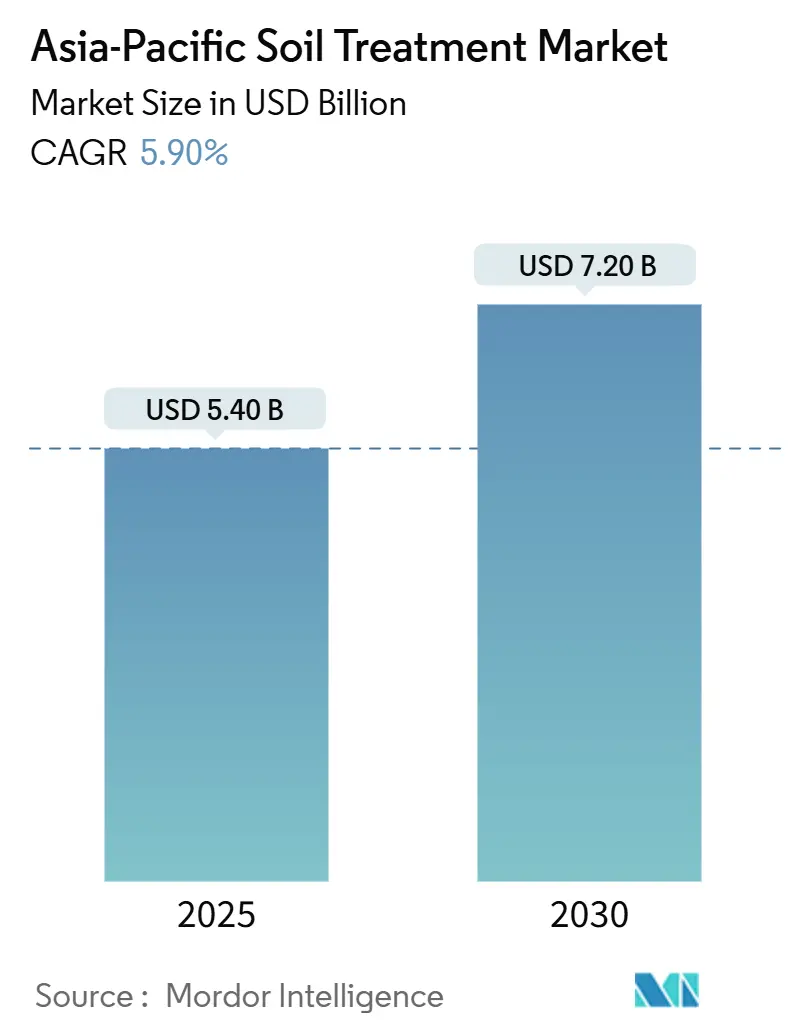
The Asia-Pacific Soil Treatment Market size is estimated at USD 5.40 billion in 2025, and is expected to reach USD 7.20 billion by 2030, at a CAGR of 5.90% during the forecast period (2025-2030).
Agriculture in Asia-Pacific encompasses various climates from tropical to temperate, with major crops including rice, soybeans, wheat, and diverse fruits and vegetables. The increasing population and subsequent food demand in the region necessitate higher crop yields, promoting pesticide usage. Modern farming practices and advanced pest control technologies have enhanced crop protection and farmer productivity.
The expansion and diversification of agriculture have opened new avenues for soil treatment across crop varieties. Vietnam's agricultural sector demonstrated this growth with a 205 thousand hectare increase in cultivation area in 2022. The floriculture market has gained prominence, as shown by the Dounan flower market in Kunming, China, which traded 11.04 billion fresh-cut flowers in 2022, indicating increased demand for soil treatment pesticides solutions in specialized crops. The market has responded by developing specialized treatment solutions for specific crops and regional conditions.
Government policies and regulations are influencing market development across the region. Countries are implementing measures to support sustainable agriculture and enhance crop protection practices. Thailand's agricultural expansion to 23,010 thousand hectares demonstrates this trend, supported by government policies that promote modern farming techniques, including advanced soil treatment methods. Farmer education programs on soil treatment benefits and application methods have improved market adoption rates.
Asia-Pacific Soil Treatment Market Trends and Insights
China Dominates the Market
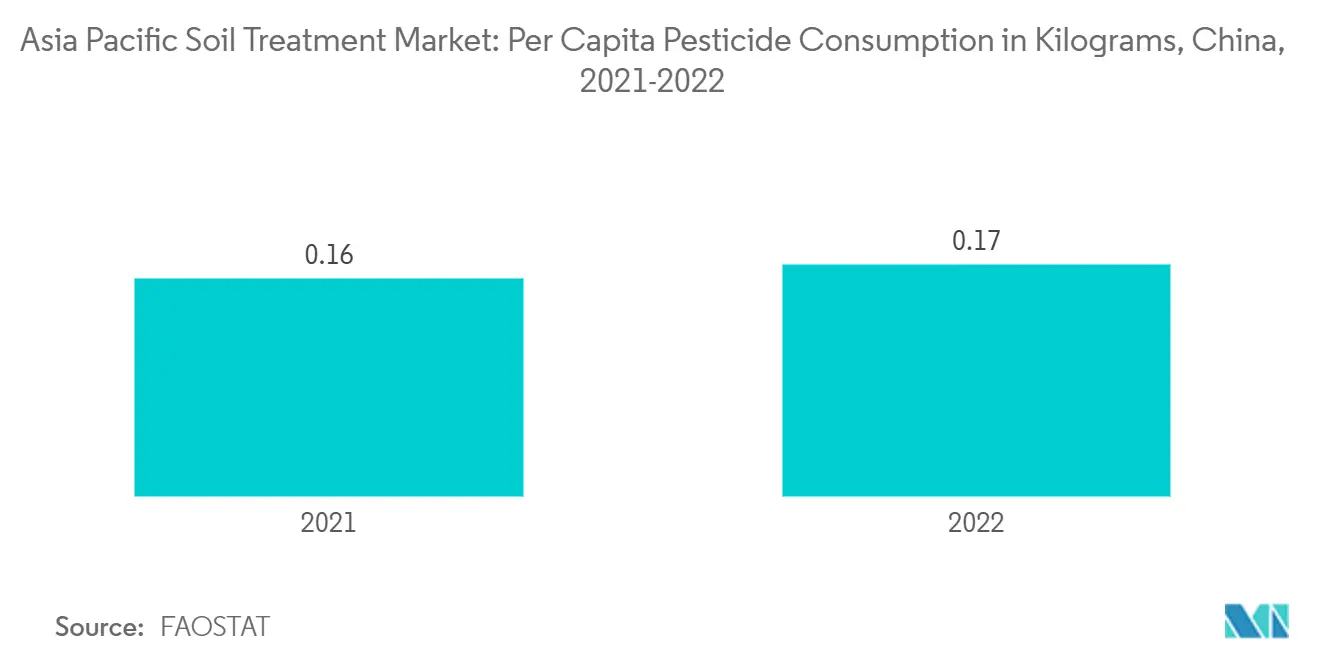
China faces significant soil pollution challenges stemming from industrial activities, mining operations, and intensive use of chemical fertilizers and pesticides. FAOSTAT data indicates that China's per capita pesticide consumption increased from 0.16 kilogram in 2021 to 0.17 kilogram in 2022. The country implements biological soil treatments to remediate contaminated soils and restore soil health. Additionally, China's investments in soil monitoring and treatment technologies include real-time monitoring systems that optimize irrigation and fertilization processes, resulting in reduced water and fertilizer consumption while enhancing soil quality.
China dominates the soil treatment market due to soil-borne diseases that significantly affect crops in China, causing substantial losses. In 2023, nematode infestations emerged as a major issue, with root-knot nematodes reducing vegetable yields by over 30% and causing annual economic losses exceeding 3 billion RMB (USD 0.41 billion). Similarly, cereal cyst nematodes reduced wheat yields by 15-20% across over 4 million hectares, while soybean cyst nematodes affected 1.33 million hectares, leading to 5-10% yield losses and financial damages exceeding 600 million RMB (USD 82.6 million). Additionally, faba bean root rot caused by Fusarium spp. and other pathogens led to yield losses ranging from 5% to 30%, with some fields experiencing complete crop failure. Excessive rainfall in Henan province resulted in wheat blight and pre-harvest sprouting, reducing millions of tonnes of output. To address these issues, the Chinese government allocated CNY 1.251 billion (USD 0.17 billion) in disaster relief funds in 2023, focusing on pest and disease control in key agricultural provinces like Heilongjiang, Shandong, and Henan. These measures aim to mitigate the impact of soil-borne diseases on China’s agricultural production.
Biological Treatment Dominates the Market
The Asia-Pacific region requires biological soil treatment due to extensive soil degradation from unsustainable agricultural practices, deforestation, and overgrazing. These treatments restore soil health by enhancing structure, fertility, and microbial activity. Climate change effects, including higher temperatures and changing precipitation patterns, intensify soil erosion and degradation. Biological soil treatments improve water and nutrient retention, increasing soil resilience to climate-related challenges.
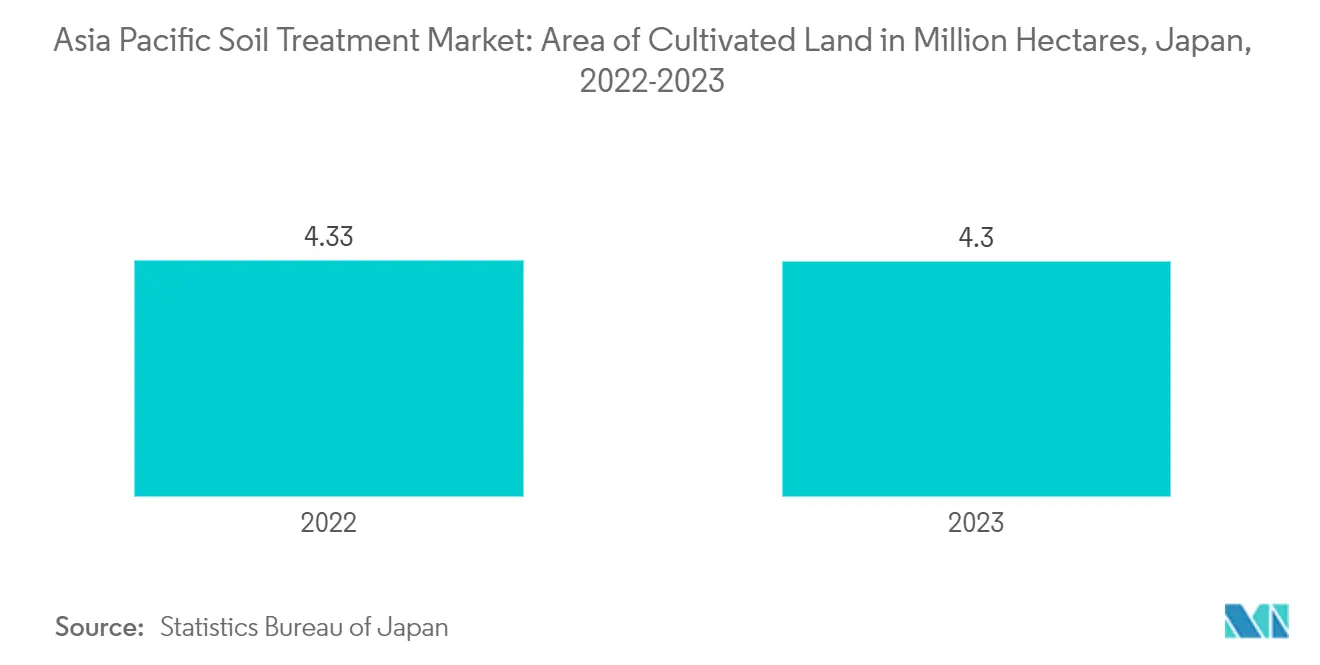
The decreasing availability of arable land necessitates sustainable agricultural practices to maximize yields from existing farmland. Biological soil treatments support sustainable farming by improving nutrient availability and reducing chemical fertilizer usage. In Japan, cultivated land decreased from 4.33 million hectares in 2022 to 4.3 million hectares in 2023, according to the Statistics Bureau of Japan. Biological treatments increase resilience against climate change effects such as droughts and irregular rainfall patterns. This adaptation is crucial in the Asia-Pacific region, where climate variability significantly impacts crop yields.
Bioremediation is gaining prominence in Asia-Pacific countries, particularly India, where microorganisms are used to degrade and detoxify soil pollutants. This method is effective for cleaning contaminated soils and restoring soil health. The Indian government promotes bioremediation and other sustainable agricultural practices through various programs. These initiatives focus on improving soil health, increasing crop yields, and minimizing agriculture's environmental impact. The Central Pollution Control Board (CPCB) implements in-situ sewage treatment with bioremediation technology, offering municipalities a cost-effective and simplified solution.
Competitive Landscape
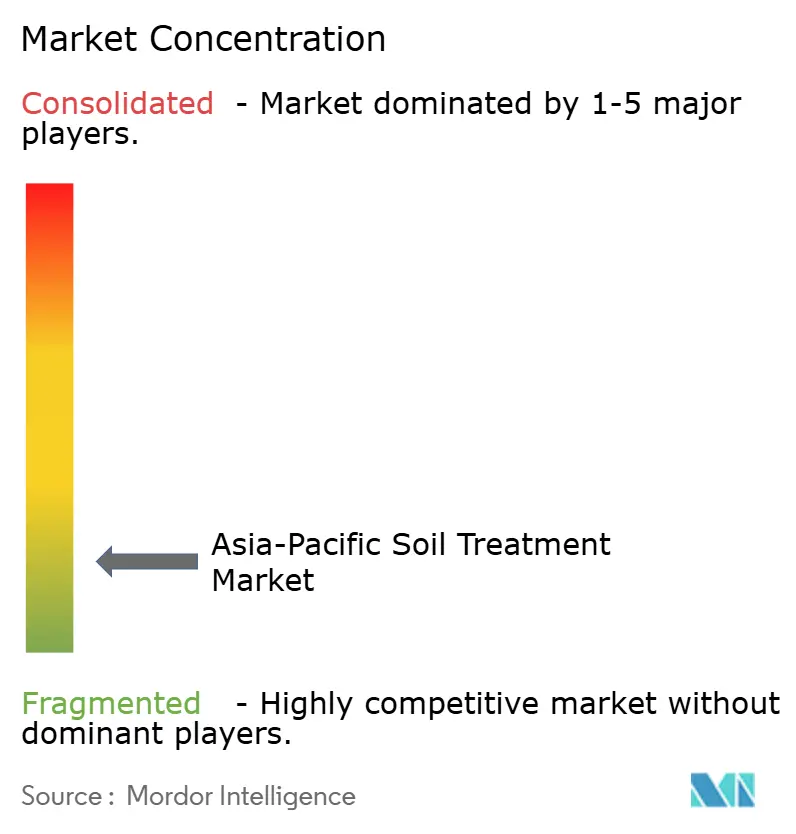
Asia Pacific soil treatment Market is fragmented with many global and regional players in the market. Syngenta AG, BASF SE, UPL, Rallis India Limited, Bayer AG, etc, are some of the global and regional players in the Asia Pacific region. These companies are actively investing in research and development to create innovative soil treatment solutions, particularly focusing on environmentally sustainable products and precision application technologies. Strategic expansion through manufacturing facility investments has been a key trend, with companies establishing new production sites to strengthen their regional presence and supply chain capabilities.
Asia-Pacific Soil Treatment Industry Leaders
-
Syngenta AG
-
UPL
-
BASF SE
-
Rallis India Limited
-
Bayer AG
- *Disclaimer: Major Players sorted in no particular order
Recent Industry Developments
- May 2022: Syngenta launched Victrato, a new seed treatment that fights harmful soil born pests like nematodes and illnesses that affect numerous crops, including soybeans, corn, cereals, cotton, and rice.
- June 2022: UPL introduced new insecticides in India containing the patented active ingredient Flupyrimin to target the most damaging pests in rice, such as brown plant hopper (BPH) and yellow stem borer (YSB).
Asia-Pacific Soil Treatment Market Report Scope
Soil treatment is followed to replenish the soil with nutrients and sanitize the soil to reduce the soil born diseases. The Asia Pacific soil treatment market is segmented by Technology (Physiochemical Treatment, Thermal Treatment, and Biological Treatment), Type (Organic Amendments, pH Adjusters, and Soil Protection), and Geography (China, Japan, India, Australia, and Rest of Asia-Pacific). The report offers market size and forecasts in terms of value (USD) for all the above segments.
Technology
| Physiochemical treatment |
| Biological Treatment |
| Thermal Treatment |
Type
| Organic Amendments |
| pH Adjusters |
| Soil Protection |
Geography
| China |
| Japan |
| India |
| Australia |
| Rest of Asia Pacific |
| Technology | Physiochemical treatment |
| Biological Treatment | |
| Thermal Treatment | |
| Type | Organic Amendments |
| pH Adjusters | |
| Soil Protection | |
| Geography | China |
| Japan | |
| India | |
| Australia | |
| Rest of Asia Pacific |
Key Questions Answered in the Report
How big is the Asia-Pacific Soil Treatment Market?
The Asia-Pacific Soil Treatment Market size is expected to reach USD 5.40 billion in 2025 and grow at a CAGR of 5.90% to reach USD 7.20 billion by 2030.
What is the current Asia-Pacific Soil Treatment Market size?
In 2025, the Asia-Pacific Soil Treatment Market size is expected to reach USD 5.40 billion.
Who are the key players in Asia-Pacific Soil Treatment Market?
Syngenta AG, UPL, BASF SE, Rallis India Limited and Bayer AG are the major companies operating in the Asia-Pacific Soil Treatment Market.
What years does this Asia-Pacific Soil Treatment Market cover, and what was the market size in 2024?
In 2024, the Asia-Pacific Soil Treatment Market size was estimated at USD 5.08 billion. The report covers the Asia-Pacific Soil Treatment Market historical market size for years: 2019, 2020, 2021, 2022, 2023 and 2024. The report also forecasts the Asia-Pacific Soil Treatment Market size for years: 2025, 2026, 2027, 2028, 2029 and 2030.
Asia-Pacific Soil Treatment Market Report
Statistics for the 2025 Asia-Pacific Soil Treatment market share, size and revenue growth rate, created by Mordor Intelligence™ Industry Reports. Asia-Pacific Soil Treatment analysis includes a market forecast outlook for 2025 to 2030 and historical overview. Get a sample of this industry analysis as a free report PDF download.