
| Study Period | 2021 - 2030 |
| Forecast Data Period | 2025 - 2030 |
| Historical Data Period | 2021 - 2023 |
| Market Size (2025) | USD 10.69 Billion |
| Market Size (2030) | USD 15.17 Billion |
| CAGR (2025 - 2030) | 7.25% |
| Market Concentration | Medium |
Major Players *Disclaimer: Major Players sorted in no particular order |
Asia-Pacific Patient Monitoring Market Analysis by Mordor Intelligence
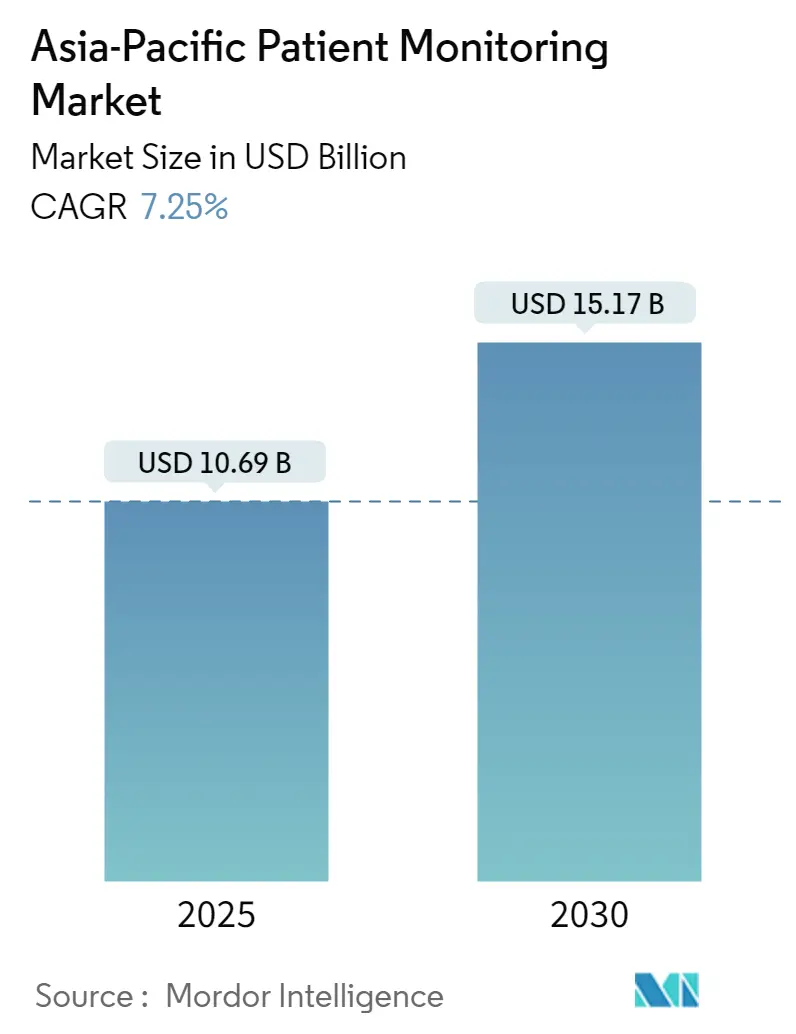
The Asia-Pacific Patient Monitoring Market size is estimated at USD 10.69 billion in 2025, and is expected to reach USD 15.17 billion by 2030, at a CAGR of 7.25% during the forecast period (2025-2030).
- The impact of COVID-19 was significant on the patient monitoring market owing to the increased remote patient monitoring for chronic diseases and elderly patients in the pandemic, which has propelled the market growth. The patient monitoring market has constantly been growing in the last two years due to its increasing demand, results, and convenience of patient healthcare. Various companies are engaged in launching technologically advanced patient monitoring solutions in the Asia Pacific region, which is further expected to boost market growth.
- For instance, in April 2022, South Korean telecommunication company KT announced the launch of a pilot telemedicine platform in Vietnam, with the aim of a soft landing within the next three years. The service will be designed to monitor people with chronic diseases like cancer, diabetes, and high blood pressure. Patients will be able to check their health, prescriptions, and exercise routines, as well as obtain counseling from Vietnamese medical professionals. Such initiatives are projected to boost the demand and launches of patient monitoring solutions, thereby boosting the market growth during the forecast period.
- In addition, the rising incidence of chronic diseases and increasing preference for home and remote monitoring are actively affecting the growth of the studied market.
- According to the Alzheimer's Disease Foundation, Malaysia (ADFM), the population of persons living with dementia was estimated to be around 204,000 to 264,000 (8.5% to 11%) in 2020, and this number is projected to reach 637,500 to 825,000 by the year 2050, an increase of 312%.
- Also, according to the International Diabetes Federation (IDF), 11,005 people had diabetes in 2021 Japan. In addition, this number is projected to reach 10,542.7 by 2030. The high blood sugar caused by diabetes can damage the nerves that control the heart and blood vessels, leading to a variety of cardiovascular diseases like coronary artery disease and stroke, which can narrow the arteries.
- This is anticipated to increase the need for monitoring glucose levels, blood pressure, and other activities, which are expected to increase the demand for monitoring devices that can provide data to physicians to help them more effectively evaluate patient conditions and react quickly to any abnormalities, thereby propelling the market growth during the forecast period.
- Various companies have been tracking the patient's vital signs for a long time and developing medication for the same. The key idea behind this is to measure lifestyle-related chronic disease development.
- For instance, in May 2022, a collaborative study effort was begun by Tohoku University's Tohoku Medical Megabank Organization, pharmaceutical companies Daiichi Sankyo and Takeda Pharmaceutical Co., and medical IT business MICIN to track long-term lifestyle patterns to guide the development of new treatments. The companies will provide wearable tracking devices to about 2,000 participants. Over a year, they will collect detailed and objective lifestyle data, such as sleep status, heart rate, and activity level.
- Therefore, owing to the aforementioned factors, the studied market is anticipated to witness growth over the analysis period. However, the high cost of devices is likely to impede the market growth.
Asia-Pacific Patient Monitoring Market Trends and Insights
Remote Patient Monitoring Devices is Expected to Show a Significant Growth Rate Over the Forecast Period
- Remote patient monitoring is a way to provide care, monitor a patient, and provide information using the latest technology in telecommunication. Monitoring allows for the early identification of diseases, preventing chronic conditions. The high burden of chronic diseases is a crucial reason contributing to the growth in remote patient monitoring.
- COVID-19 has expanded the horizon for remote patient monitoring solutions for various chronic and lifestyle-related disorders in the Asia Pacific region. Various companies are engaged in strategic initiatives such as collaborations, and expansions of remote patient monitoring solutions, thereby boosting segment growth.
- For instance, in August 2021, Japanese medical equipment manufacturer Omron planned its expansion of telemedicine services in India, initially targeting the country's estimated 300 million people with high blood pressure. Such initiatives boost the demand for remote patient monitoring in the region.
- Ongoing advancements in the field of artificial intelligence (AI), machine learning (ML), and the rising geriatric population are likely to make future remote patient monitoring devices more predictive, making remote detection and treatment feasible.


India is Expected to Hold a Significant Share in Patient Monitoring Market Over the Forecast Period.
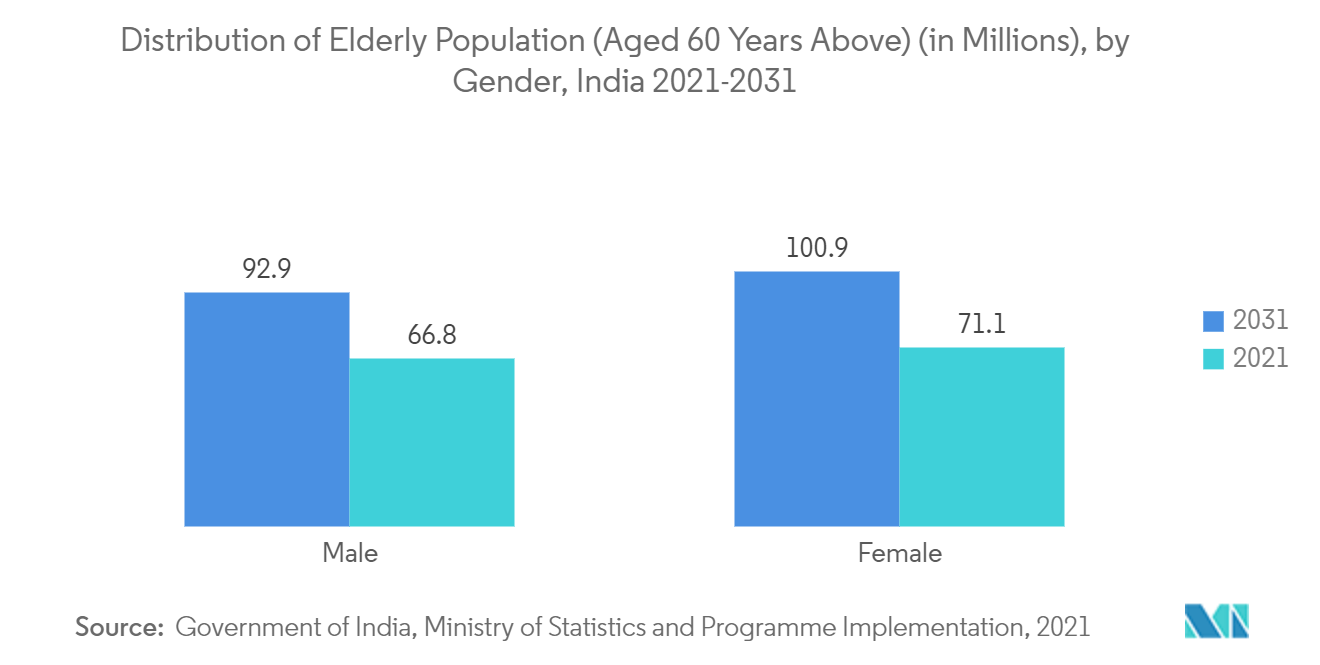
- India is expected to hold a significant market share owing to factors such as the rising incidence of chronic diseases, the growing geriatric population, and the increasing demand for remote patient monitoring.
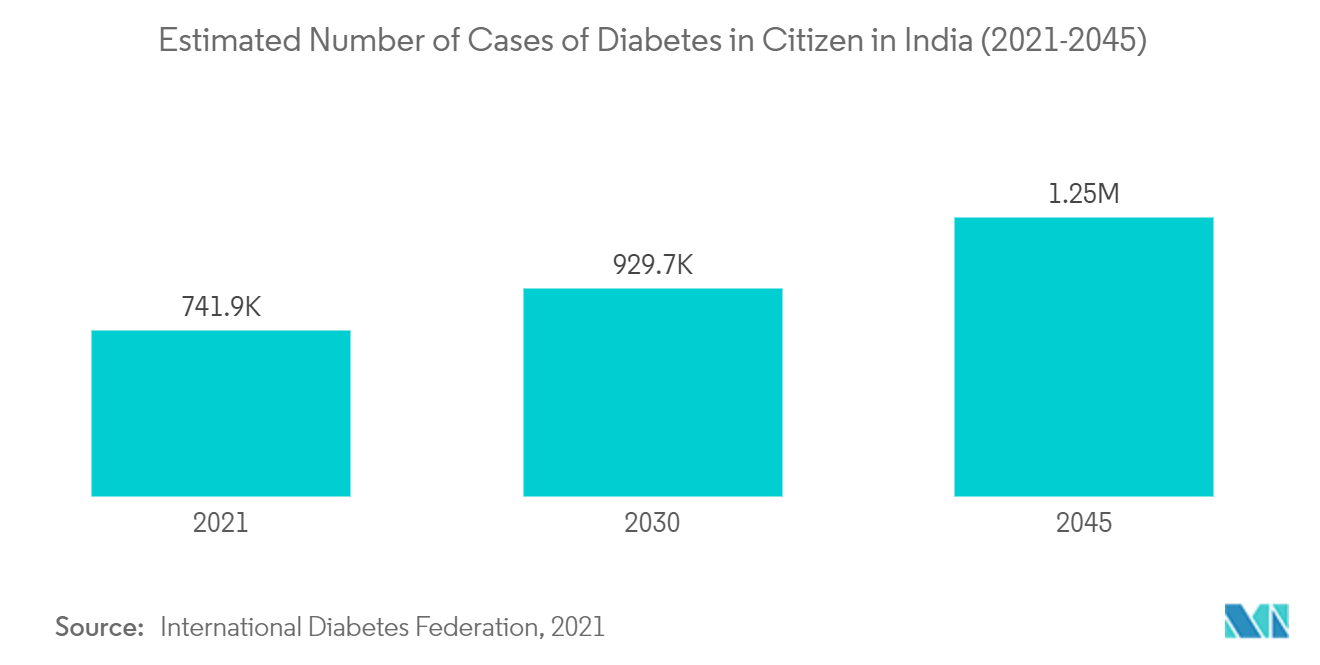
- As per Alzheimer's Disease International (ADI), the burden of dementia in India is projected to rise by 197% by 2050. According to International Diabetes Federation (IDF), the prevalence of diabetes in adults in India was 74,194.7 in 2021, and it is estimated to reach 92,973.7 in 2030 and 124,874.7 in 2045.
- Diabetes is one of the major reasons for cardiovascular diseases, and the surge of diabetes and the high burden of neurological diseases like dementia in the country is boosting the demand for effective patient monitoring devices, thereby augmenting the market growth in the country.
- The demand for remote patient monitoring for geriatric patients is being driven by the increasing geriatric population and their escalating chronic diseases. A solution to simplify the monitoring and management of diseases in elderly patients is being developed by several groups.
- For instance, in March 2022, Dozee, a provider of contactless remote patient monitoring (RPM) solutions, partnered with Priaashraya Healthcare Pvt Ltd., an elder care facility. Through this partnership, elderly patients will receive ongoing monitoring from identifying cardiac, respiratory, and motion parameters, aiding doctors in the early detection of potential patient deterioration and gaining access to medical intervention. Family members and caregivers will also be able to receive periodic updates on elders' health data, ensuring that they can stay in touch with their loved ones even when they are far away.
- Such collaborations will significantly improve patient condition management and health outcome and enhance the country's usage of patient monitoring devices, thereby boosting the market growth during the forecast period.

Competitive Landscape
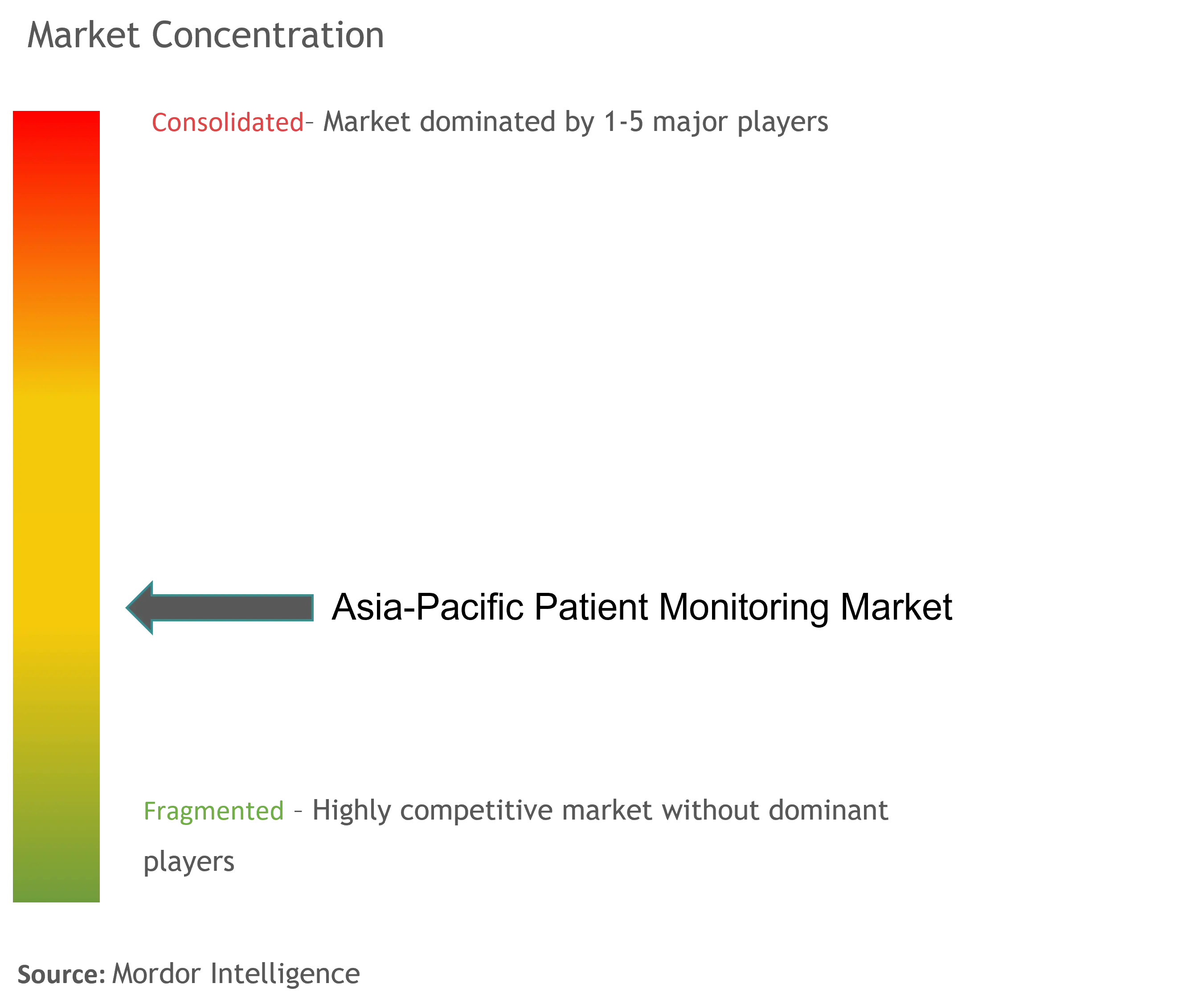
The Asia-Pacific Patient Monitoring Market is fragmented due to the presence of several companies operating globally and regionally. The competitive landscape includes an analysis of a few international and local companies that hold market shares and are well known. Some key players are Koninklijke Philips N.V., General Electric Company (GE Healthcare), BPL Group, Mindray Medical International Co. Ltd., Nihon Kohden Corporation, Dragerwerk AG, Siemens Healthineers, and Spacelabs Healthcare, among others.
Asia-Pacific Patient Monitoring Industry Leaders
Mindray Medical International Co. Ltd.
Koninklijke Philips N.V.
BPL Medical Technologies
General Electric Company (GE Healthcare)
Nihon Kohden Corporation
- *Disclaimer: Major Players sorted in no particular order

Recent Industry Developments
- October 2022: Apollo Hospitals launched its indigenously developed automated, rapid-response patient monitoring system. The system is intended to track patient health and proactively warn a team of experts if it foresees an unanticipated decline in that patient's condition.
- March 2022: Wipro GE Healthcare launched its new manufacturing facility, the Medical Device Manufacturing (MDM) factory in Bengaluru, India, under the Indian government's Production Linked Incentive (PLI) Scheme, which is aligned with the National Agenda of 'Atmanirbhar Bharat' to boost local manufacturing of neurology monitoring devices in India.


Asia-Pacific Patient Monitoring Market Report Scope
As per the scope of this report, patient monitoring devices are monitoring devices that continuously monitor the patient's vital parameters, like blood pressure and heart rate, by using a medical monitor and collecting medical (and other) data from individuals.
The Asia-Pacific patient monitoring market is segmented by type of device (hemodynamic monitoring devices, neuromonitoring devices, cardiac monitoring devices, multi-parameter monitors, respiratory monitoring devices, remote patient monitoring devices, and other types of devices), application (cardiology, neurology, respiratory, fetal and neonatal, weight management and fitness monitoring, and other devices), end-user (home healthcare, hospitals and clinics, and other end-users), and geography(China, Japan, India, Australia, South Korea, and Rest of Asia-Pacific).
The report offers the value (in USD million) for the above segments.
By Type of Device
| Hemodynamic Monitoring Devices |
| Neuromonitoring Devices |
| Cardiac Monitoring Devices |
| Multi-parameter Monitors |
| Respiratory Monitoring Devices |
| Remote Patient Monitoring Devices |
| Other Types of Devices |
By Application
| Cardiology |
| Neurology |
| Respiratory |
| Fetal and Neonatal |
| Weight Management and Fitness Monitoring |
| Other Applications |
By End-Users
| Home Healthcare |
| Hospitals and Clinics |
| Other End-Users |
Geography
| China |
| Japan |
| India |
| Australia |
| South Korea |
| Rest of Asia-Pacific |
| By Type of Device | Hemodynamic Monitoring Devices |
| Neuromonitoring Devices | |
| Cardiac Monitoring Devices | |
| Multi-parameter Monitors | |
| Respiratory Monitoring Devices | |
| Remote Patient Monitoring Devices | |
| Other Types of Devices | |
| By Application | Cardiology |
| Neurology | |
| Respiratory | |
| Fetal and Neonatal | |
| Weight Management and Fitness Monitoring | |
| Other Applications | |
| By End-Users | Home Healthcare |
| Hospitals and Clinics | |
| Other End-Users | |
| Geography | China |
| Japan | |
| India | |
| Australia | |
| South Korea | |
| Rest of Asia-Pacific |


Key Questions Answered in the Report
How big is the Asia-Pacific Patient Monitoring Market?
The Asia-Pacific Patient Monitoring Market size is expected to reach USD 10.69 billion in 2025 and grow at a CAGR of 7.25% to reach USD 15.17 billion by 2030.
What is the current Asia-Pacific Patient Monitoring Market size?
In 2025, the Asia-Pacific Patient Monitoring Market size is expected to reach USD 10.69 billion.
Who are the key players in Asia-Pacific Patient Monitoring Market?
Mindray Medical International Co. Ltd., Koninklijke Philips N.V., BPL Medical Technologies, General Electric Company (GE Healthcare) and Nihon Kohden Corporation are the major companies operating in the Asia-Pacific Patient Monitoring Market.
What years does this Asia-Pacific Patient Monitoring Market cover, and what was the market size in 2024?
In 2024, the Asia-Pacific Patient Monitoring Market size was estimated at USD 9.91 billion. The report covers the Asia-Pacific Patient Monitoring Market historical market size for years: 2021, 2022, 2023 and 2024. The report also forecasts the Asia-Pacific Patient Monitoring Market size for years: 2025, 2026, 2027, 2028, 2029 and 2030.
Page last updated on:
Asia-Pacific Patient Monitoring Market Report
Statistics for the 2025 Asia-Pacific Patient Monitoring market share, size and revenue growth rate, created by Mordor Intelligence™ Industry Reports. Asia-Pacific Patient Monitoring analysis includes a market forecast outlook for 2025 to 2030 and historical overview. Get a sample of this industry analysis as a free report PDF download.





