
Market Overview
| Study Period | 2021 - 2031 |
|---|---|
| Forecast Data Period | 2026 - 2031 |
| Base Year Market Size (2025) | USD 17.56 Billion |
| Market Size (2026) | USD 18.84 Billion |
| Market Size (2031) | USD 26.77 Billion |
| Growth Rate (2026 - 2031) | 7.28 % |
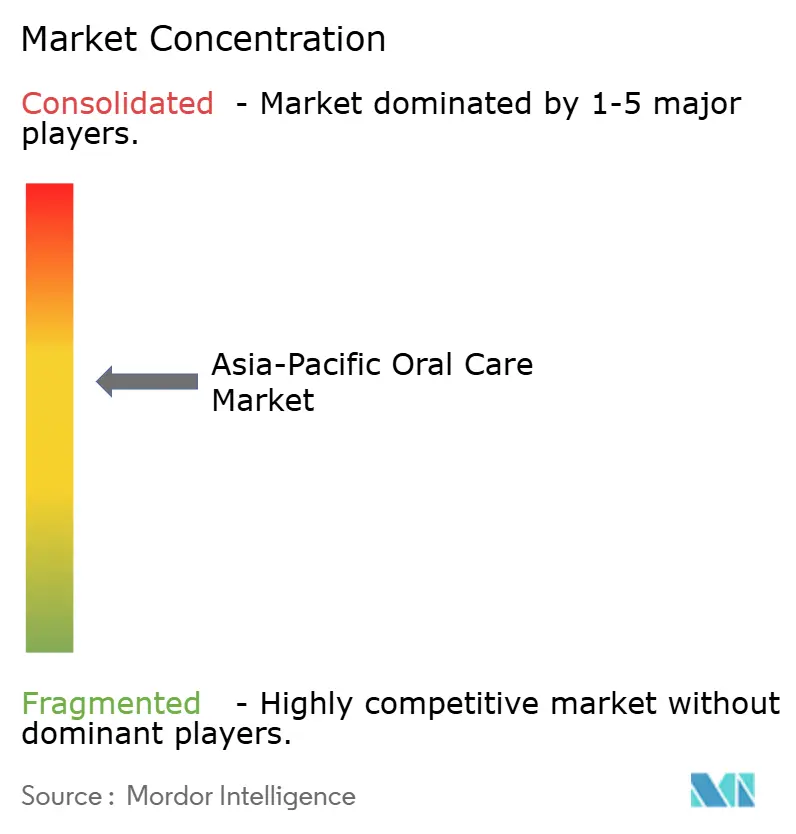
| Market Concentration | Medium |
Major Players
*Disclaimer: Major Players sorted in no particular order Image © Mordor Intelligence. Reuse requires attribution under CC BY 4.0. |
|
Asia-Pacific Oral Care Market Analysis by Mordor Intelligence
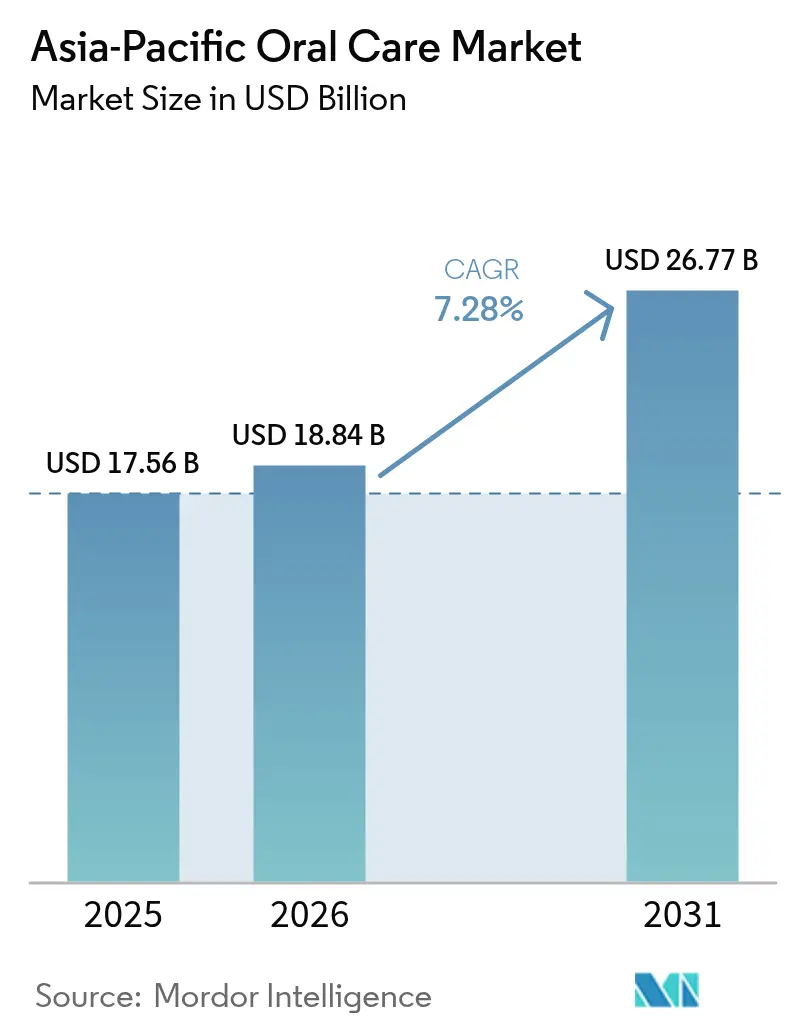
The Asia-Pacific oral care market size was valued at USD 17.56 billion in 2025 and estimated to grow from USD 18.84 billion in 2026 to reach USD 26.77 billion by 2031, at a CAGR of 7.28% during the forecast period (2026-2031). Increasing disposable incomes, rapid urbanization, and government-supported oral health programs are driving a shift among households from occasional treatments to regular preventive care, thereby expanding the market's reach in the Asia-Pacific region. The integration of smart technologies in electric toothbrushes, growing consumer demand for natural and Ayurvedic products, and standardized regulatory frameworks under the ASEAN Cosmetic Directive are fostering growth opportunities while reducing cross-border compliance costs. Additionally, the rise of digital commerce, particularly direct-to-consumer models that combine subscription deliveries with telehealth services, is disrupting traditional pricing structures and creating opportunities for agile competitors in the Asia-Pacific oral care market. However, traditional tooth-cleaning practices, high price sensitivity in emerging economies, and persistent safety concerns regarding synthetic ingredients are limiting the adoption of premium products in lower-income segments of the region.
Key Report Takeaways
- By product type, toothpaste led with a 45.90% share of the Asia-Pacific oral care market in 2025, while toothbrushes, propelled by electric variants, are forecast to expand at a 7.66% CAGR through 2031.
- By ingredient, conventional formulations accounted for 89.80% of the Asia-Pacific oral care market share in 2025, whereas natural and organic products are projected to register an 8.17% CAGR to 2031.
- By end user, adults represented 97.50% of demand in 2025; kids’ oral-care products are advancing at a 7.59% CAGR on the back of school-based screening programs.
- By distribution channel, supermarkets and hypermarkets held 35.10% of the Asia-Pacific oral care market size in 2025, yet online retail is the fastest-growing channel with an 8.38% CAGR outlook.
- By geography, China commanded 33.90% revenue share in 2025, whereas India is forecast to deliver the fastest national growth at a 7.95% CAGR through 2031.
Note: Market size and forecast figures in this report are generated using Mordor Intelligence’s proprietary estimation framework, updated with the latest available data and insights as of 2026.
Market Trends and Insights
Drivers Impact Analysis of Asia-Pacific Oral Care Market*
| Driver | (~) % Impact on CAGR Forecast | Geographic Relevance | Impact Timeline |
|---|---|---|---|
| Rising oral-health awareness and preventive-care adoption | +1.2% | Global, with strongest gains in India, Indonesia, Thailand | Medium term (2-4 years) |
| Growing disposable incomes and urbanization | +1.5% | China, India, Southeast Asia urban corridors | Long term (≥ 4 years) |
| Integration of smart technologies in electric toothbrush | +0.9% | China, Japan, South Korea, Australia | Short term (≤ 2 years) |
| Growing prevalence of dental diseases creating demand | +1.3% | Global, acute in South Asia and Southeast Asia | Long term (≥ 4 years) |
| Elevated consumer demand for natural and herbal oral care products | +1.1% | India, China, Thailand | Medium term (2-4 years) |
| Increasing penetration of digital marketing and influencer endorsements | +0.8% | Urban centers across Asia-Pacific, spill-over to tier-2 cities | Short term (≤ 2 years) |
| Source: Mordor Intelligence | |||
Rising oral-health awareness and preventive-care adoption
Government-led dental screening programs in schools, along with WHO-supported oral health initiatives, are encouraging a shift from occasional treatments to regular preventive care. India's National Oral Health Programme has expanded its scope, requiring biannual check-ups and fluoride varnish applications for schoolchildren, thereby promoting early intervention. In 2024, the Indian government allocated INR 858 Crores to the National Oral Health Programme, according to the Public Health Department[1]Source: Public Health Department, National Oral Health Programme", phd.maharashtra.gov.in. In Japan, the growing number of dental clinics has led to an increase in adults seeking preventive cleanings instead of emergency treatments. For example, the number of dental clinics in Japan reached 66,820 in 2023, as reported by the Statistics Bureau of Japan[2]Source: Statistics Bureau of Japan, "Survey of medical institutions 2023", stat.go.jp. This change in behavior is driving demand for specialized products, such as remineralizing toothpastes, interdental brushes, and alcohol-free mouthwashes, that address issues like enamel erosion and gingival inflammation. Compliance with ISO 11609:2017 standards enhances the credibility of product efficacy claims, reducing consumer skepticism and encouraging the adoption of premium formulations.
Growing disposable incomes and urbanization
With rising per capita incomes in tier-2 and tier-3 cities across India, Indonesia, and Vietnam, households are increasingly allocating higher budgets to oral care. This shift reflects a transition from reliance on basic commodity toothpaste to adopting more comprehensive, multi-product oral care regimens. China's National Bureau of Statistics reported that, nationwide, per capita disposable income in China reached CNY 41,314 in 2024, representing a nominal increase of 5.3% compared to the previous year[3]Source: China's National Bureau of Statistics, Households' Income and Consumption Expenditure in 2024", stats.gov.cn. This upward trend in income levels has significantly influenced consumer behavior, particularly in the electric toothbrush segment, which has seen notable growth. Additionally, urbanization has played a pivotal role in exposing consumers to Western lifestyle habits and dental aesthetics, such as teeth whitening treatments and orthodontic aligners, thereby creating new revenue opportunities in adjacent markets. For instance, Indonesia's Klar, a startup specializing in aligners, successfully raised USD 4.5 million in funding in 2022. This development highlights how rising incomes are unlocking demand for discretionary oral health services that were previously inaccessible to many consumers.
Integration of smart technologies in electric toothbrush
AI-powered electric toothbrushes, now integrated with advanced features such as pressure sensors, real-time plaque mapping, and mobile app connectivity, are transforming the premium market segment. These innovations are setting new benchmarks for oral care technology. Oclean, a Chinese company holding an impressive portfolio of 519 global patents, exemplifies how technological advancements can challenge and potentially surpass well-established Western brands in this space. In 2024, Procter and Gamble introduced its Oral-B iO Series 10, which utilizes a combination of oscillating, rotating, and pulsating technology, enhanced by AI-guided brushing zones to optimize oral hygiene. Clinical studies conducted in South Korea demonstrated that telemonitoring toothbrushes significantly improved plaque removal compared to manual brushing, providing robust evidence that insurers and employers could leverage to encourage the adoption of smart toothbrushes. Additionally, Bluetooth-enabled toothbrushes collect valuable behavioral data, enabling brands to deliver personalized product recommendations. This approach not only enhances user experience but also creates recurring revenue opportunities for companies, extending beyond the initial hardware sales.
Elevated consumer demand for natural and herbal oral care products
India is leading the transition toward natural oral care, with a significant increase in toothpaste launches that prominently feature herbal and Ayurvedic ingredients. This trend is driven by growing consumer preference for products containing traditional components like neem, clove, and miswak, which are widely regarded for their effectiveness and minimal side effects. In China, the implementation of the GB 8372-2017 standard has introduced a requirement for full disclosure of all toothpaste ingredients. Under the classification of toothpaste as a special cosmetic, regulated by the NMPA, this standard has accelerated the reformulation of products to include plant-based surfactants and natural sweeteners such as stevia. In 2024, Himalaya Wellness and Dabur achieved organic certifications for their herbal toothpaste ranges. This accomplishment not only supports premium pricing strategies but also facilitates their entry into export markets like Australia and New Zealand, where consumer demand for clean-label products is deeply ingrained. Additionally, in Japan and South Korea, Hydroxyapatite, a biomimetic mineral, is increasingly being used as a substitute for fluoride in toothpaste formulations. Clinical trials have demonstrated that Hydroxyapatite provides comparable remineralization benefits to fluoride while eliminating the ingestion risks for children, making it a safer alternative.
Restraints Impact Analysis of Asia-Pacific Oral Care Market*
| Restraint | (~) % Impact on CAGR Forecast | Geographic Relevance | Impact Timeline |
|---|---|---|---|
| Prevalence of traditional tooth cleaning methods | -0.6% | Rural India, Indonesia, Thailand, Vietnam | Long term (≥ 4 years) |
| Limited access to professional dental care | -0.5% | Rural and remote areas across Asia-Pacific | Long term (≥ 4 years) |
| Concern over chemical ingredients used | -0.4% | Urban China, India, Australia, New Zealand | Medium term (2-4 years) |
| Price sensitivity in emerging economies | -0.7% | India, Indonesia, Philippines, Vietnam | Medium term (2-4 years) |
| Source: Mordor Intelligence | |||
Prevalence of traditional tooth cleaning methods
In rural India, Indonesia, and parts of Southeast Asia, cultural traditions and economic factors continue to drive the preference for miswak sticks, charcoal powder, and salt-based scrubs over commercial toothpaste. Many households in these regions rely on neem twigs or ash for their daily oral hygiene routines, viewing these options as both natural and cost-effective. This deeply ingrained behavior creates significant barriers to market growth, particularly in areas with high population density but low penetration of commercial oral care products. Although some brands, such as Dabur, have attempted to bridge the gap by incorporating traditional ingredients like clove and camphor into their products (e.g., Dabur's Red Paste), the transition from free or nearly free methods to paid alternatives remains a challenge. Achieving this shift requires sustained efforts, including comprehensive educational campaigns to raise awareness about the benefits of commercial products. Additionally, companies must address logistical challenges by establishing distribution networks that can effectively reach remote villages, where retail infrastructure is often underdeveloped or entirely absent.
Price sensitivity in emerging economies
Price sensitivity in emerging Asia-Pacific economies, such as India, Indonesia, and parts of Southeast Asia, reduces consumers' inclination to purchase premium oral care products. Despite being aware of the benefits, consumers in these regions prioritize affordable essentials over higher-priced options like electric toothbrushes, whitening toothpastes, or natural/herbal variants. This preference slows the adoption of innovative, high-margin products. In countries like India, Indonesia, and the Philippines, households dedicate a smaller share of their budgets to oral care, creating obstacles for premiumization efforts. Electric toothbrushes priced above USD 30 remain unaffordable for most, while mid-tier toothpastes face stiff competition from unbranded local sachets sold at USD 0.10 each. Furthermore, India's goods and services tax (GST) on oral care products increases retail prices, discouraging consumers from upgrading. To address this, brands are offering smaller pack sizes and economy variants; however, this strategy compresses margins and limits investments in innovation.
*Our forecasts treat driver/restraint impacts as directional, not additive. The impact forecasts reflect baseline growth, mix effects, and variable interactions.
Asia-Pacific Oral Care Market Segment Analysis
By Product Type:
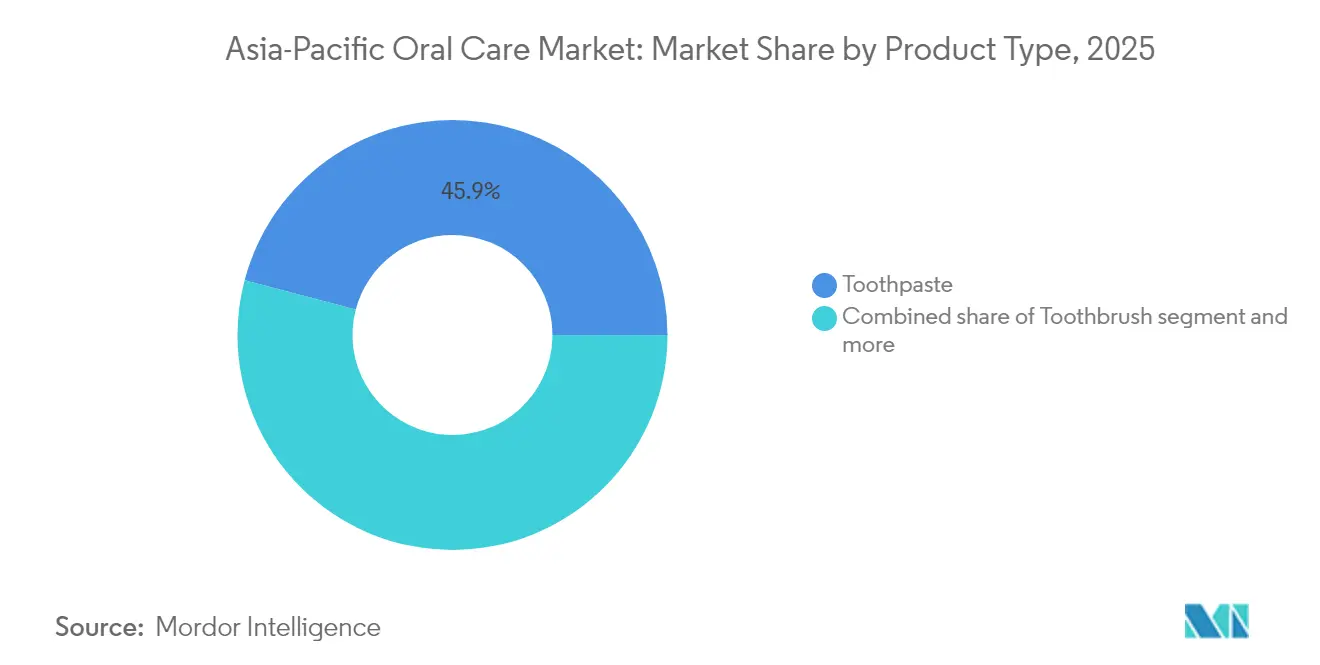
Electric Variants Accelerate Category GrowthToothpaste holds the largest market share at 45.90% in 2025, supported by frequent repurchases and low per-unit costs. However, growth in this category is slowing as it approaches maturity. To address this, brands are expanding their portfolios to meet the demand for natural ingredients and sustainability. At the same time, mouthwash and rinses are gaining popularity in Japan and South Korea. Consumers in these markets prefer alcohol-free formulations with probiotics and peptides, which help prevent biofilm without the discomfort associated with traditional rinses. Other dental products, such as interdental brushes and tongue cleaners, remain niche but are growing in markets with high dental awareness. For example, in Australia, where the Therapeutic Goods Administration (TGA) regulates therapeutic claims, these products are seeing increased adoption.
Between 2026 and 2031, toothbrush sales are anticipated to grow at a robust CAGR of 7.66%, marking the highest growth rate among all product types. This significant expansion is primarily attributed to the rising adoption of electric toothbrushes, which are increasingly equipped with advanced AI-powered features. These innovations, combined with a price point below USD 50, are making electric toothbrushes more accessible in key markets such as China and South Korea. Despite this shift, manual toothbrushes continue to dominate in terms of unit sales due to their affordability and widespread availability. However, their revenue contribution is showing signs of stagnation as consumers gradually transition to higher-end options like sonic and oscillating models, which offer enhanced performance and appeal to a growing preference for premium dental care solutions.



By Ingredient:
Natural Formulations Outpace Conventional GrowthConventional formulations still hold 89.80% of the market share in 2025, reflecting established consumer preferences and the cost-effectiveness of synthetic ingredients. However, increasing concerns about ingredients like sodium lauryl sulfate (SLS), triclosan, and microplastics are prompting reformulations. In Japan and South Korea, fluoride is being replaced with hydroxyapatite, a biomimetic mineral. Clinical studies show that hydroxyapatite provides similar remineralization benefits without the ingestion risks associated with fluoride, particularly for children. Additionally, peptides are emerging as a solution for enamel repair, while probiotics are being adopted for their role in preventing biofilm formation. These innovations create a scientific balance between the efficacy of natural and conventional products. Compliance with ISO 11609:2017 standards ensures that natural products meet the same performance benchmarks as conventional ones, reducing the risk of greenwashing and enhancing consumer confidence.
Between 2026 and 2031, natural and organic oral care products are expected to grow at a CAGR of 8.17%, nearly twice the growth rate of conventional products. This growth is fueled by consumers increasingly examining ingredient labels and choosing plant-based alternatives. India is leading this trend, with a growing number of toothpaste launches highlighting herbal and Ayurvedic ingredients. Herbal toothpaste has become a dominant segment in India's oral care market. Brands such as Dabur and Himalaya Wellness have achieved organic certifications and are expanding exports to markets like Australia and New Zealand. In China, the GB 8372-2017 standard, which classifies toothpaste as a special cosmetic under NMPA regulation, requires full ingredient disclosure. This regulation has driven a shift toward natural surfactants and sweeteners, such as stevia, in toothpaste formulations.
By End User:
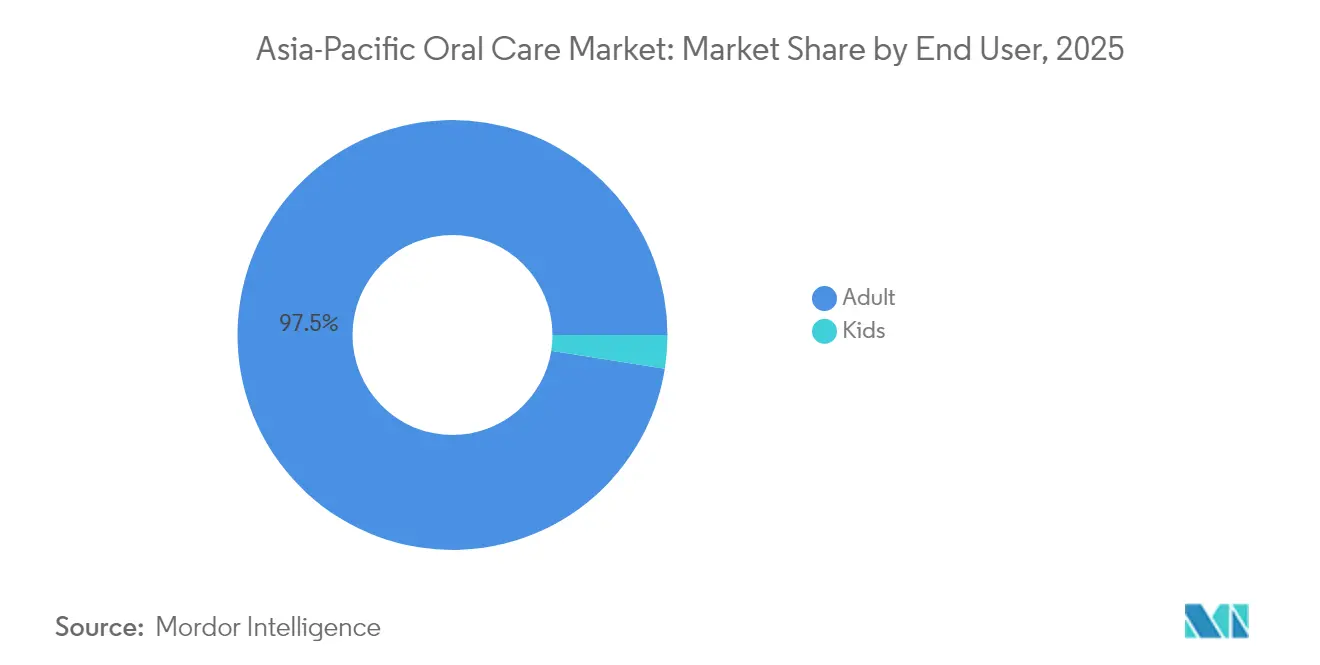
Kids Segment Gains Momentum with Pediatric InitiativesAdults constitute 97.50% of end-user demand, reflecting their greater purchasing power and wider range of product usage. Their preferences include whitening toothpastes, therapeutic mouthwashes, and electric toothbrushes. Aging populations in countries such as Japan, South Korea, and Australia are driving demand for products addressing gingival recession, root caries, and denture care. Additionally, the adult segment is increasingly integrating oral care into broader wellness routines. Brands like Oral Essentials are positioning mouthwashes as key components of self-care regimens, often incorporating essential oils and probiotics.
Between 2026 and 2031, the kids' oral care market is anticipated to grow at a significant CAGR of 7.59%, surpassing the growth of the adult segment. This expansion is driven by government-led initiatives, such as school dental programs, and the introduction of pediatric formulations free from fluoride and artificial sweeteners, which are promoting early preventive care. Events like National Children's Dental Health Month, along with school programs and government efforts, are encouraging early hygiene habits, leading to increased adoption of child-specific products. Brands are addressing this demand by offering character-themed packaging, mild flavors like strawberry and bubblegum, and low-abrasivity formulations designed to protect developing enamel.
By Distribution Channel:
Online Retail Disrupts Traditional DominanceSupermarkets and hypermarkets hold the largest market share at 35.10% in 2025. Their success is supported by high foot traffic, attractive in-store promotions, and the ability to provide tactile product experiences. However, their growth is slowing as consumers increasingly prefer online channels for their convenience and competitive pricing. Drug stores and pharmacies remain crucial for therapeutic products such as high-fluoride toothpastes and prescription mouthwashes, where pharmacist consultations offer added value. Furthermore, other distribution channels, including convenience stores and direct sales, address the needs of rural and semi-urban areas with limited retail infrastructure.
Between 2026 and 2031, online retail stores are projected to experience the fastest growth among all distribution channels, with a robust CAGR of 8.38%. This significant expansion is primarily driven by evolving consumer purchasing behaviors, influenced by the rise of direct-to-consumer brands, the increasing adoption of quick commerce platforms, and the growing popularity of subscription-based models. Colgate India has reported that quick commerce platforms are growing at a faster pace compared to traditional e-commerce. These platforms leverage 10-minute delivery windows to encourage impulse purchases while effectively addressing stockout issues, making them a key driver of growth in the online retail segment.
Geography Analysis
China Oral Care Market
China holds a 33.90% share of the Asia-Pacific oral care market in 2025, driven by its large urban population, extensive smartphone usage, and government regulations requiring ingredient transparency. The National Medical Products Administration (NMPA) reclassified toothpaste as a special cosmetic under GB 8372-2017, prompting brands to reformulate and creating opportunities for domestic players. The adoption of electric toothbrushes is increasing, with Oclean's 519 global patents offering features such as real-time plaque mapping and Bluetooth connectivity, appealing to tech-savvy consumers in major cities like Shanghai and Beijing.
India Oral Care Market
India is projected to grow at a CAGR of 7.95% from 2026 to 2031, the fastest among major geographies. Rising disposable incomes, a preference for Ayurvedic formulations, and government-led oral health initiatives are driving demand, particularly in rural areas. Regulatory measures, including the Bureau of Indian Standards' IS 6356:2017 specification for toothpaste and the Ayush Ministry's promotion of herbal products, have strengthened domestic brands. Notably, Dabur and Himalaya Wellness obtained organic certifications in 2024. Quick commerce platforms are expanding eight times faster than traditional e-commerce, but price sensitivity remains a challenge. Many rural households continue to use neem twigs or ash for daily cleaning, limiting market growth in densely populated regions.
APAC Oral Care Market
Japan and South Korea lead the region in per capita oral care spending, driven by aging populations, advanced dental infrastructure, and a preference for premium and therapeutic products. Brands such as Lion's Clinica Enamel Pearl and Kao's Clear Clean Premium are shifting away from fluoride, incorporating hydroxyapatite and peptides for remineralization to address parental concerns about ingestion risks. South Korea's Ministry of Food and Drug Safety (MFDS) enforces strict labeling requirements, creating barriers for new entrants and strengthening the position of established players like LG Household and Health Care and Amorepacific. Rapid urbanization and growing e-commerce adoption are evident in Southeast Asian countries such as Thailand, Indonesia, and Singapore. Meanwhile, Australia and New Zealand, regulated by the Therapeutic Goods Administration (TGA) and Food Standards Australia New Zealand (FSANZ), demonstrate strong consumer preferences for natural and sustainable products. Colgate Elixir's vegan formulation and recyclable tube resonate with environmentally conscious consumers.
Regulatory Landscape
Regulation in Asia-Pacific oral care is tightening around ingredient transparency, claims substantiation, and pre-market administrative controls, which affects formulation, labeling, and go-to-market sequencing. In China, the National Medical Products Administration (NMPA) enforces the Measures for the Supervision and Administration of Toothpaste (Decree No. 71), effective December 1, 2023, requiring toothpaste filings with provincial-level drug regulatory departments before products can be marketed. This has reinforced China-specific dossiers for multi-country brand owners.
Standards frameworks also shape compliance pathways across major markets. China implemented the QB/T 2966-2025 standard for efficacious toothpaste, effective November 1, 2025, covering safety, efficacy evaluation, and labeling requirements that push brands toward more structured evidence for performance claims. In Japan, the Ministry of Health, Labour and Welfare (MHLW) regulates medicinal toothpastes as quasi-drugs under defined approval standards (updated in 2021), while cosmetic toothpastes must comply with general cosmetic standards and cannot include medicinal drug ingredients unless permitted, creating a clear split between cosmetic positioning and therapeutic-claim strategies.
Competitive Landscape
The Asia-Pacific oral care market is moderately concentrated, with Colgate-Palmolive, Procter and Gamble, and Unilever holding a significant share. However, the competitive landscape is becoming fragmented due to the emergence of direct-to-consumer disruptors and local brands. Multinational companies are employing a dual strategy: acquiring regional portfolios to manage regulatory complexities and introducing premium sub-brands to compete with D2C challengers. In 2023, Procter and Gamble expanded its Oral-B production facility in Singapore and launched the AI-powered iO Series 10 toothbrush, highlighting its focus on premiumization and smart technology to counter declining sales of manual toothbrushes.
Leading companies, including Procter and Gamble, Colgate-Palmolive, GlaxoSmithKline, Pigeon Corporation, and Unilever, are introducing products with natural benefits and investing heavily in marketing these launches. These players are leveraging opportunities in emerging markets by expanding their product portfolios to address specific needs, such as gum and plaque issues, sensitivity, and pain relief.
Rural areas in India, Indonesia, and Vietnam offer significant growth opportunities due to low penetration rates and the continued use of traditional tooth-cleaning methods. Brands that provide affordable electric toothbrushes priced under USD 30, subscription models to spread costs, and culturally relevant products, such as miswak-infused toothpastes, can attract first-time buyers. Compliance with ISO 11609:2017 for toothpaste and ISO 20126:2012 for toothbrushes ensures that new entrants meet performance standards, reducing the likelihood of product recalls and fostering consumer trust.
Asia-Pacific Oral Care Industry Leaders
-
Colgate-Palmolive Company
-
GlaxoSmithKline plc
-
Unilever Plc
-
Pigeon Corporation
-
Procter and Gamble Company
- *Disclaimer: Major Players sorted in no particular order
Asia-Pacific Oral Care Market Companies Covered in this Report
- Colgate-Palmolive Company
- Procter and Gamble Company (Oral-B, Crest)
- Unilever Plc (Signal, Close-Up)
- GlaxoSmithKline plc / Haleon (Sensodyne, Parodontax)
- Kenvue
- Lion Corporation
- LG Household and Health Care
- Sunstar Suisse SA
- Church and Dwight Co., Inc.
- Henkel AG and Co. KGaA
- Dabur India Ltd
- Pigeon Corporation
- Kao Corporation
- GC Corporation
- Oral Essentials Inc.
- Hawley and Hazel (Darlie)
- Chongqing Textile Holding (Sanxiao)
- Himalaya Wellness
- Burst Oral Care
- Quip

Market Opportunities and Future Outlook
Premiumization is expanding beyond toothpaste into connected devices and functional adjacencies, creating whitespace for brands that bundle hardware, consumables, and services. Smart-brushing ecosystems are widening their ASEAN footprint, illustrated by usmile launching a smart oral care ecosystem (electric toothbrushes and water flossers) in Thailand in July 2026, alongside an offline retail expansion push through 2026. This raises the bar for app-enabled engagement and cross-selling of replacement heads and complementary products.
Localization of manufacturing and alternative market-entry routes are becoming core levers for scale and speed. Haleon announced a 175 million GBP investment in a new oral healthcare manufacturing facility in Pithampur, Madhya Pradesh in June 2026, reinforcing India as a supply base for oral care portfolios and improving resilience against import dependence and price sensitivity through localized cost structures. In China, functional oral health products are also using cross-border e-commerce and bonded-warehouse models to accelerate access; BioGaia expanded its Prodentis Fresh Breath oral health probiotic supplement into China via cross-border e-commerce in April 2026. This signals an opportunity for brands with ingestible or hybrid oral-health propositions to complement conventional rinse and paste categories while navigating registration timelines.
Recent Industry Developments in Asia-Pacific Oral Care Market
- June 2026: Colgate-Palmolive launched a Dental-Grade Teeth Whitening Lab collaboration with tea boutique Chicha San Chen in Hong Kong, running at 17 locations from June 5, 2026, to July 4, 2026. The activation tied Optic White positioning to an experiential retail format and localized partnerships, supporting premium whitening adoption in a high-traffic urban channel.
- May 2026: Colgate-Palmolive rolled out its regional storytelling campaign, Every Smile Has a Story, across Asia-Pacific markets including India, Australia, New Zealand, the Philippines, and Malaysia. The multi-market creative platform reinforced cross-country brand consistency while allowing local relevance, highlighting competitive intensity in mass and premium segments where switching is heavily influenced by marketing.
- December 2024: Xiaomi introduced a new electric toothbrush in China with a color display, up to 180-day battery life, and IPX8 waterproof certification. The launch underscored fast feature cycles and consumer-electronics entry pressure in electric toothbrushes, which can accelerate commoditization at the mid-tier while pushing incumbents to differentiate through clinical validation and app ecosystems.


Asia-Pacific Oral Care Market Report Scope and Research Methodology
Market Definition and Coverage
For this study, the Asia-Pacific oral care market is defined as the retail value of everyday oral hygiene products sold for home use, across major consumer channels in the region, recorded in USD.
Scope exclusions: Professional dental services and in-clinic consumables are excluded, along with dental equipment and restorative procedure materials.
Segments Covered in This Report
-
By Product Type
- Toothpaste
- Mouthwash/Rinses
-
Toothbrush
- Electric Toothbrush
- Manual Toothbrush
- Other Product Types
-
By Ingredient
- Conventional
- Natural/Organic
-
By End User
- Kids/Children
- Adult
-
By Distribution Channel
- Supermarkets/Hypermarket
- Drug Stores/Pharmacies
- Online Retail Stores
- Others Distribution Channel
-
By Country
- China
- Japan
- India
- Thailand
- Singapore
- Indonesia
- South Korea
- Australia
- New Zealand
- Rest of Asia-Pacific
Data Sources, Market Sizing, and Validation
Desk Research
Desk research is used to set the factual base for demand and pricing, and to keep the market boundary consistent across APAC countries. We review public health and consumption indicators, trade movements, and inflation signals that help explain why value growth can look different from volume growth.
Common public sources include national statistics offices and central bank releases in key APAC economies, WHO oral health references on risk factors and care behavior, UN Comtrade trade data for oral hygiene-related HS codes, and customs or tariff portals that show import exposure. We also use company annual reports and investor decks for category commentary, along with trade association and retailer communications when they clarify channel changes. Paid subscriptions are used selectively for company financials and intelligence coverage, news and financials, patent databases, and shipment-level import and export checks. The desk sources listed here are illustrative, and many other public references were used for data collection, validation, and clarification.
Primary Interviews and Surveys
Primary work is used to pressure-test the desk assumptions and fill gaps that are not consistently published, such as category-level ASP movement, channel margin shifts, and the pace of premiumization. We speak with manufacturers, distributors, retailers, and local category specialists across APAC so country mixes and demand patterns are not overgeneralized. Inputs from these conversations are then used to confirm the final model structure and to sanity-check the growth path by product and channel.
Distribution of primary research fieldwork respondents
| Company type | Respondent position |
|---|---|
| Top tier: 32% | CXOs: 16% |
| Mid tier: 51% | Functional/Unit leaders: 36% |
| Smaller Players: 17% | Managers: 48% |
Market-Sizing & Forecasting
Sizing starts with a top-down build that reconstructs value using country-level demand pools and category allocation, and then converts the totals into USD with consistent timing. For each major country, we map oral-care consumption signals to product category splits, then apply observed price tiers to arrive at value by year.
Key model inputs include population and urbanization direction, oral health awareness proxies (such as preventive care participation), mix shifts between manual and electric toothbrushes, toothpaste and mouthwash penetration by channel, and average selling price movement influenced by pack size and premium claims. Inflation and currency movements are treated explicitly so local-currency growth is not mixed into USD growth, which is a recurring issue in APAC where FX can swing within the year. To keep the totals realistic, we corroborate the top-down outputs with selective bottom-up approximations, such as sampled shelf-price checks multiplied by estimated volumes, and supplier and distributor roll-ups where coverage is reliable. Where a gap exists in smaller markets or niche categories, we use proxy ratios from similar economies and then adjust them with interview feedback before finalizing.
For forecasting, scenario analysis is used so base, conservative, and higher-growth paths can be compared against the same drivers, then narrowed to the most likely path based on what we heard from local experts. The forward view is anchored on premiumization pace, channel shift toward online, and expected pricing actions, and the model is re-run when any one of these inputs changes materially.
Data Validation & Update Cycle
Validation is handled through a stepwise set of checks, where country totals are compared against independent signals like import intensity, category growth statements in filings, and observable price changes. We also run variance checks across countries to spot outliers, then trace them back to either an input assumption or a structural difference that should remain.
Before sign-off, another analyst reviews the logic, formulas, and conversions so calculation errors and scope leakage are removed. Reports are refreshed annually, with interim updates triggered by material events such as sharp currency moves, sudden input-cost shifts affecting pricing, or major channel disruptions. Right before delivery, we do a fresh pass on the latest public releases so clients receive the most current view.
Mordor Intelligence's Asia Pacific Oral Care Market Size Versus Other Published Estimates
Published market sizes for Asia-Pacific oral care can differ even when they appear to cover the same product set, because timing, currency conversion, and pricing logic are handled differently. Differences also show up when one estimate uses a shorter forecast window, or when countries are grouped differently inside the regional total.
The spread is often driven by how ASP is progressed (for example, whether premium mix is treated as a step-change or a gradual shift), which exchange rate window is used for USD conversion, and whether the model is refreshed after recent price actions. By re-checking country currency timing and price ladders during each annual refresh, and re-contacting sources when a country jumps outside normal ranges, these guardrails explain the level reported by Mordor Intelligence.
Benchmark comparison
| Source | Market Size | Gaps in Research Methodology |
|---|---|---|
| Mordor Intelligence | USD 17.56 B (2025) | |
| Industry Publisher A | USD 14.43 B (2025) | The estimate appears to use a narrower value capture in practice, and it can also understate USD totals when currency conversion is taken from a different averaging window during volatile periods. |
| Global Publisher B | USD 11.10 B (2024) | This figure is anchored to an earlier base year and a shorter horizon, and the value can shift depending on how toothpaste, mouthwash, and accessories are grouped and how pricing is updated between base and forecast years. |
Looking across the three figures, the gap mainly comes from year choice, FX timing, and how quickly pricing and premium mix are allowed to move in the model. When those items are kept consistent country by country, the resulting total stays easier to trace back to clear drivers, and it can be repeated when new inputs arrive.


Key Questions Answered in the Report
What is the current value of the Asia-Pacific oral care market?
It is valued at USD 18.84 billion in 2026 and is forecast to reach USD 26.77 billion by 2031.
Which country is projected to grow the fastest within the region?
India is expected to post a 7.95% CAGR through 2031 due to income gains and Ayurvedic product demand.
Which product category holds the largest share?
Toothpaste leads with 45.90% market share in 2025, buoyed by high repurchase frequency.
How quickly is online retail expanding?
Online retail is projected to grow at an 8.38% CAGR, the fastest among all distribution channels.
Page last updated on:


 Your data is secure and never sold or shared.



