
Market Overview
| Study Period | 2019 - 2030 |
|---|---|
| Forecast Data Period | 2025 - 2030 |
| Historical Data Period | 2019 - 2023 |
| Growth Rate | 8.60 % |
| Market Concentration | Low |
Major Players *Disclaimer: Major Players sorted in no particular order Image © Mordor Intelligence. Reuse requires attribution under CC BY 4.0. | |
Asia Pacific Industrial Computed Tomography Market Analysis by Mordor Intelligence
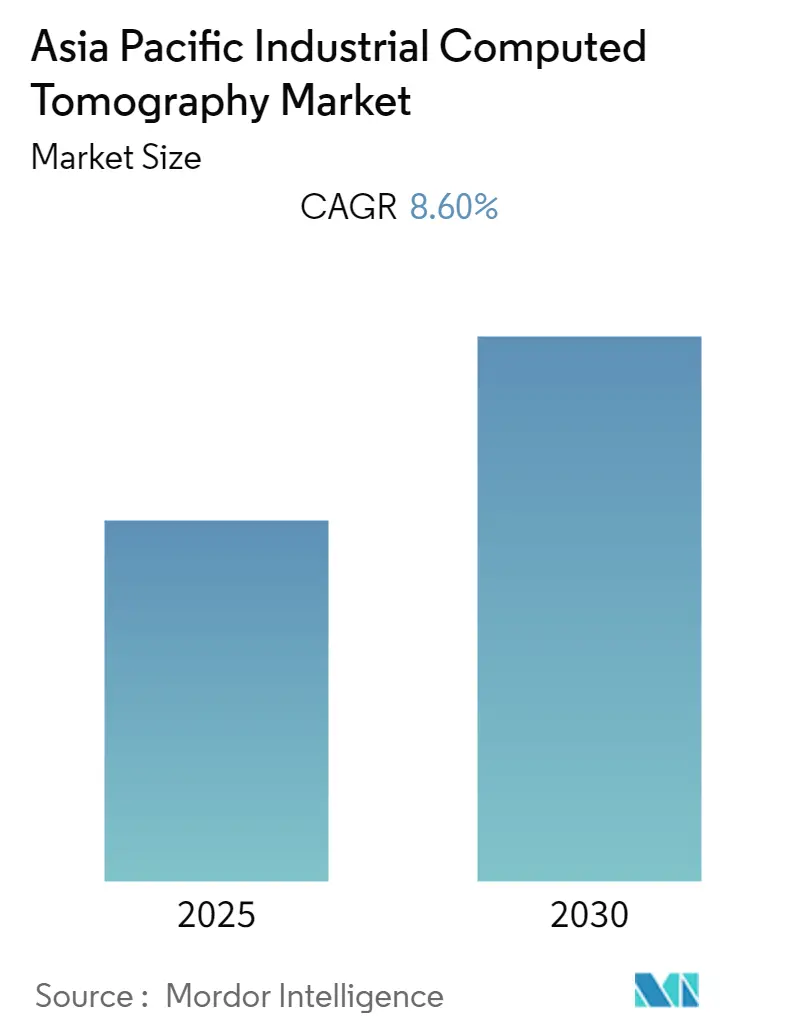
The Asia Pacific Industrial Computed Tomography Market is expected to register a CAGR of 8.6% during the forecast period.
The Asia-Pacific industrial computed tomography market is experiencing a significant transformation driven by the convergence of advanced manufacturing technologies and quality control requirements. The integration of industrial CT systems with 3D printing and additive manufacturing has revolutionized production processes, enabling manufacturers to move beyond prototype stages to full-scale manufacturing applications. This technological convergence has particularly benefited industries requiring high-precision measurements and non-destructive testing capabilities. The emergence of laminated modeling based on 3D printing has created new opportunities for industrial quality control and inspection processes, with CT scanning becoming an integral part of the manufacturing workflow.
The automotive and manufacturing sectors have emerged as primary adopters of industrial CT technology, leveraging its capabilities for quality assurance in the production of mechanical parts, cast metals, composites, and plastic materials. Industrial CT scanners have become essential tools for ensuring production quality across various manufacturing processes and assembly operations. The technology's ability to perform non-destructive testing and provide detailed internal and external dimensional measurements has made it particularly valuable for complex component inspection and industrial quality control applications. The integration of CT systems into production lines has enabled manufacturers to maintain higher quality standards while optimizing their manufacturing processes.
Government initiatives across the region are actively supporting the advancement of industrial CT technology. A notable example is the Japanese government's announcement in April 2022 regarding plans to develop a large-scale computed tomography system at the International Education and Research Center in Fukushima Prefecture, scheduled for completion in 2024. This initiative aims to enable the creation of comprehensive 3D models of large industrial products such as cars and planes without disassembly, representing a significant advancement in industrial inspection system capabilities. The development of such facilities demonstrates the region's commitment to advancing industrial computed tomography technology and its applications.
The technical landscape of industrial CT is evolving, with significant focus on software development and system integration. Recent advancements have primarily centered on enhancing software capabilities to address the complex requirements of modern manufacturing processes. The industry faces challenges in standardization and supply chain optimization, particularly regarding the establishment of comprehensive requirements and standards by major OEMs. These technical developments are crucial for increasing confidence in the technology and its results, while also addressing the need for more streamlined integration with existing manufacturing processes. The focus on software improvements and standardization efforts indicates a maturing market that is adapting to meet the sophisticated needs of industrial NDT applications.
Asia Pacific Industrial Computed Tomography Market Trends and Insights
Growing Integration in Automotive Manufacturing and Quality Control
The automotive industry's increasing adoption of industrial CT scanning systems represents a major driver for market growth across Asia-Pacific. Automotive manufacturers are increasingly implementing CT scanning technology for inspecting critical components like turbines and piston engines in a single pass, significantly improving production efficiency and industrial quality assurance processes. The technology enables manufacturers to conduct comprehensive inspections of complex automotive parts, ensuring both structural integrity and dimensional accuracy without destroying the components. This non-destructive testing capability has become particularly valuable as automotive designs become more sophisticated and quality standards more stringent.
The integration of CT systems in robotized production lines has revolutionized quality assurance processes in automotive manufacturing. These systems provide rapid, accurate, and robust inspection capabilities that are essential for maintaining high production rates while ensuring product quality. Manufacturers can now ensure precise fuel delivery timing and component specifications through detailed CT scan inspections. The technology's ability to provide detailed three-dimensional imaging of internal structures has made it an indispensable tool for improving assembly processes, ensuring reliability, and measuring deviations in automotive components, leading to enhanced production efficiency and product quality.
Understand The Key Trends Shaping This Market
Download PDF
Rising Demand from High-End Equipment Industries
The rapid development of high-end equipment industries across Asia-Pacific, particularly in sectors such as high-speed rail, large aircraft, rockets, and nuclear power, has created substantial demand for advanced computed tomography systems. These industries require sophisticated inspection capabilities for components with large dimensions, complex structures, and special manufacturing techniques. The growing emphasis on industrial process control in these critical sectors has led to increased adoption of high-end CT scanning systems that can handle larger components while maintaining precise measurement capabilities.
Industrial CT scanning technology has become essential for quality managers, industrial measurement professionals, and academic researchers working in these advanced sectors. The technology's ability to provide comprehensive internal and external measurements without component destruction has made it particularly valuable in research and development processes. The adoption of CT scanning in these industries has been driven by the need for improved measurement accuracy, faster inspection times, and the ability to handle increasingly complex component geometries, particularly in aerospace and defense applications where component reliability is crucial.
Technological Advancements in Portable and Industrial Equipment
The development of advanced portable industrial X-ray equipment has significantly expanded the application scope of computed tomography systems. Modern high-frequency technology has enabled the production of high-performance CT systems in miniature formats that require only standard power connections. These technological improvements have made CT systems more accessible and practical for various industrial applications, while maintaining high-quality imaging capabilities. The integration of user-friendly interfaces and digital systems has further enhanced the versatility of these systems across different inspection methods in the NDT industry.
The emergence of innovative radiography equipment has been accompanied by improvements in radiation detection instruments and security inspection capabilities. Companies across the region are developing sophisticated portable X-ray security inspection equipment for various applications, from government buildings to transportation hubs. These advancements have made CT technology more adaptable to different working conditions and operational requirements, while maintaining high safety standards and imaging quality. The development of comprehensive radiation detection and protection solutions has further supported the expansion of CT applications across different industries.
Increasing Burden of Chronic Diseases
The rising prevalence of chronic diseases across Asia-Pacific has created significant demand for advanced diagnostic imaging technologies. According to recent statistics, China has witnessed a particularly high burden of cancer cases, with lung cancer cases reaching 815,563 in 2020. The increasing incidence of cardiovascular diseases, neurological disorders, and other chronic conditions has necessitated more sophisticated diagnostic imaging capabilities, driving the demand for advanced CT scanning systems in healthcare facilities across the region.
The aging population in Asia-Pacific has further intensified the need for advanced diagnostic imaging technologies. In China alone, the population aged 65 years or over is projected to reach 246.98 million by 2030, creating substantial demand for diagnostic imaging services. This demographic shift, combined with the increasing sophistication of medical treatments and the need for precise diagnostic capabilities, has made computed tomography systems essential components of modern healthcare delivery. The technology's ability to provide detailed imaging for various medical conditions, from cancer diagnosis to cardiovascular assessment, has made it an indispensable tool in managing the growing burden of chronic diseases.
Segment Analysis: By Type
Medium Slice Segment in Asia Pacific Industrial CT Market
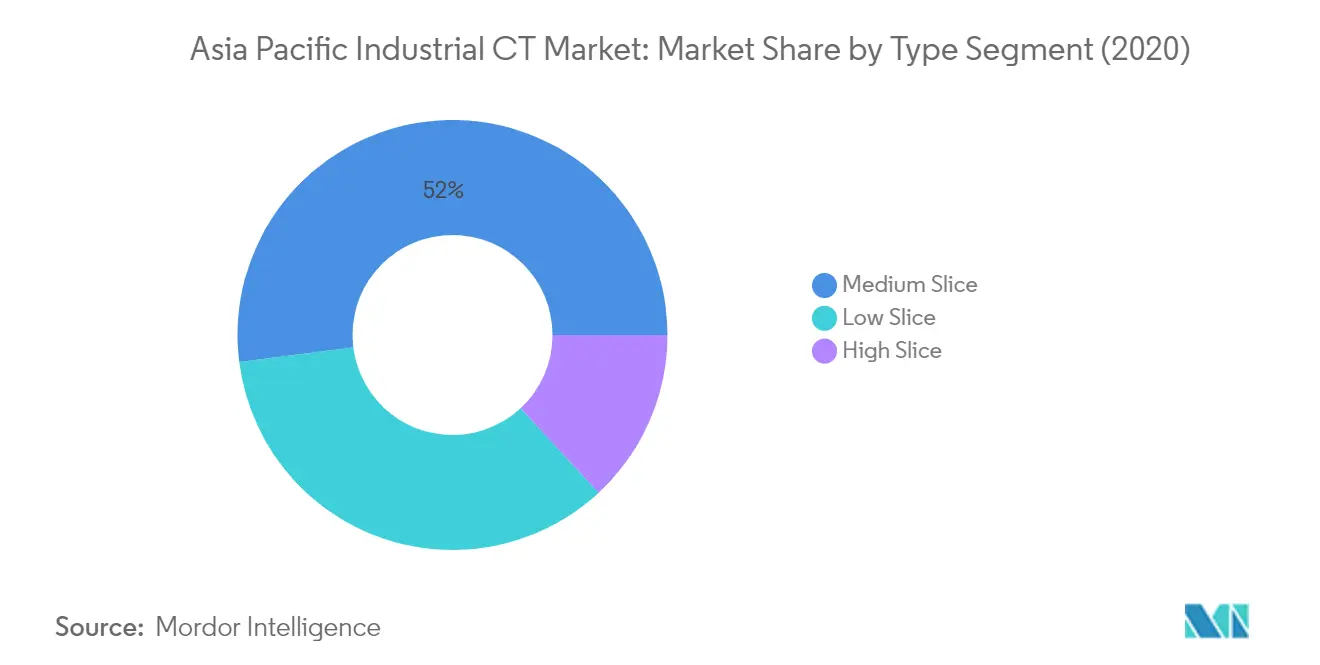
The Medium Slice segment, which includes 32-slice and 64-slice CT scanners, dominates the Asia Pacific Industrial CT market, accounting for approximately 52% of the total market share in 2024. This segment's prominence is primarily driven by the optimal balance between imaging quality and cost-effectiveness that medium slice CT scanners offer. The 64-slice CT scanners, in particular, have gained significant traction due to their ability to provide detailed views of soft tissue structures, making them invaluable for various applications including cardiac imaging, tumor detection, and general diagnostic procedures. Additionally, these scanners offer faster scanning speeds and lower radiation doses compared to traditional CT systems, making them particularly attractive for healthcare facilities looking to upgrade their imaging capabilities while maintaining operational efficiency. The segment is also experiencing the fastest growth rate in the market, projected to grow at approximately 7% from 2024 to 2029, driven by increasing adoption in emerging economies and continuous technological advancements in image processing capabilities.
Remaining Segments in CT Scanner Type Market
The Low Slice and High Slice segments complete the market landscape, each serving distinct healthcare needs. Low Slice CT scanners, including 4-slice and 16-slice variants, continue to maintain their relevance in smaller healthcare facilities and specialized applications where basic imaging capabilities suffice. These systems are particularly valuable in urgent care centers and smaller hospitals due to their cost-effectiveness and reliability for routine scanning procedures. On the other hand, the High Slice segment, comprising scanners with more than 128 slices, represents the premium end of the market, offering advanced capabilities such as whole-body imaging and specialized cardiac applications. These high-end systems are typically deployed in large hospitals and advanced diagnostic centers where the highest imaging precision and speed are required for complex diagnostic procedures.
Segment Analysis: By Application
Oncology Segment in Asia Pacific Industrial CT Market
The oncology segment continues to dominate the Asia Pacific Industrial CT market, holding approximately 30% of the market share in 2024. This significant market position is primarily driven by the rising burden of cancer cases across the region, particularly in countries like China and India. The increasing adoption of advanced CT imaging technologies for early cancer detection, treatment planning, and monitoring has further strengthened this segment's leadership. Modern oncology departments are increasingly integrating sophisticated CT systems with artificial intelligence capabilities for more accurate diagnosis and treatment planning, while the expansion of cancer care facilities across major Asian markets has created sustained demand for advanced CT systems in oncology applications.
Cardiovascular Segment in Asia Pacific Industrial CT Market
The cardiovascular segment is emerging as the fastest-growing application area in the Asia Pacific Industrial CT market, projected to grow at approximately 7% during 2024-2029. This robust growth is primarily attributed to the rising prevalence of cardiovascular diseases across the region and increasing adoption of advanced cardiac CT imaging technologies. Healthcare facilities across Asia Pacific are increasingly investing in specialized cardiac CT systems that offer superior visualization of coronary arteries and cardiac structures. The integration of artificial intelligence and machine learning technologies in cardiac CT imaging, coupled with the growing demand for non-invasive diagnostic procedures, is further accelerating the segment's growth. Additionally, the expansion of cardiology departments in major hospitals across China, Japan, and India is creating substantial opportunities for advanced cardiac CT systems.
Remaining Segments in Asia Pacific Industrial CT Market by Application
The musculoskeletal, neurological, and other application segments continue to play vital roles in shaping the Asia Pacific Industrial CT market landscape. The musculoskeletal segment maintains strong demand due to the rising prevalence of orthopedic conditions and sports injuries across the region. The neurological segment is driven by increasing cases of neurological disorders and the growing adoption of CT imaging in neurosurgery planning. Other applications, including dental, pulmonary, and emergency medicine, collectively contribute to market diversity by serving specific diagnostic needs across various medical specialties. These segments are benefiting from ongoing technological advancements in CT imaging and the expanding healthcare infrastructure across Asia Pacific countries.
Segment Analysis: By End User
Hospitals Segment in Asia Pacific Industrial Computed Tomography Market
The hospitals segment continues to dominate the Asia Pacific Industrial CT market, accounting for approximately 54% of the total market share in 2024. This significant market position is primarily driven by the extensive infrastructure and high patient volumes in hospitals across the region. The segment's dominance is particularly notable in China, where according to recent data, the country has witnessed substantial growth in both public and private hospital beds. The introduction of advanced, highly portable CT systems has resulted in increased demand from hospitals across the region, especially in emerging markets like India. Additionally, the growing adoption of digital radiography systems and the increasing prevalence of chronic diseases requiring regular diagnostic imaging have further strengthened the hospitals segment's market position.
Diagnostic Centers Segment in Asia Pacific Industrial Computed Tomography Market
The diagnostic centers segment is projected to demonstrate robust growth in the Asia Pacific Industrial CT market from 2024 to 2029. This growth is being driven by several key factors, including the increasing frequency of dental and cardiovascular ailments, rising cancer cases, and strategic efforts by leading companies in establishing specialized diagnostic facilities. The segment is witnessing significant expansion through strategic collaborations and partnerships, particularly in countries like India and China. The growing awareness among the population regarding preventive healthcare and early diagnosis, coupled with the increasing accessibility of advanced imaging services through standalone diagnostic centers, is expected to fuel this segment's growth. Furthermore, the trend toward outpatient services and the cost-effectiveness of diagnostic centers compared to hospitals is attracting more patients to these facilities.
Remaining Segments in End User Market
The other end-users segment, which includes clinics, ambulatory surgical centers, and academic and research institutes, plays a vital role in the Asia Pacific Industrial CT market. These facilities are particularly important in providing specialized care and research capabilities in the field of diagnostic imaging. Outpatient services offered by these facilities are increasingly preferred by patients due to shorter waiting times and lower costs compared to traditional hospital settings. The segment is also characterized by its focus on specific medical specialties and research activities, contributing to technological advancements and innovative applications in computed tomography. The presence of these facilities, especially in urban areas, helps in reducing the burden on hospitals while providing specialized diagnostic services to specific patient populations.
Asia Pacific Industrial Computed Tomography Market Geography Segment Analysis
Computed Tomography Market in Asia-Pacific
The Asia-Pacific computed tomography market has emerged as a dominant force in the global medical imaging landscape, with China commanding approximately 50% of the regional market share in 2024. The market's robust growth is driven by several factors, including technological advancements in imaging systems, increasing healthcare infrastructure development, and a rising burden of chronic diseases across the region. The presence of major market players like Siemens Healthineers, Canon Medical Systems, and GE Healthcare has contributed to market expansion through continuous innovation and product development. Furthermore, the region's large patient population, coupled with growing healthcare expenditure and increasing adoption of advanced diagnostic technologies, has created a favorable environment for market growth. Government initiatives supporting healthcare modernization and the establishment of new medical facilities have also played a crucial role in market development. The market is characterized by increasing demand for high-slice CT scanners and growing applications in oncology, cardiovascular, and neurological imaging. Additionally, the integration of industrial computed tomography is becoming more prevalent, enhancing the capabilities of industrial imaging in various sectors.
Computed Tomography Market in China
China's computed tomography market has demonstrated remarkable expansion, recording approximately 61% growth from 2019 to 2024, establishing itself as the largest market in the Asia-Pacific region. The country's massive healthcare infrastructure development, coupled with its large population base, has created substantial demand for advanced imaging technologies. The market is characterized by strong domestic manufacturing capabilities, with local players increasingly competing with international manufacturers. The Chinese government's focus on improving healthcare accessibility and quality has led to increased installation of CT scanners across both urban and rural healthcare facilities. The market has also benefited from the country's aging population, which has increased the demand for diagnostic imaging services. Additionally, the growing prevalence of chronic diseases and the expansion of private healthcare facilities have contributed to market growth. The presence of both domestic and international manufacturers has fostered healthy competition, leading to technological innovations and improved accessibility of CT scanning services. The rise of industrial CT applications is also notable, with industrial inspection equipment playing a crucial role in enhancing quality control processes.
Computed Tomography Market in Japan
Japan's computed tomography market is projected to maintain a steady growth trajectory with an expected growth rate of approximately 6% during 2024-2029, reflecting the country's mature healthcare infrastructure and continued technological advancement. The Japanese market is characterized by its high adoption rate of advanced medical technologies and sophisticated healthcare delivery systems. The country's aging population has been a significant driver for the adoption of advanced diagnostic imaging solutions, particularly in detecting age-related conditions. Japan's strong focus on research and development in medical imaging technology, coupled with the presence of major manufacturers like Canon Medical Systems, has fostered continuous innovation in the sector. The market has also benefited from the country's universal healthcare coverage system, which ensures widespread access to advanced diagnostic services. Additionally, the emphasis on preventive healthcare and regular health screenings has sustained the demand for CT scanning services. The market is further supported by robust reimbursement policies and strong healthcare infrastructure.
Computed Tomography Market in India
The Indian computed tomography market continues to exhibit significant growth potential, driven by the country's large population base and increasing healthcare awareness. The market is characterized by rapid expansion of healthcare infrastructure, particularly in tier-2 and tier-3 cities, creating new opportunities for CT scanner installations. The growing burden of chronic diseases and the rising middle-class population with increased healthcare spending capacity have contributed to market growth. India's emergence as a medical tourism destination has also spurred the adoption of advanced imaging technologies. The market has witnessed increased participation from both domestic and international manufacturers, leading to competitive pricing and improved accessibility. Furthermore, government initiatives aimed at strengthening healthcare infrastructure and increasing healthcare coverage have positively impacted market growth. The trend towards digitalization of healthcare services and the integration of artificial intelligence in imaging solutions have also shaped market development. The application of industrial testing equipment in healthcare is enhancing diagnostic precision and efficiency.
Computed Tomography Market in Australia
Australia's computed tomography market demonstrates strong growth potential, supported by the country's advanced healthcare system and high healthcare spending per capita. The market benefits from robust healthcare infrastructure and widespread access to advanced medical technologies. The Australian market is characterized by high standards of healthcare delivery and a strong emphasis on quality diagnostic services. The country's well-established reimbursement system and universal healthcare coverage have ensured broad access to CT scanning services across the population. The market has also benefited from continuous technological upgrades and the integration of advanced imaging solutions in clinical practice. The focus on early disease detection and preventive healthcare has maintained steady demand for CT scanning services. Additionally, the presence of well-equipped healthcare facilities and trained healthcare professionals has supported market growth.
Computed Tomography Market in South Korea
South Korea's computed tomography market showcases strong growth dynamics, driven by the country's technological advancement and sophisticated healthcare infrastructure. The market benefits from high healthcare technology adoption rates and strong government support for healthcare modernization. South Korea's emphasis on digital healthcare solutions and the integration of artificial intelligence in medical imaging has fostered innovation in the CT scanning segment. The market is characterized by strong domestic manufacturing capabilities and the presence of major players like Samsung Medison. The country's focus on preventive healthcare and comprehensive health screening programs has maintained consistent demand for CT scanning services. Additionally, the well-developed healthcare insurance system and broad healthcare coverage have ensured widespread access to advanced diagnostic services. The market has also benefited from the country's aging population and increasing prevalence of chronic diseases.


Competitive Landscape
Top Companies in Asia Pacific Industrial Computed Tomography Market
The competitive landscape is characterized by major players like Siemens Healthineers, GE Healthcare, Canon Medical Systems, Koninklijke Philips, and Samsung Medison leading significant product innovations and strategic initiatives. These companies are heavily investing in research and development to enhance their product portfolios with advanced features such as artificial intelligence integration, improved imaging quality, and reduced radiation exposure. Strategic partnerships with healthcare providers and research institutions are becoming increasingly common to strengthen market presence and drive technological advancement. Companies are also focusing on expanding their manufacturing capabilities in key markets like China and India, while simultaneously developing cost-effective solutions to penetrate emerging markets. The emphasis on localization strategies, coupled with the establishment of innovation hubs and research centers across the region, demonstrates the industry's commitment to addressing specific regional healthcare needs and regulatory requirements.
Market Consolidation Drives Strategic Growth Patterns
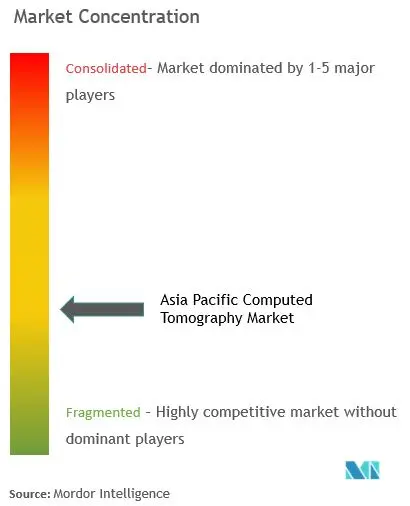
The Asia Pacific industrial computed tomography market exhibits a relatively consolidated structure dominated by multinational conglomerates with diverse healthcare portfolios. These established players leverage their extensive distribution networks, brand reputation, and technological expertise to maintain their market positions. The market is characterized by high entry barriers due to substantial capital requirements, complex regulatory frameworks, and the need for specialized technological expertise. Recent years have witnessed increased merger and acquisition activities, particularly focused on acquiring local players with a strong regional presence or innovative technological capabilities.
The competitive dynamics are further shaped by the presence of regional players who focus on specific market segments or geographical areas, often competing through competitive pricing and localized service offerings. Japanese and Korean manufacturers have established strong footholds in their respective domestic markets while gradually expanding their presence across the region. The market has seen strategic collaborations between global and local players, combining international technology expertise with local market knowledge and distribution capabilities.
Innovation and Localization Key to Success
Success in the market increasingly depends on companies' ability to balance technological innovation with cost-effectiveness while adapting to local healthcare needs and regulatory requirements. Market leaders are focusing on developing comprehensive healthcare solutions that integrate industrial computed tomography systems with other diagnostic tools and digital healthcare platforms. The ability to provide efficient after-sales service, technical support, and training programs has become crucial for maintaining customer relationships and ensuring long-term market presence. Companies are also investing in building strong relationships with healthcare institutions, research centers, and government bodies to strengthen their market position.
Future growth opportunities lie in addressing the evolving needs of different customer segments, from large hospitals to smaller healthcare facilities. Companies need to develop flexible pricing models and financing options to make their products more accessible to a broader range of healthcare providers. The increasing focus on preventive healthcare and early disease detection creates opportunities for companies that can offer specialized imaging solutions. Regulatory compliance and adherence to quality standards remain critical factors, particularly as healthcare regulations across different Asian countries continue to evolve. Success also depends on companies' ability to navigate complex procurement processes and establish strong local partnerships.
Asia Pacific Industrial Computed Tomography Industry Leaders
Waygate Technologies (Baker Hughes Digital Solutions GmbH)
Omron Corporation
Nikon Corporation
Shimadzu Corporation
Hitachi Ltd.
- *Disclaimer: Major Players sorted in no particular order

Recent Industry Developments
- May 2022 - Shimadzu Corporation announced the release of the XSeeker 8000 bench-top X-ray CT system. It is considered to be the smallest and lightest X-ray system. It offers clear images of a variety of samples, from resin molded parts to aluminum die cast and other metallic elements.
- November 2021 - Omron Corporation announced the development of a new VT-X750-V3 system, and the company claims it to be the fastest Ct-type X-ray inspection device. OMRON contributes to the safety of society by conducting 100% X-ray inspection of electronic board assemblies at high speed without being restricted by PCB design and maintaining and improving productivity while ensuring the quality of customers' products.


Asia Pacific Industrial Computed Tomography Market Report Scope
Industrial CT scans use high-power X-rays to penetrate the internal shape of an object, creating the perfect inspection tool for high-value parts where destructive inspection is economically exorbitant. The market studied covers end-use industries such as aerospace, automotive, electronics, oil, and gas. The market study also briefs about the COVID-19 impact on the market and key trends and innovations developed by the key players in the region.
By Application
| Flaw Detection and Inspection |
| Failure Analysis |
| Assembly Analysis |
| Other Applications |
By End-User Industry
| Aerospace |
| Automotive |
| Electronics |
| Oil and Gas |
| Other End-User Industries |
| By Application | Flaw Detection and Inspection |
| Failure Analysis | |
| Assembly Analysis | |
| Other Applications | |
| By End-User Industry | Aerospace |
| Automotive | |
| Electronics | |
| Oil and Gas | |
| Other End-User Industries |


Key Questions Answered in the Report
What is the current Asia Pacific Industrial Computed Tomography Market size?
The Asia Pacific Industrial Computed Tomography Market is projected to register a CAGR of 8.6% during the forecast period (2025-2030)
Who are the key players in Asia Pacific Industrial Computed Tomography Market?
Waygate Technologies (Baker Hughes Digital Solutions GmbH), Omron Corporation, Nikon Corporation, Shimadzu Corporation and Hitachi Ltd. are the major companies operating in the Asia Pacific Industrial Computed Tomography Market.
What years does this Asia Pacific Industrial Computed Tomography Market cover?
The report covers the Asia Pacific Industrial Computed Tomography Market historical market size for years: 2019, 2020, 2021, 2022, 2023 and 2024. The report also forecasts the Asia Pacific Industrial Computed Tomography Market size for years: 2025, 2026, 2027, 2028, 2029 and 2030.
Page last updated on:





