
Aluminum Fluoride Market Size and Share
Market Overview
| Study Period | 2021 - 2031 |
|---|---|
| Market Size (2026) | USD 2.53 Billion |
| Market Size (2031) | USD 3.33 Billion |
| Growth Rate (2026 - 2031) | 5.65 % |
| Fastest Growing Market | Asia-Pacific |
| Largest Market | Asia-Pacific |
| Market Concentration | Medium |
Major Players *Disclaimer: Major Players sorted in no particular order Image © Mordor Intelligence. Reuse requires attribution under CC BY 4.0. | |
Aluminum Fluoride Market Analysis by Mordor Intelligence
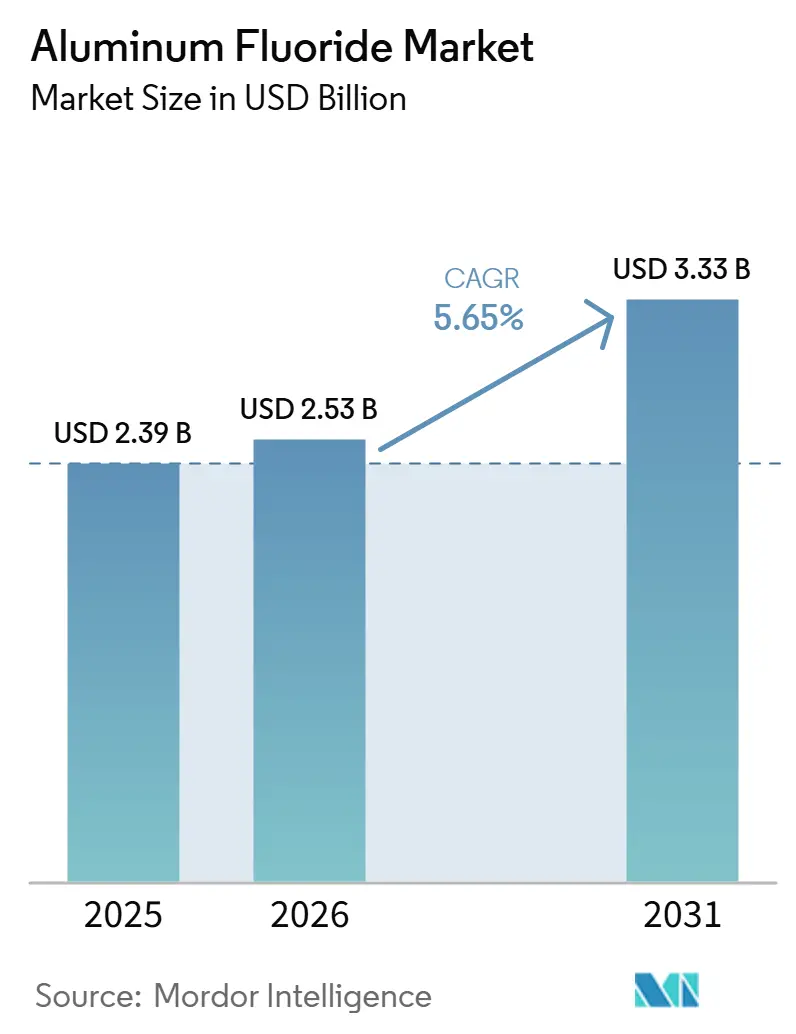
The Aluminum Fluoride Market was valued at USD 2.39 billion in 2025 and is estimated to grow from USD 2.53 billion in 2026 to reach USD 3.33 billion by 2031, at a CAGR of 5.65% during the forecast period (2026–2031). Primary aluminum production remains the main source of demand because aluminum fluoride controls bath chemistry in Hall-Héroult smelting. New smelters need a continuing supply of the chemical after commissioning, so capacity projects create recurring demand rather than a one-time purchase cycle. Higher-purity grades are becoming more important where operators seek stable energy use, better current efficiency, and lower process variation. Feedstock security is also shaping procurement decisions because fluorspar supply and hydrofluoric acid costs can change quickly. Producers that secure fluorosilicic acid or long-term feedstock supplies can improve reliability, while specialty coatings create a smaller but higher-value outlet for the aluminum fluoride market.
Key Report Takeaways
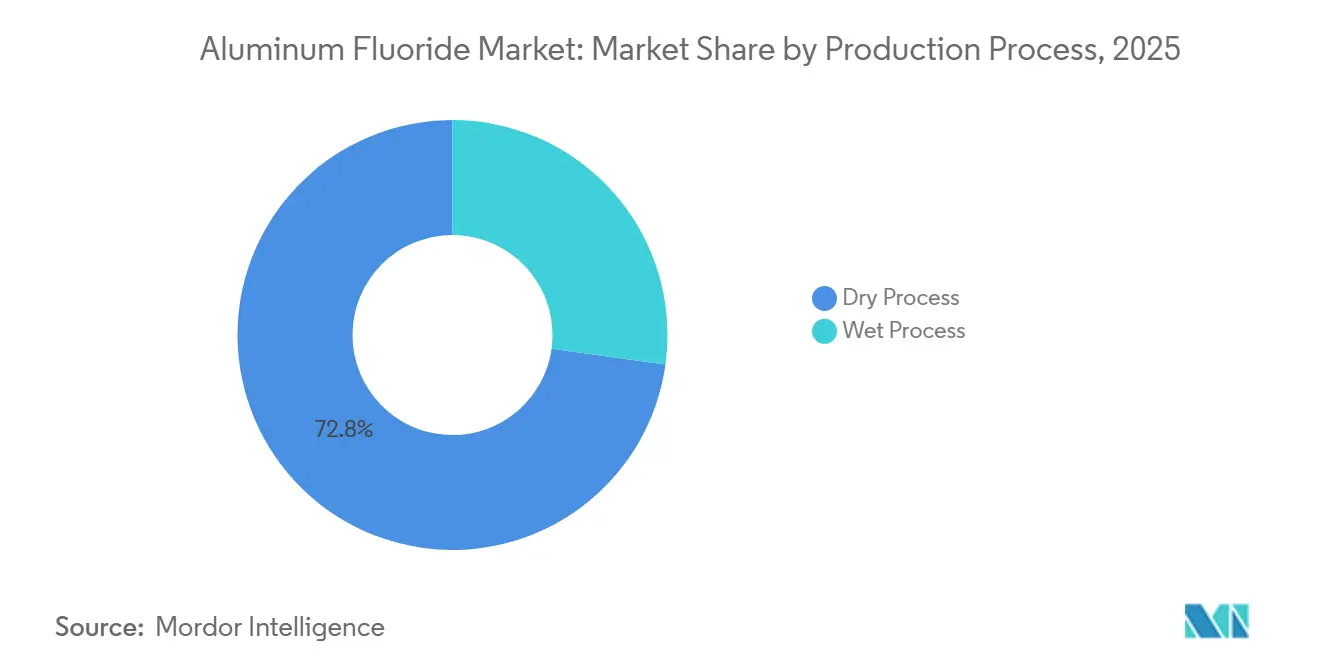
- By production process, the dry process held 72.81% of the aluminum fluoride market share in 2025, while the wet process is forecast to grow at a 6.12% CAGR through 2031.
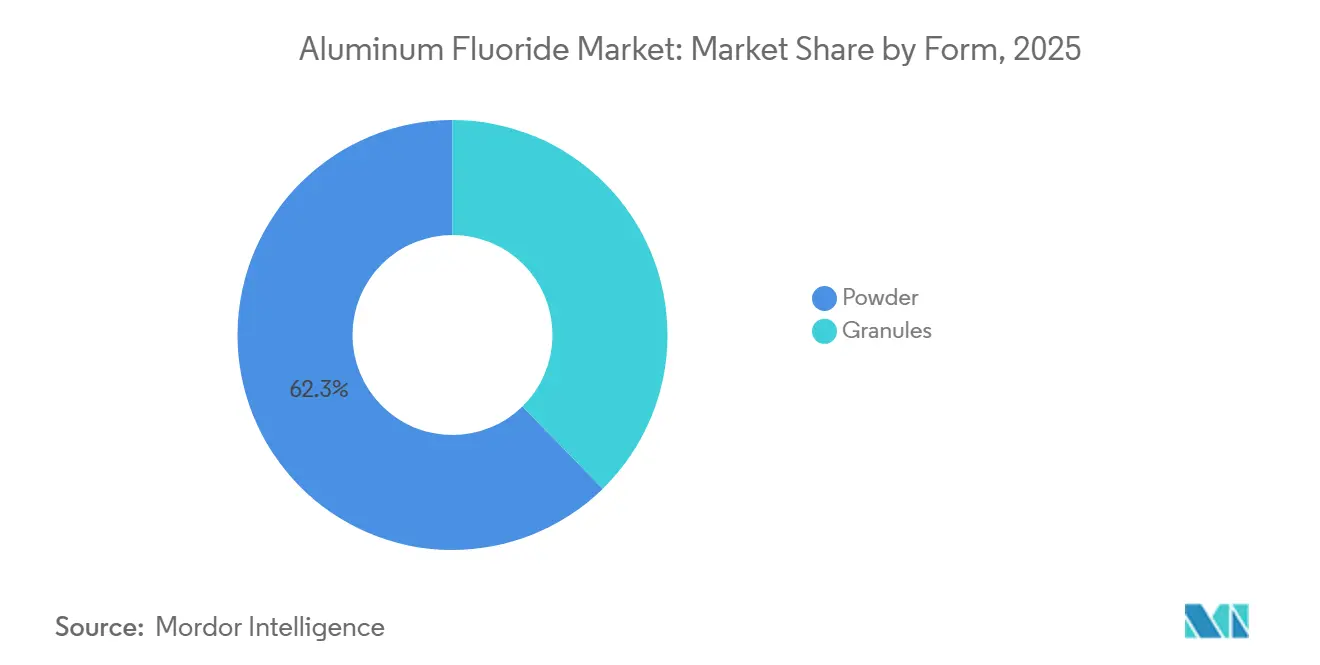
- By form, powder accounted for 62.33% of the aluminum fluoride market size in 2025, while granules are projected to expand at a 5.93% CAGR through 2031.
- By application, electrolyte additives held 73.41% of the aluminum fluoride market share in 2025, while optical coatings are forecast to advance at a 6.53% CAGR through 2031.
- By end-use industry, aluminum smelting accounted for 76.52% of demand in 2025, while electronics and optics are projected to record a 6.72% CAGR through 2031.
- By geography, Asia-Pacific held 49.82% of demand in 2025 and is projected to grow at a 6.18% CAGR through 2031.
Note: Market size and forecast figures in this report are generated using Mordor Intelligence’s proprietary estimation framework, updated with the latest available data and insights as of January 2026.
Market Trends and Insights
Drivers Impact Analysis of Aluminum Fluoride Market*
| Driver | (~) % Impact on CAGR Forecast | Geographic Relevance | Impact Timeline |
|---|---|---|---|
| Growing Demand for Lightweight Aluminum in Electric Vehicles and Transport | +1.4% | Global, strongest in Europe and Asia-Pacific | Medium term (2-4 years) |
| High-Purity Aluminum Fluoride in Energy-Efficient Smelting | +1.2% | Asia-Pacific, with spillover to Middle East and Africa and South America | Short term (≤ 2 years) |
| Investment in Aluminum Production Capacity | +1.0% | India, Middle East, and China | Medium term (2-4 years) |
| Supply Chain Integration and Raw Material Availability | +0.8% | Global, especially Asia-Pacific and North America | Long term (≥ 4 years) |
| Enhanced Electrolyte Performance in Smelting | +0.9% | Global | Short term (≤ 2 years) |
| Source: Mordor Intelligence | |||
Growing Demand for Lightweight Aluminum in Electric Vehicles and Transportation Applications
Global electric vehicle sales exceeded 17 million units in 2024, increasing by 25% from the previous year[1]International Energy Agency, “Global EV Outlook 2025,” International Energy Agency, iea.org. . This growth supports demand for lightweight materials in vehicle structures and battery systems. Vehicle manufacturers are increasing their use of lightweight materials across these applications, which supports the aluminum fluoride market as higher aluminum output requires more electrolyte additives. Newer smelter designs also require tighter control of bath composition, increasing the importance of consistent chemical quality. This relationship supports volume demand and may favor suppliers that meet stringent process specifications.
High-Purity Aluminum Fluoride and Enhanced Electrolyte Performance in Smelting
Smelter operators increasingly manage aluminum fluoride dosing as part of energy management rather than as a routine purchasing decision. Proceedings from ICSOBA reported that improved electrolyte composition management in 500 kA cells reduced direct-current energy use by 628 kWh per tonne of aluminum. Improved current efficiency can reduce energy consumption while maintaining stable bath conditions. Better hooding and gas treatment can recover more hydrogen fluoride from exhaust streams, which may reduce net make-up requirements at individual plants. Even so, larger and more efficient potlines that require reliable additions throughout operation continue to support the aluminum fluoride market. Buyers are therefore placing greater value on purity, repeatability, and technical support.
Investment in Aluminum Production Capacity
Greenfield aluminum projects support the expansion of the aluminum fluoride market, as every new potline requires a continuous electrolyte supply. Adani Enterprises and International Resources Holding are set to sign an agreement with the Odisha government in July 2026 for a USD 11.5 billion integrated project, including a 2 MMTPA aluminum smelter, a 4 MMTPA alumina refinery, and a 4,000 MW captive power plant. Based on the consumption range stated in the supplied research, the planned smelter could require 40,000 to 50,000 tonnes of aluminum fluoride annually. India’s decarbonization roadmap highlights the continued development of its aluminum sector, with primary aluminum production reaching 4.1 million tonnes in 2025. Capacity expansion in India and the Gulf is expected to add demand centers outside China. These projects may also create opportunities for nearby producers that can provide a dependable supply and suitable product forms.
Supply Chain Integration and Raw Material Availability
Integrated feedstock arrangements help producers reduce exposure to fluorspar shortages and hydrofluoric acid price volatility. PhosAgro stated that its Cherepovets facility would increase aluminum fluoride capacity from 75,000 tonnes to 96,000 tonnes per year, with the expansion expected to begin ramping up from mid-2026. The supply arrangement between RUSAL and PhosAgro provides longer-term volume visibility for both companies. Wet-process producers can use fluorosilicic acid from phosphate fertilizer production instead of relying solely on acid-grade fluorspar. China’s fluorspar imports from Mongolia rose by 48% in the first half of 2025 following domestic mine safety suspensions. These disruptions highlight why aluminum fluoride market participants are pursuing contracts, regional sourcing, and integrated byproduct streams. Stronger supply arrangements can protect production schedules and support capacity investments.
Restraints Impact Analysis of Aluminum Fluoride Market*
| Restraint | (~) % Impact on CAGR Forecast | Geographic Relevance | Impact Timeline |
|---|---|---|---|
| Environmental Rules for Fluoride Emissions and Waste | -0.7% | Global, most acute in North America, Europe, and India | Short term (≤ 2 years) |
| Fluorspar and Hydrogen Fluoride Supply and Price Volatility | -0.9% | Global, particularly Europe and North America | Medium term (2-4 years) |
| Quality and Purity Requirements for Specialty Uses | -0.5% | North America, Europe, and Asia-Pacific electronics hubs | Long term (≥ 4 years) |
| Source: Mordor Intelligence | |||
Environmental Rules for Fluoride Emissions and Waste Management
Environmental compliance increases capital and operating costs for aluminum fluoride producers and smelters. The US rule for the aluminum fluoride production subcategory sets a 30-day average fluoride effluent limit of 0.63 kg/kkg of product. The supplied research also cited India’s revised 2025 rules, which set a total fluoride limit of 0.8 kg per tonne of aluminum from electrolytic pot rooms and an aluminum fluoride use limit of 20 kg per tonne of aluminum. These requirements can increase demand for accurate dosing and high-quality products. Facilities that install stronger gas treatment systems and pot hooding can recover more hydrogen fluoride from exhaust. This recovery can lower replacement needs at mature plants, while higher compliance standards can make market entry more difficult for smaller suppliers.
Fluorspar and Hydrogen Fluoride Volatility and Specialty Quality Requirements
Fluorspar and hydrogen fluoride shortages can compress producer margins and delay investment decisions. Global fluorspar mine production declined 1% to 10 million tonnes in 2025, while China became a net importer after domestic safety inspections affected output[2]United States Geological Survey, “Mineral Commodity Summaries 2026, Fluorspar,” U.S. Geological Survey, usgs.gov. . United States acid-grade fluorspar import prices of USD 470 per metric tonne in 2025, compared with USD 322 per metric tonne in 2021. Specialty buyers also require much tighter impurity control than smelter-grade customers. Specialty applications require testing for trace elements and reliable process control. The qualification process can last 12 to 24 months, which can limit the ability of smaller suppliers to move quickly into optical, electronics, and specialty ceramic applications.
*Our forecasts treat driver/restraint impacts as directional, not additive. The impact forecasts reflect baseline growth, mix effects, and variable interactions.
Aluminum Fluoride Market Segment Analysis
By Production Process:
Wet Process Is Building a Feedstock Cost AdvantageThe dry process held 72.81% of the aluminum fluoride market share in 2025, as established plants use a proven route based on anhydrous hydrogen fluoride and aluminum hydroxide. This process serves large smelter customers that prioritize reliable volumes, consistent product properties, and compatibility with existing handling systems. Dry production has an established base in regions with integrated access to hydrogen fluoride and sulfuric acid. It can also deliver grades that align with conventional smelter specifications. However, dry-route economics remain sensitive to the availability and cost of acid-grade fluorspar. These pressures encourage producers to assess alternative feedstock routes.
The wet process is forecast to expand at a 6.12% CAGR through 2031. It reacts fluorosilicic acid recovered from phosphate fertilizer production with aluminum hydroxide, reducing dependence on the fluorspar supply chain. A 2025 study examined wet synthesis from the fluorosilicic acid byproduct of phosphorus chemical production and reported improvements in purity and reaction yield. Indian manufacturers have used nearby phosphoric acid operations as a source of fluorosilicic acid. Wet processing can also generate less hydrogen fluoride off-gas than dry processing.
Product density and particle characteristics may differ from dry-route output, so smelters may need to adjust dosing settings before switching. These operational changes create switching costs, even when wet-process economics are favorable. For this reason, the dry route is likely to remain important where smelters have already calibrated material handling, storage, and bath-control practices around a familiar grade. The decision is not limited to the chemical’s purchase price. It also includes the work required to confirm particle behavior, feeding rates, and the impact on routine potline control.
A wet-route producer can strengthen its position when it has dependable access to fluorosilicic acid from nearby phosphate operations. That connection can convert a fertilizer byproduct into a predictable industrial input and reduce exposure to mining-related supply restrictions. Available research also links this route to a lower hydrogen fluoride off-gas burden, which can be important in locations with stricter emission requirements. However, customers may still retain dry-route supply as a qualified alternative because continuous smelting does not allow extended interruptions. This dynamic creates room for more than one process route in the aluminum fluoride market.
Producers therefore compete on supply security and product consistency, as well as on the cost of the underlying feedstock. Wet-route expansion does not mean all plants will change their sourcing at once. The wet process is more likely to gain share first where new facilities can design receiving and dosing systems around its product characteristics. In established plants, qualification and operating trials can determine the pace of adoption. This mix supports a gradual shift rather than a sudden replacement of dry-process output.



By Form:
Granules Support Automated Dosing SystemsPowder accounted for 62.33% of the aluminum fluoride market size in 2025. Its leading position reflects the established storage, pneumatic conveying, and dosing systems used at operating smelters. Plant personnel are familiar with powder products, and these products align with existing procurement specifications. Many older facilities operate equipment designed around powder grades. Producers can also transport powder through established packaging and logistics networks. These factors sustain a large installed base for this form.
Granules are projected to grow at a CAGR of 5.93% through 2031 as modern pot rooms adopt automated material handling systems. Granular material can reduce dust during handling and improve flow control in dosing equipment. Research presented by ICSOBA compared low-bulk-density and high-bulk-density aluminum fluoride and discussed how product characteristics affect flowability in smelting. New projects in India and the Middle East can specify granular handling systems during the design phase instead of adapting older equipment. Granules may command a price premium because they can reduce cleaning and maintenance requirements. Fine aluminum fluoride captured during dry scrubbing can also return to the bath with enriched alumina, which can constrain net replacement demand per tonne of metal.
Form selection, therefore, depends on operating practices rather than packaging alone. Powder remains practical for existing systems because conventional plants have refined its use over many years. Its broad availability also helps purchasers compare offers across suppliers. Granules can be more attractive when a project aims to control material flow with fewer manual interventions. Lower dust levels during handling can support cleaner work areas and reduce the burden on conveying equipment. This advantage is especially relevant when a facility is designed around automated dosing from the outset.
A new plant can select storage and feed equipment for granules before commissioning, while an older plant may need to evaluate the cost of modifying established systems. This difference explains why the aluminum fluoride market continues to demand both forms. Granular grades can offer practical benefits in high-amperage smelters that require controlled and repeatable additions. Powder remains an appropriate option when current systems operate reliably and a plant does not identify sufficient benefits from conversion. Producers must therefore align form, density, packaging, and logistics with each customer’s operating conditions. The form segment is shaped by the age of the smelter, its level of automation, and its approach to recovered material management. These factors support continued demand for powder while allowing granules to grow faster through the forecast period.
By Application:
Electrolyte Additives Remain the Main Volume OutletElectrolyte additive applications accounted for 73.41% of the aluminum fluoride market share in 2025. Primary aluminum smelting requires aluminum fluoride to manage the chemical balance of the electrolyte bath. The large base of operating smelters provides a stable volume foundation for this application. New potlines also generate recurring consumption from the start of commercial operations. Smelter operators rely on consistent specification control because changes in bath chemistry affect efficiency and operating stability. These factors make the segment central to the aluminum fluoride market.
Optical coatings are expected to register a 6.53% CAGR through 2031, the fastest growth rate among the listed applications. Aluminum fluoride offers far-ultraviolet transparency, a low refractive index, and chemical stability, which can support protective and antireflective coatings. A 2025 study reported plasma-based aluminum fluoride processing for far-ultraviolet aluminum mirrors. NASA has also described atomic layer processing approaches for ultraviolet optical coatings. Flux agents and catalyst supports serve glass, ceramics, and fluorination processes. These applications account for lower volumes but can offer better margins when buyers require consistent purity.
The dominance of electrolyte additives reflects the large volume of primary aluminum produced each year and the need to keep every operating cell within its desired bath range. As a result, supply reliability remains a key purchasing factor for the main application. Producers serving smelters must provide consistent quality across regular deliveries, as changes in chemistry can affect process control.
The optical coatings application follows a different buying pattern. Customers in this area evaluate material performance, impurity control, and suitability for deposition processes rather than focusing only on bulk supply. The cited work on far-ultraviolet mirrors and NASA coating research shows why aluminum fluoride can be relevant to specialized optics. These applications may require longer qualification periods and more detailed technical communication, which can favor suppliers with strong process control.
Flux agents, catalyst supports, glass, ceramics, and chemical refining provide additional outlets for material that meets application-specific requirements. These uses broaden the customer base beyond smelting, although their volumes remain lower. The aluminum fluoride market can therefore retain a high-volume core while gradually developing value in specialized applications. This balance allows producers to consider differentiated grades without losing focus on the large and recurring electrolyte additive segment.
By End-Use Industry:
Electronics and Optics Add Higher-Value DemandAluminum smelting accounted for 76.52% of end-use demand in 2025. This share reflects the original and continuing role of aluminum fluoride as an electrolyte additive in primary metal production. The scale of global smelting creates a broad and recurring customer base. Capacity additions in Asia-Pacific, India, and the Gulf are expected to support further consumption. Smelting demand remains sensitive to production rates, energy economics, and potline operating efficiency. However, it will continue to serve as the primary volume base for the aluminum fluoride industry.
Electronics and optics are forecast to grow at a CAGR of 6.72% through 2031. This end use includes ultraviolet optical coatings, thin-film materials, and potential protective layers for battery and precision electronic applications. Research published in 2025 investigated the thermal and mechanical behavior of nanometer-scale aluminum fluoride passivation layers. These applications use much lower volumes than smelting but can require higher purity and command higher prices per kilogram. Chemicals provide a separate outlet through the production of fluorinated specialty chemicals. Ceramics, glass, abrasives, welding flux, and fermentation inhibitor applications create additional demand streams and reduce reliance on a single customer sector.
The expansion of electronics and optics is not expected to displace aluminum smelting as the main end user during the forecast period. Instead, it is expected to change the revenue mix by adding applications that place greater value on purity and performance. Optical and electronic customers may require a stricter review of trace elements before approving a supplier. The 12- to 24-month qualification period described in the supplied research can slow supplier changes, making established approvals valuable. This differs from the bulk smelting business, where volume continuity and delivery reliability remain the most important concerns.
Producers that can serve both demand types can spread exposure across several end uses. They can maintain large-scale production for smelters while developing smaller specialty volumes. The aluminum fluoride market also benefits from this mix because a slowdown in one end use does not eliminate all sources of demand. Chemical customers use aluminum fluoride as an intermediate for fluorinated products, linking their purchasing decisions to a different set of industrial cycles. Ceramics and glass demand is tied to construction, display glass, and specialty materials.
The smaller applications described in the supplied research form a long-tail demand base that can support diversified producers. Their role is not to match smelting volumes but to give suppliers more routes to use grades with suitable purity and particle characteristics. This makes end-use diversification commercially relevant, even as the main volume remains concentrated in primary aluminum production.
Geography Analysis
APAC and Middle East Aluminum Fluoride Market
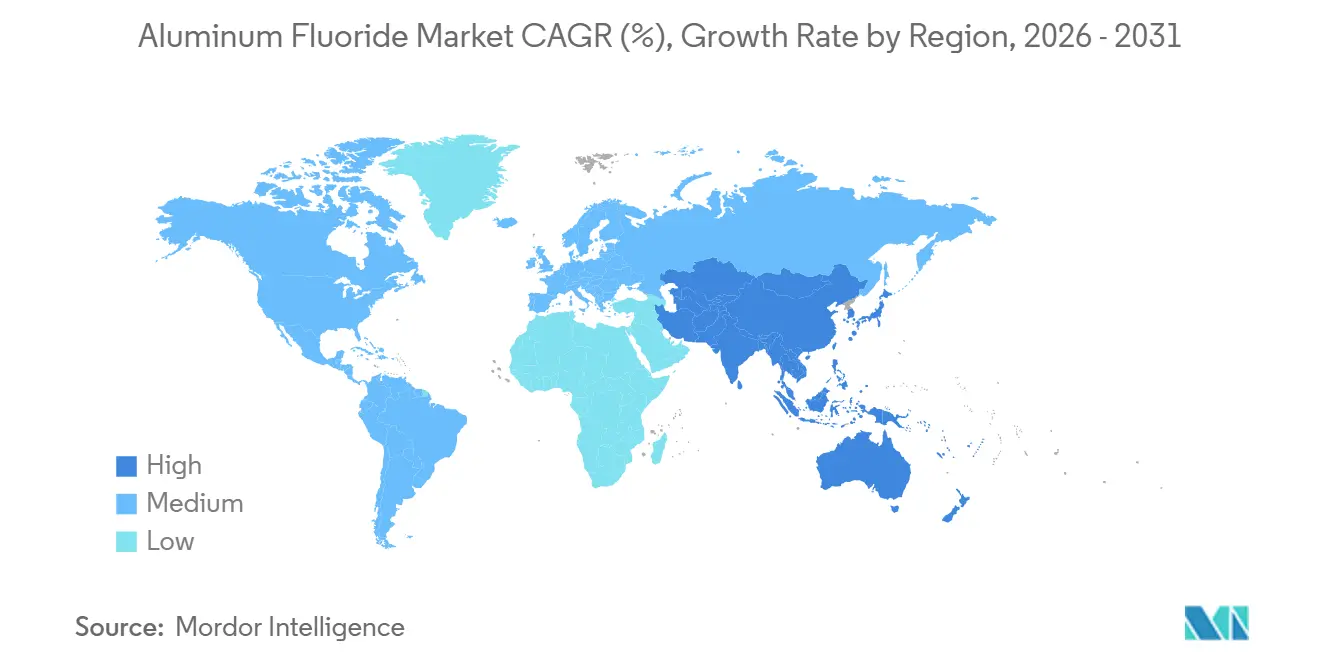
Asia Pacific accounted for 49.82% of the aluminum fluoride market in 2025 and is projected to register a CAGR of 6.18% through 2031. China represents the largest regional production and consumption center, as its smelting base absorbs much of its domestic output. The region also supplied more than 60% of global aluminum fluoride output. India and the Middle East are adding complementary demand through aluminum capacity projects. Japan and South Korea support a smaller premium segment for optical-grade and electronics-grade materials. Their semiconductor and precision optics supply chains require more stringent purity certifications than bulk smelter applications.
North America and Europe Aluminum Fluoride Market
North America and Europe's demand is supported by mature smelting assets and high compliance requirements. The United States obtained 100% of its acid-grade fluorspar from imports in 2025, including 64% from Mexico, 12% from Vietnam, and 10% from China. This dependence increases regional producers’ exposure to logistics and feedstock disruptions. Europe faces similar pressure from higher fluorochemical costs, although local suppliers can retain customers through shorter lead times, compliance support, and supply assurance. Alcoa’s April 2025 transaction with IGNIS Equity Holdings was intended to stabilize the San Ciprián aluminum complex in Spain, preserving an important local consumption base.
South America and MEA Aluminum Fluoride Market
South America and the Middle East and Africa remain smaller markets but hold strategic importance for regional supply. Brazil’s hydroelectric power base supports aluminum smelting demand, while Argentina contributes niche consumption. Local fluorspar sources and phosphate byproduct streams can provide some feedstock advantages in South America. In the Gulf, aluminum fluoride production can serve smelters with shorter delivery times than imports from Asia or Europe. Gulf capacity is tied to broader plans to use lower-cost power for aluminum value-chain development. Each new smelting project can create a lasting offtake requirement for aluminum fluoride, giving the aluminum fluoride market a long-term regional demand base.
South America Aluminum Fluoride Market
The regional landscape also highlights why production location matters to customers. Smelters use aluminum fluoride continuously, so delivery disruptions can create operational concerns. Producers located near growing capacity can reduce transit times and provide more responsive service. This proximity can be important when buyers need to adjust orders in response to production schedules or maintenance requirements. In South America, the link between hydroelectric power and primary aluminum helps sustain demand from operating smelters. A local feedstock advantage can support competitiveness, but it does not eliminate the need for reliable processing and transportation.
MEA and APAC Aluminum Fluoride Market
In the Middle East and Africa, investment in the aluminum value chain gives regional suppliers an opportunity to support new capacity as it is commissioned. The Gulf location can be particularly useful for serving customers that would otherwise depend on longer supply routes. These regional developments do not change Asia Pacific’s leading role in the aluminum fluoride market. However, they create additional demand points outside China and can support a broader supplier base. This trend also increases the importance of supply contracts, local inventories, and product grades suited to each customer’s operating system. Geography, therefore, affects both supply costs and the types of products buyers are likely to request.

Competitive Landscape
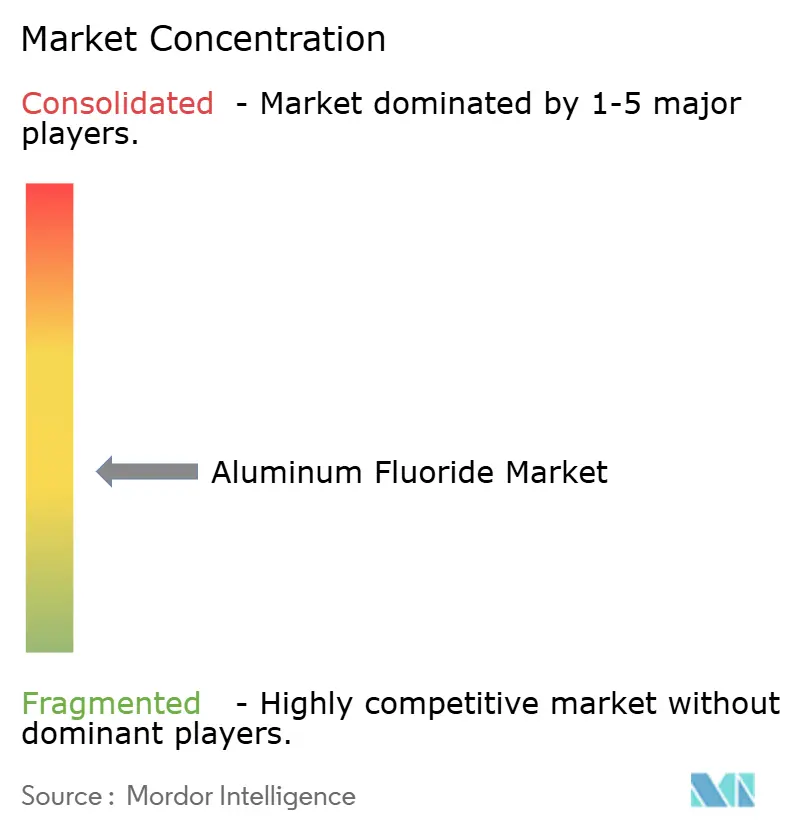
The aluminum fluoride market is moderately fragmented. Fluorsid, Do-Fluoride Chemicals Co., Ltd., and PhosAgro are key suppliers, each with distinct regional positions and feedstock strategies. Their limited combined share allows Chinese domestic producers and regional specialists to compete in bulk material. Product quality, supply security, transport distance, and access to hydrogen fluoride or fluorosilicic acid influence pricing. Large customers often favor suppliers that provide contracted volumes and technically consistent grades. This structure supports competition while giving integrated producers a stronger position during feedstock disruptions.
Fluorsid operates a large production base outside China, including facilities in Italy and Norway. The supplied research described its combined anhydrous aluminum fluoride capacity as 160,000 metric tons per year. Its Norwegian operations use hydropower, which can support a lower-carbon positioning among European customers. PhosAgro has expanded its Cherepovets capacity plans and maintains a long-term supply arrangement with RUSAL. These developments show how supply agreements and integrated inputs can reduce commercial uncertainty. Producers that combine product supply with electrolyte management support can also build stronger operational relationships with smelter customers.
Competitive opportunities exist in high-purity material for optical and semiconductor applications and in wet-process production near phosphate fertilizer plants. Alufluoride’s fluorosilicic acid sourcing model illustrates the potential value of proximity to fertilizer byproduct streams. The supplied research also identified a 24,000 TPA expansion at Visakhapatnam, expected in June 2026, but the cited source was not retained because it did not meet the source criteria. Chinese capacity additions may continue to pressure prices in conventional grades. Suppliers without specialty-grade capabilities or protected feedstock access face greater exposure to commodity pricing.
Each supplier’s competitive position depends on its balance between bulk scale and the ability to meet specific customer requirements. Large-scale producers benefit from established plants, procurement relationships, and long production runs. Regional producers can compete by offering shorter logistics routes, responsive support, or feedstock positions that reduce exposure to spot purchases. The source of fluorine remains especially important because it affects cost stability and the ability to meet delivery commitments. Long-term supply contracts can make volume planning more predictable for both producers and smelter customers. The RUSAL and PhosAgro arrangement illustrates this approach, while the Cherepovets expansion reflects a decision to support additional supply from an integrated business.
Quality control also serves as a key area of competition. Customers in optical coatings, electronics, or specialty chemicals may select a supplier only after conducting detailed tests on impurities and material behavior. This approval process can create a more durable commercial relationship once a grade qualifies. In contrast, standard smelter-grade material faces broader price competition, especially where several suppliers can meet the same basic specification.
The aluminum fluoride market therefore accommodates suppliers with different competitive positions rather than a single dominant business model. Companies can compete through process integration, technical service, quality assurance, regional location, or capacity scale. These factors continue to support fragmentation across the supplier base.
Aluminum Fluoride Industry Leaders
Do-Fluoride Chemicals Co., Ltd.
Fluorsid
Industries Chimiques du Fluor
Alufluoride Limited
Gulf Fluor
- *Disclaimer: Major Players sorted in no particular order
Aluminum Fluoride Market Companies Covered in this Report
- AB LIFOSA
- Alufluor
- Alufluoride Limited
- Aluminum Corporation of China Limited
- Asian Metal Ltd
- Do-Fluoride Chemicals Co., Ltd.
- Fluorsid
- Gulf Fluor
- Henan Weilai Aluminum Co., Ltd.
- Hunan Nonferrous Metals Corporation Limited
- Industries Chimiques du Fluor
- Koura Global
- Orbia Fluor and Energy Materials
- PhosAgro Group
- Tanfac Industries Limited

Recent Industry Developments in Aluminum Fluoride Market
- July 2026: Adani Enterprises and the UAE’s International Resources Holding signed an MoU with the Odisha government to develop a USD 11.5 billion integrated greenfield aluminum project, including a 2 MMTPA smelter and 4 MMTPA alumina refinery.
- April 2024: RUSAL and PhosAgro extended their long-term aluminum fluoride supply agreement through 2044 and committed to expanding capacity at PhosAgro's Cherepovets AlF₃ shop from 75,000 TPA to 96,000 TPA. The incremental supply is scheduled to ramp up from mid-2026, making it one of the largest single-facility AlF₃ capacity additions globally.


Global Aluminum Fluoride Market Report Scope
Aluminum fluoride (AlF₃) is an inorganic, colorless solid used primarily as a key additive in the electrolytic smelting of primary aluminum. It lowers the melting point of alumina and improves the conductivity of the molten bath, significantly reducing the electrical power required for production.
The aluminum fluoride market is segmented by production process, form, application, end-use industry, and geography. By production process, the market is segmented into dry process and wet process. By form, the market is segmented into powder and granules. By application, the market is segmented into electrolyte additive, flux agent, catalyst & catalyst support, and optical coatings. By end-use industry, the market is segmented into aluminum smelting, chemicals, ceramics & glass, electronics & optics, and other end-use industry. By geography, the market is segmented into Asia Pacific, North America, Europe, South America, Middle East, and Africa. The report also covers the aluminum fluoride market size and forecasts for the aluminum fluoride market in 16 countries across major regions. For each segment, the market sizing and forecasts have been done on the basis of value (USD).
| Dry Process |
| Wet Process |
| Powder |
| Granules |
| Electrolyte Additive |
| Flux Agent |
| Catalyst & Catalyst Support |
| Optical Coatings |
| Aluminum Smelting |
| Chemicals |
| Ceramics & Glass |
| Electronics & Optics |
| Other End-use Industry |
| Asia-Pacific | China |
| India | |
| Japan | |
| South Korea | |
| Rest of Asia-Pacific | |
| North America | United States |
| Canada | |
| Mexico | |
| Europe | Germany |
| United Kingdom | |
| France | |
| Italy | |
| Russia | |
| Rest of Europe | |
| South America | Brazil |
| Argentina | |
| Rest of South America | |
| Middle-East and Africa | Saudi Arabia |
| South Africa | |
| Rest of Middle-East and Africa |
| By Production Process | Dry Process | |
| Wet Process | ||
| By Form | Powder | |
| Granules | ||
| By Application | Electrolyte Additive | |
| Flux Agent | ||
| Catalyst & Catalyst Support | ||
| Optical Coatings | ||
| By End-Use Industry | Aluminum Smelting | |
| Chemicals | ||
| Ceramics & Glass | ||
| Electronics & Optics | ||
| Other End-use Industry | ||
| By Geography | Asia-Pacific | China |
| India | ||
| Japan | ||
| South Korea | ||
| Rest of Asia-Pacific | ||
| North America | United States | |
| Canada | ||
| Mexico | ||
| Europe | Germany | |
| United Kingdom | ||
| France | ||
| Italy | ||
| Russia | ||
| Rest of Europe | ||
| South America | Brazil | |
| Argentina | ||
| Rest of South America | ||
| Middle-East and Africa | Saudi Arabia | |
| South Africa | ||
| Rest of Middle-East and Africa | ||


Key Questions Answered in the Report
What is the projected size of the aluminum fluoride market by 2031?
The aluminum fluoride market is projected to reach USD 3.33 billion by 2031, growing at a 5.65% CAGR from USD 2.53 billion in 2026.
Which production process is growing faster?
Wet process is projected to grow faster at a 6.12% CAGR through 2031 because it can use fluorosilicic acid from phosphate production.
Which application is expanding quickly?
Optical coatings are forecast to grow at a 6.53% CAGR through 2031, supported by ultraviolet optics and advanced coating uses.
Which region leads the aluminum fluoride demand?
Asia Pacific led with 49.82% of demand in 2025 and is forecast to expand at a 6.18% CAGR through 2031.
Page last updated on:





