
| Study Period | 2019 - 2030 |
| Forecast Data Period | 2025 - 2030 |
| Historical Data Period | 2019 - 2023 |
| Market Size (2025) | USD 55.90 Million |
| Market Size (2030) | USD 69.10 Million |
| CAGR (2025 - 2030) | 4.33% |
| Market Concentration | Medium |
Major Players *Disclaimer: Major Players sorted in no particular order |
Africa Feed Antioxidants Market Analysis by Mordor Intelligence
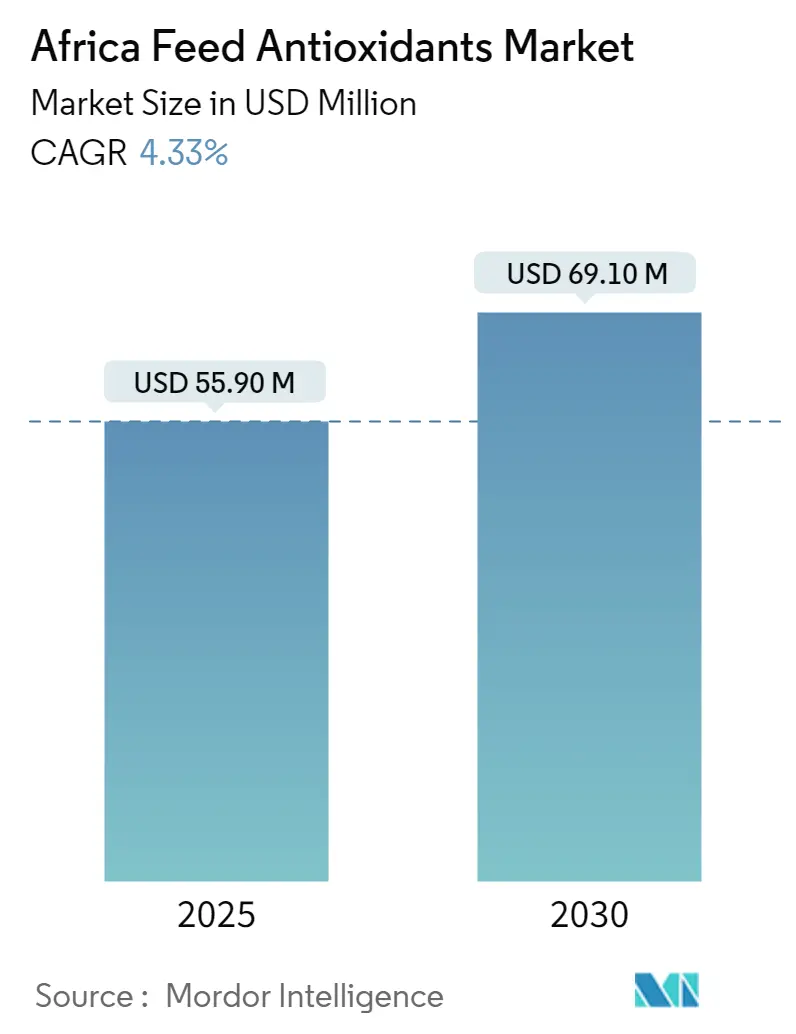
The Africa Feed Antioxidants Market size is estimated at USD 55.90 million in 2025, and is expected to reach USD 69.10 million by 2030, at a CAGR of 4.33% during the forecast period (2025-2030).
Feed antioxidants play a crucial role in stabilizing animal feed by preventing oxidation, preserving nutrients, and extending shelf life. This results in reduced feed wastage and improved feed efficiency. The growing recognition of antioxidants' benefits in enhancing animal health, preventing feed spoilage, and boosting livestock productivity is driving demand across Africa. The primary livestock sectors fueling this demand include poultry, cattle, swine, and aquaculture.
Poultry farming is particularly prominent in Nigeria, South Africa, and Egypt, where poultry meat and eggs are dietary staples. According to OECD‑FAO Agricultural Outlook data for 2024, the per capita consumption of poultry meat in Africa reached 3.8 kg in 2023, surpassing other meat types. Cattle farming is also significant, especially in East African nations such as Kenya, where dairy production is a vital sector. Aquaculture is also gaining importance in coastal and inland water regions, driven by increasing fish consumption across the continent.
Industrialization is particularly evident in countries like South Africa and Egypt, where investments in modern animal farming are increasing. This shift has led to higher feed requirements and greater demand for feed antioxidants to meet the needs of large livestock operations. Additionally, outbreaks of livestock diseases have highlighted the importance of feed additives, including antioxidants, in improving animal health and reducing mortality rates. For instance, Alltech's Agri-Food Outlook report for 2024 indicates that layer feed production declined by 10.8% in 2023 compared to 2022 due to disease outbreaks, particularly avian influenza, which can significantly impact producers financially and affect overall bird supply. Therefore, the disease outbreaks and need for increasing productivity are projected to drive the feed antioxidants demand in the region during the forecast period.
Africa Feed Antioxidants Market Trends and Insights
Increase in Compound Feed Production
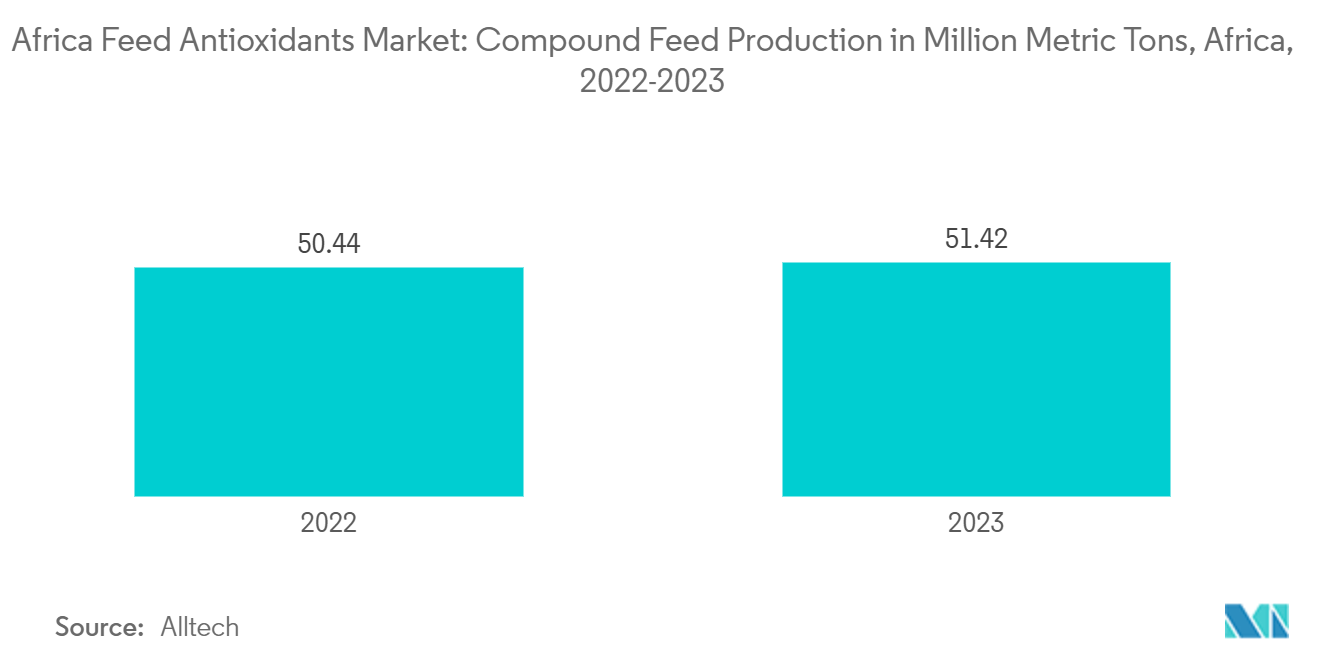
Africa is experiencing significant growth in its livestock and poultry sectors, driven by population increase, urbanization, and a rising preference for animal protein in diets. This growth is spurring the establishment of feed mills and the production of high-quality compound feeds. Nigeria, South Africa, Egypt, and Kenya are among Africa's leading compound feed producers. According to Alltech data, Nigeria produced 5.5 million metric tons of feed in 2023, positioning it as one of the largest producers in the region. In South Africa, feed manufacturers contribute to most feed sales and represent about 60 percent of the country's total animal feed production, reaching approximately 14.2 million metric tons in 2023, as the United States Department of Agriculture (USDA) reported. Expanding compound feed production necessitates using feed additives, including antioxidants, to enhance feed quality and shelf life.
Many African countries' hot and humid climate accelerates feed quality degradation, further driving the need for effective antioxidant solutions. Feed mill operators in East Africa have reported a growing preference for natural antioxidants. The expansion of livestock and poultry farming, along with the establishment of modern feed mills in Africa, is encouraging feed manufacturers to adopt advanced feed formulations that incorporate antioxidants such as butylated hydroxytoluene (BHT), butylated hydroxyanisole (BHA), ethoxyquin, and natural alternatives. According to Alltech, the number of feed mills in the region increased from 2,038 in 2022 to 2,188 in 2023. This rise in compound feed production and the expansion of feed mills in Africa is increasing the need to preserve feed quality, enhance animal health, and improve overall production efficiency, significantly driving the demand for feed antioxidants.
South Africa to Dominate the Feed Antioxidants Market
Antioxidants play a crucial role in extending the shelf life of feed additives and premixes. Animal feed components, including fats, proteins, and other organic compounds, are susceptible to oxidation when exposed to oxygen, light, and heat. Oxidized feed can negatively impact animal health and performance, making the prevention of feed oxidation essential. This necessity drives the demand for animal feed antioxidants, which is closely linked to the domestic consumption of meat and other animal products.
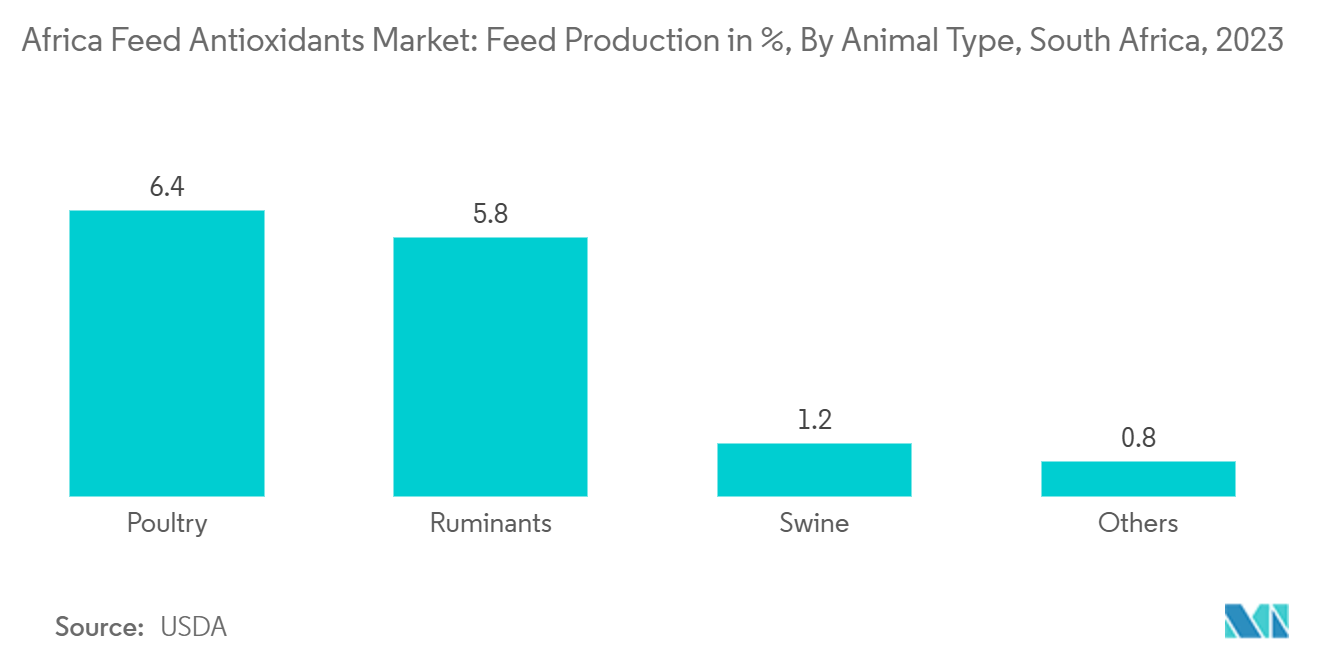
According to the United States Department of Agriculture (USDA), poultry meat constitutes 60 percent of total meat consumption in South Africa, with an annual per capita consumption of about 35kg in 2023. Poultry meat has become the primary protein source for most South Africans due to its affordability and widespread availability. In 2023, a significant outbreak of highly pathogenic Avian Influenza in the South African poultry industry affected local production and chicken meat prices, consequently influencing the use of feed antioxidants. The USDA reports that in 2023, the poultry segment accounted for 49.2% of overall feed production in South Africa. Broilers consumed 3.7 million metric tons of feed, while layers used 1.3 million metric tons. These segments are major users of feed antioxidants for effective storage and quality control of feeds.
The USDA notes that animal production is the largest agricultural sector in the country, contributing about 42 percent to total agricultural output in value terms. Commercial broiler meat production dominates the poultry meat industry, accounting for approximately more than 80 percent, with the remaining percent comprising subsistence farming production and spent hens. Following the poultry industry in importance are cattle production, dairy production, egg production, pigs, and sheep, all contributing to the demand for feed antioxidants. The commercial production of various animal food products is driving the use of feed additives, including antioxidants, in South Africa and projected to continue the growth owing to the demand for animal-sourced protein diets.
Competitive Landscape
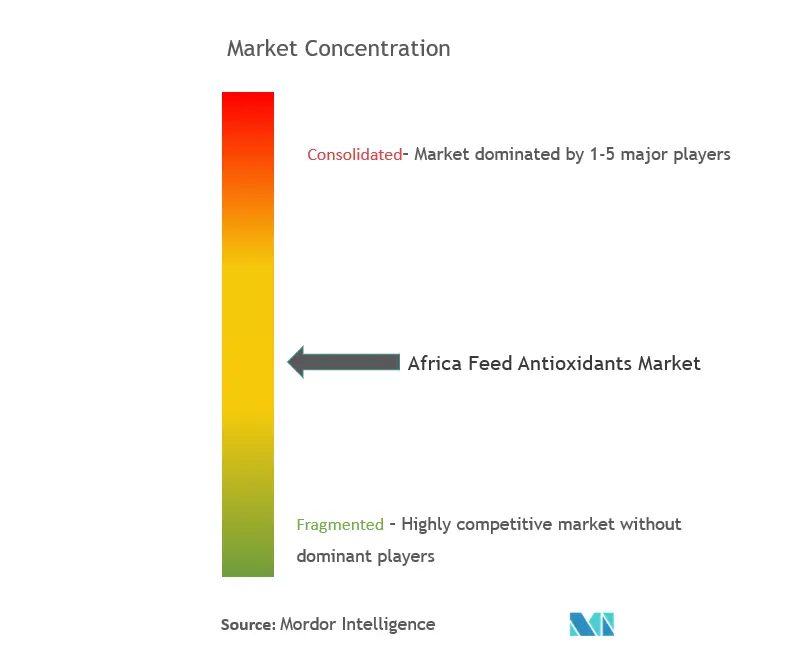
The African feed antioxidants market is moderately fragmented. The major players in the market are Alltech, Cargill, Incorporated, Nutreco NV, Adisseo, and Kemin Industries, occupying a significant share among others owing to their expansion, partnership, acquisition strategies, and product innovations.
Africa Feed Antioxidants Industry Leaders
-
Alltech
-
Cargill Incorporated
-
Nutreco NV
-
Kemin Industries
-
Adisseo
- *Disclaimer: Major Players sorted in no particular order
Recent Industry Developments
- January 2023: During the Dakar 2 Summit, hosted by the African Development Bank, many African nations, alongside industry partners, committed to scaling up investments in agricultural systems, including antioxidants to improve feed quality.
- 2022: Biovet SA invested in advanced antioxidant additives tailored for South African livestock, particularly targeting small to medium-sized farms. The company established relationships with South African poultry producers and showcased its natural feed antioxidants as alternatives to banned substances such as formaldehyde in South Africa.
Africa Feed Antioxidants Market Report Scope
Antioxidants inhibit oxidation, a chemical reaction that generates free radicals. These additives are incorporated into animal feeds to extend the shelf life of the feed by preventing oxidation in both finished feeds and within the digestive systems of animals. Africa Feed Antioxidants Market is segmented by Type (BHA, BHT, Citric Acid, Ethoxyquin, Propyl Gallate, Tocopherols, and Others), by Animal Type (Ruminant, Poultry, Swine, Aquaculture, and others) and by Country (South Africa, Egypt, Kenya, Algeria, and Rest of Africa). The report offers market size in volume in metric tons and value in USD million for all the above segments.
Type
| Butylated hydroxyanisole (BHA) |
| Butylated hydroxytoluene (BHT) |
| Citric Acid |
| Ethoxyquin |
| Propyl Gallate |
| Tocopherols |
| Others |
Animal Type
| Ruminant |
| Poultry |
| Swine |
| Aquaculture |
| Others |
Country
| South Africa |
| Egypt |
| Kenya |
| Algeria |
| Rest of Africa |
| Type | Butylated hydroxyanisole (BHA) |
| Butylated hydroxytoluene (BHT) | |
| Citric Acid | |
| Ethoxyquin | |
| Propyl Gallate | |
| Tocopherols | |
| Others | |
| Animal Type | Ruminant |
| Poultry | |
| Swine | |
| Aquaculture | |
| Others | |
| Country | South Africa |
| Egypt | |
| Kenya | |
| Algeria | |
| Rest of Africa |
Key Questions Answered in the Report
How big is the Africa Feed Antioxidants Market?
The Africa Feed Antioxidants Market size is expected to reach USD 55.90 million in 2025 and grow at a CAGR of 4.33% to reach USD 69.10 million by 2030.
What is the current Africa Feed Antioxidants Market size?
In 2025, the Africa Feed Antioxidants Market size is expected to reach USD 55.90 million.
Who are the key players in Africa Feed Antioxidants Market?
Alltech, Cargill Incorporated, Nutreco NV, Kemin Industries and Adisseo are the major companies operating in the Africa Feed Antioxidants Market.
What years does this Africa Feed Antioxidants Market cover, and what was the market size in 2024?
In 2024, the Africa Feed Antioxidants Market size was estimated at USD 53.48 million. The report covers the Africa Feed Antioxidants Market historical market size for years: 2019, 2020, 2021, 2022, 2023 and 2024. The report also forecasts the Africa Feed Antioxidants Market size for years: 2025, 2026, 2027, 2028, 2029 and 2030.
Africa Feed Antioxidants Market Report
Statistics for the 2025 Africa Feed Antioxidants market share, size and revenue growth rate, created by Mordor Intelligence™ Industry Reports. Africa Feed Antioxidants analysis includes a market forecast outlook for 2025 to 2030 and historical overview. Get a sample of this industry analysis as a free report PDF download.