

The veterinary industry is undergoing its first major redesign since the establishment of modern clinics. The in-person appointment, once the cornerstone of practice economics, is being reshaped into a hybrid model that combines digital accessibility with hands-on expertise. This shift is driven by three converging forces: consumer demand for convenience, technological maturity, and economic pressure. Pet owners now expect around-the-clock access and transparency. Technology has made this feasible, while rising operational costs have made it necessary.
According to the Veterinary Telehealth Market report, the global market is projected to grow at a compound annual growth rate of about 19 percent through 2030, reaching nearly USD 673.25 million in 2030. This growth reflects more than higher adoption; it marks a structural shift in how veterinary care is delivered, monetized, and retained across a pet’s lifetime.
An internal analysis of more than 200 veterinary practices shows that hybrid models generate roughly one-third higher total revenue than traditional visit-only practices, largely due to subscription-based care and remote engagement.
Strategic Cue: Profitability in veterinary care is becoming less about geography and more about continuity.
1. The Hybrid Practice: From Reactive to Proactive
A modern veterinary practice now functions as a network of digital and physical touchpoints, rather than a single clinic.
Core components of the hybrid model include:
- Telehealth as the First Point of Contact: Virtual consultations now manage a large share of initial client interactions, creating recurring advisory revenue while improving triage efficiency.
- Remote Monitoring: Wearables and home diagnostics provide continuous health data, enabling earlier intervention and chronic-care management. The Pet Wearables Market Analysis estimates the market at USD 3.14 billion in 2024, expected to reach USD 6.67 billion by 2030.
- AI-Assisted Diagnostics: Automation in radiology and pathology improves turnaround times and diagnostic consistency, helping veterinarians focus on complex cases.
- Integrated Health Records: Unified systems link patient data, prescriptions, and communication, ensuring seamless continuity of care.
The American Veterinary Medical Association (2024) reports that clinics using telehealth tools achieve an average 15 percent improvement in efficiency, primarily from handling non-urgent queries virtually. Clinics adopting full hybrid workflows also record higher client retention through continuous engagement and preventive care.
Insight: Hybrid care does not replace the veterinarian. It redefines where their time creates value.
2. The Economics of Reinvention
Technology has moved from a support tool to the economic backbone of the modern veterinary model.
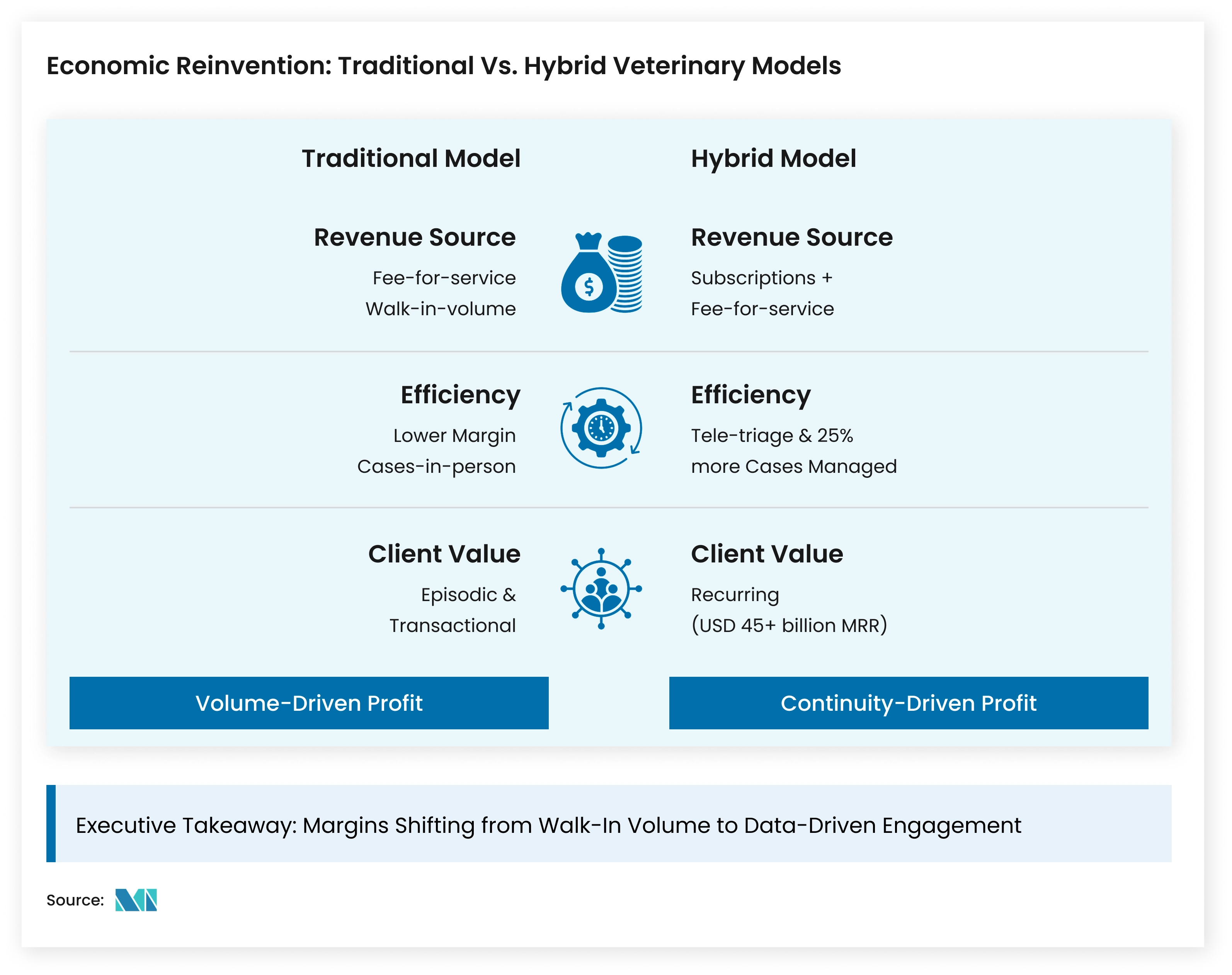
- From Visits to Subscriptions: Many clinics now combine fee-for-service revenue with wellness plans that include teleconsultations, preventive monitoring, and periodic virtual check-ins. These plans typically add USD 45 to 85 in monthly recurring revenue per client.
- Efficiency and Throughput: Tele-triage filters low-margin cases and reserves in-person time for diagnostics and surgery. Hybrid workflows enable clinics to manage up to 25 percent more cases without increasing staff.
- Cost of Adoption: Implementing hybrid systems requires software, data integration, and training investments. Setup costs range from USD 15,000 to 25,000 for small clinics and can exceed USD 200,000 for larger networks. Most practices recover their investment within 12 to 24 months through recurring income and operational efficiencies.
Executive Takeaway: Margins are shifting from walk-in volume to subscription and data-driven engagement.
3. Strategic Shifts Shaping the Veterinary Landscape
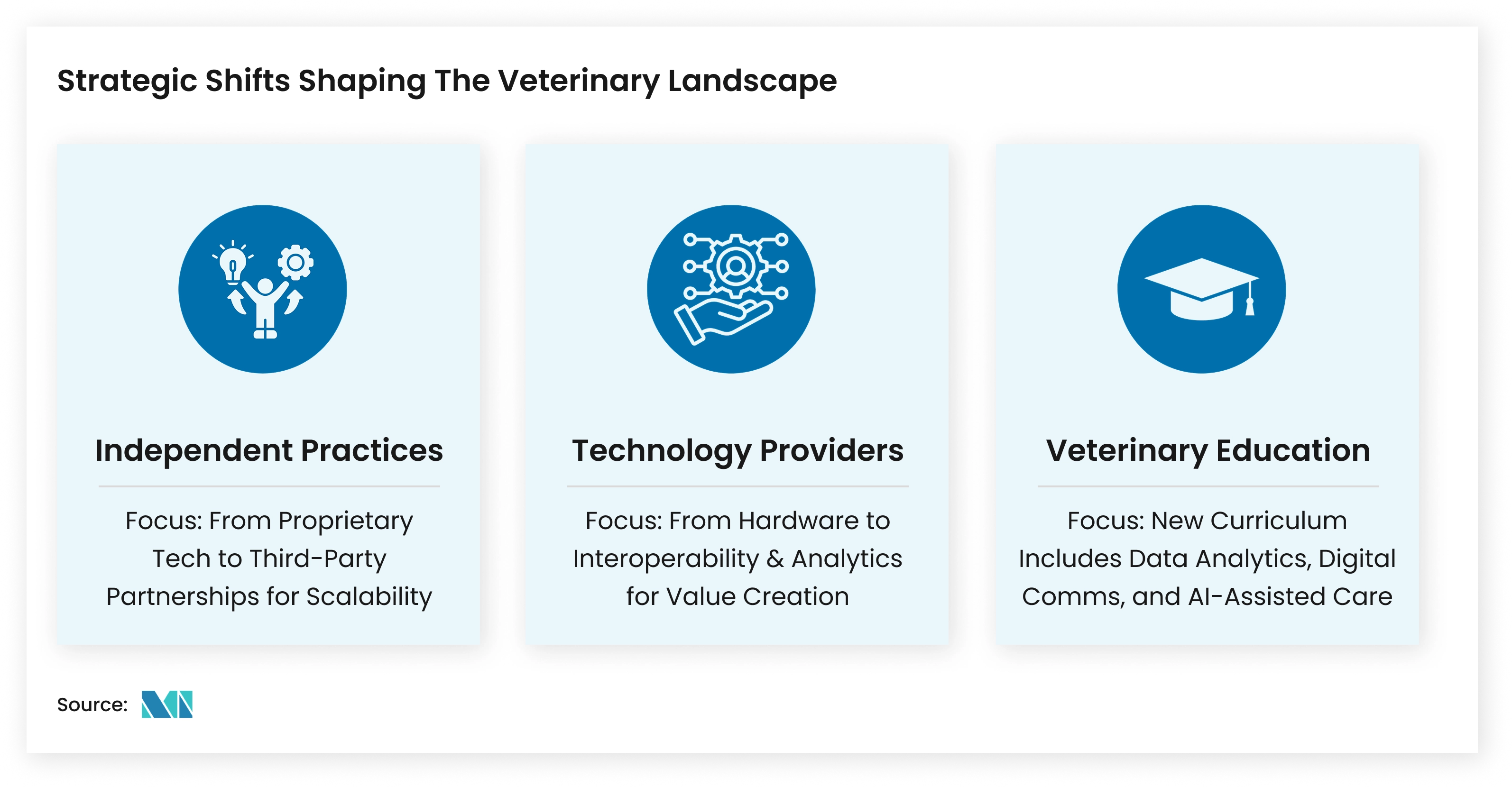
Independent Practices
Building proprietary technology is costly and often isolates smaller clinics from shared ecosystems. Most successful hybrid practices rely on third-party technology partnerships, which offer scalability and integrated compliance support.
Technology Providers
Hardware differentiation is declining. The next phase of value lies in interoperability and analytics. The Pet Technology Transformation Study projects the global pet technology market to reach USD 23.88 billion by 2030, with integration platforms capturing a growing share.
Veterinary Education
Professional training is evolving. Roughly one in three veterinary programs now includes coursework in data analytics, digital communication, or AI-assisted care, reflecting the profession’s shift toward continuous, data-driven medicine.
Strategic Cue: Future veterinarians will combine medical judgment with data interpretation as core skills.
4. The New Clinic: High-Touch, High-Value
The physical clinic remains essential but is being redefined as the procedural and diagnostic hub of a connected ecosystem.
AI, telehealth, and remote monitoring maintain patient relationships between visits, turning episodic appointments into continuous engagement.
Hybrid practices record client-retention rates near 85 percent, compared to 62 percent for traditional clinics. Remote-monitoring programs also reduce emergency visits by more than 20 percent while adding predictable subscription income.
Perspective: The clinic of tomorrow will handle fewer walk-ins yet manage more ongoing patients, creating greater lifetime value per client.
Closing Takeaway
Veterinary medicine is shifting from a transactional service to an integrated, data-enabled ecosystem.
Clinics that adopt hybrid operations early are redefining both patient care and business resilience.
By 2030, about 58 percent of veterinary practices are projected to operate hybrid models, signaling a structural transition from episodic treatment to continuous engagement.
The defining advantage will belong to those that transform technology into trust, using data not only to diagnose but to deepen relationships and deliver measurable wellness outcomes.
The walk-in era built veterinary care around access. The hybrid era is rebuilding it around connection.
Want deeper insights on how hybrid care is transforming veterinary practices? Explore our latest Veterinary Services Market Report.