
Wearable Medical Device Software Market Size and Share
Market Overview
| Study Period | 2020 - 2031 |
|---|---|
| Market Size (2026) | USD 10.40 Billion |
| Market Size (2031) | USD 31.59 Billion |
| Growth Rate (2026 - 2031) | 24.88 % |
| Fastest Growing Market | Asia-Pacific |
| Largest Market | North America |
| Market Concentration | Medium |
Major Players *Disclaimer: Major Players sorted in no particular order Image © Mordor Intelligence. Reuse requires attribution under CC BY 4.0. | |
Wearable Medical Device Software Market Analysis by Mordor Intelligence
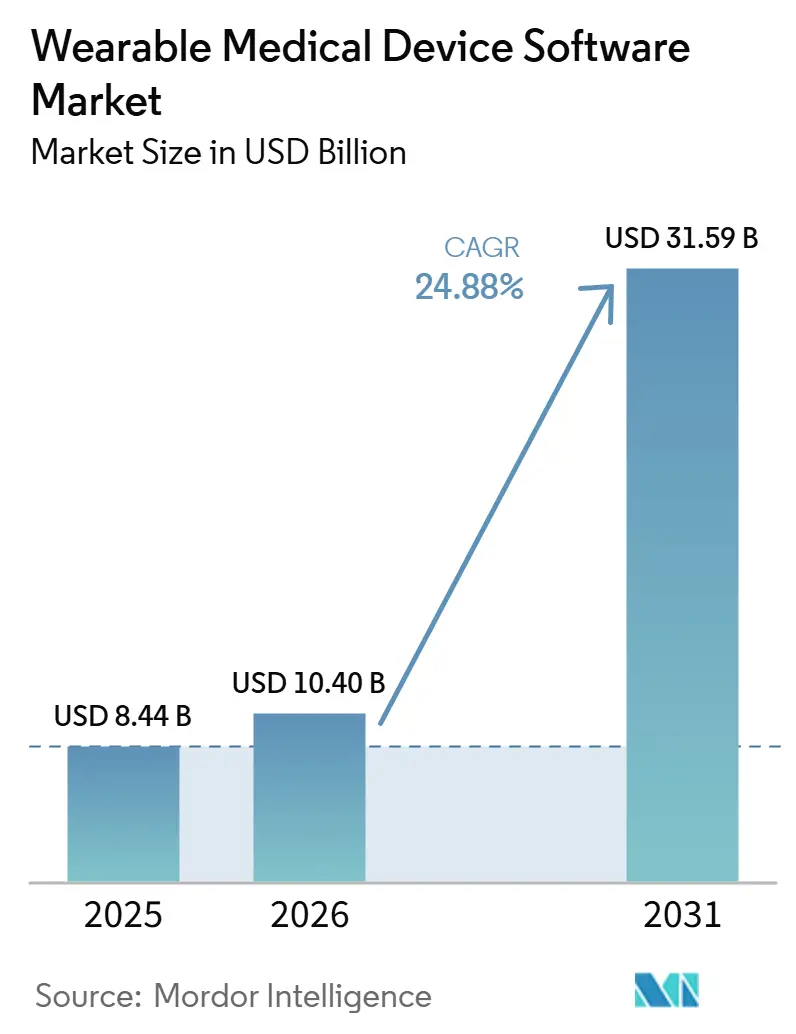
The Wearable Medical Device Software Market size is projected to be USD 8.44 billion in 2025, USD 10.40 billion in 2026, and reach USD 31.59 billion by 2031, growing at a CAGR of 24.88% from 2026 to 2031.
The wearable medical device software market is expanding because software now captures more clinical and commercial value than hardware, especially as sensors and device formats become easier to replicate across categories. Demand is being reinforced by broader use of digital monitoring in chronic care, where payers and providers increasingly need continuous data, timely interventions, and measurable outcomes instead of episodic readings. North America led with 39.1% share in 2025, while the Asia Pacific is projected to grow at 26.2% through 2031, which shows that the wearable medical device software market is supported by both mature reimbursement systems and fast-scaling health digitization programs. Competition remains moderate to high because established medtech companies are deepening software capabilities, while software-focused firms are building proprietary analytics and care workflows around sensor data. The main opening for vendors in the wearable medical device software market lies in reducing alert noise, easing privacy compliance, and improving integration with clinical systems, because those factors still limit adoption at scale.
Key Report Takeaways
By component, software held 78.2% of the segment in 2025, and the supplied draft did not provide a separate CAGR for services.
By device type, smartwatches held 31.2% of the segment in 2025, while CGM software-enabled devices are projected to grow at a 26.2% CAGR through 2031.
By application, remote patient monitoring accounted for 27.6% of the segment in 2025, while chronic disease management is expected to advance at a 26.1% CAGR through 2031.
By deployment mode, cloud-based deployment held 62.4% of the segment in 2025 and is also forecast to expand at a 25.4% CAGR through 2031.
By end user, individual consumers held 34.5% of the segment in 2025, while home care settings are projected to grow at a 25.2% CAGR through 2031.
By functionality, monitoring and alerting accounted for 29.4% of the segment in 2025, while clinical decision support is forecast to rise at a 25.5% CAGR through 2031.
By connectivity, Bluetooth held 46.6% of the segment in 2025, while hybrid connectivity is expected to grow at a 25.5% CAGR through 2031.
By geography, North America held 39.1% of the wearable medical device software market share in 2025, while Asia Pacific is projected to expand at a 26.2% CAGR through 2031.
Note: Market size and forecast figures in this report are generated using Mordor Intelligence’s proprietary estimation framework, updated with the latest available data and insights as of January 2026.
Global Wearable Medical Device Software Market Trends and Insights
Drivers Impact Analysis*
| Driver | (~) % Impact on CAGR Forecast | Geographic Relevance | Impact Timeline |
|---|---|---|---|
| Rising Demand For Remote Patient Monitoring And Continuous Care | +5.2% | Global, concentrated in North America and Europe | Short term (≤ 2 years) |
| Expansion Of Chronic Disease Management Programs | +4.8% | Global, with early gains in North America, Europe, and APAC | Medium term (2-4 years) |
| Greater Clinical Acceptance Of Software-Driven Vital Sign Interpolation | +3.5% | North America & EU, spill-over to APAC | Medium term (2-4 years) |
| Integration Of AI-Enabled Alerting And Risk Scoring In Wearables | +4.2% | Global, concentrated in North America, Japan, and South Korea | Medium term (2-4 years) |
| Growth In Reimbursement And Value-Based Care Adoption For Digital Monitoring | +4.5% | North America primary, growing influence in EU and APAC | Short term (≤ 2 years) |
| Increasing Interoperability With Electronic Health Records And Care Platforms | +3.8% | North America & EU, with spill-over to APAC and MEA | Medium term (2-4 years) |
| Source: Mordor Intelligence | |||
Rising Demand For Remote Patient Monitoring Redefines Care Economics
The wearable medical device software market is moving further toward continuous monitoring, because providers now need ongoing patient visibility instead of isolated readings collected during facility visits. Remote patient monitoring accounted for 27.6% of the application segment in 2025, which shows that the installed base is already large enough to support recurring software revenue rather than one-time device sales. This shift matters because software platforms manage data capture, alerts, reporting, and patient communication across episodes of care, while the underlying hardware is becoming less differentiated over time. Consumer wellness demand is also feeding this transition, but the stronger commercial signal comes from care programs that use wearable data inside structured clinical workflows. As a result, the wearable medical device software market is increasingly rewarding vendors that can support continuous care at scale without adding friction for clinicians or patients.
Expansion Of Chronic Disease Management Programs Drives Sustained Software Spend
The wearable medical device software market is benefiting from chronic disease programs that now place measurable value on continuous monitoring for diabetes, chronic kidney disease, cardiovascular disease, musculoskeletal pain, and behavioral health. The CMS ACCESS Model[1]Centers for Medicare & Medicaid Services, “ACCESS (Advancing Chronic Care with Effective, Scalable Solutions) Model,” CMS Innovation Center began enrolling Medicare beneficiaries on July 5, 2026, and its payment design ties reimbursement to patient outcomes rather than service volume, which changes how providers evaluate wearable software investments. That structure makes software more central to care delivery, because health systems need tools that can surface deterioration early, guide intervention timing, and document patient progress over time. It also strengthens long-term demand, since chronic disease programs require ongoing engagement, stable data flows, and strong reporting discipline rather than short usage cycles. The wearable medical device software market therefore stands to gain from care models that treat software as a clinical operating layer instead of a support tool.
Integration Of AI-Enabled Alerting And Risk Scoring Unlocks Clinical Utility
The wearable medical device software market is gaining from the growing use of AI models that turn raw physiological readings into predictions, risk signals, and more useful care prompts. A 2025 review in npj Digital Medicine[2]Shilo Sapir et al., “Integration of Artificial Intelligence and Wearable Technology in Diabetes and Prediabetes Management,” npj Digital Medicine found that deep learning models accounted for 45% of published AI wearable diabetes studies, and 60% of models achieved clinically acceptable glucose prediction error below 15 mg/dL. That evidence matters because it shows wearable software is moving beyond dashboards and toward more actionable outputs that can support real intervention decisions. It also raises the value of software layers that combine device data, patient history, and workflow logic in one environment rather than leaving interpretation to separate tools. The wearable medical device software market is therefore seeing AI not as an add-on feature, but as a practical way to improve the usefulness of continuous data.
Growth In Reimbursement And Value-Based Care Adoption Accelerates Market Entry
The wearable medical device software market is being helped by reimbursement models that now place greater weight on documented outcomes, care coordination, and ongoing monitoring in chronic care settings. When payment depends on measurable results, providers have stronger reason to adopt software that supports adherence, early intervention, and auditable patient tracking. This changes product priorities for vendors, because regulatory readiness, traceable data architecture, and privacy controls become revenue-linked capabilities rather than optional enhancements. It also reduces some of the hesitation that used to delay adoption, especially when clinical teams needed a clearer path from deployment to reimbursement. The wearable medical device software market is therefore becoming easier to enter for companies that can align product design with both clinical workflows and payer expectations.
Restraints Impact Analysis*
| Restraint | (~) % Impact on CAGR Forecast | Geographic Relevance | Impact Timeline |
|---|---|---|---|
| Limited Clinical Validation Across Diverse Patient Populations | -2.8% | Global, most acute in emerging markets and MEA | Medium term (2-4 years) |
| Data Privacy, Security, And Consent Compliance Burden | -2.5% | North America & EU (HIPAA, GDPR), expanding to APAC | Short term (≤ 2 years) |
| Fragmented Device And Software Ecosystems Slowing Integration | -2.3% | Global | Medium term (2-4 years) |
| Alert Fatigue And Workflow Disruption For Care Teams | -1.8% | Global, most acute in high-volume hospital and RPM settings | Short term (≤ 2 years) |
| Source: Mordor Intelligence | |||
Alert Fatigue And Workflow Disruption Constrain Clinical Adoption
The wearable medical device software market still faces a serious adoption barrier in the form of alert fatigue, especially in high-volume monitoring programs where threshold-based systems generate too many low-value notifications. A 2026 study of NHS remote patient monitoring deployments reported false positive alert rates of 74% to 99%, which contributed to clinical desensitization and weaker response quality over time. When care teams receive more alerts than they can reasonably triage, extra monitoring data stops creating value and can even raise legal and operational risk. Vendors are responding by introducing patient-specific baselines and probability-based scoring, but health systems still have to decide how much model risk they are willing to accept. The wearable medical device software market will keep facing resistance in large deployments until software can reduce noise without missing clinically important deterioration signals.
Data Privacy, Security, And Consent Compliance Burden Introduces Structural Cost
The wearable medical device software market also faces structural pressure from privacy, security, and consent obligations that are difficult to standardize across jurisdictions. A 2025 study on wearable-to-FHIR integration showed that mapping Garmin-generated health data into FHIR repositories required GDPR-specific consent workflows that varied across EU member states. This matters because cloud-first software architectures are easier to scale commercially, but they become more expensive and harder to manage when data residency and consent rules differ by country. Smaller vendors feel that burden most, since compliance spending can rise before subscription revenue reaches efficient scale. The wearable medical device software market therefore, continues to favor companies that can absorb compliance costs while still offering deployment flexibility to providers.
*Our forecasts treat driver/restraint impacts as directional, not additive. The impact forecasts reflect baseline growth, mix effects, and variable interactions.
Segment Analysis
By Component: Software Platforms Hold The Core Clinical And Commercial Value
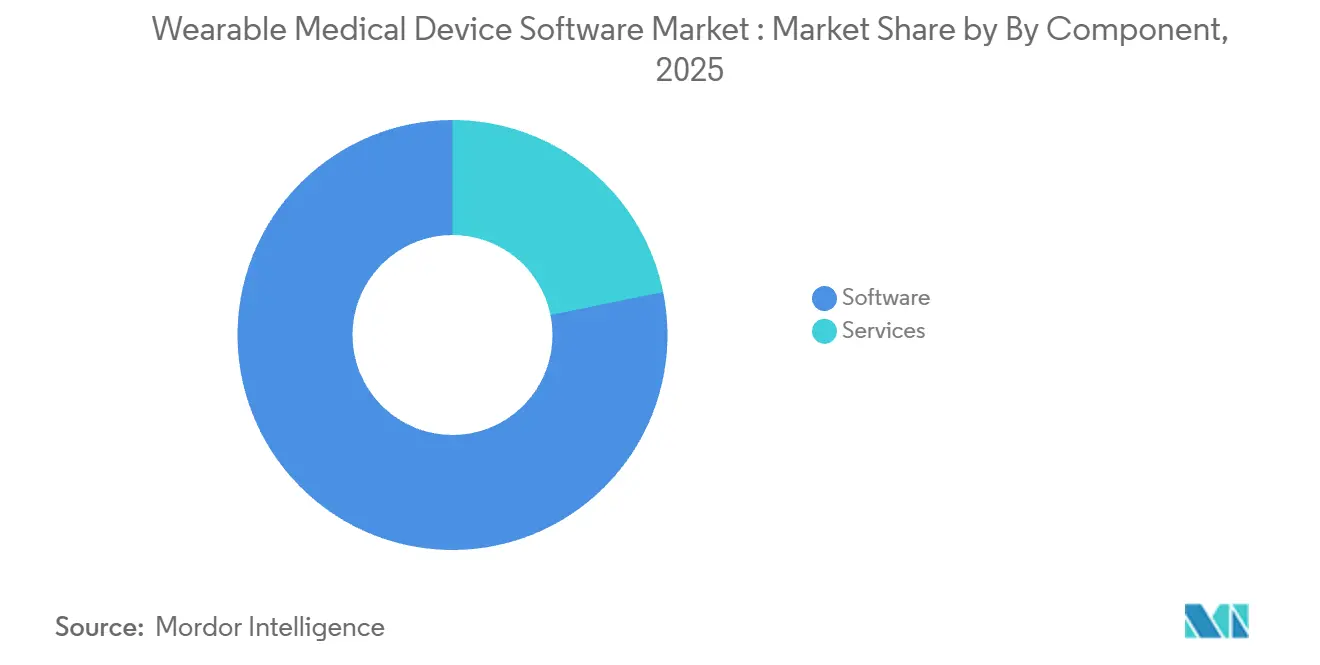
Software accounted for 78.2% of the segment in 2025, which shows that the wearable medical device software market is already centered on applications, analytics, middleware, and data management rather than on hardware alone. This concentration reflects a broad shift in value capture, where sensors and form factors are becoming easier to replicate but clinical interpretation and workflow integration remain harder to commoditize. Mobile applications, visualization tools, device management layers, integration software, and data platforms are no longer acting as separate point tools in many deployments. Instead, buyers increasingly prefer integrated stacks that can collect data, analyze it, route it into care systems, and support patient engagement from a single environment. Software held 78.2% of the wearable medical device software market share in 2025, which underlines how much of the category’s economics now depend on recurring digital functionality rather than device replacement cycles.
Services made up the remaining portion of the segment and continue to benefit from implementation complexity, especially when enterprise deployments span more than one EHR or care platform. Support and maintenance remain relevant because clinical monitoring programs cannot tolerate interrupted connectivity, unstable reporting, or incomplete patient records across care teams. Training and consulting also remain important, since clinician adoption often depends on workflow design, escalation rules, and clear user responsibilities rather than technology alone. The middleware layer is especially important in the wearable medical device software industry because provider systems increasingly expect standardized data exchange that can fit into existing digital records. VitalConnect’s USD 100 million financing in February 2025 reinforced that investors still see durable revenue potential in software-led wearable monitoring platforms that combine biosensors, analytics, and cloud delivery[3]VitalConnect, “VitalConnect Secures USD 100 Million in Financing,” VitalConnect.


By Device Type: Smartwatches Lead Today While CGM Software Accelerates Fastest
Smartwatches held 31.2% of the device type segment in 2025, and their lead reflects both a large installed base and wider clinical acceptance for ECG, blood oxygen, activity, and related monitoring functions. That installed base gives software vendors a broad distribution channel, because many users already carry the hardware needed for basic digital monitoring. The wearable medical device software market continues to benefit from this dynamic because smartwatch software can scale quickly when new features are accepted by consumers and providers at the same time. At the same time, device credibility matters, and that favors platforms with clinically meaningful outputs rather than simple wellness tracking. Smartwatches remain the largest category, but the strongest expansion is occurring where continuous sensor data supports higher clinical relevance and more frequent intervention.
CGM software-enabled devices are projected to grow at a 26.2% CAGR through 2031, and that pace reflects stronger links between data capture, algorithmic interpretation, and treatment action. Diabeloop’s DBLG2 system, which received CE marking[4]Diabeloop, “DBLG2, FDA-Cleared and CE-Marked Advanced AID Algorithm,” Diabeloop in August 2025 and FDA clearance in December 2025, launched commercially in Germany in July 2026 and reported real-world Time in Range above 77% in Kaleido user data. Patches, standalone ECG monitors, smart bands, smart clothing, and hearables still serve important clinical niches, particularly in arrhythmia detection, low-burden wear, and specialty monitoring. The 2025 scientific literature also supports the strength of CGM-led software, since 70% of published AI wearable diabetes studies relied on CGM as the primary sensing modality. In practical terms, the wearable medical device software market is seeing device leadership shift toward categories where software can influence decisions, not just display readings.
By Application: RPM Anchors Revenue While Chronic Disease Management Expands Fastest
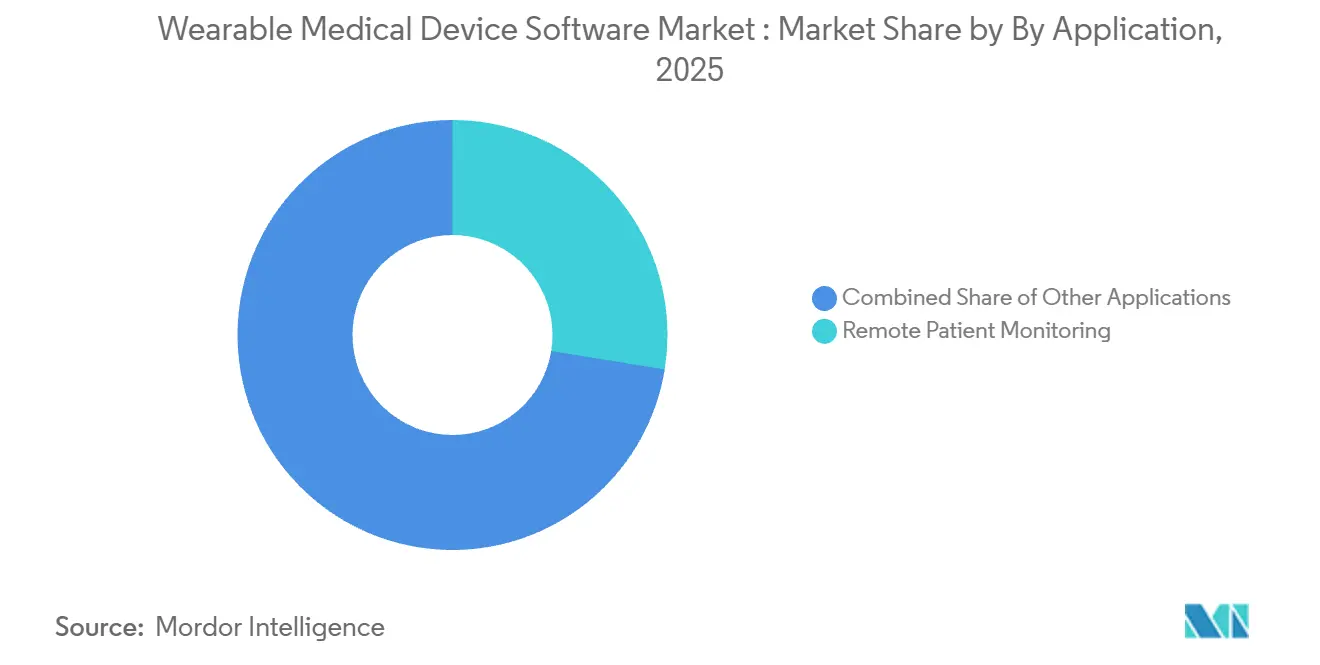
Remote patient monitoring accounted for 27.6% of the application segment in 2025, which makes it the largest current use case in the wearable medical device software market. That position reflects clear provider demand for continuous low-acuity monitoring that can reduce unnecessary hospital visits, extend oversight beyond clinics, and support earlier escalation when risk rises. RPM also fits well with the software-first structure of the category, because value depends on data capture, alerts, dashboards, and communication workflows rather than only on device ownership. Remote patient monitoring accounted for 27.6% of wearable medical device software market share in 2025, which confirms that the strongest base of adoption remains tied to organized care delivery. Fitness and wellness monitoring still generates meaningful volume, but clinical monetization remains narrower when outputs do not connect to validated care pathways or reimbursable programs.
Chronic disease management is forecast to grow at a 26.1% CAGR through 2031, and that strength is closely tied to conditions where repeated measurements directly influence long-term care plans. The CMS ACCESS Model covers diabetes, chronic kidney disease, cardiovascular disease, musculoskeletal pain, and behavioral health, which aligns closely with the kinds of patient journeys where wearable software can influence outcomes over time. Post-acute care monitoring is also gaining traction as health systems try to reduce readmissions after discharge, while medication adherence and sleep or stress tracking are finding broader relevance in behavioral health settings. AI-enabled glucose forecasting adds another layer of value here, because predictive models can move software from retrospective logging toward prospective intervention. The wearable medical device software market therefore shows its strongest application growth where monitoring becomes part of a longitudinal care model rather than a standalone data service.
By Deployment Mode: Cloud Remains Dominant While Hybrid Designs Support Regulated Environments
Cloud-based deployment held 62.4% of the segment in 2025, and it is also projected to grow at a 25.4% CAGR through 2031, which makes it both the largest and fastest-growing deployment model. That result reflects the operating needs of the wearable medical device software market, where continuous ingestion, real-time analytics, multi-device synchronization, and remote access are central to product performance. Cloud delivery also helps vendors update algorithms, improve interfaces, and support larger patient populations without forcing each provider to maintain separate infrastructure. Cloud-based deployment represented 62.4% of the wearable medical device software market size in 2025, which shows how strongly the category favors scalable software architecture. For providers managing distributed care, cloud environments also make it easier to coordinate data flows across patients, clinicians, and support staff without relying on fragmented local systems.
Hybrid deployment continues to gain attention in regulated settings where organizations need more control over where identifiable physiological data is stored and processed. In parts of Europe, providers are building architectures that process raw data locally and then transmit de-identified analytics to cloud platforms, which helps balance functionality and compliance. On-premises environments still persist in some large hospital networks and government health systems where cybersecurity policies, legacy infrastructure, or local governance limit full cloud adoption. Procurement standards also remain demanding, since providers increasingly expect cloud-hosted platforms to meet security and interoperability requirements before deployment decisions move forward. Within the wearable medical device software market, deployment strategy is no longer only a technical decision, because it now affects speed of scaling, regulatory fit, and long-term margin structure.
By End User: Consumer Adoption Leads While Home Care Builds The Fastest Momentum
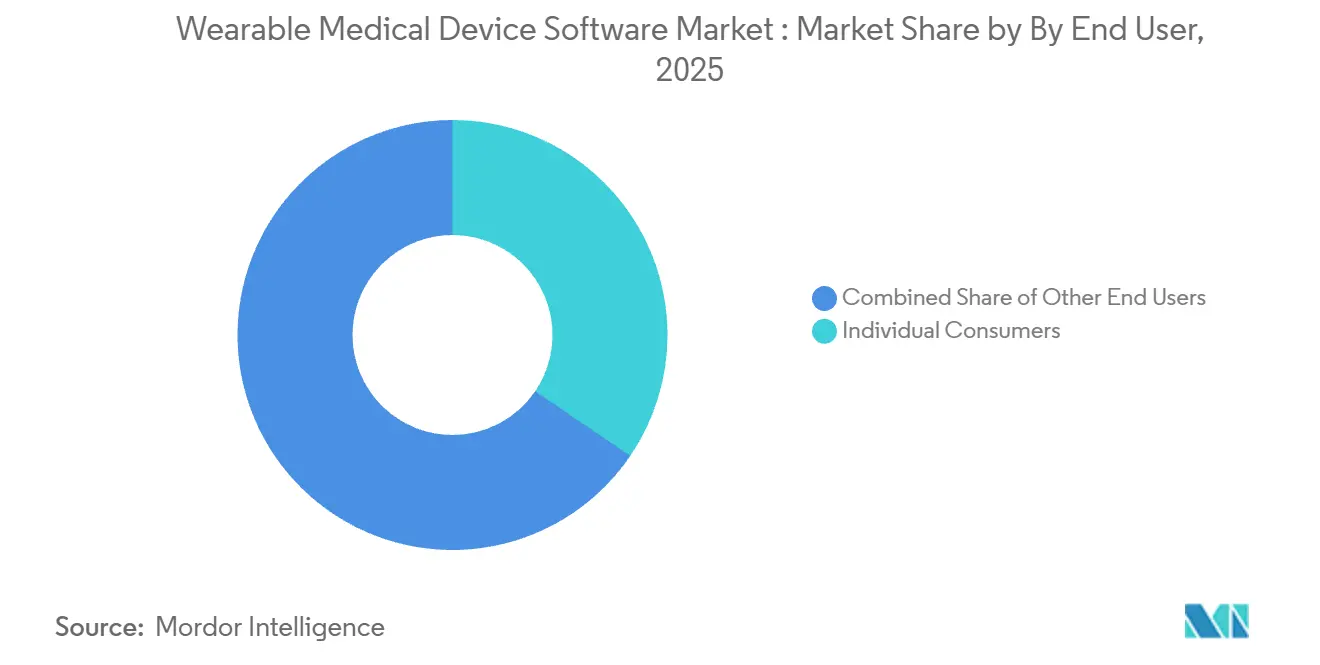
Individual consumers held 34.5% of the end-user segment in 2025, which means direct user demand still provides the largest installed base in the wearable medical device software market. That leadership reflects broader access to connected monitoring tools, rising familiarity with digital health interfaces, and growing willingness to track ongoing conditions outside conventional care sites. Consumer participation matters because it creates volume, brand recognition, and large data pools that can support later movement into more clinical use cases. It also helps software vendors refine usability, retention, and engagement features in real-world settings before provider scale-up. The consumer base therefore remains important even as the category becomes more clinically oriented.
Home care settings are projected to expand at a 25.2% CAGR through 2031, and that pace reflects the wider movement of chronic condition management into the patient’s home. This shift is practical as well as clinical, because long-duration care is often easier to sustain when software supports routine monitoring without repeated facility visits. Hospitals and clinics still account for meaningful demand, especially for cardiac telemetry patches and supervised continuous monitoring programs. Long-term care facilities and ambulatory centers are also adopting more remote oversight tools as staffing constraints push operators toward technology-assisted monitoring. In the wearable medical device software market, home care is emerging as the growth center because it combines persistent monitoring needs, cost pressure, and strong demand for simpler care delivery models.
By Functionality: Monitoring And
By Functionality: Monitoring And Alerting Leads While Clinical Decision Support Gains Value
Monitoring and alerting held 29.4% of the functionality segment in 2025, which reflects the foundational role of notification systems across the current wearable medical device software market. Most deployments still begin with data capture and threshold-based alerts, because those features are the most direct way to turn continuous signals into actionable workflow prompts. That installed base supports volume, but it also reveals the limits of simple alert logic when programs become larger and more clinically demanding. Data analytics and reporting, patient engagement and coaching, and device synchronization all build on the same core requirement, which is turning raw data into usable operational output. Monitoring and alerting therefore remains the biggest category today because every other functionality depends on reliable signal capture and message delivery.
Clinical decision support is projected to grow at a 25.5% CAGR through 2031, and that pace reflects demand for software that can do more than display measurements. The wearable medical device software market is moving toward functions that interpret change over time, combine multiple inputs, and help clinicians prioritize which patients need attention first. This raises the commercial value of software because products that support recommendations or risk ranking are easier to price as subscriptions than products that only store data. Evidence from diabetes applications supports this progression, since predictive AI models are already showing clinically acceptable performance in glucose forecasting. For the wearable medical device software market, the next phase of functionality growth will come from tools that reduce clinical effort while improving confidence in the meaning of continuous patient data.
By Connectivity: Bluetooth Leads The Installed Base While Hybrid Options Expand With Care Complexity
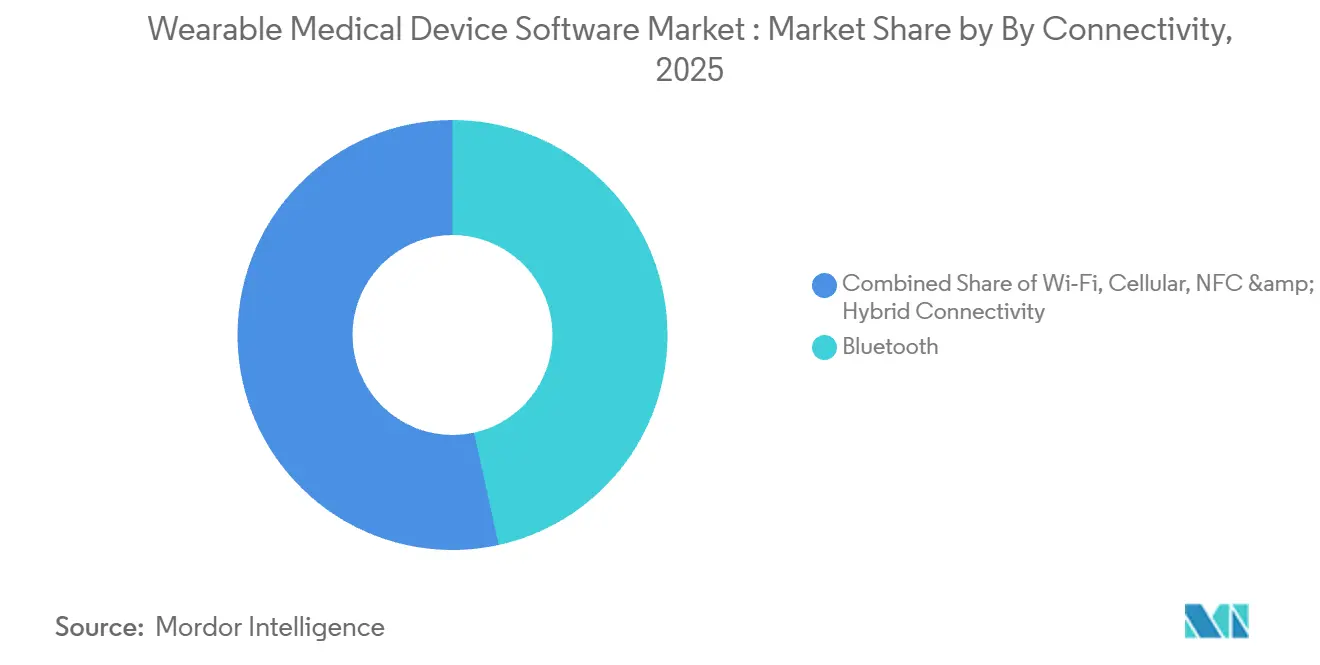
Bluetooth accounted for 46.6% of the connectivity segment in 2025, which keeps it as the most common communication layer in the wearable medical device software market. Its lead reflects low power consumption, broad compatibility with consumer devices, and a mature role in linking sensors, patches, and applications during everyday monitoring. Bluetooth is especially useful when vendors want to minimize hardware burden and make software accessible through smartphones or tablets that patients already use. That simplicity supports adoption, particularly in consumer and home care settings where extra equipment can reduce retention and compliance. Bluetooth therefore remains the default option where convenience and battery efficiency matter more than always-on independent transmission.
Hybrid connectivity is forecast to grow at a 25.5% CAGR through 2031, because enterprise deployments increasingly need data continuity across changing care locations and network conditions. The wearable medical device software market is responding by combining Bluetooth, cellular, WiFi, and NFC in ways that allow devices to shift among environments without losing reporting continuity. WiFi is useful in stable home settings, while cellular remains important for devices that must transmit data without depending on patient phone proximity. NFC continues to serve secure pairing and short-range transfer roles, even though it is not central to continuous bandwidth demand. In the wearable medical device software industry, connectivity choices increasingly influence not just technical performance, but also patient adherence, workflow reliability, and the economics of remote care programs.
Geography Analysis
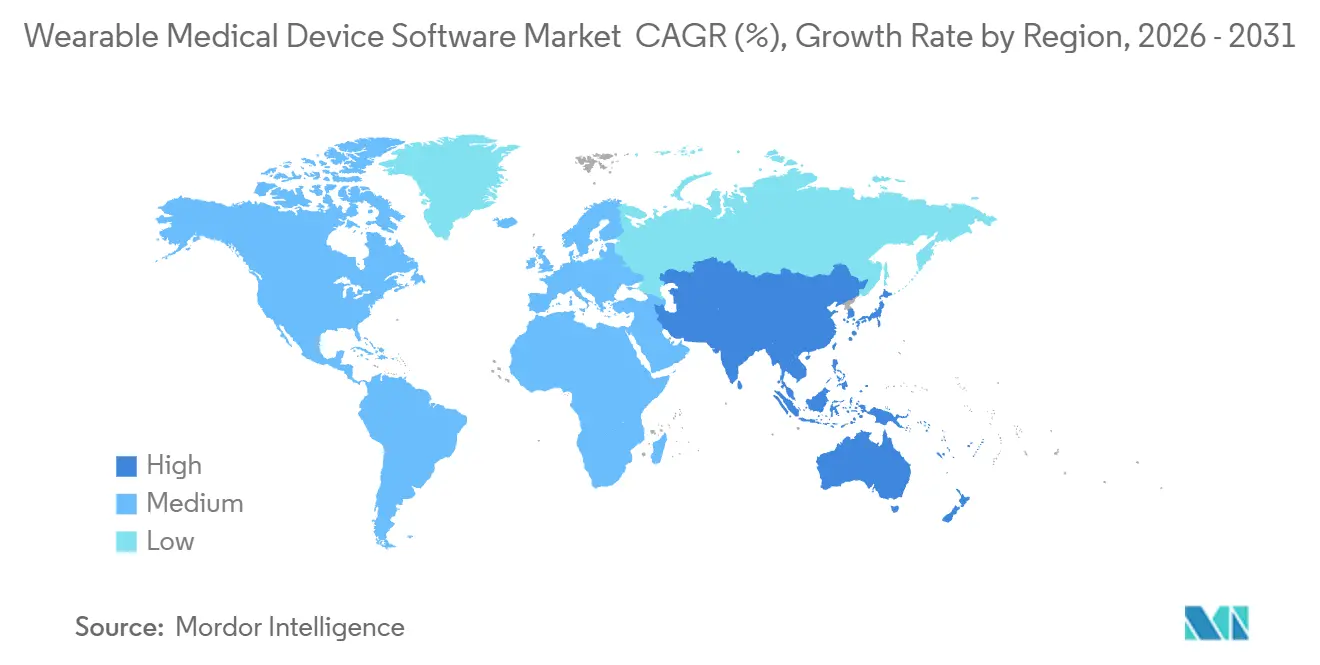
North America held 39.1% of the geographic segment in 2025, which made it the largest regional block in the wearable medical device software market. The United States anchors that position because it combines large payer capacity, structured digital health reimbursement pathways, and broad provider readiness for remote monitoring. The CMS ACCESS Model has strengthened this environment by tying payment to outcomes in chronic care categories that align closely with wearable monitoring use cases. Canada and Mexico remain smaller contributors, but both continue to expand hospital-based remote monitoring adoption as digital care capabilities widen. North America represented 39.1% of the wearable medical device software market size in 2025, and that scale gives vendors room to balance enterprise contracts with direct user subscription models.
Europe holds the second-largest regional position in the wearable medical device software market, with Germany, the United Kingdom, and France acting as the primary country markets. Germany stands out because the DiGA pathway offers a faster route for digital health applications to reach reimbursable use, which supports commercial experimentation and software uptake. Diabeloop’s July 2026 commercial launch of the DBLG2 system in Germany illustrates how regulatory compliance and commercialization can reinforce one another when clinical data is strong. The United Kingdom continues to expand trust-level remote monitoring programs, but the high false positive alert rates reported in NHS deployments show that software quality still shapes procurement choices. Across Europe, GDPR obligations for sensitive health data continue to influence cloud design, consent handling, and cross-border operating models.
Asia Pacific is projected to grow at a 26.2% CAGR through 2031, which makes it the fastest-growing regional segment in the wearable medical device software market. Growth is being supported by a large chronic disease burden, rising digital health investment, and stronger government involvement in healthcare modernization across major markets. Japan is tightening expectations around software validation for biosensor-linked products, while South Korea is expanding digital health infrastructure and China is pushing international vendors toward more localized strategies. The Middle East and Africa, led by GCC countries, and South America, led by Brazil and Argentina, remain earlier-stage regions where adoption is more concentrated in private healthcare and premium consumer channels, but both are positioned to benefit as connectivity expands and wearable hardware becomes more affordable.

Competitive Landscape
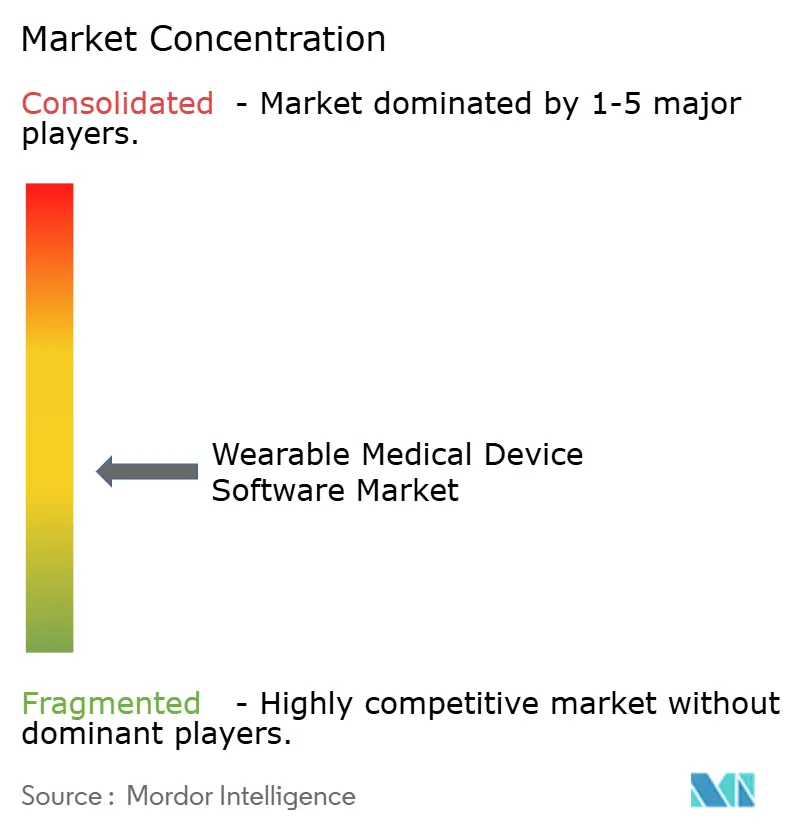
The wearable medical device software market shows moderate concentration, with large medtech and consumer device companies benefiting from installed hardware bases, brand familiarity, and broader distribution reach. At the same time, software-focused firms continue to compete effectively by offering stronger analytics, better EHR interoperability, and more specialized care workflows. This means leadership is not determined by hardware presence alone, because buyers increasingly care about data quality, workflow reliability, and the ability to fit software into existing care systems. Strategy across the wearable medical device software market is moving toward vertical integration, where vendors extend beyond raw monitoring into coaching, metabolic support, chronic care navigation, and outcome tracking. Competitive advantage is therefore becoming more dependent on software depth and recurring clinical utility than on simple device ownership.
Dexcom’s June 2026 agreement to acquire Nutrisense shows how companies are trying to add nutrition guidance and behavior support around CGM data rather than competing only on the sensor itself. Diabeloop’s commercial rollout in Germany shows another route, where algorithm quality, regulatory clearance, and real-world performance become the basis for expansion DIABELOOP.COM. Medtronic’s April 2025 FDA submission for an interoperable insulin pump linked to Abbott CGM technology points to a partnership model that ties device ecosystems more tightly to software pathways. VitalConnect’s February 2025 financing also shows that investors still back platforms that combine biosensors with cloud software and enterprise cardiac monitoring workflows.
Wearable Medical Device Software Industry Leaders
DexCom, Inc.
Medtronic plc
Abbott Laboratories
Philips Healthcare
Apple Inc.
- *Disclaimer: Major Players sorted in no particular order

Recent Industry Developments
- July 2026: Diabeloop and ViCentra commercially launched the DBLG2 Automated Insulin Delivery system in Germany, integrating the Kaleido insulin patch pump with Dexcom G7 CGM. The system operates via Android smartphone, eliminating dedicated handsets, and achieved real-world Time in Range exceeding 77% in Kaleido user data, a significant CGM-software convergence milestone.
- July 2026: CMS ACCESS Model officially launched on July 5, 2026, as a 10-year outcome-aligned payment model for technology-enabled chronic care. The model directly incentivizes deployment of FDA-cleared wearable software across diabetes, hypertension, musculoskeletal pain, and behavioral health tracks.
- June 2026: MiniMed and Abbott announced an expanded partnership to commercialize dual glucose-ketone sensors designed to integrate with MiniMed's smart dosing systems. The sensors enable real-time DKA prevention and build on the existing Instinct CGM sensor collaboration.
- April 2026: Withings was accepted into the inaugural CMS ACCESS Model cohort, spanning eCKM and CKM tracks across all 50 states. Withings also made its FDA-cleared BPM Pro 2 cellular blood pressure monitor available in the ACCESS Tools Directory for use by other program participants.


Global Wearable Medical Device Software Market Report Scope
| Hardware |
| Software |
| Services |
| Conventional AI-Enhanced CT |
| Spectral CT |
| Photon-Counting CT |
| Interventional CT |
| Oncology Diagnosis and Staging |
| Tumor Monitoring and Treatment Response |
| Radiation Therapy Planning Support |
| Research and Clinical Trials |
| Hospitals |
| Diagnostic Imaging Centers |
| Cancer Treatment Centers |
| Academic and Research Institutes |
| North America | United States |
| Canada | |
| Mexico | |
| Europe | Germany |
| United Kingdom | |
| France | |
| Italy | |
| Spain | |
| Asia-Pacific | China |
| India | |
| Japan | |
| South Korea | |
| Australia | |
| Rest of Asia-Pacific | |
| Middle East & Africa | GCC |
| South Africa | |
| Rest of Middle East and Africa | |
| South America | Brazil |
| Argentina | |
| Rest of South America |
| By Component | Hardware | |
| Software | ||
| Services | ||
| By Deployment Mode | Conventional AI-Enhanced CT | |
| Spectral CT | ||
| Photon-Counting CT | ||
| Interventional CT | ||
| By Application | Oncology Diagnosis and Staging | |
| Tumor Monitoring and Treatment Response | ||
| Radiation Therapy Planning Support | ||
| Research and Clinical Trials | ||
| By End User | Hospitals | |
| Diagnostic Imaging Centers | ||
| Cancer Treatment Centers | ||
| Academic and Research Institutes | ||
| By Geography | North America | United States |
| Canada | ||
| Mexico | ||
| Europe | Germany | |
| United Kingdom | ||
| France | ||
| Italy | ||
| Spain | ||
| Asia-Pacific | China | |
| India | ||
| Japan | ||
| South Korea | ||
| Australia | ||
| Rest of Asia-Pacific | ||
| Middle East & Africa | GCC | |
| South Africa | ||
| Rest of Middle East and Africa | ||
| South America | Brazil | |
| Argentina | ||
| Rest of South America | ||


Key Questions Answered in the Report
What is driving growth in wearable medical device software through 2031?
Growth is being driven by continuous monitoring needs in chronic care, stronger reimbursement alignment, wider provider adoption of remote patient monitoring, and rising use of AI-based analytics in software workflows.
How large is wearable medical device software in 2026 and where is it headed by 2031?
The wearable medical device software market size stands at USD 8.4 billion in 2026 and is forecast to reach USD 31.6 billion by 2031 at a 24.9% CAGR.
Which application area currently generates the most revenue?
Remote patient monitoring is the largest application, with 27.6% share in 2025, because providers continue to prioritize continuous low-acuity monitoring and asynchronous patient oversight.
Which device category is expanding the fastest?
CGM software-enabled devices are the fastest-growing device type, with a projected 26.2% CAGR through 2031, supported by stronger clinical relevance and integration with automated insulin delivery.
Why is cloud deployment so important in this field?
Cloud-based deployment held 62.4% share in 2025 and is also the fastest-growing model, because wearable software depends on continuous data ingestion, analytics, and multi-user access across care settings.
What is the main barrier to broader provider adoption?
Alert fatigue remains a major constraint, since high false positive volumes in remote monitoring can disrupt workflows, weaken response quality, and reduce clinician confidence in software outputs.
Page last updated on:





