
Market Overview
| Study Period | 2021 - 2031 |
|---|---|
| Forecast Data Period | 2026 - 2031 |
| Base Year Market Size (2025) | USD 148.49 Million |
| Market Size (2026) | USD 157.58 Million |
| Market Size (2031) | USD 212.07 Million |
| Growth Rate (2026 - 2031) | 6.12 % |
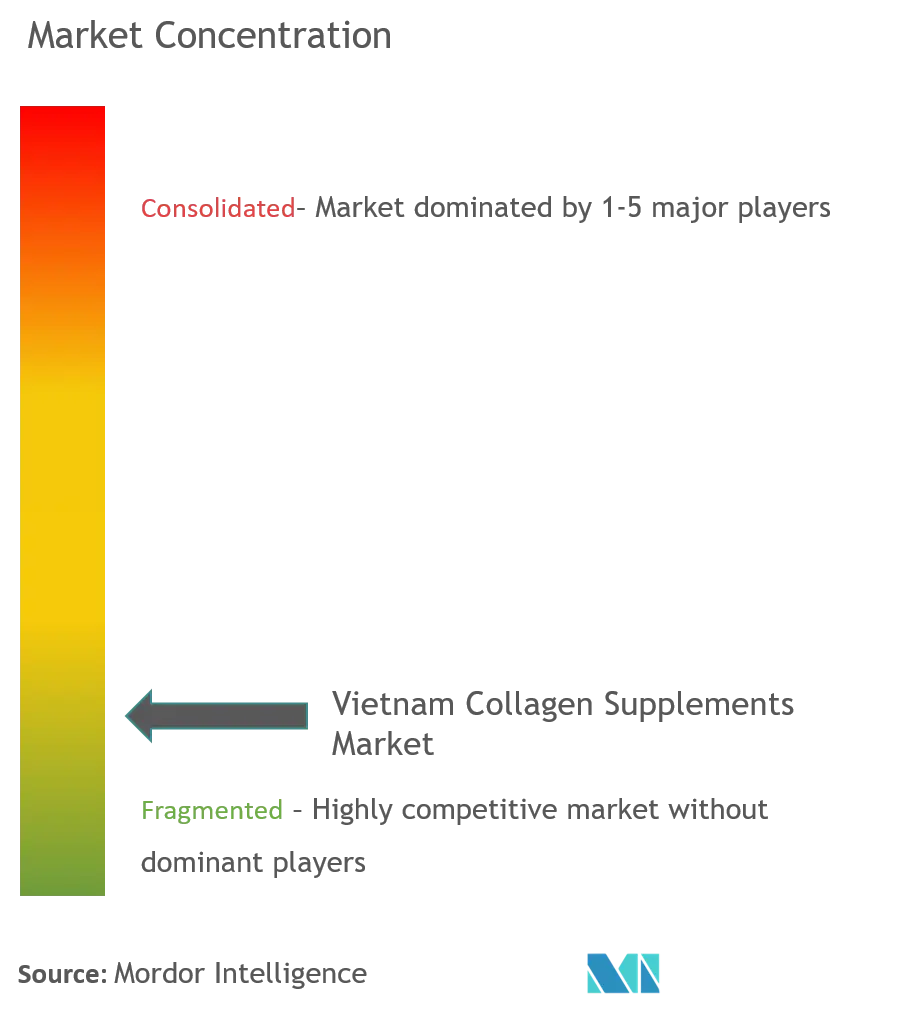
| Market Concentration | Medium |
Major Players *Disclaimer: Major Players sorted in no particular order Image © Mordor Intelligence. Reuse requires attribution under CC BY 4.0. | |
Vietnam Collagen Supplements Market Analysis by Mordor Intelligence
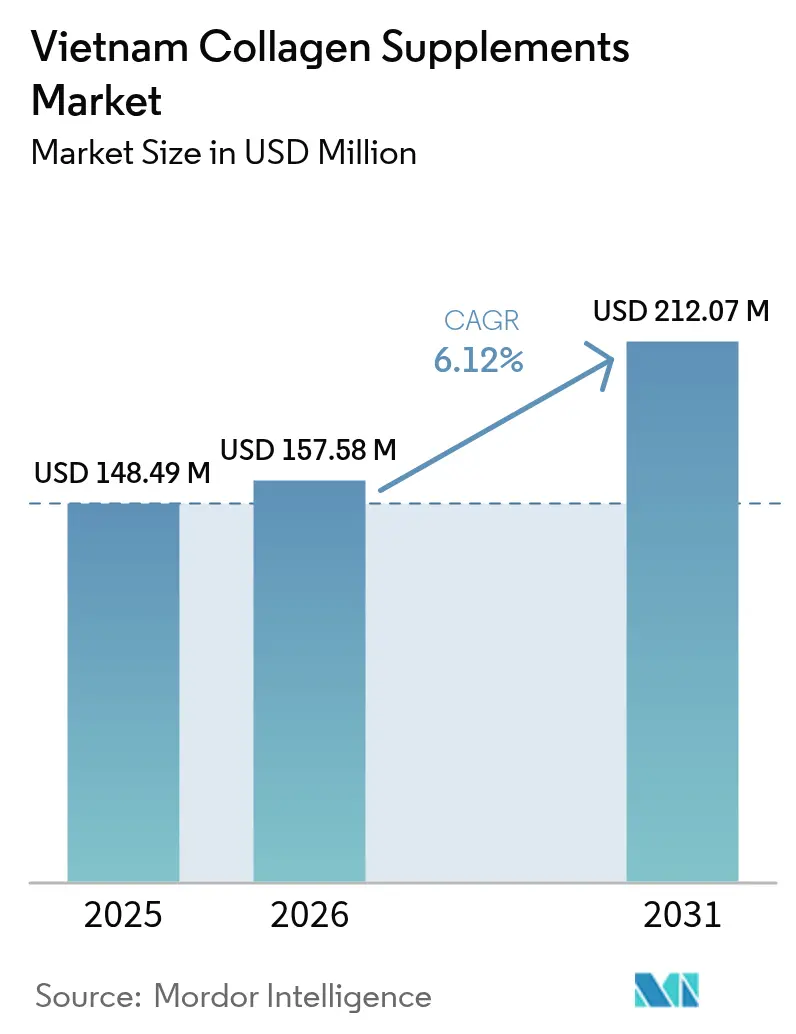
Vietnam collagen supplements market size in 2026 is estimated at USD 157.58 million, growing from 2025 value of USD 148.49 million with 2031 projections showing USD 212.07 million, growing at 6.12% CAGR over 2026-2031. Vietnam has established itself as a significant player in Southeast Asia's nutraceuticals industry, supported by increasing consumer health consciousness, improved household purchasing power, and widespread e-commerce adoption. Vietnamese consumers have evolved in their purchasing behavior, placing greater emphasis on product quality assurance and ingredient transparency rather than focusing solely on price points. The Ministry of Health's implementation of comprehensive regulatory measures in 2025, encompassing mandatory product testing protocols and enhanced e-commerce platform supervision, has created a market environment that particularly benefits established brands demonstrating robust regulatory compliance and quality control systems.
Key Report Takeaways
- By form, powder products held 43.10% of Vietnam collagen supplements market share in 2025 and drinks and shots are set to lead growth at a 7.12% CAGR through 2031.
- By source, animal-based ingredients accounted for 81.25% of Vietnam collagen supplements market size in 2025 while plant-based alternatives are forecast to expand at a 6.92% CAGR between 2026 and 2031.
- By end-user, women captured 67.85% of Vietnam collagen supplements market share in 2025 and are expected to register a 7.28% CAGR to 2031.
- By distribution channel, pharmacies/drug stores commanded 56.15% share of the Vietnam collagen supplements market in 2025, whereas online stores will post the fastest 8.02% CAGR over 2026-2031.
Note: Market size and forecast figures in this report are generated using Mordor Intelligence’s proprietary estimation framework, updated with the latest available data and insights as of 2026.
Vietnam Collagen Supplements Market Trends and Insights
Drivers Impact Analysis*
| Driver | (~) % Impact on CAGR Forecast | Geographic Relevance | Impact Timeline |
|---|---|---|---|
| Increasing awareness of collagen benefits for anti-aging and skin health | +1.8% | National, with concentration in Ho Chi Minh City and Hanoi | Medium term (2-4 years) |
| Popularity of multifunctional collagen supplements with added ingredients | +1.2% | Urban centers, expanding to secondary cities | Short term (≤ 2 years) |
| Rapid growth of e-commerce and online retail channels | +1.5% | National, with strongest penetration in urban areas | Short term (≤ 2 years) |
| Popularization of natural, clean-label, and sustainably sourced collagen | +0.9% | Affluent urban demographics nationwide | Medium term (2-4 years) |
| Growing trend toward personalized nutrition and functional food integration | +0.7% | Metropolitan areas with high disposable income | Long term (≥ 4 years) |
| Demand for locally produced and trusted Vietnamese collagen products | +0.6% | National, with emphasis on domestic manufacturing hubs | Medium term (2-4 years) |
| Source: Mordor Intelligence | |||
Increasing awareness of collagen benefits for anti-aging and skin health
Vietnamese consumers are exhibiting a profound transformation in their purchasing patterns, demonstrating a clear preference for scientifically validated beauty supplements while progressively distancing themselves from traditional remedies. The strategic intersection of beauty-from-within trends and Vietnam's rapidly expanding middle-class demographic continues to generate robust market demand, particularly among urban female consumers aged 25-45 who demonstrate sophisticated preferences for evidence-based skincare solutions. The extensive reach of beauty influencers and healthcare professionals across diverse social media platforms has fundamentally reshaped consumer understanding and heightened awareness regarding collagen's comprehensive anti-aging benefits. This significant market evolution aligns naturally with Vietnam's deeply rooted cultural emphasis on skincare and appearance, where strategic investments in personal grooming simultaneously function as indicators of social status and represent thoughtful commitments to personal wellness and comprehensive self-care practices.
Popularity of multifunctional collagen supplements with added ingredients
Manufacturers are enhancing their product development strategies by formulating innovative collagen products that include complementary nutrients to address multiple health concerns. For instance, the partnership between Sắc Ngọc Khang and Nitta Gelatin for Collagen Dipeptide incorporates Mitsubishi Corporation's Glutathione and AstaReal's Astaxanthin. This reflects the strong willingness of Vietnamese consumers to invest in premium-priced formulations that provide measurable benefits for skin health, joint function, and overall wellness. The market is witnessing a growing preference for products that cater to multiple health objectives, driven by the need to simplify daily supplement routines. Addressing this demand, Rohto Pharmaceutical launched MOCOLA, a collagen drink enriched with essential vitamins C, B6, and D. The existing regulatory framework supports such product innovations by streamlining approval processes for combination products that meet established safety standards.
Rapid growth of e-commerce and online retail channels
The rapid expansion of digital commerce continues to reshape traditional distribution methods, as online platforms steadily capture significant market share from physical retail stores. Market research and consumer behavior studies consistently demonstrate that functional food consumers are embracing and maintaining their online purchasing patterns, reflecting a fundamental transformation in buying preferences. E-commerce platforms provide companies with valuable opportunities to establish meaningful direct relationships with their consumers, effectively manage brand communication strategies, develop sophisticated loyalty programs, and streamline distribution costs through digital channels. The implementation of comprehensive regulatory frameworks has significantly enhanced consumer trust and confidence in online purchases, further accelerating the ongoing transition from traditional retail to digital commerce channels across global markets. As per the International Trade Administration, the eCommerce market is projected to expand at a brisk annual rate of 30% from 2021 to 2025[1].
Popularization of natural, clean-label, and sustainably sourced collagen
The growing focus on sustainability drives demand for environmentally responsible collagen sourcing and production methods. In June 2025, Thai Union's USD 30 million investment in marine collagen production from tuna byproducts demonstrates the industry's commitment to sustainable practices while addressing supply chain pressures from traditional bovine sources. Vietnamese consumers increasingly examine product origins and manufacturing processes, preferring brands that demonstrate environmental stewardship and ethical sourcing. Navico's collagen plant construction in Vietnam, utilizing pangasius skin byproducts, aligns with circular economy principles while supporting local aquaculture industries. Clean-label positioning appeals to health-conscious consumers seeking products free from artificial additives and preservatives. Regulatory emphasis on transparency and traceability reinforces this trend through enhanced labeling requirements and supply chain documentation standards.
Restraints Impact Analysis*
| Restraint | (~) % Impact on CAGR Forecast | Geographic Relevance | Impact Timeline |
|---|---|---|---|
| Regulatory challenges and evolving compliance requirements | -1.1% | National, with stricter enforcement in major cities | Short term (≤ 2 years) |
| Inconsistent quality standards among local and imported products | -0.8% | National, affecting both urban and rural markets | Medium term (2-4 years) |
| Religious or dietary restrictions affecting ingredient acceptance | -0.4% | Regional, concentrated in areas with specific religious demographics | Long term (≥ 4 years) |
| Lack of extensive clinical trials or localized efficacy data | -0.3% | National, particularly affecting premium product segments | Medium term (2-4 years) |
| Source: Mordor Intelligence | |||
Regulatory challenges and evolving compliance requirements
Vietnam's regulatory authorities are intensifying their oversight of the marketing and distribution of functional foods, with a focus on ensuring consumer safety and maintaining market integrity. This increased scrutiny has led to higher operational costs and created barriers to market entry. Foreign manufacturers face additional challenges, as they must regularly demonstrate compliance with Good Manufacturing Practices through ongoing verifications. The authorities' dedication to regulatory enforcement is evident in their detailed investigation into "Ngân Collagen" products. While ASEAN's harmonization initiatives suggest potential benefits from future standardization across the region, companies are currently allocating substantial resources to meet evolving compliance requirements. In March 2024, the FDA updated its submission protocols for collagen supplements and similar nutritional products, revising its New Dietary Ingredient Notification Procedures[2].
Inconsistent quality standards among local and imported products
Quality inconsistencies in Vietnam's supplement market continue to erode consumer confidence as regulatory authorities identify an increasing number of counterfeit and substandard products circulating through various distribution channels. Vietnamese pharmacies have come under intense regulatory scrutiny for distributing unlicensed supplements containing prohibited substances, particularly Sibutramine, raising significant public health concerns. A recent large-scale confiscation of unverified collagen products in Bac Ninh province demonstrates the persistent challenges in maintaining quality compliance across the supplement industry. The market is undergoing significant transformation as consumers increasingly prioritize established brands with comprehensive quality control measures, creating substantial barriers to entry for smaller companies that lack robust quality assurance systems and established track records.
*Our forecasts treat driver/restraint impacts as directional, not additive. The impact forecasts reflect baseline growth, mix effects, and variable interactions.
Segment Analysis
By Form: Powder Dominance Drives Innovation
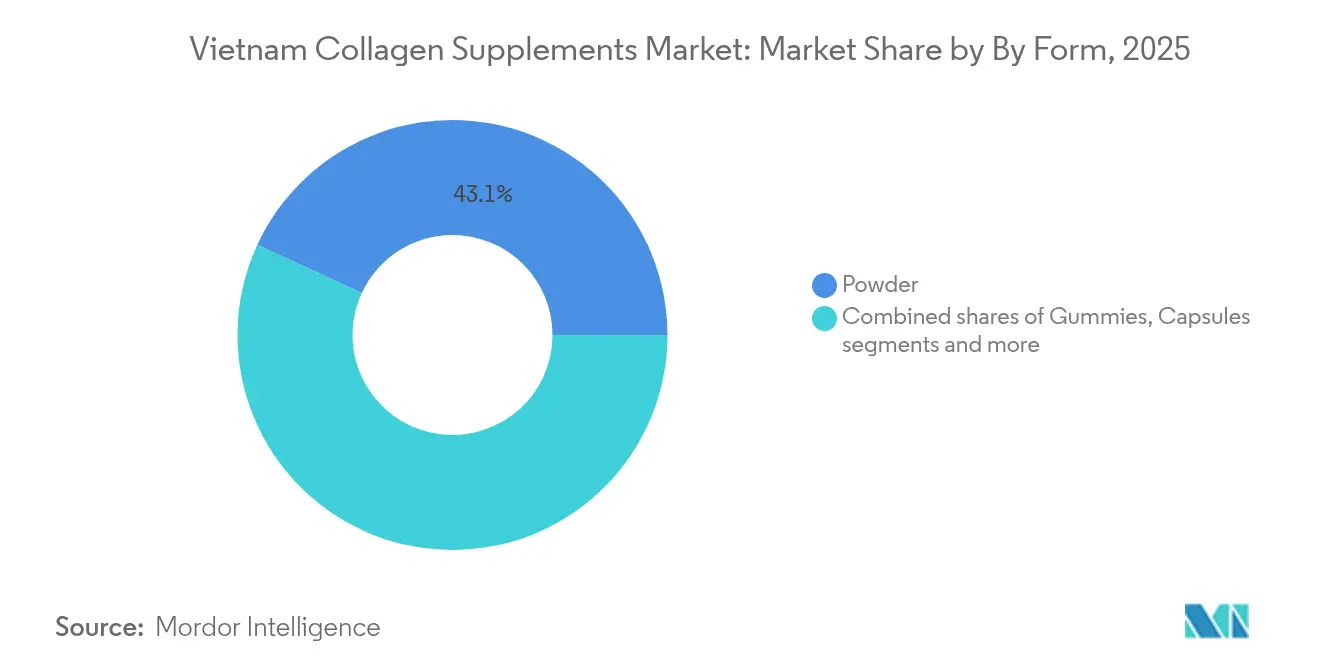
In 2025, powder formulations lead the market with a 43.10% share, reflecting their strong consumer appeal due to their versatility and perceived value. These formulations have gained popularity because they can be easily incorporated into beverages, smoothies, and various food preparations, allowing consumers to seamlessly integrate them into their daily routines. This adaptability has positioned powder formulations as a preferred choice for many, catering to diverse lifestyle needs and preferences.
The drinks and shots segment is projected to be the fastest-growing category, with a CAGR of 7.12% through 2031. This growth is attributed to rising consumer demand for convenience and the launch of innovative ready-to-consume products, such as Rohto's MOCOLA collagen drink, introduced in June 2025. Capsules remain in steady demand, catering to consumers who prefer traditional supplement formats. In contrast, gummies are experiencing notable growth, particularly among younger demographics, due to their appealing and enjoyable consumption experience, making them a prominent choice in this segment.

By Source: Animal-Based Maintains Supremacy
In 2025, animal-based collagen continues to dominate the market, accounting for 81.25% of the total share. This dominance highlights its strong consumer acceptance and well-established efficacy profiles. Bovine and marine sources remain the primary contributors to the supply chain, with marine collagen gaining increasing preference. Its superior absorption capabilities and reduced allergenicity make it a favored choice among consumers seeking effective and safer options. These factors reinforce the stronghold of animal-based collagen in the market landscape.
On the other hand, plant-based collagen alternatives are witnessing significant growth, with a compound annual growth rate (CAGR) of 6.92%. This surge is driven by rising consumer awareness around sustainability and the need to accommodate dietary restrictions. The industry's recognition of this growing potential is evident in initiatives like Evonik's partnership with Jland Biotech to develop vegan collagen. Such collaborations signal a strategic shift toward catering to the evolving preferences of environmentally conscious and health-focused consumers.
By End-User: Women Drive Market Expansion
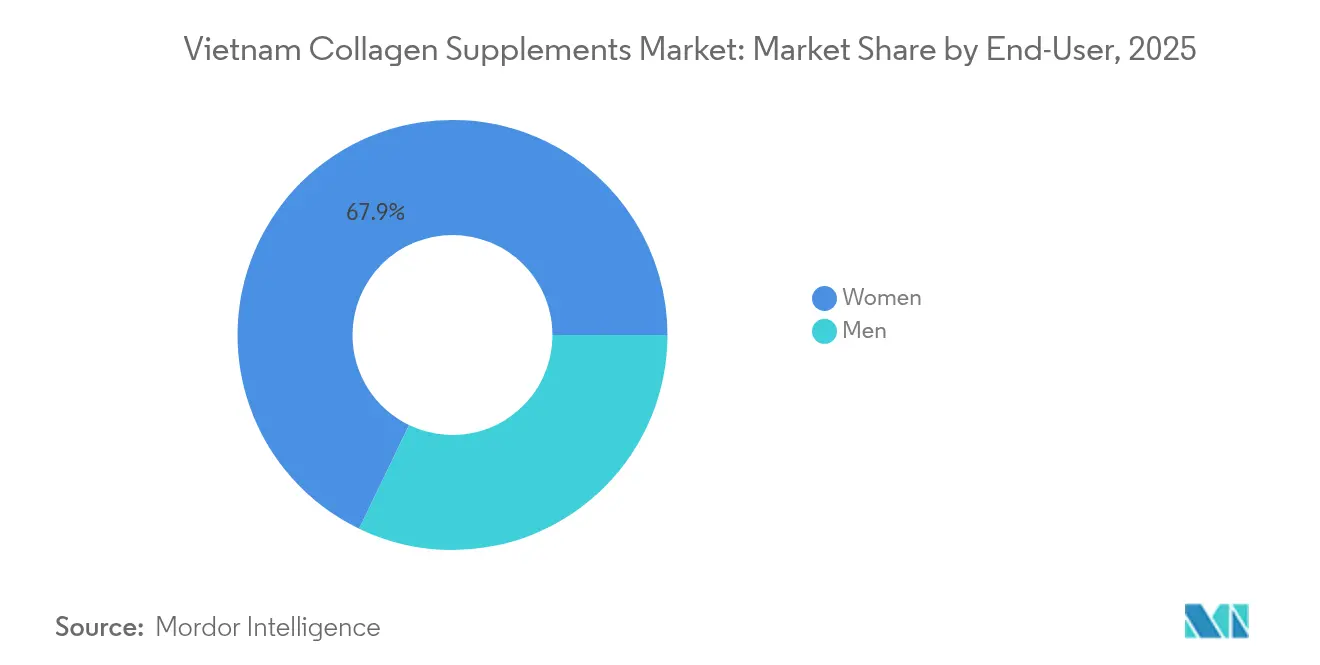
In 2025, women hold a commanding 67.85% share of the market, highlighting their pivotal role in driving the collagen industry's growth. This demographic is projected to achieve a steady compound annual growth rate (CAGR) of 7.28% through 2031, fueled by increasing supplement adoption and targeted beauty-focused marketing strategies. Additionally, clinical studies focusing on East Asian women have confirmed collagen's effectiveness in improving skin health, further strengthening consumer trust and contributing to the market's expansion.
Meanwhile, male consumers are beginning to show a rising interest in collagen supplements, particularly for their benefits in supporting joint health and enhancing athletic performance. However, despite this growing awareness, the adoption rate among men remains comparatively lower than that of women. This gap presents a significant opportunity for businesses to explore targeted marketing initiatives and develop products tailored to the needs of the male demographic.
By Distribution Channel: Digital Transformation Accelerates
In 2025, pharmacies and drug stores are expected to dominate the Vietnam collagen supplements market, holding the largest share at 56.15% of total sales. This dominance is attributed to strong consumer trust in these outlets, pharmacist recommendations, and the assurance of product authenticity and regulatory compliance. Consumers often choose pharmacies and drug stores for health-related products due to their perceived safety and access to medically endorsed brands. Additionally, their well-established distribution networks and extensive urban presence further reinforce their leading position in the market.
On the other hand, online retail is anticipated to exhibit the fastest CAGR of 8.02% during the forecast period. This growth is fueled by the increasing adoption of e-commerce, the rising prevalence of smartphone usage, and the convenience of home delivery services. Consumers are drawn to digital platforms due to competitive pricing, promotional discounts, and access to a broader selection of domestic and imported collagen brands. Furthermore, strengthening regulatory oversight of online supplement sales is expected to boost credibility and enhance consumer confidence in the coming years.
Geography Analysis
Vietnam's collagen supplements market is set for steady growth through 2031, supported by favorable demographics and economic trends. The country's GDP is expected to grow by approximately 7.5% in 2024, driven by manufacturing expansion and increasing middle-class consumption . This economic momentum creates a strong foundation for the demand for premium health products. Urban areas like Ho Chi Minh City and Hanoi dominate market demand due to higher disposable incomes and greater health awareness among their populations.
Cultural preferences for skincare and wellness products further drive the market, with Vietnamese consumers showing a strong willingness to invest in high-quality health supplements. The Ministry of Health's initiatives to promote traditional medicine as a premium tourism product by 2030 align well with the growing interest in wellness products, creating additional opportunities for market growth. These efforts are expected to strengthen the connection between health tourism and the demand for collagen supplements.
Beyond major cities, secondary urban areas are emerging as promising markets, thanks to infrastructure development and rising income levels. Additionally, Vietnam's regulatory alignment with ASEAN standards is streamlining cross-border trade and investment. This positions the country as a key regional hub for the manufacturing and distribution of collagen supplements, further enhancing its competitive edge in the market.
Regulatory Landscape
Vietnam collagen supplements are regulated as functional foods or health supplements under the Ministry of Health, with the Vietnam Food Administration (VFA) overseeing product registration, labeling, and post-market surveillance. Under Decree 15/2018/ND-CP, products generally require dossier-based product declaration or registration supported by ISO/IEC 17025-accredited laboratory test results, and health supplement manufacturing facilities must comply with GMP requirements aligned to MoH guidance.
Recent tightening of technical and labeling compliance has increased the compliance load for both domestic and imported brands. Circular 12/2024/TT-BYT (QCVN 20-1:2024/BYT) sets contaminant limits for health supplements and reinforces periodic testing expectations for parameters such as heavy metals and microbiological criteria. Labeling obligations are governed by Decree 43/2017/ND-CP and Decree 111/2021/ND-CP, which require clearer Vietnamese-language declarations and traceability documentation across offline and e-commerce channels.
Value Chain Analysis
The value chain starts with sourcing collagen inputs, predominantly animal-based (including marine and bovine), along with complementary actives. This is followed by ingredient processing or extraction, formulation into powders, capsules, gummies, and ready-to-drink formats, and then packaging and labeling for Vietnam-specific compliance. Manufacturers and importers need quality control systems that support product safety through shelf life, including documentation for product declaration and ongoing readiness for VFA inspections and audits.
Market access and distribution typically run through in-country legal entities that hold circulation rights and manage regulatory dossiers, making local subsidiaries or authorized partners key nodes for imported brands. Downstream, pharmacies and drug stores are the largest route to consumers (56.15% share in 2025). The report also highlights online retail as the fastest-growing channel, which increases the emphasis on compliant product listings, traceable supply, and continuous post-market testing and label controls to limit counterfeit and substandard products.
Competitive Landscape
In the Vietnam collagen supplements market, fragmentation presents both consolidation opportunities and room for niche players to flourish. While international brands lean on their esteemed reputations and cutting-edge research, local firms capitalize on cultural insights and cost advantages. Companies are increasingly forging strategic partnerships, melding global expertise with local nuances. For Instance, in July 2025, Nestlé teamed up with California Fitness & Yoga to distribute Vital Proteins, underscoring this trend.
Technology adoption is becoming a pivotal factor in distinguishing competitors. Firms are channeling investments into advanced extraction techniques, clinical validations, and digital marketing to bolster their market stance. Concurrently, heightened regulatory scrutiny is reshaping the competitive arena. This intensified oversight is weeding out non-compliant entities while favoring those with stringent quality assurance. The Drug Administration of Vietnam's rigorous enforcement of cosmetic regulations is elevating entry barriers, a move that predominantly advantages established brands well-versed in regulatory nuances.
Moreover, niche segments like sports nutrition, men's health, and plant-based formulations are ripe for growth. These relatively uncharted territories offer businesses, especially those emphasizing consumer education and targeted marketing, a chance to ascend as market frontrunners. By tapping into these specialized demands, companies can chart new growth trajectories in Vietnam's collagen supplements landscape.
Vietnam Collagen Supplements Industry Leaders
-
Nestlé SA
-
Shiseido Co., Ltd.
-
Meiji Holdings Co., Ltd.
-
Fujifilm Holdings Corp.
-
Kinohimitsu
- *Disclaimer: Major Players sorted in no particular order
Market Opportunities and Future Outlook
Compliance-driven differentiation is creating room for brands that can consistently document safety, contaminant conformance, and transparent labeling under the VFA framework. Circular 12/2024/TT-BYT reinforced contaminant limits for health supplements and raised the evidentiary bar through accredited lab testing, which aligns with the report's finding that consumers are prioritizing ingredient transparency and product quality assurance.
Format innovation and channel expansion are also tangible execution areas. Drinks and shots are the fastest-growing format in the report, supported by launches such as Rohto Pharmaceutical's MOCOLA collagen drink (June 2025). The growing use of modern distribution partnerships is reflected in Nestle Health Science's approach to placing Vital Proteins into gyms and pharmacy networks in Vietnam. At the same time, product classification discipline for collagen products that sit between functional beverages and health supplements, combined with routine post-market testing for parameters like heavy metals and microbiological limits, supports scaling by companies with stronger regulatory operations, while reducing delisting and recall risk.
Recent Industry Developments
- June 2026: The construction and renovation of the Tri An facility (Diana Project) using EPCM services from IntES continued. The scale up reflects a large manufacturing footprint expansion and introduces upgraded processes to support higher output. This capacity and automation enhancement positions Nestlé Vietnam to increase collagen product throughput in the market.
- August 2025: Nestlé Health Science announced a partnership with Pharmacity to supply scientific nutrition products, including making Pharmacity an exclusive distributor of Vital Proteins Collagen Peptides in Vietnam. The move expands distribution through pharmacy networks and strengthens product accessibility. It also broadens the credibility and channel reach for the collagen segment in Vietnam.
- July 2025: Nestlé Health Science established a strategic partnership with California Fitness & Yoga in Vietnam to distribute Vital Proteins collagen peptides at CaliFresh counters in gym locations. This creates non-traditional distribution through fitness channels and supports a broader consumer base. The collaboration promotes an active lifestyle positioning and extends reach beyond traditional retailers.
Research Methodology Framework and Report Scope
Market Definition and Coverage
This market covers collagen supplements sold for oral consumption in Vietnam and measured as the value of products sold through retail and direct-to-consumer channels over the year.
Scope exclusions: It excludes collagen used as a food ingredient, pharmaceutical collagen used for medical procedures, and topical collagen in skin care products.
Segmentation Overview
- By Form
- Powder
- Gummies
- Capsules
- Drinks and Shots
- Others
- By Source
- Animal-Based
- Plant-Based
- By End-User
- Men
- Women
- By Distribution Channel
- Pharmacies/Drug Stores
- Health and Personal Care Stores
- Online Retail Stores
- Direct Selling
- Other Distribution Channels
Data Sources, Market Sizing, and Validation
Desk Research
Desk research started with mapping how collagen supplements are regulated, sold, and labeled in Vietnam, so the market boundary stays consistent across years. We relied on public references such as Vietnam Ministry of Health guidance and circulars on dietary supplements, Vietnam General Statistics Office releases for consumer and income context, Vietnam Customs trade releases for import signals that can reflect both finished goods and inputs, and World Bank and IMF country indicators for inflation and currency context.
Next, we pulled product and channel clues from company websites, press releases, investor presentations, and reputable news coverage to understand formats and the practical route to market. Patent databases were checked to see whether new collagen delivery formats or claim types were being filed, which acted as a directional input for innovation pace. Where available, we also referenced paid subscriptions for company financials and for shipment-level import and export records to test whether our desk assumptions matched observed trade flows. These are illustrative sources only, and we also used other public materials for cross-checking, clarification, and validation.
Primary Interviews and Surveys
Primary work focused on confirming which collagen products are treated as supplements in Vietnam, and how pricing, pack sizes, and channel mix shift year to year. We spoke with stakeholders across branded supplement owners, distributors, pharmacies and health store operators, and online-first sellers, and then used these inputs to tighten sell-through pace assumptions and the realistic ASP range before the totals were finalized.
Distribution of primary research fieldwork respondents
| Company type | Respondent position |
|---|---|
| Top tier: 32% | CXOs: 15% |
| Mid tier: 46% | Functional/Unit leaders: 31% |
| Smaller Players: 22% | Managers: 54% |
Market-Sizing & Forecasting
Sizing began from a top-down build using Vietnam dietary supplement demand signals, then narrowed to collagen by applying adoption and usage assumptions tested during interviews. To keep the math connected to purchase behavior, the model was anchored on practical inputs such as collagen supplement form mix (powder, capsules, drinks or shots), channel mix (pharmacies, health and personal care stores, online, and direct selling), and the observed price ladder by pack size and monthly regimen.
Those totals were then cross-checked with selective bottom-up approximations, mainly using sampled SKU price points multiplied by expected annual unit movement for a set of high-visibility channels, and then adjusted for white space brands that do not disclose much. When gaps showed up, we handled the missing piece through conservative infill based on adjacent channel behavior and the weighted share of smaller brands, then re-tested it with respondents. Forecasts were built using scenario analysis tied to household spending trends, online penetration growth, and expected ASP progression under inflation and promotional intensity, and the final curve was kept aligned with what industry participants described as achievable growth.
Data Validation & Update Cycle
Validation was done through multiple checks so the final value does not depend on a single assumption. We compared model outputs against independent signals such as import patterns for supplement products and inputs, price tracking across major online listings, and channel feedback on demand seasonality, then reviewed anomalies and corrected them before sign-off.
Each estimate goes through step-by-step analyst review, and re-contacts are triggered when a key variable shifts, such as a sudden ASP change, a channel policy change, or a regulatory update that affects labeling or claims. Reports are refreshed annually, and interim updates are made when a material event changes demand or supply conditions. Before delivery, the numbers receive a final analyst review so clients get the most current view available at that time.
Mordor Intelligence's Vietnam Collagen Supplement Market Size Compared Against Other Published Estimates
Published market sizes for Vietnam collagen supplements can look far apart because the market boundary is not always set the same way, and because pricing and channel assumptions get refreshed at different speeds. The spread is usually driven by what counts as a collagen supplement, how online and direct selling are treated, and whether the estimate reflects retail value or a different price point.
Import patterns for supplement products and ingredients, plus repeated checks on live online pricing and channel-level sell-through feedback, are the evidence that ties Mordor Intelligence's estimate to a realistic Vietnam demand pool rather than a broad wellness bucket. Differences also come from how quickly average selling prices are allowed to rise, whether forecasts use a base case or a more aggressive adoption curve, and how strictly currency timing is handled when converting local prices into USD.
Benchmark comparison
| Source | Market Size | Gaps in Research Methodology |
|---|---|---|
| Mordor Intelligence | USD 157.58 M (2026) | |
| Industry Research Firm A | USD 148.05 M (2024) | Uses an earlier base year and a different forecast window, and its channel treatment appears to weight pharmacies and offline retail more heavily, which can understate the faster-moving online and direct-selling value in later years. |
| Industry Research Firm B | USD 165.46 M (2026) | Applies a broader product and use-case definition across many forms and applications, which can pull in adjacent collagen-enriched offerings and lift the value compared with a stricter ingestible supplement-only boundary. |
The table shows that timing, channel coverage, and what gets counted as a supplement are practical reasons numbers differ. By keeping scope tied to ingestible collagen supplements sold in Vietnam and re-checking prices and channel mix before finalizing, the estimate stays traceable to clear variables that can be repeated year after year.
Key Questions Answered in the Report
What is the value of Vietnam’s collagen supplements maket in 2026?
The market is valued at USD 157.58 million in 2026.
What compound annual growth rate will Vietnam’s collagen supplements post through 2031?
Sales are forecast to rise at a 6.12% CAGR, reaching USD 212.07 million in 2031.
Which collagen format do Vietnamese shoppers buy the most?
Powder remains the leading format, accounting for 43.10% of 2025 sales.
Why do women dominate purchases of collagen supplements in Vietnam?
Women hold 67.85% share because beauty-from-within routines addressing anti-aging and skin hydration are widely adopted, and this segment is expanding at a 7.28% CAGR.
How pivotal is e-commerce for collagen supplement distribution in Vietnam?
Online stores are the fastest-growing channel with a 7.08% CAGR, supported by 77.5% of functional-food users intending to keep buying digitally.