
Trichlorosilane Market Size and Share
Market Overview
| Study Period | 2022 - 2032 |
|---|---|
| Market Size (2027) | USD 6.67 Billion |
| Market Size (2032) | USD 10.05 Billion |
| Growth Rate (2027 - 2032) | 8.56 % |
| Fastest Growing Market | Middle East and Africa |
| Largest Market | Asia-Pacific |
| Market Concentration | Medium |
Major Players *Disclaimer: Major Players sorted in no particular order Image © Mordor Intelligence. Reuse requires attribution under CC BY 4.0. | |
Trichlorosilane Market Analysis by Mordor Intelligence
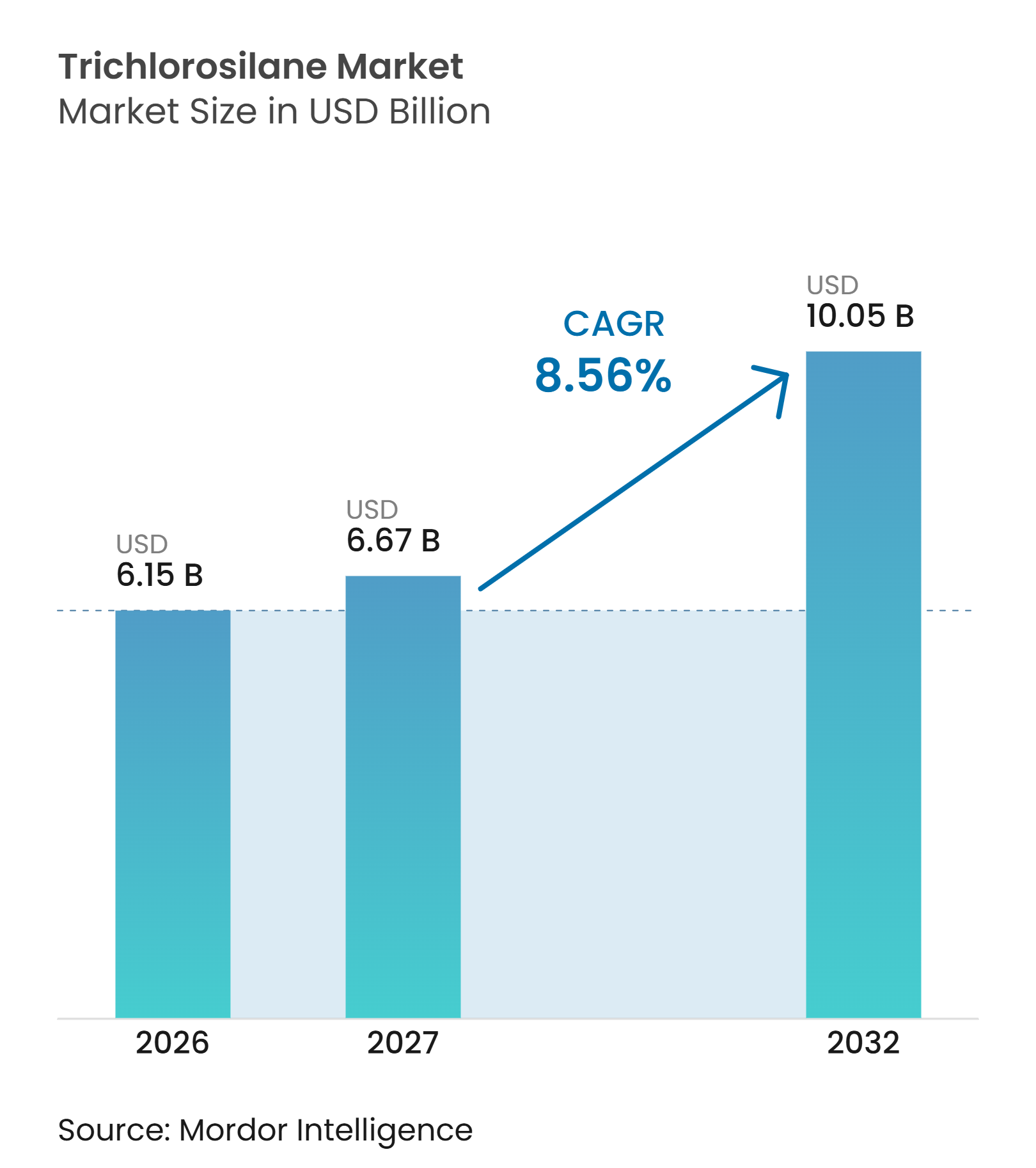
The Trichlorosilane market size was valued at USD 6.15 billion in 2026 and is estimated to grow from USD 6.67 billion in 2027 to USD 10.05 billion by 2032, at a CAGR of 8.56% during the forecast period (2027-2032). The trichlorosilane market is supported by expanding solar polysilicon production outside China and rising demand for advanced semiconductor wafers. These two end-use segments differ in purchase patterns, technology requirements, and exposure to price movements. Solar-grade material represents the production base, while electronic-grade material has stronger growth prospects due to its role in advanced logic and high-bandwidth memory applications. However, oversupply in the solar-grade segment pressures blended prices and cash flow. This dynamic makes the trichlorosilane market less dependent on a single end-use segment and places greater emphasis on manufacturing quality, long-term contracts, and access to specialized customers. Supply chain localization, energy standards, and silicon tetrachloride recycling are influencing investment decisions across the market. China's energy-consumption standards and closed-loop systems are adding pressure on producers to improve production efficiency. Producers that combine integrated production with high-purity processing are better positioned to address semiconductor demand while reducing exposure to solar-grade pricing cycles.
Key Report Takeaways
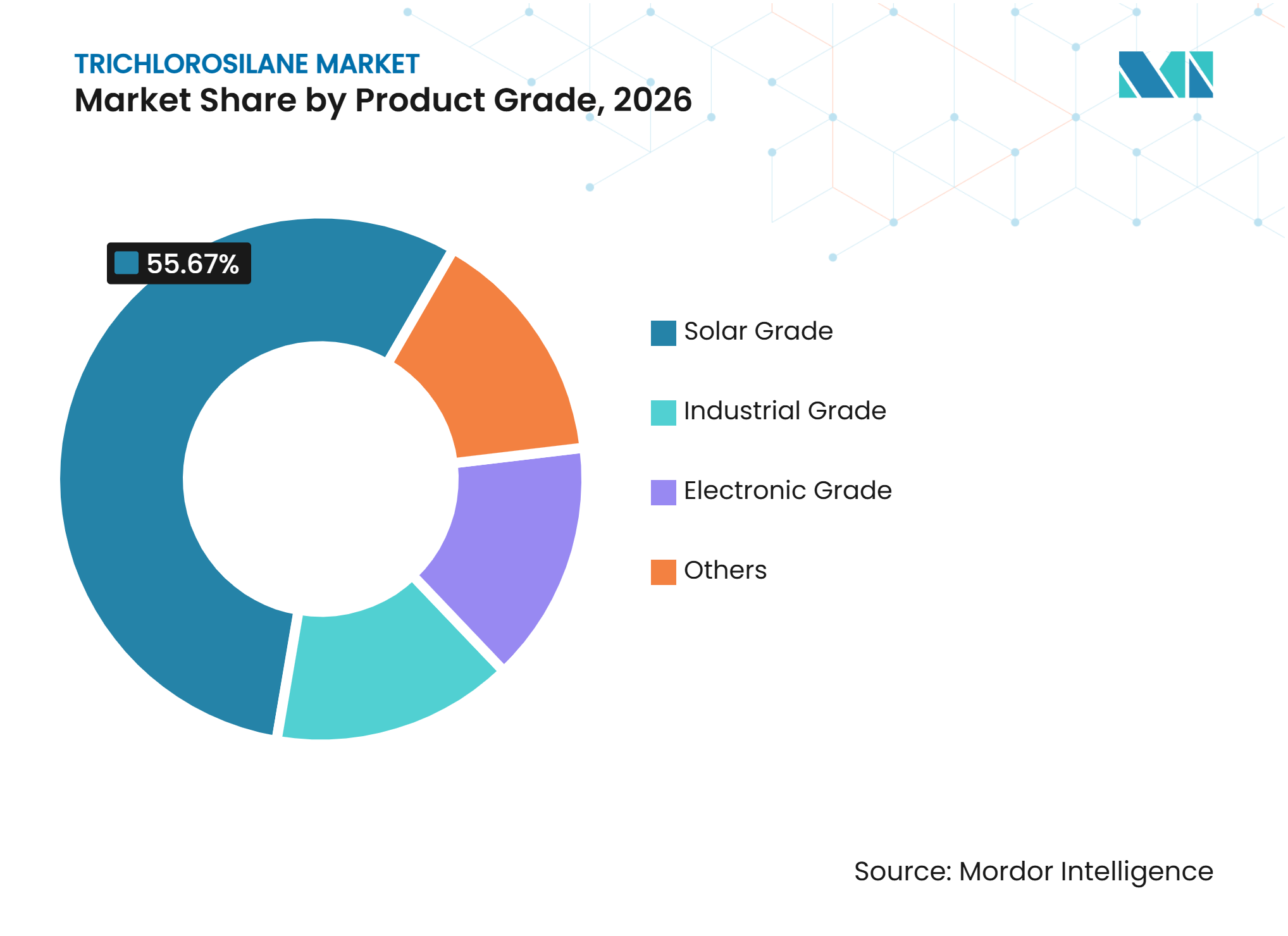
- By product grade, Solar Grade held 55.67% of the Trichlorosilane market share in 2026, while Electronic Grade is forecast to grow at a 9.25% CAGR through 2032.
- By application, Polysilicon Production accounted for 64.78% of the Trichlorosilane market size in 2026, while Epitaxial Wafer Deposition is projected to grow at a 9.67% CAGR through 2032.
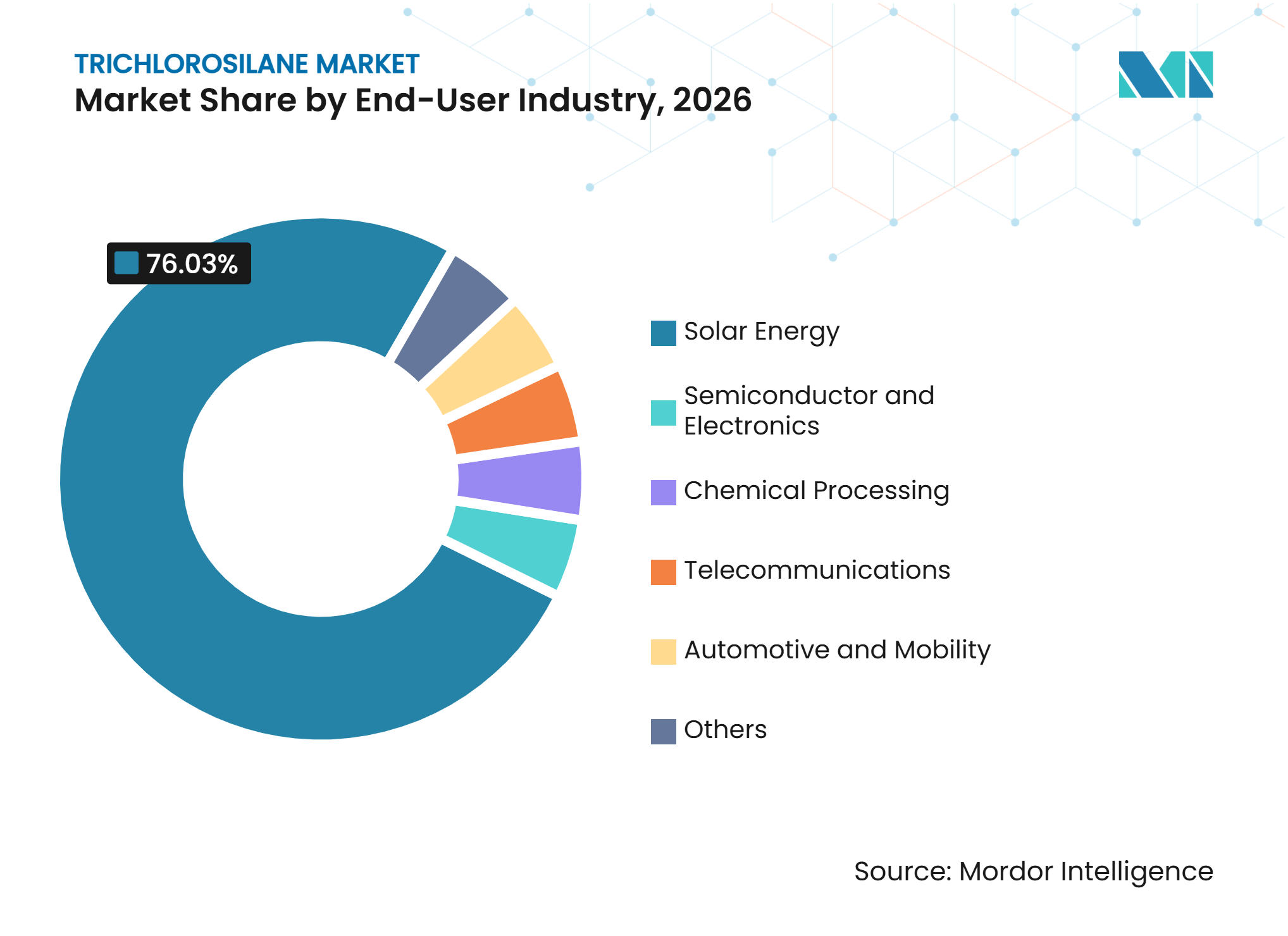
- By end-user industry, Solar Energy held 76.03% of the Trichlorosilane market share in 2026, while Semiconductor and Electronics is projected to grow at a 10.52% CAGR through 2032.
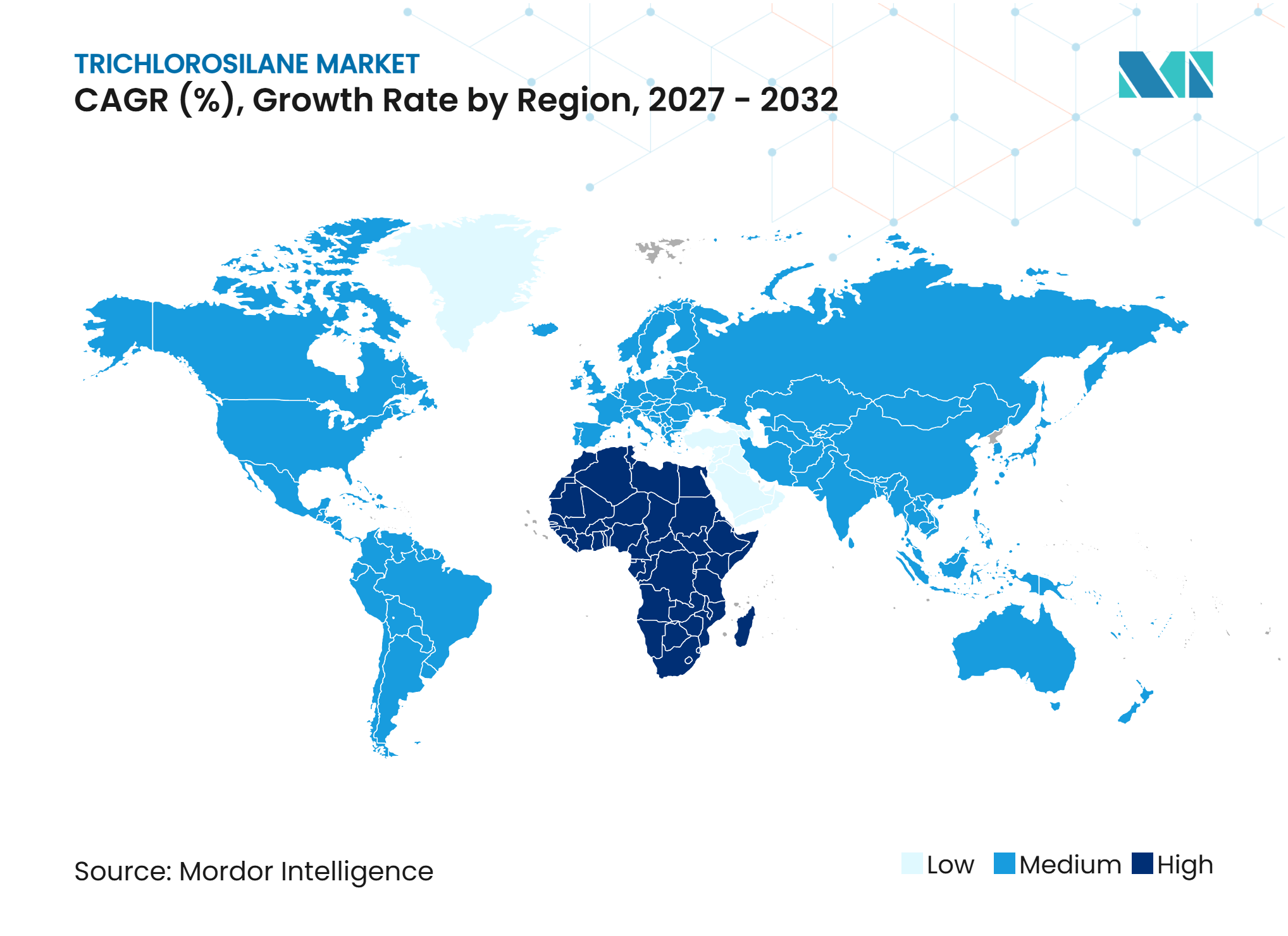
- By geography, Asia-Pacific held 53.86% of the Trichlorosilane market share in 2026, while the Middle East and Africa are forecast to expand at a 10.09% CAGR through 2032.
Note: Market numbers in this report are based on Mordor Intelligence's proprietary estimation framework, which combines nine months of actuals with Q4 projections for base year 2026.
Market Trends and Insights
Drivers Impact Analysis of Trichlorosilane Market*
| Drivers | (~) % Impact on CAGR Forecast | Geographic Relevance | Impact Timeline |
|---|---|---|---|
| Expansion of Solar-Grade Polysilicon Capacity Outside China | +2.30% | Middle East, Southeast Asia, North America, Europe | Medium term (2-4 years) |
| Semiconductor Wafer and AI-Chip Demand | +2.50% | Global, concentrated in East Asia, North America, Europe | Short term (≤ 2 years) |
| Closed-Loop Silicon Tetrachloride Recycling | +1.40% | Asia-Pacific core, with spillover to Europe and North America | Medium term (2-4 years) |
| Supply-Chain Localization and Strategic Stockpiling | +1.60% | North America, Europe, India, Japan, South Korea | Long term (≥ 4 years) |
| Low-Carbon and Energy-Efficient Silicon Production | +1.00% | China, Europe, and major production hubs | Long term (≥ 4 years) |
| Source: Mordor Intelligence | |||
Semiconductor Wafer and AI-Chip Demand
Semiconductor-grade trichlorosilane benefits directly from investment in data centers and advanced computing, where demand increasingly depends on advanced logic and memory capacity rather than total wafer output alone. Global silicon wafer shipments reached 12,973 million square inches in 2025, increasing 5.8% from the prior year. Capacity for advanced chipmaking at 7 nm and below is expected to increase 69%, from 850,000 wafers per month in 2024 to approximately 1.44 million wafers per month in 2028. Epitaxial wafers used in logic and high-bandwidth memory require electronic-grade trichlorosilane processed through 5 distillation stages, compared to the 3 stages generally associated with solar-grade material. This requirement favors suppliers that can meet strict purity and consistency standards through reliable production runs, product qualification, and close coordination with wafer customers. Shin-Etsu Chemical operates integrated trichlorosilane-to-wafer production at Naoetsu in Japan and Bay City in the United States, while Wacker commissioned a semiconductor-grade polysilicon cleaning line at Burghausen in 2025.
Expansion of Solar-Grade Polysilicon Capacity Outside China
Supply-chain diversification is creating new sources of demand beyond China and encouraging project developers to secure local feedstock relationships before plant ramp-up. Global renewable capacity additions are projected to reach 4,600 GW by 2030, with solar photovoltaic capacity accounting for 80% of the increase. United Solar Polysilicons began commercial polysilicon production at its Sohar Freezone site in Oman in early 2026. The USD 1.6 billion project has Phase I output equivalent to 20 GW of modules and uses trichlorosilane as a primary feedstock. Hemlock Semiconductor received up to USD 325 million in Creating Helpful Incentives to Produce Semiconductors (CHIPS) Act incentives in January 2025 for a new hyper-pure polysilicon facility in Michigan, with construction beginning in 2026 and production expected in 2028. These investments provide the trichlorosilane market with a base of contracted, non-Chinese demand that is less exposed to Chinese spot supply and more closely tied to regional industrial policy.
Closed-Loop Silicon Tetrachloride Recycling
Silicon tetrachloride management strongly affects the cost position of polysilicon producers, as the byproduct stream is large and must be handled safely and productively. The modified Siemens process generates 11-20 metric tons (MT) of silicon tetrachloride for each MT of polysilicon produced. Converting this byproduct back to trichlorosilane through cold hydrogenation reduces waste, improves feedstock efficiency, and supports more stable operations at integrated plants. A 2025 study found that reactive distillation for trichlorosilane and silane production can reduce energy use to less than 25% of that required by conventional fixed-bed reactor systems. Closed-loop systems at GCL TECH and Daqo facilities improve polysilicon economics by 15-25%. These systems can reduce external trichlorosilane purchases by integrated producers, but they also raise the purity and consistency requirements for third-party supply in the trichlorosilane market.
Supply-Chain Localization and Strategic Stockpiling
Chemical supply chains are receiving closer scrutiny from semiconductor and solar manufacturers seeking continuity, traceability, and qualified alternatives across multiple production regions. China began a sunset review of countervailing duties on US solar-grade polysilicon in January 2025, while maintaining a 2.1% duty rate on Hemlock Semiconductor[1]. US production tax credits also support domestic facilities that consume trichlorosilane in polysilicon production. Traceability is becoming increasingly important for buyers assessing their exposure to Xinjiang-based intermediates under the Uyghur Forced Labor Prevention Act, which favors qualified supply from North America, Europe, Japan, South Korea, and India. This procurement shift supports strategic stockpiling and longer supply agreements in the trichlorosilane market, while rewarding suppliers that can document origin, handling, product quality, and regulatory compliance.
Restraints Impact Analysis of Trichlorosilane Market*
| Restraints | (~) % Impact on CAGR Forecast | Geographic Relevance | Impact Timeline |
|---|---|---|---|
| Solar-Grade Polysilicon Oversupply and Price Compression | -2.80% | Global, concentrated in China with spillover to Southeast Asia and Europe | Short term (≤ 2 years) |
| High Energy Intensity and Carbon Compliance Costs | -1.60% | Europe, China high-energy regions, North America | Long term (≥ 4 years) |
| Hazardous-Chemical Handling and Logistics Constraints | -0.80% | Global, particularly North America and Europe | Medium term (2-4 years) |
| Source: Mordor Intelligence | |||
Solar-Grade Polysilicon Oversupply and Price Compression
Chinese installed polysilicon capacity reached 3.5 million MT per year in 2025, against global demand of 1.4 million MT per year. This imbalance weakened demand signals for solar-grade feedstock and increased price pressure across the trichlorosilane market. China's Silicon Industry Branch reported a 44.1% year-over-year decline in domestic polysilicon output during the first half of 2025, as producers curtailed production. Major integrated producers reduced output in response to severe operating losses during that period. Lower utilization rates also delayed investment in trichlorosilane purification upgrades, weakening the availability of qualified feedstock for faster-growing electronic-grade applications.
High Energy Intensity and Carbon Compliance Costs
Trichlorosilane and polysilicon production require substantial inputs of electricity and heat. Mainstream Chinese producers consume 46-54 kWh per kg of polysilicon, while China's mandatory national standard sets an access threshold of 5.5 kgce per kg. European producers face direct carbon cost exposure through the EU Emissions Trading System, while China continues to strengthen its domestic energy controls. This compliance gap creates a cost disadvantage for European production sites. EU REACH (Registration, Evaluation, Authorization and Restriction of Chemicals) requires registration and downstream-user risk assessments for hazardous substances, including trichlorosilane. In January 2025, the U.S. EPA and OSHA formalized a chemical safety coordination agreement, adding compliance requirements for handlers under the Toxic Substances Control Act.
*Our forecasts treat driver/restraint impacts as directional, not additive. The impact forecasts reflect baseline growth, mix effects, and variable interactions.
Trichlorosilane Market Segment Analysis
By Product Grade:
Electronic Grade Gains Value Through Higher Purity RequirementsSolar Grade held 55.67% of the Trichlorosilane market share in 2026, as photovoltaic polysilicon remains the primary outlet and supports large, integrated production runs. This grade is typically produced through 3 distillation stages and reaches purity levels suitable for the Siemens chemical vapor deposition process used in solar polysilicon manufacturing. Industrial-grade and other specialty grades are used in silane coupling agents, chemical intermediates, and silicone monomers. Those applications are linked to construction chemicals, automotive sealants, electronic materials, and personal care materials. Their demand profile is steadier but grows more slowly than semiconductor applications, which require more stringent purity controls and customer qualification.
Electronic Grade is forecast to grow at a 9.25% CAGR from 2027 to 2032, representing the strongest product-grade growth opportunity in the Trichlorosilane market. Its production requires 5 distillation stages to achieve the purity needed for semiconductor epitaxy and consistent wafer-material performance. Research published in 2025 found that combining reactive distillation with dichlorosilane disproportionation can improve yield efficiency in processes designed for high-purity trichlorosilane. Tangshan Sunfar Silicon Industries received approval in January 2025 for Hebei's first chlorosilane materials technology innovation center. The company's electronic-grade trichlorosilane and dichlorosilane lines have qualified at domestic semiconductor fabrication plants, supporting import substitution in specialty gases and reinforcing the importance of customer-approved supply.



By Application:
Polysilicon Production Remains Central While Epitaxy Expands FasterPolysilicon Production accounted for 64.78% of the Trichlorosilane market size in 2026, reflecting its central position in solar supply chains and its dependence on integrated silicon producers. Chinese integrated producers account for a large share of this consumption through captive polysilicon operations that link trichlorosilane demand to plant utilization. Silane Coupling Agents, Chemical Intermediates, and other specialty uses make up the remaining application demand. These applications are supported by automotive materials, electronic sealing, coatings, and other downstream silicon chemistry requirements. The large exposure to polysilicon means application demand remains sensitive to solar-grade overcapacity and decisions to curtail or restart production.
Epitaxial Wafer Deposition is projected to grow at a 9.67% CAGR through 2032, outpacing polysilicon production in growth rate. Advanced logic and high-bandwidth memory wafers require ultra-high-purity trichlorosilane and reliable contamination control. Epitaxial wafers for these applications can require more than 3 times the wafer surface area per bit compared with standard Dynamic Random Access Memory (DRAM). Hemlock Semiconductor appointed a Chemical Sales Commercial Director in September 2025 to expand external sales of trichlorosilane and dichlorosilane. Jiangxi Chenguang New Materials is investing in 300,000 MT per year of functional silane capacity in Ningxia, adding downstream demand adjacent to core silicon chemistry applications.
By End-User Industry:
Solar Energy Leads in Consumption While Semiconductor Demand Grows at a Faster RateSolar Energy held 76.03% of the Trichlorosilane market share in 2026, reflecting prior expansion in photovoltaic capacity and the scale of polysilicon use in module supply chains. Chemical Processing, Telecommunications, and Automotive and Mobility form smaller end-use groups with different purchasing needs and downstream demand patterns. These segments use trichlorosilane-derived silane coupling agents and specialty silicon materials for applications less directly tied to solar construction. Solar demand provides the market with a large, established base, but it also exposes producers to polysilicon inventory cycles and pricing pressure. The Trichlorosilane market therefore depends on a balance between solar demand and higher-value electronic applications.
Semiconductor and Electronics is expected to grow at a 10.52% CAGR during 2027-2032, the highest rate among end-user categories. AI server deployment, 5G infrastructure, and power semiconductor demand in electric vehicles are driving this growth, increasing requirements for advanced wafers. OCI's Korean operations identified semiconductor materials, including semiconductor-grade polysilicon, as a driver of improved profitability in the fourth quarter of 2025. Rising power-semiconductor content in electric vehicles also creates additional demand for trichlorosilane-derived silicon carbide precursors beyond conventional solar-grade polysilicon consumption.

Geography Analysis
Asia-Pacific: Integrated Solar Supply Chains Anchor Regional Demand
Asia-Pacific accounted for 53.86% of the trichlorosilane market share in 2026. China's integrated solar supply chain underpins much of regional consumption, while Japan and South Korea support high-purity demand from advanced semiconductor production and wafer-material processing. In September 2025, China issued a mandatory energy-consumption standard for polysilicon, creating a regulatory influence that favors more efficient capacity and may shift activity toward qualifying plants. Global wafer shipments increased 5.8% to 12,973 million square inches in 2025, with 300-mm advanced logic wafers as the primary driver. India's renewable energy buildout supports future demand for polysilicon and related silicon chemistry, adding a potential regional outlet beyond China's established supply base.
Middle East and Africa: New Polysilicon Projects Support Faster Growth
The Middle East and Africa trichlorosilane market is forecast to grow at a CAGR of 10.09% during 2027-2032. United Solar Polysilicons started commercial production at its USD 1.6 billion, 100,000 tons-per-year facility in Oman in early 2026. This project creates a long-term demand base for trichlorosilane as a primary feedstock and provides an anchor for regional material sourcing. Al Ghaith Industries plans to commence commercial production from a USD 25 million trichlorosilane plant in Oman in the first quarter of 2027. Saudi Arabia's semiconductor investment program is also building fabless design capacity and future upstream material demand, connecting regional technology investment with the broader silicon value chain.
North America, Europe, and South America: Localization, Compliance, and Import Dependence Shape Demand
North America's demand is shaped by CHIPS Act support and Hemlock Semiconductor's Michigan expansion, which has received up to USD 325 million in federal funding and targets production in 2028. Wacker expanded its semiconductor-grade polysilicon cleaning capacity at Burghausen by more than 50% by commissioning a 2025 line, reflecting a focus on specialized electronic applications. The EU Clean Industrial Deal and REACH regulations influence European competitiveness and chemical management, while South America remains import-dependent. Brazil's growing electronics assembly and solar installation base draws supply mainly from Asian producers, limiting the region's near-term ability to develop a domestic supply base.
Competitive Landscape
Market Concentration
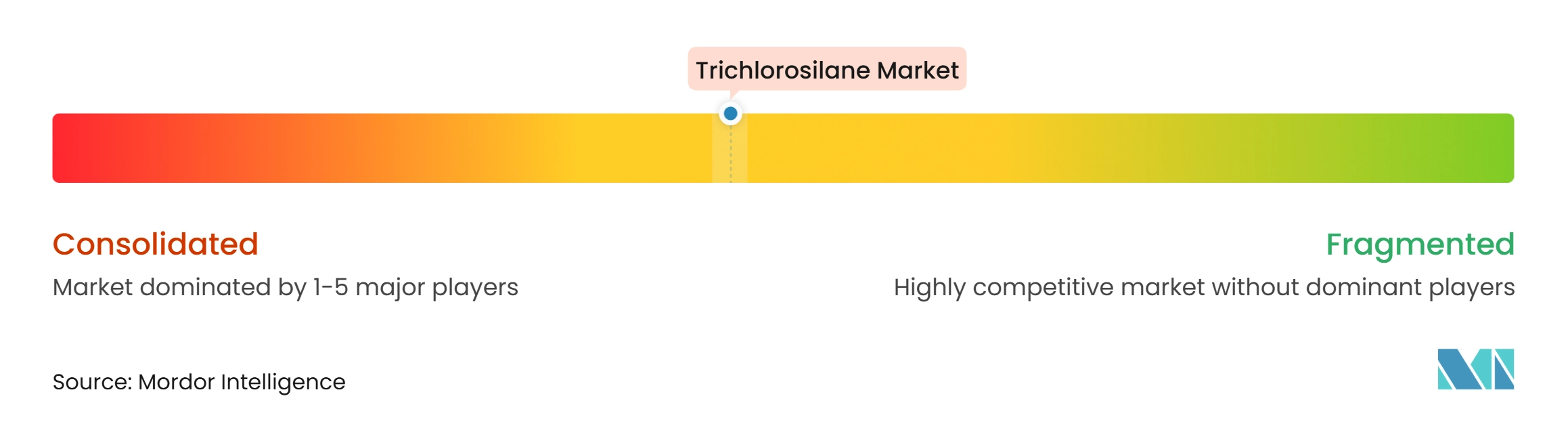
The trichlorosilane market is moderately consolidated among producers capable of supplying high-purity material for semiconductor use, where customer approval and consistent product quality are significant requirements. Wacker, Hemlock Semiconductor, Shin-Etsu Chemical, Tongwei, GCL Tech, Daqo, and East Hope hold different positions across the value chain. Chinese integrated producers primarily use solar-grade trichlorosilane in captive polysilicon operations, linking their demand to solar production levels. Western producers place greater emphasis on differentiated electronic and semiconductor-grade products, where capability and customer qualification matter more than scale alone.
Wacker commissioned a semiconductor-grade polysilicon cleaning line at Burghausen in 2025, expanding capacity by more than 50%. Hemlock Semiconductor began its new hyper-pure polysilicon project following its January 2025 CHIPS incentive award and strengthened commercial coverage for external chlorosilane sales in September 2025. These actions supported premium electronic applications and external sales channels, rather than reliance on solar-grade output alone. Competition also centers on qualifications, process integration, and long-term customer relationships that support dependable supply for sensitive applications.
Jiangxi Chenguang New Materials co-drafted the GB/T 30652 standard for silicon epitaxy-grade trichlorosilane, creating a standards-related qualification barrier. Tangshan Sunfar secured provincial approval for a chlorosilane materials innovation center in January 2025 and gained recognition for electronic-grade dichlorosilane in May 2025[2]. Oman's new projects leave room for toll manufacturing and long-term supply agreements, as the regional supplier base remains in its early stages.
Trichlorosilane Industry Leaders
-
GCL TECH
-
Tongwei Group Co., Ltd.
-
Daqo New Energy Corp.
-
Wacker Chemie AG
-
Hemlock Semiconductor Operations LLC
- *Disclaimer: Major Players sorted in no particular order
Trichlorosilane Market Companies Covered in this Report
- Daqo New Energy Corp.
- East Hope Group
- GCL TECH
- Hemlock Semiconductor Operations LLC
- Hubei Jianghan New Materials Co., Ltd.
- Jiangxi Chenguang New Materials Co., Ltd.
- OCI Ltd
- REC Silicon ASA
- Shin-Etsu Chemical Co., Ltd.
- Tangshan Sunfar Silicon Industries Co., Ltd.
- TBEA Co., Ltd.
- Tokuyama Corporation
- Tongwei Group Co., Ltd.
- Wacker Chemie AG
- Zhejiang Xinan Chemical Industrial Group Co., Ltd.
Recent Industry Developments in Trichlorosilane Market
- February 2026: United Solar Polysilicon commenced commercial polysilicon production at its USD 1.6 billion facility in Sohar Freezone, Oman, with a trichlorosilane-based production capacity of 100,000 tons/year. The facility is supported by IFC and Oman's Future Fund, with Waaree Solar as an offtake partner.
- July 2025: OCI Holdings and Tokuyama Corporation broke ground on a USD 435 million trichlorosilane (TCS)-based semiconductor-grade polysilicon joint venture (OSTM) at Samalaju Industrial Park, Sarawak, Malaysia, targeting 10,000 tons/year. The facility targets full commercial production in 2029 and will supply semiconductor companies in Korea, Japan, and Taiwan.
Global Trichlorosilane Market Report Scope
Trichlorosilane is a colorless, volatile, and flammable inorganic liquid with the chemical formula SiHCl₃. It has a sharp, pungent odor and a boiling point of 31.8°C, making it highly reactive under standard atmospheric conditions. The compound is primarily used as an intermediate in the production of high-purity polysilicon, a key raw material in the semiconductor and solar photovoltaic industries.
The trichlorosilane market is segmented by product grade, application, end-user industry, and geography. By product grade, the market is segmented into solar grade, electronic grade, industrial grade, and others. By application, the market is segmented into polysilicon production, epitaxial wafer deposition, silane coupling agents, chemical intermediates, and others. By end-user industry, the market is segmented into solar energy, semiconductor and electronics, chemical processing, telecommunications, automotive and mobility, and others. The report also covers market sizes and forecasts for trichlorosilane across 15 countries in major regions. The market sizes and forecasts are provided in terms of value (USD).
Segmentation Overview
| Solar Grade |
| Electronic Grade |
| Industrial Grade |
| Others |
| Polysilicon Production |
| Epitaxial Wafer Deposition |
| Silane Coupling Agents |
| Chemical Intermediates |
| Others |
| Solar Energy |
| Semiconductor and Electronics |
| Chemical Processing |
| Telecommunications |
| Automotive and Mobility |
| Others |
| Asia-Pacific | China |
| India | |
| Japan | |
| South Korea | |
| ASEAN Countries | |
| Rest of Asia-Pacific | |
| North America | United States |
| Canada | |
| Mexico | |
| Europe | Germany |
| United Kingdom | |
| France | |
| Italy | |
| NORDIC Countries | |
| Rest of Europe | |
| South America | Brazil |
| Argentina | |
| Rest of South America | |
| Middle East and Africa | Saudi Arabia |
| South Africa | |
| Rest of Middle East and Africa |
| By Product Grade | Solar Grade | |
| Electronic Grade | ||
| Industrial Grade | ||
| Others | ||
| By Application | Polysilicon Production | |
| Epitaxial Wafer Deposition | ||
| Silane Coupling Agents | ||
| Chemical Intermediates | ||
| Others | ||
| By End-User Industry | Solar Energy | |
| Semiconductor and Electronics | ||
| Chemical Processing | ||
| Telecommunications | ||
| Automotive and Mobility | ||
| Others | ||
| By Geography | Asia-Pacific | China |
| India | ||
| Japan | ||
| South Korea | ||
| ASEAN Countries | ||
| Rest of Asia-Pacific | ||
| North America | United States | |
| Canada | ||
| Mexico | ||
| Europe | Germany | |
| United Kingdom | ||
| France | ||
| Italy | ||
| NORDIC Countries | ||
| Rest of Europe | ||
| South America | Brazil | |
| Argentina | ||
| Rest of South America | ||
| Middle East and Africa | Saudi Arabia | |
| South Africa | ||
| Rest of Middle East and Africa | ||
Key Questions Answered in the Report
What is current market size of Trichlorosilane Market?
The Trichlorosilane market size was valued at USD 6.15 billion in 2026 and is estimated to grow from USD 6.67 billion in 2027 to USD 10.05 billion by 2032, at a CAGR of 8.56% during the forecast period (2027-2032).
Which application is expected to grow fastest?
Epitaxial Wafer Deposition is projected to expand at a 9.67% CAGR through 2032 as demand for advanced logic and memory wafers rises. This application requires ultra-high-purity material, and its demand is linked to advanced logic and high-bandwidth memory rather than standard solar-grade feedstock, helping shift the application mix toward higher-value material.
Which end-user segment leads demand today?
Solar Energy holds 76.03% of 2026 end-user share because photovoltaic polysilicon is the main volume outlet. Semiconductor and Electronics has the fastest growth outlook, at a 10.52% CAGR, supported by AI servers, 5G infrastructure, power semiconductor demand, and ongoing additions to advanced wafer capacity.
Which region has the fastest projected growth?
The Middle East and Africa are forecast to grow at a 10.09% CAGR through 2032, supported by new investments in polysilicon and trichlorosilane. Oman’s Sohar and Sur projects are building a regional upstream silicon chemistry base with longer-term feedstock demand, while regional semiconductor initiatives may strengthen downstream material requirements.