
Market Overview
| Study Period | 2020 - 2031 |
|---|---|
| Forecast Data Period | 2026 - 2031 |
| Base Year Market Size (2025) | USD 1.18 Billion |
| Market Size (2026) | USD 1.26 Billion |
| Market Size (2031) | USD 1.71 Billion |
| Growth Rate (2026 - 2031) | 6.38 % |
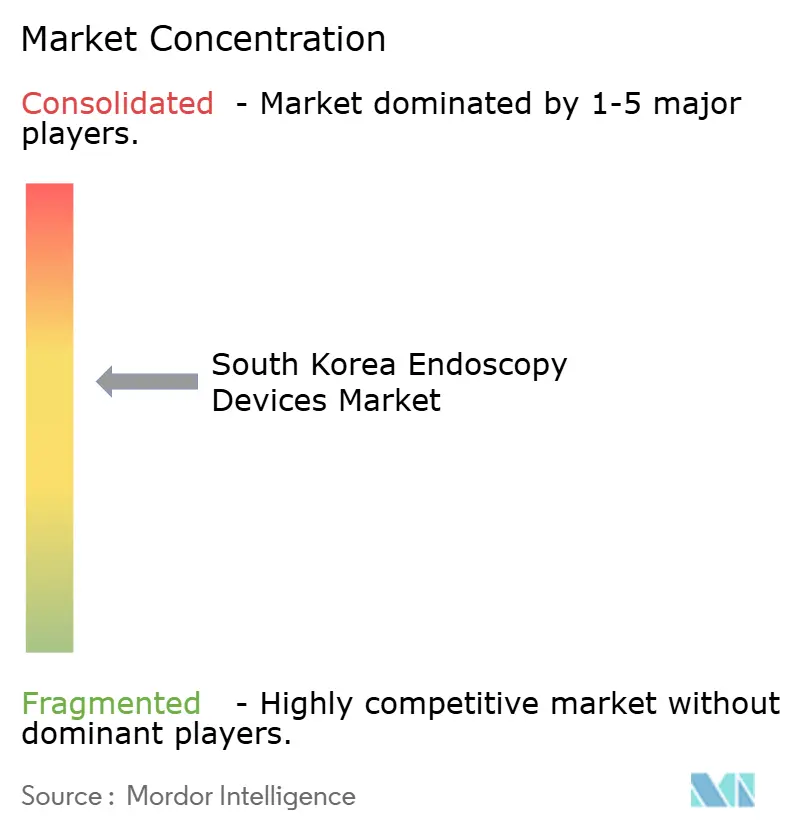
| Market Concentration | Medium |
Major Players *Disclaimer: Major Players sorted in no particular order Image © Mordor Intelligence. Reuse requires attribution under CC BY 4.0. | |
South Korea Endoscopy Devices Market Analysis by Mordor Intelligence
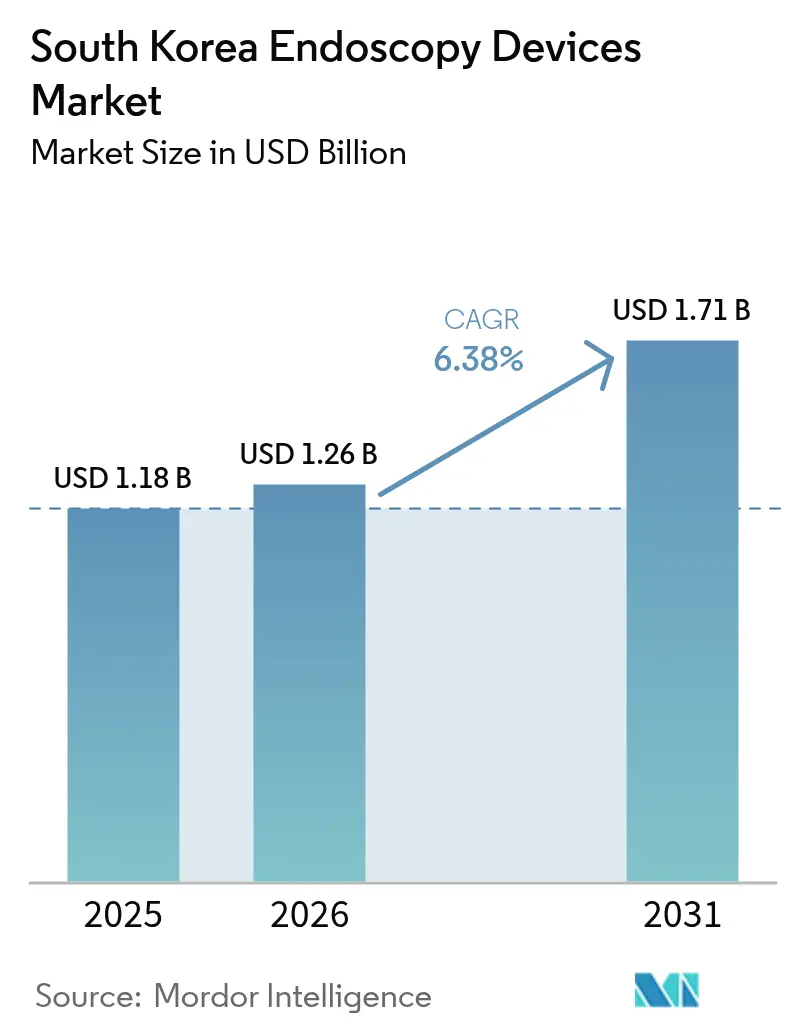
The South Korean endoscopy devices market size was valued at USD 1.18 billion in 2025 and estimated to grow from USD 1.26 billion in 2026 to reach USD 1.71 billion by 2031, at a CAGR of 6.38% during the forecast period (2026-2031). This momentum is fueled by the country’s rapidly ageing population, a high burden of gastrointestinal malignancies and the swift uptake of artificial-intelligence-enabled platforms that deliver ≥95% lesion-detection sensitivity and specificity. Rising procedure volumes under the National Cancer Screening Program, widening reimbursement for complex therapies such as endoscopic submucosal dissection and the growth of ambulatory surgery centres (ASCs) are reinforcing demand. Parallel government policies—including the Digital Medical Products Act (January 2025) and the 1st Master Plan for Fostering and Supporting the Medical Device Industry—are catalysing domestic production and export capacity, while AI-driven decision support systems shorten procedure time and raise diagnostic precision. Counterbalancing forces include high upfront equipment costs, complex reprocessing rules and a shortage of skilled endoscopists outside metropolitan hubs, all of which temper adoption in smaller hospitals and clinics.
Key Report Takeaways
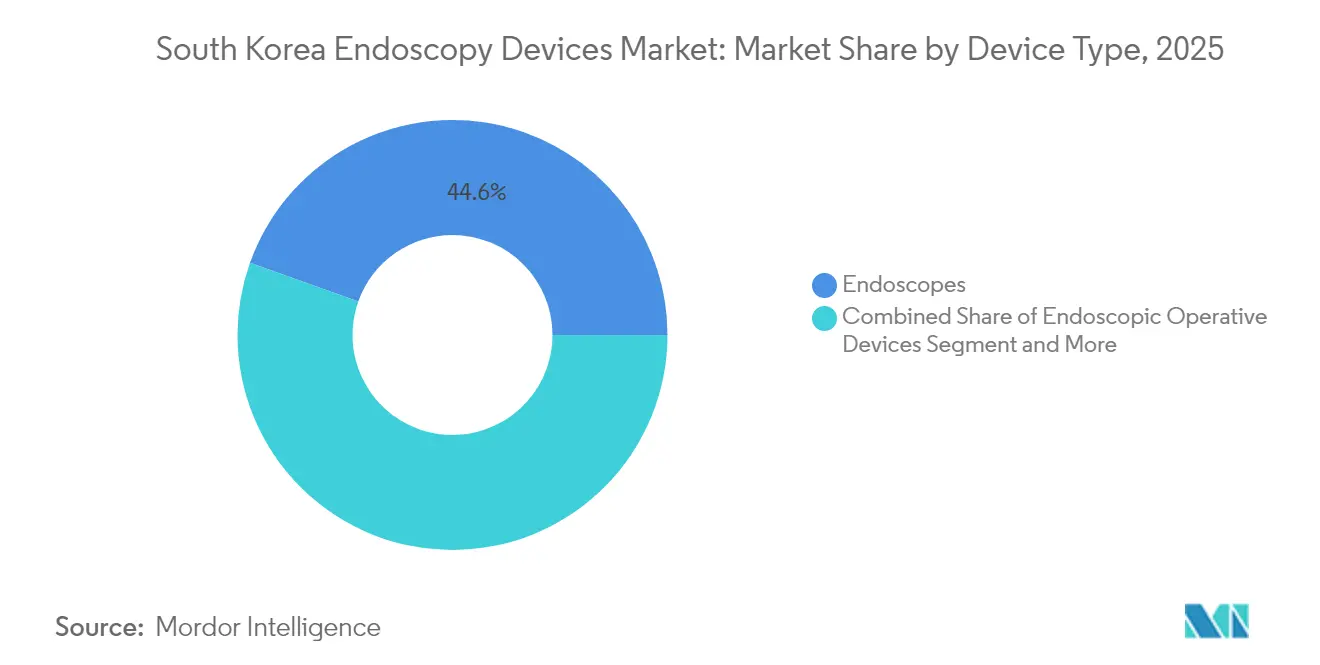
- By device type, endoscopes captured 44.55% of the South Korean endoscopy devices market share in 2025. Capsule endoscopes are projected to expand at a 13.45% CAGR through 2031, the fastest across all device types.
- By application, gastroenterology commanded 54.60% of the South Korean endoscopy devices market size in 2025 and continues to lead total procedure counts. Gynaecology is forecast to record the highest application-level CAGR at 10.6% between 2026-2031.
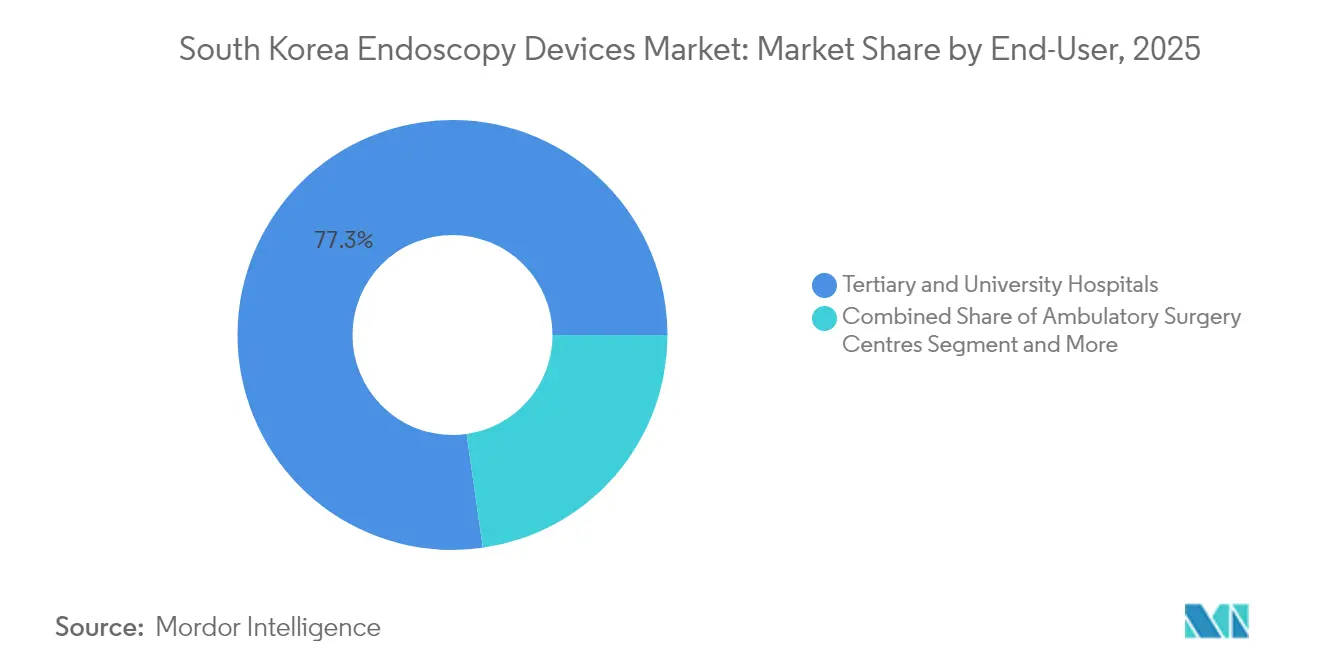
- By end-user, tertiary and university hospitals held 77.25% revenue share in 2025, whereas ASCs are set to grow at a 11.4% CAGR over the same period.
Note: Market size and forecast figures in this report are generated using Mordor Intelligence’s proprietary estimation framework, updated with the latest available data and insights as of 2026.
South Korea Endoscopy Devices Market Trends and Insights
Drivers Impact Analysis*
| Driver | (~) % Impact on CAGR Forecast | Geographic Relevance | Impact Timeline |
|---|---|---|---|
| Growing burden of gastrointestinal & oncological disorders | +1.8% | National, higher in urban centres | Medium term (2-4 years) |
| Expansion of National Health Insurance coverage for advanced procedures | +1.2% | National | Medium term (2-4 years) |
| Government initiatives to strengthen domestic manufacturing | +0.9% | National, industrial hubs | Long term (≥ 4 years) |
| Rising adoption of ambulatory/day-case surgery models | +0.7% | Seoul, Busan, Daegu | Short term (≤ 2 years) |
| Integration of AI & robotics into workflows | +2.1% | National, tertiary hospitals | Medium term (2-4 years) |
| Source: Mordor Intelligence | |||
Growing burden of gastrointestinal & oncological disorders
South Korea documented 292,221 new cancer cases in 2024, and the gastric-cancer incidence rate of 27.0 per 100,000 ranked third worldwide. While mortality is falling 4.53% annually, the absolute patient pool rises as the median age climbs beyond 45 years. Biennial esophagogastroduodenoscopy under the National Cancer Screening Program has boosted early-stage detection, lifting 5-year survival to >70% among screened cohorts. Together these epidemiological patterns underpin sustained procedure growth, directly supporting the South Korean endoscopy devices market.
Expansion of National Health Insurance coverage for advanced procedures
Universal health coverage now reimburses high-complexity techniques such as endoscopic submucosal dissection (ESD) for early gastric cancer. National registries show a year-on-year increase in ESD since 2018, particularly among patients ≥60 years. Improved affordability propels device demand but reimbursement gaps remain; micro-costing studies reveal National Health Insurance covers only 71.7% of cystoscopy costs at large hospitals, urging policy fine-tuning[1].
Government initiatives to strengthen domestic manufacturing
The 1st Master Plan (2023-2027) targets top-five global export status for medical devices, with endoscopy identified as a priority. Complementary acts such as the Digital Medical Products Act set streamlined regulatory pathways for AI-enhanced systems effective 2025. These frameworks attract foreign direct investment while accelerating indigenous R&D, reshaping the competitive field and stimulating the South Korean endoscopy devices market[2].
Rising adoption of ambulatory/day-case surgery models
Seoul, Busan and Daegu report the highest penetration of ASCs, where procedure costs are 60% lower than in hospital outpatient departments and patient turnover is faster. Upper-GI endoscopies dominate ASC caseloads, driving demand for compact, reusable towers and single-use accessory kits suited to high-throughput environments[3]. As payers increasingly favour site-neutral payments, the shift to ASCs should continue through 2027.
Restraints Impact Analysis*
| Restraint | (~) % Impact on CAGR Forecast | Geographic Relevance | Impact Timeline |
|---|---|---|---|
| High capital & lifecycle maintenance costs | −1.2% | Nationwide, stronger in smaller hospitals | Short term (≤ 2 years) |
| Risk of device-related infections and complex reprocessing | −0.8% | National | Medium term (2-4 years) |
| Competition from non-invasive imaging modalities | −0.6% | Urban imaging hubs | Long term (≥ 4 years) |
| Shortage of skilled endoscopists in non-metropolitan areas | −0.9% | Rural provinces | Medium term (2-4 years) |
| Source: Mordor Intelligence | |||
High capital & lifecycle maintenance costs
A multicentre 2024 micro-costing study placed average cystoscopy costs at USD 100.8 in one flagship Seoul hospital and USD 119.2 at a public facility; reimbursement covered only 71.7% and 60.6% respectively, leaving significant unfunded gaps. Maintenance and reprocessing account for nearly half of lifecycle expenses, discouraging smaller clinics from purchasing premium systems and constraining the South Korean endoscopy devices market in resource-limited settings.
Risk of device-related infections and complex reprocessing requirements
Endoscope-associated infections, although infrequent, persist because channel designs harbour biofilms. A 2024 nationwide survey recorded 98.9% adherence to reprocessing guidelines yet only 56% compliance in transporting contaminated scopes in sealed containers. Growing attention to infection control is fuelling debate on single-use solutions, but each procedure generates 1.34 kg of waste, raising environmental and cost concerns.
*Our forecasts treat driver/restraint impacts as directional, not additive. The impact forecasts reflect baseline growth, mix effects, and variable interactions.
Segment Analysis
By Device Type: Endoscopes Maintain Primacy as Capsules Accelerate
The endoscopes segment delivered 44.55% of the South Korean endoscopy devices market share in 2025, anchored by high-volume gastric-cancer screening and the rapid infusion of AI algorithms into conventional video scopes. Visualization systems upgraded to 4K/8K bolster diagnostic confidence in tertiary centres, while operative devices grow steadily on rising therapeutic procedures such as ESD.
Capsule systems are poised for a 13.45% CAGR through 2031, reflecting patient preference for non-invasive technologies and robust connectivity that streams images in real time. Early pilot data show technical completion rates >90% in small-bowel imaging, prompting payer discussions on broader reimbursement. Robotic-assisted platforms, though nascent, achieved an 86.1% technical success rate in colorectal ESD trials and hold promise for complex resections.

By Application: Gastroenterology Dominates Amid Broadening Clinical Footprint
Gastroenterology accounted for 54.60% of the South Korean endoscopy devices market size in 2025 and remains essential to the biennial National Cancer Screening Program that has 50% participation. Procedure volumes have rebounded to pre-pandemic levels for colonoscopy yet lag for gastroscopy among low-income cohorts, underscoring access challenges that still stimulate equipment demand in public facilities.
Gynaecology is the fastest grower at an 10.6% CAGR to 2031, propelled by outpatient hysteroscopy and laparoscopic interventions that minimise recovery time. Pulmonology, neurology/ENT and orthopaedics also expand as single-use bronchoscopes, neuroendoscopes and arthroscopes lower cross-infection risk and facilitate same-day discharge.
By End-User: Tertiary Hospitals Lead While ASCs Surge
Tertiary and university hospitals held 77.25% of revenue in 2025, relying on scale and specialist teams to support investment in AI-ready towers and robotic modules. Their dominance concentrates expertise in metropolitan areas, obliging rural patients to travel for advanced care—a dynamic that underscores the strategic significance of tele-endoscopy platforms.
ASCs, however, are forecast to log a 11.4% CAGR to 2031, energised by payer preference for cost-efficient sites and patient demand for speedier service. Gastroenterology is the anchor specialty in these facilities, where high turnover favours compact, easy-to-sterilise platforms, further broadening the South Korean endoscopy devices market.
Geography Analysis
Metropolitan zones, notably Seoul, Busan and Daegu, conduct the majority of procedures and house most AI-equipped systems, sustaining technological diffusion. Rural provinces lag because only 35% of endoscopists practice outside large cities, amplifying care inequity and lengthening waitlists. The South Korean government’s fee-for-service regime drives higher volumes in urban centres, reinforcing regional imbalances.
Pandemic-era data showed a sharper colonoscopy decline among low-income groups; recovery has remained incomplete for gastroscopy in the medical-aid population, underlining socioeconomic determinants of utilisation researchgate.net. Insurance expansion for advanced techniques is expected to narrow gaps, yet capital-budget constraints still limit adoption of cutting-edge systems outside tertiary hubs.
Continued investment in ASCs—especially in satellite cities—should disperse capacity more evenly. Coupled with mobile endoscopy vans and remote mentoring platforms, these initiatives could redistribute procedure volumes, gradually levelling the geographic spread of the South Korean endoscopy devices market.
Competitive Landscape
Olympus, Fujifilm and HOYA (PENTAX Medical) anchor the market through extensive service networks and continuous product upgrades. Olympus is piloting an “Intelligent Endoscopy Ecosystem” that integrates AI-based detection and automated reporting for release by March 2026. Fujifilm’s ELUXEO 4K offers multi-light imaging and has gained rapid traction in Seoul’s tertiary centres.
Domestic innovators are gaining ground. ENDOROBOTICS developed the ROBOPERA platform, enhancing ESD efficiency and expanding indications for early gastric lesions. Next Biomedical’s NexPowder aims to become the first Korea-registered standard haemostatic agent, addressing post-procedural bleeding gaps. Lunit’s INSIGHT platform adds AI polyp-detection overlays compatible with existing towers, offering a cost-effective upgrade path for smaller hospitals.
Strategic collaborations accelerate innovation: Medtronic’s 2025 distribution agreement with Dragonfly Endoscopy widens access to advanced pancreaticobiliary tools in East Asia. International OEMs often partner local firms for after-sales support, navigating Korea’s rigorous but transparent regulatory environment.
South Korea Endoscopy Devices Industry Leaders
-
Karl Storz SE & Co. KG
-
Olympus Corporation
-
Fujifilm Holdings Corp.
-
HOYA Corporation (PENTAX Medical)
-
Medtronic plc
- *Disclaimer: Major Players sorted in no particular order
Market Opportunities and Future Outlook
Government-backed funding and validation pathways are creating whitespace for AI-enabled and robotic endoscopy platforms that fit Korea’s throughput and workforce constraints, especially outside metropolitan tertiary centers. A key catalyst is the Pan-Ministry Advanced Medical Device R&D Project (2026-2032), a KRW 940.8 billion program that explicitly targets world-first technologies such as autonomously steering flexible endoscopes, aligning with hospital demand for decision support, standardized reporting, and shorter procedure times. Reimbursement expansion for advanced therapies (for example, ESD for early gastric cancer) and ongoing infection-control scrutiny around reprocessing also support demand for AI software overlays compatible with installed towers, high-throughput ASC-ready systems, and selective single-use or simplified-reprocessing accessories where compliance gaps exist.
Export-focused scaling by domestic manufacturers is another near-term opportunity, as firms leverage international certifications to diversify beyond the local hardware base led by incumbents. FineMedix’s CE MDR certification for seven endoscopic devices (June 2026) shows a concrete route for Korea-based device makers to compete in regulated overseas markets, and national collaborations such as MediIntech’s robotic endoscope development work with Seoul National University Hospital and other research institutes build local capability in intelligent endoscopy. In commercial terms, this mix supports partnerships that bundle global endoscopy hardware with locally approved AI software, favoring suppliers that can provide end-to-end evidence packages (clinical validation, MFDS documentation, and post-market workflows) mapped to Korea’s Class I-IV device framework for both conventional and AI/ML-enabled products.
Recent Industry Developments
- July 2026: Daewoong Pharmaceutical partnered with Waysen to enter the AI endoscopy market in South Korea. The collaboration expands commercialization routes for AI-assisted endoscopy in hospitals by combining a local healthcare commercial footprint with an AI endoscopy developer.
- May 2026: Olympus Corporation announced an exclusive global distribution agreement with EndoRobotics Co., Ltd. for robot-assisted technologies within its EndoTherapy portfolio. The agreement broadens Olympus’s therapeutic endoscopy offering and increases competitive intensity around robotic-assisted interventions and associated accessory ecosystems.
- July 2025: Olympus Korea reported the first clinical adoption in Korea of the EU-ME3 endoscopic ultrasound processor at Soon Chun Hyang University Hospital Bucheon. Early reference-site installations are intended to support downstream procurement momentum for EUS processors, scopes, and compatible consumables in tertiary settings.
Research Methodology Framework and Report Scope
Market Definition and Coverage
For this study, the market covers the value of endoscopy devices sold and used in South Korea for diagnostic and interventional visualization, including scopes, operative tools, visualization systems, and key system components.
Scope exclusions: We exclude procedure fees, service contracts, and facility costs that sit outside device and component sales.
Segmentation Overview
- By Device Type
- Endoscopes
- Rigid Endoscopes
- Flexible Endoscopes
- Capsule Endoscopes
- Robotic-Assisted Endoscopes
- Endoscopic Operative Devices
- Irrigation/Suction Systems
- Access Devices & Ports
- Wound Protectors
- Insufflation Devices
- Manual Operative Instruments
- Visualization Systems
- Endoscopic Cameras
- SD Visualization
- HD Visualization
- 4 K / 8 K Visualization
- Components
- Light Sources
- Image Processors
- Insufflators & Pumps
- Endoscopes
- By Application
- Gastroenterology
- Orthopaedic Surgery
- Cardiology
- Gynaecology
- Neurology / ENT
- Pulmonology / Thoracoscopy
- By End-user
- Tertiary & University Hospitals
- General & Community Hospitals
- Ambulatory Surgery Centres (ASCs)
- Specialty Clinics & Offices
Data Sources, Market Sizing, and Validation
Desk Research
Desk work started by mapping the country level demand pool and the device ecosystem that supports it, so the market model could be built on measurable signals. We used public sources such as Korea Disease Control and Prevention Agency publications, National Health Insurance Service fee schedules and utilization releases, Statistics Korea demographic series, and Ministry of Food and Drug Safety notices for approvals and recalls.
To translate demand into device value, we also reviewed sources such as hospital procurement disclosures where available, importer and exporter statistics from Korea Customs Service, peer reviewed clinical papers that report procedure trends, and company filings and investor presentations for product mix cues. In addition, we used paid subscriptions for company financials and intelligence, shipment level trade checks, and patent lookups to support assumptions on product rollout and pricing direction. These desk research sources are illustrative only, and many other public references were used to collect, validate, and clarify data points during the study.
Primary Interviews and Surveys
Primary inputs were collected through expert interviews and structured surveys with hospital procurement staff, clinicians, distributors, and service partners active in South Korea. These respondent discussions were used to tighten assumptions on replacement cycles for scopes and processors, the share of reusable versus single use accessories, and the pricing differences tied to imaging resolution and procedure complexity.
Distribution of primary research fieldwork respondents
| Company type | Respondent position |
|---|---|
| Top tier: 33% | CXOs: 12% |
| Mid tier: 51% | Functional/Unit leaders: 35% |
| Smaller Players: 16% | Managers: 53% |
Market-Sizing & Forecasting
Sizing was built using a top down approach that reconstructs the country value pool from procedure activity, installed base needs, and reimbursement backed adoption signals, and then converts these into device demand by category. Once the demand pool was formed, we checked the totals with selective bottom up approximations such as sampled average selling price times volume for scopes, processors, and key operative consumables, followed by distributor channel checks to adjust outliers.
Inputs used in the model included the aging population trend, procedure volumes across major endoscopy applications, replacement and uptime assumptions for core systems, utilization shifts toward high definition imaging, and the penetration of therapeutic endoscopic procedures that consume more operative devices. Forecasting used scenario analysis supported by expert views on screening intensity, hospital capital budgets, and expected pricing moves for visualization stacks and components. Where bottom up visibility was limited for smaller accessories, gaps were handled using validated attach rates per procedure and stress tested against procurement feedback.
Data Validation & Update Cycle
Outputs were validated through multiple checks so the final totals stay consistent with real world signals. We compared results against independent indicators such as procedure growth, import trends for relevant device categories, and hospital replacement cycles shared in interviews, then investigated any sharp year to year jumps before sign off.
A second analyst review is completed for assumptions, unit logic, and currency treatment, and respondents are re contacted when a key variable moves outside the expected range. Reports are refreshed annually, with interim updates triggered by material events such as reimbursement changes, major regulatory actions, or demand shocks. Before delivery, the model is rerun with the newest available data so clients receive the latest updated view.
Mordor Intelligence's South Korea Endoscopy Devices Market Size Compared With Other Published Estimates
Published market sizes for South Korea endoscopy devices often do not match because the scope line is drawn differently and the conversion from procedures to device value is handled with different pricing and replacement assumptions. Differences also show up when base years vary, when some studies lean on optimistic utilization ramps, or when currency timing is not aligned.
Some estimates stay narrower by counting only a limited product subset, and they can also exclude major capital equipment categories like full visualization stacks and core components. Mordor Intelligence counts the market total only when endoscopes, operative devices, visualization systems, and their key components are included together, and procedure led demand checks are used to keep attach rates and pricing realistic for South Korea.
Benchmark comparison
| Source | Market Size | Gaps in Research Methodology |
|---|---|---|
| Mordor Intelligence | USD 1.18 B (2025) | |
| Industry Publisher A | USD 0.40 B (2024) | Uses a narrower device basket that typically emphasizes scopes and selected operative tools, and it applies a different base year that can undercount capital refresh for visualization systems and components. |
| Industry Publisher B | USD 1.20 B (2025) | Reports a similar headline year but often stretches the included scope to adjacent spend lines or applies a lower price progression, which changes totals even when procedure growth assumptions look comparable. |
The spread in the table largely comes from what is included in the device basket and how procedure demand is translated into replacement and attach rates. By keeping the scope tied to clearly defined device categories and then validating pricing and utilization through repeatable checks, the final number stays traceable and easier to defend in planning discussions.
Key Questions Answered in the Report
What is the current size of the South Korean endoscopy devices market?
The South Korean endoscopy devices market size stands at USD 1.26 billion in 2026.
How fast is the market expected to grow?
The sector is projected to post a 6.38% CAGR, reaching USD 1.71 billion by 2031.
Which device segment is growing the quickest?
Capsule endoscopes show the highest momentum with a 13.45% CAGR forecast for 2026-2031.
What application area accounts for the largest revenue share?
Gastroenterology leads with 54.60% of revenue in 2025 thanks to nationwide gastric-cancer screening.
Why are ambulatory surgery centres important to market growth?
ASCs cut procedure costs by 60% versus hospital outpatient departments and drive a projected 11.4% CAGR in device demand through 2031.