
Market Overview
| Study Period | 2020 - 2031 |
|---|---|
| Forecast Data Period | 2026 - 2031 |
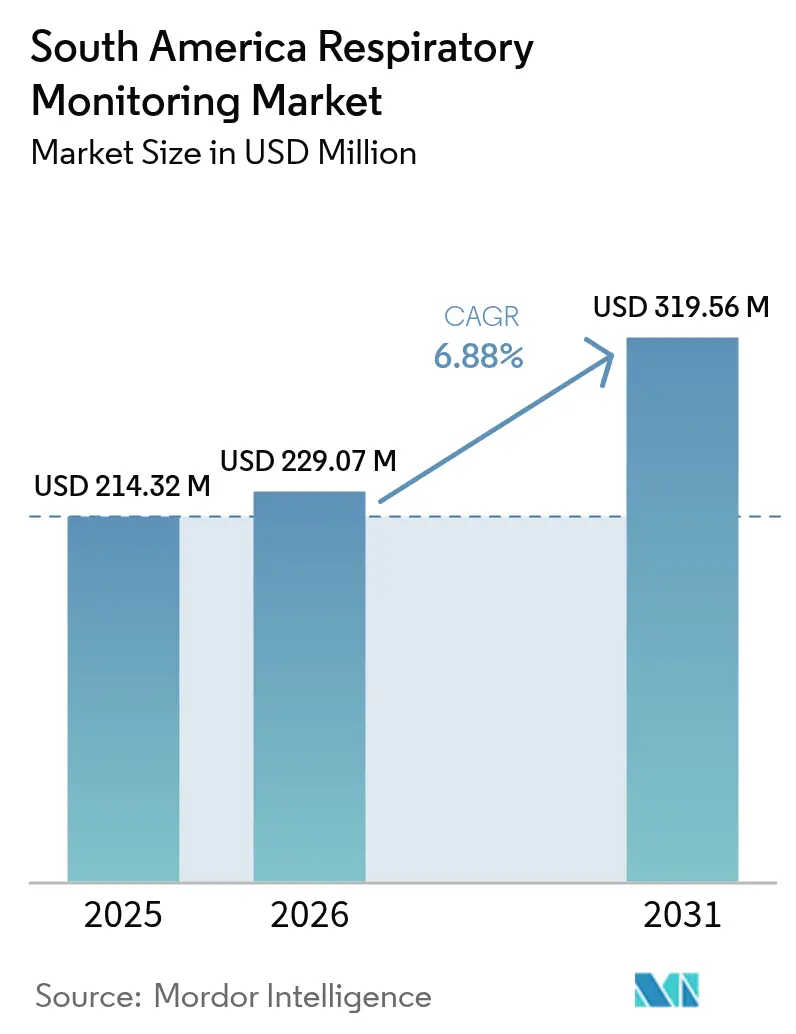
| Base Year Market Size (2025) | USD 214.32 Million |
| Market Size (2026) | USD 229.07 Million |
| Market Size (2031) | USD 319.56 Million |
| Growth Rate (2026 - 2031) | 6.88 % |
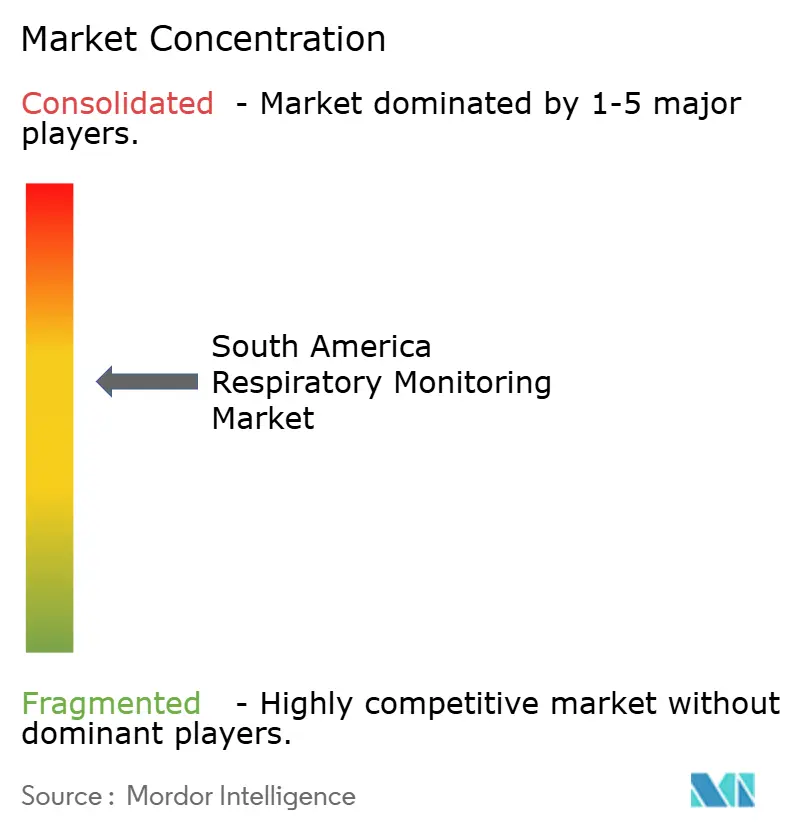
| Market Concentration | Medium |
Major Players *Disclaimer: Major Players sorted in no particular order Image © Mordor Intelligence. Reuse requires attribution under CC BY 4.0. | |
South America Respiratory Monitoring Market Analysis by Mordor Intelligence
South American respiratory monitoring market size in 2026 is estimated at USD 229.07 million, growing from 2025 value of USD 214.32 million with 2031 projections showing USD 319.56 million, growing at 6.88% CAGR over 2026-2031. Digitization lessons learned during the pandemic, supportive regulatory shifts, and an aging population living longer with chronic respiratory diseases jointly underpin this steady expansion. Governments are simplifying device approvals, broadband penetration is enabling real-time data transfer, and patients are seeking continuous, home-based care that blends hardware with cloud analytics. Together, these trends are accelerating product rollout, broadening clinical applications, and opening new commercial pathways across the region. Brazil’s health ministry confirmed the lowest COVID-19 case load since 2020 in early 2025, yet national agendas still prioritize respiratory readiness, screening, and surveillance programs. Colombia’s 192% surge in respiratory telecare visits during the pandemic left a lasting digital foundation. COPD prevalence in Greater São Paulo sits at 15.8%, with 87.5% of cases undiagnosed, underscoring a large latent market for screening equipment. Capnographs, AI-enabled wearables, and cloud-connected platforms are gaining momentum, while home-care services record double-digit growth as reimbursement frameworks widen.
Key Report Takeaways
- By device type, spirometers led with a 32.70% revenue share in 2025, while capnography is set to grow at a 13.58% CAGR through 2031.
- By technology, conventional table-top units held 34.05% of the South American respiratory monitoring market share in 2025; AI-integrated and cloud-connected devices will rise at a 16.02% CAGR to 2031.
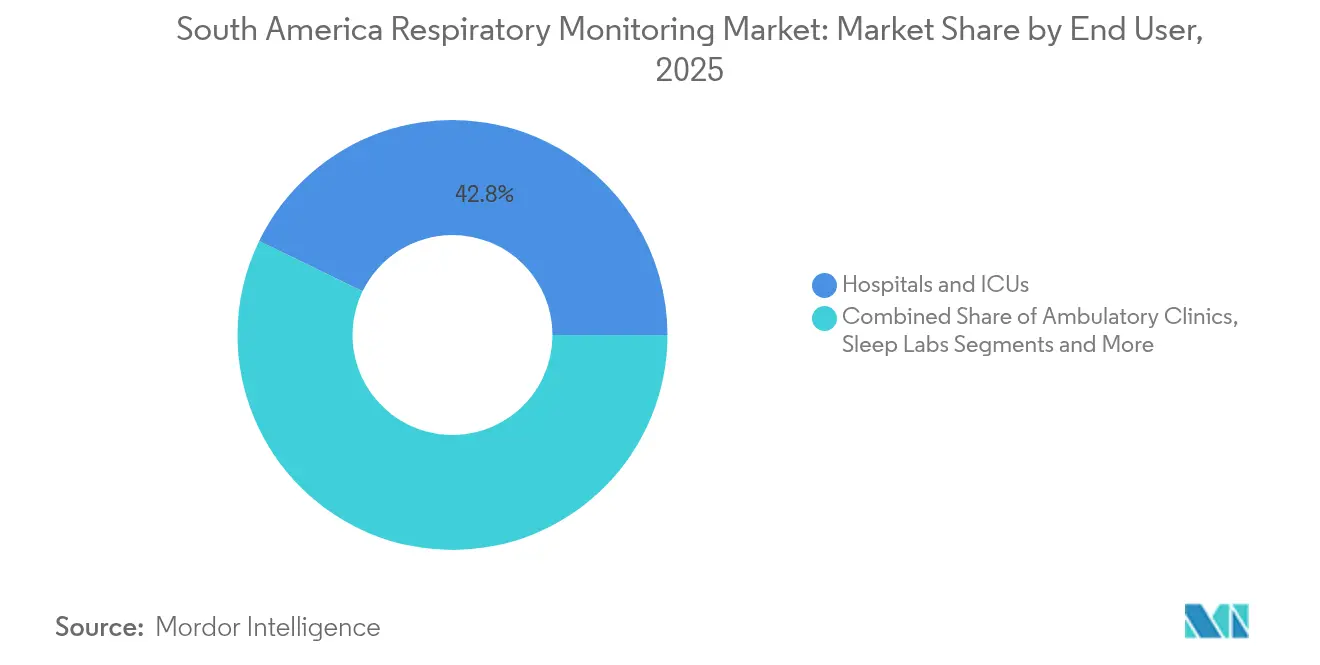
- By end user, hospitals and ICUs commanded 42.80% of the South American respiratory monitoring market size in 2025; home-care settings are projected to expand at 14.45% CAGR to 2031.
- By application, COPD accounted for 35.60% demand in 2025, whereas sleep apnea monitoring is growing at 13.82% CAGR.
- By country, Brazil captured 49.70% of 2025 revenues, while Colombia is forecast to lead growth at 11.93% CAGR through 2031.
Note: Market size and forecast figures in this report are generated using Mordor Intelligence’s proprietary estimation framework, updated with the latest available data and insights as of 2026.
Market Trends and Insights
Drivers Impact Analysis of South America Respiratory Monitoring Market*
| Driver | (~) % Impact on CAGR Forecast | Geographic Relevance | Impact Timeline |
|---|---|---|---|
| Rising COPD and asthma prevalence | +1.80% | Brazil, Argentina, Chile | Long term (≥ 4 years) |
| Increasing adoption of home-based respiratory monitoring | +1.50% | Urban Brazil, Colombia, Argentina | Medium term (2-4 years) |
| Technological shift toward wearable/connected devices | +1.20% | Brazil, Chile (early adoption) | Medium term (2-4 years) |
| Expansion of tele-pulmonology reimbursement in South America | +0.90% | Brazil, Colombia, Argentina | Short term (≤ 2 years) |
| Stricter occupational-safety norms in mining and agribusiness | +0.60% | Colombia, Peru, Chile mining regions | Long term (≥ 4 years) |
| Government programs for early COPD detection | +0.30% | Brazil, Argentina public health systems | Medium term (2-4 years) |
| Source: Mordor Intelligence | |||
Rising COPD and Asthma Prevalence
Chronic respiratory conditions remain the region’s most persistent health challenge. COPD affects 15.8% of adults over 40 in São Paulo, and 48.4% of diagnosed patients across Argentina, Brazil, and Colombia recorded at least one severe exacerbation during a five-year follow-up, raising hospital readmission rates and costs.[1]World Bank, “Digital Health in Latin America,” worldbank.org Mining-linked pneumoconiosis reaches 42.3% among underground workers in Cundinamarca, Colombia, reinforcing the need for continuous occupational monitoring. South America’s demographic shift toward older age groups, compounded by urban pollution, ensures COPD and asthma remain primary growth engines for the South American respiratory monitoring market.
Increasing Adoption of Home-Based Respiratory Monitoring
Telemonitoring first scaled during COVID-19 and has since matured into a standard care pathway. The Brazilian Association of Sleep Medicine formalized tele-PAP guidelines that improved equipment adherence and lowered clinic load.[2]Paulo Camargos et al., “COPD Prevalence in São Paulo,” SciELO, scielo.brHome sleep tests validated by the ELSA-Brasil cohort showed strong diagnostic concordance, proving that reliable results do not require lab settings. Chile’s chronic respiratory home-care pilots reported higher patient satisfaction and better quality-of-life scores, bolstering payer confidence. With broadband and smartphone penetration climbing, clinicians can now supervise treatment plans remotely, fueling growth in the South American respiratory monitoring market.
Technological Shift Toward Wearable/Connected Devices
Artificial intelligence and miniaturized sensors are moving respiratory assessments from periodic clinic visits to 24/7 observation. Wearable acoustic devices, smart textiles, and IoT platforms now track lung parameters continuously, feeding clinicians predictive dashboards that flag exacerbations early. Validation studies show smart garments reaching correlation coefficients exceeding 0.8 against optical motion capture systems, meeting medical-grade accuracy thresholds. Cloud-based analytics transform raw signals into actionable insights, enabling timely therapeutic adjustments and driving the next adoption wave across the South American respiratory monitoring market.
Expansion of Tele-Pulmonology Reimbursement in South America
Policymakers recognize remote care’s cost savings and reach. Brazil’s Unified Health System rolled out national Tele-ICU services that link 40 hospitals and trained 14,800 professionals; user satisfaction scores remain high. Argentina’s decentralized sleep apnea network processed nearly 500 tests in two years, cutting wait times and travel expenses. Regional insurers increasingly cover virtual consults and connected device data review, cementing revenue streams for vendors operating in the South American respiratory monitoring market.
Restraints Impact Analysis of South America Respiratory Monitoring Market*
| Restraint | (~) % Impact on CAGR Forecast | Geographic Relevance | Impact Timeline |
|---|---|---|---|
| High Capital Cost Of Advanced Devices | -2.10% | Global, with acute impact in Argentina & Rest of South America | Medium term (2-4 years) |
| Limited Reimbursement For Diagnostic Procedures | -1.80% | Brazil & Argentina core, moderate spillover to Colombia & Chile | Long term (≥ 4 years) |
| Poor Last-Mile Logistics In Amazon And Andean Interiors | -1.40% | Brazil Amazon region, Peru & Bolivia highlands, rural Colombia | Short term (≤ 2 years) |
| Shortage Of Trained Pulmonary Technicians | -1.20% | Global, with concentration in smaller markets outside Brazil-Argentina corridor | Medium term (2-4 years) |
| Source: Mordor Intelligence | |||
High Capital Cost of Advanced Devices
State hospitals and rural clinics struggle to fund AI-ready platforms that cost multiples of basic spirometers. Cheaper pulse oximeters often lack clinical validation, while premium sensors remain out of reach for many facilities, delaying technology refresh cycles. Supply-chain constraints and currency volatility add further pressure, tempering immediate penetration rates inside the South American respiratory monitoring market.
Limited Reimbursement for Diagnostic Procedures
Financing gaps persist. In São Paulo, 82.3% of identified COPD patients receive no pharmacotherapy, reflecting broader under-funding challenges.[3]Patricia Rangel et al., “COPD Treatment Gaps in Brazil,” Brazilian Journal of Medical and Biological Research, bjmbb.org Colombia’s 2025 premium hike of 5.36% lags medical inflation, squeezing provider budgets. Uneven reimbursement discourages investment in comprehensive monitoring suites and pushes clinicians to prioritize urgent care over proactive screening.
*Our forecasts treat driver/restraint impacts as directional, not additive. The impact forecasts reflect baseline growth, mix effects, and variable interactions.
South America Respiratory Monitoring Market Segment Analysis
By Device Type:
Spirometers Anchor Diagnostics While Capnographs SurgeSpirometers remain the cornerstone of pulmonary evaluation, accounting for 32.70% of 2025 revenues. Rigorous guidelines from the Latin American Thoracic Association standardize test protocols and secure ongoing purchases for primary and secondary care centers. Peak-flow meters support routine self-management, whereas full polysomnography systems address a growing sleep-disorder workload.
Capnographs post the fastest 13.58% CAGR thanks to integrations within multi-parameter monitors that visualize ventilation in real time. Partnerships such as Masimo and Philips expand installed bases in ICUs and surgical suites, reinforcing networked care models. Pulse oximetry continues to spread through home-care packs, while niche research sensors cater to specialized procedures.




By Technology:
AI-Integrated Platforms Disrupt Conventional Tableside ToolsConventional table-top hardware held 34.05% of the South American respiratory monitoring market share in 2025. Hand-held devices add portability for outpatient screening, and wireless adapters streamline data uploads to electronic records. Yet the momentum clearly favors intelligent, cloud-connected systems, which exhibit a 16.02% CAGR. Smart masks and AI-driven ventilator algorithms convert high-frequency data into forecasts of decompensation, allowing timely intervention. Vendors that combine firmware updates, analytics dashboards, and secure cloud storage continue to outpace pure hardware rivals in the South American respiratory monitoring market.
By End User:
Home-Care Growth Challenges Hospital DominanceHospitals and ICUs contributed 42.80% of 2025 sales, reflecting legacy purchasing cycles and critical-care needs. Sleep labs, specialty clinics, and occupational health centers follow in volume. Home-care now grows 14.45% per year as payers accept remote device data in reimbursement submissions and patients favor comfort and convenience. Certified tele-respiratory programs support device dispatch, onboarding, and outcome tracking, shifting revenue away from bedside equipment toward subscription-based monitoring platforms within the South American respiratory monitoring market.
By Application:
COPD Leads but Sleep Disorders Gain MomentumCOPD accounted for 35.60% usage in 2025 and remains the prime driver of baseline spirometry, oximetry, and capnography demand. Asthma maintains a stable patient base, while occupational lung diseases spur targeted screening efforts. Sleep apnea monitoring grows 13.82% annually, aided by low-cost home polygraphy kits and expanding scientific evidence linking untreated OSA with cardiovascular risk. This dual focus ensures balanced demand across chronic and episodic respiratory conditions inside the South America respiratory monitoring market.
Geography Analysis
South America Respiratory Monitoring Market
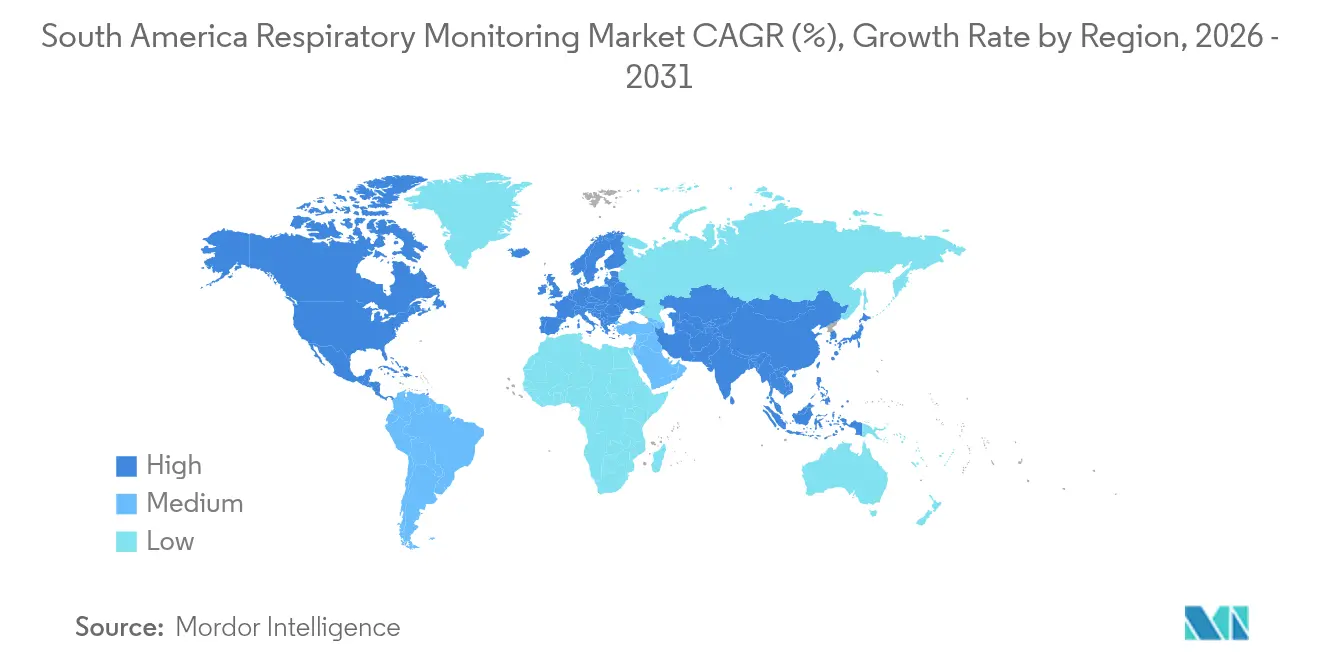
Brazil delivered 49.70% of total revenues in 2025, underpinned by ANVISA’s streamlined approval routes, national telehealth scale-ups, and a population exceeding 200 million. Tele-ICU networks and primary-care financing reforms embed digital respiratory tools into everyday practice. Argentina leverages a mixed public-private system that speeds technology trials and niche product uptake. Colombia, forecast at 11.93% CAGR, benefits from insurance modernization and strict mining safety laws that boost surveillance spending. Chile’s clinical-trial incentives and Peru’s rural telemedicine push round out the geographic tapestry shaping growth avenues for the South America respiratory monitoring market.
Argentina Respiratory Monitoring Market
Argentina benefits from decades of respiratory research, yielding qualified clinicians and established reference centers. Multi-payer reimbursement supports quick adoption of polygraphy and home PAP adherence tracking, while decentralized sleep apnea networks show that low-cost diagnostic hubs can thrive outside large cities. Fungal lung infections and overlap syndromes widen the patient pool needing periodic monitoring, further supporting device demand.
Andean South America Respiratory Monitoring Market
Colombia, Peru, and Chile illustrate emerging potential. Colombia’s digital push during COVID-19 normalized telecare among both patients and physicians, while mining safety codes obligate annual lung-function tests. Peru’s fragmented insurance landscape creates space for modular, subscription-based devices that bypass capital constraints. Chile positions itself as a regional innovation springboard due to streamlined ethics approvals, lower study costs, and proactive investment incentives for medical technology. Collectively these markets diversify revenue streams and stabilize the South America respiratory monitoring market against single-country fluctuations.

Regulatory Landscape
Brazil remains the primary regulatory reference point in South America for respiratory monitoring devices through ANVISA, with updated technical baselines shaping compliance and market access for importers and local assemblers. ANVISA Resolution RDC No. 848/2024 codifies essential safety and performance requirements for medical devices, reinforcing documentation, risk management, and post-market expectations that influence product dossiers for devices such as spirometers, capnographs, and pulse oximeters.
Regulatory simplification has progressed in Argentina via ANMAT. Disposicion No. 8799/2025 introduced a simplified, declaration-based pathway for lower-risk devices (Class I and II), reducing procedural friction for common diagnostic and monitoring categories. In parallel, ANMAT Disposicion 4446/25 (August 2025) removed the need for pre-authorization for each import transaction of Class I and II devices, replacing it with an online notification mechanism within 48 hours. This supports faster replenishment cycles for distributors and hospital tenders.
Value Chain Analysis
The South America respiratory monitoring value chain is anchored in multinational OEM design and core manufacturing (sensors, modules, and embedded software), followed by in-country regulatory registration, localized configuration (language and workflows), and commercial distribution through tenders and private provider channels. Brazil anchors regional access given ANVISA's central role and the breadth of its regulated market.
Downstream activities include national distributors, hospital procurement groups, home-care providers, and service partners responsible for calibration, preventive maintenance, consumables replenishment (for capnography sampling lines and accessories), and user training. Compliance and traceability requirements also add operational steps that shape packaging, labeling, and data management as products move from importers to clinical sites. In Brazil, Unique Device Identification (UDI) implementation and SIUD-related guidance create additional data-submission and lifecycle-record obligations that cascade into distributor master-data processes and hospital asset management. Logistics constraints across Amazon and Andean interiors continue to increase the importance of regional warehousing, last-mile partners, and remote onboarding models for home-care deployments, where device connectivity and cloud analytics link hardware sales to ongoing software, data review, and support services.
Competitive Landscape
Market concentration is moderate. ResMed leverages a strong cloud ecosystem that pairs connected PAP devices with subscription analytics tools. The firm reported 9-12% Latin America revenue growth through 2025, driven by rising sleep-health awareness and night-time oximetry kits. Philips and Masimo combine complementary sensor portfolios to embed capnography and regional oximetry into modular bedside monitors. At the same time, ZOLL’s acquisition of Vyaire ventilator lines broadens its presence in critical-care ventilation. Medtronic’s recent launch of a mobile ECMO platform illustrates how incumbents extend into advanced respiratory life support.
Start-ups scale rapidly in wearable acoustics, smart textiles, and AI-driven risk stratification, often partnering with public hospitals for real-world validation studies. Regulatory harmonization, cloud hosting within national borders, and cybersecurity guidance from PAHO reduce entry barriers.
Over the forecast horizon, competition in the South American respiratory monitoring market will pivot on longitudinal data services, clinical-decision dashboards, and integrated reimbursement support rather than on standalone hardware performance alone.
South America Respiratory Monitoring Industry Leaders
Dragerwerk AG
Koninklijke Philips N.V.
Medtronic Plc
Masimo
GE Healthcare
- *Disclaimer: Major Players sorted in no particular order
South America Respiratory Monitoring Market Companies Covered in this Report
- Medtronic
- Dragerwerk
- Koninklijke Philips
- Resmed
- GE HealthCare Technologies Inc.
- Nihon Kohden
- Beckton Dickinson
- Hamilton Medical
- Masimo
- Nonin Medical
- Mindray Bio-Medical Electronics Co., Ltd.
- Fisher & Paykel Healthcare
- Smiths Group
- Vyaire Medical
- Hillrom / Baxter International Inc.
- Schiller
- WEINMANN Emergency Medical Technology
- LivaNova
- Aerogen Ltd.
- Nihon Kohden
Read Analysis of South America Respiratory Monitoring Companies

Market Opportunities and Future Outlook
A practical whitespace remains in earlier detection and routine monitoring of chronic respiratory disease, particularly COPD, where underdiagnosis stays high in major metros such as Greater Sao Paulo (15.8% prevalence over age 40 with a high share undiagnosed). This supports scalable screening and follow-up pathways that combine handheld spirometry, spot oximetry, and structured home monitoring, aligned with tele-pulmonology workflows already present in parts of the region, including Brazil's national Tele-ICU services spanning 40 hospitals and extensive workforce training.
Public respiratory programs in 2026 also reinforce demand for measurement, triage, and post-discharge monitoring capacity beyond the ICU. Chile's Ministry of Health announced its 2026 RSV immunization campaign, with defined eligibility windows starting March 1, 2026, while Paraguay launched a national RSV protection campaign using 60,000 doses of monoclonal antibodies with PAHO/WHO technical support (April 2026). Brazil's Ministry of Health reported a 52.5% reduction in severe bronchiolitis cases in babies under 6 months in the first half of 2026 versus 2025, tied to RSV vaccination in pregnancy. Together, these interventions shift clinical emphasis toward surveillance, earlier recognition of deterioration, and home-based follow-up, supporting adoption of connected oximetry and capnography where payer acceptance and home respiratory care infrastructure are expanding.
Recent Industry Developments in South America Respiratory Monitoring Market
- May 2026: SOL Group, through its subsidiary Vivisol Brasil, acquired a 70% stake in Brazilian home respiratory care provider Oxigenar and Pulmonair to expand B2C respiratory services in Rio de Janeiro. The deal strengthens home-care delivery capacity that underpins demand for long-term respiratory monitoring devices and associated services across discharge-to-home pathways.
- September 2025: Delta Plus Group completed the acquisition of Chilean company Baspa and its respiratory brand Air, expanding its commercial platform in South America for reusable respiratory protection. The transaction broadens regional channel access and consolidates supplier capabilities around respiratory products, which can influence procurement portfolios where monitoring and protection are purchased together in industrial and institutional settings.
- March 2025: Pneumeric, Inc. signed a distribution agreement with JP Pharma to commercialize the Capnospot Tension Pneumothorax Decompression Indicator in Brazil for tactical and emergency medical responders. Establishing a local distribution route improves availability of specialized respiratory-related emergency devices, supporting faster adoption in pre-hospital and acute care environments that also utilize capnography and oxygenation monitoring.


South America Respiratory Monitoring Market Report Scope and Research Methodology
Market Definition and Coverage
For this study, the market is defined as revenue generated from new respiratory monitoring devices used to measure, record, or display breathing-related parameters in clinical and home-care settings across South America.
Scope exclusions: We exclude purely therapeutic respiratory equipment such as ventilators and oxygen concentrators, and we also exclude used or refurbished device sales.
Segments Covered in This Report
- By Device Type
- Spirometers
- Peak Flow Meters
- Sleep Test/Polysomnography Devices
- Gas Analyzers
- Pulse Oximeters
- Capnographs
- Other Devices
- By Technology
- Conventional Table-top
- Hand-held
- Wearable / Patch-based
- Wireless-enabled (Bluetooth/Wi-Fi)
- AI-integrated & Cloud-connected
- By End-user
- Hospitals & ICUs
- Ambulatory Surgical & Specialty Clinics
- Sleep Laboratories & Diagnostic Centres
- Home-Care Settings
- Occupational Health & Industrial Sites
- By Application
- COPD
- Asthma
- Sleep Apnea
- Pulmonary Fibrosis & ILD
- Respiratory Infections (incl. COVID-19)
- Others
- By Country
- Brazil
- Argentina
- Rest of South America
Data Sources, Market Sizing, and Validation
Desk Research
Desk research was used to set the fact base for demand signals and the operating environment before any modeling choices were finalized. We relied on non-paywalled, official sources such as national health ministry publications, national statistics offices, customs and trade statistics where available, World Bank and PAHO health indicators, and selected peer-reviewed clinical journals that discuss diagnosis and monitoring practices.
To translate those signals into a market model, we also reviewed company annual reports and investor presentations, public tender portals and award notices, association websites, and reputable regional press to understand device adoption and purchasing patterns. In a few places, paid subscriptions were used only to speed up company financial checks, import-export shipment scans, and patent lookups, which helped confirm which product categories were actively being supplied in the region. The desk source list is not exhaustive, and many additional public documents were used for cross-checks, clarifications, and data validation.
Primary Interviews and Surveys
We use expert interviews and surveys with device suppliers, hospital and ICU purchasing teams, respiratory specialists, distributors, and home-care providers in South America. Responses help validate secondary data, fill gaps in private and public procurement, test ASP and utilization assumptions, and reconcile differences between country-level inputs and the regional total.
Distribution of primary research fieldwork respondents
| Company type | Respondent position |
|---|---|
| Top tier: 28% | CXOs: 18% |
| Mid tier: 47% | Functional/Unit leaders: 32% |
| Smaller Players: 25% | Managers: 50% |
Market-Sizing & Forecasting
Sizing starts with a top-down build where country-level healthcare delivery and diagnosis activity are converted into a realistic monitoring demand pool, which is then translated into unit needs and value. When the picture becomes clear only at the end, the logic is tightened, because device replacement cycles and tender buying patterns often create uneven year-to-year movement.
Key inputs used in the model include hospital and ICU activity signals, prevalence and treated population trends for COPD and asthma, sleep study and diagnostic testing intensity, procurement mix by public tenders versus private channels, and product-mix shifts between tabletop, handheld, and wearable formats. Pricing is modeled using an average selling price ladder by device category, and then adjusted for country mix and observed procurement discounts, rather than applying one flat price across the region. Bottom-up checks are applied selectively by rolling up a sample of supplier and distributor revenues and by using ASP multiplied by implied unit volumes in higher-visibility categories. Where coverage is incomplete, gaps are handled through conservative interpolation.
For forecasting, scenario analysis is used to translate macro and health-system drivers into adoption paths, and the scenarios are reviewed with primary experts so the selected trajectory matches how budgets, tenders, and device refresh behavior are expected to evolve. The final forecast is expressed in current USD terms so that the value series stays consistent across years.
Data Validation & Update Cycle
Model outputs are validated through multiple passes that compare results against independent signals such as procurement intensity, import patterns, and category-level growth expectations gathered in interviews. When large variances show up at country or category level, assumptions are reopened and specific respondents are re-contacted to confirm whether the change is pricing-led, volume-led, or mix-led.
Before sign-off, the numbers are reviewed by another analyst to check arithmetic integrity, logic consistency, and outliers that do not align with observed market behavior. Reports are refreshed annually, and interim updates are made when material events affect pricing, access, or demand. Right before delivery, we do a fresh scan of key signals so clients receive an up-to-date view.
Mordor Intelligence's South America Respiratory Monitoring Market Market Size Compared Against Other Published Estimates
Published market sizes for respiratory monitoring in South America can differ even when they look close on the surface, since the year used, the currency timing, and the price logic are not always aligned. Differences also come from what is counted as monitoring versus therapy, and whether the estimate is anchored on observed procurement signals or broader health spending proxies.
A refresh-led gap often appears when pricing is rolled forward using a single inflation factor, even though device mix and tender discounts can move in opposite directions across years. The results stay more stable when ASP ladders are rechecked against recent tender outcomes and distributor feedback, and that refresh discipline is one reason the 2025 base aligns cleanly with the 2026 step in Mordor Intelligence.
Benchmark comparison
| Source | Market Size | Gaps in Research Methodology |
|---|---|---|
| Mordor Intelligence | USD 214.32 M (2025) | |
| Trade Publisher A | USD 214.32 M (2025) | Uses the same 2025 value but presents a different horizon, and the excerpted method does not clarify how ASPs are updated by device type versus using a blended price trend, which can shift the mid-term total. |
| Industry Blog B | USD 304.83 M (2030) | Reports a 2030 point estimate without showing the intermediate year checks, and the scope and price refresh cadence are not transparent, which can overstate growth when category mix and tender discounting are not validated each year. |
Overall, the spread is explained less by math and more by what gets refreshed and when. When scope boundaries are kept tight to monitoring devices and pricing is revalidated through real purchasing signals, the resulting series is easier to follow and to reproduce for planning.


Key Questions Answered in the Report
What is the current size of the South America respiratory monitoring market?
The market is valued at USD 229.07 million in 2026 and is projected to reach USD 319.56 million by 2031.
Which device category leads sales in South America?
Spirometers account for the largest revenue share at 32.70% thanks to their established role in routine lung-function testing.
How fast is the home-care segment growing?
Home-care settings are forecast to grow at a 14.45% CAGR between 2026 and 2031 as telemonitoring gains reimbursement support.
Which technology segment shows the highest growth potential?
AI-integrated and cloud-connected devices post the fastest 16.02% CAGR, reflecting demand for continuous, data-driven care.
Why does Colombia present an attractive growth opportunity?
The country combines a 11.93% forecast CAGR with new mining safety laws and a post-pandemic telehealth infrastructure that encourages respiratory equipment adoption.
Page last updated on:





