
Market Overview
| Study Period | 2024 - 2031 |
|---|---|
| Forecast Data Period | 2026 - 2031 |
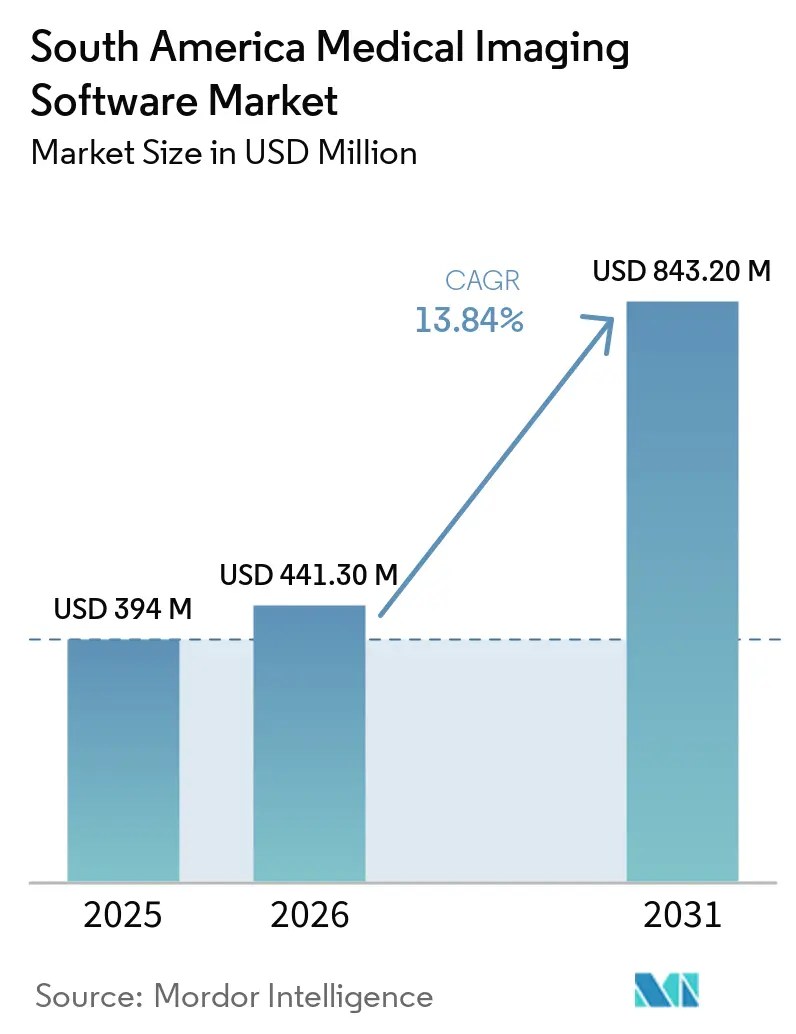
| Base Year Market Size (2025) | USD 394 Million |
| Market Size (2026) | USD 441.30 Million |
| Market Size (2031) | USD 843.20 Million |
| Growth Rate (2026 - 2031) | 13.84 % |
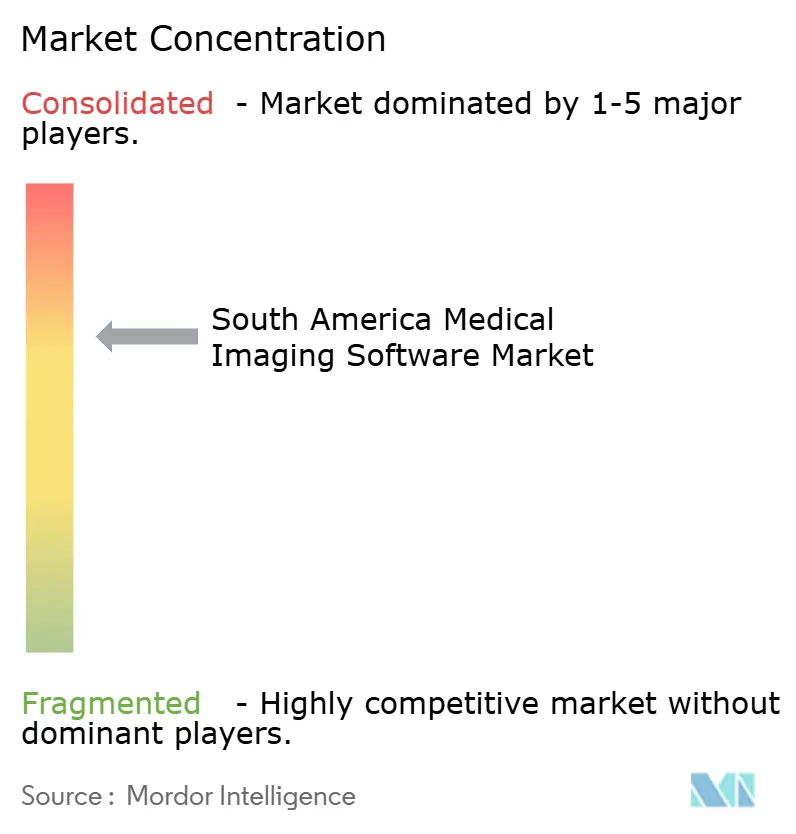
| Market Concentration | Medium |
Major Players
*Disclaimer: Major Players sorted in no particular order Image © Mordor Intelligence. Reuse requires attribution under CC BY 4.0. |
|
South America Medical Imaging Software Market Analysis by Mordor Intelligence
The South America Medical Imaging Software Market size is projected to expand from USD 394 million in 2025 and USD 441.30 million in 2026 to USD 843.20 million by 2031, registering a CAGR of 13.84% between 2026 and 2031.
Demand is rising as chronic disease care requires more imaging studies and more coordinated diagnostic workflows. Public digital health programs in Brazil, Chile, and Argentina are moving imaging systems toward connected records and shared clinical access. Providers are also looking for software that can reduce reporting delays and support radiologists working across distant sites. Subscription-based platforms may widen access for facilities that cannot support large upfront technology purchases. Competition is therefore shifting toward interoperable systems, local implementation support, and clinical tools that work with regional care needs.
Key Report Takeaways
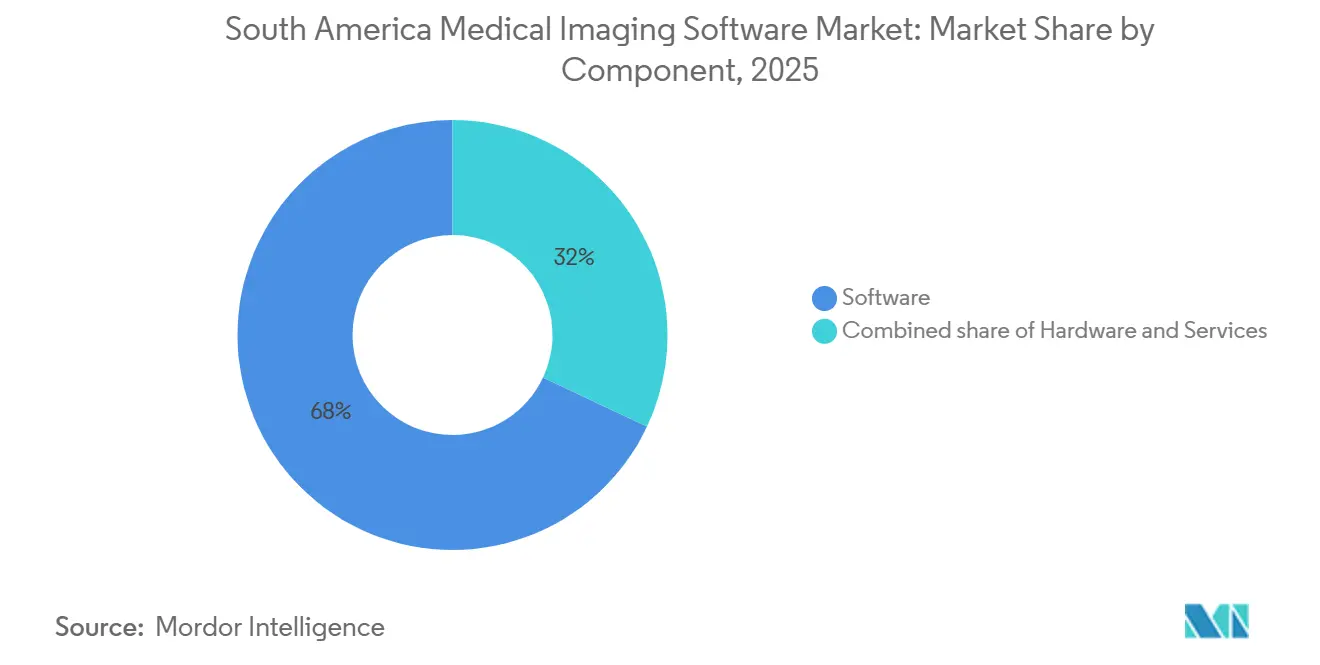
- By component, software held 68.00% share in 2025, while services and managed teleradiology are becoming more important as facilities seek outsourced support.
- By imaging type, 3D imaging held 45.00% share in 2025, while 4D imaging is projected to expand at an 18.50% CAGR through 2031.
- By modality, X-ray and digital radiography led with 28.00% share in 2025, while MRI is projected to expand at a 15.80% CAGR through 2031.
- By deployment mode, cloud-based deployment is projected to expand at an 18.50% CAGR through 2031.
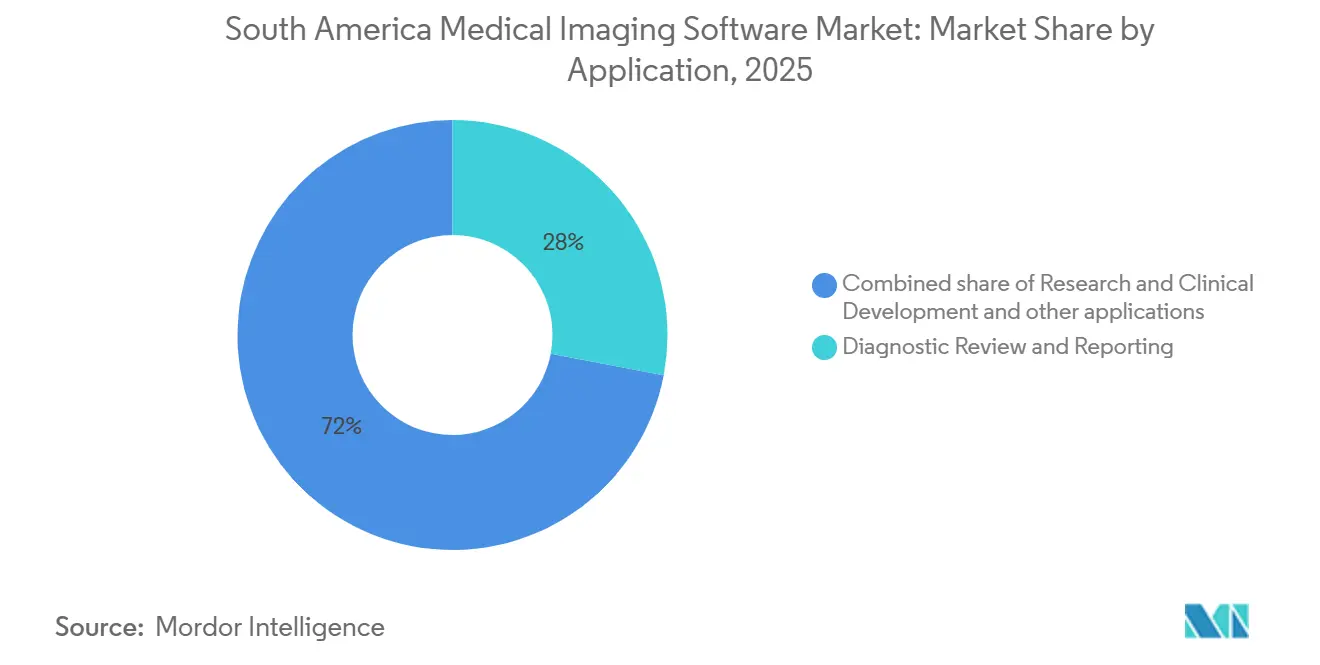
- By application, diagnostic review and reporting commanded 28.00% share in 2025, while computer-aided detection and diagnosis is projected to expand at a 22.50% CAGR through 2031.
- By end user, hospitals and clinics retained 52.00% share in 2025, while specialty centers are projected to expand at a 15.50% CAGR through 2031.
- By geography, Brazil led with 13.50% share in 2025, while Chile is projected to expand at a 14.80% CAGR through 2031.
Note: Market size and forecast figures in this report are generated using Mordor Intelligence’s proprietary estimation framework, updated with the latest available data and insights as of January 2026.
South America Medical Imaging Software Market Trends and Insights
Drivers Impact Analysis*
| Driver | (~) % Impact on CAGR Forecast | Geographic Relevance | Impact Timeline |
|---|---|---|---|
| Rising Chronic Disease Burden and Imaging Volumes | 3.50% | South America, most pronounced in Brazil, Argentina, and Chile | Long term (≥ 4 years) |
| Healthcare Digitalization and PACS-RIS Modernization | 3.00% | Brazil, Chile, Argentina, and the rest of South America | Medium term (2-4 years) |
| Expansion of Computer-Aided Diagnosis and Radiology AI | 2.50% | South America, with early gains in Brazil, Argentina, and Chile | Medium term (2-4 years) |
| Radiologist Shortages Increasing Demand for Workflow Automation | 2.00% | Brazil, Argentina, and Chile, especially remote regions | Medium term (2-4 years) |
| Cloud-Native Imaging Platforms Extending Access Beyond Tertiary Hospitals | 1.50% | South America, strongest in Brazil and Chile | Short term (≤ 2 years) |
| Cross-Border Teleradiology and Remote Reporting Networks | 1.00% | Brazil, Argentina, Chile, and the rest of South America | Short term (≤ 2 years) |
| Source: Mordor Intelligence | |||
Rising Chronic Disease Burden and Imaging Volumes
Chronic disease care is increasing the need for imaging services across South America. Noncommunicable diseases account for 77% of deaths in the Americas, supporting sustained demand for diagnostic pathways that incorporate imaging[1]Pan American Health Organization, “Leading Causes of Death and Disease Burden in the Americas,” PAHO/WHO, iris.paho.org. Cardiac MRI, mammography, and lung CT require specialized viewers and post-processing tools that many facilities previously considered optional. As these capabilities become integral to routine care pathways, the South American medical imaging informatics market can benefit. Demand is also expanding toward mid-tier diagnostic centers in peri-urban areas, where access to imaging has historically been limited. Brazil’s Ministry of Health is expected to issue Portaria GM/MS 11.694/2026 in June 2026 to modernize the SUS equipment portfolio and support diagnostic capacity and connected workflows. Aging populations in Argentina and Chile can sustain imaging study volumes and strengthen the value of recurring software and service agreements. This care pattern creates a more stable foundation for connected image storage and reporting systems. The South American medical imaging informatics market also requires solutions that enable specialists to work across multiple sites.
Healthcare Digitalization and PACS-RIS Modernization
Public digital health initiatives are creating clearer procurement opportunities for PACS, RIS, and enterprise imaging platforms. In Brazil, the National Health Data Network connected 44% of health care facilities in 2025, while adoption in the public sector reached 64%. This coverage provides health care providers with a stronger foundation for sharing imaging data across care settings. In Chile, the Hospital Digital program selected a SaaS-based RIS, PACS, and VNA platform for more than 60 public hospitals, serving 16 million users. The platform was designed to process more than 130,000 studies annually and reported 99.98% operational availability. Its use of DICOM, HL7, and HL7 FHIR standards makes interoperability a core requirement in public tenders. The South America medical imaging informatics market is likely to favor vendors that meet these standards while offering predictable pricing and reliable local support. Shared data standards can also reduce implementation friction as hospital networks add new facilities or software functionalities. As a result, the South America medical imaging informatics market is becoming increasingly dependent on practical system compatibility.
Expansion of Computer-Aided Diagnosis and Radiology AI
AI-supported image analysis is gaining visibility in public healthcare delivery. By May 2026, an Argentine program supported by the Inter-American Development Bank is expected to deploy AI-assisted mammography analysis across 77 public hospitals. The program is expected to report a 50% reduction in review time for mammograms without findings, sensitivity exceeding 95%, and analysis times of less than five minutes per study. A 2026 trial protocol is expected to examine AI-assisted chest X-ray interpretation within Brazil’s SUS and could generate evidence to support adoption in resource-limited settings. Local clinical data remains critical, as models trained outside the region may not perform consistently across tropical and parasitic pulmonary conditions. In Chile, a public hospital study is expected to find that the OncovigIA tool supports early lung cancer referrals through the automated review of CT reports[2]"OncovigIA: Artificial Intelligence for Early Lung Cancer Detection and Referral in a Chilean Public Hospital." JCO Clinical Cancer Informatics, November 2025. https://cecan.cl/wp-content/uploads/2025/11/43-OncovigIA-Pena-JCO-CCI-2025.pdf. The South America medical imaging informatics market requires clinical evidence that reflects local patient populations. Local validation can help healthcare providers determine whether an AI tool is suitable for routine clinical use.
Radiologist Shortages Increasing Demand for Workflow Automation
Radiologist maldistribution, rather than absolute scarcity, represents the primary constraint in South America. This imbalance is creating an asymmetric demand pattern that workflow automation vendors are strategically addressing. More than 60% of the country's over 45,000 radiology professionals practice in the South and Southeast regions. In contrast, the North and Northeast regions have fewer than 3.5 radiologists per 100,000 inhabitants in certain states, including Acre, compared with 25.6 per 100,000 inhabitants in the Federal District. This disparity increases the operational value of worklist automation, voice recognition, and AI-prioritized reading queues in underserved regions, where teleradiology is often the only viable service delivery model. In July 2025, SONDA and Agfa-Gevaert N.V. implemented an enterprise imaging platform for Chile's Servicio de Salud Metropolitano Sur. The platform processes more than 700,000 examinations annually across seven hospitals and enables collaborative remote radiology sessions among specialists in different regions. Vendors that include teleradiology connectivity as a standard capability within enterprise PACS deployments, rather than offering it as a paid add-on, are achieving faster penetration in public-sector contracts across the region.
Restraints Impact Analysis*
| Restraint | (~) % Impact on CAGR Forecast | Geographic Relevance | Impact Timeline |
|---|---|---|---|
| High Implementation and Total Cost of Ownership | -3.00% | South America, most acute in mid-tier Brazilian and Argentine facilities and the rest of South America | Long term (≥ 4 years) |
| Uneven Healthcare Infrastructure Outside Major Urban Centers | -2.00% | Brazil, Argentina, and the rest of South America | Long term (≥ 4 years) |
| Data-Localization, Privacy, and Interoperability Complexity | -1.50% | Brazil and the rest of South America | Medium term (2-4 years) |
| Limited Local Validation Data for AI-Based Imaging Software | -1.00% | South America, especially AI-focused applications | Short term (≤ 2 years) |
| Source: Mordor Intelligence | |||
High Implementation and Total Cost of Ownership
Enterprise imaging deployments can exceed the financial and technical capacity of many mid-tier facilities. Argentina’s IDB-supported AI mammography program adopted a per-study operating model and reported 90% lower initial infrastructure costs, 40% lower mass-storage costs, and 43% lower total cost of ownership than conventional procurement. These results demonstrate that financing structures are as important as the technology itself. Transitioning a large hospital network from on-premise systems to managed services also requires integration expertise, training, and ongoing technical support. Facilities that cannot finance a coordinated deployment may instead adopt separate departmental tools. This approach can increase long-term costs and limit the exchange of imaging studies across sites. Vendors in the South America medical imaging informatics market can help address this barrier through tiered pricing, local-language support, and deployment models tailored to smaller providers. Contracts should also cover implementation, training, storage, and ongoing operational support. The South America medical imaging informatics market may lose momentum when stakeholders treat these requirements as separate costs.
Uneven Healthcare Infrastructure Outside Major Urban Centers
Limited infrastructure outside major cities can constrain cloud-based imaging and timely remote reporting. Brazil’s 2025 ICT in Health Survey found that AI adoption reached 18% of all health care facilities and 29% of diagnostic and therapy services. These findings indicate that large diagnostic facilities are adopting digital tools earlier than smaller clinics. Connectivity constraints are particularly significant in Brazil’s interior, Argentina’s Patagonian provinces, Bolivia, and Ecuador. Siemens Healthineers tested portable ultrasound connectivity for riverside communities in Brazil through the OpenCare5G project in collaboration with Hospital das Clínicas. This initiative demonstrates a potential approach to expanding access in areas with limited fixed connectivity. However, national connectivity programs require broader coverage before providers can consistently deploy cloud-first systems outside urban centers. Providers also need stable power supplies, reliable network capacity, and local technical support. The South America medical imaging informatics market is likely to remain uneven in areas where these operating conditions are unavailable.
*Our forecasts treat driver/restraint impacts as directional, not additive. The impact forecasts reflect baseline growth, mix effects, and variable interactions.
Segment Analysis
By Component: Software Supports Connected Imaging Workflows
Software held a 68.00% share of the South America medical imaging informatics market in 2025, reflecting the widespread replacement of legacy film-based and first-generation digital archives with integrated PACS, RIS, and enterprise imaging platforms. Within the software segment, AI and decision-support modules represented the fastest-growing subcategory. Vendors increasingly embedded these capabilities into existing clinical viewer licenses rather than selling them as standalone products. This bundling approach accelerated adoption by eliminating the need for separate budget approvals. Hardware, including workstations and storage infrastructure, maintained a stable but declining share as transitions to cloud architectures shifted capital-intensive storage expenditures off hospital balance sheets. Services, including implementation and integration, support and maintenance, and managed teleradiology, gained relevance as facilities with limited internal IT capacity sought fully outsourced lifecycle management. In April 2026, Koninklijke Philips N.V. launched the web-based version of its Vue PACS in South America, reducing infrastructure barriers for multi-site diagnostic networks and enabling lighter deployments that favor subscription-based service revenue over one-time licensing income Services and managed teleradiology are expected to account for a growing share of the segment as smaller centers that cannot maintain internal radiology IT teams seek fully managed solutions. This shift is gradually redistributing revenue from hardware-intensive contracts toward recurring service agreements, which offer higher long-term client retention. Pixeon Medical Systems S.A., with more than 3,000 client institutions in Brazil and a growing presence in Argentina, Uruguay, and Peru, exemplifies the services-led expansion model gaining share from equipment-centric incumbents.



By Imaging Type: 4D Modalities Emerge as a Clinical Differentiator
Three-dimensional (3D) imaging is projected to hold a 45.00% share of the market in 2025, driven by oncology staging, cardiology, and orthopedic applications, where volumetric reconstruction is a standard clinical requirement. The faster-growing 4D imaging segment is projected to expand at a CAGR of 18.50%, as obstetric diagnostic providers invest in real-time volumetric visualization for fetal assessment and cardiac centers adopt 4D flow MRI for hemodynamic evaluation. The 3D/4D technology segment is expected to account for 46.88% of South America's ultrasound devices market in 2025. AI-enabled platforms can reduce second-trimester examination times by approximately 40%. Two-dimensional (2D) imaging remains widely relevant as a cost-effective first-line screening solution in high-volume public healthcare facilities, particularly where providers retrofit AI enhancement modules to extend the diagnostic capabilities of existing 2D infrastructure. In February 2026, Argentina's Ministry of Health is expected to deploy AI-enhanced portable ultrasound systems in remote clinics through a pilot program. This initiative illustrates the continued expansion of 2D and entry-level 3D imaging in underserved geographies, where 4D platforms remain financially inaccessible The transition from 3D imaging to 4D and AI-enhanced volumetric imaging in obstetrics and oncology is creating additional demand for post-processing and visualization software that requires regular updates. This trend presents a recurring revenue opportunity for informatics vendors that can bundle visualization licenses with multi-year support contracts.
By Modality: X-Ray Infrastructure Forms the Digital Entry Point
X-ray and Digital Radiography are projected to lead the modality segment in 2025, accounting for a 28.00% share. Their position reflects near-universal deployment across care tiers and the ongoing conversion of remaining analog systems in public facilities in Brazil and Argentina. Computed Tomography is expected to follow, supported by Brazil’s SUS equipment modernization guidelines, which the Ministry of Health is expected to issue in June 2026. These guidelines are expected to mandate Technical Preliminary Studies for diagnostic equipment acquisitions, including documented PACS connectivity requirements. By July 2025, more than 150 imaging centers in Brazil are expected to adopt SwiftMR, an AI-powered MRI enhancement platform, during the preceding six months. This adoption is expected to highlight the acceleration of MRI software investments ahead of equipment spending cycles. Ultrasound is benefiting from the convergence of portable hardware and cloud-based reporting, making it a fast-growing modality in teleradiology-enabled rural deployments. Mammography is also attracting informatics investments through national cancer screening mandates in Brazil and Chile. Positron Emission Tomography and Single-Photon Emission Computed Tomography remain premium-tier modalities concentrated in academic medical centers and specialized oncology institutions, with limited but growing informatics integration.
By Deployment Mode: Cloud Deployments Redefine the Procurement Model
Cloud-based deployment, the fastest-growing mode at a CAGR of 18.50%, reflects a decisive shift in how regional health systems structure imaging IT investments. Chile’s Hospital Digital program and digitalization programs in Argentina have selected SaaS-based cloud architectures, shifting imaging access from capital expenditure to per-study or subscription-based operational expenditure. This model expands the addressable market beyond facilities that could previously afford on-premise enterprise solutions. On-premise deployments retain a significant installed base in large tertiary hospitals and academic medical centers, which have historically required full data control. However, a growing proportion of new contracts favors hybrid or cloud-first architectures as cloud platforms achieve cybersecurity and failover capabilities comparable to those of private data centers. Hybrid deployment is also gaining traction among institutions that are migrating workloads in phases, retaining on-premise storage for archived data while adopting cloud-based analytics and AI layers. Fundación Favaloro, one of Argentina’s most prestigious medical centers, is expected to implement a fully cloud-based PACS on a major cloud provider’s infrastructure in 2025. The implementation will unify all imaging modalities within a single interface and enable web-based access without reliance on a virtual private network. Vendors increasingly cite this initiative as a proof point in public procurement pitches.
By Application: Workflow Automation Supplements Diagnostic Review
Diagnostic Review and Reporting is projected to command a 28.00% share of the application segment in 2025, as it serves as the core workflow layer on which all other informatics tools operate. This function drives baseline adoption, including among facilities with limited digital maturity. Computer-Aided Detection and Diagnosis is expected to be the fastest-growing application, with a CAGR of 22.50%, driven by measurable productivity gains from AI mammography programs in Argentina’s 77 public hospitals and expanding chest X-ray triage deployments across Brazil’s SUS. Image Storage, Archiving, and Distribution represents the second-largest application tier, supported by national programs in Chile and several Argentine provinces that require centralized digital archives for teleradiology service delivery. Workflow Management and Orchestration is gaining importance as facilities handling high reading volumes across multiple sites require automated worklist prioritization. At Hospital de Clínicas de Porto Alegre, NeuralMind’s PrioScan platform processes approximately 3,600 chest X-rays per month and received the Deep Tech LATAM Genesis Award 2026 in August 2026 for its triage capabilities, highlighting the growing clinical validation of automated workflows. Image Enhancement and Reconstruction, along with Research and Clinical Development, completes the application landscape. Research and Clinical Development is expanding steadily as academic medical centers integrate informatics platforms into clinical trial infrastructure and AI model validation pipelines.
By End User: Hospitals Command Volume, Specialty Centers Lead Growth
Hospitals and clinics are projected to account for a 52.00% share of the end-user market in 2025, supported by their high imaging procedure volumes and priority status in public procurement programs. Specialty centers are expected to be the fastest-growing end-user category, with a CAGR of 15.50%, driven by the expansion of standalone oncology, cardiac, and orthopedic imaging facilities. These facilities require condition-specific software modules rather than broad-spectrum enterprise platforms. Diagnostic imaging centers represent a structurally important segment in Brazil, where large diagnostic chains operate at a continental scale. Dasa, South America's largest diagnostic provider, selected Agfa-Gevaert N.V.'s enterprise imaging platform in a flagship agreement expected to support up to 15 million studies annually. This procurement scale remains difficult for many regional vendors to match. Teleradiology providers are emerging as a distinct end-user category, particularly in Brazil and Argentina. They are developing dedicated digital reading infrastructure separate from hospital networks to serve mid-tier facilities and remote regions. Research and academic institutions are driving the early adoption of advanced visualization and AI validation platforms, often serving as clinical proof points that accelerate commercial adoption across adjacent hospital networks.
Geography Analysis
Brazil is projected to lead the South America medical imaging informatics market with a 13.50% share in 2025. The country has the region’s most complex imaging informatics environment, combining large public procurement programs with an established private diagnostic sector. The National Health Data Network is expected to connect 44% of health care facilities by 2025. AI adoption is projected to reach 18% of all facilities and 29% of diagnostic and therapy services. Brazil’s concentration of radiologists in the South and Southeast supports demand for teleradiology. The country’s privacy regulations and medical software requirements create entry barriers for foreign AI imaging suppliers. In addition, the 2026 SUS modernization guidance is expected to make PACS connectivity a formal consideration in equipment procurement. These requirements place interoperability and implementation capabilities at the center of supplier selection.
Chile is projected to expand at a CAGR of 14.80% through 2031. The Chilean medical imaging informatics market benefits from a coordinated public digitalization strategy through the Hospital Digital program. The program connects more than 60 public hospitals, serves 16 million users, and uses DICOM, HL7, and HL7 FHIR standards. The SONDA and Agfa-Gevaert platform at the Servicio de Salud Metropolitano Sur processes more than 700,000 studies annually across seven hospitals. The platform is expected to record a 5% annual increase in examinations. Chile has also deployed an enterprise imaging vendor-neutral archive (VNA) for the Magallanes Health Service in Patagonia. These connected deployments provide a practical model for other public health networks across the region[3]AGFA HealthCare, “Go Live! A Step Forward for Imaging in Magallanes and Patagonia’s Public Healthcare Network,” AGFA HealthCare News, agfahealthcare.com.
Argentina combines advanced adoption in urban centers with slower progress across provincial health systems. Fundación Favaloro and Instituto Argentino de Diagnóstico y Tratamiento have adopted cloud-based PACS and AI-integrated radiology platforms. The Inter-American Development Bank-supported mammography program is expected to reach 77 public hospitals by May 2026 and uses a per-study financing model. Jujuy is expected to digitalize all 27 public health establishments through SUPERPACS and record 314,892 studies from March 2025. Chubut is expected to launch a diagnostic imaging network in August 2026 across hospitals in Comodoro Rivadavia and Puerto Madryn. However, the South America medical imaging informatics market continues to face uneven conditions across provincial health systems. The rest of South America remains at an earlier stage of adoption, relying on localization partnerships and teleradiology connections to expand access.
Competitive Landscape
The South America medical imaging informatics market is moderately concentrated. Global vendors account for a significant share of the premium segment, particularly among large hospitals and diagnostic networks. Regional and local vendors compete in mid-tier settings through competitive pricing, language support, and local regulatory expertise. GE HealthCare aligns its AI strategy with equipment lifecycle management and aims to enable software capability upgrades rather than hardware replacements by 2030. In January 2026, the company partnered with Dasa to deploy ViewPoint 6 Ultrasound Reporting Software across Dasa’s network in Brazil[4]GE HealthCare, “GE HealthCare Is an Exclusive Partner for Medical Equipment at Hapvida’s New Unit,” GE HealthCare Newsroom, gehealthcare.com. This initiative connects ultrasound equipment with cloud-based reporting workflows and reflects the growing preference for technologies that can be integrated into established diagnostic operations.
Philips launched its web-based Vue PACS platform for South America in April 2026. In May 2026, the company established a five-year collaborative innovation arrangement with Hospital Israelita Albert Einstein in Brazil. The arrangement focuses on diagnostic imaging, image-guided intervention, and patient monitoring technologies. Agfa-Gevaert has secured public-sector deployments in Chile through Hospital Digital and the Magallanes Health Service. These contracts highlight the importance of technical capabilities and local integration partners. The South America medical imaging informatics market favors vendors that combine interoperability with services tailored to public healthcare networks. This approach also enables suppliers to address varying operating conditions across countries.
Pixeon is expanding its regional presence through localized PACS, RIS, and teleradiology offerings. In 2025, Vela LatAm announced an agreement to acquire Pixeon, subject to approval by Brazil’s competition authority. Local providers may retain an advantage in markets where health information standards and procurement processes vary by country. AI models developed using regional clinical data may also be better suited to local disease patterns. Managed SaaS PACS-RIS bundles remain relevant for regional hospitals with 50 to 200 beds that lack an enterprise imaging layer. The competitive landscape will continue to comprise global platforms, regional service providers, and domestic AI developers. This structure supports the characterization of the South America medical imaging informatics industry as moderately concentrated. The market offers opportunities for companies that can meet local clinical and technical requirements.
South America Medical Imaging Software Industry Leaders
-
Siemens Healthineers AG
-
GE HealthCare Technologies Inc.
-
Koninklijke Philips N.V.
-
Agfa-Gevaert N.V.
-
Canon Medical Systems Corporation
- *Disclaimer: Major Players sorted in no particular order

Recent Industry Developments
- June 2026: Brazil's Ministry of Health issued Portaria GM/MS 11.694/2026 for modernizing the SUS diagnostic equipment portfolio, requiring technical preliminary studies for new equipment acquisitions that include PACS connectivity and interoperability documentation.
- April 2026: Koninklijke Philips N.V. launched the web-based version of Vue PACS for South America at the JPR 2026 radiology event, providing a lighter deployment option for multi-site diagnostic networks and teleradiology workflows.
- January 2026: GE HealthCare Technologies Inc. and Dasa announced a partnership to deploy ViewPoint 6 Ultrasound Reporting Software for Radiology across Dasa's Brazil network, marking the platform’s first adoption in the country.
- October 2025: GE HealthCare Technologies Inc. became the exclusive medical equipment and imaging technology partner for Hapvida's Unidade Avançada Brigadeiro in São Paulo, deploying AI-enhanced diagnostic imaging solutions across modalities.
- October 2025: Atrys Health Chile and Agfa-Gevaert N.V. consolidated a strategic alliance to modernize diagnostic services in Chile and integrate Agfa’s enterprise imaging platform into Atrys’s clinical network.
- July 2025: SONDA and Agfa-Gevaert N.V. completed the go-live of an enterprise PACS-RIS platform for the Servicio de Salud Metropolitano Sur in Chile, processing more than 700,000 examinations annually across 7 hospitals.


South America Medical Imaging Software Market Report Scope
The South America Medical Imaging Informatics Report is Segmented by Component (Software, Hardware, Services), Imaging Type (2D, 3D, 4D), Modality (CT, MRI, X-Ray, Ultrasound, Mammography, PET, SPECT, Others), Deployment Mode (Cloud-Based, On-Premise, Hybrid), Application (7 Types), End User (6 Types), and Geography (Brazil, Argentina, Chile, Rest of South America). Market Forecasts are in Value (USD).
By Component
| Software | PACS Software |
| RIS Software | |
| Image-Analysis Software | |
| Enterprise Imaging Platforms | |
| Clinical Viewer and Visualization Software | |
| Artificial Intelligence and Decision-Support Software | |
| Hardware | |
| Services | Implementation and Integration Services |
| Support and Maintenance Services | |
| Managed Imaging and Teleradiology Services |
By Imaging Type
| 2D Imaging |
| 3D Imaging |
| 4D Imaging |
By Modality
| Computed Tomography |
| Magnetic Resonance Imaging |
| X-Ray and Digital Radiography |
| Ultrasound |
| Mammography |
| Positron Emission Tomography |
| Single-Photon Emission Computed Tomography |
| Other Modalities |
By Deployment Mode
| Cloud-Based |
| On-Premise |
| Hybrid |
By Application
| Diagnostic Review and Reporting |
| Image Storage, Archiving, and Distribution |
| Workflow Management and Orchestration |
| Image Enhancement and Reconstruction |
| Computer-Aided Detection and Diagnosis |
| Research and Clinical Development |
| Other Applications |
By End User
| Hospitals and Clinics |
| Diagnostic Imaging Centers |
| Specialty Centers |
| Research and Academic Institutions |
| Teleradiology Providers |
| Other End Users |
By Geography
| Brazil |
| Argentina |
| Chile |
| Rest of South America |
| By Component | Software | PACS Software |
| RIS Software | ||
| Image-Analysis Software | ||
| Enterprise Imaging Platforms | ||
| Clinical Viewer and Visualization Software | ||
| Artificial Intelligence and Decision-Support Software | ||
| Hardware | ||
| Services | Implementation and Integration Services | |
| Support and Maintenance Services | ||
| Managed Imaging and Teleradiology Services | ||
| By Imaging Type | 2D Imaging | |
| 3D Imaging | ||
| 4D Imaging | ||
| By Modality | Computed Tomography | |
| Magnetic Resonance Imaging | ||
| X-Ray and Digital Radiography | ||
| Ultrasound | ||
| Mammography | ||
| Positron Emission Tomography | ||
| Single-Photon Emission Computed Tomography | ||
| Other Modalities | ||
| By Deployment Mode | Cloud-Based | |
| On-Premise | ||
| Hybrid | ||
| By Application | Diagnostic Review and Reporting | |
| Image Storage, Archiving, and Distribution | ||
| Workflow Management and Orchestration | ||
| Image Enhancement and Reconstruction | ||
| Computer-Aided Detection and Diagnosis | ||
| Research and Clinical Development | ||
| Other Applications | ||
| By End User | Hospitals and Clinics | |
| Diagnostic Imaging Centers | ||
| Specialty Centers | ||
| Research and Academic Institutions | ||
| Teleradiology Providers | ||
| Other End Users | ||
| By Geography | Brazil | |
| Argentina | ||
| Chile | ||
| Rest of South America | ||


Key Questions Answered in the Report
What is the South America medical imaging informatics market size?
The South America medical imaging informatics market size is USD 441.3 million in 2026 and is forecast to reach USD 843.2 million by 2031 at a 13.84% CAGR.
Which component leads medical imaging informatics in South America?
Software led the component segment with 68.00% share in 2025, supported by demand for PACS, RIS, and enterprise imaging platforms.
Why is cloud-based imaging informatics expanding in South America?
Cloud-based deployment is projected to expand at an 18.50% CAGR as SaaS and per-study models reduce large upfront technology costs.
Which application is expanding fastest in diagnostic imaging software?
Computer-aided detection and diagnosis is projected to expand at a 22.50% CAGR through 2031, supported by AI-assisted mammography and chest X-ray workflows.
Which South American country is projected to expand fastest?
Chile is projected to expand at a 14.80% CAGR through 2031, supported by the Hospital Digital program and connected public hospital networks.
How do radiologist shortages affect imaging informatics adoption?
Uneven access to radiologists increases the value of remote reporting, automated worklists, speech recognition, and AI-supported case prioritization.
Page last updated on:





