
Market Overview
| Study Period | 2021 - 2031 |
|---|---|
| Forecast Data Period | 2026 - 2031 |
| Base Year Market Size (2025) | USD 8.23 Billion |
| Market Size (2026) | USD 8.64 Billion |
| Market Size (2031) | USD 11.14 Billion |
| Growth Rate (2026 - 2031) | 5.21 % |
| Market Concentration | Medium |
Major Players *Disclaimer: Major Players sorted in no particular order Image © Mordor Intelligence. Reuse requires attribution under CC BY 4.0. | |
South America Dairy Based Beverages Market Analysis by Mordor Intelligence
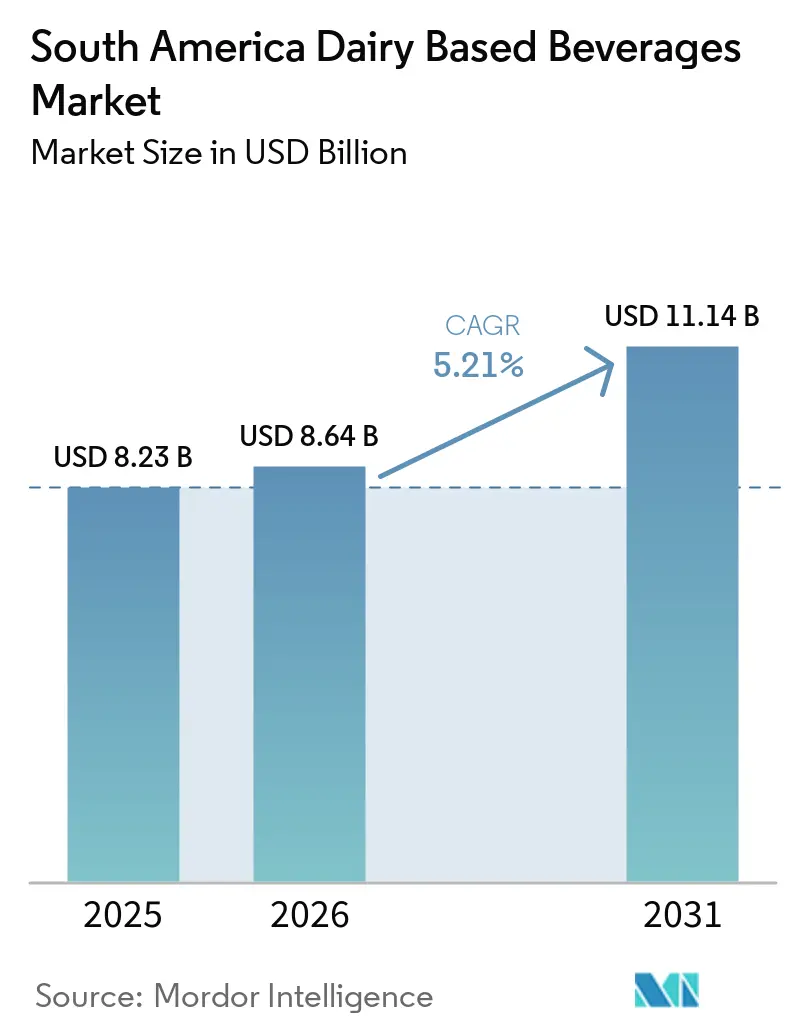
The South America Dairy-Based Beverages Market was valued at USD 8.23 billion in 2025 and is estimated to grow from USD 8.64 billion in 2026 to reach USD 11.14 billion by 2031, at a CAGR of 5.21% during the forecast period (2026–2031). Market growth is supported by increasing consumer preference for beverages that combine everyday nutrition with convenience and additional health benefits. Dairy-based beverages remain an important source of protein, calcium, and other essential nutrients, supporting their role in daily diets and nutritional routines. Growing awareness of digestive health is driving interest in fermented dairy beverages containing probiotics, while demand for protein-rich options is strengthening the appeal of dairy drinks among consumers seeking nutritional support for active lifestyles.
Key Report Takeaways
- By product type, Milk-Based Beverages held 57.62% of the South America dairy beverages market share in 2025, while Yogurt-Based Beverages are forecast to grow at a 6.29% CAGR through 2031.
- By fat content, Whole/Fat beverages accounted for 51.23% of the South America dairy beverages market share in 2025, while Low-Fat beverages are projected to expand at a 6.57% CAGR through 2031.
- By packaging type, Cartons captured a 43.32% share in 2025, while Pouches are expected to record the highest CAGR of 6.88% through 2031.
- By distribution channel, Off-Trade held a 76.74% share in 2025, while On-Trade is forecast to grow at a 5.96% CAGR through 2031.
- By geography, Brazil accounted for a 48.78% share in 2025, while Chile is expected to register the fastest growth at a 7.09% CAGR through 2031.
Note: Market size and forecast figures in this report are generated using Mordor Intelligence’s proprietary estimation framework, updated with the latest available data and insights as of January 2026.
South America Dairy Based Beverages Market Trends and Insights
Drivers Impact Analysis*
| Driver | (~) % Impact on CAGR Forecast | Geographic Relevance | Impact Timeline |
|---|---|---|---|
| Rising demand for protein-rich beverages | +1.2% | Brazil, Chile, Colombia, Argentina | Medium term (2–4 years) |
| Growing preference for convenient, ready-to-drink formats | +0.9% | Brazil, Argentina, Colombia | Short term (≤ 2 years) |
| Expansion of school nutrition and milk programs | +0.8% | Brazil, Colombia, Peru | Short to medium term (≤ 2–4 years) |
| Growing popularity of probiotic and fermented dairy drinks | +0.7% | Brazil, Argentina, Chile | Medium term (2–4 years) |
| Advancements in shelf-life extension and aseptic packaging | +0.6% | Brazil, Colombia, Andean region | Long term (≥ 4 years) |
| Product fortification with essential nutrients | +0.5% | Brazil, Peru, Colombia | Medium to long term (2–4 years) |
| Source: Mordor Intelligence | |||
Rising Demand for Protein-Rich Beverages
Rising demand for protein-rich beverages is supporting the growth of the South American dairy-based beverages market, as consumers increasingly recognize the role of protein in muscle maintenance, recovery, and overall nutritional balance. Milk naturally contains high-quality proteins, including casein and whey, making milk-based drinks an accessible option for incorporating protein into everyday diets. Growing interest in fitness, sports nutrition, and active lifestyles is driving demand for protein-enriched milk drinks and yogurt-based beverages among consumers seeking convenient nutritional options. For instance, according to Brazil's Ministry of Health, approximately 42.3% of adults met the recommended level of leisure-time physical activity in 2025[1]. This level of physical activity participation highlights the relevance of active-lifestyle nutrition, creating opportunities for dairy-based beverages positioned around protein intake, muscle recovery, and nutritional convenience.
Growing Preference for Convenient, Ready-to-Drink Formats
Growing demand for convenient beverage options is supporting the South America dairy-based beverages market, as consumers seek products that fit busy work schedules, commuting routines, and on-the-go consumption occasions. Ready-to-drink (RTD) milk, drinkable yogurt, and other dairy-based beverages require no preparation, making them suitable for consumption at school, workplaces, during travel, and post-exercise. Single-serve packaging and resealable containers improve portability and portion control, while shelf-stable ultra-high-temperature (UHT) products offer greater storage flexibility before opening. These convenience attributes allow consumers to incorporate dairy-based beverages into different parts of their daily routines, increasing consumption occasions and supporting demand for RTD formats across South America.
Expansion of School Nutrition and Milk Programs
Government-led school nutrition programs are supporting the South American dairy-based beverages market by incorporating dairy products into institutional food procurement and promoting regular access to nutrient-rich foods among children. In Peru, the Qali Warma school feeding program covered more than 4 million children across 65,271 public educational institutions in 2024, with procurement specifications including evaporated whole milk and ultra-high-temperature (UHT) milk[2]. The inclusion of these products reflects the importance of shelf-stable dairy formats in large-scale feeding programs, as they facilitate storage, transportation, and distribution across educational institutions. Such programs strengthen institutional demand for milk-based products, expand access to dairy-derived protein and calcium, and help establish regular milk consumption habits among school-age children, supporting demand for dairy-based beverages across the region.
Growing Popularity of Probiotic and Fermented Dairy Drinks
Growing interest in digestive health is supporting the South American dairy-based beverages market, as consumers increasingly recognize fermented dairy products as part of a balanced diet. Drinkable yogurt, kefir, and other fermented milk beverages deliver beneficial microorganisms in formats suited to everyday consumption. Fermentation also produces characteristic tangy flavors and textures, offering alternatives to conventional milk beverages. Rising awareness of the relationship between gut health and overall well-being is encouraging consumers to explore probiotic dairy options, and drinkable formats make these products easier to incorporate into daily routines. This shift toward fermented dairy beverages is broadening demand beyond conventional milk and supporting growth in the functional dairy drinks category across South America.
Restraints Impact Analysis*
| Restraint | (~) % Impact on CAGR Forecast | Geographic Relevance | Impact Timeline |
|---|---|---|---|
| Lactose intolerance and dairy-related sensitivities | -0.6% | Chile, Colombia, Peru, Andean region broadly | Short to medium term (≤ 2–4 years) |
| Volatility in raw milk availability | -0.4% | Brazil (Rio Grande do Sul), Argentina, Andean corridor | Medium term (2–4 years) |
| High costs of refrigeration and cold-chain logistics | -0.5% | Brazil interior, northern regions, Peru, Bolivia-adjacent markets | Long term (≥ 4 years) |
| Intense competition from plant-based beverages | -0.5% | Brazil, Argentina, Chile (urban centres) | Medium to long term (2–4 years) |
| Source: Mordor Intelligence | |||
Lactose Intolerance and Dairy-Related Sensitivities
Lactose intolerance and dairy-related sensitivities limit the South American dairy-based beverages market by reducing consumption of conventional milk and other lactose-containing beverages among affected consumers. Symptoms such as bloating, abdominal discomfort, and diarrhea discourage regular consumption, particularly among individuals with low lactose-digesting capacity. These concerns may lead consumers to reduce dairy intake or avoid certain products entirely, narrowing the potential consumer base for conventional dairy beverages. Accommodating lactose-sensitive consumers also increases formulation complexity and product development costs for lactose-free alternatives, creating additional challenges for companies seeking to address diverse dietary needs across the region.
High Costs of Refrigeration and Cold-Chain Logistics
High refrigeration, energy, and temperature-controlled transportation costs restrain the South American dairy-based beverages market by increasing expenses across storage, handling, and distribution. Chilled dairy beverages require consistent temperature control to preserve product quality, freshness, and safety, which necessitates specialized vehicles, refrigerated warehouses, and reliable cooling systems. High electricity consumption and equipment maintenance costs further increase operational expenses, particularly in regions with limited cold-chain infrastructure or unreliable power supply. These challenges can restrict distribution to remote and underserved areas, increase product wastage when temperature requirements are not met, and place upward pressure on retail prices, potentially limiting the affordability and availability of chilled dairy beverages.
*Our forecasts treat driver/restraint impacts as directional, not additive. The impact forecasts reflect baseline growth, mix effects, and variable interactions.
Segment Analysis
By Product Type: Milk-Based Beverages Lead, Yogurt Drinks Accelerate
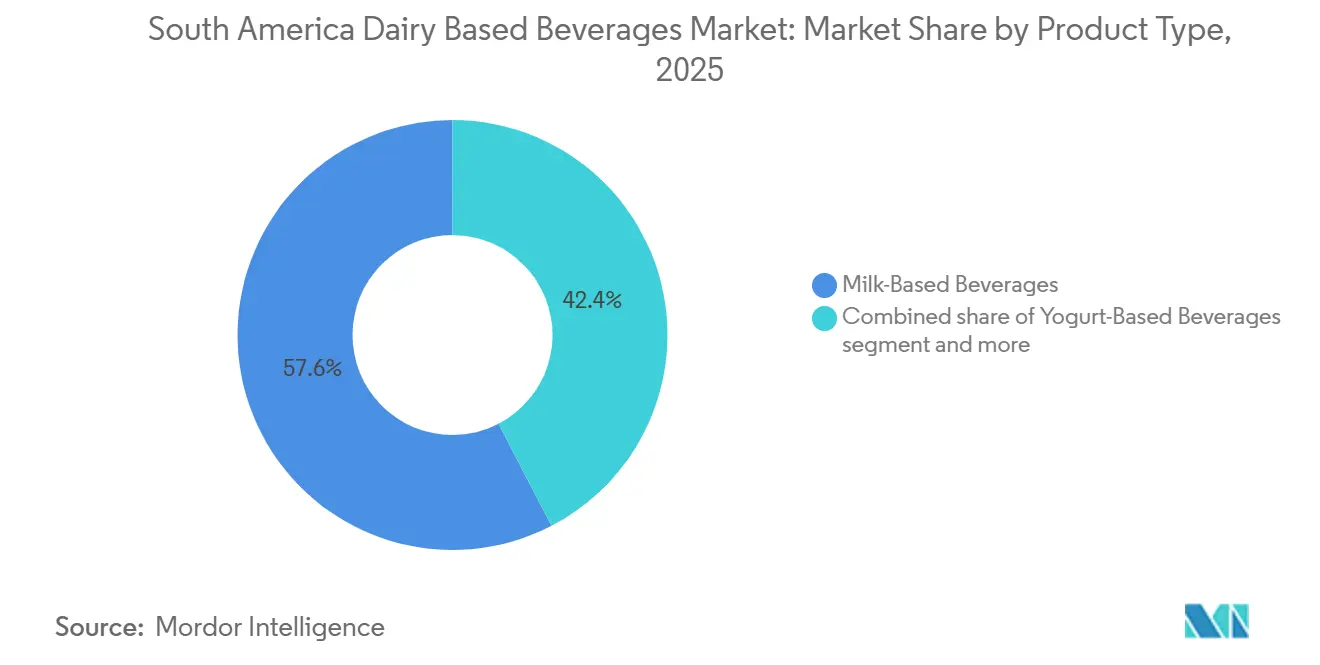
Milk-based beverages held a 57.62% share of the South America dairy-based beverages market in 2025, supported by their established role as everyday dairy products and their versatility across different nutritional needs. Growth is driven by continued product development in fortified milk, protein-enriched formulations, and variants designed to retain essential nutrients while meeting evolving dietary preferences. Improvements in pasteurization, ultra-high-temperature (UHT) processing, and aseptic packaging are strengthening product quality, extending shelf life, and improving distribution flexibility without relying exclusively on continuous refrigeration. Manufacturers are also refining milk composition and processing techniques to improve taste, texture, and consistency, addressing consumer expectations for both conventional and premium offerings.
Yogurt-based beverages are projected to register the highest CAGR of 6.29% during 2026–2031, driven by rising consumer interest in digestive wellness, fermented foods, and beverages with added nutritional benefits. The presence of live and active cultures in probiotic formulations is strengthening the appeal of drinking yogurt and kefir among consumers seeking gut-health-oriented products for daily consumption. Product innovation is further supporting segment growth through fruit-infused varieties, reduced-sugar formulations, high-protein options, and lactose-free alternatives that accommodate different taste preferences and dietary requirements. Improvements in fermentation techniques and microbial culture selection are enabling manufacturers to develop products with more consistent flavor, texture, and probiotic characteristics.

By Fat Content: Whole Milk Anchors Volume, Low-Fat Fastest to Grow
The whole-fat segment held a 51.23% share of the South America dairy-based beverages market in 2025, driven by consumer preference for the rich taste, creamy texture, and natural mouthfeel associated with full-fat dairy products. Milk fat enhances flavor delivery, improves beverage consistency, and delivers a more satisfying sensory experience, especially in products where taste and texture drive repeat purchases. Whole-fat dairy beverages also retain naturally occurring fat-soluble vitamins, including vitamins A, D, E, and K, although their levels vary depending on processing and fortification. Their established position in traditional dairy consumption supports continued demand, while improvements in homogenization and heat treatment help maintain smooth texture and consistent quality throughout the product's shelf life.
The low-fat dairy beverages segment is forecast to grow at a CAGR of 6.57% during 2026–2031, supported by increasing consumer interest in balanced nutrition and reduced-fat diets. Growing awareness of the link between dietary fat intake and cardiovascular health is encouraging consumers to add low-fat milk and other reduced-fat dairy drinks to their everyday diets. These beverages retain important nutrients, including protein and calcium, while containing less fat than full-fat counterparts, making them attractive to individuals seeking to moderate fat consumption without eliminating dairy from their diets. Improvements in dairy processing have also helped address traditional concerns regarding the thinner texture and reduced richness of low-fat products, enhancing their sensory appeal.
By Packaging Type: Cartons Dominate, Pouches Surge Ahead
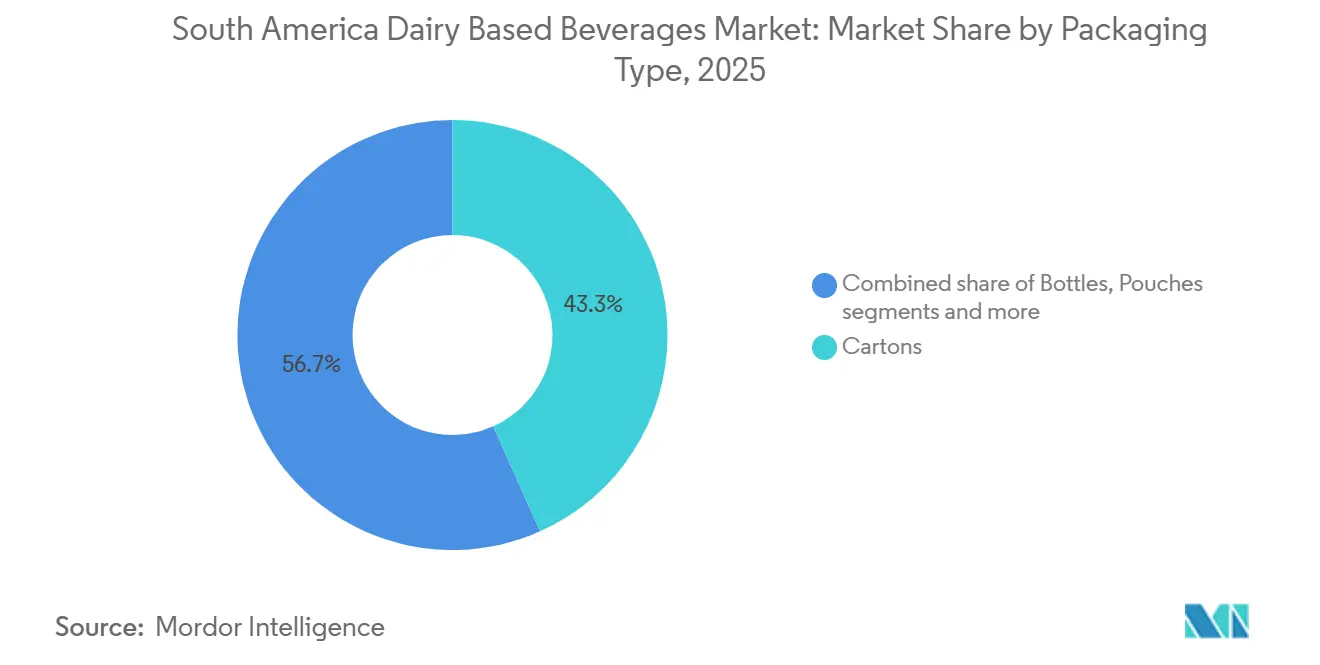
Cartons accounted for a 43.32% share of the South America dairy-based beverages market in 2025. Their multilayer construction limits exposure to light, oxygen, and external contaminants, preserving flavor and nutritional quality while extending shelf life, particularly for Ultra-High Temperature (UHT) milk. Lightweight construction, efficient stacking, and space-saving storage make cartons suitable for large-scale distribution and retail handling. Their availability in different capacities accommodates varied household consumption needs, while improvements in carton design, resealable closures, and pouring convenience support usability.
Pouches are projected to register the fastest growth at a CAGR of 6.88% during 2026–2031. Their lightweight construction, material efficiency, and convenience for single-serve and smaller-volume purchases are key growth drivers. Compared with rigid packaging, pouches generally require less packaging material and occupy less storage space, reducing transportation and handling requirements. Their flexible format enables easy portioning and supports a range of dairy beverage formulations. Growing demand for affordable, convenient packaging and efforts to reduce packaging weight are expected to drive adoption.
By Distribution Channel: Off-Trade Remains Foundational, On-Trade Picks Up Pace
Off-trade channels held a dominant 76.74% share of the South America dairy-based beverages market in 2025, driven by routine household purchases of milk and other packaged dairy drinks through supermarkets, hypermarkets, convenience stores, and neighborhood grocery outlets. The availability of family-sized containers supports regular household consumption, while smaller packs accommodate individual needs and immediate consumption. Broad retail shelf space and established replenishment systems further improve product accessibility and availability. The growing use of online grocery platforms and home-delivery services is also strengthening the convenience of purchasing packaged dairy beverages, reinforcing the channel's dominant position.
The on-trade channel is projected to register the fastest growth, at a CAGR of 5.96% during 2026–2031, supported by demand for dairy beverages served through cafés, restaurants, hotels, and other foodservice establishments. The growing integration of milk into coffee-based drinks, including lattes, cappuccinos, and milkshakes, is expanding consumption occasions beyond traditional at-home use. Drinking yogurt and other ready-to-serve dairy beverages offer convenient options for foodservice menus, while demand for customized beverages allows consumers to select preferred milk types and formulations. The development of specialty coffee culture and broader beverage menu diversification is expected to create additional opportunities for dairy-based drinks in out-of-home settings over the forecast period.
Geography Analysis
Brazil retained a 48.78% share of the South American dairy-based beverages market in 2025, supported by its substantial dairy consumption base, established milk-processing industry, and widespread integration of dairy products into everyday diets. According to the United States Department of Agriculture (USDA), Brazil was the largest milk-consuming country in South America in 2025, with consumption reaching approximately 28.48 million metric tons[3]. This strong domestic demand provides a solid foundation for packaged milk, flavored milk, drinking yogurt, and other dairy-based beverages. The country's dairy farming and processing infrastructure supports raw milk availability, and regional distribution systems facilitate product access across urban and rural markets.
Chile is projected to be the fastest-growing market in the region, registering a CAGR of 7.09% during 2026–2031. Growth is supported by developments in domestic dairy production, export-oriented processing capabilities, and evolving consumer preferences toward differentiated dairy products. Improvements in farm productivity and milk collection systems are strengthening the supply base, while export performance encourages continued investment in processing standards, product quality, and value-added dairy manufacturing. Demand for lactose-free milk, protein-enriched beverages, fermented dairy drinks, and convenient packaged formats provides further opportunities for market expansion. Chile's retail infrastructure and consumer interest in nutritional quality and product variety also support the uptake of differentiated dairy beverages.
Argentina remains an important market, supported by its established dairy farming heritage, milk-processing capabilities, and longstanding consumption of milk and other dairy products. Domestic availability of raw milk provides a foundation for packaged dairy beverage production, while demand for flavored milk, drinkable yogurt, and other value-added formulations creates opportunities for product diversification. Colombia and Peru also contribute to regional market development through expanding modern retail access, evolving food and beverage preferences, and increasing availability of packaged dairy products. Other South American markets provide additional demand opportunities, although differences in dairy production, cold-chain infrastructure, and retail penetration influence their respective growth trajectories.
Competitive Landscape
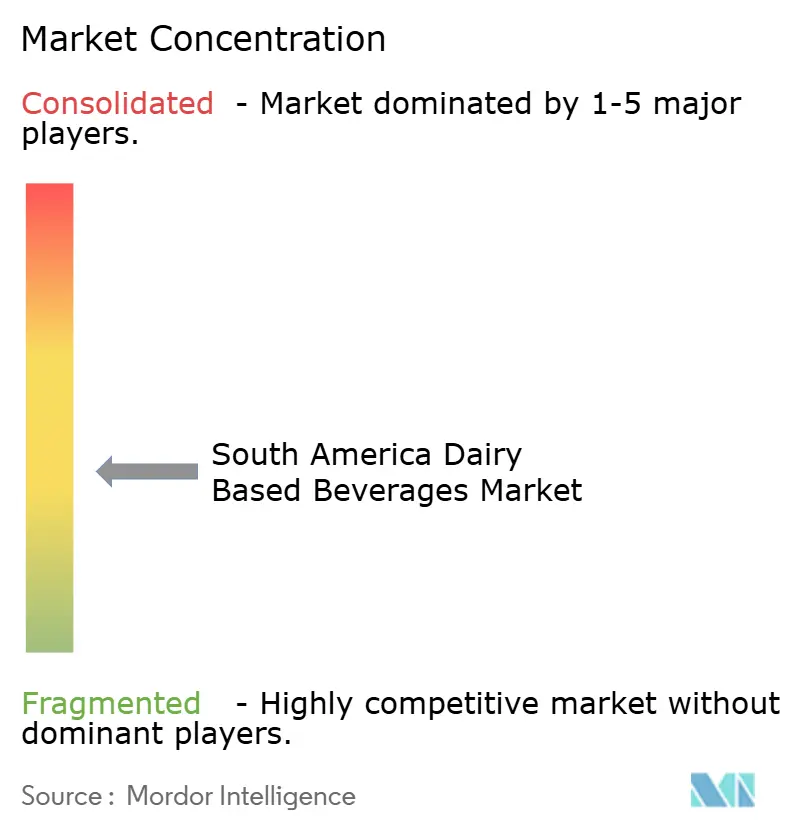
The South America dairy-based beverages market is moderately consolidated, with multinational players such as Nestlé S.A., Danone S.A., and Groupe Lactalis S.A. competing alongside regional manufacturers such as Vigor Alimentos S.A. and Mastellone Hermanos S.A. These companies compete through established dairy brands, extensive retail distribution networks, processing capabilities, and broad portfolios spanning milk-based drinks, yogurt-based beverages, and other dairy products. Their competitive strength depends on maintaining product quality, competitive pricing, reliable milk procurement, and strong relationships with retailers to secure shelf space across the region.
Competition is increasingly driven by product differentiation, nutritional positioning, and premium dairy beverage innovation. Manufacturers are developing fortified and low-fat beverages, probiotic and fermented dairy drinks, and products designed to meet demand for convenient nutrition and digestive wellness. Nestlé, for example, has introduced A2 beta-casein milk options with lactose-free formulations in Argentina, targeting consumers seeking alternative dairy choices. Such innovation enables manufacturers to expand beyond conventional milk beverages, attract health-conscious consumers, and strengthen their positioning in higher-value product categories.
Strategic partnerships, manufacturing efficiency, and expanded commercial reach are also shaping the competitive landscape. Companies are strengthening production and distribution capabilities while adapting product portfolios to local preferences. Premium probiotic shots, fortified low-fat drinks, and specialized milk formulations represent potential areas of differentiation, although the extent of investment and product availability varies by manufacturer and market.
South America Dairy Based Beverages Industry Leaders
-
Danone S.A.
-
Nestlé S.A.
-
Groupe Lactalis S.A.
-
Mastellone Hermanos S.A.
-
Vigor Alimentos S.A.
- *Disclaimer: Major Players sorted in no particular order
Recent Industry Developments
- July 2026: Nestlé committed BRL 540 million to modernize its Araçatuba plant in São Paulo state through 2028. The investment covers operational efficiency upgrades, new technologies, and production capacity expansion for high-value categories.
- September 2025: Yakult Brazil launched Yakult Peach Flavor, the first fruit-flavored variant of Lactobacillus casei Shirota fermented milk in Brazil, targeting 217,000 bottles per day through home-delivery and retail channels.
- July 2025: Cooperoeste introduced fruit-vitamin yogurts under the Amanhecer Recreio brand, along with new yogurt products, including a 15 g protein yogurt and a triple-zero yogurt containing no sugar, fat, or lactose.
South America Dairy Based Beverages Market Report Scope
Dairy-based beverages are liquid food and drink products prepared primarily from the milk of mammals or by-products derived from milk combined with flavorings, sweeteners, or other functional ingredients. The South America Dairy-Based Beverages Market is segmented by product type, fat content, packaging type, distribution channel, and geography. Based on product type, the market is segmented into milk-based beverages, yogurt-based beverages, kefir, and others. Based on fat content, the market is segmented into whole/fat, low-fat, and skimmed/non-fat. Based on packaging type, the market is segmented into cartons, bottles, pouches, cans, and others. Based on distribution channel, the market is segmented into off-trade and on-trade, with off-trade further segmented into supermarkets/hypermarkets, convenience stores, specialty stores, online retail stores, and others (vending and institutional). Based on geography, the market is segmented into Brazil, Argentina, Chile, Colombia, Peru, and the rest of South America. The report provides market size and forecasts in both value (USD) and volume (tons) for all the mentioned segments.
By Product Type
| Milk-Based Beverages |
| Yogurt-Based Beverages |
| Kefir |
| Others |
By Fat Content
| Whole/Fat |
| Low-fat |
| Skimmed/Non-fat |
By Packaging Type
| Cartons |
| Bottles |
| Pouches |
| Cans |
| Others |
By Distribution Channel
| Off-Trade | Supermarkets/Hypermarkets |
| Convenience Stores | |
| Specialty Stores | |
| Online Retail Stores | |
| Others (Vending, Institutional) | |
| On-Trade |
By Geography
| Brazil |
| Argentina |
| Chile |
| Colombia |
| Peru |
| Rest of South America |
| By Product Type | Milk-Based Beverages | |
| Yogurt-Based Beverages | ||
| Kefir | ||
| Others | ||
| By Fat Content | Whole/Fat | |
| Low-fat | ||
| Skimmed/Non-fat | ||
| By Packaging Type | Cartons | |
| Bottles | ||
| Pouches | ||
| Cans | ||
| Others | ||
| By Distribution Channel | Off-Trade | Supermarkets/Hypermarkets |
| Convenience Stores | ||
| Specialty Stores | ||
| Online Retail Stores | ||
| Others (Vending, Institutional) | ||
| On-Trade | ||
| By Geography | Brazil | |
| Argentina | ||
| Chile | ||
| Colombia | ||
| Peru | ||
| Rest of South America | ||
Key Questions Answered in the Report
What is the projected growth rate for dairy beverages in South America?
The South America dairy beverages market is forecast to grow at a CAGR of 5.21% from 2026 to 2031, reaching USD 11.14 billion by 2031.
Which product category leads dairy beverage sales in South America?
Milk-Based Beverages lead the category with a 57.62% share in 2025, supported by household consumption, institutional demand, and UHT distribution networks.
Which dairy beverage category is growing the fastest?
Yogurt-Based Beverages are the fastest-growing product category, with a projected CAGR of 6.29% through 2031, supported by demand for probiotic and convenient nutrition options.
Which packaging format is expected to grow fastest?
Pouches are forecast to grow at a 6.88% CAGR through 2031, as aseptic pouch filling supports lower logistics costs and wider access for regional processors.