
Sodium Tungstate Market Size and Share
Market Overview
| Study Period | 2022 - 2032 |
|---|---|
| Market Size (2027) | USD 649.06 Million |
| Market Size (2032) | USD 837.5 Million |
| Growth Rate (2027 - 2032) | 5.23 % |
| Fastest Growing Market | Asia-Pacific |
| Largest Market | Asia-Pacific |
| Market Concentration | Low |
Major Players *Disclaimer: Major Players sorted in no particular order Image © Mordor Intelligence. Reuse requires attribution under CC BY 4.0. | |
Sodium Tungstate Market Analysis by Mordor Intelligence
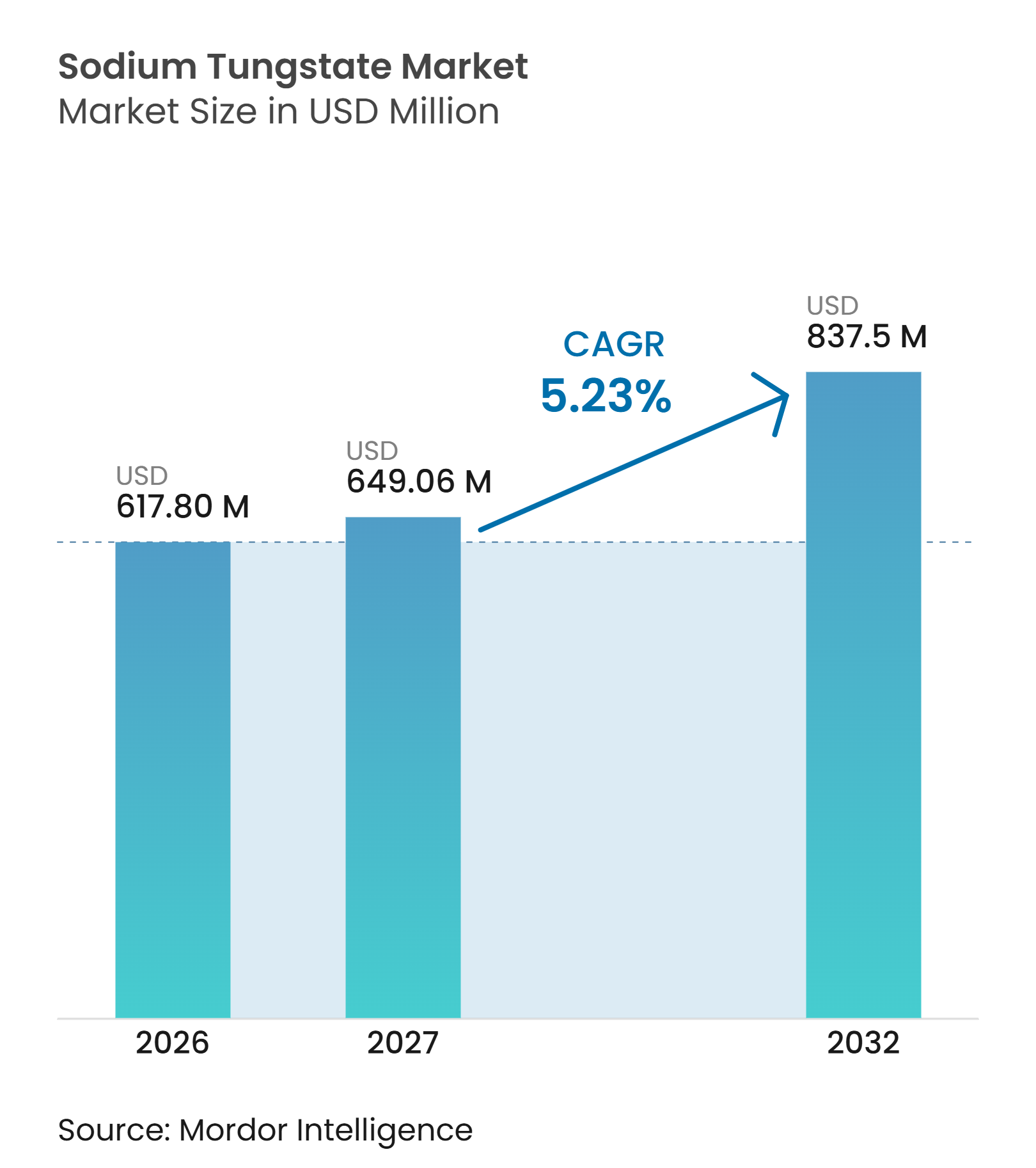
The Sodium Tungstate market size was valued at USD 617.80 million in 2026 and is estimated to grow from USD 649.06 million in 2027 to USD 837.50 million by 2032, at a CAGR of 5.23% during the forecast period (2027-2032). Green oxidation catalysis, the replacement of hexavalent chromium surface treatments, and demand for ultra-pure tungsten chemicals in semiconductor manufacturing are reshaping purchasing requirements. China's integrated tungsten supply chain continues to influence material availability, pricing, and qualification decisions across the sodium tungstate market. Export controls and recycling policies are increasing the value of secure, documented supply routes outside China. Suppliers with reliable purity control and recycled-material capability are better positioned to address higher-value demand from electronics, catalyst, and research users.
Key Report Takeaways
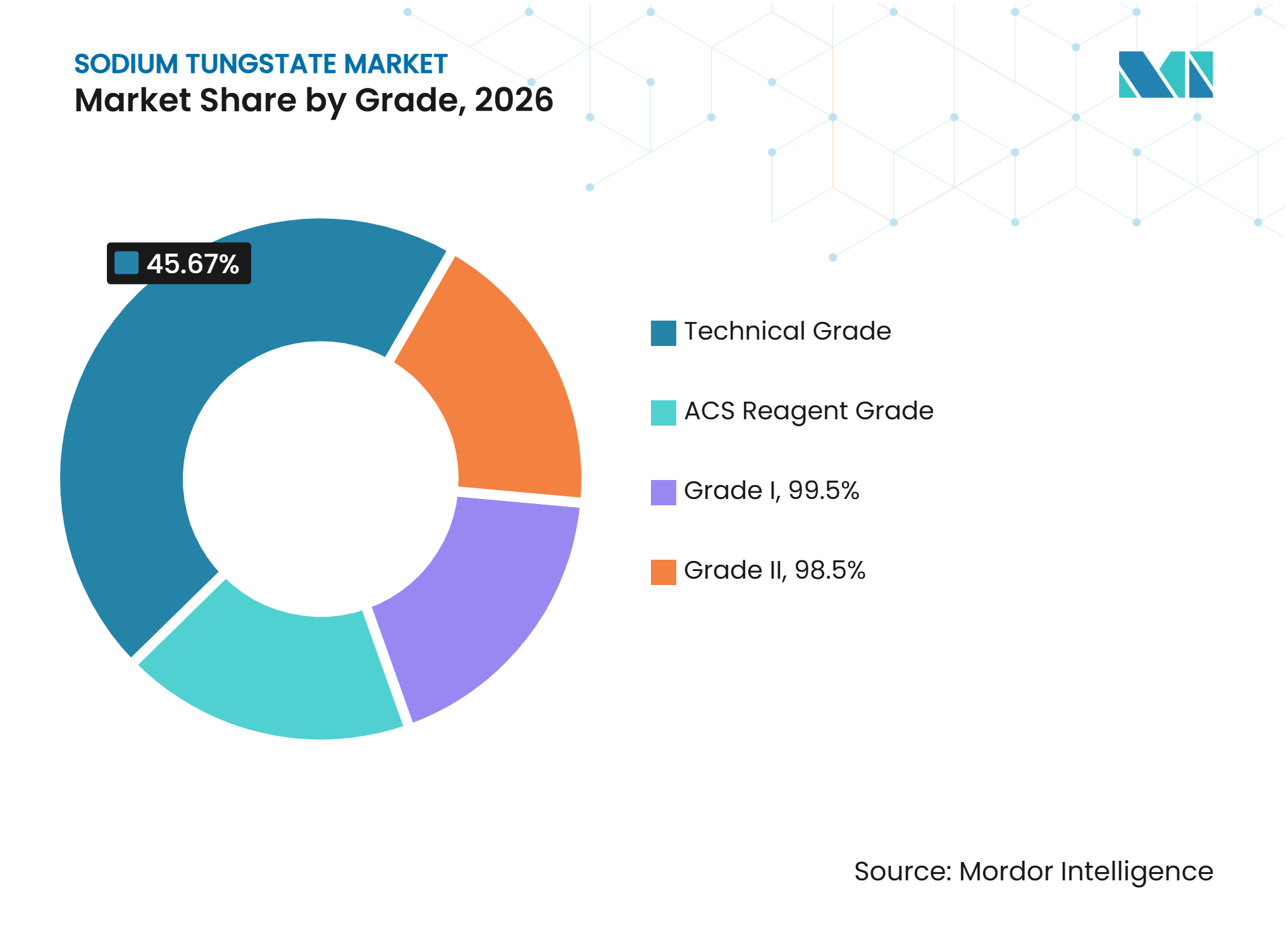
- By grade, Technical Grade held 45.67% of Sodium Tungstate market share in 2026, while Grade I, 99.5% Purity, is forecast to grow at a 6.48% CAGR through 2032.
- By product type, Sodium Tungstate Dihydrate accounted for 68.45% of Sodium Tungstate market share in 2026, while Anhydrous Sodium Tungstate is projected to expand at a 6.89% CAGR through 2032.
- By application, Catalyst captured 42.79% of Sodium Tungstate market share in 2026, while Antidiabetic Agent is forecast to grow at a 7.13% CAGR through 2032.
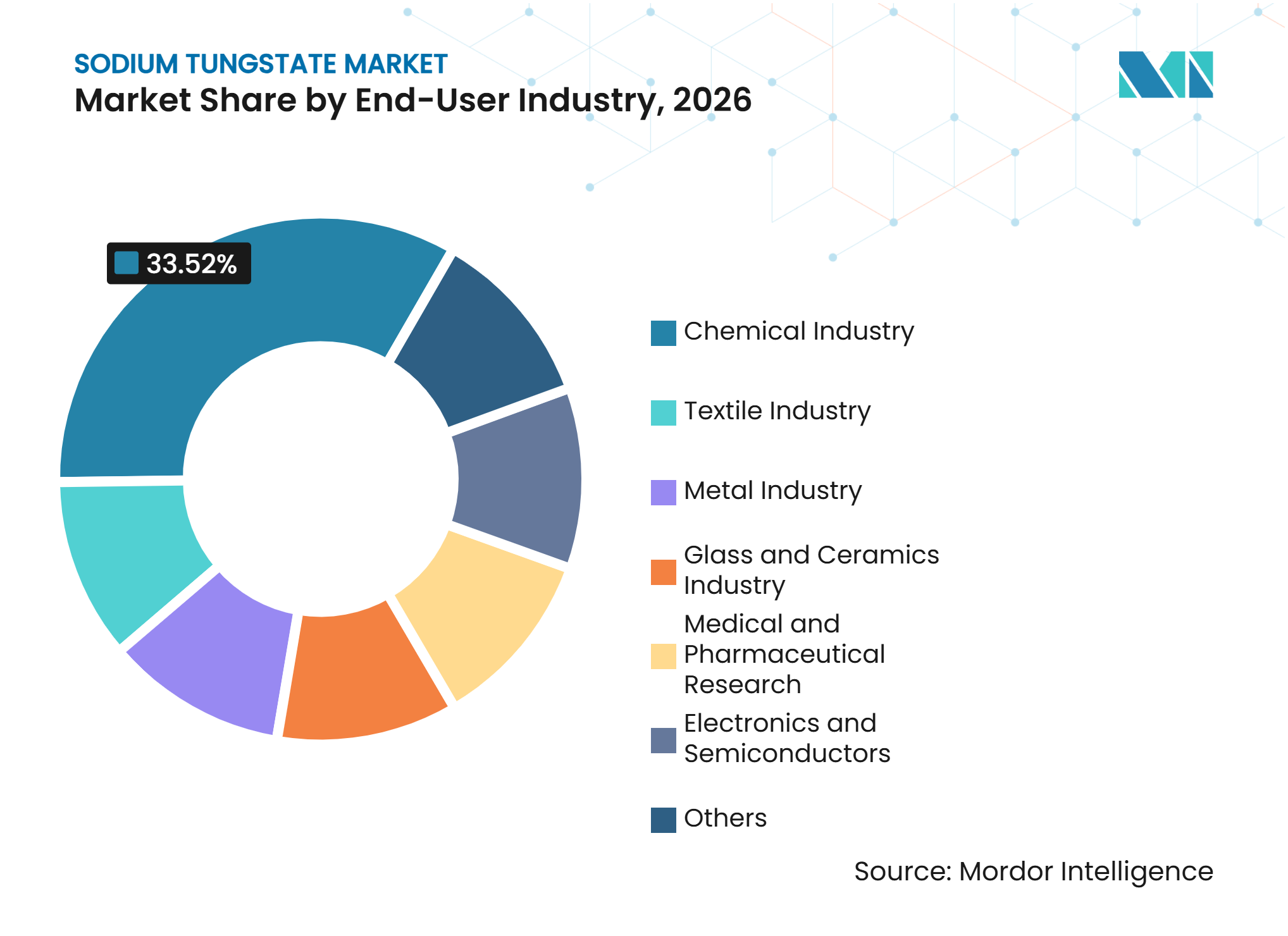
- By end-user industry, the Chemical Industry accounted for 33.52% of Sodium Tungstate market share in 2026, while Electronics and Semiconductors are forecast to advance at a 7.46% CAGR through 2032.
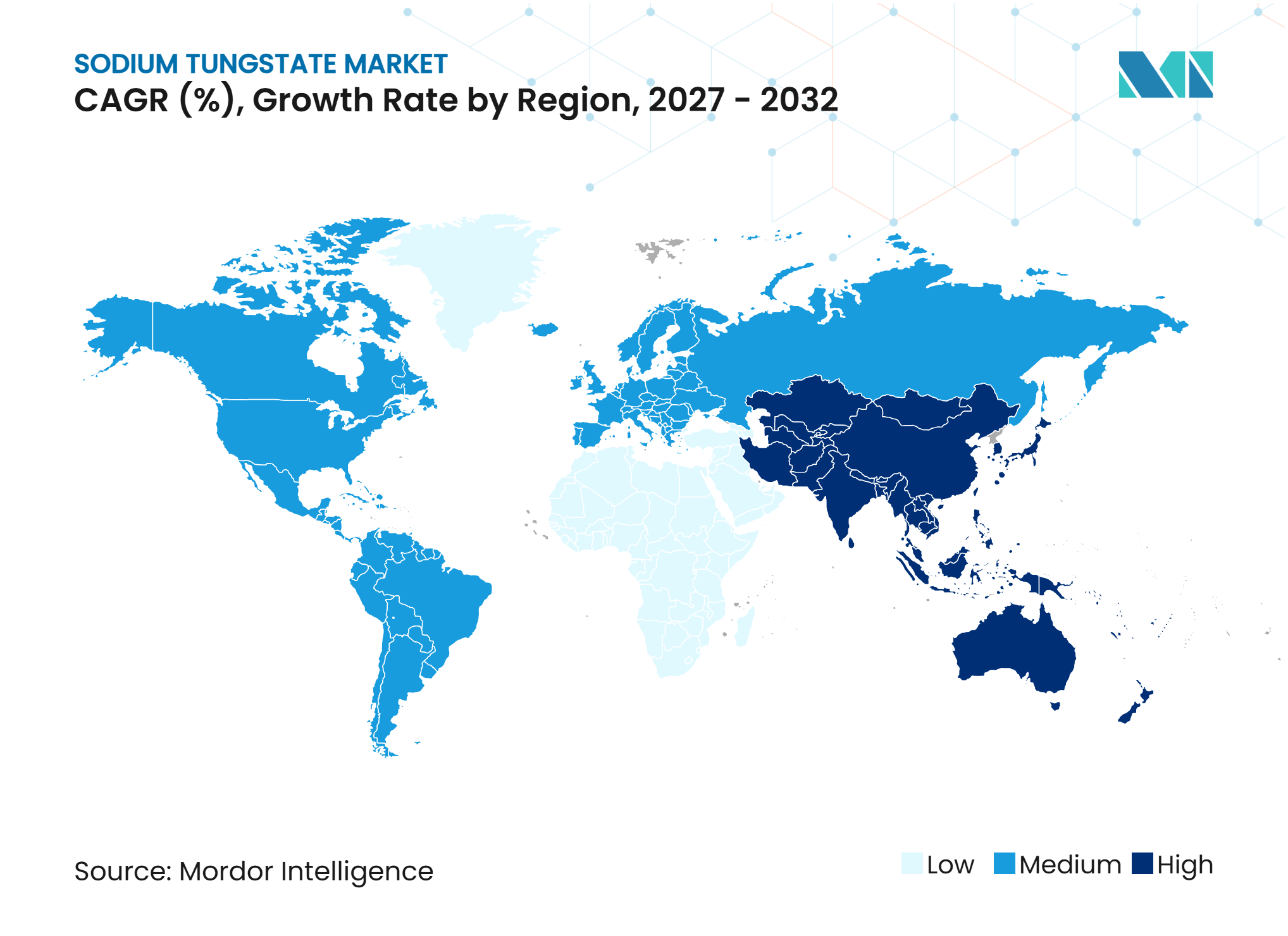
- By geography, Asia-Pacific held 52.48% of Sodium Tungstate market share in 2026 and is projected to grow at a 7.17% CAGR through 2032.
Note: Market numbers in this report are based on Mordor Intelligence's proprietary estimation framework, which combines nine months of actuals with Q4 projections for base year 2026.
Market Trends and Insights
Drivers Impact Analysis of Sodium Tungstate Market*
| Drivers | (~) % Impact on CAGR Forecast | Geographic Relevance | Impact Timeline |
|---|---|---|---|
| Expansion of Green Oxidation Catalysis | +1.2% | Global, strongest in Asia-Pacific and Europe | Medium term (2-4 years) |
| Growth in High-Purity Tungsten Chemical Demand | +0.9% | Asia-Pacific core, spillover to North America | Medium term (2-4 years) |
| Substitution for Hexavalent-Chromium Surface Treatments | +0.8% | Europe primary, global supply chain follow-on | Short term (≤ 2 years) |
| Increasing Tungsten Recycling and Closed-Loop Processing | +0.6% | China, Europe, North America | Long term (≥ 4 years) |
| Battery and Advanced-Electrode Material Development | +0.5% | Asia-Pacific, Europe, North America | Long term (≥ 4 years) |
| Source: Mordor Intelligence | |||
Expansion of Green Oxidation Catalysis
The sodium tungstate market has benefited from wider adoption of halide-free and solvent-minimized oxidation chemistry. Research published in 2025 showed that a sodium tungstate-hydrogen peroxide system could selectively oxidize naphthalenols under mild conditions, producing compounds including 1,2-naphthoquinones and carboxycinnamic acid derivatives, which could be isolated by simple filtration. Another 2025 study reported an 80.1% total yield for the oxidation of linalool using a peroxophosphotungstate catalyst derived from sodium tungstate. These results support procurement for continuous and semi-batch production of specialty chemicals, where catalyst quality and reproducibility affect process outcomes. High-purity anhydrous material is preferred when molybdenum impurity control below 10 ppm is required.
Growth in High-Purity Tungsten Chemical Demand
Semiconductor fabrication requires tungsten chemical precursors with tighter purity specifications than conventional technical-grade supply can reliably provide. China's Ministry of Industry and Information Technology and seven other agencies identified high-purity tungsten chemical verification for integrated circuits, AI computing hardware, and humanoid robotics as a priority for 2025 to 2026. This policy supports domestic demand for qualified material, while export licensing has tightened for strategic tungsten materials. Mitsubishi Materials has stated that H.C. Starck Tungsten chemicals, including sodium tungstate, are being developed for lithium-ion battery applications under its starck2charge line. Thermo Fisher Scientific lists sodium tungstate dihydrate as suitable for battery-material development, reflecting research demand for a water-soluble tungsten source. These demand channels favor Grade I, 99.5% purity supply, where qualified capacity outside China remains limited.
Substitution for Hexavalent-Chromium Surface Treatments
The European Chemicals Agency (ECHA) submitted a restriction proposal in April 2025 for certain hexavalent chromium oxides, oxyacids, and salts. The consultation opened in June 2025, and the proposed restriction could take effect in 2028 under REACH Annex XVII if adopted. The proposal covers chromium trioxide, sodium dichromate, and related substances used in electroplating, surface treatment, and corrosion-inhibition applications. Sodium tungstate is a commercially established alkaline alternative in corrosion-inhibitor formulations for steel and aluminum substrates. The transition has created a compliance-driven demand channel in the sodium tungstate market, as buyer qualification can begin before the restriction enters into force. ECHA estimates that the proposal could prevent up to 195 cancer cases each year across the European Union, which supports the policy rationale for a phaseout[1].
Increasing Tungsten Recycling and Closed-Loop Processing
Recycling has become more important to the sodium tungstate market, as sodium tungstate solution serves as an intermediate in hydrometallurgical recovery routes. H.C. Starck Tungsten states that recycled material accounts for 80% of raw-material input at its Goslar facility. Mitsubishi Materials approved a EUR 50 million expansion in July 2026 to raise Goslar processing capacity by nearly 50% to 7,000 metric tons per year. Wuhan Renewable Resources Group and Hubei Lv Tungsten Resource Recycling launched an integrated collection, processing, and reuse model in 2025, with the partnership trading 90 metric tons of tungsten scrap in its first month of operation. China also began drafting a revised national standard for recycled tungsten raw materials in January 2026, while Chongyi Zhangyuan reported a sodium tungstate solution deep-chrome removal process for high-chrome tungsten waste.
Restraints Impact Analysis of Sodium Tungstate Market*
| Restraints | (~) % Impact on CAGR Forecast | Geographic Relevance | Impact Timeline |
|---|---|---|---|
| Tungsten Feedstock Price Volatility and Supply Concentration | -0.7% | Global, most acute for non-Chinese producers | Short term (≤ 2 years) |
| Environmental and Worker-Safety Compliance Costs | -0.5% | China primary, spillover to Europe and North America | Medium term (2-4 years) |
| Limited Clinical Translation of Antidiabetic and Anti-Obesity Claims | -0.3% | Global pharmaceutical sourcing | Long term (≥ 4 years) |
| Source: Mordor Intelligence | |||
Tungsten Feedstock Price Volatility and Supply Concentration
China produced 83% of global mined tungsten in 2024, creating substantial exposure for buyers outside the country. Export licensing requirements introduced in February 2025 increased pressure across the tungsten supply chain. Masan High-Tech Materials reported that benchmark prices for ammonium paratungstate rose from USD 340 per metric ton unit at the end of 2024 to USD 900 per metric ton unit at the end of 2025. Fastmarkets APT High reached USD 2,800 per metric ton unit by April 2026. Sodium tungstate production costs track this pricing because producers use ammonium paratungstate or tungsten ore as feedstock. Producers supplied from non-Chinese sources, including Wolfram Bergbau's Mittersill mine and Masan's Nui Phao operation, also face logistical challenges in sourcing additional supply.
Environmental and Worker-Safety Compliance Costs
Tungsten smelting can generate tungsten-bearing slag, wastewater containing heavy metals, and airborne particulate matter. Ganzhou's environmental authority issued a tungsten-smelting solid-waste management guideline for public comment in October 2025. The document covers controls for particulate matter, nickel, and cobalt compounds, as well as requirements for multi-stage alkali-spray scrubbers. Producers that use alkaline ore dissolution or ammonium paratungstate may require investment in dust suppression, closed-circuit wastewater treatment, and slag containment. Approved documentation for a 6,000-metric-ton tungsten-scrap recycling project in Dayu County indicated that compliance expenditure can represent 2-3% of total project investment. These requirements raise fixed costs for smaller producers and can limit new capacity in the sodium tungstate market[2].
*Our forecasts treat driver/restraint impacts as directional, not additive. The impact forecasts reflect baseline growth, mix effects, and variable interactions.
Sodium Tungstate Market Segment Analysis
By Grade:
High-Purity Grades Pull Growth from Technical BaseTechnical Grade held 45.67% of the Sodium Tungstate market share in 2026, supported by its use in industrial catalyst preparation, corrosion-inhibitor manufacturing, and large-volume textile applications. Its broad use reflects procurement decisions where specification tolerances are wider and cost per kilogram is a key consideration. Grade I (99.5% purity) is forecast to grow at a 6.48% CAGR from 2027 to 2032, driven by electronics, pharmaceutical research, and specialty catalyst applications that require lower molybdenum and chloride impurity levels. ACS Reagent Grade serves the premium laboratory market, with lot-level certification offered by Merck KGaA and Thermo Fisher Scientific. Grade II (98.5% purity) occupies the middle range for general industrial and textile use and is often supplied by integrated Chinese processors.
Technical Grade continues to account for a large share of demand, but downstream requirements are shifting toward higher-purity material. Semiconductor wafer-cleaning chemistry can require impurity profiles that Technical Grade does not consistently meet, and pharmaceutical intermediate synthesis also favors tighter trace-metal control. This increases the value of suppliers capable of producing multiple grades through a single integrated supply chain. The Sodium Tungstate market therefore presents a growing revenue opportunity through qualification-led grade migration. This shift does not displace technical-grade material in established uses, but it supports higher revenue per ton in specialized demand areas.



By Product Type:
Dihydrate Leads, Anhydrous Gains MomentumSodium Tungstate Dihydrate accounted for 68.45% of the Sodium Tungstate market share in 2026. The material is easy to handle, stable at ambient temperature, and compatible with aqueous reaction systems. It is the standard commercial form for catalyst synthesis, corrosion-inhibitor blending, and laboratory reagent applications. Anhydrous Sodium Tungstate is projected to grow at a 6.89% CAGR from 2027 to 2032, supported by advances in catalyst preparation and battery electrode research, where added moisture can alter reaction stoichiometry. H.C. Starck Tungsten confirms that Sodium Tungstate is part of its tungsten chemical portfolio and is produced alongside tungsten acids and tungsten oxides.
The anhydrous form carries a price premium of 15-20% over the dihydrate on a per-kilogram basis, meaning its revenue contribution can rise faster than its quantity contribution. The dihydrate remains relevant for phase-transfer catalyst design, as it stays in the aqueous phase during catalytic cycles. Research from the University of Bayreuth, published in 2025, demonstrated this property in biphasic epoxidation, supporting its use in processes where catalyst separation and recovery are important. The Sodium Tungstate market continues to require both forms, as user requirements differ by process, moisture tolerance, and handling method.
By Application:
Catalysts Lead by Share, Pharmaceuticals Show Accelerating GrowthCatalyst applications accounted for 42.79% of the Sodium Tungstate market share in 2026. This segment is supported by peroxotungstate intermediates formed from sodium tungstate and hydrogen peroxide, which are used for alcohol oxidation, alkene epoxidation, and sulfide-to-sulfoxide conversion. Fine chemicals, agrochemicals, and pharmaceutical active-ingredient manufacturing use these reactions where selectivity and mild conditions are required, and the chemistry can reduce reliance on stoichiometric heavy-metal oxidants. This established use anchors recurring demand in the Sodium Tungstate market.
The Antidiabetic Agent application is forecast to grow at a 7.13% CAGR from 2027 to 2032, based on preclinical and early clinical interest in insulin-mimetic properties. A completed Phase II study at Hospital Clínic de Barcelona examined sodium tungstate as an anti-obesity agent, supporting feasibility interest, though clinical translation remains limited. The Anti-Obesity Agent application relies on the same underlying mechanism. Permanent Chemical Modifier is used in atomic absorption spectroscopy sample preparation, while Fuel Cell Electrode Material is an emerging application for tungsten disulfide electrocatalysts. Other uses include fire-retardant cellulose treatment and alkaloid precipitation in analytical chemistry.
By End-User Industry:
Chemical and Electronics Drive Bifurcated GrowthThe Chemical Industry held a 33.52% market share in the Sodium Tungstate market in 2026. Catalyst synthesis, reagent-grade chemical manufacturing, and tungsten-compound intermediate production underpin its demand. The shift toward greener oxidation processes is broadening demand for sodium tungstate as a catalyst precursor, reducing the use of chromium- and manganese-based alternatives in selected processes. The Chemical Industry also provides stable demand by serving multiple downstream applications, and its scale continues to support baseline demand for the Sodium Tungstate market.
Electronics and Semiconductors are forecast to grow at a 7.46% CAGR from 2027 to 2032, supported by tungsten-based etch and deposition chemistry for advanced logic and memory fabrication. China's 2025 stability plan includes verification of high-purity tungsten chemical applications for integrated circuits, AI hardware, and humanoid robotics. Textile uses such as mordanting, flame-retardant finishing, and silk weighting remain mature and quantity-driven. Metal-industry demand for corrosion inhibitors is supported by Europe's chromium restriction path. Glass and ceramics applications use sodium tungstate in fluorescent glass and specialty glaze formulations, while medical and pharmaceutical research requires ultra-pure grades.

Geography Analysis
Asia-Pacific: The Dominant Force Across Both Scale and Pace
Asia-Pacific held 52.48% of the sodium tungstate market share in 2026 and is forecast to grow at a 7.17% CAGR from 2027 to 2032. China is central to this position, combining tungsten resources, processing capacity, and domestic end-use demand. Xiamen Tungsten reported CNY 46.26 billion in FY2025 revenue, approximately USD 6.4 billion, with gains recorded across its tungsten, molybdenum, rare earth, and energy-new-materials activities. Chongyi Zhangyuan reported CNY 5.20 billion in FY2025 revenue, reflecting revenue growth of 41.62% and net profit growth of 68.82%. India and South Korea are expanding semiconductor capacity and placing greater emphasis on verified purity documentation. Japan maintains established demand from cemented-carbide tooling and specialty electronics, with Mitsubishi Materials' Japan New Metals unit providing an integrated domestic supply chain.
China's Ministry of Industry and Information Technology (MIIT) policy on non-ferrous metals and the YS/T 1704-2024 recycled tungsten standard influence regional supply choices. The standard took effect in July 2025 and supports formalization of recycled-material specifications. These compliance requirements support the region's ability to supply qualified material at scale. The regional sodium tungstate market also benefits from integrated processing, which shortens supply routes for electronics and specialty chemical customers. Export licensing introduces a countervailing consideration, as it can limit availability for buyers outside China. The region therefore combines large production capability with growing requirements for documented, high-purity, and recycled feedstock.
North America: Supply Security Rewriting Procurement Logic
North America is reshaping tungsten procurement around supply security. The USGS designated tungsten as a critical mineral in its 2025 list. A 2026 Defense Priorities and Allocations System directive requires all U.S. domestic sales of tungsten waste and scrap to be allocated to U.S. persons unless the Bureau of Industry and Security grants an exemption. American Elements offers sodium tungstate dihydrate and anhydrous material at purities ranging from 99% to 99.999%. GTP produces ammonium metatungstate and ammonium paratungstate in Towanda, Pennsylvania, under long-term ore offtake arrangements. Buffalo Tungsten processes tungsten intermediates from non-Chinese suppliers, a position relevant to defense and aerospace purchasers subject to origin requirements.
These policies can redirect secondary raw material that previously reached non-U.S. processors. Antidumping and countervailing duty orders on certain Chinese tungsten shot, issued in August 2025, indicate broader protection for domestic tungsten processing. These measures can support capacity investment but may limit feedstock flexibility for offshore buyers. Producers can differentiate through supply-chain provenance, multi-grade availability, and verified documentation. The sodium tungstate market in the region is consequently shaped less by low-cost procurement and more by compliance and continuity of supply.
Europe, South America, and Middle East and Africa (MEA): Distinct Drivers, Selective Opportunities
Europe is developing supplier qualification programs ahead of the proposed 2028 restriction on certain hexavalent chromium substances. H.C. Starck Tungsten's Goslar facility and Wolfram Bergbau's St. Martin im Sulmtal refinery are European production points for tungsten chemicals. Wolfram Bergbau's 2025 due diligence report confirms that sodium tungstate is an intermediate input within its production chain. Germany, France, and the Nordic countries drive demand for electroplating, automotive, and specialty chemicals. H.C. Starck's EUR 50 million-approved Goslar expansion links recycled feedstock to greater availability of tungsten chemicals across Europe. REACH compliance and the EU Battery Regulation are important procurement considerations in this context.
South America has growing demand, driven by Brazil's specialty chemical sector and Argentina's oil-and-gas corrosion-inhibitor applications. The region has limited domestic production of tungsten chemicals and relies on imports, primarily from China and Europe. Middle East and Africa are also import-dependent. Saudi Arabia's petrochemical expansion supports demand for catalyst-grade products, while South Africa's mining and metal-treatment sectors create a secondary demand base. Import prices remain exposed to Chinese export controls, which make long-term contracting more difficult for downstream formulators. Across these regions, the sodium tungstate market opportunity depends on reliable import channels, supplier qualification, and the ability to manage feedstock-price uncertainty.
Competitive Landscape
Market Concentration
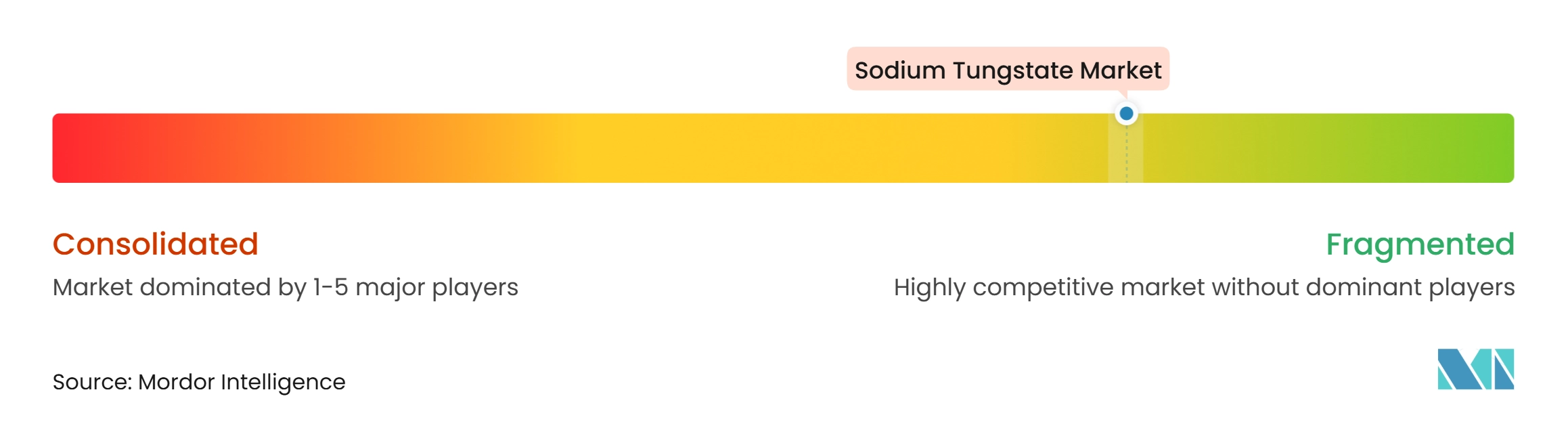
The sodium tungstate market is fragmented. Chinese integrated producers include Xiamen Tungsten, Chongyi Zhangyuan, Ganzhou Grand Sea Tungsten, and Jiangxi Tungsten Holding Group, whose competitive advantage stems from vertical integration spanning mining through chemical processing. Outside China, H.C. Starck Tungsten, Wolfram Bergbau und Hütten, Masan High-Tech Materials, and GTP form a smaller group of producers with documented mineral-sourcing programs. These suppliers compete on material origin, purity documentation, and delivery assurance. Constrained feedstock availability and specific purity requirements limit new suppliers' ability to enter premium applications.
Electronics, defense, and pharmaceutical research buyers pay a stated 20–30% premium for non-Chinese-origin material with complete audit documentation. Merck KGaA and Thermo Fisher Scientific serve the reagent-grade segment through certification, packaging, and regulatory documentation rather than primary tungsten production. ISO 9001:2015 quality management practices and American Chemical Society (ACS) reagent certification are particularly relevant for laboratory-grade sourcing. A competitive gap exists in Grade I: 99.5% of sodium tungstate is produced outside China, with Responsible Minerals Initiative (RMI)-conformant chain-of-custody documentation. This gap is widening as electronics and pharmaceutical buyers formalize non-Chinese sourcing policies. Suppliers with validated impurity control can differentiate without competing solely on price.
H.C. Starck Tungsten received approval in July 2026 for a EUR 50 million investment to expand recycling capacity at Goslar. The project targets a nearly 50% capacity increase to 7,000 metric tons per year, with construction scheduled to begin in November 2026. Mitsubishi Materials stated that the investment will strengthen the supply of recycled materials for European tungsten chemicals. China's recycled tungsten standards and processes represent another strategic move toward formalized secondary-material supply. Buffalo Tungsten's reliance on non-Chinese sourcing provides a differentiated position with buyers operating under origin restrictions. These developments indicate that the sodium tungstate market is increasingly shaped by recycling capacity, traceability, and regional supply assurance.
Sodium Tungstate Industry Leaders
-
China Minmetals Corporation
-
Xiamen Tungsten Co., Ltd.
-
H.C. Starck Tungsten GmbH
-
Global Tungsten & Powders
-
Ganzhou Grand Sea Tungsten Co., Ltd
- *Disclaimer: Major Players sorted in no particular order
Sodium Tungstate Market Companies Covered in this Report
- American Elements
- Buffalo Tungsten Inc.
- China Minmetals Corporation
- Chongyi Zhangyuan Tungsten Co., Ltd.
- Ganzhou Grand Sea Tungsten Co., Ltd
- Global Tungsten & Powders
- H.C. Starck Tungsten GmbH
- Jiangxi Tungsten Industry Group Co., Ltd.
- Kennametal Inc.
- Masan High-Tech Materials Corporation
- Merck KGaA
- Midwest Tungsten Service, Inc.
- Thermo Fisher Scientific Inc.
- Wolfram Bergbau und Hütten AG
- Xiamen Tungsten Co., Ltd.
Recent Industry Developments in Sodium Tungstate Market
- August 2026: The US Department of Commerce issued a Defense Priorities and Allocations System (DPAS) directive, effective August 27, 2026, requiring all domestic US tungsten waste and scrap sales to be allocated 100% to US persons. This restricts access to raw materials for non-US sodium tungstate producers that previously sourced US-origin scrap.
- July 2026: H.C. Starck Tungsten (Mitsubishi Materials) received approval for a EUR 50 million investment to expand tungsten scrap processing capacity at its Goslar, Germany facility by approximately 50%, to around 7,000 metric tons per year. The expansion supports the production of sodium tungstate intermediates for European buyers, with construction beginning in November 2026 and completion expected by 2028.
Global Sodium Tungstate Market Report Scope
Sodium tungstate is an inorganic chemical compound with the chemical formula Na₂WO₄. It appears as white rhombohedral crystals or a crystalline powder and is readily soluble in water. The compound is commercially available in both anhydrous and dihydrate forms, with the dihydrate form (Na₂WO₄·2H₂O) being the more commonly used variant in industrial and laboratory applications.
The sodium tungstate market is segmented by grade, product type, application, end-user industry, and geography. By grade, the market is segmented into ACS reagent grade, technical grade, grade I (99.5%), and grade II (98.5%). By product type, the market is segmented into sodium tungstate dihydrate and anhydrous sodium tungstate. By application, the market is segmented into antidiabetic agent, anti-obesity agent, catalyst, permanent chemical modifier, fuel cell electrode material, and others. By end-user industry, the market is segmented into chemical industry, textile industry, metal industry, glass and ceramics industry, medical and pharmaceutical research, electronics and semiconductors, and others. The report also covers market sizes and forecasts for sodium tungstate across 15 countries in major regions. The market sizes and forecasts are provided in terms of value (USD).
Segmentation Overview
| ACS Reagent Grade |
| Technical Grade |
| Grade I, 99.5% |
| Grade II, 98.5% |
| Sodium Tungstate Dihydrate |
| Anhydrous Sodium Tungstate |
| Antidiabetic Agent |
| Anti-Obesity Agent |
| Catalyst |
| Permanent Chemical Modifier |
| Fuel Cell Electrode Material |
| Others |
| Chemical Industry |
| Textile Industry |
| Metal Industry |
| Glass and Ceramics Industry |
| Medical and Pharmaceutical Research |
| Electronics and Semiconductors |
| Others |
| Asia-Pacific | China |
| India | |
| Japan | |
| South Korea | |
| ASEAN Countries | |
| Rest of Asia-Pacific | |
| North America | United States |
| Canada | |
| Mexico | |
| Europe | Germany |
| United Kingdom | |
| France | |
| Italy | |
| NORDIC Countries | |
| Rest of Europe | |
| South America | Brazil |
| Argentina | |
| Rest of South America | |
| Middle East and Africa | Saudi Arabia |
| South Africa | |
| Rest of Middle East and Africa |
| By Grade | ACS Reagent Grade | |
| Technical Grade | ||
| Grade I, 99.5% | ||
| Grade II, 98.5% | ||
| By Product Type | Sodium Tungstate Dihydrate | |
| Anhydrous Sodium Tungstate | ||
| By Application | Antidiabetic Agent | |
| Anti-Obesity Agent | ||
| Catalyst | ||
| Permanent Chemical Modifier | ||
| Fuel Cell Electrode Material | ||
| Others | ||
| By End-User Industry | Chemical Industry | |
| Textile Industry | ||
| Metal Industry | ||
| Glass and Ceramics Industry | ||
| Medical and Pharmaceutical Research | ||
| Electronics and Semiconductors | ||
| Others | ||
| By Geography | Asia-Pacific | China |
| India | ||
| Japan | ||
| South Korea | ||
| ASEAN Countries | ||
| Rest of Asia-Pacific | ||
| North America | United States | |
| Canada | ||
| Mexico | ||
| Europe | Germany | |
| United Kingdom | ||
| France | ||
| Italy | ||
| NORDIC Countries | ||
| Rest of Europe | ||
| South America | Brazil | |
| Argentina | ||
| Rest of South America | ||
| Middle East and Africa | Saudi Arabia | |
| South Africa | ||
| Rest of Middle East and Africa | ||
Key Questions Answered in the Report
What is current market size of Sodium Tungstate Market?
The Sodium Tungstate market size was valued at USD 617.80 million in 2026 and is estimated to grow from USD 649.06 million in 2027 to USD 837.50 million by 2032, at a CAGR of 5.23% during the forecast period (2027-2032).
Which product form has the largest sodium tungstate share?
Sodium Tungstate Dihydrate held 68.45% of the 2026 market share because it is widely used in aqueous reactions, catalyst synthesis, and reagent applications.
What is driving demand from semiconductor manufacturers?
Semiconductor applications require high-purity tungsten chemical precursors for advanced etch and deposition processes, supporting a 7.46% CAGR for Electronics and Semiconductors.
Which region leads sodium tungstate demand?
Asia-Pacific held 52.48% market share in 2026 and is forecast to grow at a 7.17% CAGR through 2032.