
Market Overview
| Study Period | 2021 - 2031 |
|---|---|
| Forecast Data Period | 2026 - 2031 |
| Base Year Market Size (2025) | USD 1.56 Billion |
| Market Size (2026) | USD 1.74 Billion |
| Market Size (2031) | USD 3.01 Billion |
| Growth Rate (2026 - 2031) | 11.53 % |
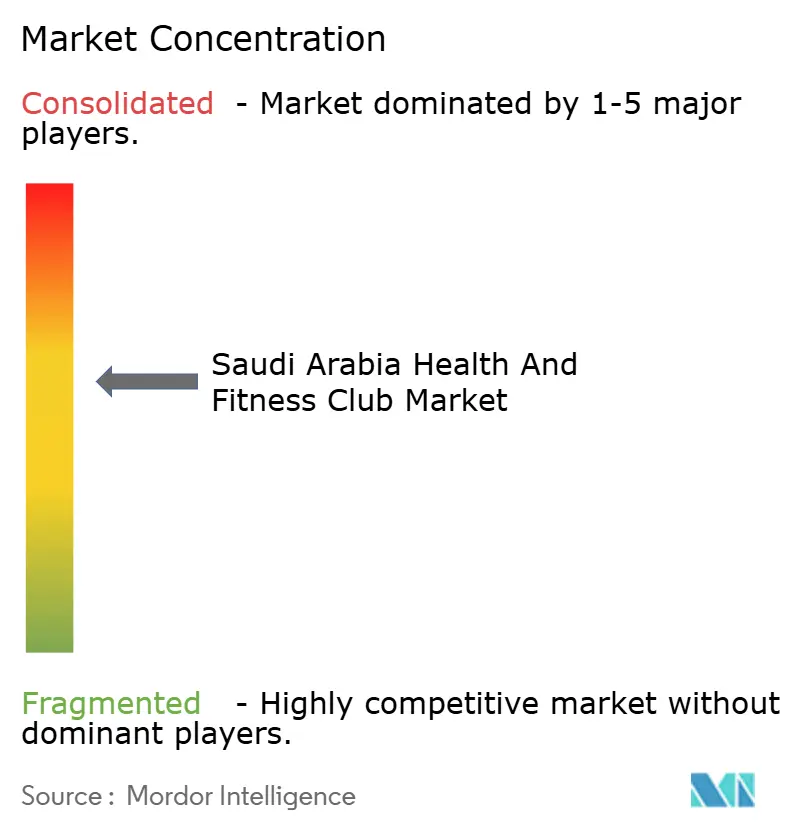
| Market Concentration | Medium |
Major Players *Disclaimer: Major Players sorted in no particular order Image © Mordor Intelligence. Reuse requires attribution under CC BY 4.0. | |
Saudi Arabia Health And Fitness Club Market Analysis by Mordor Intelligence
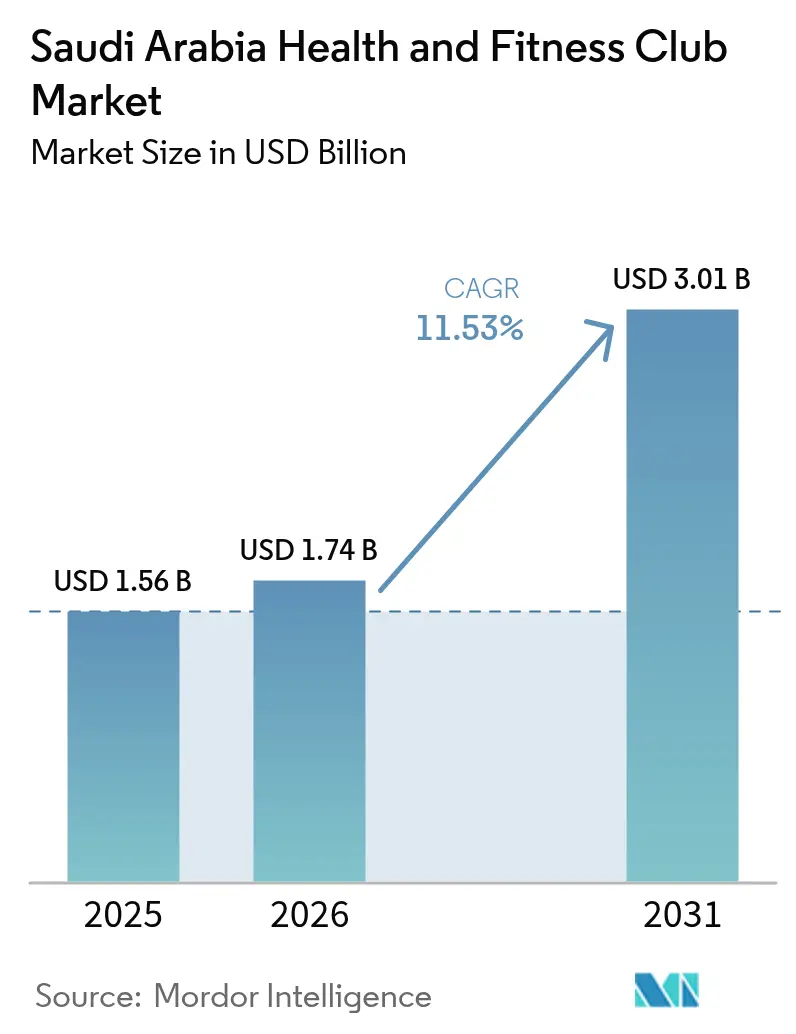
Saudi Arabia health and fitness club market size in 2026 is estimated at USD 1.74 billion, growing from 2025 value of USD 1.56 billion with 2031 projections showing USD 3.01 billion, growing at 11.53% CAGR over 2026-2031. This growth is primarily fueled by the increasing awareness of health and wellness among the population, as more individuals prioritize physical fitness and adopt healthier lifestyles. The market's expansion is further supported by rising disposable incomes, enabling consumers to spend more on fitness-related services and memberships. Government initiatives, such as Saudi Vision 2030, play a pivotal role in promoting physical activity and encouraging the establishment of fitness facilities across the country. These initiatives aim to reduce lifestyle-related diseases and improve the overall well-being of the population, thereby driving demand for health and fitness clubs. Additionally, the market is benefiting from the growing presence of international fitness brands and the introduction of innovative services, such as personalized training programs, virtual fitness classes, and wellness-focused offerings. The increasing penetration of digital fitness platforms and mobile applications is also contributing to the market's growth, as they provide convenient and flexible fitness solutions to consumers.
Key Report Takeaways
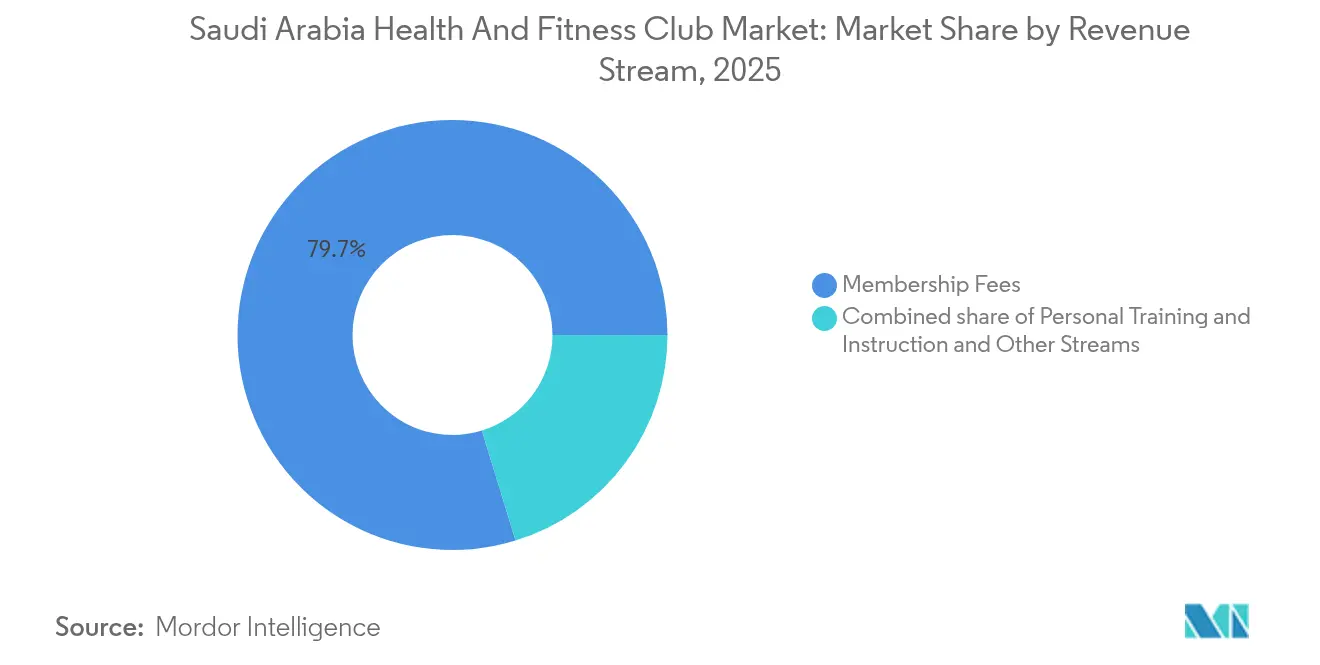
- By revenue stream, Membership Fees held 79.74% of the Saudi Arabia health and fitness club market share in 2025, whereas Personal Training and Instruction is advancing at a 12.95% CAGR through 2031.
- By end user, men accounted for 77.62% of participation in 2025; women represent the fastest growing cohort with a 13.05% CAGR to 2031.
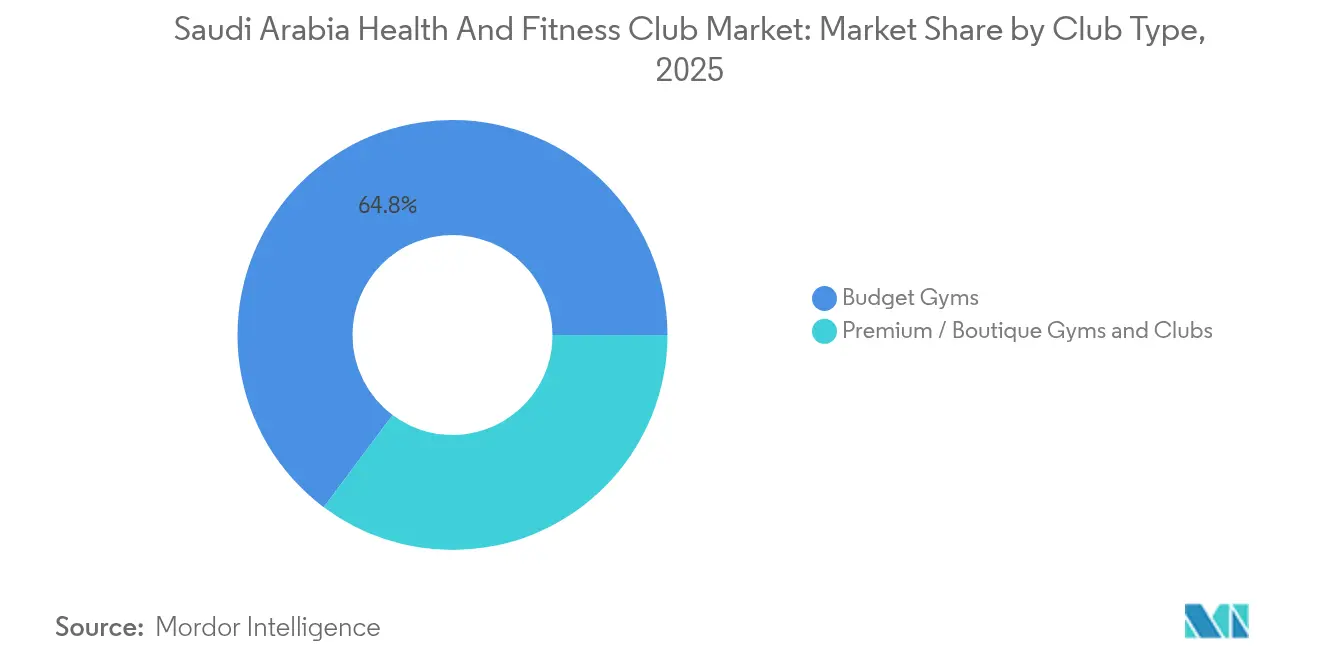
- By club type, Budget Gyms captured 64.78% revenue in 2025, while Premium/Boutique Gyms and Clubs are expanding at a 13.32% CAGR during 2026-2031.
- By structure, independent operators commanded 66.74% share in 2025 and chained facilities are scaling at a 12.67% CAGR to 2031.
Note: Market size and forecast figures in this report are generated using Mordor Intelligence’s proprietary estimation framework, updated with the latest available data and insights as of 2026.
Saudi Arabia Health And Fitness Club Market Trends and Insights
Drivers Impact Analysis*
| Driver | (~) % Impact on CAGR Forecast | Geographic Relevance | Impact Timeline |
|---|---|---|---|
| Government support and vision 2030 reforms | +2.8% | National, with concentrated gains in Riyadh, Jeddah, Dammam | Long term (≥ 4 years) |
| Growth of gym culture and penetration of gym brands | +2.1% | Urban centers, expanding to secondary cities | Medium term (2-4 years) |
| Rising awareness and increasing obesity among consumers | +1.9% | National, with higher impact in metropolitan areas | Medium term (2-4 years) |
| Urbanization and lifestyle changes | +1.6% | Major cities and emerging urban centers | Long term (≥ 4 years) |
| Variety in fitness offerings | +1.4% | Premium segments in Riyadh, Jeddah, Eastern Province | Short term (≤ 2 years) |
| Corporate wellness mandates in large employers | +1.3% | Industrial hubs, major corporate centers | Medium term (2-4 years) |
| Source: Mordor Intelligence | |||
Government support and vision 2030 reforms
The Saudi Arabian health and fitness club market is significantly driven by government support and the ambitious Vision 2030 reforms. These reforms aim to diversify the economy and reduce dependence on oil revenues by promoting sectors like health, wellness, and fitness. Vision 2030's Health Sector Transformation Program fundamentally reshapes fitness infrastructure through unprecedented public investment and regulatory modernization. The government has introduced various initiatives to encourage physical activity and healthy lifestyles among citizens, aligning with the Vision 2030 objective of increasing the participation rate in sports and physical activities. Additionally, substantial investments in infrastructure, such as the development of fitness centers, gyms, and recreational facilities, are further propelling the market. These efforts are complemented by public awareness campaigns and partnerships with private entities to foster a culture of health and fitness across the nation. The government's proactive approach and strategic reforms are creating a conducive environment for the growth of the health and fitness club market in Saudi Arabia.
Growth of gym culture and penetration of gym brands
In Saudi Arabia, physical activity has shifted from being a leisure activity to becoming an essential part of everyday routines. The 2024 Physical Activity Statistics Bulletin, published by the General Authority for Statistics (GASTAT), highlights that 58.5% of Saudi residents aged 18 and older actively participate in physical activities for at least 150 minutes each week [1]. This growing focus on health and fitness has significantly increased the demand for gyms and fitness centers across the country. To address this rising demand, market players are actively introducing strategic innovations and expanding their presence in the region. Prominent fitness chains are not only entering the Saudi market but are also establishing a strong foothold by opening new facilities. International fitness brands, including Gold's Gym, World Gym, Landmark Fitness, and Curves, are forming franchise partnerships to cater to the growing appetite for fitness services. These collaborations aim to provide high-quality fitness solutions and capitalize on the increasing health awareness among Saudi residents. The fitness industry in Saudi Arabia is witnessing rapid growth as both local and international players work to meet the evolving needs of the market.
Rising awareness and increasing obesity among consumers
In Saudi Arabia, the rising prevalence of obesity is driving the demand for targeted fitness solutions and specialized health programs. This growing health concern has prompted corporate wellness initiatives to adopt strategies aimed at improving employee well-being. For instance, Aramco offers its employees free access to recreational facilities, including gyms and swimming pools, to address workforce health challenges. Such initiatives reflect a broader trend within the corporate sector to prioritize health and wellness. Additionally, there is a noticeable increase in consumer participation in rigorous exercise routines, driven by the goals of weight management and improved stamina. This shift indicates a rising health consciousness among the population, as individuals actively seek to adopt healthier lifestyles. According to data from The General Authority for Statistics (Saudi Arabia), the obesity rate among individuals aged 15 and older has reached 23.1% in 2024, while 45.1% of this demographic is classified as overweight. Among children aged 2 to 14 years, 14.6% are categorized as obese, and 33.3% are considered overweight [2]. These statistics highlight the urgent need for interventions, including public health campaigns, community-based fitness programs, and educational initiatives to promote healthier eating habits and active lifestyles.
Urbanization and lifestyle changes
Urbanization and changing lifestyles are significant drivers of the Saudi Arabia Health and Fitness Club Market. According to World Bank data, Saudi Arabia's urbanization rate reached 85% in 2024 [3], underscoring the rapid pace of urban development and the increasing concentration of the population in cities. This urban expansion has not only transformed the country's demographic landscape but also exposed a larger segment of the population to global health and wellness trends. As urban areas grow, residents are becoming more aware of the importance of maintaining a healthy lifestyle to counteract the challenges posed by sedentary jobs and modern living conditions. The shift towards urban living has also led to a rise in disposable incomes and access to fitness facilities, further driving the adoption of fitness routines. Consequently, health and fitness clubs are witnessing increased memberships as individuals seek structured environments to achieve their wellness goals. This growing demand for fitness facilities and services highlights urbanization as a critical factor propelling the Saudi Arabia Health and Fitness Club Market forward.
Restraints Impact Analysis*
| Restraint | (~) % Impact on CAGR Forecast | Geographic Relevance | Impact Timeline |
|---|---|---|---|
| Surging demand for home gyms and recreational activities | -1.8% | Urban areas with higher disposable income | Short term (≤ 2 years) |
| High membership prices in premium gyms | -1.5% | Premium segments in major cities | Medium term (2-4 years) |
| Shortage of certified Saudi fitness professionals | -1.2% | National, more acute in secondary cities | Long term (≥ 4 years) |
| Cultural barriers in smaller, conservative cities | -0.9% | Rural and conservative regions | Long term (≥ 4 years) |
| Source: Mordor Intelligence | |||
Surging demand for home gyms and recreational activities
The market faces a significant restraint due to the surging demand for home gyms and recreational activities. Consumers are increasingly opting for home-based fitness solutions, driven by convenience, cost-effectiveness, and the ability to customize their workout routines. The availability of online fitness platforms and mobile applications offering personalized workout plans and real-time tracking has further accelerated this shift. Additionally, recreational activities, including outdoor sports, hiking, and community fitness events, are gaining popularity, diverting consumer interest away from traditional fitness clubs. The growing awareness of health and wellness has also encouraged individuals to explore alternative fitness options that align with their personal preferences and schedules. These factors collectively pose a challenge to the growth of health and fitness clubs in the region, as they struggle to compete with the flexibility, accessibility, and cost advantages offered by alternative fitness solutions.
High membership prices in premium gyms
Premium gyms in Saudi Arabia charge high membership fees, which act as a significant restraint in the health and fitness club market. These elevated costs limit accessibility for a large portion of the population, particularly middle-income and low-income groups. As a result, many individuals are unable to afford memberships at such facilities, thereby restricting the market's growth potential. This pricing structure also creates a competitive disadvantage for premium gyms compared to more affordable fitness options, such as budget gyms or home workout solutions. The high membership prices further emphasize the need for market players to explore strategies like flexible pricing models or promotional offers to attract a broader customer base and mitigate this restraint. Additionally, the high costs associated with premium gyms often deter first-time gym-goers, who may perceive the investment as risky without prior experience or assurance of consistent usage. This challenge is compounded by the presence of alternative fitness trends, such as outdoor activities and digital fitness platforms, which offer cost-effective solutions.
*Our forecasts treat driver/restraint impacts as directional, not additive. The impact forecasts reflect baseline growth, mix effects, and variable interactions.
Segment Analysis
By Revenue Stream: Membership Fees Drive Market Foundation
Membership fees are the largest contributor to revenue generation in the Saudi Arabia health and fitness club market, accounting for a substantial 79.74% market share in 2025. This dominant position highlights the widespread adoption of subscription-based business models among fitness operators in the region. The preference for membership fees reflects consumers’ long-term commitment to fitness clubs and the operators’ strategic focus on securing steady, predictable income streams. This revenue model provides stability to fitness businesses, allowing them to invest in facilities, equipment, and services that enhance member experience. The large market share also indicates that the majority of consumers in Saudi Arabia prefer accessing fitness services through memberships rather than pay-per-use options. As a result, the fitness industry in Saudi Arabia is strongly anchored on this model, supporting sustained growth and service innovation.
On the other hand, personal training and instruction is emerging as the fastest-growing segment within the Saudi Arabia health and fitness market, with a robust CAGR of 12.95% expected between 2026 and 2031. This rapid growth is fueled by increasing consumer demand for personalized fitness solutions tailored to individual goals and needs. Cultural preferences in Saudi Arabia also play a significant role, as many consumers favor guided instruction from qualified professionals to ensure effective and safe workouts. The rise in health awareness and the pursuit of fitness goals have further strengthened interest in personal training services. Additionally, fitness clubs are increasingly focusing on offering specialized training programs and one-on-one coaching to differentiate themselves in a competitive market.

By End User: Women's Participation Accelerates Market Evolution
Men hold the largest market share in the Saudi Arabia health and fitness club market, accounting for 77.62% of the market in 2025. This substantial share reflects longstanding participation trends rooted in traditional cultural norms that have historically favored male involvement in fitness activities. The dominance of men in the fitness sector is also linked to social factors and access to fitness facilities tailored primarily for male users. This pattern has shaped the development of fitness clubs and their programming, focusing largely on male preferences and fitness needs. The strong market presence of men underscores the entrenched cultural attitudes towards gender roles within the country’s fitness landscape. Despite ongoing social changes, male participation remains dominant, providing a stable customer base for fitness operators.
Conversely, women represent the fastest-growing segment in the Saudi fitness club market, with a notable CAGR of 13.05% projected from 2026 to 2031. This rapid expansion is largely attributed to the strategic initiatives outlined in Saudi Arabia’s Vision 2030, which emphasizes enhancing female workforce participation and empowering women’s social engagement. The development of specialized fitness facilities catering exclusively to women is a key driver behind this growth, addressing cultural sensitivities and increasing access. Rising health awareness and changing societal attitudes are further encouraging more women to embrace fitness activities. Additionally, the government’s supportive policies and investments in women’s fitness infrastructure contribute to expanding female participation.
By Club Type: Premium Segment Outpaces Budget Growth
Budget gyms hold the largest market share in the Saudi Arabia health and fitness club market, commanding 64.78% in 2025. This significant share highlights the predominance of price-sensitive consumer behavior within the region, where affordability remains a key factor in fitness club selection. The large market presence of budget gyms reflects the current developmental stage of the fitness industry, with many consumers prioritizing access and value over premium features. These gyms cater to a broad base of users who seek essential fitness services without the added cost of luxury amenities. The success of budget gyms underscores the importance of economical pricing structures in capturing the majority of fitness club members. As the fitness market continues to evolve, budget gyms remain a critical segment driving widespread participation.
In contrast, premium and boutique gyms and clubs are experiencing the fastest growth in the Saudi fitness market, with a CAGR of 13.32% projected from 2026 to 2031. This rapid expansion reflects a growing consumer willingness to invest in differentiated and enhanced fitness experiences that go beyond basic offerings. Premium gyms attract clients looking for specialized services, personalized attention, and upscale facilities, creating a niche for luxury-oriented fitness enthusiasts. The rising demand for innovative fitness classes, advanced equipment, and tailored wellness programs further fuels this segment’s expansion. As disposable incomes increase and lifestyle aspirations shift, more consumers are gravitating toward premium fitness options.
By Structure: Independent Operators Face Chain Competition
Independent operators hold the largest market share in the Saudi Arabia health and fitness club market, capturing 66.74% of the market in 2025. This dominance reflects the fragmented nature of the market, where many entrepreneurial fitness businesses have emerged to meet growing consumer demand. The prevalence of independent gyms and clubs indicates a landscape characterized by localized, smaller-scale operations rather than consolidated chains. These operators often enjoy flexibility in tailoring services to specific community needs and preferences, which has helped build a loyal customer base. The significant market share of independent operators underscores the entrepreneurial spirit driving the sector’s development. Despite increasing competition from larger chains, independent businesses remain a critical force within the market structure.
On the other hand, chained operations are the fastest-growing segment in the Saudi fitness market, forecasted to achieve a CAGR of 12.67% between 2026 and 2031. Chains benefit from their ability to leverage operational scale, which allows for more efficient cost management and resource allocation. Brand recognition also plays a crucial role in attracting new members, as well-known chains often inspire greater consumer confidence and trust. Moreover, standardized service delivery across locations ensures a consistent customer experience, which is attractive to fitness consumers seeking quality assurance. The superior growth velocity of chained operations highlights a trend toward market consolidation and professionalization. As chains continue expanding their presence, they are positioned to capture increasing market share from fragmented independents.
Geography Analysis
Saudi Arabia's fitness market is heavily concentrated in Riyadh, Jeddah, and the Eastern Province. These regions dominate the market landscape due to higher urbanization rates and greater disposable incomes. Riyadh leads the market, driven by substantial government investments and infrastructure projects. Key initiatives include a SAR 2 billion investment in the Sports Boulevard project and the Jawharat Riyadh retail development, which integrates fitness into lifestyle destinations. Additionally, Riyadh benefits from its position as a corporate hub, with government entities and multinational corporations fostering a strong demand for corporate wellness programs. The city is also at the forefront of technological advancements in fitness, with initiatives like the Saudi Sports for All Federation's digital engagement programs and smart gym concepts such as B_fit, which incorporates AI-powered fitness solutions.
Jeddah and the Western Province exhibit significant market potential, supported by cultural openness and international connectivity. Operators like NuYu have successfully established women-only fitness facilities, setting a benchmark for market development. The region's growing tourism infrastructure, fueled by investments in projects like the Red Sea initiative, further enhances its fitness market prospects. For instance, Equinox is developing luxury resort facilities that combine fitness with hospitality experiences, catering to both residents and tourists. Jeddah also has a thriving corporate wellness sector, with startups like GetMuv originating in the city and expanding their services to major employers across the Kingdom, showcasing the region's dynamic contribution to the fitness market.
The Eastern Province leverages its industrial concentration and the presence of major employers like Aramco to strengthen its fitness market. Aramco plays a pivotal role by providing extensive employee wellness infrastructure, including gyms, swimming pools, and sports courts, which cater to the recreational needs of its workforce. This comprehensive approach to wellness not only supports employee health but also contributes to the region's fitness market growth. By capitalizing on its industrial base and robust wellness initiatives, the Eastern Province continues to solidify its position as a key player in Saudi Arabia's expanding fitness landscape.
Regulatory Landscape
Saudi Arabia's health and fitness club operations sit within a sports-sector governance framework led by the Ministry of Sport, which handles licensing and ongoing compliance through digital workflows, including the NAFES electronic licensing platform. A key 2026 regulatory anchor is the Sports Law that came into force on June 11, 2026, introducing ministerial approval requirements for incorporating sports entities and requiring registration in a National Register for Sports, strengthening formal oversight across clubs, facilities, and programs.
Facility rollout also intersects with municipal approvals, as the Ministry of Municipalities and Housing oversees land use, zoning, and municipal permits for gym locations. On the product and safety side, fitness equipment compliance aligns with SASO-led technical regulation processes and GCC Standardization Organization (GSO) benchmarks (for example, GSO ASTM F2276:2009), reinforcing requirements around equipment design, safety, and conformity practices that shape procurement and operational readiness for club operators.
Value Chain Analysis
The value chain begins with site selection, fit-out, and licensing, where operators align location development with municipal permitting and Ministry of Sport requirements managed through NAFES. Upstream inputs include fitness equipment suppliers operating under SASO conformity pathways and GSO standards, along with workforce supply (trainers, instructors, and front-of-house teams) that must be aligned to operational compliance expectations set for fitness facilities.
Core service delivery is anchored in club operations, membership acquisition and retention, and add-on monetization such as personal training and instruction. Scale operators (for example, Leejam Sports under Fitness Time, and Sport Clubs Company) integrate procurement, standardized operating models, and multi-site marketing, while partnerships and institutional relationships influence expansion capacity, such as the July 2025 MoU between SURJ Sports Investment and Leejam Sports spanning sports facility operations and data and technology integration. Downstream, digital engagement and reporting are becoming more structured as government-linked sector analysis increasingly uses NAFES-derived datasets (for example, the Ministry of Sport partnered with CAA Portas to launch a national fitness sector report in October 2025), supporting more standardized planning and benchmarking across the ecosystem.
Competitive Landscape
The Saudi Arabia health and fitness club market demonstrates a moderate level of concentration, characterized by fragmented competitive dynamics. The market's concentration score of 6 indicates a balanced mix of established players and smaller, emerging competitors. This fragmentation creates opportunities for new entrants while also posing challenges for existing players to maintain their market share. The competitive environment is shaped by factors such as pricing strategies, service offerings, and the ability to cater to evolving consumer preferences. The growing awareness of health and wellness among the Saudi population has further fueled the demand for fitness services, intensifying competition among market participants.
The market is witnessing increased competition as both domestic and international players strive to expand their presence. Key players are focusing on diversifying their service portfolios, incorporating advanced fitness technologies, and offering personalized fitness programs to attract and retain customers. Companies are also leveraging strategic partnerships and collaborations to enhance their market position and gain a competitive edge. Additionally, the adoption of digital platforms for customer engagement and the introduction of niche fitness programs are becoming prominent strategies among smaller players to differentiate themselves in the market. These efforts are aimed at addressing the evolving needs of consumers and capitalizing on the growing fitness trend in the country.
Despite the fragmented nature of the market, established players hold a significant share due to their strong brand presence and extensive network of fitness clubs. However, smaller players are increasingly adopting innovative approaches to compete effectively. The competitive landscape is expected to evolve further during the forecast period, driven by changing consumer preferences, technological advancements, and government initiatives promoting health and wellness in the country. The Saudi Vision 2030 initiative, which emphasizes improving the quality of life and encouraging physical activity, is likely to play a pivotal role in shaping the market dynamics. As a result, the market is poised for growth, with both existing and new players actively contributing to its development.
Saudi Arabia Health And Fitness Club Industry Leaders
-
Leejam Sports Company
-
RSG Group LLC
-
Landmark Group
-
NuYu Fitness
-
Amwal Al Khaleej (BodyMasters)
- *Disclaimer: Major Players sorted in no particular order
Market Opportunities and Future Outlook
Named national programs and measured participation indicators are opening whitespace for operators to broaden the addressable member base beyond core urban early adopters. The General Authority for Statistics reported in its 2024 Physical Activity Statistics Bulletin that 58.5% of residents aged 18+ perform at least 150 minutes of weekly physical activity, reinforcing a large population already engaging in activity that clubs can convert into structured memberships, coaching, and specialized classes. Opportunities are strongest where Vision 2030 and the Quality of Life Program continue to promote community activity infrastructure and where corporate wellness schemes (for example, large employers offering access to recreational facilities) create demand for contracted access, multi-site memberships, and employer-linked onboarding.
Commercial whitespace is also visible in demographic-led and format-led expansion. Women are the fastest-growing cohort in the report segmentation, and investors are funding women-only concepts, evidenced by Arcapita Group's announced investment to support NuYu's women-only boutique gym expansion across the Kingdom (May 2026). In parallel, the market continues to professionalize through tighter licensing and digital processing under the Ministry of Sport (NAFES) and the unified Sports Law framework (effective June 11, 2026), supporting more standardized rollouts for chains and raising the value of compliance-ready operating models, audited processes, and equipment conformity in new club launches.
Recent Industry Developments
- May 2026: Arcapita Group announced an investment of about USD 67 million in NuYu to support expanding its women-only boutique gym network from 7 to 30 locations across Saudi Arabia. The move adds institutional capital behind the fastest-growing end-user cohort in the market and accelerates competitive intensity in premium and boutique formats.
- February 2026: Leejam Sports Company signed a SAR 350 million Shariah-compliant credit facility agreement with Emirates NBD to fund capital and investment expenditures. The financing supports faster multi-site rollouts and strengthens Leejam's ability to refresh equipment and formats across its network.
- December 2024: Leejam Sports Company launched two new fitness centers in Riyadh, including a Fitness Time - Ladies site in Al Sahafa and a Fitness Time Xpress site in Al Arid. The openings reinforced Riyadh's position as the core expansion hub and highlighted continued segmentation of offerings by gender and price point.
Research Methodology Framework and Report Scope
Market Definition and Coverage
For this study, the market is defined as the annual revenues earned by paid health and fitness clubs operating in Saudi Arabia from providing member access to facilities, equipment, and in-club fitness services.
Scope exclusions: We exclude at-home fitness apps and pure digital subscriptions, sports equipment retail, medical rehabilitation centers, and informal training that is not sold through a club membership or club-led service.
Segmentation Overview
- By Revenue Stream
- Membership Fees
- Personal Training and Instruction
- Other Revenue Streams
- By End User
- Men
- Women
- By Club Type
- Budget Gyms
- Premium / Boutique Gyms and Clubs
- By Structure
- Independent
- Chained
Data Sources, Market Sizing, and Validation
Desk Research
Desk work starts by building a clear view of demand and supply signals in Saudi Arabia, because club revenues track participation levels, spending power, and how physical activity initiatives are promoted through local programs. We reference public sources such as the General Authority for Statistics (household and population indicators), Ministry of Health lifestyle programs, and Vision 2030 related publications that outline physical activity goals and sports participation.
To keep the market math realistic, we also pull supporting datapoints from sources such as the Saudi Central Bank (consumer spending and inflation context), General Authority of Civil Aviation tourism arrival indicators (useful for short-term membership and day-pass trends in major cities), and peer-reviewed studies that discuss activity and obesity patterns in the Kingdom. Company annual reports, investor presentations, reputable press coverage, and association websites are used to cross-check club footprints, expansion announcements, and membership pricing bands. Where local disclosures are limited, we supplement with a paid subscription for company financials and news. This list is not exhaustive, and many other sources were also referred to for data collection, validation, and research clarification.
Primary Interviews and Surveys
Primary work is used to pressure-test the desk assumptions that most directly drive revenues, including average membership pricing, active member counts, utilization patterns, and the share of revenue coming from personal training and group classes. We speak with operators, franchised and independent club owners, facility managers, and service partners, and we validate demand-side behavior with corporate wellness buyers and frequent gym users across the Kingdom.
Distribution of primary research fieldwork respondents
| Company type | Respondent position |
|---|---|
| Top tier: 29% | CXOs: 14% |
| Mid tier: 53% | Functional/Unit leaders: 28% |
| Smaller Players: 18% | Managers: 58% |
Market-Sizing & Forecasting
Our sizing model starts from a demand pool view where Saudi Arabia adult population, fitness participation, and paid membership penetration are translated into a plausible member base. That base is then multiplied by observed price bands for monthly and annual plans. To avoid overcounting, membership churn and promotional months are reflected in realized revenue per member, and then personal training and class revenues are added using attach rates that were validated in interviews.
A top-down approach is applied by reconstructing market revenues from membership fee mix and service attach rates, and the totals are corroborated using selective bottom-up approximations such as roll-ups of leading club networks by site count, sampled capacity utilization, and average ticket checks for add-on services. Key inputs used in the model include number of operating clubs and new openings, membership fees by tier (budget vs. premium), member utilization and retention behavior, gender-specific participation patterns, and consumer price inflation that impacts price increases. Where operator-level revenue is not disclosed, we fill gaps using benchmark revenue per club assumptions by city tier, and then correct based on primary feedback.
Forecasting is done using scenario analysis that ties growth to club expansion plans, expected membership penetration improvements, and pricing progression under inflation and competitive discounting. The final forecast path is chosen only after the scenario outputs align with what operators and buyers expect for demand growth and unit economics over the next few years.
Data Validation & Update Cycle
Before finalizing results, we cross-check the modeled market totals against independent signals such as club footprint changes, price changes visible in the market, and reported expansion timelines, and then we look for variance by year that does not match those signals. Outliers are reviewed in a second pass, and if a mismatch is material, we re-contact relevant experts to confirm whether an assumption (like attach rate or utilization) has shifted.
Each dataset goes through multi-step analyst review, where calculations are replicated and key levers are stress-tested so the market size does not hinge on a single strong assumption. Reports are refreshed annually, and interim updates are made when major events occur that can change pricing, openings, or demand patterns. Before delivery, an analyst runs a fresh review so clients receive the latest updated view.
Mordor Intelligence's Saudi Arabia Health and Fitness Club Market Estimate Compared With Other Published Estimates
Published market numbers for Saudi Arabia health and fitness clubs do not always match because firms often draw the line differently between club revenues, broader fitness services, and digital offerings, and they also choose different base years and pricing logic. The comparison table helps show how these choices can move the reported value even when the same country and theme are being discussed.
The table points to a meaningful spread that is mainly driven by what gets counted as club revenue and how pricing and penetration are projected. Under Mordor Intelligence's scope, only paid club revenues tied to membership fees and in-club services are counted. Some estimates fold in wider fitness services or hybrid digital spending, while others rely on a single base-year snapshot without re-validating attach rates and realized pricing.
Benchmark comparison
| Source | Market Size | Gaps in Research Methodology |
|---|---|---|
| Mordor Intelligence | USD 1.56 B (2025) | |
| Financial Media Digest A | USD 0.99 B (2024) | Uses an earlier base year and can understate the market if it leans on a narrower recorded revenue pool, where newer club openings, pricing resets, and higher personal training mix are not fully captured. |
| Industry Report Syndicate B | USD 1.09 B (2024) | Often mixes health and fitness clubs with a wider fitness services basket, and the conversion from participation to paid memberships may be based on broad assumptions that are not re-checked with local operator feedback. |
Looking across the figures, the key takeaway is that the gap is less about arithmetic and more about what revenue lines are included, which year is treated as the anchor, and whether pricing and service mix were re-tested with market participants. By keeping the model tied to clear club revenue drivers like membership yield, add-on attach rates, and club footprint growth, the resulting number stays traceable and repeatable for planning decisions.
Key Questions Answered in the Report
How fast is the Saudi Arabia health and fitness club market expected to grow through 2031?
It is forecast to expand at an 11.53% CAGR, rising from USD 1.74 billion in 2026 to USD 3.01 billion by 2031.
Which revenue stream will add the most absolute value by 2031?
Personal Training and Instruction, growing at 12.95% CAGR, is projected to contribute the largest incremental revenue.
What segment shows the highest growth among end users?
Women’s participation is increasing at a 13.05% CAGR as gender-specific facilities multiply.
How will Vision 2030 influence future club openings?
Government infrastructure and licensing reforms make new site development easier, especially in emerging urban centers.