
Market Overview
| Study Period | 2021 - 2031 |
|---|---|
| Forecast Data Period | 2026 - 2031 |
| Historical Data Period | 2021 - 2024 |
| Market Size (2026) | USD 562.51 Million |
| Market Size (2031) | USD 857.80 Million |
| Growth Rate (2026 - 2031) | 8.81 % |
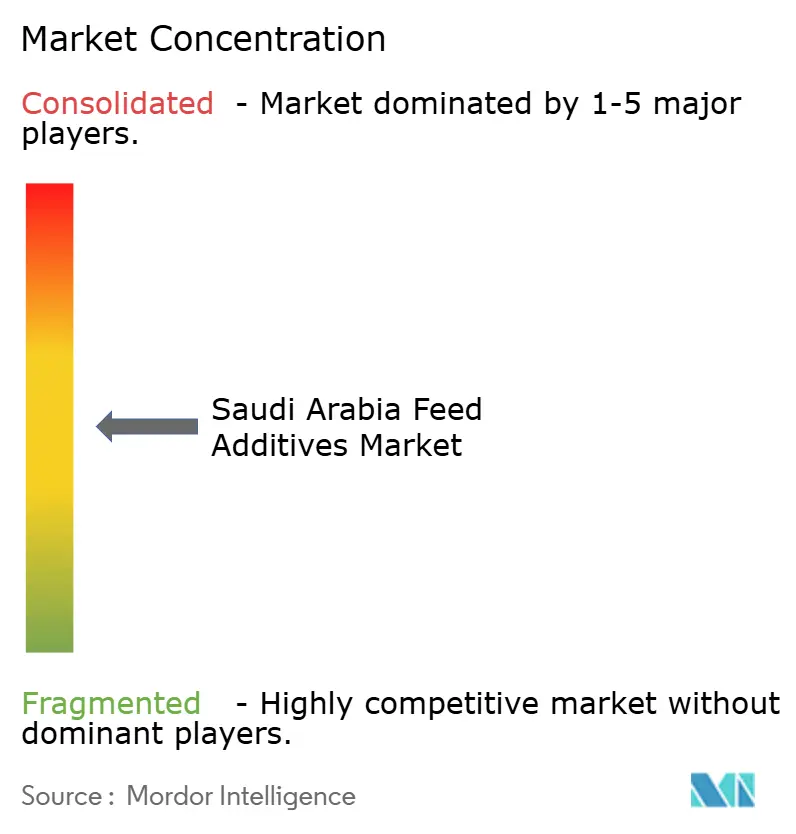
| Market Concentration | Medium |
Major Players *Disclaimer: Major Players sorted in no particular order Image © Mordor Intelligence. Reuse requires attribution under CC BY 4.0. | |
Saudi Arabia Feed Additives Market Analysis by Mordor Intelligence
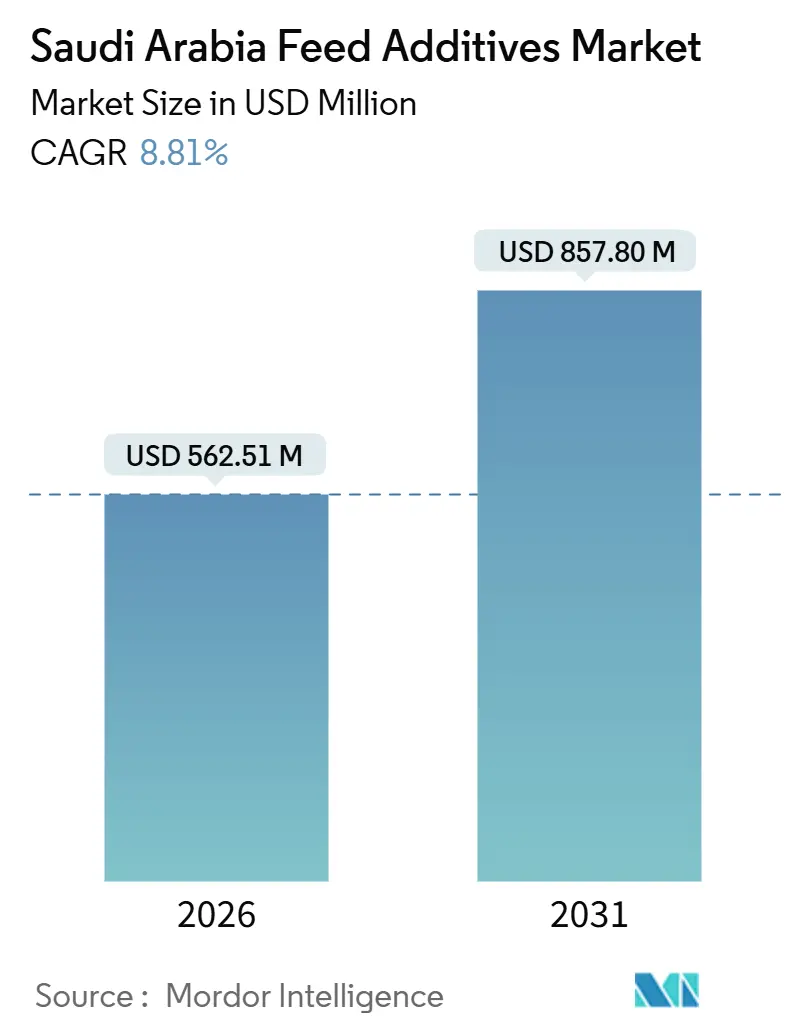
The Saudi Arabia feed additives market size is estimated to be USD 562.51 million in 2026 and is projected to reach USD 857.80 million by 2031, reflecting an 8.81% CAGR over the forecast period. A steady policy push toward protein self-sufficiency, a transition away from antibiotic growth promoters, and a string of new automated mills have kept demand for functional ingredients buoyant. Poultry integrators are installing precision-dosing systems that favor enzymes, probiotics, and acidifiers, while aquaculture operators along the Red Sea are experimenting with seaweed-derived pigments and immunomodulators. In 2023, financial incentives covering up to 70% of capital costs are compressing payback periods for modern mills and premix facilities, thereby widening the customer base for established suppliers that can navigate the Saudi Food and Drug Authority (SFDA) dossiers. Freight volatility, euro-denominated amino acid invoices, and saline irrigation stresses that elevate mycotoxin loads remain structural headwinds, yet suppliers that combine robust quality programs with on-farm services continue to expand their share across the Saudi Arabia feed additives market.
Key Report Takeaways
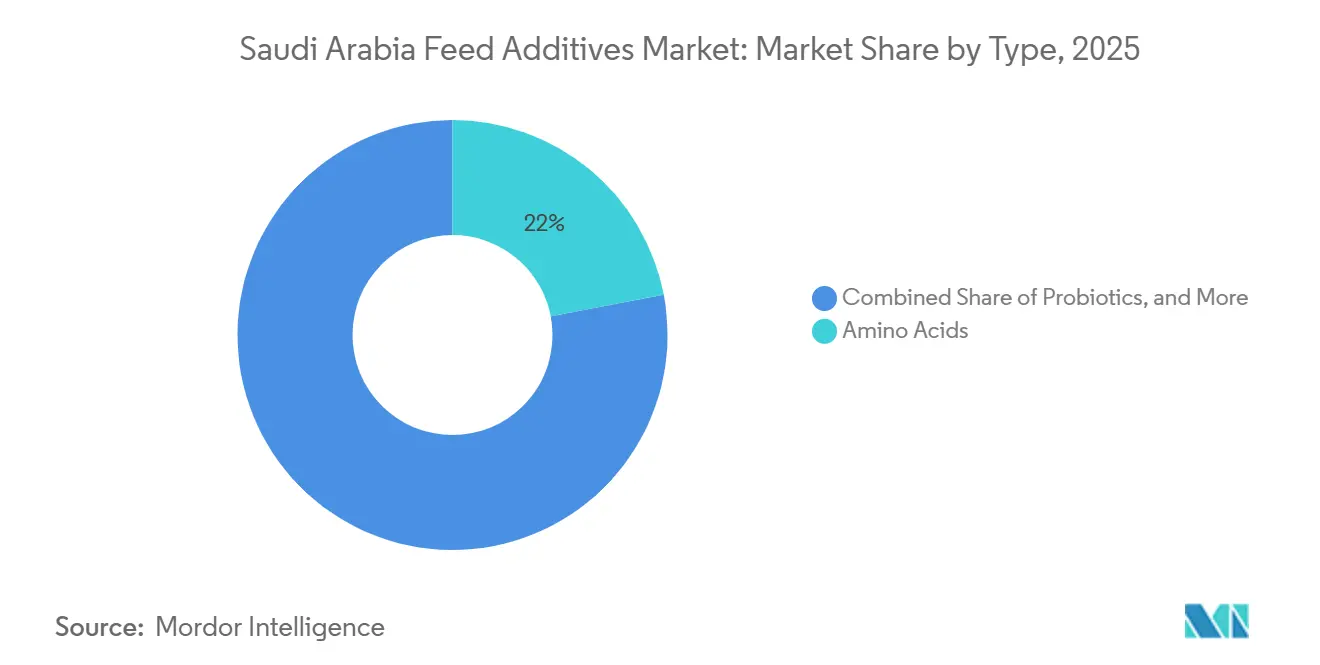
- By type, amino acids captured 22.0% of the Saudi Arabia feed additives market share in 2025, while probiotics are forecast to grow at a 12.6% CAGR through 2031.
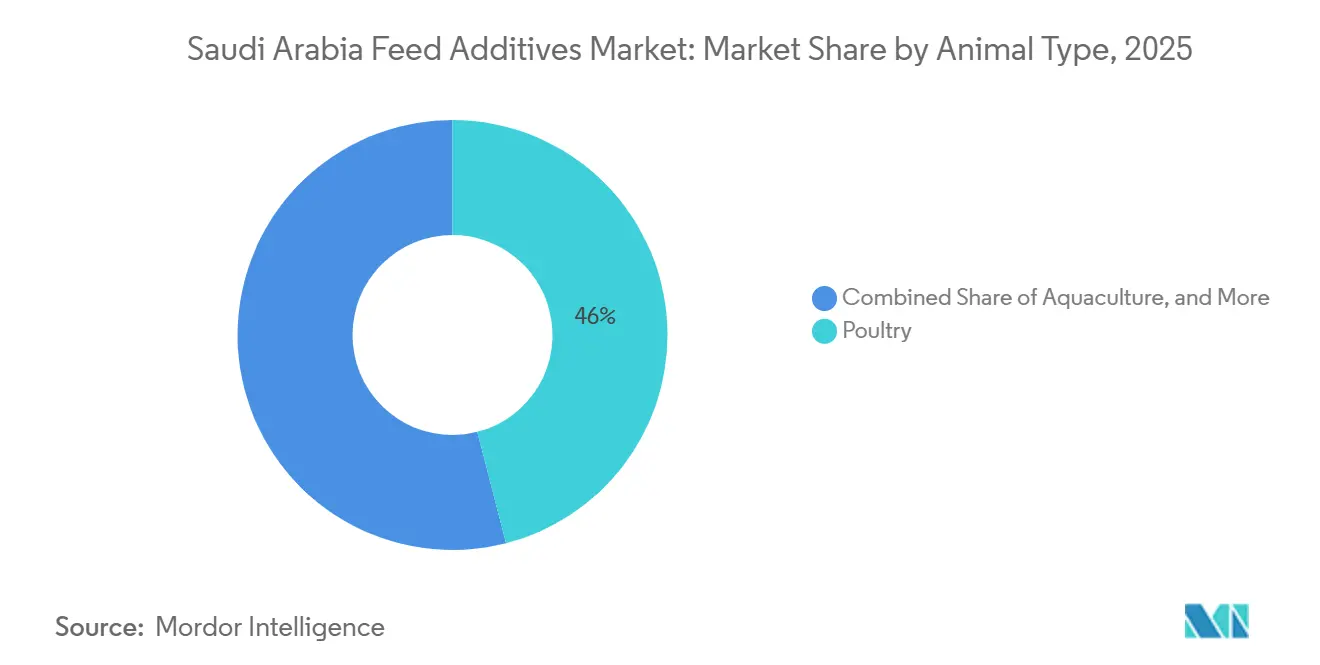
- By animal type, poultry accounted for 46.0% of the Saudi Arabia feed additives market size in 2025, and aquaculture is projected to advance at an 11.4% CAGR to 2031.
Note: Market size and forecast figures in this report are generated using Mordor Intelligence’s proprietary estimation framework, updated with the latest available data and insights as of January 2026.
Saudi Arabia Feed Additives Market Trends and Insights
Drivers Impact Analysis*
| Driver | (~) % Impact on CAGR Forecast | Geographic Relevance | Impact Timeline |
|---|---|---|---|
| Rising concern for animal health | +1.5% | National, concentrated in Eastern Province (Dammam, Jubail) and Central Region (Riyadh) poultry clusters | Medium term (2-4 years) |
| Increasing demand for animal protein | +1.8% | National, with the highest per-capita consumption in urban centers (Riyadh, Jeddah, and Dammam) | Long term (≥ 4 years) |
| Growing production of compound feed | +1.6% | National, led by Dammam port-adjacent mills and Riyadh processing hubs | Short term (≤ 2 years) |
| Saudi government poultry-expansion programs | +1.4% | National, with targeted subsidies for projects in Qassim, Tabuk, and Eastern Province | Medium term (2-4 years) |
| Adoption of precision livestock-farming solutions | +0.9% | Early adoption in large integrated producers (Tanmiah, Almarai, Arasco), gradual diffusion to mid-tier farms | Long term (≥ 4 years) |
| Emerging seaweed-based additives from Red Sea projects | +0.5% | Red Sea coastal zones (Jeddah, Thuwal, Yanbu), with pilot-scale production at KAUST and NAQUA facilities | Long term (≥ 4 years) |
| Source: Mordor Intelligence | |||
Rising Concern for Animal Health
Saudi poultry producers face increasing pressure to reduce morbidity as broiler production reached 1 million metric tons in 2024, a significant rise from negligible volumes a decade ago, with self-sufficiency climbing to 72% [1]. A 2024 study conducted by King Saud University revealed that all 100 poultry feed samples tested contained mycotoxins, with aflatoxin B1 detected in 70%, fumonisin B1 in 56%, and deoxynivalenol in 38%. This has driven demand for mycotoxin binders and detoxifiers, such as Adisseo's Toxy-Nil and Kemin's Myco CURB. Enzyme cocktails like Rovabio Advance, tested at King Saud University, and Caplix multienzyme, evaluated at King Abdulaziz University, are being adopted to address nutrient variability in locally sourced barley and imported corn, which account for 4.85 million metric tons and 3.0 million metric tons of annual consumption, respectively.
Increasing Demand for Animal Protein
Per-capita meat and egg consumption continues to grow, driven by urbanization and rising disposable incomes. Saudi poultry production reached 558.0 thousand metric tons in the first half of 2024, reflecting a 9% year-over-year increase. Saudi Vision 2030 aims to achieve 80% broiler self-sufficiency by 2030, leading to an estimated SAR 17 billion (USD 4.5 billion) in cumulative investments across hatcheries, grow-out farms, and processing plants. These developments are projected to increase compound-feed volumes and additive penetration rates. Additionally, the government's planned ban on alfalfa cultivation by 2027 or 2028 to conserve water is shifting livestock producers toward imported green fodder and compound feeds enriched with vitamins, minerals, and protein concentrates. To support this transition, the Agricultural Development Fund is offering 12-month import guarantees to facilitate documentary-credit financing.
Growing Production of Compound Feed
Compound-feed production has tripled over the past decade, with Arasco operating at an annual capacity of 4 million metric tons and new mills being established at an accelerating pace. In September 2025, Tanmiah inaugurated a 40 metric tons per hour automated feed mill in Dahna, incorporating advanced biosecurity measures and stringent quality controls. In March 2025, Modern Mills committed USD 40 million to expand its animal-feed plant. First Milling's acquisition of Al-Manar Feed Co. in August 2025 added 450 metric tons per day of capacity, increasing its total feed-mixing capability to 1,350 metric tons per day and wheat-milling capacity to 4,200 metric tons per day. This acquisition created a vertically integrated platform that supplies bran and wheat germ as feed ingredients, alongside formulated compound feeds. The Saudi Food and Drug Authority (SFDA) mandates technical requirements for feed plants, including dedicated additive-weighing areas with calibrated scales, CCTV monitoring with a 90-day recording retention period, and batch-level traceability. Reference samples must be stored for at least 180 days after the expiration date of the product. These regulations promote quality systems that benefit additive suppliers with strong technical support and documentation.
Saudi Government Poultry-Expansion Programs
Under Saudi Vision 2030, subsidies for broiler self-sufficiency include a zero-percent duty on specified additive imports, which reduces landed costs for products such as methionine, lysine, and enzymes. The Agricultural Development Fund provides 70% financing for poultry projects, including broiler, layer, parent stock, and hatchery operations, as well as dedicated credit lines for compound feed plants and hydroponic green fodder systems. The Ministry of Environment, Water, and Agriculture demonstrated its support by attending Tanmiah's September 2025 plant inauguration, highlighting political backing for integrated poultry operations that include feed mills and advanced processing lines.
Restraints Impact Analysis*
| Restraint | (~) % Impact on CAGR Forecast | Geographic Relevance | Impact Timeline |
|---|---|---|---|
| Challenging regulatory conditions | -0.8% | National, with the Saudi Food and Drug Authority (SFDA) headquarters in Riyadh setting approval timelines for all imports and domestic production | Medium term (2-4 years) |
| Volatility in raw-material prices | -0.6% | Global, with Saudi importers exposed to lysine and methionine spot-price swings from Chinese and European producers | Short term (≤ 2 years) |
| Limited domestic fermentation capacity for amino acids | -0.5% | National, no domestic lysine or methionine plants, full import dependence on Asia and Europe | Long term (≥ 4 years) |
| Water scarcity impacting feed quality | -0.4% | National, most acute in the Northern Border, Qassim, and Najran regions, where barley and fodder crops face irrigation stress | Long term (≥ 4 years) |
| Source: Mordor Intelligence | |||
Challenging Regulatory Conditions
The Saudi Food and Drug Authority (SFDA) Animal Feed and Nutrition Registration system mandates detailed safety dossiers, including toxicology studies, residue data, and manufacturing-site audits. Approval timelines for novel additives not listed in GSO 2500/2022 or JECFA tables range from 12 to 18 months [2]. Lab testing fees of approximately USD 1,333 per product and technical-visit inspection fees ranging from USD 4,667 to USD 8,800 result in high upfront costs. These expenses deter small and mid-tier importers from introducing niche products, such as probiotics or phytobiotics, thereby consolidating market share among multinational suppliers with dedicated regulatory affairs teams. Furthermore, ISO 9001:2015 certification is becoming an increasingly standard requirement for feed-plant licensing. Companies such as United Feed Company and Feedback Energy Distribution Company Limited (FEEDCO) emphasize their quality management systems as a competitive advantage in a market where regulatory enforcement is becoming stricter.
Volatility in Raw-Material Prices
Global lysine and methionine spot prices fluctuated by more than 30% within a 12-month period in 2023 and 2024. Lysine HCl was priced between EUR 1,535 and EUR 1,630 (USD 1,630 to USD 1,730) per metric ton, while methionine reached EUR 2,700 (USD 2,870) per metric ton by September 2023. These price swings have pressured margins for Saudi feed millers without long-term supply contracts. Evonik, the leading methionine supplier, lacks fermentation capacity in the Middle East, forcing Saudi customers to bear freight costs from European plants and manage currency-conversion risks, particularly as the riyal's dollar peg amplifies the volatility of euro-denominated invoices. In August 2024, BASF declared force majeure on vitamin A and E supplies due to production issues at its Ludwigshafen plant, lifting the restriction only by mid-2025. This led to spot shortages, compelling Saudi premix blenders to procure from Chinese suppliers at premiums of 15% to 20%.
*Our forecasts treat driver/restraint impacts as directional, not additive. The impact forecasts reflect baseline growth, mix effects, and variable interactions.
Segment Analysis
By Type: Amino Acids Lead, Probiotics Surge
Amino acids captured 22.0% share of the Saudi Arabia feed additives market size in 2025, driven by the demand for lysine and methionine in broiler and layer rations. Evonik's Rhodimet methionine products and Ajinomoto's lysine HCl dominate this segment, although pricing volatility and reliance on imports present ongoing challenges. Vitamins also held a significant market share in 2024, with DSM-Firmenich's Microvit A and E and BASF's vitamin portfolio serving as key premix ingredients. In August 2024, a force majeure on BASF's vitamin A and E production led to spot shortages, increasing the market share of Chinese suppliers [3].
Probiotics are forecast to grow at a 12.6% CAGR through 2031, with Bacillus subtilis strains, such as Kemin's CloStat and Chr. Hansen's probiotic blends, increasingly replacing antibiotic growth promoters in broiler starter diets. Kemin's sciORIAN digital platform, marketed in Europe, the Middle East, and Africa (EMENA) region, integrates feed formulation software with additive recommendation algorithms. This platform enables nutritionists to model enzyme and probiotic inclusion rates based on real-time ingredient costs and mycotoxin contamination data. Acidifiers, including Perstorp's ProSid and BASF's formic-acid products, are gaining renewed interest as producers reduce dietary buffering capacity to suppress pathogen proliferation in young birds. Additionally, antioxidants such as ethoxyquin and butylated hydroxytoluene remain niche but critical for stabilizing fish-oil-enriched aquaculture feeds.

By Animal Type: Poultry Dominates, Aquaculture Accelerates
Poultry accounted for 46.0% of the Saudi Arabia feed additives market share in 2025, supported by Saudi Vision 2030 broiler self-sufficiency targets and the rapid growth of integrated producers such as Tanmiah, Almarai, and Arasco. Broiler production reached 1 million metric tons in 2024, with self-sufficiency rising to 72%. Government subsidies included zero-percent import duties on additives for eligible projects. Layer operations are increasingly using organic trace minerals and omega-3-enriched feeds to cater to the premium egg market demand. Products such as Alltech's Bioplex and DSM-Firmenich's Hy-D vitamin D have gained market share in breeder and layer rations.
Aquaculture is projected to advance at an 11.4% CAGR to 2031, driven by initiatives such as NAQUA's 100,000 metric tons per year facility and KAUST's DABKSA microalgae project, which focus on developing seaweed-based pigments and immunomodulators for finfish and shrimp feeds. Integrated multi trophic aquaculture trials using Ulva lactuca have shown improved growth rates and immune responses, positioning Red Sea mariculture as a key segment for novel additive development. The government's planned alfalfa ban, projected in 2027 or 2028, is encouraging dairy producers to transition to compound feeds fortified with bypass proteins, chelated minerals, and yeast-based probiotics. Products like Lallemand's Levucell SC, which enhances rumen fermentation efficiency and milk yield, are gaining traction in this segment.
Geography Analysis
Saudi Arabia's feed additives market is concentrated in the Eastern Province, Central Region, and Western Province. Dammam, Riyadh, and Jeddah serve as primary production and distribution hubs due to their access to ports, government-subsidized industrial zones, and proximity to major poultry and dairy operations. The Eastern Province benefits from significant feed production and storage capacities. Arasco operates a 4 million metric ton feed capacity, while FEEDCO's mill is strategically located near a port, and United Feed Company manages a 3.5 million metric ton barley storage network. The region's direct access to King Abdul Aziz Port in Dammam reduces landed costs for imported lysine, methionine, and vitamin premixes by 10% to 15% compared to inland locations.
Riyadh, the capital and headquarters of the Saudi Food and Drug Authority (SFDA), plays a pivotal role in the feed additives market. The city hosts Trouw Nutrition's Saudi Feed Mix premix plant, Modern Mills' expanding feed operations, and Alwadi Poultry Farms' new 90 metric tons per hour mill, currently under construction by ANDRITZ. These developments position the Central Region as a key hub for both regulation and manufacturing. Jeddah, Saudi Arabia's second-largest city and a gateway to the Red Sea trade, is home to First Milling's largest wheat and feed mill, BRF's USD 50 million processing plant, and emerging aquaculture ventures such as NAQUA's 120,000 metric tons per year feed mill. These facilities highlight the Western Province's dual role in supporting terrestrial and marine protein production.
The Red Sea coast, including Jeddah, Thuwal, and Yanbu, is emerging as a strategic hub for the development of seaweed-based additives. KAUST's DABKSA project operates 1,000 square meters of microalgae facilities and plans a Phase II expansion to 42,000 square meters. This initiative aims to supply natural pigments and immunomodulators for aquaculture feeds. The National Grain Company, a joint venture between SALIC and Bahri established in 2020, focuses on developing efficient infrastructure to ensure the availability of feed grains at competitive prices across all regions. This effort aims to reduce price volatility, which has historically hindered the implementation of long-term additive supply contracts, and supports suppliers with robust distribution networks.
Regulatory Landscape
Saudi Arabia regulates animal feed and non-medicated feed additives under the Saudi Food and Drug Authority (SFDA) framework, requiring pre-market registration before import, local manufacture, or circulation. Product licensing and establishment licensing are centralized through the Animal Feed National Registry (AFNR), which covers importer authorization, feed-premix/additive registrations, and the documentation needed for clearance of imported feed products, such as certificates of origin and specific health documentation when applicable.
SFDA technical guidance and factory requirements shape operating models for additive suppliers and premixers. The February 2024 SFDA Products Classification Guidance sets out how additives are categorized (nutritional, sensory, technological, and zootechnical), which determines dossier pathways, while the April 2025 Technical Requirements for Feed Factories and Warehouses tightened expectations for facilities and traceability. The requirements include monitored additive-mixing points (camera coverage with 90-day retention), calibrated weighing controls, and documented corrective procedures, which typically benefits suppliers with regulatory affairs capacity, audited manufacturing sites, and local partners already active on AFNR.
Competitive Landscape
The animal feed additives market is moderately concentrated, with key players including Cargill, Incorporated, Evonik Industries AG, Alltech, Inc., Arasco Feed and Food Company Ltd., and Saudi Mix Feed Additives Company. Leading companies in the market primarily adopt strategies such as new product launches, mergers and acquisitions, and partnerships. These players are focusing on investments in innovation, collaborations, and expansions to enhance their market share.
Opportunities in the market include advancements in liquid-additive formulations, seaweed-based immunomodulators, and precision-dosing systems integrated with IoT platforms, such as Kemin's sciORIAN and Tanmiah's Central Monitoring System. Emerging disruptors include KAUST spinouts commercializing Red Sea microalgae extracts, domestic startups piloting hydroponic green-fodder systems eligible for financing through the Agricultural Development Fund, and regional distributors like Brenntag, which secured an exclusive agreement with ADM in November 2025 to supply soy-based ingredients across Saudi Arabia.
Technology adoption is accelerating as producers implement AI-powered health monitoring, CCTV-based additive-weighing verification, and blockchain traceability to comply with SFDA's 90-day recording retention and 180-day sample retention requirements. These developments favor suppliers offering digital integration and technical support. Consolidation trends are evident, with Phibro's acquisition of Zoetis's medicated feed additive portfolio and First Milling's purchase of Al-Manar Feed Co. These moves highlight a shift toward vertical integration and scale economies, potentially challenging mid-tier blenders and importers lacking regulatory expertise or extensive distribution networks.
Saudi Arabia Feed Additives Industry Leaders
-
Cargill, Incorporated
-
Evonik Industries AG
-
Alltech, Inc.
-
Arasco Feed and Food Company Ltd.
-
Saudi Mix Feed Additives Company
- *Disclaimer: Major Players sorted in no particular order
Market Opportunities and Future Outlook
Investment-led expansion of Saudi feed milling and protein production is broadening the addressable base for additives that support conversion efficiency, gut health, and contaminant risk management, with the strongest pull in poultry and in emerging aquaculture value chains tied to Vision 2030 food security priorities. Recent large projects point to where capacity is being added, and Modern Mills' commitment of SAR 150 million (USD 40 million) for a new Al-Jumum feed mill (422,000 metric tons annual capacity, commercial production targeted for Q4 2026) and Tanmiah's September 2025 inauguration of a 40 metric tons per hour automated mill reinforce demand for enzymes, amino acids, organic minerals, and precision-applied functional additives in high-throughput plants.
A second opportunity track centers on aquaculture and alternative-protein feed localization, where new inputs can change premix and additive formulations and reduce dependence on imported fishmeal and soy. In March 2026, Saudi Industrial Investment Group (SIIG) and Unibio announced a Jubail single-cell protein project (1.4 billion SAR, structured as an 80:20 joint venture) intended for aquaculture and broader feed markets, and Balady Poultry commissioned a new feed mill in March 2026 to deepen vertical integration. Against that backdrop, SFDA compliance requirements, including AFNR registration plus factory controls such as monitored mixing points and batch traceability, create a clear route for suppliers that can submit well-supported dossiers and back them with on-site quality support, particularly for higher-value probiotics, mycotoxin detoxifiers, and aquaculture functional ingredients that need strong technical substantiation.
Recent Industry Developments
- March 2026: Saudi Industrial Investment Group (SIIG) and Unibio International PLC announced a joint venture to develop a single-cell protein (Uniprotein) plant in Jubail Industrial City, positioned as a local ingredient source for aquaculture and broader feed applications. The project was framed at 1.4 billion SAR (USD 370 million), with construction planned for the second half of 2026 and a scale-up roadmap beyond the initial phase. This adds a domestic alternative-protein input stream that can affect premix formulation strategies and reduce exposure to imported fishmeal and soy-linked volatility.
- November 2025: Brenntag signed an exclusive distribution agreement with ADM to supply soy-based ingredients (Adlec, Ultralec, Sopro, and Soprotex) across Saudi Arabia and the UAE. The agreement strengthens a major route-to-market for functional soy derivatives used in feed formulations, improving availability and technical support for integrators and premixers. It also increases competitive intensity for local distributors that lack comparable principal-backed portfolios.
- February 2024: NEOM announced an aquaculture joint venture with Tabuk Fisheries Company, Topian Aquaculture, endorsed by the Ministry of Environment, Water and Agriculture (MEWA). The venture supports the National Livestock and Fisheries Development Programme target of scaling fish production to 600,000 metric tons annually by 2030. The initiative lifts demand for aquaculture-specific additives and performance solutions as production systems professionalize and feed efficiency becomes a primary cost lever.
Research Methodology Framework and Report Scope
Market Definition and Coverage
For this study, the market covers the value of feed additives sold for use in animal feed in Saudi Arabia, counted at the point of sale in the country and reported in USD for the study period.
Scope exclusions: We exclude on-farm feed production costs, equipment used to mix or dose additives, and veterinary drugs that are not sold or positioned as feed additives.
Segmentation Overview
- By Type
- Acidifiers
- Amino Acids
- Antibiotics
- Antioxidants
- Feed Binders
- Enzymes
- Flavors and Sweeteners
- Minerals
- Mycotoxin Detoxifiers
- Pigments
- Prebiotics
- Probiotics
- Vitamins
- By Animal Type
- Ruminant
- Poultry
- Aquaculture
- Other Animal Types
Data Sources, Market Sizing, and Validation
Desk Research
Desk research was used to build the fact base around livestock production, feed demand signals, and the regulatory context that affects additive use and labeling in Saudi Arabia. Sources included Saudi Food and Drug Authority updates, FAOSTAT livestock and production series, UN Comtrade trade flows for relevant feed inputs, and scientific journals that report feed nutrition efficacy and typical inclusion rates.
To keep the model grounded in real commercial conditions, we also reviewed company filings and investor presentations to understand how premix and additive businesses scale, plus trade press and association websites that track poultry and dairy activity. When needed, paid subscription sources for company financials and a patent database were used to cross-check business scale and innovation intensity, without relying on paywalled narrative reporting. These sources are illustrative, and we used additional references for data collection, validation, and clarification.
Primary Interviews and Surveys
Primary work focused on validating what is actually sold into Saudi feed formulations, and on aligning assumptions for typical inclusion rates, pricing behavior, and replacement cycles. We spoke with feed mill operators and premix stakeholders, additive distributors, and technical specialists supporting large livestock and poultry operations. The inputs were then used to adjust assumptions where desk research could not resolve the commercial details.
Because this is a single-country market, the interviews were designed to capture different customer sizes and procurement patterns across industrial facilities and smaller farms. This helped us sanity-check volumes, price bands, and the timing of demand shifts for categories such as poultry and ruminant feed.
Distribution of primary research fieldwork respondents
| Company type | Respondent position |
|---|---|
| Top tier: 25% | CXOs: 19% |
| Mid tier: 55% | Functional/Unit leaders: 26% |
| Smaller Players: 20% | Managers: 55% |
Market-Sizing & Forecasting
Sizing was built using a top-down demand pool approach, where livestock headcount and output trends are translated into feed consumption and then filtered through additive penetration and average inclusion patterns for key additive groups. To keep totals realistic, we corroborated with selective bottom-up approximations, such as a sampled price per kilogram by additive type multiplied by implied volumes, followed by checks with local distributors on category movement.
Key inputs included poultry and ruminant production direction, feed compound demand, shifting use of enzymes and gut health additives, import dependence for specific ingredients, and how premix usage changes under feed efficiency programs. For pricing, we used an average selling price logic that accounts for mix shift between higher value functional additives and nutritional additives, and then applies currency conversion timing consistently to avoid year-to-year distortion.
Forecasts were produced using scenario analysis supported by simple trend fitting on the main drivers, and then adjusted based on expert expectations for protein demand, local livestock investment, and regulatory enforcement intensity. When the bottom-up view was incomplete for smaller channels, we applied conservative penetration ranges and rechecked them against the national demand pool to ensure channel gaps did not inflate the total.
Data Validation & Update Cycle
Validation was done in steps so that obvious errors are caught early and then reviewed again before finalization. Analysts compare outputs against independent signals, including animal production direction, trade patterns for key feed inputs, and observed price bands by additive group. Outliers are reworked with notes that explain the correction.
A second review pass is completed before sign-off, and follow-up calls are triggered when an assumption moves materially or when a new policy or trade disruption changes supply availability. Reports are refreshed annually, with interim checks for material events, and a final pre-delivery pass is done so clients receive the latest updated view.
Mordor Intelligence's Saudi Arabia Feed Additives Market Estimate Compared With Other Published Estimates
Published market sizes for Saudi Arabia feed additives often differ, even when the topic name looks identical, because the studies do not align on timing, pricing treatment, and what gets counted as an additive sale. Differences also show up when one estimate is built from feed demand signals while another uses narrower product lists.
The biggest gap drivers usually come from how average selling prices are updated across the year, whether currency conversion uses a consistent reference period, and how quickly new import costs and formulation shifts are reflected in the model. If the refresh cadence is slower, price swings and mix shift can be missed for a full cycle, changing the current-year total. For that reason, our latest refresh and variance checks are part of the sizing discipline used by Mordor Intelligence.
Benchmark comparison
| Source | Market Size | Gaps in Research Methodology |
|---|---|---|
| Mordor Intelligence | USD 562.51 M (2026) | |
| Industry Publisher A | USD 471.80 M (2025) | Uses a different base year and a longer forecast window, and the price build can understate the most recent mix shift into higher value functional additives when yearly ASP updates are applied more broadly. |
| Data Book B | USD 245.80 M (2025) | Scope is closer to a narrower animal feed additive revenue dataset with a different product boundary and lower implied penetration, which can exclude parts of premix-led demand that are captured when the demand pool is reconstructed from feed use. |
Overall, the spread is explained by timing and scope first, then by how prices and penetration are refreshed and tested. By keeping assumptions tied to observable feed demand signals and by rechecking ASP and penetration ranges before final totals are locked, the estimate stays traceable and repeatable for decision-making.
Key Questions Answered in the Report
How large is the Saudi Arabia feed additives market in 2026?
The market is valued at USD 562.51 million in 2026 and is projected to reach USD 857.80 million by 2031.
Which segment holds the largest share of spending on additives?
Amino acids lead at 22% of total spending, primarily supporting broiler and layer diets.
What is the fastest-growing animal segment for additive demand?
Aquaculture records an 11.4% CAGR through 2031 as Red Sea projects scale up.
What role do government incentives play in market growth?
Subsidized financing covers 70% of eligible capital costs for mills and poultry projects, accelerating additive adoption.