
| Study Period | 2019 - 2030 |
| Forecast Data Period | 2025 - 2030 |
| Historical Data Period | 2019 - 2023 |
| CAGR | 8.90% |
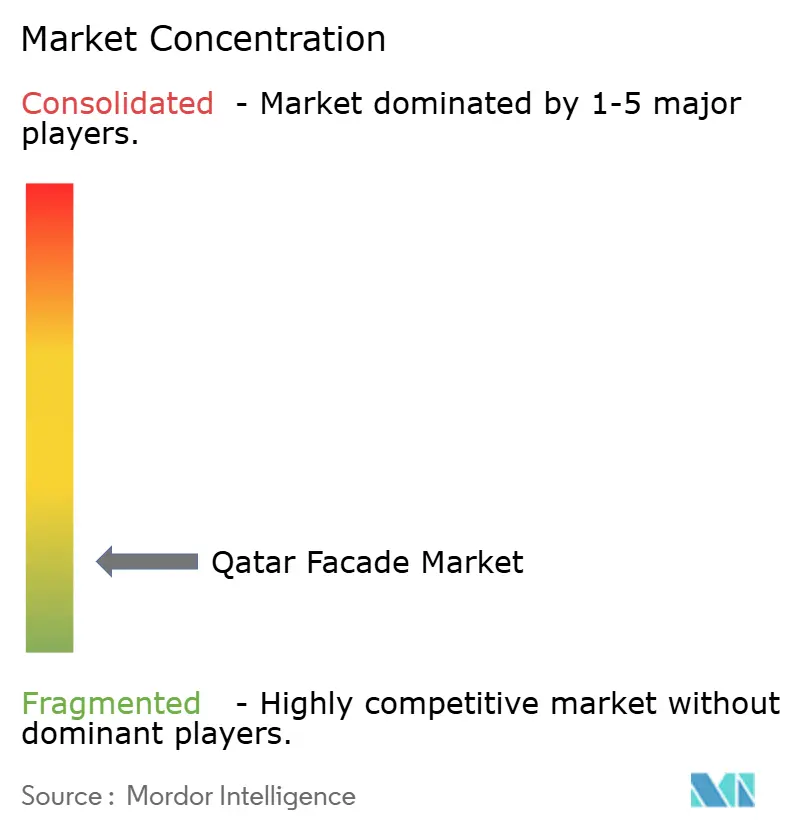
| Market Concentration | Low |
Major Players *Disclaimer: Major Players sorted in no particular order |
Qatar Facade Market Analysis by Mordor Intelligence
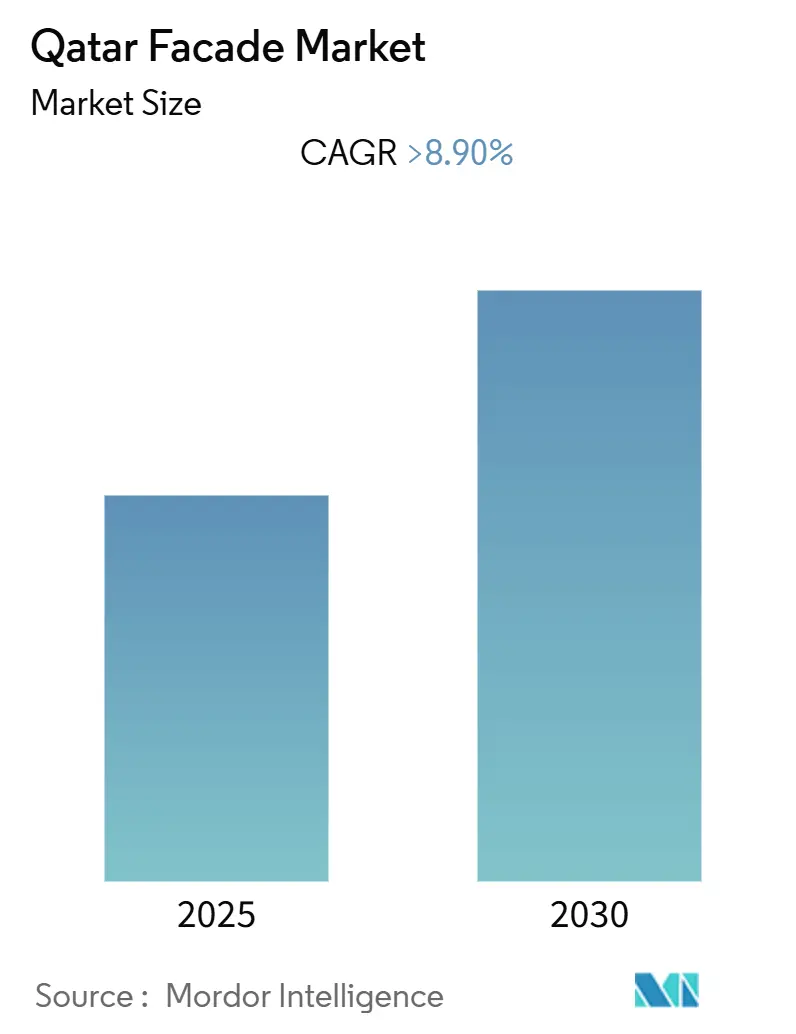
The Qatar Facade Market is expected to register a CAGR of greater than 8.90% during the forecast period.
Rapid urbanization and the growing number of modern infrastructures around the world are the primary drivers of the global facade market. Furthermore, the growing emphasis on aesthetically pleasing building designs and raising consumer living standards contribute to market growth. Furthermore, the increasing use of facades in corporate buildings and industrial facilities due to their improved durability, fabrication, and weatherproofing is fueling demand for facade infrastructures. Aside from that, various architectural firms are developing modern, eco-friendly facade designs to overcome soundproofing and excess heat control constraints. Furthermore, the introduction of smart facades integrated with thermo-bimetals is expected to drive the market forward in the coming years.
Energy-saving regulations are frequently a deciding factor when designing the best structure, and choosing the right substructure can have a significant impact. With their complete range of systems, including passive-house certified thermal bridge-free solutions, facade companies in Qatar assist their clients with everything needed, from planning to selection and installation of the façade. Whatever panel system the customer may be using, whether A1-rated metal cassettes or natural materials, these companies provide cost-effective solutions to meet thier needs. With the introduction of the new Hilti Fox-VI small bracket, the facade players can further optimize the design and save up to 20% on the total cost of a typical project. These have an effect not only on the overall cost of the build but also on the volume of raw material required to complete the build.
Qatari architecture generally combines contemporary geometric aesthetics with traditional building forms. Two examples of this are I. M. Pei's newly refurbished Museum of Islamic Art, which fuses traditional Islamic architecture with modernization, and Jean Nouvel's National Museum of Qatar, which he envisioned as a stunning architecture of interconnecting discs inspired by the desert rose. These world-renowned museums represent more than just aesthetic beauty. Each was built with the idea of sustainability in mind. Qatar Museums aims to promote environmental awareness as well as art, culture, and knowledge. The eight stadiums built for the FIFA World Cup Qatar 2022TM used the same concepts and approach as described above. Each stadium's design reflects Qatari culture while also taking into account environmental responsibilities. The application of cutting-edge water and energy-saving technologies during construction and sustainable building practices are additional features.
Qatar Facade Market Trends and Insights
Commercial Construction to Drive the Market Growth
Qatar's construction industry has a very good future as the industry is poised to grow rapidly in the coming years with the inflow of foreign direct investments into mega construction projects across the country. A vibrant economy is a plus factor for the construction industry in any country and this would result in a boom in Qatar's construction industry during the current decade backed by the 'State's 2030 Vision' and the policy direction of the government.
In Qatar's commercial real estate landscape, a notable trend is the surging demand for office spaces. Bolstered by a robust economy and an influx of multinational corporations, Qatar witnesses a heightened appetite for office real estate. In response, developers are pivoting towards erecting contemporary office structures. Concurrently, there's a burgeoning trend of mixed-use developments, seamlessly blending commercial, residential, retail, and entertainment spaces. This evolution aims to foster lively, cohesive communities, allowing residents to live, work, and enjoy leisure all in one locale. Such mixed-use projects find particular favor in urban centers, where land is at a premium. These commercial construction trends are driving the facade market in Qatar.
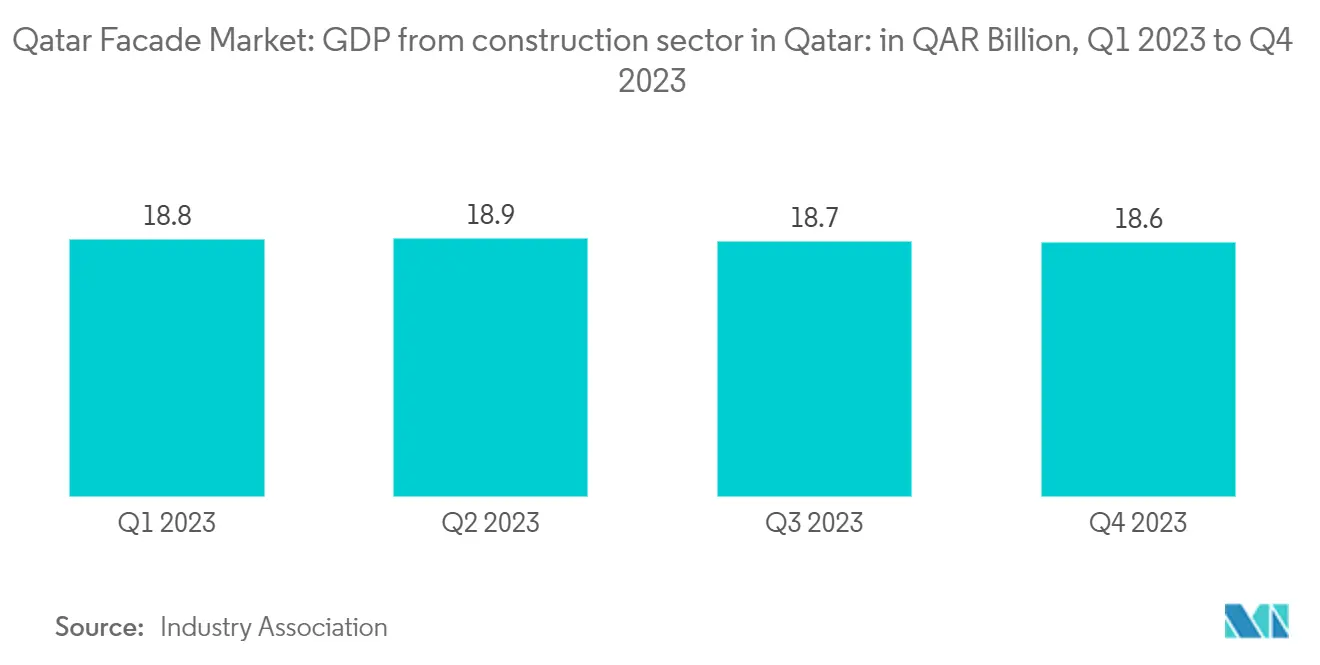
After Qatar was named the host of the 2022 FIFA Men’s World Cup, its construction industry surged, now representing 15% of the nation's GDP. The Qatari government poured substantial investments into infrastructure, erecting stadiums, hotels, and enhancing transportation networks. This surge in infrastructure has spurred heightened demand for commercial properties, especially in hospitality. Moreover, Qatar's ambition to diversify its economy, moving away from an oil and gas dependency, plays a pivotal role. Actively courting foreign investments, Qatar is nurturing sectors like finance, technology, and tourism. This strategic pivot has amplified the demand for commercial spaces to support these burgeoning industries. This growth of construction industry will facilitate the Qatar facade market growth in the long term.
Government Initiatives Boost the Facade Market
Government initiatives, and changing market demands are driving a significant transformation in Qatar's construction industry. As a result, the facade market in Qatar is receiving a major boost.
In 2024, Qatar introduced the "Qatarisation Law," emphasizing the hiring of Qatari nationals in the private sector, notably in construction. This move is in line with Qatar National Vision 2030, which seeks to boost local workforce involvement and lessen dependence on foreign labor.
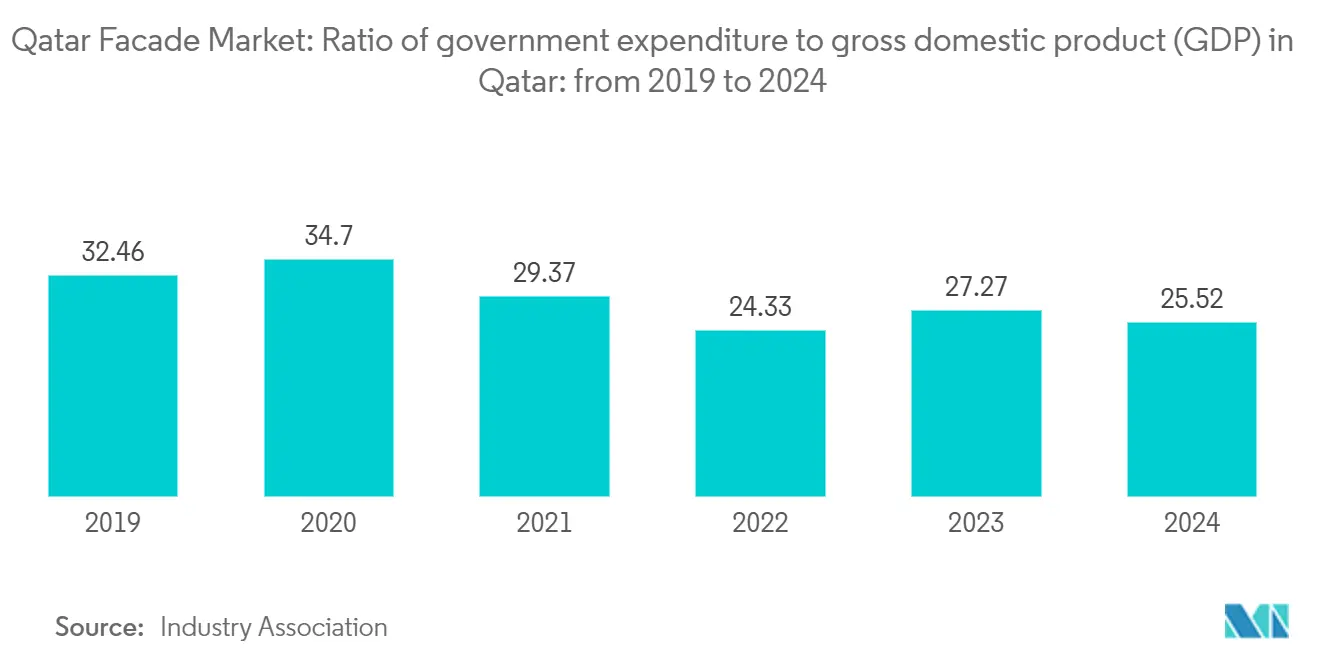
By 2030, Qatar plans to channel over QAR 728 billion (around USD 200 billion) into infrastructure projects. This ambitious investment seeks to diversify the nation's economy, expand the North gas field, and gear up for the 2030 Asian Games, reshaping the construction landscape. In 2023, while the total number of building permits issued saw a decline, the residential sector showcased resilience, hinting at a possible recovery with the onset of new projects. Bolstering this optimism, the Qatar government has set a target to allocate affordable housing units to a substantial segment of the population by 2030.
As the Qatar overnment ramps up public spending, the institutional construction sector—covering educational and healthcare facilities—stands to gain. With a clear emphasis on enhancing access to quality education and healthcare, the government is set to fuel demand for fresh institutional projects.
Competitive Landscape
The Qatar Facade Market is fairly fragmented with more regional and local players with a few global players. Domestic players occupy a major share of the market as they have a good hold on the local architecture and traditions which are always looked upon by investors.
The major players are Qatar Meta Coats W.L.L (QMC), Alce Engineering Qatar WLL, Bemo International, Everest Aluminum Co WLL, Norwood Qatar LLC, and many more. The use of advanced technology and sustainability are some of the factors which can discriminate top players from others.
Qatar Facade Industry Leaders
-
Qatar Meta Coats W.L.L (QMC)
-
Alce Engineering Qatar WLL
-
Bemo International
-
Everest Aluminum Co WLL
-
Norwood Qatar LLC
- *Disclaimer: Major Players sorted in no particular order
Recent Industry Developments
- August 2024: ClearVue Technologies Limited, a smart building materials firm, has made its foray into the Middle East and North Africa (MENA) and Indian markets. This move comes through a Manufacturing and Distribution agreement with Alutec, Qatar's largest facade engineering company and a subsidiary of Aria Holding.
- October 2024: Profine Group has acquired EFP International B.V. (EFP), a Dutch company with a worldwide presence. EFP specializes in designing, developing, and producing aluminum profile systems for architects, operating under the brand "EFP European Facade Products". With its vast expertise in the global facade industry, EFP provides services to multiple countries, including Qatar.
Qatar Facade Market Report Scope
Any exterior wall of a structure, including projections from and attachments to the wall, is referred to as a facade.
A complete background analysis of the Qatar Facade Market, including the assessment of the economy and contribution of sectors in the economy, market overview, market size estimation for key segments, and emerging trends in the market segments, market dynamics, and geographical trends is included in the report.
The Qatar Façade Market is segmented by type (ventilated, non-ventilated and others), by material (glass, metal, plastic and fibres, stones and others) and by end users (commercial, residential and others). The report offers the market size in value terms in USD for all the above mentioned segments.
By Type
| Ventilated |
| Non-Ventilated |
| Others |
By Material
| Glass |
| Metal |
| Plastic and Fibres |
| Stones and Others |
By End Users
| Commercial |
| Residential |
| Others |
| By Type | Ventilated |
| Non-Ventilated | |
| Others | |
| By Material | Glass |
| Metal | |
| Plastic and Fibres | |
| Stones and Others | |
| By End Users | Commercial |
| Residential | |
| Others |
Key Questions Answered in the Report
What is the current Qatar Facade Market size?
The Qatar Facade Market is projected to register a CAGR of greater than 8.90% during the forecast period (2025-2030)
Who are the key players in Qatar Facade Market?
Qatar Meta Coats W.L.L (QMC), Alce Engineering Qatar WLL, Bemo International, Everest Aluminum Co WLL and Norwood Qatar LLC are the major companies operating in the Qatar Facade Market.
What years does this Qatar Facade Market cover?
The report covers the Qatar Facade Market historical market size for years: 2019, 2020, 2021, 2022, 2023 and 2024. The report also forecasts the Qatar Facade Market size for years: 2025, 2026, 2027, 2028, 2029 and 2030.
Qatar Facade Market Report
Statistics for the 2025 Qatar Facade market share, size and revenue growth rate, created by Mordor Intelligence™ Industry Reports. Qatar Facade analysis includes a market forecast outlook for 2025 to 2030 and historical overview. Get a sample of this industry analysis as a free report PDF download.