
Preventive Medicine Market Size and Share
Market Overview
| Study Period | 2021 - 2032 |
|---|---|
| Market Size (2027) | USD 503.26 Billion |
| Market Size (2032) | USD 655.87 Billion |
| Growth Rate (2027 - 2032) | 5.44 % |
| Fastest Growing Market | Asia-Pacific |
| Largest Market | North America |
| Market Concentration | Medium |
Major Players *Disclaimer: Major Players sorted in no particular order Image © Mordor Intelligence. Reuse requires attribution under CC BY 4.0. | |
Preventive Medicine Market Analysis by Mordor Intelligence
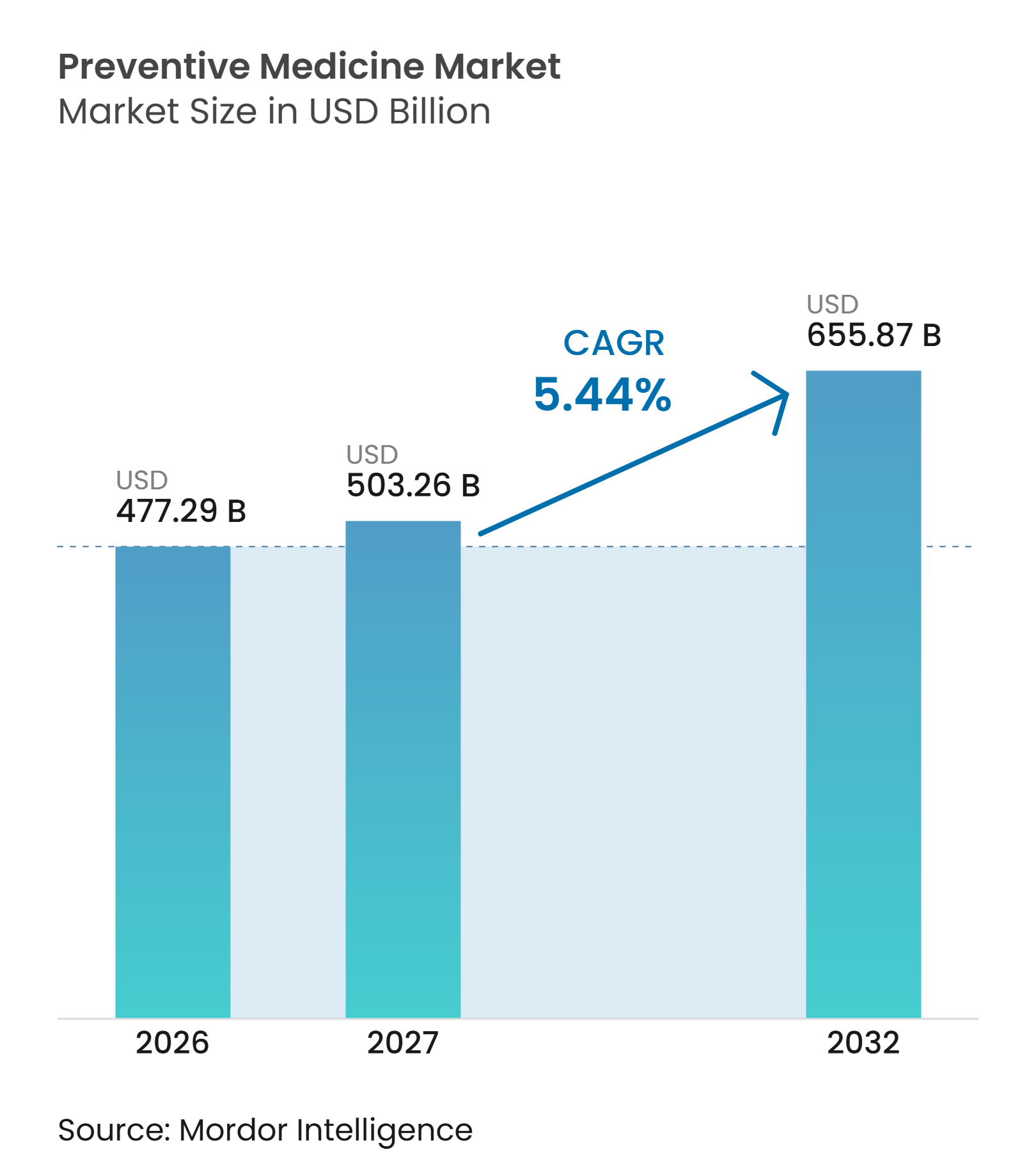
The Preventive Medicine Market size was valued at USD 477.29 billion in 2026 and is estimated to grow from USD 503.26 billion in 2027 to reach USD 655.87 billion by 2032, at a CAGR of 5.44% during the forecast period (2027-2032).
The preventive medicine market is moving toward earlier identification of risk, supported by payment models that reward measurable health outcomes. Screening, immunization, and lifestyle programs are becoming more closely connected with chronic disease management. Providers and employers are also placing greater value on programs that can reduce avoidable care needs over time. AI-enabled risk assessment and home-based data collection are widening the range of preventive services that can be delivered outside traditional care settings. The preventive medicine market faces uneven adoption because payment structures, data access, and health coverage differ widely across countries.
Key Report Takeaways
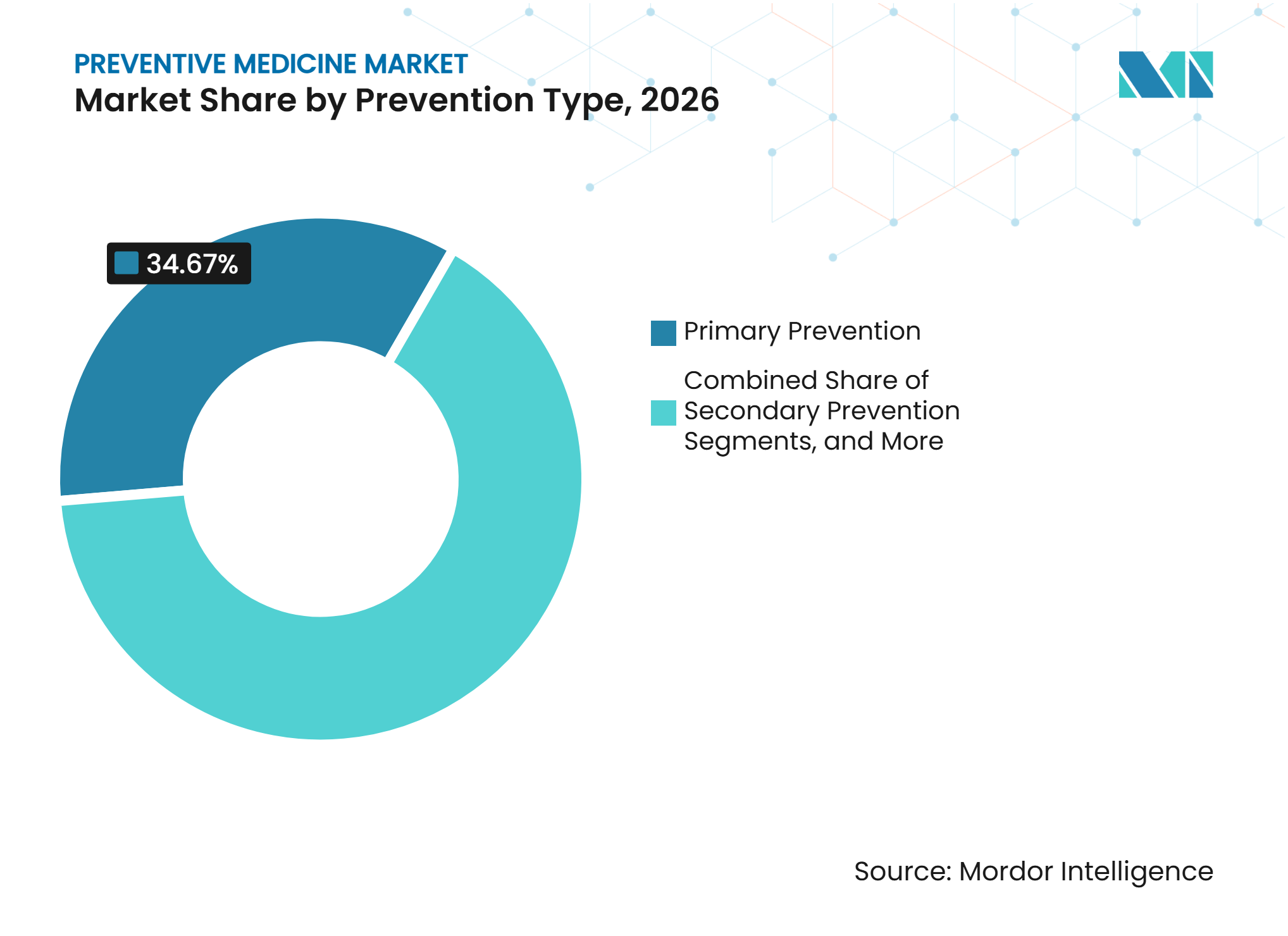
- By prevention type, primary prevention held 34.67% of revenue in 2026, while secondary prevention is projected to grow at a 7.28% CAGR through 2032.
- By product and service type, screening & early detection accounted for 44.93% of revenue in 2026, while wellness & lifestyle interventions is projected to grow at an 8.12% CAGR through 2032.
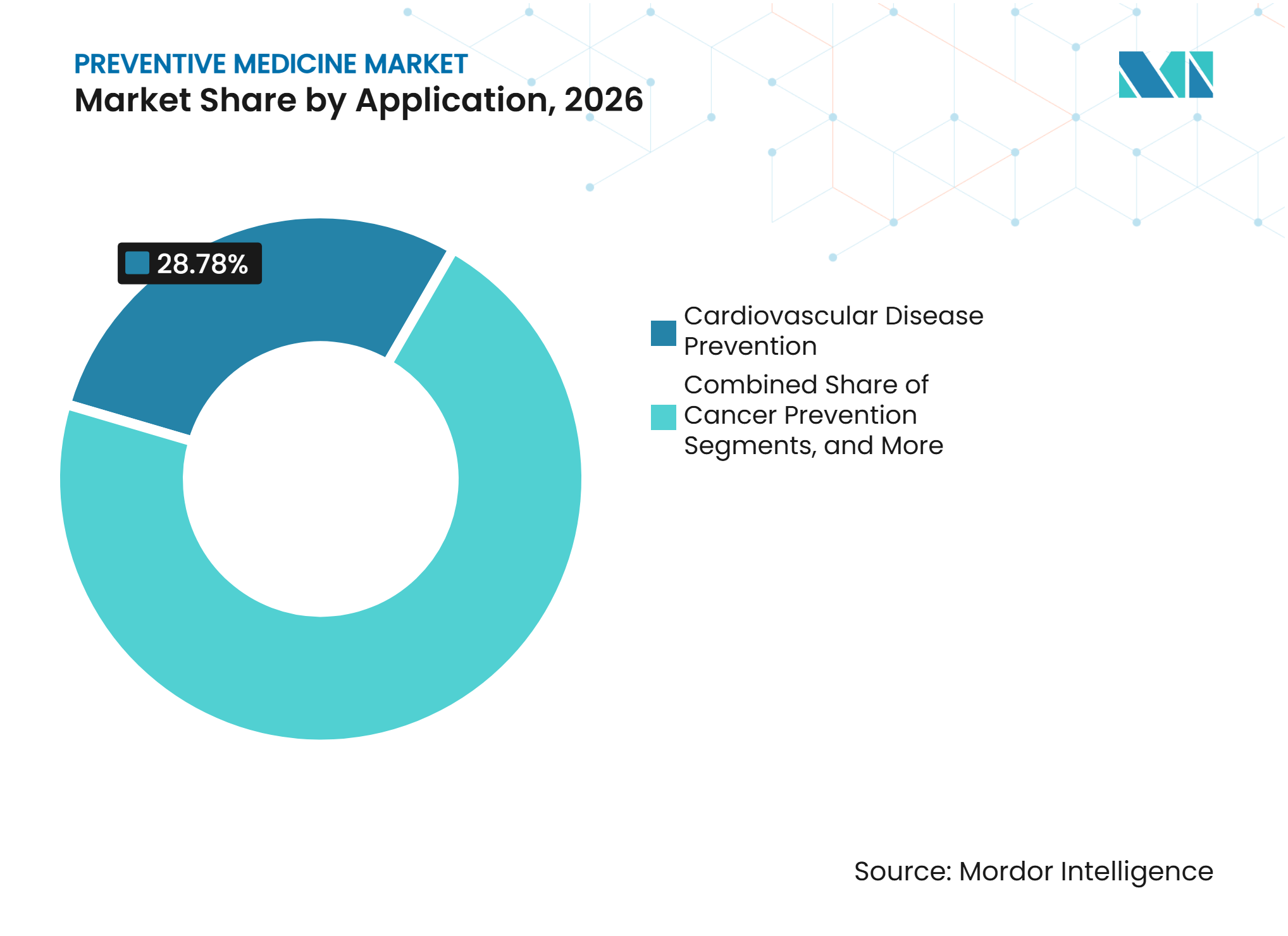
- By application, cardiovascular disease prevention held 28.78% of revenue in 2026, while neurological disease and cognitive-decline prevention is projected to grow at a 10.23% CAGR through 2032.
- By end user, hospitals and primary care centers accounted for 56.89% of revenue in 2026, while corporate and workplace wellness providers is projected to grow at a 9.45% CAGR through 2032.
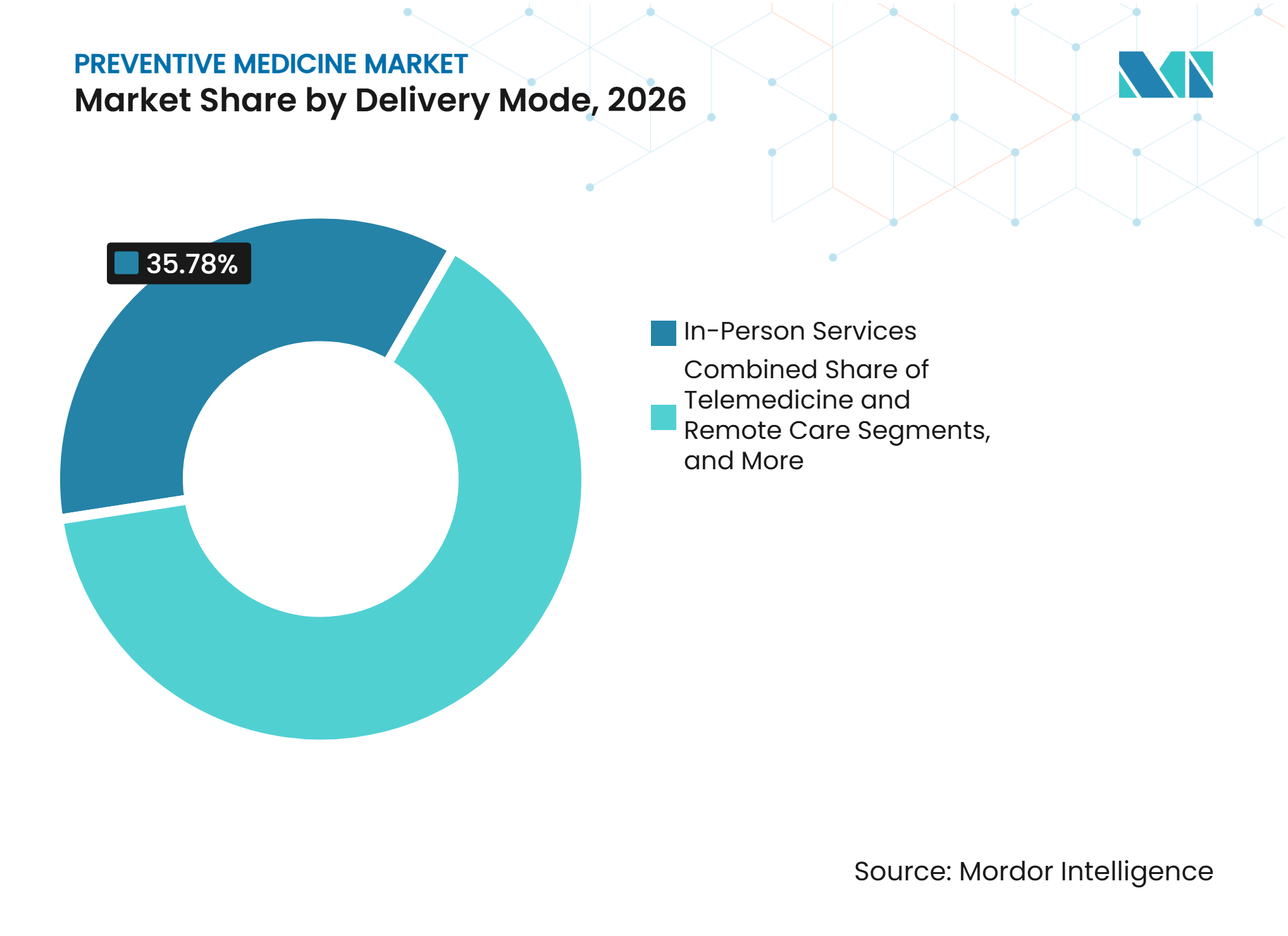
- By delivery mode, in-person services accounted for 35.78% of revenue in 2026, while telemedicine and remote care is projected to grow at an 8.77% CAGR through 2032.
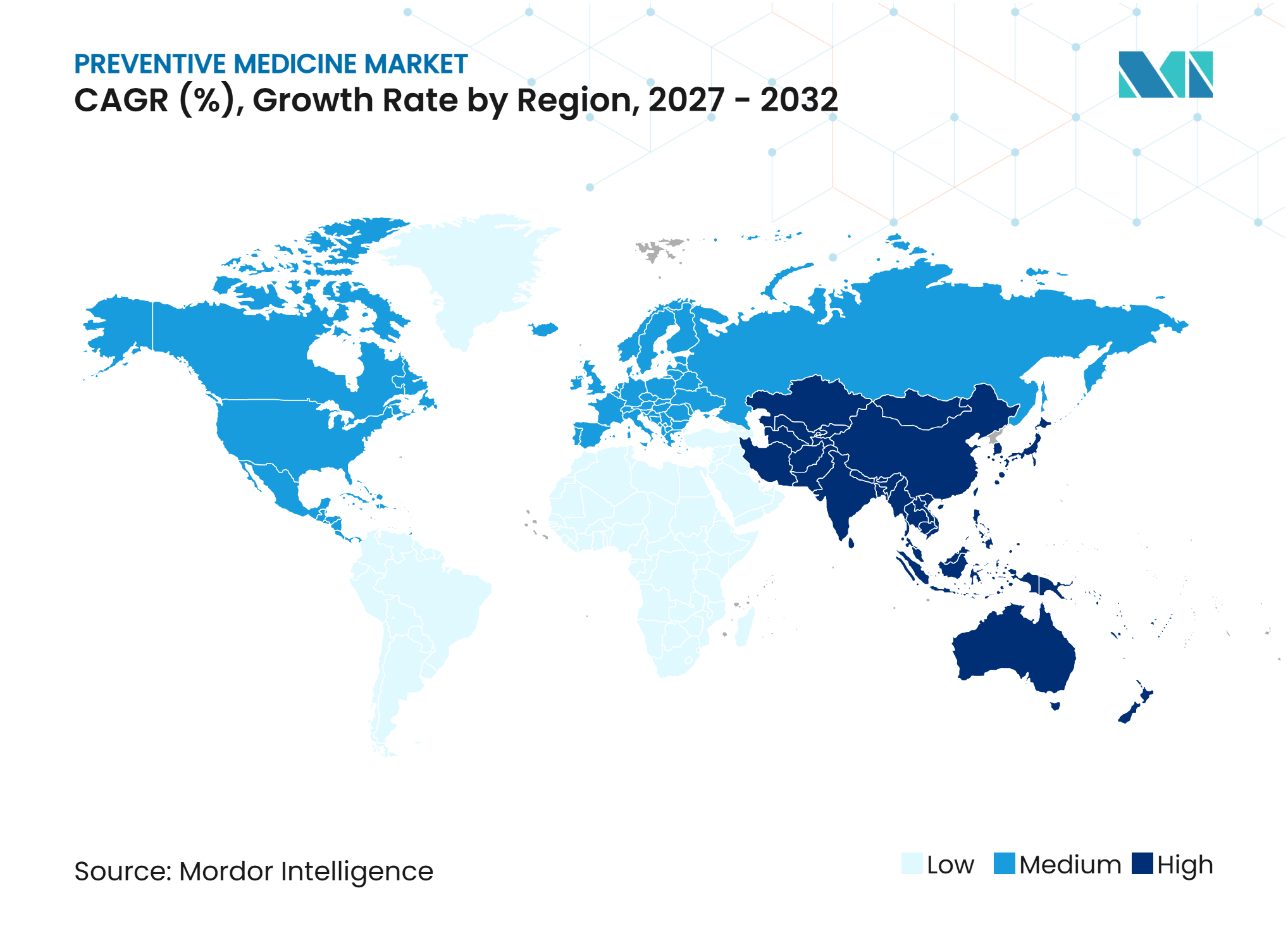
- By geography, North America held 38.88% of revenue in 2026, while Asia-Pacific is projected to grow at a 9.88% CAGR through 2032.
Note: Market numbers in this report are based on Mordor Intelligence's proprietary estimation framework, which combines nine months of actuals with Q4 projections for base year 2026.
Market Trends and Insights
Drivers Impact Analysis of Preventive Medicine Market*
| Driver | (~) % Impact on CAGR Forecast | Geographic Relevance | Impact Timeline |
|---|---|---|---|
| Rising chronic disease burden and avoidable hospital utilization | +1.2% | Global, with peak intensity in North America, South Asia, and Sub-Saharan Africa | Short term (≤ 2 years) |
| Expansion of adult, maternal, and life-course immunization | +0.8% | Global, with early gains in Asia-Pacific and Sub-Saharan Africa, and stagnation risk in North America | Medium term (2-4 years) |
| Reimbursement and value-based care incentives for early detection | +0.9% | North America and Europe, with spillover to Australia, New Zealand, and the Gulf Cooperation Council | Medium term (2-4 years) |
| Ai-enabled screening and risk stratification | +0.7% | North America, Europe, and China, with early adoption in Latin America and the Middle East and Africa | Medium term (2-4 years) |
| Underdiagnosed cardiometabolic risk in previously healthy populations | +0.6% | Global, with the highest unmet need in South and Southeast Asia and Sub-Saharan Africa | Short term (≤ 2 years) |
| Interoperable home monitoring and consumer health data | +0.5% | North America, Europe, Australia, South Korea, and Japan | Long term (≥ 4 years) |
| Source: Mordor Intelligence | |||
Rising Chronic Disease Burden and Avoidable Hospital Utilization
The rising burden of hypertension, prediabetes, dyslipidemia, and obesity is increasing demand for earlier clinical intervention. Health systems are prioritizing the identification of cardiometabolic risk before complications require higher-cost care. CMS introduced the ACCESS model in July 2026 to support outcome-aligned care for early cardiometabolic, musculoskeletal, and behavioral health conditions.[1] The model links payment to outcomes such as blood pressure, HbA1c, weight, and cholesterol management. Research published in 2025 noted that polygenic scores and AI-supported approaches improve individualized cardiovascular risk assessment, supporting expanded screening and prevention for working-age adults previously considered low risk.
Expansion of Adult, Maternal, and Life-Course Immunization
Adult and maternal immunization is becoming a larger component of preventive care delivery. The Rise to Immunize campaign reached 35.7 million adult vaccines administered over five years in 2026. Participating organizations recorded a 21.2% improvement in zoster vaccination and a 6.1% increase in RSV vaccination over one year.[2] National purchasing decisions also influence the market by expanding vaccine access across age groups. In August 2026, New Zealand’s Pharmac finalized agreements covering 17 vaccines and one diagnostic test, including the replacement of Prevenar 13 with Prevenar 20 as the funded pneumococcal vaccine.
Reimbursement And Value-Based Care
National purchasing decisions support the preventive medicine market by improving access to preventive interventions. Payment policy is shifting beyond reimbursement for preventive visits toward incentives linked to documented outcomes. The CY 2026 Medicare Physician Fee Schedule added a semiannual Physical Activity and Nutrition Risk Assessment code, while CMS introduced five chronic disease prevention outcome measures in quality reporting during 2026. These changes strengthen the business case for early detection, nutrition support, and physical activity programs. The market is likely to favor vendors that demonstrate clinical outcomes and reductions in avoidable costs, making payer partnerships increasingly important.
AI-Enabled Screening and Risk Stratification
AI tools are becoming more relevant in screening programs because they help clinical teams identify risk and manage higher testing volumes. Roche received CE Mark for its Kidney Klinrisk Algorithm in October 2025, an AI-based risk tool for progressive chronic kidney disease. The tool was introduced as part of a chronic kidney disease algorithm panel that supports care from early asymptomatic stages through disease management. Algorithmic prevention is emerging as an approach that supports primary, secondary, and tertiary prevention. Companies must meet clinical, quality, and privacy requirements before scaling these tools, favoring suppliers that combine validated algorithms with workflows suitable for routine care.
Restraints Impact Analysis of Preventive Medicine Market*
| Restraint | (~) % Impact on CAGR Forecast | Geographic Relevance | Impact Timeline |
|---|---|---|---|
| Prevention-first economics versus short-term provider incentives | -1.1% | Global, most acute in mixed public-private systems including the United States, India, and Brazil | Medium term (2-4 years) |
| Unequal access from insurance, income, rurality, and digital exclusion | -0.8% | Global, most severe in Sub-Saharan Africa, rural South and Southeast Asia, and rural North America | Long term (≥ 4 years) |
| False positives, overdiagnosis, and patient trust risk | -0.4% | North America, Europe, and Australia | Medium term (2-4 years) |
| Fragmented data governance and cybersecurity liability | -0.5% | Global, with high complexity in the European Union and cross-border care environments | Long term (≥ 4 years) |
| Source: Mordor Intelligence | |||
Prevention-First Economics Versus Short-Term Provider Incentives
Preventive programs often require upfront investment, while financial benefits accrue over several years. This timing gap can discourage provider investment when reimbursement remains linked to short service cycles. Prevention remains financially fragile, even within value-based care models, while treatment services typically generate more predictable payments. This challenge affects primary care practices, laboratories, and digital health suppliers that require multiyear reimbursement commitments. Broader adoption of outcome-aligned payment models could improve financial certainty, although implementation remains uneven across the preventive medicine market.
Unequal Access From Insurance, Income, Rurality, and Digital Exclusion
Unequal access to preventive care limits participation among populations that could benefit most from early intervention. Remote monitoring, AI-based screening, and at-home testing more often reach individuals with insurance coverage, broadband access, and digital literacy. AI-based chronic disease screening may also deliver lower performance among low socioeconomic status groups when training data do not adequately represent these populations. Rural patients face travel distances, limited screening capacity, and affordability barriers, while privacy requirements can complicate outreach data sharing. The preventive medicine market requires inclusive delivery models across income levels, language groups, and care settings.
*Our forecasts treat driver/restraint impacts as directional, not additive. The impact forecasts reflect baseline growth, mix effects, and variable interactions.
Preventive Medicine Market Segment Analysis
By Prevention Type:
Primary Programs Retain Revenue, While Secondary Detection ExpandsPrimary prevention accounted for 34.67% of the preventive medicine market share in 2026, supported by vaccination, broad screening initiatives, and lifestyle programs. National immunization systems and employer wellness budgets provide established delivery channels. These services are widely available through primary care settings, pharmacies, workplaces, and public health providers, supporting stable demand across population groups. Secondary prevention is projected to grow at a 7.28% CAGR through 2032, driven by increased use of risk scoring, point-of-care testing, and early intervention for individuals without diagnosed diseases.
Secondary prevention is becoming more personalized as digital tools combine clinical records, biometrics, and risk factors. Genomics, AI, and wearable devices are strengthening preventive care across the traditional prevention framework. This approach enables providers to identify individuals requiring closer monitoring before symptoms emerge. Tertiary prevention and recurrence reduction remain important in oncology, cardiovascular care, and metabolic health, linking long-term monitoring with efforts to prevent complications or recurrence.



By Product and Service Type:
Screening Leads in Revenue, While Lifestyle Programs Grow FasterScreening and early detection accounted for 44.93% of revenue in 2026. The segment benefits from established clinical pathways, public health programs, and the wider availability of diagnostic technologies. Abbott launched its SimpleScreen CRC blood test in the United States in September 2026 for adults aged 45 years and older who are at average risk of colorectal cancer. Medicare covers the test with no out-of-pocket cost for eligible patients.
Broader reimbursement and less invasive testing can increase participation among individuals who do not complete conventional screening. These factors support screening's leading position in the preventive medicine market. Wellness and lifestyle interventions are forecast to grow at an 8.12% CAGR through 2032. Employers and payers are expanding programs that address nutrition, physical activity, stress, and behavior before health conditions worsen. The category benefits from digital coaching, virtual care, and devices that support regular engagement. Vaccination and immunization remain major service areas because they are embedded in national schedules and community delivery channels.
By Application:
Cardiovascular Care Leads, While Neurological Prevention AdvancesCardiovascular disease prevention accounted for 28.78% of revenue in 2026, making it the largest application in the preventive medicine market. Hypertension, obesity, dyslipidemia, diabetes, and related conditions create a broad base for screening and risk management services. Updated American Heart Association guidance in 2025 supported earlier treatment for high blood pressure. Earlier intervention can increase the use of risk assessment, counseling, medication, and monitoring before complications develop.
Cardiovascular programs also benefit from validated measures, including blood pressure, HbA1c, and cholesterol levels. Providers and payers can use these indicators to track outcomes over time. Neurological disease and cognitive-decline prevention are forecast to grow at a 10.23% CAGR through 2032. A 2025 JAMA Neurology commentary called for stronger primary prevention in a specialty that has historically focused on post-symptom management. A systematic review identified 17 modifiable factors shared across stroke, dementia, and late-life depression, including blood pressure, fasting glucose, sleep, physical activity, and social engagement.

By End User:
Hospitals Hold Volume, While Workplace Providers Build DemandHospitals and primary care centers accounted for 56.89% of revenue in 2026. These organizations remain central to the market because they provide clinical screening, vaccinations, preventive prescribing, and health assessments. Many reimbursement programs also route payments through organized clinical providers, supporting high patient volumes and established referral pathways.
Corporate and workplace wellness providers are forecast to grow at a 9.45% CAGR through 2032. Employers are increasingly using preventive benefits to manage absenteeism, workforce health, and long-term medical costs. In July 2025, Plum committed INR 2 billion, equivalent to USD 25 million, to expand preventive and personalized care for corporate clients in India. This development demonstrates that employer-funded programs are expanding beyond high-income markets. Diagnostic laboratories and screening centers also benefit from direct-to-consumer testing and home-collection models. Government and public health agencies remain essential for vaccine delivery and infectious disease prevention. Ambulatory and specialty care centers benefit when prevention is integrated into disease management pathways. Home healthcare and direct-to-consumer channels provide the preventive medicine industry with additional routes to reach patients outside traditional facilities.
By Delivery Mode:
In-Person Care Leads, While Virtual Care Expands AccessIn-person services accounted for 35.78% of delivery-mode revenue in 2026. Vaccination, physical assessments, and many clinical screening procedures still require trained personnel and regulated care settings. This requirement gives providers with established clinics and community networks a durable role. In-person care also remains important for patients who need diagnostic confirmation or specialist follow-up.
Telemedicine and remote care are forecast to grow at an 8.77% CAGR through 2032. Greater acceptance of virtual visits and employer-sponsored virtual primary care is expanding access to preventive consultations. CareATC expanded nationwide access to BeWell+ Virtual Primary Care in September 2026. The program integrates preventive services, chronic condition management, and no-cost laboratory testing for employer clients. Mobile health applications support continuous coaching, risk assessment, and medication adherence through connected devices.
Geography Analysis
North America
North America held 38.88% of revenue in 2026, supported by mature reimbursement frameworks for preventive services, high screening utilization, and a large employer-sponsored health benefits base. CMS expanded its focus on technology-enabled, outcome-aligned care through the ACCESS model. The CY 2026 Medicare Physician Fee Schedule also added a semiannual physical activity and nutrition risk assessment code. These developments support screening, risk assessment, and regular follow-up. Abbott’s SimpleScreen CRC launch demonstrates how Medicare coverage supports the adoption of blood-based screening formats. Canada is expanding digital prevention tools through provincial health systems, while Mexico remains focused on immunization and maternal health coverage. Access disparities between insured urban populations and underserved rural communities remain a key challenge across the region.
Asia-Pacific
Asia-Pacific is forecast to grow at a CAGR of 9.88% through 2032, driven by demographic pressures, government digitalization initiatives, national immunization programs, and rising consumer awareness. Japan’s worker-focused metabolic screening system generates recurring demand for diagnostics and monitoring among its large adult population. South Korea’s public support for senior wearables demonstrates how government programs encourage home health monitoring. In India, Plum’s INR 2 billion, equivalent to USD 25 million, commitment in July 2025 indicates growing employer demand for preventive benefits. China, India, South Korea, Japan, Australia, and New Zealand have distinct payment and regulatory systems, making local partnerships important. New Zealand’s 2026 vaccine supply agreements demonstrate how national purchasing decisions influence preventive service availability. The preventive medicine market size in Asia-Pacific will be shaped by the ability of digital health programs to reach rural populations as well as residents of major cities.
Europe, Middle East and Africa, and South America
Europe has organized screening programs, strong preventive care policies, and an established digital health regulatory environment. However, differences in reimbursement and implementation across countries moderate regional growth. The European IVDR framework supports consistent requirements for in vitro diagnostics and related self-collection tools. Roche’s CE-marked kidney algorithm demonstrates the region’s focus on regulated, AI-supported risk assessment. The Middle East and Africa have significant unmet needs for preventive care, particularly in areas with limited screening capacity or digital access. South America is seeing increased interest in AI and digital health, although service quality depends on locally representative data. A 2025 study identified lower AI performance among low-socioeconomic groups in Latin America and the Caribbean. Providers that adapt their models to local clinical data and care infrastructure will have stronger prospects across these diverse regions.
Competitive Landscape
Market Concentration
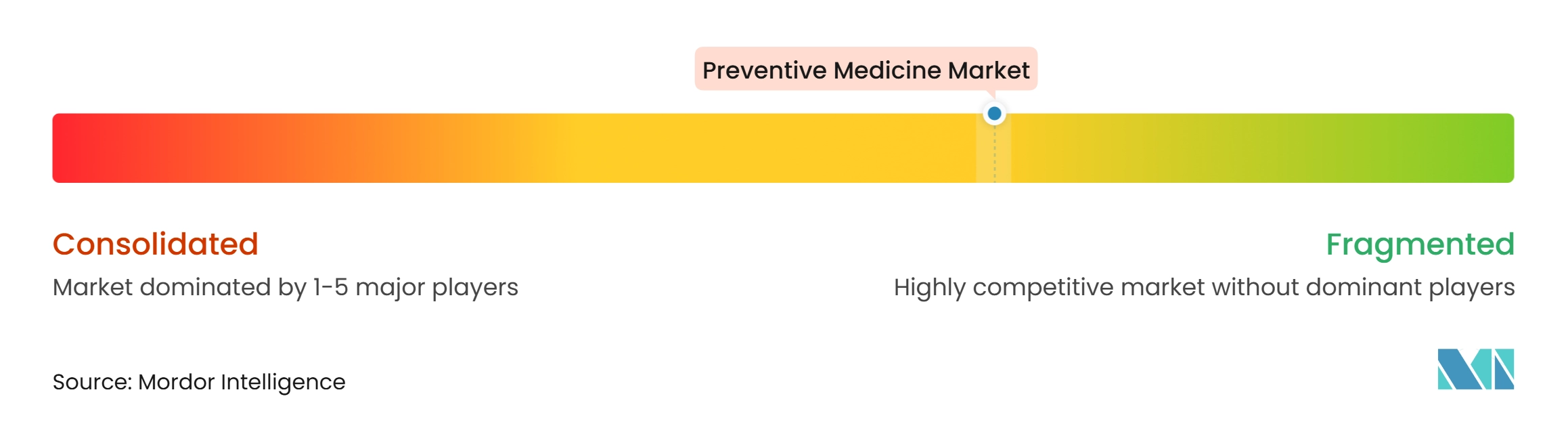
The preventive medicine market is moderately consolidated across individual product areas; however, no company holds a leading position across screening, immunization, preventive therapeutics, and digital health. Large diagnostics, pharmaceutical, and medical technology companies have established capabilities across selected care pathway segments. In May 2025, Danaher announced a diagnostic development and commercialization partnership with AstraZeneca to advance precision medicine. The partnership uses digital pathology and AI-assisted diagnostics through Danaher’s Centers for Enabling Precision Medicine, linking testing capabilities with targeted treatment selection and broader commercialization opportunities.
Roche is strengthening its position through algorithm-supported diagnostics across chronic disease pathways. Its Kidney Klinrisk Algorithm received CE Mark in 2025 for assessing progressive chronic kidney disease risk. Roche also launched the Liver Disease Panel in May 2026, integrating biomarker diagnostics and certified algorithms for chronic liver disease management. In December 2025, Illumina invested in MyOme to support a clinical trial using whole-genome sequencing and AI-integrated risk models for chronic conditions, cancer, and rare diseases.
These developments highlight a competitive shift toward solutions that enable earlier risk identification and support clinical decision-making. The market also offers opportunities for companies serving rural, low-income, and underrepresented populations, which carry a substantial disease burden but remain underrepresented in clinical datasets and digital service models. Smaller companies with locally validated models may become partnership or acquisition targets for larger health care suppliers.
Preventive Medicine Industry Leaders
-
Abbott Laboratories
-
GSK PLC
-
F. Hoffmann-La Roche Ltd
-
Pfizer Inc.
-
Medtronic PLC
- *Disclaimer: Major Players sorted in no particular order
Preventive Medicine Market Companies Covered in this Report
- Abbott Laboratories
- AstraZeneca
- Beckton Dickinson
- bioMérieux
- Danaher
- Dexcom
- Eli Lilly and Company
- Roche
- GE HealthCare Technologies Inc.
- GlaxoSmithKline
- Illumina
- Johnson & Johnson
- Koninklijke Philips
- Medtronic
- Merck
- Pfizer
- Quest Diagnostics
- Sanofi
- Siemens Healthineers
- Thermo Fisher Scientific
Recent Industry Developments in Preventive Medicine Market
- September 2026: Abbott launched the SimpleScreen CRC blood-based colorectal cancer screening test in the United States for adults aged 45 years and older at average CRC risk. Medicare covered the test with no out-of-pocket costs for eligible patients, strengthening Abbott’s portfolio of stool-based and blood-based screening options.
- August 2026: New Zealand’s Pharmac finalized national immunization supply agreements with Pfizer, Sanofi, GSK, Merck, and Seqirus, covering 17 vaccines and one diagnostic test. Prevenar 20 replaced Prevenar 13 as the funded pneumococcal vaccine and received a new indication for adults with prior invasive pneumococcal disease, effective July 2027.
- May 2026: Roche launched the Liver Disease Panel, a suite of certified algorithms for chronic liver disease management. The panel integrated biomarker diagnostics with CE-marked digital algorithms, including LiverPRO, to support clinical decisions from fibrosis risk identification through liver cancer surveillance.
Global Preventive Medicine Market Report Scope
As per the scope of the report, Preventive medicine is a medical specialty and branch of healthcare that focuses on protecting, promoting, and maintaining health and well-being while preventing disease, disability, and premature death at both the individual and population levels.
The preventive medicine market is segmented by prevention type, product and service type, application, end user, delivery mode, and geography. By prevention type, the market is segmented into primary prevention, secondary prevention, and tertiary prevention and recurrence reduction. By product and service type, the market includes screening and early detection, vaccination and immunization, preventive drug therapies, wellness and lifestyle interventions, digital health and remote monitoring services, and others. By application, the market is segmented into cardiovascular disease prevention, cancer prevention, diabetes and metabolic disease prevention, infectious disease prevention, respiratory disease prevention, maternal, newborn, and child health prevention, neurological disease and cognitive decline prevention, and other applications. By end user, the market is segmented into hospitals and primary care centers, diagnostic laboratories and screening centers, ambulatory and specialty care centers, government and public health agencies, corporate and workplace wellness providers, home healthcare and direct-to-consumer channels, and other end users. By delivery mode, the market is segmented into in-person services, telemedicine and remote care, mobile health applications, and at-home collection and testing. By geography, the market is analyzed across North America, Europe, Asia-Pacific, the Middle East and Africa, and South America. The report also covers the estimated market sizes and trends for 17 countries across major regions globally. The report offers market sizes and forecasts in terms of value (USD) for the above segments.
Segmentation Overview
| Primary Prevention |
| Secondary Prevention |
| Tertiary Prevention and Recurrence Reduction |
| Screening & Early Detection |
| Vaccination & Immunization |
| Preventive Drug Therapies |
| Wellness & Lifestyle Interventions |
| Digital Health & Remote Monitoring Services |
| Others |
| Cardiovascular Disease Prevention |
| Cancer Prevention |
| Diabetes and Metabolic Disease Prevention |
| Infectious Disease Prevention |
| Respiratory Disease Prevention |
| Maternal, Newborn and Child Health Prevention |
| Neurological Disease and Cognitive-Decline Prevention |
| Other Applications |
| Hospitals and Primary Care Centers |
| Diagnostic Laboratories and Screening Centers |
| Ambulatory and Specialty Care Centers |
| Government and Public Health Agencies |
| Corporate and Workplace Wellness Providers |
| Home Healthcare and Direct-to-Consumer Channels |
| Other End Users |
| In-Person Services |
| Telemedicine and Remote Care |
| Mobile Health Applications |
| At-Home Collection and Testing |
| North America | United States |
| Canada | |
| Mexico | |
| Europe | Germany |
| United Kingdom | |
| France | |
| Italy | |
| Spain | |
| Rest of Europe | |
| Asia-Pacific | China |
| India | |
| Japan | |
| Australia | |
| South Korea | |
| Rest of Asia-Pacific | |
| Middle East and Africa | GCC |
| South Africa | |
| Rest of Middle East and Africa | |
| South America | Brazil |
| Argentina | |
| Rest of South America |
| By Prevention Type | Primary Prevention | |
| Secondary Prevention | ||
| Tertiary Prevention and Recurrence Reduction | ||
| By Product and Service Type | Screening & Early Detection | |
| Vaccination & Immunization | ||
| Preventive Drug Therapies | ||
| Wellness & Lifestyle Interventions | ||
| Digital Health & Remote Monitoring Services | ||
| Others | ||
| By Application | Cardiovascular Disease Prevention | |
| Cancer Prevention | ||
| Diabetes and Metabolic Disease Prevention | ||
| Infectious Disease Prevention | ||
| Respiratory Disease Prevention | ||
| Maternal, Newborn and Child Health Prevention | ||
| Neurological Disease and Cognitive-Decline Prevention | ||
| Other Applications | ||
| By End User | Hospitals and Primary Care Centers | |
| Diagnostic Laboratories and Screening Centers | ||
| Ambulatory and Specialty Care Centers | ||
| Government and Public Health Agencies | ||
| Corporate and Workplace Wellness Providers | ||
| Home Healthcare and Direct-to-Consumer Channels | ||
| Other End Users | ||
| By Delivery Mode | In-Person Services | |
| Telemedicine and Remote Care | ||
| Mobile Health Applications | ||
| At-Home Collection and Testing | ||
| By Geography | North America | United States |
| Canada | ||
| Mexico | ||
| Europe | Germany | |
| United Kingdom | ||
| France | ||
| Italy | ||
| Spain | ||
| Rest of Europe | ||
| Asia-Pacific | China | |
| India | ||
| Japan | ||
| Australia | ||
| South Korea | ||
| Rest of Asia-Pacific | ||
| Middle East and Africa | GCC | |
| South Africa | ||
| Rest of Middle East and Africa | ||
| South America | Brazil | |
| Argentina | ||
| Rest of South America | ||
Key Questions Answered in the Report
What is the forecast value of preventive medicine by 2032?
The preventive medicine market is projected to reach USD 655.87 billion by 2032, from USD 503.26 billion in 2027, at a 5.44% CAGR.
Which preventive medicine service has the largest revenue share?
Screening & Early Detection led product and service revenue with a 44.93% share in 2026.
Which preventive medicine application is growing the fastest?
Neurological Disease and Cognitive-Decline Prevention is projected to grow at a 10.23% CAGR through 2032.
Which end users are expected to expand most quickly?
Corporate and Workplace Wellness Providers are forecast to grow at a 9.45% CAGR through 2032.
Which region is expanding most quickly for preventive care?
Asia-Pacific is forecast to grow at a 9.88% CAGR through 2032, supported by digital health expansion, public programs, and employer spending.
How are AI tools changing preventive care delivery?
AI tools are supporting risk stratification and earlier screening, but their adoption depends on clinical validation, data quality, and integration into care workflows.