
Pleural Diseases Market Size and Share
Market Overview
| Study Period | 2021 - 2032 |
|---|---|
| Market Size (2027) | USD 7.14 Billion |
| Market Size (2032) | USD 10.07 Billion |
| Growth Rate (2027 - 2032) | 7.11 % |
| Fastest Growing Market | Asia-Pacific |
| Largest Market | North America |
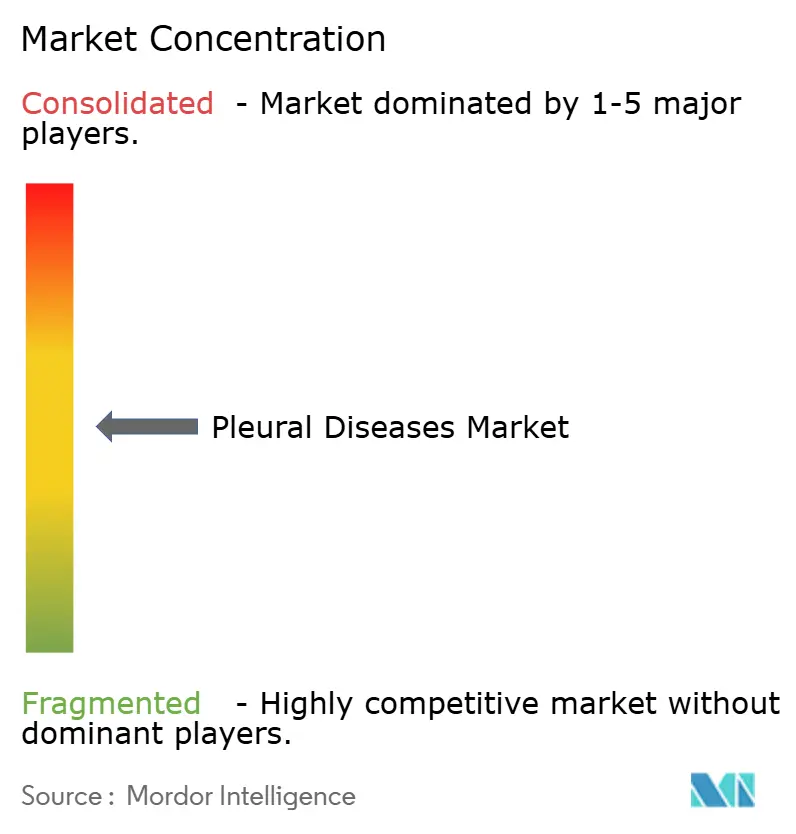
| Market Concentration | Medium |
Major Players *Disclaimer: Major Players sorted in no particular order Image © Mordor Intelligence. Reuse requires attribution under CC BY 4.0. | |
Pleural Diseases Market Analysis by Mordor Intelligence
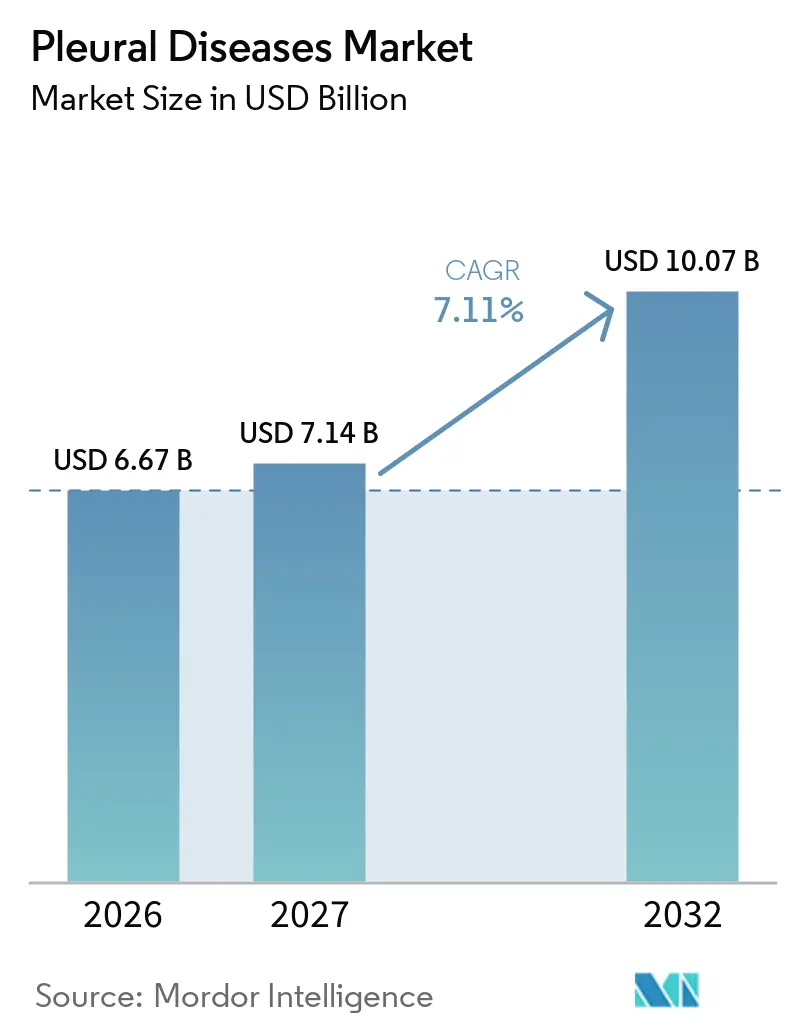
The Pleural Diseases Market size was valued at USD 6.67 billion in 2026 and is estimated to grow from USD 7.14 billion in 2027 to reach USD 10.07 billion by 2032, at a CAGR of 7.11% during the forecast period (2027-2032).
Rising incidence of lung cancer, heart failure, pneumonia, and tuberculosis continues to support procedure volumes and recurring demand for drainage supplies. Care is moving from inpatient drainage to outpatient services and home-based management, particularly for patients with recurrent effusions. Updated first-line treatment guidelines for unresectable pleural mesothelioma support the broader use of systemic therapies, including immunotherapy-based regimens. The pleural diseases market is shaped by clinical demand and healthcare systems' ability to reimburse new devices, imaging software, and treatment pathways. Device manufacturers have an opportunity to support longer patient care episodes; however, uncertain coverage for emerging technologies can delay adoption.
Key Report Takeaways
- By product type, pleural drainage devices held 34.45% of the pleural diseases market share in 2026, while surgical and interventional products are projected to grow at a CAGR of 10.24% through 2032.
- By disease type, pleural effusion accounted for 44.93% of the pleural diseases market share in 2026, while pleurisy is projected to grow at a CAGR of 8.67% through 2032.
- By diagnostic tool, imaging techniques held a 55.67% share in 2026 and are projected to expand at a CAGR of 9.78% through 2032.
- By end user, hospitals and clinics accounted for a 48.93% share in 2026, while homecare settings are projected to grow at a CAGR of 10.45% through 2032.
- By geography, North America held a 41.52% share in 2026, while Asia-Pacific is projected to grow at a CAGR of 9.22% through 2032.
Note: Market numbers in this report are based on Mordor Intelligence's proprietary estimation framework, which combines nine months of actuals with Q4 projections for base year 2026.
Market Trends and Insights
Drivers Impact Analysis of Pleural Diseases Market*
| DRIVER | (~) % IMPACT ON CAGR FORECAST | GEOGRAPHIC RELEVANCE | IMPACT TIMELINE |
|---|---|---|---|
| Increasing pleural disease incidence and hospitalization | +1.8% | Global, with acute impact in APAC and MEA | Short term (≤ 2 years) |
| Expansion of minimally invasive and outpatient pleural care | +1.5% | North America and Europe, with spillover to APAC | Medium term (2-4 years) |
| Wider adoption of immunotherapy and combination therapy for pleural mesothelioma | +1.2% | North America and Europe, especially Germany, France, and the United Kingdom | Medium term (2-4 years) |
| Increasing use of tunneled pleural catheters for recurrent effusions | +1.0% | North America and Europe, with early gains in China and Australia | Medium term (2-4 years) |
| Earlier molecular and imaging-based diagnosis of pleural malignancy | +0.9% | Global, led by North America and Japan | Long term (≥ 4 years) |
| Increasing use of integrated pleural pathways and specialist pleural services | +0.6% | Europe, especially the United Kingdom, with spillover to APAC | Long term (≥ 4 years) |
| Source: Mordor Intelligence | |||
Increasing Pleural Disease Incidence and Hospitalization
Pleural diseases associated with lung cancer, heart failure, pneumonia, and tuberculosis continue to sustain hospital admissions across healthcare systems. Clinical evidence indicates that pleural effusion affects 320 to 1,300 people per million annually, while tuberculosis-related conditions account for 30% to 80% of pleural effusion cases in India. A 2026 survey of 414 respiratory physicians across 15 countries found that extrapulmonary disease affects 1 in 5 tuberculosis patients, with pleuritis identified as the most common form.[1] Aging populations in North America, Europe, and East Asia also show a higher prevalence of cardiac and oncology-related conditions that cause recurrent effusions. The need for repeated assessment, drainage, and follow-up supports consistent demand for devices and consumables in the pleural diseases market.
Expansion of Minimally Invasive and Outpatient Pleural Care
The shift from inpatient chest drainage to outpatient indwelling pleural catheter placement is reshaping pleural care delivery. Indwelling pleural catheters enable long-term management of symptomatic recurrent effusions outside hospital settings, including for patients with poor functional status or non-expandable lungs. A 2025 review described daily drainage protocols, outpatient talc slurry administration, and digital pump systems that can expand catheter use across a wider patient population.[2] Intrapleural administration of chemotherapy agents or sclerosants through these platforms could extend their application beyond drainage. This care model reduces inpatient dependence while increasing demand for outpatient supplies, monitoring, and patient education.
Wider Adoption of Immunotherapy and Combination Therapy for Pleural Mesothelioma
The 2025 American Society of Clinical Oncology update revised first-line systemic treatment expectations for eligible patients with pleural mesothelioma. The guideline recommends platinum-pemetrexed, ipilimumab-nivolumab, and pembrolizumab-pemetrexed-platinum as treatment options. Real-world data from the German MesoNet study reported a median overall survival of 13.1 months among an unselected cohort receiving first-line nivolumab-ipilimumab.[3] The guideline does not recommend programmed death-ligand 1 (PD-L1), tumor mutational burden (TMB), or microsatellite instability (MSI) as patient-selection biomarkers, supporting treatment access without these tests. However, high treatment costs and outcome variations by histologic subtype may limit uptake in resource-constrained settings.
Increasing Use of Tunneled Pleural Catheters and Specialist Pathways
Tunneled pleural catheters are expanding beyond malignant effusions to manage refractory heart failure-related effusions, hepatic hydrothorax, and other benign recurrent conditions. A 2025 study reported that combined ultrasound-guided biopsy and catheter insertion achieved a 100% diagnostic yield without repeat procedures among enrolled patients with a high probability of malignant pleural effusion. The AESOP crossover study found that 9 of 10 patients completing the 4-week follow-up selected the Passio digital system for long-term management. These findings support earlier adoption of catheter-based pathways rather than use only after pleurodesis failure. Specialist pleural services can integrate imaging, biopsy, catheter placement, and follow-up into coordinated care pathways.
Restraints Impact Analysis of Pleural Diseases Market*
| RESTRAINT | (~) % IMPACT ON CAGR FORECAST | GEOGRAPHIC RELEVANCE | IMPACT TIMELINE |
|---|---|---|---|
| High procedure costs and limited reimbursement for advanced pleural interventions | -1.1% | United States and Europe, with early pressure in APAC | Short term (≤ 2 years) |
| Limited epidemiological data and diagnostic delays in low- and middle-income countries | -0.8% | APAC, with spillover to MEA and South America | Short term (≤ 2 years) |
| Complex patient selection and multidisciplinary treatment requirements | -0.6% | Global, most acute in North America and Europe | Medium term (2-4 years) |
| Uncertain clinical selection and reimbursement for emerging modalities | -0.5% | North America and Europe, with early-stage APAC | Long term (≥ 4 years) |
| Source: Mordor Intelligence | |||
High Procedure Costs and Uncertain Reimbursement for Advanced Interventions
Cost and coverage differences between standard drainage procedures and advanced interventions can limit access to emerging pleural technologies. Artificial intelligence (AI)-guided imaging, implantable shunts, and intrapleural aerosol chemotherapy may require reimbursement decisions that fall outside established drainage payment codes. Retrospective evidence reported a pleurodesis success rate of 61.2% with thoracoscopic catheter placement, compared with 24.9% with percutaneous placement; however, thoracoscopic procedures incur higher costs. Pleural Dynamics reported that its ACES implantable shunt received a Centers for Medicare & Medicaid Services (CMS) reimbursement code in 2025 after presenting post-market study results at CHEST 2025. The gap between regulatory clearance and reimbursement can delay commercial adoption. In Asia-Pacific and Latin America, limited insurance coverage for thoracoscopic pleural services can restrict patient access and reduce the near-term reach of the pleural diseases market.
Limited Data, Diagnostic Delays, and Complex Care Requirements
Limited incidence data in sub-Saharan Africa, South and Southeast Asia, and parts of South America complicate local demand planning. In the 2026 physician survey, 77.8% of respondents changed a probable tuberculous pleuritis diagnosis after empirical anti-tuberculosis treatment failed. This finding highlights gaps in access to molecular testing, adenosine deaminase testing, and thoracoscopy. Diagnostic delays can lead to fibrothorax or advanced loculation, where surgical decortication may replace less complex drainage procedures. Pleural mesothelioma also requires coordinated care across pulmonology, pathology, surgery, and oncology, which smaller centers may not be able to provide. These constraints can limit investment in distribution networks and clinician training, even in regions with a high disease burden.
*Our forecasts treat driver/restraint impacts as directional, not additive. The impact forecasts reflect baseline growth, mix effects, and variable interactions.
Pleural Diseases Market Segment Analysis
By Product Type:
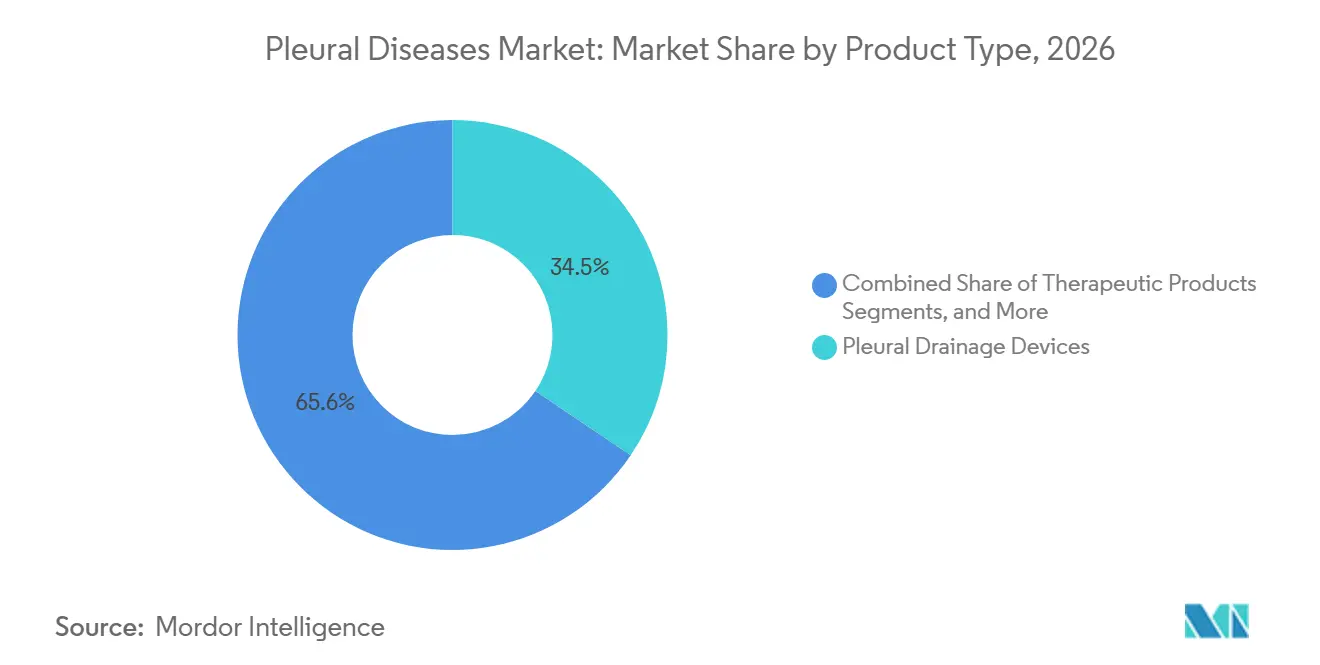
Drainage Devices Lead While Interventional Products AcceleratePleural drainage devices held 34.45% of the 2026 product-type segment, representing the largest share of the pleural diseases market. Their leadership reflects the widespread use of indwelling pleural catheters for malignant effusion management across oncology centers in North America, Europe, and higher-income Asia-Pacific countries. In October 2025, Foshan Fosun Chancheng Hospital performed the first PleurX catheter implantation in mainland China under the Hong Kong-Macao Medicine and Equipment Connect policy.
This development demonstrates the geographic expansion potential of established drainage products. Catheter systems support recurring patient management needs, generate ongoing demand for related supplies, and enable follow-up care outside hospital settings. Surgical and interventional products are projected to grow at a CAGR of 10.24% through 2032, driven by the increasing use of video-assisted thoracoscopic surgery (VATS) for diagnostic biopsies and pleurodesis. The ACES implantable shunt achieved a median 53% reduction in effusion volume at 30 days, while 80% of patients required no additional drainage through 60 days.

By Disease Type:
Effusion Drives Volume While Pleurisy Gains GroundPleural effusion accounted for 44.93% of the 2026 disease-type segment and remained the largest component of the pleural diseases market. It is a common pleural syndrome across age groups and a primary treatment target for drainage devices, imaging, and therapeutic products. Recurrent effusion may occur with cancer, heart failure, liver disease, infection, and other chronic conditions, sustaining demand for thoracentesis, catheter placement, pleurodesis, and follow-up care.
Malignant pleural effusion also connects pleural procedures with oncology treatment pathways, while its broad range of causes diversifies demand across patient groups. Pleurisy is forecast to grow at a CAGR of 8.67% through 2032, supported by tuberculosis-associated pleuritis in Asia-Pacific and Africa. In the 2026 physician survey, 80.4% of respondents considered tuberculous pleuritis in the differential diagnosis for new-onset unilateral pleural effusion. Pneumothorax, pleural mesothelioma, empyema, chylothorax, and hemothorax also support ongoing procedural demand.
By Diagnostic Tool:
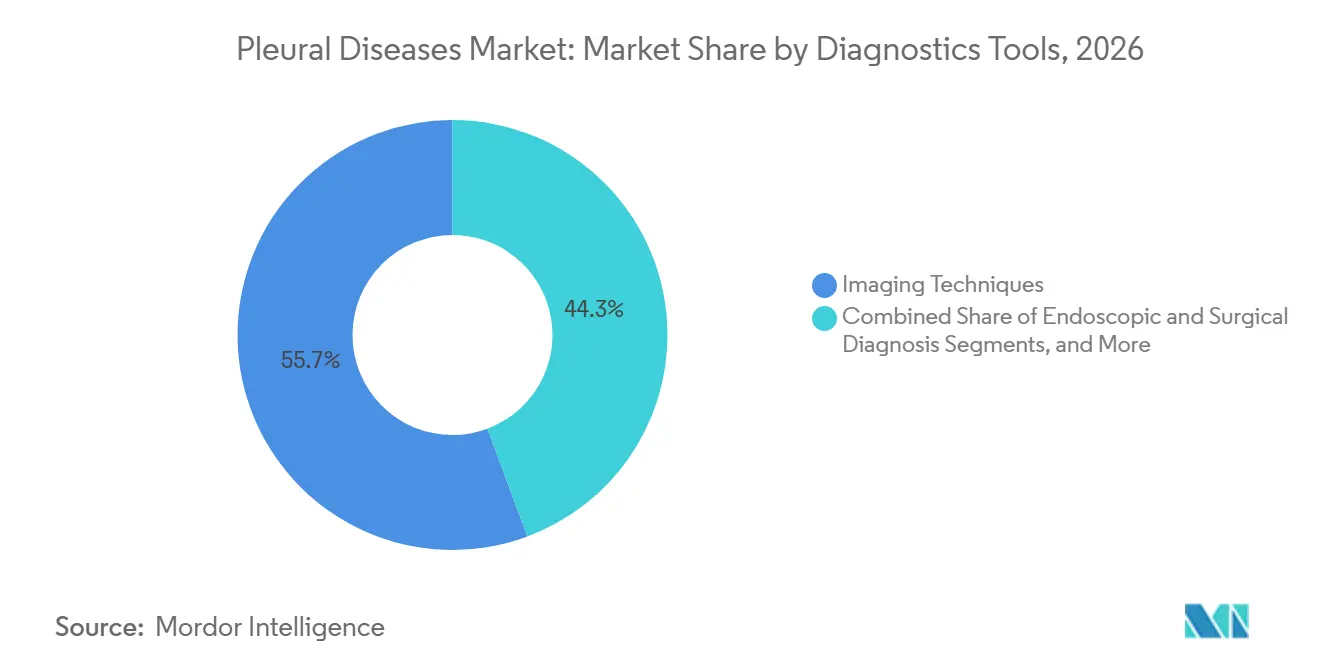
Imaging Holds Leadership in Size and GrowthImaging techniques held 55.67% of the 2026 diagnostic tool segment and are projected to grow at a CAGR of 9.78% through 2032. This positions imaging as the largest and fastest-growing diagnostic tool segment in the pleural diseases market. In June 2025, Exo received Food and Drug Administration (FDA) 510(k) clearance for on-device artificial intelligence (AI) that detects pleural effusion on its handheld Exo Iris platform.
The platform enables bedside detection without an internet connection, while FDA-cleared pneumothorax AI algorithms demonstrate sensitivity ranging from 84.3% to 94.6% and specificity from 87.9% to 95.1%. Laboratory and molecular diagnosis is gaining relevance as biomarkers, including adenosine deaminase, MESOMARK, and soluble mesothelin-related peptides, enter specialist use. Endoscopic and surgical diagnosis remains essential when cytology is inconclusive, particularly as the American Society of Clinical Oncology (ASCO) notes that cytology sensitivity for epithelioid mesothelioma is below 60%. FDA software-as-a-medical-device requirements may favor established cleared platforms as the market adopts software-supported triage.
By End User:
Hospitals Lead Volume While Homecare ExpandsHospitals and clinics held 48.93% of the 2026 end-user segment, reflecting the procedural requirements of pleural disease management. Thoracentesis, catheter insertion, VATS, pleurodesis, and fibrinolysis commonly begin in hospital-based settings. A 2025 American Association for Bronchology and Interventional Pulmonology (AABIP) survey found that 81.8% of indwelling pleural catheter insertions occurred in procedure suites under local anesthesia rather than operating rooms.
This trend indicates lower-intensity hospital care for selected patients, although hospitals continue to manage diagnosis, initial procedures, complex adverse events, and multidisciplinary mesothelioma treatment. Homecare settings are forecast to grow at a CAGR of 10.45% through 2032, supported by digital pumps, implantable shunts, and self-management tools such as the Passio digital system and ACES shunt. These solutions can reduce repeat drainage visits but require patient education, reliable follow-up, and clear escalation procedures. Ambulatory facilities increasingly provide follow-up drainage, sclerosant visits, and symptom monitoring, enabling hospitals to focus on initial procedures and complex care.
Geography Analysis
North America: Established Care Pathways Support Regional Leadership
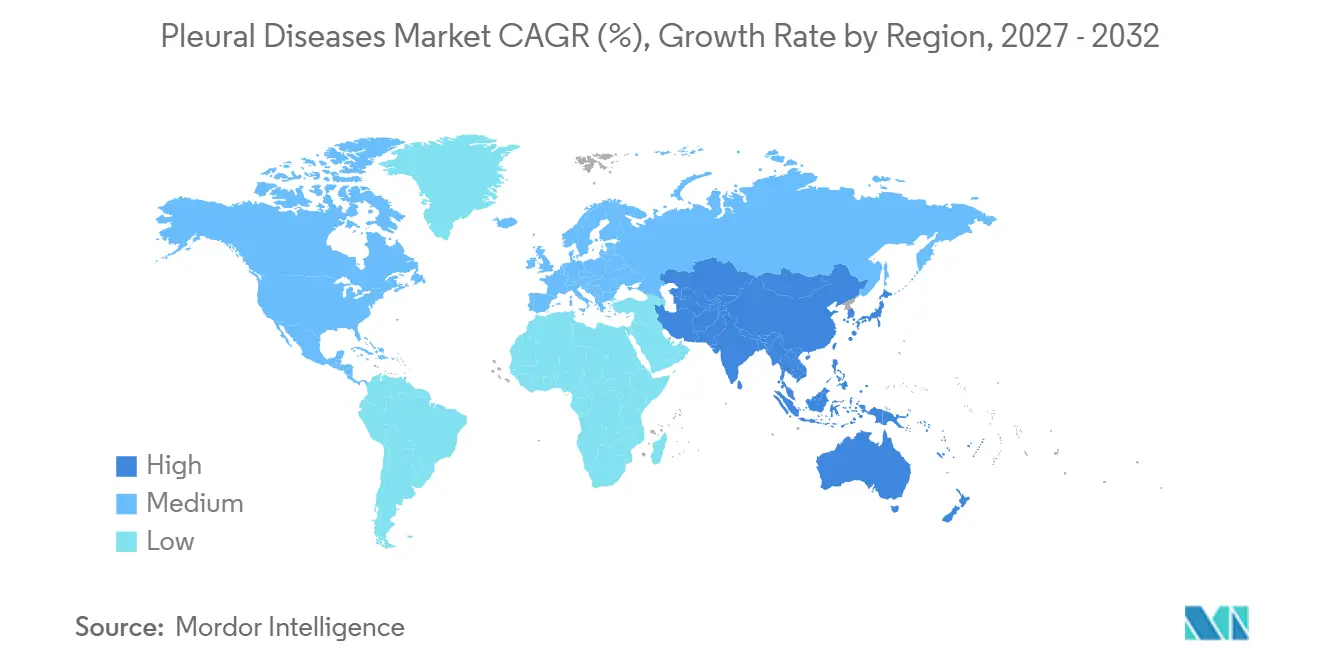
North America held 41.52% of the 2026 pleural diseases market share, supported by strong pulmonology capacity, established reimbursement pathways for indwelling pleural catheters, and significant mesothelioma treatment spending. The 2025 American Society of Clinical Oncology (ASCO) guideline supports several first-line systemic regimens for eligible patients with pleural mesothelioma. NovoCure reported USD 1.1 million in fourth-quarter 2025 revenue from Optune Lua for malignant pleural mesothelioma. The United States benefits from a large commercially insured population with access to checkpoint inhibitor combinations and specialized care. In Canada, publicly funded oncology centers support catheter use, while centralized thoracic surgery programs manage procedural costs. Mexico remains an emerging private-sector opportunity, with pleural services concentrated in major urban referral centers, while Food and Drug Administration (FDA) requirements for artificial intelligence (AI) diagnostic software influence imaging platform adoption.
Asia-Pacific: Tuberculosis Burden and Infrastructure Expansion Support Growth
Asia-Pacific is projected to grow at a CAGR of 9.22% through 2032, the fastest rate in the pleural diseases market. China and India are expected to contribute substantially to incremental patient volume. In China, the first mainland PleurX implantation under the Hong Kong-Macao Medicine and Equipment Connect policy demonstrated a pathway for newer devices to reach patients. India has a high burden of tuberculosis-associated pleural disease, with tuberculosis accounting for 30% to 80% of pleural effusion presentations. This burden supports demand for diagnostic and drainage procedures in tertiary hospitals and tuberculosis control programs. Japan and Australia sustain higher-value procedural activity, including mesothelioma care associated with historical asbestos exposure. At the same time, Australia’s AMPLE, LENT, and AESOP studies continue to influence clinical practice beyond its domestic patient base.
Europe, Middle East and Africa, and South America: Different Access Conditions Shape Adoption
Europe has an established pleural research base, with the United Kingdom contributing major catheter studies and specialist care pathways. Germany remains active in device adoption and mesothelioma treatment, accounting for 16 of NovoCure’s 27 Optune Lua prescriptions for malignant pleural mesothelioma in the fourth quarter of 2025. France, Spain, and Italy are centralizing pleural procedures in academic centers, improving access to specialized equipment. The Middle East and Africa face a significant burden of tuberculosis-related pleural disease and parapneumonic effusion, although diagnostic capacity varies outside Gulf Cooperation Council countries.
Competitive Landscape
The pleural diseases market is moderately consolidated in drainage devices and fragmented across pharmaceuticals and emerging technologies. BD’s PleurX, Teleflex’s Rocket Medical Aspira platform, and Getinge-related drainage systems are established catheter segment offerings, setting standards for device performance, clinician training, and follow-up care. Competition is increasing in digital drainage control, implantable shunts, and artificial intelligence (AI)-integrated point-of-care imaging. Smaller developers are focusing on drainage control, patient comfort, and outpatient monitoring, with progress dependent on clinical evidence, reimbursement pathways, and trained-user access.
Merit Medical Systems, Cook Group, B. Braun, and ICU Medical offer catheter and infusion portfolios for adjacent clinical needs. The market continues to reward companies that combine clinical evidence with effective distribution support. Bristol-Myers Squibb and Merck hold early positions in mesothelioma immunotherapy through regimens reflected in 2025 American Society of Clinical Oncology (ASCO) guidance, while AstraZeneca is pursuing related oncology opportunities. NovoCure offers Optune Lua Tumor Treating Fields for malignant pleural mesothelioma under a Humanitarian Device Exemption, requiring post-approval data collection and ongoing compliance.
Pleural Dynamics positions the ACES system as an implantable option for recurrent pleural effusions. Its 2025 multicenter results reported a 96% implantation success rate and a 53% median reduction in effusion volume at 30 days. AI-guided diagnostic tools for lower-resource settings remain an underdeveloped opportunity. Exo Iris illustrates how handheld imaging and on-device AI could expand pleural effusion triage beyond specialist centers.
Pleural Diseases Industry Leaders
-
Becton, Dickinson and Company
-
B. Braun SE
-
Cook Group Incorporated
-
Getinge AB
-
Merit Medical Systems, Inc.
- *Disclaimer: Major Players sorted in no particular order
Pleural Diseases Market Companies Covered in this Report
- AstraZeneca
- ATMOS MedizinTechnik
- B. Braun
- Beckton Dickinson
- Bristol-Myers Squibb
- Cook Group
- Eli Lilly and Company
- Genentech
- Getinge
- ICU Medical
- Medela
- Medtronic
- Merck
- Merit Medical Systems
- NovoCure Limited
- Pfizer
- Redax S.p.A.
- Rocket Medical plc
- Teleflex
- Vygon S.A.
Recent Industry Developments in Pleural Diseases Market
- October 2026: RS Oncology reported positive results from the Phase I/II MITOPE study of RSO-021 in patients with pleural mesothelioma and other solid tumors with pleural effusion. Weekly dosing demonstrated durable disease control, improved PFS and OS, and a manageable safety profile.
- October 2025: Foshan Fosun Chancheng Hospital completed mainland China’s first PleurX indwelling pleural catheter implantation under the Hong Kong-Macao Medicine and Equipment Connect policy. The procedure treated recurrent malignant pleural effusion in a breast cancer patient and significantly improved symptoms.
Global Pleural Diseases Market Report Scope
As per the scope of the report, pleural diseases are conditions that affect the pleura, the delicate two-layered membrane that covers the outside of the lungs and lines the inside of the chest cavity, as well as the small fluid-filled space (pleural space) between them. These disorders typically happen when inflammation, infection, injury, or medical conditions cause an abnormal buildup of excess fluid, pus, blood, or air in the pleural space, which can restrict normal lung expansion and lead to symptoms like sharp chest pain, shortness of breath, and coughing.
The pleural diseases market is segmented by product type, disease type, diagnostic tool, end user, and geography. By product type, the market includes pleural drainage devices, therapeutic products, diagnostic products and systems, surgical and interventional products, and other product types. By disease type, the market is segmented into pleural effusion, pleurisy, pneumothorax, pleural mesothelioma, empyema, and other pleural diseases. By diagnostic tool, the market is categorized into imaging techniques, endoscopic and surgical diagnostic procedures, and laboratory and molecular diagnostics. By end user, the market is segmented into hospitals and clinics, ambulatory and outpatient facilities, academic and research institutes, home care settings, and other end users. By geography, the market is analyzed across North America, Europe, Asia-Pacific, the Middle East and Africa, and South America. The report also covers estimated market sizes and trends for 17 countries across major regions globally. The report offers market sizes and forecasts in terms of value (USD) for the above segments.
Segmentation Overview
| Pleural Drainage Devices |
| Therapeutic Products |
| Diagnostic Products and Systems |
| Surgical and Interventional Products |
| Others product Type |
| Pleural Effusion |
| Pleurisy |
| Pneumothorax |
| Pleural Mesothelioma |
| Empyema |
| Other Pleural Diseases |
| Imaging Techniques |
| Endoscopic and Surgical Diagnosis |
| Laboratory and Molecular Diagnosis |
| Hospitals and Clinics |
| Ambulatory and Outpatient Facilities |
| Academic and Research Institutes |
| Homecare Settings |
| Other End Users |
| North America | United States |
| Canada | |
| Mexico | |
| Europe | Germany |
| United Kingdom | |
| France | |
| Italy | |
| Spain | |
| Rest of Europe | |
| Asia-Pacific | China |
| India | |
| Japan | |
| Australia | |
| South Korea | |
| Rest of Asia-Pacific | |
| Middle East and Africa | GCC |
| South Africa | |
| Rest of Middle East and Africa | |
| South America | Brazil |
| Argentina | |
| Rest of South America |
| By Product Type | Pleural Drainage Devices | |
| Therapeutic Products | ||
| Diagnostic Products and Systems | ||
| Surgical and Interventional Products | ||
| Others product Type | ||
| By Disease Type | Pleural Effusion | |
| Pleurisy | ||
| Pneumothorax | ||
| Pleural Mesothelioma | ||
| Empyema | ||
| Other Pleural Diseases | ||
| By Diagnostic Tool | Imaging Techniques | |
| Endoscopic and Surgical Diagnosis | ||
| Laboratory and Molecular Diagnosis | ||
| By End User | Hospitals and Clinics | |
| Ambulatory and Outpatient Facilities | ||
| Academic and Research Institutes | ||
| Homecare Settings | ||
| Other End Users | ||
| By Geography | North America | United States |
| Canada | ||
| Mexico | ||
| Europe | Germany | |
| United Kingdom | ||
| France | ||
| Italy | ||
| Spain | ||
| Rest of Europe | ||
| Asia-Pacific | China | |
| India | ||
| Japan | ||
| Australia | ||
| South Korea | ||
| Rest of Asia-Pacific | ||
| Middle East and Africa | GCC | |
| South Africa | ||
| Rest of Middle East and Africa | ||
| South America | Brazil | |
| Argentina | ||
| Rest of South America | ||
Key Questions Answered in the Report
What is the projected value of the pleural diseases market by 2032?
The pleural diseases market is projected to reach USD 10.07 billion by 2032, from USD 7.14 billion in 2027, at a CAGR of 7.11%.
Which product category has the largest share in pleural disease care?
Pleural Drainage Devices held 34.45% of the 2026 product-type segment, supported by broad use of indwelling pleural catheters.
Which pleural disease application is growing fastest?
Pleurisy is forecast to grow at a CAGR of 8.67% through 2032, supported by tuberculosis-associated pleuritis in Asia-Pacific and Africa.
Why are homecare settings expanding for pleural disease management?
Homecare Settings are projected to grow at a CAGR of 10.45% through 2032 as digital pumps and implantable devices support management after the initial procedure.
Which diagnostic method leads pleural disease care?
Imaging Techniques held 55.67% of the 2026 diagnostic tool segment and are forecast to grow at a CAGR of 9.78% through 2032.
Which region has the fastest projected growth?
Asia-Pacific is projected to grow at a CAGR of 9.22% through 2032, supported by tuberculosis-related demand and hospital infrastructure investment.