
Plant-Based Beverages Market Size and Share
Market Overview
| Study Period | 2021 - 2031 |
|---|---|
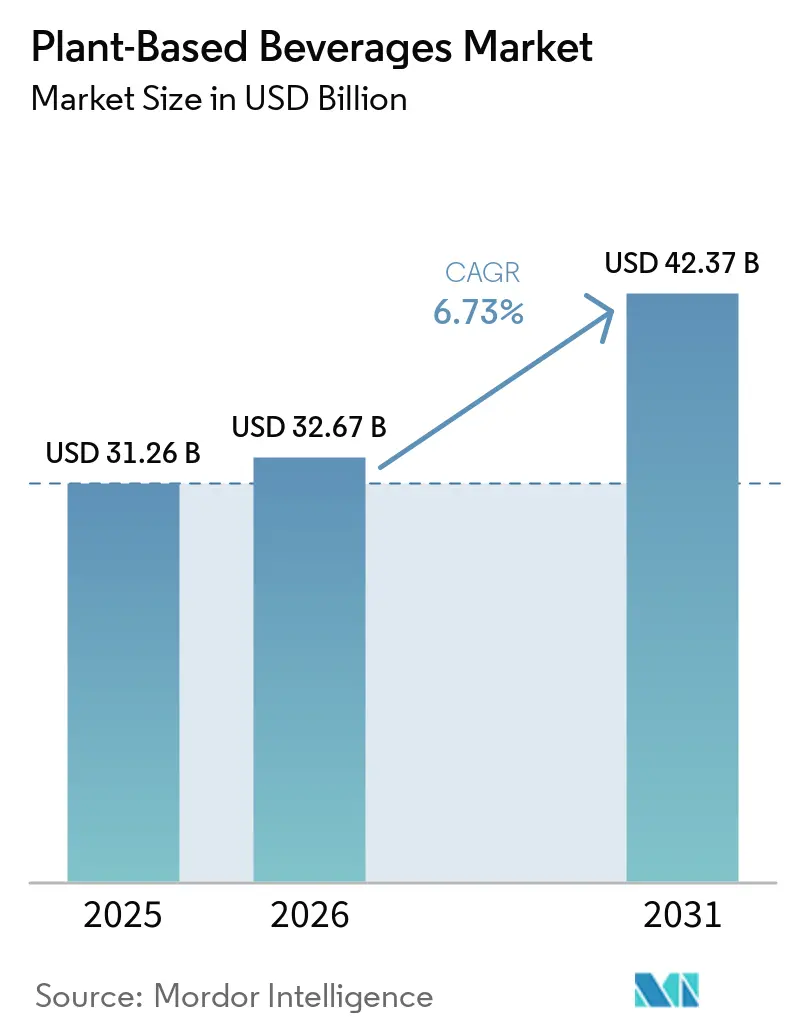
| Market Size (2026) | USD 32.67 Billion |
| Market Size (2031) | USD 42.37 Billion |
| Growth Rate (2026 - 2031) | 6.73 % |
| Fastest Growing Market | Asia-Pacific |
| Largest Market | North America |
| Market Concentration | Medium |
Major Players *Disclaimer: Major Players sorted in no particular order Image © Mordor Intelligence. Reuse requires attribution under CC BY 4.0. | |
Plant-Based Beverages Market Analysis by Mordor Intelligence
The plant-based beverages market size is projected to expand from USD 31.26 billion in 2025 and USD 32.67 billion in 2026 to USD 42.37 billion by 2031, registering a CAGR of 6.73% between 2026 and 2031. The category now serves a broader consumer base than people avoiding dairy because protein content, simple ingredients, and taste shape purchase decisions. Lactose malabsorption provides a durable source of demand, especially in Asian markets where prevalence is high. Product developers face a higher standard because consumers expect dairy-like sensory performance alongside nutrition and transparent labels. Companies are responding with protein-rich formats, fewer-ingredient products, and barista-focused offerings that can build repeat usage. Regulatory guidance in the United States and Europe has also reduced uncertainty around labeling, which supports shelf placement and product communication.
Key Report Takeaways
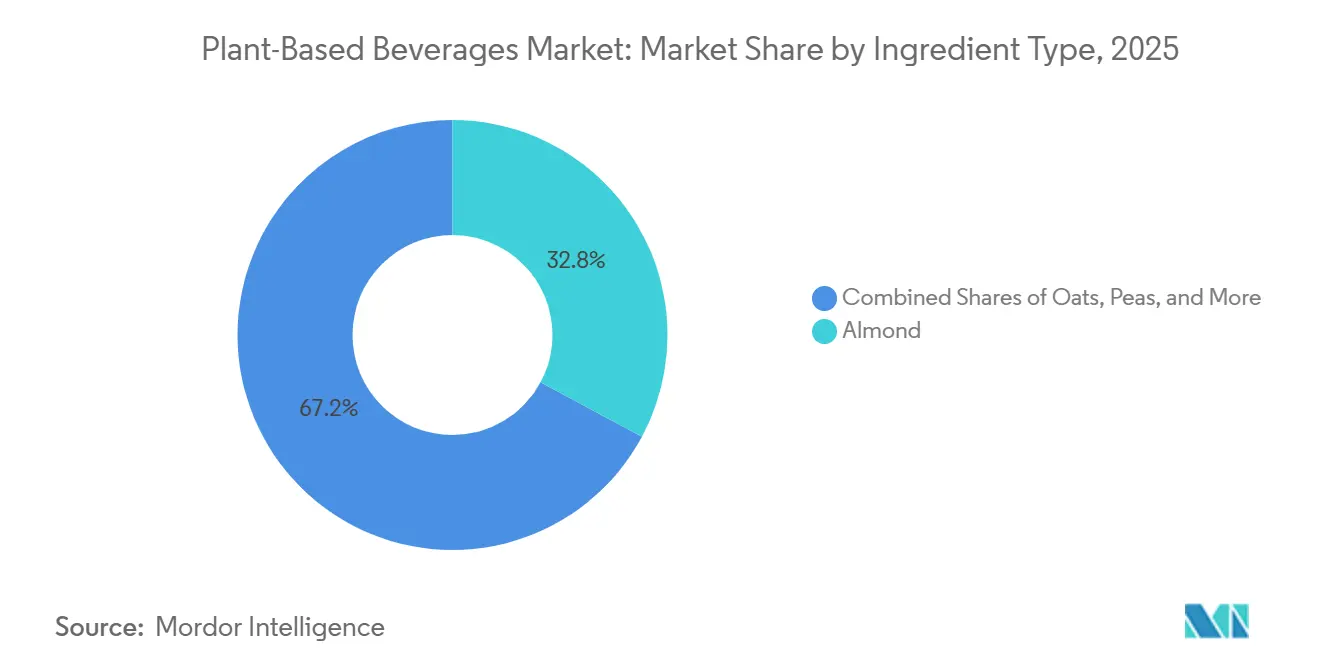
- By ingredient type, almond-based beverages held 32.84% of the plant-based beverages market share in 2025, while oat-based beverages are forecast to grow at an 8.11% CAGR through 2031.
- By category, conventional products accounted for 54.32% of the plant-based beverages market size in 2025, while organic products are expected to grow at a 7.79% CAGR through 2031.
- By flavor, flavored variants held 67.82% of plant-based beverages market share in 2025 and are forecast to expand at a 7.62% CAGR through 2031.
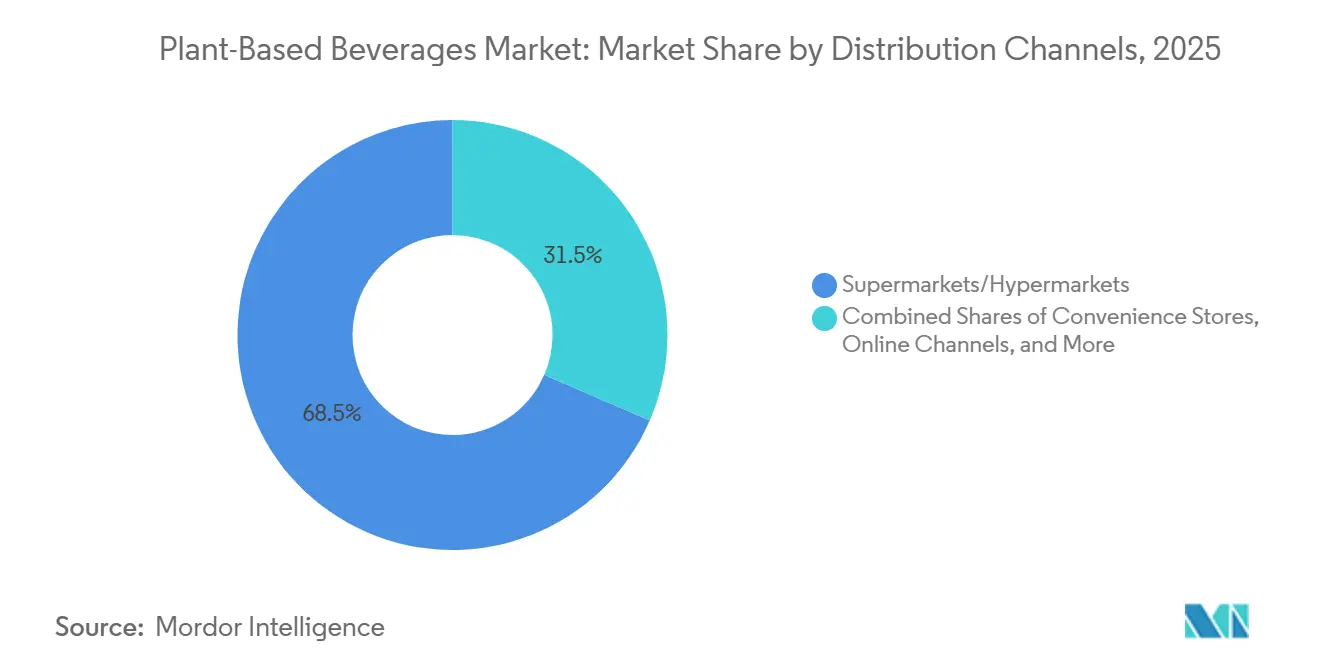
- By distribution channel, supermarkets/hypermarkets formats accounted for 68.49% of revenue in 2025, while online retail channels are projected to grow at an 8.24% CAGR through 2031.
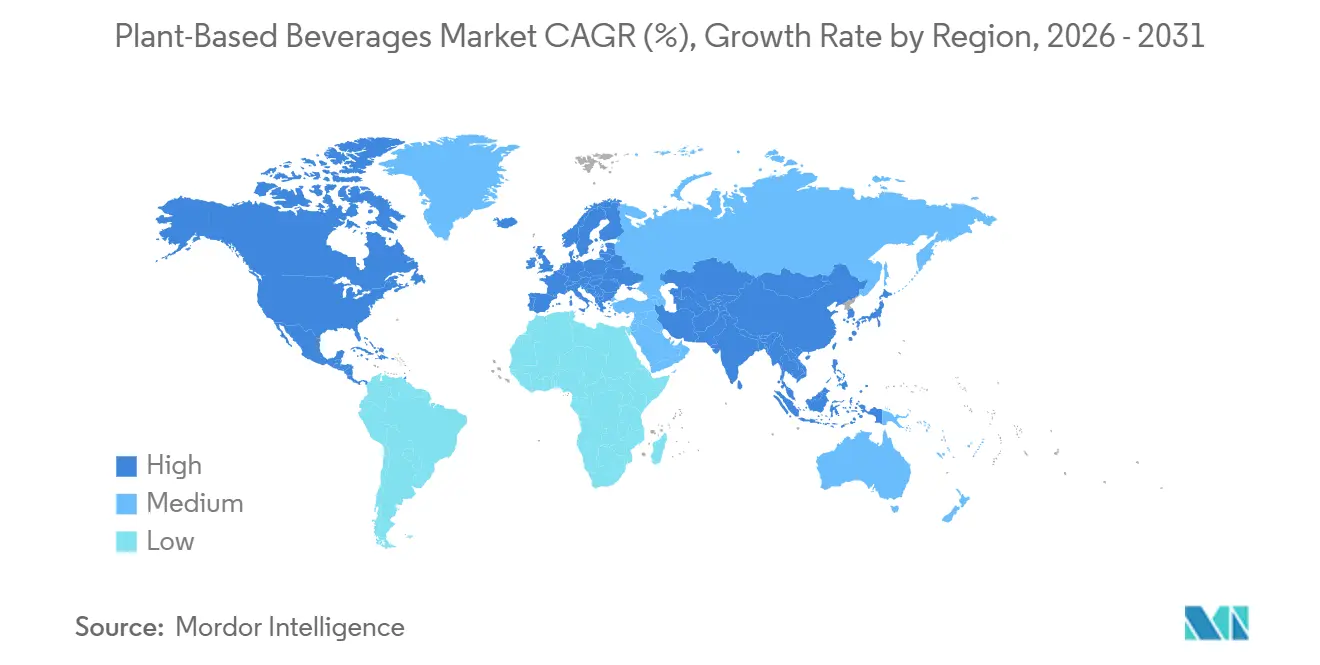
- By geography, North America held 36.57% of revenue in 2025, while Asia-Pacific is forecast to grow at a 7.35% CAGR through 2031.
Note: Market size and forecast figures in this report are generated using Mordor Intelligence’s proprietary estimation framework, updated with the latest available data and insights as of January 2026.
Market Trends and Insights
Drivers Impact Analysis of Plant-Based Beverages Market*
| Driver | (~) % Impact on CAGR Forecasts | Geographic Relevance | Impact Timeline |
|---|---|---|---|
| Growing consumer preference for plant-based diets | +1.8% | Global | Medium term (2-4 years) |
| Rising lactose intolerance and dairy sensitivity | +1.4% | Global, especially Asia-Pacific and Middle East and Africa | Long term (≥4 years) |
| Rising product innovation and premiumization | +1.1% | North America and Europe | Short term (≤2 years) |
| Strong marketing and brand investments | +0.7% | Global | Short term (≤2 years) |
| Increasing social media influence and marketing strategies | +0.6% | North America and Asia-Pacific | Medium term (2-4 years) |
| Growing demand for clean-label and organic products | +0.9% | North America and Europe | Medium term (2-4 years) |
| Source: Mordor Intelligence | |||
Growing Consumer Preference for Plant-Based Diets
Flexitarian and plant-forward eating patterns have expanded demand beyond consumers who follow vegan diets. The plant-based beverages market benefits because these consumers can choose alternatives for routine meals, coffee, and cooking rather than for dietary exclusion alone. The National Institutes of Health states that lactose malabsorption affects 68% of people worldwide and can exceed 90% in some Asian populations[1]Source: National Institute of Diabetes and Digestive and Kidney Diseases, “Definition and Facts for Lactose Intolerance,” National Institutes of Health, niddk.nih.gov. Product selection has shifted toward protein quality, ingredient transparency, and perceived sustainability. This shift gives manufacturers a reason to compete on product value rather than only on dairy substitution. The stated authorization for nutritionally equivalent alternatives in the National School Lunch Program may also widen access through school foodservice, while high-protein and lower-sugar products may appeal to consumers using weight-management treatments.
Rising Lactose Intolerance and Dairy Sensitivity
Lactose malabsorption affects two-thirds of the global adult population, according to a review that covered 89 countries and 62,910 participants. Reported prevalence ranged from 28% in Northern Europe to 70% in the Middle East and exceeded 90% in East and Southeast Asia. The plant-based beverages market therefore has a strong structural demand base in Asia-Pacific, where soy drinks already have deep cultural familiarity. Consumers in China, Japan, and Southeast Asia are also trading into oat, almond, and pea formats as incomes and refrigerated retail capacity increase. Aging can further support demand because lactase activity may decline with age, particularly in advanced economies with older populations. Casein reactions and concerns about digestive comfort broaden the functional rationale beyond lactose intolerance alone.
Rising Product Innovation and Premiumization
Premium products have become an important response as the plant-based beverages market reaches more mainstream consumers. Danone launched Silk Protein Milk in January 2026 with 13 g of complete plant protein and 3 g of fiber per serving, positioning the product against protein-focused dairy offerings. Ripple Foods launched an organic plant-based milk in January 2026 with 5 g of pea protein per serving and 5 or fewer ingredients. Oatly reported USD 240.10 million in second-quarter 2026 revenue, up 15.20% year over year, supported by Barista Edition products and wider retail availability. The company is also testing matcha, popcorn-flavored, and colorful latte formats in international markets. These actions create two clear product paths, one centered on minimal ingredients and the other on functional, flavor-led café products.
Growing Demand for Clean-Label and Organic Products
Consumers are paying closer attention to the use of gums, emulsifiers, and refined oils in plant-based beverages, as clean-label formulations continue to influence purchasing decisions. Ripple Foods plans to position its January 2026 organic launch around a simplified ingredient profile, featuring five or fewer ingredients and excluding gums and oils. Danone’s Alpro brand has also strengthened its sourcing strategy by committing to procure oats from British farms located within 80 miles of its Kettering site, supporting the annual production of 58 million liters of oat drink. This approach reinforces demand in the plant-based beverages market by aligning product development with traceability, local sourcing, and ingredient transparency. European food-information rules also support transparent front-of-pack communication, which may favor products with simpler formulations[2]Source: Plant Based Foods Association, “Colleges Are Getting a Plant-Based Upgrade with Califia Farms’ New and Innovative Dispenser Program,” Plant Based Foods Association, plantbasedfoods.org.
Restraints Impact Analysis of Plant-Based Beverages Market*
| Restraint | (~) % Impact on CAGR Forecasts | Geographic Relevance | Impact Timeline |
|---|---|---|---|
| Taste and texture limitations | -0.6% | Global | Short to Medium term (≤4 years) |
| Higher product prices compared with dairy | -0.8% | Asia-Pacific and South America | Short to Medium term (≤4 years) |
| Raw material price volatility | -0.4% | Global | Short term (≤2 years) |
| Competition from other conventional beverages | -0.3% | Asia-Pacific and South America | Medium to Long term (≥2 years) |
| Source: Mordor Intelligence | |||
Taste and Texture Limitations
Taste and texture remain major barriers to repeat purchases in the plant-based beverages market, particularly as the category matures and consumers become more discerning. The initial phase of novelty-driven trial has evolved into a more demanding purchase environment, in which consumers increasingly expect plant-based beverages to deliver sensory attributes that closely match dairy, including mouthfeel, flavor balance, and performance across usage occasions. Oat beverages can be difficult to position in cold applications because beta-glucan may create a viscosity profile that some consumers perceive as too thick, heavy, or inconsistent. Oatly has supported its commercial strategy in North America by emphasizing barista-focused products and consumer education, helping position its offerings around functionality, preparation methods, and use in coffee-based beverages. Advances in enzymatic processing and precision fermentation may help manufacturers improve texture, reduce off-notes, and enhance overall flavor performance. However, consumer perceptions often lag behind product reformulation, which can constrain near-term recovery among consumers who previously stopped buying the category due to unfavorable sensory experiences.
Higher Product Prices Compared with Dairy
Plant-based beverages often carry a higher retail price than dairy, which limits volume growth in price-sensitive markets. Within the plant-based beverages market, the gap is most significant in APAC and South America, where dairy can be domestically produced at lower cost or supported through public policy. In emerging markets, alternative milk products can sell for 2 to 4 times the per-liter price of conventional dairy. Specialized ingredients, dedicated processing equipment, cold-chain needs, and limited manufacturing scale increase unit costs. Lower volumes then restrict the scale that could lower prices, creating a difficult cycle for new entrants. Private-label products have begun narrowing the gap in parts of Europe and North America, but comparable choices remain limited in Asia-Pacific and South America.
*Our forecasts treat driver/restraint impacts as directional, not additive. The impact forecasts reflect baseline growth, mix effects, and variable interactions.
Plant-Based Beverages Market Segment Analysis
By Ingredient Type:
Almond Leads as Oats Redefine Category DynamicsOat-based beverages are the fastest-growing ingredient segment in the plant-based beverages market, with an 8.11% CAGR projected through 2031. Barista performance, consumer perceptions around almond water use, and brand investment support this pace. Oatly reported second-quarter 2026 revenue of USD 240.10 million, up 15.20% year over year, while sold volume increased 11.20% to 156.10 million liters. Almond-based beverages held the largest position in 2025 at 32.84% of the category. Their established retail presence in North America and Europe remains important, even as some consumers move toward oat and coconut products for particular occasions.
Soy beverages have regained attention from consumers seeking naturally higher protein content and fitness-oriented products. Coconut beverages continue to gain shelf presence, especially in flavored formats where the base complements tropical and indulgent profiles. The plant-based beverages industry is also seeing greater interest in pea-protein products, led by Ripple Foods’ January 2026 organic launch with 5 g of protein per serving. Pea products offer protein density comparable to soy without a top-9 allergen label. Rice and wheat products remain smaller because of lower protein density, while pistachio, pecan, barley, and chia bases are drawing interest in premium specialty products.



By Category:
Conventional Scale Anchors an Accelerating Organic Premium TierConventional products retained 54.32% of sales in 2025 because they have broad distribution and established production capacity. The organic segment is forecast to grow at a 7.79% CAGR through 2031, above the overall 6.73% rate. Their share in the plant-based beverages category is gradually narrowing as clean-label and certified-organic products attract more new households. Brands that pair certification with short ingredient lists and clear sourcing messages are better placed in premium retail and direct sales. Danone’s Silk Protein Milk launch illustrates how functional nutrition and premium positioning are being brought together in a single product.
USDA National Organic Program standards and the comparable European framework offer manufacturers a recognized credential in premium retail and institutional foodservice. South America offers potential for premium organic products because Brazil has an expanding organic agriculture sector and a growing health-conscious middle class. Urban Southeast Asian markets also provide openings for imported organic products that can command a premium. The plant-based beverages industry is unlikely to see conventional formats lose absolute volume leadership by 2031. However, the share shift toward organic and clean-label products will influence margins and product mix.
By Flavor:
Flavored Variants Drive Trade-Up and Widen the Consumption OccasionFlavored variants held 67.82% of the plant-based beverages market revenue in 2025 and are forecast to grow at a 7.62% CAGR through 2031. The same segment led both sales and growth, showing that taste has become a central purchase reason. This supports plant-based beverages market growth through higher unit prices and demand beyond direct substitution for dairy. Seasonal and limited-edition products are becoming a more regular part of range strategy. Oatly is testing vanilla oat milk, matcha oat drink, hot cocoa formats, and popcorn-flavored Barista Edition products internationally.
Plain products retained 32.18% of sales in 2025 and remain relevant for consumers who prefer simple ingredients or need neutral products for cooking. Use in soups, sauces, and savory dishes increased during 2024 and 2025, extending consumption beyond breakfast and coffee. Flavor preferences differ materially by region. Vanilla, chocolate, and caramel have broader appeal in North America and Europe. Matcha, taro, red bean, and sesame provide additional product opportunities in Asia-Pacific, where local preferences differ from Western flavor profiles.
By Distribution Channels:
Supermarkets and Hypermarkets Lead While Online Retail ExpandsSupermarkets and hypermarkets held 68.49% of plant-based beverages market revenue in 2025. Their broad physical presence gives consumers direct access to conventional, organic, flavored, and protein-focused products. These stores also support product comparisons, promotional activity, and routine household purchases. Retailer-owned products can reduce the price gap that limits adoption among value-conscious consumers. Physical retail therefore remains central to category scale, visibility, and repeat purchasing.
Online retail channels are projected to grow at an 8.24% CAGR through 2031. Digital platforms allow consumers to review ingredients, nutrition information, and product claims before purchase. They are particularly useful for premium, organic, and specialty products that require more product education. Subscription options can encourage repeat purchases among households with established preferences. Online channels also give manufacturers a direct way to test new formats and communicate product differentiation without relying entirely on store shelf space.
Geography Analysis
North America Plant-Based Beverages Market
North America held 36.57% of the plant-based beverages market size in 2025. The FDA’s January 2025 draft guidance reduces naming uncertainty for manufacturers and retailers[3]Source: U.S. Food and Drug Administration, “Plant-Based Milk and Animal Food Alternatives,” U.S. Food and Drug Administration, fda.gov. Almond beverages have faced pressure in the United States from price sensitivity and consumer movement toward oat and coconut products. The plant-based beverages market has been rebalancing through pea protein, renewed interest in soy protein, and flavored oat formats. Canada offers early-adopter demand for high-protein and whole-ingredient products, while Mexico has long-term potential because of lactose intolerance and expanding purchasing power.
APAC Plant-Based Beverages Market
Asia-Pacific is projected to grow at a 7.35% CAGR through 2031, the fastest regional rate in the plant-based beverages market. Lactose malabsorption exceeds 90% in much of East and Southeast Asia, and consumers in the region already have familiarity with soy drinks PMC. China is the regional revenue anchor, with growth concentrated in first-tier cities and Oatly’s Greater China business generating USD 30.10 million in second-quarter 2026 revenue despite stronger domestic foodservice competition. India is seeing a compliance-driven product upgrade cycle linked to FSSAI fortification guidance. Japan’s fitness culture, South Korea’s café premiumization, and Vietnam’s specialty coffee expansion add further sources of regional demand.
EMEA and South America Plant-Based Beverages Market
Europe held a strong secondary position, where established oat drink demand helped UK retail sales reach GBP 275.00 million, equal to USD 354.00 million at 2025 exchange rates, compared with GBP 155.00 million 5 years earlier. Alpro invested in Kettering to make 58.00 million liters annually using British oats sourced within 80 miles of the facility. The Court of Justice of the European Union’s October 2024 ruling supports the legal position of plant-based names under food-information rules. South America and the Middle East and Africa remain smaller markets, but Brazil’s soy infrastructure, the Middle East’s lactose intolerance levels, and halal certification requirements across the GCC create openings and a trust signal for category entry.

Competitive Landscape
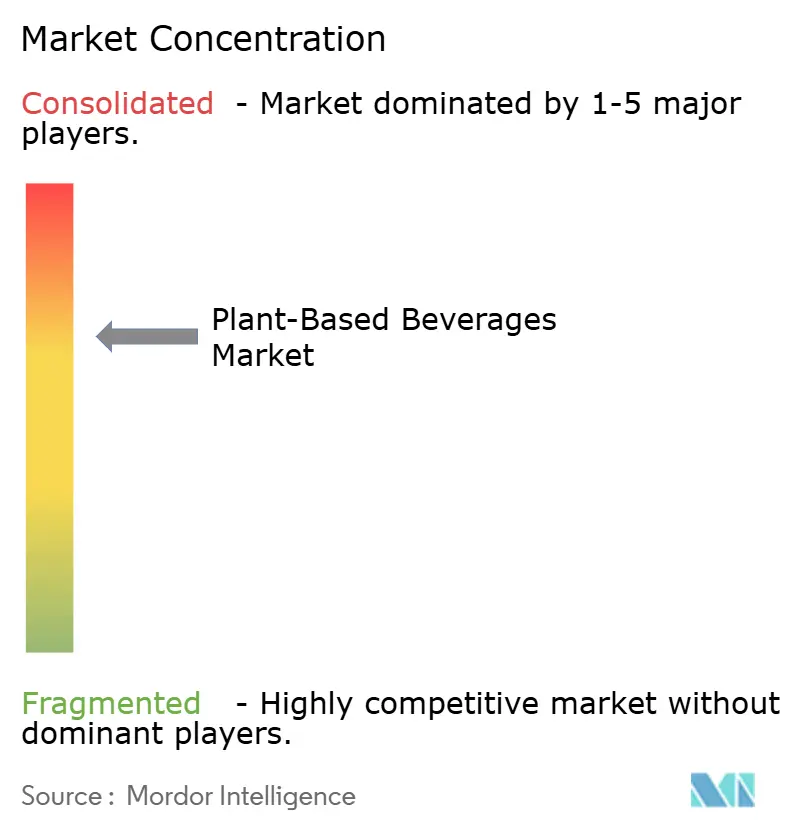
The plant-based beverages market has a moderate concentration, reflecting meaningful scale among multinational brands and strong regional specialists. Danone’s Alpro and Silk brands, Oatly, Blue Diamond Growers’ Almond Breeze, and Nestlé have broad distribution and strong recognition in North America and Europe. Vitasoy and Yili hold important positions across Asia-Pacific. Larger companies are facing competition from brands focused on organic products, ingredient transparency, and shorter formulas. MALK Organics approached USD 100.00 million in revenue with a minimal-ingredient proposition, showing that smaller brands can compete where their product story and ingredients address consumer concerns.
Refresco agreed in February 2026 to acquire SunOpta for USD 1.10 billion, which can change supply economics for mid-sized brands and private labels. SunOpta brings North American production capabilities in plant-based beverages and protein shakes, and the transaction can increase price pressure on companies that rely only on proprietary capacity. Danone agreed in March 2026 to acquire Huel and introduced Silk Protein Milk in January 2026, extending its presence in nutritionally complete and high-protein products. These moves show that large participants are extending beyond standard almond and oat offerings.
Companies are using functional premium products, institutional foodservice, and geographic distribution to improve their positions in the plant-based beverages market. Ripple Foods’ pea milk and Danone’s Silk Protein Milk focus on protein and simpler formulas. Califia Farms’ dispenser program and Oatly’s café strategy focus on frequent consumption occasions. ISO 22000, USDA organic, and EU organic certification can strengthen access to premium retail and institutional foodservice, while raising compliance costs and helping qualified companies establish buyer confidence. The strongest open areas are protein-enriched organic products using bases beyond almond and oat, including pea, pistachio, and fava bean, as well as on-trade dispensing.
Plant-Based Beverages Industry Leaders
Danone S.A.
Oatly Group AB
The Hain Celestial Group, Inc.
Nestlé S.A.
Chobani LLC
- *Disclaimer: Major Players sorted in no particular order
Plant-Based Beverages Market Companies Covered in this Report
- Danone S.A.
- Blue Diamond Growers
- Nestlé S.A.
- Oatly Group AB
- Vitasoy International Holdings Limited
- The Hain Celestial Group, Inc.
- Califia Farms, LLC
- SunOpta Inc.
- Noumi Limited
- Ripple Foods PBC
- The Campbell’s Company
- PepsiCo, Inc.
- The Coca-Cola Company
- Kikkoman Corporation
- Harmless Harvest, LLC
- Minor Figures
- Chobani LLC
- Yili Industrial Group Co., Ltd.
- Freedom Foods Group Limited
- Pacific Foods of Oregon, LLC

Recent Industry Developments in Plant-Based Beverages Market
- January 2026: Ripple Foods launched its new Ripple Organic Plant-Based Milk in Original and Vanilla variants, offering 5 grams of plant-based protein per serving and up to 2.5 times more protein than almond milk. The product is made with organic pea protein, contains five ingredients or fewer, and is free from the top nine allergens.
- January 2026: Danone’s Silk brand launched Silk Protein, a refrigerated plant-based milk containing 13 g of complete plant protein per serving, along with 3 g of fiber, calcium, and vitamin D. Available in Original and Chocolate variants, the product contains 50% less sugar than regular dairy milk and no artificial sweeteners, highlighting the growing focus on high-protein, lower-sugar, and nutritionally enhanced plant-based milk formulations.
- May 2025: Eclipse Foods launched its first plant-based milk, Non-Dairy Whole Milk, formulated with isolated pea and chickpea proteins to replicate the molecular structure, taste, texture, color, and functionality of conventional whole milk. The product is designed to be neutral-flavored, foamable, stable, and resistant to settling.


Global Plant-Based Beverages Market Report Scope
| Soy |
| Coconut |
| Almond |
| Oats |
| Peas |
| Rice |
| Wheat |
| Others |
| Conventional |
| Organic |
| Plain |
| Flavored |
| Supermarkets/Hypermarkets |
| Convenience/Grocery Stores |
| Online Retail Channels |
| Other Distribution Channels |
| North America | United States |
| Canada | |
| Mexico | |
| Rest of North America | |
| Europe | Germany |
| United Kingdom | |
| France | |
| Italy | |
| Spain | |
| Netherlands | |
| Sweden | |
| Poland | |
| Belgium | |
| Rest of Europe | |
| Asia-Pacific | China |
| India | |
| Japan | |
| Australia | |
| South Korea | |
| Vietnam | |
| Indonesia | |
| Rest of Asia-Pacific | |
| South America | Brazil |
| Argentina | |
| Chile | |
| Peru | |
| Colombia | |
| Rest of South America | |
| Middle East and Africa | United Arab Emirates |
| Saudi Arabia | |
| South Africa | |
| Nigeria | |
| Rest of Middle East and Africa |
| By Ingredient | Soy | |
| Coconut | ||
| Almond | ||
| Oats | ||
| Peas | ||
| Rice | ||
| Wheat | ||
| Others | ||
| By Category | Conventional | |
| Organic | ||
| By Flavor | Plain | |
| Flavored | ||
| By Distribution Channels | Supermarkets/Hypermarkets | |
| Convenience/Grocery Stores | ||
| Online Retail Channels | ||
| Other Distribution Channels | ||
| By Geography | North America | United States |
| Canada | ||
| Mexico | ||
| Rest of North America | ||
| Europe | Germany | |
| United Kingdom | ||
| France | ||
| Italy | ||
| Spain | ||
| Netherlands | ||
| Sweden | ||
| Poland | ||
| Belgium | ||
| Rest of Europe | ||
| Asia-Pacific | China | |
| India | ||
| Japan | ||
| Australia | ||
| South Korea | ||
| Vietnam | ||
| Indonesia | ||
| Rest of Asia-Pacific | ||
| South America | Brazil | |
| Argentina | ||
| Chile | ||
| Peru | ||
| Colombia | ||
| Rest of South America | ||
| Middle East and Africa | United Arab Emirates | |
| Saudi Arabia | ||
| South Africa | ||
| Nigeria | ||
| Rest of Middle East and Africa | ||


Key Questions Answered in the Report
What is the projected value of the plant-based beverages market by 2031?
The category is forecast to reach USD 42.37 billion by 2031, growing at a 6.73% CAGR from 2026.
Which ingredient base is growing fastest through 2031?
Oat-based beverages are projected to grow at an 8.11% CAGR, supported by café use and brand investment.
Which sales channel is expanding fastest?
On-trade channels are forecast to grow at an 8.24% CAGR through 2031 as cafés and institutional sites introduce products to more consumers.
Which region is expected to grow fastest?
Asia-Pacific is forecast to expand at a 7.35% CAGR through 2031, supported by high lactose malabsorption prevalence and established soy-drink consumption.
Page last updated on:





