
Paresthesia Treatment Market Size and Share
Market Overview
| Study Period | 2021 - 2032 |
|---|---|
| Market Size (2027) | USD 6.41 Billion |
| Market Size (2032) | USD 7.78 Billion |
| Growth Rate (2027 - 2032) | 3.96 % |
| Fastest Growing Market | Asia-Pacific |
| Largest Market | North America |
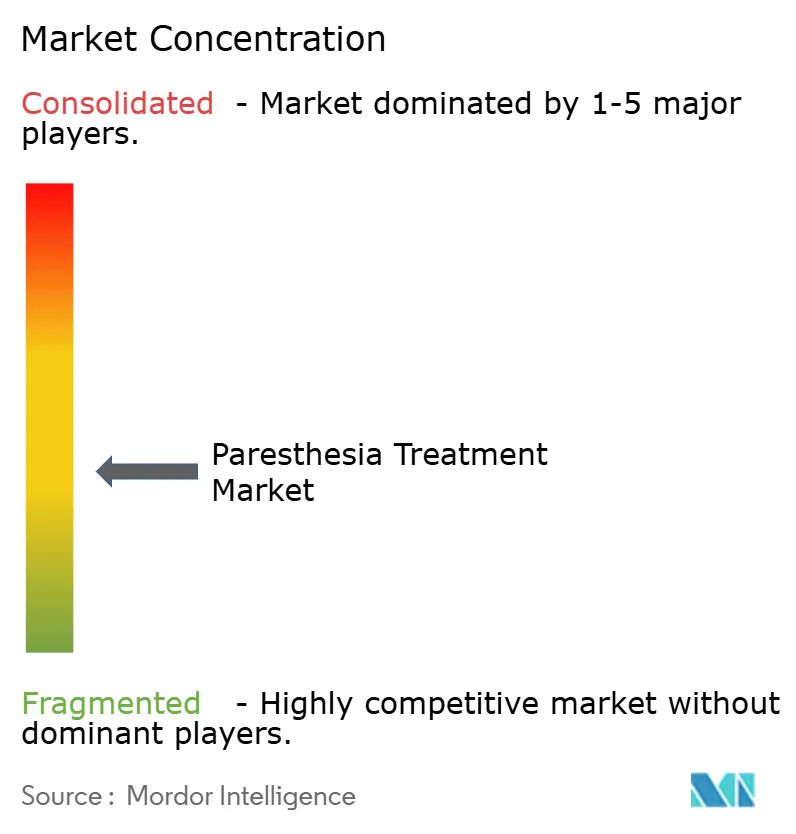
| Market Concentration | Medium |
Major Players *Disclaimer: Major Players sorted in no particular order Image © Mordor Intelligence. Reuse requires attribution under CC BY 4.0. | |
Paresthesia Treatment Market Analysis by Mordor Intelligence
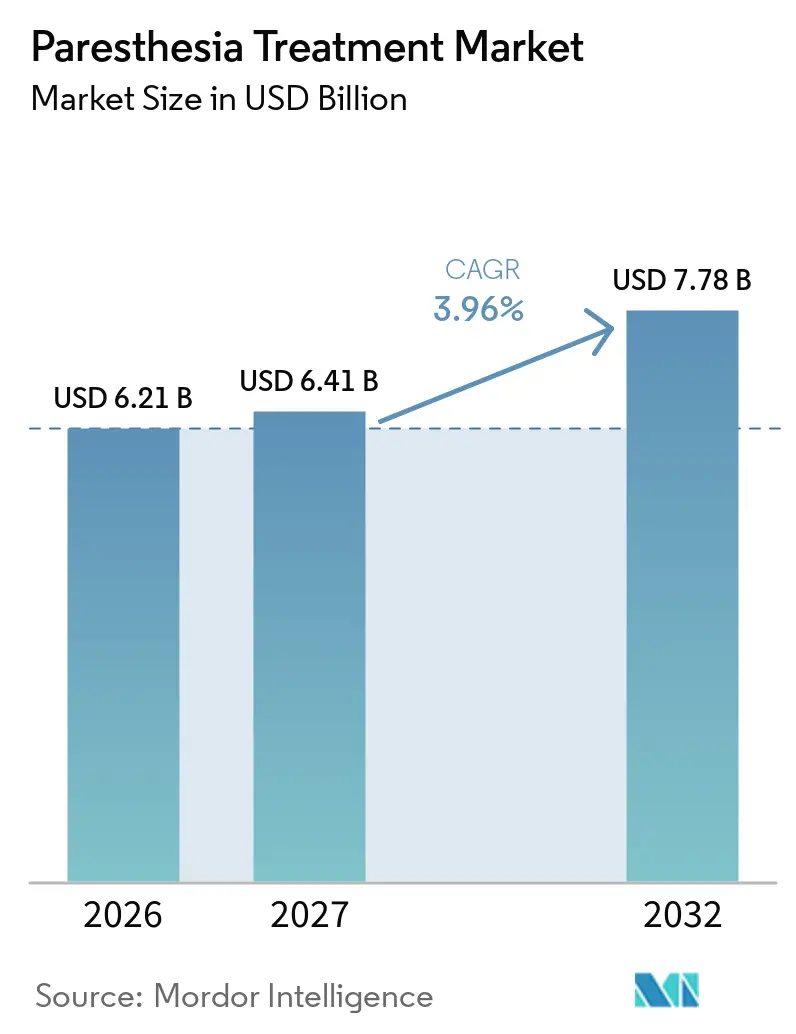
The Paresthesia Treatment Market size is projected to expand from USD 6.21 billion in 2026 and USD 6.41 billion in 2027 to USD 7.78 billion by 2032, registering a CAGR of 3.96% between 2027 and 2032.
Demand is supported by chronic pain populations, while underdiagnosis and unresolved treatment needs continue to shape care pathways. Diabetes provides a durable demand base, with 589 million adults living with the disease in 2024 and a projected 853 million by 2050. Neurological conditions affect more than 3 billion people worldwide, and diabetic neuropathy is among the leading contributors to disability burden. Physicians, payers, and device developers are placing greater emphasis on treatments that improve access, reduce reliance on opioids, and support longer-term management. The paresthesia treatment market therefore depends on whether broader diagnosis and specialty care can keep pace with rising clinical demand.
Key Report Takeaways
- By type, acute paresthesia held 52.24% of the paresthesia treatment market share in 2026, while chronic paresthesia is forecast to grow at a 4.22% CAGR through 2032.
- By treatment, medications accounted for 39.63% of the paresthesia treatment market in 2026, while physical therapy is expected to expand at a 5.11% CAGR through 2032.
- By indication and cause, diabetes held 38.33% of the paresthesia treatment market share in 2026, while nerve injury is forecast to grow at a 4.55% CAGR through 2032.
- By geography, North America held a 47.62% share in 2026, while Asia-Pacific is projected to expand at a 6.24% CAGR through 2032.
Note: Market numbers in this report are based on Mordor Intelligence's proprietary estimation framework, which combines nine months of actuals with Q4 projections for base year 2026.
Market Trends and Insights
Drivers Impact Analysis of Paresthesia Treatment Market*
| Driver | (~) % Impact on CAGR Forecast | Geographic Relevance | Impact Timeline |
|---|---|---|---|
| Rising Burden of Diabetes, Cancer, and Neurological Disorders | +1.2% | Global, with strongest concentration in South and Southeast Asia and North America | Long term (≥ 4 years) |
| Aging Population and Higher Prevalence of Nerve Compression | +0.7% | Asia-Pacific core markets, North America, and Europe | Long term (≥ 4 years) |
| Shift Toward Non-Opioid and Targeted Neuropathic Pain Therapies | +0.9% | North America, Europe, and Japan | Medium term (2-4 years) |
| Expansion of Neurological Diagnosis and Specialist Care Infrastructure | +0.5% | Asia-Pacific, Middle East and Africa, and South America | Long term (≥ 4 years) |
| Paresthesia-Independent Neuromodulation for Patients Intolerant of Conventional Stimulation | +0.8% | North America, Germany, and the United Kingdom | Medium term (2-4 years) |
| Remote Programming and Digitally Enabled Follow-Up for Chronic Neuropathic Symptoms | +0.4% | North America, Australia, and South Korea | Short term (≤ 2 years) |
| Source: Mordor Intelligence | |||
Rising Burden of Diabetes, Cancer, Neurological Disorders, and Aging
Diabetic neuropathy is creating sustained demand across the paresthesia treatment market. The IDF reported 589 million adults with diabetes in 2024, with a concentration among people aged 65 to 79 years, where prevalence reached 23.7%.[1]A pooled analysis of 155 studies found diabetic peripheral neuropathy in 36% of people with diabetes globally and in 39% of cohorts in developing countries.[2] Cancer treatment also adds a meaningful need for care because chemotherapy can cause persistent peripheral neuropathy. ASCO identifies duloxetine as the recommended medicine for established painful chemotherapy-induced peripheral neuropathy, while recognizing the limits of available treatment options. The paresthesia treatment market also benefits from aging, which increases exposure to diabetes, nerve compression, vascular insufficiency, and vitamin B12 deficiency.
Shift Toward Non-Opioid and Targeted Neuropathic Pain Therapies
Clinical and regulatory priorities are moving treatment away from opioid-centered pain care. The FDA approved Vertex Pharmaceuticals’ Journavx, or suzetrigine, in January 2025 as an oral non-opioid treatment for moderate to severe acute pain.[3] Vertex is also studying the medicine in painful peripheral neuropathic pain, which may extend its relevance beyond acute pain. ADA guidance supports care that addresses pain, sleep, and mood together in diabetic peripheral neuropathy, making multidisciplinary treatment more important. Research published in 2025 reported that opioids, including tramadol and tapentadol, are discouraged as first- or second-line treatments for diabetic neuropathic pain. This change supports the paresthesia treatment market by widening the role of medicines, rehabilitation, and targeted interventions.
Specialist Infrastructure and Paresthesia-Independent Neuromodulation
Specialty diagnosis and treatment capacity are becoming more important as health systems identify neurological disorders earlier. The WHO reported that fewer than 1 in 3 countries had a national policy addressing neurological disorders in 2025. This gap points to a need for more specialist services in emerging healthcare systems. Paresthesia-free spinal cord stimulation also addresses patients who cannot tolerate conventional stimulation sensations. A review of spinal cord stimulation literature noted that only 5% of eligible patients receive the therapy and discussed the difficulty of maintaining access and long-term benefit. These systems, together with remote programming, can support follow-up outside hospital settings and create a stronger role for specialty clinics in the paresthesia treatment market.
Care Models for Chronic Neuropathic Symptoms
Remote follow-up can help clinicians manage chronic symptoms that require ongoing adjustment. Abbott’s NeuroSphere Virtual Clinic enables remote programming for spinal cord stimulation patients. This approach can reduce the need for repeated in-person programming visits when appropriate. Abbott reported at NANS 2026 that pain-related healthcare visits among 16,846 spinal cord stimulation patients declined from a mean of 7.5 at baseline to 1.9 after 5 years. Care delivery is also becoming more multidisciplinary as medication, rehabilitation, psychological support, and sleep care are coordinated for people with chronic neuropathic pain. The paresthesia treatment market is likely to reward providers that can link these services without fragmenting care.
Restraints Impact Analysis of Paresthesia Treatment Market*
| Restraint | (~) % Impact on CAGR Forecast | Geographic Relevance | Impact Timeline |
|---|---|---|---|
| Limited Long-Term Efficacy and Treatment-Related Adverse Effects | -0.6% | Global | Medium term (2-4 years) |
| High Procedural Costs, Reimbursement Gaps, and Regulatory Complexity | -0.8% | Asia-Pacific excluding Japan and South Korea, Middle East and Africa, and South America | Long term (≥ 4 years) |
| Symptom Heterogeneity Obscures Diagnosis and Treatment Attribution | -0.5% | Global, with a strong primary care effect in low-resource settings | Long term (≥ 4 years) |
| Aversion to Device-Induced Tingling Limits Conventional Stimulation Adoption | -0.3% | North America and Europe | Short term (≤ 2 years) |
| Source: Mordor Intelligence | |||
Limited Long-Term Efficacy, Adverse Effects, and Diagnostic Uncertainty
First-line medicines do not provide adequate pain control for every patient. A 2025 clinical review described the continuing limits of pregabalin, duloxetine, amitriptyline, and other established options for diabetic peripheral neuropathy. Sedation, dizziness, peripheral edema, weight gain, and dependence concerns can limit use of gabapentinoids, particularly among older patients with several medicines. Symptoms may result from diabetes, demyelination, chemotherapy, nerve injury, or other causes, making diagnosis and treatment selection more difficult. This uncertainty can delay care and slow uptake across the paresthesia treatment market.
Procedural Costs, Reimbursement Gaps, and Conventional Stimulation Tolerance
High procedural costs remain a barrier to advanced neuromodulation. The spinal cord stimulation review reported that access is limited by cost, referral patterns, and reimbursement structures rather than patient preference alone. Implantable systems can exceed USD 30,000 per procedure, restricting use where coverage is limited. Different registration pathways across ASEAN markets and EU medical device requirements also extend launch planning and compliance work. Conventional stimulation may create uncomfortable tingling for some patients, so closed-loop and paresthesia-free systems must show clear value before access can widen.
*Our forecasts treat driver/restraint impacts as directional, not additive. The impact forecasts reflect baseline growth, mix effects, and variable interactions.
Paresthesia Treatment Market Segment Analysis
By Type:
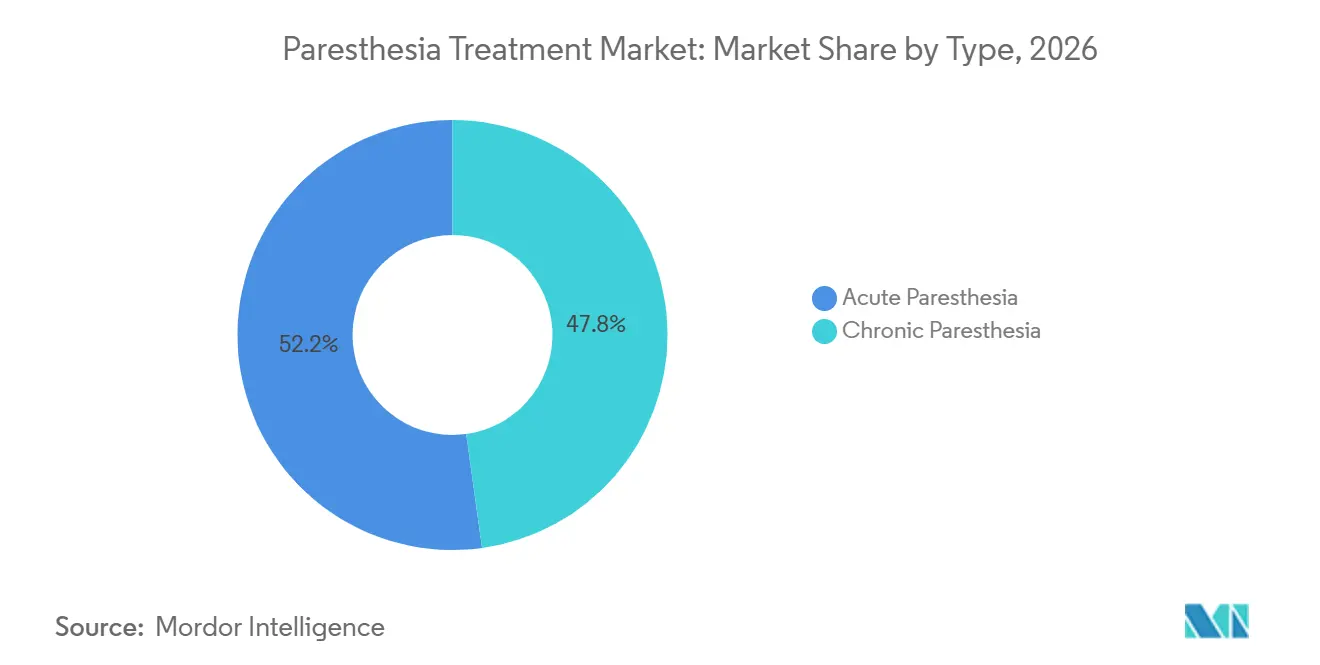
Chronic Paresthesia Expands Through More Complex Care NeedsAcute paresthesia held 52.24% of the market share for paresthesia treatment in 2026. Its leading position reflects higher prevalence and an accessible pathway that often begins with identifying the cause and using first-line medication. Acute symptoms can resolve when the underlying condition is treated, which supports prescription volume in routine care. Chronic paresthesia is forecasted to grow at a 4.22% CAGR from 2027 to 2032. Diabetes, multiple sclerosis, and chemotherapy-related neuropathy can create persistent symptoms that require longer care pathways. The chronic segment therefore has a greater need for coordinated specialty care.
Treatment-induced neuropathy of diabetes can also add to chronic case volume when glucose control changes rapidly. The clinical evidence showed that this complication occurred in up to 10.9% of patients when HbA1c declined by at least 2% within 3 months. The risk exceeded 80% when the decline was greater than 4%, which shows why treatment pathways must account for more than disease progression. The FDA’s 2024 guidance for chemotherapy-induced peripheral neuropathy sets clearer development expectations for prevention and treatment products.
By Treatment:
Physical Therapy Builds on a Medication-Led BaseMedications accounted for 39.63% of the paresthesia treatment market size in 2026. Pregabalin and duloxetine remain widely used because they are available as generics and have approvals across neuropathic pain conditions. Physical therapy is expected to grow at 5.11% CAGR through 2032, the fastest rate in this treatment category. Exercise-based care and neurodynamic interventions are being used to support nerve function and sensory recovery. Medication use will remain central, but treatment plans are becoming less dependent on a single drug class.
Surgery and nerve blocks remain clinically separate options that may be underused in targeted populations. A 2025 study of modified nerve decompression with nerve growth factor injection reported better nerve conduction, pain, and sensory outcomes than conventional surgical decompression. Ultrasound-guided nerve blocks can improve precision by directing treatment toward relevant nerve structures. TENS also has a place as a non-opioid adjunct in chemotherapy-induced peripheral neuropathy care.
By Indication and Cause:
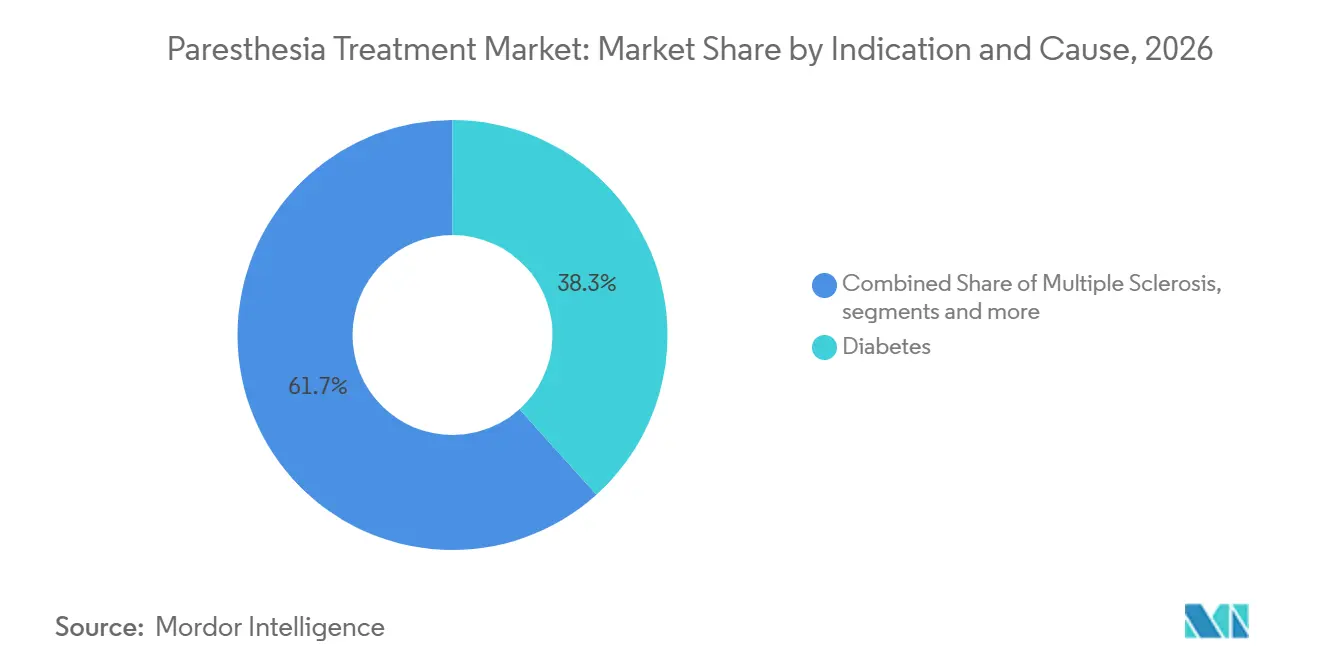
Diabetes Leads While Nerve Injury AdvancesDiabetes held 38.33% of the paresthesia treatment market share in 2026. Its position is consistent with the 589 million adults living with diabetes in 2024 and the high prevalence of diabetic peripheral neuropathy. Nerve injury is anticipated to grow at a 4.55% CAGR from 2027 to 2032, making it the fastest-growing indication. Surgical, traumatic, and occupational nerve trauma often requires a more targeted approach than symptom control alone. Multiple sclerosis and stroke also represent chronic populations where paresthesia is common.
The treatment approach for nerve injury is increasingly differentiated. A 2025 Bioelectronic Medicine study reported that the PeriPulse disposable neurostimulator supported safe sensory recovery and demonstrated feasibility for a randomized trial after peripheral nerve injury. For diabetic neuropathy, alpha-lipoic acid continues to be evaluated as a possible disease-modifying option, although durable benefit remains uncertain. The variety of causes means the paresthesia treatment market needs products suited to distinct clinical pathways.

Geography Analysis
North America
North America held 47.62% of the paresthesia treatment market share in 2026. Early adoption of neuromodulation devices, structured reimbursement for interventional neuropathic pain care, and a dense network of specialist pain centers support this position. The FDA approved Medtronic’s Inceptiv closed-loop spinal cord stimulator in April 2024 and Vertex’s Journavx as a non-opioid acute pain therapy in January 2025. Abbott’s January 2026 prone MRI compatibility approval across its neuromodulation portfolio improved imaging access for device users. Eli Lilly is recruiting patients for the decentralized Phase 2 LY4065967 study in diabetic peripheral neuropathic pain, reinforcing the region’s role in testing new pharmacology.
Asia-Pacific
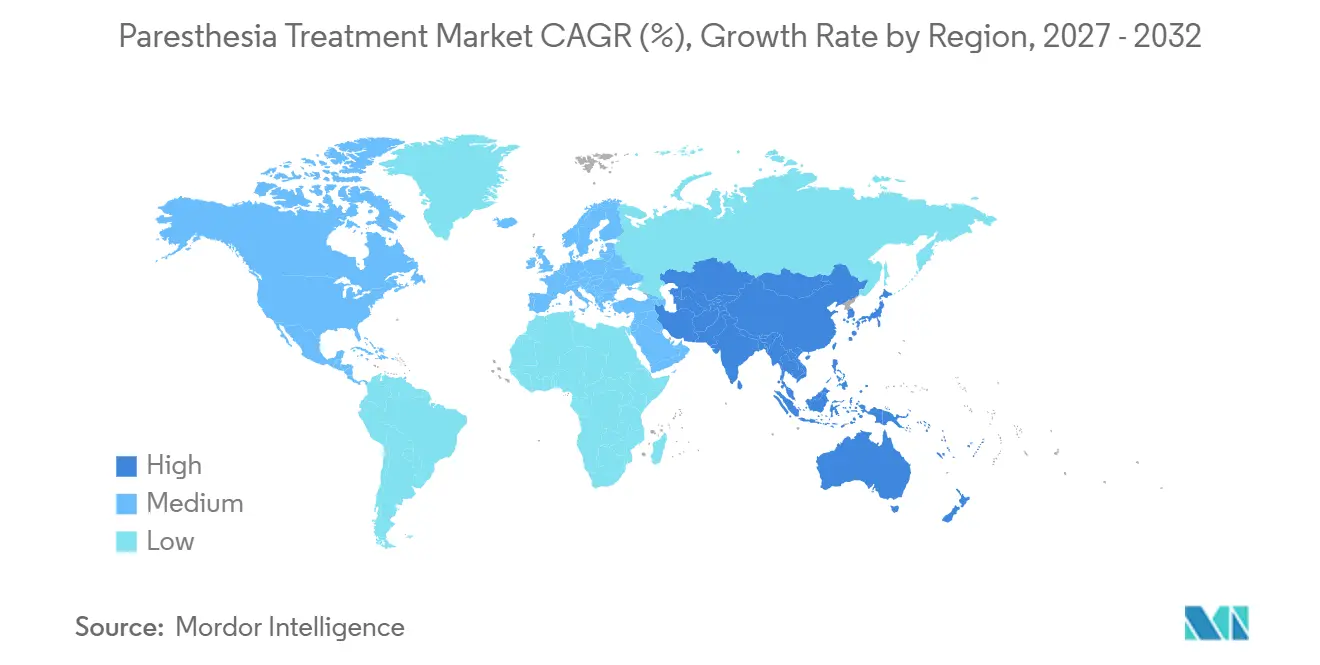
Asia-Pacific is forecasted to expand at a 6.24% CAGR through 2032, making it the fastest-growing geography in the paresthesia treatment market. Diabetes incidence, diabetic peripheral neuropathy prevalence, and expanding tertiary care capacity support growth across the region. A pooled analysis found diabetic peripheral neuropathy in 36% of people with diabetes globally and in 39% of developing-country cohorts, creating a large potential patient base in South and Southeast Asia. China approved HSK16149 for adult painful diabetic peripheral neuropathy in May 2024, while Japan’s guidelines include mirogabalin as a first-line option alongside pregabalin. India’s growing tertiary hospital network can absorb more diagnoses, but rural neurologist shortages continue to delay access outside large urban centers.
Europe, Middle East and Africa, and South America
Europe is moving toward more etiology-specific neuropathic pain care as guidelines refine the role of medicines and noninvasive neuromodulation. A 2025 NeuPSIG review covering 313 double-blind trials and 48,789 adults recommended TCAs, SNRIs, and α2δ ligands as first-line pharmacological options and placed tramadol in third-line treatment. Germany’s October 2025 guidance reinforced individualized management across acute and chronic neuropathy subtypes. In the Middle East and Africa, a 2026 consensus from 12 specialists across 6 GCC countries supported annual diabetic peripheral neuropathy screening and identified restricted access to recommended therapies as a persistent barrier. In South America, a University of São Paulo study completed in May 2025 assessed photobiomodulation and therapeutic ultrasound for people with type 2 diabetes, indicating interest in accessible nonpharmacological treatment options.
Competitive Landscape
The paresthesia treatment market is moderately fragmented in established pharmaceutical therapies, where generic pregabalin and gabapentin have reduced pricing power. Premium neuromodulation devices are becoming more concentrated as acquisitions bring specialized technology into larger portfolios. Globus Medical completed its USD 250 million acquisition of Nevro in April 2025. The transaction added a spinal cord stimulation business to Globus Medical’s portfolio. Vertex entered neuropathic pain development from its acute-pain base after FDA approval of Journavx in January 2025.
Device companies are focusing on systems that combine closed-loop sensing, remote programming, and ongoing clinical support. Medtronic’s Inceptiv platform automatically adjusts stimulation using signals from the spinal cord. Abbott’s January 2026 MRI compatibility approval improves imaging access for people using its neuromodulation systems. The paresthesia treatment market may therefore favor companies that can provide clinical evidence, device support, and follow-up services together.
Noninvasive and peripheral nerve stimulation approaches can widen the competitive field beyond spinal cord stimulation. The research referenced a magnetic peripheral nerve stimulation device for painful diabetic peripheral neuropathy, but its underlying source does not meet the source criteria and is not retained here. Large companies also have an advantage in meeting clinical investigation, safety, and regulatory requirements for advanced devices. Access barriers leave room for companies that can offer clinically appropriate treatment at lower procedural cost. Pharmaceutical companies retain an important role because many patients begin care with medicines. The paresthesia treatment industry remains shaped by both broad-access drug treatment and specialized device innovation.
Paresthesia Treatment Industry Leaders
-
Pfizer Inc.
-
Eli Lilly and Company
-
Teva Pharmaceutical Industries Ltd.
-
Abbott Laboratories
-
Medtronic plc
- *Disclaimer: Major Players sorted in no particular order
Paresthesia Treatment Market Companies Covered in this Report
- Abbott Laboratories
- Abbvie
- Astellas Pharma
- AstraZeneca
- Avanos Medical
- Axogen, Inc.
- Bayer
- Boston Scientific
- Eli Lilly and Company
- GlaxoSmithKline
- Grünenthal GmbH
- Johnson & Johnson
- LivaNova
- Medtronic
- Merck
- Nevro
- Novartis
- Pfizer
- Sanofi
- Teva Pharmaceutical Industries
Recent Industry Developments in Paresthesia Treatment Market
- July 2026: Medtronic formally launched ViaVerte, a basivertebral nerve ablation (BVNA) system for chronic lower-back pain, at the 2026 ASPN meeting in Miami following FDA clearance in March 2026; the launch advances Medtronic's stated strategy to build the broadest non-opioid pain therapy portfolio, supported by a March 2026 distribution agreement with Merit Medical.
- May 2026: Medtronic announced a USD 650 million agreement to acquire SPR Therapeutics, a leader in percutaneous peripheral nerve stimulation for chronic pain, further broadening its neuromodulation portfolio beyond spinal cord stimulation and into a segment with growing reimbursement support.
- February 2026: Eli Lilly began recruiting for its Phase 2 study (NCT07285018) evaluating LY4065967 for diabetic peripheral neuropathic pain under its Chronic Pain Master Protocol, a decentralized trial architecture designed to accelerate candidate development timelines across multiple chronic pain indications.
Global Paresthesia Treatment Market Report Scope
According to the report’s scope, the paresthesia treatment market refers to therapies and medical products aimed at managing abnormal skin sensations such as tingling, burning, or numbness, often linked to nerve damage, diabetes, multiple sclerosis, or chemotherapy side effects. It includes pharmacological treatments, physical therapy, neuromodulation devices, and lifestyle interventions designed to relieve symptoms and improve patient quality of life.
The paresthesia treatment market is segmented into type, treatment, indication and cause, and geography. By type, the market is segmented into acute paresthesia and chronic paresthesia. By treatment, the market is segmented into medications, physical therapy, surgery, nerve blocks, and transcutaneous electrical nerve stimulation. By indication and cause, the market is segmented into diabetes, multiple sclerosis, stroke, nerve injury, chemotherapy, and other indications and causes. By geography, the market is segmented into North America, Europe, Asia-Pacific, the Middle East and Africa, and South America. The report also covers the estimated market sizes and trends for 17 countries across major regions globally. The report offers values (USD) for all the above segments.
Segmentation Overview
| Acute Paresthesia |
| Chronic Paresthesia |
| Medications |
| Physical Therapy |
| Surgery |
| Nerve Blocks |
| Transcutaneous Electrical Nerve Stimulation |
| Diabetes |
| Multiple Sclerosis |
| Stroke |
| Nerve Injury |
| Chemotherapy |
| Other Indications and Causes |
| North America | United States |
| Canada | |
| Mexico | |
| Europe | Germany |
| United Kingdom | |
| France | |
| Italy | |
| Spain | |
| Rest of Europe | |
| Asia-Pacific | China |
| Japan | |
| India | |
| Australia | |
| South Korea | |
| Rest of Asia-Pacific | |
| Middle East and Africa | GCC |
| South Africa | |
| Rest of Middle East and Africa | |
| South America | Brazil |
| Argentina | |
| Rest of South America |
| By Type | Acute Paresthesia | |
| Chronic Paresthesia | ||
| By Treatment | Medications | |
| Physical Therapy | ||
| Surgery | ||
| Nerve Blocks | ||
| Transcutaneous Electrical Nerve Stimulation | ||
| By Indication and Cause | Diabetes | |
| Multiple Sclerosis | ||
| Stroke | ||
| Nerve Injury | ||
| Chemotherapy | ||
| Other Indications and Causes | ||
| By Geography | North America | United States |
| Canada | ||
| Mexico | ||
| Europe | Germany | |
| United Kingdom | ||
| France | ||
| Italy | ||
| Spain | ||
| Rest of Europe | ||
| Asia-Pacific | China | |
| Japan | ||
| India | ||
| Australia | ||
| South Korea | ||
| Rest of Asia-Pacific | ||
| Middle East and Africa | GCC | |
| South Africa | ||
| Rest of Middle East and Africa | ||
| South America | Brazil | |
| Argentina | ||
| Rest of South America | ||
Key Questions Answered in the Report
What is the paresthesia treatment market size?
The paresthesia treatment market is expected to increase from USD 6.21 billion in 2026 to USD 6.41 billion in 2027, and to reach USD 7.78 billion by 2032 at a 3.96% CAGR.
Which treatment category is growing fastest?
Physical therapy is forecasted to grow at a 5.11% CAGR through 2032, supported by a wider use of rehabilitation within multimodal care.
What is driving demand for paresthesia treatment?
The rising prevalence of diabetes, neurological disorders, cancer treatments, and an aging population is increasing demand for neuropathic symptom management, including diagnosis, medications, rehabilitation, and specialist interventions.
Which region is growing fastest for paresthesia treatment?
Asia-Pacific is projected to grow at a 6.24% CAGR through 2032, supported by diabetes prevalence and improving hospital infrastructure.