
Otoplasty Market Size and Share
Market Overview
| Study Period | 2021 - 2032 |
|---|---|
| Market Size (2027) | USD 0.99 Billion |
| Market Size (2032) | USD 1.35 Billion |
| Growth Rate (2027 - 2032) | 6.40 % |
| Fastest Growing Market | Asia-Pacific |
| Largest Market | North America |
| Market Concentration | Medium |
Major Players *Disclaimer: Major Players sorted in no particular order Image © Mordor Intelligence. Reuse requires attribution under CC BY 4.0. | |
Otoplasty Market Analysis by Mordor Intelligence
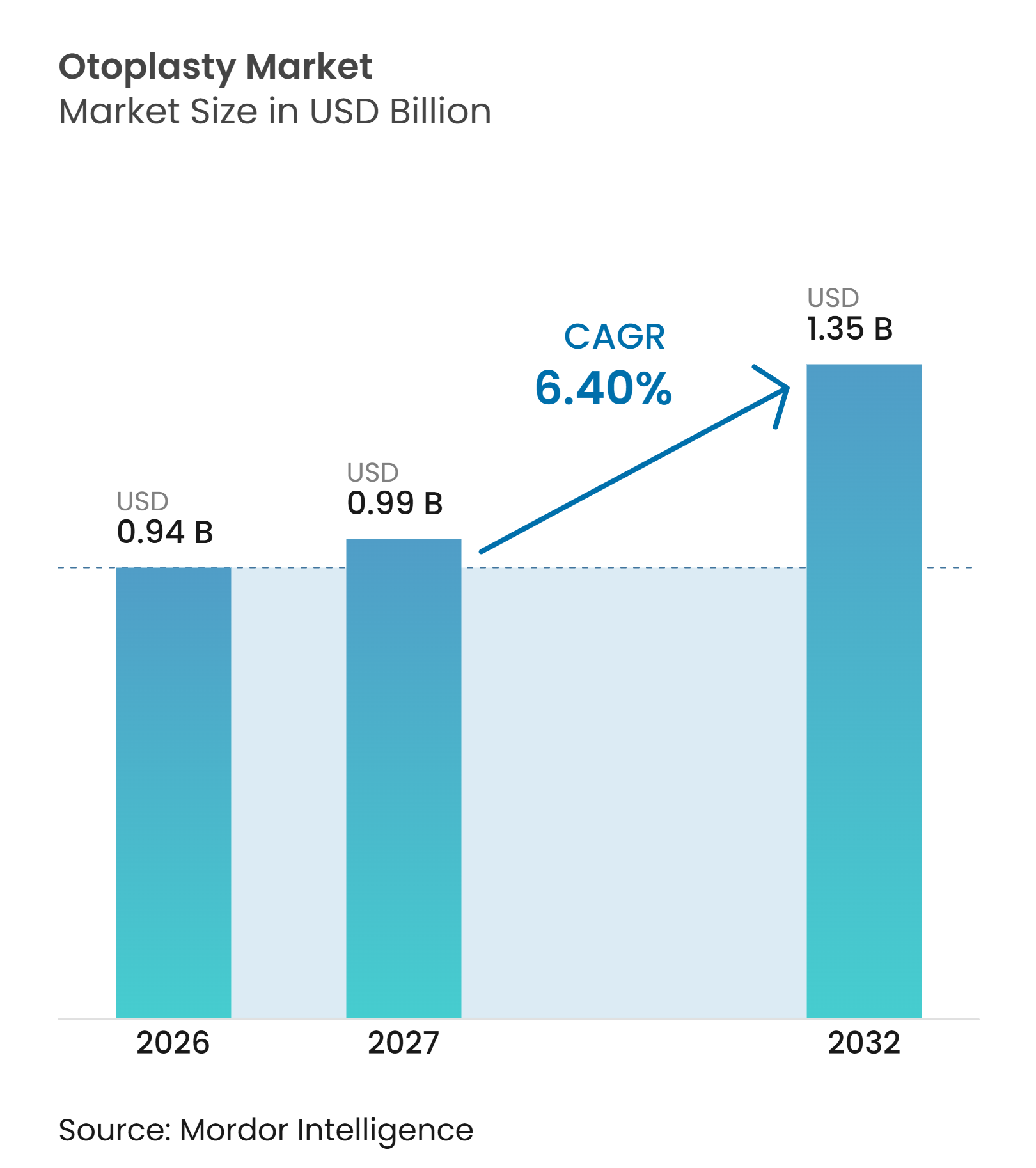
The Otoplasty Market size is projected to be USD 0.94 billion in 2026, USD 0.99 billion in 2027, and reach USD 1.35 billion by 2032, growing at a CAGR of 6.40% from 2027 to 2032.
Demand rests on both correction of prominent ears and reconstruction after congenital or traumatic deformities, which makes the procedure less dependent on purely elective aesthetic demand. Surgical aesthetic activity remained large in 2024, with 17.4 million procedures reported globally, while face and head procedures increased 4.3% from the prior year. Otoplasty provides a durable anatomical correction in a single procedure, unlike injectable procedures that require repeated treatment. U.S. member surgeons performed 4,825 ear surgeries in 2024, a level that was effectively unchanged from 2023 and points to steady domestic demand while Asia-Pacific and other emerging markets grow faster. The otoplasty market therefore has scope to grow through more complex reconstruction, wider outpatient delivery, and broader access in developing surgical markets.
Key Report Takeaways
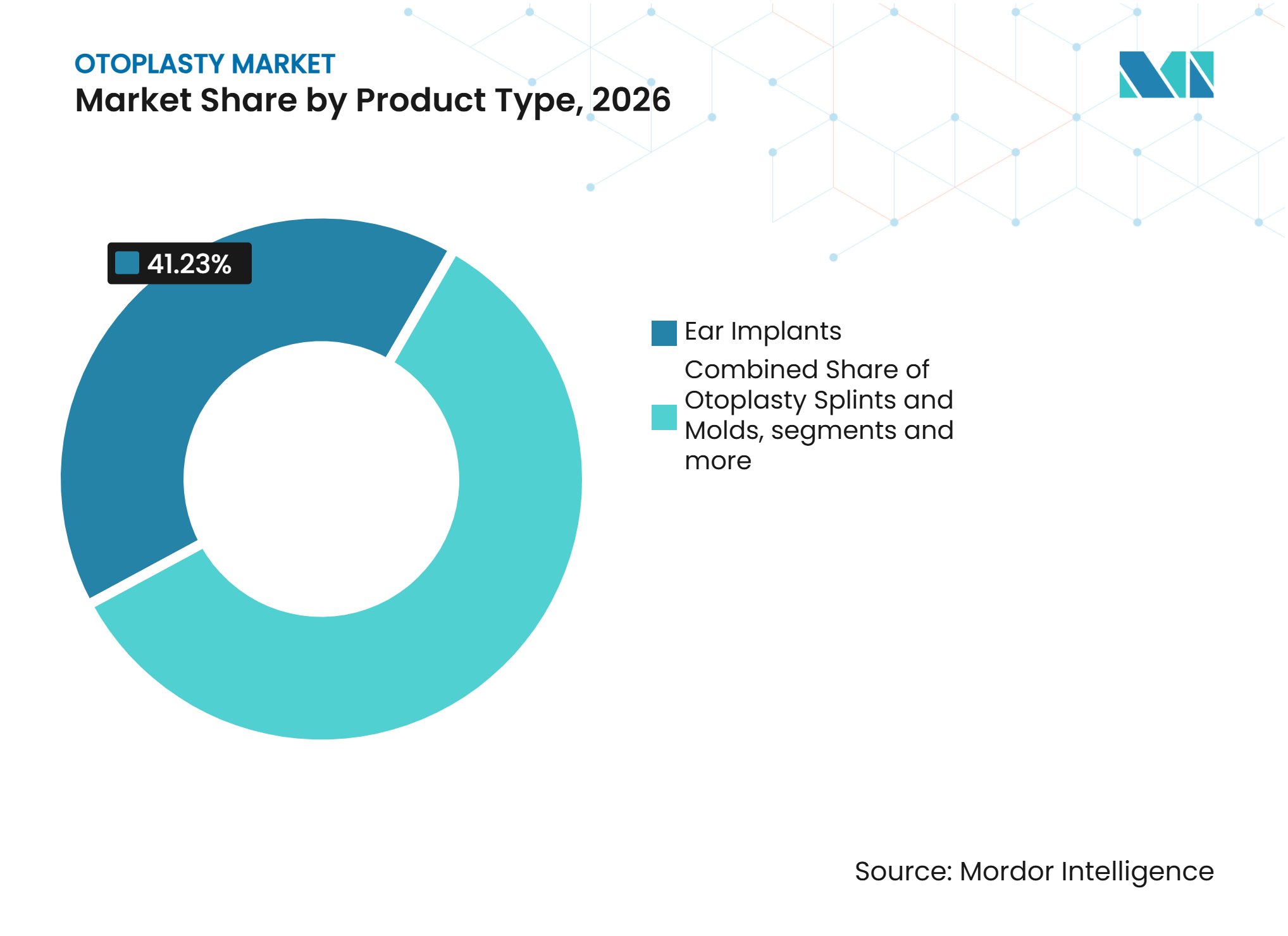
- By product type, ear implants held 41.23% of the otoplasty market in 2026, while otoplasty Splints and molds are forecast to grow at a 9.52% CAGR through 2032.
- By otoplasty type, ear pin back held 45.32% of the otoplasty market in 2026, while ear augmentation is forecast to grow at a 7.25% CAGR through 2032.
- By technique, correlation of earlobe prominence accounted for 43.26% of the otoplasty market in 2026, while conchal alteration is projected to expand at an 8.13% CAGR through 2032.
- By gender, female patients held 52.43% of the otoplasty market in 2026, while the same segment is projected to grow at an 8.53% CAGR through 2032.
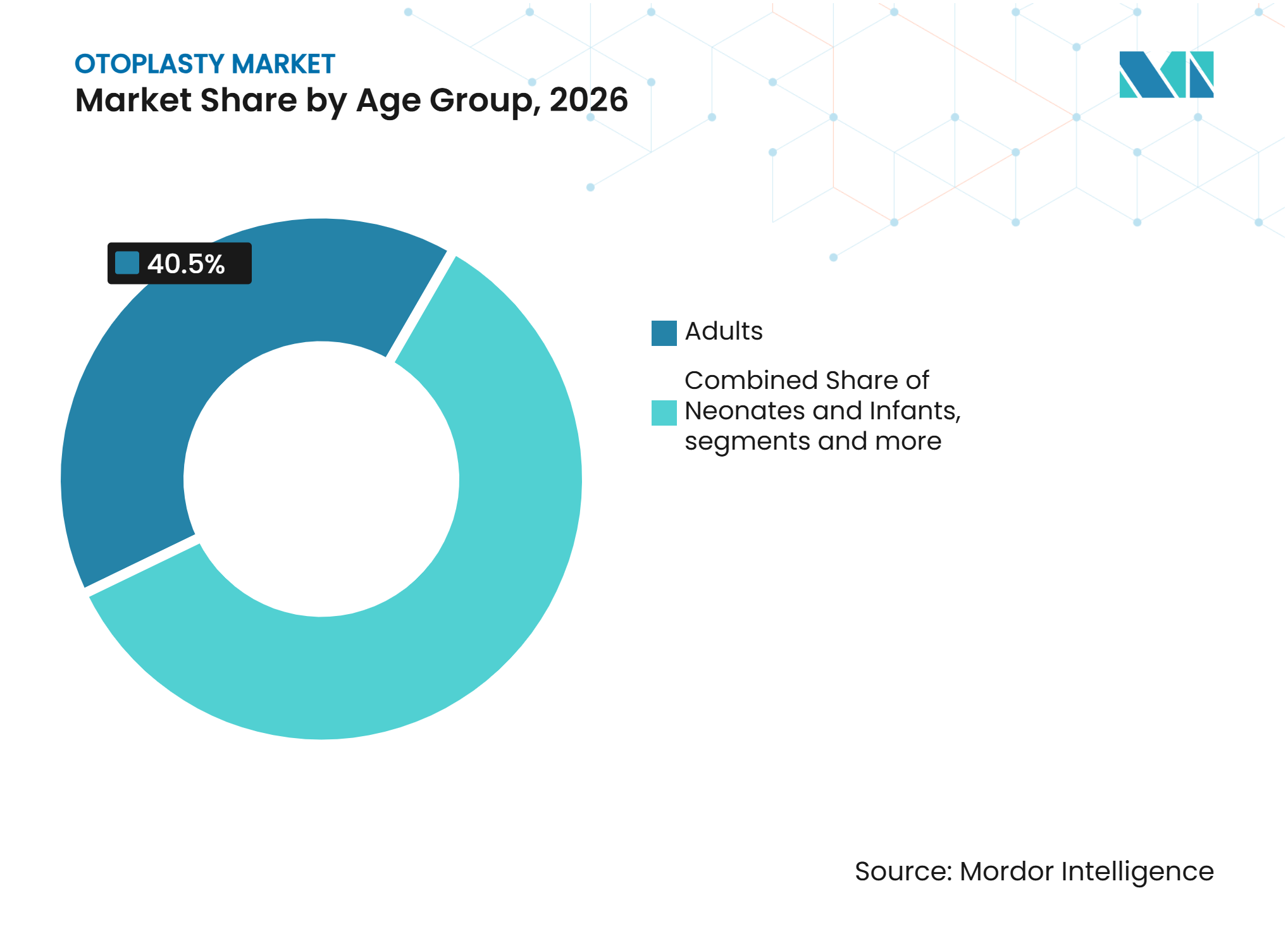
- By age group, adults held 40.52% of the otoplasty market in 2026, while children and adolescents are expected to grow at a 7.72% CAGR through 2032.
- By end-user, hospitals held 42.12% of the otoplasty market in 2026, while cosmetic surgery centers/clinics are projected to grow at a 9.12% CAGR through 2032.
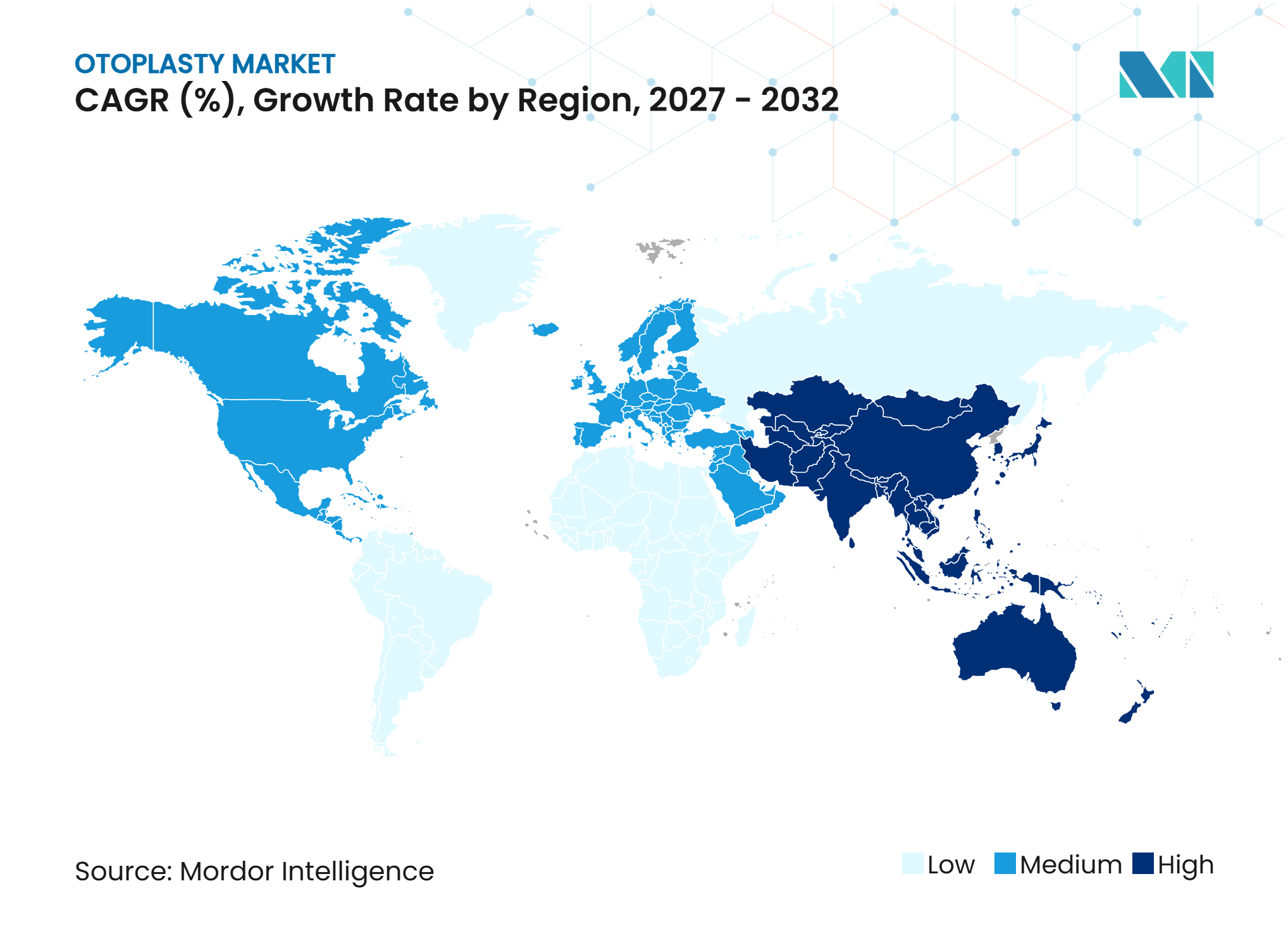
- By geography, North America held 48.24% of the otoplasty market in 2026, while Asia-Pacific is projected to grow at a 10.24% CAGR through 2032.
Note: Market numbers in this report are based on Mordor Intelligence's proprietary estimation framework, which combines nine months of actuals with Q4 projections for base year 2026.
Market Trends and Insights
Drivers Impact Analysis of Otoplasty Market*
| Driver | (~) % Impact on CAGR Forecast | Geographic Relevance | Impact Timeline |
|---|---|---|---|
| Awareness of Facial Symmetry and Ear Aesthetics | +1.2% | Global, strongest in North America and Western Europe | Short term (≤ 2 years) |
| Reconstructive Care for Congenital and Traumatic Ear Deformities | +1.4% | Global, highest in Asia-Pacific and North America | Long term (≥ 4 years) |
| Minimally Invasive and Incisionless Techniques | +1.1% | Global, concentrated in North America, Europe, and South Korea | Medium term (2-4 years) |
| Early-Life Ear Molding and Splinting | +0.8% | North America, Europe, and core Asia-Pacific markets | Short term (≤ 2 years) |
| Patient-Specific Surgical Planning and 3D Reconstruction | +0.7% | North America, Europe, and advanced Asia-Pacific centers | Long term (≥ 4 years) |
| Medical Tourism and Cross-Border Elective Surgery | +0.9% | South Korea, Thailand, India, Turkey, and UAE | Medium term (2-4 years) |
| Source: Mordor Intelligence | |||
Rising Awareness of Facial Symmetry and Ear Aesthetics
Video conferencing has made ear-related asymmetry more visible during professional and social interactions. This visibility has encouraged consultations among working-age patients, including men who had previously deferred treatment. Global face and head surgical procedures reached 7.4 million in 2024 and increased 4.3% year over year.[1] The same survey reported that rhinoplasty declined 10%, while ear reshaping showed relative resilience within facial surgery. A review analysis involving 615 otoplasty patients found a mean age of 28.9 years and near gender parity, placing much of the demand in the 18-34 age group. As visual self-presentation becomes more important across digital settings, the otoplasty market can draw from a wider adult patient base.
Expansion of Reconstructive Treatment for Congenital and Traumatic Ear Deformities
Congenital ear malformations create a sustained pool of patients for reconstructive services. A 2025 systematic review reported that microtia affects 1 in 6,000 to 12,000 live births.[2] The reported incidence in China was 3.57 per 10,000 births, which gives the country a substantial reconstructive care base. Korea University Anam Hospital reported in 2025 that its team developed 3D printing-based approaches for ear reconstruction that improve cartilage contour reproduction. Trauma-related ear loss adds another treatment need, especially where road injuries and sports injuries are more common. A 2025 review found that 30% of congenital external ear anomalies were associated with multi-organ syndromes, increasing referrals to craniofacial and multidisciplinary programs.
Adoption of Minimally Invasive and Incisionless Techniques
Cartilage-sparing and suture-based approaches reduce concern about scarring and longer recovery. A 2024 meta-analysis of 1,590 patients across 18 studies reported a 2.9% recurrence rate for cartilage-sparing methods, compared with 4.6% for cartilage-cutting methods. The same analysis reported a 1.3% revision rate for the minimally invasive approach. Incisionless suture-based pinnaplasty can be performed with local anesthesia and permits same-day discharge without post-operative head bandaging. Preservation otoplasty was described in 2025 as a lower-invasiveness method that can be used across mild and severe deformities. These methods make treatment more practical for older adults and support the shift of appropriate cases into ambulatory settings.
Growth of Early-Life Ear Molding and Splinting
Early ear molding changes the future surgical pathway for infants with correctable auricular deformities. A 10-year study of 300 infants found that molding started before 3 weeks of age produced durable correction at a median 5.3-year follow-up. Only 0.7% of treated patients in that study subsequently required otoplasty. A 2025 study reported a 93.8% success rate for EarWell when treatment started in the first week of life. Effective programs can reduce surgical need among children aged 0-5 years, but they also improve parental awareness and direct late referrals into specialist care. Congenital ear deformities affect up to 58% of newborns and only 30% self-correct, leaving a large group that may need non-surgical or surgical intervention.
Restraints Impact Analysis of Otoplasty Market*
| Restraint | (~) % Impact on CAGR Forecast | Geographic Relevance | Impact Timeline |
|---|---|---|---|
| Limited Reimbursement for Elective Cosmetic Otoplasty | -1.1% | North America and Western Europe | Short term (≤ 2 years) |
| Revision, Implant Exposure, Scarring, and Asymmetry Risks | -0.6% | Global | Long term (≥ 4 years) |
| Uneven Access to Specialist Surgeons | -0.7% | Rural Asia-Pacific, Middle East and Africa, and South America outside major cities | Medium term (2-4 years) |
| Narrow Neonatal Treatment Window and Delayed Referral | -0.4% | Global, most pronounced in Asia-Pacific and Middle East and Africa | Medium term (2-4 years) |
| Source: Mordor Intelligence | |||
Limited Reimbursement for Elective Cosmetic Otoplasty
Coverage policy creates a clear divide between reconstructive procedures and elective cosmetic procedures. Under CPT Code 69300, major U.S. payers limit coverage to cases with functional hearing deficits or severe congenital malformations. Elective cosmetic otoplasty is not covered under these policies, leaving many patients responsible for the full cost. Cigna’s July 2026 policy update requires case-level documentation for qualifying reconstruction, which adds administrative work and can extend approvals.[3] Medicare guidance also excludes cosmetic surgery from coverage, reinforcing the separate reimbursement and cash-pay channels. This structure favors specialist centers that have the administrative capacity to manage authorizations and limits expansion by smaller practices.
Risk of Revision, Implant Exposure, Scarring, and Asymmetry
Complication risk can affect treatment decisions, especially for adults and patients considering implant-based reconstruction. Suture extrusion occurred in 5.4% of cases, while asymmetry occurred in 2.1% of cases. A long-term study of the Earfold implantable clip found prominence recurrence in more than 70% of patients at 24 months. A 2025 review reported porous polyethylene exposure rates as low as 7% when procedures were performed by experienced teams. The otoplasty market remains sensitive to the concentration of surgical expertise in academic and metropolitan centers because consistent quality is harder to deliver outside those settings.
*Our forecasts treat driver/restraint impacts as directional, not additive. The impact forecasts reflect baseline growth, mix effects, and variable interactions.
Otoplasty Market Segment Analysis
By Product Type:
Ear Implants Lead While Otoplasty Splints and Molds Gain TractionEar implants accounted for 41.23% of the otoplasty market in 2026, making them the largest product segment. Their leading position is driven by their widespread use in ear reconstruction and augmentation procedures, particularly for patients with congenital ear deformities, traumatic injuries, or defects resulting from surgical interventions. Ear implants provide long-term structural support and help achieve improved aesthetic outcomes, making them a preferred option among surgeons performing complex reconstructive procedures. Advances in implant materials and customization capabilities have further strengthened their adoption across hospitals and specialized cosmetic surgery centers. As demand for corrective and reconstructive ear surgeries continues to rise, ear implants remain a cornerstone product within the otoplasty market.
Otoplasty splints and molds are projected to register the fastest growth, with a CAGR of 9.52% through 2032. Growth is fueled by increasing awareness of non-invasive and post-surgical ear correction solutions, particularly among pediatric patients. These products are commonly used for postoperative support to maintain ear positioning and optimize surgical outcomes, while certain molding systems are also utilized in infants to correct ear deformities without surgery. Improvements in patient-specific designs, enhanced comfort, and greater accessibility of early intervention therapies are expected to support market expansion. Their ability to reduce the need for more invasive procedures in select cases further contributes to growing adoption.



By Otoplasty Type:
Ear Pin Back Leads Volume While Augmentation Grows FastestEar pin back held 45.32% of the otoplasty market in 2026, reflecting the prevalence of prominent-ear deformity as a treatment indication. The procedure can be used across age groups and is often performed under local anesthesia in ambulatory settings. Its broad use also makes ear pin back the most commercially accessible procedure type. Adult procedures remain relevant when patients did not receive treatment during childhood. Hospital and outpatient settings can both provide appropriate cases, depending on patient age and clinical complexity. These conditions keep ear pin back central to the otoplasty industry’s procedure volume.
Ear augmentation is forecasted to grow at a 7.25% CAGR through 2032, the fastest rate among procedure types. Patient-specific 3D-printed surgical guides that use CT-based vascular mapping improved positioning accuracy and reduced operative time in total ear reconstruction. These guides can reduce intraoperative adjustments and improve the predictability of aesthetic outcomes. The resulting workflows may lower some technical barriers for complex reconstruction outside academic centers. Together, procedure types allow the otoplasty market to serve a mix of common and high-complexity indications.
By Technique:
Earlobe Prominence Correction Retains the Largest PositionCorrelation of earlobe prominence accounted for 43.26% of the otoplasty market in 2026. The technique addresses a visible part of ear projection and is frequently relevant to the desired outcome. Anti-Helical Fold Manipulation is often combined with earlobe-focused correction when fold definition is inadequate. Combination procedures contribute meaningful volume because many patients have more than one structural feature requiring adjustment. Patients can receive these treatments in a hospital, ambulatory center, or specialist clinic when their clinical circumstances allow.
Conchal alteration is projected to grow at an 8.13% CAGR through 2032, the highest rate among techniques. A 2025 publication described preservation otoplasty as combining scoring, suturing, and fold manipulation to achieve natural outcomes across a broad range of deformities. More complex cases require greater surgical proficiency than straightforward suture-based correction. The technique pattern suggests that growing volume is not limited to simple ear projection cases. The otoplasty market is increasingly supported by patients who need more individualized structural correction.
By Gender:
Female Patients Hold the Largest Share in a Near-Parity SettingFemale patients held 52.43% of the otoplasty market in 2026, giving the segment a modest lead. This distribution is consistent with a continuing female tilt in cosmetic surgery demand. The 2024 review analysis of 615 patient reviews reported a mean age of 28.9 years, with a large share of patients in the 18-34 age group. The data also indicate that otoplasty demand is more balanced than several other facial procedures. The American Academy of Facial Plastic and Reconstructive Surgery reported that 59% of facial plastic surgeons considered otoplasty gender-balanced. This near-parity expands the relevant audience for patient education and consultation. It also means providers cannot rely on narrow gender-specific outreach.
The female segment is projected to grow at an 8.53% CAGR through 2032. Rising procedural access in Asia-Pacific supports this expansion across aesthetic surgery categories. The segment’s growth is aided by clinic availability and broader awareness of ear correction options. Some patients seek aesthetic change, while others seek relief from longstanding concerns about ear prominence. The same clinical practices also serve women who require reconstructive treatment after trauma or congenital conditions. The otoplasty market has a broader patient base than many adjacent elective facial procedure categories.
By Age Group:
Adults Lead Current Volume and Younger Patients Grow FasterAdults held 40.52% of the otoplasty market in 2026, representing the largest age-group share. Many adult patients did not receive treatment in childhood because of limited access, delayed referral, or delayed parental consent. Adult demand is also supported by techniques that reduce concerns about scarring, recovery, and general anesthesia. It includes patients seeking first-time treatment and those seeking revision of prior procedures. Geriatric patients form the smallest group and may combine otoplasty with facial rejuvenation procedures.
Children and adolescents are projected to grow at a 7.72% CAGR through 2032. Earlier referral can provide treatment during a period when ear growth is close to complete and before psychosocial concerns become more pronounced. Clinical literature indicates that ear growth is nearly complete by age 6. This makes the 5-12 age range important for both clinical timing and family counseling. The high growth rate reflects increasing parental awareness of the psychosocial benefits of earlier correction. Pediatric growth creates a continuing need for hospital-based reconstruction and age-appropriate outpatient care.

By End-User:
Hospitals Retain the Largest Base While Clinics ExpandHospitals held 42.12% of the otoplasty market in 2026. Their position reflects their ability to manage complex reconstruction, pediatric anesthesia, advanced imaging, and multidisciplinary care. Microtia reconstruction and trauma cases can require coordination among surgeons, anesthesiologists, and other specialists. Hospitals also provide the infrastructure for patients who need more extensive monitoring. Hospital capacity is especially relevant for children and patients with associated congenital conditions. This keeps hospitals at the center of the otoplasty market’s complex care pathway.
Cosmetic surgery centers and clinics are projected to grow at a 9.12% CAGR through 2032. Their expansion reflects the movement of elective procedures into focused outpatient settings. Straightforward pinnaplasty can be suitable for same-day care when patients meet clinical criteria. South Korea’s clinic concentration provides a developed example of private aesthetic delivery, and comparable models are spreading in India, Thailand, and UAE. The end-user pattern is therefore one of outpatient expansion rather than replacement of hospital-based reconstructive care.
Geography Analysis
North America
North America held 48.24% of the otoplasty market in 2026, supported by the United States’ specialist surgeon network and reimbursement for qualifying reconstructive procedures. ASPS member surgeons performed 4,825 ear surgeries in the United States in 2024, although this figure does not capture all ambulatory and nonmember practice activity. Canada adds publicly funded reconstructive volume, while Mexico attracts some North American elective patients seeking lower treatment costs. U.S. payer rules separate reimbursed reconstructive cases from price-sensitive cosmetic procedures.
Asia-Pacific
Asia-Pacific is projected to expand at a 10.24% CAGR through 2032, making it the fastest-growing geography. South Korea’s aesthetic medicine cluster supports high procedure capacity and attracts international patients. India’s lower-cost position is expanding access for cost-sensitive international patients, while China’s microtia incidence creates a substantial reconstruction base. The region also benefits from growing clinic networks and medical tourism infrastructure. Its combination of congenital treatment demand, elective care, and outpatient development makes it the main source of incremental volume for the otoplasty market.
Europe, Middle East and Africa, and South America
Europe is the second-largest regional group, led by Germany, the United Kingdom, France, Italy, and Spain. A 2025 review of medical tourism studies identified Turkey as the most frequently reported destination in 23 of 36 studies addressing cosmetic surgery complications across borders. Middle East and Africa demand is supported by GCC investment in private hospital capacity and medical tourism infrastructure. Turkey and UAE act as regional hubs for elective and reconstructive care. South America has a stable aesthetic surgery culture led by Brazil and Argentina. These countries provide a continuing base for otoplasty procedures during the forecast period. Access outside major urban areas remains uneven in both regions. Specialist availability, affordability, and referral pathways will determine how broadly services can reach patients. Cross-border travel can partially address gaps, but it does not replace local specialist capacity. Together, these regions add geographic diversity to the otoplasty market without matching Asia-Pacific’s forecast growth rate.
Competitive Landscape
Market Concentration
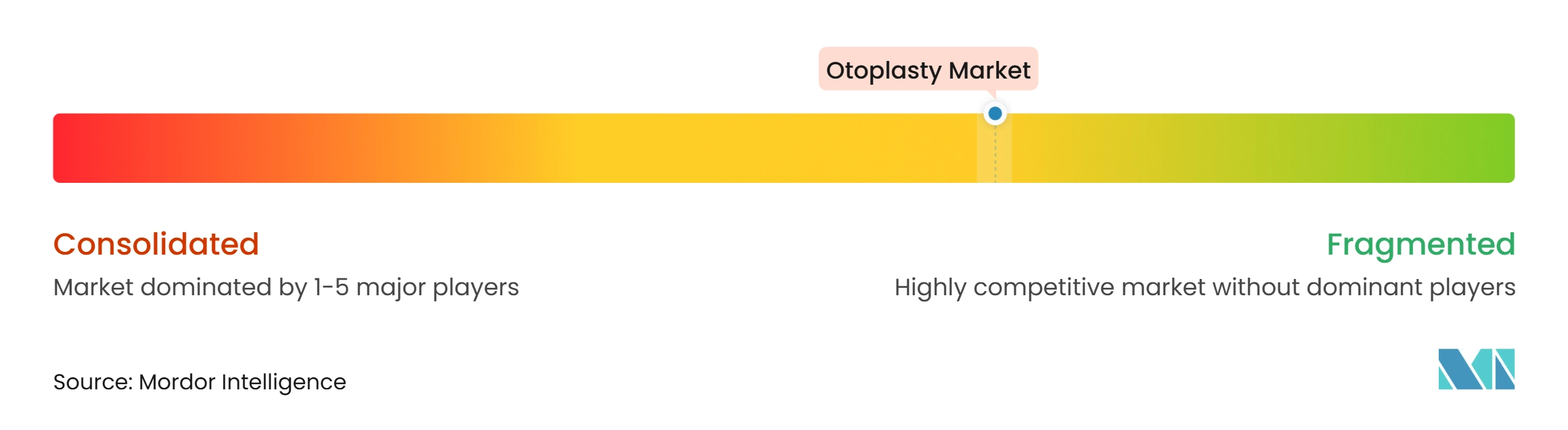
The otoplasty market is moderately fragmented because no company has cross-segment control over implants, surgical instruments, and non-surgical correction devices. Competition is more concentrated in specialty implants than in general instrumentation. Surgical instrument supply is more dispersed because diversified medical technology companies provide tools that can be used in ear procedures. Stryker’s craniomaxillofacial activity and Johnson & Johnson MedTech combine imaging and device capabilities that can link planning to implant use. It also encourages protocol-based relationships with hospitals and specialist centers. The competitive position of major suppliers therefore rests on workflow integration as well as product availability.
Long-term durability remains a significant issue because recurrence exceeded 70% at 24 months in one study. EarBuddies Limited and Becon Medical have specialist positions in neonatal molding, but distribution remains limited outside major hospital networks. This leaves room for wider device distribution in Asia-Pacific and Middle East and Africa. Digital pre-operative planning software is another area where newer companies can challenge proprietary platforms.
Medtronic and KARL STORZ also announced a U.S. collaboration in June 2026 that combines navigation and endoscopy imaging systems for integrated ENT surgical solutions. 3DBio Therapeutics is advancing AuriNovo, a patient-specific 3D-bioprinted living cartilage implant in Phase 1/2a trials for microtia. If clinical results support further regulatory progress, bioprinted implants could avoid rib cartilage harvest and change pediatric reconstruction. FDA 510(k) clearance and CE marking requirements remain barriers that support incumbent positions while new technologies mature.
Otoplasty Industry Leaders
-
Implantech Associates, Inc.
-
Stryker Corporation
-
EarBuddies Limited
-
Becon Medical Ltd.
-
Invotec International, Inc.
- *Disclaimer: Major Players sorted in no particular order
Otoplasty Market Companies Covered in this Report
- 3DBio Therapeutics
- B. Braun
- EarBuddies Limited
- Becon Medical Ltd.
- Ethicon, Inc.
- Implantech Associates, Inc.
- Integra LifeSciences
- Invotec International, Inc.
- Johnson & Johnson MedTech
- Karl Storz
- Koken Co., Ltd.
- Medtronic
- Olympus
- Phoenix Medical Systems
- Sklar
- Smith+Nephew plc
- Stryker
Recent Industry Developments in Otoplasty Market
- June 2026: Medtronic received CE Mark for the Stealth AXiS Surgical Navigation System for ENT Procedures, following recent US FDA clearance. The platform introduces next-generation 3D intraoperative navigation to European ENT surgical suites, advancing precision in complex ear reconstruction procedures and strengthening Medtronic's ENT market position against endoscopy-led competitors.
- April 2026: Earflo, a medical technology company specializing in non-invasive pediatric ear care, announced the U.S. market availability of its FDA-cleared device for treating negative middle ear pressure in children aged two years and older.
Global Otoplasty Market Report Scope
According to the report’s scope, the otoplasty market refers to surgical and minimally invasive procedures aimed at correcting ear deformities or reshaping the ear for aesthetic or reconstructive purposes. It includes demand for cosmetic ear surgery and reconstructive interventions following trauma or congenital conditions, driven by rising awareness of facial aesthetics and advancements in surgical techniques.
The otoplasty market is segmented into product type, otoplasty type, technique, gender, age group, end-user, and geography. By product type, the market is segmented into ear implants, otoplasty splints and molds, surgical sutures, and other product types. By otoplasty type, the market is segmented into ear pin back, ear augmentation, and ear reduction. By technique, the market is segmented into correlation of earlobe prominance, conchal alteration, and anti-helical fold manuplation. By gender, the market is segmented into male and female. By age group, the market is segmented into neonates and infants, children and adolescents, adults, and geriatrics. By end-user, the market is segmented into hospitals, cosmetic surgery centers/clinics, ambulatory surgical centers, and other end-users. By geography, the market is segmented into North America, Europe, Asia-Pacific, the Middle East and Africa, and South America. The report also covers the estimated market sizes and trends for 17 countries across major regions globally. The report offers values (USD) for all the above segments.
Segmentation Overview
| Ear Implants |
| Otoplasty Splints and Molds |
| Surgical Sutures |
| Other Product Types |
| Ear Pin Back |
| Ear Augmentation |
| Ear Reduction |
| Correlation of Earlobe Prominance |
| Conchal Alteration |
| Anti-Helical Fold Manuplation |
| Male |
| Female |
| Neonates and Infants |
| Children and Adolescents |
| Adults |
| Geriatric Patients |
| Hospitals |
| Cosmetic Surgery Centers/Clinics |
| Ambulatory Surgical Centers |
| Other End-Users |
| North America | United States |
| Canada | |
| Mexico | |
| Europe | Germany |
| United Kingdom | |
| France | |
| Italy | |
| Spain | |
| Rest of Europe | |
| Asia-Pacific | China |
| Japan | |
| India | |
| Australia | |
| South Korea | |
| Rest of Asia-Pacific | |
| Middle East and Africa | GCC |
| South Africa | |
| Rest of Middle East and Africa | |
| South America | Brazil |
| Argentina | |
| Rest of South America |
| By Product Type | Ear Implants | |
| Otoplasty Splints and Molds | ||
| Surgical Sutures | ||
| Other Product Types | ||
| By Otoplasty Type | Ear Pin Back | |
| Ear Augmentation | ||
| Ear Reduction | ||
| By Technique | Correlation of Earlobe Prominance | |
| Conchal Alteration | ||
| Anti-Helical Fold Manuplation | ||
| By Gender | Male | |
| Female | ||
| By Age Group | Neonates and Infants | |
| Children and Adolescents | ||
| Adults | ||
| Geriatric Patients | ||
| By End-User | Hospitals | |
| Cosmetic Surgery Centers/Clinics | ||
| Ambulatory Surgical Centers | ||
| Other End-Users | ||
| By Geography | North America | United States |
| Canada | ||
| Mexico | ||
| Europe | Germany | |
| United Kingdom | ||
| France | ||
| Italy | ||
| Spain | ||
| Rest of Europe | ||
| Asia-Pacific | China | |
| Japan | ||
| India | ||
| Australia | ||
| South Korea | ||
| Rest of Asia-Pacific | ||
| Middle East and Africa | GCC | |
| South Africa | ||
| Rest of Middle East and Africa | ||
| South America | Brazil | |
| Argentina | ||
| Rest of South America | ||
Key Questions Answered in the Report
How large is the otoplasty market?
The otoplasty market stands at USD 0.94 billion in 2026 to reach USD 0.99 billion in 2027 and is forecasted to reach USD 1.35 billion by 2032 at a 6.40% CAGR.
Which otoplasty procedure type has the largest share?
Ear pin back led with 45.32% in 2026 because prominent-ear deformity is the most common indication.
Which patient group is expected to grow fastest?
Children and adolescents are projected to grow at a 7.72% CAGR through 2032 as referrals and parental awareness increase.
Which region is growing fastest for otoplasty?
Asia-Pacific is projected to expand at 10.24% CAGR through 2032, supported by reconstructive demand, clinic capacity, and medical tourism.