
Ophthalmic Suspension Market Size and Share
Market Overview
| Study Period | 2020 - 2031 |
|---|---|
| Market Size (2026) | USD 4.78 Billion |
| Market Size (2031) | USD 6.54 Billion |
| Growth Rate (2026 - 2031) | 6.44 % |
| Fastest Growing Market | Asia-Pacific |
| Largest Market | North America |
| Market Concentration | Medium |
Major Players *Disclaimer: Major Players sorted in no particular order Image © Mordor Intelligence. Reuse requires attribution under CC BY 4.0. | |
Ophthalmic Suspension Market Analysis by Mordor Intelligence
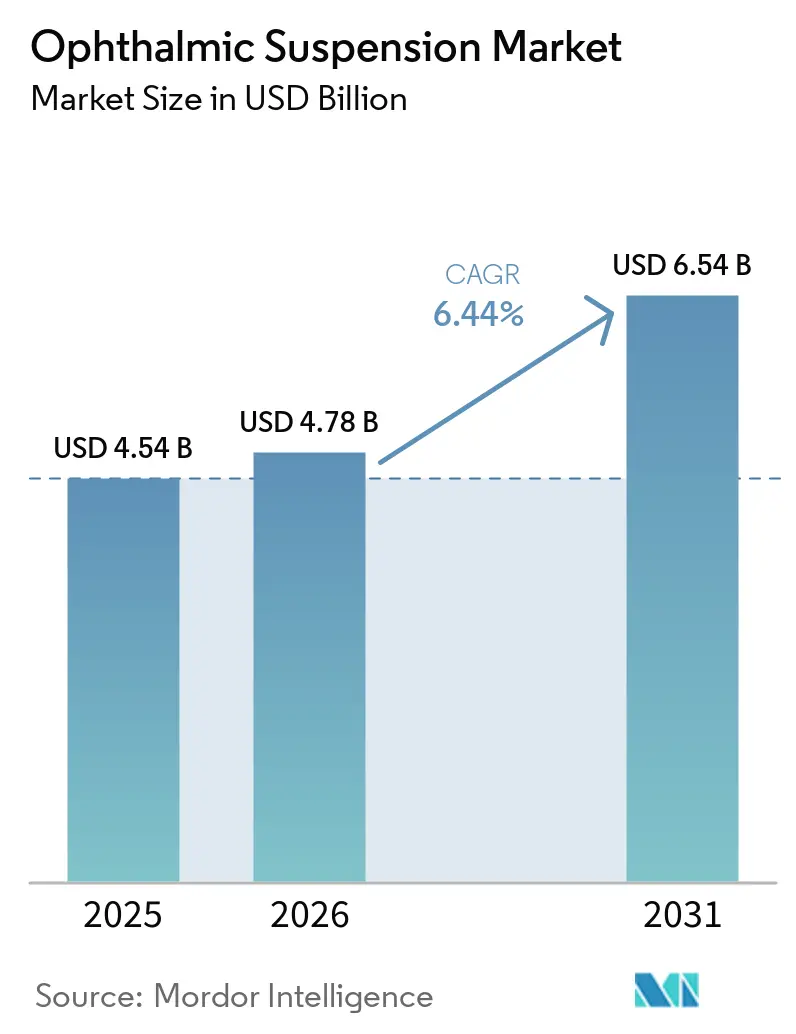
The ophthalmic suspension market is expected to grow from USD 4.54 billion in 2025 to USD 4.78 billion in 2026 to reach USD 6.54 billion by 2031, at a CAGR of 6.44% during the forecast period (2026-2031). The ophthalmic suspension market is supported by a large and persistent need for eye care, since at least 2.2 billion people were living with near or distance vision impairment in 2026, including at least 1 billion cases that were preventable or unaddressed. Cataracts affected 94 million people within the unaddressed burden, while glaucoma accounted for 7.7 million cases of vision-impairing blindness. These conditions support demand for infection control, post-procedure care, and longer-term pressure management. Preservative-free products and fixed-dose combinations are changing product selection in developed markets, while clinic expansion is broadening access in emerging economies. Competition, therefore, combines branded formulation work with generic entry in established molecules.
Key Report Takeaways
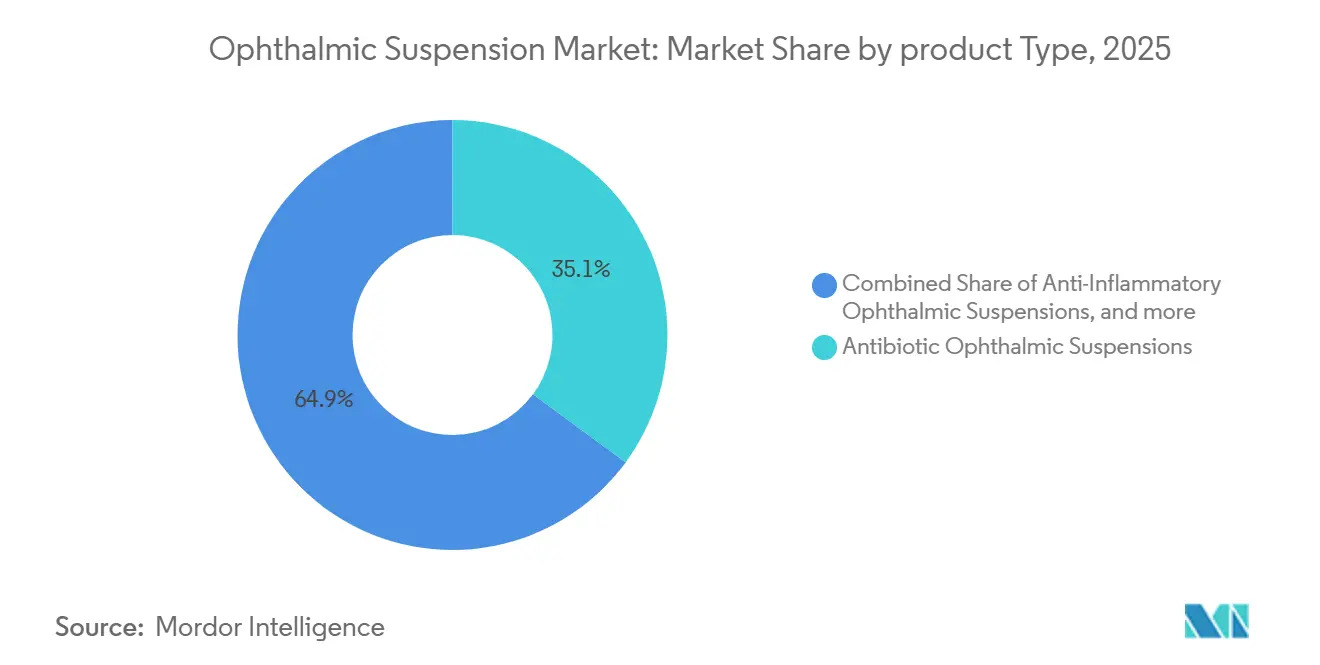
- By product type, antibiotic ophthalmic suspensions held 35.14% of the ophthalmic suspension market share in 2025, while anti-glaucoma ophthalmic suspensions are forecasted to grow at a 6.85% CAGR through 2031.
- By therapeutic class, antibiotics accounted for 37.26% of the ophthalmic suspension market share in 2025, while antiglaucoma agents are forecasted to expand at a 7.12% CAGR through 2031.
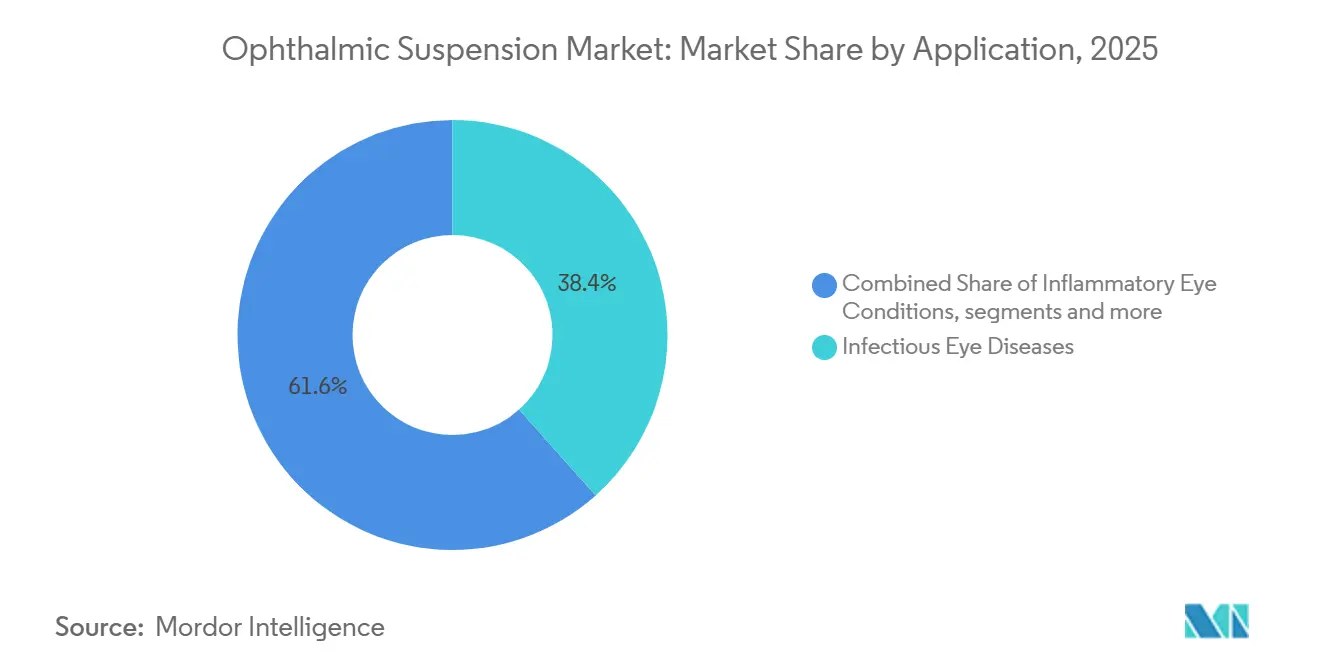
- By application, infectious eye diseases accounted for 38.41% of the ophthalmic suspension market size in 2025, while glaucoma management is expected to advance at a 9.25% CAGR through 2031.
- By distribution channel, hospital pharmacies held 43.22% revenue share in 2025, while online pharmacies are anticipated to grow at an 8.22% CAGR through 2031.
- By geography, North America held 47.36% revenue share in 2025, while Asia-Pacific is projected to grow at a 10.33% CAGR through 2031.
Note: Market size and forecast figures in this report are generated using Mordor Intelligence’s proprietary estimation framework, updated with the latest available data and insights as of January 2026.
Global Ophthalmic Suspension Market Trends and Insights
Drivers Impact Analysis*
| Driver | (~) % Impact on CAGR Forecast | Geographic Relevance | Impact Timeline |
|---|---|---|---|
| Rising Prevalence of Ocular Infections and Inflammatory Disorders | +1.4% | Global | Short term (≤ 2 years) |
| Aging Population and Higher Chronic Eye-Disease Burden | +1.0% | North America, Europe, APAC core | Long term (≥ 4 years) |
| Growth in Cataract, Refractive, and Other Ophthalmic Procedures | +0.5% | Global, with spill-over in APAC and MEA | Medium term (2-4 years) |
| Expansion of Eye-Care Access and Specialist Clinics in Emerging Markets | +0.7% | APAC core, spill-over to MEA and South America | Medium term (2-4 years) |
| Demand for Preservative-Free and Patient-Centric Formulations | +0.8% | North America and EU | Short term (≤ 2 years) |
| Combination and Advanced Drug-Delivery Innovation | +0.6% | Global | Medium term (2-4 years) |
| Source: Mordor Intelligence | |||
Rising Prevalence of Ocular Infections and Inflammatory Disorders
Bacterial conjunctivitis, keratitis, and blepharitis remain high-volume uses for topical suspensions worldwide. The ophthalmic suspension market serves treatment pathways in primary care, specialist care, and surgical settings. Absolute cases of blindness and vision loss caused by noncommunicable diseases increased 147.4%.[1]“Global Trends and Disparities in Burden of Blindness and Vision Loss Caused by Non-Communicable Diseases from 1990 to 2021, and Forecasts to 2045,” Frontiers in Medicine, frontiersin.orgDiabetic and immunocompromised populations add to the need for antibiotic and anti-inflammatory products. Cataract surgery also creates a defined period for post-operative infection management. It identifies 28 million cataract procedures annually worldwide, which supports recurring use of steroid-antibiotic products in post-operative protocols.
Aging Population and Higher Chronic Eye-Disease Burden
Population aging supports long-term demand for therapies used in chronic eye disease. Global glaucoma cases increased 86.3% from 1990 to 2021 and reached 7.59 million prevalent cases in the source study.[2]“Global, Regional and National Burden of Glaucoma from 1990 to 2021 and Projections to 2050,” BMJ Open, bmjopen.bmj.com The same study projected 11.8 million cases by 2040, with demographic change as the primary factor. Among adults aged 70 years and older, the 70-84 age group recorded a 1% average annual increase in glaucoma prevalence. Open-angle glaucoma often requires 2 or more topical medicines, which raises the treatment need per patient. This chronic use makes the ophthalmic suspension market less dependent on short-term economic conditions than elective care categories.
Demand for Preservative-Free and Patient-Centric Formulations
Preservative-free formulations have moved from a limited preference to a broader prescribing consideration. Prolonged exposure to benzalkonium chloride can promote conjunctival fibrosis, increase dry eye incidence, and affect later filtering surgery outcomes in glaucoma care.[3]“Clinical Benefits of Preservative-Free Treatment for Glaucoma with a Focus on Preservative-Free Latanoprost,” Ophthalmology and Therapy, link.springer.com This clinical evidence gives prescribers a reason to switch products beyond immediate comfort. A 2025 study also found that preservative-free gel-formulated timolol 0.1% used once daily had comparable efficacy to standard timolol 0.5% used twice daily, with a better safety profile. The ophthalmic suspension market can therefore gain from replacement demand among existing patients, not only from new diagnoses.
Combination and Advanced Drug-Delivery Innovation
Fixed-dose combinations can reduce the number of products patients need to administer. This feature is relevant in glaucoma because stable intraocular pressure control depends on regular long-term dosing. A 2025 rabbit study reported that a gel and microsphere drop carrying brimonidine and timolol maintained drug presence in aqueous and vitreous humor for 27 days. Conventional formulations in that comparison had a detection window of less than 24 hours. Such products give manufacturers a route to address adherence and formulation preferences while expanding access in higher-volume markets.
Restraints Impact Analysis*
| Restraint | (~) % Impact on CAGR Forecast | Geographic Relevance | Impact Timeline |
|---|---|---|---|
| Formulation Stability, Sedimentation, and Dose-Uniformity Challenges | -0.5% | Global | Short term (≤ 2 years) |
| Stringent Sterility, Bioequivalence, and Regulatory Requirements | -0.8% | Global, US-led | Medium term (2-4 years) |
| Ocular Irritation and Preservative-Toxicity Concerns | -0.3% | North America and EU | Short term (≤ 2 years) |
| Generic Price Erosion, Counterfeit Risk, and API Supply Disruptions | -0.6% | Global | Short term (≤ 2 years) |
| Source: Mordor Intelligence | |||
Stringent Sterility, Bioequivalence, and Regulatory Requirements
Ophthalmic suspensions require close control of sterility and performance across the life of the vial. Bioequivalence work must address particle size distribution, zeta potential stability, and dose uniformity. These requirements make development more demanding than for many solution formulations. They also require specialized manufacturing capacity and can extend development programs. The regulatory burden narrows the pool of suppliers that can enter the ophthalmic suspension market. It may also leave supply more exposed when an approved manufacturer faces a production interruption.
Generic Price Erosion, Counterfeit Risk, and API Supply Disruptions
Generic entry can improve access while reducing returns on mature products. Lower prices can limit the incentive to invest in manufacturing resilience for older ophthalmic medicines. The resulting pressure affects branded suppliers, generic manufacturers, procurement teams, and patients. Procurement teams may need to manage substitutions when a product is unavailable. Preservative concerns, counterfeit risk, and active pharmaceutical ingredient disruptions add complexity to supply planning. These conditions keep reliability and product quality important competitive factors in the ophthalmic suspension market.
*Our forecasts treat driver/restraint impacts as directional, not additive. The impact forecasts reflect baseline growth, mix effects, and variable interactions.
Segment Analysis
By Product Type: Antibiotic Demand Remains Broad While Glaucoma Products Expand
Antibiotic ophthalmic suspensions held 35.14% share in 2025. Their position reflects continued demand for bacterial infection treatment and prophylaxis across primary, secondary, and surgical care. The category includes aminoglycosides, fluoroquinolones, and antibiotic-steroid combinations. Anti-inflammatory suspensions remained the second-largest product category. They benefit from steroid-responsive inflammatory conditions and post-operative corticosteroid protocols that can continue for several weeks.
Anti-glaucoma ophthalmic suspensions are forecasted to grow at a 6.85% CAGR through 2031. Aging populations and a larger choice of preservative-free prostaglandin products support this rate. Combination suspensions offer an additional path for patients who use more than 1 agent. At the same time, antibiotic and anti-inflammatory products remain subject to generic development activity. The ophthalmic suspension market therefore has both established infection demand and a growing glaucoma treatment base.



By Therapeutic Class: Antibiotics Lead While Antiglaucoma Agents Gain Priority
Antibiotics accounted for 37.26% of revenue in 2025. Hospital purchasing, community-acquired conjunctivitis, and broad generic availability supported their leading position. Accessible unit costs can help public health systems procure these products. Corticosteroids remained another major therapeutic class for acute inflammation and post-surgical care. Antifungals also remain relevant in developing markets where Fusarium and Candida keratitis create an unmet need.
Antiglaucoma agents are expected to grow at a 7.12% CAGR through 2031. Their development now extends beyond established prostaglandin analogs and beta-blockers. Amneal received FDA approval for bimatoprost ophthalmic solution 0.01% in September 2025. This product addressed a USD 685 million annual U.S. opportunity in July 2025. These actions show that chronic glaucoma treatment is important to both innovators and generic suppliers in the ophthalmic suspension market.
By Application: Infectious Diseases Sustain Volume While Glaucoma Management Grows Faster
Infectious eye diseases accounted for 38.41% of application revenue in 2025. The share reflects consistent demand for antibiotic suspensions across care settings. Conjunctivitis and keratitis remain common reasons for urgent ophthalmic outpatient visits. Cataract care also creates downstream demand for infection-management protocols. Allergic conjunctivitis also contributes to demand for anti-inflammatory and antihistamine-related products, particularly in Asia-Pacific.
Glaucoma management is projected to expand at 9.25% CAGR through 2031. It is growing faster than the overall category because chronic users may require multi-agent protocols. Aging demographics increase the number of people who need pressure-lowering therapy. Dry eye and ocular-surface disease also have strong new-entry momentum. Product selection in the ophthalmic suspension market can therefore be shaped by infection care, chronic glaucoma management, and dry eye treatment needs.
By Distribution Channel: Hospitals Retain Institutional Reach While Online Pharmacies Expand
Hospital pharmacies captured 43.22% of distribution revenue in 2025. They have access to sterile products that may require clinical administration or specialty compounding. Hospital formularies and institutional purchasing agreements can support continuity for selected products. Hospitals also manage post-operative regimens and acute infection treatment. Their role gives the ophthalmic suspension industry a significant institutional revenue base. It also connects distribution decisions directly to clinical protocol choices.
Online pharmacies are forecasted to grow at an 8.22% CAGR through 2031. Chronic ophthalmic treatment can fit refill and subscription models when prescriptions allow remote fulfillment. Teleophthalmology-enabled electronic prescribing can reduce friction for repeat prescriptions. Digital access can be particularly relevant for maintenance therapy rather than urgent, procedure-linked care. The ophthalmic suspension market is therefore likely to retain hospital distribution while gaining a broader digital route for selected long-term treatments.
Geography Analysis
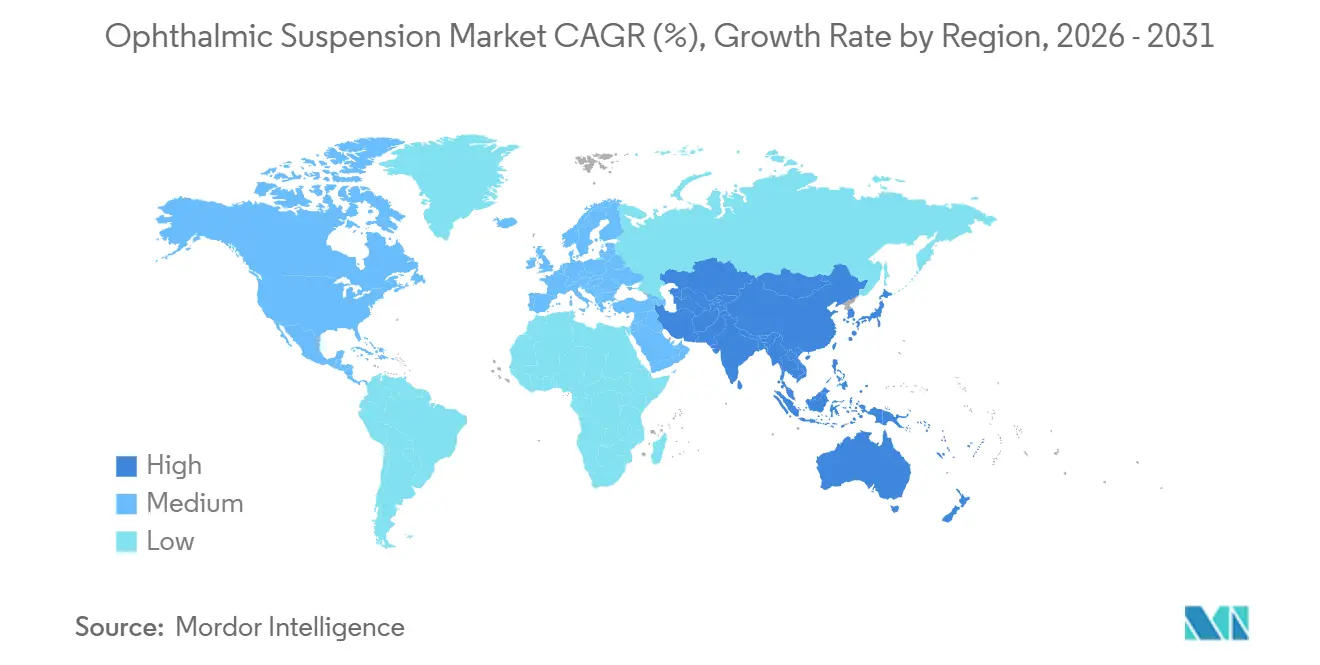
North America held 47.36% of revenue in 2025. Reimbursement structures, specialist availability, and established branded-to-generic conversion supported its leading position. The United States remained the largest national setting for both branded and generic ophthalmic suspensions. FDA generic pathways affect global development plans because U.S. bioequivalence requirements are influential. North America therefore combines a large, reimbursed treatment base with active generic competition.
Europe remained the second-largest regional cluster. Germany, the United Kingdom, France, Italy, and Spain provide established demand for originator and generic ocular products. The region has been an earlier adopter of preservative-free clinical standards. Santen filed applications for STN1013001 in South Korea and Vietnam in December 2024 after development activity in Europe. Payer coverage and generic penetration remain important to pricing in European countries.
Asia-Pacific is projected to expand at a 10.33% CAGR through 2031. Population scale, lower specialist-care penetration, and health care investment support regional growth. China illustrates the development of the regulatory environment for more advanced glaucoma products. The Middle East and Africa and South America remain smaller developing areas within the ophthalmic suspension market. GCC countries lead specialist clinic development in the Middle East and Africa, while Brazil supports South American demand through growing prescription insurance coverage.

Competitive Landscape
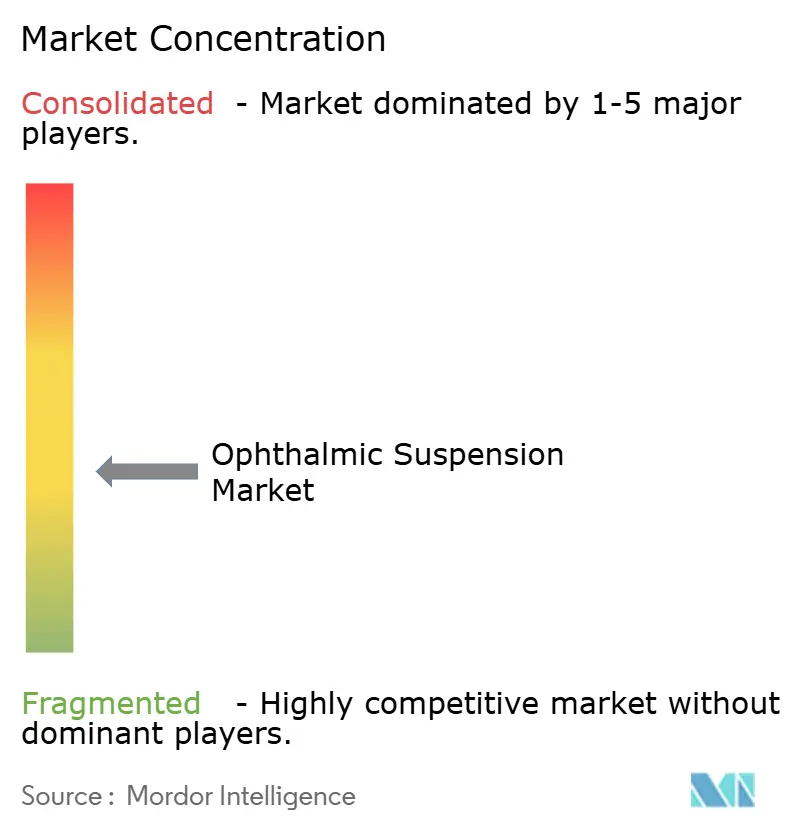
The ophthalmic suspension market has moderately fragmented. AbbVie through Allergan, Alcon, Bausch + Lomb, Novartis, and Santen compete in branded and specialty suspension categories. Lupin, Sun Pharma, Cipla, Teva, and Hikma compete in mature molecules and generic markets. Branded companies focus on preservative-free reformulation, fixed-dose combinations, and expansion into underserved locations. These approaches aim to support differentiation where basic molecules have long been available. Generic suppliers focus on products where regulatory approval and manufacturing capability create a defensible entry position. This combination produces competition between formulation-led differentiation and price-led substitution.
Harrow has used an asset-light approach by acquiring exclusive U.S. rights to specialty ophthalmic products. The company reported 30% revenue growth to USD 63.7 million in the second quarter of 2025. Santen launched SETANEO in Japan in October 2025, reinforcing its focus on differentiated glaucoma treatment. Santen also secured NMPA approval for Tapcom in China in April 2025. These examples show how companies are pairing geographical expansion with product differentiation. The ophthalmic suspension market rewards strategies that address administration burden and preservative sensitivity.
Generic competition is most active where innovation spending is limited and products have multiple suppliers. Regulatory expectations for complex suspensions remain a barrier despite the appeal of established molecules. Novel delivery platforms seek to move beyond the limits of conventional drops. Ocular Therapeutix described its sustained-release hydrogel platform in its 2025 annual report. These programs show where future competition could extend beyond conventional branded and generic strategies.
Ophthalmic Suspension Industry Leaders
Alcon Inc.
Bausch + Lomb Corporation
AbbVie Inc.
Novartis AG
Santen Pharmaceutical Co., Ltd.
- *Disclaimer: Major Players sorted in no particular order

Recent Industry Developments
- June 2026: Bausch + Lomb launched Blink Triple Care Preservative Free Lubricant Eye Drops in the US, available at Amazon, CVS, Target, and Walgreens by end of June 2026. The multi-dose OTC product targets evaporative dry eye with a lipid-water-hyaluronate triple-action formula, extending the company's preservative-free portfolio and competing directly with Alcon's SYSTANE PRO PF.
- May 2026: Upsher-Smith (a Bora Pharmaceuticals subsidiary) launched cyclosporine ophthalmic emulsion 0.05%, generic RESTASIS, following FDA ANDA approval in January 2026, entering a US cyclosporine ophthalmic emulsion market with approximately USD 1.9 billion in annual sales and intensifying competition in the dry eye segment.
- October 2025: Santen launched SETANEO Ophthalmic Solution 0.002% in Japan following PMDA approval in August 2025. The bicyclic prostaglandin derivative, stimulating both FP and EP3 receptors, is the first new mechanism in topical glaucoma therapy approved in Japan in over a decade, with potential to become a new first-line IOP-lowering agent.


Global Ophthalmic Suspension Market Report Scope
According to the report’s scope, the ophthalmic suspension market refers to liquid formulations containing finely dispersed drug particles used in eye care, particularly for treating conditions such as infections, inflammation, and glaucoma. These suspensions improve drug stability and ocular bioavailability, ensuring effective delivery of active ingredients to the eye.
The ophthalmic suspension market is segmented into product type, therapeutic class, application, distribution channel, and geography. By product type, the market is segmented into antibiotic ophthalmic suspensions, anti-inflammatory ophthalmic suspensions, anti-glaucoma ophthalmic suspensions, lubricant and tear-substitute suspensions, combination ophthalmic suspensions, and other product types. By therapeutic class, the market is segmented into corticosteroids, non-steroidal anti-inflammatory drugs, antibiotics, antifungals and antivirals, antiglaucoma agents, and other therapeutic classes. By application, the market is segmented into infectious eye diseases, inflammatory eye conditions, glaucoma management, dry eye and ocular-surface disease, allergic conjunctivitis, and other applications. By distribution channel, the market is segmented into hospital pharmacies, retail pharmacies, and online pharmacies. By geography, the market is segmented into North America, Europe, Asia-Pacific, the Middle East and Africa, and South America. The report also covers the estimated market sizes and trends for 17 countries across major regions globally. The report offers values (USD) for all the above segments.
| Antibiotic Ophthalmic Suspensions |
| Anti-Inflammatory Ophthalmic Suspensions |
| Anti-Glaucoma Ophthalmic Suspensions |
| Lubricant and Tear-Substitute Suspensions |
| Combination Ophthalmic Suspensions |
| Other Product Types |
| Corticosteroids |
| Non-Steroidal Anti-Inflammatory Drugs |
| Antibiotics |
| Antifungals and Antivirals |
| Antiglaucoma Agents |
| Other Therapeutic Classes |
| Infectious Eye Diseases |
| Inflammatory Eye Conditions |
| Glaucoma Management |
| Dry Eye and Ocular-Surface Disease |
| Allergic Conjunctivitis |
| Other Applications |
| Hospital Pharmacies |
| Retail Pharmacies |
| Online Pharmacies |
| North America | United States |
| Canada | |
| Mexico | |
| Europe | Germany |
| United Kingdom | |
| France | |
| Italy | |
| Spain | |
| Rest of Europe | |
| Asia-Pacific | China |
| Japan | |
| India | |
| Australia | |
| South Korea | |
| Rest of Asia-Pacific | |
| Middle East and Africa | GCC |
| South Africa | |
| Rest of Middle East and Africa | |
| South America | Brazil |
| Argentina | |
| Rest of South America |
| By Product Type | Antibiotic Ophthalmic Suspensions | |
| Anti-Inflammatory Ophthalmic Suspensions | ||
| Anti-Glaucoma Ophthalmic Suspensions | ||
| Lubricant and Tear-Substitute Suspensions | ||
| Combination Ophthalmic Suspensions | ||
| Other Product Types | ||
| By Therapeutic Class | Corticosteroids | |
| Non-Steroidal Anti-Inflammatory Drugs | ||
| Antibiotics | ||
| Antifungals and Antivirals | ||
| Antiglaucoma Agents | ||
| Other Therapeutic Classes | ||
| By Application | Infectious Eye Diseases | |
| Inflammatory Eye Conditions | ||
| Glaucoma Management | ||
| Dry Eye and Ocular-Surface Disease | ||
| Allergic Conjunctivitis | ||
| Other Applications | ||
| By Distribution Channel | Hospital Pharmacies | |
| Retail Pharmacies | ||
| Online Pharmacies | ||
| By Geography | North America | United States |
| Canada | ||
| Mexico | ||
| Europe | Germany | |
| United Kingdom | ||
| France | ||
| Italy | ||
| Spain | ||
| Rest of Europe | ||
| Asia-Pacific | China | |
| Japan | ||
| India | ||
| Australia | ||
| South Korea | ||
| Rest of Asia-Pacific | ||
| Middle East and Africa | GCC | |
| South Africa | ||
| Rest of Middle East and Africa | ||
| South America | Brazil | |
| Argentina | ||
| Rest of South America | ||


Key Questions Answered in the Report
What is the projected size of the ophthalmic suspension market by 2031?
The ophthalmic suspension market is projected at USD 4.54 billion in 2025 to reach USD 4.78 billion in 2026 and is forecasted to reach USD 6.54 billion by 2031, growing at a 6.44% CAGR from 2026.
Which ophthalmic suspension product type held the largest share in 2025?
Antibiotic ophthalmic suspensions led product types with 35.14% share in 2025. They are used across bacterial infection treatment, prophylaxis, and surgical care pathways.
Which therapeutic class is growing fastest in ophthalmic suspensions?
Antiglaucoma agents are forecasted to grow at a 7.12% CAGR through 2031. Aging populations, chronic dosing needs, preservative-free options, and fixed-dose combinations support this growth.
Which region is expected to grow fastest through 2031?
Asia-Pacific is projected to grow at a 10.33% CAGR through 2031. Population scale, lower specialist-care penetration, and health care investment support this position.
Page last updated on:





