
Market Overview
| Study Period | 2020 - 2031 |
|---|---|
| Forecast Data Period | 2026 - 2031 |
| Base Year Market Size (2025) | USD 7.22 Billion |
| Market Size (2026) | USD 8.22 Billion |
| Market Size (2031) | USD 16.38 Billion |
| Growth Rate (2026 - 2031) | 14.78 % |
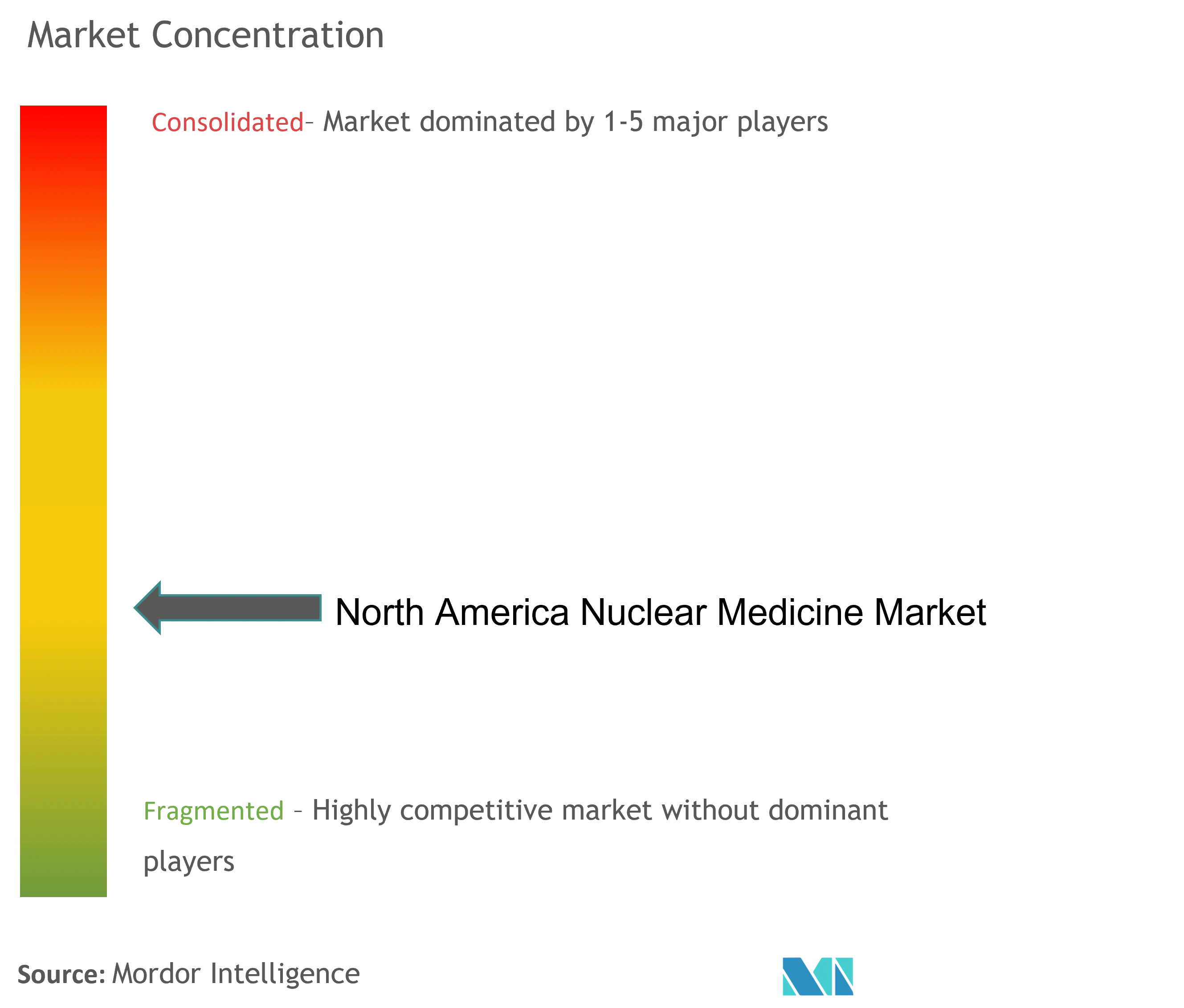
| Market Concentration | Medium |
Major Players *Disclaimer: Major Players sorted in no particular order Image © Mordor Intelligence. Reuse requires attribution under CC BY 4.0. | |
North America Nuclear Medicine Market Analysis by Mordor Intelligence
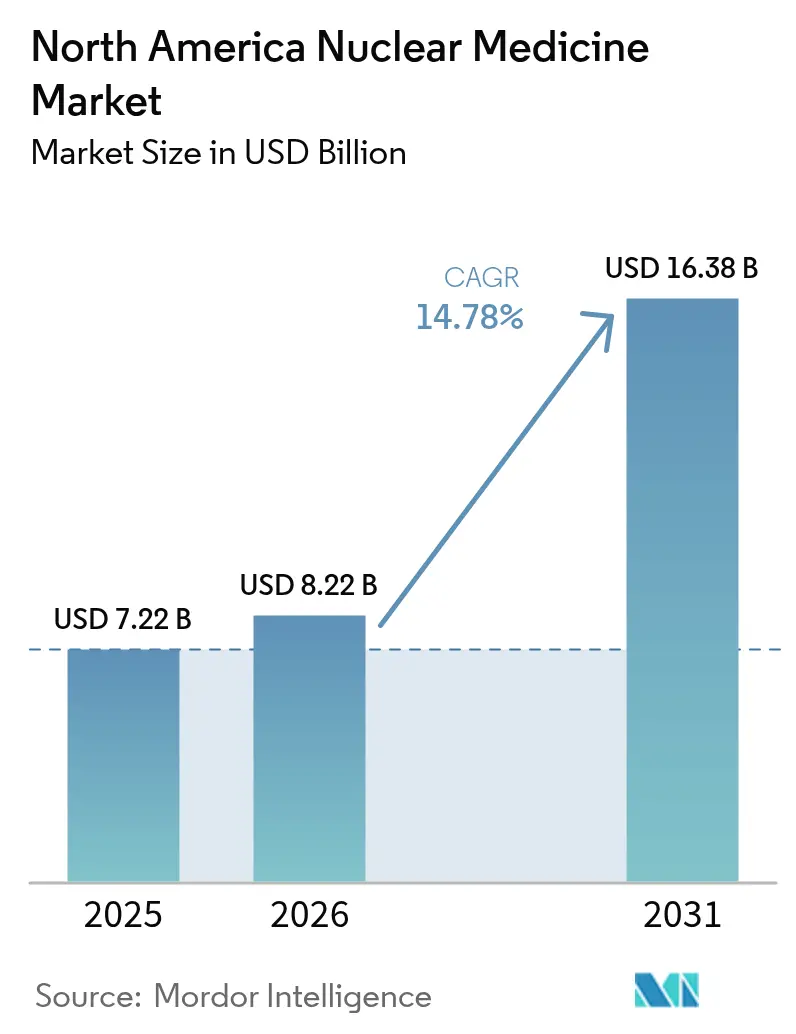
The North America nuclear medicine market size is expected to grow from USD 7.22 billion in 2025 to USD 8.22 billion in 2026 and is forecast to reach USD 16.38 billion by 2031 at a 14.78% CAGR over 2026-2031. This expansion underscores the segment’s pivotal role in precision diagnostics and targeted therapy across oncology, cardiology, and neurology. Sustained investment in radiotheranostics, broader clinical indications, and supportive reimbursement policies continue to lift procedure volumes despite macro-economic pressures. Supply chain localization, particularly for molybdenum-99 and actinium-225, further reduces procurement risk and strengthens value-chain resilience. Intensifying competition among incumbents and new entrants accelerates innovation while patent litigation shapes strategic positioning.
Key Report Takeaways
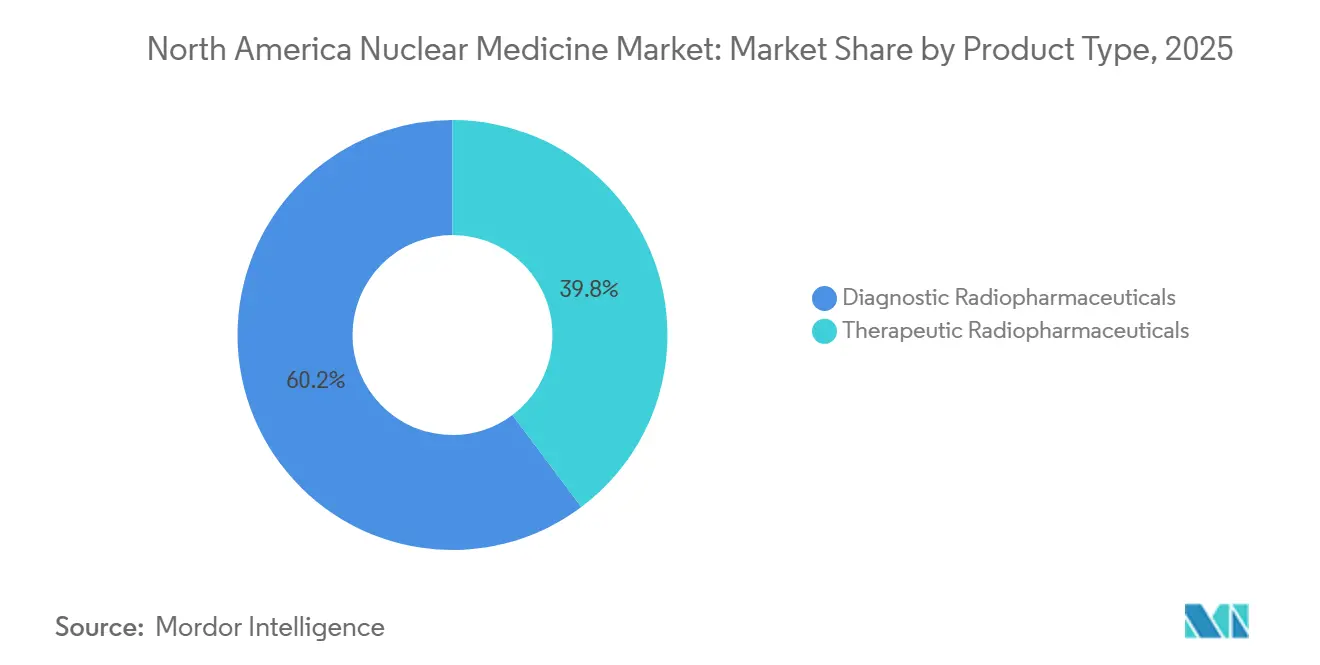
- By product type, diagnostic radiopharmaceuticals held 60.23% of the North America nuclear medicine market share in 2025. Therapeutic radiopharmaceuticals are advancing at an 15.62% CAGR through 2031.
- By application, oncology accounted for a 53.51% share of the North America nuclear medicine market size in 2025, Neurology is projected to expand at an 14.69% CAGR to 2031.
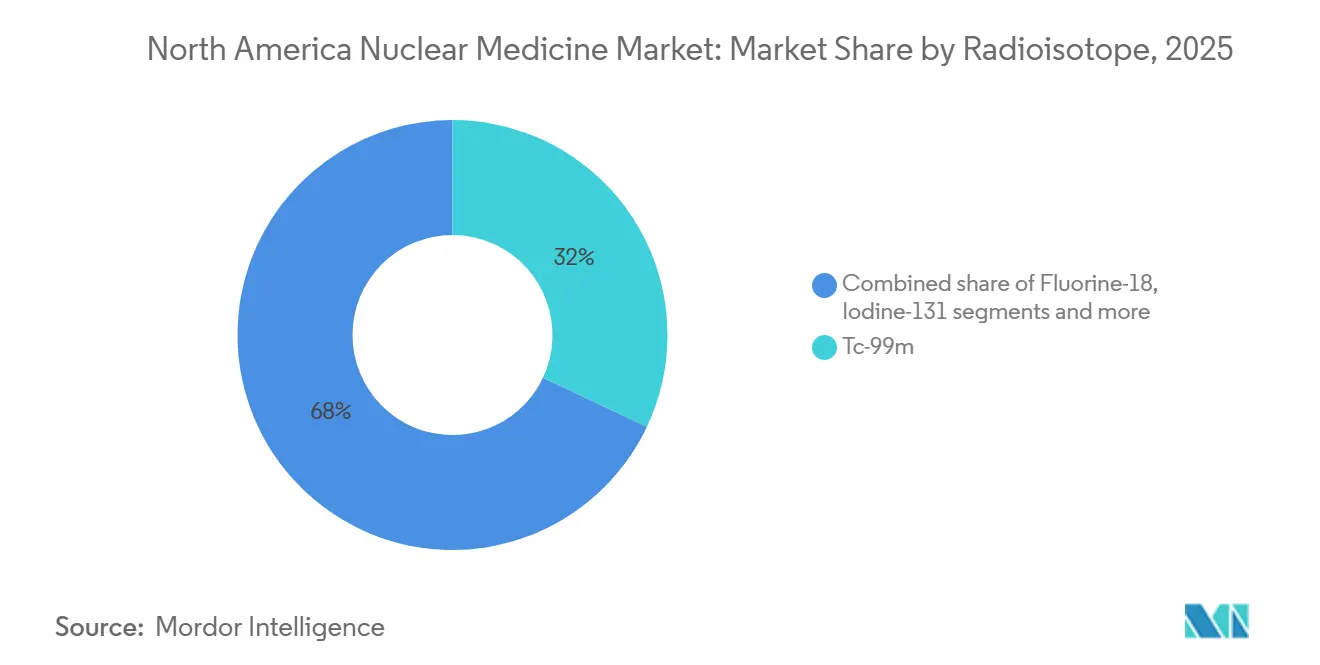
- By radioisotope, technetium-99m commanded 32.01% share of the North America nuclear medicine market size in 2025, Yttrium-90 is growing at a 16.68% CAGR through 2031.
- By end user, hospitals led with 65.11% revenue share in 2025, diagnostic imaging centers record the highest projected CAGR at 15.71% through 2031.
- By geography, the United States commanded 84.40% share of the North America nuclear medicine market in 2025, the country is projected to grow at an 14.89% CAGR through 2031.
Note: Market size and forecast figures in this report are generated using Mordor Intelligence’s proprietary estimation framework, updated with the latest available data and insights as of 2026.
Market Trends and Insights
Drivers Impact Analysis of North America Nuclear Medicine Market*
| Driver | (~) % Impact on CAGR Forecast | Geographic Relevance | Impact Timeline |
|---|---|---|---|
| Rising burden of cancer & CVD | +2.8% | Aging U.S. population and major Canadian provinces | Long term (≥ 4 years) |
| Hybrid imaging adoption surge | +2.1% | United States and Canada | Medium term (2-4 years) |
| Domestic Mo-99 supply build-out | +1.9% | United States with spillover to Canada | Medium term (2-4 years) |
| FDA fast-tracks novel radiotheranostics | +1.7% | U.S. regulatory leadership | Short term (≤ 2 years) |
| Alpha-emitter pipeline expansion | +1.5% | Major North American cancer centers | Long term (≥ 4 years) |
| AI-enabled dose reduction and workflow gains | +1.3% | Technology-advanced U.S. and Canadian health systems | Medium term (2-4 years) |
| Source: Mordor Intelligence | |||
Rising burden of cancer & CVD
Cancer incidence continues to climb across North America, with cardiovascular disease remaining the leading cause of mortality, sustaining demand for accurate diagnostic and therapeutic nuclear medicine procedures. Demographic aging amplifies this need as prostate, breast, and lung cancer prevalence rises sharply beyond age 60. Pediatric indications now grow following FDA approval of lutetium Lu 177 dotatate for patients aged 12 and above, opening new addressable populations[1]. While traditional SPECT cardiac volumes ebb, PET myocardial perfusion imaging gains favor for its higher specificity. The convergence of oncology and cardiology applications enables providers to streamline care pathways and cross-sell services, anchoring multi-specialty revenue streams.
Hybrid imaging (SPECT/CT, PET/CT) adoption surge
North American healthcare systems increasingly adopt these technologies, with cardiac PET imaging gaining significant traction among US cardiologists as demonstrated by expanding clinical adoption and improved reimbursement frameworks under Centers for Medicare & Medicaid Services reforms in 2025 that provide separate payment pathways for advanced diagnostic radiopharmaceuticals. GE HealthCare’s Flyrcado tracer, with a 109-minute half-life, broadens stress testing feasibility and attracts outpatient cardiology centers. Detector advances such as cadmium zinc telluride improve resolution while trimming radiation dose, addressing clinician and patient safety. Artificial intelligence algorithms automate lesion quantification, reducing interpretation variability and accelerating report turnaround.
Domestic Mo-99 supply build-out (NorthStar, etc.)
The U.S. Department of Energy funds multiple initiatives that target 75% self-sufficiency in molybdenum-99 production. SHINE Technologies and NorthStar advance facilities designed to replace historically imported supply, shielding providers from international reactor outages. Canada complements regional resilience through cobalt-60 production at Darlington, diversifying isotope availability. These projects shorten logistics chains, stabilize pricing, and improve predictability for high-volume imaging centers.
Accelerated pathways support agents such as 225Ac-FL-020 and 64Cu-SAR-bisPSMA, cutting development timelines and de-risking capital allocation. The agency’s approval of Flyrcado for coronary artery disease illustrates readiness to endorse tracers with clear clinical benefit. Health Canada mirrors these processes, enabling synchronized launches and larger first-year revenue bases for manufacturers. Regulatory momentum draws venture funding and catalyzes M&A activity around pipeline assets.
Restraints Impact Analysis of North America Nuclear Medicine Market*
| Restraint | (~) % Impact on CAGR Forecast | Geographic Relevance | Impact Timeline |
|---|---|---|---|
| Short half-life logistics bottlenecks | -1.8% | Rural United States and remote Canadian regions | Short term (≤ 2 years) |
| High CAPEX & regulatory hurdles for cyclotrons | -1.6% | United States and Canada | Medium term (2-4 years) |
| Mo-99 HEU-to-LEU transition delays | -1.2% | U.S. domestic production initiatives | Long term (≥ 4 years) |
| Radiopharmacist talent shortage | -1.1% | United States with spillover to Canada | Medium term (2-4 years) |
| Source: Mordor Intelligence | |||
Short half-life logistics bottlenecks
Many diagnostic isotopes decay within hours, demanding just-in-time distribution. Fluorine-18’s 6-hour half-life restricts shipment zones to roughly 200 miles. In 2024, unexpected European reactor downtime created 50-100% shortages in technetium-99m across multiple U.S. states, delaying elective scans[2]. Cold-chain compliance adds cost, and rural sites often cannot meet delivery windows, limiting service availability. Longer-lived copper-64 offers partial relief, though widespread clinical adoption hinges on additional infrastructure and trial data.
High CAPEX & regulatory hurdles for cyclotrons
Installing a 70 MeV cyclotron costs USD 17 million, while annual operating expenses can top USD 1.9 million. Dual oversight by FDA and NRC necessitates exhaustive documentation and multi-year licensing, discouraging smaller providers. Jubilant Radiopharma’s USD 50 million deal for five KIUBE 180 units underscores the financial barrier to entry. These constraints concentrate production among large academic centers and commercial radiopharmacies, perpetuating geographic disparities.
*Our forecasts treat driver/restraint impacts as directional, not additive. The impact forecasts reflect baseline growth, mix effects, and variable interactions.
North America Nuclear Medicine Market Segment Analysis
By Product Type:
Therapeutics Reshape Market DynamicsDiagnostic radiopharmaceuticals retained 60.23% share of the North America nuclear medicine market in 2025, supported by entrenched reimbursement and entrenched clinician familiarity. Therapeutic agents, however, are growing much faster at an 15.62% CAGR as radioligands like lutetium-177 PSMA address advanced metastatic disease with favorable safety profiles. The North America nuclear medicine market size for therapeutics is set to surpass USD billion by 2031, reflecting accelerating adoption among oncologists. SPECT remains dominant in routine bone scans, while PET’s superior resolution wins neurology and oncology referrals. Artificial intelligence-driven dosimetry improves treatment precision, reinforcing payer confidence in premium reimbursement tiers.
A reinforcing loop exists between diagnostic and therapeutic revenues: positive imaging experiences facilitate patient enrollment in companion therapeutics. Novartis’s Pluvicto reached USD 1 billion in U.S. sales during the first nine months of 2024, validating commercial appetite for high-value radiotheranostics. CMS payment reform in 2025 created a separate APC for diagnostic tracers above USD 630, improving hospital margins and encouraging inventory expansion. The North America nuclear medicine industry now positions therapeutic innovation as a primary differentiator among manufacturers that once concentrated on diagnostic agents.

By Application:
Neurology Gains Momentum Beyond Oncology DominanceOncology represented 53.81% of the North America nuclear medicine market in 2025, reflecting its central role in tumor staging and therapy monitoring. The North America nuclear medicine market size for oncology applications is forecast to cross USD 8.97 billion in 2031 at an 14.69% CAGR. Neurology is the fastest-growing application, expanding 11.42% annually as amyloid and tau PET increase Alzheimer’s diagnostic accuracy. CMS travel policy updates in 2025 lowered out-of-pocket costs for Medicare beneficiaries, further encouraging scan uptake.
Neuroimaging demand spurs supply chain adjustments for fluorine-18 tracers like Neuraceq, recently added through Lantheus’s USD 750 million acquisition of Life Molecular Imaging. Advanced AI algorithms shorten interpretation time from 12 minutes to 4 minutes per scan, addressing neuroradiologist shortages. Cardiology maintains relevance through PET perfusion imaging, which grew 6% year-over-year in 2024 despite SPECT declines. Endocrinology remains steady, with thyroid uptake studies and iodine-131 therapy stable across major U.S. academic centers.
By Radioisotope:
Actinium-225 Disrupts Technetium DominanceTechnetium-99m delivered 55.70% of procedure volume in 2025, underpinning core cardiology and bone applications. The North America nuclear medicine market share of technetium-based diagnostics is expected to contract to 47.20% by 2031 as alternative tracers gain ground. Actinium-225 is surging at 10.98% CAGR, supported by new domestic production capacity in Wisconsin and Missouri. The North America nuclear medicine market size for actinium-225 therapeutics could reach USD 1.18 billion by 2031, pending successful late-phase trials.
Lutetium-177 benefits from approved products like Pluvicto and Lutathera, while gallium-68 generators broaden access for community sites lacking cyclotrons. Fluorine-18 diversifies beyond FDG into cardiac perfusion and neuroreceptor imaging, increasing throughput at PET-CT sites. NorthStar’s 52,000-square-foot CDMO facility accelerates actinium-225 and lutetium-177 supply, giving smaller biotechs a rapid path to clinical lot manufacturing.
By End User:
Imaging Centers Challenge Hospital DominanceHospitals captured 65.11% of revenue in 2025, anchored by integrated service lines and established inpatient referrals. Diagnostic imaging centers, however, lead growth at an 15.71% CAGR through 2031 as payers redirect routine scans to lower-cost settings. The North America nuclear medicine market size attributable to imaging centers is projected to reach USD 4.23 billion by 2031. Academic institutes contribute high complexity research and early adopter volumes, while pharmaceutical companies invest in captive facilities to secure trial supply continuity.
IMV survey data show total nuclear medicine procedure volumes falling 5.7% between 2021 and 2023, but non-hospital sites increased 2.5%, foreshadowing sustained outpatient migration. CMS Condition of Participation 42 CFR 482.53 sets uniform quality benchmarks, allowing independent centers to compete on equal footing with hospital departments [ECFR.GOV]. Theranostics capability penetration reached 14% of North American sites in 2024, predominantly within specialty outpatient centers due to streamlined approval pathways and shorter patient stays.
Geography Analysis
United States Nuclear Medicine Market
The United States accounted for 88.90% of the North America nuclear medicine market in 2025 and is advancing at an 11.10% CAGR, reaffirming its dominance in clinical trial activity, isotope manufacturing, and reimbursement leadership. Medicare’s 2025 payment separation for high-cost tracers enhances provider profitability and supports nationwide adoption of advanced agents. Central Indiana’s cluster effect attracts global manufacturers, offering same-day distribution to two-thirds of the U.S. population, enhancing supply reliability.
Canada Nuclear Medicine Market
Canada holds a smaller but strategically significant share. Health Canada’s alignment with FDA’s accelerated pathways facilitated approvals for Illuccix and NETVision, opening high-growth neurology and neuroendocrine segments. Domestic cobalt-60 production at Darlington strengthens isotope sovereignty, while PET-CT scanner density remains below OECD average, indicating expansion potential. Provincial funding initiatives in Ontario and British Columbia earmark capital for new cyclotrons and radiopharmacy upgrades.
Mexico Nuclear Medicine Market
Mexico remains an emerging participant. Regulatory reforms under COFEPRIS align medical device quality standards with international benchmarks, improving market access for imaging equipment vendors. Rising middle-class healthcare spending and public-private partnerships support pilot PET-CT centers in Mexico City and Monterrey. While current procedure volume is modest, double-digit growth trajectories position Mexico as a future outperformer once infrastructure and trained personnel scale.
North America Nuclear Medicine Market
Overall, geographic concentration in the United States accelerates innovation but introduces risk exposure to U.S. policy shifts. Canada and Mexico offer diversification pathways and incremental volume growth that moderate regional cyclicality
Regulatory Landscape
In North America, nuclear medicine products sit across drug, device, and radioactive materials oversight. In the United States, the FDA Office of Combination Products (OCP) coordinates jurisdiction for combination products and assigns a lead center (CDER/CBER/CDRH) based on primary mode of action, while cGMP expectations for combination products are anchored in 21 CFR Part 4. Radiopharmaceutical research pathways can also use the Radioactive Drug Research Committee (RDRC) mechanism (with IRB oversight) for certain human studies that do not proceed through a full IND route, which can speed early clinical imaging work at academic and research centers.
In Canada, radiopharmaceuticals are regulated as Schedule C drugs under the Food and Drugs Act and the Food and Drug Regulations, and combination products must meet requirements that apply to both the drug and the medical device components under the Medical Devices Regulations. Health Canada GMP guidance for positron-emitting radiopharmaceuticals, along with frameworks for drug-medical device combination products, affects manufacturing and quality-system readiness for PET tracers and radiotheranostic agents. Across both countries, compliance is intensified by the need to align clinical imaging performance controls (including imaging charters and standardized acquisition and interpretation protocols) with specialized facility, personnel, and radiation safety requirements.
Value Chain Analysis
The North America nuclear medicine value chain starts upstream with stable isotope and precursor supply, irradiation or particle-acceleration services (reactors, cyclotrons, and generator-based systems), and radiochemical processing into clinical-grade radioisotopes (including Mo-99/Tc-99m and emerging alpha-emitters). Midstream, radiopharmaceutical manufacturing follows combination-product quality requirements, with batch release and QA/QC, and nuclear pharmacy compounding. After production, time-sensitive cold-chain distribution depends on short half-lives and air-ground logistics constraints. Downstream, demand is concentrated in hospitals and diagnostic imaging centers operating PET/CT and SPECT/CT, along with oncology networks scaling theranostics programs that require coordinated scheduling, dosimetry, and waste handling.
Supply resilience is a recurring theme. U.S. initiatives to localize Mo-99 production, including SHINE Technologies progress on its Chrysalis facility in Janesville, Wisconsin (reported at about 75% completion in 2025), address historical reliance on foreign reactors and the vulnerability of Tc-99m availability to international outages. Policy and reimbursement mechanics feed back into the chain as well. CMS proposed an add-on payment for radiopharmaceuticals derived from domestically produced Mo-99 in the CY2026 hospital outpatient setting, linking upstream localization to downstream purchasing behavior. The overall chain stays capital- and compliance-intensive, with high cyclotron installation costs and multi-agency oversight (FDA for drugs/biologics, NRC for nuclear materials, plus state-level requirements) favoring scaled manufacturers and commercial radiopharmacies that can support just-in-time distribution.
Competitive Landscape
Moderate market concentration characterizes the North America nuclear medicine market as top players combine imaging systems, radiopharmaceutical portfolios, and service contracts to defend share. Novartis, GE HealthCare, Siemens Healthineers, Lantheus, and Curium command roughly 64% of total revenue. Novartis reinforces lead through aggressive patent litigation against Eli Lilly, safeguarding Pluvicto and Lutathera exclusivity. Lantheus accelerated inorganic growth via the USD 750 million Life Molecular Imaging acquisition and Evergreen Theragnostics buyout, expanding neurology and oncology offerings.
Horizontal integration shapes supply security: NorthStar’s CDMO model supplies isotopes to smaller drug developers, challenging vertically integrated manufacturers. Siemens Healthineers bolstered U.S. PET operations by acquiring Novartis’s imaging business for USD 223 million, reducing time-to-market for novel tracers. Strategic alliances, such as the seven-year imaging partnership between GE HealthCare and Sutter Health, illustrate demand for turnkey AI-enabled solutions that mitigate staffing shortfalls.
White-space opportunities persist in rural delivery, alpha-emitter therapeutics, and AI-driven workflow software. Barriers include high CAPEX, complex regulations, and specialized workforce requirements, which collectively moderate new-entrant threat and sustain incumbent pricing power.
North America Nuclear Medicine Industry Leaders
-
Cardinal Health
-
GE Healthcare
-
Novartis AG
-
Lantheus Holding
- *Disclaimer: Major Players sorted in no particular order
North America Nuclear Medicine Market Companies Covered in this Report
- GE HealthCare Technologies Inc.
- Siemens Healthineers
- Cardinal Health
- Curium Pharma
- Bracco Imaging S.p.A.
- Bayer AG (Radiology Division)
- Novartis
- Lantheus
- Jubilant Pharma Ltd (Jubilant Radiopharma)
- Eckert & Ziegler AG
- Nordion (Sotera Health Co.)
- Telix Pharmaceuticals Ltd.
- NorthStar Medical Radioisotopes LLC
- Isotopia Molecular Imaging Ltd.
- BWX Technologies Inc. (BWXT Medical)
- IsoRay
- Ion Beam Applications SA
- SOFIE Biosciences Inc.
Market Opportunities and Future Outlook
Whitespace is expanding in outpatient and community access models that can reliably deliver short-lived PET tracers and support theranostics workflows outside tertiary hospitals. Product and pathway activity in 2026 points to competitive openings in prostate cancer imaging, as multiple manufacturers advance alternative formulations and generics through FDA routes such as 505(b)(2) and ANDA. FDA approval of Lantheus PYLARIFY TruVu (piflufolastat F 18) and FDA ANDA approval for Ga-68 PSMA-11 from Ionetix are complemented by additional U.S. approvals for generic Ga-68 PSMA-11 manufacturing from RadioMedix, which broadens sourcing options for imaging centers and integrated delivery networks.
A second opportunity area is hardening the supply chain for critical isotopes and precursors, where active government-backed infrastructure programs and upstream process innovations are already visible. DOE actions to expand stable isotope production capabilities at Oak Ridge National Laboratory, including enrichment for ytterbium-176 (a lutetium-177 precursor), reinforce domestic inputs for radioligand therapy supply chains. Financing also supports localization themes that are influencing procurement decisions, including the DOE conditional loan commitment to SHINE Technologies for the Chrysalis facility. For alpha-emitters, commercial pathways for precursor constraints are starting to emerge, including Actineer (CNL and ITM joint venture) reporting a closed-loop radium-226 recycling process, which could improve predictability for actinium-225 availability and scheduling reliability for CDMOs, radiopharmacies, and therapy providers.
Recent Industry Developments in North America Nuclear Medicine Market
- June 2026: Lantheus disclosed that the FDA issued a Complete Response Letter for LNTH-2501 (Ga-68). The update underscored execution and a regulatory-risk layer in radiopharmaceutical development, with implications for near-term supply planning at sites that align imaging protocols to specific tracer labels.
- May 2025: Lantheus announced a definitive agreement to sell its SPECT business, including TechneLite and Cardiolite, to SHINE Technologies. The transaction sharpened Lantheus focus on PET and radiotheranostics while transferring established Tc-99m-era brands to a buyer investing in domestic isotope infrastructure, reshaping competitive positioning across legacy and next-generation portfolios.
- April 2024: Novartis reported FDA approval of Lutathera for pediatric patients aged 12 years and older with SSTR-positive gastroenteropancreatic neuroendocrine tumors. The label expansion widened the addressable theranostics population and reinforced the strategic value of manufacturing scale and distribution capabilities for lutetium-177-based therapies.
North America Nuclear Medicine Market Report Scope and Research Methodology
Market Definition and Coverage
For this study, the North America nuclear medicine market is defined as the value generated from diagnostic and therapeutic nuclear medicine procedures that use radiopharmaceuticals, including the associated nuclear medicine products used to deliver those procedures across the region.
Scope exclusions: Conventional X-ray, CT, and MRI that are not part of PET or SPECT workflows are excluded from this market sizing.
Segments Covered in This Report
- By Product Type
- Diagnostic Radiopharmaceuticals
- SPECT
- PET
- Therapeutic Radiopharmaceuticals
- Targeted Beta Therapy
- Targeted Alpha Therapy
- Brachytherapy
- Diagnostic Radiopharmaceuticals
- By Application
- Oncology
- Cardiology
- Neurology
- Endocrinology
- Other Applications
- By Radioisotope
- Technetium-99m
- Fluorine-18
- Iodine-131
- Lutetium-177
- Yttrium-90
- Gallium-68
- Others
- By End User
- Hospitals
- Diagnostic Imaging Centers
- Academic & Research Institutes
- North America
- United States
- Canada
- Mexico
Data Sources, Market Sizing, and Validation
Desk Research
Desk research was used to build the initial structure of the model and to set realistic boundaries for what counts as nuclear medicine in North America. We mainly relied on public and official references, such as FDA approvals and safety communications, CMS and national reimbursement references, IAEA nuclear medicine publications, and U.S. government health statistics (including CDC and NCHS). For utilization and clinical practice context, we also used peer-reviewed medical journals that report PET and SPECT use.
Along with these, we reviewed company filings, investor decks, association websites, and reputed press updates to understand tracer availability, indication momentum, and supply constraints around key isotopes. Paid subscriptions were used only for company financials and patent mapping so that revenue pools and innovation timelines could be cross-checked consistently. The sources listed above are illustrative, and we also used other public references to collect data, validate assumptions, and clarify gaps.
Primary Interviews and Surveys
Primary work was carried out through expert interviews and structured surveys with stakeholders across the nuclear medicine value chain, including radiopharmacies, isotope supply related roles, imaging providers, and hospital-based nuclear medicine teams. These discussions helped test utilization assumptions, confirm the typical procedure mix across PET and SPECT, and sanity check pricing logic for key tracers and therapeutic agents across the United States, Canada, and Mexico.
Distribution of primary research fieldwork respondents
| Company type | Respondent position |
|---|---|
| Top tier: 35% | CXOs: 12% |
| Mid tier: 46% | Functional/Unit leaders: 43% |
| Smaller Players: 19% | Managers: 45% |
Market-Sizing & Forecasting
Sizing was built using a top-down and bottom-up hybrid. First, we reconstructed the demand pool from procedure volumes and the modality mix across PET and SPECT. We then translated those volumes into value using tracer level and therapy level pricing benchmarks. To avoid overstating totals, we cross-checked the initial outputs using selective bottom-up approximations such as sampled provider throughput, radiopharmacy channel checks, and revenue reasonableness ranges from disclosed business lines, and we adjusted the model when these checks did not align.
Key inputs that shaped the model included PET versus SPECT share shifts, growth in oncology-led scans and theranostic pathways, availability signals for major isotopes (for example Mo-99 and emerging Actinium-225 supply), reimbursement and coding changes that influence procedure adoption, and the installed base trend for PET and SPECT systems as a capacity indicator. Forecasting used scenario analysis supported by smoothing on utilization and pricing, and we stress tested assumptions with expert feedback on approval timelines, supply tightness, and expected site expansion. Where visibility for smaller facilities was limited, we applied conservative utilization ranges by facility type and then revalidated the implied totals against national activity signals.
Data Validation & Update Cycle
Validation was done through multiple passes, where model outputs were compared against independent signals such as modality utilization trends, reimbursement direction, and isotope supply updates that can quickly change procedure availability. We also ran variance checks across countries and across diagnostics versus therapeutics, so any step changes were flagged and reviewed before sign off.
Reports are refreshed annually, with interim updates when major events occur, such as a meaningful regulatory approval, a supply disruption, or a reimbursement shift. Before delivery, we do a final review to confirm that the latest public releases and primary feedback are reflected in the final numbers, and we re-contact stakeholders when a key assumption has moved materially.
Mordor Intelligence's North America Nuclear Medicine Market Size Measured Against Other Published Estimates
Published market numbers for North America nuclear medicine can vary a lot, even when the topic is described similarly. Differences usually come from what is counted as nuclear medicine value, whether diagnostics and therapeutics are both included, and how each publisher handles pricing, currency, and timing.
In practice, the biggest spread is caused by scope choices, such as folding imaging equipment sales and cyclotron systems into the same total, or reporting only radiopharmaceutical revenue and leaving out parts of the procedure value chain. Another driver is how procedure growth is projected, since aggressive adoption curves for theranostics and optimistic isotope availability assumptions can lift long-range totals, while slower reimbursement uptake and more conservative tracer price progression can pull them down.
Benchmark comparison
| Source | Market Size | Gaps in Research Methodology |
|---|---|---|
| Mordor Intelligence | USD 7.22 B (2025) | |
| Industry Publisher A | USD 6.29 B (2024) | This estimate uses a different base year and appears to include nuclear medicine equipment and cyclotron related spending, which can shift totals depending on how capital purchases are timed. |
| Data Portal B | USD 6.97 B (2025) | This figure is positioned around radiopharmaceuticals and modality splits, which can undercount the broader nuclear medicine value captured when diagnostic and therapeutic procedure economics are modeled together. |
Overall, the gaps are explained by what is included and how quickly adoption and pricing are assumed to move over time, especially for oncology-led PET growth and therapeutic radiopharmaceutical uptake. Keeping the sizing tied to procedure volume signals, isotope availability checks, and year-specific pricing assumptions produces a number that is easier to replicate and audit. This is the approach used here and applied by Mordor Intelligence.
Key Questions Answered in the Report
How large is the North America nuclear medicine market in 2026?
It is valued at USD 8.90 billion, with an 11.02% CAGR projected through 2031.
Which product category is growing fastest?
Therapeutic radiopharmaceuticals are expanding at 11.12% annually due to rising adoption of radioligand therapies.
What share do hospitals hold in procedure revenue?
Hospitals account for 68.20% of revenue, though outpatient imaging centers are gaining ground.
Which radioisotope leads diagnostic use?
Technetium-99m maintains 55.70% share, supported by entrenched cardiac and bone scan protocols.
Why is actinium-225 gaining attention?
Alpha-emitter actinium-225 therapies show high tumor-cell kill and are growing at an 10.98% CAGR as domestic production scales.
How are regulators supporting innovation?
FDA and Health Canada deploy fast-track and accelerated approval pathways, shortening development cycles for novel radiotheranostics.