
Market Overview
| Study Period | 2020 - 2031 |
|---|---|
| Forecast Data Period | 2026 - 2031 |
| Base Year Market Size (2025) | USD 28.66 Billion |
| Market Size (2026) | USD 32.43 Billion |
| Market Size (2031) | USD 60.12 Billion |
| Growth Rate (2026 - 2031) | 13.14 % |
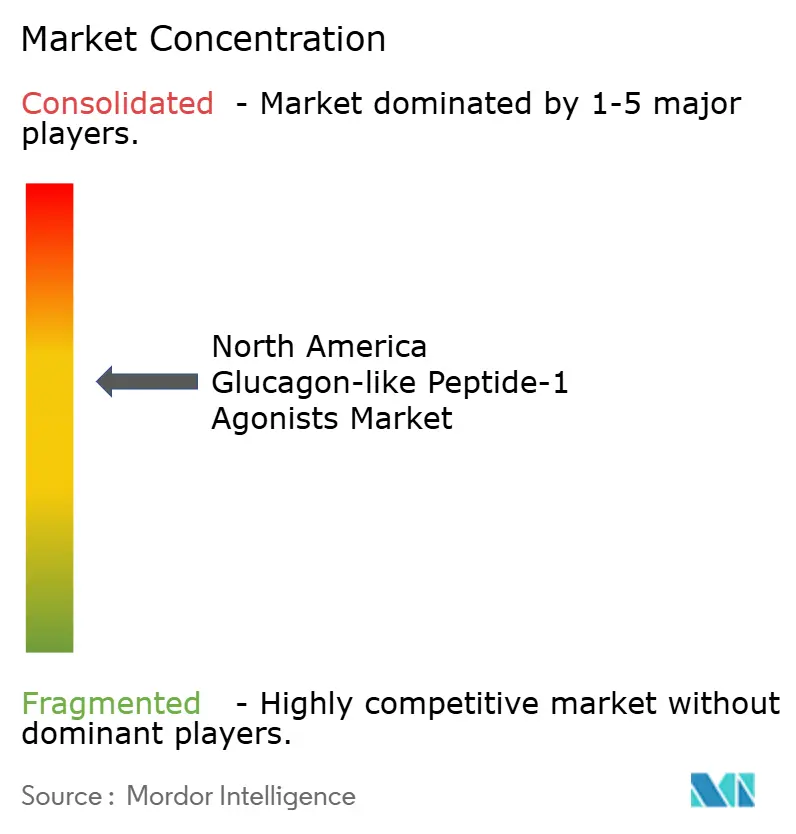
| Market Concentration | Medium |
Major Players *Disclaimer: Major Players sorted in no particular order Image © Mordor Intelligence. Reuse requires attribution under CC BY 4.0. | |
North America Glucagon-like Peptide-1 Agonists Market Analysis by Mordor Intelligence
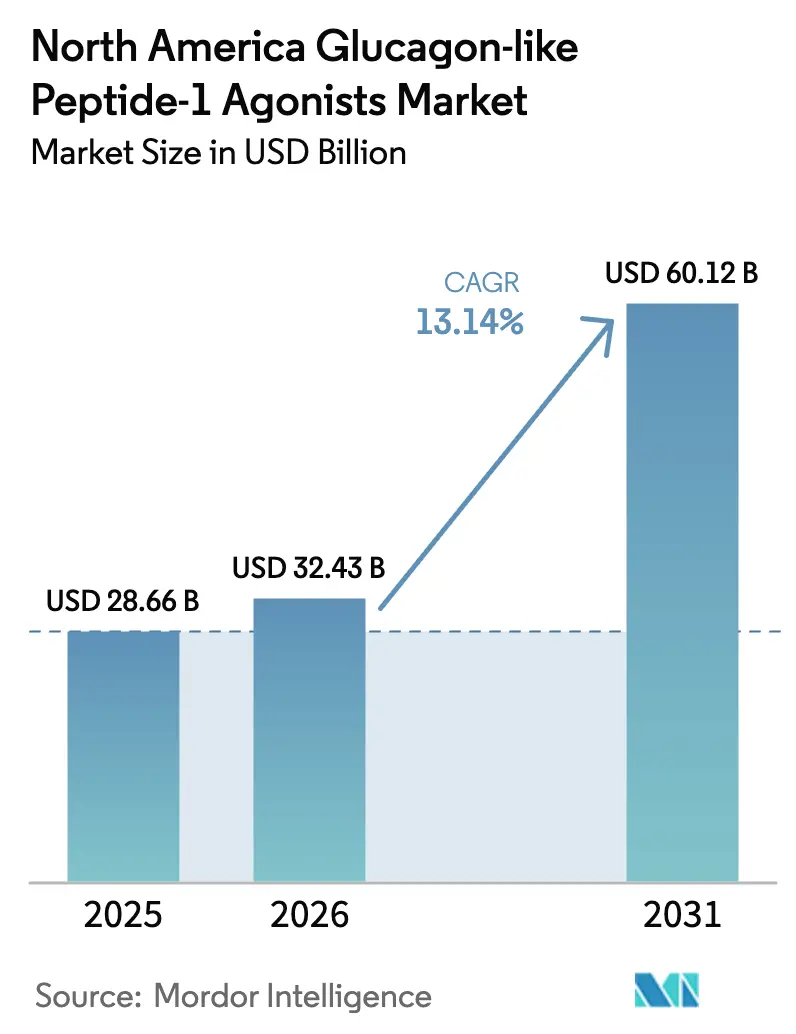
The North America glucagon-like peptide-1 agonists market size is projected to be USD 28.66 billion in 2025, USD 32.43 billion in 2026, and reach USD 60.12 billion by 2031, growing at a CAGR of 13.14% from 2026 to 2031. The trajectory is powered by three converging factors, namely higher type-2 diabetes incidence, escalating obesity prevalence, and cardiometabolic guideline revisions that elevate incretin agents to first-line status. Commercial insurers are widening coverage for weight-management prescriptions, while employer self-insured plans are adopting guaranteed-savings models that accelerate uptake. Manufacturers are spending more than USD 20 billion on capacity expansion through 2026, a response to periodic product shortages that exposed supply-chain bottlenecks. Digital prescribing and direct-to-consumer (DTC) fulfillment have compressed the time from consultation to therapy initiation, further lifting prescription volumes.
Key Report Takeaways
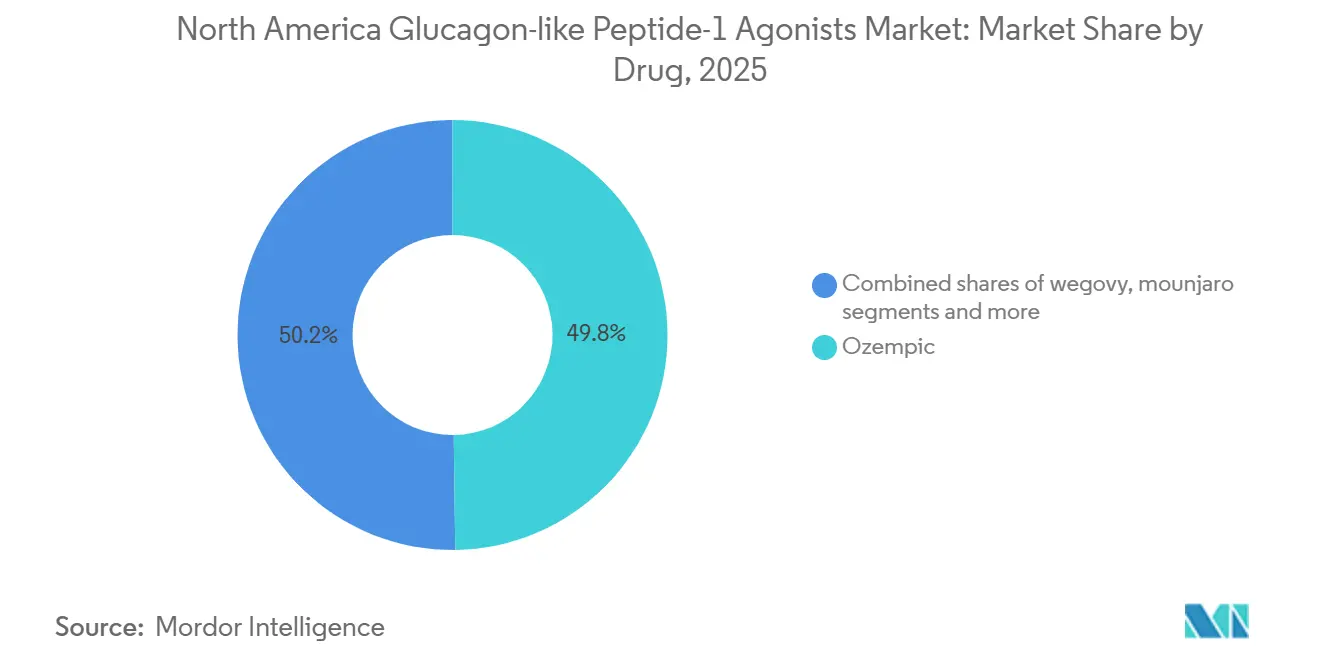
- By drug class, Ozempic led with a 49.8% North America Glucagon-like Peptide-1 agonists market share in 2025, whereas Mounjaro posts the fastest expansion at a 16.87% CAGR through 2031.
- By route, subcutaneous injectables held 85.6% share in 2025; oral formulations carry the highest growth, advancing at a 14.65% CAGR on the back of Rybelsus and orforglipron pipeline momentum.
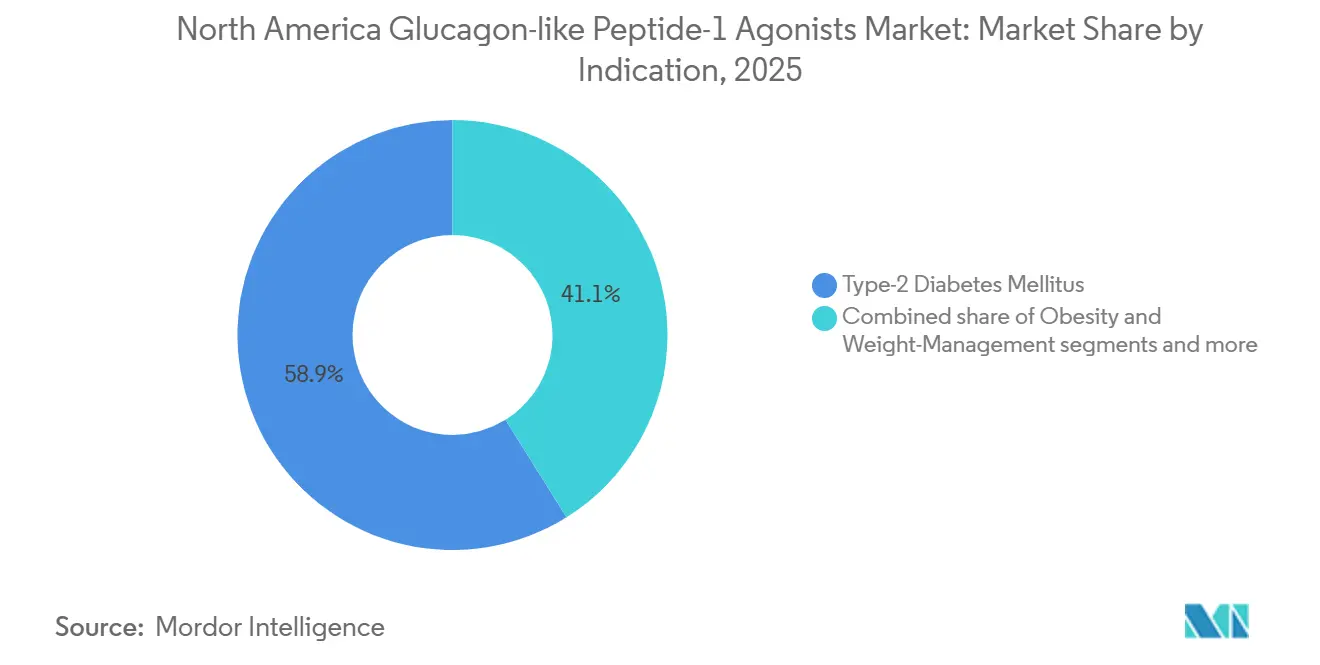
- By indication, Type-2 diabetes mellitus held 58.89% share in 2025, obesity & weight-management advancing at a 13.45% CAGR through 2031.
- By distribution channel, retail and chain pharmacies retained 54.23% share in 2025, while online and DTC platforms accelerate at a 15.82% CAGR through 2031.
- By country, the United States contributed 85.43% of 2025 revenue, whereas Mexico exhibits the strongest trajectory with a 15.10% CAGR as nearshoring expands fill-finish capacity.
Note: Market size and forecast figures in this report are generated using Mordor Intelligence’s proprietary estimation framework, updated with the latest available data and insights as of January 2026.
Market Trends and Insights
Drivers Impact Analysis of North America Glucagon-like Peptide-1 Agonists Market*
| Driver | (~) % Impact on CAGR Forecast | Geographic Relevance | Impact Timeline |
|---|---|---|---|
| Type-2 Diabetes Prevalence Escalation | +2.6% | United States, Canada, Mexico | Long term (≥ 4 years) |
| Obesity-Focused Label Expansions and Coverage Gains | +3.0% | United States, Canada | Medium term (2-4 years) |
| Cardiometabolic Outcome-Based Guideline Inclusion | +2.0% | United States, Canada | Medium term (2-4 years) |
| Tele-Prescription and DTC Platforms Accelerate Uptake | +1.8% | United States | Short term (≤ 2 years) |
| Employer-Funded Benefit Designs for Productivity Savings | +1.5% | United States | Medium term (2-4 years) |
| Nearshoring of Fill-Finish Capacity Across Mexico | +1.1% | Mexico, supply benefits to United States | Long term (≥ 4 years) |
| Source: Mordor Intelligence | |||
Type-2 Diabetes Prevalence Escalation
The Centers for Disease Control and Prevention documented 38.4 million Americans living with diabetes in 2024, of whom up to 95% have type 2 diabetes. Rising adolescent incidence extends lifetime drug utilization horizons, creating multi-decade revenue streams. The American Diabetes Association’s 2025 standards place GLP-1 receptor agonists immediately after metformin for high-risk patients, expanding the eligible pool by roughly 12 million adults [1]. Canada shows a parallel rise, with 11.9 million citizens affected by diabetes or pre-diabetes in 2024. Younger onset increases cardiovascular risk over time, which strengthens the clinical argument for early incretin therapy. Together, these epidemiologic shifts add positive pressure to prescription growth through 2031.
Obesity-Focused Label Expansions and Coverage Gains
The FDA cleared semaglutide for cardiovascular risk reduction in March 2024, which unlocked Medicare Part D coverage because the drug now treats a covered cardiovascular condition rather than obesity alone. In November 2024, the Centers for Medicare & Medicaid Services proposed rules that would extend anti-obesity drug benefits to 7.4 million beneficiaries, opening an untapped payer segment [2]. Commercial insurers follow a mixed strategy: some demand 12-week lifestyle documentation, whereas others waive step therapy after high-risk scores are confirmed. Employer self-insured plans adopt GLP-1 carve-outs, attracted by modeled 120% returns on investment tied to absenteeism reductions. Expanded benefits sharpen demand visibility and enhance revenue predictability for manufacturers.
Cardiometabolic Outcome-Based Guideline Inclusion
Cardiology, nephrology, and endocrinology societies now unanimously endorse GLP-1 receptor agonists for cardiovascular risk reduction after the SELECT and SOUL trials demonstrated 20% and 14% event reductions, respectively. The World Health Organization added semaglutide to the 2025 essential medicines list, signaling global consensus [3]. In the United States, the American College of Cardiology reclassified semaglutide and tirzepatide as first-line agents for patients with established atherosclerotic disease and obesity in 2025. Health-system formularies responded by raising GLP-1 placement to preferred tiers, giving cardiologists a stronger voice in treatment decisions. Shared decision-making now integrates weight control, glycemic management, and cardiovascular benefit, reinforcing the therapeutic value proposition.
Tele-Prescription and DTC Platforms Accelerate Uptake
Virtual platforms compress the care pathway. Hims & Hers recorded an average 48-hour turnaround from web consultation to medication shipment in 2024. Ro’s asynchronous model enrolled over 100,000 patients by mid-2024, demonstrating scalable clinician capacity. Eli Lilly’s LillyDirect integrates telehealth, independent pharmacies, and home delivery across 49 states, capturing 8% of tirzepatide prescriptions by late 2024. Fast fulfillment appeals to patients facing multi-week waits at traditional clinics. Regulatory scrutiny is tightening; however, the FDA issued warning letters to compounding pharmacies marketing semaglutide despite resolved shortages, a move that may narrow gray-market supply. Balanced oversight will determine whether DTC platforms maintain momentum or revert to conventional dispensing.
Restraints Impact Analysis of North America Glucagon-like Peptide-1 Agonists Market*
| Restraint | (~) % Impact on CAGR Forecast | Geographic Relevance | Impact Timeline |
|---|---|---|---|
| Drug Cost and Payer Prior-Authorization Hurdles | -2.6% | United States, Canada | Short term (≤ 2 years) |
| Periodic API and Pen-Device Shortages | -1.9% | United States, Canada, Mexico | Short term (≤ 2 years) |
| Tighter Policing of Off-Label Cosmetic Use | -1% | United States | Short term (≤ 2 years) |
| Pipeline Oral Incretin Mimetics Substitute Threat | -1.4% | United States, Canada | Medium term (2-4 years) |
| Source: Mordor Intelligence | |||
Drug Cost and Payer Prior-Authorization Hurdles
Wholesale acquisition prices range between USD 935 and USD 1,349 per month in 2026, positioning GLP-1 agonists among the most expensive chronic-care therapies in North America. Pharmacy benefit managers apply layered prior-authorization checks that verify lifestyle modification, body-mass index thresholds, and comorbidity profiles, adding an average 15-day delay to therapy initiation. Prime Therapeutics reported initial denial rates of 42% for GLP-1 requests in 2024, although two-thirds were overturned on appeal with added documentation. High-deductible health plans expose commercially insured patients to USD 150–300 monthly out-of-pocket costs, driving abandonment rates above 30% at first fill. As more outcomes data affirm broader benefits, payers may soften criteria, but cost friction remains the near-term speed limit on market growth.
Periodic API and Pen-Device Shortages
Between 2022 and 2024, the FDA shortage database frequently listed Ozempic, Wegovy, Mounjaro, and Zepbound due to pen-device bottlenecks. Novo Nordisk allocated USD 6 billion to scale its Chartres, France, plant and USD 4.1 billion for a new facility in Clayton, North Carolina, aiming to add 50% more capacity by 2027. Eli Lilly is investing USD 9 billion across four sites to double tirzepatide output by late 2026. While shortages eased in late 2024, recurrent demand spikes could reappear until new lines reach commercial volumes. Interim gaps invite compounded-product alternatives that challenge quality oversight.
*Our forecasts treat driver/restraint impacts as directional, not additive. The impact forecasts reflect baseline growth, mix effects, and variable interactions.
North America Glucagon-like Peptide-1 Agonists Market Segment Analysis
By Drug:
Mounjaro’s Dual Agonism Redefines Therapeutic EfficacyThe North America Glucagon-like Peptide-1 agonists market size for Mounjaro is poised to expand at a 16.87% CAGR, fueled by 22.5% mean weight reduction in SURMOUNT-1 and superior glycemic control relative to semaglutide. Ozempic kept a 49.8% North America Glucagon-like Peptide-1 agonists market share in 2025 because of its first-mover advantage and positive cardiovascular data from the SELECT trial. Wegovy and Zepbound drew 18% combined revenue in 2025, their growth grounded in fresh cardioprotective labeling and pending Medicare coverage finalization. Rybelsus caters to needle-averse patients, though its fasting rule curbs adherence; orforglipron seeks to remove that barrier when submitted for approval in 2026.
Pipeline candidates are re-shaping competitive contours. Cagrisema, the semaglutide–cagrilintide fixed-ratio mix, reported 27.1% weight loss in REDEFINE-2, while survodutide and retatrutide advance multi-agonist strategies. Trulicity, once a category mainstay, is slipping under patent-expiry shadow as biosimilars queue for 2027. Legacy options such as liraglutide and exenatide are eroding at 6% annually as prescribers pivot to weekly agents with stronger cardiometabolic evidence.
By Route of Administration:
Oral Agents Gain MomentumSubcutaneous injectables command 85.6% of prescriptions due to weekly dosing and well-documented cardiovascular and renal outcomes. Their user-friendly pens, concealed needles, and auto-injector designs help blunt needle aversion. Semaglutide also demonstrated a 24% reduction in kidney disease progression in the FLOW study, reinforcing clinician confidence.
Oral formulations grow at a 14.65% CAGR as patients seek needle-free options. Rybelsus posted USD 1.9 billion global sales in 2024, and its October 2025 cardiovascular indication approval heightened primary-care adoption. The North America Glucagon-like Peptide-1 agonists market size for oral agents is expected to accelerate once orforglipron reaches the market. Patient-preference surveys reveal that 40% of eligible individuals refused injections in favor of tablets when equally effective choices exist. As adherence obstacles, namely, fasting requirements, are ironed out, oral uptake will chip away at injectable dominance.
By Indication:
Obesity Applications Outpace DiabetesObesity and weight-management prescriptions represent the fastest-moving segment, advancing at a 13.45% CAGR on the heels of expanded labeling and payer adoption. The FDA authorized Wegovy for cardiovascular risk reduction in adults with established cardiovascular disease, allowing Medicare Part D reimbursement, which reshapes the North America Glucagon-like Peptide-1 agonists market size equation for this indication. Commercial insurers layer tiered co-insurance but loosen step therapy once comorbid cardiovascular risk is documented.
Type-2 diabetes still represents 58.89% of revenue in 2025, underpinned by long-standing guideline status and glycemic efficacy. Cardiovascular risk-reduction prescriptions accounted for 12% of 2025 volume yet should reach 22% by 2031, following cardiology guideline alignment. Specialty-level diffusion is visible: cardiologists wrote 8% of GLP-1 scripts in 2024, up from 2% two years earlier. Nephrologists are next in line as FLOW results get embedded into chronic kidney disease management algorithms.

By Distribution Channel:
DTC Platforms Disintermediate Traditional Pharmacy NetworksRetail and chain pharmacies held a 54.23% share in 2025; however, DTC platforms climbed at a 15.82% CAGR by promising rapid access and transparent pricing. Hims & Hers enrolled over 40,000 patients in five months, using compounded semaglutide priced 50% below branded injectable alternatives. Eli Lilly’s LillyDirect demonstrates how originators can bypass traditional pharmacy benefit managers while retaining reimbursement acceptance.
Hospital pharmacies dispense 18% of volume, primarily during inpatient stays for hyperglycemia or acute cardiovascular care. They now negotiate value-based contracts linking GLP-1 use to reduced readmission penalties. Retailers combat margin compression by developing virtual consultation arms, yet sustained compounded-product availability hinges on the FDA shortage status. Enforcement actions in late 2024 narrowed compounded supply and may push DTC platforms toward branded sourcing, adding cost pressure but preserving market momentum.
Geography Analysis
United States Glucagon-like Peptide-1 Agonists Market
The United States leads the region, generating 85.43% of 2025 revenue. Obesity prevalence reached 41.9% among adults during 2017–2020 and is forecast to hit 60.6% by 2050 if trends persist. Employer self-insured plans, covering 64% of workers, model tangible productivity savings, which spur benefit adoption even when PBM rebates remain opaque. If finalized, the 2026 CMS rule will add 7.4 million public beneficiaries, transforming payer mix and volume forecasts. State Medicaid coverage remains fragmented, with unrestricted access in 23 states versus outright exclusions in nine, creating access deserts for low-income populations. FDA approval of oral semaglutide for cardiovascular risk reduction in October 2025 enabled Medicare Advantage plans to list the drug under cardiovascular codes, bypassing obesity exclusions.
Canada Glucagon-like Peptide-1 Agonists Market
Canada exhibits policy heterogeneity due to provincial autonomy. Ontario funds semaglutide and dulaglutide for diabetes under the Ontario Drug Benefit, yet limits Wegovy access to body-mass index above 35 kg/m² with comorbid conditions. Quebec added Wegovy in March 2024, while British Columbia still excludes anti-obesity GLP-1 therapies. CADTH issued positive cost-effectiveness opinions for semaglutide and tirzepatide under diabetes indications, but budget constraints slow uniform uptake. Private insurers cover 78% of employer plans, though step-therapy and prior-authorization add an average 30-day lag before therapy commencement.
Mexico Glucagon-like Peptide-1 Agonists Market
Mexico is poised for a 15.10% CAGR through 2031. Nearshoring brings fill-finish plants closer to North American demand, and COFEPRIS utilizes accelerated pathways for biosimilars, as evidenced by Biocon’s liraglutide approval in 2024. Public payers IMSS and ISSSTE reimburse GLP-1 agonists only for diabetes, excluding obesity, yet rising private insurance penetration in the expanding middle class is widening access. Novo Nordisk singled out Mexico as its largest Latin American market in 2024, and Eli Lilly intends to localize manufacturing to bolster regional resilience. Currency fluctuations pose a pricing challenge, but domestic production and biosimilar entry may temper import costs.
Regulatory Landscape
The North American regulatory environment for GLP-1 receptor agonists centers on supply integrity and patient safety as branded products gain market prominence. In April 2026, the FDA clarified the conditions under which 503A and 503B compounders may qualify for exemptions, which points to tighter compliance expectations for compounded semaglutide and related APIs. In 2026, the White House issued a Section 232 action on pharmaceutical imports, adding tariff compliance mechanisms that affect GLP-1 supply chain costs. Health Canada approved a generic semaglutide injection in 2026, supporting lower-cost pathways in the region, while the United States continues to emphasize domestic manufacturing incentives and enforcement to improve supply stability.
Competitive Landscape
Novo Nordisk and Eli Lilly held a majority of shares in 2025. Both companies run aggressive capital-spending programs totaling more than USD 20 billion between 2024 and 2026 to double semaglutide and tirzepatide output. Novo Nordisk’s Clayton, North Carolina, site and Eli Lilly’s Indiana and Ireland plants anchor regional supply chains. Pipeline innovation intensifies rivalry. Amgen’s MariTide achieved 20% weight loss with monthly dosing, aiming to extend intervals even further in Phase 3. Viking Therapeutics’ VK2735 delivered double-digit weight reductions in both injectable and oral forms, signaling future multisource pressure.
Boehringer Ingelheim and Zealand Pharma commenced Phase 3 SYNCHRONIZE trials for survodutide, a dual GLP-1/glucagon agonist, targeting both obesity and metabolic dysfunction-associated steatohepatitis. Roche’s 2023 acquisition of Carmot Therapeutics injected fast-follower oral assets into its pipeline, adding another heavyweight to the fray. Biosimilar developers Biocon, Viatris, and Samsung Bioepis plan dulaglutide and liraglutide offerings as patents expire in 2027, although complex peptide synthesis may limit penetration to 15%–20% of legacy-agent volume.
White-space segments attract strategic bets. Pediatric obesity remains under-served, despite Wegovy adolescent approval in 2022. Non-alcoholic steatohepatitis shows promise following survodutide’s 47% resolution rate in Phase 2, and chronic kidney disease is emerging as a major downstream indication based on FLOW outcomes. As incumbent leaders broaden labels, they also license complementary mechanisms such as amylin analogs and glucagon agonists to reinforce position before biosimilar erosion begins.
North America Glucagon-like Peptide-1 Agonists Industry Leaders
-
Astrazeneca
-
Sanofi
-
Eli Lilly and Company
-
Pfizer Inc.
-
Novo Nordisk A/S
- *Disclaimer: Major Players sorted in no particular order
North America Glucagon-like Peptide-1 Agonists Market Companies Covered in this Report
- Adocia SA
- Amgen
- AstraZeneca
- Boehringer Ingelheim
- Biocon Ltd
- Eli Lilly and Company
- Hanmi Pharmaceutical Co. Ltd.
- Innovent Biologics Inc.
- Altimmune Inc
- Merck
- Novo Nordisk
- Pfizer
- Rhythm Pharmaceuticals Inc.
- Roche
- Sanofi
- Takeda Pharmaceuticals
- Samsung Bioepis
- Viking Therapeutics Inc.
- Xeris Biopharma Holdings Inc.
- Zealand Pharma
Read Analysis of North America Glucagon-like Peptide-1 Agonists Companies
Market Opportunities and Future Outlook
Supply-chain reconfiguration is creating near-term whitespace in high-complexity peptide API capacity and compliant fill-finish that can support established injectables and next-wave oral agents. Large manufacturers are anchoring this shift with multibillion-dollar site investments tied to tirzepatide and the oral pipeline, while CDMOs are consolidating peptide capabilities, including CordenPharma's 2026 acquisition of AmbioPharm to expand U.S.-based peptide API options. Commercial opportunity is strengthening around payer acceptance and channel redesign for obesity and cardiometabolic use cases, supported by labeling and policy actions already in motion. The March 2024 FDA clearance of semaglutide for cardiovascular risk reduction enabled Medicare Part D reimbursement, and the November 2024 CMS proposal to extend anti-obesity drug benefits to 7.4 million beneficiaries highlights a defined public payer pool under active rulemaking. As enforcement narrows the compounded gray market when shortages resolve, brand-sponsored digital pathways such as LillyDirect, along with online and direct-to-consumer fulfillment, are gaining a clearer lane to scale within compliant dispensing and reimbursement frameworks.
Recent Industry Developments in North America Glucagon-like Peptide-1 Agonists Market
- May 2026: Eli Lilly and Company announced a USD 4.5 billion investment across its Lebanon, Indiana manufacturing sites to expand capacity supporting its incretin portfolio. The plan strengthens domestic supply for tirzepatide and also supports scale-up needs for oral GLP-1 programs, tightening control over critical API and advanced therapy capabilities.
- December 2025: The FDA approved a once-daily oral Wegovy pill (semaglutide 25 mg) for long-term weight reduction and cardiovascular risk mitigation. The approval expands delivery formats and gives payers and prescribers an additional option that can shift demand away from pen-constrained supply.
- March 2024: The FDA cleared semaglutide for cardiovascular risk reduction, a label expansion that reframed reimbursement eligibility under cardiovascular disease rather than obesity alone. This regulatory change opened a clearer route to Medicare Part D coverage and supported guideline-driven use beyond glycemic control.
North America Glucagon-like Peptide-1 Agonists Market Report Scope and Research Methodology
Market Definition and Coverage
This market is defined as the revenue generated from glucagon-like peptide-1 (GLP-1) agonist therapies sold across North America, counted at the manufacturer level in current US dollars. It reflects medicine demand coming from diabetes and weight management use, as products move through the standard healthcare distribution chain.
Scope exclusions: We exclude non-GLP-1 drug classes, diagnostic services, and routine clinical visit costs that are not part of GLP-1 therapy revenue.
Segments Covered in This Report
- By Drug
- Ozempic
- Wegovy
- Mounjaro
- Zepbound
- Rybelsus
- Trulicity
- Orforglipron
- Cagrisema
- Survodutide
- Others
- By Route of Administration
- Sub-cutaneous Injectable
- Oral Tablet
- By Indication
- Type-2 Diabetes Mellitus
- Obesity & Weight-Management
- Cardiovascular Risk Reduction (ASCVD)
- By Distribution Channel
- Hospital Pharmacies
- Retail & Chain Pharmacies
- Online / Direct-to-Consumer Platforms
- By Country
- United States
- Canada
- Mexico
Data Sources, Market Sizing, and Validation
Desk Research
For desk research, we start by building the disease and treatment context and then linking it back to how GLP-1 medicines are actually used and paid for in North America. Public sources such as the CDC, the National Institutes of Health, the FDA drug label and approval databases, and the World Health Organization help with prevalence trends, indication definitions, and major label changes over time. We also check sources such as national statistical agencies, customs trade portals, and peer reviewed medical journals to understand utilization patterns and therapy switching behavior.
Next, we collect manufacturer level context from company filings, earnings call transcripts, investor presentations, and press releases to map launch timing, capacity signals, and broad pricing direction. Where needed, paid subscriptions that cover company financials and intelligence, news and financials, patent databases, and shipment level import export data are used to cross check milestones and support assumptions. The sources listed here are not exhaustive, and many other public references were also reviewed for data collection, validation, and clarification.
Primary Interviews and Surveys
Primary work is used to pressure test the desk view and fill gaps that public data cannot answer cleanly, especially around adoption speed, payer access, and near term price movement. We speak with a mix of manufacturers, distributors, clinicians, pharmacy stakeholders, and payers across the United States, Canada, and Mexico so the assumptions reflect real purchasing and prescribing behavior in the region.
Distribution of primary research fieldwork respondents
| Company type | Respondent position |
|---|---|
| Top tier: 31% | CXOs: 17% |
| Mid tier: 48% | Functional/Unit leaders: 26% |
| Smaller Players: 21% | Managers: 57% |
Market-Sizing & Forecasting
Sizing starts with a top-down build where the treated patient pool and expected therapy mix are reconstructed by country, and then converted into value using an average annual therapy cost and expected duration on therapy. To keep the model practical, we focus on a short list of inputs that move the market the most, such as type 2 diabetes and obesity prevalence trends, share of eligible patients who initiate GLP-1 therapy, persistence and discontinuation behavior, the split between diabetes and weight management demand, and the net price direction after rebates and coverage decisions.
Once the top line is formed, the totals are corroborated through selective bottom-up approximations, including sampled price per pack times estimated prescription volumes and channel checks on uptake timing, which are then adjusted when mismatches are explained. If a country level data gap shows up, we use proxy indicators such as prescription growth momentum, coverage breadth, and clinician feedback to avoid forcing precision that cannot be supported.
Forecasting uses scenario analysis supported by expert consensus on how fast eligibility expands, how quickly access improves, and how supply normalizes, because those items tend to change the curve more than simple trend fitting. A set of conservative, base, and faster adoption cases is maintained, and we align the final forecast to the case that best matches observed signals and interview feedback.
Data Validation & Update Cycle
Validation is done through repeated triangulation across independent signals so one data series does not control the final number. We check for unusual jumps by comparing year over year growth against label changes, reimbursement shifts, and known supply constraints, and then the assumptions are revisited until the variance is explained.
Before sign off, the model and outputs go through a multi step analyst review where inputs, calculations, and country splits are rechecked. If new approvals, major price actions, or meaningful demand shocks are observed, respondents are recontacted to confirm direction and magnitude. Reports are refreshed annually, and an interim update is triggered for material events, followed by a final pre delivery review to make sure clients receive the latest view.
Mordor Intelligence's North America Glucagon Like Peptide 1 Agonists Market Size Measured Against Other Published Estimates
Published market sizes for North America GLP-1 agonists can look far apart even when everyone is discussing the same drug class, because the counting rules are not always consistent. Differences usually come from what indications are included, whether net or list pricing is used, how cross border sales are treated, and how quickly a model is refreshed after major access or supply changes.
In our checks, the biggest gap drivers are usually scope and price logic, where some estimates bundle adjacent incretin therapies or count broader weight loss drug baskets, and others use list prices that do not reflect payer rebates and coverage restrictions. Another common reason is timing, since rapid uptake and frequent label expansions can make older assumptions look too low or too high within a short period, especially when country splits across the United States, Canada, and Mexico are simplified.
Benchmark comparison
| Source | Market Size | Gaps in Research Methodology |
|---|---|---|
| Mordor Intelligence | USD 28.66 B (2025) | |
| Global Consultancy A | USD 50.09 B (2025) | This figure appears to use a broader GLP-1 revenue scope and may count a wider set of branded therapies and indication revenues under the GLP-1 receptor agonist label, which lifts the 2025 total versus a tighter class-only count. |
| Regional Consultancy B | USD 8.50 B (2024) | This estimate is anchored to an earlier year and likely applies more conservative adoption and pricing assumptions, which can understate the market during a fast expansion cycle, especially if coverage and demand acceleration are not updated frequently. |
The spread in values becomes easier to interpret once you line up the year, the included therapies, and whether pricing is net of expected rebates, which is why the model keeps country level demand drivers tied to treated patient build ups and realistic net pricing steps, a choice applied by Mordor Intelligence.
Key Questions Answered in the Report
How large will the North America Glucagon-like Peptide-1 agonists market be in 2026?
The North America Glucagon-like Peptide-1 agonists market size is expected to reach USD 32.43 billion in 2026 and is projected to reach USD 60.12 billion by 2031, registering a 13.14% CAGR over the forecast period.
What is driving faster growth in obesity prescriptions?
Cardiovascular outcome data, expanded FDA labeling, and a proposed CMS rule that widens Medicare and Medicaid coverage are accelerating obesity-focused uptake.
Which drug leads current sales?
Ozempic holds the largest share of revenue in 2025, although Mounjaro records the fastest growth through 2031.
How are oral formulations affecting market dynamics?
Oral agents such as Rybelsus are expanding at a 14.65% CAGR and are expected to gain further traction when orforglipron launches.
Why is Mexico the fastest-growing geography?
Nearshoring of fill-finish facilities, COFEPRIS biosimilar approvals, and expanding private insurance are propelling a 15.10% CAGR in Mexico.