
Nano Therapy Market Size and Share
Market Overview
| Study Period | 2020 - 2031 |
|---|---|
| Market Size (2026) | USD 5.83 Billion |
| Market Size (2031) | USD 9.55 Billion |
| Growth Rate (2026 - 2031) | 10.37 % |
| Fastest Growing Market | Asia-Pacific |
| Largest Market | North America |
| Market Concentration | Medium |
Major Players *Disclaimer: Major Players sorted in no particular order Image © Mordor Intelligence. Reuse requires attribution under CC BY 4.0. | |
Nano Therapy Market Analysis by Mordor Intelligence
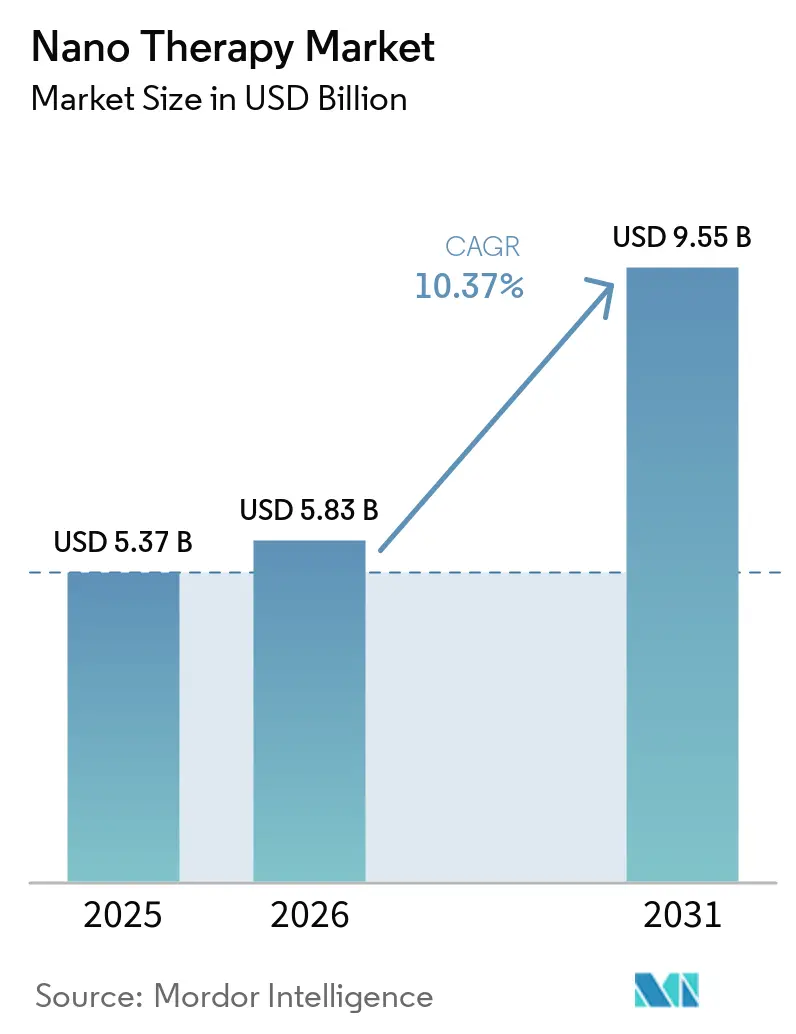
The nano therapy market is expected to grow from USD 5.37 billion in 2025 to USD 5.83 billion in 2026 to reach USD 9.55 billion by 2031, at a CAGR of 10.4% during the forecast period (2026-2031). The nano therapy market is supported by a rising cancer burden and a wider need for treatments that can deliver complex medicines more precisely. The World Health Organization reported 20.6 million new cancer diagnoses in 2024 and projected 35 million new cases annually by 2050, which sustains the need for therapies that can address difficult disease settings. RNA, mRNA, and gene-editing programs also rely on delivery technologies that protect payloads and guide them to the intended tissue. The nano therapy market is extending from established oncology uses into cardiovascular, neurological, infectious disease, and regenerative medicine applications. Platform owners are seeking broader control of lipid nanoparticle, liposomal, and polymer-based delivery capabilities, while manufacturers are building formulation and fill-finish capacity for clinical and commercial supply.
Key Report Takeaways
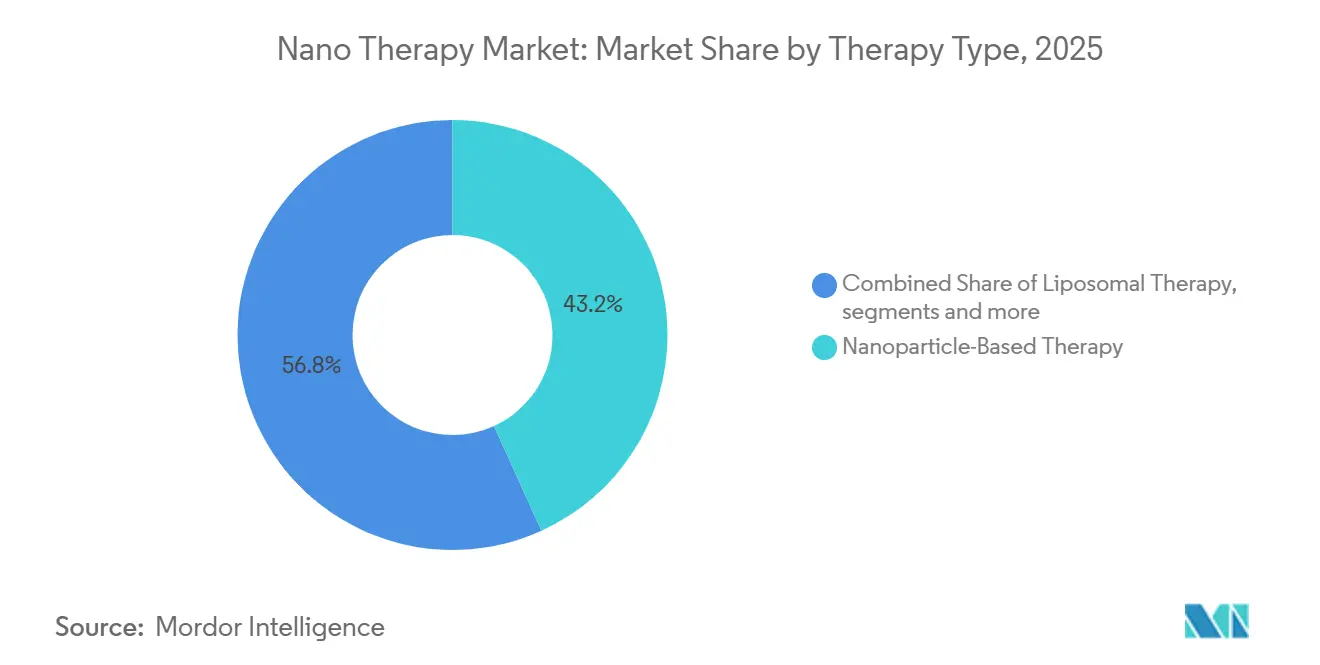
- By therapy type, nanoparticle-based therapy held 43.18% of the nano therapy market share in 2025, while liposomal therapy is forecasted to grow at a 10.54% CAGR through 2031.
- By application, oncology held 39.26% of the nano therapy market share in 2025, while cardiovascular diseases are forecasted to grow at 11.13% CAGR through 2031.
- By nanomaterial type, lipid-based nanoparticles accounted for 37.44% of the nano therapy market size in 2025, while polymeric nanoparticles are expected to grow at an 11.46% CAGR through 2031.
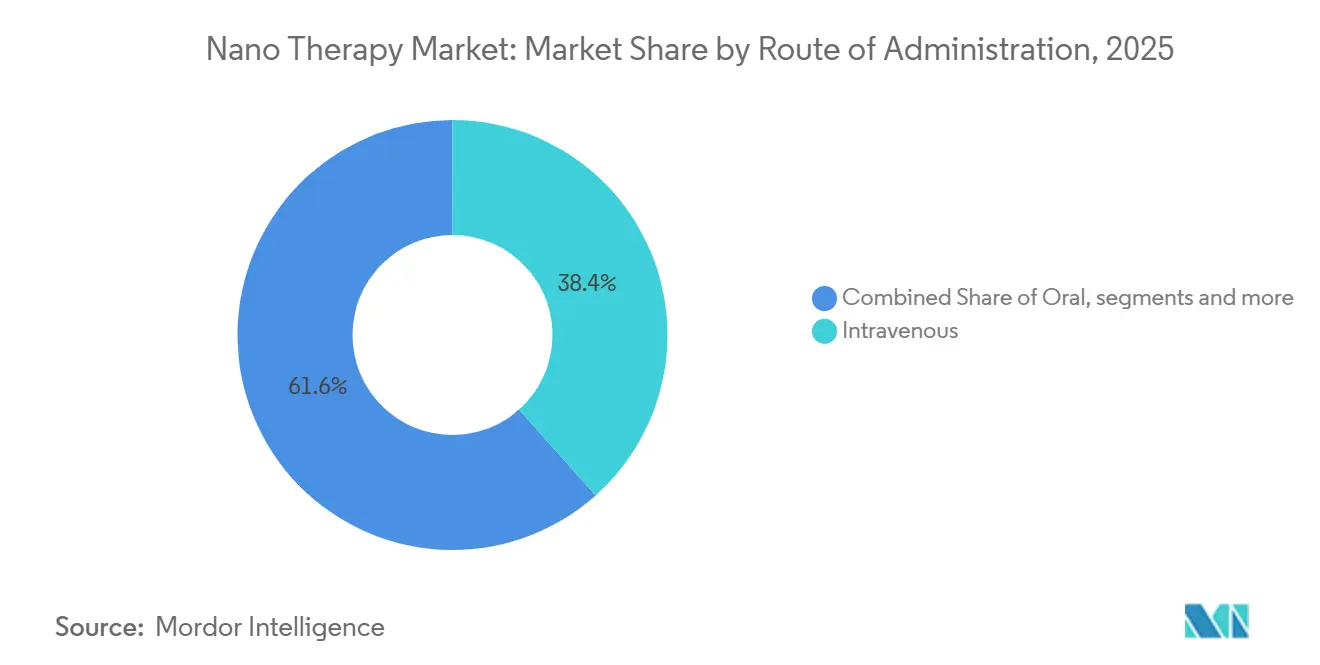
- By route of administration, intravenous administration held 38.36% revenue share in 2025, while oral administration is anticipated to grow at a 12.24% CAGR through 2031.
- By distribution channel, hospital pharmacies held 41.62% revenue share in 2025, while online pharmacies are forecasted to grow at a 10.86% CAGR through 2031.
- By region, North America held 46.73% revenue share in 2025, while Asia-Pacific is projected to grow at a 13.35% CAGR through 2031.
Note: Market size and forecast figures in this report are generated using Mordor Intelligence’s proprietary estimation framework, updated with the latest available data and insights as of January 2026.
Global Nano Therapy Market Trends and Insights
Drivers Impact Analysis*
| Driver | (~) % Impact on CAGR Forecast | Geographic Relevance | Impact Timeline |
|---|---|---|---|
| Rising Chronic Disease and Cancer Burden | +2.1% | Global | Short term (≤ 2 years) |
| Expansion of Targeted and Controlled Drug Delivery | +1.9% | North America and Europe | Medium term (2-4 years) |
| Growth of RNA, mRNA, Gene-Editing, and Nucleic Acid Therapeutics | +2.3% | Global | Short term (≤ 2 years) |
| Public and Private Nanomedicine R&D Investment | +1.6% | Asia-Pacific and North America | Medium term (2-4 years) |
| Extrahepatic Delivery Platforms Moving Beyond Liver Tropism | +1% | North America and Europe | Long term (≥ 4 years) |
| Formulation and Manufacturing Platforms Becoming Partnerable Infrastructure | +0.8% | Global, led by Asia-Pacific | Medium term (2-4 years) |
| Source: Mordor Intelligence | |||
Rising Chronic Disease and Cancer Burden
The nano therapy market benefits from persistent demand for treatments that can improve drug delivery in cancer and chronic disease care. The World Health Organization recorded 20.6 million new cancer diagnoses in 2024 and expects annual cases to reach 35 million by 2050.[1]World Health Organization, “Global Status Report on Cancer 2026,” World Health Organization, who.int. Only 12 countries were on track to reduce premature cancer mortality by 33% by 2030, while 48 countries recorded rising mortality rates. These patterns keep attention on treatments that may improve how therapeutic payloads reach diseased tissue. China reported more than 4.8 million new cancer cases annually, which supports the region’s growing need for oncology treatment capacity. Aging populations also increase the number of people living with cardiometabolic and neurological conditions, creating additional settings for nanoparticle-enabled delivery.
Growth of RNA, mRNA, Gene-Editing, and Nucleic Acid Therapeutics
The nano therapy market is gaining support from nucleic acid medicines that need delivery systems to protect and transport their payloads. Alnylam expects USD 4 billion in combined net product revenues in 2026, representing 71% growth over 2025, and its RNA interference franchise is a major commercial reference point for this field.[2]Alnylam Pharmaceuticals, “Alnylam Launches Alnylam 2030 Strategy to Drive Next Era of Growth,” Alnylam Pharmaceuticals, alnylam.com. In October 2025, Arrowhead Pharmaceuticals and Novartis closed a license and collaboration agreement for ARO-SNCA, an siRNA treatment candidate for Parkinson’s disease that uses Arrowhead’s TRiM delivery platform.[3]Arrowhead Pharmaceuticals, “Arrowhead Pharmaceuticals Initiates Phase 1/2a Study of ARO-DIMER-PA,” Arrowhead Pharmaceuticals, arrowheadpharma.com.The agreement included USD 200 million upfront and potential milestone payments of up to USD 2 billion. These arrangements show that large drug companies value delivery platforms alongside individual drug programs. They also give the nano therapy market a larger base of potential use cases across genetic, metabolic, and neurological diseases.
Expansion of Targeted and Controlled Drug Delivery
The nano therapy market is moving toward delivery systems designed for more specific tissue and cell targets. Arrowhead initiated a Phase 1/2a study of ARO-DIMER-PA in January 2026 for atherosclerotic cardiovascular disease. Research published in Nature in 2026 also described pancreatic-targeted lipid nanoparticles that supported durable in vivo genome editing through organ capsule filtration. Such work reflects an effort to move beyond liver-focused delivery and expand the range of tissues that can be addressed. A wider set of target organs can open cardiovascular, pancreatic, pulmonary, and central nervous system development opportunities for nanoparticle platforms.
Public and Private Nanomedicine R&D Investment
The nano therapy market is also supported by investment in research, regulatory science, and production infrastructure. Japan’s PMDA has published guidance covering siRNA-loaded nanoformulations and liposomal formulation development, giving sponsors clearer points to consider during product development. FUJIFILM offers an integrated Toyama service that covers mRNA production, lipid nanoparticle formulation, and aseptic fill-finish work. This capacity gives pharmaceutical sponsors a way to access specialized manufacturing without building every capability internally. It also makes manufacturing platforms more important commercial partners as development programs move into later-stage testing. Investments in research and manufacturing can reduce practical barriers to testing new formulations across major pharmaceutical regions.
Restraints Impact Analysis*
| Restraint | (~) % Impact on CAGR Forecast | Geographic Relevance | Impact Timeline |
|---|---|---|---|
| Complex Regulatory and Nanospecific Characterization Requirements | -1.5% | Global | Short term (≤ 2 years) |
| High Development, Manufacturing, and Quality-Control Costs | -1.3% | Global | Medium term (2-4 years) |
| Translational Fragility of Passive Tumor Targeting and the EPR Effect | -0.9% | North America and Europe | Medium term (2-4 years) |
| Dependence on a Narrow Set of Qualified Lipid, Microfluidic, and CDMO Inputs | -0.8% | Global | Long term (≥ 4 years) |
| Source: Mordor Intelligence | |||
Complex Regulatory and Nanospecific Characterization Requirements
The nano therapy market faces regulatory uncertainty because nanotechnology-based medicines are generally assessed within existing pharmaceutical and biologic frameworks. A 2025 review of European and U.S. pathways found that nanotechnology-enabled products face differences in regulatory expectations across jurisdictions. Developers must characterize particle size, composition, stability, release behavior, and interactions with biological systems. These requirements can make development plans more detailed than plans for conventional small-molecule products. Case-by-case discussions can also slow advancement for complex polymer-based formulations and first-in-class products.
High Development, Manufacturing, and Quality-Control Costs
The nano therapy market must overcome scale-up challenges that arise when laboratory formulations move into regulated production. Small changes in microfluidic mixing, lipid composition, temperature, or particle size can affect consistency between manufacturing batches. Production teams must therefore establish methods that control encapsulation, distribution, sterility, stability, and release performance. Specialized lipids, PEG-lipid components, microfluidic equipment, and qualified contract development and manufacturing organizations can add to procurement costs. FUJIFILM’s integrated LNP offering illustrates the range of manufacturing services needed from mRNA production through aseptic fill-finish. These costs can be harder for academic spinouts and early-stage biotechnology companies to absorb, especially when multiple formulation iterations are necessary.
*Our forecasts treat driver/restraint impacts as directional, not additive. The impact forecasts reflect baseline growth, mix effects, and variable interactions.
Segment Analysis
By Therapy Type: RNA Momentum Elevates the Liposomal Tier
Nanoparticle-based therapy held 43.18% of the nano therapy market share in 2025, supported by its ability to carry small molecules, biologics, and nucleic acids within tailored delivery architectures. The category benefits from an established base of approved products and familiar administration practices in clinical settings. Liposomal therapy is forecasted to grow at 10.54% CAGR from 2026 to 2031 as RNA-based programs and liposomal combination regimens progress. Lipid nanoparticle systems are widely used in the clinical development of mRNA delivery approaches for cancer, autoimmune conditions, and genetic diseases. The nano therapy market therefore includes both established liposomal products and newer lipid nanoparticle platforms.
Liposomal therapy has a relatively mature clinical and manufacturing base compared with newer nanoparticle classes. Its adoption is linked to the practical need to improve drug solubility, circulation time, and tissue exposure for selected treatments. Polymeric nanoparticle therapy serves different needs, including oral delivery and controlled release applications. Nanocrystal therapy addresses solubility constraints for medicines with poor aqueous dissolution.



By Application: Cardiovascular Indications Broaden Revenue Beyond Oncology
Oncology held 39.26% of the nano therapy market share in 2025, reflecting the long history of liposomal and nanoparticulate development in cancer treatment. Cancer remains an important testing ground because treatment benefit can depend on drug exposure, toxicity control, and tumor tissue access. Cardiovascular diseases are expected to grow at an 11.13% CAGR from 2026 to 2031. The higher growth rate reflects efforts to apply RNA interference and lipid nanoparticle systems to cardiac and vascular targets.
Cardiovascular development may broaden the demand base for targeted nucleic acid delivery. The candidate is designed to silence PCSK9 and APOC3, two targets relevant to atherosclerotic cardiovascular disease. Neurological disorders are also developing as a relevant application area through siRNA programs and research portfolios focused on neurological diseases. Infectious diseases provide further use cases where nucleic acid and nanoparticle technologies can be relevant. Regenerative medicine remains a longer-term area for polymeric scaffold and exosome delivery approaches. Together, these applications make the nano therapy market less dependent on oncology alone.
By Nanomaterial Type: Polymeric Systems Gain on Formulation Versatility
Lipid-based nanoparticles accounted for 37.44% of the nano therapy market size in 2025, supported by mRNA vaccine production infrastructure, commercial RNA interference products, and specialist formulation supply chains. Research reported in Nature in 2026 showed pancreatic-targeted lipid nanoparticles supporting durable genome editing in vivo. Polymeric nanoparticles are expected to grow at an 11.46% CAGR from 2026 to 2031. The nano therapy market can use these material differences to match a delivery system with the needs of a particular payload and route.
A 2026 Chemical Communications study described a nanoparticle-in-microparticle system that combined drug-loaded polymeric micelles with a mucoadhesive alginate and chitosan shell for oral delivery. Inorganic Nanoparticles remain useful in more specialized applications, including imaging, photothermal therapy, and magnetically guided drug release. Gold and magnetic materials can combine therapeutic and diagnostic functions in selected clinical settings. This diversity gives the nano therapy market several paths for addressing payload, route, and tissue-specific requirements.
By Route of Administration: Oral Platforms Reframe the Delivery Paradigm
Intravenous administration held 38.36% of the nano therapy market size in 2025 because it offers controlled dosing and rapid systemic exposure for oncology products, RNA therapies, and patients needing infusion monitoring. Oral delivery is forecasted to grow at a 12.24% CAGR from 2026 to 2031, the highest growth rate among the route segments. Its potential rests on polymer and lipid systems designed to protect macromolecules from enzymatic degradation and support passage through the gastrointestinal tract. Oral approaches must address mucus barriers, epithelial tight junctions, and the risk of payload degradation before absorption.
Transdermal delivery is an emerging route for topical and systemic nanoparticle applications. It may support medicines where localized exposure or gradual administration is useful. Successful oral formats could support outpatient and self-administration models for some patients. This would broaden the practical settings in which the nano therapy market can serve patients and providers.
By Distribution Channel: Hospital Pharmacies Lead the Market While Online Pharmacies Expand Rapidly
Hospital pharmacies held 41.62% of the nano therapy market share in 2025, making them the largest distribution channel. Their leading position is supported by the administration of nano-based therapies in clinical settings, particularly for oncology and other complex conditions that require specialized handling, storage, and patient monitoring. Hospital pharmacies also play a central role in dispensing high-cost therapies and coordinating treatment within healthcare facilities.
Online pharmacies are anticipated to grow at a 10.86% CAGR from 2026 to 2031, the fastest among distribution channels. Growth is driven by increasing digitalization of healthcare services, improved access to specialty medications, and the convenience of home delivery for patients requiring long-term treatment. This trend is expected to strengthen as e-pharmacy platforms expand their reach and pharmaceutical fulfillment capabilities.
Geography Analysis
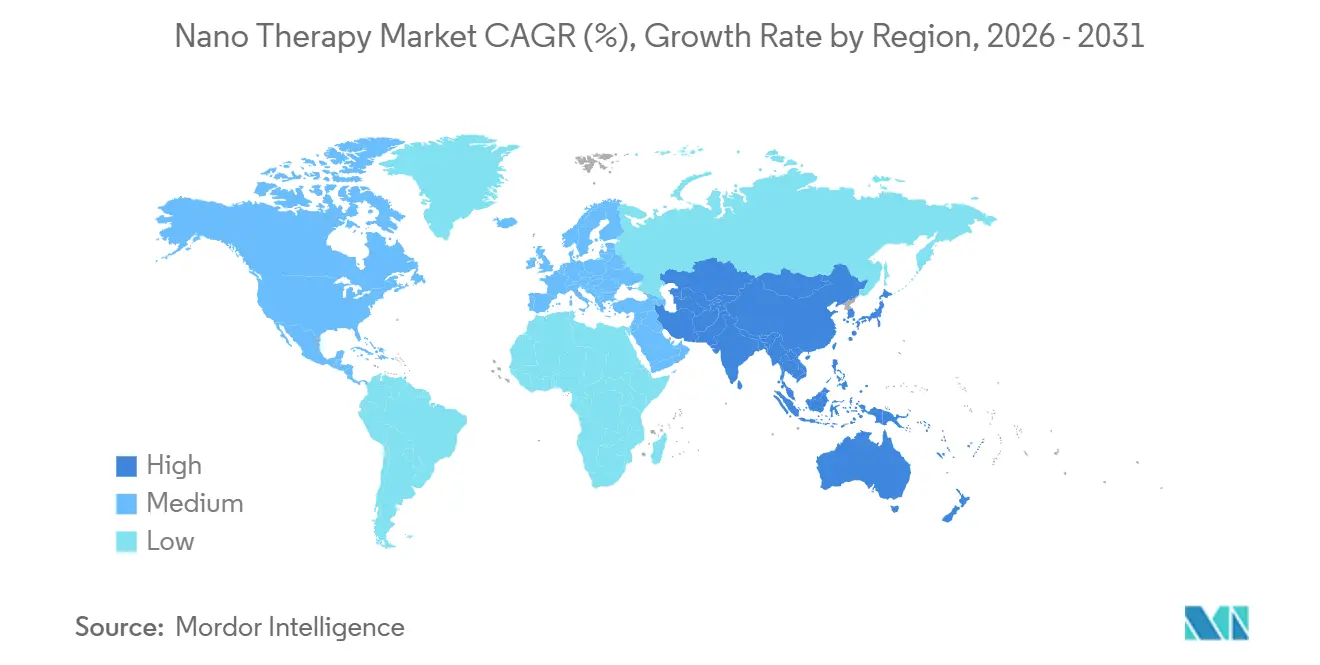
North America held 46.73% of the nano therapy market share in 2025, supported by a concentration of approved liposomal and lipid nanoparticle therapeutics, clinical research activity, and RNA interference developers. The United States remains the region’s main commercial center because of its large pharmaceutical base and established clinical trial infrastructure. Regulatory experience with nanotechnology-enabled products has also helped sponsors pursue market access under existing drug and biologic frameworks. A review of U.S. and European pathways highlighted the importance of clear product characterization and regulatory expectations for nanotechnology-enabled health products. Canada is developing domestic biomanufacturing capabilities that can support regional supply resilience. Mexico contributes mainly through hospital demand for established oncology products and expanding access to newer therapies.
Asia-Pacific is projected to grow at a 13.35% CAGR from 2026 to 2031, making it the fastest-growing regional part of the nano therapy market. The region has substantial cancer treatment needs and expanding public and private investment in research and manufacturing. China’s cancer burden reinforces the need for oncology capacity and drug development activity. Japan has issued guidance for siRNA-loaded nanoformulations and liposomal products, helping sponsors identify relevant development considerations. China, Japan, India, and South Korea each add different strengths through patient scale, regulation, biotechnology investment, and formulation capability.
Europe holds the second-largest revenue share globally, with Germany, the United Kingdom, and France serving as major contributors. The region combines an established pharmaceutical sector with academic and industrial research in nanomedicine. European developers work within a regulatory environment that is considering more specific treatment of nanotechnology-based products. Germany supports both product research and manufacturing-scale work in lipid-based systems. The Middle East and Africa, along with South America, remain smaller but developing end markets. Gulf countries are expanding oncology infrastructure and hospital procurement of nanoformulated medicines. Brazil and Argentina are adopting nanoformulated oncology generics as patents on earlier liposomal products expire. These regions can widen access to established nanoparticle therapies at lower cost points.

Competitive Landscape
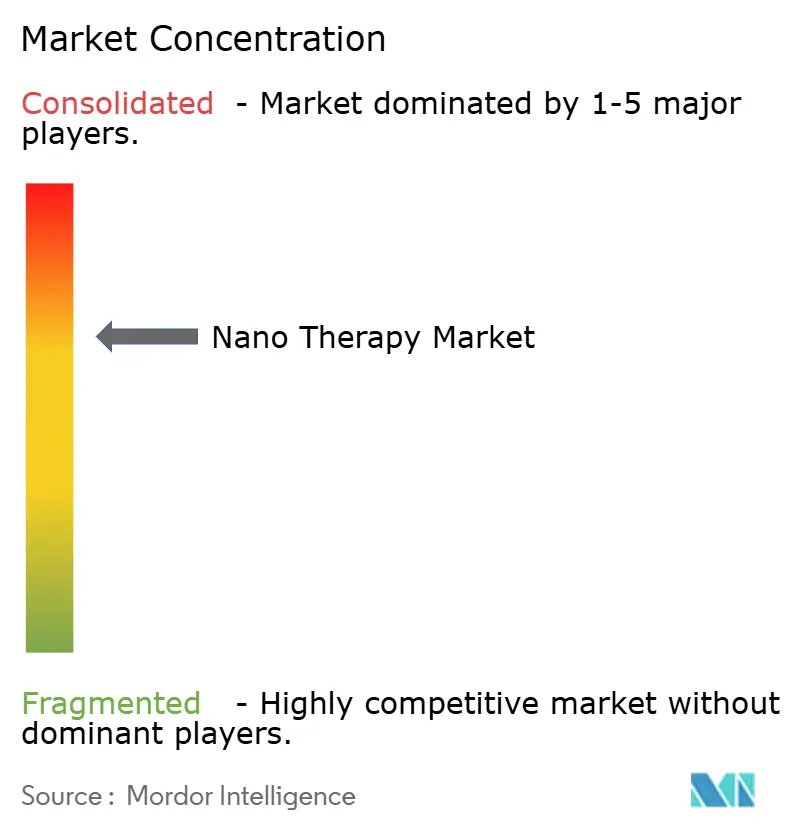
The nano therapy market is concentrated, with a limited number of established pharmaceutical companies holding significant market positions through their advanced nanoparticle drug delivery platforms, strong R&D capabilities, and extensive commercialization networks. Competition centers on delivery precision, tissue targeting, intellectual property, and the ability to scale manufacturing. Commercially proven RNA interference products make delivery technologies strategically important to large pharmaceutical companies. Specialist companies compete by developing organ-selective delivery approaches, different material classes, and formulations for specific payloads. They must also secure access to qualified lipid inputs, equipment, and manufacturing partners. The field remains competitive because clinical success depends on both the therapeutic payload and the delivery system.
Strategic activity shows that companies are seeking access to delivery technologies that can work across multiple indications. In October 2025, Novartis and Arrowhead closed their global agreement for ARO-SNCA, which paired Novartis with a Parkinson’s disease siRNA candidate and Arrowhead’s TRiM platform. In July 2026, Novartis agreed to acquire Myricx Bio for up to USD 1.5 billion, including USD 1.1 billion upfront, to advance next-generation antibody-drug conjugate innovation. These moves show an emphasis on platform access and treatment modalities that may complement targeted delivery. They also make it harder for smaller companies to compete without differentiated tissue targeting, data, or manufacturing expertise.
Competitive opportunities remain in extrahepatic lipid nanoparticle delivery, oral polymeric delivery of large molecules, and theranostic uses of gold or magnetic particles. Pancreatic-targeted lipid nanoparticles reported in Nature show the type of organ-selective work that can create new development opportunities. Companies with efficient formulation screening and biodistribution assessment may shorten early development cycles. Manufacturing capability is also a competitive factor because complex products need consistent formulation, analytical testing, and aseptic fill-finish operations. The nano therapy market is therefore defined by the interaction of delivery science, clinical proof, intellectual property, and supply reliability. A broad group of specialist companies can still compete where they demonstrate clear performance in tissues that remain difficult to reach.
Nano Therapy Industry Leaders
Pfizer Inc.
Johnson & Johnson
Novartis AG
Alnylam Pharmaceuticals, Inc.
Pacira BioSciences, Inc.
- *Disclaimer: Major Players sorted in no particular order

Recent Industry Developments
- July 2026: Novartis AG agreed to acquire Myricx Bio for up to USD 1.5 billion, USD 1.1 billion upfront, advancing Myricx's NMTi-payload antibody-drug conjugate platform targeting HER2 and B7-H3 solid tumors, the deal strengthens Novartis' position in next-generation targeted nanoparticle-payload drug conjugate development and is expected to close in H2 2026 pending regulatory approvals.
- July 2026: Samsung Biologics announced an all-cash public tender offer to acquire 100% of PolyPeptide Group AG for CHF 1.46 billion, USD 1.65 billion, extending its multi-modality contract manufacturing capabilities into peptide-based drug delivery APIs, complementing its existing biologics and LNP manufacturing capacity across the United States, Europe, and India.
- July 2026: Atrium Therapeutics received FDA IND clearance for ATR-1072, Corventis program, an LNP-delivered RNA therapeutic designed for cardiomyocyte delivery, for Phase 1/2 evaluation in PRKAG2 syndrome, marking a regulatory milestone for cardiac-targeted RNA nanoparticle drug delivery with first patient enrollment targeted by end-2026.


Global Nano Therapy Market Report Scope
According to the report’s scope, the nano therapy market refers to medical treatments that use nanotechnology‑based systems (such as nanoparticles, nanocarriers, and nanoscale materials) to deliver drugs or therapeutic agents with enhanced precision, bioavailability, and targeted action. It is applied across oncology, neurology, infectious diseases, and regenerative medicine, aiming to improve efficacy while reducing side effects.
The nano therapy market is segmented into therapy type, application, nanomaterial type, route of administration, distribution channel, and geography. By therapy type, the market is segmented into nanoparticle-based therapy, liposomal therapy, polymeric nanoparticle therapy, nanocrystal therapy, and other therapy types. By application, the market is segmented into oncology, cardiovascular diseases, neurological disorders, infectious diseases, regenerative medicine, and other applications. By nanomaterial type, the market is segmented into lipid-based nanoparticles, polymeric nanoparticles, inorganic nanoparticles, gold nanoparticles, magnetic nanoparticles, and other nanomaterial types. By route of administration, the market is segmented into intravenous, oral, transdermal, and other route of administrations. By distribution channel, the market is segmented into hospital pharmacies, retail pharmacies, and online pharmacies. By geography, the market is segmented into North America, Europe, Asia-Pacific, the Middle East and Africa, and South America. The report also covers the estimated market sizes and trends for 17 countries across major regions globally. The report offers values (USD) for all the above segments.
| Nanoparticle-Based Therapy |
| Liposomal Therapy |
| Polymeric Nanoparticle Therapy |
| Nanocrystal Therapy |
| Other Therapy Types |
| Oncology |
| Cardiovascular Diseases |
| Neurological Disorders |
| Infectious Diseases |
| Regenerative Medicine |
| Other Applications |
| Lipid-Based Nanoparticles |
| Polymeric Nanoparticles |
| Inorganic Nanoparticles |
| Gold Nanoparticles |
| Magnetic Nanoparticles |
| Other Nanomaterial Types |
| Intravenous |
| Oral |
| Transdermal |
| Other Route of Administrations |
| Hospital Pharmacies |
| Retail Pharmacies |
| Online Pharmacies |
| North America | United States |
| Canada | |
| Mexico | |
| Europe | Germany |
| United Kingdom | |
| France | |
| Italy | |
| Spain | |
| Rest of Europe | |
| Asia-Pacific | China |
| Japan | |
| India | |
| Australia | |
| South Korea | |
| Rest of Asia-Pacific | |
| Middle East and Africa | GCC |
| South Africa | |
| Rest of Middle East and Africa | |
| South America | Brazil |
| Argentina | |
| Rest of South America |
| By Therapy Type | Nanoparticle-Based Therapy | |
| Liposomal Therapy | ||
| Polymeric Nanoparticle Therapy | ||
| Nanocrystal Therapy | ||
| Other Therapy Types | ||
| By Application | Oncology | |
| Cardiovascular Diseases | ||
| Neurological Disorders | ||
| Infectious Diseases | ||
| Regenerative Medicine | ||
| Other Applications | ||
| By Nanomaterial Type | Lipid-Based Nanoparticles | |
| Polymeric Nanoparticles | ||
| Inorganic Nanoparticles | ||
| Gold Nanoparticles | ||
| Magnetic Nanoparticles | ||
| Other Nanomaterial Types | ||
| By Route of Administration | Intravenous | |
| Oral | ||
| Transdermal | ||
| Other Route of Administrations | ||
| By Distribution Channel | Hospital Pharmacies | |
| Retail Pharmacies | ||
| Online Pharmacies | ||
| By Geography | North America | United States |
| Canada | ||
| Mexico | ||
| Europe | Germany | |
| United Kingdom | ||
| France | ||
| Italy | ||
| Spain | ||
| Rest of Europe | ||
| Asia-Pacific | China | |
| Japan | ||
| India | ||
| Australia | ||
| South Korea | ||
| Rest of Asia-Pacific | ||
| Middle East and Africa | GCC | |
| South Africa | ||
| Rest of Middle East and Africa | ||
| South America | Brazil | |
| Argentina | ||
| Rest of South America | ||


Key Questions Answered in the Report
What is the projected value of the nano therapy market by 2031?
The nano therapy market is projected to reach USD 9.55 billion by 2031, increasing from USD 5.37 billion in 2025 to USD 5.83 billion in 2026 at a 10.37% CAGR.
Which nano therapy application is forecasted to grow fastest?
Cardiovascular diseases are forecasted to grow at 11.13% CAGR from 2026 to 2031, supported by targeted RNA interference development.
Which administration route has the highest forecasted growth?
Oral delivery is expected to grow at a 12.24% CAGR through 2031 as formulation research addresses gastrointestinal barriers.
Which region is forecasted to grow fastest for nano therapy?
Asia-Pacific is projected to grow at a 13.35% CAGR from 2026 to 2031, supported by cancer care needs, research activity, and manufacturing investment.
Page last updated on:





