
Market Overview
| Study Period | 2021 - 2031 |
|---|---|
| Forecast Data Period | 2026 - 2031 |
| Base Year Market Size (2025) | USD 5.41 Billion |
| Market Size (2026) | USD 5.68 Billion |
| Market Size (2031) | USD 7.24 Billion |
| Growth Rate (2026 - 2031) | 4.97 % |
| Market Concentration | Low |
Major Players
*Disclaimer: Major Players sorted in no particular order Image © Mordor Intelligence. Reuse requires attribution under CC BY 4.0. |
|
Middle East And Africa Fortified Bakery Products Market Analysis by Mordor Intelligence
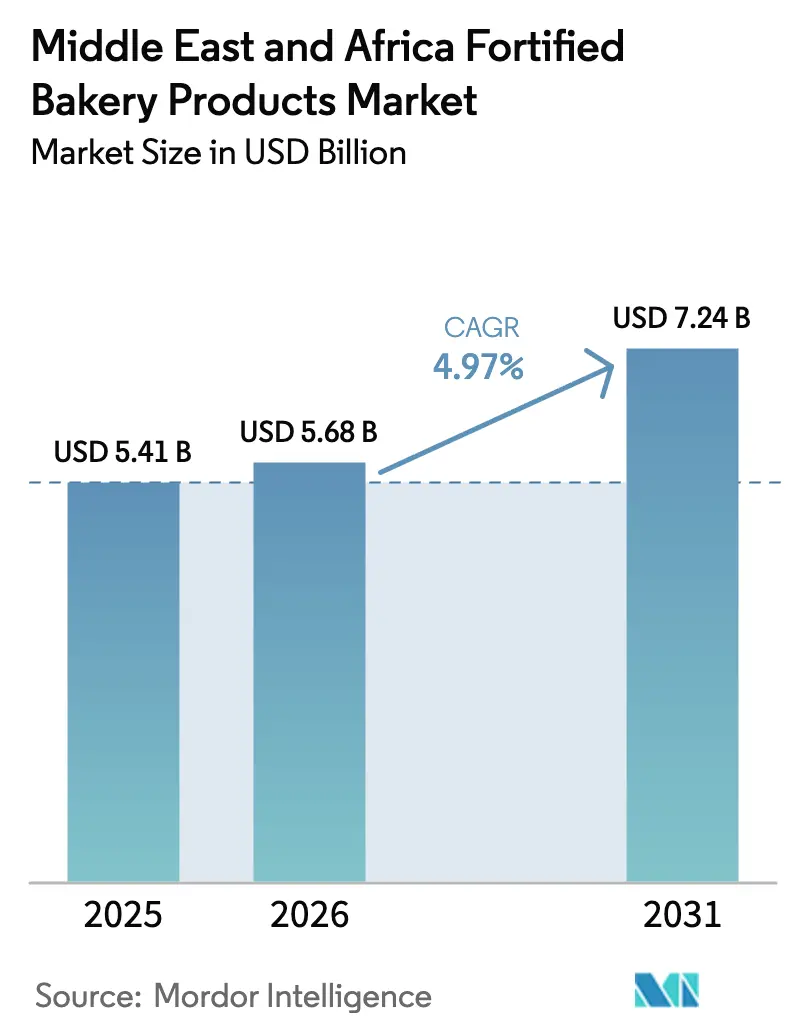
The fortified bakery products market in the Middle East and Africa was valued at USD 5.41 billion in 2025. It is projected to grow from USD 5.68 billion in 2026 to USD 7.24 billion by 2031, registering a CAGR of 4.97% during the forecast period. Significant structural changes are occurring as eleven Middle Eastern governments have transitioned from voluntary micronutrient guidelines to mandatory flour-fortification regulations. Additionally, Egypt reinstated its previously suspended program in 2025, establishing iron and folic acid fortification as a compulsory standard for all mills. Factors such as Saudi Arabia's SFDA standards, Turkey's bread-focused dietary habits, increasing e-commerce penetration, and a growing consumer preference for clean-label functional foods are driving steady mid-single-digit growth. However, challenges such as raw material price volatility, complex regulatory labeling requirements, and high dependency on imported premixes continue to impact profit margins and increase operational risks.
Key Report Takeaways
- By product type, fortified bread led with a 52.09% revenue share in 2025, while fortified biscuits and cookies are the fastest-growing category at a 4.36% CAGR through 2031.
- By fortified micronutrient, minerals-fortified products captured 46.10% share in 2025; fiber/protein-enriched variants record the highest projected CAGR at 5.79% through 2031.
- By distribution channel, supermarkets/hypermarkets held a 44.95% share in 2025, yet Online Retail /E-commerce is advancing at a 6.14% CAGR through 2031.
- By geography, Saudi Arabia commanded a 29.58% share in 2025, whereas Turkey shows the fastest trajectory at a 5.88% CAGR through 2031.
Note: Market size and forecast figures in this report are generated using Mordor Intelligence’s proprietary estimation framework, updated with the latest available data and insights as of January 2026.
Middle East And Africa Fortified Bakery Products Market Trends and Insights
Drivers Impact Analysis*
| Driver | (~) % Impact on CAGR Forecast | Geographic Relevance | Impact Timeline |
|---|---|---|---|
| Government-backed food security and nutritional resilience objectives | +1.2% | Middle East (11 of 22 countries), Egypt, Morocco, Nigeria, South Africa | Medium term (2-4 years) |
| Growing consumer health-consciousness and functional-food demand | +1.0% | Saudi Arabia, United Arab Emirates, Turkey, and urban centers across the Middle East and Africa | Short term (≤ 2 years) |
| Cultural integration of bread and bakery staples | +0.9% | Turkey, Saudi Arabia, Egypt, Morocco, broader Middle East | Long term (≥ 4 years) |
| Rising consumer awareness of micronutrient deficiencies | +1.1% | Nigeria, Egypt, Saudi Arabia, broader EMRO region | Medium term (2-4 years) |
| Rising interest in pediatric and family nutrition | +0.8% | Nigeria, United Arab Emirates, Saudi Arabia, Egypt | Short term (≤ 2 years) |
| Clean-label and natural fortification preference | +0.7% | Turkey, United Arab Emirates, Saudi Arabia, urban Middle East and Africa markets | Medium term (2-4 years) |
| Source: Mordor Intelligence | |||
Government-backed food security and nutritional resilience objectives
Government-supported food security and nutritional resilience initiatives are key drivers of growth in the Middle East and Africa fortified bakery products market. National and regional authorities across the region are implementing strategies aimed at improving population health, reducing micronutrient deficiencies, and enhancing food system stability. As of 2024, there were 1,502 active initiatives, with 674 completed and 596 progressing as planned, demonstrating a strong commitment to long-term food security goals under frameworks such as Vision 2030 and similar national development agendas [1]Source: Vision 2030, "Vision 2030 2024 Annual Report", vision2030.gov.sa. These policies increasingly require or encourage the fortification of staple foods, including bakery products, to address prevalent nutritional deficiencies (e.g., iron, folate, vitamin A) and reduce health issues such as anemia and micronutrient malnutrition. Government support includes mandatory fortification standards, subsidies for fortified flour and grains, public-private partnerships, and nutrition education campaigns to increase consumer awareness of the benefits of fortified products.
Growing consumer health-consciousness and functional-food demand
The increasing prevalence of lifestyle-related diseases in the Middle East and Africa is driving demand for fortified bakery products focused on preventive health and functional nutrition. Consumers are becoming more proactive in managing long-term health risks through daily diets, leading to a growing preference for bakery products fortified with omega-3 fatty acids, probiotics, prebiotics, fiber, and essential micronutrients. These products are recognized for their potential benefits in supporting heart health, digestive wellness, immunity, and metabolic balance. This trend is particularly significant given the high prevalence of cardiovascular health issues, with coronary heart disease accounting for 32.4% of total deaths in Egypt in 2024, highlighting the need for dietary solutions to mitigate chronic disease risk factors [2]Source: National Library of Medicine, "Cardiovascular Disease and Stroke Risk Among Egyptian Resident Physicians: A Cross-Sectional Multicenter Study", pmc.ncbi.nlm.nih.gov. Fortified breads, biscuits, and other functional bakery staples provide an accessible and culturally accepted means of delivering health-enhancing ingredients without requiring significant dietary changes. Additionally, with rising urbanization, sedentary lifestyles, and increased consumption of processed foods in the region, functional fortified bakery products are increasingly seen as practical options to address nutritional deficiencies and promote healthier lifestyles. This trend is a key growth driver for the fortified bakery products market in the Middle East and Africa.
Cultural integration of bread and bakery staples
The cultural importance of bread and bakery staples is a key factor driving the growth of the Middle East and Africa fortified bakery products market. Bread serves as a daily dietary essential and plays a significant role in traditional meals, social events, and religious practices, leading to consistent and substantial consumption across the region. This cultural connection encompasses a diverse range of bakery products, such as flatbreads, loaves, pastries, and snack breads, which align with local eating habits and consumer preferences. Bread is often used in various forms, such as a base for meals, an accompaniment to dishes, or as a standalone snack, further emphasizing its versatility and significance. Manufacturers capitalize on this cultural relevance by offering products tailored to regional tastes, textures, and formats, while also innovating with fortified, functional, and convenient options to address changing lifestyle and health needs. Additionally, the growing demand for premium and artisanal bakery products reflects a shift in consumer preferences toward higher-quality and unique offerings, further driving market growth.
Rising consumer awareness of micronutrient deficiencies
Increasing consumer awareness of micronutrient deficiencies is a key factor driving the demand for fortified bakery products in the Middle East and Africa. Nutritional issues, such as Vitamin D deficiency, affecting 49.3% of adults aged 18 and above and 69.1% of children aged 6 to 17 in 2024–2025, underscore the need for dietary solutions to enhance overall health and immunity [3]Source: Emirates News Agency-WAM, "MoHAP releases National Health and Nutrition Survey 2024-2025", wam.ae. Consumers are progressively opting for everyday food products that deliver essential vitamins and minerals, prompting bakery manufacturers to develop fortified breads, biscuits, and other convenience bakery items enriched with micronutrients such as Vitamin D, iron, folate, and calcium. This trend is further supported by public health campaigns, media coverage, and educational initiatives that highlight the role of nutrient intake in preventing deficiencies, improving bone health, and supporting immunity. Consequently, fortified bakery products are increasingly viewed not only as convenient food staples but also as functional options addressing specific nutritional needs, driving market growth and encouraging manufacturers and retailers to expand their health-focused product offerings across the region.
Restraints Impact Analysis*
| Restraint | (~) % Impact on CAGR Forecast | Geographic Relevance | Impact Timeline |
|---|---|---|---|
| Raw-material and premix price volatility | -0.3% | Global, with acute impact on import-dependent Middle East and Africa markets | Short term (≤ 2 years) |
| High product development costs | -0.2% | United Arab Emirates, Saudi Arabia, Turkey, multinational research and development hubs | Medium term (2-4 years) |
| Labeling and regulatory compliance complexity | -0.2% | Saudi Arabia, United Arab Emirates, Gulf Cooperation Council states, Egypt, Nigeria | Medium term (2-4 years) |
| High import dependency for fortification ingredients | -0.1% | Nigeria, Egypt, Morocco, smaller Middle East and Africa economies | Long term (≥ 4 years) |
| Source: Mordor Intelligence | |||
Raw-material and premix price volatility
Fluctuations in raw material and premix prices present a significant challenge to the growth of the Middle East and Africa fortified bakery products market. Essential inputs such as wheat, flour, sugar, oils, and vitamin- and mineral-based premixes are influenced by global supply variations, currency exchange rate changes, geopolitical tensions, and climate-related disruptions. These price instabilities can lead to higher production costs, reduced profit margins, and increased uncertainty for manufacturers, particularly those producing fortified or functional bakery products that depend on premium-quality premixes. Small and medium-sized bakeries, which often operate with constrained budgets and limited hedging options, are particularly at risk.
Labeling and regulatory compliance complexity
Complex and evolving labeling and regulatory requirements present a significant challenge for the Middle East and Africa fortified bakery products market. Governments in the region have implemented strict regulations for fortified and functional bakery products, addressing areas such as micronutrient content, health claims, allergen disclosure, halal certification, and packaging standards. Compliance with these regulations necessitates investments in dedicated compliance teams, testing procedures, and regular updates to product labels, leading to increased operational costs and delays in bringing new products to market. Furthermore, variations in regulatory frameworks across countries within the region create additional cross-border challenges for companies aiming to expand their products regionally.
*Our forecasts treat driver/restraint impacts as directional, not additive. The impact forecasts reflect baseline growth, mix effects, and variable interactions.
Segment Analysis
By Product Type: Bread Anchors, Biscuits Accelerate
Fortified bread accounted for 52.09% of product-type revenue in 2025, driven by its status as a daily staple in Middle Eastern and North African households. Egypt's subsidized baladi bread program, which benefits 60 million citizens, requires iron and folic acid fortification. Similarly, Saudi Arabia's SFDA enforces standards under GSO 2362, ensuring that even unbranded bread meets minimum micronutrient requirements. Fortified biscuits and cookies are projected to grow at a CAGR of 4.36% through 2031, marking the fastest growth among product categories. This growth is attributed to manufacturers focusing on pediatric nutrition with iron-enriched options and convenient, on-the-go formats.
Regulatory frameworks significantly influence product innovation cycles. The Gulf Cooperation Council's GSO 2271 standard for bread improvers and GSO 2394 for bran-enriched bread specify allowable enzyme blends, emulsifiers, and fortificant carriers. These regulations guide research and development efforts at companies like Puratos Group and Corbion, which are developing natural ferments and mold-inhibition solutions to extend shelf life without synthetic preservatives. The combination of mandatory fortification in bread, premiumization in cakes and pastries, and functional innovation in biscuits and bars creates a tiered product hierarchy that addresses both mass-market and aspirational consumer demands.




By Fortified Micronutrient: Minerals Lead, Protein Surges
Mineral-fortified products, including iron, zinc, and calcium, accounted for 46.10% of the segment's turnover in 2025, reflecting a public health emphasis on addressing anemia and iodine deficiencies. Meanwhile, fiber/protein-enriched baked goods are growing at a CAGR of 5.79% through 2031. Agthia’s specialty wheat mixes and dairy premixes enable bakers to achieve 7–9 grams of protein per serving without compromising dough elasticity. The vitamin segment is experiencing commoditization as synthetic B-complex premixes become more affordable. Experimental fortificants, such as omega-3 and probiotics, remain niche due to challenges with thermal stability.
The "Others" category includes omega-3 fatty acids, probiotics, and botanical extracts, which remain experimental in bakery applications due to heat-stability issues during baking. Reis Gıda, a Turkish flour manufacturer, exports gluten-free flours made from red lentil, chickpea, and buckwheat to 26 countries, including the UAE and Saudi Arabia, positioning these as high-protein, high-fiber alternatives to wheat flour.
By Distribution Channel: Supermarkets Dominate, E-Commerce Sprints
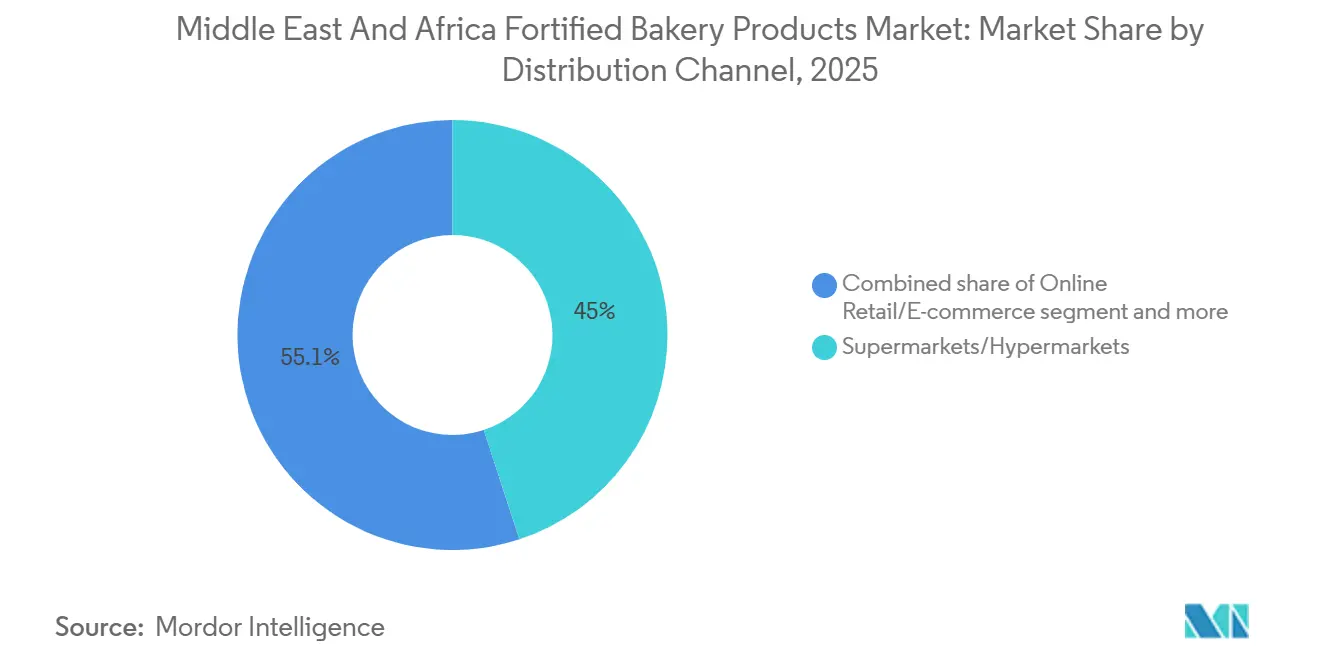
Supermarkets/hypermarkets accounted for 44.95% of distribution channel revenue in 2025, benefiting from extensive shelf space, promotional capabilities, and private-label fortified bread and biscuit offerings. Online retail/e-commerce channels are growing at a compound annual growth rate (CAGR) of 6.14% through 2031, representing the fastest expansion among distribution modes. Quick-commerce platforms such as Talabat, Noon, Careem, and Jumia have integrated bakery stock-keeping units (SKUs) into 15-minute delivery windows, transforming impulse purchases into recurring subscriptions.
Convenience stores cater to on-the-go consumption, particularly for fortified biscuits and bars, while specialist and artisanal bakeries target premium segments, with consumers willing to pay approximately 15-20% more for organic or specialty products. "Other Distribution Channels," including institutional sales to schools, hospitals, and corporate cafeterias, benefit from government procurement mandates. For instance, Egypt's subsidized baladi bread program and Nigeria's school feeding initiatives drive consistent demand for fortified loaves and biscuits. The combination of hypermarket scale, e-commerce convenience, and artisanal premiumization creates a multi-channel ecosystem where fortified bakery brands must maintain a presence to engage diverse consumer groups.
Geography Analysis
Saudi Arabia accounted for 29.58% of regional revenue in 2025 in the Middle East and Africa fortified bakery products market, while Turkey is forecasted to record the fastest CAGR of 5.88% through 2031. This position is bolstered by robust regulatory frameworks, such as the Saudi Food and Drug Authority’s (SFDA) mandatory iron and folic acid fortification standards for wheat flour (SFDA.FD 2483:2018) and the National Nutrition Strategy 2030, which targets a 25% reduction in anemia prevalence by the end of the decade. These measures have driven demand for fortified bakery products while fostering a structured environment that prioritizes product quality and safety compliance.
Requirements like halal certification under SFDA.FD 05:2022 and Arabic labeling mandates, while increasing compliance costs for manufacturers, serve as barriers to entry, protecting established players and promoting market stability. These regulations ensure that manufacturers adhere to high standards, creating a competitive yet controlled market environment. Additionally, these measures support the long-term sustainability of the fortified bakery products market in Saudi Arabia.
Other countries in the Middle East and Africa are increasingly implementing fortification programs, nutritional policies, and halal certification requirements, contributing to the regional growth of fortified bakery products. Markets with expanding urban populations, higher disposable incomes, and growing health awareness are witnessing increased consumption of breads, biscuits, and snack bakery items enriched with vitamins, minerals, and functional ingredients. However, inconsistent regulatory standards and varying enforcement levels across countries pose challenges for manufacturers aiming to scale fortified bakery products regionally. This highlights the strategic importance of local compliance expertise and the need for market-specific product adaptation.
Regulatory Landscape
Fortified bakery products in the Middle East and Africa are governed by mandatory fortification rules for staple inputs (notably wheat flour), alongside country-specific controls on labeling, registration, and health claims. In Southern Africa, the SADC Secretariat has published harmonized minimum fortification standards for staples such as wheat flour and maize meal, which supports alignment for compliant premixes and fortified flours moving within the region. Individual markets also maintain their own enforcement frameworks, including Nigeria's National Agency for Food and Drug Administration and Control (NAFDAC) Food Fortification Regulations 2019, which require registration and compliance for fortified foods manufactured, imported, or sold.
Regulation continues to tighten in several African markets through updated or standing statutory instruments that affect bakery formulations and sourcing. Tanzania's Standards (Food Fortification) Regulations, 2024 mandate fortification across multiple staples (including wheat flour), while Zimbabwe's Food Fortification Regulations (SI 120/2016) require fortification of wheat flour and other staples under oversight led by the Ministry of Health and Child Care. In practical terms, these mandates raise the compliance baseline for mainstream bread and biscuit producers and increase documentation and labeling discipline for cross-border brand owners and importers.
Value Chain Analysis
The value chain for fortified bakery products in the Middle East and Africa starts with agricultural commodities (wheat and sugar) and runs through milling, premix supply, industrial and artisanal baking, packaging, and multi-channel distribution (supermarkets/hypermarkets and fast-growing e-commerce/quick-commerce). With mandatory fortification programs in place, critical control points move upstream toward millers and premix suppliers, where consistent dosing, batch testing, and compliant labeling requirements become prerequisites for downstream brands supplying bread and biscuits into modern trade and institutional channels.
Supply risk is concentrated in imported fortification ingredients and logistics-sensitive inputs, which increases the importance of regional manufacturing footprints and resilient trade routes. In 2026, Britannia Industries cited Middle East disruptions that affected its international supply chain before operations normalized by mid-May, underscoring exposure to corridor volatility for packaged bakery and ingredient flows. Upstream investment decisions also shape ingredient availability and cost: Associated British Foods reported technology-enabled yield improvements in its African sugar operations (including precision farming and drones in Eswatini), highlighting how large processors influence sweetener supply and pricing, and ultimately the economics of fortified biscuits, cakes, and other baked snacks.
Competitive Landscape
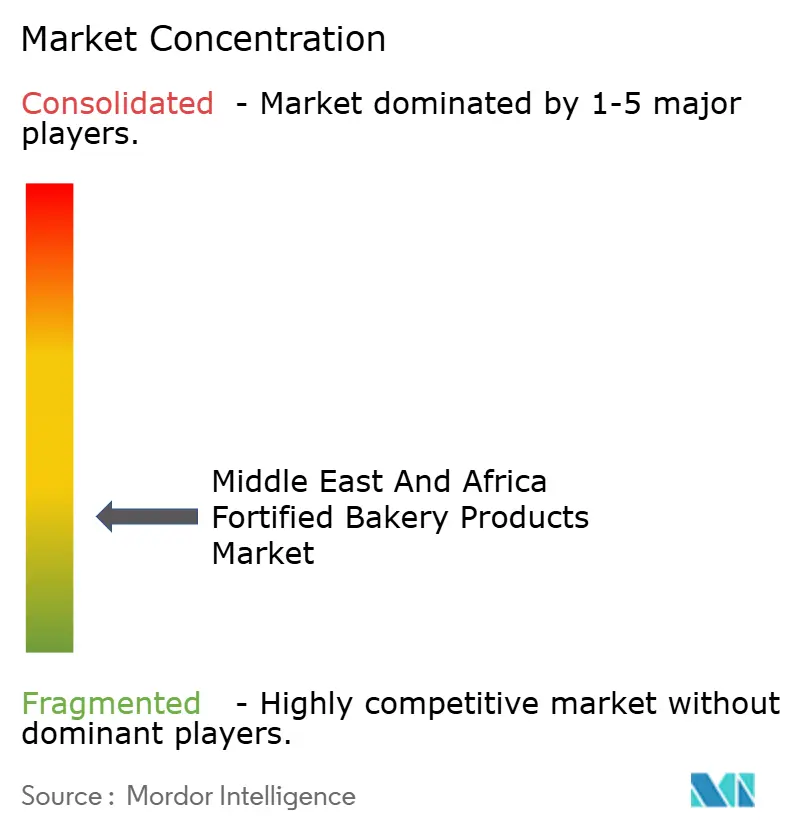
The fortified bakery market in the Middle East and Africa is highly fragmented, with regional players competing alongside multinational companies like Grupo Bimbo, Mondelēz, and Nestlé. Competitive strategies in the market focus on three key areas: adherence to mandatory fortification regulations; biofortified flour sourcing using iron- and zinc-rich crop varieties to reduce dependence on imported premixes; and the adoption of halal-certified enzyme blends to extend shelf life without synthetic preservatives. Ingredient suppliers such as Corbion and Puratos are addressing this need through natural ferments and functional enzyme solutions. These strategies are critical for meeting consumer demand for healthier and longer-lasting bakery products while ensuring compliance with regional standards.
Regulatory frameworks play a significant role in shaping competition within the fortified bakery market. The European Union’s Regulation 1333/2008 on food additives serves as a reference for Gulf Cooperation Council (GCC) states in defining permitted fortificant carriers and enzyme blends. Additionally, GCC standards GSO 2362 and GSO 2394 establish composition limits, creating a regulatory environment that benefits companies with strong in-house compliance capabilities. These regulations not only ensure product safety and quality but also create barriers to entry for smaller players, favoring established companies with the resources to navigate complex compliance requirements. As a result, regulatory expertise has become a key differentiator in the market.
Overall, the fortified bakery market in the Middle East and Africa region is highly dynamic, driven by evolving consumer preferences and regulatory demands. Competitive advantage is determined by scale, expertise in regulatory compliance, speed-to-market, and innovation. Opportunities for growth include natural fortification, enzyme-based shelf-life solutions, and the development of localized functional bakery products. Companies that can effectively balance innovation with compliance and leverage regional consumer insights are well-positioned to capitalize on the growing demand for fortified bakery products in the region.
Middle East And Africa Fortified Bakery Products Industry Leaders
-
Associated British Foods plc
-
Britannia Industries Limited
-
Grupo Bimbo, S.A.B. de C.V.
-
Mondelēz International, Inc.
-
General Mills, Inc.
- *Disclaimer: Major Players sorted in no particular order

Market Opportunities and Future Outlook
Mandatory fortification policies expand the compliant mass-market base for fortified bread and flour-led bakery formats, while also creating room for differentiation within regulatory requirements through clean-label fortification carriers, improved shelf life, and formats aligned to e-commerce fulfillment. The SADC Secretariat's harmonized minimum standards also support opportunities for suppliers and brand owners to standardize premix specifications and QA systems across multiple Southern African markets, reducing friction in regional rollouts.
Beyond policy alignment, ingredient localization and capacity additions in Africa offer another route to improve cost and availability for bakery manufacturers and premix users. Associated British Foods has pointed to commissioning activity and expansion initiatives in the region, including a new sugar mill in Tanzania slated for 2026 and a two-phase debottlenecking program at Ubombo Sugar in Eswatini to lift cane-processing capacity, indicating continued investment into core bakery inputs. On the finished-goods side, investments that build local product development capability, such as Mondelēz Egypt inaugurating a Biscuit and Baked Snacks R&D laboratory at its BTOR biscuits plant in May 2025, support faster reformulation cycles for fortified and better-for-you biscuits tailored to local nutrition priorities and labeling constraints.
Recent Industry Developments
- May 2026: Britannia Industries has restored its international supply chain to full operation by mid-May 2026 after Middle East disruptions. The recovery expands distribution reach for bakery products in MEA and supports regional demand continuity.
- March 2026: Associated British Foods announces a 32.2 million USD investment in a Lagos, Nigeria factory for the Ovaltine brand. The investment strengthens ABF's regional footprint and reduces import dependency across West Africa, impacting regional nutrition and fortified product supply chains.
- March 2026: Associated British Foods sugar factory project in Tanzania nearing completion with commercial production expected in June 2026. The project increases local premix and ingredient sourcing for bakery fortification, influencing regional cost structure and supply security.


Research Methodology Framework and Report Scope
Market Definition and Coverage
For this study, the market covers the value of fortified bakery products sold across Middle East and Africa, where nutrients are added to baked goods to improve their nutritional profile. Sales are counted across retail and foodservice routes.
Scope exclusions: This sizing excludes non-bakery fortified foods and beverages. It also does not count micronutrient premixes sold as ingredients unless they are embedded in finished bakery sales.
Segmentation Overview
-
By Product Type
- Fortified Bread
- Fortified Biscuits and Cookies
- Fortified Cakes and Pastries
- Fortified Morning Goods (Muffins, Croissants)
- Others (Bars, Wraps, Crackers etc)
-
By Fortified Micronutrient
- Vitamins Fortified
- Minerals Fortified
- Fibre/Protein Enriched
- Others
-
By Distribution Channel
- Supermarkets/Hypermarkets
- Convenience Stores
- Specialist and Artisanal Bakeries
- Online Retail / E-commerce
- Other Distribution Channels
-
By Geography
- South Africa
- Saudi Arabia
- United Arab Emirates
- Nigeria
- Egypt
- Morocco
- Turkey
- Rest of Middle East and Africa
Data Sources, Market Sizing, and Validation
Desk Research
Desk research was used to set country coverage, define what is counted as fortification in bakery, and build the starting demand picture for staples like bread and packaged biscuits. We leaned on public sources such as FAOSTAT food balance and production series, UN Comtrade trade data for relevant bakery categories, World Bank macro indicators, and national standards bodies and ministries that publish flour fortification requirements.
To convert those signals into a usable market model, we also reviewed company annual reports, investor presentations, and audited financial filings where they break out bakery or branded food performance. This was followed by reference checks using reputable press and association websites that track milling and baking activity. Patent databases were used in a light way to understand nutrient addition trends, and paid subscription access to company financials and news helped cross-check revenue splits and expansion announcements. This list is indicative, and many other sources were referenced to collect data, validate assumptions, and clarify gaps during the research process.
Primary Interviews and Surveys
Interviews and surveys with millers, bakery producers, ingredient suppliers, distributors, retailers, foodservice buyers, and nutrition or regulatory experts in the Middle East and Africa clarify fortified product penetration, pack prices, channel shares, policy effects, and informal sales. Respondents also help resolve country-level gaps in secondary data and explain differences between retail and foodservice activity. Analysts compare these findings with the model before finalizing the regional estimate.
Distribution of primary research fieldwork respondents
| Company type | Respondent position |
|---|---|
| Top tier: 29% | CXOs: 18% |
| Mid tier: 46% | Functional/Unit leaders: 30% |
| Smaller Players: 25% | Managers: 52% |
Market-Sizing & Forecasting
Sizing starts from a top-down rebuild of the fortified bakery value pool. Country-level bakery consumption and production signals are filtered through the expected fortification share under local programs, and then translated into value using typical retail and wholesale price points. Totals are then checked with selective bottom-up approximations, including sampled brand and category price checks, channel mix splits, and supplier and distributor sense-checks on fortified versus non-fortified turnover, before final adjustments are applied.
Key inputs used in the model include the share of industrial versus artisanal bakery supply, wheat flour fortification program coverage (and how consistently it is enforced), urbanization and income trends that shift demand toward packaged baked goods, distribution channel expansion in modern retail, and import dependence for ingredients that can move prices. Forecasting is built using scenario analysis supported by a light multivariate view, where drivers like inflation, currency movement, and packaged food penetration are stress-tested with interview feedback. When bottom-up data is missing for smaller markets, gaps are handled through proxy ratios from comparable countries, followed by expert review so the assumptions stay reasonable and repeatable.
Data Validation & Update Cycle
Validation is done through triangulation across independent signals. Model outputs are compared against related indicators such as broader bakery value trends, trade flows for packaged baked goods, and observed price bands by channel. Outliers are flagged, rechecked for unit or currency timing issues, and then discussed internally before sign-off, which reduces avoidable variance across countries and product types.
The report is refreshed on an annual cycle. Interim updates are triggered when material events occur, such as changes in fortification mandates, major pricing shocks, or large capacity expansions. Before delivery, a final analyst pass is completed so the numbers and assumptions reflect the most current information available.
Mordor Intelligence's Middleeastandafrica Fortified Bakery Products Market Estimate Compared With Other Published Estimates
Published market sizes for fortified bakery in the region can differ widely, even when the time period looks similar. This is often due to inconsistent use of the term fortification, and differences in country coverage between studies. Variations also come from how each publisher treats pricing, channel mix, and whether value is counted at retail selling price versus closer to manufacturer revenue.
The benchmark table shows a much higher 2025 value than some narrower estimates. In Mordor Intelligence's model, the count follows finished fortified bakery product sales across the Middle East and Africa (not premix ingredients or flour fortification programs counted as a separate input market). Country totals are aligned to observed bakery consumption patterns and realistic channel price bands.
Benchmark comparison
| Source | Market Size | Gaps in Research Methodology |
|---|---|---|
| Mordor Intelligence | USD 5.41 B (2025) | |
| Industry Report A | USD 3.42 B (2025) | Often anchored to a narrower definition that leans toward packaged fortified categories only, which can undercount unpackaged bread sold through traditional channels, and it may apply a single regional price assumption without country level adjustment. |
| Regional Consultancy B | USD 1.80 B (2026) | Uses a later starting year and tends to treat mandatory flour fortification as the main boundary, which can miss value from branded fortified bakery lines, and it may rely on aggressive growth targets with limited channel checks. |
Overall, the spread is mainly explained by what gets counted as fortified bakery versus adjacent nutrition programs, and by how prices are converted across countries with different channel structures. By keeping the steps traceable to consumption signals, fortification penetration, and price bands by channel, the final number stays practical to replicate and easier to pressure-test during decision-making.


Key Questions Answered in the Report
What is the current value of the fortified bakery products market in the Middle East and Africa?
The fortified bakery products market size stands at USD 5.68 billion in 2026 with a forecast to reach USD 7.24 billion by 2031.
Which product category holds the largest share?
Fortified bread accounts for 52.09% of 2025 sales thanks to mandatory flour-fortification programs in Egypt and Saudi Arabia.
Which country is the fastest-growing market?
Turkey leads growth at a projected 5.88% CAGR through 2031, supported by high per-capita bread consumption and health-focused shoppers.
How important is online retail for fortified bakery sales?
Online retail is the fastest-expanding channel, advancing at a 6.14% CAGR to 2031 as platforms like Talabat and Noon offer 15-minute delivery.
Page last updated on:





