
Krabbe Disease Treatment Market Size and Share
Market Overview
| Study Period | 2021 - 2032 |
|---|---|
| Market Size (2027) | USD 1.45 Billion |
| Market Size (2032) | USD 2.05 Billion |
| Growth Rate (2027 - 2032) | 7.23 % |
| Fastest Growing Market | Asia-Pacific |
| Largest Market | North America |
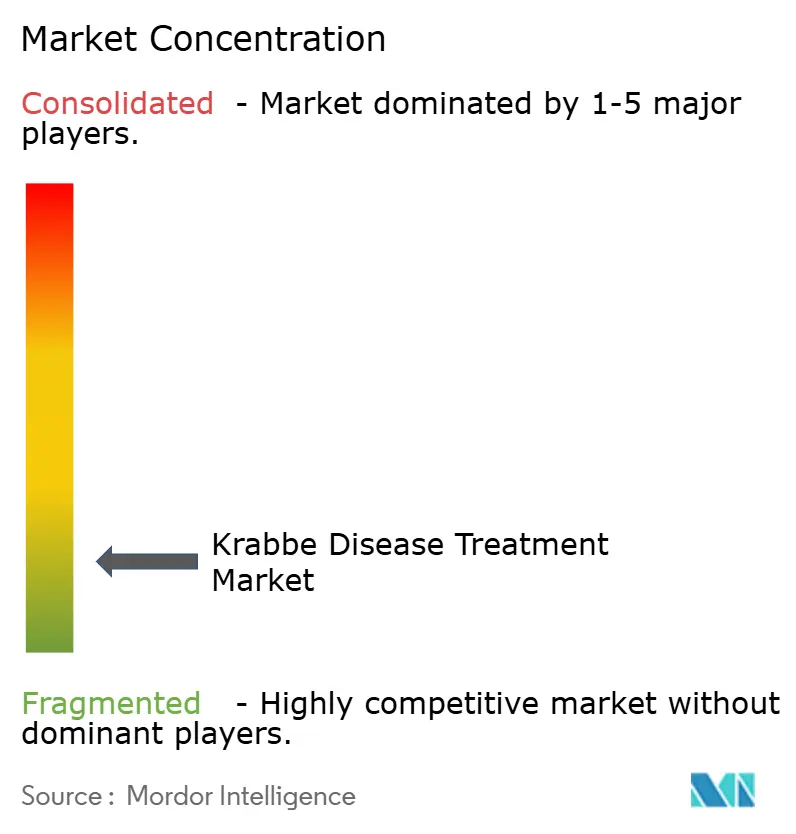
| Market Concentration | Low |
Major Players *Disclaimer: Major Players sorted in no particular order Image © Mordor Intelligence. Reuse requires attribution under CC BY 4.0. | |
Krabbe Disease Treatment Market Analysis by Mordor Intelligence
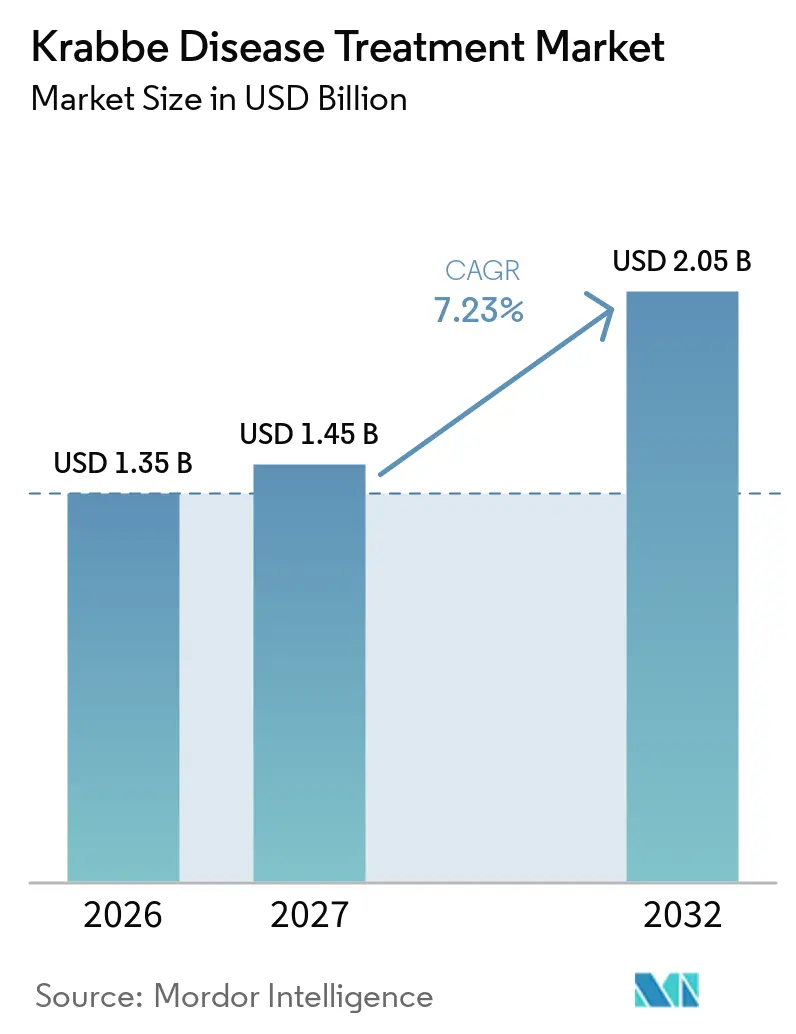
The Krabbe Disease Treatment Market size is projected to be USD 1.35 billion in 2026, USD 1.45 billion in 2027, and reach USD 2.05 billion by 2032, growing at a CAGR of 7.23% from 2027 to 2032.
The Krabbe disease treatment market is shaped by the expansion of newborn screening, which brings more presymptomatic infants into the care pathway. Treatment demand still depends on rapid referral to transplant centers, so identification alone does not ensure timely care. Gene therapy programs could broaden treatment options, but recent program discontinuations and a suspended trial show the limits imposed by very small patient populations. Research funding and patient registries are becoming important because they support natural history data, treatment follow-up, and future clinical trial design. The Krabbe disease treatment market also has an opportunity in diagnostic services and long-term monitoring, which can grow alongside screening, even when therapeutic programs face delays.
Key Report Takeaways
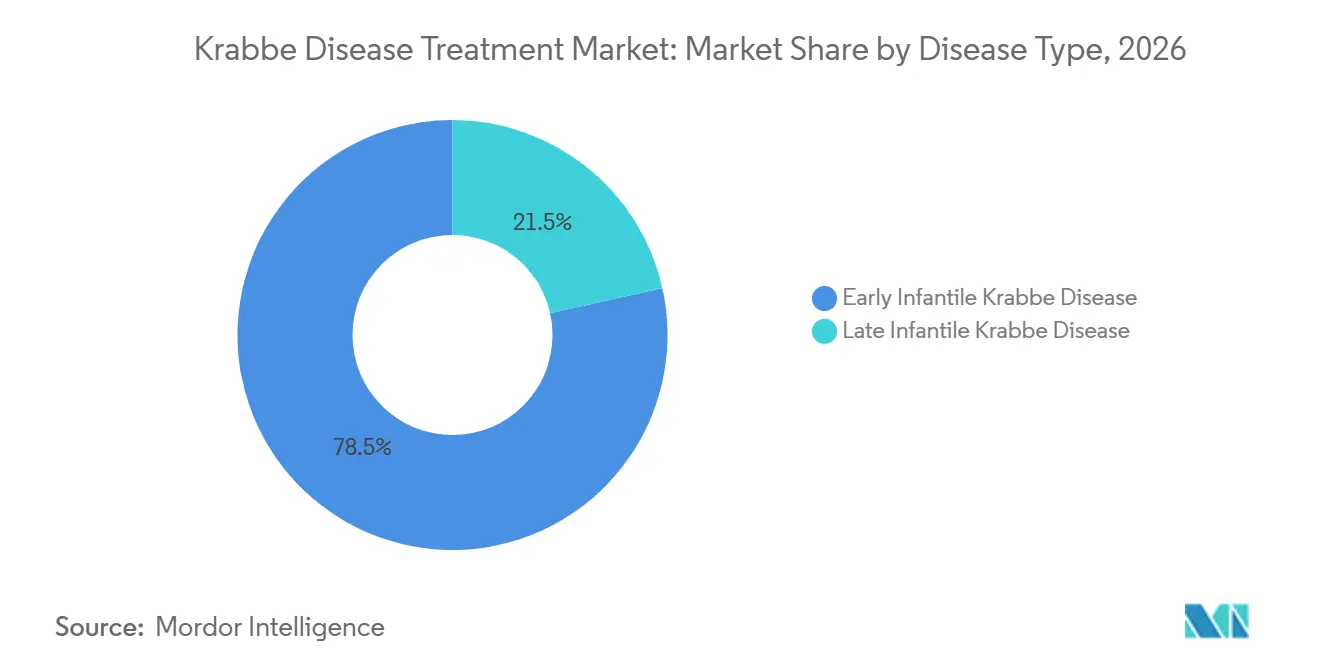
- By disease type, early infantile Krabbe disease held 78.49% of the Krabbe disease treatment market share in 2026, while late infantile Krabbe disease is projected to grow at a 7.89% CAGR through 2032.
- By treatment modality, hematopoietic stem cell transplantation held 52.37% of the Krabbe disease treatment market share in 2026, while gene therapy is projected to grow at an 8.93% CAGR through 2032.
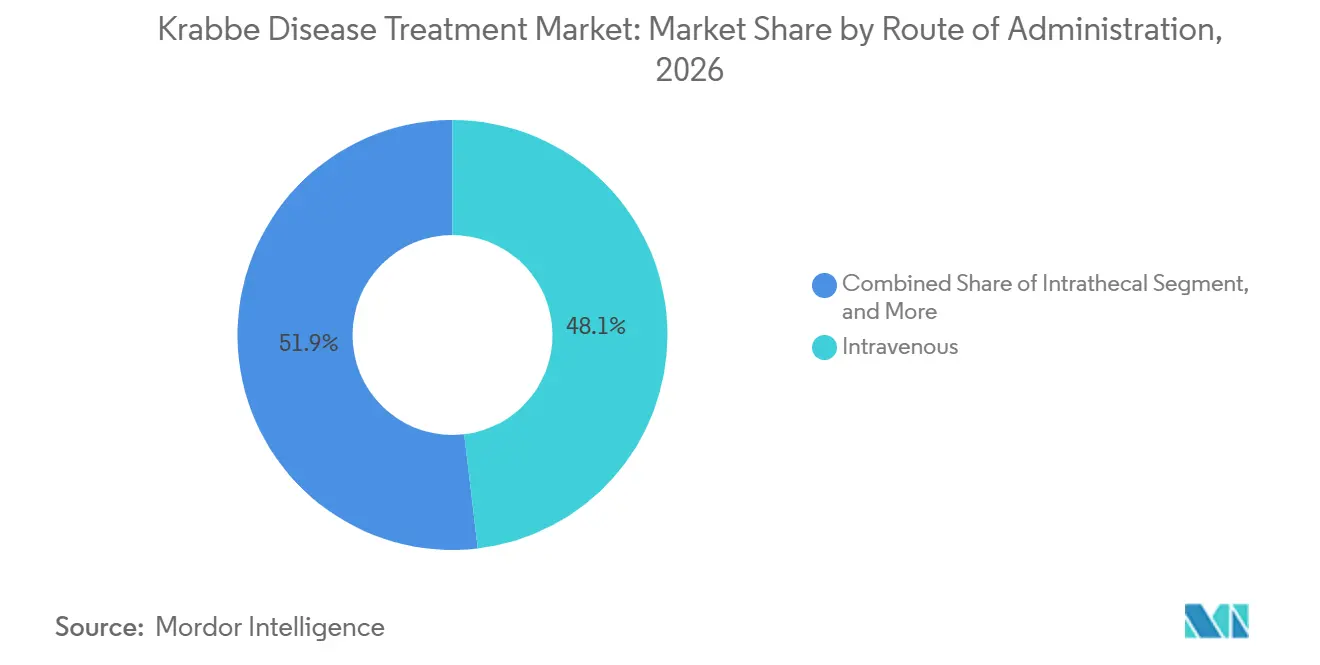
- By route of administration, intravenous administration held 48.12% of revenue in 2026, while intrathecal is projected to grow at a 9.41% CAGR through 2032.
- By end-user, hospitals and transplant centers held 45.91% of revenue in 2026, while specialty clinics are projected to grow at a 9.86% CAGR through 2032.
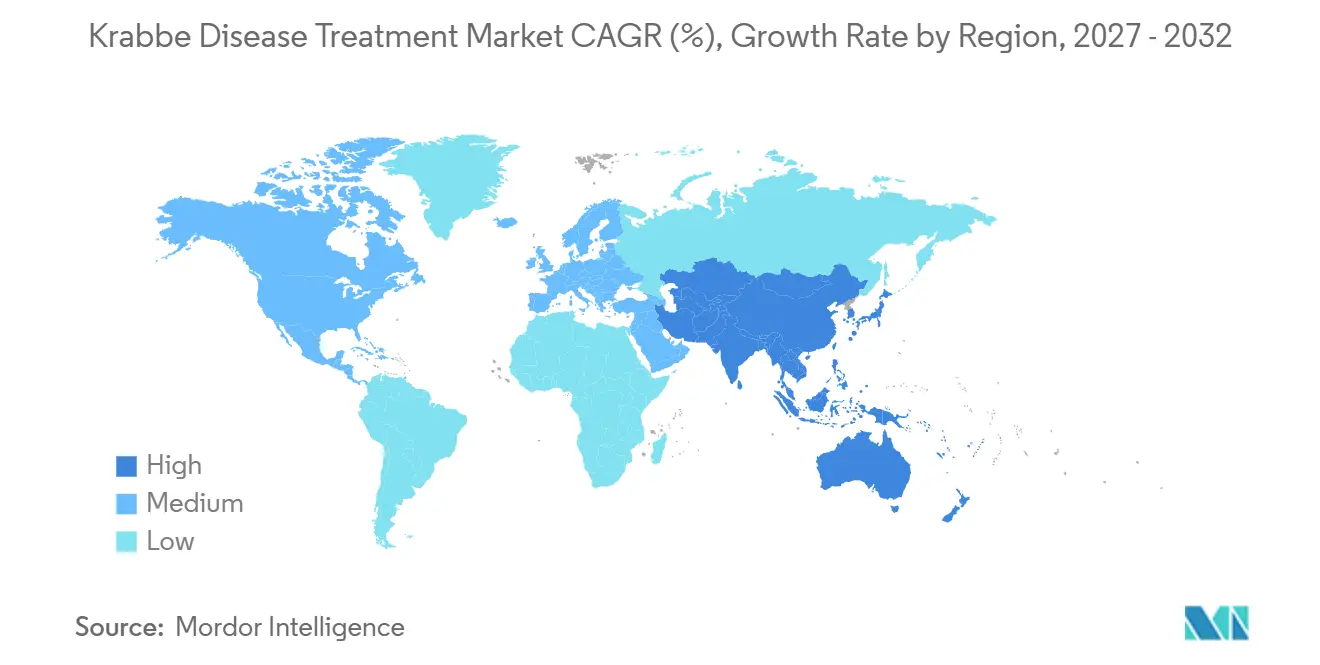
- By geography, North America commanded 38.24% of the Krabbe disease treatment market in 2026; Asia-Pacific is forecast to register a 10.27% CAGR through 2032.
Note: Market numbers in this report are based on Mordor Intelligence's proprietary estimation framework, which combines nine months of actuals with Q4 projections for base year 2026.
Market Trends and Insights
Drivers Impact Analysis of Krabbe Disease Treatment Market*
| Driver | (~) % Impact on CAGR Forecast | Geographic Relevance | Impact Timeline |
|---|---|---|---|
| Expansion of Newborn Screening Programs | +1.8% | North America core, Asia-Pacific growing, Europe emerging | Short term (≤ 2 years) |
| Gene and Cell Therapy Pipeline Development | +1.5% | Global, with research concentrated in North America and Europe | Medium term (2-4 years) |
| Orphan Drug and Accelerated Regulatory Incentives | +1.2% | Global, with primary impact in North America and Europe | Medium term (2-4 years) |
| Rare Disease Research Funding and Advocacy | +0.8% | North America dominant, with spillover to Asia-Pacific and Europe | Long term (≥ 4 years) |
| State-Level Screening Procurement and Implementation Gaps | +0.5% | United States, with national policy and state-level variation | Short term (≤ 2 years) |
| Psychosine-Guided Risk Stratification for Earlier Treatment | +0.7% | North America, Japan, and Europe | Medium term (2-4 years) |
| Source: Mordor Intelligence | |||
Expansion of Newborn Screening Programs
The addition of infantile Krabbe disease to the U.S. Recommended Uniform Screening Panel on July 1, 2024, changed the policy setting for the Krabbe disease treatment market. The action gave state health departments a stronger basis to add Krabbe testing to their screening programs. In early 2024, 12 states screened 34% of U.S. newborns, leaving a large share of births outside a Krabbe screening pathway. Federal coverage requirements for conditions on the panel support state implementation by reducing a funding barrier for health plans. Maryland enacted Senate Bill 117 in October 2024 and required state implementation within 1 year of the federal addition, which provides a legislative example for other states. Screening expansion will raise the number of infants referred for evaluation, although the commercial benefit depends on whether families can reach a transplant center in the short treatment window.
Gene and Cell Therapy Pipeline Development
Gene and cell therapy development remains a major source of long-term interest in the Krabbe disease treatment market because HSCT does not fully address peripheral nerve disease. In the REKLAIM study, FBX-101 was given intravenously after HSCT, and the five treated patients showed higher GALC expression, lower psychosine, and normalized motor function. Forge Biologics discontinued FBX-101 in January 2025 after a strategic review, despite the reported safety and motor-function findings. Gemma Biotherapeutics holds PBKR03, an intracisternal AAVhu68-GALC program acquired from Passage Bio in August 2024. The GALax-C study for PBKR03 remains suspended in 2026, which delays evidence for the most advanced CNS-directed candidate. These events leave HSCT as the near-term foundation of care and require any future combination approach to establish its clinical value again.
Regulatory Incentives and Diagnostic Risk Stratification
Regulatory pathways and more precise diagnostics support development in the Krabbe disease treatment market, but neither removes the need for usable clinical evidence. FBX-101 received a U.K. Innovation Passport in March 2024, allowing entry into the Innovative Licensing and Access Pathway for accelerated regulatory and access discussions. The clinical pathway increasingly uses low GALC activity followed by psychosine measurement to distinguish infants who need urgent assessment from those with lower-risk results. This two-tier method supports earlier referral and can reduce uncertainty created by low enzyme activity alone. It also gives laboratories a continuing role in diagnosis and post-treatment monitoring as screening programs widen. Regulatory designations may help small developers organize development plans, but the FBX-101 decision shows that designations do not guarantee a sustainable program. The Krabbe disease industry, therefore, depends on both faster identification and a practical route from positive result to clinical intervention.
Research Funding, Advocacy, and Care Infrastructure
Research funding and advocacy are strengthening the database needed for the Krabbe disease treatment market. The Rosenau Family Research Foundation awarded the University of Minnesota USD 360,000 in 2025 to develop a national Krabbe disease patient registry.[1] It also funded work at the University at Buffalo on NF-κB signaling as a potential therapeutic target.[2] The University of Pittsburgh received USD 375,000 to improve newborn screening result disclosure, adding attention to communication at a critical point in care. The NIH Rare Diseases Clinical Research Network received USD 26 million for its fifth funding cycle in FY2025, including support for research groups relevant to leukodystrophies. A national registry can improve the longitudinal data needed to understand treatment outcomes and to design future trials, while better disclosure and referral processes can help screening programs translate results into care.
Restraints Impact Analysis of Krabbe Disease Treatment Market*
| Restraint | (~) % Impact on CAGR Forecast | Geographic Relevance | Impact Timeline |
|---|---|---|---|
| Ultra-Rare Patient Pool and Limited Trial Enrollment | -1.0% | Global, most acute in North America and Europe | Long term (≥ 4 years) |
| HSCT Risks and the Narrow Presymptomatic Treatment Window | -0.8% | Global, with greater pressure where HSCT centers are absent | Medium term (2-4 years) |
| Limited Transplant-Center Capacity and Cross-State Care Logistics | -0.6% | United States and emerging Asia-Pacific screening markets | Medium term (2-4 years) |
| Anti-AAV Seroprevalence and Post-HSCT Eligibility Constraints | -0.4% | Global, where gene therapy programs are active | Medium term (2-4 years) |
| Source: Mordor Intelligence | |||
Ultra-Rare Patient Pool And Restricted Trial Enrollment
The small patient pool constrains the Krabbe disease treatment market because it limits trial enrollment, evidence generation, and program economics. Krabbe disease has an estimated prevalence of 1-2.5 per 100,000 live births, placing it among ultra-rare pediatric conditions. The five REKLAIM patients represented a meaningful portion of the U.S. population that could be eligible for a similar intervention in a given year. Randomized controlled studies are therefore difficult to power, and developers may need natural history data as comparator evidence. Eligibility can be further narrowed after screening because infants may need HSCT, recovery from immune suppression, and AAV seronegative status before a gene therapy protocol can proceed. A well-maintained patient registry is important because incomplete follow-up weakens both clinical evidence and the planning of later studies.
Time-Critical HSCT And Capacity Constraints
HSCT risks and limited center capacity restrict the Krabbe disease treatment market, even when newborn screening identifies a possible case early. For infantile disease, HSCT should ideally occur within 30 days of life, creating a demanding clinical and logistical schedule. A 2024 study reported median survival of 15.5 years for asymptomatic transplant recipients and 5 years for symptomatic recipients, showing the importance of treatment timing.[3] Clinicians and families must also weigh graft-versus-host disease, infection during immunocompromised periods, and toxicity from conditioning regimens. Preclinical work published in 2026 found that hydroxypropyl-β-cyclodextrin reduced psychosine and astrogliosis and improved neurobehavior in animal models, but human validation is still needed. Wider screening can therefore expose a gap between diagnosis and treatment when referral routes, donor matching, and specialized neonatal transplant services are not available quickly.
*Our forecasts treat driver/restraint impacts as directional, not additive. The impact forecasts reflect baseline growth, mix effects, and variable interactions.
Krabbe Disease Treatment Market Segment Analysis
By Disease Type:
Infantile Phenotype Anchors Revenue, Late-Onset Gains Clinical RecognitionEarly infantile krabbe disease held 78.49% of the Krabbe disease treatment market share in 2026, reflecting both its clinical urgency and the established use of HSCT for presymptomatic infants. The federal screening panel defines infantile Krabbe disease using low GALC activity and psychosine of at least 10 nM, which helps standardize the initial identification pathway. The July 2024 addition to the panel is widening the pool of infants whose results can trigger urgent referral. This segment remains closely linked to transplant capacity because treatment decisions must be made rapidly after birth. Its revenue position also reflects the current lack of an approved alternative that can replace HSCT in early infantile disease. Perinatal-onset and atypical presentations remain a smaller category, although biomarker profiling may improve their classification over time.
Late infantile krabbe disease is forecast to grow at a 7.89% CAGR from 2027 to 2032, making it the fastest-growing disease type in the Krabbe disease treatment market. Historically, this phenotype can be confused with other neurologic disorders, including multiple sclerosis. A 2025 case report described an individual whose diagnosis was delayed for 17 years until GALC enzyme and molecular testing confirmed Krabbe disease. That delay illustrates why measured incidence may understate the number of people who could benefit from correct diagnosis. Long-term results published in 2025 reported that 4 of 6 juvenile patients had near-normal cognitive and motor function up to 19 years after transplantation. These outcomes support continued clinical attention to late-onset patients, even though their treatment pathway is less standardized than infantile disease.
By Treatment Modality:
HSCT Holds The Floor, Gene Therapy Resets ExpectationsHematopoietic Stem Cell Transplantation (HSCT) held 52.37% of the Krabbe disease treatment market share in 2026 and remains the main treatment modality. Its position reflects the absence of an approved alternative and the need to treat qualifying infants quickly after screening. Hospitals use HSCT with myeloablative conditioning and cord blood infusion for eligible presymptomatic infantile patients. The process requires neonatal intensive care, HLA matching, blood banking, and transplant expertise, which keeps treatment concentrated in specialized centers. HSCT can change the course of the disease when carried out before symptoms develop, but it carries substantial clinical risks. Enzyme replacement and pharmacological chaperone approaches remain at earlier stages and have not displaced transplantation.
Gene therapy is projected to grow at an 8.93% CAGR from 2027 to 2032, even though the development path has become less certain. The rationale is its potential to address CNS and peripheral nervous system disease that HSCT alone does not fully correct. PBKR03 uses intracisternal delivery of AAVhu68-GALC to reach cerebrospinal fluid and is designed for broad neurologic distribution. Polaryx Therapeutics also has PLX-200, a trans-cinnamic acid program intended to stabilize GALC through an allosteric chaperone mechanism. Gene therapy will not change the care model unless a program completes enrollment, produces durable evidence, and receives regulatory acceptance. The 2025 discontinuation of FBX-101 and the current suspension of GALax-C make those steps particularly important.
By Route of Administration:
Intravenous Administration Leads, Intrathecal Delivery Poised for GrowthIntravenous administration accounted for 48.12% of revenue in 2026 because the present care model is dominated by systemic HSCT. Conditioning treatment and cord blood infusion are delivered systemically, which gives this route a continuing role in the Krabbe disease treatment market. Intravenous delivery was also used in the FBX-101 program after HSCT. Oral administration has relevance for small-molecule chaperone candidates such as PLX-200. Oral dosing could support adherence if a suitable treatment reaches clinical use. It remains less commercially advanced than transplant and CNS-directed options for Krabbe disease.
Intrathecal is projected to grow at a 9.41% CAGR from 2027 to 2032, the highest rate among administration routes. The growth case rests on therapies that must reach the CNS without relying solely on transport across the blood-brain barrier. PBKR03 uses intracisternal administration into the cisterna magna, an approach designed to distribute treatment through cerebrospinal fluid. This route differs from lumbar intrathecal injection and is intended to provide broader CNS exposure. A move toward CNS-directed treatment would require clinical sites that can manage specialized administration and follow-up. It would also shift more care from transplant-only settings toward specialty clinics and outpatient infusion services.

By End-User:
Transplant Centers Anchor Care, Specialty Clinics Emerge as Follow-Up HubsHospitals and transplant centers held 45.91% of revenue in 2026, making them the leading end-user group in the Krabbe disease treatment market. Their role is protected by the demands of HSCT, including neonatal intensive care, HLA matching, cord blood access, and myeloablative conditioning. The 30-day treatment window makes coordination at these centers especially important. Public health laboratories are also gaining institutional importance as more states adopt two-tier newborn screening. They influence algorithm design, accreditation, and the quality measures used in screening operations. Academic reference centers provide additional clinical and research capacity, including the University of Minnesota and Mayo Clinic Laboratories.
Specialty clinics are forecast to grow at a 9.86% CAGR from 2027 to 2032 as long-term care expands beyond the transplant admission. These clinics can oversee psychosine monitoring, developmental assessments, and potential follow-up for future gene therapies. Their role becomes more important when patients need continuing neurologic and metabolic support after HSCT. Diagnostic centers such as Revvity, Baebies, CENTOGENE, and PreventionGenetics serve an upstream part of the care pathway. Their activity is tied to screening expansion and is less dependent on the outcome of a specific gene therapy study. The Krabbe disease industry can therefore develop a more distributed service model even while definitive treatment remains concentrated in transplant centers.
Geography Analysis
North America held 38.24% of the Krabbe disease treatment market share in 2026, supported by established newborn screening systems and the largest concentration of pediatric HSCT centers. The U.S. federal screening panel's addition in 2024 increased the policy support for state-level testing. Maryland's 2024 law set a requirement for implementation within 1 year of the federal addition. The region still has uneven access because each state makes its own procurement, laboratory, and referral decisions. Canada and Mexico are in earlier stages of screening expansion, but improved cross-border identification can add patients to the regional care pathway. Europe contributes through academic rare disease centers and clinical trial infrastructure, particularly in Germany, the United Kingdom, France, and Italy. The loss of FBX-101 removed the leading near-term European regulatory candidate, which narrowed the therapeutic pipeline but did not change the region's research role.
Asia-Pacific is forecast to grow at a 10.27% CAGR from 2027 to 2032, the fastest regional rate in the Krabbe disease treatment market. Japan is extending municipal newborn screening programs, and Osaka began including Krabbe disease in April 2024. Research published in 2025 described broader lysosomal storage disease screening across Japanese prefectures and the need for adaptable algorithms because of phenotype variation. In China, a Shanghai pilot identified 9 Krabbe cases among 50,108 newborns and reported 1 case per 5,568 live births. The pilot placed Krabbe disease among the priority disorders for newborn screening planning. Japan, South Korea, and Australia have the most developed rare disease reimbursement pathways in the region. India adds potential diagnostic volume through its developing private rare disease testing sector.
Middle East and Africa and South America represent smaller but strategically relevant parts of the Krabbe disease treatment market. The c.502C>T founder GALC mutation is prevalent in GCC Arab-Muslim and Druze communities, creating a regional reason for targeted genetic testing. CENTOGENE and reference laboratories address this need through specialized testing services. Saudi Arabia and the United Arab Emirates are investing in national genomics programs that include lysosomal storage disorder panels. Brazil and Argentina host South America's more developed rare disease diagnostic centers. HSCT access for newborns with Krabbe disease remains limited in the region, which restricts the conversion of diagnosis into treatment. Advocacy and infrastructure development can improve the link between testing, referral, and specialized care over time.
Competitive Landscape
The Krabbe disease treatment market is fragmented because patient scarcity prevents any broad group of companies from building a large commercial base. Gemma Biotherapeutics and Polaryx Therapeutics are among the visible specialized developers, with PBKR03 and PLX-200 or PLX-300 programs. Passage Bio out-licensed PBKR03 to Gemma Biotherapeutics in August 2024, granting exclusive worldwide development and commercialization rights. The transaction showed how larger genetic medicine developers can shift rare pediatric programs to companies focused on a narrower set of assets. Diagnostic companies, including Revvity, Baebies, CENTOGENE, and PreventionGenetics, form a more stable part of the competitive structure. Their screening-related activity can rise with new state programs even when a therapeutic candidate is delayed. No combined market share for the leading companies is provided, so concentration cannot be assessed from the available revenue data.
Competition in the Krabbe disease treatment market depends on delivery route, manufacturing capacity, and trial design as much as the GALC transgene itself. Most gene therapy approaches seek to restore GALC activity, but they differ in the delivery route used to reach the nervous system. Gemma's PBKR03 uses intracisternal delivery, while FBX-101 used intravenous administration after HSCT. Forge Biologics ended FBX-101 in January 2025 after its strategic review, removing the only systemic intravenous gene therapy candidate then in active clinical development. Orchard Therapeutics' lentiviral HSC platform for metachromatic leukodystrophy offers a related example of gene-corrected hematopoietic cells delivering a neurologic benefit. Regenxbio and Rocket Pharmaceuticals have manufacturing and rare disease gene therapy capabilities that could support Krabbe programs through partnership. The suspension of GALax-C means that durable competitive advantage will depend on restarting development and producing reliable clinical follow-up.
The Krabbe disease treatment market also has open areas where no company has a commercial product. Bridge therapies such as hydroxypropyl-β-cyclodextrin could matter if human studies show they can support infants before HSCT. Digital tools for longitudinal psychosine monitoring could also help clinicians manage treatment follow-up. The University of Minnesota registry project gives the field a potential source of structured treatment data. That information could help developers set endpoints and understand outcomes in a population too small for conventional trials. In the near term, screening and diagnostic companies have greater insulation from therapeutic trial volatility than gene therapy developers. Longer term competition will depend on whether a therapy can show durable benefit within the narrow clinical and operational window that defines infantile disease.
Krabbe Disease Treatment Industry Leaders
-
Orchard Therapeutics
-
Gain Therapeutics Inc.
-
Gemma Biotherapeutics Inc.
-
Passage Bio Inc.
-
Polaryx Therapeutics Inc.
- *Disclaimer: Major Players sorted in no particular order
Krabbe Disease Treatment Market Companies Covered in this Report
- Abeona Therapeutics
- Biomarin Pharmaceutical
- Bluebird Bio
- Forge Biologics Inc.
- Freeline Therapeutics
- Gain Therapeutics Inc.
- Gemma Biotherapeutics Inc.
- Magenta Therapeutics Inc.
- Orchard Therapeutics
- Passage Bio Inc.
- Polaryx Therapeutics Inc.
- REGENXBIO
- Rocket Pharmaceuticals Inc.
- Sanofi
- Sarepta Therapeutics
- Solid Biosciences Inc.
- Takeda Pharmaceuticals
- Ultragenyx Pharmaceutical Inc.
- UniQure
Recent Industry Developments in Krabbe Disease Treatment Market
- August 2026: Polaryx Therapeutics Inc. received an FDA "safe-to-proceed" letter for its SOTERIA Phase II clinical trial, allowing the company to advance PLX-200 for the treatment of several lysosomal storage disorders, including Krabbe disease. PLX-200 is an oral small-molecule therapy designed to enhance lysosomal function and reduce neuroinflammation. The SOTERIA study was planned to evaluate the safety, tolerability, and clinical activity of PLX-200 in patients with Krabbe disease and other rare neurodegenerative disorders.
- October 2025: GEMMA Biotherapeutics Inc. launched Rare Therapeutics (RareTx) as a clinical-stage company focused on developing gene therapies for ultra-orphan diseases. RareTx's initial portfolio included Krabbe disease, alongside GM1 gangliosidosis and metachromatic leukodystrophy, with its lead programs targeting lysosomal storage diseases affecting the central nervous system. The company planned to develop these therapies through dedicated therapeutic platforms designed to accelerate development, reduce capital requirements, and improve accessibility for ultra-rare disease patients.
- May 2025: Passage Bio Inc. and GEMMA Biotherapeutics Inc. amended their exclusive license agreement covering PBKR03, an AAV gene therapy for Krabbe disease. As part of the amendment, GEMMA Biotherapeutics made a non-refundable upfront payment of USD 5 million to Passage Bio in connection with product supply for a clinical study. The amendment did not alter the broader exclusive licensing arrangement, which remained in effect under its existing terms.
Global Krabbe Disease Treatment Market Report Scope
As per the scope of the report, Krabbe disease treatment refers to medical approaches aimed at slowing progression and managing symptoms of this ultra‑rare lysosomal storage disorder. The only disease‑modifying option is hematopoietic stem cell transplantation (HSCT), which works best if performed before symptoms appear; otherwise, care is largely supportive.
The Krabbe disease treatment market is segmented by disease type, treatment modality, route of administration, end-user, and geography. By disease type, the market is segmented into early infantile Krabbe disease and late infantile Krabbe disease. By treatment modality, the market is segmented into hematopoietic stem cell transplantation (HSCT), gene therapy, enzyme replacement therapy (ERT), supportive care, anticonvulsants, and others. By route of administration, the market is segmented into intravenous, intrathecal, oral, and others. By end-user, the market is segmented into hospitals and transplant centers, diagnostic centers, specialty clinics, public health laboratories, and others. The geography segment is further divided into North America, Europe, Asia-Pacific, the Middle East and Africa, and South America. The report also covers the estimated market sizes and trends for 17 countries across major regions globally. The report offers the market size and forecasts in value (USD) for the above segments.
Segmentation Overview
| Early Infantile Krabbe Disease |
| Late Infantile Krabbe Disease |
| Hematopoietic Stem Cell Transplantation (HSCT) |
| Gene Therapy |
| Enzyme Replacement Therapy (ERT) |
| Supportive Care |
| Anticonvulsants |
| Others |
| Intravenous |
| Intrathecal |
| Oral |
| Others |
| Hospitals and Transplant Centers |
| Diagnostic Centers |
| Specialty Clinics |
| Others |
| North America | United States |
| Canada | |
| Mexico | |
| Europe | Germany |
| United Kingdom | |
| France | |
| Italy | |
| Spain | |
| Rest of Europe | |
| Asia-Pacific | China |
| India | |
| Japan | |
| Australia | |
| South Korea | |
| Rest of Asia-Pacific | |
| Middle East and Africa | GCC |
| South Africa | |
| Rest of Middle East and Africa | |
| South America | Brazil |
| Argentina | |
| Rest of South America |
| By Disease Type | Early Infantile Krabbe Disease | |
| Late Infantile Krabbe Disease | ||
| By Treatment Modality | Hematopoietic Stem Cell Transplantation (HSCT) | |
| Gene Therapy | ||
| Enzyme Replacement Therapy (ERT) | ||
| Supportive Care | ||
| Anticonvulsants | ||
| Others | ||
| By Route of Administration | Intravenous | |
| Intrathecal | ||
| Oral | ||
| Others | ||
| By End-User | Hospitals and Transplant Centers | |
| Diagnostic Centers | ||
| Specialty Clinics | ||
| Others | ||
| By Geography | North America | United States |
| Canada | ||
| Mexico | ||
| Europe | Germany | |
| United Kingdom | ||
| France | ||
| Italy | ||
| Spain | ||
| Rest of Europe | ||
| Asia-Pacific | China | |
| India | ||
| Japan | ||
| Australia | ||
| South Korea | ||
| Rest of Asia-Pacific | ||
| Middle East and Africa | GCC | |
| South Africa | ||
| Rest of Middle East and Africa | ||
| South America | Brazil | |
| Argentina | ||
| Rest of South America | ||
Key Questions Answered in the Report
What is the 2027 value of the Krabbe disease treatment market?
The Krabbe disease treatment market size is USD 1.45 billion in 2027 and is forecast to reach USD 2.05 billion by 2032 at a 7.23% CAGR. The forecast reflects the current screening-led treatment pathway. It also depends on timely clinical referral.
What is the current standard treatment for infantile Krabbe disease?
HSCT remained the leading treatment modality with 52.37% of revenue in 2026. It is most effective when performed before symptoms develop and ideally within 30 days of life. This makes timely referral as important as test identification. Center capacity can affect access to treatment.
Why is newborn screening important for Krabbe disease?
It can identify infants before symptoms emerge and support urgent referral for treatment. The U.S. panel added infantile Krabbe disease in July 2024. State implementation still determines access in practice. Laboratory and referral arrangements shape patient follow-up.
Which region is expected to expand fastest through 2031?
Asia-Pacific is projected to grow at a 10.27% CAGR from 2027 to 2032, supported by expanding screening in Japan and growing lysosomal storage disorder screening activity in China. Japan, South Korea, and Australia have more developed reimbursement pathways. Screening adoption varies across the wider region.
What is limiting gene therapy development for Krabbe disease?
Very small patient populations limit enrollment and evidence generation. The current suspension of the GALax-C study and the 2025 FBX-101 discontinuation also delay clinical progress. These delays keep HSCT central to the near-term care model. Patient eligibility requirements can further narrow enrollment.