
Market Overview
| Study Period | 2020 - 2031 |
|---|---|
| Forecast Data Period | 2026 - 2031 |
| Base Year Market Size (2025) | 550.30 Million liters |
| Market Volume (2026) | 564.88 Million liters |
| Market Volume (2031) | 643.84 Million liters |
| Growth Rate (2026 - 2031) | 2.65 % |
| Market Concentration | Medium |
Major Players *Disclaimer: Major Players sorted in no particular order Image © Mordor Intelligence. Reuse requires attribution under CC BY 4.0. | |
Indonesia Automotive Lubricants Market Analysis by Mordor Intelligence
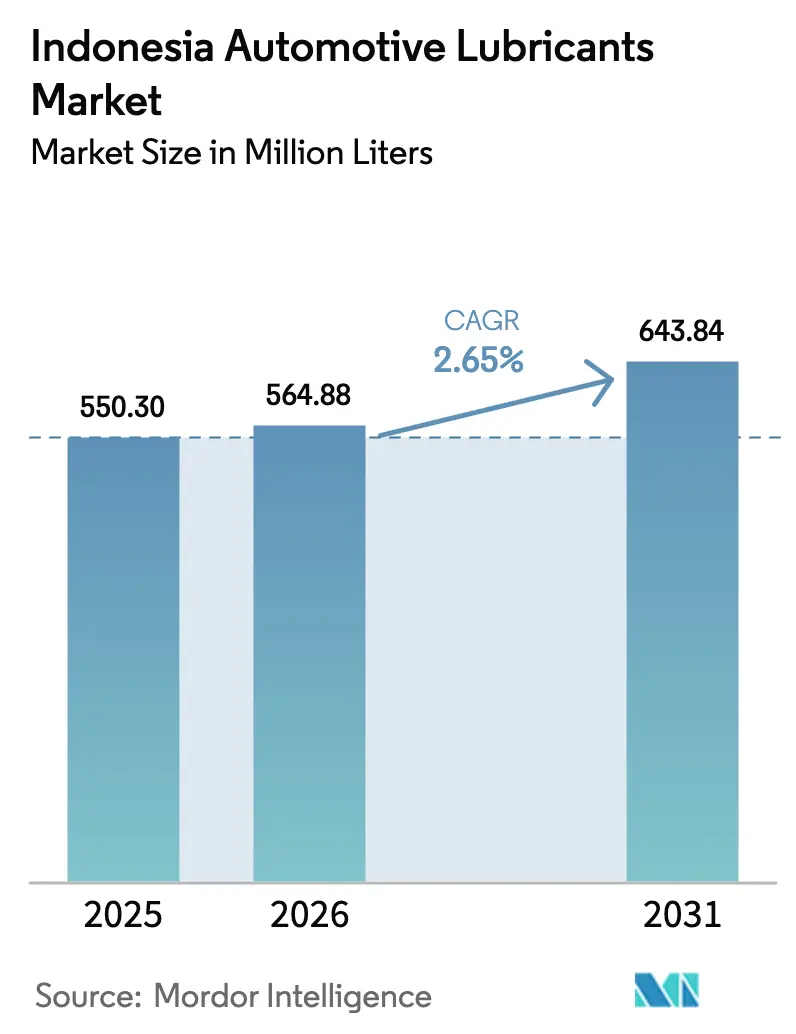
The Indonesian Automotive Lubricants Market size is expected to grow from 550.30 million liters in 2025 to 564.88 million liters in 2026 and is forecast to reach 643.84 million liters by 2031 at 2.65% CAGR over 2026-2031. Rising vehicle registrations, stricter emission norms that favor synthetic products, and government-backed infrastructure projects underpin this steady expansion. Mandatory SNI certification has narrowed the competitive field to compliant brands that can meet elevated quality benchmarks. A sharp rise in automotive investment signals continued demand for higher-performance lubricants across both two-wheelers and four-wheelers. Digital retail adoption, spearheaded by Pertamina’s Shop and Drive platform, is reducing distribution friction and expanding rural reach, while biodiesel blending mandates are shortening oil-drain intervals and increasing consumption frequency. Crude oil volatility and the early but growing electric motorcycle base remain the chief headwinds, pressuring margins and posing long-term demand risks.
Key Report Takeaways
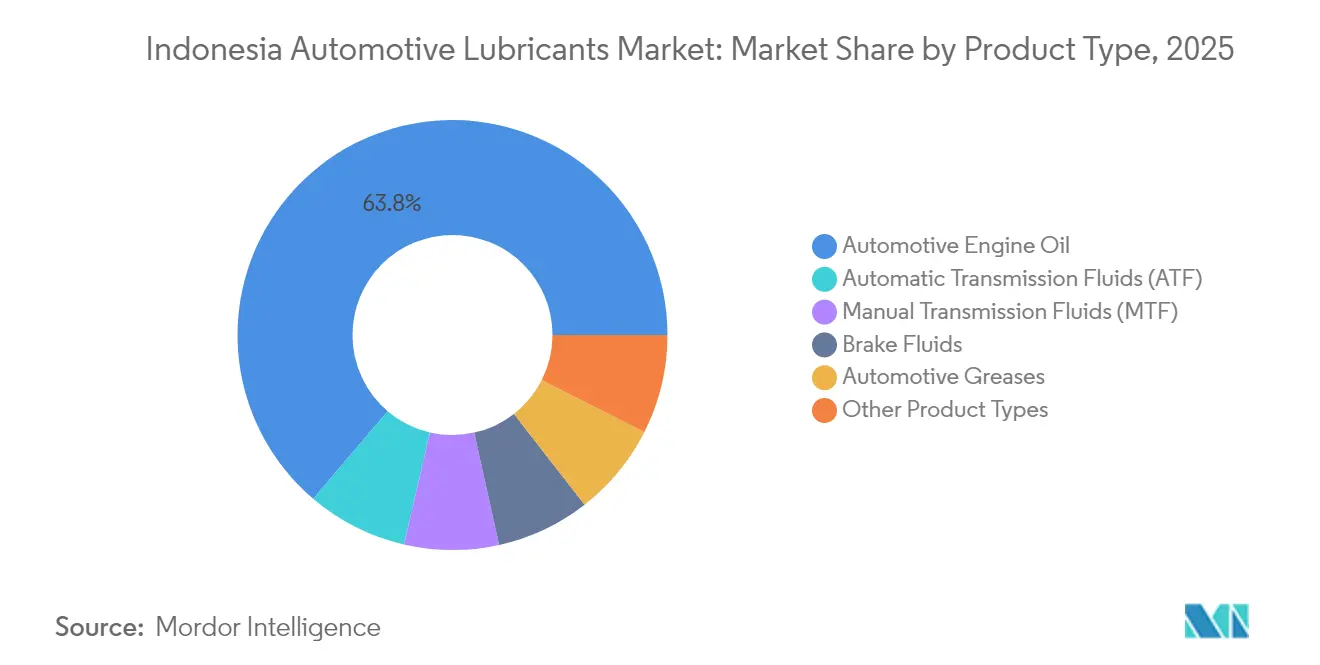
- By product type, automotive engine oil led with a 63.78% share of the Indonesian automotive lubricants market in 2025, whereas automatic transmission fluids are projected to expand at a 2.83% CAGR through 2031.
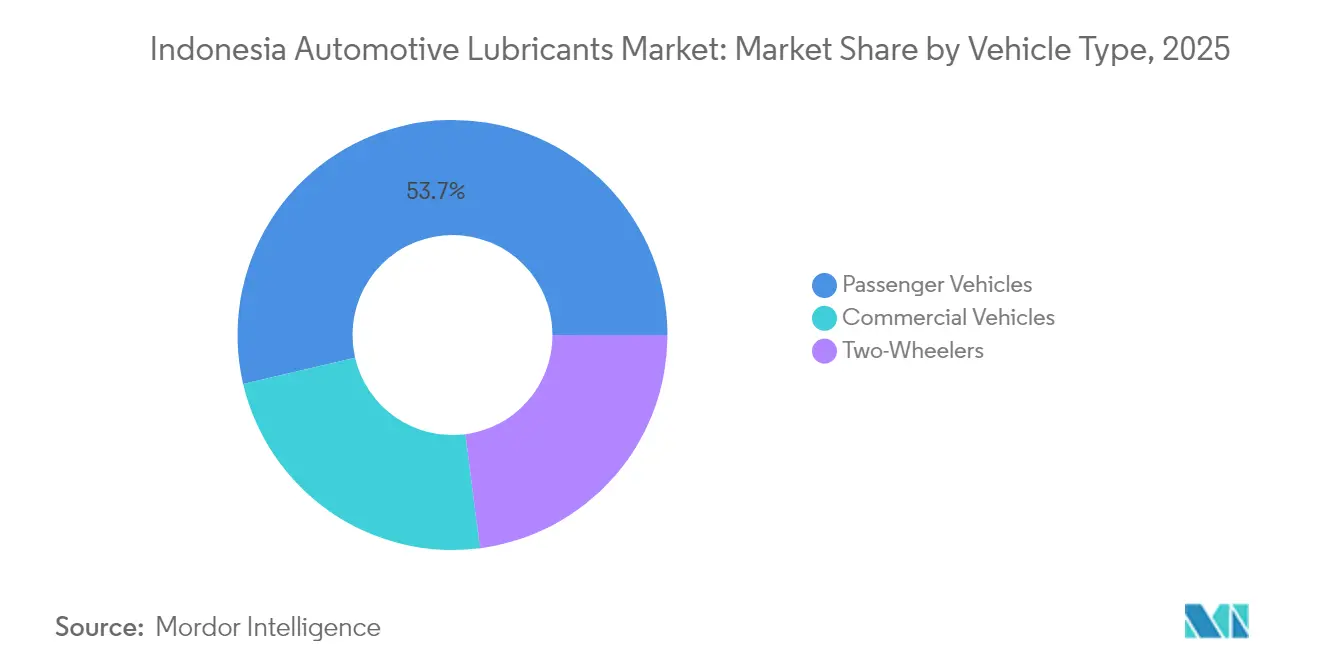
- By vehicle type, passenger vehicles accounted for 53.65% of the volume in 2025; commercial vehicles are expected to advance at a 2.88% CAGR to 2031 as logistics activity rebounds nationwide.
Note: Market size and forecast figures in this report are generated using Mordor Intelligence’s proprietary estimation framework, updated with the latest available data and insights as of 2026.
Indonesia Automotive Lubricants Market Trends and Insights
Drivers Impact Analysis*
| Drivers | (~) % Impact on CAGR Forecast | Geographic Relevance | Impact Timeline |
|---|---|---|---|
| Expanding vehicle parc (two- and four-wheelers) | +0.8% | National, concentrated in Java and Sumatra | Long term (≥ 4 years) |
| Shift to synthetic lubricants on stricter emission norms | +0.6% | National, with early adoption in urban centers | Medium term (2-4 years) |
| E-commerce and digital retail channels | +0.3% | National, stronger in metropolitan areas | Short term (≤ 2 years) |
| Biodiesel B30-B40 mandates shortening oil-drain intervals | +0.4% | National implementation | Medium term (2-4 years) |
| Infrastructure boom in outer islands lifting off-highway lube demand | +0.2% | Kalimantan, Sumatra, Papua, eastern Indonesia | Long term (≥ 4 years) |
| Source: Mordor Intelligence | |||
Expanding Vehicle Parc Drives Baseline Demand Growth
Indonesia’s registered fleet is growing, including motorcycles that require oil changes every 2,000–3,000 kilometers, far more frequently than passenger cars. Commercial registrations rebounded to pre-2020 levels, with an additional surge in automotive investment indicating continued vehicle expansion. Each incremental motorcycle adds predictable lubricant volume, while surging freight movement boosts heavy-duty engine oil demand across inter-island trucking corridors. Urbanization beyond Java is expanding car ownership in secondary cities, widening the customer base for branded outlets. Together, these dynamics secure a stable consumption floor for the Indonesian automotive lubricants market.
Emission Standards Accelerate Synthetic Lubricant Adoption
Euro 4 fuel and emission regulations compel OEMs to specify low-viscosity synthetics (0W-20, 5W-30), driving a shift in the premium direction for lubricant mix[1]. Synthetic and semi-synthetic products, priced higher than mineral oils, enhance oxidation resistance and support extended drain intervals, thereby enabling compliance with increasingly stringent standards. Passenger cars lead adoption, but fleet operators are gradually shifting to longer-life oils to cut downtime. The profit upside attracts global suppliers, intensifying the competition in technology. Price sensitivity among motorcycle owners, however, tempers the pace of mass-market conversion and maintains a two-tier product structure.
E-commerce Channels Transform Distribution Landscape
Pertamina’s Shop and Drive, together with direct-to-consumer storefronts from Shell and Mobil, is redefining lubricant retail by bypassing traditional distributors. Online platforms display detailed viscosity charts and OEM approvals, enabling consumers to match products to vehicles with greater confidence. Pandemic-era buying habits cemented digital convenience, and same-day delivery in Jakarta now sets service expectations nationwide. Rural buyers gain access to genuine lubricants, curbing counterfeit trade. Brands with strong logistics partnerships are capturing incremental share and squeezing margins for brick-and-mortar resellers.
Biodiesel Mandates Intensify Lubricant Replacement Cycles
Indonesia’s B30 rule and pilot B40 programs increase lubricant oxidation rates, shortening drain intervals in heavy-duty engines. Commercial fleets thus consume higher volumes even while maintaining the same mileage. Additive suppliers are modifying antioxidants and detergents to manage biodiesel soot, creating product development opportunities for formulators. The Ministry of Energy’s steadfast biofuel roadmap signals a multiyear uplift in base-oil demand. Nevertheless, formulators must balance higher treat costs against end-user price ceilings in an intensely competitive environment.
Restraints Impact Analysis*
| Restraints | (~) % Impact on CAGR Forecast | Geographic Relevance | Impact Timeline |
|---|---|---|---|
| Crude-/base-oil price volatility | -0.4% | National, affecting all market segments | Short term (≤ 2 years) |
| Rising EV penetration (esp. e-motorcycles) | -0.2% | Urban centers, gradual national expansion | Long term (≥ 4 years) |
| Counterfeit/grey-market lubricants | -0.3% | National, concentrated in rural and price-sensitive segments | Medium term (2-4 years) |
| Source: Mordor Intelligence | |||
Crude Oil Volatility Pressures Margin Sustainability
The Indonesian Crude Price fluctuated in 2024, shrinking lubricant margins as the pass-through lagged[2]. Import dependence for Group III base oils magnifies forex exposure. Smaller blenders often absorb cost spikes to defend shelf space, risking cash-flow stress. Larger players rely on term contracts and inventory hedges, yet still face periodic price stair-steps that disrupt channel pricing. Volatility also complicates promotional planning, as dealers hesitate to stock deep during rising-cost cycles.
Electric Vehicle Adoption Threatens Long-term Demand
Jakarta’s subsidy program has boosted electric-motorcycle bookings, reducing the long-term outlook for engine oils. Penetration remains low for annual sales, but it is accelerating as charging kiosks are rolled out in major cities. Passenger-car EV uptake is slower due to price premiums and limited model variety, which delays a larger impact on the Indonesian automotive lubricants market. Lubricant makers are responding with EV-specific coolants and greases, yet revenue per vehicle will remain far lower than with internal-combustion engines. Policy clarity on long-term incentives will determine whether the shift becomes material before 2030.
*Our forecasts treat driver/restraint impacts as directional, not additive. The impact forecasts reflect baseline growth, mix effects, and variable interactions.
Segment Analysis
By Product Type: Engine-Oil Dominance Meets ATF Momentum
Automotive engine oil accounted for 63.78% of the Indonesian automotive lubricants market size in 2025, supported by the huge motorcycle base and frequent service intervals. Mineral grades still dominate rural sales, but low-viscosity synthetics are gaining share among car owners seeking fuel efficiency. Manufacturers highlight OEM approvals and Euro 4 compliance to differentiate at the point of sale. Distribution breadth, especially through motorcycle workshops, remains the critical success factor for volume players.
Automatic transmission fluids are forecast to register a 2.83% CAGR through 2031, the fastest within the Indonesian automotive lubricants market. The adoption of CVTs in entry-level passenger cars and premium scooters underpins this rise. ATF commands a higher ticket value per liter because its formulations must address torque converter demands and metal-to-belt friction. Brands that secure OEM factory fill positions lock in after-sales pull-through, creating a virtuous cycle for share gains.

By Vehicle Type: Passenger Volume Leads, Commercial CAGR Accelerates
Passenger vehicles accounted for 53.65% of the total lubricant volume in 2025. Growth is moderating as market maturity sets in, yet the segment remains lucrative because synthetic-oil penetration keeps average selling prices elevated. Dealership service packages are gradually extending drain intervals, but periodic road traffic congestion sustains oil oxidation stresses, preserving the need for change frequency.
Commercial vehicles are projected to post a 2.88% CAGR, outpacing passenger cars through 2031. E-commerce logistics, renewed mining activity, and government-funded toll-road expansion lift truck and bus mileage. Fleet managers evaluate lubricants on total cost of ownership rather than sticker price, opening space for premium, extended-drain diesel oils that reduce downtime. Suppliers with bulk-dispensing and used-oil-analysis services have an edge in winning national fleet contracts.
Geography Analysis
Java and Sumatra account for a significant portion of the Indonesian automotive lubricants market, mirroring their dominant share of national vehicle registrations. Jakarta, Surabaya, and Bandung are key distribution anchors, with urban consumers showing early adoption of synthetics. Higher income levels permit upselling, and express-service chains have proliferated to capture impulse oil-change traffic. Congested driving conditions in these cities accelerate oil degradation, thereby reinforcing the need for replacement frequency.
Kalimantan and Sulawesi form the frontier for lubricant growth as coal, nickel, and palm oil operations expand. Demand for heavy equipment, including hydraulic fluids and gear oils, is rising alongside government “downstreaming” policies that encourage in-country mineral processing. Distribution, however, is hindered by long-haul distances and limited port facilities, requiring suppliers to stage inventory near project sites.
Papua and Maluku, though smallest in volume today, are experiencing the fastest relative growth as infrastructure projects under the National Strategic Project program stimulate equipment imports and vehicle sales. Brands that align with provincial governments on vocational-training initiatives gain early visibility and community goodwill, easing market entry barriers. Digital ordering platforms further bridge supply gaps, letting remote workshops source genuine products directly from Jakarta warehouses.
Competitive Landscape
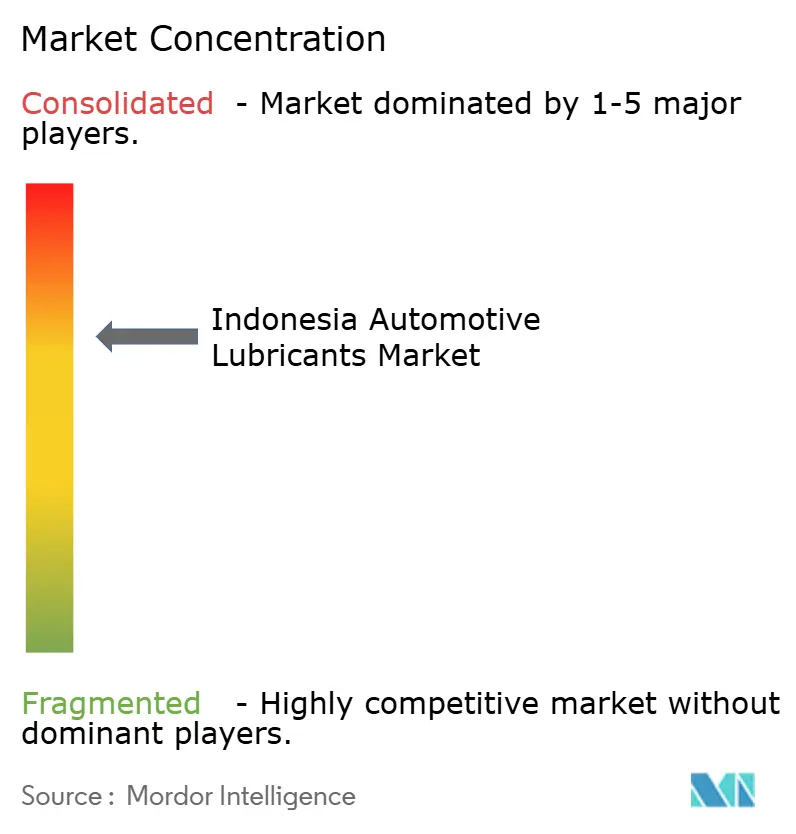
The Indonesia automotive lubricants market is moderately consolidated in nature. Digital strategy marks the new battleground. Pertamina’s Shop and Drive offers same-day delivery in 30 cities, while Shell partners with top e-commerce marketplaces to bundle filter kits and service vouchers. Entry barriers have tightened since the 2019 SNI mandate, and the 2025 revision introduces periodic audits that can result in the suspension of non-compliant importers. This favors incumbents with local blending plants. Niche international entrants partners with regional distributors to supply API SP-rated oils. As EV registrations rise, leading brands are launching dielectric fluids and e-drive greases, aiming to preserve relevance beyond ICE applications.
Indonesia Automotive Lubricants Industry Leaders
-
PT Pertamina
-
Chevron Corporation
-
Exxon Mobil Corporation
-
Shell plc
-
BP p.l.c.
- *Disclaimer: Major Players sorted in no particular order
Recent Industry Developments
- June 2025: BP p.l.c. initiated the sale of its Castrol lubricants division, valued at up to USD 10 billion, as part of a broader USD 20 billion divestment strategy targeted for completion by 2027.
- March 2024: Shell Indonesia announced the construction of its first grease manufacturing plant in Bekasi, adjacent to the Marunda Blending Plant, with an annual capacity of 12 kilotonnes for premium greases.
Indonesia Automotive Lubricants Market Report Scope
The Indonesia Automotive Lubricants market is segmented by product type and Vehicle Type. By Product Type, the market is segmented by Engine Oils, Greases, Hydraulic Fluids, Transmission and Gear Oils. By Vehicle Type, the market is segmented into Commercial Vehicles, Motorcycles, and Passenger Vehicles ).
By Product Type
| Automotive Engine Oil | 0W-XX |
| 5W-XX | |
| 10W-XX | |
| 15W-XX | |
| Monogrades | |
| Other Grades | |
| Manual Transmission Fluids (MTF) | |
| Automatic Transmission Fluids (ATF) | |
| Brake Fluids | |
| Automotive Greases | |
| Other Product Types (Power Steering Fluid etc.) |
By Vehicle Type
| Passenger Vehicles |
| Commercial Vehicles |
| Two-Wheelers |
| By Product Type | Automotive Engine Oil | 0W-XX |
| 5W-XX | ||
| 10W-XX | ||
| 15W-XX | ||
| Monogrades | ||
| Other Grades | ||
| Manual Transmission Fluids (MTF) | ||
| Automatic Transmission Fluids (ATF) | ||
| Brake Fluids | ||
| Automotive Greases | ||
| Other Product Types (Power Steering Fluid etc.) | ||
| By Vehicle Type | Passenger Vehicles | |
| Commercial Vehicles | ||
| Two-Wheelers |
Key Questions Answered in the Report
How large is the Indonesia automotive lubricants market in 2026?
It stands at 564.88 million liters and is projected to reach 643.84 million liters by 2031 at a 2.65% CAGR.
Which segment leads by product?
Automotive engine oil remains dominant with a 63.78% share in 2025.
Which vehicle group is growing fastest?
Commercial vehicles show the highest growth, advancing at a 2.88% CAGR through 2031.
What is driving synthetic-oil uptake?
Euro 4 emission standards now require low-viscosity, high-performance lubricants, spurring synthetic adoption.
How is e-commerce affecting lubricant sales?
Online platforms like Shop and Drive offer wider reach and price transparency, pressuring traditional distributors.