
Hybrid Fabric Market Size and Share
Market Overview
| Study Period | 2020 - 2031 |
|---|---|
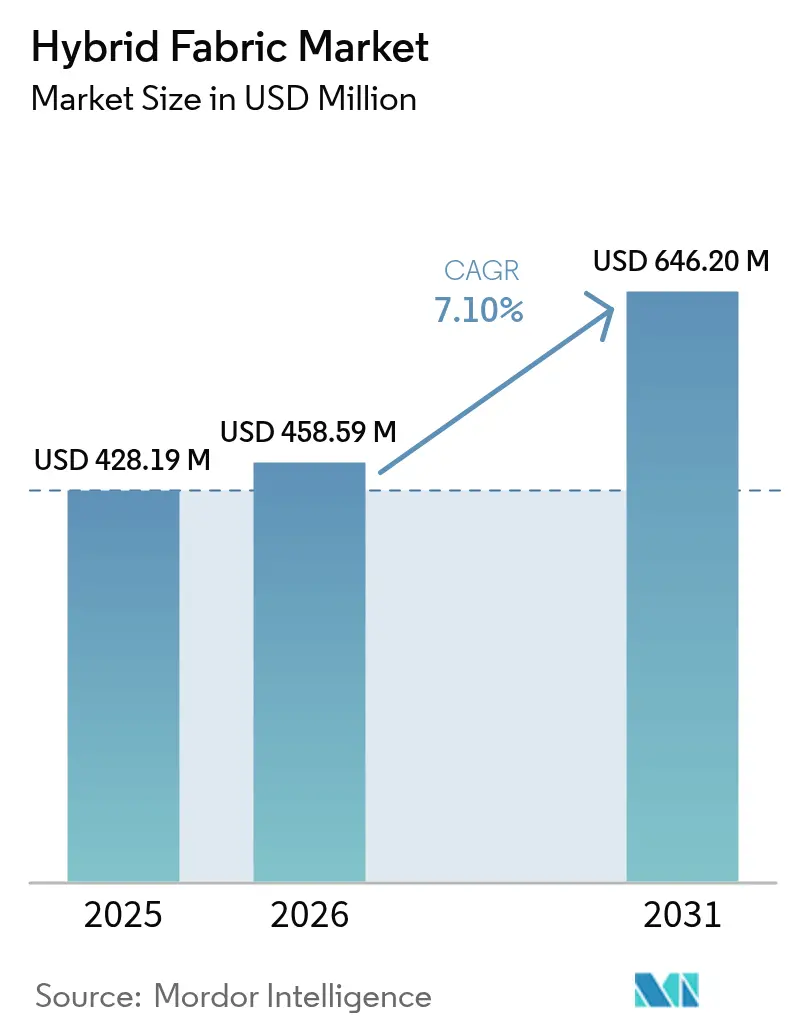
| Market Size (2026) | USD 458.59 Million |
| Market Size (2031) | USD 646.2 Million |
| Growth Rate (2026 - 2031) | 7.10 % |
| Fastest Growing Market | Asia Pacific |
| Largest Market | Asia Pacific |
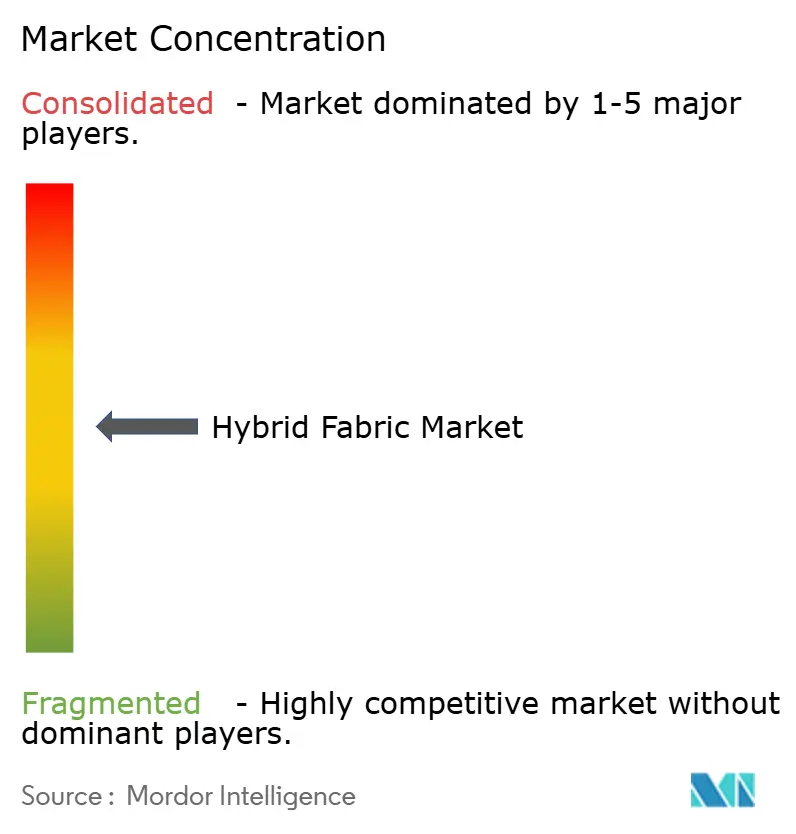
| Market Concentration | Medium |
Major Players *Disclaimer: Major Players sorted in no particular order Image © Mordor Intelligence. Reuse requires attribution under CC BY 4.0. | |
Hybrid Fabric Market Analysis by Mordor Intelligence
The Hybrid Fabric market size is expected to grow from USD 428.19 million in 2025 to USD 458.59 million in 2026 and is forecast to reach USD 646.2 million by 2031 at 7.10% CAGR over 2026-2031. This trajectory reflects how multi-material composites that merge distinct fiber chemistries are displacing single-fiber fabrics across mobility, energy, and aeronautics applications. Automakers are switching to hybrid reinforcements to hit weight‐reduction rules, turbine manufacturers need lighter blades to extend rotor length, and aircraft builders are specifying fabrics that offer higher fatigue resistance at lower thickness. Raw-material suppliers have responded with wider product portfolios, and process-equipment firms are automating lay-up, braiding, and winding steps to cut waste and cycle time. End-users are also valorizing recyclability, a factor that has pushed thermoplastic matrices into mainstream programs. Geographically, China, India, and South-East Asia have become the largest production hubs because of integrated supply chains and public incentives for clean energy components.
Key Report Takeaways
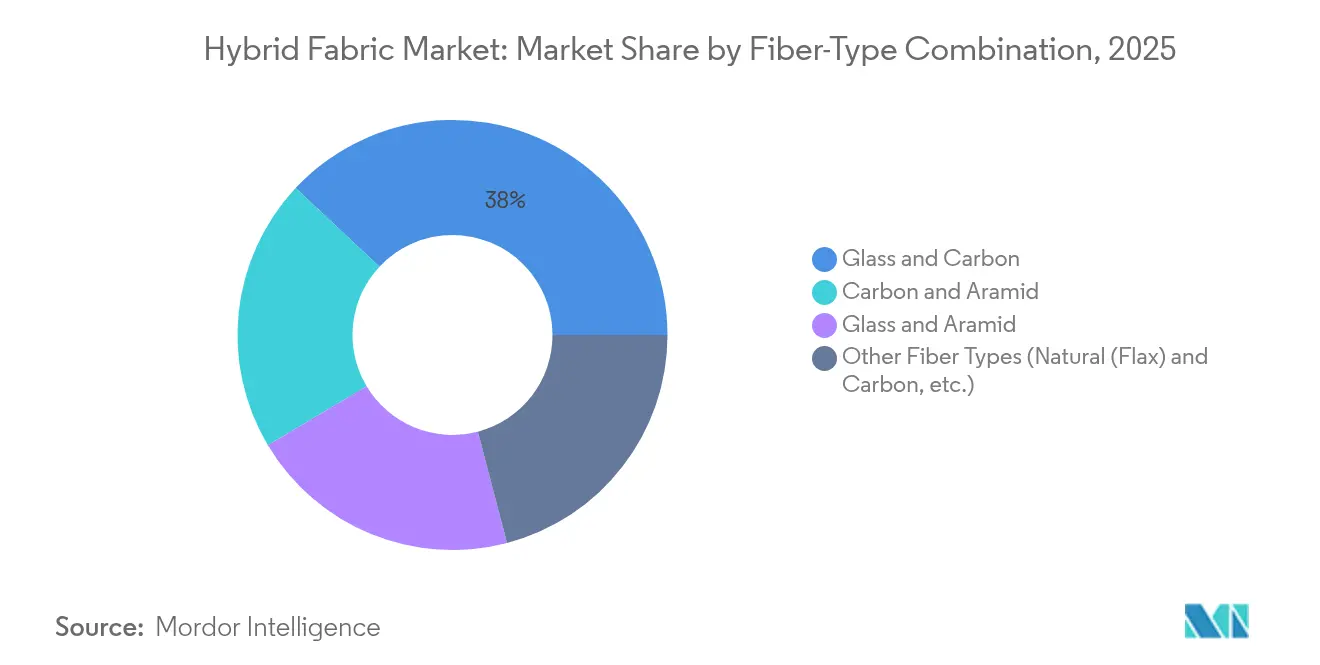
- By fiber-type combination, glass–carbon hybrids captured 38.02% of hybrid fabric market share in 2025, while other combinations that integrate natural fibers are projected to expand at a 9.05% CAGR to 2031.
- By resin matrix, thermoset systems held 61.88% of the hybrid fabric market size in 2025; thermoplastic systems are forecast to grow at an 8.71% CAGR through 2031.
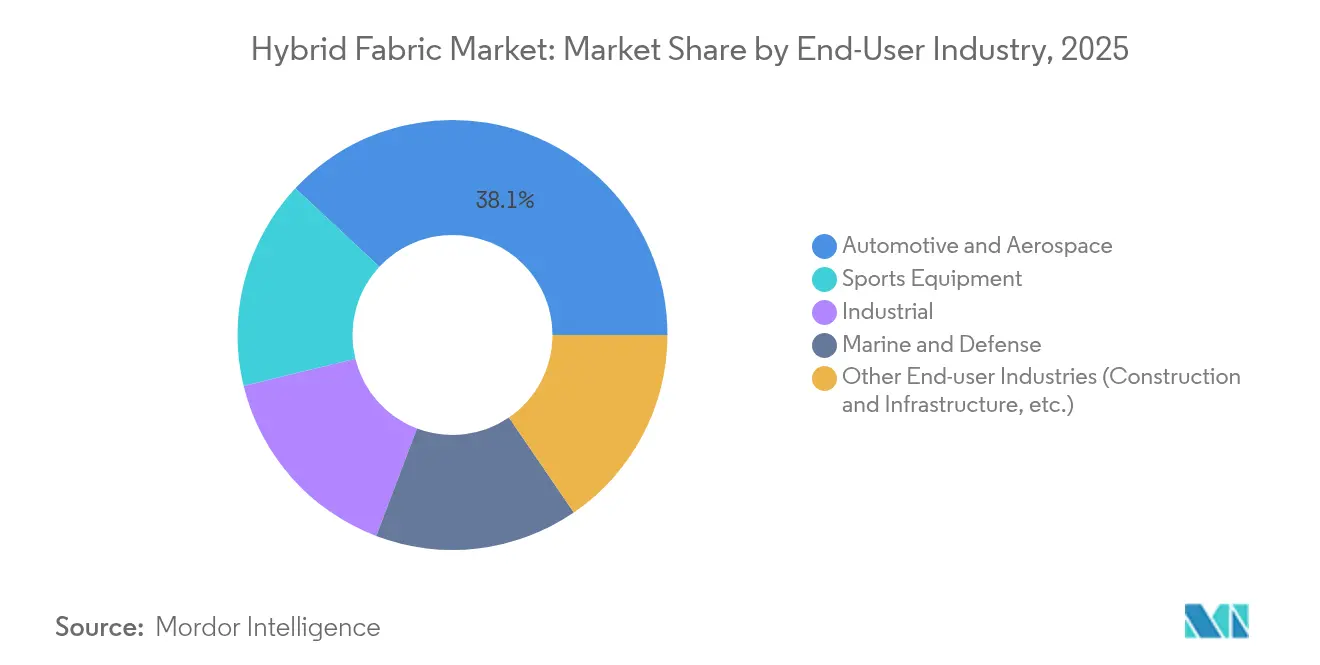
- By end-user industry, automotive and aerospace led with 38.05% revenue share of the hybrid fabric market in 2025; sports equipment is advancing at a 8.88% CAGR to 2031.
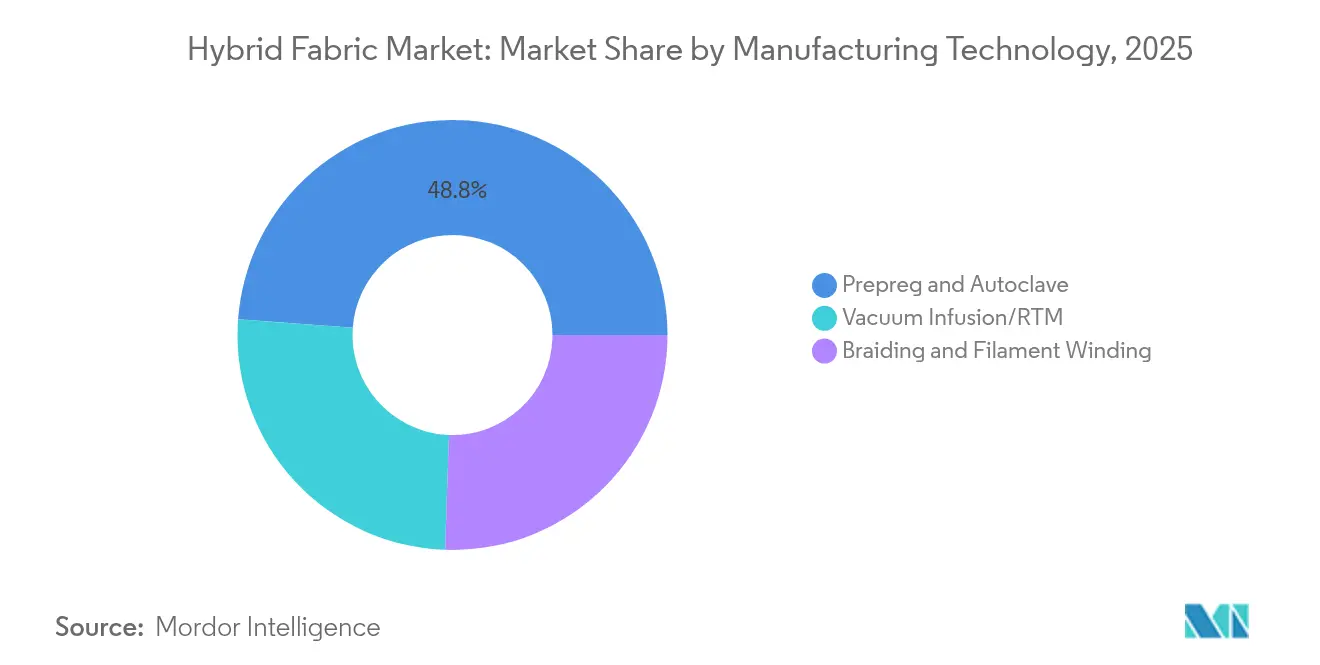
- By manufacturing technology, prepreg and autoclave processing accounted for 48.83% share of the hybrid fabric market size in 2025, whereas braiding and filament winding methods are expanding at an 8.73% CAGR.
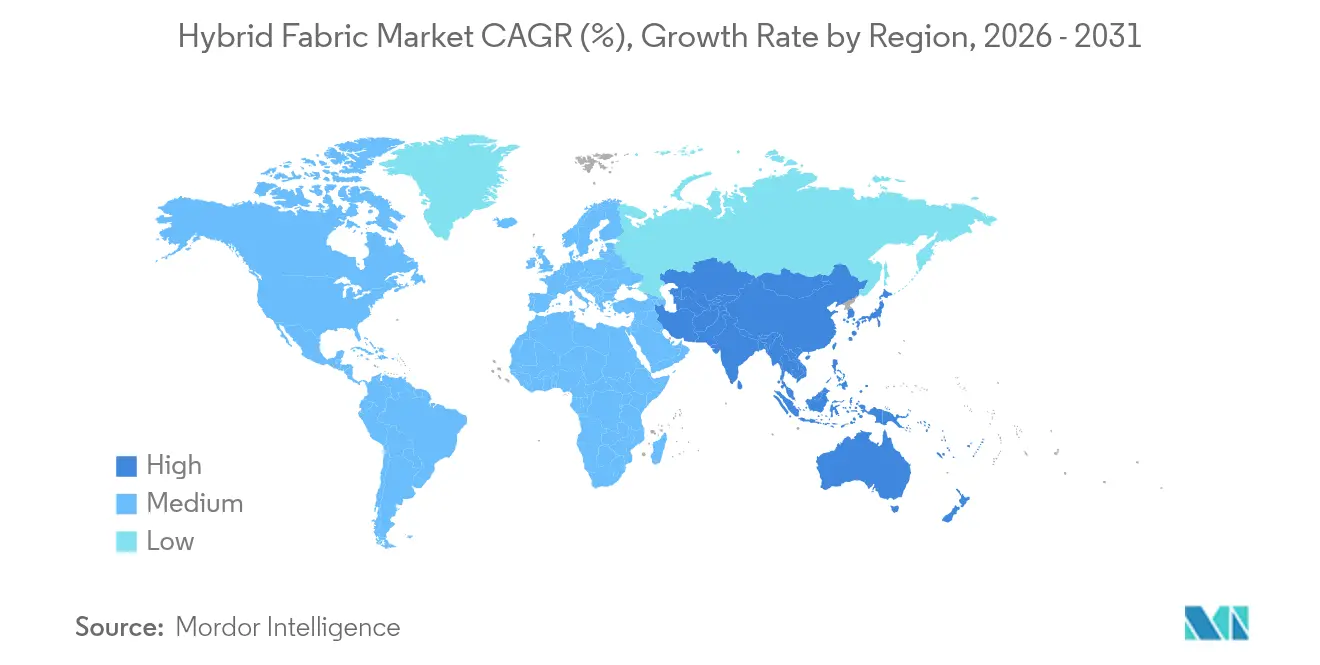
- Regionally, Asia-Pacific dominated with 42.61% hybrid fabric market share in 2025, and the same region is projected to post the fastest 8.54% CAGR through 2031.
Note: Market size and forecast figures in this report are generated using Mordor Intelligence’s proprietary estimation framework, updated with the latest available data and insights as of 2026.
Market Trends and Insights
Drivers Impact Analysis of Hybrid Fabric Market*
| Driver | (~) % Impact on CAGR Forecast | Geographic Relevance | Impact Timeline |
|---|---|---|---|
| Automotive light-weighting demand for glass and carbon hybrids | +2.10% | Global, with concentration in Europe and Asia-Pacific | Medium term (2-4 years) |
| Rise in demand from wind turbine blade manufacturing | +1.80% | Global, led by Asia-Pacific and Europe | Long term (≥ 4 years) |
| Growing demand for high durability and thermal resistant fabrics | +1.30% | North America and Europe, expanding to Asia-Pacific | Medium term (2-4 years) |
| Increasing applications for carbon fiber fabrics | +1.10% | Global, with aerospace concentration in North America | Short term (≤ 2 years) |
| Commercialisation of recycled-carbon and glass hybrid textiles | +0.90% | Europe leading, North America following | Long term (≥ 4 years) |
| Source: Mordor Intelligence | |||
Automotive Light-weighting Demand for Glass and Carbon Hybrids
Automotive OEMs are accelerating adoption of hybrid reinforcements to comply with the European Union rule that requires a 15% vehicle mass reduction by 2027. Ford’s composite C-brace for the Bronco Raptor shows how a glass–carbon fabric raises torsional rigidity while trimming weight. Battery-electric platforms use the same hybrid fabric market solutions inside structural battery enclosures that must insulate high-voltage packs and absorb crash energy. As OEMs migrate from steel to modular composite architectures, design studios gain freedom to mold complex ribs and nodes that were formerly welded, boosting demand for positional fiber placement technologies. The driver is most pronounced in China and Germany, where high electric-vehicle penetration coincides with public-sector fuel-economy targets.
Rise in Demand from Wind Turbine Blade Manufacturing
Blade makers need longer rotors to extract more energy per tower, yet aerodynamic loads soar with each additional meter. LM Wind Power solved this dilemma with an 88.4 meter blade that uses carbon–glass hybrid spar caps for stiffness without punitive mass. Offshore installations magnify the need for fatigue tolerance because salt spray and yaw cycles erode surface layers over a 25-year duty life. SAERTEX responded with an H-modulus glass fabric and self-adhesive non-crimp product family that cuts lay-up time by 30%[1]SAERTEX, “H-Modulus Glass Fabrics for Wind Blades,” saertex.com . Hybrid fabric market orders are therefore booked several quarters in advance, giving fiber suppliers visibility that supports capacity expansion in Jiangsu, Gujarat, and Schleswig-Holstein.
Growing Demand for High Durability and Thermal Resistant Fabrics
Hydrogen-powered aviation has realigned material specifications toward cryogenic toughness. Tanks that store liquid hydrogen at minus 253 °C rely on hybrid glass–carbon fabrics because the alpha-beta thermal expansion mismatch is lower than pure carbon solutions. Defense planners also look to the hybrid fabric industry for lightweight armor capable of defeating both fragments and overpressure; aramid–carbon stacks fill that niche on Future Long Range Assault Aircraft programs. Commercial shipbuilders see similar value in corrosion-immune hybrid laminates for hull inserts that cut life-cycle maintenance costs, broadening end-market diversity.
Increasing Applications for Carbon Fiber Fabrics
Carbon content inside hybrid constructions is spreading to high-volume consumer products. Running-shoe plates that pair carbon with glass reinforcements deliver spring rates that improve stride economy yet remain durable for 600 kilometers. Oak Ridge National Laboratory’s carbon nanofiber technology lifts tensile strength by 50% inside thermoplastic matrices and signals a route to aerospace-grade performance at automotive throughput. Infrastructure owners see parallel benefits in concrete reinforcement where recycled carbon fibers add flexural muscle and cut steel corrosion problems, expanding the hybrid fabric market beyond cyclical aerospace demand.
Restraints Impact Analysis of Hybrid Fabric Market*
| Restraint | (~) % Impact on CAGR Forecast | Geographic Relevance | Impact Timeline |
|---|---|---|---|
| High production & qualification costs | -1.40% | Global, particularly impacting North America and Europe | Short term (≤ 2 years) |
| Carbon-fiber supply-chain tightness | -0.90% | Global, with acute impact in Asia-Pacific | Medium term (2-4 years) |
| Absent recycling standards for multi-material fabrics | -0.70% | Europe leading regulatory development, global impact | Long term (≥ 4 years) |
| Source: Mordor Intelligence | |||
High Production & Qualification Costs
Hybrid fabric production involves precise tension control, dual-fiber impregnation, and multi-stage cure cycles that raise capital needs. An aerospace qualification campaign can last five years and cost USD 15 million per fabric system according to NASA studies[2]NASA, “Composite Qualification Cost Study,” nasa.gov . Smaller mills therefore hesitate to enter the hybrid fabric market, restricting supplier diversity. Autoclave units add USD 10 million of fixed assets per line; out-of-autoclave methods exist yet still require complex tooling and data acquisition. These economics make price-sensitive segments, such as mid-class passenger cars, slower adopters despite evident weight savings.
Absent Recycling Standards for Multi-Material Fabrics
Disassembling co-cured fabrics that combine glass, carbon, and aramid fibers remains an unsolved challenge because burn-off temperatures differ and fiber lengths shorten during thermal reclamation. The European Commission is drafting end-of-life-vehicle rules that may classify unrecyclable composite content as landfill-restricted waste, creating compliance risk for the hybrid fabric industry. Until clear protocols appear, OEMs must rely on voluntary certification schemes, hindering mass adoption in time-critical consumer goods.
*Our forecasts treat driver/restraint impacts as directional, not additive. The impact forecasts reflect baseline growth, mix effects, and variable interactions.
Hybrid Fabric Market Segment Analysis
By Fiber-Type Combination:
Glass–Carbon Dominance Drives Cost–Performance BalanceGlass–carbon hybrids held 38.02% hybrid fabric market share in 2025, underscoring their sweet-spot blend of stiffness, fatigue endurance, and moderate raw-material cost. Turbine spar caps remain the flagship use case because carbon boosts bending rigidity while glass handles cyclic loading in the web region. Other combinations such as aramid-carbon address niche programs in ballistic armor and helicopter rotors where impact absorption is critical. Researchers at the University of Michigan increased flax-carbon modulus by 33% using a supercritical CO₂ treatment that cleans and roughens fiber surfaces, a result that has drawn interest from electric vehicle interiors. Market participants capitalize on this spectrum through modular product catalogs that offer the same weave in multiple fiber ratios. Pricing strategies reward volume commitments that stabilize loom scheduling and resin-mix forecasting. OEMs compare total-part costs rather than raw-fabric costs alone, validating the glass–carbon route whenever weight reduction brings downstream benefits like smaller propulsion units or simplified assembly hardware.



By Resin Matrix:
Thermoplastic Systems Gain Traction Despite Thermoset DominanceThermoset chemistries accounted for 61.88% of hybrid fabric market size in 2025, with epoxy leading due to trusted flight-critical pedigrees and wide supplier availability. These resins cure at temperatures below 180 °C and accept accelerators that match production takt times. In contrast, thermoplastic matrices such as PEEK and PEKK need melt processing above 340 °C yet shorten press cycles to 3 minutes, a boon for high-volume structures. Thermoplastic scrap is also remeltable, giving fabricators a recycling pathway that reduces landfill fees. Adoption still faces tooling-price hurdles because matched-metal molds are required, and part-cool rates must be tuned to avoid crystallinity gradients. Nevertheless, battery enclosure projects at European gigafactories have locked in thermoplastic-hybrid laminates because heat resistance above 150 °C ensures integrity during thermal runaway events. Process lines increasingly feature induction heating and in-mold monitoring to secure repeatability, and these investments will cascade to marine deck panels and rail carbody shells during the forecast horizon.
By End-User Industry:
Sports Equipment Emerges as Growth LeaderAutomotive and aerospace commanded 38.05% of the hybrid fabric market in 2025. Automakers see a direct trade-off between every kilogram saved and battery pack capacity, an equation that pays off within premium vehicle segments. Aerospace OEMs lifted composite content on narrow-body programs to 55% by mass, and hybrid fabrics are integral to spars, ribs, and control surfaces that need localized stiffness variations. Sports and leisure products register the fastest 8.88% CAGR. Running-shoe companies incorporate carbon–glass plates in mid-soles, bicycle brands use hybrid lay-ups in crank arms for tuned flex, and archery manufacturers specify natural-carbon blends for limb performance. The hybrid fabric industry therefore benefits from influencer marketing that highlights performance gains, stimulating consumer willingness to pay premium prices. Marine, defense, and construction segments round out demand, each governed by tailored standards that increasingly factor in recyclability metrics.
By Manufacturing Technology:
Automation Drives Braiding and Filament Winding GrowthPrepreg lay-up followed by autoclave consolidation captured 48.83% of hybrid fabric market size in 2025. Aerospace primes favor this route because porosity levels remain below 1% and fiber volume fractions reach 60%, two metrics essential for certification. Hexcel’s automated ply-forming cell now produces one preform per minute, cutting traditional hand-lay by 70%. Even so, braiding and filament winding are advancing at an 8.73% CAGR because their automated heads can place discrete bundles of different fibers in a single pass, perfect for pressure vessels and torque shafts. Robot-integrated winding equipment scales up to 10 meter parts and runs at 100 m/min fiber placement speed, reducing labor content to less than 5% of total transformation cost. Vacuum infusion and RTM processes mediate between cost and performance, operating at mold temperatures below 160 °C and using reusable silicone bags to slash consumables spending. Novel out-of-autoclave cures now achieve the same interlaminar shear strength as traditional autoclave parts when pressure is applied via smart bladders, aligning hybrid fabric market economics with mid-volume transport structures.
Geography Analysis
APAC, North America and Europe Hybrid Fabric Market
Asia-Pacific captured 42.61% hybrid fabric market share in 2025. China installed 75 GW of wind capacity in 2024 and ordered corresponding glass–carbon fabric volumes eighteen months ahead of blade production slots. Beijing’s Made-in-China 2025 plan earmarks advanced composite fabrication as a strategic pillar, which grants tax breaks to firms that localize value chains. India is following with a production-linked incentive scheme that reimburses 4% of free-on-board value for composite exports, prompting global tier-ones to twin plant footprints in Gujarat and Tamil Nadu. North America demonstrates strong revenue generation driven by its aerospace and defense hubs in Washington, Kansas, and Alabama. The HiCAM project at NASA Langley aims to quadruple composite airframe build rates, and Toray engineers supply customized prepreg systems that cure in under four hours. Canada cooperates through a national advanced materials supercluster that co-funds pilot lines, while Mexico strengthens the automotive base with duty-free composite parts under the USMCA, improving cost competitiveness even when raw fiber is imported. Europe maintains a robust position despite energy-price spikes. Offshore wind farms in the North Sea rely on hybrid spar caps shipped from German and Danish converters, and regional automakers have mandated an average 10% composite content for next-generation battery electric vehicles. Brussels also drives the regulatory frontier, with circular-economy directives forcing OEMs to confirm recycling pathways before product launch. This environment motivates R&D into natural fiber hybrids and low-temperature thermoplastic resins, ensuring Europe stays relevant on intellectual property even as production volumes drift toward Asia.

Regulatory Landscape
Hybrid fabrics sit at the intersection of chemical compliance rules, trade remedies, and product stewardship requirements that influence fiber, sizing, and resin selection across regions. In the European Union, REACH-driven chemical controls have become more central to textile and technical textile supply chains, with 2026 updates tightening substance-of-concern management and increasing documentation needs linked to broader EU product sustainability and transparency requirements. Alongside chemical regulation, the European Commission introduced trade remedies that directly affect a key reinforcement input: in June 2026, Implemented Regulation (EU) 2026/1203 set definitive anti-dumping duties on woven/stitched glass fibre fabrics from China and Egypt (including specified circumvention routes), increasing landed-cost pressure for converters that blend glass with carbon or aramid in hybrid architectures.
In Asia, cost competitiveness is shaped by tariff and industrial policy levers applied to upstream textile and polymer inputs. India extended zero customs duty on purified terephthalic acid (PTA) and monoethylene glycol (MEG) through July 15, 2026, supporting polyester-linked technical textile chains used in certain hybrid constructions and adjacent engineered fabrics. In North America, Mexico implemented higher tariffs in December 2024 on selected textile inputs and apparel from non-FTA countries, effective through April 2026, which affects cross-border sourcing strategies and encourages traceable, compliant supply routes for textile-based reinforcements and processed fabrics feeding into composite and technical textile applications.
Value Chain Analysis
The hybrid fabric value chain starts with upstream fiber and chemistry inputs (glass roving, carbon fiber tow, aramid and specialty fibers, and textile auxiliaries such as sizings), then moves into textile conversion into woven, non-crimp, braided, or multiaxial reinforcements. Resin and matrix suppliers (thermoset epoxies, vinyl-ester/polyester systems, and high-temperature thermoplastics such as PEEK/PEKK/PAEK families) enable prepregging, film stacking, or infusion-ready formats. Midstream players include specialized fabric converters and prepreggers that manage multi-fiber handling, tension control, and quality systems, while downstream processors (autoclave, RTM/vacuum infusion, braiding/filament winding lines) convert reinforcements into parts for automotive and aerospace structures, wind blades, marine/defense components, and sports equipment.
Qualification and traceability create a gating loop across the chain, especially for aerospace-grade materials where datasets and approved material systems influence vendor selection. Industry leaders such as Hexcel and Toray operate with higher levels of vertical integration across fiber technology, fabric development, and prepreg offerings, while wind-focused specialists such as SAERTEX emphasize non-crimp architectures and application engineering for blade manufacturing. Distribution commonly runs through direct OEM and Tier-1 supply agreements for high-spec programs, supplemented by regional converters that localize finishing, kitting, and cut-and-sew or preform services. In practice, this structure puts a premium on supply reliability and multi-region manufacturing footprints when carbon-fiber availability, lead times, and compliance documentation constrain fulfillment.
Competitive Landscape
The hybrid fabric market shows moderate fragmentation. Hexcel, Toray, and SAERTEX defend legacy aerospace and wind positions via proprietary fiber chemistries and pre-impregnation expertise. Newer entrants build niches in natural fiber and Z-axis reinforced fabrics. Owens Corning’s USD 755 million sale of its glass-fiber unit to Praana Group reshapes the upstream landscape and underscores the role of mergers in consolidating capacity. Solvay is divesting its process-materials division to Composites One to focus on high-margin specialty polymers, a move that frees capital for thermoplastic scale-up.
Competition increasingly rests on automation. Companies able to deliver closed-loop digital manufacturing win long-term agreements because defect traceability keeps warranty costs down. Another vector is supply-chain resilience; customers prefer vendors that run dual-continent plants to hedge political risk. Intellectual-property filings center on hybrid lay-up architectures and surface-treatment chemistries that improve interfacial bonding between dissimilar fibers. Venture investors have taken note, placing USD 13.5 million into Boston Materials to accelerate commercial roll-out of its Z-axis fiber technology.
White-space opportunities lie in recycled carbon blends and structural battery integration. Firms that combine vertical integration with specialized application engineering attract joint-development deals from OEMs looking to compress design cycles. Market leaders maintain share by locking customers into multi-year supply programs that include off-take guarantees for any scrap stream, aligning interests around sustainability metrics.
Hybrid Fabric Industry Leaders
Hexcel Corporation
SAERTEX GmbH & Co.KG
SGL Carbon
Solvay
Toray Hybrid Cord,Inc
- *Disclaimer: Major Players sorted in no particular order
Hybrid Fabric Market Companies Covered in this Report
- BGF Industries
- dsm-firmenich
- Exel Composites Plc
- FTS S.P.A
- Gurit Holding AG
- Haufler Composites GmbH & Co KG
- Hexcel Corporation
- Owens Corning
- SAERTEX GmbH & Co.KG
- SGL Carbon
- Solvay
- Teijin Frontier Co., Ltd.
- Toray Hybrid Cord,Inc

Market Opportunities and Future Outlook
Opportunities cluster where hybrid architectures address two constraints at the same time: weight and durability, alongside compliance and documentation needs for chemicals and end-of-life treatment. The tightening EU framework around textile chemical transparency and evolving REACH restrictions increases demand for materials with cleaner additive packages and stronger data readiness across the chain, pushing fabric suppliers and converters to differentiate through traceable formulations, test regimes, and digital documentation that can be carried forward to Tier-1s and OEMs. On the manufacturing side, there is whitespace in high-rate processing formats that reduce qualification friction and cycle time, particularly where thermoplastic hybrid systems provide recyclability pathways that align with the report-identified gap around absent recycling standards for multi-material fabrics.
Investment and capability build-outs offer evidence that supply chains are expanding around technical textiles and high-performance fiber platforms relevant to hybrid fabrics. In India, Epic Group announced a USD 150 million technical textiles and engineered fabrics facility in Odisha (May 2026), and the Government of India approved INR 10,683 crore under a Production Linked Incentive (PLI) scheme for man-made fibre fabrics and technical textiles (February 2025), supporting local capability expansion that can feed hybrid and adjacent performance-fabric production. In the United States, Solstice Advanced Materials announced a USD 220 million expansion of ballistic fiber manufacturing in Virginia (January 2026), reinforcing supply availability for high-performance fiber stacks used in protection-driven hybrid constructions. These capacity moves track with demand pull from automotive lightweighting, wind blade reinforcement upgrades, and aerospace qualification pipelines highlighted in the report, while also supporting more regionalized sourcing in response to EU trade remedies on glass fibre fabrics and other cross-border policy shifts affecting textile inputs.
Recent Industry Developments in Hybrid Fabric Market
- May 2026: Toray Advanced Composites expanded NCAMP qualifications for its Cetex TC1225 LMPAEK thermoplastic composite system to include T700 uni-directional tape, making it the first system qualified in both woven and UD formats. This broadens the qualified material set available to aerospace supply chains that use hybrid reinforcement concepts alongside thermoplastic consolidation. The added qualification coverage supports faster material selection and repeatable high-rate manufacturing pathways for advanced composite structures.
- April 2026: AGY and SAERTEX announced collaborative development of advanced S-2 Glass non-crimp fabrics aimed at high-strength composite applications across aerospace, defense, and industrial markets. The program strengthens the product roadmap for glass-based reinforcements that are frequently paired with carbon or other fibers in hybrid fabric architectures. It also signals continued focus on non-crimp formats that reduce lay-up complexity and improve mechanical efficiency in large composite parts.
- April 2024: Teijin Limited divested Teijin Automotive Technologies North America to Aurelius Private Equity. The transaction reshaped ownership and investment direction in a key automotive composites supplier footprint tied to lightweighting programs. Shifts in portfolio focus and capital allocation at major composite participants can influence downstream adoption and sourcing decisions for hybrid fabric-based reinforcements in transportation applications.


Hybrid Fabric Market Report Scope and Research Methodology
Market Definition and Coverage
For this study, the hybrid fabric market is defined as the value of engineered fabrics that combine two or more fiber types in one reinforcement structure, which are used to deliver a targeted balance of strength, weight, and durability in end products.
Scope exclusions: We exclude conventional single-fiber reinforcements and standard textiles that do not use a hybrid fiber architecture for performance-driven applications.
Segments Covered in This Report
- By Fiber-Type Combination
- Glass and Carbon
- Carbon and Aramid
- Glass and Aramid
- Other Fiber Types (Natural (Flax) and Carbon, etc.)
- By Resin Matrix
- Thermoset (Epoxy, Polyester, Vinyl-Ester)
- Thermoplastic (PP, PA, PEEK, PEKK)
- By End-User Industry
- Automotive and Aerospace
- Industrial
- Marine and Defense
- Sports Equipment
- Other End-user Industries (Construction and Infrastructure, etc.)
- By Manufacturing Technology
- Prepreg and Autoclave
- Vacuum Infusion/RTM
- Braiding and Filament Winding
- Geography
- Asia-Pacific
- China
- Japan
- India
- South Korea
- Rest of Asia-Pacific
- North America
- United States
- Canada
- Mexico
- Europe
- Germany
- United Kingdom
- France
- Italy
- Rest of Europe
- South America
- Brazil
- Argentina
- Rest of South America
- Middle East and Africa
- Saudi Arabia
- South Africa
- Rest of Middle East and Africa
- Asia-Pacific
Data Sources, Market Sizing, and Validation
Desk Research
Desk work started by building a clear demand map for hybrid reinforcements across transport, wind, and aerospace use cases, then aligning that map with what can be observed in public datasets. We relied on open sources such as the US International Trade Commission trade data, UN Comtrade, and customs tariff schedules that help track composite and technical textile related flows at a directional level.
To keep assumptions grounded, we also reviewed sources such as the International Energy Agency for wind capacity additions, FAA and EASA publications for aircraft activity cues, and peer reviewed papers that discuss hybrid reinforcement performance and adoption pathways. Company annual reports, investor decks, and press releases were used to confirm product positioning and likely end market exposure. Where disclosures were thin, we used a paid subscription for company financials and a patent database selectively to clarify scale signals and technology trends. These sources are illustrative only, and other public references were used for cross-checking, validation, and filling small data gaps.
Primary Interviews and Surveys
Primary work was used to pressure test the demand drivers and pricing logic behind the model, especially in cases where public data does not separate hybrid from non-hybrid reinforcement. We spoke with stakeholders across raw material supply, fabric manufacturing, compounders, and downstream users, and we balanced inputs across APAC, EMEA, and the Americas so regional adoption and mix effects could be reflected in the final numbers.
Distribution of primary research fieldwork respondents
| Company type | Respondent position | Region |
|---|---|---|
| Top tier: 39% | CXOs: 17% | APAC: 45% |
| Mid tier: 41% | Functional/Unit leaders: 35% | EMEA: 30% |
| Smaller Players: 20% | Managers: 48% | Americas: 25% |
Market-Sizing & Forecasting
Sizing was built using a top-down and bottom-up approach. The top-down layer reconstructs the addressable pool from end-use build rates and composite penetration, and then converts it into value using a realistic price ladder. In practice, we linked demand to measurable indicators such as wind turbine installations, lightweighting intensity in vehicle programs, aircraft production and retrofit activity, and the typical hybrid fabric usage per component for selected applications.
To keep totals from drifting, outputs were corroborated using selective bottom-up approximations such as supplier and converter revenue banding, channel checks on typical volumes, and sampled ASP by fabric format and fiber mix. If the two views did not align, we adjusted the model rather than forcing a fit. Where company disclosures were partial, gaps were handled using peer benchmarking based on capacity cues, product mix, and regional footprint so the model remained consistent.
For forecasting, we used scenario analysis, with adoption speed and ASP progression guided by expert inputs, then smoothed against observable cycles in aerospace build rates and wind project timing. Key assumptions were reviewed for resin and fiber price direction, the pace of hybrid substitution versus single-fiber reinforcements, and regional mix shifts, and these are carried through the forecast years in a repeatable way.
Data Validation & Update Cycle
Validation is done through stepwise triangulation, where model outputs are checked against independent signals such as major end-use build data, trade movement direction, and publicly discussed capacity expansions. If a region or end-use shows an outlier jump, we recheck the drivers, revisit the pricing ladder, and conduct expert follow-ups to confirm whether the change is structural or temporary.
Before sign-off, the model goes through analyst review rounds that check unit consistency, currency timing alignment, and variance against prior editions. The final narrative is then aligned to the numbers. Reports are refreshed annually, with interim updates when material events occur, followed by a final validation pass before delivery so clients receive the most current view.
Mordor Intelligence's Hybrid Fabric Market Size Compared With Other Published Estimates
Published market values for hybrid fabric do not always match because the underlying scope and counting rules are not the same, and even small definition shifts can move the total by a noticeable amount. Differences typically come from what gets included as hybrid fabric, how prices are averaged across fiber mixes, and whether demand is tied to real end-use build activity or to broader materials spending.
Non-composite hybrid textiles and adjacent technical fabrics are counted in some estimates, but those items sit outside Mordor Intelligence's scope, which is centered on hybrid reinforcements used in composite and high-performance structural applications. The spread can also come from aggressive adoption curves, mixing constant-dollar and current-dollar pricing, and not refreshing conversion factors when fiber prices and application mix change across regions.
Benchmark comparison
| Source | Market Size | Gaps in Research Methodology |
|---|---|---|
| Mordor Intelligence | USD 428.19 M (2025) | |
| Global Consultancy A | USD 416.98 M (2024) | Uses an earlier base year and a broader definition that can blend composite and non-composite forms together, which can shift the counted demand pool and inflate the growth slope when adoption is assumed to accelerate uniformly. |
| Industry Publisher B | USD 321.81 M (2025) | Leans on a narrower starting value that appears more conservative on hybrid penetration in key end uses, and the price build-up can understate premium hybrid mixes when regional mix and application-weighted ASPs are not refreshed frequently. |
The table shows that year selection, inclusion rules, and the way ASPs are carried forward are the main reasons the figures spread. Our approach keeps the demand pool tied to end-use build indicators and uses application-weighted pricing checks, which makes the market size easier to trace and repeat when assumptions are revisited.


Key Questions Answered in the Report
What is the current size of the hybrid fabric market?
The hybrid fabric market size reached USD 458.59 million in 2026 and is projected to grow to USD 646.2 million by 2031 at a 7.10% CAGR.
Which region leads the hybrid fabric market?
Asia-Pacific dominates with 42.61% hybrid fabric market share and is also the fastest-growing region with an 8.54% CAGR through 2031.
What end-user sector is expanding fastest?
Sports equipment is the fastest-growing end-user segment, advancing at a 8.88% CAGR due to premium consumer demand for performance materials.
Why are thermoplastic hybrid fabrics gaining popularity?
Thermoplastic systems offer shorter cycle times and recyclability advantages, driving their 8.71% CAGR despite thermoset dominance.
How is automation influencing hybrid fabric production?
Automated braiding and filament winding equipment cuts labor cost and improves repeatability, fueling an 8.73% CAGR for these technologies.
What is the key restraint facing the hybrid fabric industry?
High production and qualification costs remain the largest hurdle, reducing short-term adoption especially among small and mid-sized manufacturers.
Page last updated on:


 Your data is secure and never sold or shared.


