
Forage Feed Market Size and Share
Market Overview
| Study Period | 2021 - 2031 |
|---|---|
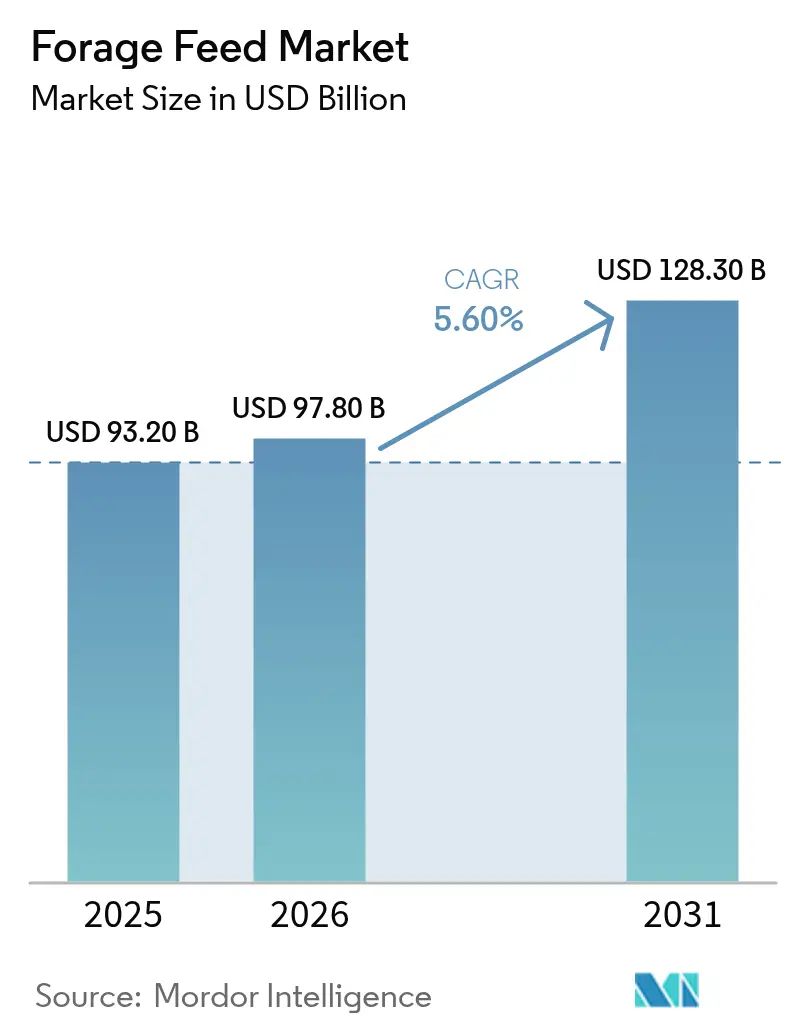
| Market Size (2026) | USD 97.80 Billion |
| Market Size (2031) | USD 128.30 Billion |
| Growth Rate (2026 - 2031) | 5.60 % |
| Fastest Growing Market | Asia Pacific |
| Largest Market | North America |
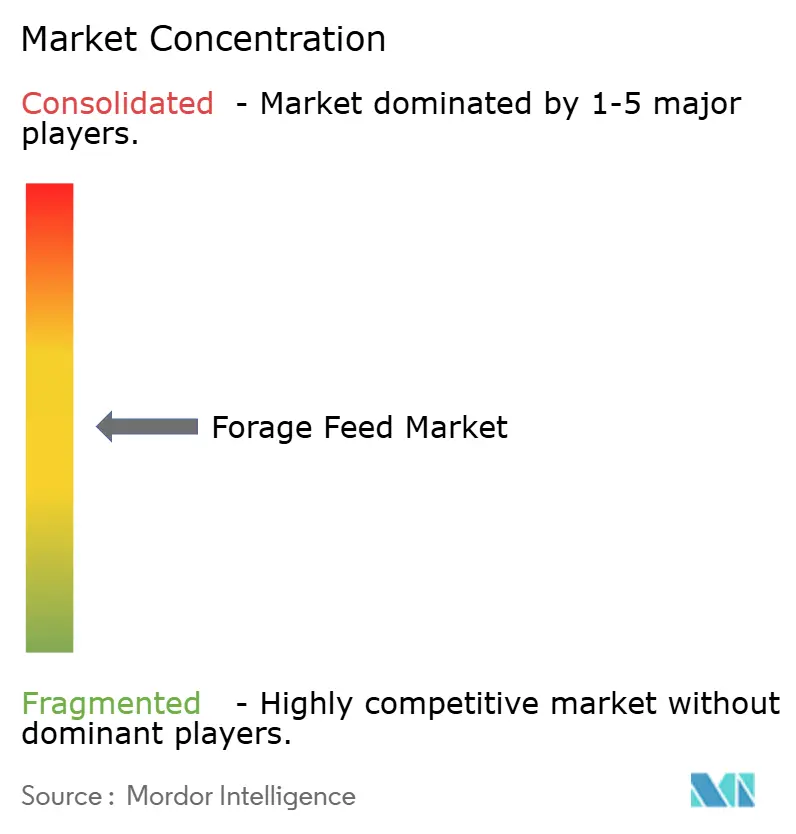
| Market Concentration | Medium |
Major Players *Disclaimer: Major Players sorted in no particular order Image © Mordor Intelligence. Reuse requires attribution under CC BY 4.0. | |
Forage Feed Market Analysis by Mordor Intelligence
The forage feed market size was valued at USD 93.20 billion in 2025 and estimated to grow from USD 97.80 billion in 2026 to reach USD 128.30 billion by 2031, at a CAGR of 5.60% during the forecast period (2026-2031). Larger dairy herds in China, multi-site beef feedlots in Brazil, and policy-driven methane targets across Canada and the European Union are pushing nutrition managers to secure multi-year offtake contracts that guarantee protein specifications, thereby reducing exposure to spot-market volatility. Export-oriented suppliers in the United States, Australia, and Spain are increasing investments in double-compression and pelletizing lines that raise container density by up to 40%, helping them defend margins against high trans-Pacific freight rates. Carbon-credit upside from nitrogen-fixing legumes, together with feed-grade biochar blends that cut methane by double-digit percentages, is adding new revenue streams for growers while giving processors a pathway to premium-priced, low-carbon meat and dairy products.
Key Report Takeaways
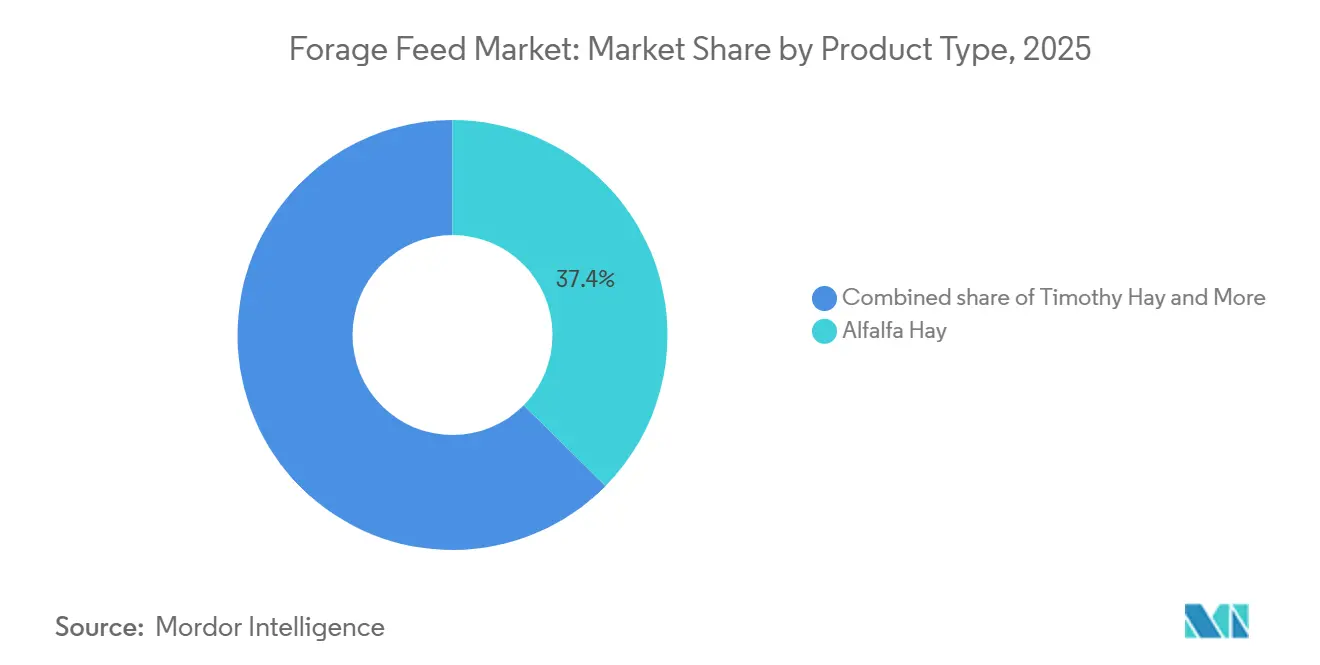
- By product type, alfalfa hay was the largest segment, led with 37.4% of the forage feed market share in 2025, while clover and other legume hay will be the fastest-growing segment and are projected to expand at a 7.8% CAGR through 2031.
- By livestock type, Dairy cattle were the largest segment, accounting for 42.6% of the forage feed market size in 2025, while poultry will be the fastest-growing segment, advancing at a 6.9% CAGR through 2031.
- By form, bales were the largest segment, accounting for 47.0% of the forage feed market share in 2025. Pellets and cubes will be the fastest-growing segment, advancing at an 8.4% CAGR over 2026-2031.
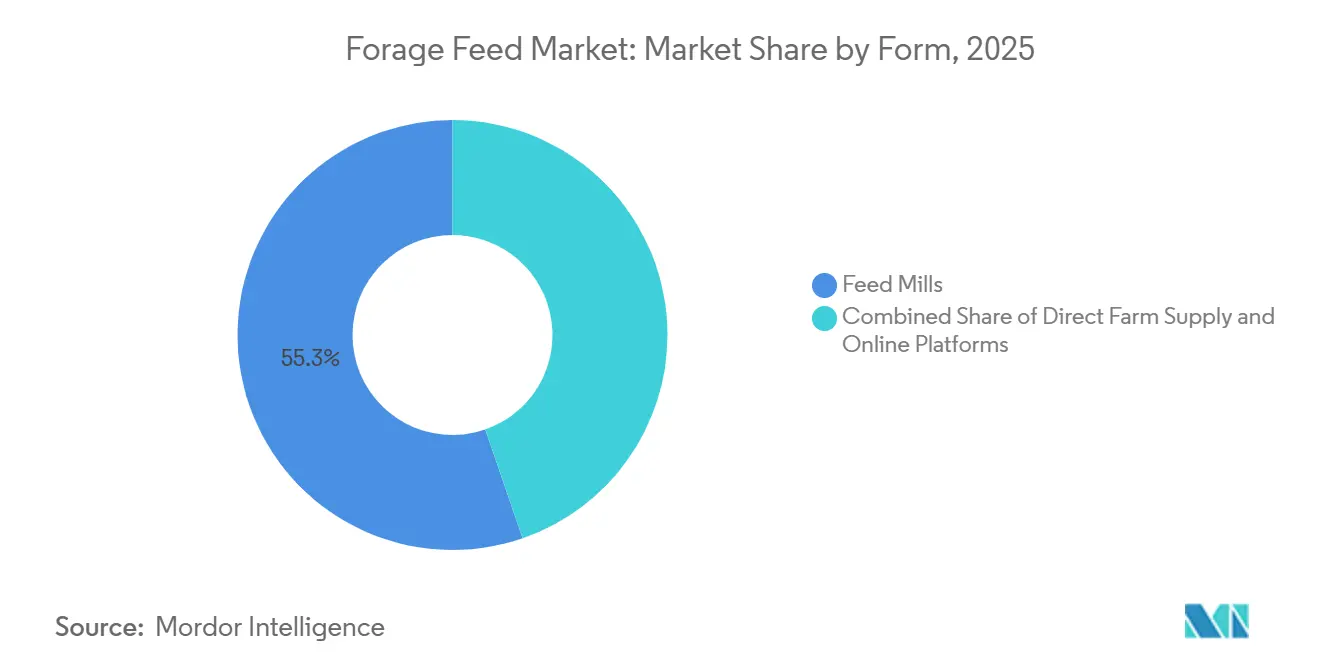
- By distribution channel, Feed mills were the largest segment, feed mills accounted for 55.3% of the forage feed market share in 2025, whereas online platforms are set to grow at a 9.2% CAGR through 2031.
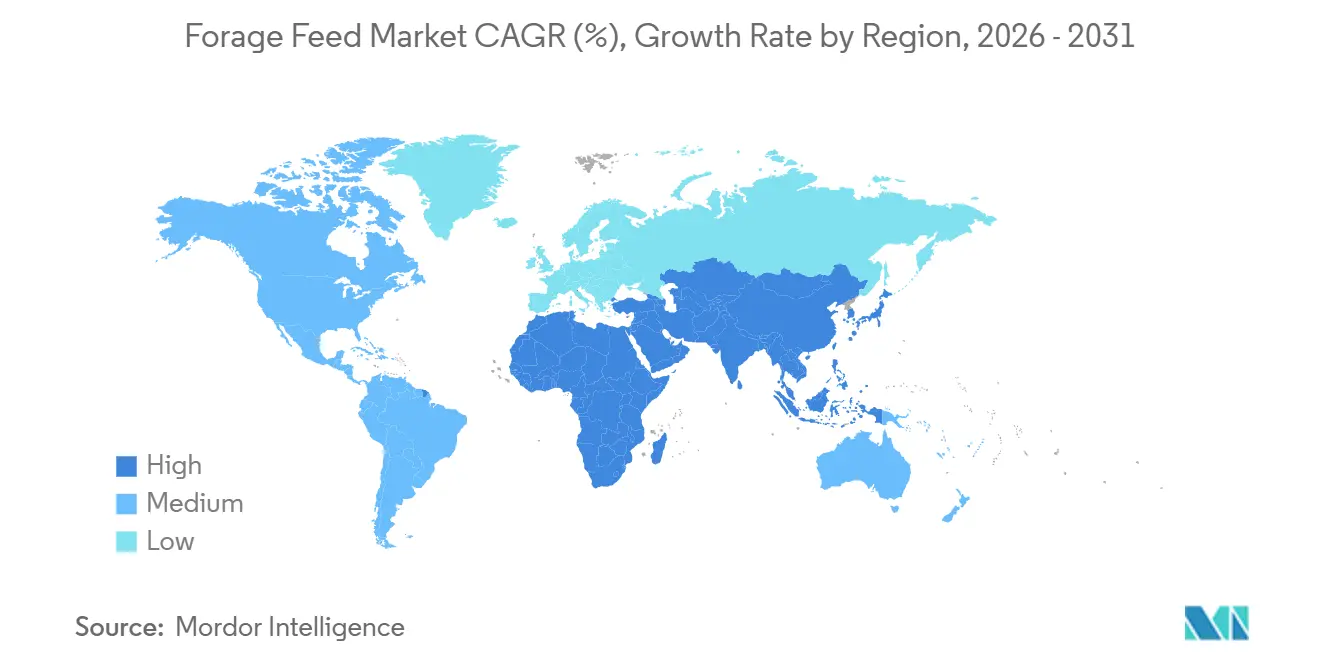
- By geography, North America retained the largest regional position 33.7% of the forage feed market share in 2025, Asia-Pacific is projected to achieve the fastest growth, with a CAGR of 6.3% through 2031.
Note: Market size and forecast figures in this report are generated using Mordor Intelligence’s proprietary estimation framework, updated with the latest available data and insights as of 2026.
Market Trends and Insights
Drivers Impact Analysis of Forage Feed Market*
| Driver | (~) % Impact on CAGR Forecast | Geographic Relevance | Impact Timeline |
|---|---|---|---|
| Expanding large-scale dairy and beef operations | +1.8% | North America, South America, and Asia-Pacific | Long term (≥ 4 years) |
| Rising demand for high-protein meat and dairy | +1.6% | Global, strongest in Asia-Pacific and Africa | Long term (≥ 4 years) |
| Methane mitigation policies favoring high-fiber forage | +0.9% | Europe, Canada, New Zealand, and spillover to North America | Medium term (2-4 years) |
| Carbon-credit upside from nitrogen-fixing forage legumes | +0.6% | North America, Europe, and Australia | Medium term (2-4 years) |
| In-field mobile baler-wrapper robots boosting harvest quality | +0.4% | Australia, Germany, Japan, and early adoption in North America | Long term (≥ 4 years) |
| Feed-grade biochar blends improving forage digestibility | +0.3% | United States, South Korea, and New Zealand | Medium term (2-4 years) |
| Source: Mordor Intelligence | |||
Expanding Large-Scale Dairy and Beef Operations
Vertical integration among large-scale dairies and beef feedlots is transforming procurement practices. Operations with more than 5,000 head are increasingly entering into multi-year forage contracts. These agreements ensure consistent volume and protein specifications in exchange for fixed pricing, reducing exposure to spot-market fluctuations. This approach enables nutritionists to formulate rations with consistent dry matter content, improving feed conversion ratios by 8% to 12% in intensive dairy systems [1]Source: U.S. Department of Agriculture Economic Research Service, “Dairy Data,” ers.usda.gov. In these regions, state-backed cooperatives are constructing centralized hay-storage facilities with capacities of up to 50,000 metric tons to mitigate seasonal price volatility. This reflects the perception among Asian dairy processors that North American forage is a premium input, justifying container freight rates exceeding USD 150 per metric tons.
Methane-Mitigation Policies Favoring High-Fiber Forage
Governments in Canada, the European Union, and New Zealand are implementing enteric methane reduction targets that encourage dairy and beef producers to incorporate higher proportions of digestible fiber into livestock rations. This shift promotes the use of legume-based forages over grain-heavy concentrates. This initiative provides a revenue stream that can offset up to 8% of total feed costs for operations that document baseline and post-intervention emissions. Policy incentivizes the adoption of high-fiber forage blends that reduce enteric fermentation and qualify for rebates under the country's Emissions Trading Scheme. Additionally, feed-grade additives such as 3-nitrooxypropanol (3-NOP) and biochar are being tested in combination with legume hay to achieve methane reductions exceeding 20%.
Carbon-Credit Upside from Nitrogen-Fixing Forage Legumes
Legume forages such as alfalfa and clover fix atmospheric nitrogen through symbiotic root nodules, reducing reliance on synthetic fertilizers and promoting soil-carbon sequestration. The European Union's Carbon Border Adjustment Mechanism, set to be phased in starting 2026, will impose tariffs on imported agricultural products based on their embedded emissions. This policy creates an incentive for hay exporters in North and South America to document the carbon-sequestration benefits of legume-based forage systems. By doing so, they can avoid penalty fees, which could reach EUR 50 (USD 54) per metric ton of CO2-equivalent.
Rising Demand for High-Protein Meat and Dairy
The increasing global demand for high-protein foods, including meat and dairy, is a key driver of the forage feed market. Factors such as population growth, rising incomes, and urbanization are driving a shift in consumer preferences toward protein-rich diets featuring beef, poultry, milk, and other animal products. To meet this growing demand, livestock producers need to enhance animal productivity, which depends on a steady supply of high-quality forage feeds like alfalfa, ryegrass, corn silage, and clover. These feeds play a vital role in maintaining animal health, improving growth rates, and increasing milk yields, making them indispensable in modern livestock systems. For instance, in countries such as the United States and China, large-scale dairy and beef industries heavily depend on alfalfa hay and silage to sustain high production levels, driving significant demand for forage crops.
Restraints Impact Analysis of Forage Feed Market*
| Restraint | (~) % Impact on CAGR Forecast | Geographic Relevance | Impact Timeline |
|---|---|---|---|
| Weather volatility and drought risk | -1.8% | National, most acute in Abu Dhabi, and Dubai coastal zones | Short term (≤ 2 years) |
| Competition for arable land with cash crops | -1.4% | National, affecting all species except the oyster | Medium term (2-4 years) |
| Stricter phytosanitary barriers on cross-border hay trade | -1.2% | National, with the highest exposure in the shrimp and salmon segments | Short term (≤ 2 years) |
| Shift toward fermented concentrates over loose forage | -1.0% | National, with only two PCR laboratories serving the entire country | Medium term (2-4 years) |
| Source: Mordor Intelligence | |||
Weather Volatility and Drought Risk
Consecutive drought years in the United States Great Plains, Australia, and Argentina reduced alfalfa and grass-hay yields by 10% to 15% in 2024 and 2025. This compelled importers in Japan, South Korea, and the United Arab Emirates to diversify their sourcing strategies and accept higher landed costs. In mid-2025, the United States Drought Monitor classified 42% of the alfalfa-producing counties in California, Nevada, and Idaho as experiencing severe to exceptional drought conditions. This resulted in an average 18% reduction in first-cutting yields and drove spot-market prices for premium alfalfa above USD 320 per metric ton, representing a 25% increase from 2024 levels [2]Source: NOAA National Centers for Environmental Information, “U.S. Drought Monitor,” ncei.noaa.gov. Climate models predict that by 2030, extreme-heat days exceeding 35 degrees Celsius will increase by 20% to 30% across major forage-producing regions.
Stricter Phytosanitary Barriers on Cross-Border Hay Trade
China, Japan, Saudi Arabia, and the United Arab Emirates have implemented stricter inspection protocols for imported hay to prevent the spread of invasive pests and plant diseases. In 2024, China's General Administration of Customs introduced revised alfalfa import standards mandating heat treatment at 56 degrees Celsius for 30 minutes or methyl bromide fumigation. This regulation has compelled United States exporters to retrofit compression facilities with thermal chambers, incurring costs exceeding USD 2 million per site. The International Plant Protection Convention is working on harmonized standards for phytosanitary measures in the forage trade. These standards are not projected to be implemented until 2027, leaving exporters to manage a diverse set of country-specific regulations with varying technical requirements and enforcement practices.
*Our forecasts treat driver/restraint impacts as directional, not additive. The impact forecasts reflect baseline growth, mix effects, and variable interactions.
Forage Feed Market Segment Analysis
Alfalfa hay was the largest segment, led with 37.4% of the forage feed market share in 2025, underscoring its position as a preferred forage for high-producing dairy cattle. This preference is attributed to its crude protein content exceeding 18% and a relative feed value above 150. Market incentives, including voluntary carbon credit schemes and regulatory emission caps, are encouraging intensive cattle farms to allocate larger budgets to high-fiber, low-protein blends that enhance rumen function. Suppliers are now offering probiotic-infused inoculants and moisture-controlled wrapping, which can extend shelf life by up to eight months.
Clover and other legume hay will be the fastest-growing segment and are projected to expand at a 7.8% CAGR through 2031, marking the fastest growth among all product types. This growth is driven by clover's nitrogen-fixing properties, which enable growers to eliminate the annual synthetic fertilizer costs of USD 80-120 per acre. Additionally, clover supports soil carbon sequestration, qualifying growers for carbon offset payments under protocols administered by Verra and the Climate Action Reserve. The symbiotic root nodules of clover fix atmospheric nitrogen, reducing reliance on synthetic fertilizers and contributing to verified carbon offsets.



By Livestock Type:
Poultry Adoption Accelerates on Cage-Free MandatesDairy cattle were the largest segment, accounting for 42.6% of the forage feed market share in 2025, driven by intensive operations in North America, Europe, and the Asia-Pacific. These operations formulated total mixed rations with 40% to 55% forage inclusion to support rumen health and maintain milk-fat content above 3.8%. Japan and South Korea collectively imported 450,000 metric tons of timothy and alfalfa hay in 2025. Japanese dairy cooperatives specified protein content above 18% and moisture levels below 12% to optimize milk-fat yields in Holstein herds, which averaged 10,000 kilograms per lactation. The European Union's Farm to Fork strategy aimed to reduce agricultural greenhouse gas emissions by 30% by 2030.
Poultry will be the fastest-growing segment, advancing at a 6.9% CAGR through 2031. Integrators in the United States, Europe, and Southeast Asia are incorporating chopped alfalfa into layer rations to meet cage-free egg standards, which require a minimum fiber intake of 5% to 7% by weight [3]Source: Food and Agriculture Organization, “Livestock Feed and Poultry Production,” fao.org . Population growth and rising per capita incomes in Asia and Africa are driving increased animal protein consumption. Middle-income households in countries such as India, Indonesia, and Nigeria are transitioning from plant-based diets to include poultry at rates that exceed domestic forage production capacity. Chopped and chaffed forage is particularly appealing to poultry integrators blending alfalfa into layer rations. Additionally, dairy operations use fermented haylage and silage additives to maintain nutrient density above 65% total digestible nutrients during extended storage periods.
By Form:
Pellets and Cubes Cut Freight and SpoilageBales were the largest segment, accounting for 47.0% of the forage feed market share in 2025, highlighting their dominance in domestic markets where producers focus on minimizing processing costs, and buyers tolerate the handling inefficiencies of loose forage. In June 2024, Al Dahra ACX commissioned a new double-compress line in Ellensburg, Washington, adding 180,000 metric tons of annual capacity. This upgrade allows the company to load 26 metric tons of compressed alfalfa per 40-foot container, compared to 18 metric tons for standard bales, resulting in a density improvement that reduces per-ton freight costs by USD 35 to USD 50. Since 2023, Chinese equipment manufacturers, such as Henan RICHI, have significantly reduced pellet mill capital costs, driving broader adoption and reinforcing the forage feed market's shift toward densified formats.
Pellets and cubes will be the fastest-growing segment, advancing at an 8.4% CAGR over 2026-2031, the fastest growth rate among all forms. Export-focused suppliers are increasingly compressing forage to reduce container freight costs by 30% to 40% and to minimize spoilage during transoceanic shipments to markets such as Japan, South Korea, and the Middle East. In 2025, Standlee Premium Products expanded its pelletized forage sales through e-commerce platforms, partnering with Amazon and Chewy to reach small-equine and hobby-farm buyers.
By Distribution Channel:
Online Platforms Disrupt Traditional WholesaleFeed mills were the largest segment, feed mills accounted for 55.3% of the forage feed market share in 2025, benefiting from established relationships with large dairy and beef operations that purchase between 500 and 2,000 metric tons annually under multi-year contracts. Direct farm supply, particularly prominent in regions like Australia and the western United States, attracts large operators by offering customized blends and just-in-time deliveries. Additionally, digital storefronts are gaining traction, especially for niche products such as equine cubes and organic alfalfa flakes, supported by drop-shipment logistics and traceability applications.
Online platforms are set to grow at a 9.2% CAGR through 2031, representing the fastest growth among all channels. This growth is driven by small equine, hobby-farm, and organic-certified buyers increasingly opting for direct-from-producer ordering, which eliminates wholesale markups of 15% to 25% and allows for customization of protein content, cutting length, and packaging size. Early adopters utilizing data analytics to analyze transactional patterns have reported margin improvements, highlighting channel diversification as a key strategic advantage in the forage feed market.
Geography Analysis
North America Forage Feed Market
North America retained the largest regional position 33.7% of of the forage feed market share in 2025. This growth is supported by industrial-scale dairy complexes, advanced precision agriculture infrastructure, and strong export pipelines. The region faces challenges such as plateauing herd expansions and increased land-use competition. The United States leads production, with California and Arizona exporting dehydrated alfalfa to Asian markets through cost-efficient logistics corridors. Canada benefits from cool-season crop advantages but faces margin pressures due to high freight rates. In Mexico, the forage feed market is gradually expanding as integrated beef processors enhance feeding protocols.
APAC Forage Feed Market
Asia-Pacific will be the fastest-growing forecast to post the quickest 6.3% CAGR through 2031. This growth is driven by population increases, dietary shifts toward Western preferences, and the rapid adoption of vertical livestock integration. China experienced a significant rise in premium compressed alfalfa bale imports during 2024-2025, fueled by intensive dairy operations in Inner Mongolia. In India, the expanding cooperative dairy network, supported by investments in cold-chain infrastructure, is driving demand for fermented haylage and protein-enriched pellets. Australia, a key exporter, faces challenges from recurring droughts and evolving water-allocation policies, which may limit production growth but position water-efficient legumes as strategic crops in the forage feed market.
Europe Forage Feed Market
Europe shows growth potential, driven by sustainability mandates and reforms under the Common Agricultural Policy, which promote nitrogen-fixing legumes and carbon credit initiatives. Germany, France, and the Netherlands maintain strong dairy industries, but phytosanitary restrictions on United States hay imports are encouraging localized sourcing. In Eastern Europe, markets like Hungary are benefiting from new processing investments, such as ADM’s Vitafort joint venture, which supports self-sufficiency goals.

Regulatory Landscape
Forage feed regulation is shaped by feed-safety frameworks, additive authorization rules, and cross-border phytosanitary controls that affect hay and forage movements. In the United States, the FDA regulates animal food under the FD&C Act, with ingredients needing approved food additive status, GRAS status, or recognition through AAFCO listings rather than a blanket pre-market approval route. As a result, compliance centers on labeling, contamination controls, and importer responsibilities for animal food.
In the European Union, Regulation (EC) 767/2009 governs the placing on the market and use of feed, including feed materials, while additive approvals and renewals proceed through implementing acts. Commission Implementing Regulation (EU) 2026/460, published in February 2026, renewed authorizations for thiamine hydrochloride and thiamine mononitrate as feed additives. Trade and market-access measures add another compliance layer for exported forages and related feed ingredients, reinforcing documentation, treatment, and inspection requirements in destination markets. Separately, EU policy direction on emissions accounting and supply-chain disclosures, including mechanisms that begin phasing in from 2026 such as the Carbon Border Adjustment Mechanism referenced in the market context, is increasing the need for traceability in forage sourcing and processing, influencing how exporters document embedded emissions and sustainability attributes alongside meeting phytosanitary rules.
Competitive Landscape
The forage feed market demonstrates moderate concentration, with the top five players, including ADM, Land O'Lakes, Inc., Al Dahra ACX, Inc., Anderson Hay, and Wilbur-Ellis Company LLC, leaving significant opportunities for regionally established firms and emerging technology-driven entrants. Multinational companies such as ADM, Cargill, and Wilbur-Ellis adopt vertical integration strategies that encompass upstream production, midstream processing, and downstream distribution to optimize margins across the value chain.
Regional leaders like Al Dahra ACX and Anderson Hay focus on export logistics, origin certification, and high-compression baling techniques to reduce ocean freight costs. Meanwhile, technology-driven disruptors emphasize innovations such as robotic bale handling, blockchain-based traceability, and carbon-credit aggregation. These advancements enable them to generate additional revenue streams beyond traditional tonnage sales. Sustainability considerations are increasingly shaping procurement decisions, with buyers evaluating factors such as emissions and water-use efficiency. This trend is driving suppliers to invest in solutions like drip irrigation, solar drying, and renewable-energy-powered pellet mills.
Consolidation remains a key trend as mid-tier firms seek to achieve scale efficiencies. For instance, the Andersons' acquisition of a stake in Skyland Grain expanded its storage capacity and enhanced its origination capabilities across the United States Plains. Geographic diversification also serves as a strategic safeguard against climatic and regulatory risks, prompting cross-border collaborations such as ADM's partnership with Vitafort in Hungary. Overall, competitive dynamics in the forage feed market favor companies that combine agronomic expertise with technological innovation, ensuring consistent product quality while minimizing environmental impacts.
Forage Feed Industry Leaders
ADM
Land O'Lakes, Inc.
Al Dahra ACX, Inc.
Anderson Hay
Wilbur-Ellis Company LLC
- *Disclaimer: Major Players sorted in no particular order
Forage Feed Market Companies Covered in this Report
- ADM
- Wilbur-Ellis Company LLC
- Triple Crown Nutrition
- Land O'Lakes, Inc.
- Anderson Hay
- Al Dahra ACX, Inc.
- Gruppo Carli
- Border Valley Trading
- Standlee Premium Products, LLC
- Lucerne Farms
- Mitsubishi Corporation (Riverina)
- Baileys Horse Feeds

Market Opportunities and Future Outlook
Commercial activity is concentrating around higher-value, performance-linked feed solutions and more resilient, localized supply chains that reduce exposure to import disruptions and freight volatility. Densified formats, including pellets, cubes, and double-compressed bales, create room for processors to offer multi-year guarantees on protein, moisture, and traceability attributes, particularly for export corridors serving Asia-Pacific and the Middle East. Alongside traditional hay and silage, opportunities are also emerging for integrated nutrition programs that bundle forage with additives and premixes, supported by capacity additions such as ADM opening a premix and additives facility in Apucarana, Brazil (40,000 tons per year) in June 2026, which points to continued investment in formulation capability near major livestock production regions.
Sustainability-linked procurement is expanding the addressable value pool for legume-based forages and blended solutions that can be documented for emissions and nutrient management outcomes. The policy environment is also enabling wider use of functional ingredients through additive renewals in the EU, including the 2026 renewals and authorizations for certain additives, which helps suppliers develop preserved and stabilized forage products for longer storage and transoceanic shipping. In parallel, large-scale feed manufacturing buildouts in high-growth livestock markets, such as Cargill commissioning a dairy feed plant in Punjab, India (400,000 metric tons per year) in February 2026, support downstream demand for consistent forage inclusion and create space for suppliers that can deliver specification-locked forage inputs into industrial ration programs.
Recent Industry Developments in Forage Feed Market
- June 2026: ADM opened a new premix and additives facility in Apucarana, Parana, Brazil, adding 40,000 tons per year of capacity for animal nutrition solutions. The investment improves local formulation and quality-control capabilities in a major livestock and feed-producing geography, supporting more standardized inclusion of forage and functional ingredients in rations.
- September 2025: ADM and Alltech announced a new North American animal feed joint venture combining Alltech's specialty additives with ADM's global nutrition and feed capabilities. The joint venture tightens integration between feed formulation and ingredient supply, increasing competitive pressure on suppliers that rely on commoditized forage sales without differentiated nutrition services.
- October 2024: Millborn Seeds subsidiary Renovo Seed added OptiHarv, a multi-species forage mix designed for baleage, haylage, or grazing across multiple harvests from a single field. The addition supports on-farm forage diversification and can help livestock producers stabilize forage availability and ration quality under variable weather and input-cost conditions.


Forage Feed Market Report Scope and Research Methodology
Market Definition and Coverage
For this methodology, the forage feed market covers feed materials made from forage crops that are fed to livestock as fresh forage or stored forage (such as hay and silage), including common processing forms that support feeding and handling.
Scope exclusions: We exclude compound feed and specialty additives when they are priced and sold as separate categories outside forage-based feed.
Segments Covered in This Report
- By Product Type
- Alfalfa Hay
- Timothy Hay
- Clover & Other Legume Hay
- Silage
- Haylage
- Other Forage (grass mix, crop residues)
- By Livestock Type
- Dairy Cattle
- Beef Cattle
- Poultry
- Equine
- Swine
- Other Livestock (sheep, goats, camelids)
- By Form
- Bales
- Pellets and Cubes
- Chopped/Chaffed Forage
- Fermented Haylage and Silage Additives
- By Distribution Channel
- Feed Mills
- Direct Farm Supply
- Online Platforms
- By Geography
- North America
- United States
- Canada
- Rest of North America
- South America
- Brazil
- Argentina
- Rest of South America
- Europe
- Germany
- France
- United Kingdom
- Italy
- Spain
- Russia
- Rest of Europe
- Asia-Pacific
- China
- India
- Japan
- Australia
- South Korea
- Rest of Asia-Pacific
- Middle East
- Saudi Arabia
- United Arab Emirates
- Rest of Middle East
- Africa
- South Africa
- Egypt
- Rest of Africa
- North America
Data Sources, Market Sizing, and Validation
Desk Research
Desk research was used to set the outer boundaries of the market and to anchor the model with repeatable, public data series. We leaned on agriculture and livestock indicators from sources such as FAOSTAT, USDA publications, Eurostat, and national statistics offices, then cross-checked trade movement using customs statistics and broad import and export dashboards.
To keep assumptions realistic, we also reviewed association and institutional materials such as forage agronomy extensions, animal nutrition journals, and publicly available policy notes on feed and fodder quality standards. Company annual reports, investor presentations, and credible business press were used mainly to understand product mix shifts (for example, hay versus silage) and route-to-market patterns. Where available, a paid subscription focused on shipment-level trade and a separate patent database were used to verify directional moves and product/process activity. The sources listed above are illustrative only, and additional public references were consulted to collect, validate, and clarify data points.
Primary Interviews and Surveys
Primary work focused on validating how forage feed demand is actually purchased and used across animal types and regions, and where pricing is moving by form and grade. We spoke with participants across farming, distribution, and processing roles, then re-checked key assumptions with regional experts so that gaps from public data were narrowed and the final totals could be triangulated with field reality.
Distribution of primary research fieldwork respondents
| Company type | Respondent position | Region |
|---|---|---|
| Top tier: 30% | CXOs: 14% | APAC: 45% |
| Mid tier: 54% | Functional/Unit leaders: 31% | EMEA: 33% |
| Smaller Players: 16% | Managers: 55% | Americas: 22% |
Market-Sizing & Forecasting
Sizing started with a top-down build that reconstructs the forage feed demand pool by linking livestock populations and feeding intensity to forage inclusion in rations, then translating that into value using region-level price points by product form. Once the first-cut totals were formed, they were stress-tested using selective bottom-up checks such as sampled price per ton multiplied by estimated marketed volumes, along with channel checks from distributors and processors.
A few inputs drove most of the variance, including cattle and dairy herd counts, milk and meat production trends, the split between fresh forage and stored forage, weather-driven hay yields, and the share of forage moving through commercial channels versus on-farm use. Pricing used an explicit average selling price logic by form (bales, pellets, and chopped products), then adjusted for visible inflation and freight sensitivity where that affected delivered prices. Forecasting used scenario analysis based on trend lines in livestock output, forage acreage signals, and expert views on ration changes, which helped keep the outlook stable even when a single input moved sharply.
Where bottom-up signals were thin in smaller countries, the model relied on proxy ratios from comparable markets, then was corrected back to local herd and production realities during the validation step.
Data Validation & Update Cycle
Validation was done in steps so that single-source errors did not flow into the final market size. We compared modeled results with independent signals like forage acreage, production and trade movements, and broad feed cost trends, then reviewed outliers at country and regional levels before sign-off.
If a large variance appeared, assumptions were revisited and specific respondents were re-contacted to confirm whether the change was real or a definition mismatch. Reports are refreshed annually, and interim updates are made when material events occur that can shift demand or prices. Before delivery, an analyst runs a final pass across inputs and recent public releases so clients receive an updated view.
Mordor Intelligence's Forage Feed Market Sizing Compared With Other Published Estimates
Published market sizes for forage feed can look different even when the topic name is similar, because the timing of currency conversion, how price averages are built, and how year-to-year refresh updates are handled do not match across publishers.
The biggest gaps usually come from what is counted as forage feed versus adjacent feed categories, and whether value is measured at a producer price or at a later channel price that includes extra markups. Another driver is ASP progression, where some estimates keep a single inflation factor, while others rebuild prices by form and region and then re-check them against field inputs and visible trade signals.
Benchmark comparison
| Source | Market Size | Gaps in Research Methodology |
|---|---|---|
| Mordor Intelligence | USD 93.20 B (2025) | |
| Industry Publisher A | USD 101.25 B (2025) | Uses a different price build and base-year handling, and it can also reflect broader inclusions that pull in nearby feed categories, which lifts the value total for the same year. |
| Global Publisher B | USD 99.06 B (2025) | The estimate is influenced by a factory-gate value framing and its own geography and currency timing choices, which changes how regional price levels are carried into the global roll-up. |
The spread in the table is mostly explained by pricing construction and the point in the value chain being measured, followed by how often assumptions are refreshed when new signals arrive. By re-checking ASPs by form and region close to publication and aligning currency timing consistently, the modeled total stays traceable to repeatable inputs, a refresh-led discipline applied by Mordor Intelligence.


Key Questions Answered in the Report
What is the current value of the forage feed market?
The forage feed market size was valued at USD 93.20 billion in 2025 and estimated to grow from USD 97.80 billion in 2026 to reach USD 128.30 billion by 2031, at a CAGR of 5.60% during the forecast period (2026-2031).
Which product category dominates sales?
Alfalfa hay held 37.4% of forage feed market share in 2025 due to high crude-protein levels that suit intensive dairy rations.
Which livestock segment is growing the fastest?
Poultry forage use is advancing at a 6.9% CAGR through 2031 as cage-free standards require higher dietary fiber.
Which distribution channel shows the highest growth?
Online platforms are projected to expand at a 9.2% CAGR, driven by small equine and poultry owners ordering directly from producers.
Page last updated on:


 Your data is secure and never sold or shared.


