
| Study Period | 2020 - 2030 |
| Forecast Data Period | 2025 - 2030 |
| Historical Data Period | 2020 - 2023 |
| Market Size (2025) | USD 2.31 Billion |
| Market Size (2030) | USD 3.03 Billion |
| CAGR (2025 - 2030) | 5.60% |
| Market Concentration | High |
Major Players *Disclaimer: Major Players sorted in no particular order |
Europe Eubiotics Market Analysis by Mordor Intelligence
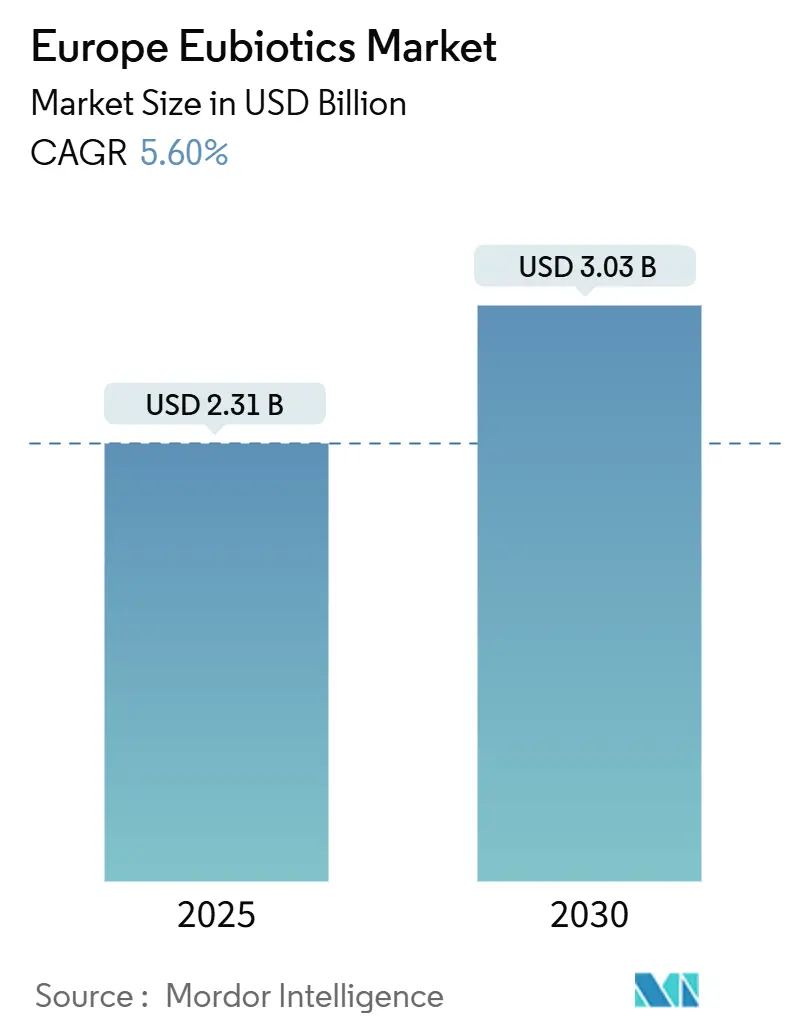
The Europe Eubiotics Market size is estimated at USD 2.31 billion in 2025, and is expected to reach USD 3.03 billion by 2030, at a CAGR of 5.60% during the forecast period (2025-2030).
Eubiotics, specialized feed additives, enhance animal performance and welfare through gut health optimization. These additives are fundamental for maintaining gastrointestinal health in contemporary livestock production systems. The increasing incidence of livestock diseases, specifically Bluetongue disease in Europe, has necessitated stringent measures for meat and dairy production quality. In 2023, Bluetongue virus (BTV-3) outbreaks escalated substantially across European nations. This vector-borne, non-contagious disease affects ruminants, particularly sheep and cattle while excluding pigs and horses from its impact. The initial BTV-3 outbreak manifested in the Netherlands in September 2023, subsequently extending to Belgium, Germany, and Britain. The Netherlands Food and Consumer Product Safety Authority identified 2,909 infected regions. The French animal epidemic monitoring platform ESA reported that Belgium documented 515 cases between June 1 and August 11, with 436 cases manifesting within a single week. According to the Friedrich-Loeffler-Institut (FLI), the virus induces substantial mortality rates in sheep and considerably diminishes milk production in cattle. Eubiotics facilitate optimal microflora balance in the gastrointestinal tract while maintaining sanitary conditions. The heightened focus on livestock safety and disease prevention has propelled the expansion of the European eubiotics market.
The livestock industry has adopted Eubiotics at an increasing rate, primarily due to restrictions on antimicrobial growth promoters stemming from antibiotic resistance concerns in animals and consumers. According to the European Commission, Europe maintains a significant livestock population, comprising 133 million pigs, 74 million bovine animals, and 68 million sheep and goats as of the end of 2023. Germany dominates the European dairy sector with 3.7 million dairy cows, constituting 18.8% of Europe's total dairy population. The country maintains its position as Europe's primary milk producer, with an output of 32.4 million metric tons of cows' milk in 2023. France and the Netherlands rank second and third, producing 23.5 million metric tons and 13.9 million metric tons, respectively. The total European milk production amounted to 144.7 million metric tons in 2023. The feed Eubiotics market demonstrates sustained growth, driven by rising demand for animal food products and expansion in livestock farming operations.
The pet food segment is experiencing increased demand for eubiotics due to rising cases of digestive disorders in pets. Pet owners' growing awareness of digestive health has led to higher adoption of eubiotic supplements containing bifidobacteria. These probiotics help maintain intestinal health by regulating gut microbiota and provide relief from gastrointestinal issues such as diarrhea, constipation, and inflammatory bowel disease (IBD). However, regulatory restrictions and limited product awareness constrain market growth.
Europe Eubiotics Market Trends and Insights
Ruminants Dominate the Market
The European eubiotics market for ruminant feed is driven by the increasing emphasis on animal health and productivity, which affects livestock farming efficiency, animal production sustainability, and sector profitability. The expanding meat and dairy industry in Europe increases the demand for eubiotics. The European Union ranks among the world's largest meat producers, with substantial production in beef. According to the European Commission, in 2023, and 2023, the average European consumed 10.2 kilograms of beef. The European Union consumed 6.4 million metric tons of beef and veal in 2022, making it the fourth-largest consumer globally. According to Statistisches Bundesamt, Germany's per capita milk consumption increased from 24.7 kg in 2022 to 24.9 kg in 2023. This increased consumption of meat and dairy products has led to expanded cattle farming operations across Europe.
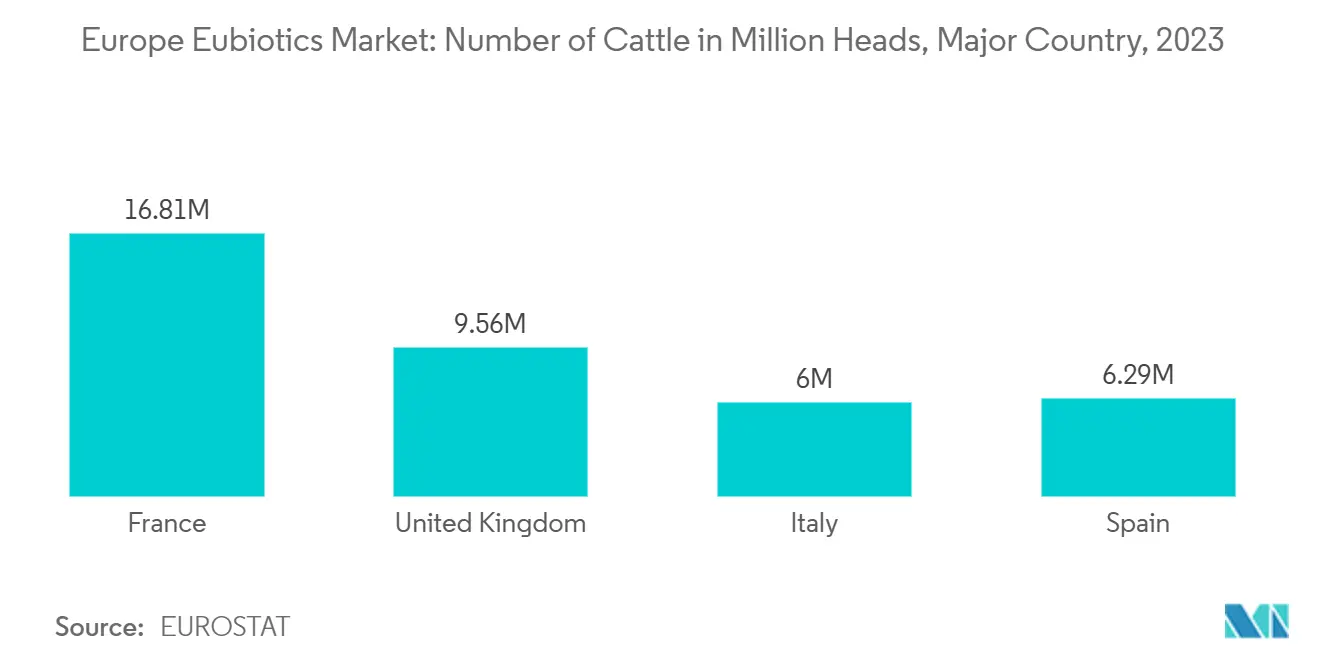
The dairy industry significantly contributes to the European agricultural economy, with milk production reaching 159.9 million metric tons in 2022. The industry faces ongoing pressure to enhance productivity and efficiency due to global market competition and strict EU regulations on animal welfare and environmental standards. These factors have increased the use of eubiotics in animal feed to optimize electrolyte balance and maintain rumen pH in ruminants. According to EUROSTAT, in 2023, Spain held 23.6% of the EU's sheep population, while Greece maintained 25.8% of the EU's goat population, and France represented 22.8% of the bovine population. The growth in livestock numbers, driven by meat product demand, has expanded the eubiotics market as consumers increasingly prioritize quality products.
Disease outbreaks, including Lumpy Skin Disease (LSD), Peste des Petits Ruminants (PPR), and Foot-and-Mouth infections, pose significant challenges to livestock farmers. In September 2023, a new BTV-3 variant emerged in the Netherlands, spreading across the country within two months. The outbreak affected nearly 6,000 Dutch farms and resulted in the death of tens of thousands of sheep, with mortality rates reaching 75% - more than ten times higher than during the previous BTV-8 outbreak. These disease outbreaks impact the quality and safety of meat production. The World Bank reports that industrialized meat production is growing six times faster than traditional methods. While the industrialization of the livestock segment presents environmental concerns, the implementation of eubiotics may help mitigate these environmental impacts.


Germany is the Largest Market
Spain dominates the European eubiotics market, primarily driven by the country's high meat consumption. According to Spain's Ministry of Agriculture, Food and Environment, chicken was the most consumed fresh meat in Spain in 2023, with consumption reaching over 12 kilograms per person. Pork ranked second, with average consumption exceeding nine kilograms per person. This high meat consumption necessitates increased production, which supports the growth of the eubiotics market.
According to the FEDIAF The European Pet Food Industry: Annual Report 2024, Spain's pet population in 2023 was dominated by dogs, with over 9 million animals. Cats followed with 5.6 million, and ornamental birds ranked third with five million. This increasing pet population has driven higher demand for eubiotics in pet food. Pet owners' growing focus on health and wellness has led to increased demand for products supporting digestive health and overall well-being. Eubiotics, including probiotics, prebiotics, and other gut health-promoting additives, maintain healthy intestinal microflora balance and enhance immune response. Pet owners' improved understanding of health benefits has increased the demand for natural alternatives to antibiotics and synthetic additives in pet food.
Regulatory restrictions on antibiotic use in animal feed have necessitated the adoption of effective alternatives, with eubiotics emerging as a viable option. The animal feed industry is developing eubiotic solutions to enhance nutrient absorption, digestive efficiency, and animal welfare. The increasing consumer demand for higher-quality animal feed products is projected to drive eubiotic market growth during the forecast period. In 2022, the European Union implemented new regulations prohibiting the prophylactic use of antibiotics in livestock farming. These strict EU regulations have compelled farmers to transition to eubiotics, supported by increased consumer awareness about food quality, which continues to drive market growth.


Competitive Landscape
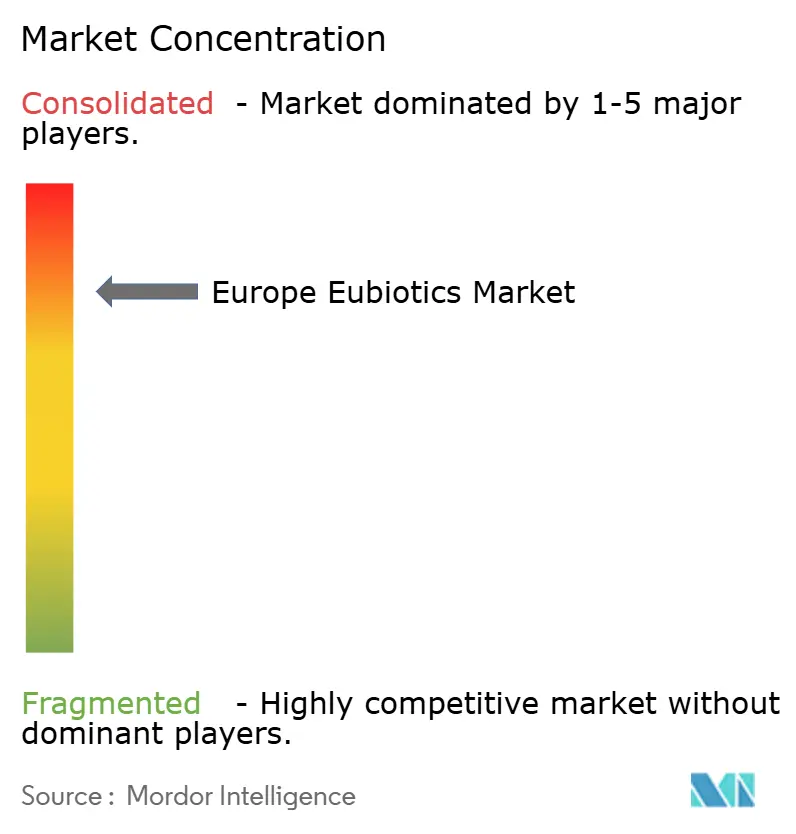
The European eubiotics market is consolidated, with a few global players leading the market with a highly diversified product portfolio and several acquisitions and agreements taking place to gain a major share in the industry. Major companies in the region include Archer Daniels Midland Co., Cargill Inc., DSM-Firmenich, Adisseo, and IFF(Danisco Animal Nutrition). Agreements with other companies, new product launches, and investments for the expansion of manufacturing units globally have been the strategies mostly adopted by these players. Some of the players have been expanding their geographical presence by acquiring or merging with manufacturers in foreign markets. Major investments were made by companies in their domestic market to cater to the local demand, followed by mergers and acquisitions in the market studied over the forecast period.
Europe Eubiotics Industry Leaders
Archer Daniel Midland Co.
DSM-Firmenich
Adisseo
Cargill Inc.
IFF(Danisco Animal Nutrition)
- *Disclaimer: Major Players sorted in no particular order

Recent Industry Developments
- January 2025: Phytobiotics partnered with Feed Expert Sp. z o.o., establishing Phytobiotics CEE Sp. z o.o. Based in Poland, this partnership focuses on providing animal nutrition products including eubiotics to the Central and Eastern European markets.
- March 2023: Evonik expanded its probiotics production at the Leon, Spain facility, establishing a foundation for growth in its Gut Health Solutions business. The production capacity for Ecobiol, Fecinor, and GutCare products doubled, enabling the Leon site to produce 6,000 metric tons of blended final probiotic products annually.


Europe Eubiotics Market Report Scope
Eubiotic feed additives support animal health, growth, and productivity across different livestock production systems. The Europe Eubiotics Market is segmented by Type (Probiotics, Prebiotics, Organic Acids, and Essential Oils), Animal Type (Ruminant, Poultry, Swine, Aquaculture, Pet food, and Other Animal Types), and Geography (Spain, United Kingdom, France, Germany, Russia, Italy and Rest of the Europe). The report offers market size and forecasts in value (USD) for all the above segments.
Type
| Probiotics | Lactobacilli |
| Bifidobacteria | |
| Others | |
| Prebiotics | Inulin |
| Fructo-Oligosaccharides | |
| Galacto-Oligosaccharides | |
| Others | |
| Organic Acids | |
| Essential Oils |
Animal Type
| Ruminant |
| Poultry |
| Swine |
| Aquaculture |
| Pet Food |
| Other Animal Types |
Geography
| Spain |
| United Kingdom |
| France |
| Germany |
| Russia |
| Italy |
| Rest of Europe |
| Type | Probiotics | Lactobacilli |
| Bifidobacteria | ||
| Others | ||
| Prebiotics | Inulin | |
| Fructo-Oligosaccharides | ||
| Galacto-Oligosaccharides | ||
| Others | ||
| Organic Acids | ||
| Essential Oils | ||
| Animal Type | Ruminant | |
| Poultry | ||
| Swine | ||
| Aquaculture | ||
| Pet Food | ||
| Other Animal Types | ||
| Geography | Spain | |
| United Kingdom | ||
| France | ||
| Germany | ||
| Russia | ||
| Italy | ||
| Rest of Europe | ||


Key Questions Answered in the Report
How big is the Europe Eubiotics Market?
The Europe Eubiotics Market size is expected to reach USD 2.31 billion in 2025 and grow at a CAGR of 5.60% to reach USD 3.03 billion by 2030.
What is the current Europe Eubiotics Market size?
In 2025, the Europe Eubiotics Market size is expected to reach USD 2.31 billion.
Who are the key players in Europe Eubiotics Market?
Archer Daniel Midland Co., DSM-Firmenich, Adisseo, Cargill Inc. and IFF(Danisco Animal Nutrition) are the major companies operating in the Europe Eubiotics Market.
What years does this Europe Eubiotics Market cover, and what was the market size in 2024?
In 2024, the Europe Eubiotics Market size was estimated at USD 2.18 billion. The report covers the Europe Eubiotics Market historical market size for years: 2020, 2021, 2022, 2023 and 2024. The report also forecasts the Europe Eubiotics Market size for years: 2025, 2026, 2027, 2028, 2029 and 2030.
Page last updated on:
Europe Eubiotics Market Report
Statistics for the 2025 Europe Eubiotics market share, size and revenue growth rate, created by Mordor Intelligence™ Industry Reports. Europe Eubiotics analysis includes a market forecast outlook for 2025 to 2030 and historical overview. Get a sample of this industry analysis as a free report PDF download.





