
Essential Thrombocythemia Market Size and Share
Market Overview
| Study Period | 2022 - 2031 |
|---|---|
| Market Size (2026) | USD 1.03 Billion |
| Market Size (2031) | USD 1.40 Billion |
| Growth Rate (2026 - 2031) | 6.21 % |
| Fastest Growing Market | Asia-Pacific |
| Largest Market | North America |
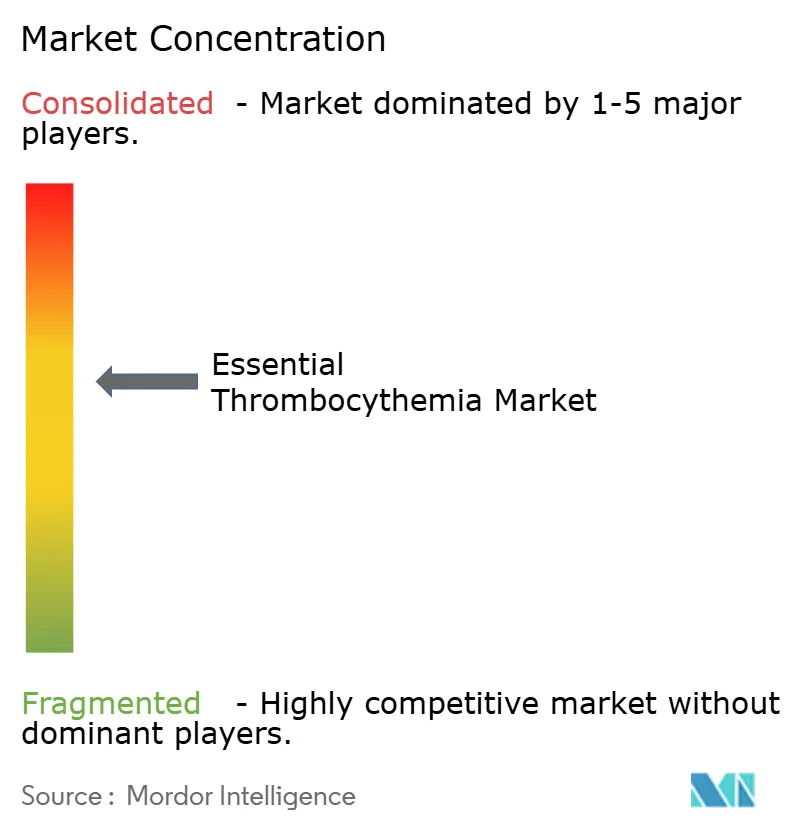
| Market Concentration | Medium |
Major Players
*Disclaimer: Major Players sorted in no particular order Image © Mordor Intelligence. Reuse requires attribution under CC BY 4.0. |
|
Essential Thrombocythemia Market Analysis by Mordor Intelligence
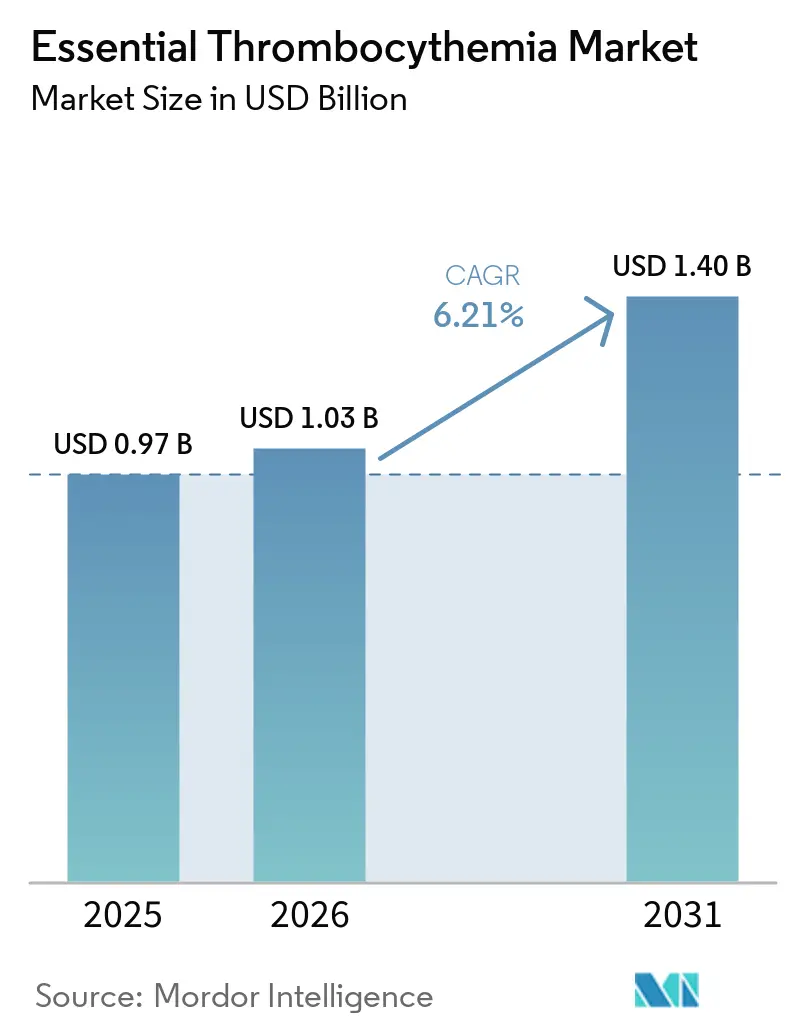
The Essential Thrombocythemia Market size was valued at USD 0.97 billion in 2025 and is estimated to grow from USD 1.03 billion in 2026 to reach USD 1.40 billion by 2031, at a CAGR of 6.21% during the forecast period (2026-2031).
Essential thrombocythemia is a Philadelphia chromosome-negative myeloproliferative neoplasm that causes clonal platelet overproduction and can require lifelong treatment. The condition creates costs from cytoreductive therapy, management of thrombotic events, and use of second-line medicines. Better recognition of persistent thrombocytosis and greater use of routine blood testing are expanding the diagnosed population. The essential thrombocythemia market is also moving beyond long-established generic therapies as interferon biologics and mutation-focused programs progress. Taiwan’s 2026 approval of ropeginterferon alfa-2b for essential thrombocythemia marked the first disease-specific approval in decades.
Key Report Takeaways
- By drug type, hydroxyurea held 38.5% of the essential thrombocythemia market share in 2025, while JAK inhibitors are forecast to record the highest CAGR at 8.5% through 2031.
- By route of administration, oral therapies held 55.3% of global revenue in 2025, while subcutaneous injectables are forecast to grow at an 8.3% CAGR through 2031.
- By end user, research organizations held 46.9% of global revenue in 2025, while hospitals are forecast to expand at a 9.1% CAGR through 2031.
- By geography, North America held 42.4% of global revenue in 2025, while Asia-Pacific is forecast to advance at a 7.4% CAGR through 2031.
Note: Market size and forecast figures in this report are generated using Mordor Intelligence’s proprietary estimation framework, updated with the latest available data and insights as of January 2026.
Market Trends and Insights
Drivers Impact Analysis of Essential Thrombocythemia Market*
| Driver | (~) % Impact on CAGR Forecast | Geographic Relevance | Impact Timeline |
|---|---|---|---|
| Rising Diagnosed Prevalence of Essential Thrombocythemia | +1.40% | Global, with near-term gains in Asia-Pacific and the Middle East and Africa | Medium term (2-4 years) |
| Earlier Diagnosis Through Molecular Testing | +0.90% | North America and Europe, followed by core Asia-Pacific markets, South Korea, and Japan | Medium term (2-4 years) |
| Uptake of Long-Acting and Targeted Therapies | +1.70% | North America, Europe, and core Asia-Pacific markets | Short term (≤ 2 years) |
| Expansion of Clinical Trials and Orphan-Drug Development | +0.80% | Global, with the United States, Europe, Spain, Taiwan, and Canada as trial hubs | Long term (≥ 4 years) |
| Persistent Treatment Need in Hydroxyurea-Resistant or Intolerant Patients | +0.90% | North America, Europe, Japan, and South Korea | Short term (≤ 2 years) |
| Increasing Use of Biomarker-Defined Treatment Selection | +0.60% | North America and Europe, with early gains in Japan and South Korea | Long term (≥ 4 years) |
| Source: Mordor Intelligence | |||
Rising Diagnosed Prevalence of Essential Thrombocythemia
The essential thrombocythemia market is being supported by a broader diagnosed patient pool rather than by a change in disease biology. General practitioners are more likely to investigate persistent thrombocytosis, while automated complete blood count testing is more common in preventive care. These changes can identify cases that were previously attributed to inflammatory or reactive thrombocytosis. A retrospective Mayo Clinic cohort of 1,000 patients reported a median diagnosis age of 58 years and 63% female patients[1]American Academy of Family Physicians, “Thrombocytosis: Rapid Evidence Review,” American Family Physician, aafp.org.. The patient profile overlaps with groups that regularly use health screening in higher-income health systems. Because essential thrombocythemia is chronic and non-curative, each additional diagnosis can create a long treatment relationship.
Greater use of rare-disease registries can also improve visibility of diagnosed cases. The European Reference Network for Rare Hematological Diseases is helping to organize reporting and trial access in parts of Europe. The essential thrombocythemia market benefits when healthcare systems can identify patients earlier and connect them with specialist services. This process can reduce the time between an abnormal blood count and a confirmed diagnosis. It can also expand the pool eligible for cytoreductive therapy or clinical trials. The effect should be most visible where specialist hematology capacity is growing from a lower base.
Earlier Diagnosis Through Molecular Testing
Molecular testing is shortening the path from persistent thrombocytosis to a confirmed diagnosis. JAK2 V617F, CALR, and MPL testing supports more consistent classification of patients. WHO-based diagnostic practice calls for CALR and MPL testing when JAK2 V617F testing is negative. This sequence can reduce diagnostic uncertainty and help patients qualify for treatment and reimbursement. Broader testing also provides a clearer basis for clinical trial enrollment. The essential thrombocythemia market therefore depends increasingly on access to validated laboratory methods.
Next-generation sequencing can identify co-mutations in epigenetic regulators, including ASXL1, EZH2, and IDH2. These findings may help clinicians assess progression risk and consider treatment earlier in higher-risk groups. Mutation-defined populations are also increasingly important to drug-development programs. Standardized testing supports faster patient identification for these trials. Companies may have an advantage when their target can be identified through laboratory panels used in national guidelines. This relationship links diagnostic capacity with both drug access and the pace of clinical development.
Uptake of Long-Acting and Targeted Therapies
Ropeginterferon alfa-2b is a central development in the essential thrombocythemia market because it brings a newer biologic option to patients who do not respond to, or cannot tolerate, established therapies. In the Phase 3 SURPASS-ET trial, ropeginterferon produced a 42.9% durable hematologic response rate compared with 6.0% for anagrelide. Major thrombotic events occurred in 1.1% of patients receiving ropeginterferon and 8.8% of patients receiving anagrelide in that study. Treatment-related serious adverse events were reported in 2.2% and 10% of patients, respectively. These outcomes strengthen the clinical case for a longer-acting interferon option. They also put greater pressure on established second-line treatments.
NCCN Clinical Practice Guidelines included ropeginterferon alfa-2b as a Category 1 preferred treatment option for high-risk patients with an inadequate response to existing therapies in January 2026. An ASCO 2026 analysis reported estimated 24-month progression-free survival of 76.9% with ropeginterferon from baseline and 43.1% with delayed initiation. Taiwan approved the therapy for essential thrombocythemia in 2026. In the United States, the FDA set an August 30, 2026, PDUFA goal date for the supplemental application. This decision may affect second-line prescribing and hospital formulary plans.
Expansion of Clinical Trials and Orphan-Drug Development
The trial landscape now includes CALR-targeted antibodies, LSD1 inhibitors, CTPS1 inhibitors, and selective JAK2 inhibitors. These programs seek to serve patient groups with limited approved options. Incyte’s INCA033989 selectively targets mutant calreticulin, and its Phase 3 EXCALIBUR-ET2 study is planned for 2026[2]Springer AdisInsight, December 2025; ClinicalTrials.gov, NCT07623200. Step Pharma advanced dencatistat, an oral CTPS1 inhibitor, into the Phase 2 VECTRA trial in June 2026. Phase 1b enrollment covered JAK2-mutated, CALR-mutated, MPL-mutated, and triple-negative disease.
Merck’s bomedemstat is being evaluated in Phase 3 studies in cytoreductive-naive and hydroxyurea-resistant populations. The SHORESPAN-007 Phase 3 trial compares bomedemstat with hydroxyurea and plans to enroll 300 participants. Orphan Drug designation can provide 7 years of U.S. market exclusivity for qualifying products. This framework supports investment in a patient population that would otherwise be difficult to serve through conventional commercial models. The essential thrombocythemia market is likely to see more competing mechanisms as these programs mature.
Restraints Impact Analysis of Essential Thrombocythemia Market*
| Restraint | (~) % Impact on CAGR Forecast | Geographic Relevance | Impact Timeline |
|---|---|---|---|
| Limited Disease-Modifying and Curative Options | -1.30% | Global, with greater effect where formularies are government-led | Long term (≥ 4 years) |
| Treatment-Related Cytopenia and Cardiovascular Toxicity | -0.80% | North America and Europe, followed by Asia-Pacific and South America | Medium term (2-4 years) |
| Diagnostic Delay From Asymptomatic or Incidental Presentation | -0.70% | Asia-Pacific, the Middle East and Africa, South America, and rural European settings | Medium term (2-4 years) |
| Small, Geographically Dispersed Trial-Eligible Population | -0.40% | Global, with enrollment limits in the Middle East and Africa and South America | Long term (≥ 4 years) |
| Source: Mordor Intelligence | |||
Limited Disease-Modifying and Curative Options
No approved therapy currently removes the underlying clonal myeloproliferation in essential thrombocythemia. Progression to myelofibrosis was reported in 0.8%-5% of cases at 10 years and in up to 15% of cases at 15 years. This gap limits the premium that regulators and payers may accept for newer medicines. It also keeps many well-controlled patients on low-cost generic hydroxyurea. The essential thrombocythemia market therefore faces a persistent trade-off between unmet medical need and limited proof of disease modification. Stronger evidence of prevention of progression would change this assessment.
Bomedemstat has shown JAK2 allele-burden reduction alongside platelet normalization in its development program. INCA033989 was designed to suppress mutant CALR-driven malignant hematopoiesis while sparing normal progenitors. Both approaches aim to move beyond symptom and blood-count control, but confirmatory Phase 3 data remain pending. Reimbursement discussions will continue to depend on whether clinical benefit can be demonstrated in a sustained way. Until then, generic treatments retain an important role. The essential thrombocythemia market will grow more slowly than it would under a clearly validated disease-modifying claim.
Treatment-Related Cytopenia and Cardiovascular Toxicity
Cytoreductive treatments have adverse-effect profiles that can limit dose optimization and lead to interruptions. Hydroxyurea can cause cytopenias, mucocutaneous effects, and leg ulcers. Anagrelide has dose-related cardiovascular risks, including arrhythmias and fluid retention. Interferons may cause flu-like symptoms and autoimmune reactions. In SURPASS-ET, adverse-event-related discontinuation occurred in 18.8% of anagrelide recipients and 5.5% of ropeginterferon recipients. This comparison confirms both the broader treatment burden and ropeginterferon’s relative safety advantage.
JAK inhibitors entering this setting also require careful dose titration because treatment-emergent thrombocytopenia can occur. This creates a narrow therapeutic window and increases the need for clinical characterization. Prescribers may remain cautious when a patient is stable on a familiar generic medicine. Safety monitoring is especially relevant for therapies intended for long-term use. The essential thrombocythemia market must therefore compete on tolerability as well as response rates. Better safety results may be as important as efficacy in shifting use toward newer branded options.
*Our forecasts treat driver/restraint impacts as directional, not additive. The impact forecasts reflect baseline growth, mix effects, and variable interactions.
Essential Thrombocythemia Market Segment Analysis
By Drug Type:
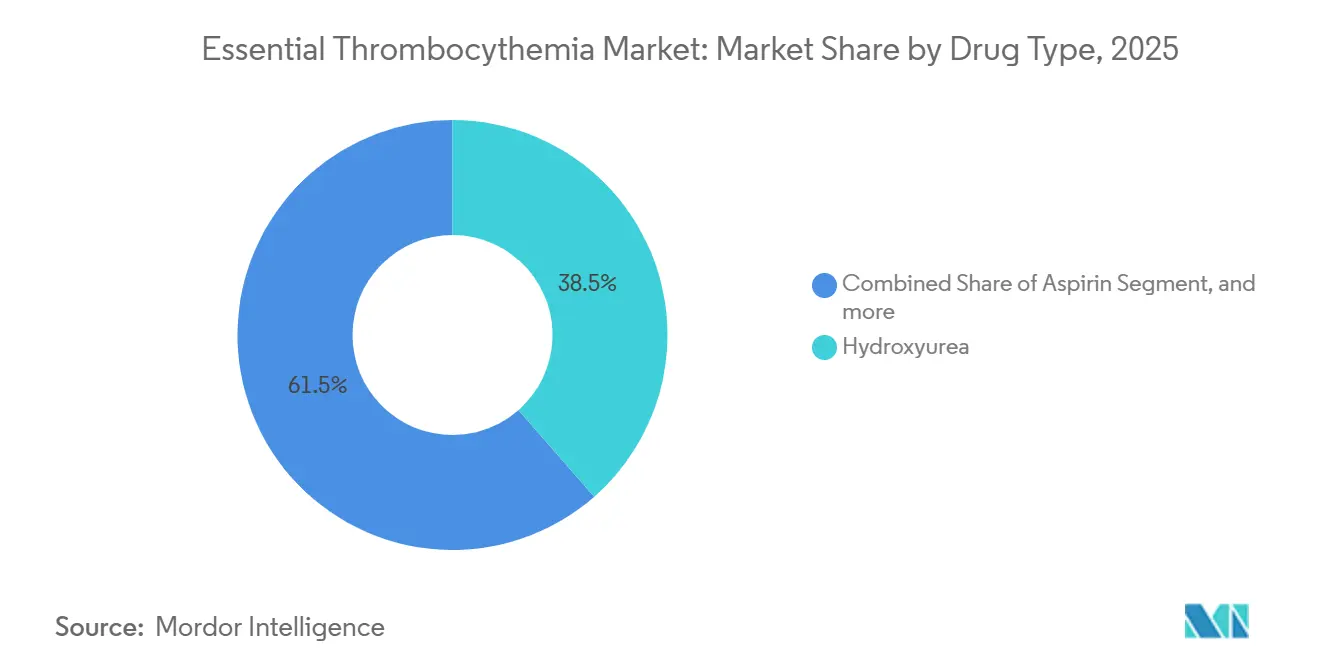
Hydroxyurea Remains Established While Newer Agents Reshape Second-Line CareHydroxyurea held 38.5% of the essential thrombocythemia market size in 2025. Its position reflects decades of first-line use, familiar safety management, and low cost where generics are available. The drug remains central to treatment pathways even as newer mechanisms move forward. JAK inhibitors are forecast to grow at an 8.5% CAGR through 2031, the fastest rate among drug classes. OB756 produced a 65.6% complete hematologic response at week 24 in a Phase 2 study of patients resistant or intolerant to hydroxyurea or intolerant to interferon[3]European PMC, "Efficacy and safety of OB756 (a novel selective JAK2 inhibitor) for essential thrombocythemia in patients intolerant of or resistant to hydroxyurea or intolerant of interferon: A phase 2, open-label, multicenter study." europepmc.org.. This result shows the interest in selective JAK2 inhibition for difficult-to-treat patients.
Anagrelide remains an established second-line option, but ropeginterferon outperformed it across SURPASS-ET endpoints. The U.S. regulatory decision scheduled for August 2026 could influence its future use. Busulfan continues to serve a smaller group of older high-risk patients who cannot tolerate standard agents. Bomedemstat, iadademstat, and dencatistat represent higher-risk development programs with potential for differentiated use if pivotal data are positive. Their value depends on more than platelet control because generic drugs already address this need for many patients. The essential thrombocythemia market is likely to separate between low-cost established therapy and branded options for defined clinical settings.



By Route of Administration:
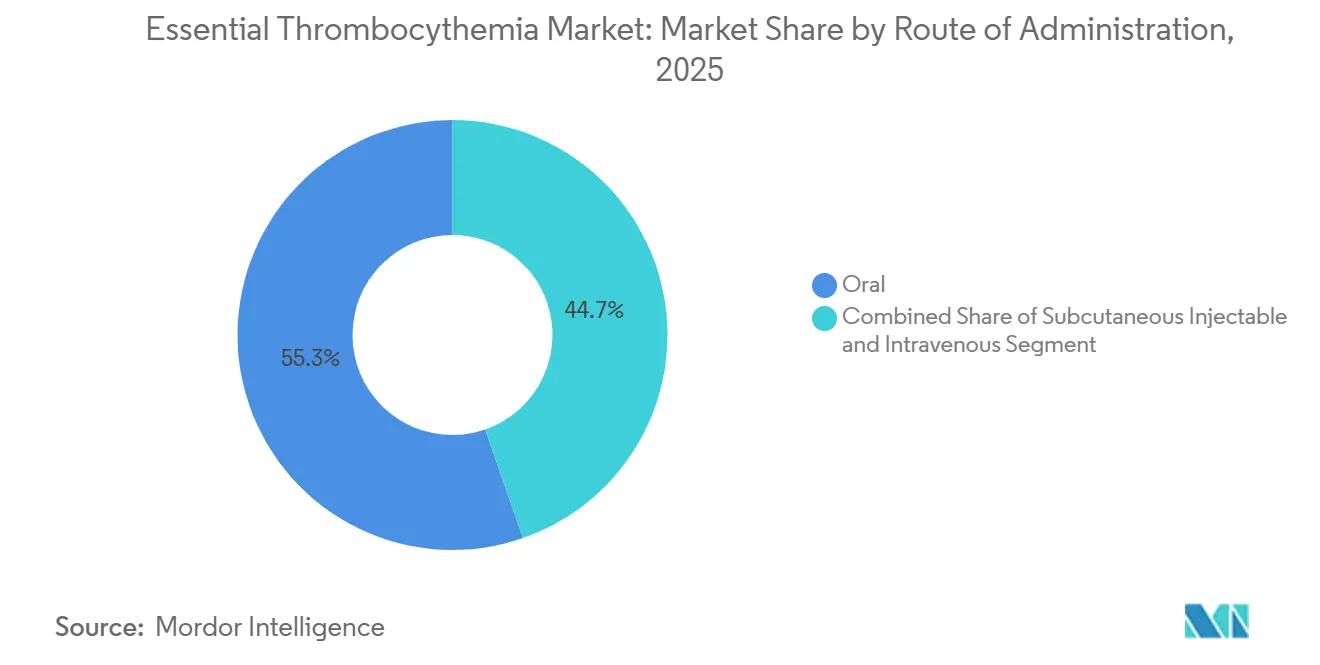
Oral Therapies Lead While Subcutaneous Products AdvanceOral therapies accounted for 55.3% of the essential thrombocythemia market size in 2025. Hydroxyurea, anagrelide, busulfan, and oral LSD1 candidates support this position. Oral treatment suits a chronic condition because many patients can administer therapy themselves. It also aligns with the long duration of care. Subcutaneous therapies are forecast to expand at an 8.3% CAGR through 2031. This growth is closely tied to ropeginterferon alfa-2b and its once-every-2-weeks dosing schedule.
In SURPASS-ET, the mean JAK2 allele burden in the ropeginterferon arm declined from 33.7% at baseline to 25.3% at 12 months. The anagrelide arm changed from 39.7% to 37.3% over the same period. This provides a measurable molecular endpoint that oral generic therapies do not offer. It may support value-based reimbursement discussions for injectable biologics. Intravenous administration has a smaller role, mainly associated with busulfan and selected trial protocols. Its use is expected to diminish as oral and subcutaneous alternatives broaden.
By End User:
Research Organizations Lead While Hospitals ExpandResearch organizations accounted for 46.9% of the essential thrombocythemia market size in 2025. Their position reflects the importance of Phase 2 and Phase 3 trials in delivering treatment before broader commercial availability. SHORESPAN-007, EXCALIBUR-ET2, VECTRA, IDEAL, and CLARITY-101 place academic and clinical research centers at the center of drug delivery. This pattern is common when a rare disease has a growing clinical pipeline. It also reflects the concentration of molecular testing and specialist expertise at these centers. Research sites will remain important while pivotal evidence is being developed.
Hospitals are forecast to grow at a 9.1% CAGR through 2031. Potential commercial use of ropeginterferon after the FDA’s August 2026 decision could support hospital formulary activity. NCCN inclusion can further support institutional prescribing decisions. Specialty clinics and community hematology practices represent a later-stage opportunity. Their role should grow once treatment pathways become more settled and testing access improves. This would shift more treatment from trial-focused institutions to routine care settings.
Geography Analysis
North America and Europe Essential Thrombocythemia Market
North America held 42.4% of the Essential thrombocythemia market share in 2025. The region benefits from a dense hematology specialist base, established reimbursement pathways for myeloproliferative neoplasm therapies, and higher pricing for branded drugs. The FDA’s review of ropeginterferon alfa-2b is a near-term factor for the United States. NCCN guideline inclusion is important for managed-care formulary access. Europe is the second-largest regional block, with Germany, the United Kingdom, and France as primary contributors. ERN-EuroBloodNet supports diagnostic reporting and trial access across the region.
APAC Essential Thrombocythemia Market
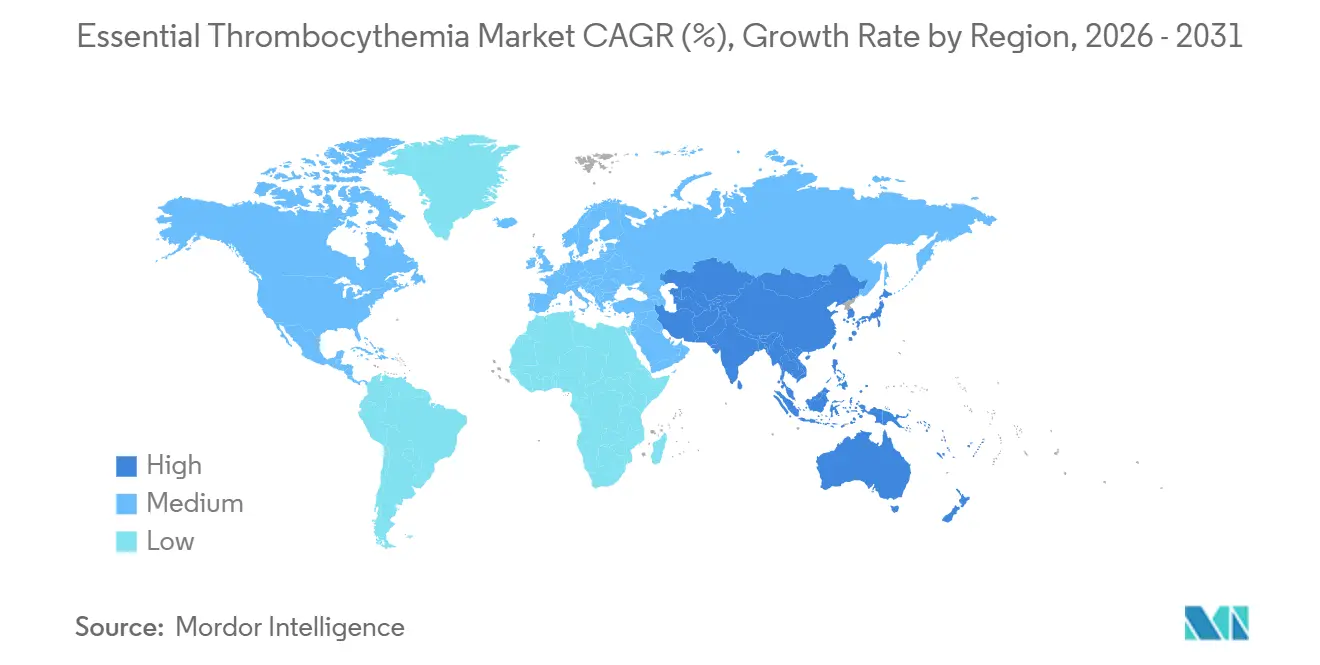
Asia-Pacific is forecast to grow at a 7.4% CAGR through 2031, the fastest geographic rate. Aging populations in Japan and South Korea, improved rare-disease access in China, and more specialist hematologists in India and Australia support this position. China’s domestic OB756 program may offer a local alternative in more price-sensitive treatment settings. Japan’s 2023 approval of BESREMi for polycythemia vera has created regulatory familiarity with ropeginterferon. India’s generic manufacturing base supports wide access to low-cost hydroxyurea while limiting branded revenue. Wider JAK2 and CALR testing in tier-1 laboratories can turn previously unrecognized thrombocytosis into confirmed disease.
MEA and South America Essential Thrombocythemia Market
The Middle East and Africa and South America account for a smaller but strategically relevant share of the Essential thrombocythemia market. Saudi Arabia and the United Arab Emirates are investing in specialized oncology centers and rare-disease registries. Uneven hematologist density and molecular testing capacity continue to delay diagnosis across many settings. Brazil and Argentina lead the South American opportunity, while Brazil’s public health system lists hydroxyurea as an essential medicine. Pricing controls and limited specialist networks constrain use of branded second-line therapies. Growth through 2031 will depend more on health infrastructure and rare-disease policy than on near-term drug launches.

Competitive Landscape
The essential thrombocythemia market is moderately fragmented at the branded level. PharmaEssentia, Incyte, and Novartis hold the most advanced near-term positions, while Step Pharma and Oryzon Genomics are developing newer approaches. Generic hydroxyurea, anagrelide, and busulfan have historically defined competition at the treatment level. Ropeginterferon’s NCCN Category 1 status and pending U.S. regulatory decision are creating a more credible premium segment. Incyte’s INCA033989 is aimed at the CALR-mutated group, which accounts for approximately 25% of the cases in the provided analysis.
Companies pursuing mutation-agnostic mechanisms are taking a different position. Bomedemstat uses LSD1 inhibition, while dencatistat targets CTPS1. These approaches may serve triple-negative disease as well as patients whose disease does not fit a single-driver treatment approach. The important unmet needs remain therapies that demonstrate marrow regression and combinations for patients with overlapping high-risk features. Generic manufacturers such as Teva Pharmaceutical and USV Private Limited retain a durable first-line position through hydroxyurea. That position is unlikely to change without Phase 3 evidence of better survival or lower transformation risk with branded alternatives.
Late-stage programs expected to mature between 2026 and 2029 may increase licensing and partnership activity. Smaller biotechnology companies may seek larger partners with the infrastructure needed after proof of concept. Incyte’s patent activity around CALR-mutant antibody epitopes indicates efforts to protect a new form of intellectual property. PharmaEssentia’s regulatory strategy for ropeginterferon is a second example of a company using clinical results and guideline support to extend use in essential thrombocythemia. Step Pharma’s move into the Phase 2 VECTRA trial is a third example of a differentiated mechanism advancing across mutation subtypes. No combined share for leading companies was provided, so a concentration score cannot be assigned without creating unsupported data.
Essential Thrombocythemia Industry Leaders
-
Bristol Myers Squibb Company
-
Novartis AG
-
Incyte Corporation
-
PharmaEssentia Corporation
-
Geron Corporation
- *Disclaimer: Major Players sorted in no particular order
Essential Thrombocythemia Market Companies Covered in this Report
- Abbvie
- AstraZeneca
- Bristol-Myers Squibb
- Geron Corporation
- Incyte
- Novartis
- Oryzon Genomics, S.A.
- Pfizer
- PharmaEssentia Corporation
- Roche
- Step Pharma, SAS
- Teva Pharmaceutical Industries
- Takeda Pharmaceuticals
- USV Private Limited

Recent Industry Developments in Essential Thrombocythemia Market
- August 2026: The FDA accepted PharmaEssentia’s supplemental Biologics License Application for ropeginterferon alfa-2b-njft in essential thrombocythemia and set an August 30, 2026, PDUFA goal date.
- June 2026: Oryzon Genomics enrolled the first patient in the IDEAL Phase 2 trial of iadademstat in patients resistant or intolerant to hydroxyurea. The multicenter study in Spain includes up to 24 weeks of treatment and a 24-week extension.
- June 2026: Taiwan’s Ministry of Health and Welfare approved BESREMi for essential thrombocythemia, the first global disease-specific approval in decades.
- February 2026: The European Medicines Agency authorized Oryzon Genomics’ Clinical Trial Application for a Phase 2 study of iadademstat in essential thrombocythemia, enabling the IDEAL trial in Spain.


Global Essential Thrombocythemia Market Report Scope
According to the report’s scope, essential thrombocythemia is a myeloproliferative disorder characterized by an overproduction of platelets in the bone marrow. It can increase the risk of blood clots and bleeding complications.
The essential thrombocythemia market is segmented into drug type, route of administration, end user, and geography. By drug type, the market is segmented into aspirin, hydroxyurea, anagrelide, interferon, busulfan, and other drug types. By route of administration, the market is segmented into oral, subcutaneous injectable, and intravenous. By end user, the market is segmented into hospitals, specialty clinics, research organizations, and other end users. By geography, the market is segmented into North America, Europe, Asia-Pacific, the Middle East and Africa, and South America. The report also covers the estimated market sizes and trends for 17 countries across major regions globally. The report offers values (USD) for all the above segments.
| Aspirin |
| Hydroxyurea |
| Anagrelide |
| Interferon |
| Busulfan |
| Other Drug Types |
| Oral |
| Subcutaneous Injectable |
| Intravenous |
| Hospitals |
| Specialty Clinics |
| Research Organizations |
| Other End Users |
| North America | United States |
| Canada | |
| Mexico | |
| Europe | Germany |
| United Kingdom | |
| France | |
| Italy | |
| Spain | |
| Rest of Europe | |
| Asia-Pacific | China |
| Japan | |
| India | |
| Australia | |
| South Korea | |
| Rest of Asia-Pacific | |
| Middle East and Africa | GCC |
| South Africa | |
| Rest of Middle East and Africa | |
| South America | Brazil |
| Argentina | |
| Rest of South America |
| By Drug Type | Aspirin | |
| Hydroxyurea | ||
| Anagrelide | ||
| Interferon | ||
| Busulfan | ||
| Other Drug Types | ||
| By Route of Administration | Oral | |
| Subcutaneous Injectable | ||
| Intravenous | ||
| By End User | Hospitals | |
| Specialty Clinics | ||
| Research Organizations | ||
| Other End Users | ||
| Geography | North America | United States |
| Canada | ||
| Mexico | ||
| Europe | Germany | |
| United Kingdom | ||
| France | ||
| Italy | ||
| Spain | ||
| Rest of Europe | ||
| Asia-Pacific | China | |
| Japan | ||
| India | ||
| Australia | ||
| South Korea | ||
| Rest of Asia-Pacific | ||
| Middle East and Africa | GCC | |
| South Africa | ||
| Rest of Middle East and Africa | ||
| South America | Brazil | |
| Argentina | ||
| Rest of South America | ||


Key Questions Answered in the Report
What is the essential thrombocythemia market forecast through 2031?
The essential thrombocythemia market is projected to reach USD 1.40 billion by 2031, expanding at a 6.2% CAGR from 2026.
Which therapy type leads treatment use for essential thrombocythemia?
Hydroxyurea held the largest drug-type share at 38.5% in 2025 because of its established role and broad generic availability.
Which treatment class is growing fastest in essential thrombocythemia?
JAK inhibitors are forecast to grow at an 8.5% CAGR through 2031, the highest rate among drug classes.
Why is ropeginterferon alfa-2b important in essential thrombocythemia?
The therapy delivered a 42.9% durable hematologic response in SURPASS-ET and received Taiwan approval for essential thrombocythemia in 2026.
Which region has the strongest growth outlook for essential thrombocythemia treatment?
Asia-Pacific is forecast to grow at a 7.4% CAGR through 2031, supported by diagnostics, specialist capacity, and access improvements.
What limits adoption of newer essential thrombocythemia therapies?
Asymptomatic presentation, treatment-related toxicity, uneven access to molecular testing, and limited disease-modifying evidence can slow use.
Page last updated on:





