
Coffee Pods Market Size and Share
Market Overview
| Study Period | 2021 - 2031 |
|---|---|
| Market Size (2026) | USD 16.71 Billion |
| Market Size (2031) | USD 23.03 Billion |
| Growth Rate (2026 - 2031) | 6.63 % |
| Fastest Growing Market | Asia-Pacific |
| Largest Market | Europe |
| Market Concentration | Medium |
Major Players *Disclaimer: Major Players sorted in no particular order Image © Mordor Intelligence. Reuse requires attribution under CC BY 4.0. | |
Coffee Pods Market Analysis by Mordor Intelligence
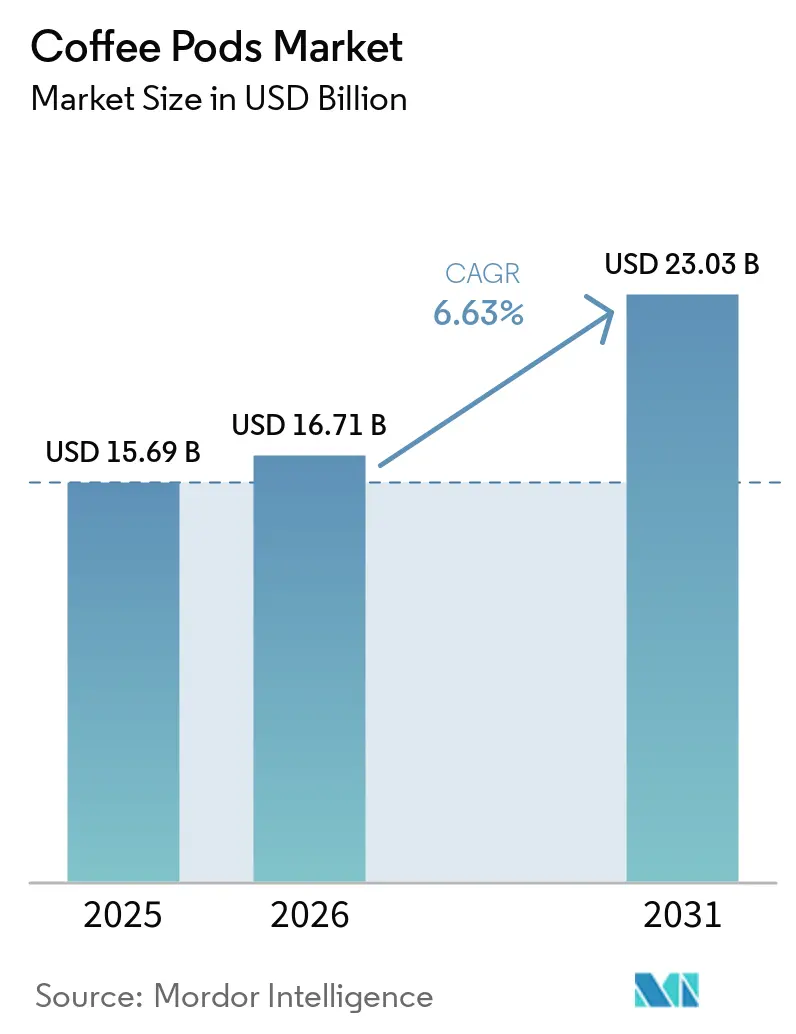
The coffee pods market size was USD 15.69 billion in 2025 and is forecast to reach USD 23.03 billion by 2031, growing at a CAGR of 6.63% during 2026-2031. The coffee pods market is supported by households that prefer single-serve preparation and seek café-style options at home without investing significant time in brewing. Premium products, including specialty and certified organic variants, are shifting the value mix as consumers accept higher prices for differentiated coffee, distinct flavor profiles, and perceived quality. Packaging regulations and consumer expectations are also steering product development toward compostable and recyclable formats, prompting manufacturers to reassess materials, shelf-life requirements, and compatibility with existing brewing systems. These trends favor companies that can combine brewing systems, pod quality, packaging innovation, and retail access while maintaining convenience and consistent taste. Growth conditions vary between established Western markets, where penetration is relatively high, and developing Asian markets, where rising disposable incomes and changing coffee consumption habits are creating new opportunities, requiring suppliers to adopt region-specific product and channel strategies.
Key Report Takeaways
- By type, hard coffee pods held the largest share of the coffee pods market, at 84.52% in 2025, while soft coffee pods are projected to grow at the fastest CAGR of 7.78% during 2026-2031.
- By nature, conventional coffee pods held the largest share of the coffee pods market, at 81.52% in 2025, while organic coffee pods are projected to grow at the fastest CAGR of 7.55% during 2026-2031.
- By flavor, plain coffee pods held the largest share of the coffee pods market, at 74.83% in 2025, while flavored coffee pods are projected to grow at the fastest CAGR of 7.42% during 2026-2031.
- By distribution channel, off-trade channels held the largest share of the coffee pods market, at 62.55% in 2025, while on-trade channels are projected to grow at the fastest CAGR of 7.19% during 2026-2031.
- By geography, Europe accounted for the largest share of the coffee pods market, at 37.68% in 2025, while Asia-Pacific is projected to grow at the fastest CAGR of 7.62% during 2026-2031.
Note: Market size and forecast figures in this report are generated using Mordor Intelligence’s proprietary estimation framework, updated with the latest available data and insights as of January 2026.
Market Trends and Insights
Drivers Impact Analysis of Coffee Pods Market*
| Driver | (~) % Impact on CAGR Forecast | Geographic Relevance | Impact Timeline |
|---|---|---|---|
| Premiumization of at-home coffee experiences | +1.3% | Global, concentrated in North America and Western Europe | Medium term (2-4 years) |
| Rising household consumption of single-serve coffee | +1.0% | Global, highest growth impact in Asia-Pacific | Long term (≥ 4 years) |
| Expansion of compatible brewing-machine installations | +0.9% | Global, near-term impact concentrated in Asia-Pacific and South America | Medium term (2-4 years) |
| Growth of retail private-label pods | +0.7% | Europe and North America, with spillover to Asia-Pacific | Medium term (2-4 years) |
| Commercial-scale compostable pod materials | +0.5% | European Union core, expanding to North America and Asia-Pacific | Medium term (2-4 years) |
| Corporate office-coffee and Scope 3 procurement | +0.4% | Global, with early gains in the United Kingdom, Germany, Nordic countries, and Australia | Long term (≥ 4 years) |
| Source: Mordor Intelligence | |||
Premiumization of At-Home Coffee
According to the Organic Trade Association, organic coffee sales in the United States are expected to grow rapidly. Coffee is expected to remain the largest organic grocery subcategory by value among the leading categories reported. In the coffee pods market, premium demand extends beyond organic certification to include specialty single-origin products, small-batch releases, and systems that tailor extraction to specific coffee profiles. This trend reflects consumers’ willingness to pay more for differentiated coffee experiences that emphasize quality, origin, and convenience. In November 2025, Keurig introduced the Coffee Collective premium pod line, which will offer 30% more coffee per pod than standard K-Cups. Higher-priced brewers can drive demand for higher-margin pods within the same system. This strategy enables established brands to protect value as private-label products place pressure on mid-priced offerings.
Rising Household Consumption of Single-serve Coffee
JDE Peet’s reported group sales of EUR 9.9 billion in 2025, driven by 15.3% organic growth across its portfolio, including Senseo soft-pad systems and L’OR espresso capsules. In North America, brewer penetration already exceeds 40% of households, making consumption frequency more important than adding new brewers. Households with installed systems can add pod varieties and brew more often, increasing annual pod demand. In developing markets, urban households are adopting espresso systems for the first time, while Japan’s installed base supports recurring consumption. As a result, the coffee pods market depends on both new household adoption and increased usage among existing users. This demand pattern can provide more durable growth than a model based only on first-time machine purchases.
Expansion of Compatible Brewing-machine Installations
Brewer installations support pod demand over several years, as machines purchased in 2026 can continue to drive pod purchases through 2031. Lavazza launched Tablì in Italy in September 2025 and introduced the system in the United States in August 2026. The system uses 100% coffee tabs and eliminates the need for capsules, wrappers, or coatings, reducing packaging material requirements and waste associated with single-serve coffee preparation. These launches demonstrate that product design is becoming a key competitive factor in household and away-from-home machine placements, where consumers and operators increasingly evaluate convenience, functionality, and environmental impact. They also show how sustainability-focused formats can differentiate brand systems while supporting recurring pod consumption through compatible coffee tab offerings. The coffee pods market benefits when suppliers combine new equipment with a clear pathway for repeat product purchases, creating opportunities to build customer loyalty and generate recurring revenue.
Commercial-scale Compostable Pod Materials
Compostable materials are expected to become a practical product development priority during 2025 and 2026. Nescafé Dolce Gusto expanded its home-compostable, paper-based pod system to Belgium, the Netherlands, Japan, and South Korea in 2025. Nestlé reported that the format uses 70% less packaging material and has a 25% lower carbon footprint per espresso cup than earlier Dolce Gusto capsules. FLO Group and NatureWorks introduced the KEYGEA compostable pod in March 2025 for North American office coffee service applications. These developments indicate that the coffee pods market is moving from sustainability claims toward commercially available materials and certified formats. They also reflect growing demand from brands and commercial buyers for packaging solutions that align with waste reduction goals while supporting product performance and scalability.
Restraints Impact Analysis of Coffee Pods Market*
| Restraint | (~) % Impact on CAGR Forecast | Geographic Relevance | Impact Timeline |
|---|---|---|---|
| Single-use packaging waste and recycling infrastructure gaps | -1.1% | European Union regulatory zones, expanding to North America and Australia | Medium term (2-4 years) |
| Competition from traditional brewing formats | -0.9% | Global, with the highest impact in Southern Europe and South America | Long term (≥ 4 years) |
| Counterfeit and low-grade compatible capsules | -0.7% | Global, concentrated in China, Southeast Asia, and online marketplaces | Short term (≤ 2 years) |
| Machine compatibility and ecosystem lock-in | -0.5% | Global, most acute in markets with dominant proprietary systems | Medium term (2-4 years) |
| Source: Mordor Intelligence | |||
Single-use packaging Waste and Recycling Gaps
Regulation (EU) 2025/40 will become applicable on August 12, 2026, and classify single-serve coffee capsules as packaging[1]. The regulation will require industrial compostability for relevant single-serve units by February 12, 2028, full recyclability by January 1, 2030, and in-practice recycling by January 1, 2035. Germany’s revised Bioabfallverordnung, which took effect in May 2025, set a 0.5% plastic input limit for bio-waste treatment facilities. The coffee pods market faces an uneven compliance environment, as collection and composting systems differ across European countries. Although certified materials are available, producers still need systems that align with local waste infrastructure. This requirement increases planning and operating demands for brands that sell common product ranges across multiple countries. As a result, companies may need to adjust capsule materials, labeling, collection partnerships, and market-specific compliance strategies to maintain product availability across Europe.
Machine Compatibility and Ecosystem Lock-in
Proprietary pod systems give machine manufacturers recurring pod revenue, but they can limit options for price-sensitive consumers. A Nespresso Original Line brewer can use Nespresso capsules and compatible products; however, extraction settings and freshness claims still encourage buyers to stay within a familiar system. This dynamic can make consumer price comparisons less direct. Lower-quality compatible products sold through fragmented online channels can create machine-clogging and food safety concerns. SGS testing cited in the supplied material found a 10% mislabeling rate among products labeled “100% Arabica.” Brands are responding with QR authentication and legal action, but these measures are harder to implement across fragmented marketplaces. The coffee pods market must balance system control with accessibility to expand its customer base.
*Our forecasts treat driver/restraint impacts as directional, not additive. The impact forecasts reflect baseline growth, mix effects, and variable interactions.
Coffee Pods Market Segment Analysis
By Type:
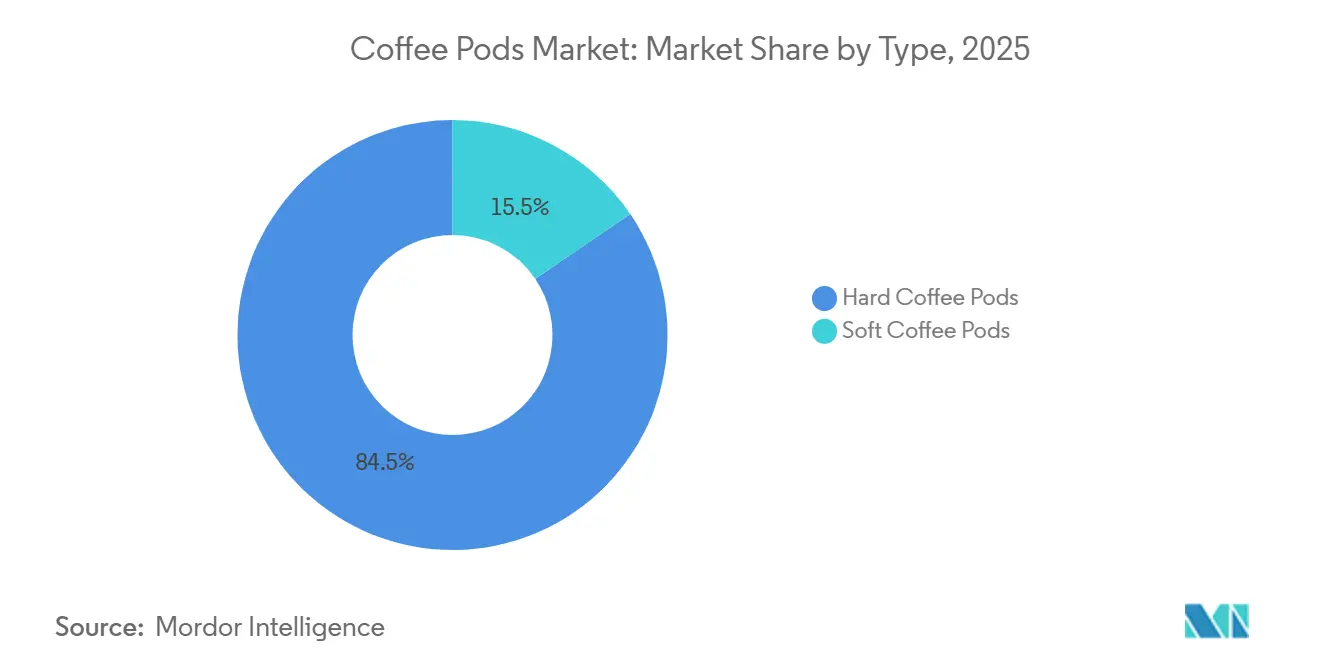
Hard Pods Hold the Largest Share While Soft Pods Lead GrowthHard coffee pods are expected to hold 84.52% of the coffee pods market share in 2025. They are compatible with high-pressure espresso and lungo machines, including systems from Nespresso, Dolce Gusto, Lavazza Blue, and Caffitaly. Their sealed construction helps preserve aroma and extends shelf life compared to open soft formats. Aluminum and multilayer polymer designs also support premium positioning and a higher selling price per cup. These attributes keep hard formats central to revenue generation in the coffee pods market. Their installed machine base and strong retail availability further support repeat purchases across mature markets.
Soft coffee pods are forecast to register a 7.78% CAGR during 2026-2031, the fastest growth rate within the type segment. Their compatibility with lower-pressure, Senseo-style systems gives them a distinct position in household coffee preparation. Cellulose-based and biodegradable nonwoven materials can align better with industrial composting requirements than conventional aluminum capsules. Nestlé’s Dolce Gusto Neo system and Ahlstrom’s compostable product portfolio reflect the shift toward lower-impact pod designs. The EU compliance timetable is encouraging manufacturers to develop formats that can meet compostability requirements[2]. This regulatory direction could accelerate a shift that product economics alone would have driven more gradually.
By Nature:
Conventional Pods Retain Scale While Organic Pods Grow FasterConventional pods are expected to account for 81.52% of the coffee pods market share in 2025. Established brand systems, broad retail distribution, and familiar replenishment routines support their strong position in Europe and North America. Consumers can find conventional formats across supermarkets, online platforms, and specialist retail channels. These products also cater to the installed base of proprietary brewers that depend on routine, repeat purchases. The scale of conventional formats gives major suppliers purchasing leverage and broad shelf access. It also provides a large base from which brands can introduce higher-value product lines.
Organic pods are projected to expand at a CAGR of 7.55% during 2026-2031, making them the fastest-growing segment by nature. This growth reflects increasing consumer attention to certified sourcing, particularly among households that evaluate routine grocery purchases based on environmental and product-quality criteria. Natural Grocers launched four own-brand organic coffee pod varieties in January 2025. This move indicates that private-label certified products are gaining greater visibility across mainstream grocery channels, reflecting retailers’ efforts to expand access to certified offerings beyond premium or specialty retail formats. In the coffee pods market, broader private-label availability can reduce entry prices for buyers seeking certified options while increasing product accessibility across a wider range of grocery retailers.
By Flavor:
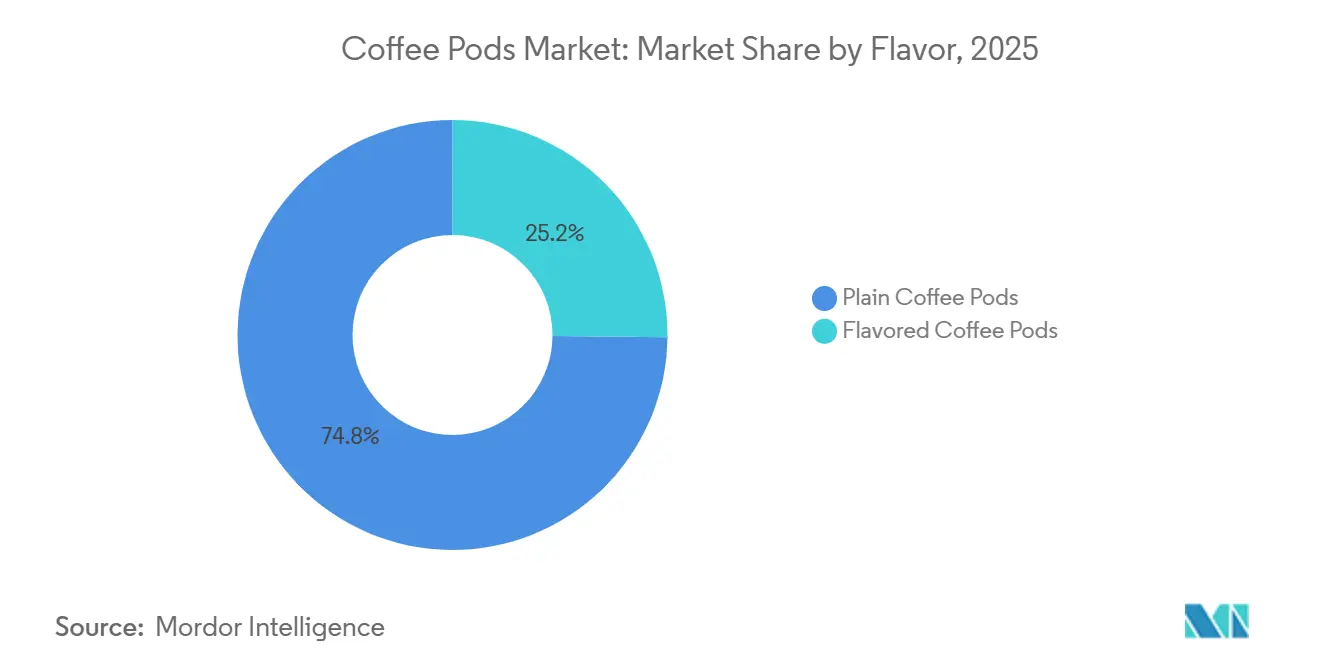
Plain Coffee Pods Lead Revenue While Flavored Pods Add OccasionsPlain coffee pods are projected to account for 74.83% of the coffee pods market share in 2025. They remain the routine replenishment choice for households that use pods for morning coffee. Multipacks, supermarket availability, and loyalty programs across proprietary systems continue to support high sales volumes. This position reflects the established role of single-serve coffee in daily household routines. Familiar flavor profiles also help brands sustain repeat purchases. As a result, plain coffee products remain the revenue base for much of the coffee pods market.
Flavored coffee pods are expected to register a CAGR of 7.42% during 2026-2031, marking the fastest growth within the flavor segment. Hazelnut, caramel, vanilla, seasonal products, and cold-brew-inspired formats extend pod usage beyond the standard morning espresso occasion. These options appeal to consumers seeking more variety from their existing machines. Smaller roasters can leverage limited-edition and flavored offerings through direct-to-consumer and subscription channels. These channels support smaller production runs and higher-value products. The segment’s growth depends on broader usage occasions rather than the replacement of plain coffee as the everyday choice.
By Distribution Channel:
Off-Trade Leads Value While On-Trade Grows FasterOff-trade channels are expected to account for 62.55% of the coffee pods market share in 2025. Supermarkets, hypermarkets, and online stores remain the primary replenishment points for households. Digital subscription programs from Nespresso, JDE Peet’s, and Keurig help build repeat purchases through scheduled delivery and product discovery. These channels also provide consumers with access to a wider range of formats and coffee profiles. The convenience of purchasing pods alongside other household goods supports off-trade sales. This position makes retail execution important for the coffee pods market.
On-trade channels are forecast to register a CAGR of 7.19% during 2026-2031, the highest growth rate within distribution. Offices, hotels, restaurants, and food-service operators are increasing their use of single-serve systems. L’OR introduced a dedicated hotel and food-service coffee solution in 2025. Sustainability requirements are becoming an important part of procurement in hospitality and office coffee services. Buyers seek systems that can document material choices and support emissions reporting. These requirements may favor suppliers with certified compostability credentials and established reporting practices. The channel adds a business-to-business growth path alongside household demand.
Geography Analysis
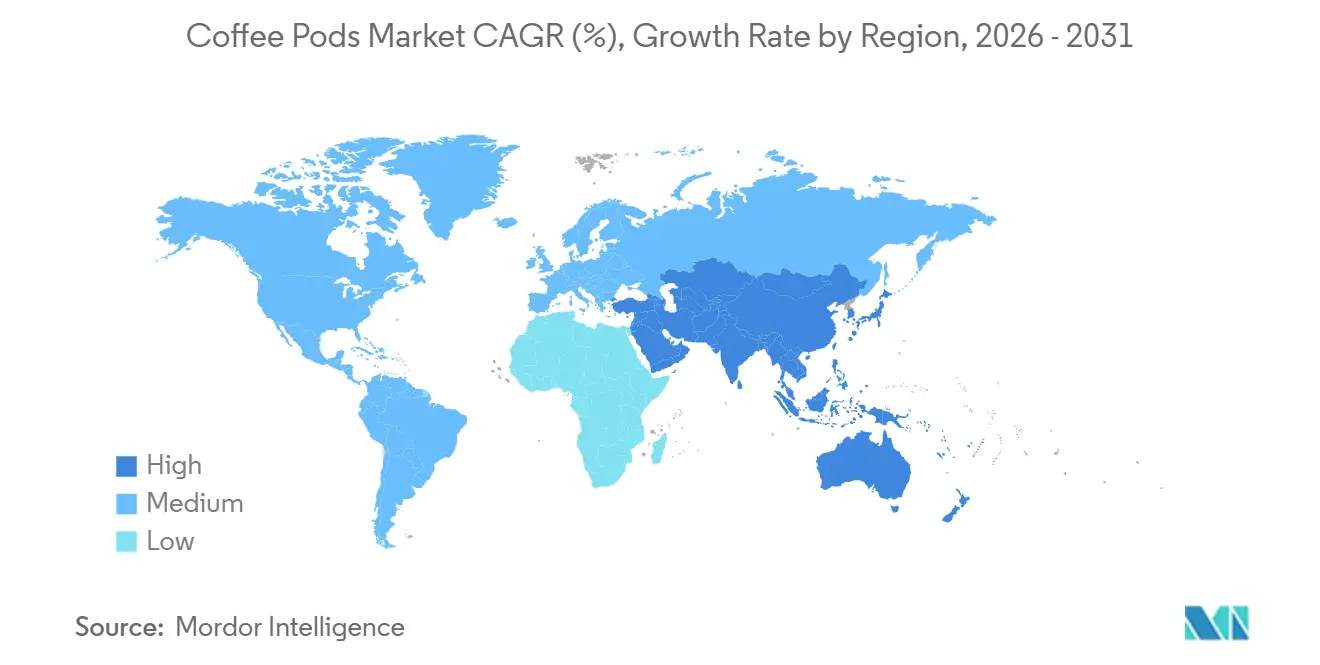
Europe held a 37.68% market share of the coffee pods market in 2025, making it the largest regional segment. Strong single-serve consumption habits in the Netherlands, France, Italy, and Germany support the region’s leadership. JDE Peet’s brands, including L’OR, Senseo, Tassimo, and Douwe Egberts, remain important across European coffee categories. Mature systems and established retail access provide a large installed base for repeat pod sales. Regulatory changes will also play an important role in Europe, as Regulation (EU) 2025/40 is set to become applicable[3]. The regulation will influence materials, product labels, and packaging plans across the region.
Asia-Pacific is expected to register a CAGR of 7.62% during 2026-2031, the fastest growth rate among regions. Urban households in China are adopting espresso systems and shifting toward specialty coffee options. India is also attracting investment in premium coffee retail and business-to-business partnerships. Nespresso expanded its business-to-business presence in India in 2025 and opened its first boutique-experience store at Select Citywalk in Delhi. Japan’s installed machine base supports recurring demand, while South Korea received the Dolce Gusto Neo expansion in 2025. These markets offer significant room for machine installation and broader pod consumption.
North America is expected to retain substantial value in the coffee pods market, led by the United States. Keurig Dr Pepper reported USD 4.0 billion in U.S. Coffee segment net sales from the K-Cup platform in 2025. Brewer penetration exceeded 40% of U.S. households, making premiumization and more frequent pod use central to future growth. Mexico adds potential as urban consumers adopt single-serve machines from a smaller base. South America also offers a longer-term opportunity, led by Brazil’s coffee culture and demand for higher-end at-home brewing. The Middle East and Africa remain smaller in absolute terms, but hospitality investment in Gulf Cooperation Council countries is creating demand for business-to-business coffee systems.
Competitive Landscape
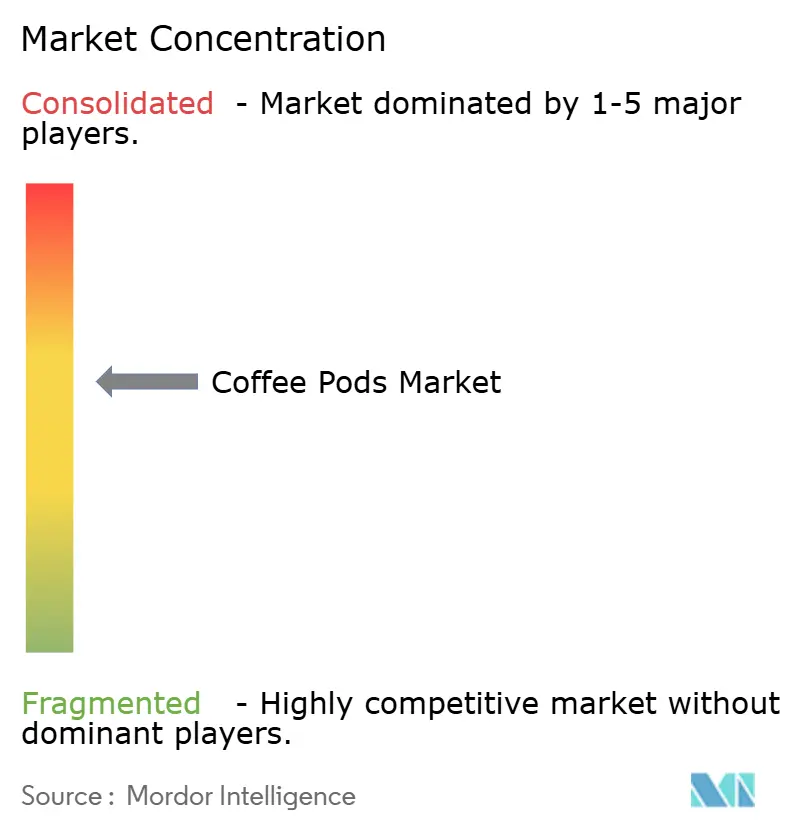
The coffee pods market was moderately concentrated, shaped by several global platforms and a substantial group of regional roasters, private-label suppliers, and compatible pod manufacturers. Keurig Dr Pepper completed its USD 18.4 billion acquisition of JDE Peet’s in April 2026. The transaction created a coffee entity with USD 16 billion in combined annual net sales, more than 40 manufacturing facilities, and operations across over 100 markets. The broader coffee portfolio included Keurig, L’OR, Senseo, Tassimo, Peet’s, and Jacobs. The combined organization’s scale supported compliance with packaging requirements and strengthened its ability to serve both retail and business customers. However, the transaction raised the competitive threshold for regional suppliers that lacked comparable procurement capabilities or technical resources.
Nestlé maintained a distinct position through Nespresso, Dolce Gusto, aluminum capsule collection programs, and the Neo compostable system. The company expanded Neo into four additional markets in 2025 and reported reduced packaging use and a lower carbon footprint per espresso cup. Lavazza introduced Tablì in the United States in August 2026, following its Italian launch in September 2025. Tablì used 100% coffee tabs and eliminated the need for capsules, wrappers, and coatings. This strategy addressed packaging concerns while maintaining a premium single-serve coffee experience. The launch indicated that the coffee pods market encompassed competition between conventional pod systems and alternative single-serve formats.
Smaller suppliers strengthened their positions in compostable formats and business-to-business procurement. FLO Group and NatureWorks launched the KEYGEA PLA-based compostable pod in March 2025 for North American office coffee service applications. Innovations reported that a partner transitioned toward production of 10–15 million certified compostable pods annually in March 2026, compared with 1.8 million pods produced in 2025. Certifications from organizations such as BPI, TÜV Austria, and DIN CERTCO helped suppliers differentiate themselves during procurement decisions. Authenticity and traceability also remained important, particularly as lower-quality compatible products circulated through online channels. A market concentration score of 7 reflected the presence of strong global platforms while leaving opportunities for specialized suppliers that met material, certification, and channel requirements.
Coffee Pods Industry Leaders
-
Keurig Dr Pepper Inc.
-
Nestlé S.A.
-
JDE Peet’s N.V.
-
Starbucks Corporation
-
Luigi Lavazza S.p.A.
- *Disclaimer: Major Players sorted in no particular order
Coffee Pods Market Companies Covered in this Report
- Nestle S.A.
- Shiseido Company, Limited
- Amorepacific Corporation
- Meiji Holdings Co., Ltd.
- Kino Biotech Co. Ltd.
- Kirin Holdings Company, Limited
- Suntory Holdings Limited
- DHC Corporation
- Minerva Research Labs Ltd.
- Revive Collagen
- Dose & Co
- The Protein Drinks Co.
- Swisse Wellness Pty Ltd
- Vitabiotics Ltd.
- Youtheory
- NeoCell
- Ancient Nutrition
- Sports Research
- TCI Co., Ltd.
- The Collagen Company Pty Ltd
Recent Industry Developments in Coffee Pods Market
- August 2026: Lavazza launched Tablì in the United States. The product is the world’s first single-serve espresso system that uses 100% coffee tabs without capsules, coatings, or individual wrapping. Backed by more than 15 patents and five years of R&D, Tablì became available on LavazzaUSA.com after sold-out pre-orders in June and July and will expand to Amazon later in 2026.
- April 2026: Keurig Dr Pepper completed its USD 18.4 billion acquisition of JDE Peet's, acquiring 96.22% of the company’s shares and creating a coffee entity with USD 16 billion in combined annual net sales. The company expects to achieve USD 400 million in cost synergies over three years, with the Global Coffee Co. spinoff targeted for 2027.
- November 2025: Keurig launched the Keurig Coffee Collective, a premium pod line developed with a team of sensory scientists. The line delivers 30% more coffee per pod than standard K-Cups. It is initially available on keurig.com, with a retail rollout planned for December 2025.
- March 2025: FLO Group and NatureWorks jointly launched KEYGEA, an Ingeo PLA-based compostable single-serve pod certified by BPI and DIN CERTCO. The product targets the North American office coffee service market and is compatible with high-speed industrial filling lines.
Global Coffee Pods Market Report Scope
| Soft Coffee Pods |
| Hard Coffee Pods |
| Conventional |
| Organic |
| Plain Coffee |
| Flavored Coffee |
| On-Trade | |
| Off-Trade | Supermarkets/Hypermarkets |
| Convenience/Grocery Stores | |
| Online Retail Stores | |
| Other Distribution Channel |
| North America | United States |
| Canada | |
| Mexico | |
| Rest of North America | |
| Europe | Germany |
| United Kingdom | |
| Italy | |
| France | |
| Spain | |
| Netherlands | |
| Belgium | |
| Sweden | |
| Poland | |
| Rest of Europe | |
| Asia-Pacific | China |
| India | |
| Japan | |
| Australia | |
| Singapore | |
| Rest of Asia-Pacific | |
| South America | Brazil |
| Argentina | |
| Colombia | |
| Rest of South America | |
| Middle East and Africa | South Africa |
| Saudi Arabia | |
| Rest of Middle East and Africa |
| By Type | Soft Coffee Pods | |
| Hard Coffee Pods | ||
| By Nature | Conventional | |
| Organic | ||
| By Flavor | Plain Coffee | |
| Flavored Coffee | ||
| By Distribution Channel | On-Trade | |
| Off-Trade | Supermarkets/Hypermarkets | |
| Convenience/Grocery Stores | ||
| Online Retail Stores | ||
| Other Distribution Channel | ||
| By Geography | North America | United States |
| Canada | ||
| Mexico | ||
| Rest of North America | ||
| Europe | Germany | |
| United Kingdom | ||
| Italy | ||
| France | ||
| Spain | ||
| Netherlands | ||
| Belgium | ||
| Sweden | ||
| Poland | ||
| Rest of Europe | ||
| Asia-Pacific | China | |
| India | ||
| Japan | ||
| Australia | ||
| Singapore | ||
| Rest of Asia-Pacific | ||
| South America | Brazil | |
| Argentina | ||
| Colombia | ||
| Rest of South America | ||
| Middle East and Africa | South Africa | |
| Saudi Arabia | ||
| Rest of Middle East and Africa | ||
Key Questions Answered in the Report
What is the projected size of the coffee pods market by 2031?
The coffee pods market is forecast to reach USD 23.03 billion by 2031, growing at a CAGR of 6.63% during 2026-2031.
Which coffee pod type held the largest share in 2025?
Hard coffee pods held 84.52% of value in 2025, supported by their compatibility with high-pressure brewing systems.
How are packaging rules affecting coffee pod suppliers?
Regulation (EU) 2025/40 requires industrial compostability for relevant single-serve units by February 12, 2028, which is increasing demand for compliant materials and formats.
Which region led global coffee pod sales in 2025?
Europe led with 37.68% of global value in 2025, supported by established single-serve consumption in major markets.