
Chronic Plaque Psoriasis Treatment Market Size and Share
Market Overview
| Study Period | 2020 - 2031 |
|---|---|
| Market Size (2026) | USD 26.02 Billion |
| Market Size (2031) | USD 41.79 Billion |
| Growth Rate (2026 - 2031) | 9.94 % |
| Fastest Growing Market | Asia-Pacific |
| Largest Market | North America |
| Market Concentration | Medium |
Major Players *Disclaimer: Major Players sorted in no particular order Image © Mordor Intelligence. Reuse requires attribution under CC BY 4.0. | |
Chronic Plaque Psoriasis Treatment Market Analysis by Mordor Intelligence
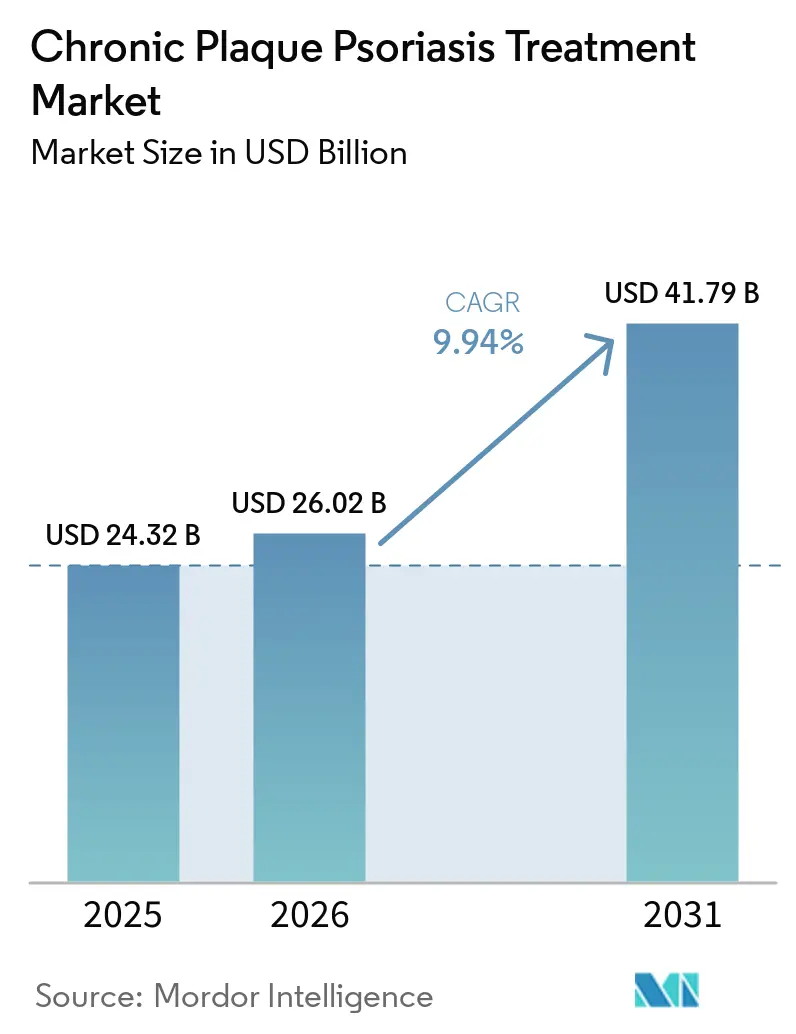
The Chronic Plaque Psoriasis Treatment Market size is expected to increase from USD 24.32 billion in 2025 to USD 26.02 billion in 2026 and reach USD 41.79 billion by 2031, growing at a CAGR of 9.94% over 2026-2031.
The chronic plaque psoriasis treatment market is moving toward therapies that deliver high levels of skin clearance, especially IL-17 and IL-23 inhibitors. This shift supports higher revenue per treated patient because clinicians are using systemic treatment earlier for people with moderate-to-severe disease and high-impact-site involvement. Oral targeted therapies are widening treatment choice for patients who want to avoid injections, while biosimilars are making older biologic classes more accessible. Growth in the chronic plaque psoriasis treatment market also depends on reimbursement decisions, specialist capacity, and the ability of manufacturers to address payer requirements without delaying appropriate care.
Key Report Takeaways
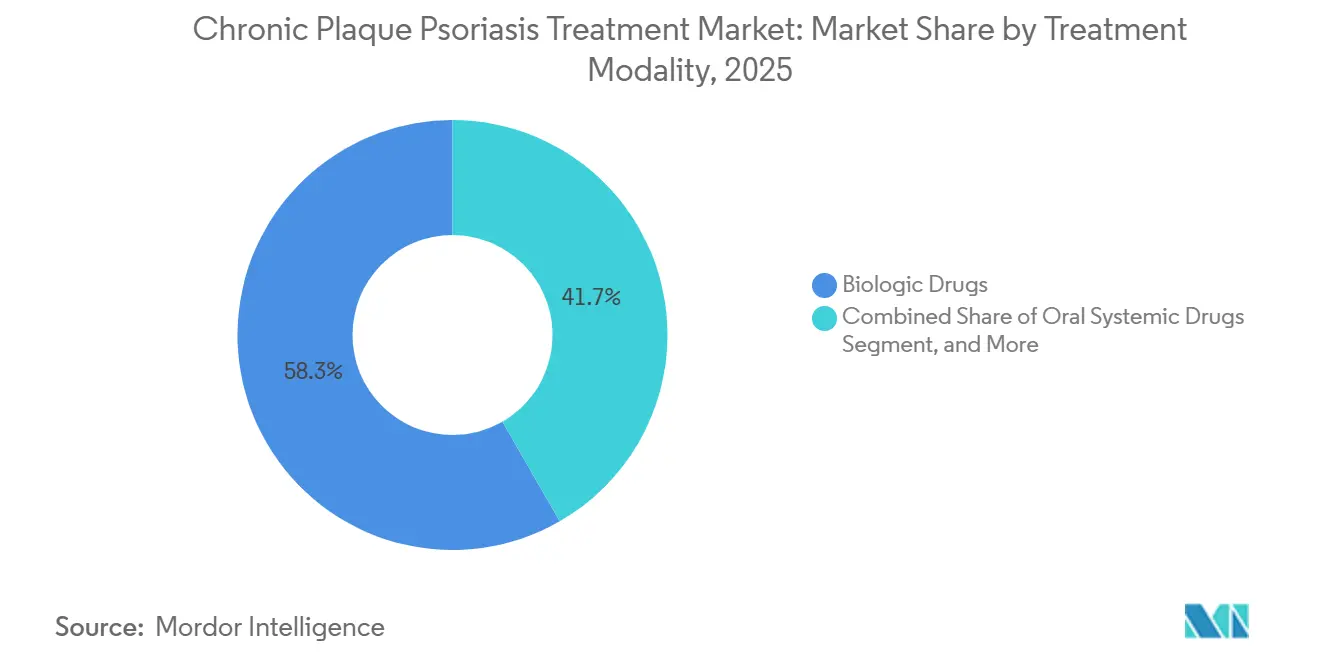
- By treatment modality, Biologic Drugs held 58.32% of the chronic plaque psoriasis treatment market share in 2025, while Oral Systemic Drugs are forecast to grow at a 14.94% CAGR through 2031.
- By route of administration, Injectable therapies accounted for 57.62% of the chronic plaque psoriasis treatment market share in 2025, while the Oral route is forecast to expand at an 11.55% CAGR through 2031.
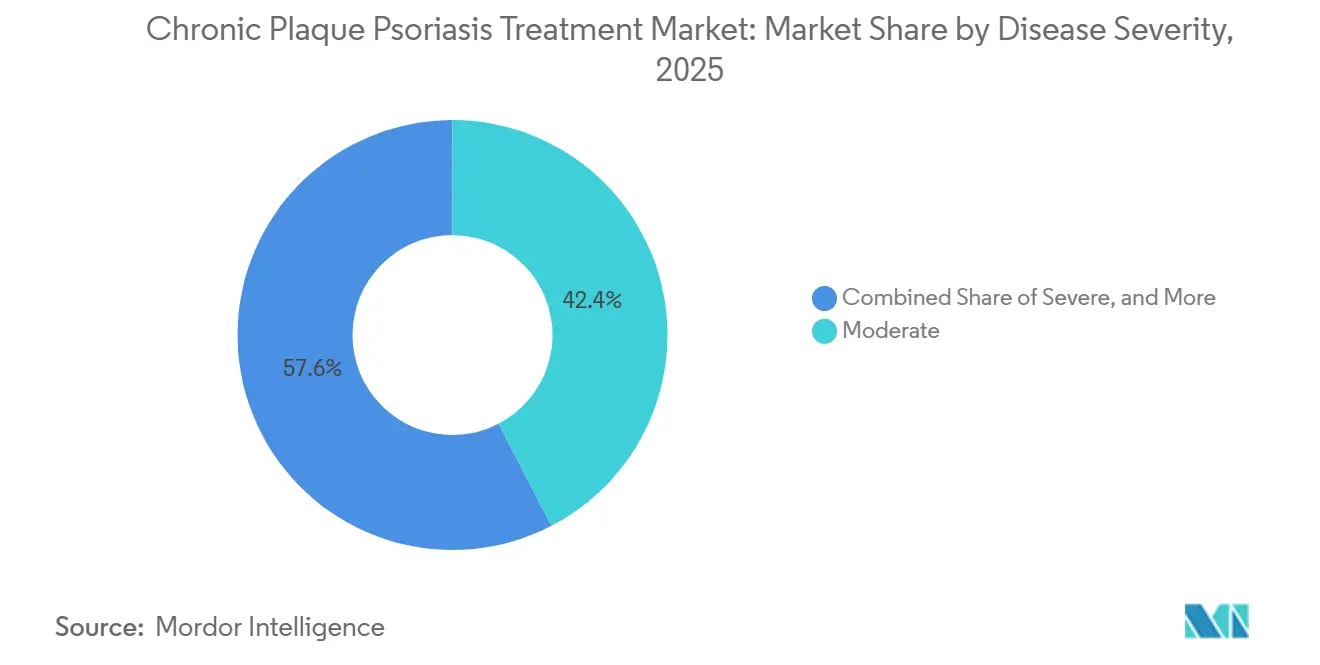
- By disease severity, Moderate disease held 42.38% share in 2025, while the Severe segment is projected to advance at an 11.56% CAGR through 2031.
- By patient type, Adults captured 82.32% share in 2025, while the Geriatric segment is forecast to grow at an 11.78% CAGR through 2031.
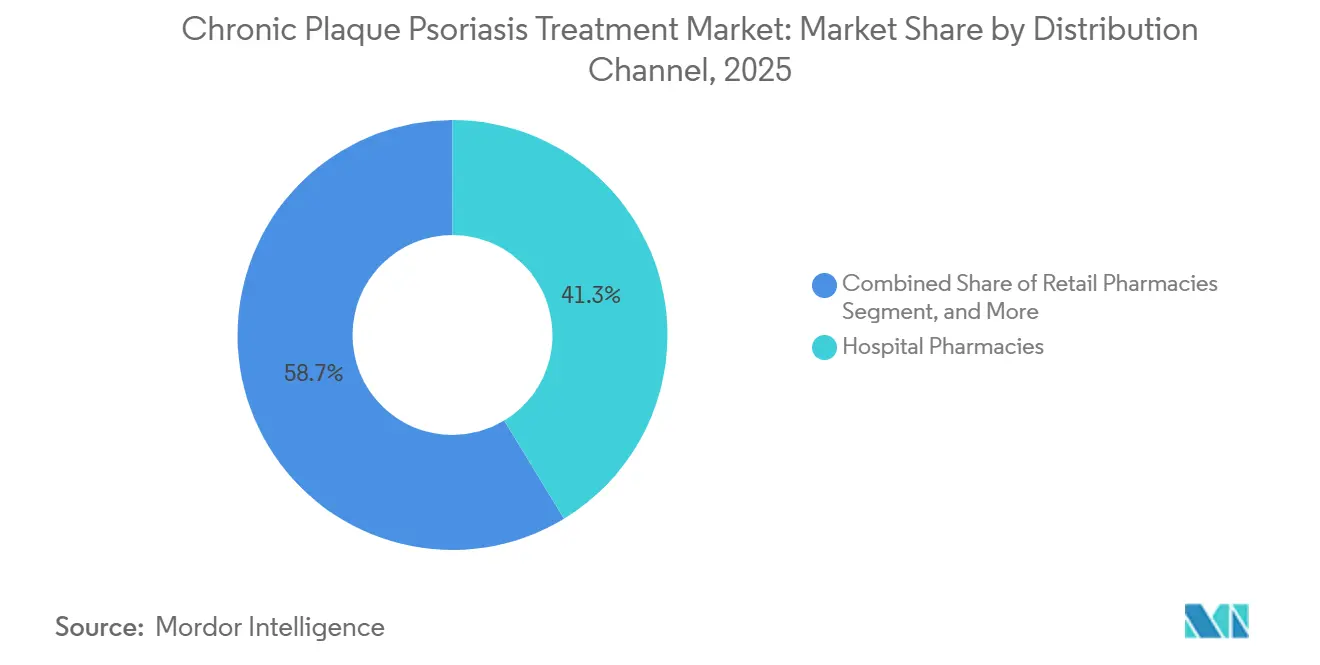
- By distribution channel, Hospital Pharmacies held 41.32% share in 2025, while Online Pharmacies are forecast to grow at a 12.31% CAGR through 2031.
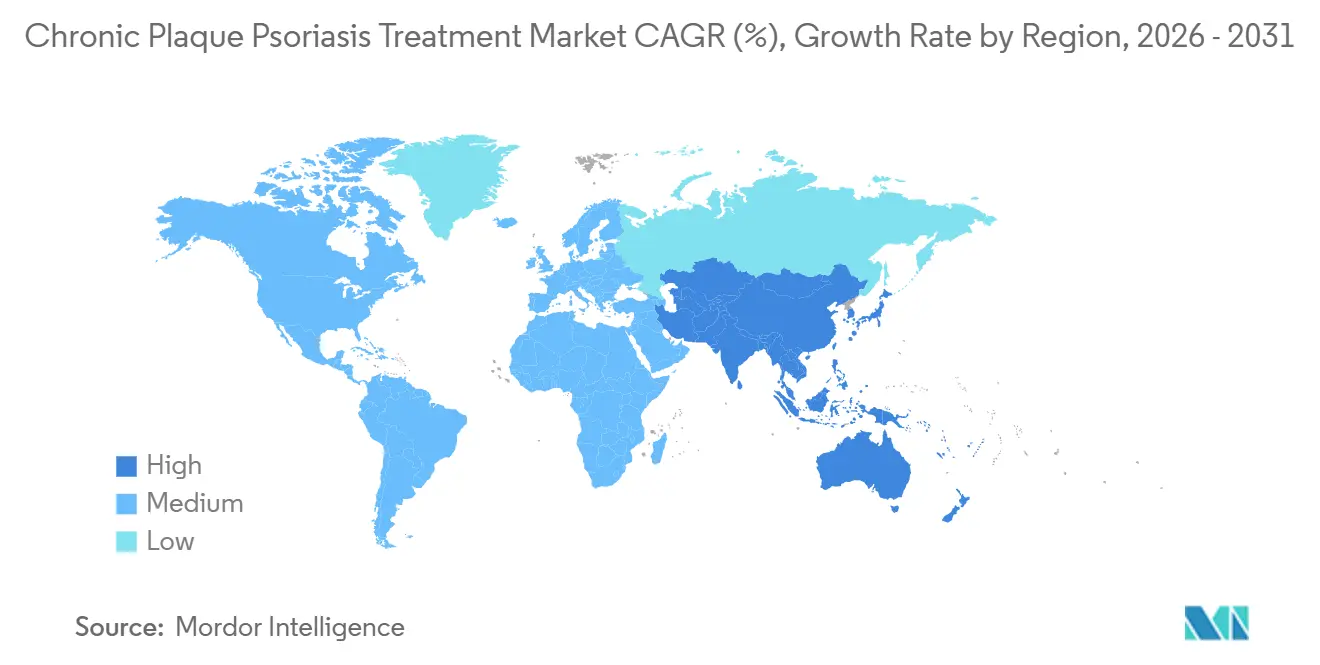
- By geography, North America accounted for 38.98% of the chronic plaque psoriasis treatment market share in 2025, while Asia-Pacific is projected to expand at an 11.67% CAGR through 2031.
Note: Market size and forecast figures in this report are generated using Mordor Intelligence’s proprietary estimation framework, updated with the latest available data and insights as of January 2026.
Market Trends and Insights
Drivers Impact Analysis of Chronic Plaque Psoriasis Treatment Market*
| Driver | (~) % Impact on CAGR Forecast | Geographic Relevance | Impact Timeline |
|---|---|---|---|
| Uptake of High-Efficacy IL-17 and IL-23 Inhibitors | +3.5% | Global | Short term (≤ 2 years) |
| Expansion of Oral Targeted Immunomodulators | +2.2% | North America, Europe, APAC core | Medium term (2–4 years) |
| Improved Diagnosis, Specialist Capacity, and Reimbursement | +1.2% | APAC, MEA, South America | Medium term (2–4 years) |
| Biologic and Biosimilar Access Expansion in Emerging Markets | +1.5% | APAC, MEA, South America | Medium term (2–4 years) |
| High-Impact-Site Severity Reclassification Expanding Systemic-Therapy Eligibility | +0.8% | North America, Europe | Short term (≤ 2 years) |
| Pediatric Label Expansion and Age-Appropriate Formulations | +0.5% | Global, North America primarily | Medium term (2–4 years) |
| Source: Mordor Intelligence | |||
Uptake of High-Efficacy IL-17 and IL-23 Inhibitors
The chronic plaque psoriasis treatment market is benefiting from a higher clinical standard that increasingly emphasizes PASI 90 and PASI 100 responses. In the PSoHO observational study, IL-17A inhibitors achieved PASI 100 in 39.70% of patients and PASI 90 in 55.20% at 24 months, compared with PASI 100 in 32.80% of patients receiving anti-TNFα agents[1]. A 2026 meta-analysis of 32 randomized controlled trials involving nearly 14,000 participants found that IL-17 and IL-23 inhibitors were superior to placebo in Asian populations, with a log odds ratio of 1.40 and a 95% confidence interval of 1.17 to 1.62. These results support broader formulary adoption in markets where evidence in non-Western patient populations influences treatment decisions. Drug-survival evidence also favors newer agents, as bimekizumab, guselkumab, and risankizumab showed lower 2-year discontinuation risk than ustekinumab among bio-experienced patients[2]. The chronic plaque psoriasis treatment market, therefore, continues to shift away from older biologic classes, even where those treatments remain important for patients with limited access to newer medicines.
Expansion of Oral Targeted Immunomodulators
Oral therapies are changing the chronic plaque psoriasis treatment market because they can reduce the practical burden of injectable treatment. Johnson & Johnson received FDA approval in March 2026 for icotrokinra, an oral peptide that targets the IL-23 receptor, for adults and adolescents aged 12 years and older with moderate-to-severe plaque psoriasis.[3] Four Phase 3 ICONIC studies involving 2,500 patients found that 70% achieved an Investigator’s Global Assessment of clear or almost clear skin and 55% achieved PASI 90 at Week 16. The European Medicines Agency recommended marketing authorization for icotrokinra in July 2026, making it the first oral medicine targeting the IL-23 receptor to receive a positive CHMP opinion for plaque psoriasis EMA.[4]Takeda reported that zasocitinib was statistically superior to deucravacitinib in a Phase 3 study during June 2026, with more than half of treated patients achieving PASI 90 TAKEDA. These launches and late-stage programs can bring previously untreated patients into the chronic plaque psoriasis treatment market when injection aversion, perceived safety concerns, or specialty-dispensing requirements had delayed care.
Emerging-Market Biologic and Biosimilar Access
Reimbursement and biosimilar availability are expanding the chronic plaque psoriasis treatment market in emerging economies. China included deucravacitinib in the 2024 National Reimbursement Drug List for moderate-to-severe plaque psoriasis, improving access to an oral TYK2 inhibitor in a large treated population. Biocon Biologics received Japanese approval for its ustekinumab biosimilar in December 2024 and launched the product through Yoshindo in 2025. Samsung Bioepis also received Japanese approval for an ustekinumab biosimilar in December 2025, followed by National Health Insurance listing in May 2026 through NIPRO Corporation. Sun Pharmaceutical launched Ilumya, or tildrakizumab, in India during 2025, introducing an IL-23 inhibitor for Indian dermatologists treating moderate-to-severe plaque psoriasis. LEO Pharma received China’s NMPA approval for Enstilar in April 2026 after a 604-patient Phase 3 study showed superiority over Daivobet ointment, with a commercial launch planned later in 2026. These developments support access across several treatment lines rather than relying only on premium imported biologics.
Pediatric Label Expansion and Age-Appropriate Formulations
Pediatric label expansion adds a long-duration treatment opportunity to the chronic plaque psoriasis treatment market. AbbVie stated that nearly 30% of people who develop psoriasis experience symptoms before age 18, and an estimated 20,000 U.S. children younger than 10 years are diagnosed each year. The FDA approved risankizumab in June 2026 for children aged 6 years and older with moderate-to-severe plaque psoriasis or active psoriatic arthritis. The approval included a 55 mg prefilled syringe for weight-based dosing in patients below 40 kg. The European Commission also approved risankizumab for pediatric patients aged 6 years and older during June 2026, based on Phase 3 OptIMMize data. Johnson & Johnson received FDA approval for guselkumab in children aged 6 years and older in September 2025, supported by Phase 3 PROTOSTAR data. Earlier access to approved therapies may strengthen continuity of treatment as pediatric patients progress into adult care.
Restraints Impact Analysis of Chronic Plaque Psoriasis Treatment Market*
| Restraint | (~) % Impact on CAGR Forecast | Geographic Relevance | Impact Timeline |
|---|---|---|---|
| High Biologic Costs and Payer Utilization Controls | -3.2% | North America, Europe | Short term (≤ 2 years) |
| Safety Monitoring and Long-Term Immunosuppression Concerns | -1.8% | Global | Medium term (2-4 years) |
| Payer Step-Therapy Mismatch with High-Impact-Site Disease | -1.4% | North America | Short term (≤ 2 years) |
| Longitudinal Loss of Response and Treatment Persistence Attrition | -1.2% | Global | Long term (≥ 4 years) |
| Source: Mordor Intelligence | |||
High Biologic Costs and Payer Utilization Controls
High treatment costs and utilization controls can slow the chronic plaque psoriasis treatment market even when advanced therapies show strong clinical outcomes. Commercial payer protocols often require patients to complete several treatment steps before gaining access to newer biologics or oral medicines. A 2025 analysis of 194 U.S. commercial step-therapy protocols found that 99.40% imposed more requirements than clinical guidelines supported, while 68.40% of psoriatic arthritis protocols exceeded guideline recommendations. The same research found that 92% of surveyed physicians reported a negative effect on clinical outcomes from these restrictions. The mismatch can be especially difficult for people with scalp, nail, genital, or palmoplantar disease, where quality-of-life burden can be severe despite limited body surface area. Thirty-eight U.S. states had enacted step-therapy protection laws by 2025, and the proposed Safe Step Act would require payers to respond to exception requests within 24 to 72 hours.
Longitudinal Loss of Response and Treatment Persistence Attrition
Treatment persistence limits the chronic plaque psoriasis treatment market because plaque psoriasis requires ongoing management over many years. In the CorEvitas Psoriasis Registry, failure to maintain the initial response was cited in 51.70% of 159 biologic-switching cases, and 83.00% of switchers had moderate-to-severe disease compared with 26.10% of non-switchers. A Spanish registry reported 10-year first-line biologic persistence of 25.90%, with insufficient efficacy responsible for 51.00% of discontinuations. Switching can preserve patient access to care, but it adds administrative costs and can lead payers to tighten coverage conditions. Patients who become bio-experienced may have fewer suitable treatment options and may show lower response rates to later therapies. The lower discontinuation risk reported for bimekizumab, guselkumab, and risankizumab among bio-experienced patients suggests that persistence is becoming an important point of competition between newer and older biologic classes.
*Our forecasts treat driver/restraint impacts as directional, not additive. The impact forecasts reflect baseline growth, mix effects, and variable interactions.
Chronic Plaque Psoriasis Treatment Market Segment Analysis
By Treatment Modality:
Biologic Drugs Lead Revenue While Oral Systemic Drugs Drive GrowthBiologic Drugs held 58.32% of the chronic plaque psoriasis treatment market share within treatment modality revenue in 2025. IL-17 and IL-23 inhibitors have become central options for moderate-to-severe disease because they offer high clearance rates and established long-term use in specialist practice. In network meta-analyses, bimekizumab, ixekizumab, and brodalumab achieved PASI 90 as early as Weeks 6 to 8. Real-world evidence also found favorable drug survival for risankizumab and guselkumab, which supports continued use of IL-23 inhibitors.
Oral Systemic Drugs are forecast to grow at a 14.94% CAGR from 2026 to 2031, the fastest rate among treatment modalities. TYK2 inhibitors and oral IL-23 receptor therapies are the main reasons for this expansion. Icotrokinra’s 2026 approval established a new oral treatment option that aims for efficacy previously associated mainly with injectable biologics. Combination regimens also retain a clinical role for high-impact-site disease and difficult-to-treat presentations.

By Route of Administration:
Injectable Therapies Remain Largest While Oral Therapies Gain GroundInjectable therapies accounted for 57.62% of the chronic plaque psoriasis treatment market share by route of administration in 2025. Their position reflects the long-standing role of subcutaneous IL-17 and IL-23 biologics in moderate-to-severe plaque psoriasis. Guselkumab and risankizumab showed strong drug survival among bio-naive patients in Danish real-world evidence.
The Oral route is forecast to expand at an 11.55% CAGR from 2026 to 2031. Icotrokinra demonstrated that an oral therapy can approach the performance range of advanced injectable treatments, with 55% of patients reaching PASI 90 at Week 16 in its Phase 3 program. Oral options can reduce concerns around injection aversion and may simplify treatment initiation for patients and practices. The Topical route remains important by prescription volume but contributes less revenue because of its lower unit price.
By Disease Severity:
Moderate Disease Is the Largest Segment While Severe Disease Grows FastestModerate disease held 42.38% of the chronic plaque psoriasis treatment market share by disease severity in 2025. This segment includes many patients who did not achieve acceptable control with topical or conventional systemic treatment and meet clinical thresholds for biologic initiation. High-impact-site involvement can create substantial burden even when total body surface area is low. Aetna’s 2025 Medicaid policy recognized crucial body-area involvement as a coverage criterion independent of body surface area percentage.
The Severe segment is forecast to grow at an 11.56% CAGR from 2026 to 2031. Reclassification of high-impact-site disease is contributing to the expansion of the severe treatment population in some settings. Patients with severe disease may also switch biologics more often, creating several treatment episodes across the care journey.
By Patient Type:
Adults Account for Most Revenue While Geriatric Patients Expand FastestAdults captured 82.32% of the chronic plaque psoriasis treatment market share by patient type in 2025. This position reflects the concentration of diagnosed psoriasis among people aged 25 to 60 years and the established availability of biologics for this group. Adult treatment is supported by defined monitoring protocols and clinician familiarity with several biologic classes.
The Geriatric segment is forecast to grow at an 11.78% CAGR through 2031. Population aging in North America, Europe, and Japan is increasing the relevance of psoriasis treatment in people with polypharmacy and multiple chronic conditions. Drug selection in older adults must account for cardiovascular conditions, renal function, and infection risk. A 15-year multicenter cohort study reported that TNF inhibitors had the highest hepatitis B virus reactivation risk among the biologic classes assessed, while IL-23 inhibitors had the lowest risk and the longest time to reactivation.
By Distribution Channel:
Hospital Pharmacies Lead While Online Pharmacies Expand FastestHospital Pharmacies held 41.32% of the chronic plaque psoriasis treatment market share by distribution channel in 2025. Injectable biologics often require injection training, prior-authorization documentation, laboratory follow-up, and coordination with dermatology services. These needs favor hospital-affiliated and specialty pharmacy settings with existing clinical infrastructure.
Online Pharmacies are forecast to grow at a 12.31% CAGR from 2026 to 2031. Digital fulfillment, mail-order coverage models, and the rise of oral treatment are reducing some of the friction associated with specialty dispensing. Manufacturers are also testing direct patient-support pathways where conventional coverage processes delay access.
Geography Analysis
North America Chronic Plaque Psoriasis Treatment Market
North America held 38.98% of the chronic plaque psoriasis treatment market share in 2025. The region benefits from high biologic penetration, a dense specialist network, and insurance systems that eventually authorize advanced therapy for many eligible patients. UnitedHealthcare’s 2026 criteria included icotrokinra, risankizumab, guselkumab, secukinumab, deucravacitinib, and preferred adalimumab biosimilars as coverage options.
Europe Chronic Plaque Psoriasis Treatment Market
Europe is the second-largest contributor to the chronic plaque psoriasis treatment market, led by Germany, France, the United Kingdom, Italy, and Spain. Germany’s Arzneimittel-Atlas identified psoriasis among the 6 drug categories associated with the strongest statutory health-insurance spending growth during 2024.
APAC Chronic Plaque Psoriasis Treatment Market
Asia-Pacific is forecast to grow at an 11.67% CAGR from 2026 to 2031, the fastest rate among geographic segments. China, Japan, India, South Korea, and Australia are the central markets for this expansion. China is improving access through reimbursement updates and local regulatory approvals, including NMPA approval of Enstilar in April 2026.
Competitive Landscape
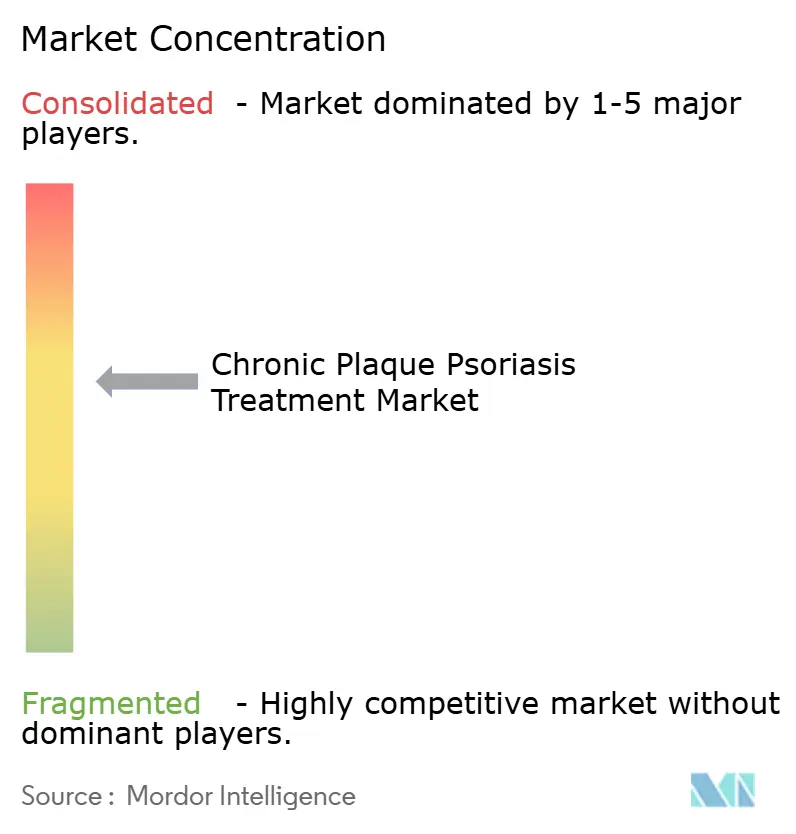
The chronic plaque psoriasis treatment market is moderately concentrated in premium biologics and more fragmented in topical therapies and biosimilars. AbbVie markets risankizumab, Johnson & Johnson markets guselkumab and icotrokinra, UCB markets bimekizumab, Novartis markets secukinumab, and Eli Lilly markets ixekizumab. Bristol Myers Squibb has a leading position in oral TYK2 inhibition through deucravacitinib. These companies compete through clinical performance, indication expansion, route of administration, patient support, and formulary access. Older TNF-alpha and IL-12/23 products face growing price pressure as biosimilars become available. Companies with newer IL-17 and IL-23 therapies are seeking to preserve revenue through differentiated clearance, drug survival, and broader approved populations. The chronic plaque psoriasis treatment market has several competitive tiers rather than a single uniform set of rivals. Each tier is shaped by clinical outcomes, patient preference, price, and local reimbursement policy.
Chronic Plaque Psoriasis Treatment Industry Leaders
-
AbbVie Inc.
-
Johnson & Johnson
-
Novartis AG
-
Eli Lilly and Company
-
UCB S.A.
- *Disclaimer: Major Players sorted in no particular order
Chronic Plaque Psoriasis Treatment Market Companies Covered in this Report
- Abbvie
- Affibody AB
- Alumis Inc.
- Alvotech
- Amgen
- Arcutis Biotherapeutics, Inc.
- Boehringer Ingelheim
- Bristol-Myers Squibb
- Dr. Reddy’s Laboratories
- Eli Lilly and Company
- Johnson & Johnson
- Leo Pharma
- Meiji Seika Pharma Co., Ltd.
- Novartis
- Organon
- Pfizer
- Soligenix, Inc.
- Sun Pharmaceuticals Industries
- Takeda Pharmaceuticals
- UCB
Recent Industry Developments in Chronic Plaque Psoriasis Treatment Market
- July 2026: The European Medicines Agency’s CHMP issued a positive opinion recommending marketing authorization for icotrokinra, marketed as Icotyde by Johnson & Johnson, for adults and adolescents aged 12 years and older who weigh at least 40 kg and have moderate-to-severe plaque psoriasis. It was the first oral medicine targeting the IL-23 receptor to receive a positive CHMP recommendation in the European Union.
- June 2026: Takeda Pharmaceutical Company Limited reported positive results from a randomized, double-blind, multicenter Phase 3 study in which zasocitinib, also known as TAK-279, was statistically superior to deucravacitinib in adults with moderate-to-severe plaque psoriasis.
Global Chronic Plaque Psoriasis Treatment Market Report Scope
As per the scope of the report, chronic plaque psoriasis is the most common form of psoriasis, characterized by persistent, well-defined erythematous plaques with silvery scales. Treatment aims to reduce inflammation, control symptoms, prevent disease progression, and improve patient quality of life through biologics, oral systemic therapies, topical agents, and combination treatment approaches.
The chronic plaque psoriasis treatment market report segments the market by treatment modality, including biologic drugs (TNF inhibitors, IL-17 inhibitors, IL-23 inhibitors, IL-12/23 inhibitors, and T-cell inhibitors), oral systemic drugs (PDE4 inhibitors, TYK2 inhibitors, JAK inhibitors, and retinoids), topical therapies (corticosteroids, vitamin D analogues, topical PDE4 inhibitors, topical roflumilast, and tapinarof), and combination regimens. The market is further categorized by route of administration, comprising injectable, oral, and topical therapies. Based on disease severity, the market is segmented into mild, moderate, and severe chronic plaque psoriasis. By patient type, the market is divided into adults, pediatric patients, and geriatric patients. By distribution channel, the market is segmented into hospital pharmacies, retail pharmacies, online pharmacies, specialty pharmacies, and other distribution channels. Geographically, the market is segmented into North America, Europe, Asia-Pacific, the Middle East & Africa, and South America. The market report also covers the estimated market sizes and trends for 17 countries across major regions globally. For each segment, the market size and forecast are provided in terms of value (USD).
| Biologic Drugs | TNF Inhibitors |
| IL-17 Inhibitors | |
| IL-23 Inhibitors | |
| IL-12/23 Inhibitors | |
| T-Cell Inhibitors | |
| Oral Systemic Drugs | PDE4 Inhibitors |
| TYK2 Inhibitors | |
| JAK Inhibitors | |
| Retinoids | |
| Topical Therapies | Corticosteroids |
| Vitamin D Analogues | |
| Topical PDE4 Inhibitors | |
| Topical Roflumilast | |
| Tapinarof | |
| Combination Regimens |
| Injectable |
| Oral |
| Topical |
| Mild |
| Moderate |
| Severe |
| Adults |
| Pediatric |
| Geriatric |
| Hospital Pharmacies |
| Retail Pharmacies |
| Online Pharmacies |
| Specialty Pharmacies |
| Other Distribution Channels |
| North America | United States |
| Canada | |
| Mexico | |
| Europe | Germany |
| United Kingdom | |
| France | |
| Italy | |
| Spain | |
| Rest of Europe | |
| Asia-Pacific | China |
| India | |
| Japan | |
| Australia | |
| South Korea | |
| Rest of Asia-Pacific | |
| Middle East and Africa | GCC |
| South Africa | |
| Rest of Middle East and Africa | |
| South America | Brazil |
| Argentina | |
| Rest of South America |
| By Treatment Modality | Biologic Drugs | TNF Inhibitors |
| IL-17 Inhibitors | ||
| IL-23 Inhibitors | ||
| IL-12/23 Inhibitors | ||
| T-Cell Inhibitors | ||
| Oral Systemic Drugs | PDE4 Inhibitors | |
| TYK2 Inhibitors | ||
| JAK Inhibitors | ||
| Retinoids | ||
| Topical Therapies | Corticosteroids | |
| Vitamin D Analogues | ||
| Topical PDE4 Inhibitors | ||
| Topical Roflumilast | ||
| Tapinarof | ||
| Combination Regimens | ||
| By Route of Administration | Injectable | |
| Oral | ||
| Topical | ||
| By Disease Severity | Mild | |
| Moderate | ||
| Severe | ||
| By Patient Type | Adults | |
| Pediatric | ||
| Geriatric | ||
| By Distribution Channel | Hospital Pharmacies | |
| Retail Pharmacies | ||
| Online Pharmacies | ||
| Specialty Pharmacies | ||
| Other Distribution Channels | ||
| By Geography | North America | United States |
| Canada | ||
| Mexico | ||
| Europe | Germany | |
| United Kingdom | ||
| France | ||
| Italy | ||
| Spain | ||
| Rest of Europe | ||
| Asia-Pacific | China | |
| India | ||
| Japan | ||
| Australia | ||
| South Korea | ||
| Rest of Asia-Pacific | ||
| Middle East and Africa | GCC | |
| South Africa | ||
| Rest of Middle East and Africa | ||
| South America | Brazil | |
| Argentina | ||
| Rest of South America | ||
Key Questions Answered in the Report
What is the market size of chronic plaque psoriasis treatment?
The chronic plaque psoriasis treatment market size was USD 26.02 billion in 2026.
What is the projected value of chronic plaque psoriasis treatment by 2031?
The chronic plaque psoriasis treatment market is projected to reach USD 41.79 billion by 2031, growing at a 9.94% CAGR from 2026 to 2031.
Which treatment modality is growing fastest for chronic plaque psoriasis?
Oral Systemic Drugs are the fastest-growing modality, with a projected CAGR of 14.94% through 2031.
Why are IL-17 and IL-23 inhibitors important in plaque psoriasis care?
These therapies have raised treatment expectations for skin clearance and showed strong PASI 90 and PASI 100 outcomes in clinical and real-world evidence.
Are oral medicines changing plaque psoriasis treatment options?
Yes. Oral therapies such as icotrokinra and TYK2 inhibitors can reduce reliance on injections and may make treatment initiation easier for some patients.
Which region is growing fastest for chronic plaque psoriasis treatment?
Asia-Pacific is forecast to expand at an 11.67% CAGR through 2031, supported by reimbursement development, biosimilars, and new product launches.
What limits access to advanced plaque psoriasis therapies?
Treatment cost, prior authorization, and step-therapy requirements can delay access to newer biologics and oral medicines.