
Chronic Kidney Disease Market Size and Share
Market Overview
| Study Period | 2020 - 2031 |
|---|---|
| Market Size (2026) | USD 89.29 Billion |
| Market Size (2031) | USD 115.26 Billion |
| Growth Rate (2026 - 2031) | 5.24 % |
| Fastest Growing Market | Asia-Pacific |
| Largest Market | North America |
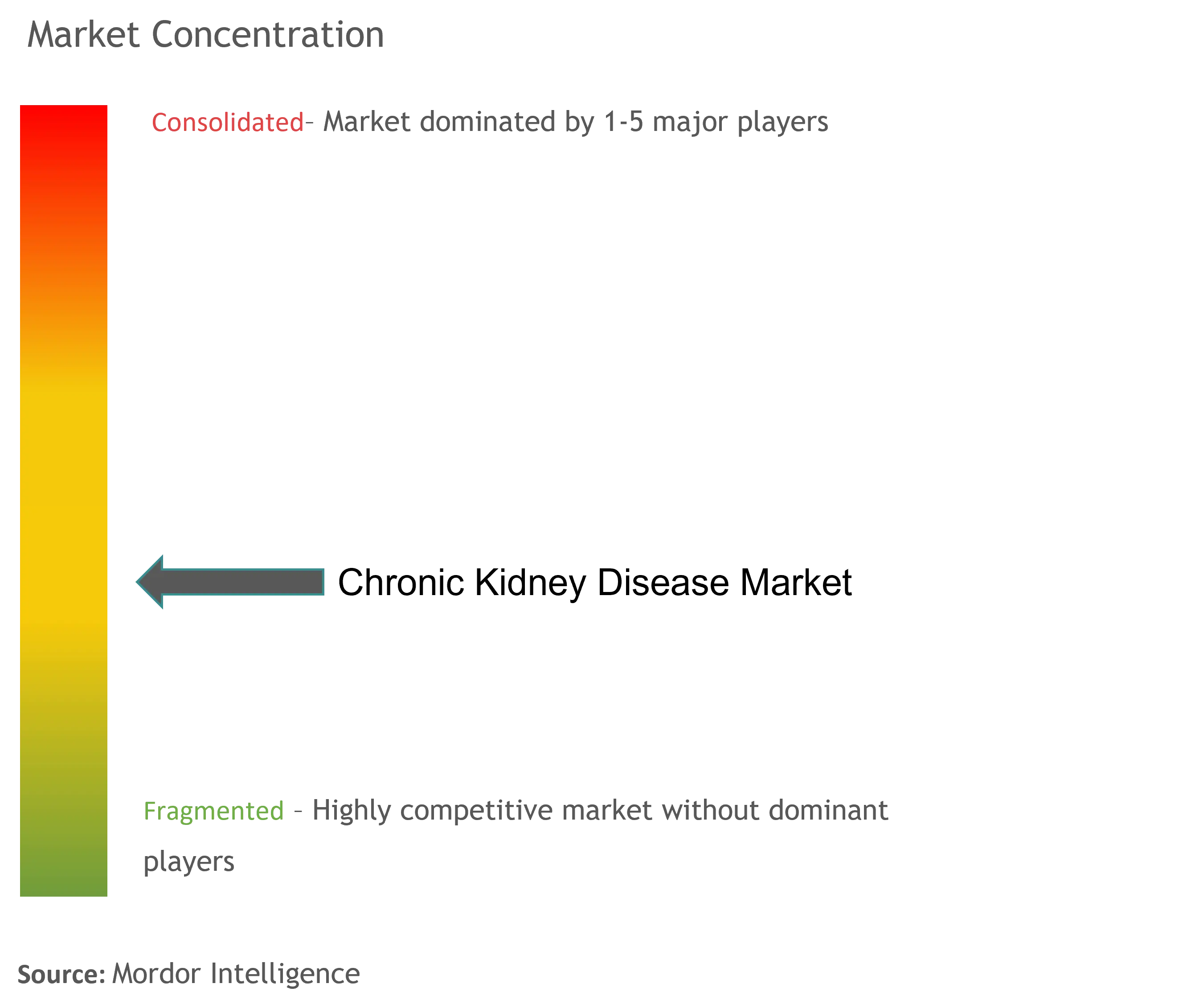
| Market Concentration | High |
Major Players *Disclaimer: Major Players sorted in no particular order Image © Mordor Intelligence. Reuse requires attribution under CC BY 4.0. | |
Chronic Kidney Disease Market Analysis by Mordor Intelligence
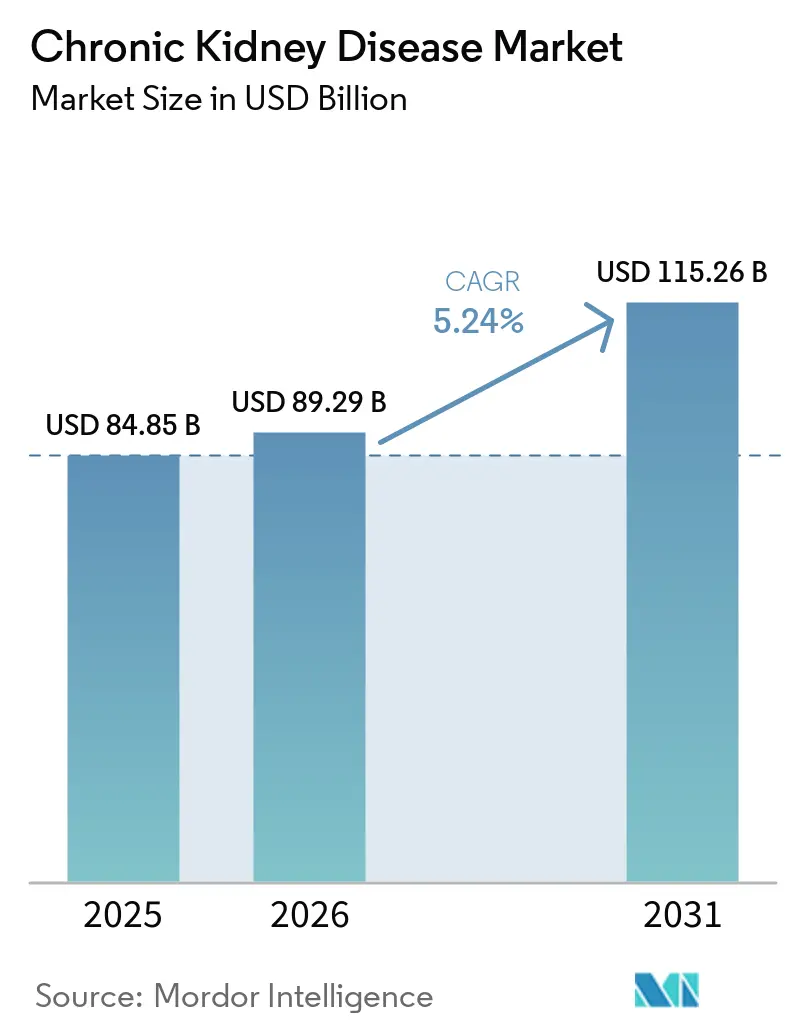
Chronic kidney disease market size in 2026 is estimated at USD 89.29 billion, growing from 2025 value of USD 84.85 billion with 2031 projections showing USD 115.26 billion, growing at 5.24% CAGR over 2026-2031. This expansion reflects the convergence of rising diabetes and hypertension prevalence, demographic aging, and expanding value-based payment models that reward early intervention. Demand remains resilient because diabetes and hypertension together cause about 70% of chronic kidney disease cases, creating a large, stable treatment base. Continuous FDA approvals of precision drugs such as atrasentan and iptacopan are accelerating therapeutic uptake. Hospitals still perform most care coordination, yet dialysis centers and home-based modalities are scaling quickly as technology makes decentralized treatment feasible. Competitive pressure is intensifying, especially in diagnostics, where AI-powered risk tools and point-of-care biomarker tests shorten detection times and support preventive care adoption.
Key Report Takeaways
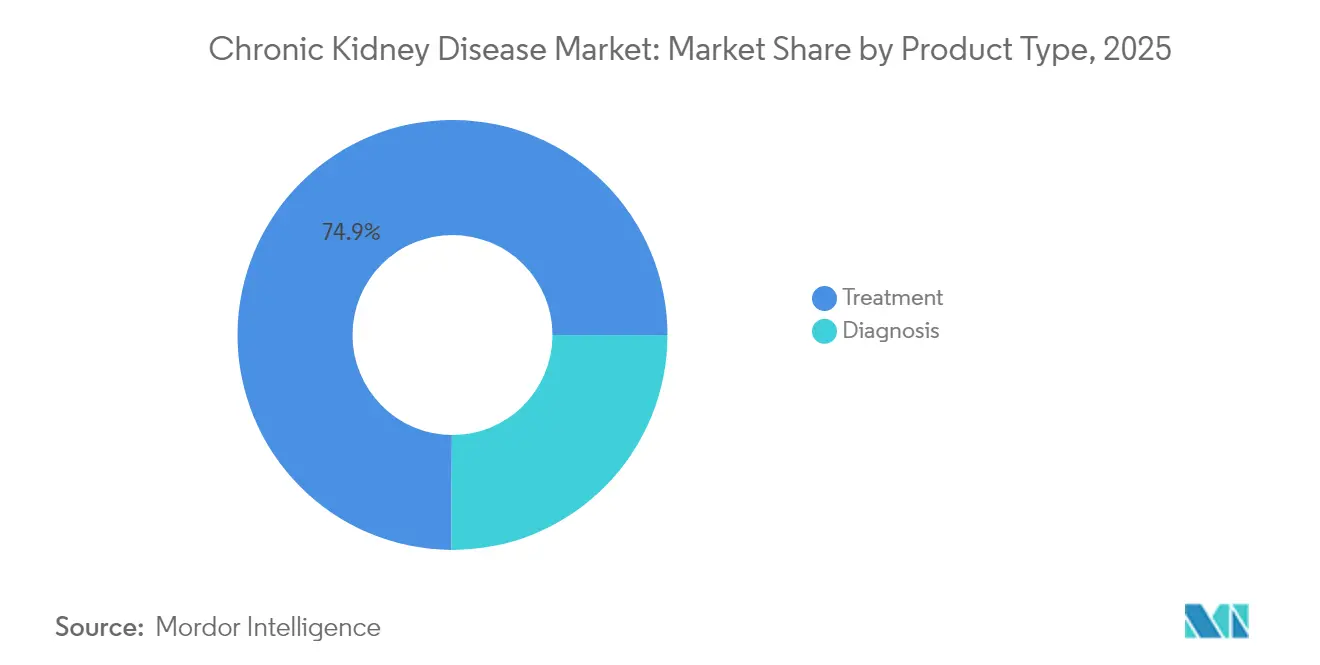
- By product type, treatment products held 74.90% of chronic kidney disease market share in 2025, while diagnosis products are forecast to expand at a 6.75% CAGR through 2031.
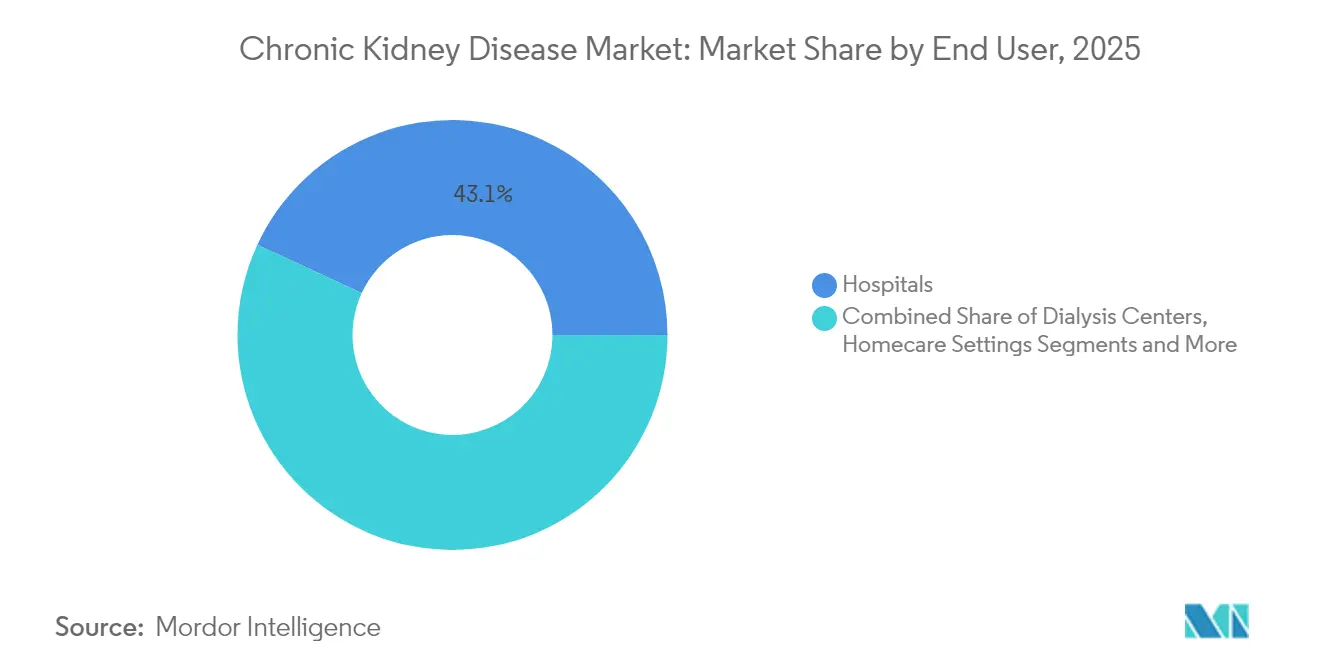
- By end user, hospitals commanded 43.10% of the chronic kidney disease market share in 2025; dialysis centers post the fastest projected CAGR at 6.12% to 2031.
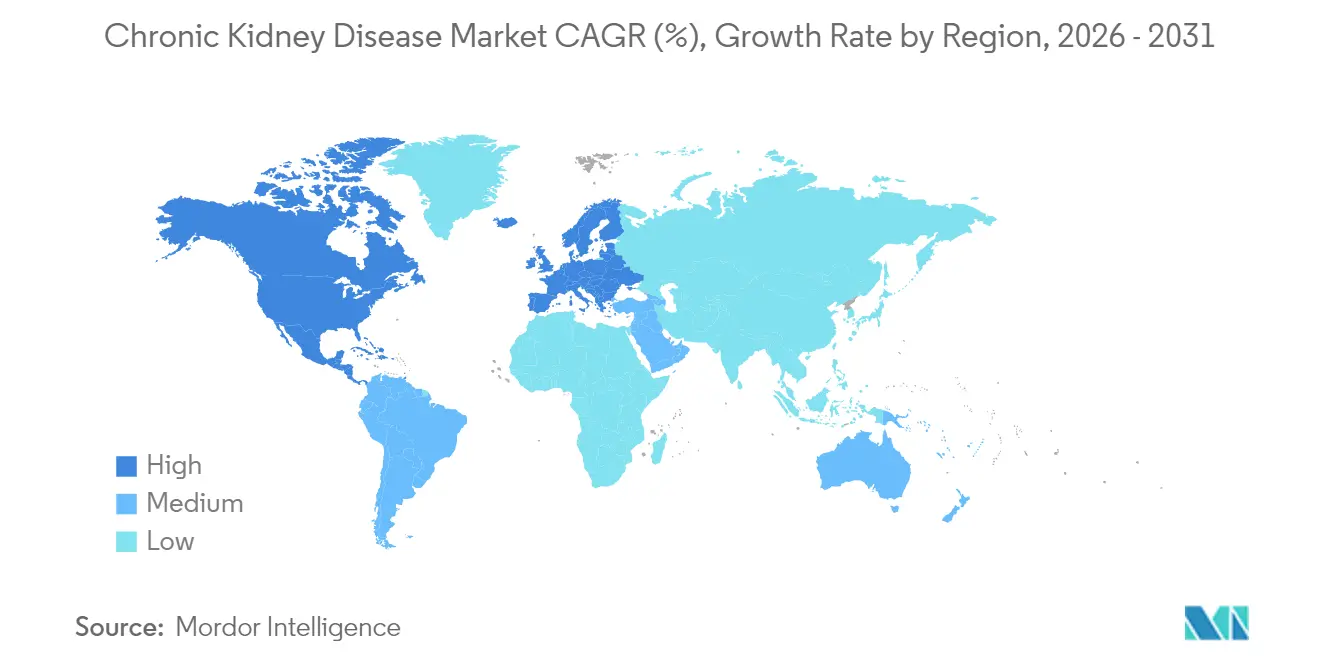
- By geography, North America led with 42.20% revenue share in 2025, whereas Asia-Pacific is projected to grow at 6.98% CAGR to 2031.
Note: Market size and forecast figures in this report are generated using Mordor Intelligence’s proprietary estimation framework, updated with the latest available data and insights as of 2026.
Market Trends and Insights
Drivers Impact Analysis of Chronic Kidney Disease Market*
| Driver | (~) % Impact on CAGR Forecast | Geographic Relevance | Impact Timeline |
|---|---|---|---|
| Rising prevalence of diabetes & hypertension | +1.8% | Global, highest in APAC & North America | Long term (≥ 4 years) |
| Aging population escalating CKD incidence | +1.2% | Global, concentrated in developed markets | Long term (≥ 4 years) |
| Technological advances in early diagnostics | +0.9% | North America & EU, spill-over to APAC | Medium term (2-4 years) |
| Value-based kidney-care payment incentives | +0.7% | North America core, expanding to EU | Medium term (2-4 years) |
| AI-Driven Risk Stratification Tools | +0.6% | Global, early adoption in developed markets | Short term (≤ 2 years) |
| Growth Of Low-Carbon/Home Dialysis Devices | +0.4% | Global, with premium market focus initially | Medium term (2-4 years) |
| Source: Mordor Intelligence | |||
Rising Prevalence of Diabetes & Hypertension
Diabetes affects 537 million adults and hypertension another 1.28 billion, creating a vast at-risk pool for kidney damage. AstraZeneca modelling indicates up to 16.5% of populations in eight major countries may develop chronic kidney disease by 2032, with advanced-stage cases rising 59.3%. FDA expansion of semaglutide in 2025 demonstrated a 24% drop in kidney failure risk, linking endocrine and renal markets. These patterns elevate demand for preventive drugs, integrated care, and long-term monitoring. Medicare already spends USD 8.8 billion yearly on dialysis, underlining cost pressure for early action. As comorbid patients age into Medicare, the chronic kidney disease market is primed for solutions that delay progression and avoid costly renal replacement therapy.
Aging Population Escalating CKD Incidence
Kidney function declines about 1% yearly after age 40. In nations with rapid aging, such as Japan, diagnosis rates have surged, stressing capacity. Baby boomers entering their 70s and 80s present growing demand for dialysis and transplant services. Developing regions face the same demographic curve, but often lack infrastructure, prompting interest in home-based dialysis. Elderly patients require multidisciplinary management, raising demand for coordinated hospital, primary care, and specialized services. This demographic driver ensures steady volume growth well beyond the forecast horizon.
Technological Advances in Early Diagnostics
Point-of-care biomarker kits that detect KIM-1 or NGAL, AI-driven risk engines embedded in electronic records, and wearable patches such as the Alio SmartPatch bring detection earlier in the disease course. Earlier identification enables lifestyle and pharmacologic interventions that can slow decline, creating revenue streams for diagnostics vendors and drug makers. FDA reimbursement approvals for remote monitoring further widen adoption incentives. Providers now pivot from reactive treatment to proactive screening, reshaping resource allocation inside the chronic kidney disease market.
Value-Based Kidney-Care Payment Incentives
The Kidney Care Choices Model aligns reimbursement with outcomes. CMS set the 2026 ESRD base rate at USD 281.06 and introduced bonuses for quality and rural access. Providers investing in telehealth, risk analytics, and home dialysis gain financially when they reduce hospital visits. Commercial payers are mirroring these contracts, pushing the industry toward integrated networks that manage a patient from Stage 2 through transplantation.
Restraints Impact Analysis of Chronic Kidney Disease Market*
| Restraint | (~) % Impact on CAGR Forecast | Geographic Relevance | Impact Timeline |
|---|---|---|---|
| High Cost Of Dialysis & Treatment | -1.1% | Global, most acute in emerging markets | Long term (≥ 4 years) |
| Generic Erosion In Mature Drug Classes | -0.8% | Global, concentrated in developed markets | Short term (≤ 2 years) |
| Drug Safety & Adverse-Effect Concerns | -0.6% | Global, regulatory focus in North America & EU | Medium term (2-4 years) |
| ESG-Linked Supply-Chain Cost Pressures | -0.4% | Global, premium impact in developed markets | Medium term (2-4 years) |
| Source: Mordor Intelligence | |||
High Cost of Dialysis & Treatment
Annual dialysis outlays can exceed USD 90,000 per patient, limiting access in lower-income economies and straining public budgets. Medicare already allocates USD 8.8 billion to dialysis each year [1]. Many emerging markets lack broad insurance, so patients forgo or delay therapy, capping unit growth. Cost barriers spur exploration of bundled payments and portable devices, yet upfront investments remain challenging for under-resourced systems.
Generic Erosion in Mature Drug Classes
Patent cliffs for SGLT2 inhibitors such as Jardiance and Farxiga arrive in 2025. When generics hit, branded prices often fall 80-90%, shrinking revenue even as prescription volumes rise. Innovators pivot to rare-disease drugs like atrasentan or iptacopan where exclusivity lasts longer. Until pipelines replace lost income, pricing erosion slows overall chronic kidney disease market value growth in developed regions that mandate generic substitution.
*Our forecasts treat driver/restraint impacts as directional, not additive. The impact forecasts reflect baseline growth, mix effects, and variable interactions.
Chronic Kidney Disease Market Segment Analysis
By Product Type:
Treatment Dominance Drives InnovationTreatment products generated 74.90% revenue in 2025, illustrating their central role across disease stages. The chronic kidney disease market size for treatment reached USD 63.55 billion and is projected to expand alongside new precision drugs and next-generation dialysis. FDA clearance of atrasentan for IgA nephropathy and iptacopan for complement 3 glomerulopathy underscores a shift to targeted therapy that can carry premium pricing . Dialysis technology is also evolving toward portable and wearable systems, reducing facility dependence and widening patient choice. Treatment manufacturers now bundle digital adherence tools to prove outcome gains in value-based contracts.
Diagnosis products hold a smaller slice yet post the fastest CAGR at 6.75%. Early detection kits, imaging advances, and AI-based risk models support this upswing. Rapid biomarker panels enable clinicians to stage disease well before serum creatinine rises, opening an expanding preventive market. Blood tests still account for most diagnostic revenue, but urine biomarker panels and imaging upgrades gain share as clinicians adopt multi-modal assessment pathways. Continuous monitoring devices could soon allow real-time eGFR tracking, fostering subscription revenue models for device makers.

By End User:
Hospitals Lead While Dialysis Centers AccelerateHospitals captured 43.10% revenue in 2025 by offering multidisciplinary care. The chronic kidney disease market size attributed to hospitals is set to rise steadily, although growth will lag specialized centers as reimbursement shifts to bundled payments. Hospitals focus investments on coordinated clinics that manage cardiovascular and metabolic comorbidities in one visit, reinforcing their referral control over later-stage therapies.
Dialysis centers post the fastest 6.12% CAGR through 2031, powered by specialization and operational efficiency. Integrated digital platforms streamline scheduling, vascular access tracking, and quality reporting, helping centers outperform hospital units on clinical metrics. Homecare shows emerging momentum because portable devices permit self-administration with tele-supervision. As patient education improves, a hybrid model blending in-center training with home sessions may become standard, reshaping the chronic kidney disease industry over the decade.
Geography Analysis
North America Chronic Kidney Disease Market
North America led with 42.20% revenue in 2025, underpinned by broad insurance coverage and early uptake of novel drugs and devices. The United States anchors this lead; its duopoly dialysis structure imparts economies of scale but invites antitrust review. Canada follows with universal coverage, while Mexico’s recent CKD screening campaigns expand diagnosis volumes. Kidney function tests such as on-site creatinine testing are integrated into public dialysis centers in Mexico.
APAC Chronic Kidney Disease Market
Asia-Pacific is the fastest-growing region at 6.98% CAGR. China invests heavily in chronic disease clinics and domestic generic production that cuts therapy costs. India’s manufacturing base drives affordable SGLT2 inhibitors, widening access across low-income states. Japan, with the world’s oldest population, continues to deploy advanced home hemodialysis systems and invests in wearable artificial kidney trials. South Korea and Australia reinforce regional momentum through proactive tele-nephrology programs.
EMEA and South America Chronic Kidney Disease Market
Europe, the Middle East & Africa, and South America offer moderate growth. Europe benefits from universal payer systems but seeks cost-savings via generics and home therapies. Gulf Cooperation Council states invest in transplant centers to offset regional dialysis demand. Africa faces strained infrastructure yet gains from public-private partnerships introducing low-cost peritoneal dialysis. South America, led by Brazil, incrementally raises CKD awareness and funds screening in primary care.
Regulatory Landscape
The chronic kidney disease market operates under tightly defined drug, device, and combination-product rules. In the United States, FDA combination products must align with 21 CFR Part 4 current good manufacturing practice requirements, and FDA's Office of Combination Products guidance highlights human factors engineering to reduce use-related risks for drug-device interfaces used in CKD care. In Europe, EMA guidance for fixed-combination medicinal products and its guideline on clinical investigation in chronic renal insufficiency shape development plans, including endpoint selection and comparator expectations.
Reimbursement-linked regulation is also a key gating factor for dialysis economics. CMS implemented the CY 2026 End-Stage Renal Disease (ESRD) Prospective Payment System with a base rate of USD 281.71 per treatment and continued updates that affect how dialysis and related services are funded, while also finalizing the termination of the ESRD Treatment Choices Model effective December 31, 2025. In parallel, CMS policy expanded bundling by incorporating oral-only renal dialysis drugs and biological products into the ESRD PPS bundled payment effective January 1, 2025, which influences launch strategy and contracting for therapies tied to dialysis workflows.
Value Chain Analysis
The CKD value chain spans diagnostics (blood and urine tests, imaging, and point-of-care kidney tests), pharmaceuticals (including SGLT2 inhibitors, mineralocorticoid receptor antagonists, diuretics, ESAs, phosphate binders, and HIF-PH inhibitors), and renal replacement therapy infrastructure (hemodialysis, peritoneal dialysis, home systems, and emerging portable modalities). Product delivery increasingly depends on integrated care networks that connect hospitals, dialysis centers, specialty pharmacies, and homecare providers, supported by software layers for monitoring, adherence, and reporting in value-based arrangements.
On the supply side, manufacturers manage sourcing for APIs and materials used in CKD therapies and adjunctive products, with risk-mitigation tactics such as strategic stockpiling for inputs used in phosphate binders (for example, lanthanum carbonate and sevelamer hydrochloride) where concentration risks can disrupt availability. Drug-device combination and dialysis-adjacent products face elevated compliance and documentation burdens, including for integrated systems, which increases the role of established contract manufacturers, quality systems, and clinical evidence generation. Late-stage development activity also feeds through the chain: MannKind reported FDA acceptance for review of an sNDA for the FUROSCIX ReadyFlow autoinjector for edema in adults with CHF or CKD (PDUFA target action date July 26, 2026), illustrating how regulatory milestones affect device manufacturing, distribution planning, and provider adoption pathways for outpatient and home-use administration.
Competitive Landscape
Dialysis services remain concentrated: DaVita and Fresenius Medical Care controlled major of US treatments in 2024, prompting FTC scrutiny on competitive practices. Both firms pursue vertical integration by acquiring nephrology groups and launching Medicare Advantage plans that align with value-based metrics.
Pharmaceutical competition is more fragmented. AstraZeneca, Boehringer Ingelheim, and Novo Nordisk advance SGLT2 inhibitor life-cycle strategies, while Chinook and Novartis focus on rare disease biologics. Private equity demonstrates growing interest; Baxter divested its kidney unit to Carlyle for USD 3.8 billion, and InterWell Health formed from a three-way merger to scale integrated care.
Technology entrants target white-space opportunities. Vantive committed over USD 1 billion to next-generation home dialysis. United Therapeutics secured FDA clearance for xenotransplantation trials, aiming to solve organ shortages [3]. AI diagnostic startups partner with health systems to embed predictive tools into standard workflows, creating acquisition targets for strategic buyers seeking digital capabilities.
Chronic Kidney Disease Industry Leaders
-
Abbott Laboratories
-
F. Hoffmann-La Roche Ltd
-
Siemens Healthineers
-
Pfizer Inc
-
AbbVie Inc
- *Disclaimer: Major Players sorted in no particular order
Chronic Kidney Disease Market Companies Covered in this Report
- Abbott Laboratories
- Abbvie
- Amgen
- AstraZeneca
- Baxter
- Bayer
- Beckton Dickinson
- Boehringer Ingelheim
- Bristol-Myers Squibb
- DaVita
- Roche
- Fresenius
- GlaxoSmithKline
- Johnson & Johnson
- Merck
- Novo Nordisk
- Pfizer
- ProKidney
- Reata Pharmaceuticals
- Siemens Healthineers
- Sysmex
- Teva Pharmaceutical Industries
- Akebia Therapeutics
Market Opportunities and Future Outlook
A key opportunity area is scaling connected home dialysis and hybrid care models that reduce dependence on in-center capacity while supporting payer quality requirements. Fresenius Medical Care launched kinexus in June 2026 as a unified digital platform to support home peritoneal dialysis and home hemodialysis through remote therapy monitoring and prescription management, reinforcing demand for interoperable software, sensors, and service-led offerings around home modalities. Device upgrades also continue to create whitespace for providers and manufacturers focused on usability and monitoring, with regulatory alignment as the FDA implemented the Quality Management System Regulation (QMSR) in February 2026, incorporating ISO 13485:2016 expectations into device quality systems.
Another opportunity is vascular access innovation to address chronic failure rates that drive cost and morbidity in hemodialysis populations. In July 2026, Xeltis initiated European commercialization of aXess, a hemodialysis vascular access device, highlighting momentum for new graft materials and access solutions. Humacyte also presented phase 3 results in June 2026 for its bioengineered blood vessel (ATEV) for hemodialysis access and stated plans to file a supplemental BLA in the second half of 2026, indicating active clinical and regulatory pathways for regenerative and bioengineered access technologies adjacent to dialysis services that could change purchasing priorities at dialysis centers and hospitals.
Recent Industry Developments in Chronic Kidney Disease Market
- June 2026: Bayer announced full Phase III FIND-CKD results showing Kerendia (finerenone) met the primary endpoint by reducing the rate of kidney disease progression in adults with non-diabetic chronic kidney disease. The readout broadens clinical momentum around therapies that target CKD progression beyond the diabetes-associated population and supports differentiation in a market facing generic pressure in mature classes.
- March 2026: Alebund Pharmaceuticals signed licensing and equity agreements with R1 Therapeutics covering development, manufacturing, and commercialization of AP306, a pan-phosphate binder for chronic kidney disease, outside Greater China. The structure reflects a capital-efficient route to expand geographic reach for CKD assets while distributing late-stage development and commercialization responsibilities across partners.
- October 2025: Roche received a CE Mark for its AI-based Kidney Klinrisk Algorithm 1 and launched a comprehensive CKD algorithm panel within the navify Algorithm Suite. The clearance advances AI-enabled risk stratification embedded in clinical workflows, supporting earlier identification of patients at risk of progressive kidney function decline and enabling more proactive care pathways.
Chronic Kidney Disease Market Report Scope and Research Methodology
Market Definition and Coverage
This market covers the revenues generated from diagnosing and managing chronic kidney disease, including tests used to detect and stage CKD and the major treatment approaches used across care settings.
Scope exclusions: acute kidney injury care, routine general wellness testing not ordered for suspected CKD, and purely administrative provider revenues are excluded where they are not tied to CKD diagnosis or treatment delivery.
Segments Covered in This Report
- By Product Type
- Diagnosis
- Blood Tests
- Urine Tests
- Imaging Tests
- Point-of-Care Kidney Tests
- Other Diagnosis Products
- Treatment
- Drug Class
- ACE Inhibitors
- Angiotensin-II Receptor Blockers
- Diuretics
- SGLT2 Inhibitors
- Mineralocorticoid Receptor Antagonists
- Erythropoiesis Stimulating Agents
- Phosphate Binders
- HIF-PH Inhibitors (Vadadustat etc.)
- Other Drug Classes
- Dialysis
- Hemodialysis
- Peritoneal Dialysis
- Home Dialysis Systems
- Wearable & Portable Dialysis
- Other Treatment Products
- Drug Class
- Diagnosis
- By End User
- Hospitals
- Dialysis Centers
- Homecare Settings
- Other End Users
- By Geography
- North America
- United States
- Canada
- Mexico
- Europe
- Germany
- United Kingdom
- France
- Italy
- Spain
- Rest of Europe
- Asia-Pacific
- China
- Japan
- India
- Australia
- South Korea
- Rest of Asia-Pacific
- Middle East & Africa
- GCC
- South Africa
- Rest of Middle East & Africa
- South America
- Brazil
- Argentina
- Rest of South America
- North America
Data Sources, Market Sizing, and Validation
Desk Research
Desk research starts by grounding the CKD care pathway and the reimbursed activities, so the model reflects what is actually used in practice and what gets paid for. We refer to public sources such as the US CDC, the National Institutes of Health, the World Health Organization, and the US Renal Data System for epidemiology signals, treatment utilization direction, and the definitions used in clinical reporting.
To connect demand with spend, additional reading is done from peer reviewed nephrology journals, national statistics portals, and health ministry publications on reimbursement direction and care setting shifts, along with customs or trade statistics where relevant for dialysis related equipment. Company annual reports, investor presentations, press releases, and reputable press are also reviewed to confirm product focus and geographic exposure. A paid subscription covering company financials and patent databases is used selectively to validate pipeline intensity and the surrounding revenue context. The sources listed here are illustrative, and many other public references were used to collect, cross check, and clarify data points.
Primary Interviews and Surveys
Primary work is used to pressure test the assumptions that desk sources do not explain well, especially what is counted under CKD diagnosis versus CKD treatment and how care shifts between hospitals, dialysis centers, and homecare settings. We spoke with a mix of clinicians, payer and procurement facing roles, and industry executives across APAC, EMEA, and the Americas, so pricing direction, utilization patterns, and adoption timing could be validated across different health systems.
Distribution of primary research fieldwork respondents
| Company type | Respondent position | Region |
|---|---|---|
| Top tier: 36% | CXOs: 13% | APAC: 44% |
| Mid tier: 47% | Functional/Unit leaders: 41% | EMEA: 29% |
| Smaller Players: 17% | Managers: 46% | Americas: 27% |
Market-Sizing & Forecasting
Sizing is built using a top-down approach where the treated and tested CKD demand pool is reconstructed from prevalence signals, diagnosis workup rates, and the share of patients managed in each care setting, and then translated into spending using typical utilization and pricing ranges. Because the care pathway differs by stage, the model also tracks a few practical inputs that materially move totals, such as testing intensity for blood and urine panels, dialysis modality mix shifts, adoption of homecare dialysis, therapy uptake for CKD related drug regimens, and regional reimbursement sensitivity.
Once the total is formed, selective bottom-up checks are run to see if the number makes sense relative to supplier and channel indicators. This includes sampled price times volume checks for core diagnostic categories and treatment modalities, and then it is adjusted where gaps are found, especially in countries where public reporting is thin. For forecasting, scenario analysis is used so the key drivers move in a controlled way, including CKD screening expansion, diabetes and hypertension trends, modality shifts toward home based care, and expected price progression under payer pressure. The final trajectory is aligned to what interviewees expect by region.
Data Validation & Update Cycle
Outputs are validated through triangulation across three layers, which are epidemiology direction, care setting utilization signals, and spend consistency checks against known reimbursement and pricing ranges. When large variances show up by region, or between diagnosis versus treatment totals, the assumptions are revisited and the data trail is rechecked before the number is signed off through internal analyst review.
The report is refreshed annually, and interim updates are triggered when there is a material change, such as a major guideline shift, a reimbursement change, or a meaningful therapy or modality adoption inflection. Before delivery, we do a last pass to ensure the latest public updates and interview learnings are reflected in the final exhibits.
Mordor Intelligence's Chronic Kidney Disease Market Size Measured Against Other Published Estimates
Published CKD market values can look far apart, even when the topic sounds identical, because the inclusion rules behind diagnosis, dialysis, and broader kidney care are not the same. Differences also show up when studies pick different base years, apply currency conversion at different points in time, or use faster adoption assumptions for home modalities and newer therapies.
The table shows a noticeable spread versus other public figures, and in Mordor Intelligence's model the scope is structured around CKD diagnosis and CKD treatment across care settings, instead of counting a wider kidney care universe or restricting coverage to a smaller set of countries. That single choice changes what gets included for dialysis related services and what stays out, and it also affects how pricing and utilization are projected through the forecast window.
Benchmark comparison
| Source | Market Size | Gaps in Research Methodology |
|---|---|---|
| Mordor Intelligence | USD 89.29 B (2026) | |
| Global Publisher A | USD 74.87 B (2025) | Uses an earlier base year and a broader treatment basket that can blend CKD care with adjacent kidney services, which can shift the counted revenue boundary and the timing of growth. |
| Industry Publisher B | USD 42.87 B (2025) | Appears to apply a narrower monetization lens and may undercount higher cost treatment flows by leaning more heavily on diagnosis and limited end user coverage, which pulls down the total value. |
What the comparison mainly tells us is that getting to a stable number depends on making the scope decision explicit and then tying it back to trackable drivers like testing intensity, modality mix, and therapy uptake. When those inputs are documented and checked with expert feedback, the final market value becomes easier to replicate and easier to defend in planning discussions.
Key Questions Answered in the Report
How big is the Chronic Kidney Disease Market?
The Chronic Kidney Disease Market size is expected to reach USD 89.29 billion in 2026 and grow at a CAGR of 5.24% to reach USD 115.26 billion by 2031.
Which product segment contributes the most revenue?
Treatment products dominate with 74.90% revenue share in 2025, supported by lifelong drug and dialysis needs.
Who are the key players in Chronic Kidney Disease Market?
Abbott Laboratories, F. Hoffmann-La Roche Ltd, Siemens Healthineers, Pfizer Inc and AbbVie Inc are the major companies operating in the Chronic Kidney Disease Market.
Why is Asia-Pacific the fastest-growing region?
Rapid aging, rising diabetes prevalence, and major infrastructure investments drive a 6.98% CAGR through 2031.
Which region has the biggest share in Chronic Kidney Disease Market?
In 2025, the North America accounts for the largest market share in Chronic Kidney Disease Market.