
Chronic Granulomatous Disease Treatment Market Size and Share
Market Overview
| Study Period | 2021 - 2032 |
|---|---|
| Market Size (2027) | USD 1.30 Billion |
| Market Size (2032) | USD 1.62 Billion |
| Growth Rate (2027 - 2032) | 4.50 % |
| Fastest Growing Market | Asia-Pacific |
| Largest Market | North America |
| Market Concentration | Medium |
Major Players *Disclaimer: Major Players sorted in no particular order Image © Mordor Intelligence. Reuse requires attribution under CC BY 4.0. | |
Chronic Granulomatous Disease Treatment Market Analysis by Mordor Intelligence
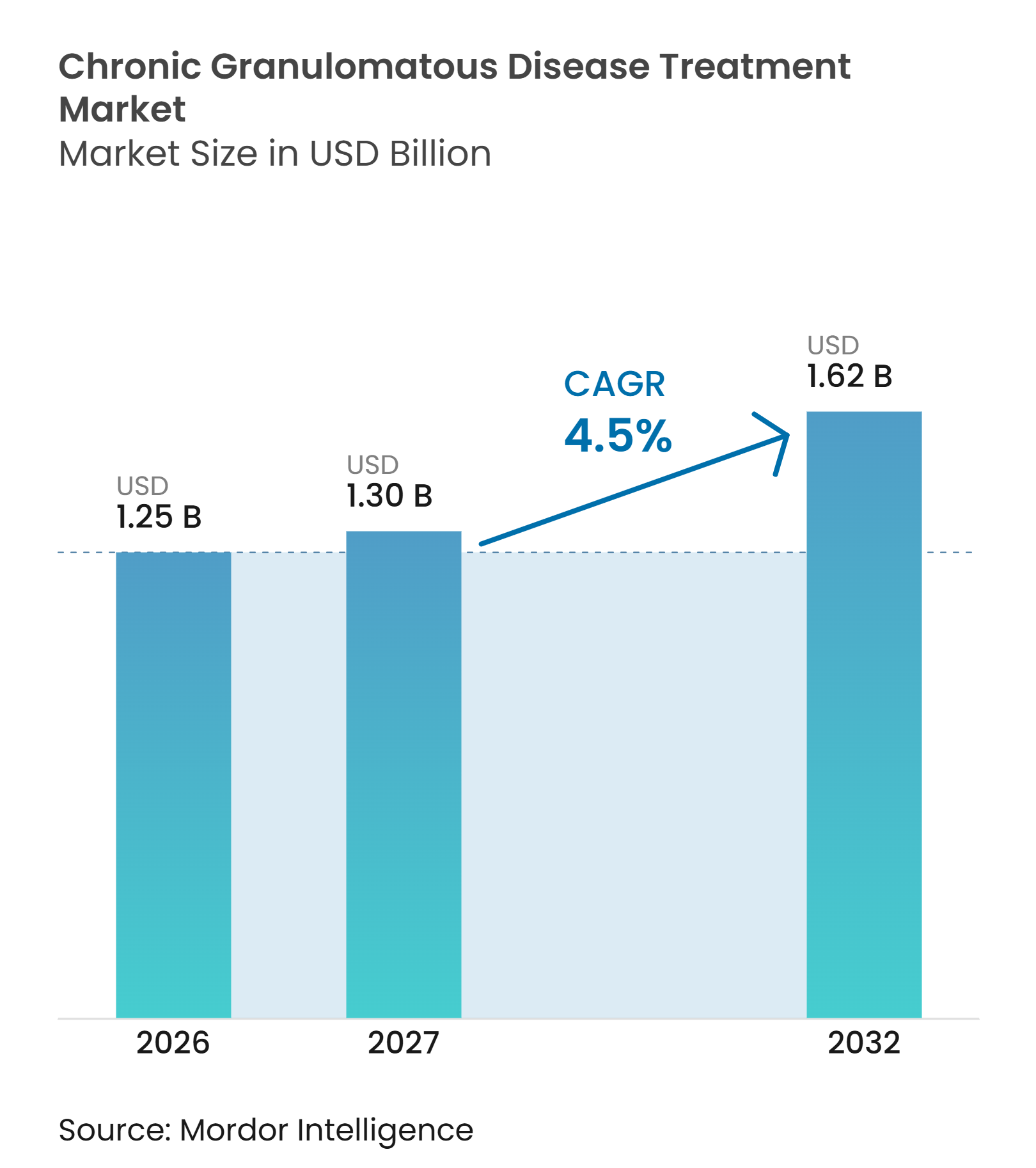
The Chronic Granulomatous Disease Treatment Market size is expected to increase from USD 1.25 billion in 2026 to USD 1.30 billion in 2027 and reach USD 1.62 billion by 2032, growing at a CAGR of 4.5% over 2027-2032.
Growth reflects earlier genetic confirmation, broader specialist care, and ongoing investment in transplant and gene-editing programs. The chronic granulomatous disease treatment market remains anchored in infection prevention because patients require continuing management before a curative option becomes available. Curative programs could change treatment selection, but they must establish a durable benefit and a workable reimbursement path. Companies are therefore balancing near-term demand for established prophylaxis against longer-term opportunities in genotype-specific therapies. This structure creates room for diagnostic providers, specialty centers, and focused biotechnology developers in the chronic granulomatous disease treatment market.
Key Report Takeaways
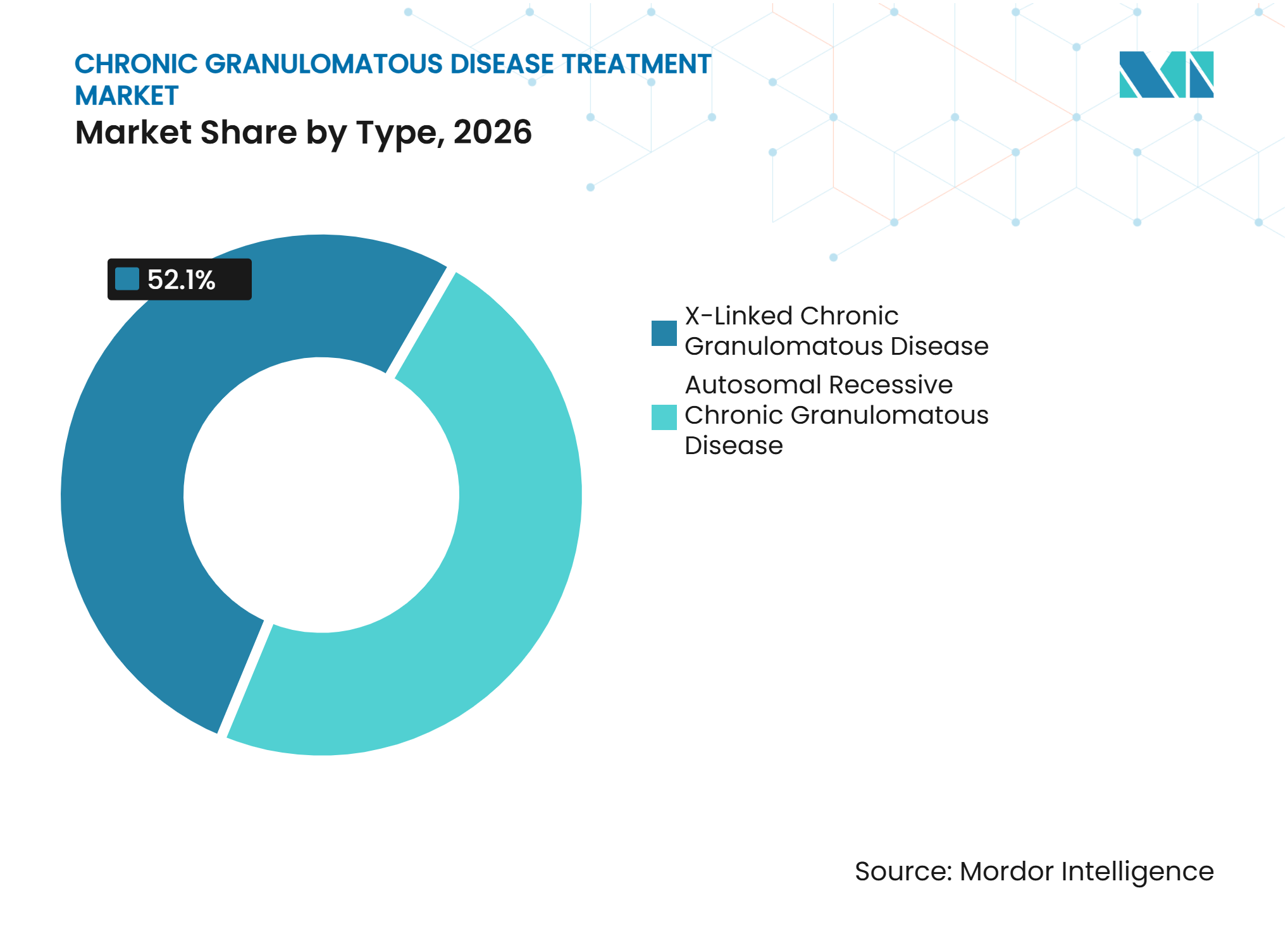
- By type, X-linked chronic granulomatous disease held 52.12% of the chronic granulomatous disease treatment market share in 2026 and is forecast to grow at a 6.06% CAGR through 2032.
- By treatment, infection management held a 38.22% share in 2026, while gene therapy is forecast to grow at a 6.73% CAGR through 2032.
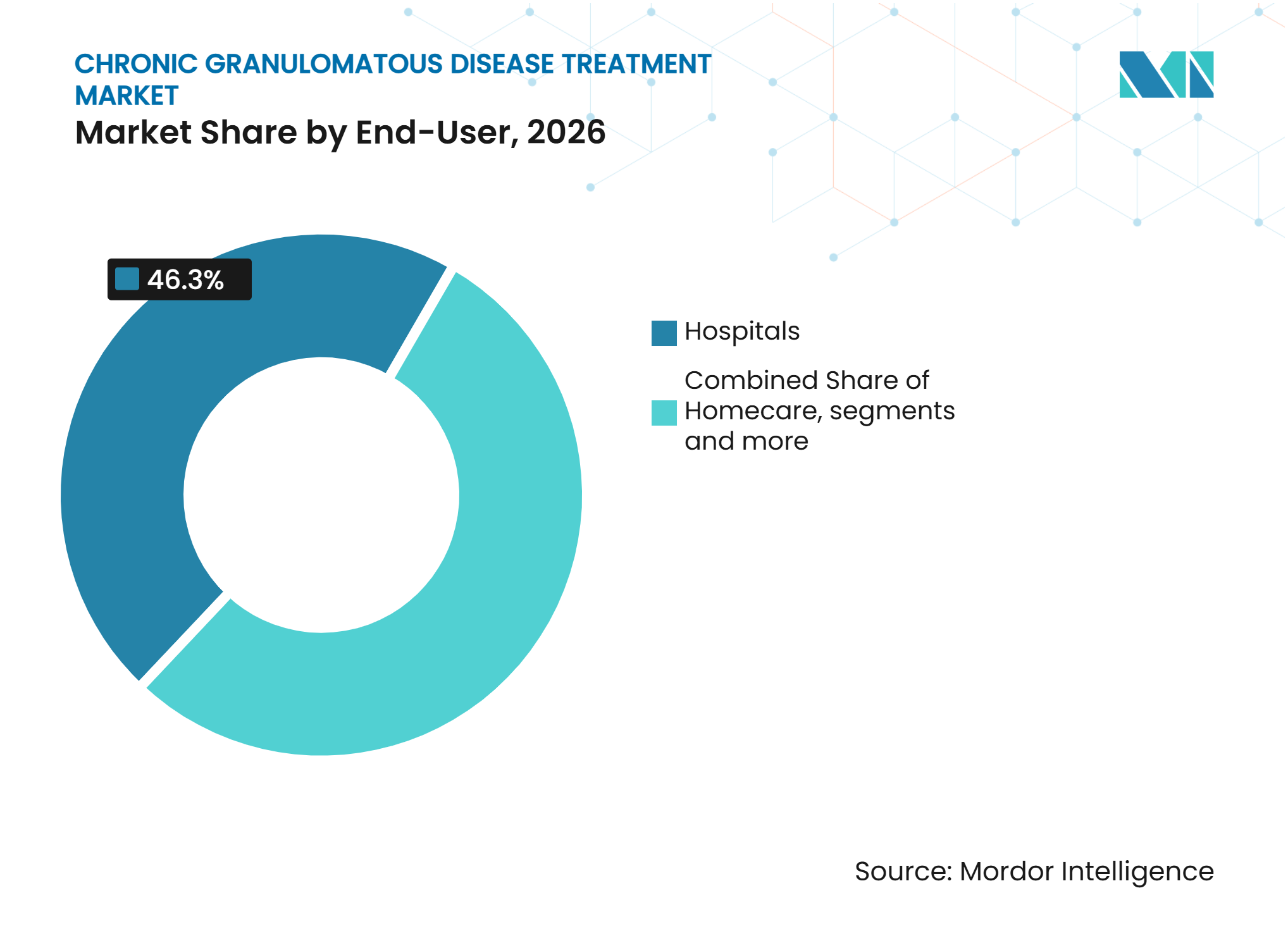
- By end-user, hospitals accounted for 46.34% of revenue in 2026, while specialty clinics are anticipated to expand at a 5.23% CAGR through 2032.
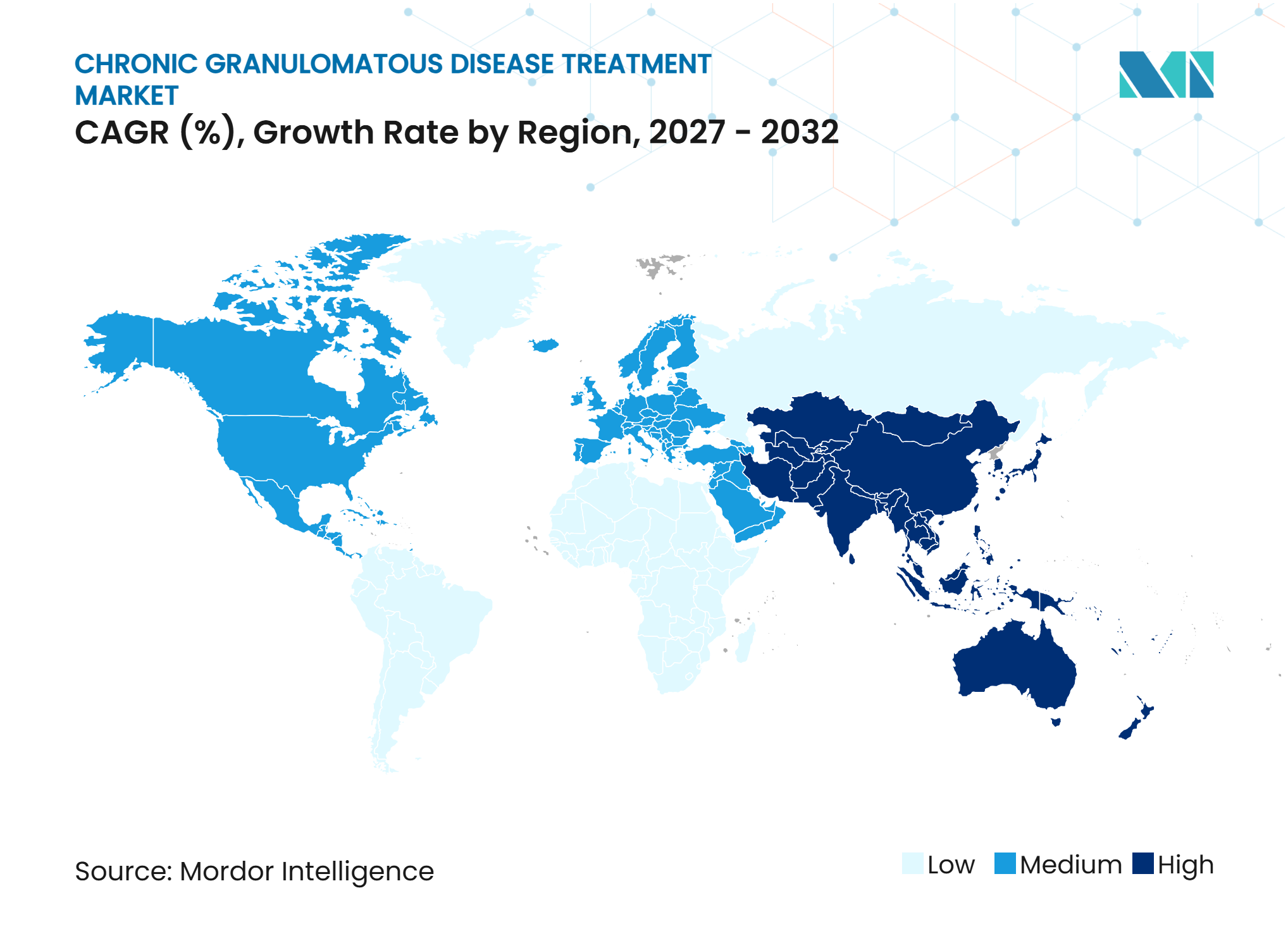
- By geography, North America held a 48.46% share in 2026, while Asia-Pacific is projected to grow at an 8.37% CAGR through 2032.
Note: Market numbers in this report are based on Mordor Intelligence's proprietary estimation framework, which combines nine months of actuals with Q4 projections for base year 2026.
Market Trends and Insights
Drivers Impact Analysis of Chronic Granulomatous Disease Treatment Market*
| Driver | (~) % Impact on CAGR Forecast | Geographic Relevance | Impact Timeline |
|---|---|---|---|
| Earlier Molecular Diagnosis and Variant Confirmation | +0.7% | Global, with early gains in North America, Germany, Japan | Short term (≤ 2 years) |
| Expansion of Curative Hematopoietic Stem-Cell Transplantation | +0.6% | North America and Europe, spillover to Asia-Pacific | Medium term (2-4 years) |
| Progression of Gene and Gene-Editing Therapies | +1.0% | North America and Europe, expanding to Asia-Pacific | Long term (≥ 4 years) |
| Lifelong Antimicrobial and Immunomodulatory Demand | +0.4% | Global | Short term (≤ 2 years) |
| Genotype-Directed Treatment Selection | +0.3% | North America and EU, with early-adopter gains in Australia and Japan | Medium term (2-4 years) |
| Specialized Rare-Disease Care Networks and Patient Advocacy | +0.2% | North America and Western Europe | Short term (≤ 2 years) |
| Source: Mordor Intelligence | |||
Earlier Molecular Diagnosis and Variant Confirmation
The chronic granulomatous disease treatment market is benefiting from the increasing use of genetic testing early in the diagnostic pathway. High-throughput sequencing can confirm variants across NADPH oxidase components, although NCF1 remains difficult to assess because of pseudogene homology. A 2025 study validated a sequencing approach for NCF1 deficiency and addressed a diagnostic gap affecting p47phox-CGD patients.[1] Earlier confirmation allows prophylaxis to begin before repeated severe infections establish the diagnosis. It also supports genotype-directed treatment selection because molecular confirmation is increasingly important for gene therapy trial enrollment. This creates continuing demand for genetic testing as development programs move through the chronic granulomatous disease treatment market.
Expansion of Curative Hematopoietic Stem-Cell Transplantation
Hematopoietic stem-cell transplantation remains the established curative option for patients with severe CGD. Its expansion depends on specialist capability, conditioning protocols, donor availability, and post-transplant monitoring. A 2025 PIDTC report on umbilical cord blood transplantation recorded graft failure in 9 of 39 patients and a 3-year overall survival rate of 73.7%.[2] The finding shows that alternative-donor procedures retain meaningful clinical risk even in experienced North American programs. A Spanish study reported lower graft-failure rates with sibling donors than unrelated donors, reinforcing the importance of center experience and donor selection. These constraints support the search for donor-independent alternatives in the chronic granulomatous disease treatment market.
Progression of Gene and Gene-Editing Therapies
The chronic granulomatous disease treatment market has entered a period in which in vivo and ex vivo approaches are being tested at the same time. Ensoma dosed the first patient in its Phase 1/2 EN-374 study in December 2025, after receiving FDA orphan drug and rare pediatric disease designations in February 2025. EN-374 is designed to deliver a CYBB payload without ex vivo cell manipulation. Prime Medicine’s PM359 is an autologous ex vivo prime-editing therapy for p47phox-CGD, and first-in-human results reported restored NADPH oxidase activity within 1 month in 2 treated patients. FDA discussion of a platform technology designation program could support reusable gene-editing technologies across rare diseases.[3] The outcome will shape platform selection, partnerships, and investment across the chronic granulomatous disease treatment market.
Lifelong Antimicrobial and Immunomodulatory Demand
Infection management remains the stable revenue base of the chronic granulomatous disease treatment market while curative therapies remain investigational. Prophylaxis commonly combines trimethoprim-sulfamethoxazole, itraconazole, and interferon gamma. A 2025 clinical review reported that optimized regimens can reduce severe infection incidence to below 1 episode every 4 years. Interferon gamma has reduced serious infections and was used by close to 99% of North American specialist centers, although practice in Europe has been more variable. This established use sustains demand as patients wait for transplantation or eligibility for experimental therapies. A successful curative therapy could reduce the need for lifelong prophylaxis, creating opposing revenue interests within the chronic granulomatous disease treatment market.
Restraints Impact Analysis of Chronic Granulomatous Disease Treatment Market*
| Restraint | (~) % Impact on CAGR Forecast | Geographic Relevance | Impact Timeline |
|---|---|---|---|
| High Cost and Reimbursement Complexity for Curative Therapies | -0.5% | Global, most acute in Middle East and Africa, South America, and parts of Asia-Pacific | Long term (≥ 4 years) |
| Limited Patient Pools and Trial-Enrollment Constraints | -0.3% | Global | Medium term (2-4 years) |
| Genotype-Specific Manufacturing and Long-Term Follow-Up Burden | -0.2% | North America and Europe | Long term (≥ 4 years) |
| Uneven Access to DHR Testing, Transplant Centers, and Genetic Counseling | -0.2% | Middle East and Africa, South America, and rest of Asia-Pacific | Medium term (2-4 years) |
| Source: Mordor Intelligence | |||
High Cost and Reimbursement Complexity for Curative Therapies
Reimbursement remains a major limit on the commercial reach of curative therapies in the chronic granulomatous disease treatment market. In France, the median interval between European marketing authorization and national reimbursement reached 505 days in April 2025. The same analysis reported reimbursement for 53% of recently approved orphan drug indications. Spain’s National Health System financed 103 orphan drugs by the end of 2025, equal to 66% of EU-authorized orphan treatments. The EU HTA Regulation began applying joint clinical assessments to advanced therapy medicinal products in January 2025, while orphan medicines entered this framework in 2028. Thin patient registries, long-term follow-up requirements, manufacturing complexity, and uneven access to diagnostic and transplant infrastructure make robust evidence and timely access difficult in the chronic granulomatous disease treatment market.
Limited Patient Pools and Trial-Enrollment Constraints
CGD affects an estimated 1 in 100,000 to 200,000 live births, which limits the number of patients available for clinical research. Small study populations complicate endpoint selection, statistical confidence, and long-term assessment for genotype-specific therapies. FDA’s 2025 CGD listening session considered DHR-positive neutrophil thresholds and PIDTC disease-activity scores as possible measures for future studies. These requirements can extend development schedules and preserve the role of established infection management. Differences in access to DHR testing, genetic counseling, specialist clinics, and transplant centers also limit the ability of patients to enter studies or receive advanced treatment in the chronic granulomatous disease treatment market.
*Our forecasts treat driver/restraint impacts as directional, not additive. The impact forecasts reflect baseline growth, mix effects, and variable interactions.
Chronic Granulomatous Disease Treatment Market Segment Analysis
By Type:
X-Linked Dominance Concentrates Pipeline Investment in a Single GenotypeX-linked CGD held 52.12% of the chronic granulomatous disease treatment market share in 2026 and is forecasted to grow at a 6.06% CAGR through 2032. The subtype represents 65% to 70% of cases globally and results from CYBB mutations affecting the gp91phox NADPH oxidase subunit. This prevalence gives X-linked disease a central role in clinical development planning. Ensoma’s EN-374 and Orchard Therapeutics’ OTL-102 both focus on CYBB-deficient X-CGD. The chronic granulomatous disease treatment industry is, therefore, likely to see early curative programs focus on this patient group.
A 2025 Lebanese report identified an NCF2 founder-effect cluster, with 82% of locally sequenced cases sharing identical NCF2 deletions. Regional genotype mapping can support focused diagnosis and treatment planning. A 2025 CYBA and CYBB cDNA insertion study may broaden future options beyond a single mutation, although wider application remains preclinical.


By Treatment:
Infection Management Remains Stable While Gene Therapy Gains Strategic WeightInfection management accounted for 38.22% of treatment revenue in 2026 and remains the largest treatment category. Daily prophylaxis with trimethoprim-sulfamethoxazole, itraconazole, and interferon gamma reduces serious infections for patients on stable regimens. FDA documentation noted that inflammatory complications affect 88% of patients over time. Infection prevention, therefore, remains clinically necessary while curative options remain limited.
Gene therapy is forecasted to grow at a 6.73% CAGR through 2032, but its commercial role depends on clinical durability, manufacturing, and reimbursement. Bone marrow transplant planning is shaped by donor source and conditioning intensity. Other treatments, including granulocyte transfusions and anti-inflammatory biologics, remain concentrated in specialist settings.
By End-User:
Specialty Clinics Gain as Gene Therapy Trials Expand Their Operational RoleHospitals accounted for 46.34% of treatment revenue in 2026 because they manage severe infections, transplantation, and inpatient monitoring. Specialty clinics are anticipated to grow at a 5.23% CAGR through 2032. Their growth reflects the move of stable long-term care from general hospitals to dedicated immunology centers. This expanding role supports a more organized care pathway in the chronic granulomatous disease treatment market.
Specialty clinics can retain a role after individual trials end because site capability remains useful for later studies and long-term monitoring. Homecare is gaining relevance for stable patients using established interferon gamma regimens with reimbursed infusion support. The chronic granulomatous disease treatment market, therefore, depends on connected networks rather than a single end-user setting.


Geography Analysis
North America
North America held 48.46% of revenue in 2026, supported by transplant centers, immunology clinics, and active gene therapy trial sites. The United States hosts Phase 1/2 studies for EN-374 and PM359, while the FDA’s 2025 CGD listening session documented treatment burden and potential study endpoints. Canada contributed to clinical progress when BC Children’s Hospital treated a patient with prime-editing gene therapy in 2025, while close to 99% of North American specialist centers used interferon gamma. These capabilities make the region an important initial launch area for approved curative therapy in the chronic granulomatous disease treatment market.
Europe, Middle East, Africa, and South America
Europe has established transplant expertise and academic gene therapy programs, though reimbursement can take longer than in the United States. Great Ormond Street Hospital and UCL reported the first patient in their p47phox-CGD gene therapy work in August 2025. French reference-center data published in 2025 reported adjunctive interferon gamma use in 54% of mold infection episodes among CGD patients. The Middle East, Africa, and South America have weaker access to diagnosis and specialist care, and a 2025 Brazilian study indicated likely underdiagnosis in Latin America, with fewer than 500 patients in the regional LASID registry. Better screening could convert unmet clinical needs into demand within the chronic granulomatous disease treatment market.
Asia-Pacific
Asia-Pacific is projected to grow at an 8.37% CAGR through 2032, the fastest regional pace in the chronic granulomatous disease treatment market. China’s rare-disease access reforms and registry expansion are improving pathways for patients who historically received a diagnosis later. India’s academic capacity in Pune, Mumbai, and New Delhi is generating CGD case evidence and a base for future trial activity. Greater awareness and access to genetic testing could reveal patients who have not yet entered specialist care.
Competitive Landscape
Market Concentration
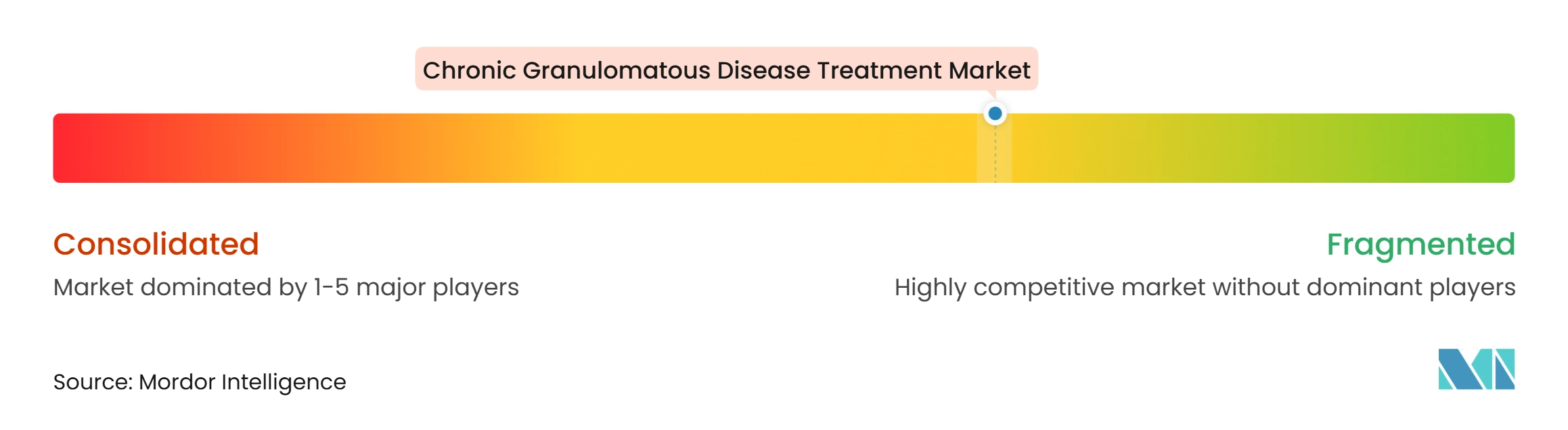
The chronic granulomatous disease treatment market is moderately fragmented because no single commercial product dominates the curative category. Established prophylaxis products support infection management while focused biotechnology developers advance curative therapies. Orchard Therapeutics has an ex vivo position in X-CGD through OTL-102, supported by earlier clinical data and a wider hematopoietic stem-cell gene therapy portfolio. Prime Medicine is pursuing ex vivo prime editing for p47phox-deficient CGD, placing distinct technology approaches in clinical development.
Strategy in the chronic granulomatous disease treatment market divides between platform developers and companies pursuing a single, well-defined genotype. Platform-focused companies seek technology with potential application across rare diseases, while indication-focused developers concentrate on disease settings with clearer biology and approval paths. Larger companies such as Novartis, Pfizer, Sanofi, Takeda, and Astellas have rare-disease capabilities but have not established primary CGD positions.
Open opportunities include lower-cost interferon gamma alternatives and validated sequencing panels that cover the CGD gene library. Providers that can address post-approval access in Asia-Pacific and Middle East settings may have an important role because diagnostic access and care infrastructure remain uneven. The chronic granulomatous disease treatment market may also see partnerships that combine genetic testing, trial referral, and long-term specialty care. Bluebird Bio’s 2025 acquisition by Carlyle and SK Capital showed that approved gene therapies can still face difficult commercial delivery conditions, reinforcing the need for evidence generation, reimbursement planning, and treatment-center readiness.
Chronic Granulomatous Disease Treatment Industry Leaders
-
Horizon Therapeutics plc
-
Clinigen Group plc
-
Orchard Therapeutics plc
-
Généthon
-
Rocket Pharmaceuticals, Inc.
- *Disclaimer: Major Players sorted in no particular order
Chronic Granulomatous Disease Treatment Market Companies Covered in this Report
- Astellas Pharma
- Avrobio
- Bluebird Bio
- Clinigen Group
- Ensoma, Inc.
- Roche
- Genethon
- Gilead Sciences
- Horizon Therapeutics
- Lonza Group
- MaxCyte, Inc.
- Mustang Bio, Inc.
- Novartis
- Orchard Therapeutics plc
- Pfizer
- Prime Medicine, Inc.
- Rocket Pharmaceuticals, Inc.
- Sanofi
- Takeda Pharmaceuticals
Recent Industry Developments in Chronic Granulomatous Disease Treatment Market
- June 2026: The U.S. FDA granted RMAT designation to Prime Medicine's PM359 for p47phox-deficient CGD, based on Phase 1/2 data from the first two patients ever treated with prime editing gene therapy. If approved, PM359 would be the first gene therapy approved for any CGD genotype. PM359 also holds Fast Track, Orphan Drug, and Rare Pediatric Disease designations.
- September 2025: bluebird bio, acquired by Carlyle and SK Capital in June 2025 for approximately USD 29 million plus contingent value rights, rebranded as Genetix Biotherapeutics. The company retains 3 FDA-approved gene therapies for sickle cell disease, beta-thalassemia, and adrenoleukodystrophy, with a mandate to scale commercial delivery under new private equity ownership.
- August 2025: The FDA held a Patient Listening Session on CGD, generating formal documentation of unmet clinical needs, treatment burden, and endpoint considerations for future gene therapy trials. Key outputs included support for DHR-positive neutrophil threshold and PIDTC disease-activity scores as endpoints, and documentation of approximately 18% graft failure in North American HSCT for CGD.
Global Chronic Granulomatous Disease Treatment Market Report Scope
According to the report’s scope, the chronic granulomatous disease treatment market focuses on therapies for chronic granulomatous disease (CGD), a rare inherited immune disorder where phagocytes fail to kill certain bacteria and fungi. The market includes antibiotic and antifungal prophylaxis, interferon‑gamma therapy, hematopoietic stem cell transplantation, and emerging gene therapies, driven by advances in rare disease management, genetic research, and specialized immunology care.
The chronic granulomatous disease treatment market is segmented into type, treatment, end-user, and geography. By type, the market is segmented into X-linked chronic granulomatous disease and autosomal recessive chronic granulomatous disease. By treatment, the market is segmented into infection management, stem cell transplantation, bone marrow transplant, gene therapy, and other treatments. By end-user, the market is segmented into hospitals, homecare, specialty clinics, and other end-users. By geography, the market is segmented into North America, Europe, Asia-Pacific, the Middle East and Africa, and South America. The report also covers the estimated market sizes and trends for 17 countries across major regions globally. The report offers values (USD) for all the above segments.
Segmentation Overview
| X-Linked Chronic Granulomatous Disease |
| Autosomal Recessive Chronic Granulomatous Disease |
| Infection Management |
| Stem Cell Transplantation |
| Bone Marrow Transplant |
| Gene Therapy |
| Other Treatments |
| Hospitals |
| Homecare |
| Specialty Clinics |
| Other End-Users |
| North America | United States |
| Canada | |
| Mexico | |
| Europe | Germany |
| United Kingdom | |
| France | |
| Italy | |
| Spain | |
| Rest of Europe | |
| Asia-Pacific | China |
| Japan | |
| India | |
| Australia | |
| South Korea | |
| Rest of Asia-Pacific | |
| Middle East and Africa | GCC |
| South Africa | |
| Rest of Middle East and Africa | |
| South America | Brazil |
| Argentina | |
| Rest of South America |
| By Type | X-Linked Chronic Granulomatous Disease | |
| Autosomal Recessive Chronic Granulomatous Disease | ||
| By Treatment | Infection Management | |
| Stem Cell Transplantation | ||
| Bone Marrow Transplant | ||
| Gene Therapy | ||
| Other Treatments | ||
| By End-User | Hospitals | |
| Homecare | ||
| Specialty Clinics | ||
| Other End-Users | ||
| By Geography | North America | United States |
| Canada | ||
| Mexico | ||
| Europe | Germany | |
| United Kingdom | ||
| France | ||
| Italy | ||
| Spain | ||
| Rest of Europe | ||
| Asia-Pacific | China | |
| Japan | ||
| India | ||
| Australia | ||
| South Korea | ||
| Rest of Asia-Pacific | ||
| Middle East and Africa | GCC | |
| South Africa | ||
| Rest of Middle East and Africa | ||
| South America | Brazil | |
| Argentina | ||
| Rest of South America | ||
Key Questions Answered in the Report
How large is the chronic granulomatous disease treatment market?
The market is estimated at USD 1.25 billion in 2026 and is projected to reach USD 1.30 billion by 2027 and USD 1.62 billion by 2032 at a 4.50% CAGR.
Which CGD type has the largest revenue position?
X-linked CGD held 52.12% share in 2026 and is projected to grow at a 6.06% CAGR through 2032.
Why is genetic testing becoming more important for CGD?
Effective infection management helps prevent recurrent bacterial and fungal infections, reduces hospitalization rates, and remains the cornerstone of long-term disease control for patients with CGD.
Which region is growing fastest for CGD treatment?
Asia-Pacific is projected to grow at an 8.37% CAGR through 2032, supported by wider diagnostic access and rare-disease care development.