
Brazil Forklift Market Size and Share
| Study Period | 2020 - 2030 |
| Forecast Data Period | 2025 - 2030 |
| Historical Data Period | 2020 - 2023 |
| Market Size (2025) | USD 0.82 Billion |
| Market Size (2030) | USD 1.40 Billion |
| CAGR (2025 - 2030) | 11.30% |
| Market Concentration | Low |
Major Players *Disclaimer: Major Players sorted in no particular order |
Brazil Forklift Market Analysis by Mordor Intelligence
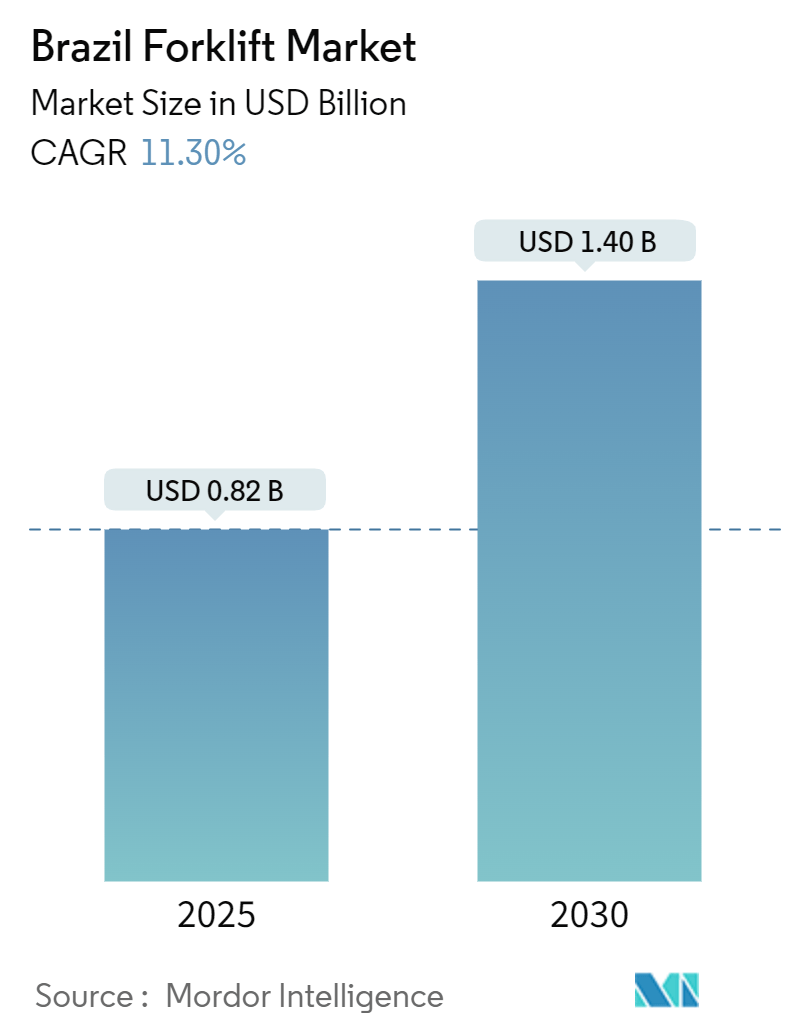
The Brazil Forklift Market size is estimated at USD 0.82 billion in 2025, and is expected to reach USD 1.40 billion by 2030, at a CAGR of 11.30% during the forecast period (2025-2030).
As sustainability gains traction and environmental concerns mount, there's a shift from gas and diesel forklifts to their electric counterparts. This transition aligns with global government initiatives aimed at steering economies towards net-zero emissions. Forklifts play a role in the efficient movement of goods, ensuring cargo is loaded and unloaded from planes and ships. This efficiency is important for timely deliveries, especially for infrastructure projects at developing airports and seaports.
Looking ahead, the demand for construction materials is set to increase over the next four decades, driven by housing and infrastructure needs. Simultaneously, the shift towards renewable energy is expected to boost cargo trades, particularly with components for offshore and onshore wind farms. Forklifts are used in the environments of airports and seaports, organizing and distributing goods in these transportation hubs.
Yet, the production of forklifts depends on raw materials like steel, lead, copper, and rubber. These materials, sourced globally, are susceptible to commodity market fluctuations and exchange rate variations. Such volatility can disrupt the supply chain, presenting challenges for original equipment manufacturers in the market.
Brazil Forklift Market Trends and Insights
Warehouse and Logistics Segment is Registering High Growth Rate on the Back of Shifting Consumer Preference Towards E-Commerce
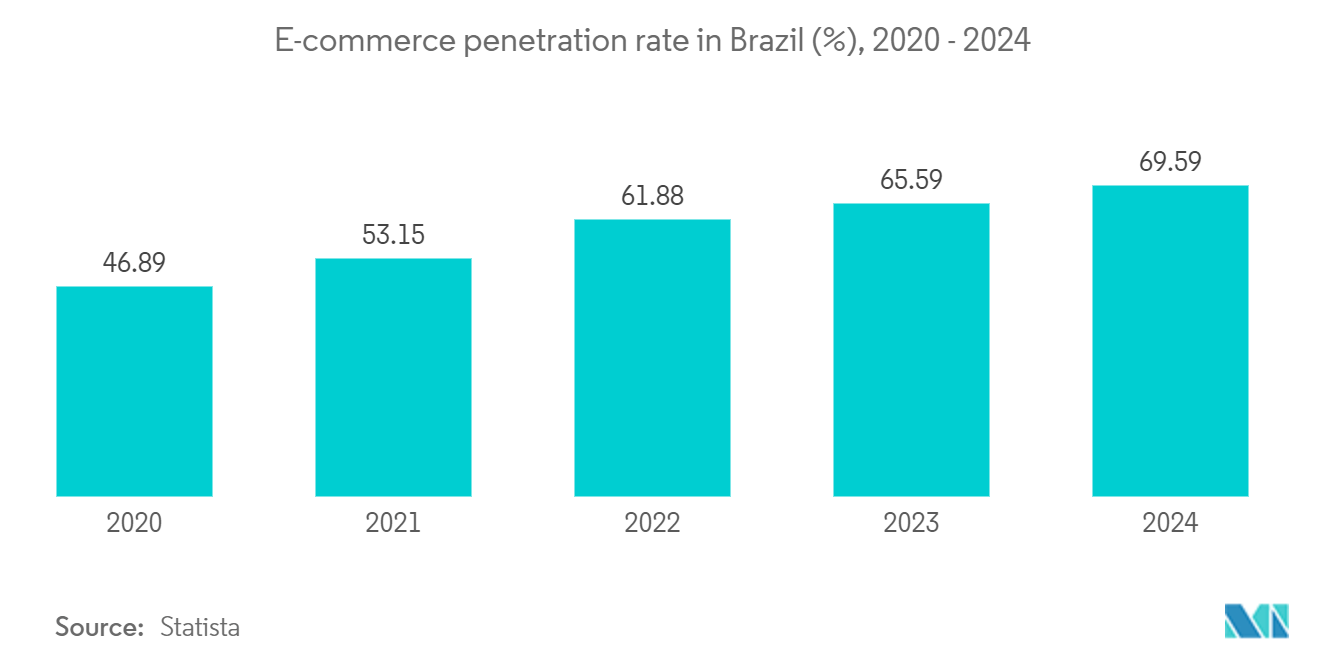
Brazil's forklift market is witnessing robust growth in its warehouse and logistics segment, largely fueled by the surging e-commerce adoption. With a growing number of consumers opting for online shopping, warehouses are increasingly reliant on efficient storage and handling systems. Forklifts play a pivotal role in these operations, ensuring smooth goods movement, reducing manual labor, and enhancing overall warehouse efficiency to cater to this escalating demand. The ability of forklifts to handle diverse loads, operate in confined spaces, and adapt to various warehouse layouts makes them indispensable in modern warehouse environments. Furthermore, their role in reducing operational downtime and improving productivity is critical for meeting the fast-paced demands of e-commerce-driven supply chains.
The relentless rise of e-commerce underscores the urgent need for advanced material handling solutions. As warehouses grapple with increased volumes, the demand for quicker turnaround times, and the need to optimize space utilization, forklifts emerge as indispensable assets, bolstering the logistics infrastructure. This trend not only underscores the significance of forklifts but also highlights the shifting dynamics of Brazil's supply chain in tune with evolving consumer behaviors.
Additionally, the integration of technology, such as automated forklifts, telematics, and fleet management systems, is further enhancing operational efficiency. These advancements enable warehouses to streamline processes, reduce errors, and meet the growing expectations of speed and accuracy in order fulfillment. The increasing focus on sustainability is also driving the adoption of electric forklifts, which offer reduced emissions and lower operating costs, aligning with global trends toward greener logistics solutions.
Market Growth is Driven by Construction Industry
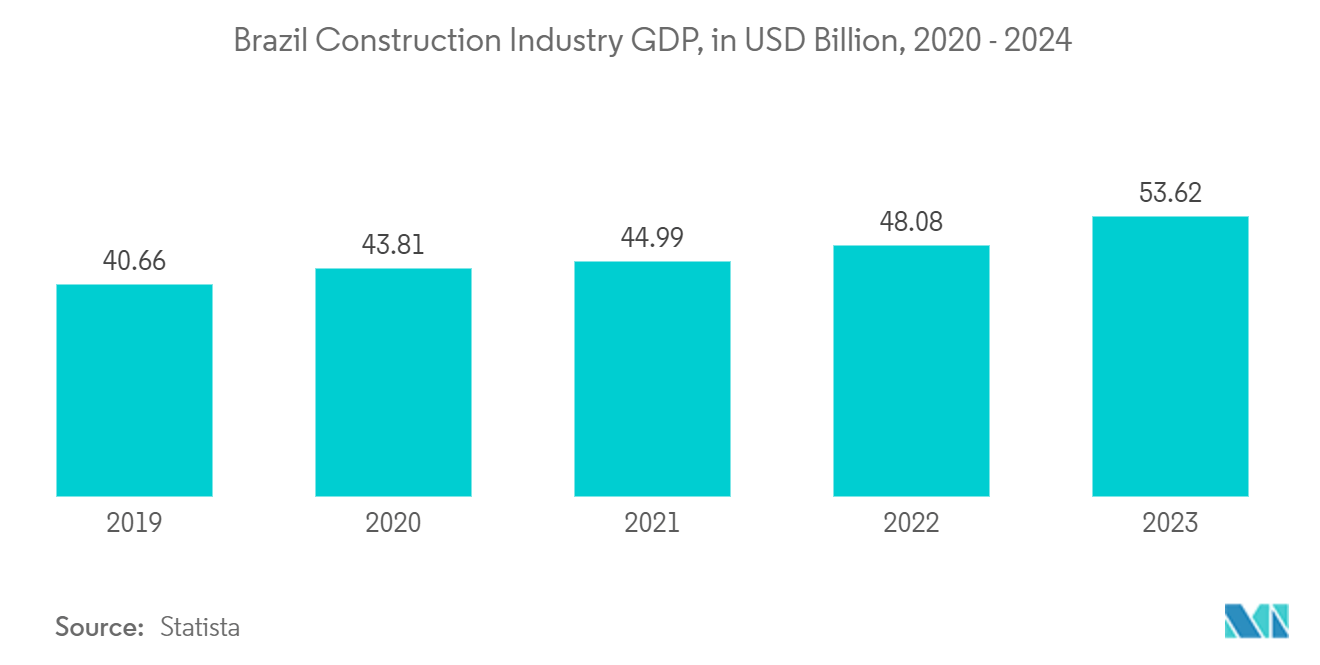
Brazil's construction industry, buoyed by a rising GDP, has significantly influenced the country's forklift market. Between 2019 and 2023, the construction sector's GDP grew from USD 40.66 billion to USD 53.62 billion, marking an approximate 7% growth rate. T
his growth is largely driven by a boom in residential, commercial, and infrastructure projects nationwide, which has led to heightened demand for material handling solutions, especially forklifts. The increase in construction activities has created a ripple effect across related industries, further boosting the demand for efficient and reliable equipment to support operations.
Construction companies are increasingly adopting forklifts, valuing the flexibility to scale operations without the hefty cost of outright purchases. Renting or leasing forklifts has become a preferred option, allowing firms to manage costs effectively while meeting project requirements. As projects expand in size and complexity, the need for forklifts essential for transporting heavy materials and equipment on-site has intensified. Forklifts play a critical role in improving operational efficiency, reducing manual labor, and ensuring timely project execution.
Given Brazil's continued investments in infrastructure and urban development, including government-backed initiatives and private sector contributions, the construction industry's expansion and its growing reliance on forklifts indicate a promising trajectory for the forklift market. This trend is expected to persist as the country prioritizes modernization and urbanization efforts.
Competitive Landscape
In Brazil, both global and domestic players shape the forklift market. Leading international firms, focusing on electric and fuel-efficient models, respond to the demand for eco-friendly equipment. Their advantage lies in supply chains and dealer networks, enhancing distribution and after-sales services.
These companies often invest in research and development to introduce forklifts with advanced features, such as improved battery technology and enhanced safety systems, to meet evolving customer expectations. Conversely, domestic firms emphasize affordability, crafting forklifts for local needs—like rugged models tailored for agriculture and construction's challenging terrains. These manufacturers often rely on their understanding of local market dynamics to design equipment that can withstand harsh operating conditions while remaining cost-effective.
Regional economic activities, spanning manufacturing to logistics and warehousing, further influence the market. The expansion of these sectors drives the demand for forklifts, as businesses seek efficient material handling solutions to support their operations. Global brands introduce technologies, including automation and telematics, improving operational efficiency. These advancements allow for better fleet management, reduced downtime, and enhanced productivity, which are critical for industries aiming to optimize their supply chain operations.
In contrast, local manufacturers, attuned to regional demands, stay competitive with cost-effective production and tailored features. They often focus on providing flexible financing options and localized after-sales support to attract small and medium-sized enterprises. The landscape grows more competitive with imports from China, offering budget-friendly alternatives, pushing both global and local entities to innovate and refine their pricing strategies. The influx of these imports adds pressure on existing players to balance cost and quality while maintaining their market share.
Brazil Forklift Industry Leaders
-
Hyster Yale
-
Komatsu
-
Mitsubishi Corporation
-
Hangcha
-
Clark
- *Disclaimer: Major Players sorted in no particular order

Recent Industry Developments
- November 2024: Chinese President Xi Jinping wrapped up his visit to Brazil, coinciding with SANY Electric Forklift's pivotal entry into the Brazilian market. SANY's first batch of electric forklifts has officially arrived, making landfall at Victoria Port in Brazil.
- October 2024: New Newton, at the 35th Brazil Logistics Warehousing and Transportation Exhibition, showcased a suite of products that had previously received accolades at the Canton Fair. Their lineup included high-voltage lithium forklifts, E2 lithium forklifts, T2 internal combustion forklifts, short wheelbase lithium forklifts, and LPG liquefied gas forklifts. Furthermore, they unveiled the groundbreaking Newton intelligent battery swap solutions, highlighting a perfect fusion of advanced technology and industrial design to the audience.
- July 2024: In a significant move, APM Terminals, located in Suape, Brazil, has procured twenty-eight state-of-the-art all-electric container handling units from SANY. Specifically designed for the new terminal, these advanced units emphasize both efficiency and safety. This strategic acquisition highlights APM Terminals' dedication to accelerating the transition to electric handling tools, including e-forklifts, reinforcing its ambitious target of reaching net-zero emissions by 2040.
Brazil Forklift Market Report Scope
Fork trucks, commonly referred to as forklifts, are motor-driven industrial vehicles designed to lift and transport palletized goods within warehouses, storage facilities, and distribution centers. These machines play a crucial role in material handling operations, ensuring efficient movement and organization of goods. Depending on their design, certain forklifts enable operators to sit while driving or maneuvering the machine, which enhances comfort and reduces operator fatigue during prolonged usage. Forklifts are available in various types, including electric, gas-powered, and diesel-powered models, catering to diverse operational requirements and environments.
Brazil Forklift Market is segmented Class, Load Type, and End Use. Based on the Class, the market is segmented into Class 1, Class 2, Class 3, Class 4, Class 5 and Others. Based on the Load Type, the market is segmented into 3.5 Tons, 10 Tons, and Above 10 Tons. Based on the End Use, the market is segmented into Construction, Automotive, Aerospace & Defense, Warehouse & Logistics, and Others. For each segment, market sizing and forecast have been done on the basis of value (USD).
| Class 1 |
| Class 2 |
| Class 3 |
| Class 4 |
| Class 5 |
| Others |
| 3.5 Tons |
| 10 Tons |
| Above 10 Tons |
| Construction |
| Automotive |
| Aerospace & Defense |
| Warehouse & Logistics |
| Others |
| Class | Class 1 |
| Class 2 | |
| Class 3 | |
| Class 4 | |
| Class 5 | |
| Others | |
| Load Type | 3.5 Tons |
| 10 Tons | |
| Above 10 Tons | |
| End-Use | Construction |
| Automotive | |
| Aerospace & Defense | |
| Warehouse & Logistics | |
| Others |
Key Questions Answered in the Report
How big is the Brazil Forklift Market?
The Brazil Forklift Market size is expected to reach USD 0.82 billion in 2025 and grow at a CAGR of 11.30% to reach USD 1.40 billion by 2030.
What is the current Brazil Forklift Market size?
In 2025, the Brazil Forklift Market size is expected to reach USD 0.82 billion.
Who are the key players in Brazil Forklift Market?
Hyster Yale, Komatsu, Mitsubishi Corporation, Hangcha and Clark are the major companies operating in the Brazil Forklift Market.
What years does this Brazil Forklift Market cover, and what was the market size in 2024?
In 2024, the Brazil Forklift Market size was estimated at USD 0.73 billion. The report covers the Brazil Forklift Market historical market size for years: 2020, 2021, 2022, 2023 and 2024. The report also forecasts the Brazil Forklift Market size for years: 2025, 2026, 2027, 2028, 2029 and 2030.
Brazil Forklift Market Report
Statistics for the 2025 Brazil Forklift market share, size and revenue growth rate, created by Mordor Intelligence™ Industry Reports. Brazil Forklift analysis includes a market forecast outlook for 2025 to 2030 and historical overview. Get a sample of this industry analysis as a free report PDF download.