
Australia Insulin Delivery Devices Market Size and Share
Market Overview
| Study Period | 2020 - 2031 |
|---|---|
| Forecast Data Period | 2026 - 2031 |
| Base Year Market Size (2025) | USD 722.45 Million |
| Market Size (2026) | USD 738.92 Million |
| Market Size (2031) | USD 826.84 Million |
| Growth Rate (2026 - 2031) | 2.28 % |
| Market Concentration | Medium |
Major Players *Disclaimer: Major Players sorted in no particular order Image © Mordor Intelligence. Reuse requires attribution under CC BY 4.0. | |
Australia Insulin Delivery Devices Market Analysis by Mordor Intelligence
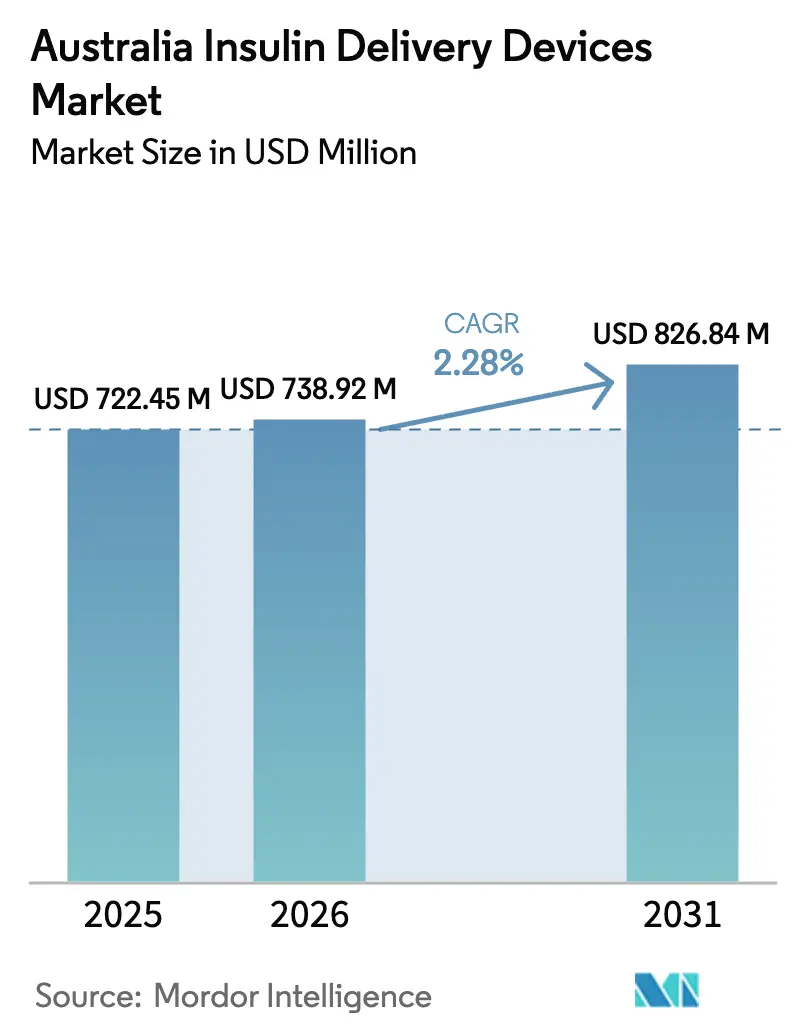
Australia insulin delivery devices market size in 2026 is estimated at USD 738.92 million, growing from 2025 value of USD 722.45 million with 2031 projections showing USD 826.84 million, growing at 2.28% CAGR over 2026-2031. This tempered growth reflects an industry moving from rapid expansion to measured maturation, balancing an expanding diabetes population with competitive pressure from GLP-1 therapies that can defer insulin use[1]. Persistent diabetes prevalence, wider reimbursement of advanced devices under the National Diabetes Services Scheme (NDSS), and continuous glucose monitoring (CGM) integration keep demand resilient even as some type 2 patients delay insulin initiation. Manufacturers focus on hardware–software ecosystems that automate dosing decisions, opening premium-priced niches and longer lifetime revenue per user. Consumables growth outpaces hardware because every new pump placement locks in years of infusion-set and sensor sales. At the same time, telehealth infrastructure built during the pandemic now supports remote pump programming, improving rural access and reducing the clinical overhead tied to device initiation.
Key Report Takeaways
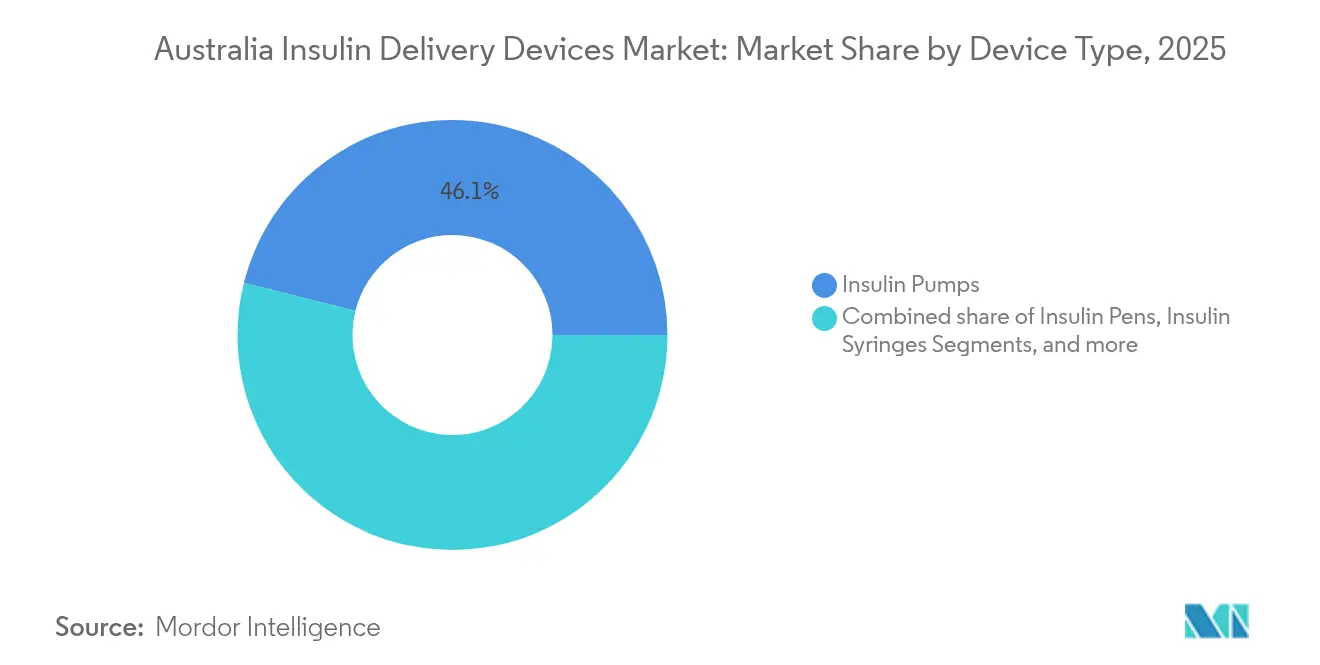
- By device type, insulin pumps captured 46.10% of the Australia insulin delivery devices market share in 2025, while smart patch pumps are forecast to grow at a 5.39% CAGR to 2031.
- By component, delivery devices accounted for 63.05% of the Australia insulin delivery devices market size in 2025; consumables are projected to rise at a 5.62% CAGR through 2031.
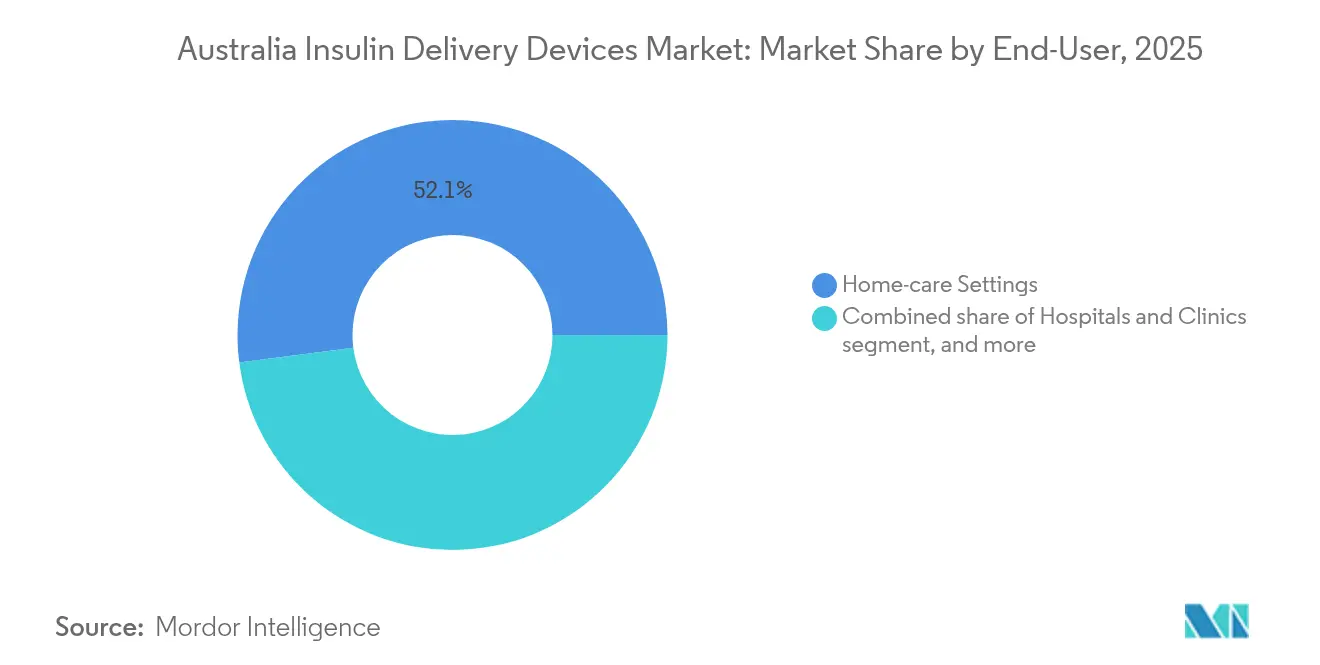
- By end-user, home-care settings represented 52.05% of the Australia insulin delivery devices market in 2025 and are advancing at a 6.08% CAGR to 2031.
- By distribution channel, retail pharmacies led with 41.05% share in 2025, whereas online pharmacies record the highest projected CAGR at 4.33% to 2031.
Note: Market size and forecast figures in this report are generated using Mordor Intelligence’s proprietary estimation framework, updated with the latest available data and insights as of 2026.
Australia Insulin Delivery Devices Market Trends and Insights
Drivers Impact Analysis*
| Driver | % Impact on CAGR Forecast | Geographic Relevance | Impact Timeline |
|---|---|---|---|
| Rising prevalence of diabetes in Australia | +0.8% | National, higher concentration in urban areas | Long term (≥ 4 years) |
| NDSS & private-insurance pump subsidies | +0.6% | National, stronger effect in metropolitan hubs | Medium term (2-4 years) |
| CGM-enabled closed-loop system integration | +0.5% | National | Medium term (2-4 years) |
| Ageing & obesity-driven demand growth | +0.4% | National, pronounced in regional communities | Long term (≥ 4 years) |
| Telehealth-enabled remote pump programming | +0.3% | National, with greatest benefit in rural areas | Short term (≤ 2 years) |
| GLP-1 side-effect rebound to basal insulin therapy | +0.2% | National, concentrated in private healthcare | Medium term (2-4 years) |
| Source: Mordor Intelligence | |||
Rising Prevalence Of Diabetes In Australia
Official surveys show 6.6% of Australian adults live with diabetes, yet University of Sydney researchers estimate the real number is 35% higher, lifting the patient pool above 2 million. The gap stems from under-registration in the NDSS, indicating latent demand that comes into the commercial funnel as detection improves. Urban clusters match the supplier network of major pump distributors, easing after-sales support. Earlier onset among younger cohorts extends lifetime therapy duration, which heightens interest in tech-forward pumps, pens, and connected wearables that fit digital lifestyles.
Expansion Of NDSS & Private Insurance Subsidies For Pumps
Since March 2025 the NDSS has subsidised Dexcom G7 and, from April 2025, Abbott FreeStyle Libre 2 Plus sensors, lowering out-of-pocket costs for hybrid closed-loop therapy[2]. Private insurers follow suit: Insulet’s OmnipodPromise covers waiting periods so members can transition immediately to Omnipod 5. Medtronic runs “Bridging the Gap,” supplying MiniMed 780G during insurance onboarding. Combined public-private funding dismantles cost barriers for roughly 18,000 Australians judged clinically eligible for automated insulin delivery systems[3].
Integration Of CGM-Enabled Closed-Loop Systems
Meta-analyses of nearly 14,000 European users show hybrid closed-loop therapy delivers 64% time-in-range versus 52% for open-loop care, while cutting severe hypoglycaemia rates. Australia benefits from near-simultaneous global launches: MiniMed 780G offers the highest published time-in-range among seven commercial systems, Omnipod 5 arrived in March 2025 with Dexcom G6/G7 compatibility, and Tandem’s t:slim X2 now reads Abbott Libre 2 Plus data. Convergence reduces multi-device complexity, raising uptake among both newly diagnosed and long-term users.
Ageing & Obesity-Driven Demand Growth
Diabetes was Australia’s sixth-leading cause of death in 2023, a burden amplified by population ageing and youth obesity. Older patients value automation that lightens daily disease management, while tech-savvy younger users push for smartphone-integrated dose capture such as NovoPen 6’s automatic logging feature. Telehealth closes rural service gaps, letting clinicians fine-tune settings remotely, which is critical as regional obesity rates outpace metropolitan averages and drive fresh insulin starts.
Restraints Impact Analysis*
| Restraints Impact Analysis | (~) % Impact on CAGR Forecast | Geographic Relevance | Impact Timeline |
|---|---|---|---|
| High upfront & consumable costs of advanced devices | -0.7% | National, heavier burden in regional areas | Medium term (2-4 years) |
| Rapid uptake of GLP-1 weight-loss drugs reducing insulin demand | -0.5% | National, strongest in urban private care | Medium term (2-4 years) |
| Patchy reimbursement for consumables outside NDSS | -0.4% | National, varies by private insurer | Medium term (2-4 years) |
| Supply-chain vulnerability for single-use consumables | -0.3% | National, influenced by import dependence | Short term (≤ 2 years) |
| Source: Mordor Intelligence | |||
High Upfront & Consumable Costs Of Advanced Devices
Even after NDSS discounts, annual consumable spend for a pump user—infusion sets, reservoirs, sensors—can exceed USD 1,000, a notable outlay for middle-income households. Supply interruptions, such as the April 2024 withdrawal of particular Medtronic infusion sets, intensify cost by forcing brand switches or emergency purchases. Insurance coverage varies: some funds now cap Ozempic rebates and tightly manage device benefits, creating postcode-dependent access.
Rapid Uptake Of GLP-1 Weight-Loss Drugs Reducing Insulin Demand
GLP-1 agonists like Ozempic diminish HbA1c and aid weight loss, delaying insulin initiation for many type 2 patients. Analysts project the global GLP-1 segment could reach USD 150 billion by 2032, siphoning growth from traditional insulin delivery channels. As the Therapeutic Goods Administration reviews Wegovy for cardiovascular indications, broader prescribing could further suppress basal-insulin starts, trimming potential pump conversions[4].
*Our forecasts treat driver/restraint impacts as directional, not additive. The impact forecasts reflect baseline growth, mix effects, and variable interactions.
Segment Analysis
By Device Type: Pumps Lead Despite Patch Innovation
Insulin pumps captured a 46.10% slice of the Australia insulin delivery devices market in 2025, a dominance rooted in proven glycaemic benefits and expanding reimbursement. MiniMed 780G users achieve superior time-in-range, reinforcing trust in tubed pumps. Yet patch pumps are the growth engine, set for a 5.39% CAGR through 2031 as Omnipod 5 and emerging tubeless rivals lower insertion anxiety and simplify wear. As a result, patch platforms are poised to lift their share of the Australia insulin delivery devices market size for type 1 cohorts between 2026 and 2031.
Smart pens remain essential for cost-sensitive type 2 patients. NovoPen 6 and similar devices log doses automatically, supporting tele-review without adding pump-level expense. Syringes and jet injectors continue a slow decline because consumers migrate toward simpler, connected options. Embecta’s coming patch pump for type 2 users and Sequel’s modular twiist system hint at a bifurcated future: premium closed-loops for intensive users and pared-down wearables for the broader population.

By Component: Delivery Devices Dominate Revenue Streams
Hardware generated 63.05% of revenue in 2025, underpinned by multi-thousand-dollar pump placements that anchor therapy for 4–5 years. Consumables follow a razor-and-blade model and post the steeper 5.62% CAGR as every pump user consumes infusion sets every 2–3 days and CGM sensors every 10 days. Because each active user represents annuity-style revenue, boosting the installed base enlarges lifetime value even if hardware ASPs flatten.
Supply security is critical. The April 2024 exit of certain Medtronic infusion sets highlighted vulnerability and encouraged wider stocking of alternate brands through NDSS logistics. Extended-wear sets now promise up to 7 days use, improving convenience but also trimming raw unit volumes. Nonetheless, sensor adoption attached to pumps is rising rapidly enough to sustain consumables momentum, cementing half of future Australia insulin delivery devices market size growth in recurring supplies.
By End-User: Home-Care Settings Drive Market Expansion
Home-care represented 52.05% of 2025 revenue and is tracking a 6.08% CAGR to 2031 as technology enables safe self-management. Telehealth sessions covered under Medicare let clinicians adjust basal rates or deliver bolus coaching without clinic visits, a benefit keenly felt in remote regions. Hospital initiation persists for new pump starts, but once configured, most users transition to community follow-up.
Covid-era digital tools now underpin routine education: Medtronic’s Smart MDI cloud dashboard and Tandem’s mobile bolus app give providers real-time data feeds, shifting labour from in-person to virtual care. This structural change anchors the Australia insulin delivery devices market as a patient-centred, service-rich domain that both improves outcomes and unlocks broader geographic penetration.
By Distribution Channel: Retail Dominance Faces Digital Disruption
Retail pharmacies held 41.05% share in 2025 thanks to their advisory role and established reimbursement workflows. Yet online platforms are scaling at a 4.33% CAGR as repeat pod or sensor orders move to subscription models. Tandem’s 2025 plan to sell pumps directly through pharmacies blurs channel lines and demands pharmacist upskilling.
Meanwhile, direct-to-consumer web stores tie into tele-consults, making device renewals seamless. Hybrid pathways will likely prevail, where initial prescription flows through endocrinologists and hospital pharmacies, but consumable replenishment migrates online. This omnichannel shift keeps the Australia insulin delivery devices market accessible even in territories lacking brick-and-mortar capacity.
Geography Analysis
Australia’s patchwork of densely populated coasts and sparsely settled interiors shapes device uptake. Urban centres, Sydney, Melbourne, Brisbane, house the bulk of endocrinologists and pump training clinics, which accelerates hybrid closed-loop adoption among city dwellers. Regional diabetes rates run lower on a percentage basis yet remain material in absolute numbers; combined with fewer specialists, this drives reliance on tele-enabled pumps and smart pens that clinicians can program remotely. NDSS reimbursement rules apply nationwide, but practical access still hinges on freight logistics and local pharmacy inventories.
The Australian Government’s USD 50.1 million support for the Type 1 Diabetes Clinical Research Network clusters most trial activity around metropolitan research hospitals, reinforcing a city-centric innovation loop. Conversely, rural communities benefit when device suppliers fold training into virtual care packages, limiting travel burdens. Novel oral-insulin work emerging from the University of Sydney could, if successful, further democratise access by removing insertion requirements altogether.
CGM-pump ecosystems that store data in the cloud compress distance; clinicians fine-tune parameters anywhere an internet connection exists. This tele-support capacity helps the Australia insulin delivery devices market maintain penetration even in low-density areas where shipping consumables can take days and in-person endocrinology visits are quarterly at best. Continual government investment in rural broadband promises to buttress long-run uptake across all postcodes.
Regulatory Landscape
Insulin delivery devices in Australia fall under oversight by the Therapeutic Goods Administration (TGA) through the Therapeutic Goods (Medical Devices) Regulations 2002, and products must be listed in the Australian Register of Therapeutic Goods (ARTG) to be legally supplied. Insulin infusion pumps are commonly handled as higher-risk active devices (often Class IIb), which affects conformity assessment, clinical evidence expectations, and post-market obligations. The ARTG listing for Insulet's Omnipod 5 Automated Insulin Delivery System (ARTG 455009) reflects the pathway for new automated insulin delivery entrants.
Market access is also tied to the National Diabetes Services Scheme (NDSS), which maintains product listings and sets subsidized access rules for diabetes technologies, including CGM eligibility criteria and product update requirements. From 1 July 2026, Australia starts Unique Device Identification (UDI) requirements for medical devices, raising expectations for labeling, traceability, and supply-chain data readiness across pumps, administration sets, and connected pen platforms.
Competitive Landscape
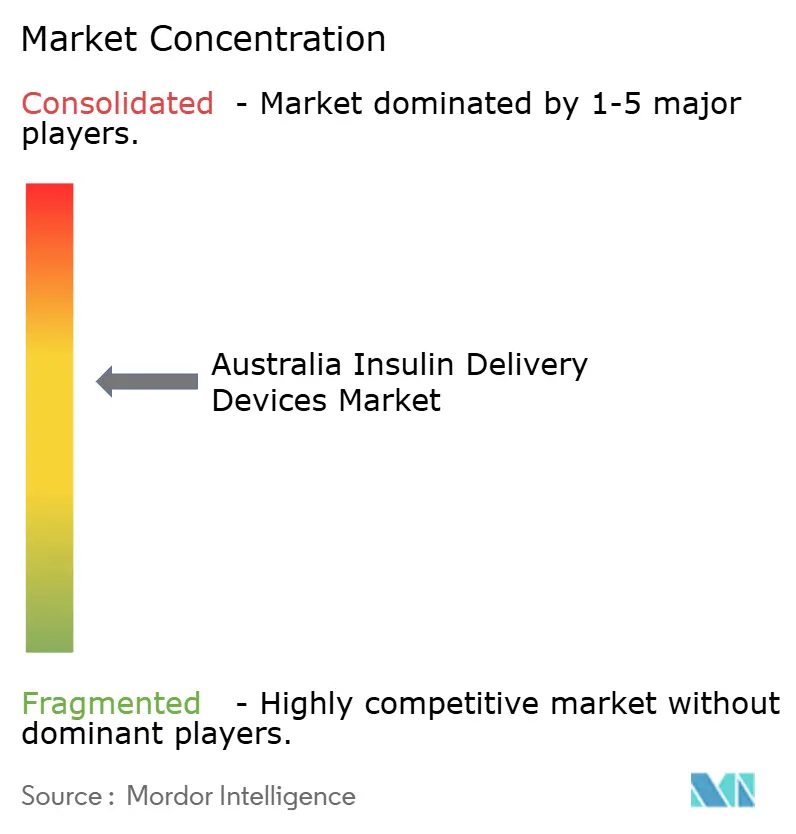
Global diabetes technology leaders Medtronic, Insulet, and Tandem anchor the domestic field, together generating more than 55% of sales in 2024. Medtronic leans on algorithmic leadership; MiniMed 780G plus Simplera CGM delivered 12.4% segment revenue growth in Q2 FY25 by driving time-in-range gains. Insulet’s tubeless design recorded 22% revenue expansion in 2024 and landed in Australia in March 2025, intensifying competition for pump upgrades. Tandem booked USD 940.2 million in 2024, up 26%, and differentiated through an open-sensor stance integrating both Dexcom and Abbott data streams.
Emerging challengers address white-space segments. Embecta filed an FDA submission for a disposable patch pump tailored to type 2 patients, historically underserved by premium closed-loop systems. Sequel Med Tech’s modular twiist uses Tidepool Loop software and interchangeable parts to cut upgrade friction while accepting multiple CGM brands. Local biotech EndoAxiom pursues oral insulin that could sidestep injection devices entirely, backed by a USD 5 million Proto Axiom investment.
Big-tech firms hold glucose-sensing patents that foreshadow deeper convergence: Samsung and Apple each filed smartwatch CGM applications, setting up potential alliances with pump vendors. Competitive edge is shifting from pure hardware features to full-stack ecosystems—connectivity, data analytics, and reimbursement programs that smooth patient onboarding. Firms that orchestrate open platforms around insurance pipelines and telehealth services are best placed to capture incremental Australia insulin delivery devices market share as growth decelerates into maturity.
Australia Insulin Delivery Devices Industry Leaders
-
Insulet Corporation
-
Ypsomed
-
Novo Nordisk A/S
-
Medtronic
-
Eli Lilly and Company
- *Disclaimer: Major Players sorted in no particular order
Market Opportunities and Future Outlook
A core opportunity sits where NDSS-supported diabetes technology access meets tighter coupling between insulin delivery and continuous glucose monitoring (CGM). NDSS product listings and CGM access criteria create a defined reimbursement channel for integrated pump-CGM ecosystems and related services, including training, remote monitoring, and replenishment, which aligns with demand growth in home-care settings. With Omnipod 5 listed on the ARTG (ARTG 455009) and NDSS continuing to maintain and update subsidized access, suppliers can differentiate through interoperability (Dexcom and FreeStyle Libre compatibility), digital onboarding, and pharmacist-enabled distribution for recurring consumables.
White space also opens around transition management and substitution as insulin product supply and portfolios are rationalized. With some insulin vial and pen presentations being discontinued in Australia, providers and patients need to adapt therapy routines, which increases the value of connected dose capture, titration support, and standardized education delivered through telehealth. On compliance, the start of UDI requirements from 1 July 2026 creates room for vendors and distributors to strengthen traceability, automate recalls and field actions, and improve inventory planning for single-use consumables, an area already flagged by prior supply disruptions.
Recent Industry Developments
- February 2026: Insulet Corporation has confirmed continued focus on expanding Omnipod 5 access in Australia as part of its ongoing international growth strategy. The expansion strengthens direct consumer reach and supports premium closed-loop adoption in key markets. This move reinforces competitive positioning in the Australian insulin delivery devices market.
- January 2026: Pharma In Focus - Eli Lilly and Novo Nordisk continue the discontinuation of specific insulin vial and pen presentations from the Australian market, with further Eli Lilly products set to be removed throughout 2026. The realignment concentrates portfolio around modern delivery systems and may affect channel dynamics. The action signals shifting product viability and prompts clinicians and patients to adapt to alternative delivery options.
- January 2026: Therapeutic Goods Administration - Published the Therapeutic Goods (Restricted Representations - Diabetes Devices) Permission 2026, which outlines updated advertising requirements for insulin pumps and glucose monitoring devices. The publication updates advertising guidelines for insulin pumps and glucose monitoring devices. This change shapes market communications and may affect vendor marketing practices.
Research Methodology Framework and Report Scope
Market Definition and Coverage
For this methodology, the market covers devices used to administer insulin to patients in Australia, including durable delivery hardware and the related single-use supplies purchased for ongoing therapy.
Scope exclusions: Diabetes monitoring devices (such as SMBG meters and CGMs) and insulin drugs are excluded from this market sizing.
Segmentation Overview
- By Device Type
- Insulin Pumps
- Patch Pumps
- Traditional Pumps
- Insulin Pens
- Reusable Pens
- Disposable Pens
- Insulin Syringes
- Insulin Jet Injectors
- Smart Insulin Delivery Wearables
- Insulin Pumps
- By Component
- Delivery Devices
- Consumables (Reservoirs, Cartridges, Infusion Sets, Needles)
- By End-User
- Hospitals & Clinics
- Home-care Settings
- Ambulatory Surgical Centres
- By Distribution Channel
- Hospital Pharmacies
- Retail Pharmacies
- Online Pharmacies
Data Sources, Market Sizing, and Validation
Desk Research
Desk research was used to build the initial demand and supply picture for Australia and to set realistic boundaries for what is counted as an insulin delivery device. We referenced public health statistics and diabetes burden indicators from sources such as the Australian Bureau of Statistics, the Australian Institute of Health and Welfare, and Diabetes Australia, then aligned these signals with policy and access inputs.
To understand product availability and flow into the country, we reviewed public information from the Therapeutic Goods Administration, along with trade and customs level indicators from sources such as UN Comtrade, before translating them into market variables that can be modeled. We also reviewed company annual reports, investor decks, and credible healthcare press to cross-check pricing moves and channel shifts, and we selectively used paid subscriptions for company financials, patent lookups, and shipment-level import and export checks. This list is illustrative only, and many other public and paid sources were also reviewed to collect data, validate assumptions, and clarify open questions.
Primary Interviews and Surveys
Primary work was used to pressure-test what desk research could not show clearly, especially the device mix, consumables intensity, and how patients move between hospital, clinic, and home-care use. We spoke with stakeholders such as clinicians, procurement and pharmacy teams, distributors, and device industry specialists across Australia, so assumptions on uptake, replacement timing, and pricing stayed practical and consistent with how purchasing happens.
Distribution of primary research fieldwork respondents
| Company type | Respondent position |
|---|---|
| Top tier: 27% | CXOs: 13% |
| Mid tier: 55% | Functional/Unit leaders: 39% |
| Smaller Players: 18% | Managers: 48% |
Market-Sizing & Forecasting
Sizing starts with a top-down build, where the insulin-treated population and therapy patterns in Australia are converted into an annual device demand pool, then split by the most common delivery modes. Once that structure is stable, we corroborate it with selective bottom-up approximations, such as sampled ASP times estimated unit volume by device category and channel checks, which are then used to refine totals where gaps appear.
Key inputs include the size of the insulin-treated cohort, pump versus pen adoption, average consumables usage per active user, replacement and upgrade cycles for durable devices, and observed pricing levels by channel (hospital, retail, and online). To keep the forecast grounded, we run scenario analysis around a few variables that primary respondents consistently flagged as most sensitive, including NDSS access and subsidy settings, switching rates between delivery methods, and the pace of technology refresh. Where a data point is not available for a smaller channel or niche device, the missing piece is filled using conservative proxy ratios taken from nearby cohorts, then checked again during validation calls.
Data Validation & Update Cycle
Outputs are validated through triangulation across multiple independent checks so single-source bias does not drive the final number. Our team compares results against external signals such as diabetes burden trends, public regulator listing activity, and trade flow direction, then reviews any outliers by revisiting assumptions and re-contacting experts when a variance is not easy to explain.
Before sign-off, the model and write-up go through a multi-step analyst review so unit logic, pricing math, and year alignment are consistent across the dataset. The report is refreshed annually, with interim updates triggered when material events occur, including policy changes, major product transitions, or sudden pricing shifts. Right before delivery, we do a final pass so clients receive the most current view available at that time.
Mordor Intelligence's Australia Insulin Delivery Devices Market Size Versus Other Published Estimates
Published market values for insulin delivery devices in Australia can differ across sources, even when the topic sounds the same. These gaps usually come from what is counted in the device basket, how consumables are treated, and which year is used as the base for pricing and adoption.
Diabetes monitoring items, especially CGMs and test strips, are the most common add-ins that expand totals, but those sit outside Mordor Intelligence's scope for this market, which keeps the sizing tied only to insulin administration hardware and the related supplies. Differences can also be created when estimates assume faster pump uptake than current clinical practice supports, apply broad price erosion without checking local channel pricing, or rely on older prevalence and reimbursement inputs that have shifted since the base year.
Benchmark comparison
| Source | Market Size | Gaps in Research Methodology |
|---|---|---|
| Mordor Intelligence | USD 722.45 M (2025) | |
| Industry Publisher A | USD 579.40 M (2023) | Uses a broader diabetes devices lens in the underlying narrative and anchors to an earlier year, which can understate delivery device totals if pump adoption and consumables intensity are not fully captured in the 2023 base. |
| Industry Platform B | USD 1.11 B (2032) | Presents a longer-dated outlook and appears to fold in adjacent diabetes device categories and aggressive growth assumptions, which can lift the headline value beyond an insulin delivery-only demand pool. |
The spread in published values mainly comes down to product scope and year alignment, followed by how pricing and usage intensity are handled for ongoing supplies. By keeping the device basket consistent, using clear adoption and replacement inputs, and checking assumptions with local channel feedback, our estimate stays traceable to repeatable steps that buyers can revisit as conditions change.
Key Questions Answered in the Report
What is the current value of the Australia insulin delivery devices market?
The market stands at USD 738.92 million in 2026 and is projected to reach USD 826.84 million by 2031 at a 2.28% CAGR.
Which device category holds the largest share?
Conventional and hybrid insulin pumps lead with 46.10% of 2025 revenue, driven by broad clinical adoption and subsidy support.
How fast are patch pumps growing in Australia?
Smart, tubeless patch pumps are registering a 5.39% CAGR to 2031, making them the fastest-expanding device sub-segment.
Why are consumables such a key revenue stream?
Every new pump user needs infusion sets and CGM sensors on a near-weekly cycle, pushing consumables to a 5.62% CAGR even as hardware growth plateaus.
How are GLP-1 drugs affecting insulin device demand?
GLP-1 therapies delay insulin starts for some type 2 patients, subtracting roughly 0.5 percentage points from the market CAGR, yet insulin remains indispensable for type 1 cases and many long-term type 2 users.
What role does telehealth play in rural device adoption?
Cloud-linked pumps and smart pens allow endocrinologists to adjust settings remotely, enabling safe home use and expanding access in regions that lack specialist clinics.